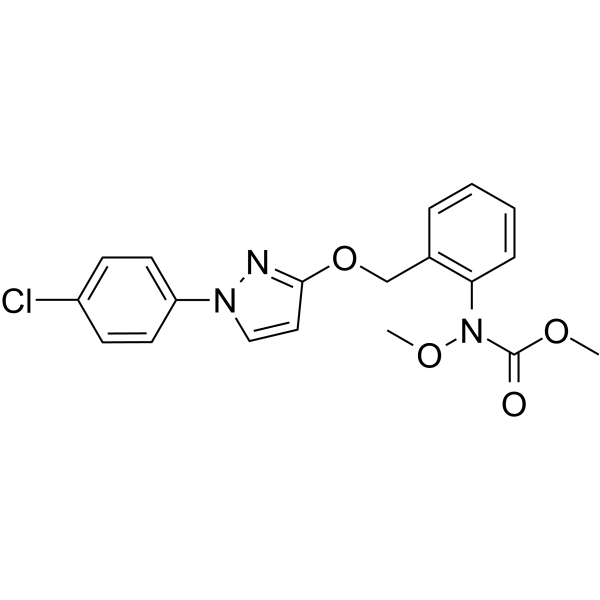
Pyraclostrobin (pyraclostrobin)

别名: Pyraclostrobin; 175013-18-0; Pyraclostrobine; Headline; Cabrio; Pyrachlostrobin; BAS-500F; UNII-DJW8M9OX1H; 百克敏;唑菌胺酯;N-[2-[[1-(4-氯苯基)吡唑-3-基]氧甲基]苯基]-N-甲氧基氨基甲酸甲酯;吡唑醚菌酯; 百克敏标准品;百克敏原药;吡唑醚菌酯标准品;{2-[1-(4-氯苯基)-1H-吡唑-3-基氧甲基]苯基}甲氧基氨基甲酸甲酯;百克敏(唑菌胺酯,吡唑醚菌酯) 标准品;吡唑嘧菌酯;吡唑醚菊酯;正己烷中吡唑醚菌酯;吡唑醚菌酯[悬浮剂];吡唑醚菌酯 (CIPAC);唑菌胺酯/百克敏;吡唑醚菌酯/百克敏
目录号: V53175 纯度: ≥98%
唑菌胺酯是一种杀菌剂,可以抑制真菌和哺乳动物细胞中的线粒体复合物III。
Pyraclostrobin (pyraclostrobin) CAS号: 175013-18-0
产品类别: Fungal
产品仅用于科学研究,不针对患者销售
规格 价格 库存 数量
100mg
250mg
500mg
Other Sizes
点击了解更多
  • 与全球5000+客户建立关系
  • 覆盖全球主要大学、医院、科研院所、生物/制药公司等
  • 产品被大量CNS顶刊文章引用
InvivoChem产品被CNS等顶刊论文引用
产品描述
唑菌胺酯是一种杀菌剂,可以抑制真菌和哺乳动物细胞中的线粒体复合物III。 Pyraclostrobin 诱导 3T3-L1 细胞中甘油三酯的积累。
生物活性&实验参考方法
靶点
Fungicidal; Bax; Bcl-2; autophagy; AMPK/mTOR
体外研究 (In Vitro)
本文研究了吡唑醚菌酯/Pyraclostrobin对HepG2细胞的毒理学风险和体外中毒机制。还评估了吡唑醚菌酯对斑马鱼幼虫的肝毒性。研究发现,吡唑醚菌酯可诱导HepG2细胞DNA损伤和活性氧的产生,表明吡唑醚醚菌酯具有潜在的遗传毒性。荧光染色实验和细胞色素c、Bcl-2和Bax的表达结果表明,吡唑啉醚菌酯诱导线粒体功能障碍,导致细胞凋亡。单丹酰尸胺染色和自噬标志物相关蛋白LC3、p62、Beclin-1蛋白表达表明,吡唑醚菌酯促进了细胞自噬。此外,免疫印迹分析表明,吡唑醚菌酯诱导的自噬伴随着腺苷5'-单磷酸(AMP)激活蛋白激酶(AMPK)/mTOR信号通路的激活。
吡唑菌酯对HepG2细胞存活率和增殖的影响[1]
采用MTT法测定吡唑醚菌酯对HepG2细胞的细胞毒性。HepG2细胞用不同浓度的吡唑醚菌酯处理24小时,细胞存活率与吡唑醚醚菌酯浓度呈负相关,并呈浓度依赖性(图1A)。吡唑醚菌酯对HepG2细胞的IC50值估计为30.22μmol/L(表1)。

通过细胞克隆实验研究吡唑菌酯对人HepG2细胞增殖的影响(图1B)。如图1D所示,暴露于唑醚菌酯(10、20、40和80μmol/L)6小时后,细胞克隆形成率分别为79.31%、31.03%、6.89%和1.72%。细胞克隆形成率随唑醚菌酯浓度的增加而急剧下降,呈浓度依赖关系。上述数据表明,吡唑醚菌酯杀菌剂显著抑制了HepG2细胞的存活和增殖。
吡唑菌酯诱导HepG2细胞DNA损伤[1]
单细胞凝胶电泳(SCGE)是检测DNA损伤最灵敏、最快速的方法。通过检测迁移光密度、尾长和尾矩,可以评估DNA损伤的程度。表2总结了中性彗星试验的参数,表明彗星现象(尾部DNA%)非常明显。如图1E所示,与未处理的细胞相比,用10-80μmol/L吡唑醚菌酯处理的HepG2细胞显著增加了彗星的尾部DNA含量和形成的尾部长度。同时,图1C显示彗星阳性细胞的比例呈剂量依赖性增加。当唑醚菌酯的暴露浓度为0、10、20、40和80μmol/L时,DNA损伤细胞的百分比分别为7.12、33.69、46.64、67.31和77.74%。结果表明,吡唑醚菌酯可导致HepG2细胞DNA单链断裂。
吡唑菌酯诱导HepG2细胞线粒体功能障碍[1]
线粒体膜电位(MMP)通过调节线粒体膜的选择性和通透性来维持线粒体的正常结构和功能(Tait和Green,2012)。为了研究HepG2细胞在暴露于吡唑醚菌酯6小时后是否发生线粒体功能障碍,通过荧光显微镜对线粒体膜电位(ΔΨm)进行了定量分析。如图2B和D所示,用Rho-123染色的HepG2细胞中的绿色荧光强度呈浓度依赖性下降趋势,表明吡唑醚菌酯导致HepG2细胞ΔΨm崩溃。

线粒体损伤可导致ROS的过度产生。因此,ROS敏感探针DCFH-DA用于检测HepG2细胞内ROS的产生。荧光强度可以反映细胞内ROS水平。如图2A和C所示,与对照细胞相比,经吡唑菌酯处理的HepG2细胞中DCF荧光信号强度显著增加,表明吡唑醚菌酯以剂量依赖的方式诱导细胞内ROS的产生。综上所述,这些发现表明吡唑醚菌酯诱导线粒体功能障碍,导致ROS的过度产生。
吡唑菌酯对HepG2细胞凋亡相关蛋白水平的影响[1]
为了探索Pyraclostrobin/吡唑醚菌酯诱导细胞凋亡的潜在机制,用不同浓度的吡唑醚醚菌酯处理肝细胞癌细胞,并通过免疫印迹分析凋亡相关蛋白的表达。如图3C和D所示,随着吡唑醚菌酯浓度的增加,细胞质中细胞色素c(Cyt c)的含量呈浓度依赖性增加,这证明吡唑醚醚菌酯加速了Cyt c的释放。此外,促凋亡蛋白Bax表达减少,抗凋亡蛋白Bcl-2表达同时下调(图3A和B)。上述结果表明,吡唑醚菌酯损伤线粒体膜,导致Bax/Bcl-2的变化,从而激活凋亡途径。
吡唑菌酯对HepG2细胞自噬囊泡和自噬相关蛋白的影响[1]
自噬的形态学特征是自噬囊泡的形成。MDC是一种自发荧光染料,用于标记吡唑醚菌酯处理的HepG2细胞,在荧光显微镜下进一步观察自噬溶酶体。图像显示HepG2细胞中的荧光强度增加,表明吡唑菌酯处理后自噬空泡的数量增加(图4A)。结果表明,吡唑醚菌酯能够诱导人HepG2细胞自噬体的形成和积累,并且吡唑醚醚菌酯的促进作用呈浓度依赖性。

为了进一步阐明吡唑菌酯触发自噬的机制,我们进行了蛋白质印迹,以确定用吡唑菌胺处理6小时的HepG2细胞中主要自噬相关蛋白的表达。LC3蛋白有两种形式:LC3-I和LC3-II,LC3-I转化为LC3-II被认为是自噬的标志。Beclin-1对自噬膜成核至关重要,它与自噬前体的结合使其成为自噬启动和进展的关键蛋白(Hao等人,2019)。与对照组相比,LC3-II/I和Beclin-1蛋白的表达率均增加,而p62的表达显著下降(图4B和C)。这些结果有力地证实了吡唑醚菌酯促进了HepG2细胞的自噬。此外,如图4D和E所示,暴露于唑醚菌酯后,mTOR和p70s6k的磷酸化水平逐渐受到抑制,AMPK磷酸化以剂量依赖的方式显著升高。基于上述数据,吡唑醚菌酯介导的HepG2细胞自噬涉及AMPK/mTOR信号通路。
吡唑菌酯诱导线粒体和溶酶体的荧光共定位[1]
为了进一步确定受损的线粒体是否与溶酶体结合,使用荧光探针检测溶酶体质量。如图5所示,评估溶酶体活性的Lyso跟踪器Red的荧光强度在唑醚菌酯治疗组中逐渐增加。线粒体和溶酶体荧光的合并照片显示,线粒体逐渐被溶酶体降解。共定位结果表明,吡唑菌酯诱导的细胞中受损的线粒体可能被溶酶体吞噬。
体内研究 (In Vivo)
吡唑菌酯/Pyraclostrobin是一种高效、广谱的甲氧基丙烯酸酯类杀菌剂。随着吡唑醚菌酯在农作物病害防治中的广泛应用,其环境压力和对人类的潜在安全风险引起了人们的广泛关注。斑马鱼肝脏的可视化和油红染色表明,吡唑醚菌酯可诱导斑马鱼的肝脏变性和肝脂肪变性。总的来说,这些结果有助于更好地了解吡唑醚菌酯的肝毒性,并为其安全应用和风险控制提供科学依据。[1]
本研究旨在评估吡唑醚菌酯/Pyraclostrobin对斑马鱼(Danio rerio)肝脏DNA损伤和抗氧化酶活性的毒性作用。根据该化学物质的96h半数致死浓度(96h LC50,0.056mg/L),将鱼类暴露于三种剂量(0.001、0.01和0.02mg/L),并在亚慢性毒性试验开始后的第7、14、21和28天取样。测定超氧化物歧化酶(SOD)、过氧化氢酶(CAT)、丙二醛(MDA)、谷胱甘肽S-转移酶(GST)、活性氧(ROS)和DNA损伤的水平。还测量了水中唑醚菌酯残留量。在暴露期间,三个处理组的浓度变化不超过5%,表明唑醚菌酯在此期间在水生环境中相对稳定。在实验过程中,ROS和MDA水平以剂量依赖的方式显著变化。酶活性在一定程度上受到抑制。DNA损伤明显增强。这些结果共同表明,吡唑醚菌酯可诱导斑马鱼的氧化应激和DNA损伤。[2]
吡唑菌酯/Pyraclostrobin被广泛用于控制作物病害,据报道对水生生物具有高毒性。吡唑菌酯对真菌的分子靶点是线粒体,但其对水生生物线粒体的影响很少被研究。在这项研究中,斑马鱼幼虫在受精后4天(dpf)暴露于一系列吡唑醚菌酯96小时,以评估其急性毒性和对线粒体的影响。36μg/L或更高浓度的吡唑醚醚菌酯对幼虫的心脏和大脑产生了显著影响,包括心包水肿、脑损伤畸形、两个器官的组织学和线粒体结构损伤。RNA-Seq的结果显示,36μg/L的吡唑醚菌酯显著影响了与氧化磷酸化、心肌收缩、线粒体、神经系统发育和谷氨酸受体活性相关的基因转录本。进一步的测试表明,18和36μg/L剂量的吡唑菌酯降低了与心肌收缩相关的蛋白质浓度,损害了心脏功能,抑制了谷氨酸受体活性,抑制了斑马鱼幼虫的运动行为。在用18和36μg/L吡唑醚菌酯处理的幼虫中,也观察到线粒体复合物活性的负变化以及ATP含量的降低。这些结果表明,吡唑醚醚菌酯暴露会导致斑马鱼幼虫的心脏毒性和神经毒性,线粒体功能障碍可能是吡唑醚胺菌酯毒性的潜在机制[3]。
细胞实验
细胞活力测定[1]
如文献所述,MTT法可以检测HepG2细胞的存活率(Grela等人)。通过胰蛋白酶消化法收获HepG2细胞。用细胞计数仪将细胞密度调节至1×10⁵个细胞/mL。将100μL细胞悬浮液倒入96孔板上,在37°C下在5%CO2培养箱中培养24小时。然后加入一系列浓度(10、20、40和80μmol/L)的Pyraclostrobin/吡唑菌酯。处理24小时后,向每个孔中加入20μL MTT试剂(5mg/mL)。在培养箱中静置4小时,吸收上层MTT溶液和培养基溶液,然后加入150μL DMSO溶解甲赞。然后,使用Synergy H1酶标仪(Bio-Teck,Winooski,VT,USA)测量每个孔在492和630nm处的吸光度。
细胞增殖试验[1]
集落形成试验是细胞毒性的重要标志。将HepG2细胞以500个细胞/ml的密度接种在6-cm的细胞培养皿中24小时,然后接种10、20、40和80μmol/L的Pyraclostrobin/吡唑菌酯。对照组为含有0.1%DMSO的新鲜培养基。10天后,将培养基从孔中吸出。然后用5%戊二醛固定,10%Giemsa染色,用原子显微镜检查菌落计数。
DNA损伤分析[1]
碱性彗星试验是检测DNA损伤最灵敏、最快速的方法(Cetinkaya等人,2016;Zhang等人,2019)。将Pyraclostrobin/吡唑菌酯稀释至0、10、20、40和80μmol/L。向每个孔中加入2mL试验溶液,并将其放回培养箱中12小时。然后将细胞放入4°C的离心机中收集沉淀。将PBS洗涤沉淀3次以去除唑菌酯,并将预热的低熔点琼脂糖凝胶与含有PBS的细胞以1∶5的比例混合。混合后,将100μL凝胶滴到载玻片上(Ghassemi Barghi等人,2016)。琼脂糖在4°C下凝固15分钟,将载玻片浸入4°C的新鲜裂解液(10%DMSO、10 mM Trise HCl、2.5 M NaCl、100 mM EDTA、1%Triton X-100,pH 10)中30分钟。裂解后,用去离子水冲洗载玻片三次,并在4°C的新鲜碱性电泳溶液中浸泡10分钟。电泳在20 V下进行20分钟。电泳后,用中和缓冲液冲洗载玻片3次,然后用去离子水清洗3次。然后加入PI试剂(20mg/mL)染色5分钟。最后,用荧光显微镜检查载玻片,并通过图像分析系统分析DNA损伤程度。
线粒体膜电位分析[1]
罗丹明123(Rho-123)用于检测Δψm,以分析线粒体是否损伤HepG2细胞(Ferlini和Scambia,2007)。细胞在6孔板中用特定浓度的Pyraclostrobin吡唑菌酯处理12小时。细胞表面用PBS缓冲液洗涤3次,然后在黑暗中用Rho-123染色15分钟。通过荧光显微镜检测吡唑醚菌酯处理的HepG2细胞的荧光强度。
细胞内ROS测量[1]
DCFH-DA是检测细胞内ROS水平变化的常用方法。用特定浓度的Pyraclostrobin/吡唑醚菌酯处理吡唑醚酶6小时,用冷PBS缓冲液洗涤HepG2细胞两次。然后向每个孔中加入1 mL DCFH-DA(10 M)染色溶液,在5%CO2和37°C的培养箱中孵育30分钟。通过荧光显微镜观察并记录ROS的荧光(在488和530 nm处激发)强度。
蛋白质印迹[1]
为了研究吡唑菌酯醚诱导HepG2细胞死亡的潜在机制,使用Western blot分析了特异性蛋白质。用指定浓度的唑醚菌酯处理6小时后,用冷PBS(pH 7.4)洗涤细胞3次并收获。然后将细胞在4°C、12000 rpm下离心15分钟。我们收集上清液并通过BCA测定蛋白质浓度。经过8-15%SDS-PAGE处理后,通过电泳将相同体积的蛋白质转移到聚偏二氟乙烯(PVDF)膜上。用5%牛奶在Tris缓冲盐水吐温(TBST;10 mM Tris-HCl,150 mM NaCl,0.1%吐温-20,pH 7.5)中密封膜2小时。然后,将膜在4°C下与第一抗体一起孵育过夜,在室温下与第二抗体一起孵育1小时。用增强化学发光(ECL)试剂处理后,出现可视化信号。最后,用ImageJ软件扫描所有蛋白带,并将IDVS定量并归一化为β-actin。
自噬分析[1]
单丹磺酰尸胺(MDC)可以特异性标记自噬囊泡的形成(Cárdenas等人,2010)。将Pyraclostrobin/吡唑菌酯稀释至0、10、20、40和80μmol/L。向每个孔中加入2 mL试验溶液,并将其放回5%CO2和37°C的培养箱中6小时。然后使用吸孔中的含药物培养基用PBS溶液洗涤细胞表面3次,然后向每个孔添加1 mL MDC染料。在培养箱中孵育30分钟后,吸出MDC染色溶液,用PBS溶液清洗细胞表面3次。通过荧光显微镜观察并记录MDC荧光强度。
动物实验
Zebrafish larvae toxicity testing [1]
The AB-wild type adult zebrafish and Tg (fabp10a:dsRed; ela3l:EGFP) transgenic line were purchased from China Zebrafish Resource center. Zebrafish were cultured in a recirculating culture system (the temperature was at 28 °C; the light-dark cycle of 14:10 h). Male and female zebrafish were chosen in equal proportions for spawning, following previously established procedures (Lu et al., 2022). The collected zebrafish larvae (72 h post fertilization, 72 hpf) were subjected to Pyraclostrobin (0, 0.01, 0.02, 0.04, and 0.08 μmol/L) exposure persisting until 72 hpf, and there were 20 zebrafish larvae in each group. Following exposure, the zebrafish were then observed and imaged by a fluorescence microscope.
The fish were fed bait each day at regular intervals until 24 h before the acute and subchronic tests were performed. Half of the water was replaced at the time every 2 days, and feces, redundant bait and dead fish were extracted using the siphon method to avoid interference. The acute toxicity test is a static test that was performed to acquire the 96 h LC50 of Pyraclostrobin. The concentrations that led to acute toxicity were 0, 0.001, 0.01, 0.05, 0.06, 0.07, 0.08 and 0.1 mg/L. Each sample consisted of ten randomly selected fish and 1.5 L of exposed solution. Based on Passino and Smith (1987), the resulting 96 h LC50 was used to evaluate the acute toxicity (mg/L) of the pesticides in zebrafish as follows: less than 1, highly toxic; 1–10, moderately toxic; 10–100, slightly toxic; 100–1,000, practically harmless; and greater than 1,000, relatively harmless. The subchronic toxicity test for pyraclostrobin was performed a control group and three groups exposed to different levels of pyraclostrobin (i.e., 0.001, 0.01 and 0.02 mg/L). One hundred and twenty fish were randomly selected and assigned to a vessel containing 20 L of water at one of the three concentrations. The subchronic toxicity test is a semistatic test, and half of the exposed solution was replaced at the same time every 2 days to maintain the concentration of pyraclostrobin throughout the subchronic toxicity experiment. The fish were sampled in triplicate to analyze the levels of ROS, SOD, CAT, GST, MDA, and DNA damage on days 7, 14, 21 and 28. The control was set up using 1 mL of acetone dissolved in the same source of dechlorinated tap water to prevent interference from the solvent. Three replicates were performed for each trial in both the acute and the subchronic toxicity tests [2].
Acute toxicity test [3]
Zebrafish larvae at 4 dpf were randomly transferred into 24-well plates and subjected to doses of 33, 36, 40, 44 and 48 μg/L Pyraclostrobin until 8 dpf, respectively. Both blank control and solvent control were set. Each plate contained twenty larvae with one larva in 2 mL solution and each concentration replicated three times (per plate as one replicate). All tested larvae were cultured in an incubator (27 ± 1 °C; 14:10 h light/dark photoperiod). Test solutions were renewed every 24 h. Mortality and abnormalities of larvae were examined daily under a light microscope (Olympus BH-2) and recorded by an inverted microscope. Percentage of deformed larvae was calculated by dividing malformed individuals by all surviving individuals in one replicate.
Histological and subcellular structural analysis [3]
Zebrafish larvae were exposed to 0 and 36 μg/L Pyraclostrobin from 4 to 8 dpf under the same culture condition as that mentioned above. Each replicate contained 100 larvae and each concentration replicated three times. The dose of 36 μg/L pyraclostrobin was chosen mainly because death of zebrafish larvae was firstly observed at this concentration. At the end of the exposure, larvae were collected for histological and subcellular structural analysis, with both 15 larvae from each replicate (n = 3).
Larvae for histological analysis were fixed overnight with 4% paraformaldehyde (PFA) at 4 °C, then dehydrated using graded ethanol before paraffin embedding. Embedded larvae were sectioned (2–3 μm sections) and stained with hematoxylin and eosin (HE). Images were obtained with a NanoZoomer S210 and captured by an NDP. view 2.
Larvae for subcellular structural analysis were fixed in 2.5% glutaraldehyde for at least 2 h and washed with 0.1 M phosphate buffer (pH = 7.2) 3 times. Then, samples were fixed in 1% osmic acid for 2 h and washed 3 times with 0.1 M phosphate buffer (pH = 7.2). After dehydration in graded acetone, all the specimens were embedded in epoxy resin. Ultrathin sections taken from selected areas were prepared using an ultramicrotome and stained with uranyl acetate and lead citrate. Subcellular structure of the larvae was observed under Transmission Electron Microscopy.
RNA-Seq analysis and RT-qPCR validation [3]
40 larvae that exposed to 0 and 36 μg/L Pyraclostrobin from 4 dpf to 8 dpf were collected and total RNA was extracted using a spin column method. RNA concentration and quality were determined using a NanoPhotometer spectrophotometer (Implen, Germany) and an Agilent Bioanalyzer 2100 (Agilent Technologies, USA). RNA-Seq of different samples was performed by Novogene company. Genes with adjusted p-value (padj) < 0.05 were defined as differentially expressed genes (DEGs). KEGG pathways and GO analysis were conducted using KOBAS (2.0) and GOseq (Release 2.12) based on the lists of DEGs (padj < 0.05) for each treatment, respectively. The detailed procedure of RNA-Seq analysis was presented in supplemental materials.

Fifteen candidate genes were chosen for validation by RT-qPCR using independent RNA samples from zebrafish larvae exposed to 0 and 36 μg/L Pyraclostrobin from 4 dpf to 8 dpf. Total RNA was extracted and 1 μg of RNA was used for first-stand cDNA synthesis using the FastQuant RT Kit (Tiangen Biotech, Beijing, China). Zebrafish-specific primers were designed for the genes of interest using Primer Premier 6.0 software (Table S2). The procedure of RT-qPCR was performed according to previous published protocols (Li et al., 2018b). mRNA levels of target genes were calculated and normalized against housekeeping gene β-actin by the 2−ΔΔCT method (Livak and Schmittgen, 2001). Three biological replicates and three technical replicates were performed for each sample. Negative controls (water blanks and total RNA without reverse transcription) were performed and thermal denaturation (melt curve analysis) were used to confirm product specificity (Fig. S15).
Western blotting [3]
Zebrafish larvae were treated with 0, 9, 18 and 36 μg/L Pyraclostrobin for 96 h (n = 3 replicates, 40 larvae per replicate). At 8 dpf, larvae were homogenized in liquid nitrogen, and total protein was extracted for Western blot. Protein samples (about 50 μg) were subjected to 10% SDS-polyacrylamide gel electrophoresis and then transferred to polyvinylidene fluoride (PVDF) membranes. The membrane was blocked and blots were incubated with mouse anti-DHPR (1:500) and rabbit anti- β-actin IgG (1:4000) followed by horseradish peroxidase (HRP) conjugated secondary antibodies (goat anti-mouse (1: 3000) and goat anti-rabbit (1: 3000). ECL reagent was applied to the membrane for 4 min. Chemiluminescence imaging system was used to evaluate the protein signal. The results of Western blot were quantified with Quantity One software.
Larval locomotor behavior analysis [3]
Zebrafish larvae were treated with 0, 9, 18 and 36 μg/L Pyraclostrobin from 4 to 8 dpf (n = 3 replicates, 20 larvae per replicate) in 24-well plates under the same conditions as that in acute toxicity test. At the end of exposure, free swimming activities of larvae within 10 min were monitored using a USB 3.0 color video camera with an e2v CMOS sensor. The data of average velocity and moved distance were obtained from LoliTrack Version 4.2.0 software.
药代性质 (ADME/PK)
Absorption, Distribution and Excretion
Oral administration. The absorption, distribution, and elimination of pyraclostrobin were studied in male and female Wistar rats (aged at least 7 weeks) after oral administration of pyraclostrobin (purity, >98%) radiolabelled with carbon-14 at either the tolyl or chlorophenyl rings. ... In a series of four experiments, the excretion of pyraclostrobin was studied in excreta collected at 6, 12 and 24 hr after dosing, and at 24 hr intervals thereafter for 168 hr, or until 90% of the applied radioactivity had been excreted. In the first three experiments, groups of four male and four female rats were given a single oral dose of 14C-tolyl- or 14C-chlorophenyl-labelled pyraclostrobin or unlabelled pyraclostrobin at 50 mg/kg bw. In the fourth experiment, four rats of each sex were given a single oral dose of 14C-tolyl-labelled pyraclostrobin at 5 mg/kg bw. At the end of each of these experiments, the animals were sacrificed and the heart, liver, spleen, bone, skin, lung, ovaries, bone marrow, carcass, muscle, kidney, testes, brain, pancreas, uterus, adipose tissue, stomach and contents, thyroid glands, adrenal glands, blood/plasma and intestinal tract and contents were assessed for radioactivity. Exhaled air was also collected from two males in each of the two experiments using radiolabelled pyraclostrobin in order to determine exhalation of 14C-labelled gases. Two additional experiments were conducted to examine blood concentrations of radioactivity after administration of 14C-tolyl-labelled pyraclostrobin at 5 or 50 mg/kg bw. Blood samples (100-200 uL) were taken from animals at 0.5, 1, 2, 4, 8, 24, 48, 72, 96 and 120 hr after dosing, and the amount of radioactivity in whole blood and plasma was assessed. Tissue distribution was examined in animals sacrificed at 0.5, 8, 20 and 42 hr after dosing at 5 mg/kg bw, and at 0.5, 24, 36 and 72 hr after dosing at 50 mg/kg bw. The heart, liver, spleen, bone, skin, lung, ovaries, bone marrow, carcass, muscle, kidney, testes, brain, pancreas, uterus, adipose tissue, stomach and contents, thyroid glands, adrenal glands, blood/plasma and intestinal tract and contents were assessed for radioactivity. To examine biliary excretion of pyraclostrobin, bile ducts of the animals were cannulated and bile was collected at 3 hr intervals until 48 hr after administration of 14C-tolyl-labelled pyraclostrobin at 5 or 50 mg/kg bw in four animals of each sex at each dose (the duration depended on the health of the animals and the excretion rate at later time-points). In rats given a single dose of 14C-tolyl-labelled pyraclostrobin at either 5 or 50 mg/kg bw, plasma concentrations of radioactivity initially peaked after 0.5 to 1 hr; there was a secondary peak after 8 hr in males at 5 or 50 mg/kg bw and females given 5 mg/kg bw, and after 24 hR in females given 50 mg/kg bw. The magnitude of the difference in the time to peak for females, given the high dose, is likely to be at least partially artifactual owing to the absence of a sampling point between 8 and 24 hr. After the second peak, plasma concentrations declined to <0.1 ug equivalent/g after 120 hr. The terminal half-lives were similar in males and females, but were 50% longer at 5 mg/kg bw than at 50 mg/kg bw. The area under the curve of plasma concentration-time was approximately proportional to dose for each sex, indicating that absorption was not saturated at the higher dose.
After a single oral dose of 14C-tolyl-labelled pyraclostrobin at 50 mg/kg bw, the highest concentrations of radioactivity /in rats/ were found in the gastrointestinal tract (gut, 28 to 39 ug equivalent/g; gut contents, 63 to 92 ug equivalent/g; stomach, 325 to 613 ug equivalent/g; stomach contents, 1273 to 1696 ug equivalent/g) after 0.5 hr. The liver (13 to 25 ug equivalent/g) had higher concentrations of radioactivity than the kidneys (4 to 7 ug equivalent/g) and plasma (2 to 6 ug equivalent/g), with lowest values being recorded in the bone (0.1 to 0.3 ug equivalent/g) and brain (1 to 2 ug equivalent/g). After 72 hr, tissues and organs contained <2.6 ug equivalent/g. After a dose of 5 mg/kg bw, the highest concentrations of radioactivity were also found in the gastrointestinal tract (gut, 5 ug equivalent/g; gut contents, 7 to 9 ug equivalent/g; stomach, 49 to 89 ug equivalent/g; stomach contents, 160 to 205 ug equivalent/g) after 0.5 hr. After 42 hr, tissues and organs contained <0.7 ug equivalent/g. In rats that were pretreated with unlabelled pyraclostrobin for 14 days and given a single oral dose of 14C-tolyl-labelled pyraclostrobin at 5 mg/kg bw, the highest concentrations of radioactivity after 120 hr were found in the thyroid gland (0.18 to 0.35 ug equivalent/g) and the liver (0.1 ug equivalent/g). In all other tissues, the concentration of radioactivity recorded was <0.1 ug equivalent/g. The rapid and essentially complete excretion of pyraclostrobin and the decline of tissue concentrations to low levels over the observation period, suggests a low potential for accumulation.
The overall recovery of radioactivity was 91 to 105% in all /four oral experiments in rats/. In the first 48 hr after a single oral dose of 14C-tolyl-labelled pyraclostrobin at 5 or 50 mg/kg bw, 10 to 13% of the administered radioactivity was excreted in the urine and 74 to 91% was excreted in the feces. The total amount of radioactivity excreted in the urine and feces after 120 hr was 11 to 15% and 81 to 92%, respectively. A similar pattern of excretion was observed in rats that were pre-treated with unlabelled pyraclostrobin for 14 days and given a single oral dose of 14C-tolyl-labelled pyraclostrobin at 5 mg/kg bw of (12 to 13% in the urine and 76 to 77% in the feces after 48 hr; 12 to 14% in the urine and 79 to 81% in the feces after 120 hr) and in rats given a single oral dose of chlorophenyl-labelled pyraclostrobin at 50 mg/kg bw (11 to 15% in the urine and 68 to 85% in the feces after 48 hr; 12 to 16% in the urine and 74 to 89% in the feces after 120 hr). There was no detectable radioactivity in the expired air from rats treated with 14C-tolyl- or 14C-chlorophenyl-labelled pyraclostrobin at 50 mg/kg bw. In tissues and organs, the radioactivity that remained after 120 hr was <1 mg equivalent/g at 50 mg/kg bw and <0.1 mg equivalent/g at 5 mg/kg bw. Within 48 hr after administration of 14C-tolyl-labelled pyraclostrobin at 5 or 50 mg/kg bw of, 35 to 38% of the administered radioactivity was excreted via the bile, indicating, in conjunction with observations on urinary excretion, that approximately 50% of the administered dose had been absorbed.
Dermal application. The absorption and, to a limited extent, the distribution and excretion of 14C-labelled pyraclostrobin (in Solvesso) in groups of 16 male Wistar rats was assessed after a single dermal application at a nominal dose of 0.015, 0.075 or 0.375 mg/cm2, corresponding to 0.15, 0.75 and 3.75 mg/animal or approximately 0.8, 4 and 18 mg/kg bw. Animals were exposed to the test material for 4 (four rats per group) or 8 (12 rats per group) hr and four rats per group were sacrificed at 4, 8, 24 or 72 hr after the start of the exposure. An area of approximately 10 cm2 on the shoulders was clipped free of hair and was washed with acetone 24 hr before dosing. A silicone ring was glued to the skin and the test substance preparation (10 uL/cm2) was administered with a syringe, which was weighed before and after application. A nylon mesh was then glued to the surface of the silicone ring and covered with a porous bandage. After the exposure period, the protective covers were removed and the exposed skin was washed with a soap solution. After sacrifice, the concentration of radioactivity in the excreta, blood cells, plasma, liver, kidneys, carcass, treated and untreated skin was assessed. Radioactivity in the cage and skin wash and the protective covering, including the silicone ring, was also assessed. In all groups, 99 to 110% of the radioactivity was recovered. At sacrifice at 72 hr, after an 8 hr exposure, 1.6 to 2.6% of the administered dose was absorbed, 22 to 26% was on the skin or in the skin wash, and 72 to 80% was recovered on the protective cover. Only 0.2 to 0.4% and 0.9 to1.8% was excreted in the urine and faeces, respectively.
For more Absorption, Distribution and Excretion (Complete) data for PYRACLOSTROBIN (6 total), please visit the HSDB record page.
Metabolism / Metabolites
Tissues, excreta and bile from animals used in the toxicokinetics studies and from additional groups given a single dose at 50 mg/kg bw per day (to provide more material for analysis) were analysed for metabolites of pyraclostrobin. In order to determine the metabolites in the plasma, liver and kidneys, additional groups were treated with a single dose of 14C-tolyl- or 14C-chlorophenol ring-labelled pyraclostrobin at 5 and 50 mg/kg bw and sacrificed 8 hr later. Metabolites were identified using high-performance liquid chromatography (HPLC), liquid chromatography-mass spectrometry (LC-MS) and nuclear magnetic resonance (NMR). The metabolism of pyraclostrobin proceeded through three main pathways primarily involving alterations to the three major portions of the pyraclostrobin molecule. The methoxy group on the tolyl-methoxycarbamate moiety was readily lost, with few major metabolites retaining this group. Hydroxylation of the aromatic and/or pyrazole rings was followed by glucuronide and occasionally sulfate conjugation, and many metabolites were derived from the chlorophenol-pyrazole or tolyl-methoxycarbamate moieties of pyraclostrobin, following cleavage of the ether linkage, with subsequent ring hydroxylation and glucuronide or sulfate conjugation. Metabolites were similar in both sexes and at all doses. No unchanged parent compound was found in the bile or urine and only small amounts in the faeces. Compounds dominating the identified metabolites recovered from the urine were: ring-hydroxylated pyraclostrobin; the chlorophenol pyrazole moiety hydroxylated on the pyrazole ring with or without a sulfate conjugate; a glucuronide of the tolyl-methoxycarbamate moiety; and a benzoic acid derivative of the tolyl-methoxycarbamate moiety. In the feces, the dominant metabolite was a demethoxylated and pyrazole ring hydroxylated pyraclostrobin. In the bile, the primary metabolite was a glucuronide of pyraclostrobin hydroxylated on the pyrazole ring at the 4' position and this compound, together with the demethoxylated derivative found in the faeces, was also the dominant metabolite isolated from the plasma and the liver. Demethoxylation of the methoxycarbamate moiety appeared to occur primarily in the gut, as the major metabolite in the bile retains this group intact whereas in the feces the major metabolite is the demethoxylated derivative. Most of the radiolabel isolated from the kidneys was in the form of the unchanged parent compound and a demethoxylated derivative.
Wistar rats were dosed ... with chlorophenyl-labeled pyraclostrobin (>98% chemical purity, >98% radiochemical purity) or tolyl-labeled pyraclostrobin (>98% chemical purity, >98% radiochemical purity), adjusted with unlabeled pyraclostrobin (BAS 500 F), 99.8 % purity to desired dose. ... Tissue samples were collected 8 hr after dosing, to achieve maximal tissue levels for analysis. Data did not demonstrate sex differences. Dose levels (5 or 50 mg/kg) and treatment history (2 week pre-treatment with 50 mg/kg/day pyraclostrobin) had no apparent effect on metabolic disposition. The most abundant fecal metabolite was 500M08 (de-methoxylated ai, which is hydroxylated in the 4-position of the pyrazole ring), accounting for about 38% of total administered dose. Other significant fecal metabolites were further hydroxylated: usually on the chlorophenyl ring and sometimes also on the tolyl ring. The major biliary metabolite was 500M46 (formed by hydroxylation followed by glucuronidation of carbon 4 of the pyrazole group of the ai). The majority of lesser biliary metabolites were also glucuronides. No single urinary metabolite comprised more than about 3% of administered dose. Predominant urinary metabolites were various products of cleavage of the ether oxygen (often to form a glucuronide or benzoic acid derivative), or 500M06 (de-methoxylated 500M46). Detectable plasma residues were limited to 500M06 and 500M46 (representing about 0.02% of administered dose). These metabolites plus parent pyraclostrobin were found in liver in higher amounts (these 3 residues combined representing about 0.5% of dose). Only pyraclostrobin could be detected in kidneys, to the extent of about 0.03% of dose. Thus absorbed pyraclostrobin is efficiently metabolized to polar products and is cleared effectively from the body.
Metabolite /is/ methyl-N-(((1- (4-chlorophenyl) pyrazol-3-yl)oxy]otolyl) carbamate (BF 500-3)
Major routes of metabolism involved demethoxylation and hydroxylation of the pyrazole and other ring systems followed by glucuronidation.
毒性/毒理 (Toxicokinetics/TK)
Toxicity Data
LC50 (rat) > 310 mg/m3/4h < 1,070 mg/m3/4h
Non-Human Toxicity Values
LC50 Rat (Wistar male & female) dermal >2000 mg/kg bw (no deaths)
LC50 Rat (Wistar male & female) inhalation (head and nose only), 4 hr >0.310 mg/L, <1.070 mg/L
LD50 Rat (Wistar male & female) oral >5000 mg/kg bw (no deaths)
Non-Human Toxicity Values
LC50 Rat (Wistar male & female) dermal >2000 mg/kg bw (no deaths)
LC50 Rat (Wistar male & female) inhalation (head and nose only), 4 hr >0.310 mg/L, <1.070 mg/L
LD50 Rat (Wistar male & female) oral >5000 mg/kg bw (no deaths)
Human Toxicity Excerpts
/SIGNS AND SYMPTOMS/ May be fatal if swallowed. Causes substantial but temporaly eye injury. Causes skin irritation. Harmful if absorbed through skin. /Headline/
Non-Human Toxicity Excerpts /LABORATORY ANIMALS: Acute Exposure/ Skin sensitization in a Magnusson-Kligman maximization test, intradermal injections (2 x 0.1 mL) of Freund adjuvant in a 0.9% aqueous solution of sodium chloride (1 : 1), 5% pyraclostrobin in Freund adjuvant and 5% pyraclostrobin in 1% Tylose CB 30 000 in Aqua bidest (Tylose) were given to the left and right shoulders of each of 20 guinea-pigs. Sites were evaluated 24 hr after injections were given. One week later, 5% pyraclostrobin in Tylose (1 mL) was applied to a gauze patch of surface area 2 x 4 cm and administered topically to the same sites, then covered with an occlusive dressing for 48 hr, after which time the sites were assessed. On day 22, all animals were challenged with 0.5 mL of 1% pyraclostrobin in Tylose (right flank) and Tylose alone (left flank). A second challenge was performed on day 29, when the test substance was applied to the left flank and the vehicle applied to the right flank. All challenge sites were evaluated 24 and 48 hr after removal of the occlusive dressings. There were no deaths and all animals gained body weight normally over the study. Although intradermal injections of Freund adjuvant, 5% pyraclostrobin in Freund adjuvant and 5% pyraclostrobin in Tylose caused moderate and confluent erythema (Draize score = 2) and swelling in all animals, as did an occluded topical application of 5% pyraclostrobin in Tylose, the first and second challenges with 1% pyraclostrobin in Tylose and Tylose alone caused no effect in any animal at 24 or 48 h. The sensitivity of the procedure was confirmed in an assay with the positive controls technical-grade alpha-hexyl cinnamaldehyde technical (85%) and Lutrol E 400 DAB (Lutrol). Pyraclostrobin was not a skin sensitizer in guinea-pigs in this study.

/LABORATORY ANIMALS: Acute Exposure/ Ocular irritation. Pyraclostrobin (0.1 mL; purity, 98.2%) was instilled into the conjunctival sac of the right eye of one male and five female New Zealand white rabbits. After 24 hr, the test material was washed out with tap water. The left eye was not treated and served as a control. There were no deaths during the study. Conjunctival redness (score = 1-3) was observed in all animals up to 3 days after treatment, with swelling observed in five out of six rabbits at 1 hr (score = 1), six out of six rabbits on day 1 (average score = 1.2), three out of six rabbits on day 2 (score = 1), and two out of six rabbits on day 3 (score = 1). Discharge (score = 1) occurred in one out of six rabbits at 1 hr. There were no corneal or iridal effects and all conjunctival effects had resolved by day 8. Loss of hair at the margins of the eyelids occurred in six out of six rabbits from 1 day after treatment. Under the conditions of the study, pyraclostrobin was a slight ocular irritant in rabbits.[JMPR Toxicological Monograph. Pesticide residues in food - 2003 - Joint FAO/WHO Meeting on Pesticide Residues PYRACLOSTROBIN.

/LABORATORY ANIMALS: Acute Exposure/ Oral administration. Clinical signs after oral administration of pyraclostrobin consisted of dyspnea, staggering, piloerection, and diarrhea in all animals, resolving by day 6. There were no pathology findings. In a study of acute inhalation using acetone as the solvent, all animals at 1.070 and 5.300 mg/L died on the day of exposure. At 0.310 mg/L, bloody discharge from the nose (two males), piloerection and smeared fur (10 out of 10 animals) were observed. All effects had resolved in surviving animals by day 7. Where Solvesso was used as the solvent, all males and four out of five females at 7.3 mg/L died, and one out of 10 animals died at each of the two lower doses. There were no deaths at 0.89 mg/L.

/LABORATORY ANIMALS: Acute Exposure/ Dermal irritation: Undiluted pyraclostrobin (500 mg, purity 98.2%) was applied to the shaved, intact skin on the back/flanks of six New Zealand White rabbits under a semi occlusive bandage for 4 hr. At the end of the exposure period, the test substance was removed and the treated area was rinsed with polyethylene glycol and water. There were no mortalities. Erythema was observed in all animals from 1 hr after removal of the bandage and persisting in most animals until day 8, and in three animals until day 15. The maximum Draize score for erythema was 3 and the average scores at day 1 and 8 were 2 and 1.5 respectively. Oedema with a Draize score of 1 was observed in four out of six rabbits on day 1, resolving in all except two rabbits by day 8, but persisting in one rabbit until day 15. It was concluded that pyraclostrobin is a slight but prolonged skin irritant
参考文献
[1]. Characterization of hepatotoxic effects induced by pyraclostrobin in human HepG2 cells and zebrafish larvae. Chemosphere, 2023, 340: 139732.
[2]. Acute and subchronic toxicity of pyraclostrobin in zebrafish (Danio rerio). Chemosphere, 2017, 188: 510-516.
[3]. Mitochondrial dysfunction-based cardiotoxicity and neurotoxicity induced by pyraclostrobin in zebrafish larvae. Environmental Pollution, 2019, 251: 203-211.
其他信息
Pyraclostrobin is a carbamate ester that is the methyl ester of [2-({[1-(4-chlorophenyl)-1H-pyrazol-3-yl]oxy}methyl)phenyl]methoxycarbamic acid. A fungicide used to control major plant pathogens including Septoria tritici, Puccinia spp. and Pyrenophora teres. It has a role as a mitochondrial cytochrome-bc1 complex inhibitor, a xenobiotic, an environmental contaminant and an antifungal agrochemical. It is a member of pyrazoles, a carbamate ester, an aromatic ether, a member of monochlorobenzenes, a methoxycarbanilate strobilurin antifungal agent and a carbanilate fungicide.
Pyraclostrobin has been reported in Ganoderma lucidum with data available.
Pyraclostrobin is a broad spectrum foliar fungicide belonging to the strobilurin chemical class. It acts by inhibition of mitochondrial respiration. This leads to a reduction of the available ATP quantity in the fungal cell. It is used for control or suppression of fungal diseases on many common crops including: Berries, Bulb, Cucurbit, Fruiting, and Root vegetables, and Cherries
Mechanism of Action
Pyraclostrobin is a member of the strobilurin group of fungicides. The strobilurin fungicides act through inhibition of mitochondrial respiration by blocking electron transfer within the respiratory chain, which in turn causes important cellular biochemical processes to be severely disrupted, and results in cessation of fungal growth.
In the current study, it was found that pyraclostrobin induced DNA damage and mitochondrial dysfunction leads to excessive generation of intracellular ROS, ultimately resulting mitochondrial-mediated cell apoptosis and producing toxic effects on HepG2 cells. A decrease in p62 protein levels and the accumulation of LC3-II and Beclin-1 proteins suggested that pyraclostrobin might induce autophagy. It was also revealed that the cytotoxicity of pyraclostrobin was associated with the AMPK/mTOR mediated autophagy and oxidative DNA damage. Moreover, pyraclostrobin induced liver injury and liver steatosis in zebrafish. This study has indicated that pyraclostrobin leads to genotoxicity of human liver cells and hepatotoxicity of zebrafish larvae, which provides a better understanding of the potential risk of pyraclostrobin to human safety and a theoretical basis for the mechanisms of hepatotoxicity induced by pyraclostrobin. [1]
The results of the present study demonstrate the biochemical responses of and DNA damage caused in zebrafish (Danio rerio) exposed to pyraclostrobin. The primary conclusions are as follows:.
(1) Pyraclostrobin is highly toxic to zebrafish.
(2) Pyraclostrobin can induce oxidative stress and oxidative damage in the livers of zebrafish..
(3) The most sensitive biomarker in the present study was the OTMs obtained using comet assays..
(4) Pyraclostrobin was relatively stable in an aquatic environment throughout the experimental period.
This study overall confirmed the mitochondrial-based toxic effects of pyraclostrobin on zebrafish larvae. It is a novel finding that pyraclostrobin damaged histological and subcellular structure of larval heart and brain, changed the expression level of cardiac muscle contraction pathway- and neural-related genes and proteins, impaired larval cardiac function and locomotor behavior. These events might result from mitochondrial dysfunction induced by pyraclostrobin. The results of present study facilitate a better understanding of pyraclostrobin toxicity to aquatic organisms.[3]
*注: 文献方法仅供参考, InvivoChem并未独立验证这些方法的准确性
化学信息 & 存储运输条件
分子式
C19H18CLN3O4
分子量
387.82
精确质量
387.098
元素分析
C, 58.84; H, 4.68; Cl, 9.14; N, 10.84; O, 16.50
CAS号
175013-18-0
PubChem CID
6422843
外观&性状
Off-white to light yellow solid powder
密度
1.3±0.1 g/cm3
沸点
501.1±60.0 °C at 760 mmHg
熔点
63.7-65.2°
闪点
256.8±32.9 °C
蒸汽压
0.0±1.3 mmHg at 25°C
折射率
1.592
LogP
4.25
tPSA
65.82
氢键供体(HBD)数目
0
氢键受体(HBA)数目
5
可旋转键数目(RBC)
7
重原子数目
27
分子复杂度/Complexity
476
定义原子立体中心数目
0
SMILES
COC(=O)N(C1=CC=CC=C1COC2=NN(C=C2)C3=CC=C(C=C3)Cl)OC
InChi Key
HZRSNVGNWUDEFX-UHFFFAOYSA-N
InChi Code
InChI=1S/C19H18ClN3O4/c1-25-19(24)23(26-2)17-6-4-3-5-14(17)13-27-18-11-12-22(21-18)16-9-7-15(20)8-10-16/h3-12H,13H2,1-2H3
化学名
methyl N-[2-[[1-(4-chlorophenyl)pyrazol-3-yl]oxymethyl]phenyl]-N-methoxycarbamate
别名
Pyraclostrobin; 175013-18-0; Pyraclostrobine; Headline; Cabrio; Pyrachlostrobin; BAS-500F; UNII-DJW8M9OX1H;
HS Tariff Code
2934.99.9001
存储方式

Powder      -20°C    3 years

                     4°C     2 years

In solvent   -80°C    6 months

                  -20°C    1 month

注意: 本产品在运输和储存过程中需避光。
运输条件
Room temperature (This product is stable at ambient temperature for a few days during ordinary shipping and time spent in Customs)
溶解度数据
溶解度 (体外实验)
DMSO : 100 mg/mL (257.85 mM)
溶解度 (体内实验)
配方 1 中的溶解度: ≥ 2.08 mg/mL (5.36 mM) (饱和度未知) in 10% DMSO + 40% PEG300 + 5% Tween80 + 45% Saline (这些助溶剂从左到右依次添加,逐一添加), 澄清溶液。
例如,若需制备1 mL的工作液,可将100 μL 20.8 mg/mL澄清DMSO储备液加入400 μL PEG300中,混匀;然后向上述溶液中加入50 μL Tween-80,混匀;加入450 μL生理盐水定容至1 mL。
*生理盐水的制备:将 0.9 g 氯化钠溶解在 100 mL ddH₂O中,得到澄清溶液。

配方 2 中的溶解度: ≥ 2.08 mg/mL (5.36 mM) (饱和度未知) in 10% DMSO + 90% Corn Oil (这些助溶剂从左到右依次添加,逐一添加), 澄清溶液。
例如,若需制备1 mL的工作液,可将 100 μL 20.8 mg/mL 澄清 DMSO 储备液加入到 900 μL 玉米油中并混合均匀。

请根据您的实验动物和给药方式选择适当的溶解配方/方案:
1、请先配制澄清的储备液(如:用DMSO配置50 或 100 mg/mL母液(储备液));
2、取适量母液,按从左到右的顺序依次添加助溶剂,澄清后再加入下一助溶剂。以 下列配方为例说明 (注意此配方只用于说明,并不一定代表此产品 的实际溶解配方):
10% DMSO → 40% PEG300 → 5% Tween-80 → 45% ddH2O (或 saline);
假设最终工作液的体积为 1 mL, 浓度为5 mg/mL: 取 100 μL 50 mg/mL 的澄清 DMSO 储备液加到 400 μL PEG300 中,混合均匀/澄清;向上述体系中加入50 μL Tween-80,混合均匀/澄清;然后继续加入450 μL ddH2O (或 saline)定容至 1 mL;

3、溶剂前显示的百分比是指该溶剂在最终溶液/工作液中的体积所占比例;
4、 如产品在配制过程中出现沉淀/析出,可通过加热(≤50℃)或超声的方式助溶;
5、为保证最佳实验结果,工作液请现配现用!
6、如不确定怎么将母液配置成体内动物实验的工作液,请查看说明书或联系我们;
7、 以上所有助溶剂都可在 Invivochem.cn网站购买。
制备储备液 1 mg 5 mg 10 mg
1 mM 2.5785 mL 12.8926 mL 25.7852 mL
5 mM 0.5157 mL 2.5785 mL 5.1570 mL
10 mM 0.2579 mL 1.2893 mL 2.5785 mL

1、根据实验需要选择合适的溶剂配制储备液 (母液):对于大多数产品,InvivoChem推荐用DMSO配置母液 (比如:5、10、20mM或者10、20、50 mg/mL浓度),个别水溶性高的产品可直接溶于水。产品在DMSO 、水或其他溶剂中的具体溶解度详见上”溶解度 (体外)”部分;

2、如果您找不到您想要的溶解度信息,或者很难将产品溶解在溶液中,请联系我们;

3、建议使用下列计算器进行相关计算(摩尔浓度计算器、稀释计算器、分子量计算器、重组计算器等);

4、母液配好之后,将其分装到常规用量,并储存在-20°C或-80°C,尽量减少反复冻融循环。

计算器

摩尔浓度计算器可计算特定溶液所需的质量、体积/浓度,具体如下:

  • 计算制备已知体积和浓度的溶液所需的化合物的质量
  • 计算将已知质量的化合物溶解到所需浓度所需的溶液体积
  • 计算特定体积中已知质量的化合物产生的溶液的浓度
使用摩尔浓度计算器计算摩尔浓度的示例如下所示:
假如化合物的分子量为350.26 g/mol,在5mL DMSO中制备10mM储备液所需的化合物的质量是多少?
  • 在分子量(MW)框中输入350.26
  • 在“浓度”框中输入10,然后选择正确的单位(mM)
  • 在“体积”框中输入5,然后选择正确的单位(mL)
  • 单击“计算”按钮
  • 答案17.513 mg出现在“质量”框中。以类似的方式,您可以计算体积和浓度。

稀释计算器可计算如何稀释已知浓度的储备液。例如,可以输入C1、C2和V2来计算V1,具体如下:

制备25毫升25μM溶液需要多少体积的10 mM储备溶液?
使用方程式C1V1=C2V2,其中C1=10mM,C2=25μM,V2=25 ml,V1未知:
  • 在C1框中输入10,然后选择正确的单位(mM)
  • 在C2框中输入25,然后选择正确的单位(μM)
  • 在V2框中输入25,然后选择正确的单位(mL)
  • 单击“计算”按钮
  • 答案62.5μL(0.1 ml)出现在V1框中
g/mol

分子量计算器可计算化合物的分子量 (摩尔质量)和元素组成,具体如下:

注:化学分子式大小写敏感:C12H18N3O4  c12h18n3o4
计算化合物摩尔质量(分子量)的说明:
  • 要计算化合物的分子量 (摩尔质量),请输入化学/分子式,然后单击“计算”按钮。
分子质量、分子量、摩尔质量和摩尔量的定义:
  • 分子质量(或分子量)是一种物质的一个分子的质量,用统一的原子质量单位(u)表示。(1u等于碳-12中一个原子质量的1/12)
  • 摩尔质量(摩尔重量)是一摩尔物质的质量,以g/mol表示。
/

配液计算器可计算将特定质量的产品配成特定浓度所需的溶剂体积 (配液体积)

  • 输入试剂的质量、所需的配液浓度以及正确的单位
  • 单击“计算”按钮
  • 答案显示在体积框中
动物体内实验配方计算器(澄清溶液)
第一步:请输入基本实验信息(考虑到实验过程中的损耗,建议多配一只动物的药量)
第二步:请输入动物体内配方组成(配方适用于不溶/难溶于水的化合物),不同的产品和批次配方组成不同,如对配方有疑问,可先联系我们提供正确的体内实验配方。此外,请注意这只是一个配方计算器,而不是特定产品的确切配方。
+
+
+

计算结果:

工作液浓度 mg/mL;

DMSO母液配制方法 mg 药物溶于 μL DMSO溶液(母液浓度 mg/mL)。如该浓度超过该批次药物DMSO溶解度,请首先与我们联系。

体内配方配制方法μL DMSO母液,加入 μL PEG300,混匀澄清后加入μL Tween 80,混匀澄清后加入 μL ddH2O,混匀澄清。

(1) 请确保溶液澄清之后,再加入下一种溶剂 (助溶剂) 。可利用涡旋、超声或水浴加热等方法助溶;
            (2) 一定要按顺序加入溶剂 (助溶剂) 。
联系我们