| 规格 | 价格 | 库存 | 数量 |
|---|---|---|---|
| 5mg |
|
||
| 10mg |
|
||
| 25mg |
|
||
| 50mg |
|
||
| 100mg |
|
||
| 250mg |
|
||
| Other Sizes |
|

| 靶点 |
H3 receptor
ABT-239 (10 μM) perfusion of the TMN increases the release of histamine from the TMN, NBM, and cortex, but not from the striatum or NAcc. In the NBM and cortex, TMN perfusion combined with ABT-239 selectively activates c-Fos[4]. |
|---|---|
| 体外研究 (In Vitro) |
用 ABT-239 (10 μM) 灌注 TMN 会增加 TMN、NBM 和皮质的组胺释放,但不会增加纹状体或 NAcc 的组胺释放。 TMN 灌注 ABT-239 可选择性激活 NBM 和皮质中的 c-Fos[4]。
|
| 体内研究 (In Vivo) |
ABT-239(3 mg/kg,腹腔注射)可显着延迟小鼠癫痫发作,减少 KA 引起的行为性癫痫发作,并减少小鼠头部摆动和前肢阵挛的发生率。 ABT-239(1 mg/kg,腹腔注射)与亚治疗剂量的 SVP(150 mg/kg,腹腔注射)联合使用,可显着减少不动、头部摆动和前肢阵挛的次数,而较高剂量的 ABT 组合-239(3 mg/kg,腹腔注射)导致所有阶段的还原增强。 ABT-239 (3 mg/kg, ip) 和 TDZD-8 (10 mg/kg, ip) 对小鼠海马中固缩神经元的数量有更强大的减少作用。 ABT-239 和 TDZD-8 的高剂量组合可显着增加 Bcl-2 表达以及降低 Bax 水平[1]。在 WT 中,ABT-239(3 mg/kg,腹腔注射)给药可将短期学习事件转化为长期记忆的经历,但在组胺耗尽的小鼠中则不然[2]。同时给予 ABT-239(1 和 3 mg/kg,腹腔注射)和尼古丁(0.035 mg/kg,腹腔注射),或 ABT-239(0.1 mg/kg,腹腔注射)和尼古丁(0.0175 mg/kg,腹腔注射)进一步增强尼古丁诱导的记忆获取和巩固的改善[3]。
在小鼠改良高架十字迷宫(mEPM)测试中,单独急性给予 ABT-239(0.1-3 mg/kg,腹腔注射)不影响记忆获取或巩固(以转移潜伏期 TL 衡量)。[3] 当与有效剂量的尼古丁(0.035 mg/kg,皮下注射)合用时,ABT-239(1 和 3 mg/kg,腹腔注射)能显著增强尼古丁诱导的记忆获取和巩固改善,与单独使用尼古丁相比,TL 进一步缩短。[3] 当与阈下剂量的尼古丁(0.0175 mg/kg,皮下注射)合用时,阈下剂量的 ABT-239(0.1 mg/kg,腹腔注射)也能在记忆获取和巩固中产生显著改善,而在此剂量下,两种药物单独使用均无效。[3] 在测试剂量下(0.1-3 mg/kg,腹腔注射),ABT-239 单独或与尼古丁联用均未显著改变小鼠的自发活动,表明其对记忆的影响并非源于非特异性运动刺激或镇静作用。[3] |
| 动物实验 |
ABT-239、SVP 和 KA 溶液均用无热原生理盐水配制;TDZD-8 则溶于 10% DMSO 溶液中,腹腔注射,注射体积不超过 10 mL/kg。动物分为十组。在剂量探索性研究中,第二组(VEH)动物腹腔注射 KA,剂量为 10 mg/kg(pH 7.2±1),而第一组(CTRL)仅注射赋形剂(0.9% 氯化钠溶液)。该剂量在所有动物中均引起轻度癫痫发作(0-4 期),且无死亡病例。在大多数研究中,用于诱发小鼠癫痫持续状态的 KA 剂量范围为 6-20 mg/kg 至 25-45 mg/kg 甚至更高。两组动物分别接受递增剂量的 ABT-239(KA 激发前 30 分钟):1 mg/kg(AL)和 3 mg/kg(AH)。在患有阿尔茨海默病的小鼠中,0.1 至 3 mg/kg 剂量的 ABT-239 显示出改善认知功能和疾病修饰作用。在注射 KA 前,第五组和第六组小鼠分别接受 150 mg/kg (SL) 和 300 mg/kg (SH) 的 SVP 递增剂量,持续 30 分钟。第七组和第八组小鼠分别接受 150 mg/kg 的 SVP 亚有效剂量(即无法产生保护作用的最高剂量)联合 1 mg/kg (SLAL) 和 3 mg/kg (SLAH) 的 ABT-239。30 分钟后,注射 KA。在接受 KA 注射前,其余两组小鼠分别接受 1 mg/kg (ALTL) 和 5 mg/kg (AHTH) 的低剂量 ABT-239 和 TDZD-8,以及 3 mg/kg (AHTH) 和 10 mg/kg (AHTH) 的高剂量 ABT-239 和 TDZD-8。所选TDZD-8剂量基于先前的研究,该研究表明1至10 mg/kg的剂量可改善精神症状并减轻炎症和组织损伤。
在改良高架十字迷宫(mEPM)记忆测试中,使用了雄性瑞士小鼠。[3] ABT-239悬浮于一滴1% Tween 80溶液中,然后溶解于生理盐水中。该溶剂溶液也用作对照。[3] ABT-239以10 ml/kg的体积进行腹腔注射(ip)。[3] 为了评估对记忆习得的影响,在mEPM测试的第一次(习得)试验前60分钟,分别给予ABT-239(0.1、0.3、1、3 mg/kg)或溶剂。在保持试验中,24 小时后评估记忆力,无需再次给药。[3] 为了评估对记忆巩固的影响,在第一次(习得)试验后立即腹腔注射ABT-239(0.1、0.3、1、3 mg/kg)或赋形剂。在保持试验中,24 小时后评估记忆力。[3] 对于与尼古丁联合用药的研究,在皮下注射尼古丁(0.0175 或 0.035 mg/kg)前 30 分钟腹腔注射ABT-239(0.1、1 或 3 mg/kg)或赋形剂。在习得研究中,首次mEPM试验在尼古丁注射后30分钟进行。[3] 在巩固组合研究中,在首次试验后立即注射尼古丁前30分钟给予ABT-239或载体。[3] 在运动活性评估中,小鼠在注射尼古丁或载体前30分钟注射ABT-239或载体,并立即放入活动箱中进行60分钟的记录。[3] |
| 药代性质 (ADME/PK) |
据报道,ABT-239 具有良好的口服生物利用度和优异的血脑屏障穿透性。[3]
|
| 毒性/毒理 (Toxicokinetics/TK) |
在本研究使用的剂量范围内(最高达 3 mg/kg,腹腔注射),ABT-239 未引起运动活性的显著变化,表明在这些剂量下缺乏急性、严重的神经毒性或镇静/兴奋副作用。[3]
|
| 参考文献 |
|
| 其他信息 |
ABT-239 是一种新型的非咪唑类组胺 H₃ 受体拮抗剂/反向激动剂。[3] 研究表明,ABT-239 对 H₃ 受体的阻断作用可以增强尼古丁对小鼠记忆的增强作用,这表明组胺能和尼古丁胆碱能系统在认知功能中存在相互作用。[3] 其机制可能涉及 ABT-239 介导的对大脑记忆关键区域(如前额叶皮层和海马)神经递质(例如乙酰胆碱、多巴胺)释放的调节,从而增强尼古丁的作用。[3] 由于 ABT-239 在不影响认知功能的剂量下具有潜在的认知增强作用,因此它有望成为治疗认知障碍的候选药物。运动。[3]
|
| 分子式 |
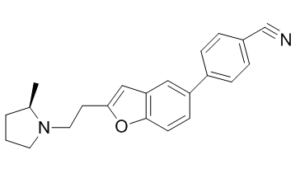
C22H22N2O
|
|---|---|
| 分子量 |
330.42288
|
| 精确质量 |
330.173
|
| 元素分析 |
C, 79.97; H, 6.71; N, 8.48; O, 4.84
|
| CAS号 |
460746-46-7
|
| PubChem CID |
9818903
|
| 外观&性状 |
Light yellow to khaki solid powder
|
| LogP |
4.936
|
| tPSA |
40.17
|
| 氢键供体(HBD)数目 |
0
|
| 氢键受体(HBA)数目 |
3
|
| 可旋转键数目(RBC) |
4
|
| 重原子数目 |
25
|
| 分子复杂度/Complexity |
490
|
| 定义原子立体中心数目 |
1
|
| SMILES |
C[C@H]1N(CCC2=CC3=C(C=CC(C4=CC=C(C#N)C=C4)=C3)O2)CCC1
|
| InChi Key |
KFHYZKCRXNRKRC-MRXNPFEDSA-N
|
| InChi Code |
InChI=1S/C22H22N2O/c1-16-3-2-11-24(16)12-10-21-14-20-13-19(8-9-22(20)25-21)18-6-4-17(15-23)5-7-18/h4-9,13-14,16H,2-3,10-12H2,1H3/t16-/m1/s1
|
| 化学名 |
4-[2-[2-[(2R)-2-methylpyrrolidin-1-yl]ethyl]-1-benzofuran-5-yl]benzonitrile
|
| 别名 |
ABT-239; ABT 239; ABT239
|
| HS Tariff Code |
2934.99.9001
|
| 存储方式 |
Powder -20°C 3 years 4°C 2 years In solvent -80°C 6 months -20°C 1 month |
| 运输条件 |
Room temperature (This product is stable at ambient temperature for a few days during ordinary shipping and time spent in Customs)
|
| 溶解度 (体外实验) |
DMSO: ≥ 100 mg/mL (~302.7 mM)
H2O: < 0.1 mg/mL |
|---|---|
| 溶解度 (体内实验) |
配方 1 中的溶解度: ≥ 2.5 mg/mL (7.57 mM) (饱和度未知) in 10% DMSO + 40% PEG300 + 5% Tween80 + 45% Saline (这些助溶剂从左到右依次添加,逐一添加), 澄清溶液。
例如,若需制备1 mL的工作液,可将100 μL 25.0 mg/mL澄清DMSO储备液加入到400 μL PEG300中,混匀;然后向上述溶液中加入50 μL Tween-80,混匀;加入450 μL生理盐水定容至1 mL。 *生理盐水的制备:将 0.9 g 氯化钠溶解在 100 mL ddH₂O中,得到澄清溶液。 配方 2 中的溶解度: 2.5 mg/mL (7.57 mM) in 10% DMSO + 90% (20% SBE-β-CD in Saline) (这些助溶剂从左到右依次添加,逐一添加), 悬浊液; 超声助溶。 例如,若需制备1 mL的工作液,可将 100 μL 25.0 mg/mL澄清DMSO储备液加入900 μL 20% SBE-β-CD生理盐水溶液中,混匀。 *20% SBE-β-CD 生理盐水溶液的制备(4°C,1 周):将 2 g SBE-β-CD 溶解于 10 mL 生理盐水中,得到澄清溶液。 View More
配方 3 中的溶解度: ≥ 2.5 mg/mL (7.57 mM) (饱和度未知) in 10% DMSO + 90% Corn Oil (这些助溶剂从左到右依次添加,逐一添加), 澄清溶液。 1、请先配制澄清的储备液(如:用DMSO配置50 或 100 mg/mL母液(储备液)); 2、取适量母液,按从左到右的顺序依次添加助溶剂,澄清后再加入下一助溶剂。以 下列配方为例说明 (注意此配方只用于说明,并不一定代表此产品 的实际溶解配方): 10% DMSO → 40% PEG300 → 5% Tween-80 → 45% ddH2O (或 saline); 假设最终工作液的体积为 1 mL, 浓度为5 mg/mL: 取 100 μL 50 mg/mL 的澄清 DMSO 储备液加到 400 μL PEG300 中,混合均匀/澄清;向上述体系中加入50 μL Tween-80,混合均匀/澄清;然后继续加入450 μL ddH2O (或 saline)定容至 1 mL; 3、溶剂前显示的百分比是指该溶剂在最终溶液/工作液中的体积所占比例; 4、 如产品在配制过程中出现沉淀/析出,可通过加热(≤50℃)或超声的方式助溶; 5、为保证最佳实验结果,工作液请现配现用! 6、如不确定怎么将母液配置成体内动物实验的工作液,请查看说明书或联系我们; 7、 以上所有助溶剂都可在 Invivochem.cn网站购买。 |
| 制备储备液 | 1 mg | 5 mg | 10 mg | |
| 1 mM | 3.0265 mL | 15.1323 mL | 30.2645 mL | |
| 5 mM | 0.6053 mL | 3.0265 mL | 6.0529 mL | |
| 10 mM | 0.3026 mL | 1.5132 mL | 3.0265 mL |
1、根据实验需要选择合适的溶剂配制储备液 (母液):对于大多数产品,InvivoChem推荐用DMSO配置母液 (比如:5、10、20mM或者10、20、50 mg/mL浓度),个别水溶性高的产品可直接溶于水。产品在DMSO 、水或其他溶剂中的具体溶解度详见上”溶解度 (体外)”部分;
2、如果您找不到您想要的溶解度信息,或者很难将产品溶解在溶液中,请联系我们;
3、建议使用下列计算器进行相关计算(摩尔浓度计算器、稀释计算器、分子量计算器、重组计算器等);
4、母液配好之后,将其分装到常规用量,并储存在-20°C或-80°C,尽量减少反复冻融循环。
计算结果:
工作液浓度: mg/mL;
DMSO母液配制方法: mg 药物溶于 μL DMSO溶液(母液浓度 mg/mL)。如该浓度超过该批次药物DMSO溶解度,请首先与我们联系。
体内配方配制方法:取 μL DMSO母液,加入 μL PEG300,混匀澄清后加入μL Tween 80,混匀澄清后加入 μL ddH2O,混匀澄清。
(1) 请确保溶液澄清之后,再加入下一种溶剂 (助溶剂) 。可利用涡旋、超声或水浴加热等方法助溶;
(2) 一定要按顺序加入溶剂 (助溶剂) 。
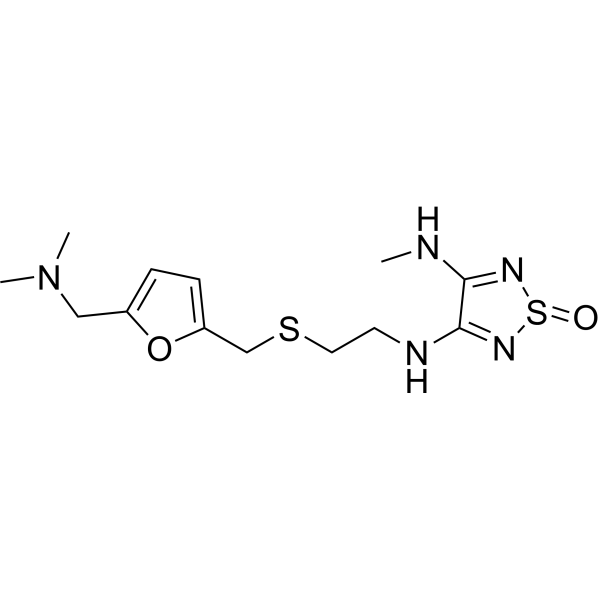 ORF 17583
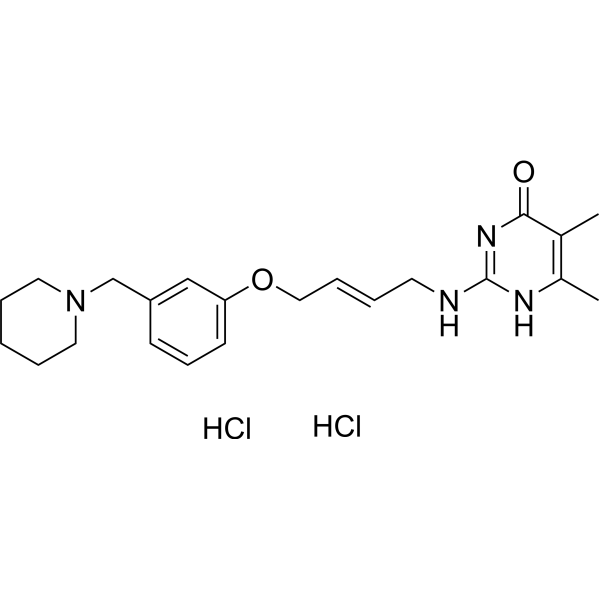 IGN-2098
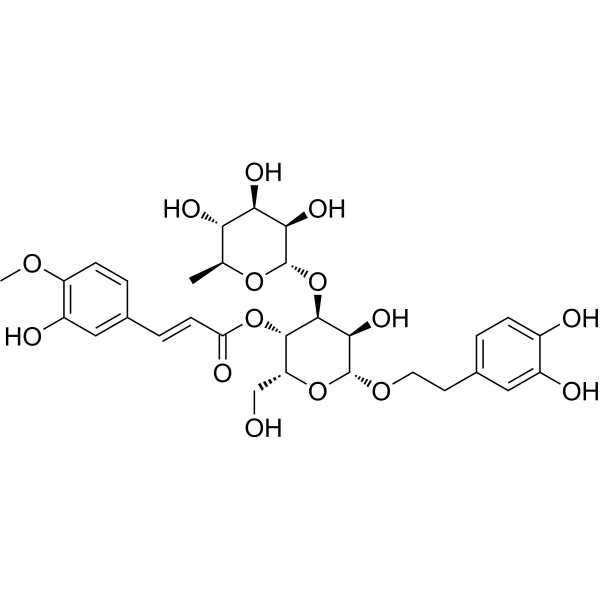 Eukovoside
 σ1R/H3R ligand-1
InvivoChem的所有产品仅用于作科学研究,不面向患者销售
Copyright 2020 InvivoChem LLC | All Rights Reserved 粤ICP备20063088号-1


 COA
COA
 粤公网安备 44011102003439号
 463611831
