| 规格 | 价格 | 库存 | 数量 |
|---|---|---|---|
| 500mg |
|
||
| 1g |
|
||
| 2g |
|
||
| 5g |
|
||
| Other Sizes |
|

| 靶点 |
The target of Cetilistat (ATL-962) is pancreatic lipase. It inhibits rat pancreatic lipase with an IC₅₀ of 54.8 nmol/l and human pancreatic lipase with an IC₅₀ of 5.95 nmol/l, showing 9.2 times higher potency against human pancreatic lipase than rat pancreatic lipase[1]
|
|---|---|
| 体外研究 (In Vitro) |
cetilistat 抑制大鼠胰腺脂肪酶活性,IC50 为 54.8 nM。此外,cetilistat 对人胰腺脂肪酶活性的抑制作用是大鼠胰腺脂肪酶的 9.2 倍,IC50 为 5.95 nM[1]。
西替利司他(Cetilistat,ATL-962)的体外活性主要体现在对胰脂肪酶的抑制作用上。实验表明,西替利司他(Cetilistat,ATL-962)能够抑制大鼠胰脂肪酶活性,其IC₅₀值为54.8 nmol/l;同时也能抑制人胰脂肪酶活性,且IC₅₀值更低,为5.95 nmol/l。这说明西替利司他(Cetilistat,ATL-962)在体外对胰脂肪酶具有较强的抑制作用,且对人胰脂肪酶的抑制效果显著强于对大鼠胰脂肪酶的抑制效果[1] |
| 体内研究 (In Vivo) |
在雄性 SD 大鼠中,cetilistat(3、10、30 或 100 mg/kg)抑制胰腺脂肪酶活性,减少肠道脂肪吸收[1]。通过减少肠道脂肪吸收,西替司他(4.9、14.9或50.7 mg/kg;混入粉状高脂食品中;每天三次;持续三周)对DIO F344大鼠具有抗肥胖和降高脂作用[1]。
1. 对Sprague-Dawley大鼠血浆甘油三酯(TG)浓度的影响:将西替利司他(Cetilistat,ATL-962)与脂肪乳剂同时经口给予Sprague-Dawley大鼠,给药剂量分别为3、10、30和100 mg/kg。结果显示,西替利司他(Cetilistat,ATL-962)能以剂量依赖性方式降低经口脂肪负荷引起的血浆甘油三酯浓度升高,表明其可减少大鼠肠道脂肪吸收[1] 2. 对饮食诱导肥胖(DIO)F344大鼠的影响:将西替利司他(Cetilistat,ATL-962)作为食物添加剂混入高脂饲料中,以4.9、14.9和50.7 mg/kg/天的剂量给DIO F344大鼠给药,持续三周。结果发现,大鼠粪便中甘油三酯和非酯化脂肪酸含量呈剂量依赖性显著增加,提示西替利司他(Cetilistat,ATL-962)可促进肠道脂肪的分解和排泄。同时,大鼠的体重(BW)增长和白色脂肪组织(WAT)重量均呈剂量依赖性降低。此外,大鼠血浆中的瘦素、甘油三酯(TG)和总胆固醇(TC)水平也有所降低,且未出现油性粪便的报告[1] |
| 酶活实验 |
针对西替利司他(Cetilistat,ATL-962)的酶活性测定主要围绕其对胰脂肪酶的抑制作用展开,具体流程如下:首先,制备含有大鼠或人胰脂肪酶以及相应底物的反应体系;然后,向反应体系中加入不同浓度的西替利司他(Cetilistat,ATL-962),并设置不含西替利司他(Cetilistat,ATL-962)的对照组;将反应体系在适宜的温度和时间条件下孵育后,通过相关检测方法(如分光光度法)检测体系中底物或产物浓度的变化,以此反映胰脂肪酶的活性;最后,根据不同药物浓度下酶活性的变化情况,计算出西替利司他(Cetilistat,ATL-962)对大鼠和人胰脂肪酶抑制作用的IC₅₀值[1]
|
| 动物实验 |
动物/疾病模型: 50只雄性SD大鼠(8周龄)[1]
剂量: 3、10、30或100 mg/kg 给药途径: 口服;配制于0.5%甲基纤维素(MC)悬浮液中 实验结果: 口服20% Intrafat可剂量依赖性地降低血浆甘油三酯的AUC 0-6 h。3 mg/kg剂量时,该效应具有统计学意义,降低幅度达45%;而100 mg/kg剂量时,降低幅度接近90%。 动物/疾病模型: 雄性饮食诱导肥胖 (DIO) F344 大鼠(5 周龄)[1] 剂量: 4.9、14.9 或 50.7 mg/kg 给药途径: 以食物混合物的形式加入高脂饮食中;每日一次;持续三周 实验结果: 与对照组相比,体重增加显著且呈剂量依赖性降低。 1. Sprague-Dawley 大鼠动物实验(观察对血浆甘油三酯浓度的影响):选择 Sprague-Dawley 大鼠作为实验动物。将西利司他 (ATL-962) 与脂肪乳剂同时口服给予大鼠。西利司他(ATL-962)的剂量设定为3、10、30和100 mg/kg。在口服脂肪负荷前后,采集大鼠血样,测定血浆甘油三酯(TG)浓度,以评价西利司他(ATL-962)降低脂肪负荷引起的血浆甘油三酯升高的效果[1]。 2. DIO F344大鼠动物实验(观察抗肥胖和降脂作用):采用饮食诱导肥胖(DIO)F344大鼠作为实验模型。将西利司他(ATL-962)作为饲料添加剂混入高脂饲料中,并给予大鼠。剂量分别为4.9、14.9和50.7 mg/kg/天,给药持续三周。实验期间,定期记录大鼠的体重。实验结束后,收集粪便以检测甘油三酯和非酯化脂肪酸的含量,解剖大鼠取白色脂肪组织(WAT)并称重,采集血液样本以测定血浆中瘦素、甘油三酯(TG)和总胆固醇(TC)的水平[1]。 |
| 参考文献 | |
| 其他信息 |
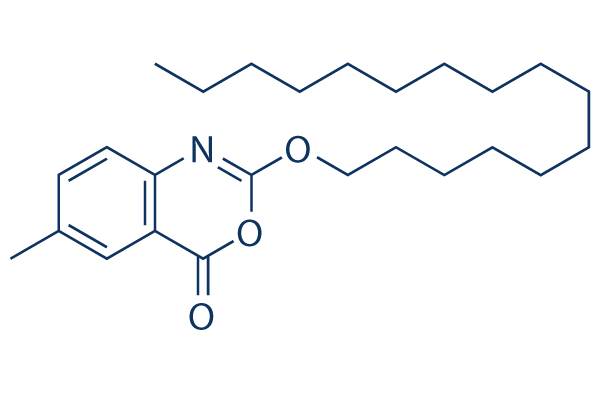
西利司他是一种苯并恶嗪类药物。
西利司他是由Alizyme公司开发的一种新型胰脂肪酶抑制剂,用于治疗肥胖症及其相关合并症,包括2型糖尿病。 药物适应症 已研究用于治疗肥胖症。 作用机制 西利司他是一种胃肠道脂肪酶抑制剂,可阻断脂肪的消化和吸收,从而减少能量摄入,达到减肥的目的。它与其他大多数抗肥胖药物不同,它不作用于大脑来抑制食欲,而是通过外周途径发挥作用。该化合物主要存在于胃肠道中,不会被身体大量吸收。 西利司他(ATL-962)是一种新型胰脂肪酶抑制剂。胰脂肪酶是参与肠道脂肪消化和吸收的重要酶。通过抑制胰脂肪酶的活性,西利司他(ATL-962)可以减少肠道对脂肪的消化吸收,从而减少脂肪热量的摄入,进而改善体重增加和血脂谱。在饮食诱导肥胖(DIO)大鼠(一种模拟人类最常见肥胖类型的动物模型)中的实验结果表明,西利司他(ATL-962)具有改善肥胖和高脂血症的潜力,为其在抗肥胖和降脂领域的进一步研究和开发奠定了基础[1] |
| 分子式 |
C25H39NO3
|
|
|---|---|---|
| 分子量 |
401.58
|
|
| 精确质量 |
401.292
|
|
| CAS号 |
282526-98-1
|
|
| 相关CAS号 |
|
|
| PubChem CID |
9952916
|
|
| 外观&性状 |
White to off-white solid powder
|
|
| 密度 |
1.0±0.1 g/cm3
|
|
| 沸点 |
509.7±43.0 °C at 760 mmHg
|
|
| 熔点 |
74°C
|
|
| 闪点 |
158.9±22.6 °C
|
|
| 蒸汽压 |
0.0±1.3 mmHg at 25°C
|
|
| 折射率 |
1.521
|
|
| LogP |
9.93
|
|
| tPSA |
52.33
|
|
| 氢键供体(HBD)数目 |
0
|
|
| 氢键受体(HBA)数目 |
4
|
|
| 可旋转键数目(RBC) |
16
|
|
| 重原子数目 |
29
|
|
| 分子复杂度/Complexity |
477
|
|
| 定义原子立体中心数目 |
0
|
|
| InChi Key |
MVCQKIKWYUURMU-UHFFFAOYSA-N
|
|
| InChi Code |
InChI=1S/C25H39NO3/c1-3-4-5-6-7-8-9-10-11-12-13-14-15-16-19-28-25-26-23-18-17-21(2)20-22(23)24(27)29-25/h17-18,20H,3-16,19H2,1-2H3
|
|
| 化学名 |
2-hexadecoxy-6-methyl-3,1-benzoxazin-4-one
|
|
| 别名 |
|
|
| HS Tariff Code |
2934.99.9001
|
|
| 存储方式 |
Powder -20°C 3 years 4°C 2 years In solvent -80°C 6 months -20°C 1 month |
|
| 运输条件 |
Room temperature (This product is stable at ambient temperature for a few days during ordinary shipping and time spent in Customs)
|
| 溶解度 (体外实验) |
|
|---|
| 制备储备液 | 1 mg | 5 mg | 10 mg | |
| 1 mM | 2.4902 mL | 12.4508 mL | 24.9016 mL | |
| 5 mM | 0.4980 mL | 2.4902 mL | 4.9803 mL | |
| 10 mM | 0.2490 mL | 1.2451 mL | 2.4902 mL |
1、根据实验需要选择合适的溶剂配制储备液 (母液):对于大多数产品,InvivoChem推荐用DMSO配置母液 (比如:5、10、20mM或者10、20、50 mg/mL浓度),个别水溶性高的产品可直接溶于水。产品在DMSO 、水或其他溶剂中的具体溶解度详见上”溶解度 (体外)”部分;
2、如果您找不到您想要的溶解度信息,或者很难将产品溶解在溶液中,请联系我们;
3、建议使用下列计算器进行相关计算(摩尔浓度计算器、稀释计算器、分子量计算器、重组计算器等);
4、母液配好之后,将其分装到常规用量,并储存在-20°C或-80°C,尽量减少反复冻融循环。
计算结果:
工作液浓度: mg/mL;
DMSO母液配制方法: mg 药物溶于 μL DMSO溶液(母液浓度 mg/mL)。如该浓度超过该批次药物DMSO溶解度,请首先与我们联系。
体内配方配制方法:取 μL DMSO母液,加入 μL PEG300,混匀澄清后加入μL Tween 80,混匀澄清后加入 μL ddH2O,混匀澄清。
(1) 请确保溶液澄清之后,再加入下一种溶剂 (助溶剂) 。可利用涡旋、超声或水浴加热等方法助溶;
(2) 一定要按顺序加入溶剂 (助溶剂) 。
InvivoChem的所有产品仅用于作科学研究,不面向患者销售
Copyright 2020 InvivoChem LLC | All Rights Reserved 粤ICP备20063088号-1


 COA
COA
 粤公网安备 44011102003439号
 463611831
