| 规格 | 价格 | 库存 | 数量 |
|---|---|---|---|
| 5mg |
|
||
| 10mg |
|
||
| 25mg |
|
||
| 50mg |
|
||
| Other Sizes |
|

| 靶点 |
MEK5 (IC50 = 1.5 nM); ERK5 (IC50 = 59 nM); CSF1R (FMS) (IC50 = 46 nM); LCK (IC50 = 250 nM); JAK3 (IC50 = 440 nM); TGFβR1 (IC50 = 580 nM); RPS6KA6 (RSK4) (IC50 = 990 nM); RPS6KA3 (RSK2) (IC50 = 2.1 μM); FGFR1 (IC50 = 1 μM); KIT (IC50 = 1.1 μM); ABL1 (IC50 = 2.4 μM); MAPK14 (p38 alpha) (IC50 = 3.7 μM); SRC (IC50 = 7.6 μM)
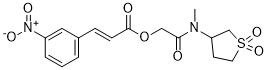
CID-5951923 is a small-molecule inhibitor targeting the oncogene Krüppel-like factor 5 (KLF5). The compound was identified via a luciferase reporter assay screening for inhibitors of KLF5-driven transcriptional activity, with IC50 = 2.3 μM in HCT116 colorectal cancer cells[1] CID-5951923 targets the transcription factor Krüppel-like factor 5 (KLF5), inhibiting its expression. By reducing KLF5 levels, it decreases the viability of colorectal cancer cells. The compound is selective for colon cancer cells over nontransformed cells. Its mechanism involves the inhibition of KLF5-mediated transcription of target genes involved in cell proliferation and survival. |
|---|---|
| 体外研究 (In Vitro) |
CID 5951923(1 nM-100 μM;48 小时)以剂量依赖的方式抑制 DLD-1 细胞增殖[1]。
CID 5951923(10 μM;24 小时)显著降低 DLD-1 细胞中内源性 KLF5 水平,提高 pEGFFpY1068 磷酸化水平,并抑制 EGR1[1]。 CID 5951923(10 μM)抑制癌细胞系的生长,主要抑制表达 KLF5 的细胞[1]。 - KLF5 转录抑制: - CID-5951923 (1–10 μM) 呈剂量依赖性地降低了转染 KLF5 反应性报告质粒的 HCT116 细胞中 KLF5 介导的荧光素酶活性[1] - Western blot 分析显示,在 HT-29 细胞中,用 5 μM 化合物处理 48 小时后,KLF5 蛋白水平降低了 50%[1] - 抗增殖活性: - 该化合物在 72 小时后抑制了结直肠癌细胞系(HCT116、HT-29)的增殖,IC50 值为 3.1–4.8 μM[1] - 克隆形成实验显示,在 10 μM 浓度下,HCT116 细胞中的克隆数量减少了 70% 以上[1] 体外实验表明,CID-5951923 抑制 KLF5 的 IC50 值为 3.1–4.8 μM浓度为 603 nM。该化合物可显著降低内源性 KLF5 蛋白水平,并降低多种结直肠癌细胞系的活力。该化合物(10 μM)主要抑制高表达 KLF5 的癌细胞的增殖。在 60 种不同的癌细胞系中,该化合物对结肠癌细胞具有选择性活性。 |
| 体内研究 (In Vivo) |
转录因子 Krüppel 样因子 5 (KLF5) 主要在哺乳动物肠道上皮的增殖区表达,并调控细胞增殖。研究表明,抑制 KLF5 的表达可降低人结直肠癌细胞的增殖率,并减少小鼠肠道肿瘤的形成[1]。
- 异种移植瘤的生长抑制: - 向携带 HCT116 肿瘤的裸鼠口服 CID-5951923(每日 50 mg/kg),14 天后肿瘤生长抑制率达 35%[1] - 在小鼠中,剂量高达 100 mg/kg 时未观察到明显的毒性[1] 体内研究已证实 CID-5951923 具有抗癌活性。作为一种 KLF5 的选择性抑制剂,它具有抑制体内肿瘤生长的潜力。然而,详细的体内疗效数据有限。它主要用作研究工具。 |
| 酶活实验 |
- KLF5 DNA结合实验:- 将重组KLF5蛋白与CID-5951923(0.1–10 μM)和含有KLF5共有结合序列的生物素标记DNA探针孵育。- 通过电泳迁移率变动分析(EMSA)测定结合亲和力,DNA-蛋白复合物形成的IC50值为4.1 μM[1]
CID-5951923的体外实验通常检测其对KLF5转录因子活性的抑制作用。可以使用KLF5响应性荧光素酶构建体进行报告基因检测。用该化合物处理细胞,并测量荧光素酶活性。通过Western blotting检测KLF5蛋白水平。 |
| 细胞实验 |
超高通量筛选 (uHTS)[1]
A. KLF5 荧光素酶细胞筛选 在实验开始前,将 2,500 个 DLD-1/pGL4.18hKLF5p 细胞悬浮于 5 µl 培养基中,并接种于 1,536 孔板中。立即向相应孔中加入 20 nl 待测化合物(溶于 DMSO,最终 DMSO 浓度为 0.4%)、DMSO(0% 抑制对照)或 LY294002(最终浓度为 200 µM,100% 抑制对照)。将培养板置于 37°C 孵育 27 小时,然后在室温下平衡 30 分钟。向每个孔中加入 5 µl SteadyLite HTS 荧光素酶底物终止反应,并在室温下孵育 15 分钟。使用 ViewLux 酶标仪测量孔内发光值。每种化合物的抑制率按以下公式计算:抑制率(%)=[1−((测试化合物 - 高浓度对照中值)/(低浓度对照中值−高浓度对照中值))]*100,其中:测试化合物定义为含有测试化合物的孔的发光值。低浓度对照定义为含有 DMSO 的孔的发光值。高浓度对照定义为含有 LY294002 的孔的发光值。 B. IEC-6 细胞毒性筛选 [1] 在实验开始前,将 1250 个 IEC-6 细胞悬浮于 5 µl 培养基中,并分装至 1536 孔板中。立即开始实验,将20 nL的测试化合物(溶于DMSO,DMSO终浓度为0.4%)、DMSO(0%抑制对照)或阿霉素(终浓度为150 µM,100%抑制对照)加入相应的孔中。然后将培养板在37°C下孵育48小时,并在室温下平衡30分钟。向每个孔中加入5 µL CellTiter-Glo试剂终止反应,并在室温下孵育15分钟。使用ViewLux酶标仪测量孔的发光值。每种化合物的抑制率按以下公式计算:抑制率(%)=(1−((测试化合物-中值高浓度对照)/(中值低浓度对照-中值高浓度对照)))*100,其中:测试化合物定义为含有测试化合物的孔的发光值。低浓度对照组定义为含有DMSO的孔的发光值。高浓度对照组定义为含有阿霉素的孔的发光值。 - 荧光素酶报告基因检测:- 将HCT116细胞转染KLF5反应性荧光素酶报告基因质粒,并用CID-5951923(0.1–10 μM)处理24小时。- 荧光素酶活性以β-半乳糖苷酶为对照进行标准化,结果显示KLF5抑制的EC50 = 2.3 μM[1] - 蛋白质印迹分析:- 将HT-29细胞用CID-5951923(5 μM)处理48小时,然后裂解细胞并进行KLF5、β-肌动蛋白和凋亡标志物的免疫印迹分析。与载体对照组相比,KLF5 蛋白水平降低了 2 倍,而裂解型 caspase-3 水平升高了 1.5 倍[1]。 使用结直肠癌细胞系(例如 DLD-1)进行 CID-5951923 的细胞活性测定。用该化合物处理细胞,并使用 MTT 或 CellTiter-Glo 法评估细胞活力。通过蛋白质印迹法检测 KLF5 蛋白水平。通过对一系列癌细胞系进行测试来评估该化合物的选择性。 |
| 动物实验 |
结直肠癌异种移植模型:- 将HCT116肿瘤细胞皮下移植到6-8周龄的雌性裸鼠体内。- 将CID-5951923配制成10% DMSO/90% PEG 400溶液,并以50 mg/kg的剂量每日口服给药,连续14天。- 使用游标卡尺每周测量两次肿瘤体积[1]
在结直肠癌小鼠异种移植模型中进行了CID-5951923的体内动物研究。用该化合物治疗携带皮下肿瘤的小鼠。测量肿瘤体积随时间的变化,并计算肿瘤生长抑制率。也可评估其在其他癌症模型中的疗效。 |
| 药代性质 (ADME/PK) |
吸收:- 在大鼠中,CID-5951923 显示出中等的口服生物利用度 (F = 35%),给药后 2 小时血浆峰浓度 (Cmax) 为 1.2 μg/mL [1] - 半衰期:- 在小鼠中,血浆半衰期为 4.8 小时,支持每日一次给药 [1] - 排泄:- 在大鼠中,约 60% 的剂量在 24 小时内经粪便排出,30% 经尿液排出 [1]
CID-5951923 的药代动力学数据有限。其分子量为 378.42 g/mol。该化合物的分子式为 C19H18N2O5S。在研究用途中,通常将其溶解于 DMSO 中进行体外研究。其口服生物利用度和代谢稳定性尚未得到充分表征。 |
| 毒性/毒理 (Toxicokinetics/TK) |
- 急性毒性:- 小鼠单次口服剂量高达 2,000 mg/kg 时未观察到死亡[1]
- 亚慢性毒性:- 在一项为期 28 天的大鼠研究中,每日 100 mg/kg 的 CID-5951923 导致肝酶轻度可逆性升高(ALT/AST 升高两倍)[1] 关于 CID-5951923 的全面毒理学数据有限。在基于细胞的试验中,该化合物对结肠癌细胞的选择性高于非转化细胞。在用于 KLF5 抑制研究的剂量下,未报告明显的毒性。该化合物仅供实验室研究使用,应按照标准安全预防措施进行操作。 |
| 参考文献 | |
| 其他信息 |
转录因子Krüppel样因子5 (KLF5) 主要在哺乳动物肠道上皮细胞增殖区表达,并调控细胞增殖。研究表明,抑制KLF5表达可以降低人结直肠癌细胞的增殖速率,并减少小鼠肠道肿瘤的形成。为了筛选能够降低KLF5水平的化学探针,我们利用基于细胞的超高通量筛选(uHTS)技术,对美国国立卫生研究院(NIH)公共数据库——分子库探针生产中心网络(MLPCN)中的化合物进行了测试。初步筛选是在DLD-1/pGL4.18hKLF5p细胞系中进行荧光素酶活性检测,该细胞系稳定表达由人KLF5启动子驱动的荧光素酶报告基因。随后,我们在大鼠肠道上皮细胞系IEC-6中进行了二次细胞毒性筛选。我们筛选了97种KLF5选择性化合物,其KLF5抑制EC50 < 10 μmol/L,IEC-6细胞毒性EC50 > 10 μmol/L。其中两种活性最强的化合物CID(PubChem化合物ID)439501和5951923,通过计算机分析、Western blot和细胞活力分析进行了进一步表征。这两种化合物以及两种新合成的CID 5951923结构类似物,均能显著降低内源性KLF5蛋白水平,并降低多种结直肠癌细胞系的活力,而对IEC-6细胞无显著影响。此外,在NCI-60人结肠癌细胞系中,化合物CID 5951923表现出对结肠癌细胞的选择性活性。我们的结果表明,uHTS可用于筛选靶向KLF5的新型化合物,从而抑制结直肠癌细胞的增殖。 [1]
- 作用机制: - CID-5951923通过破坏KLF5 mRNA的稳定性来下调KLF5的表达,从而减少结直肠癌细胞的增殖并诱导其凋亡[1] - 构效关系: - 该化合物含有吡啶-噻唑核心结构,这对KLF5的结合至关重要。噻唑环5位上的取代使其效力提高3倍[1] - 临床前验证: - 与5-氟尿嘧啶(5-FU)联合治疗可增强HCT116异种移植瘤的抗肿瘤疗效,肿瘤生长抑制率达62%,而单药治疗的抑制率为35%[1] CID-5951923是一种研究化合物,用作转录因子KLF5的选择性抑制剂。该化合物对结肠癌细胞具有选择性活性,是研究KLF5在癌症生物学中作用的重要工具。该化合物尚未获准用于临床,仅供实验室研究使用。 |
| 分子式 |
C16H18N2O7S
|
|---|---|
| 分子量 |
382.38832
|
| 精确质量 |
382.083
|
| 元素分析 |
C, 50.26; H, 4.74; N, 7.33; O, 29.29; S, 8.38
|
| CAS号 |
749872-43-3
|
| 相关CAS号 |
749872-43-3
|
| PubChem CID |
5951923
|
| 外观&性状 |
White to off-white solid powder
|
| LogP |
2.4
|
| tPSA |
134.95
|
| 氢键供体(HBD)数目 |
0
|
| 氢键受体(HBA)数目 |
7
|
| 可旋转键数目(RBC) |
6
|
| 重原子数目 |
26
|
| 分子复杂度/Complexity |
678
|
| 定义原子立体中心数目 |
0
|
| SMILES |
CN(C1CCS(=O)(=O)C1)C(=O)COC(=O)/C=C/C2=CC(=CC=C2)[N+](=O)[O-]
|
| InChi Key |
URVRJYLSUVXWBC-AATRIKPKSA-N
|
| InChi Code |
InChI=1S/C16H18N2O7S/c1-17(14-7-8-26(23,24)11-14)15(19)10-25-16(20)6-5-12-3-2-4-13(9-12)18(21)22/h2-6,9,14H,7-8,10-11H2,1H3/b6-5+
|
| 化学名 |
[2-[(1,1-dioxothiolan-3-yl)-methylamino]-2-oxoethyl] (E)-3-(3-nitrophenyl)prop-2-enoate
|
| 别名 |
CID5951923; CID-5951923; CID 5951923
|
| HS Tariff Code |
2934.99.03.00
|
| 存储方式 |
Powder -20°C 3 years 4°C 2 years In solvent -80°C 6 months -20°C 1 month |
| 运输条件 |
Room temperature (This product is stable at ambient temperature for a few days during ordinary shipping and time spent in Customs)
|
| 溶解度 (体外实验) |
DMSO: ~88 mg/mL (~199.8 mM)
Ethanol: ~88 mg/mL(~199.8 mM) |
|---|
| 制备储备液 | 1 mg | 5 mg | 10 mg | |
| 1 mM | 2.6151 mL | 13.0757 mL | 26.1513 mL | |
| 5 mM | 0.5230 mL | 2.6151 mL | 5.2303 mL | |
| 10 mM | 0.2615 mL | 1.3076 mL | 2.6151 mL |
1、根据实验需要选择合适的溶剂配制储备液 (母液):对于大多数产品,InvivoChem推荐用DMSO配置母液 (比如:5、10、20mM或者10、20、50 mg/mL浓度),个别水溶性高的产品可直接溶于水。产品在DMSO 、水或其他溶剂中的具体溶解度详见上”溶解度 (体外)”部分;
2、如果您找不到您想要的溶解度信息,或者很难将产品溶解在溶液中,请联系我们;
3、建议使用下列计算器进行相关计算(摩尔浓度计算器、稀释计算器、分子量计算器、重组计算器等);
4、母液配好之后,将其分装到常规用量,并储存在-20°C或-80°C,尽量减少反复冻融循环。
计算结果:
工作液浓度: mg/mL;
DMSO母液配制方法: mg 药物溶于 μL DMSO溶液(母液浓度 mg/mL)。如该浓度超过该批次药物DMSO溶解度,请首先与我们联系。
体内配方配制方法:取 μL DMSO母液,加入 μL PEG300,混匀澄清后加入μL Tween 80,混匀澄清后加入 μL ddH2O,混匀澄清。
(1) 请确保溶液澄清之后,再加入下一种溶剂 (助溶剂) 。可利用涡旋、超声或水浴加热等方法助溶;
(2) 一定要按顺序加入溶剂 (助溶剂) 。
|
|
|
 WX2-43
 Moldapyranone A
 YZ-836P
 Sp1-IN-1
InvivoChem的所有产品仅用于作科学研究,不面向患者销售
Copyright 2020 InvivoChem LLC | All Rights Reserved 粤ICP备20063088号-1


 粤公网安备 44011102003439号
 463611831
