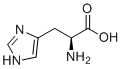
Histidine

别名: Histidine NSC137773 NSC 137773 NSC-137773L-Histidine L-组氨酸; L-A-氨基-β-4-咪唑基丙酸; (S)-2-氨基-3-(4-咪唑基)丙酸; 组氨酸; L-组织氨基酸; Α-氨基-1H-咪唑-4-丙酸; 咪唑-5-Α-丙氨酸; L-Histidine; L-组氨酸;L-组氨酸 USP标准品;L-组氨酸 标准品;L-组氨酸(RG);L-组氨酸(碱);L-组氨酸,BR;L-组氨酸,对照品;L-组氨酸碱;L-组氨酸盐酸盐;组氨酸 EP标准品;2-胺-3-咪唑丙酸;L-2-氨基-3(4-咪唑基)丙酸;L-α-氨基-β-4-咪唑基丙酸;L-组氨酸,L-Histidine,EP, USP ,非动物源,用于细胞培养;織胺酸;组氨酸杂质 标准品
目录号: V7857 纯度: ≥98%
L-组氨酸是婴儿必需的氨基酸 (AA)。
Histidine CAS号: 71-00-1
产品类别: New1
产品仅用于科学研究,不针对患者销售
规格 价格 库存 数量
250mg
500mg
1g
Other Sizes

Other Forms of Histidine:

  • L-Histidine-15N3 hydrochloride hydrate (H-His-OH-15N3 (hydrochloride hydrate))
  • L-Histidine-15N3,d5 hydrochloride hydrate (L-Histidine hydrochloride, monohydrate-15N3,d5)
  • L-Histidine-15N3
  • L-Histidine-13C6,15N3 hydrochloride (L-Histidine hydrochloride-13C6,15N3)
  • L-Histidine-13C6,15N3 hydrochloride hydrate (H-His-OH-13C6,15N3 (hydrochloride hydrate))
  • L-Histidine dihydrochloride (histidine hydrochloride)
点击了解更多
InvivoChem产品被CNS等顶刊论文引用
产品描述
L-组氨酸是婴儿必需的氨基酸 (AA)。 L-组氨酸是线粒体谷氨酰胺转运的抑制剂(阻断剂/拮抗剂)。
生物活性&实验参考方法
体外研究 (In Vitro)
L-组氨酸完全抑制生长,其对活力的影响与 FLO11 的表达呈负相关。 L-组氨酸对S288c和Δflo11菌株的存活能力没有影响。 L-组氨酸极大地抑制了弗洛氏酵母的空气-液体生物膜形成和聚硅氧烷痕迹,而FLO11基因的改变水平不受影响。此外,L-组氨酸可以改变弗洛酵母细胞壁中脂质和几丁质的含量[1]。
体内研究 (In Vivo)
L-组氨酸(100 mg/kg)完全抑制硫代乙酰胺治疗的脑水肿[2]。 L-组氨酸饮食组60%的脑水肿是由于强K+刺激下下丘脑释放组胺引起的。然而,L-组氨酸饮食对其他单胺没有影响,也不会改变该物质的浓度。 L-组氨酸饮食组在整个明暗箱测试表现期间都停在灯箱中,而在旷场测试表现期间,他们停在中心区域。这表明 L-组氨酸饮食组可能会导致焦虑样行为 [3]。
药代性质 (ADME/PK)
Absorption, Distribution and Excretion
Absorbed from the small intestine via an active transport mechanism requiring the presence of sodium.
ESSENTIAL AMINO ACIDS ARE TRANSFERRED TO FETUS AGAINST A CONCN GRADIENT &, IN THE CASE OF HISTIDINE, NATURAL L-ISOMER HAS BEEN SHOWN TO CROSS SEVERAL TIMES AS FAST AS THE D-ISOMER.
Metabolism / Metabolites
PRODUCT OF OXIDATIVE DEAMINATION OR TRANSAMINATION OF L-HISTIDINE IS BETA-IMIDAZOLEPYRUVIC ACID; & PRODUCT OF DECARBOXYLATION IS HISTAMINE. HISTAMINE ENTERS OTHER PATHWAYS TO YIELD FURTHER METABOLIC PRODUCTS. /FROM TABLE/
毒性/毒理 (Toxicokinetics/TK)
Toxicity Summary
Since the actions of supplemental L-histidine are unclear, any postulated mechanism is entirely speculative. However, some facts are known about L-histidine and some of its metabolites, such as histamine and trans-urocanic acid, which suggest that supplemental L-histidine may one day be shown to have immunomodulatory and/or antioxidant activities. Low free histidine has been found in the serum of some rheumatoid arthritis patients. Serum concentrations of other amino acids have been found to be normal in these patients. L-histidine is an excellent chelating agent for such metals as copper, iron and zinc. Copper and iron participate in a reaction (Fenton reaction) that generates potent reactive oxygen species that could be destructive to tissues, including joints.
L-histidine is the obligate precursor of histamine, which is produced via the decarboxylation of the amino acid. In experimental animals, tissue histamine levels increase as the amount of dietary L-histidine increases. It is likely that this would be the case in humans as well. Histamine is known to possess immunomodulatory and antioxidant activity. Suppressor T cells have H2 receptors, and histamine activates them. Promotion of suppressor T cell activity could be beneficial in rheumatoid arthritis. Further, histamine has been shown to down-regulate the production of reactive oxygen species in phagocytic cells, such as monocytes, by binding to the H2 receptors on these cells. Decreased reactive oxygen species production by phagocytes could play antioxidant, anti-inflammatory and immunomodulatory roles in such diseases as rheumatoid arthritis.
This latter mechanism is the rationale for the use of histamine itself in several clinical trials studying histamine for the treatment of certain types of cancer and viral diseases. In these trials, down-regulation by histamine of reactive oxygen species formation appears to inhibit the suppression of natural killer (NK) cells and cytotoxic T lymphocytes, allowing these cells to be more effective in attacking cancer cells and virally infected cells.
Toxicity Data
ORL-RAT LD50 > 15000 mg/kg, IPR-RAT LD50 > 8000 mg/kg, ORL-MUS LD50 > 15000 mg/kg, IVN-MUS LD50 > 2000 mg/kg
Interactions
WARFARIN ALONE AT 5 MG/KG OF BAIT KILLED 37% OF ROOF RATS, BUT WHEN IN COMBINATION WITH L-HISTIDINE (40 MG/KG BAIT), ACTIVATED CLAY, CHARCOAL, & CARBON (10 G/KG BAIT) IT CAUSED, RESPECTIVELY, 100, 88, 75, & 63% MORTALITY OF RATS.
参考文献
[1]. Bou Zeidan M, et al. L-histidine inhibits biofilm formation and FLO11-associated phenotypes in Saccharomyces cerevisiae flor yeasts. PLoS One. 2014 Nov 4;9(11):e112141.
[2]. Rama Rao KV, et al. Brain edema in acute liver failure: inhibition by L-histidine. Am J Pathol. 2010 Mar;176(3):1400-8.
[3]. Yoshikawa T, et al. Insufficient intake of L-histidine reduces brain histamine and causes anxiety-like behaviors in male mice. J Nutr. 2014 Oct;144(10):1637-41
其他信息
Pharmacodynamics
Is found abundantly in hemoglobin; has been used in the treatment of rheumatoid arthritis, allergic diseases, ulcers and anemia. A deficiency can cause poor hearing.
*注: 文献方法仅供参考, InvivoChem并未独立验证这些方法的准确性
化学信息 & 存储运输条件
分子式
C6H9N3O2
分子量
155.15
精确质量
155.069
CAS号
71-00-1
相关CAS号
L-Histidine-15N3;1217456-12-6;L-Histidine-13C6,15N3 hydrochloride;L-Histidine dihydrochloride;6027-02-7
PubChem CID
6274
外观&性状
Needles or plates
COLORLESS
密度
1.4±0.1 g/cm3
沸点
458.9±35.0 °C at 760 mmHg
熔点
282 °C (dec.)(lit.)
闪点
231.3±25.9 °C
蒸汽压
0.0±1.2 mmHg at 25°C
折射率
1.615
LogP
-1.26
tPSA
92
氢键供体(HBD)数目
3
氢键受体(HBA)数目
4
可旋转键数目(RBC)
3
重原子数目
11
分子复杂度/Complexity
151
定义原子立体中心数目
1
SMILES
C1=C(NC=N1)C[C@@H](C(=O)O)N
InChi Key
HNDVDQJCIGZPNO-YFKPBYRVSA-N
InChi Code
InChI=1S/C6H9N3O2/c7-5(6(10)11)1-4-2-8-3-9-4/h2-3,5H,1,7H2,(H,8,9)(H,10,11)/t5-/m0/s1
化学名
(2S)-2-amino-3-(1H-imidazol-5-yl)propanoic acid
别名
Histidine NSC137773 NSC 137773 NSC-137773L-Histidine
HS Tariff Code
2934.99.9001
存储方式

Powder      -20°C    3 years

                     4°C     2 years

In solvent   -80°C    6 months

                  -20°C    1 month

运输条件
Room temperature (This product is stable at ambient temperature for a few days during ordinary shipping and time spent in Customs)
溶解度数据
溶解度 (体外实验)
H2O : ~20.83 mg/mL (~134.26 mM)
DMSO : ~1 mg/mL (~6.45 mM)
溶解度 (体内实验)
配方 1 中的溶解度: 25 mg/mL (161.13 mM) in PBS (这些助溶剂从左到右依次添加,逐一添加), 澄清溶液; 超声助溶。

请根据您的实验动物和给药方式选择适当的溶解配方/方案:
1、请先配制澄清的储备液(如:用DMSO配置50 或 100 mg/mL母液(储备液));
2、取适量母液,按从左到右的顺序依次添加助溶剂,澄清后再加入下一助溶剂。以 下列配方为例说明 (注意此配方只用于说明,并不一定代表此产品 的实际溶解配方):
10% DMSO → 40% PEG300 → 5% Tween-80 → 45% ddH2O (或 saline);
假设最终工作液的体积为 1 mL, 浓度为5 mg/mL: 取 100 μL 50 mg/mL 的澄清 DMSO 储备液加到 400 μL PEG300 中,混合均匀/澄清;向上述体系中加入50 μL Tween-80,混合均匀/澄清;然后继续加入450 μL ddH2O (或 saline)定容至 1 mL;

3、溶剂前显示的百分比是指该溶剂在最终溶液/工作液中的体积所占比例;
4、 如产品在配制过程中出现沉淀/析出,可通过加热(≤50℃)或超声的方式助溶;
5、为保证最佳实验结果,工作液请现配现用!
6、如不确定怎么将母液配置成体内动物实验的工作液,请查看说明书或联系我们;
7、 以上所有助溶剂都可在 Invivochem.cn网站购买。
制备储备液 1 mg 5 mg 10 mg
1 mM 6.4454 mL 32.2269 mL 64.4538 mL
5 mM 1.2891 mL 6.4454 mL 12.8908 mL
10 mM 0.6445 mL 3.2227 mL 6.4454 mL

1、根据实验需要选择合适的溶剂配制储备液 (母液):对于大多数产品,InvivoChem推荐用DMSO配置母液 (比如:5、10、20mM或者10、20、50 mg/mL浓度),个别水溶性高的产品可直接溶于水。产品在DMSO 、水或其他溶剂中的具体溶解度详见上”溶解度 (体外)”部分;

2、如果您找不到您想要的溶解度信息,或者很难将产品溶解在溶液中,请联系我们;

3、建议使用下列计算器进行相关计算(摩尔浓度计算器、稀释计算器、分子量计算器、重组计算器等);

4、母液配好之后,将其分装到常规用量,并储存在-20°C或-80°C,尽量减少反复冻融循环。

计算器

摩尔浓度计算器可计算特定溶液所需的质量、体积/浓度,具体如下:

  • 计算制备已知体积和浓度的溶液所需的化合物的质量
  • 计算将已知质量的化合物溶解到所需浓度所需的溶液体积
  • 计算特定体积中已知质量的化合物产生的溶液的浓度
使用摩尔浓度计算器计算摩尔浓度的示例如下所示:
假如化合物的分子量为350.26 g/mol,在5mL DMSO中制备10mM储备液所需的化合物的质量是多少?
  • 在分子量(MW)框中输入350.26
  • 在“浓度”框中输入10,然后选择正确的单位(mM)
  • 在“体积”框中输入5,然后选择正确的单位(mL)
  • 单击“计算”按钮
  • 答案17.513 mg出现在“质量”框中。以类似的方式,您可以计算体积和浓度。

稀释计算器可计算如何稀释已知浓度的储备液。例如,可以输入C1、C2和V2来计算V1,具体如下:

制备25毫升25μM溶液需要多少体积的10 mM储备溶液?
使用方程式C1V1=C2V2,其中C1=10mM,C2=25μM,V2=25 ml,V1未知:
  • 在C1框中输入10,然后选择正确的单位(mM)
  • 在C2框中输入25,然后选择正确的单位(μM)
  • 在V2框中输入25,然后选择正确的单位(mL)
  • 单击“计算”按钮
  • 答案62.5μL(0.1 ml)出现在V1框中
g/mol

分子量计算器可计算化合物的分子量 (摩尔质量)和元素组成,具体如下:

注:化学分子式大小写敏感:C12H18N3O4  c12h18n3o4
计算化合物摩尔质量(分子量)的说明:
  • 要计算化合物的分子量 (摩尔质量),请输入化学/分子式,然后单击“计算”按钮。
分子质量、分子量、摩尔质量和摩尔量的定义:
  • 分子质量(或分子量)是一种物质的一个分子的质量,用统一的原子质量单位(u)表示。(1u等于碳-12中一个原子质量的1/12)
  • 摩尔质量(摩尔重量)是一摩尔物质的质量,以g/mol表示。
/

配液计算器可计算将特定质量的产品配成特定浓度所需的溶剂体积 (配液体积)

  • 输入试剂的质量、所需的配液浓度以及正确的单位
  • 单击“计算”按钮
  • 答案显示在体积框中
动物体内实验配方计算器(澄清溶液)
第一步:请输入基本实验信息(考虑到实验过程中的损耗,建议多配一只动物的药量)
第二步:请输入动物体内配方组成(配方适用于不溶/难溶于水的化合物),不同的产品和批次配方组成不同,如对配方有疑问,可先联系我们提供正确的体内实验配方。此外,请注意这只是一个配方计算器,而不是特定产品的确切配方。
+
+
+

计算结果:

工作液浓度 mg/mL;

DMSO母液配制方法 mg 药物溶于 μL DMSO溶液(母液浓度 mg/mL)。如该浓度超过该批次药物DMSO溶解度,请首先与我们联系。

体内配方配制方法μL DMSO母液,加入 μL PEG300,混匀澄清后加入μL Tween 80,混匀澄清后加入 μL ddH2O,混匀澄清。

(1) 请确保溶液澄清之后,再加入下一种溶剂 (助溶剂) 。可利用涡旋、超声或水浴加热等方法助溶;
            (2) 一定要按顺序加入溶剂 (助溶剂) 。

临床试验信息
NCT Number Recruitment interventions Conditions Sponsor/Collaborators Start Date Phases
NCT04142294 COMPLETED Dietary Supplement: Histidine Healthy Cornell University 2017-09-21 Not Applicable
NCT02924935 UNKNOWN STATUS Dietary Supplement: L-Histidine HARS Syndrome Lawson Health Research Institute 2018-08-01 Phase 2
Phase 3
NCT06169826 NOT YET RECRUITING Drug: l-Histidine
Other: Control
Alzheimer Disease Wake Forest University Health Sciences 2024-09 Phase 4
NCT00001262 COMPLETEDWITH RESULTS Drug: Copper Histidine Kinky Hair Syndrome Eunice Kennedy Shriver National Institute of Child Health and Human Development (NICHD) 1990-06 Phase 1
Phase 2
NCT05562310 RECRUITING Drug: Total parenteral nutrition (TPN).
This is total nutrition provided by central vein.
Receiving Total Parenteral Nutrition (TPN) Stable Neonates The Hospital for Sick Children 2023-04-02 Not Applicable
生物数据图片
  • High throughput and cluster analysis of nitrogen metabolism of different S. cerevisiae strains. The nitrogen uptake of the A9, M23, V80 and S288c strains was measured using the phenotype microarray technique. (A) Cluster analysis (Pearson coefficient, UPGMA) for similarity regrouping of tested strains on all nitrogen sources. IN was used as a parameter. Values at the nodes represent cophenic correlation coefficients. (B) Each square represents the growth of one strain in the PM wells supplied with the indicated L-histidine containing dipeptide, as a nitrogen source. The extent of growth was generated from the tetrazolium dye reduction during 96 h and represented by the intensity of coloration; white squares mean no growth and dark black squares mean abundant growth. Dipeptides are grouped respect to the N-terminus amino acid.[1].Bou Zeidan M, et al. L-histidine inhibits biofilm formation and FLO11-associated phenotypes in Saccharomyces cerevisiae flor yeasts. PLoS One. 2014 Nov 4;9(11):e112141.
  • L-histidine affects the growth of different S. cerevisiae strains in YPD rich medium. Tested strains (104 cells/mL) were incubated statically in 20% YPD for 48 h at 30°C, without (Ctrl) or with a serial dilution of L-histidine with concentrations range from 1 to 80 mM,. Dose-response curves show mean OD600 ± SD after 48 h of inoculation. S. cerevisiae flor strains are A9 (black circles), M23 (black triangles), V80 (grey down-pointing triangles), 3238-38 (white circles), 3238-32Δflo11 (grey circles) and S288c (black squares).[1].Bou Zeidan M, et al. L-histidine inhibits biofilm formation and FLO11-associated phenotypes in Saccharomyces cerevisiae flor yeasts. PLoS One. 2014 Nov 4;9(11):e112141.
  • Biofilm formation of flor strains is inhibited by L-histidine. (A) Biofilm formation at the air-liquid interface in 24-well microtiter plates for strains A9, M23, V80, 3238-32, 3238-32Δflo11 and S288c after 5 days of static incubation in 1.5 mL flor medium at 30°C in the absence (Ctrl) and presence of 10 mM of L-histidine (L-his) and L-histidine–containing dipeptides. The biofilm is visualized as opaque floating material at the top of each well. (B) Dry weight determinations of the biofilms formed by the strains in (A) without (Ctrl) and with treatment with 10 mM L-histidine and the L-histidine–containing dipeptides (as indicated). Data are means +SD of three replicate treatments. (C) CFU recovery after plating on YPD agar using serial dilutions of a duplicate of all the strains/L-histidine and strains/dipeptides combinations.[1].Bou Zeidan M, et al. L-histidine inhibits biofilm formation and FLO11-associated phenotypes in Saccharomyces cerevisiae flor yeasts. PLoS One. 2014 Nov 4;9(11):e112141.
联系我们