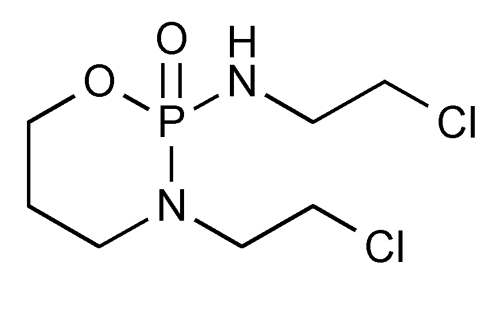
Ifosfamide

别名: NSC-109724; Isophosphamide; Ifomide; NSC 109724; NSC109724; Iphosphamid; iphosphamide; Isoendoxan; IsoEndoxan; isophosphamide; Naxamide; Trade names: Cyfos; Ifex; Ifosfamidum 异环磷酰胺; 异环磷酰胺(标准品); 3-(2-氯乙基)-2-[(2-氯乙基)氨基]四氢-2H-1,3,2-噁磷-2-氧化物; 3-(2-氯乙基)-2-[(2-氯乙基)氨基]四氢-2H-1,3,2-磷-2-氧化物; 异环磷酰;异环磷酰氨; 异环磷酰胺 EP标准品;异环磷酰胺 USP标准品;异环磷酰胺 标准品;异环磷酰胺-D4
目录号: V1445 纯度: ≥98%
Ifosfamide(以前称为 NSC-109724、Isophosphamide、Ifomide、Iphosphamid、iphosphamide、Isoendoxan、IsoEndoxan、Naxamide、Cyfos、Ifex、Ifosfamidum)是一种经批准的抗癌药物,可用作氮芥和 DNA 烷化剂/烷化剂。
Ifosfamide CAS号: 3778-73-2
产品类别: DNA(RNA) Synthesis
产品仅用于科学研究,不针对患者销售
规格 价格 库存 数量
100mg
250mg
500mg
1g
2g
5g
Other Sizes
点击了解更多
  • 与全球5000+客户建立关系
  • 覆盖全球主要大学、医院、科研院所、生物/制药公司等
  • 产品被大量CNS顶刊文章引用
InvivoChem产品被CNS等顶刊论文引用
纯度/质量控制文件

纯度: ≥98%

产品描述
Ifosfamide(以前称为 NSC-109724、Isophosphamide、Ifomide、Iphosphamid、iphosphamide、Isoendoxan、IsoEndoxan、Naxamide、Cyfos、Ifex、Ifosfamidum)是一种经批准的抗癌药物,可用作氮芥和 DNA 烷化剂/烷化剂。它已用于治疗多种癌症,如小细胞肺癌、小儿实体瘤、非霍奇金和霍奇金淋巴瘤以及卵巢癌。异环磷酰胺是一种前药,必须在肝脏中通过细胞色素 P450 酶代谢为活性形式:异环磷酰胺芥末,可烷基化 DNA。
生物活性&实验参考方法
靶点
DNA Alkylator
DNA (alkylation and cross-linking; IC50 for human tumor cell lines: 20-100 μM, varies by cell type and exposure time) [1]
- DNA replication and transcription (inhibition via DNA adduct formation) [2]
体外研究 (In Vitro)
Ifosfamide (50 mM) 增加肝细胞中 CYP3A4、CYP2C8 和 CYP2C9 蛋白水平,从而提高培养肝细胞中自身的 4-羟基化率。异环磷酰胺仅在一种人肝细胞培养物中诱导 CYP3A4,该培养物除了更广泛表达的 CYP3A4 之外还含有多态性表达的 CYP3A5。异环磷酰胺是一种前药,在肝脏中通过细胞色素 P450 混合功能氧化酶代谢为活性烷基化化合物异磷酰胺芥子。异环磷酰胺在小细胞肺癌、儿科实体瘤、非霍奇金和霍奇金淋巴瘤以及卵巢癌中产生了良好的缓解率。稳定转染 CYP2B1 后,异环磷酰胺对 MCF-7 细胞具有高度细胞毒性,但对亲代肿瘤细胞或表达 β-半乳糖苷酶的 MCF-7 转染子没有毒性,这种细胞毒性可以被 CYP2B1 抑制剂甲替拉酮明显阻断。小梁结构分析显示,异环磷酰胺与唑来膦酸联合使用比单独使用每种药物在预防肿瘤复发、改善组织修复和增加骨形成方面更有效。
72小时暴露后,抑制人非小细胞肺癌(NSCLC)细胞系(A549、H460)增殖,IC50分别为35 μM和42 μM;诱导G2/M期细胞周期阻滞和凋亡,表现为caspase-3活性升高和膜联蛋白V染色阳性[1]
- 72小时处理对人卵巢癌细胞系SKOV3具有抗增殖活性,IC50为28 μM;50 μM浓度下克隆形成效率较未处理对照组降低65%[3]
- 抑制人乳腺癌细胞系MCF-7的DNA合成;100 μM处理24小时后,因DNA交联导致[3H]-胸腺嘧啶掺入量减少80%[2]
- 对顺铂耐药人膀胱癌细胞系T24具有细胞毒性,IC50为60 μM;与维生素E联合使用时活性增强,IC50降至32 μM[5]
体内研究 (In Vivo)
腹腔注射异环磷酰胺(100 mg/kg、200 mg/kg 和 400 mg/kg)可引起小鼠膀胱湿重和伊文思蓝外渗的剂量依赖性增加。异环磷酰胺显示小鼠广泛性膀胱炎,其特征是急性炎症,伴有血管充血、水肿、出血和纤维蛋白沉积、中性粒细胞浸润和上皮剥脱。异环磷酰胺对细胞质中的诱导型一氧化氮合酶表现出强烈的反应性,并且在苏木精和伊红染色中显示出强烈的弥漫性坏死。
抑制裸鼠A549 NSCLC异种移植瘤生长;每周静脉注射(i.v.)150 mg/kg,持续4周,肿瘤生长抑制率(TGI)达70%(相较于溶媒对照组)[1]
- 抑制裸鼠人卵巢癌SKOV3异种移植瘤进展;每3天腹腔注射(i.p.)200 mg/kg,持续3个周期,肿瘤体积缩小65%,中位生存期延长12天[3]
- 在大鼠原位膀胱癌模型中展现抗肿瘤活性;每周静脉注射100 mg/kg,持续3周,膀胱肿瘤重量降低58%,淋巴结转移灶减少[5]
酶活实验
制备人肝微粒体以评估异环磷酰胺的代谢激活;将微粒体与10-100 μM 异环磷酰胺、NADPH再生系统和谷胱甘肽(GSH)在37°C下孵育60分钟;通过高效液相色谱(HPLC)定量活性代谢产物(异磷酰胺芥、丙烯醛);测定细胞色素P450(CYP)3A4和2B6依赖性代谢速率[2]
- 检测异环磷酰胺代谢产物的DNA交联活性;将小牛胸腺DNA与微粒体激活的异环磷酰胺(相当于50 μM母药)在37°C下孵育2小时;通过琼脂糖凝胶电泳分离交联DNA与单链DNA;采用光密度法量化交联效率[2]
细胞实验
使用含有 2 毫升的培养基将 4 × 10 4 细胞接种到 3 cm 培养皿中。当达到终浓度时,第二天添加 0 至 5 mM 异环磷酰胺。除去培养基并用 PBS 清洁细胞并进行计数或染色后,还需要六天的时间[2]。
在96孔板中接种A549 NSCLC细胞,每孔2×10³个;贴壁24小时后,用5-200 μM 异环磷酰胺处理72小时;采用MTT法测定细胞活力;计算IC50值,并通过碘化丙啶染色后流式细胞术分析细胞周期分布[1]
- 在6孔板中培养SKOV3卵巢癌细胞,每孔5×10³个;贴壁24小时后,用10-100 μM 异环磷酰胺处理48小时;洗涤细胞后在无药培养基中培养14天;甲醇固定并结晶紫染色;计数细胞数>50的克隆以确定克隆形成抑制率[3]
- 在24孔板中接种T24膀胱癌细胞;用异环磷酰胺单独(20-100 μM)或与维生素E(10 μM)联合处理72小时;通过膜联蛋白V-FITC/PI双染色和流式细胞术检测凋亡细胞;使用发光试剂盒测定caspase-3/7活性[5]
动物实验
Rats: Female rats are separated into four groups of eight before mating: group 1 is an untreated negative control group; group 2 is an injection of 1 mL of 0.9% NaCl; group 3 is an injection of 25 mg/kg Ifosfamide; and group 4 is an injection of 50 mg/kg Ifosfamide. Following five days of daily injections of Ifosfamide, three females are kept in a cage with one untreated male for a maximum of one week. Every day, vaginal smears are checked to see if someone is pregnant. In the event that sperm are found, the first 24 hours after mating are considered the first day of pregnancy. The expectant mothers are kept apart and regularly checked for symptoms of toxicity and miscarriage. On the eighteenth day of gestation, all pregnant animals are sacrificed by being beheaded. Serum is decanted and kept at -70°C until it is needed for the hormone assay. Cardiac blood (2.5–3 mL/rat) is collected in nonheparinized test tubes, centrifuged at 3,000× g for 30 min. The uterus and both ovaries are removed after blood collection, cleaned in saline solution, and the corpora lutea of pregnancy are counted visually. Each uterine horn is then examined to determine the number of viable fetuses, implantation sites, and resorption sites. Crown rump (CR) length is measured, weight is recorded, and each fetus is extracted from its umbilical cord. The placental weights are noted and the fetuses are inspected for external malformation. In order to facilitate histological and immunohistochemical analysis, fetuses and placentas from the control and treated groups are fixed in 10% neutral broth formalin.
Nude mice (6-7 weeks old) were implanted subcutaneously with 5×10⁶ A549 NSCLC cells; when tumors reached 100 mm3, Ifosfamide was dissolved in normal saline and administered i.v. at 150 mg/kg once weekly for 4 weeks; control mice received normal saline; tumor volume was measured twice weekly with calipers, and tumor weight was recorded at sacrifice [1]
- Female nude mice were implanted intraperitoneally with 1×10⁷ SKOV3 ovarian cancer cells; 7 days post-implantation, Ifosfamide (dissolved in 5% dextrose solution) was given i.p. at 200 mg/kg every 3 days for 3 cycles; mice were monitored for survival, and peritoneal tumors were harvested to assess size and histopathology [3]
- Rats with orthotopic bladder cancer (induced by N-butyl-N-(4-hydroxybutyl)nitrosamine) were randomized into treatment and control groups; Ifosfamide was dissolved in normal saline and administered i.v. at 100 mg/kg weekly for 3 weeks; control rats received normal saline; bladder tumors were excised and weighed, and lymph nodes were examined for metastases [5]
药代性质 (ADME/PK)
Absorption, Distribution and Excretion
Ifosfamide is extensively metabolized in humans and the metabolic pathways appear to be saturated at high doses. After administration of doses of 5 g/m2 of 14C-labeled ifosfamide, from 70% to 86% of the dosed radioactivity was recovered in the urine, with about 61% of the dose excreted as parent compound. At doses of 1.6–2.4 g/m2 only 12% to 18% of the dose was excreted in the urine as unchanged drug within 72 hours.
Ifosfamide volume of distribution (Vd) approximates the total body water volume, suggesting that distribution takes place with minimal tissue binding. Following intravenous administration of 1.5 g/m2 over 0.5 hour once daily for 5 days to 15 patients with neoplastic disease, the median Vd of ifosfamide was 0.64 L/kg on Day 1 and 0.72 L/kg on Day 5. When given to pediatric patients, the volume of distribution was 21±1.6 L/m^2.
2.4±0.33 L/h/m^2 [pediatric patients]
Renal excretion & t1/2 are dose & schedule dependent. 60-80% recovered as unchanged drug or metabolite in urine within 72 hr after admin.
The distribution of ifosfamide (IF) and its metabolites 2-dechloroethylifosfamide (2DCE), 3-dechloroethylifosfamide (3DCE), 4-hydroxyifosfamide (4OHIF) and ifosforamide mustard (IFM) between plasma and erythrocytes was examined in vitro and in vivo. In vitro distribution was investigated by incubating blood with various concentrations of IF and its metabolites. In vivo distribution of IF, 2DCE, 3DCE and 4OHIF was determined in 7 patients receiving 9 g/m(2)/72 h intravenous continuous IF infusion. In vitro distribution equilibrium between erythrocytes and plasma was obtained quickly after drug addition. Mean (+/-sem) in vitro and in vivo erythrocyte (e)-plasma (p) partition coefficients (P(e/p)) were 0.75+/-0.01 and 0.81+/-0.03, 0.62+/-0.09 and 0.73+/-0.05, 0.76+/-0.10 and 0.93+/-0.05 and 1.38+/-0.04 and 0.98+/-0.09 for IF, 2DCE, 3DCE and 4OHIF, respectively. These ratios were independent of concentration and unaltered with time. The ratios of the area under the erythrocyte and plasma concentration--time curves (AUC(e/p)) were 0.96+/-0.03, 0.87+/-0.07, 0.98+/-0.06 and 1.34+/-0.39, respectively. A time- and concentration-dependent distribution--equilibrium phenomenon was observed with the relative hydrophilic IFM. It is concluded that IF and metabolites rapidly reach distribution equilibrium between erythrocytes and plasma; the process is slower for IFM. Drug distribution to the erythrocyte fraction ranged from about 38% for 2DCE to 58% for 4OHIF, and was stable over a wide range of clinically relevant concentrations. A strong parallelism in the erythrocyte and plasma concentration profiles was observed for all compounds. Thus, pharmacokinetic assessment using only plasma sampling yields direct and accurate insights into the whole blood kinetics of IF and metabolites and may be used for pharmacokinetic-pharmacodynamic studies.
... To assess the feasibility of a sparse sampling approach for the determination of the population pharmacokinetics of ifosfamide, 2- and 3-dechloroethyl-ifosfamide and 4-hydroxy-ifosfamide in children treated with single-agent ifosfamide against various malignant tumours. ... Pharmacokinetic assessment followed by model fitting. Patients: The analysis included 32 patients aged between 1 and 18 years receiving a total of 45 courses of ifosfamide 1.2, 2 or 3 g/m2 in 1 or 3 hours on 1, 2 or 3 days. ... A total of 133 blood samples (median of 3 per patient) were collected. Plasma concentrations of ifosfamide and its dechloroethylated metabolites were determined by gas chromatography. Plasma concentrations of 4-hydroxy-ifosfamide were measured by high-performance liquid chromatography. The models were fitted to the data using a nonlinear mixed effects model as implemented in the NONMEM program. A cross-validation was performed. ... Population values (mean +/- standard error) for the initial clearance and volume of distribution of ifosfamide were estimated at 2.36 +/- 0.33 L/h/m2 and 20.6 +/- 1.6 L/m2 with an interindividual variability of 43 and 32%, respectively. The enzyme induction constant was estimated at 0.0493 +/- 0.0104 L/h2/m2. The ratio of the fraction of ifosfamide metabolised to each metabolite to the volume of distribution of that metabolite, and the elimination rate constant, of 2- and 3-dechloroethyl-ifosfamide and 4-hydroxy-ifosfamide were 0.0976 +/- 0.0556, 0.0328 +/- 0.0102 and 0.0230 +/- 0.0083 m2/L and 3.64 +/- 2.04, 0.445 +/- 0.174 and 7.67 +/- 2.87 h(-1), respectively. Interindividual variability of the first parameter was 23, 34 and 53%, respectively. Cross-validation indicated no bias and minor imprecision (12.5 +/- 5.1%) for 4-hydroxy-ifosfamide only. ... We have developed and validated a model to estimate ifosfamide and metabolite concentrations in a paediatric population by using sparse sampling.
... The population pharmacokinetics and pharmacodynamics of the cytostatic agent ifosfamide and its main metabolites 2- and 3-dechloroethylifosfamide and 4-hydroxyifosfamide were assessed in patients with soft tissue sarcoma. ... Twenty patients received 9 or 12 g/m2 ifosfamide administered as a 72-h continuous intravenous infusion. The population pharmacokinetic model was built in a sequential manner, starting with a covariate-free model and progressing to a covariate model with the aid of generalised additive modelling. ... The addition of the covariates weight, body surface area, albumin, serum creatinine, serum urea, alkaline phosphatase and lactate dehydrogenase improved the prediction errors of the model. Typical pretreatment (mean +/- SEM) initial clearance of ifosfamide was 3.03 +/- 0.18 l/h with a volume of distribution of 44.0 +/- 1.8 l. Autoinduction, dependent on ifosfamide levels, was characterised by an induction half-life of 11.5 +/- 1.0 h with 50% maximum induction at 33.0 +/- 3.6 microM ifosfamide. Significant pharmacokinetic-pharmacodynamic relationships (P = 0.019) were observed between the exposure to 2- and 3-dechloroethylifosfamide and orientational disorder, a neurotoxic side-effect. No pharmacokinetic-pharmacodynamic relationships between exposure to 4-hydroxyifosfamide and haematological toxicities could be observed in this population.
For more Absorption, Distribution and Excretion (Complete) data for IFOSFAMIDE (6 total), please visit the HSDB record page.
Metabolism / Metabolites
Primarily hepatic. Ifosfamide is metabolized through two metabolic pathways: ring oxidation (\"activation\") to form the active metabolite, 4-hydroxy-ifosfamide and side-chain oxidation to form the inactive metabolites, 3-dechloro-ethylifosfamide or 2-dechloroethylifosfamide with liberation of the toxic metabolite, chloroacetaldehyde. Small quantities (nmol/mL) of ifosfamide mustard and 4-hydroxyifosfamide are detectable in human plasma. Metabolism of ifosfamide is required for the generation of the biologically active species and while metabolism is extensive, it is also quite variable among patients.
Like cyclophosphamide, ifosfamide is activated in the liver by hydroxylation. However, the activation of ifosfamide proceeds more slowly, with greater production of dechlorinated metabolites & chloroacetaldehyde. These differences in metabolism likely account for the higher doses of ifosfamide required for equitoxic effects & the possible difference in antitumor spectrum of the two agents.
Like cyclophosphamide, isophosphamide requires metabolism by microsomal enzymes to act as a cytotoxic agent. It is rapidly metabolized in many species, including rodents and dogs; the urinary metabolites indicate that a series of reactions take place analogous to those in the metabolism of cyclophosphamide. Acrolein is produced during its oxidative degradation, and one product of the reaction is the ring-opened carboxy derivative. Dogs also rapidly metabolize isophosphamide, and the carboxy derivative and 4-keto isophosphamide have been identified in the urine.
The aim of this study was to develop a population pharmacokinetic model that could describe the pharmacokinetics of ifosfamide. 2- and 3-dechloroethylifosfamide and 4-hydroxyifosfamide, and calculate their plasma exposure and urinary excretion. A group of 14 patients with small-cell lung cancer received a 1-h intravenous infusion of 2.0 or 3.0 g/m2 ifosfamide over 1 or 2 days in combination with 175 mg/m2 paclitaxel and carboplatin at AUC 6. The concentration-time profiles of ifosfamide were described by an ifosfamide concentration-dependent development of autoinduction of ifosfamide clearance. Metabolite compartments were linked to the ifosfamide compartment enabling description of the concentration-time profiles of 2- and 3-dechloroethylifosfamide and 4-hydroxyifosfamide. The Bayesian estimates of the pharmacokinetic parameters were used to calculate the systemic exposure to ifosfamide and its metabolites for the four ifosfamide schedules. Fractionation of the dose over 2 days resulted increased metabolite formation, especially of 2-dechloroethylifosfamide, probably due to increased autoinduction. Renal recovery was only minor with 6.6% of the administered dose excreted unchanged and 9.8% as dechloroethylated metabolites. In conclusion, ifosfamide pharmacokinetics were described with an ifosfamide concentration-dependent development of autoinduction and allowed estimation of the population pharmacokinetics of the metabolites of ifosfamide. Fractionation of the dose resulted in increased exposure to 2-dechloroethylifosfamide, probably due to increased autoinduction.
The anticancer drug ifosfamide is a prodrug requiring activation through 4-hydroxyifosfamide to ifosforamide mustard, to exert cytotoxicity. Deactivation of ifosfamide leads to 2- and 3-dechloroethylifosfamide and the release of potentially neurotoxic chloracetaldehyde. The aim of this study was to quantify and to compare the pharmacokinetics of ifosfamide, 2- and 3-dechloroethylifosfamide, 4-hydroxyifosfamide, and ifosforamide mustard in short (1-4 h), medium (24-72 h), and long infusion durations (96-240 h) of ifosfamide. An integrated population pharmacokinetic model was used to describe the autoinducible pharmacokinetics of ifosfamide and its four metabolites in 56 patients. The rate by which autoinduction of the metabolism of ifosfamide developed was found to be significantly dependent on the infusion schedule. The rate was 52% lower with long infusion durations compared with short infusion durations. This difference was, however, comparable with its interindividual variability (22%) and was, therefore, considered to be of minor clinical importance. Autoinduction caused a less than proportional increase in the area under the ifosfamide plasma concentration-time curve (AUC) and more than proportional increase in metabolite exposure with increasing ifosfamide dose. During long infusion durations dose-corrected exposures (AUC/D) were significantly decreased for ifosfamide and increased for 3-dechloroethylifosfamide compared with short infusion durations. No differences in dose-normalized exposure to ifosfamide and metabolites were observed between short and medium infusion durations. This study demonstrates that the duration of ifosfamide infusion influences the exposure to the parent and its metabolite 3-dechloroethylifosfamide. The observed dose and infusion duration dependence should be taken into account when modeling ifosfamide metabolism.
Ifosfamide is a known human metabolite of L-trofosfamide.
Primarily hepatic. Ifosfamide is metabolized through two metabolic pathways: ring oxidation (\"activation\") to form the active metabolite, 4-hydroxy-ifosfamide and side-chain oxidation to form the inactive metabolites, 3-dechloro-ethylifosfamide or 2-dechloroethylifosfamide with liberation of the toxic metabolite, chloroacetaldehyde. Small quantities (nmol/mL) of ifosfamide mustard and 4-hydroxyifosfamide are detectable in human plasma. Metabolism of ifosfamide is required for the generation of the biologically active species and while metabolism is extensive, it is also quite variable among patients.
Route of Elimination: Ifosfamide is extensively metabolized in humans and the metabolic pathways appear to be saturated at high doses. After administration of doses of 5 g/m2 of 14C-labeled ifosfamide, from 70% to 86% of the dosed radioactivity was recovered in the urine, with about 61% of the dose excreted as parent compound. At doses of 1.6 - 2.4 g/m2 only 12% to 18% of the dose was excreted in the urine as unchanged drug within 72 hours.
Half Life: 7-15 hours. The elimination half-life increase appeared to be related to the increase in ifosfamide volume of distribution with age.
Biological Half-Life
7-15 hours. The elimination half-life increase appeared to be related to the increase in ifosfamide volume of distribution with age.
The elimination half-life associated with doses of 2.5 g/sq m is 6-8 hr, whereas the elimination half-life associated with doses of 3.5-5 g/sq m is 14-16 hr.
Undergoes extensive metabolism in the liver via CYP3A4 and CYP2B6 enzymes to form active metabolites (isophosphoramide mustard) and inactive metabolites (carboxyifosfamide, dechloroethylifosfamide) [2]
- After i.v. administration of 150 mg/kg to rats, Ifosfamide had a plasma half-life (t1/2) of 1.5-2.0 hours; volume of distribution (Vd) was 0.6-0.8 L/kg [2]
- Plasma protein binding rate was 15-20% in humans and rats; approximately 70% of the dose was excreted in urine within 24 hours, with 10-15% as active metabolites [2]
- Oral bioavailability was <20% in dogs due to first-pass metabolism in the liver [2]
毒性/毒理 (Toxicokinetics/TK)
Toxicity Summary
After metabolic activation, active metabolites of ifosfamide alkylate or bind with many intracellular molecular structures, including nucleic acids. The cytotoxic action is primarily due to cross-linking of strands of DNA and RNA, as well as inhibition of protein synthesis.
Hepatotoxicity
The toxicity of ifosfamide seems to be similar to that of cyclophosphamide. Mild and transient elevations in serum aminotransferase levels are found in a high proportion of patients receiving ifosfamide. Because ifosfamide is typically given in combination with other antineoplastic agents, its role in causing the serum enzyme elevations is often not clear. The abnormalities are generally transient, do not cause symptoms and do not require dose modification. Clinically apparent liver injury from ifosfamide has been limited to a small number of cases of cholestatic hepatitis arising within a few weeks of receiving ifosfamide (with other antineoplastic agents). In addition, sinusoidal obstruction syndrome has been reported after conditioning regimens that have included ifosfamide in preparation for hematopoietic cell transplantation. The onset of injury is usually within one to three weeks of the myeloablation and is characterized by a sudden onset of abdominal pain, weight gain, ascites, marked increase in serum aminotransferase levels (and lactic dehydrogenase), and subsequent jaundice and hepatic dysfunction. The severity of sinusoidal obstruction syndrome varies from a transient, self limited injury to acute liver failure. The diagnosis is usually based on clinical features of tenderness and enlargement of the liver, weight gain, ascites and jaundice. Liver biopsy is diagnostic but often contraindicated, because of severe thrombocytopenia after bone marrow transplantation.
Likelihood score: D (possible rare cause of clinically apparent liver injury).
Effects During Pregnancy and Lactation
◉ Summary of Use during Lactation
Most sources consider breastfeeding to be contraindicated during maternal antineoplastic drug therapy, especially alkylating agents such as ifosfamide. Labeling suggests that mothers should not breastfeed during therapy and for 1 week after the last dose of ifosfamide or mesna. Chemotherapy may adversely affect the normal microbiome and chemical makeup of breastmilk. Women who receive chemotherapy during pregnancy are more likely to have difficulty nursing their infant.
◉ Effects in Breastfed Infants
Relevant published information was not found as of the revision date.
◉ Effects on Lactation and Breastmilk
Relevant published information was not found as of the revision date.
Protein Binding
Ifosfamide shows little plasma protein binding.
Toxicity Data
LD50 (mouse) = 390-1005 mg/kg, LD50 (rat) = 150-190 mg/kg.
Interactions
The more urotoxic agent ifosfamide was introduced to the market with the uroprotective agent, Mesna. Mesna liberated free thiol groups in the bladder which then can react with & neutralize the oxazaphosphorine metabolite. When administered in an appropriate dosing schedule, Mesna can prevent the bladder toxicity completely.
BACKGROUND: The autoinducible metabolic transformation of the anticancer agent ifosfamide involves activation through 4-hydroxyifosfamide to the ultimate cytotoxic ifosforamide mustard and deactivation to 2- and 3-dechloroethylifosfamide with concomitant release of the neurotoxic chloroacetaldehyde. Activation is mediated by cytochrome P450 (CYP) 3A4 and deactivation by CYP3A4 and CYP2B6. The aim of this study was to investigate modulation of the CYP-mediated metabolism of ifosfamide with ketoconazole, a potent inhibitor of CYP3A4, and rifampin (INN, rifampicin), an inducer of CYP3A4/CYP2B6. METHODS: In a double-randomized, 2-way crossover study a total of 16 patients received ifosfamide 3 g/m(2) per 24 hours intravenously, either alone or in combination with 200 mg ketoconazole twice daily (1 day before treatment and 3 days of concomitant administration) or 300 mg rifampin twice daily (3 days before treatment and 3 days of concomitant administration). Plasma pharmacokinetics and urinary excretion of ifosfamide, 2- and 3-dechloroethylifosfamide, and 4-hydroxyifosfamide were assessed in both courses. Data analysis was performed with a population pharmacokinetic model with a description of autoinduction of ifosfamide. RESULTS: Rifampin increased the clearance of ifosfamide at the start of therapy at 102%. The fraction of ifosfamide metabolized to the dechloroethylated metabolites was increased, whereas exposure to the metabolites was decreased as a result of increased elimination. The fraction metabolized and the exposure to 4-hydroxyifosfamide were not significantly influenced. Ketoconazole did not affect the fraction metabolized or the exposure to the dechloroethylated metabolites, whereas both parameters were reduced with 4-hydroxyifosfamide. CONCLUSIONS: Coadministration of ifosfamide with ketoconazole or rifampin did not produce changes in the pharmacokinetics of the parent or metabolites that may result in an increased benefit of ifosfamide therapy.
Leukopenic and/or thrombocytopenic effects of ifosfamide may be increased with concurrent or recent therapy if these medications /blood dyscarasia-causing medications/ cause the same effects; dosage adjustments of ifosfamide, if necessary, should be based on blood counts.
Additive bone marrow depression may occur; dosage reduction may be required when two or more bone marrow depressants, including radiation, are used concurrently or consecutively /with ifosfamide/.
For more Interactions (Complete) data for IFOSFAMIDE (7 total), please visit the HSDB record page.
Non-Human Toxicity Values
LD50 Rat oral 143 mg/kg
LD50 Rat ip 140 mg/kg
LD50 Rat sc 160 mg/kg
LD50 Rat iv 190 mg/kg
For more Non-Human Toxicity Values (Complete) data for IFOSFAMIDE (8 total), please visit the HSDB record page.
Dose-dependent hemorrhagic cystitis was observed in rats receiving i.v. doses >200 mg/kg weekly; characterized by bladder mucosal inflammation and hemorrhage, prevented by co-administration of mesna [2]
- Myelosuppression (leukopenia, thrombocytopenia) occurred in nude mice at doses ≥150 mg/kg i.v.; nadir of white blood cell count was observed 7-10 days post-administration [1]
- Neurotoxicity (ataxia, tremors) was reported in dogs receiving i.v. doses >250 mg/kg; associated with accumulation of chloroacetaldehyde, a toxic metabolite [2]
- Mild nephrotoxicity (increased serum creatinine) was noted in rats treated with 150 mg/kg i.v. for 4 weeks; no significant hepatotoxicity was detected [4]
- In vitro cytotoxicity to normal human fibroblasts (MRC-5) was low with IC50 >200 μM, indicating a therapeutic window [3]
参考文献

[1]. Cancer Res . 1997 May 15;57(10):1946-54.

[2]. Drugs . 1991 Sep;42(3):428-67.

[3]. Cancer Res . 1996 Mar 15;56(6):1331-40.

[4]. Bone . 2005 Jul;37(1):74-86.

[5]. Urol . 2002 May;167(5):2229-34.

其他信息
Therapeutic Uses
Ifosfamide currently is approved for use in combination with other drugs for germ cell testicular cancer & is widely used to treat pediatric & adult sarcomas. Clinical trials also have shown ifosfamide to be active against carcinomas of the cervix & lung & against lymphomas. It is a common component of high-dose chemotherapy regimens with bone marrow or stem cell rescue; in these regimens, in total doses of 12-14 g/sq m, it may cause severe neurological toxicity, including coma & death. This toxicity is thought to result form a metabolite, chloracetaldehyde. In addition to hemorrhagic cystitis, ifosfamide causes nausea, vomiting, anorexia, leukopenia, nephrotoxicity, & CNS disturbances (especially somnolence & confusion).
Ifosfamide is indicated, in combination with other antineoplastic agents and a prophylactic agent against hemorrhagic cystitis (such as mesna), for treatment of germ cell testicular tumors. /Included in US product labeling/
Ifosfamide is indicated as reasonable medical therapy for treatment of head and neck carcinoma. (Evidence rating: IIID) /NOT included in US product labeling/
Ifosfamide is used for treatment of soft-tissue sarcomas, Ewing's sarcoma, and Hodgkin's and non-Hodgkin's lymphomas. /NOT included in US product labeling/
For more Therapeutic Uses (Complete) data for IFOSFAMIDE (9 total), please visit the HSDB record page.
Drug Warnings
It is a common component of high-dose chemotherapy regimens with bone marrow or stem cell rescue; in these regimens, in total doses of 12-14 g/sq m, it may cause severe neurological toxicity, including coma & death. This toxicity is thought to result form a metabolite, chloracetaldehyde. In addition to hemorrhagic cystitis, ifosfamide causes nausea, vomiting, anorexia, leukopenia, nephrotoxicity, & CNS disturbances (especially somnolence & confusion).
Ifosfamide is distributed into breast milk. Breast feeding is not recommended during chemotherapy because of the risks to the infant (adverse effects, mutagenicity, carcinogenicity).
The bone marrow depressant effects of ifosfamide may result in an increased incidence of microbial infection, delayed healing, and gingival bleeding. Dental work, whenever possible, should be completed prior to initiation of therapy or deferred until blood counts have returned to normal. Patients should be instructed in proper oral hygiene during treatment, including caution in use of regular toothbrushes, dental floss, and toothpicks.
Many side effects of antineoplastic therapy are unavoidable and represent the medication's pharmacologic action. Some of these (for example, leukopenia and thrombocytopenia) are actually used as parameters to aid in individual dosage titration.
For more Drug Warnings (Complete) data for IFOSFAMIDE (20 total), please visit the HSDB record page.
Pharmacodynamics
Ifosfamide requires activation by microsomal liver enzymes to active metabolites in order to exert its cytotoxic effects. Activation occurs by hydroxylation at the ring carbon atom 4 to form the unstable intermediate 4-hydroxyifosfamide. This metabolite than rapidly degrades to the stable urinary metabolite 4-ketoifosfamide. The stable urinary metabolite, 4-carboxyifosfamide, is formed upon opening of the ring. These urinary metabolites have not been found to be cytotoxic. N, N-bis (2-chloroethyl)-phosphoric acid diamide (ifosphoramide) and acrolein are also found. The major urinary metabolites, dechloroethyl ifosfamide and dechloroethyl cyclophosphamide, are formed upon enzymatic oxidation of the chloroethyl side chains and subsequent dealkylation. It is the alkylated metabolites of ifosfamide that have been shown to interact with DNA. Ifosfamide is cycle-phase nonspecific.
Ifosfamide is an alkylating agent belonging to the oxazaphosphorine class, structurally related to cyclophosphamide [2]
- Its antitumor effect is mediated by active metabolites that form intrastrand and interstrand DNA cross-links, inhibiting DNA replication and leading to cell death [1]
- Approved for the treatment of various solid tumors, including testicular cancer, ovarian cancer, lung cancer, and bladder cancer [2]
- Mesna is routinely used as a protective agent to prevent hemorrhagic cystitis by binding to acrolein, a toxic metabolite [2]
- Shows activity against cyclophosphamide-resistant tumor cells due to differences in metabolic activation and DNA repair pathways [3]
*注: 文献方法仅供参考, InvivoChem并未独立验证这些方法的准确性
化学信息 & 存储运输条件
分子式
C7H15CL2N2O2P
分子量
261.09
精确质量
260.024
元素分析
C, 32.20; H, 5.79; Cl, 27.16; N, 10.73; O, 12.26; P, 11.86
CAS号
3778-73-2
相关CAS号
3778-73-2
PubChem CID
3690
外观&性状
White to off-white solid powder
密度
1.3±0.1 g/cm3
沸点
336.1±52.0 °C at 760 mmHg
熔点
48ºC
闪点
157.1±30.7 °C
蒸汽压
0.0±0.7 mmHg at 25°C
折射率
1.506
LogP
0.23
tPSA
51.38
氢键供体(HBD)数目
1
氢键受体(HBA)数目
4
可旋转键数目(RBC)
5
重原子数目
14
分子复杂度/Complexity
218
定义原子立体中心数目
0
SMILES
ClC([H])([H])C([H])([H])N1C([H])([H])C([H])([H])C([H])([H])OP1(N([H])C([H])([H])C([H])([H])Cl)=O
InChi Key
HOMGKSMUEGBAAB-UHFFFAOYSA-N
InChi Code
InChI=1S/C7H15Cl2N2O2P/c8-2-4-10-14(12)11(6-3-9)5-1-7-13-14/h1-7H2,(H,10,12)
化学名
N,3-bis(2-chloroethyl)-2-oxo-1,3,2lambda5-oxazaphosphinan-2-amine
别名
NSC-109724; Isophosphamide; Ifomide; NSC 109724; NSC109724; Iphosphamid; iphosphamide; Isoendoxan; IsoEndoxan; isophosphamide; Naxamide; Trade names: Cyfos; Ifex; Ifosfamidum
HS Tariff Code
2934.99.9001
存储方式

Powder      -20°C    3 years

                     4°C     2 years

In solvent   -80°C    6 months

                  -20°C    1 month

注意: 本产品在运输和储存过程中需避光。
运输条件
Room temperature (This product is stable at ambient temperature for a few days during ordinary shipping and time spent in Customs)
溶解度数据
溶解度 (体外实验)
DMSO: ~52 mg/mL (~199.2 mM)
Water: ~52 mg/mL (~199.2 mM)
Ethanol: ~52 mg/mL (~199.2 mM)
溶解度 (体内实验)
配方 1 中的溶解度: ≥ 2.5 mg/mL (9.58 mM) (饱和度未知) in 10% DMSO + 40% PEG300 + 5% Tween80 + 45% Saline (这些助溶剂从左到右依次添加,逐一添加), 澄清溶液。
例如,若需制备1 mL的工作液,可将100 μL 25.0 mg/mL澄清DMSO储备液加入到400 μL PEG300中,混匀;然后向上述溶液中加入50 μL Tween-80,混匀;加入450 μL生理盐水定容至1 mL。
*生理盐水的制备:将 0.9 g 氯化钠溶解在 100 mL ddH₂O中,得到澄清溶液。

配方 2 中的溶解度: ≥ 2.5 mg/mL (9.58 mM) (饱和度未知) in 10% DMSO + 90% (20% SBE-β-CD in Saline) (这些助溶剂从左到右依次添加,逐一添加), 澄清溶液。
例如,若需制备1 mL的工作液,可将 100 μL 25.0 mg/mL澄清DMSO储备液加入900 μL 20% SBE-β-CD生理盐水溶液中,混匀。
*20% SBE-β-CD 生理盐水溶液的制备(4°C,1 周):将 2 g SBE-β-CD 溶解于 10 mL 生理盐水中,得到澄清溶液。

View More

配方 3 中的溶解度: ≥ 2.5 mg/mL (9.58 mM) (饱和度未知) in 10% DMSO + 90% Corn Oil (这些助溶剂从左到右依次添加,逐一添加), 澄清溶液。
例如,若需制备1 mL的工作液,可将 100 μL 25.0 mg/mL 澄清 DMSO 储备液加入到 900 μL 玉米油中并混合均匀。


配方 4 中的溶解度: 25 mg/mL (95.75 mM) in 0.5% CMC-Na/saline water (这些助溶剂从左到右依次添加,逐一添加), 澄清溶液; 超声助溶.
*生理盐水的制备:将 0.9 g 氯化钠溶解在 100 mL ddH₂O中,得到澄清溶液。

请根据您的实验动物和给药方式选择适当的溶解配方/方案:
1、请先配制澄清的储备液(如:用DMSO配置50 或 100 mg/mL母液(储备液));
2、取适量母液,按从左到右的顺序依次添加助溶剂,澄清后再加入下一助溶剂。以 下列配方为例说明 (注意此配方只用于说明,并不一定代表此产品 的实际溶解配方):
10% DMSO → 40% PEG300 → 5% Tween-80 → 45% ddH2O (或 saline);
假设最终工作液的体积为 1 mL, 浓度为5 mg/mL: 取 100 μL 50 mg/mL 的澄清 DMSO 储备液加到 400 μL PEG300 中,混合均匀/澄清;向上述体系中加入50 μL Tween-80,混合均匀/澄清;然后继续加入450 μL ddH2O (或 saline)定容至 1 mL;

3、溶剂前显示的百分比是指该溶剂在最终溶液/工作液中的体积所占比例;
4、 如产品在配制过程中出现沉淀/析出,可通过加热(≤50℃)或超声的方式助溶;
5、为保证最佳实验结果,工作液请现配现用!
6、如不确定怎么将母液配置成体内动物实验的工作液,请查看说明书或联系我们;
7、 以上所有助溶剂都可在 Invivochem.cn网站购买。
制备储备液 1 mg 5 mg 10 mg
1 mM 3.8301 mL 19.1505 mL 38.3010 mL
5 mM 0.7660 mL 3.8301 mL 7.6602 mL
10 mM 0.3830 mL 1.9150 mL 3.8301 mL

1、根据实验需要选择合适的溶剂配制储备液 (母液):对于大多数产品,InvivoChem推荐用DMSO配置母液 (比如:5、10、20mM或者10、20、50 mg/mL浓度),个别水溶性高的产品可直接溶于水。产品在DMSO 、水或其他溶剂中的具体溶解度详见上”溶解度 (体外)”部分;

2、如果您找不到您想要的溶解度信息,或者很难将产品溶解在溶液中,请联系我们;

3、建议使用下列计算器进行相关计算(摩尔浓度计算器、稀释计算器、分子量计算器、重组计算器等);

4、母液配好之后,将其分装到常规用量,并储存在-20°C或-80°C,尽量减少反复冻融循环。

计算器

摩尔浓度计算器可计算特定溶液所需的质量、体积/浓度,具体如下:

  • 计算制备已知体积和浓度的溶液所需的化合物的质量
  • 计算将已知质量的化合物溶解到所需浓度所需的溶液体积
  • 计算特定体积中已知质量的化合物产生的溶液的浓度
使用摩尔浓度计算器计算摩尔浓度的示例如下所示:
假如化合物的分子量为350.26 g/mol,在5mL DMSO中制备10mM储备液所需的化合物的质量是多少?
  • 在分子量(MW)框中输入350.26
  • 在“浓度”框中输入10,然后选择正确的单位(mM)
  • 在“体积”框中输入5,然后选择正确的单位(mL)
  • 单击“计算”按钮
  • 答案17.513 mg出现在“质量”框中。以类似的方式,您可以计算体积和浓度。

稀释计算器可计算如何稀释已知浓度的储备液。例如,可以输入C1、C2和V2来计算V1,具体如下:

制备25毫升25μM溶液需要多少体积的10 mM储备溶液?
使用方程式C1V1=C2V2,其中C1=10mM,C2=25μM,V2=25 ml,V1未知:
  • 在C1框中输入10,然后选择正确的单位(mM)
  • 在C2框中输入25,然后选择正确的单位(μM)
  • 在V2框中输入25,然后选择正确的单位(mL)
  • 单击“计算”按钮
  • 答案62.5μL(0.1 ml)出现在V1框中
g/mol

分子量计算器可计算化合物的分子量 (摩尔质量)和元素组成,具体如下:

注:化学分子式大小写敏感:C12H18N3O4  c12h18n3o4
计算化合物摩尔质量(分子量)的说明:
  • 要计算化合物的分子量 (摩尔质量),请输入化学/分子式,然后单击“计算”按钮。
分子质量、分子量、摩尔质量和摩尔量的定义:
  • 分子质量(或分子量)是一种物质的一个分子的质量,用统一的原子质量单位(u)表示。(1u等于碳-12中一个原子质量的1/12)
  • 摩尔质量(摩尔重量)是一摩尔物质的质量,以g/mol表示。
/

配液计算器可计算将特定质量的产品配成特定浓度所需的溶剂体积 (配液体积)

  • 输入试剂的质量、所需的配液浓度以及正确的单位
  • 单击“计算”按钮
  • 答案显示在体积框中
动物体内实验配方计算器(澄清溶液)
第一步:请输入基本实验信息(考虑到实验过程中的损耗,建议多配一只动物的药量)
第二步:请输入动物体内配方组成(配方适用于不溶/难溶于水的化合物),不同的产品和批次配方组成不同,如对配方有疑问,可先联系我们提供正确的体内实验配方。此外,请注意这只是一个配方计算器,而不是特定产品的确切配方。
+
+
+

计算结果:

工作液浓度 mg/mL;

DMSO母液配制方法 mg 药物溶于 μL DMSO溶液(母液浓度 mg/mL)。如该浓度超过该批次药物DMSO溶解度,请首先与我们联系。

体内配方配制方法μL DMSO母液,加入 μL PEG300,混匀澄清后加入μL Tween 80,混匀澄清后加入 μL ddH2O,混匀澄清。

(1) 请确保溶液澄清之后,再加入下一种溶剂 (助溶剂) 。可利用涡旋、超声或水浴加热等方法助溶;
            (2) 一定要按顺序加入溶剂 (助溶剂) 。

临床试验信息
A Study of N9 Chemotherapy in Children With Neuroblastoma
CTID: NCT04947501
PhaseEarly Phase 1    Status: Active, not recruiting
Date: 2024-12-02
A Trial to Learn How Effective and Safe Odronextamab is Compared to Standard of Care for Adult Participants With Previously Treated Aggressive B-cell Non-Hodgkin Lymphoma
CTID: NCT06230224
Phase: Phase 3    Status: Recruiting
Date: 2024-11-25
N10: A Study of Reduced Chemotherapy and Monoclonal Antibody (mAb)-Based Therapy in Children With Neuroblastoma
CTID: NCT06528496
Phase: Phase 2    Status: Recruiting
Date: 2024-11-20
Chemotherapy Followed by Radiation Therapy in Treating Younger Patients With Newly Diagnosed Localized Central Nervous System Germ Cell Tumors
CTID: NCT01602666
Phase: Phase 2    Status: Completed
Date: 2024-11-19
A Study to Evaluate Glofitamab Monotherapy and Glofitamab + Chemoimmunotherapy in Pediatric and Young Adult Participants With Relapsed/Refractory Mature B-Cell Non-Hodgkin Lymphoma
CTID: NCT05533775
Phase: Phase 1/Phase 2    Status: Recruiting
Date: 2024-11-18
View More

Tafasitamab and Lenalidomide Followed by Tafasitamab and ICE As Salvage Therapy for Transplant Eligible Patients with Relapsed/ Refractory Large B-Cell Lymphoma
CTID: NCT05821088
Phase: Phase 2    Status: Recruiting
Date: 2024-11-15


Combination Chemotherapy With or Without Bortezomib in Treating Younger Patients With Newly Diagnosed T-Cell Acute Lymphoblastic Leukemia or Stage II-IV T-Cell Lymphoblastic Lymphoma
CTID: NCT02112916
Phase: Phase 3    Status: Active, not recruiting
Date: 2024-11-13
Radiation Therapy With or Without Combination Chemotherapy or Pazopanib Before Surgery in Treating Patients With Newly Diagnosed Non-rhabdomyosarcoma Soft Tissue Sarcomas That Can Be Removed by Surgery
CTID: NCT02180867
Phase: Phase 2/Phase 3    Status: Active, not recruiting
Date: 2024-11-13
Irinotecan and Temozolomide in Combination With Existing High Dose Alkylator Based Chemotherapy for Treatment of Patients With Newly Diagnosed Ewing Sarcoma
CTID: NCT01864109
Phase: Phase 2    Status: Active, not recruiting
Date: 2024-11-12
A Global Study of Novel Agents in Paediatric and Adolescent Relapsed and Refractory B-cell Non-Hodgkin Lymphoma
CTID: NCT05991388
Phase: Phase 2/Phase 3    Status: Recruiting
Date: 2024-11-08
Irinotecan and Carboplatin as Upfront Window Therapy in Treating Patients With Newly Diagnosed Intermediate-Risk or High-Risk Rhabdomyosarcoma
CTID: NCT00077285
Phase: Phase 2    Status: Active, not recruiting
Date: 2024-11-04
A Study of a New Way to Treat Children and Young Adults With a Brain Tumor Called NGGCT
CTID: NCT04684368
Phase: Phase 2    Status: Recruiting
Date: 2024-10-26
A Study of Combination Chemotherapy for Patients With Newly Diagnosed DAWT and Relapsed FHWT
CTID: NCT04322318
Phase: Phase 2    Status: Recruiting
Date: 2024-10-26
Imatinib Mesylate and Combination Chemotherapy in Treating Patients With Newly Diagnosed Philadelphia Chromosome Positive Acute Lymphoblastic Leukemia
CTID: NCT03007147
Phase: Phase 3    Status: Active, not recruiting
Date: 2024-10-18
Testing a Standardized Approach to Surgery and Chemotherapy for Type I Pleuropulmonary Blastoma or the Addition of an Anti-cancer Drug, Topotecan, to the Usual Treatment for Types II and III Pleuropulmonary Blastoma
CTID: NCT06647953
Phase: Phase 3    Status: Not yet recruiting
Date: 2024-10-18
Therapeutic Trial for Patients With Ewing Sarcoma Family of Tumor and Desmoplastic Small Round Cell Tumors
CTID: NCT01946529
Phase: Phase 2    Status: Active, not recruiting
Date: 2024-10-17
Implantable Microdevice for the Delivery of Drugs and Their Effect on Tumors in Patients With Metastatic or Recurrent Sarcoma
CTID: NCT04199026
PhaseEarly Phase 1    Status: Not yet recruiting
Date: 2024-10-15
Nivolumab, Ifosfamide, Carboplatin, and Etoposide as Second-Line Therapy in Treating Patients With Refractory or Relapsed HL
CTID: NCT03016871
Phase: Phase 2    Status: Active, not recruiting
Date: 2024-10-09
A Study Evaluating the Efficacy, Safety, and Pharmacokinetics of Glofitamab in Combination With Rituximab Plus Ifosfamide, Carboplatin Etoposide Phosphate in Participants With Relapsed/Refractory Transplant or CAR-T Therapy Eligible Diffuse B-Cell Lymphoma
CTID: NCT05364424
Phase: Phase 1    Status: Active, not recruiting
Date: 2024-09-19
Combination Chemotherapy in Treating Patients With Non-Metastatic Extracranial Ewing Sarcoma
CTID: NCT01231906
Phase: Phase 3    Status: Active, not recruiting
Date: 2024-09-19
NRSTS2021, A Risk Adapted Study Evaluating Maintenance Pazopanib, Limited Margin, Dose-Escalated Radiation Therapy and Selinexor in Non-Rhabdomyosarcoma Soft Tissue Sarcoma (NRSTS)
CTID: NCT06239272
Phase: Phase 1/Phase 2    Status: Recruiting
Date: 2024-09-19
Combination Chemotherapy With or Without Ganitumab in Treating Patients With Newly Diagnosed Metastatic Ewing Sarcoma
CTID: NCT02306161
Phase: Phase 3    Status: Active, not recruiting
Date: 2024-09-05
Brentuximab Vedotin, Ifosfamide, Carboplatin, and Etoposide in Treating Patients With Relapsed or Refractory Hodgkin Lymphoma
CTID: NCT02227199
Phase: Phase 1/Phase 2    Status: Active, not recruiting
Date: 2024-09-03
Polatuzumab Vedotin, Rituximab, Ifosfamide, Carboplatin, and Etoposide (PolaR-ICE) as Initial Salvage Therapy for the Treatment of Relapsed/Refractory Diffuse Large B-Cell Lymphoma
CTID: NCT04665765
Phase: Phase 2    Status: Active, not recruiting
Date: 2024-08-26
High-dose Chemotherapy for Poor-Prognosis Relapsed Germ-Cell Tumors
CTID: NCT00936936
Phase: Phase 2    Status: Completed
Date: 2024-08-26
International Pleuropulmonary Blastoma (PPB) Treatment and Biology Registry
CTID: NCT01464606
Phase: N/A    Status: Active, not recruiting
Date: 2024-08-21
Trial of Sunitinib and/or Nivolumab Plus Chemotherapy in Advanced Soft Tissue and Bone Sarcomas
CTID: NCT03277924
Phase: Phase 1/Phase 2    Status: Completed
Date: 2024-08-13
Risk-Adapted Focal Proton Beam Radiation and/or Surgery in Patients With Low, Intermediate and High Risk Rhabdomyosarcoma Receiving Standard or Intensified Chemotherapy
CTID: NCT01871766
Phase: Phase 2    Status: Active, not recruiting
Date: 2024-08-09
Ascorbic Acid and Chemotherapy for the Treatment of Relapsed or Refractory Lymphoma, CCUS, and Chronic Myelomonocytic Leukemia
CTID: NCT03418038
Phase: Phase 2    Status: Recruiting
Date: 2024-08-05
Carfilzomib, Rituximab, Ifosfamide, Carboplatin, and Etoposide in Treating Patients With Relapsed or Refractory Stage I-IV Diffuse Large B-cell Lymphoma
CTID: NCT01959698
Phase: Phase 1    Status: Active, not recruiting
Date: 2024-08-02
New Combination of Chemoimmunotherapy for Systemic B-cell Lymphoma With Central Nervous System Involvement
CTID: NCT02329080
Phase: Phase 2    Status: Completed
Date: 2024-07-29
A Study to Compare the Efficacy and Safety of Ifosfamide and Etoposide With or Without Lenvatinib in Children, Adolescents and Young Adults With Relapsed and Refractory Osteosarcoma
CTID: NCT04154189
Phase: Phase 2    Status: Completed
Date: 2024-07-22
International Cooperative Treatment Protocol for Children and Adolescents With Lymphoblastic Lymphoma
CTID: NCT04043494
Phase: Phase 3    Status: Recruiting
Date: 2024-07-10
Linperlisib Combined With Immunochemotherapy in Relapsed/Refractory LBCL
CTID: NCT06489808
Phase: Phase 2    Status: Recruiting
Date: 2024-07-08
Paclitaxel, Ifosfamide and Cisplatin (TIP) Versus Bleomycin, Etoposide and Cisplatin (BEP) for Patients With Previously Untreated Intermediate- and Poor-risk Germ Cell Tumors
CTID: NCT01873326
Phase: Phase 2    Status: Active, not recruiting
Date: 2024-07-03
Rituximab and Combination Chemotherapy in Treating Patients With Previously Untreated Mantle Cell Lymphoma
CTID: NCT00878254
Phase: Phase 2    Status: Active, not recruiting
Date: 2024-07-03
R-ICE and Lenalidomide in Treating Patients With First-Relapse/Primary Refractory Diffuse Large B-Cell Lymphoma
CTID: NCT02628405
Phase: Phase 1/Phase 2    Status: Active, not recruiting
Date: 2024-07-01
Concurrent Chemotherapy and Radiation Therapy for Newly Diagnosed Nasal NK Cell Lymphoma
CTID: NCT02106988
Phase: Phase 2    Status: Recruiting
Date: 2024-06-24
Study Evaluating the Safety and Efficacy of KTE-C19 in Adult Participants With Refractory Aggressive Non-Hodgkin Lymphoma
CTID: NCT02348216
Phase: Phase 1/Phase 2    Status: Completed
Date: 2024-06-04
International Penile Advanced Cancer Trial (International Rare Cancers Initiative Study)
CTID: NCT02305654
Phase: Phase 3    Status: Recruiting
Date: 2024-06-04
Phase II Study of Durvalumab ,Doxorubicin, and Ifosfamide in Pulmonary Sarcomatoid Carcinoma
CTID: NCT04224337
Phase: Phase 2    Status: Active, not recruiting
Date: 2024-05-31
Phase 3 Trial of Blinatumomab vs Standard Chemotherapy in Pediatric Subjects With HIgh-Risk (HR) First Relapse B-precursor Acute Lymphoblastic Leukemia (ALL)
CTID: NCT02393859
Phase: Phase 3    Status: Completed
Date: 2024-05-29
FaR-RMS: An Overarching Study for Children and Adults With Frontline and Relapsed RhabdoMyoSarcoma
CTID: NCT04625907
Phase: Phase 1/Phase 2    Status: Recruiting
Date: 2024-05-23
High-Risk Neuroblastoma Study 2 of SIOP-Europa-Neuroblastoma (SIOPEN)
CTID: NCT04221035
Phase: Phase 3    Status: Recruiting
Date: 2024-05-16
TIP Regimen Combined With Triplizumab Neoadjuvant Therapy for Locally Advanced Penile Cancer
CTID: NCT06415318
Phase: Phase 2    Status: Not yet recruiting
Date: 2024-05-16
Brentuximab Vedotin or Crizotinib and Combination Chemotherapy in Treating Patients With Newly Diagnosed Stage II-IV Anaplastic Large Cell Lymphoma
CTID: NCT01979536
Phase: Phase 2    Status: Completed
Date: 2024-04-30
Combined Chemotherapy With or Without Zoledronic Acid for Patients With Osteosarcoma
CTID: NCT00470223
Phase: Phase 3    Status: Active, not recruiting
Date: 2024-04-18
Sequential Neoadjuvant Chemotherapy in Soft Tissue Sarcoma
CTID: NCT04776525
Phase: Phase 2    Status: Recruiting
Date: 2024-04-15
Avelumab, Utomilumab, Rituximab, Ibrutinib, and Combination Chemotherapy in Treating Patients With Relapsed or Refractory Diffuse Large B-Cell Lymphoma or Mantle Cell Lymphoma
CTID: NCT03440567
Phase: Phase 1    Status: Active, not recruiting
Date: 2024-03-29
A Trial Comparing Chemotherapy Versus Novel Immune Checkpoint Inhibitor (Pembrolizumab) Plus Chemotherapy in Treating Relapsed/Refractory Classical Hodgkin Lymphoma
CTID: NCT05711628
Phase: Phase 3    Status: Withdrawn
Date: 2024-03-20
Neoadjuvant ADI-PEG 20 + Ifosfamide + Radiotherapy in Soft Tissue Sarcoma
CTID: NCT05813327
Phase: Phase 1/Phase 2    Status: Recruiting
Date: 2024-03-15
Auto Transplant for High Risk or Relapsed Solid or CNS Tumors
CTID: NCT01505569
Phase: N/A    Status: Completed
Date: 2024-02-26
MASCT-I Combined With Doxorubicin and Ifosfamide for First-line Treatment of Advanced Soft Tissue Sarcoma
CTID: NCT06277154
Phase: Phase 2    Status: Not yet recruiting
Date: 2024-02-26
Combination Chemotherapy in Treating Patients With Stage II or Stage III Germ Cell Tumors
CTID: NCT00104676
Phase: Phase 3    Status: Active, not recruiting
Date: 2024-02-06
Combination Chemotherapy Plus Rituximab in Treating Patients With Recurrent or Refractory Non-Hodgkin's Lymphoma
CTID: NCT00007865
Phase: Phase 2    Status: Completed
Date: 2023-12-27
Pembrolizumab in Combination With R-ICE Chemotherapy in Relapsed/Refractory Diffuse Large B-cell Lymphoma
CTID: NCT05221645
Phase: Phase 2    Status: Recruiting
Date: 2023-12-20
Treatment Protocol of the NHL-BFM and the NOPHO Study Groups for Mature Aggressive B-cell Lymphoma and Leukemia in Children and Adolescents
CTID: NCT03206671
Phase: Phase 3    Status: Recruiting
Date: 2023-12-11
Study of BEBT-908 Combined With Drugs in the Treatment of Relapsed/Refractory Diffuse Large B-Cell Lymphoma
CTID: NCT06164327
Phase: Phase 1    Status: Recruiting
Date: 2023-12-11
Treatment Protocol for Children and Adolescents With Acute Lymphoblastic Leukemia - AIEOP-BFM ALL 2017
CTID: NCT03643276
Phase: Phase 3    Status: Recruiting
Date: 2023-11-29
Obinutuzumab and ICE Chemotherapy in Refractory/Recurrent CD20+ Mature NHL
CTID: NCT02393157
Phase: Phase 2    Status: Recruiting
Date: 2023-10-26
Chemoimmunotherapy and Allogeneic Stem Cell Transplant for NK T-cell Leukemia/Lymphoma
CTID: NCT03719105
PhaseEarly Phase 1    Status: Recruiting
Date: 2023-10-26
Polatuzumab Vedotin Plus Rituximab, Ifosfamide, Carboplatin and Etoposide (Pola-R-ICE) Versus R-ICE Alone in Second Line Treatment of Diffuse Large B-cell Lymphoma (DLBCL)
CTID: NCT04833114
Phase: Phase 3    Status: Recruiting
Date: 2023-10-12
Combination Chemotherapy Followed by Donor Stem Cell Transplant in Treating Patients With Relapsed or High-Risk Primary Refractory Hodgkin Lymphoma
CTID: NCT00574496
Phase: Phase 2    Status: Completed
Date: 2023-09-28
A Phase 1/2, Open-Label, Dose Escalation, Safety and Tolerability Study of INCB050465 and Itacitinib in Subjects With Previously Treated B-Cell Malignancies (CITADEL-101)
CTID: NCT02018861
Phase: Phase 1/Phase 2    Status: Completed
Date: 2023-09-28
Standard-Dose Combination Chemotherapy or High-Dose Combination Chemotherapy and Stem Cell Transplant in Treating Patients With Relapsed or Refractory Germ Cell Tumors
CTID: NCT02375204
Phase: Phase 3    Status: Active, not recruiting
Date: 2023-08-31
Rituximab, Chemotherapy, and Filgrastim in Treating Patients With Burkitt's Lymphoma or Burkitt's Leukemia
CTID: NCT00039130
Phase: Phase 2    Status: Completed
Date: 2023-08-21
A Study of Bevacizumab in Combination With Chemotherapy for Treatment of Osteosarcoma
CTID: NCT00667342
Phase: Phase 2    Status: Completed
Date: 2023-08-07
Comparison of Combination Chemotherapy Regimens in Treating Patients With Ewing's Sarcoma or Neuroectodermal Tumor
CTID: NCT00006734
Phase: Phase 3    Status: Completed
Date: 2023-08-03
Dasatinib, Ifosfamide, Carboplatin, and Etoposide in Treating Young Patients With Metastatic or Recurrent Malignant Solid Tumors
CTID: NCT00788125
Phase: Phase 1/Phase 2    Status: Terminated
Date: 2023-07-14
Study of Lenvatinib in Children and Adolescents With Refractory or Relapsed Solid Malignancies and Young Adults With Osteosarcoma
CTID: NCT02432274
Phase: Phase 1/Phase 2    Status: Completed
Date: 2023-07-11
Rituximab and Combination Chemotherapy in Treating Patients With Stage II, Stage III, or Stage IV Diffuse Large B-Cell Non-Hodgkin's Lymphoma
CTID: NCT00274924
Phase: Phase 2    Status: Completed
Date: 2023-06-29
Combination Chemotherapy, PEG-Interferon Alfa-2b, and Surgery in Treating Patients With Osteosarcoma
CTID: NCT00134030
Phase: Phase 3    Status: Completed
Date: 2023-06-07
Pembrolizumab and Combination Chemotherapy in Treating Patients With Relapsed or Refractory Hodgkin Lymphoma
CTID: NCT03077828
Phase: Phase 2    Status: Active, not recruiting
Date: 2023-06-02
Neoadjuvant Chemotherapy Combined With Targeted Treatment in High-risk Retroperitoneal Sarcoma
CTID: NCT05844813
Phase: Phase 4    Status: Enrolling by invitation
Date: 2023-05-12
A Study of Safety and Efficacy of PET-adapted Treatment With Nivolumab at the Fixed Dose 40 mg, Ifosfamide, Carboplatin, Etoposide (NICE-40) in Patients With Relapsed/Refractory Hodgkin Lymphoma
CTID: NCT04981899
Phase: Phase 1/Phase 2    Status: Recruiting
Date: 2023-04-12
R-MINE+X in Patients With Relapsed/Refractory Diffuse Large B-cell Lymphoma
CTID: NCT05784987
Phase: N/A    Status: Not yet recruiting
Date: 2023-03-27
German Multicenter Trial for Treatment of Newly Diagnosed Acute Lymphoblastic Leukemia in Adults (06/99)
CTID: NCT00199056
Phase: Phase 4    Status: Completed
Date: 2023-03-20
Treatment of Elderly Patients (>65 Years) With Acute Lymphoblastic Leukemia
CTID: NCT00199095
Phase: Phase 4    Status: Completed
Date: 2023-03-20
German Multicenter Trial for Treatment of Newly Diagnosed Acute Lymphoblastic Leukemia in Adults (05/93)
CTID: NCT00199069
Phase: Phase 4    Status: Completed
Date: 2023-03-17
Multidisciplinary Approach for Poor Prognosis Sinonasal Tumors in Operable Patients
CTID: NCT02099175
Phase: Phase 2    Status: Unknown status
Date: 2023-03-13
Multidisciplinary Approach for Poor Prognosis Sinonasal Tumors in Inoperable Patients
CTID: NCT02099188
Phase: Phase 2    Status: Unknown status
Date: 2023-03-13
Neoadjuvant Chemotherapy and Retifanlimab in Patients With Selected Sarcomas (TORNADO)
CTID: NCT04968106
Phase: Phase 2    Status: Recruiting
Date: 2023-03-03
A Phase I Clinical Study for Evaluating the Safety and Efficacy of MASCT-I in Patients With Advanced Solid Tumors
CTID: NCT03034304
Phase: Phase 1    Status: Unknown status
Date: 2022-12-30
PET CT as Predictor of Response in Preoperative Chemotherapy for Soft Tissue Sarcoma
CTID: NCT00346125
Phase: N/A    Status: Completed
Date: 2022-12-15
A Safety and Efficacy Study of Ibrutinib in Pediatric and Young Adult Participants With Relapsed or Refractory Mature B-cell Non-Hodgkin Lymphoma
CTID: NCT02703272
Phase: Phase 3    Status: Terminated
Date: 2022-12-02
Venetoclax Plus R-ICE Chemotherapy for Relapsed/Refractory Diffuse Large B-Cell Lymphoma
CTID: NCT03064867
Phase: Phase 1/Phase 2    Status: Active, not recruiting
Date: 2022-11-16
A Study of Sulfatinib on Relapsed or Refractory Drug Resistant Osteosarcoma
CTID: NCT05590572
Phase: Phase 1/Phase 2    Status: Not yet recruiting
Date: 2022-10-21
Acalabrutinib in Combination With R-ICE For Relapsed or Refractory Lymphoma
CTID: NCT04189952
Phase: Phase 2    Status: Terminated
Date: 2022-09-19
A Study to Evaluate the Efficacy and Safety of a Sintilimab Plus ICE Regimen Versus ICE Regimen in Classic Hodgkin's Lymphoma Patients (cHL) Who Have Failed First-line Standard Chemotherapy
CTID: NCT04044222
Phase: Phase 3    Status: Recruiting
Date: 2022-09-14
Newly Diagnosed Mature B-ALL, Burkitt's Lymphoma and Other High-grade Lymphoma in Adults
CTID: NCT00199082
Phase: Phase 4    Status: Completed
Date: 2022-08-19
Acalabrutinib Plus RICE for Relapsed/Refractory DLBCL
CTID: NCT03736616
Phase: Phase 2    Status: Unknown status
Date: 2022-07-22
TIP (Paclitaxel + Ifosfamide + Cisplatin) Combined With Nimotuzumab & Triprilimab as Neoadjuvant Treatment in Locally Advanced Penile Cancer
CTID: NCT04475016
Phase: Phase 2    Status: Completed
Date: 2022-06-09
Combination Chemotherapy in Treating Children With Anaplastic Large Cell Lymphoma (ALCL 99)
CTID: NCT00006455
Phase: Phase 3    Status: Completed
Date: 2022-05-31
International Collaborative Treatment Protocol For Children And Adolescents With Acute Lymphoblastic Leukemia
CTID: NCT01117441
Phase: Phase 3    Status: Completed
Date: 2022-05-24
Autologous Peripheral Blood Stem Cell Transplant for Germ Cell Tumors
CTID: NCT00432094
Phase: Phase 2    Status: Completed
Date: 2022-05-17
Combination Chemotherapy and Radiation Therapy in Treating Young Patients With Newly Diagnosed Hodgkin Lymphoma
CTID: NCT01026220
Phase: Phase 3    Status: Completed
Date: 2022-04-28
Observation, Radiation Therapy, Combination Chemotherapy, and/or Surgery in Treating Young Patients With Soft Tissue Sarcoma
CTID: NCT00346164
Phase: Phase 3    Status: Completed
Date: 2022-04-28
KPT-330 Plus RICE for Relapsed/Refractory Aggressive B-Cell Lymphoma
CTID: NCT02471911
Phase: Phase 1    Status: Completed
Date: 2022-04-12
Sorafenib Tosylate, Combination Chemotherapy, Radiation Therapy, and Surgery in Treating Patients With High-Risk Stage IIB-IV Soft Tissue Sarcoma
CTID: NCT02050919
Phase: Phase 2    Status: Completed
Date: 2022-03-21
Ofatumumab With IVAC Salvage Chemotherapy in Diffuse Large B Cell Lymphoma Patients
CTID: NCT01481272
Phase: Phase 2    Status: Completed
Date: 2021-12-27
Brentuximab Vedotin in Refractory/Relapsed Hodgkin Lymphoma Treated by ICE
CTID: NCT02686346
Phase: Phase 1/Phase 2    Status: Completed
Date: 2021-12-07
Paclitaxel and Carboplatin or Ifosfamide in Treating Patients With Newly Diagnosed, Persistent or Recurrent Uterine, Ovarian, Fallopian Tube, or Peritoneal Cavity Cancer
CTID: NCT00954174
Phase: Phase 3    Status: Unknown status
Date: 2021-09-30
Treatment of Mature B-ALL and Burkitt Lymphoma (BL) in Adult Patients. BURKIMAB-14.
CTID: NCT05049473
Phase: Phase 2    Status: Unknown status
Date: 2021-09-20
Ph II Nintedanib vs. Ifosfamide in Soft Tissue Sarcoma
CTID: NCT02808247
Phase: Phase 2    Status: Terminated
Date: 2021-09-20
Combination Chemotherapy in Treating Young Adult Patients With Acute Lymphoblastic Leukemia
CTID: NCT01156883
Phase: N/A    Status: Completed
Date: 2021-09-13
Rolapitant Hydrochloride in Preventing Nausea/Vomiting in Patients With Sarcoma Receiving Chemotherapy
CTID: NCT02732015
Phase: Phase 2    Status: Terminated
Date: 2021-08-09
Tailoring Treatment for B Cell Non-hodgkin's Lymphoma Based on PET Scan Results Mid Treatment
CTID: NCT00324467
Phase: Phase 2    Status: Unknown status
Date: 2021-07-22
Combination Chemotherapy Followed by Radiation Therapy in Treating Young Patients With Newly Diagnosed Hodgkin's Lymphoma
CTID: NCT00302003
Phase: Phase 3    Status: Completed
Date: 2021-03-30
Bortezomib, Ifosfamide, and Vinorelbine Tartrate in Treating Young Patients With Hodgkin's Lymphoma That is Recurrent or Did Not Respond to Previous Therapy
CTID: NCT00
Randomized phase II study of neoadjuvant chemotherapy plus retifanlimab (INCMGA00012) plus in patients with selected retroperitoneal sarcomas.
CTID: null
Phase: Phase 2    Status: Trial now transitioned
Date: 2021-10-14
Prospective multicenter clinical trial for risk estimation and treatment stratification in low and intermediate risk neuroblastoma patients
CTID: null
Phase: Phase 3    Status: Trial now transitioned
Date: 2021-05-12
An open-label, prospective Phase III clinical study to compare polatuzumab vedotin plus rituximab, ifosfamide, carboplatin and etoposide (Pola-R-ICE) with rituximab, ifosfamide, carboplatin and etoposide (R-ICE) alone as salvage therapy in patients with primary refractory or relapsed diffuse large B-cell lymphoma (DLBCL)
CTID: null
Phase: Phase 3    Status: Trial now transitioned
Date: 2021-05-03
AIEOP-BFM 2017 POLAND - Collaborative treatment protocol for children and adolescents with acute lymphoblastic leukemia. A randomized phase III study conducted in agreement with the AIEOP-BFM study group.
CTID: null
Phase: Phase 3    Status: Ongoing
Date: 2021-04-23
An international prospective umbrella trial for children with atypical teratoid/rhabdoid tumours (ATRT) including A randomized phase III study evaluating the non-inferiority of three courses of high-dose chemotherapy (HDCT) compared to focal radiotherapy as consolidation therapy
CTID: null
Phase: Phase 3    Status: Trial now transitioned, Ongoing
Date: 2021-04-15
A randomized phase III study of neoadjuvant chemotherapy followed by surgery versus surgery alone for patients with High Risk RetroPeritoneal Sarcoma
CTID: null
Phase: Phase 3    Status: Trial now transitioned, GB - no longer in EU/EEA
Date: 2020-12-16
A Multicenter, Open-label, Randomized Phase 2 Study to Compare the Efficacy and Safety of Lenvatinib in Combination with Ifosfamide and Etoposide versus Ifosfamide and Etoposide in Children, Adolescents and Young Adults with Relapsed or Refractory Osteosarcoma (OLIE)
CTID: null
Phase: Phase 2    Status: Ongoing, GB - no longer in EU/EEA, Completed
Date: 2020-02-28
Interest of peri operative CHemotherapy In patients with CINSARC high-risk localized grade 1 or 2 Soft Tissue Sarcoma.
CTID: null
Phase: Phase 3    Status: Trial now transitioned
Date: 2020-02-12
High-Risk Neuroblastoma Study 2 of SIOP-Europa-Neuroblastoma (SIOPEN)
CTID: null
Phase: Phase 3    Status: Trial now transitioned, Ongoing, GB - no longer in EU/EEA
Date: 2019-09-24
Multicentre prospective trial for extracranial malignant germ cell tumours including a randomized comparison of Carboplatin and Cisplatin
CTID: null
Phase: Phase 3    Status: Trial now transitioned, Ongoing
Date: 2019-08-12
LBL 2018 - International cooperative treatment protocol for children and adolescents with lymphoblastic lymphoma
CTID: null
Phase: Phase 3    Status: Completed, Trial now transitioned, Ongoing
Date: 2019-07-16
PROSPEKTIV RANDOMISIERTE, MULTIZENTRISCHE STUDIE ZUM
CTID: null
Phase: Phase 3, Phase 4    Status: Prematurely Ended
Date: 2019-02-25
Phase III trial investigating the potential benefit of intensified peri-operative Chemotherapy in patients with in high-risk CINSARC patients with resectable soft-tissue SARComas
CTID: null
Phase: Phase 3    Status: Trial now transitioned
Date: 2019-01-07
Tisagenlecleucel versus standard of care in adult patients with relapsed or refractory aggressive B-cell non-Hodgkin lymphoma: A randomized, open label, phase III trial (BELINDA)
CTID: null
Phase: Phase 3    Status: Completed, Trial now transitioned, GB - no longer in EU/EEA, Ongoing
Date: 2018-11-22
AIEOP-BFM ALL 2017 - International collaborative treatment protocol for children and adolescents with acute lymphoblastic leukemia
CTID: null
Phase: Phase 3    Status: Trial now transitioned
Date: 2018-07-02
A Multicentre, Randomised, Open-label, Phase 2 trial of mifamurtide combined with post-operative chemotherapy for newly diagnosed high risk osteosarcoma patients (metastatic osteosarcoma at diagnosis or localised disease with poor histological response).
CTID: null
Phase: Phase 2    Status: Trial now transitioned
Date: 2018-06-12
Pharmacologic interaction between Ifosfamide and Aprepitant in treated patients with soft tissue sarcoma.
CTID: null
Phase: Phase 4    Status: Completed
Date: 2018-03-19
Quality of life in patients with non-adipocyte soft tissue sarcoma under
CTID: null
Phase: Phase 4    Status: Prematurely Ended
Date: 2018-02-28
International phase 3 trial in Philadelphia chromosome-positive acute lymphoblastic leukemia (Ph+ ALL) testing imatinib in combination with two different cytotoxic chemotherapy backbones
CTID: null
Phase: Phase 3    Status: Trial now transitioned, Ongoing
Date: 2017-12-11
A Phase II multicenter study comparing the efficacy of the oral angionenesis inhibitor nintedanib with the intravenous cytotoxis compound ifosfamide for treatment of patients with advanced metastatic soft tissue sarcoma after failure of systemic non-oxazaphosporine-based first line chemotherapy for inoperable disease 'ANITA'
CTID: null
Phase: Phase 2    Status: GB - no longer in EU/EEA, Completed
Date: 2017-07-04
UK P3BEP - A randomised phase 3 trial of accelerated versus standard BEP chemotherapy for patients with intermediate and poor-risk metastatic germ cell tumours
CTID: null
Phase: Phase 3    Status: GB - no longer in EU/EEA
Date: 2017-04-05
InPACT - International Penile Advanced Cancer Trial (International Rare Cancer Initiative)
CTID: null
Phase: Phase 3    Status: GB - no longer in EU/EEA
Date: 2016-10-11
Multicentric prospective, randomized, clinical trial for the treatment of patient with relapsed Osteosarcoma (OS)
CTID: null
Phase: Phase 2    Status: Prematurely Ended
Date: 2016-02-25
Etude prospective de phase II d’évaluation d’une prise en charge multimodale des métastases ganglionnaires inguinales des carcinomes épidermoïdes du pénis par lymphadénectomie bilatérale et chimiothérapie TIP (paclitaxel, ifosfamlse if(down_display === 'none' || down_display === '') { icon_angle_up.style.display = 'none'; icon_angle_down.style.display = 'inlin

联系我们