| 规格 | 价格 | 库存 | 数量 |
|---|---|---|---|
| 25g |
|
||
| 50g |
|
||
| 100g |
|
||
| Other Sizes |
|
| 体外研究 (In Vitro) |
异佛尔酮可以选择性氧化为 4-羟基佛尔酮,这是一种颜料和药物化合物的合成中间体,也是一种重要的风味和香气成分。它是生物催化氧化的良好靶标[1]。
|
|---|---|
| 药代性质 (ADME/PK) |
吸收、分布和排泄
异佛尔酮经口服、吸入和皮肤接触证实具有毒性,表明其能够穿过上皮细胞膜。 经口服异佛尔酮的兔子和大鼠,呼出气体和尿液中均排出未代谢的异佛尔酮。 药代动力学研究的初步结果表明,经口服14C-异佛尔酮的大鼠,24小时内尿液、呼出气体和粪便中排出93%的放射性标记物。大部分放射性标记物存在于尿液中,表明异佛尔酮吸收良好。大鼠和兔子灌胃给予4000 mg/kg异佛尔酮后1-5小时内,异佛尔酮广泛分布于各器官中,表明其胃肠道吸收迅速。两只兔子灌胃给予1000 mg/kg异佛尔酮后,10分钟内血药浓度达到102 μg/L。30分钟后血药浓度升至141 μg/L,21小时后降至≤0.05 μg/L。结果表明异佛尔酮吸收和消除迅速。在尿液中检测到未代谢的异佛尔酮及其代谢物,以及在口服异佛尔酮的动物中观察到全身毒性和致癌性,这些都提供了异佛尔酮口服吸收的定性证据。 在暴露于 400 ppm 异佛尔酮 4 小时的大鼠中,分别于暴露后立即、1.5 小时或 3 小时后处死,结果显示,在所有检测的组织(脑、肺、心脏、胃、肝脏、脾脏、胰腺、肾脏、肾上腺、睾丸和卵巢)中,异佛尔酮的含量在暴露后立即达到最高值。其含量范围为 1.5-74 μg/g 组织湿重。暴露后3小时,雄性动物体内放射性标记物水平迅速下降,而雌性动物体内下降幅度很小。 雄性大鼠口服玉米油中的14C-异佛尔酮24小时后,放射性标记物广泛分布于体内,其中肝脏、肾脏、包皮腺、睾丸、脑和肺的放射性标记物含量最高。大鼠和兔子灌胃给予4000 mg/kg异佛尔酮后,异佛尔酮广泛分布于其组织中。大鼠在给药后1-5小时内死亡,兔子在给药后1小时内死亡,此时采集组织样本进行分析。在大鼠中,异佛尔酮的组织含量(μg/g 组织湿重)如下:胃-6213,胰腺-2388,肾上腺-1513,脾脏-1038,肝脏-613,脑-378,肺-383,心脏-387,肾脏-465,睾丸-275,卵巢-471。在兔体内,各组织中的含量如下:胃-5395,肾上腺-1145,卵巢-3000,脾脏-545,肝脏-515,肾脏-295,心脏-260,肺脏-50。 代谢/代谢物 ……异佛尔酮在兔体内代谢为5,5-二甲基环己-1-烯-3-酮-1-羧酸,并以酯葡萄糖醛酸苷的形式从尿液中排出。 口服1 g/kg α-异佛尔酮后,兔和鼠的尿液中均含有α-异佛尔酮、异佛尔醇和顺式-3,5,5-三甲基环己醇。反式-3,5,5-三甲基环己醇、二氢异佛尔酮、5,5-二甲基环己-1-烯-3-酮-1-羧酸和二氢异佛尔酮葡萄糖醛酸苷。 当工业异佛尔酮经口给予兔子时,异佛尔酮的烯丙基甲基被氧化成羧酸基团。该产物在尿液中被检测到,未鉴定出其他产物。 经口给予异佛尔酮的兔子和大鼠,其呼出气体和尿液中均排出未改变的异佛尔酮。尿液中还含有3-羧基-5,5-二甲基-2-环己烯-1-酮以及3,3,5-三甲基-2-环己烯-1-醇(异佛尔醇)、3,5,5-三甲基环己酮(二氢异佛尔酮)和顺式及反式-3,5,5-三甲基环己醇的葡萄糖醛酸结合物。大鼠尿液中二氢异佛尔酮的含量高于兔尿液,而异佛尔醇的含量低于兔尿液。……有人提出,异佛尔酮的代谢途径包括:甲基氧化生成3-羧基-5,5-二甲基-2-环己烯-1-酮,酮基还原生成异佛尔醇,环双键还原生成二氢异佛尔酮,以及二氢异佛尔酮歧化生成顺式及反式-3,5,5-三甲基环己醇。 |
| 毒性/毒理 (Toxicokinetics/TK) |
毒性概述
鉴别:异佛尔酮是一种无色液体,具有薄荷味。它易溶于水,并可与大多数有机溶剂混溶。人体暴露:低浓度异佛尔酮即可被人体感知。已观察到眼睛、鼻子和喉咙刺激,以及恶心、头痛、头晕、昏厥和醉酒等症状。可通过皮肤接触、吸入以及饮用水中的口服途径进入人体。动物研究:使用14C异佛尔酮对大鼠进行的分布研究表明,口服给药后93%的放射性物质主要在24小时内出现在尿液和呼出气体中。此后,肝脏、肾脏和包皮腺中残留的放射性物质浓度最高。兔尿中检测到的异佛尔酮口服代谢产物,主要来源于3-甲基的氧化、酮基的还原以及环己烯环双键的氢化。这些代谢产物以原形或(醇类)葡萄糖醛酸苷衍生物的形式排出体外。动物研究表明,异佛尔酮可迅速经皮肤吸收。大鼠和兔经皮肤暴露后的急性反应包括轻度红斑至结痂。据报道,直接涂抹于眼睛或暴露于高浓度异佛尔酮后可引起结膜炎和角膜损伤。在啮齿动物的急性短期口服研究中,高剂量异佛尔酮可导致肝脏退行性病变、中枢神经系统抑制以及部分动物死亡。在比格犬(数量有限)进行的为期90天的口服研究中,每日剂量高达150 mg/kg体重时未观察到任何不良反应。异佛尔酮不会诱导细菌基因突变、体外染色体畸变、原代大鼠肝细胞DNA修复或小鼠骨髓微核。在L5178YTK+/-小鼠诱变试验以及姐妹染色单体交换试验中,仅在缺乏外源代谢系统的情况下观察到阳性效应。在缺乏外源代谢系统的情况下,异佛尔酮可诱导体外形态转化。它不会诱导果蝇的性连锁隐性致死突变。在小鼠和大鼠的长期口服毒性研究中,雄性大鼠表现出多种肾脏病变,包括肾病、肾小管细胞增生以及少量肾小管细胞腺瘤和腺癌。异佛尔酮暴露与雄性小鼠肝脏、皮肤和淋巴网状系统的某些肿瘤性病变以及非肿瘤性肝脏和肾上腺皮质病变有关,但在雌性小鼠中未观察到这些现象。在一项针对大鼠和兔子的长期吸入研究中,观察到了眼部和鼻黏膜刺激以及肺和肝脏的变化。对大鼠和小鼠的有限研究表明,异佛尔酮不影响生育能力,也不会对实验动物造成发育毒性。实验动物中出现的中枢神经系统抑制可能表明其具有神经毒性作用。异佛尔酮在绝望游泳行为测试中也表现出积极作用。目前尚无陆生动物的相关数据。现有数据表明,异佛尔酮对水生生物的毒性较低。 毒性数据 LC50(大鼠)= 7,000 mg/m3/4h 相互作用 基于雌性白化大鼠口服插管的急性LD50数据,研究了异佛尔酮与26种工业液体化学品的联合毒性作用。……测定了每种化合物的LD50值。基于简单相似作用的假设,异佛尔酮与9种化合物联合使用时表现出>累加毒性,与17种化合物联合使用时表现出<累加毒性。通过调整交互作用比值(预测LC50/观察LC50)使分布近似正态分布来确定相互作用的显著性。显著的相互作用被定义为与平均比值相差超过1.96个标准差的比值。根据这一标准,所有含异佛尔酮的混合物均未显著偏离简单相似作用的假设。在后续研究中,等体积的异佛尔酮和环氧丙烷混合物表现出明显的<加性毒性,而等毒性混合物则表现出略微>加性毒性。等毒性混合物被定义为各化学物质的体积与其各自的大鼠口服LD50值成正比的混合物,因此每种成分对混合物的毒性贡献程度相同。 ……据报道,小鼠吸入异佛尔酮4小时后,静脉注射戊唑引起的癫痫发作阈值增加……。 非人类毒性值 大鼠口服LD50:1000-3450 mg/kg。 兔皮肤LC50:1380 mg/kg。 大鼠吸入LC50:7000 mg/m³/4小时。 小鼠口服LD50:2.0 g/kg。 有关异佛尔酮(共10项)的更多非人类毒性值(完整)数据,请访问HSDB记录页面。 |
| 参考文献 | |
| 其他信息 |
异佛尔酮是一种透明液体,具有薄荷香味。它可溶于水,且蒸发速度略快于水。它是一种工业化学品,用作某些印刷油墨、涂料、清漆和粘合剂的溶剂。它也可用作某些化学品生产的中间体。虽然异佛尔酮是一种工业化学品,但它也天然存在于蔓越莓中。
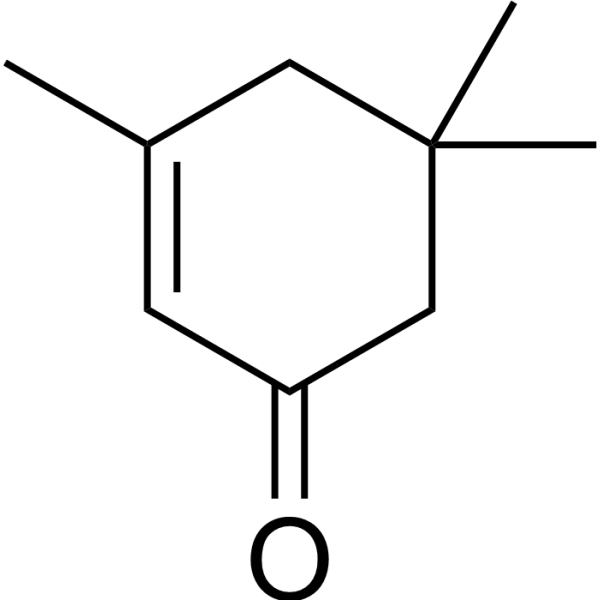
异佛尔酮是一种透明无色液体,具有类似樟脑的气味。密度小于水,不溶于水。沸点为 420 °F(216 °C)。闪点接近 200 °F(93 °C)。接触会刺激皮肤和眼睛。吞食有毒。用作溶剂和杀虫剂。 异佛尔酮是一种环状酮,其结构为环己-2-烯-1-酮,在 3、5 和 6 位被甲基取代。它既是溶剂,也是植物代谢物。异佛尔酮是一种环状酮和烯酮。它是一种广泛使用的溶剂和化学中间体。吸入异佛尔酮对人体的急性(短期)影响包括眼睛、鼻子和喉咙刺激。长期接触异佛尔酮会导致头晕、疲劳和抑郁。动物研究表明,长期吸入高浓度异佛尔酮会对中枢神经系统产生影响。有限的动物研究证据表明,孕期吸入异佛尔酮可能导致胎儿畸形和生长迟缓等出生缺陷。目前尚无关于异佛尔酮对人类生殖、发育或致癌影响的信息。美国环保署(EPA)已将异佛尔酮列为C类致癌物,即可能的人类致癌物。据报道,异佛尔酮存在于蒿属植物(Artemisia judaica)、越橘(Vaccinium macrocarpon)和其他一些有相关数据的生物体中。 |
| 分子式 |
C9H14O
|
|---|---|
| 分子量 |
138.21
|
| 精确质量 |
138.104
|
| CAS号 |
78-59-1
|
| 相关CAS号 |
Isophorone-d5;1262769-87-8;Isophorone-d8;14397-59-2
|
| PubChem CID |
6544
|
| 外观&性状 |
Colorless to light yellow liquid
|
| 密度 |
0.9±0.1 g/cm3
|
| 沸点 |
215.2±0.0 °C at 760 mmHg
|
| 熔点 |
−8 °C(lit.)
|
| 闪点 |
84.4±0.0 °C
|
| 蒸汽压 |
0.2±0.4 mmHg at 25°C
|
| 折射率 |
1.455
|
| LogP |
2.07
|
| tPSA |
17.07
|
| 氢键供体(HBD)数目 |
0
|
| 氢键受体(HBA)数目 |
1
|
| 可旋转键数目(RBC) |
0
|
| 重原子数目 |
10
|
| 分子复杂度/Complexity |
187
|
| 定义原子立体中心数目 |
0
|
| SMILES |
O=C1C([H])=C(C([H])([H])[H])C([H])([H])C(C([H])([H])[H])(C([H])([H])[H])C1([H])[H]
|
| InChi Key |
HJOVHMDZYOCNQW-UHFFFAOYSA-N
|
| InChi Code |
InChI=1S/C9H14O/c1-7-4-8(10)6-9(2,3)5-7/h4H,5-6H2,1-3H3
|
| 化学名 |
3,5,5-trimethylcyclohex-2-en-1-one
|
| 别名 |
NSC-403657; NSC 403657; Isophorone
|
| HS Tariff Code |
2934.99.9001
|
| 存储方式 |
Powder -20°C 3 years 4°C 2 years In solvent -80°C 6 months -20°C 1 month |
| 运输条件 |
Room temperature (This product is stable at ambient temperature for a few days during ordinary shipping and time spent in Customs)
|
| 溶解度 (体外实验) |
DMSO : ~100 mg/mL (~723.54 mM)
|
|---|---|
| 溶解度 (体内实验) |
配方 1 中的溶解度: ≥ 2.5 mg/mL (18.09 mM) (饱和度未知) in 10% DMSO + 40% PEG300 + 5% Tween80 + 45% Saline (这些助溶剂从左到右依次添加,逐一添加), 澄清溶液。
例如,若需制备1 mL的工作液,可将100 μL 25.0 mg/mL澄清DMSO储备液加入到400 μL PEG300中,混匀;然后向上述溶液中加入50 μL Tween-80,混匀;加入450 μL生理盐水定容至1 mL。 *生理盐水的制备:将 0.9 g 氯化钠溶解在 100 mL ddH₂O中,得到澄清溶液。 配方 2 中的溶解度: ≥ 2.5 mg/mL (18.09 mM) (饱和度未知) in 10% DMSO + 90% (20% SBE-β-CD in Saline) (这些助溶剂从左到右依次添加,逐一添加), 澄清溶液。 例如,若需制备1 mL的工作液,可将 100 μL 25.0 mg/mL澄清DMSO储备液加入900 μL 20% SBE-β-CD生理盐水溶液中,混匀。 *20% SBE-β-CD 生理盐水溶液的制备(4°C,1 周):将 2 g SBE-β-CD 溶解于 10 mL 生理盐水中,得到澄清溶液。 View More
配方 3 中的溶解度: ≥ 2.5 mg/mL (18.09 mM) (饱和度未知) in 10% DMSO + 90% Corn Oil (这些助溶剂从左到右依次添加,逐一添加), 澄清溶液。 1、请先配制澄清的储备液(如:用DMSO配置50 或 100 mg/mL母液(储备液)); 2、取适量母液,按从左到右的顺序依次添加助溶剂,澄清后再加入下一助溶剂。以 下列配方为例说明 (注意此配方只用于说明,并不一定代表此产品 的实际溶解配方): 10% DMSO → 40% PEG300 → 5% Tween-80 → 45% ddH2O (或 saline); 假设最终工作液的体积为 1 mL, 浓度为5 mg/mL: 取 100 μL 50 mg/mL 的澄清 DMSO 储备液加到 400 μL PEG300 中,混合均匀/澄清;向上述体系中加入50 μL Tween-80,混合均匀/澄清;然后继续加入450 μL ddH2O (或 saline)定容至 1 mL; 3、溶剂前显示的百分比是指该溶剂在最终溶液/工作液中的体积所占比例; 4、 如产品在配制过程中出现沉淀/析出,可通过加热(≤50℃)或超声的方式助溶; 5、为保证最佳实验结果,工作液请现配现用! 6、如不确定怎么将母液配置成体内动物实验的工作液,请查看说明书或联系我们; 7、 以上所有助溶剂都可在 Invivochem.cn网站购买。 |
| 制备储备液 | 1 mg | 5 mg | 10 mg | |
| 1 mM | 7.2354 mL | 36.1768 mL | 72.3537 mL | |
| 5 mM | 1.4471 mL | 7.2354 mL | 14.4707 mL | |
| 10 mM | 0.7235 mL | 3.6177 mL | 7.2354 mL |
1、根据实验需要选择合适的溶剂配制储备液 (母液):对于大多数产品,InvivoChem推荐用DMSO配置母液 (比如:5、10、20mM或者10、20、50 mg/mL浓度),个别水溶性高的产品可直接溶于水。产品在DMSO 、水或其他溶剂中的具体溶解度详见上”溶解度 (体外)”部分;
2、如果您找不到您想要的溶解度信息,或者很难将产品溶解在溶液中,请联系我们;
3、建议使用下列计算器进行相关计算(摩尔浓度计算器、稀释计算器、分子量计算器、重组计算器等);
4、母液配好之后,将其分装到常规用量,并储存在-20°C或-80°C,尽量减少反复冻融循环。
计算结果:
工作液浓度: mg/mL;
DMSO母液配制方法: mg 药物溶于 μL DMSO溶液(母液浓度 mg/mL)。如该浓度超过该批次药物DMSO溶解度,请首先与我们联系。
体内配方配制方法:取 μL DMSO母液,加入 μL PEG300,混匀澄清后加入μL Tween 80,混匀澄清后加入 μL ddH2O,混匀澄清。
(1) 请确保溶液澄清之后,再加入下一种溶剂 (助溶剂) 。可利用涡旋、超声或水浴加热等方法助溶;
(2) 一定要按顺序加入溶剂 (助溶剂) 。
InvivoChem的所有产品仅用于作科学研究,不面向患者销售
Copyright 2020 InvivoChem LLC | All Rights Reserved 粤ICP备20063088号-1


 粤公网安备 44011102003439号
 463611831
