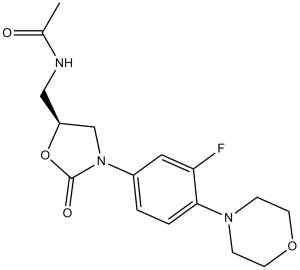
Linezolid (PNU-100766)

别名: PNU 100766; PNU-100766; PNU100766; U 100766; U-100766; U100766; Linezolid; Zyvox; Zyvoxid; Zyvoxam 利奈唑胺;利奈唑烷(吗啉恶酮);吗啉恶酮(雷奈佐利, 利奈唑胺,利奈唑烷,利奈唑 );利奈唑胺,雷奈佐利;利萘唑酮及中间体;利萘唑胺;利萘唑酮;利奈唑胺-13C-D3;雷奈佐利;Linezolid 利奈唑酮; 雷奈佐利(利奈唑胺);雷奈佐利,利奈唑胺;利奈唑胺 USP标准品;利奈唑胺(斯沃);利奈唑胺标准品;利奈唑胺杂质对照品;利奈唑烷;利柰唑酮;吗啉噁酮;吗啉恶酮;吗啉恶酮 标准品;噻唑烷-2-甲酸;(S)-N-[[3-(3-氟-4-吗啉基苯基)-2-氧代-5-唑烷基]甲基]乙酰胺
目录号: V2009 纯度: ≥98%
利奈唑胺(也称为 PNU-100766)是一种合成恶唑烷酮抗菌剂,是一种用于治疗严重感染的抗生素。
Linezolid (PNU-100766) CAS号: 165800-03-3
产品类别: Bacterial
产品仅用于科学研究,不针对患者销售
规格 价格 库存 数量
2mg
5mg
10mg
25mg
50mg
100mg
250mg
500mg
1g
Other Sizes

Other Forms of Linezolid (PNU-100766):

  • 雷奈佐利-D3
点击了解更多
InvivoChem产品被CNS等顶刊论文引用
纯度/质量控制文件

纯度: ≥98%

产品描述
利奈唑胺(也称为 PNU-100766)是一种合成恶唑烷酮抗菌剂,是一种用于治疗严重感染的抗生素。利奈唑胺对革兰氏阳性菌和多重耐药菌具有广谱抗菌作用,如厌氧菌、耐甲氧西林金黄色葡萄球菌 (MRSA)、耐万古霉素肠球菌、耐青霉素肺炎球菌和链球菌。利奈唑胺抑制与大肠杆菌 30S 或 70S 核糖体亚基形成起始复合物。利奈唑胺抑制与金黄色葡萄球菌 70S 紧密耦合核糖体形成复合物。
生物活性&实验参考方法
靶点
Oxazolidinone antibiotic; bacterial protein synthesis
体外研究 (In Vitro)
体外活性:利奈唑胺抑制与大肠杆菌 30S 或 70S 核糖体亚基形成起始复合物。利奈唑胺抑制与金黄色葡萄球菌 70S 紧密耦合核糖体形成复合物。 Linezolid 是大肠杆菌中无细胞转录翻译的有效抑制剂,50% 抑制浓度 (IC50) 为 1.8 mM。利奈唑胺是一种恶唑烷酮,是一类新型抗菌剂,具有增强的抗病原体活性。利奈唑胺 MIC 随测试方法、实验室和细菌存活的薄雾的显着性而略有不同,但所有工作人员都发现敏感性分布很窄且单峰,链球菌、肠球菌和葡萄球菌的 MIC 值在 0.5 至 4 mg/L 之间。利奈唑胺会导致形成结合位点的 23S rRNA 发生突变。利奈唑胺是一种恶唑烷酮,其作用机制涉及在早期阶段抑制蛋白质合成。在 50°C 至 56°C 下将利奈唑胺添加到补充有 OADC(油酸、白蛋白、葡萄糖和过氧化氢酶)的 7H10 琼脂培养基 (Difco) 中,稀释倍数达到 0.125 μg/mL 至 4 μg/的终浓度。毫升。利奈唑胺对所有测试菌株(MIC ≤ 1 μg/ml)均表现出优异的体外活性,包括对 SIRE 耐药的菌株。细胞测定:利奈唑胺是大肠杆菌中无细胞转录翻译的有效抑制剂。 IC50 为 1.8 mM。由于测试方法和实验室不同,利奈唑胺 MIC 略有不同。链球菌、肠球菌和葡萄球菌的 MIC 值在 0.5 至 4 mg/L 之间。
翻译起始需要tRNAfMet、30S或70S亚基与mRNA形成三元复合物。该起始复合物可通过测量放射性标记的tRNAfMet与30S或70S亚基的结合来检测。图1A显示,在起始因子IF1、IF2和IF3存在下,利奈唑胺对大肠杆菌30S和70S起始复合物形成的半数抑制浓度(IC50)分别为110 μM(37 μg/ml)和130 μM(44 μg/ml)。通过证明春日霉素对70S起始复合物形成的抑制作用(IC50为154 μM)验证了该检测方法的可靠性(图1B):ml-citation{ref="1" data="citationList"}。 使用金黄色葡萄球菌70S核糖体进一步研究了恶唑烷酮类对起始复合物形成的抑制作用(图2)。使用截短的mRNA时,利奈唑胺的IC50值为116 μM。这些反应在无起始因子条件下使用盐洗70S核糖体进行。 起始因子IF1、IF2和IF3在细菌翻译起始中起重要作用。tRNAfMet被IF2结合后,作为起始复合物的一部分与IF1、IF3和mRNA一起递送至30S亚基。当使用5或0.5 pmol大肠杆菌IF2时,利奈唑胺不抑制IF2-tRNAfMet复合物的形成(表1)。通过在缺少任一因子的条件下形成大肠杆菌70S核糖体起始复合物,进一步研究了起始因子在利奈唑胺作用机制中的作用。图4显示,在此条件下利奈唑胺的IC50为152 μM。[1]
恶唑烷酮类是一类新型合成抗生素,对革兰氏阳性病原菌具有良好的活性。使用敏感大肠杆菌菌株UC6782进行的实验表明,eperezolid(原U-100592)和利奈唑胺(原U-100766)均能抑制体内蛋白质合成。两者在大肠杆菌无细胞转录-翻译系统中都是强效抑制剂,IC50分别为1.8和2.5 μM。抑制MS2噬菌体RNA指导的体外翻译的能力很大程度上取决于检测中添加的RNA量。对于eperezolid,128 μg/ml RNA产生的IC50为50 μM,而32 μg/ml RNA则产生20 μM IC50。在利奈唑胺抑制实验中使用更低RNA模板浓度发现,32和8 μg/ml MS2噬菌体RNA分别产生24和15 μM IC50。该现象与翻译起始抑制剂春日霉素相似,但与链霉素不同。两种恶唑烷酮均不抑制细菌翻译过程中N-甲酰甲硫氨酰-tRNA的形成、延伸或终止反应。恶唑烷酮类似乎通过抑制蛋白质合成的起始阶段来阻断细菌翻译。[2]
体内研究 (In Vivo)
临床试验:口服给药后利奈唑胺具有完全生物利用度,口服给药后 1 至 2 小时内达到最大血浆利奈唑胺浓度。利奈唑胺的消除半衰期为 5-7 小时,每天两次服用 400-600mg 可提供治疗范围内的稳态浓度。
最后,我们使用先前采用的给药方案(20),比较了利奈唑胺和万古霉素对HLA-DR3转基因小鼠中IRDL-7971诱导肺炎的疗效:ml-citation{ref="4" data="citationList"}。如图5所示,与万古霉素组(P=0.0002;n=10-14只/组)和未治疗组(P=0.0004;n=8-10只/组)相比,利奈唑胺组显示出显著的保护作用:ml-citation{ref="4" data="citationList"}。值得注意的是,万古霉素未能对致死性肺炎产生显著保护效果(P=0.50;n=8-14只/组):ml-citation{ref="4" data="citationList"}。 血清细胞因子分析表明,与IDRL-7971感染的未治疗组和万古霉素治疗组相比,利奈唑胺治疗的HLA-DR3转基因感染小鼠的IL-2、IL-6和趋化因子KC水平显著降低(图6)。这些结果表明,利奈唑胺可能通过抑制体内超抗原(SAg)的产生发挥保护作用 [4]。
酶活实验
[32P]mRNA的合成用于核糖体结合研究。[1]
Sandhu等人(24)描述的一步PCR程序用于合成具有确定序列的200 bp mRNA。将四个具有短重叠的相邻寡核苷酸引物彼此退火并进行PCR。引物序列如下(引物序列为5′至3′):引物1,GGGAATTCGCAGGTTATAAAAAGGTAAAGGTAAA;引物2,GGTGGTGGCCTGGCAAAGGTAAAGGT;引物3,AAAAG、AAAAA、GGTAAAG、AAAA、TGA、TGAA、TGAA;引物4为CTAGAGGATCCTTTTTTTTTTATTAACCAC。将引物1和2退火至序列5′-ACCTTTTTACCTTTTTACCTTTACCTTTTCTTTTTTTACTTTTTACTCTTTACTTTCTTACCTTATCTTTTACCTCAGGCCAC-3′。底漆3按照5′-ACCTGTGCACCAGGCCACCTTTACCTTTTTTTTACCTTTTCTCTCTCTCT-3′的顺序退火,底漆4退火为底漆3。通过PCR的延伸导致中间体的不对称合成,这些中间体彼此退火,从而引发双链DNA模板的合成。随后使用该模板产生序列为5′-GGGAUUCGGAGGUUUAAAAAUG-(GGUAAA)33UAAUAA-3′的mRNA(Shine-Dalgarno序列和AUG起始密码子下划线)。编码序列包含Gly(GGU)和Lys(AAA)密码子,然后是串联终止密码子。[32P]mRNA用Ribomax试剂盒和[32P]CTP或[32P]GTP转录。通过苯酚提取和Quick Spin G-25柱层析分离RNA。
标记的合成mRNA与核糖体的结合。[1]
在24°C下,在含有200至400μg 70S核糖体、20 mM MgCl2、10 mM Tris-HCl(pH 7.4)、1 mM DTT、80 mM NH4Cl和1μl(16000 dpm)32P标记mRNA的50μl反应混合物中,对32P标记的合成mRNA进行了15分钟的结合。通过加入1 ml含有20 mM Tris(pH 7.4。然后将mRNA-核糖体复合物捕获在Millipore HA过滤器上,并在加入闪烁液后计算放射性。
AUG.大肠杆菌起始复合物测定法[1]
大肠杆菌70S核糖体(10 pmol)与[35S]tRNAfMet(45000 dpm)在含有20 mM HEPES(pH 7.6)、3 mM MgCl2、150 mM NH4Cl、4 mM DTT、0.05 mM精胺、2 mM亚精胺和0.25μg AUG三核苷酸的20μl反应混合物中孵育。将重复的反应混合物在37°C下孵育10分钟,加入2 ml冷缓冲液A停止反应。通过微孔过滤器(孔径0.45μm)过滤复合物,用50 ml缓冲液A洗涤,并在加入闪烁液后计算放射性。
细胞实验
利奈唑胺是大肠杆菌中无细胞转录翻译的有效抑制剂。 IC50 为 1.8 mM。由于测试方法和实验室不同,利奈唑胺 MIC 略有不同。链球菌、肠球菌和葡萄球菌的 MIC 值在 0.5 至 4 mg/L 之间。
大肠杆菌70S核糖体的制备。[1]
核糖体是通过Rheinberger等人的方法制备的。将50克(湿重)冷冻的MRE600细胞与等量的氧化铝混合,在0°C下用研钵和研杵研磨细胞。加入50毫升每毫升含有1μg DNase的缓冲液A,搅拌悬浮液20分钟。通过两次10000×g离心10分钟,去除氧化铝、未破碎的细胞和细胞碎片。上清液在30000×g下再次离心30分钟,所得上清液的上三分之二在30000×g下再次离心16小时(S30提取物)。将核糖体颗粒悬浮在缓冲液B中,在10000×g下离心10分钟,将澄清的上清液在105000×g下离心机4小时。将颗粒化的核糖体在缓冲液C中洗涤两次,同时将核糖体保持在5至10 mg/ml(14.4 A260单位=1 mg/ml),在缓冲液A中以80至100 mg/ml的核糖体悬浮,并储存在-80°C下。
大肠杆菌核糖体亚基的制备。[1]
核糖体亚基按照Staehelin和Maglott的描述制备,并进行了以下修改。如上所述,通过使用MRE600中对数相细胞制备S30提取物,并将30S亚基储存在液氮中。
金黄色葡萄球菌核糖体的制备。[1]
将金黄色葡萄球菌细胞(50 g[湿重])重新悬浮在100 ml裂解缓冲液(50 mM Tris-HCl[pH 8.0],100 mM NaCl,每ml 2 mg溶葡萄球菌酶,10000 U DNase I)中,并在37°C水浴中孵育1小时。加入β-巯基乙醇至终浓度为5 mM,将裂解的细胞在10000×g下离心10分钟,以去除未破碎的细胞和细胞片段。上清液以30000×g离心,所得上清液以100000×g离心16小时以沉淀核糖体。将核糖体沉淀重新悬浮在缓冲液B中,并再次在100000×g下离心16小时。将沉淀重新悬浮于缓冲液A中,施加在缓冲液A制备的线性5%至40%(wt/vol)蔗糖梯度上,并在Beckman SW28转子中离心16小时。对梯度进行分级;将70S核糖体合并,在300000×g下造粒5小时,然后在-80°C下储存前重新悬浮在缓冲液A中。
起始因子测定。[1]
如Hershey等人所述,对起始因子进行了测定。在含有190 mM Tris-HCl(pH 7.4)、19 mM MgCl2、3.8 mM DTT、1.9 mM GTP、540 mM NH4Cl、5 pmol IF2和2μl[35S]tRNAfMet(10000 dpm)的反应混合物(最终体积,65μl)中形成了IF2和tRNAfMet之间的复合物。将重复的反应混合物在37°C下孵育10分钟,并通过加入1ml含1%戊二醛的冰冷缓冲液A来停止反应。将复合物捕获在Millipore HA过滤器(孔径0.45μm)上,用50 ml含1%戊二醛的缓冲液A洗涤,并在加入液体闪烁液后计数。
动物实验


药代性质 (ADME/PK)
Absorption, Distribution and Excretion
Linezolid is widely absorbed after oral administration, with an absolute bioavailability of approximately 100%. Peak plasma concentrations (Tmax) are reached approximately 1 to 2 hours after administration, with a range of 8.1–12.9 mcg/mL after a single dose and 11.0–21.2 mcg/mL after multiple doses. Oral absorption of linezolid is not significantly affected by food intake; therefore, the timing of administration is not limited by mealtimes. Linezolid and its metabolites are primarily excreted in the urine. Under steady-state conditions, approximately 84% of the radioactive material is recovered in the urine after administration of radiolabeled linezolid, of which approximately 30% is the parent drug, 40% is a hydroxyethylglycine metabolite, and 10% is an aminoethoxyacetic acid metabolite. Fecal excretion is relatively small; the original drug was not detected in feces, with only 6% and 3% of the administered dose present in feces as metabolites of hydroxyethylglycine and aminoethoxyacetic acid, respectively. At steady state, the volume of distribution (VolD) of linezolid in a healthy adult is approximately 40–50 L. The total clearance of linezolid is estimated at 100–200 mL/min, most of which appears not to be cleared by the kidneys. The mean renal clearance is approximately 40 mL/min, suggesting net renal tubular reabsorption; non-renal clearance is estimated to account for approximately 65% of the total clearance, averaging 70–150 mL/min. The clearance of linezolid is highly variable, especially non-renal clearance. Linezolid is distributed in well-perfused tissues; the VolD is slightly lower in women than in men. The steady-state VolD is 40–50 L. Compared to adults, pediatric patients had lower AUC values, and linezolid AUC variability was higher in all age groups of children than in adults. Most preterm infants (less than 7 days gestation, less than 34 weeks gestation) had higher AUC values than many full-term newborns and older infants. Following oral administration, linezolid is rapidly absorbed, with oral bioavailability >95% in rats and dogs, and >70% in mice. A 28-day intravenous/oral toxicokinetic study in rats (20–200 mg kg⁻¹ day⁻¹) and dogs (10–80 mg kg⁻¹ day⁻¹) showed no significant increase in clearance or accumulation of linezolid after multiple doses. Linezolid has limited protein binding (<35%) and is well distributed, reaching most extravascular sites, with a steady-state volume of distribution (Vss) approximately equal to total body fluid. Linezolid circulates primarily as the parent drug and is excreted mainly as the parent drug and two inactive carboxylic acids, PNU-142586 and PNU-142300. A small number of secondary metabolites were also identified. In all species, clearance was determined by metabolism. Radioactive recovery was largely completed within 24–48 hours. The parent drug and its metabolites are primarily excreted via the kidneys. Reabsorption of the parent drug via the renal tubules significantly slows its excretion, making this slow metabolic process the rate-limiting step for overall clearance. In conclusion, the ADME data are relatively consistent across species, supporting rats and dogs as the primary species for nonclinical safety studies. In two randomized, double-blind, placebo-controlled, dose-escalation trials, subjects received linezolid orally (375, 500, or 625 mg) orally or intravenously (500 or 625 mg) twice daily, orally or intravenously. Blood and urine samples were collected continuously for up to 18 days after the first dose and subsequent doses. Non-compartmental pharmacokinetic analysis was used to describe the in vivo distribution of linezolid. Plasma linezolid concentrations and the area under the concentration-time curve (AUC) increased proportionally with dose, regardless of the route of administration. Plasma linezolid concentrations were above the MIC90 (4.0 mg/L) for most of the 12-hour dosing interval. Mean clearance, half-life, and volume of distribution were similar regardless of oral or intravenous administration, independent of dose. Linezolid was well tolerated, with similar incidence of drug-related adverse events in the linezolid and placebo groups. Both oral and intravenous linezolid exhibited linear pharmacokinetic characteristics, with concentrations above the target MIC90 (minimum inhibitory concentration) for most of the dosing interval. These results support the twice-daily dosing regimen of linezolid and demonstrate the feasibility of switching from intravenous to oral administration without dose adjustment.
For more complete data on absorption, distribution, and excretion of linezolid (16 items in total), please visit the HSDB record page.
Metabolism/Metabolites
Linezolid is primarily metabolized into two inactive metabolites: aminoethoxyacetic acid metabolite (PNU-142300) and hydroxyethylglycine metabolite (PNU-142586), both products of morpholine ring oxidation. The hydroxyethylglycine metabolite is the most abundant of the two metabolites and is likely generated via a non-enzymatic process, but the specific mechanism remains unclear. Although the specific enzymes responsible for linezolid biotransformation are not identified, it does not appear to be metabolized by the CYP450 enzyme system, nor does it significantly inhibit or induce these enzymes. However, linezolid is a reversible, non-selective inhibitor of monoamine oxidases. In vitro studies have shown that linezolid is not metabolized by human cytochrome P450 enzymes. Linezolid does not inhibit cytochrome P450 enzymes. Linezolid is primarily metabolized via the oxidation of the morpholine ring, generating two inactive metabolites: aminoethoxyacetic acid metabolite and hydroxyethylglycine metabolite. The hydroxyethylglycine metabolite is generated in vitro via a non-enzymatic chemical oxidation mechanism. This drug is primarily metabolized oxidatively to two inactive metabolites: aminoethoxyacetic acid metabolite and hydroxyethylglycine metabolite. Linezolid is hardly metabolized by the cytochrome P450 (CYP) enzyme system. Linezolid does not inhibit CYP isoenzymes 1A2, 2C9, 2C19, 2D6, 2E1, or 3A4, nor is it an enzyme inducer, suggesting that this drug is unlikely to alter the pharmacokinetics of drugs metabolized by these enzymes. In vitro studies aimed to identify the hepatic enzymes responsible for the oxidative metabolism of linezolid. In human liver microsomes, linezolid is oxidized to a single metabolite, hydroxylinezolid (M1). The generation of M1 depends on microsomal proteins and NADPH. The rate of M1 generation follows first-order (unsaturated) kinetics across a concentration range of 2 to 700 μM. Based on the following experiments, the molecular origin of M1 could not be determined using conventional in vitro techniques: a) Inhibitors/substrates of various cytochrome P-450 (CYP) enzymes failed to inhibit M1 formation; b) In 14 human liver samples, M1 formation was not correlated with any measured catalytic activity (r(2) < 0.23); c) M1 formation was not detected when incubated with microsomes prepared from baculovirus insect cell lines expressing CYP 1A1, 1A2, 2A6, 2B6, 2C8, 2C9, 2C19, 2D6, 2E1, 3A4, 3A5, and 4A11. Furthermore, in vitro P-450 inhibition screening showed that linezolid had no inhibitory activity against the following CYP enzymes (CYP1A2, CYP2C9, CYP2C19, CYP2D6, CYP2E1, and CYP3A4). Further in vitro studies ruled out the possibility of flavin-containing monooxygenases and monoamine oxidases as metabolites generating potential enzymes. However, metabolite formation was most ideal under alkaline conditions (pH 9.0), suggesting the possible involvement of an unknown P-450 enzyme or another microsomal-mediated oxidation pathway. Linezolid is primarily metabolized via the oxidation of the morpholine ring, producing two inactive open-ring carboxylic acid metabolites: aminoethoxyacetic acid metabolite (A) and hydroxyethylglycine metabolite (B). The formation of metabolite B in vitro is mediated by a non-enzymatic chemical oxidation mechanism. Linezolid is not an inducer of rat cytochrome P450 (CYP), and in vitro studies have confirmed that linezolid is not significantly metabolized by human cytochrome P450, nor does it inhibit the activity of clinically significant human CYP isoenzymes (1A2, 2C9, 2C19, 2D6, 2E1, 3A4). Linezolid is rapidly and extensively absorbed after oral administration. Peak plasma concentrations are reached approximately 1 to 2 hours after administration, with an absolute bioavailability of approximately 100%. Linezolid is primarily metabolized via the oxidative degradation of the morpholine ring, yielding two inactive open-ring carboxylic acid metabolites: aminoethoxyacetic acid metabolite (A) and hydroxyethylglycine metabolite (A308). Half-life: 4.5–5.5 hours. Elimination half-life is estimated to be between 5 and 7 hours. A significant but weak correlation was observed between age and total clearance. The mean (± standard deviation) elimination half-life, total clearance, and apparent volume of distribution were 3.0 ± 1.1 hours, 0.34 ± 0.15 L/h/kg, and 0.73 ± 0.18 L/kg, respectively. ...
The following are the elimination half-lives for adults taking linezolid at different doses: 400 mg tablets (single dose) - 5.2 hours; 400 mg tablets every 12 hours - 4.69 hours; 600 mg tablets (single dose) - 4.26 hours; 600 mg tablets every 12 hours - 5.4 hours; 600 mg oral suspension (single dose) - 4.6 hours; 600 mg intravenous injection (single dose) - 4.4 hours; 600 mg intravenous injection every 12 hours - 4.8 hours. The half-life is shorter in children aged 7 days to 11 years than in adults.
毒性/毒理 (Toxicokinetics/TK)
Toxicity Summary
Linezolid targets the 39S large subunit of the mitochondrial ribosome, thereby inhibiting mitochondrial protein synthesis. Therefore, linezolid is cytotoxic to the most metabolically active cells or tissues, including the heart, liver, thymus, and bone marrow (A7823). A possible target of linezolid is the 16S rRNA molecule in the mitochondrial ribosome, which is similar to the 23S rRNA in bacterial ribosomes. Hepatotoxicity
Linezolid treatment is associated with mild, transient increases in serum transaminase and alkaline phosphatase levels in 1% to 10% of patients. Although similar elevation rates have been observed in infected patients treated with similar drugs, no enzyme elevations were found in healthy volunteers taking linezolid for short periods. On the other hand, ALT elevations during linezolid treatment worsened with increasing dose, but all ALT elevations were asymptomatic and returned to normal upon discontinuation of the drug. Despite its limited availability and restricted use, several cases of linezolid treatment with clinically significant liver disease and jaundice have been reported. One case was reported involving a hypersensitivity reaction with rash, eosinophilia, renal insufficiency (drug reaction accompanied by eosinophilia and systemic symptoms), and mild elevation of serum enzymes. More commonly, linezolid is associated with lactic acidosis, typically occurring 1 to 8 weeks after treatment, sometimes with evidence of liver damage and jaundice. Lactic acidosis is usually caused by mitochondrial damage and dysfunction, leading to microvesicular steatosis and liver dysfunction (not necessarily accompanied by jaundice, and even elevated ALT or alkaline phosphatase). Mitochondrial damage caused by linezolid treatment can also lead to other serious side effects, including peripheral neuropathy and optic neuropathy, pancreatitis, serotonin syndrome, and kidney damage. Risk factors for linezolid-induced lactic acidosis include higher doses, longer treatment duration, and the presence of underlying chronic liver or kidney disease. Mitochondrial damage is thought to be caused by inhibition of mitochondrial ribosome function, consistent with the known effects of linezolid on bacterial ribosome function. Lactic acidosis typically develops 1 to 8 weeks after treatment and can be severe, but usually resolves rapidly upon discontinuation of the drug. In contrast, linezolid-induced optic neuropathy and peripheral neuropathy resolve more slowly and may cause permanent damage. Lactic acidosis can be fatal; liver dysfunction and jaundice have been reported in cases of severe linezolid-induced lactic acidosis.
Probability Score: A (Established clinically significant cause of liver damage, usually associated with lactic acidosis).
Pregnancy and Lactation Effects
◉ Overview of Use During Lactation
Linezolid is excreted into breast milk, and its concentration may be effective against Staphylococcus strains commonly found in mastitis. Limited data suggest that the maximum dose ingested by infants through breast milk is only 6% to 9% of the standard infant dose, and the drug concentration in infant serum is extremely low. If the mother needs to take linezolid, breastfeeding should not be discontinued. Monitor the infant for possible gastrointestinal reactions, such as diarrhea and vomiting.
◉ Effects on breastfed infants
No relevant published information found as of the revision date.
◉ Effects on lactation and breast milk
No relevant published information found as of the revision date.
Protein binding
Linezolid has a plasma protein binding rate of approximately 31%, primarily binding to serum albumin, and this binding is concentration-dependent.
Interactions
Concomitant use with linezolid resulted in a slight but statistically significant increase in plasma concentrations of pseudoephedrine and phenylpropanolamine; and a slight but statistically significant decrease in plasma concentrations of dextromethorphan (the major metabolite of dextromethorphan). Increased blood pressure was observed when linezolid was used in combination with pseudoephedrine or phenylpropanolamine; no significant effect was observed when used in combination with dextromethorphan. None of these concomitant drugs had a significant effect on the pharmacokinetics of linezolid. Adverse event reports are extremely rare. The enhancement of sympathomimetic activity by linezolid is considered clinically insignificant, but caution should be exercised in patients sensitive to elevated blood pressure due to predisposing factors. There are no restrictions on the combined use of dextromethorphan and linezolid. Two cases of serotonin poisoning (ST) associated with the combined use of linezolid and serotonergic drugs are reported, along with a review of previously published case reports. Case 1: A 38-year-old white woman with cystic fibrosis was treated with venlafaxine 300 mg/day for one year. She was prescribed linezolid 600 mg intravenously every 12 hours for a methicillin-resistant Staphylococcus aureus (MRSA) lung infection. Eight days into treatment, the patient developed ST symptoms. After the venlafaxine dose was reduced to 150 mg/day, the symptoms gradually subsided within 36 hours. Case 2: A 37-year-old male with multiple myeloma was taking citalopram 40 mg/day and trazodone 150 mg/day for anxiety-related disorders. Due to MRSA cellulitis, he started taking linezolid 600 mg orally twice daily. The following day, the patient developed anxiety, panic attacks, tremors, tachycardia, and hypertension, which persisted until the end of linezolid treatment. The symptoms eventually subsided 5 days after discontinuing linezolid.
Potential drug interaction (serotonin syndrome). Although serotonin syndrome has not been reported in clinical trials of linezolid, there are a few post-marketing case reports of patients developing the syndrome shortly after concomitant use of linezolid or discontinuation of certain selective serotonin reuptake inhibitors (SSRIs) (e.g., citalopram, paroxetine, sertraline). Clinicians should consider this possibility if patients receiving such combination therapy develop signs and symptoms of serotonin syndrome (e.g., high fever, cognitive impairment). Some clinicians advise caution when using linezolid in patients taking selective serotonin reuptake inhibitors (SSRIs); others recommend discontinuing SSRIs before starting linezolid and not restarting them within two weeks of finishing linezolid treatment. Toxicity caused by excessive intrasynaptic serotonin, historically known as serotonin syndrome, is now considered a phenomenon related to intrasynaptic serotonin concentration. Recent studies have more clearly defined serotonin toxicity as an independent toxic syndrome characterized by clonic seizures, hyperreflexia, high fever, and agitation. Serotonergic drugs can produce serotonergic side effects; overdose of serotonin reuptake inhibitors (SRIs) often leads to significant serotonergic side effects. Moderate serotonergic toxicity occurs in 15% of cases, but is not severe and does not lead to high fever or death. Only the combined use of serotonergic drugs with different mechanisms of action can raise intrasynaptic serotonin levels to life-threatening levels. The most common combination therapy is a monoamine oxidase inhibitor (MAOI) with any SRI. Some lesser-known drugs are also MAOIs, such as linezolid and moclobemide; some opioid analgesics also have serotonergic activity. When these drugs are used in combination, they can cause life-threatening serotonergic toxicity. Some preventable deaths still occur. Therefore, understanding the properties of these drugs will help ensure that problems are avoided in most clinical situations and that appropriate treatment is given when problems do occur (5-HT(2A) antagonists can be used in severe cases). For more complete data on interactions of linezolids (12 in total), please visit the HSDB records page.
参考文献

[1]. Antimicrob Agents Chemother.1998 Dec;42(12):3251-5.

[2]. Antimicrob Agents Chemother.1997 Oct;41(10):2132-6.

[3]. Drugs. 2000 Apr;59(4):815-27; discussion 828.

[4]. Antimicrob Agents Chemother . 2012 Oct;56(10):5401-5.

其他信息
Therapeutic Uses

Antimicrobial Agents

Linezolid, administered intravenously and orally, is indicated for the treatment of hospital-acquired pneumonia caused by methicillin-sensitive and methicillin-resistant Staphylococcus aureus or penicillin-sensitive Streptococcus pneumoniae. /Included on US Product Label/
Linezolid, administered intravenously and orally, is indicated for the treatment of vancomycin-resistant Enterococcus faecalis infections. /Included on US Product Label/
Oral linezolid is indicated for the treatment of uncomplicated skin and soft tissue infections caused by methicillin-sensitive Staphylococcus aureus or Streptococcus pyogenes. /Included on US Product Label/
For more complete data on the therapeutic uses of linezolids (16 in total), please visit the HSDB record page.
Drug Warnings
Myelosuppression (including anemia, leukopenia, pancytopenia, and thrombocytopenia) has been reported in patients treated with linezolid. In cases with known outcomes, affected hematological parameters returned to pre-treatment levels upon discontinuation of linezolid. Patients receiving linezolid treatment should have their complete blood count monitored weekly, especially those receiving linezolid treatment for more than two weeks, those with a history of bone marrow suppression, those taking medications that can cause bone marrow suppression, and those with chronic infections who have previously received or are currently receiving antibiotic treatment. Discontinuation of linezolid treatment should be considered for patients who develop or experience worsening bone marrow suppression. Lactic acidosis has been reported with Zyvox. In reported cases, patients experienced recurrent nausea and vomiting. Patients experiencing recurrent nausea or vomiting, unexplained acidosis, or low bicarbonate levels during Zyvox treatment should seek immediate medical attention. Serotonin syndrome has been reported when Zyvox is used in combination with serotonergic drugs, including antidepressants such as selective serotonin reuptake inhibitors (SSRIs). If clinical considerations suggest that Zyvox is appropriate for use in combination with serotonergic drugs, patients should be closely monitored for signs and symptoms of serotonin syndrome, such as cognitive impairment, high fever, hyperreflexia, and incoordination. If related signs or symptoms appear, the physician should consider discontinuing one or both medications. Peripheral neuropathy and optic neuropathy have been reported in patients treated with Zyvox, primarily in those treated for longer than the recommended maximum duration of 28 days. In cases where optic neuropathy progressed to vision loss, the treatment duration exceeded the recommended maximum duration. Blurred vision has also been reported in some patients treated with Zyvox for less than 28 days. If a patient develops symptoms of visual impairment, such as decreased vision, altered color vision, blurred vision, or visual field defects, an immediate ophthalmological examination is recommended. Visual function should be monitored in all patients taking Zyvox long-term (≥3 months) and in all patients developing new visual symptoms, regardless of the duration of Zyvox treatment. If peripheral neuropathy or optic neuropathy occurs, the potential risks of continuing Zyvox use in these patients should be weighed. For more complete data on linezolid (18 in total), please visit the HSDB records page.
Pharmacodynamics
Linezolid is an oxazolidinone antibacterial drug effective against most aerobic Gram-positive bacteria and mycobacteria. It has bacteriostatic activity against Staphylococcus and Enterococcus, and bactericidal activity against most Streptococcus isolates. Linezolid shows some activity against Gram-negative bacteria and anaerobes in vitro, but is ineffective against these microorganisms. Linezolid is a reversible, non-selective monoamine oxidase (MAO) inhibitor; therefore, co-administration with serotonergic drugs such as selective serotonin reuptake inhibitors (SSRIs) or tricyclic antidepressants (TCAs) may lead to serotonin syndrome. Linezolid should not be used to treat catheter-related bloodstream infections or catheter site infections, as the risks appear to outweigh the benefits in these cases.
Linezolid is an oxazolidinone antibacterial drug whose mechanism of action is by inhibiting the initiation of bacterial protein synthesis. No cross-resistance has been found between linezolid and other protein synthesis inhibitors. Linezolid exhibits broad-spectrum antibacterial activity against Gram-positive bacteria, including methicillin-resistant Staphylococcus aureus (MRSA), penicillin-resistant Streptococcus pneumoniae (PRS), and vancomycin-resistant Enterococcus faecalis and Enterococcus faecium. Anaerobic bacteria such as Clostridium spp., Peptostreptococcus spp., and Prevotella spp. are also sensitive to linezolid. Linezolid has bacteriostatic activity against most susceptible bacteria, but exhibits bactericidal activity against certain strains of Streptococcus pneumoniae, Bacteroides fragilis, and Clostridium perfringens. In clinical trials for hospitalized patients with skin/soft tissue infections (primarily Staphylococcus aureus infections), intravenous/oral linezolid (up to 1250 mg daily) showed a clinical efficacy exceeding 83%. In patients with community-acquired pneumonia, the efficacy exceeded 94%. Preliminary clinical data also indicate that twice-daily intravenous/oral administration of 600 mg linezolid is comparable to intravenous administration of 1 g vancomycin in the treatment of hospital-acquired pneumonia and methicillin-resistant Staphylococcus aureus infections. In addition, linezolid 600 mg twice daily achieved a clinical/microbiological cure rate of over 85% for vancomycin-resistant enterococcal infections. Linezolid is generally well tolerated, with the most common adverse reaction being gastrointestinal disturbances. There have been no clinical reports of adverse reactions due to monoamine oxidase inhibition. [3]
Superantigens (SAg) are potent activators of the immune system and are important determinants of the virulence and pathogenicity of Staphylococcus aureus. In human leukocyte antigen (HLA)-DR3 transgenic mice, hyperresponsiveness to SAg made them more susceptible to pneumonia caused by SAg-producing Staphylococcus aureus strains than C57BL/6 mice. Linezolid is a bacterial protein synthesis inhibitor that is superior to vancomycin in inhibiting SAg production in Staphylococcus aureus in vitro and provides better protection against pneumonia caused by SAg-producing Staphylococcus. [4]
*注: 文献方法仅供参考, InvivoChem并未独立验证这些方法的准确性
化学信息 & 存储运输条件
分子式
C16H20FN3O4
分子量
337.35
精确质量
337.143
元素分析
C, 56.97; H, 5.98; F, 5.63; N, 12.46; O, 18.97
CAS号
165800-03-3
相关CAS号
Linezolid-d3;1127120-38-0
PubChem CID
441401
外观&性状
White to off-white solid powder
密度
1.3±0.1 g/cm3
沸点
585.5±50.0 °C at 760 mmHg
熔点
176-1780C
闪点
307.9±30.1 °C
蒸汽压
0.0±1.6 mmHg at 25°C
折射率
1.554
LogP
0.3
tPSA
71.11
氢键供体(HBD)数目
1
氢键受体(HBA)数目
6
可旋转键数目(RBC)
4
重原子数目
24
分子复杂度/Complexity
472
定义原子立体中心数目
1
SMILES
FC1C([H])=C(C([H])=C([H])C=1N1C([H])([H])C([H])([H])OC([H])([H])C1([H])[H])N1C(=O)O[C@@]([H])(C([H])([H])N([H])C(C([H])([H])[H])=O)C1([H])[H]
InChi Key
TYZROVQLWOKYKF-ZDUSSCGKSA-N
InChi Code
InChI=1S/C16H20FN3O4/c1-11(21)18-9-13-10-20(16(22)24-13)12-2-3-15(14(17)8-12)19-4-6-23-7-5-19/h2-3,8,13H,4-7,9-10H2,1H3,(H,18,21)/t13-/m0/s1
化学名
N-[[(5S)-3-(3-fluoro-4-morpholin-4-ylphenyl)-2-oxo-1,3-oxazolidin-5-yl]methyl]acetamide
别名
PNU 100766; PNU-100766; PNU100766; U 100766; U-100766; U100766; Linezolid; Zyvox; Zyvoxid; Zyvoxam
HS Tariff Code
2934.99.9001
存储方式

Powder      -20°C    3 years

                     4°C     2 years

In solvent   -80°C    6 months

                  -20°C    1 month

注意: 本产品在运输和储存过程中需避光。
运输条件
Room temperature (This product is stable at ambient temperature for a few days during ordinary shipping and time spent in Customs)
溶解度数据
溶解度 (体外实验)
DMSO : 68~100 mg/mL ( 201.57~296.43 mM )
Ethanol : ~10 mg/mL
溶解度 (体内实验)
配方 1 中的溶解度: ≥ 2.5 mg/mL (7.41 mM) (饱和度未知) in 10% DMSO + 40% PEG300 + 5% Tween80 + 45% Saline (这些助溶剂从左到右依次添加,逐一添加), 澄清溶液。
例如,若需制备1 mL的工作液,可将100 μL 25.0 mg/mL澄清DMSO储备液加入到400 μL PEG300中,混匀;然后向上述溶液中加入50 μL Tween-80,混匀;加入450 μL生理盐水定容至1 mL。
*生理盐水的制备:将 0.9 g 氯化钠溶解在 100 mL ddH₂O中,得到澄清溶液。

配方 2 中的溶解度: ≥ 2.5 mg/mL (7.41 mM) (饱和度未知) in 10% DMSO + 90% (20% SBE-β-CD in Saline) (这些助溶剂从左到右依次添加,逐一添加), 澄清溶液。
例如,若需制备1 mL的工作液,可将 100 μL 25.0 mg/mL澄清DMSO储备液加入900 μL 20% SBE-β-CD生理盐水溶液中,混匀。
*20% SBE-β-CD 生理盐水溶液的制备(4°C,1 周):将 2 g SBE-β-CD 溶解于 10 mL 生理盐水中,得到澄清溶液。

View More

配方 3 中的溶解度: ≥ 2.5 mg/mL (7.41 mM) (饱和度未知) in 10% DMSO + 90% Corn Oil (这些助溶剂从左到右依次添加,逐一添加), 澄清溶液。
例如,若需制备1 mL的工作液,可将 100 μL 25.0 mg/mL 澄清 DMSO 储备液添加到 900 μL 玉米油中并混合均匀。


配方 4 中的溶解度: 30% PEG400 + 0.5% Tween 80+ 5% propylene glycol: 30mg/ml (88.93mM)

请根据您的实验动物和给药方式选择适当的溶解配方/方案:
1、请先配制澄清的储备液(如:用DMSO配置50 或 100 mg/mL母液(储备液));
2、取适量母液,按从左到右的顺序依次添加助溶剂,澄清后再加入下一助溶剂。以 下列配方为例说明 (注意此配方只用于说明,并不一定代表此产品 的实际溶解配方):
10% DMSO → 40% PEG300 → 5% Tween-80 → 45% ddH2O (或 saline);
假设最终工作液的体积为 1 mL, 浓度为5 mg/mL: 取 100 μL 50 mg/mL 的澄清 DMSO 储备液加到 400 μL PEG300 中,混合均匀/澄清;向上述体系中加入50 μL Tween-80,混合均匀/澄清;然后继续加入450 μL ddH2O (或 saline)定容至 1 mL;

3、溶剂前显示的百分比是指该溶剂在最终溶液/工作液中的体积所占比例;
4、 如产品在配制过程中出现沉淀/析出,可通过加热(≤50℃)或超声的方式助溶;
5、为保证最佳实验结果,工作液请现配现用!
6、如不确定怎么将母液配置成体内动物实验的工作液,请查看说明书或联系我们;
7、 以上所有助溶剂都可在 Invivochem.cn网站购买。
制备储备液 1 mg 5 mg 10 mg
1 mM 2.9643 mL 14.8214 mL 29.6428 mL
5 mM 0.5929 mL 2.9643 mL 5.9286 mL
10 mM 0.2964 mL 1.4821 mL 2.9643 mL

1、根据实验需要选择合适的溶剂配制储备液 (母液):对于大多数产品,InvivoChem推荐用DMSO配置母液 (比如:5、10、20mM或者10、20、50 mg/mL浓度),个别水溶性高的产品可直接溶于水。产品在DMSO 、水或其他溶剂中的具体溶解度详见上”溶解度 (体外)”部分;

2、如果您找不到您想要的溶解度信息,或者很难将产品溶解在溶液中,请联系我们;

3、建议使用下列计算器进行相关计算(摩尔浓度计算器、稀释计算器、分子量计算器、重组计算器等);

4、母液配好之后,将其分装到常规用量,并储存在-20°C或-80°C,尽量减少反复冻融循环。

计算器

摩尔浓度计算器可计算特定溶液所需的质量、体积/浓度,具体如下:

  • 计算制备已知体积和浓度的溶液所需的化合物的质量
  • 计算将已知质量的化合物溶解到所需浓度所需的溶液体积
  • 计算特定体积中已知质量的化合物产生的溶液的浓度
使用摩尔浓度计算器计算摩尔浓度的示例如下所示:
假如化合物的分子量为350.26 g/mol,在5mL DMSO中制备10mM储备液所需的化合物的质量是多少?
  • 在分子量(MW)框中输入350.26
  • 在“浓度”框中输入10,然后选择正确的单位(mM)
  • 在“体积”框中输入5,然后选择正确的单位(mL)
  • 单击“计算”按钮
  • 答案17.513 mg出现在“质量”框中。以类似的方式,您可以计算体积和浓度。

稀释计算器可计算如何稀释已知浓度的储备液。例如,可以输入C1、C2和V2来计算V1,具体如下:

制备25毫升25μM溶液需要多少体积的10 mM储备溶液?
使用方程式C1V1=C2V2,其中C1=10mM,C2=25μM,V2=25 ml,V1未知:
  • 在C1框中输入10,然后选择正确的单位(mM)
  • 在C2框中输入25,然后选择正确的单位(μM)
  • 在V2框中输入25,然后选择正确的单位(mL)
  • 单击“计算”按钮
  • 答案62.5μL(0.1 ml)出现在V1框中
g/mol

分子量计算器可计算化合物的分子量 (摩尔质量)和元素组成,具体如下:

注:化学分子式大小写敏感:C12H18N3O4  c12h18n3o4
计算化合物摩尔质量(分子量)的说明:
  • 要计算化合物的分子量 (摩尔质量),请输入化学/分子式,然后单击“计算”按钮。
分子质量、分子量、摩尔质量和摩尔量的定义:
  • 分子质量(或分子量)是一种物质的一个分子的质量,用统一的原子质量单位(u)表示。(1u等于碳-12中一个原子质量的1/12)
  • 摩尔质量(摩尔重量)是一摩尔物质的质量,以g/mol表示。
/

配液计算器可计算将特定质量的产品配成特定浓度所需的溶剂体积 (配液体积)

  • 输入试剂的质量、所需的配液浓度以及正确的单位
  • 单击“计算”按钮
  • 答案显示在体积框中
动物体内实验配方计算器(澄清溶液)
第一步:请输入基本实验信息(考虑到实验过程中的损耗,建议多配一只动物的药量)
第二步:请输入动物体内配方组成(配方适用于不溶/难溶于水的化合物),不同的产品和批次配方组成不同,如对配方有疑问,可先联系我们提供正确的体内实验配方。此外,请注意这只是一个配方计算器,而不是特定产品的确切配方。
+
+
+

计算结果:

工作液浓度 mg/mL;

DMSO母液配制方法 mg 药物溶于 μL DMSO溶液(母液浓度 mg/mL)。如该浓度超过该批次药物DMSO溶解度,请首先与我们联系。

体内配方配制方法μL DMSO母液,加入 μL PEG300,混匀澄清后加入μL Tween 80,混匀澄清后加入 μL ddH2O,混匀澄清。

(1) 请确保溶液澄清之后,再加入下一种溶剂 (助溶剂) 。可利用涡旋、超声或水浴加热等方法助溶;
            (2) 一定要按顺序加入溶剂 (助溶剂) 。

临床试验信息
Clinical Trial Testing Whether Targeted Antibiotic Prophylaxis Can Reduce Infections After Cystectomy Compared to Empiric Prophylaxis
CTID: NCT06709196
Phase: Phase 4    Status: Not yet recruiting
Date: 2024-11-29
Trial of Novel Regimens for the Treatment of Pulmonary Tuberculosis
CTID: NCT06192160
Phase: Phase 2    Status: Not yet recruiting
Date: 2024-11-13
Innovating Shorter, All- Oral, Precised Treatment Regimen for Rifampicin Resistant Tuberculosis:BDLL Chinese Cohort
CTID: NCT06649721
Phase: Phase 3    Status: Not yet recruiting
Date: 2024-11-12
Refining MDR-TB Treatment (T) Regimens (R) for Ultra(U) Short(S) Therapy(T)-PLUS
CTID: NCT04717908
Phase: N/A    Status: Completed
Date: 2024-11-12
Linezolid or Vancomycin Surgical Site Infection Prophylaxis
CTID: NCT05571722
Phase: Phase 4    Status: Recruiting
Date: 2024-11-06
View More

MRX-I Versus Linezolid for the Treatment of Acute Bacterial Skin and Skin Structure Infection
CTID: NCT02269319
Phase: Phase 2    Status: Completed
Date: 2024-11-04


PHASE II SINGLE-CENTER, RANDOMIZED, OPEN-LABEL, PROSPECTIVE, STUDY TO DETERMINE THE IMPACT OF SERIAL PROCALCITONIN
CTID: NCT04983901
Phase: Phase 2    Status: Completed
Date: 2024-11-04
Safety and Efficacy Study of Contezolid Acefosamil and Contezolid Compared to Linezolid Administered Intravenously and Orally to Adults With Moderate or Severe Diabetic Foot Infections (DFI)
CTID: NCT05369052
Phase: Phase 3    Status: Recruiting
Date: 2024-11-01
Platform Assessing Regimens and Durations In a Global Multisite Consortium for TB
CTID: NCT06114628
Phase: Phase 2    Status: Recruiting
Date: 2024-10-16
Linezolid Dosing Strategies in Drug-Resistant TB
CTID: NCT05007821
Phase: Phase 2    Status: Active, not recruiting
Date: 2024-10-08
Program for Rifampicin-Resistant Disease With Stratified Medicine for Tuberculosis
CTID: NCT06441006
Phase: Phase 3    Status: Not yet recruiting
Date: 2024-10-04
Phase 2 Trial Assessing TBAJ876 or Bedaquiline, with Pretomanid and Linezolid in Adults with Drug-sensitive Pulmonary Tuberculosis
CTID: NCT06058299
Phase: Phase 2    Status: Active, not recruiting
Date: 2024-09-19
Building Evidence for Advancing New Treatment for Rifampicin Resistant Tuberculosis (RR-TB) Comparing a Short Course of Treatment (Containing Bedaquiline, Delamanid and Linezolid) With the Current South African Standard of Care
CTID: NCT04062201
Phase: Phase 3    Status: Completed
Date: 2024-08-28
Trial of a Six-Month Regimen of High-Dose Rifampicin, High-Dose Isoniazid, Linezolid, and Pyrazinamide Versus a Standard Nine-Month Regimen for the Treatment of Adults and Adolescents With Tuberculous Meningitis
CTID: NCT05383742
Phase: Phase 2    Status: Recruiting
Date: 2024-08-21
A Phase 3 Study Assessing Safety and Efficacy of Bedaquiline Plus PA-824 Plus Linezolid in Subjects With Drug Resistant Pulmonary Tuberculosis
CTID: NCT02333799
Phase: Phase 3    Status: Completed
Date: 2024-08-09
Evaluating Newly Approved Drugs for Multidrug-resistant TB
CTID: NCT02754765
Phase: Phase 3    Status: Completed
Date: 2024-07-24
Evaluating Newly Approved Drugs in Combination Regimens for Multidrug-Resistant TB With Fluoroquinolone Resistance (endTB-Q)
CTID: NCT03896685
Phase: Phase 3    Status: Active, not recruiting
Date: 2024-07-24
Repurposing Clinically Approved Drugs for Yaws With an Insight Into the Cutaneous Ulcer Disease Syndrome (Trep-AByaws)
CTID: NCT05764876
Phase: Phase 3    Status: Active, not recruiting
Date: 2024-07-18
Model-informed Precision Dosing for Linezolid
CTID: NCT06444802
Phase: Phase 3    Status: Not yet recruiting
Date: 2024-06-06
Patient-reported Experiences and Quality of Life Outcomes in the TB-PRACTECAL Clinical Trial
CTID: NCT03942354
Phase:    Status: Completed
Date: 2024-05-29
Alternative Antibiotics for Syphilis
CTID: NCT05069974
Phase: Phase 3    Status: Recruiting
Date: 2024-05-10
Pragmatic Clinical Trial for a More Effective Concise and Less Toxic MDR-TB Treatment Regimen(s)
CTID: NCT02589782
Phase: Phase 2/Phase 3    Status: Completed
Date: 2024-05-01
Economic Evaluation of New MDR TB Regimens
CTID: NCT04207112
Phase: Phase 2/Phase 3    Status: Completed
Date: 2024-04-22
Efficacy and Tolerability of Bedaquiline, Delamanid, Levofloxacin, Linezolid, and Clofazimine to Treat MDR-TB
CTID: NCT03828201
Phase: Phase 2    Status: Recruiting
Date: 2024-04-12
Innovating Shorter, All- Oral, Precised, Individualized Treatment Regimen for Rifampicin Resistant Tuberculosis:Contezolid, Delamanid and Bedaquiline Cohort
CTID: NCT06081361
Phase: Phase 3    Status: Recruiting
Date: 2024-03-15
Modified BPaL Regimen for Managing Pre-XDR TB and MDR (TI/NR) TB in India
CTID: NCT05040126
Phase: Phase 3    Status: Active, not recruiting
Date: 2024-01-03
Adjunctive Clindamycin Versus Linezolid for β-lactam Treated Patients With Invasive Group A Streptococcal Infections
CTID: NCT06126263
Phase:    Status: Active, not recruiting
Date: 2023-11-13
Oral Antibiotic Treatment at Home Instead of Intravenous Treatment in Hospital for Resistant Gram Positive Infections
CTID: NCT00501150
Phase: N/A    Status: Completed
Date: 2023-10-26
Pharmacokinetic Study of Linezolid for TB Meningitis
CTID: NCT03537495
Phase: Phase 2    Status: Completed
Date: 2023-09-06
Two-month Regimens Using Novel Combinations to Augment Treatment Effectiveness for Drug-sensitive Tuberculosis
CTID: NCT03474198
Phase: Phase 2/Phase 3    Status: Completed
Date: 2023-08-14
Finding the Optimal Regimen for Mycobacterium Abscessus Treatment
CTID: NCT04310930
Phase: Phase 2/Phase 3    Status: Recruiting
Date: 2023-08-08
The Incidence of Linezolid-induced Thrombocytopenia (LIT) in Critically Ill Patients, the Risk Factors for LIT
CTID: NCT05944445
Phase:    Status: Recruiting
Date: 2023-07-17
Various Doses and Durations of Linezolid Plus Bedaquiline & Pretomanid in Participants With Drug Resistant Tuberculosis
CTID: NCT03086486
Phase: Phase 3    Status: Completed
Date: 2023-06-29
Imipenem/Cilastatin/Relebactam (MK-7655A) Versus Piperacillin/Tazobactam in Participants With Hospital-Acquired or Ventilator-Associated Bacterial Pneumonia (MK-7655A-016)
CTID: NCT03583333
Phase: Phase 3    Status: Completed
Date: 2023-06-28
Safety and Efficacy of Strategy to Prevent Drug-Induced Nephrotoxicity in High-Risk Patients
CTID: NCT01734694
Phase: Phase 4    Status: Terminated
Date: 2023-05-03
Efficacy and Safety of Continuous Versus Intermittent Linezolid Infusion in Critically Ill Patients With Septic Shock
CTID: NCT05813951
Phase: N/A    Status: Recruiting
Date: 2023-04-14
A Study of an Oral Short-course Regimen Including Bedaquiline for the Treatment of Participants With Multidrug-resistant Tuberculosis in China
CTID: NCT05306223
Phase: Phase 4    Status: Recruiting
Date: 2023-01-18
Contezolid Acefosamil Versus Linezolid for the Treatment of Acute Bacterial Skin and Skin Structure Infection
CTID: NCT03747497
Phase: Phase 2    Status: Completed
Date: 2022-11-08
Antimicrobial Treatment in Patients With Ventilator-associated Tracheobronchitis
CTID: NCT03012360
Phase: Phase 4    Status: Unknown status
Date: 2022-08-17
Pharmacokinetic Study of Antiretroviral Drugs and Related Drugs During and After Pregnancy
CTID: NCT00042289
Phase:    Status: Completed
Date: 2022-07-22
Oral Antimicrobial Treatment vs. Outpatient Parenteral for Infective Endocarditis
CTID: NCT05398679
Phase: Phase 4    Status: Not yet recruiting
Date: 2022-06-01
Delafloxacin IV and OS Administration Compared to Best Available Therapy in Patients With Surgical Site Infections
CTID: NCT04042077
Phase: Phase 3    Status: Terminated
Date: 2022-02-02
Pharmacokinetic and Pharmacodynamic Evaluation of Linezolid Administered Intravenously in MRSA-positive, Morbidly Obese Patients With Pneumonia
CTID: NCT01805284
Phase: Phase 4    Status: Completed
Date: 2021-12-01
An Open-label RCT to Evaluate a New Treatment Regimen for Patients With Multi-drug Resistant Tuberculosis
CTID: NCT02454205
Phase: Phase 2/Phase 3    Status: Completed
Date: 2021-09-29
Linezolid, Aspirin and Enhanced Dose Rifampicin in HIV-TBM
CTID: NCT03927313
Phase: Phase 2    Status: Completed
Date: 2021-09-28
Optimized Antibiotic Therapy in Patients With Subarachnoid Haemorrhage (ES) and Cerebral Haemorrhage (EC)
CTID: NCT04132115
Phase:    Status: Unknown status
Date: 2021-07-21
PRACTECAL-PKPD Sub Study
CTID: NCT04081077
Phase: Phase 2/Phase 3    Status: Unknown status
Date: 2021-05-14
Study the Safety and Efficacy of PTK 0796 in Patients With Complicated Skin and Skin Structure Infection (CSSSI)
CTID: NCT00865280
Phase: Phase 3    Status: Terminated
Date: 2021-03-12
AbioKin - Antibiotic Kinetics
CTID: NCT02609646
Phase:    Status: Completed
Date: 2021-01-19
Clinical Study of Cefiderocol (S-649266) for the Treatment of Nosocomial Pneumonia Caused by Gram-negative Pathogens
CTID: NCT03032380
Phase: Phase 3    Status: Completed
Date: 2020-11-13
Study the Efficacy and Safety of PTK 0796 in Patients With Complicated Skin and Skin Structure Infection (CSSSI)
CTID: NCT03716024
Phase: Phase 2    Status: Completed
Date: 2020-10-12
Staphylococcus Aureus Bacteremia Antibiotic Treatment Options
CTID: NCT01792804
Phase: Phase 3    Status: Completed
Date: 2020-05-27
Imipenem/Relebactam/Cilastatin Versus Piperacillin/Tazobactam for Treatment of Participants With Bacterial Pneumonia (MK-7655A-014)
CTID: NCT02493764
Phase: Phase 3    Status: Completed
Date: 2020-04-16
Pharmacokinetics of Linezolid in Children With Cystic Fibrosis
CTID: NCT00625703
Phase: Phase 2    Status: Completed
Date: 2020-03-27
Study to Compare Delafloxacin to Moxifloxacin for the Treatment of Adults With Community-acquired Bacterial Pneumonia
CTID: NCT02679573
Phase: Phase 3    Status: Completed
Date: 2020-02-27
Study of Debio 1450 for Bacterial Skin Infections
CTID: NCT02426918
Phase: Phase 2    Status: Completed
Date: 2019-11-13
Asymptomatic Colonization With S. Aureus After Therapy With Linezolid or Clindamycin for Acute Skin Infections
CTID: NCT01619410
Phase: N/A    Status: Terminated
Date: 2019-11-08
Study to Compare Lefamulin to Moxifloxacin (With or Without Linezolid) for the Treatment of Adults With Pneumonia
CTID: NCT02559310
Phase: Phase 3    Status: Completed
Date: 2019-10-23
A Study to Assess Objective Endpoint Measurements of Response in Bacterial Skin Infections
CTID: NCT01283581
Phase: Phase 2    Status: Completed
Date: 2019-10-16
Sivextro in Acute Bacterial Skin and Skin Structure Infection (ABSSSI) in Hospitalized Patients. A Global Observational Study
CTID: NCT02991131
Phase:    Status: Terminated
Date: 2019-10-02
Tedizolid Phosphate (TR-701 FA, MK-1986) vs Linezolid for the Treatment of Nosocomial Pneumonia (MK-1986-002)
CTID: NCT02019420
Phase: Phase 3    Status: Completed
Date: 2019-06-27
Safety and Efficacy of CEM-102 Compared to Linezolid in Acute Bacterial Skin Infections
CTID: NCT00948142
Phase: Phase 2    Status: Completed
Date: 2019-04-19
Oral Sodium Fusidate (CEM-102) Versus Oral Linezolid for the Treatment of Acute Bacterial Skin and Skin Structure Infections
CTID: NCT02570490
Phase: Phase 3    Status: Completed
Date: 2019-04-19
Retrospective Real-word Study of Linezolid for the Treatment of Tuberculous Meningitis
CTID: NCT03898635
Phase:    Status: Unknown status
Date: 2019-04-02
Omadacycline Versus Linezolid for the Treatment of ABSSSI (EudraCT #2013-003644-23)
CTID: NCT02378480
Phase: Phase 3    Status: Completed
Date: 2019-03-21
Linezolid in Healthy Volunteers
CTID: NCT03841721
Phase: Phase 1    Status: Unknown status
Date: 2019-02-15
Treatment Shortening of MDR-TB Using Existing and New Drugs
CTID: NCT02619994
Phase: Phase 2    Status: Unknown status
Date: 2019-02-04
Pharmacokinetic and Therapeutic Adaptation of Linezolid in the Treatment of Multi-Resistant Tuberculosis
CTID: NCT02778828
Phase: N/A    Status: Completed
Date: 2019-02-04
A Phase 2 Trial to Evaluate the Efficacy and Safety of Linezolid in Tuberculosis Patients. (LIN-CL001)
CTID: NCT02279875
Phase: Phase 2    Status: Completed
Date: 2019-01-11
Oral Omadacycline vs. Oral Linezolid for the Treatment of ABSSSI
CTID: NCT02877927
Phase: Phase 3    Status: Completed
Date: 2018-11-30
Early Bactericidal Activity of Linezolid, Gatifloxacin, Levofloxacin, Isoniazid (INH) and Moxifloxacin in HIV Negative Adults With Initial Episodes of Sputum Smear-Positive Pulmonary Tuberculosis
CTID: NCT00396084
Phase: Phase 1/Phase 2    Status: Completed
Date: 2018-11-08
Safety and Efficacy of BAY1192631 in Japanese Patients With Methicillin-resistant Staphylococcus Aureus (MRSA) Infections
CTID: NCT01967225
Phase: Phase 3    Status: Completed
Date: 2018-1
Efficacy and safety of different antimicrobial DURATions for the treatment of infections associated with Osteosynthesis
CTID: null
Phase: Phase 3    Status: Ongoing
Date: 2022-02-14
Oral antimicrobial treatment vs. outpatient parenteral for infective
CTID: null
Phase: Phase 4    Status: Ongoing
Date: 2021-12-15
IMPACT ON THE CLINICAL OUTCOMES AND COST-EFFECTIVENESS OF THE ANTIMICROBIAL THERAPEUTIC MONITORING PROGRAM IN CRITICAL PATIENTS
CTID: null
Phase: Phase 4    Status: Ongoing
Date: 2021-05-17
Study on linezolid use and adverse drug reactions in clinical practice: Follow-up of patients treated in Belgian Hospitals
CTID: null
Phase: Phase 4    Status: Completed
Date: 2021-04-21
Evaluation of the clinical implementation of biofilm susceptibility to antibiotics using Minimum Biofilm Eradication Concentration (MBEC) in addition to Minimum Inhibitory Concentration (MIC) to guide the treatment of periprosthetic joint infections; a prospective randomized clinical trial
CTID: null
Phase: Phase 4    Status: Trial now transitioned
Date: 2020-11-17
Use of repeated Multiple Breath Washout to detect and treat pulmonary exacerbation in children with Cystic Fibrosis, a multicenter randomized controlled study.
CTID: null
Phase: Phase 4    Status: Ongoing, Prematurely Ended
Date: 2020-04-08
Partial oral antibiotic treatment for bacterial brain abscess: An open-label randomised non-inferiority trial (ORAL)
CTID: null
Phase: Phase 4    Status: Trial now transitioned
Date: 2019-10-02
A randomized, observer-blinded, active-controlled, Phase IIIb study to compare IV / Oral delafloxacin fixed-dose monotherapy with best available treatments in a microbiologically enriched population with surgical site infections
CTID: null
Phase: Phase 3    Status: Completed, Prematurely Ended
Date: 2019-08-19
Effects of antibiotics on micobiota, pulmonary immune response and incidence of ventilator-associated infections
CTID: null
Phase: Phase 4    Status: Prematurely Ended
Date: 2019-01-14
Pharmacokinetics of different antibiotics in cerebrospinal fluid in children with malignant brain tumors – a pilot study
CTID: null
Phase: Phase 1    Status: Ongoing
Date: 2018-09-27
Pharmacokinetics of antibiotics in cerebrospinal fluid of children with external ventricular drain
CTID: null
Phase: Phase 4    Status: Ongoing
Date: 2018-09-27
Randomized clinical trial on the need for antibiotic to treat low-risk catheter bacteremia due to coagulase-negative staphylococci.
CTID: null
Phase: Phase 4    Status: Prematurely Ended
Date: 2018-04-25
Efficacy of seven and fourteen days of antibiotic treatment in uncomplicated Staphylococcus aureus bacterermia:
CTID: null
Phase: Phase 4    Status: Ongoing
Date: 2017-10-19
Antimicrobial treatment in patients with ventilator-associated tracheobronchitis: a prospective randomized placebo-controlled double-blind multicenter trial
CTID: null
Phase: Phase 3    Status: Ongoing
Date: 2016-09-06
Linezolid continuous infusion: optimizing the dosage regimen in critically ill patients through a pharmacokinetic / pharmacodynamic analysis
CTID: null
Phase: Phase 3    Status: Ongoing
Date: 2016-02-08
A PHASE 3, MULTICENTER, RANDOMIZED, DOUBLE-BLIND, COMPARATOR-CONTROLLED STUDY TO EVALUATE THE SAFETY AND EFFICACY OF INTRAVENOUS TO ORAL DELAFLOXACIN IN ADULT SUBJECTS WITH COMMUNITY-ACQUIRED BACTERIAL PNEUMONIA
CTID: null
Phase: Phase 3    Status: Completed
Date: 2016-02-04
A Phase 3, Randomized, Double-Blind, Double-Dummy Study to Compare the Efficacy and Safety of Lefamulin (BC 3781) Versus Moxifloxacin (With or Without Adjunctive Linezolid) in Adults With Community-Acquired Bacterial Pneumonia
CTID: null
Phase: Phase 3    Status: Completed
Date: 2016-01-12
A Phase 3 Randomized, Double-Blind, Multi-Center Study to Compare the Safety and Efficacy of Omadacycline IV/PO to Linezolid IV/PO for Treating Adult Subjects with Acute Bacterial Skin and Skin Structure Infection (ABSSSI)
CTID: null
Phase: Phase 3    Status: Completed
Date: 2015-07-02
PHASE 3 STUDY OF IV TO ORAL 6-DAY TEDIZOLID PHOSPHATE COMPARED WITH 10-DAY COMPARATOR IN SUBJECTS
CTID: null
Phase: Phase 3    Status: Prematurely Ended, Completed
Date: 2015-05-06
A Phase 3, double-blinded, randomized, comparator trial of the safety and efficacy of a single dose of dalbavancin to twice daily linezolid for the treatment of community acquired bacterial pneumonia
CTID: null
Phase: Phase 3    Status: Prematurely Ended
Date: 2015-03-30
A prospective, open label, randomised controlled clinical trial, with pharmacokinetic-pharmacodynamic validation, to compare antimicrobial treatment with oral minocycline plus rifampicin to treatment with oral linezolid for complicated skin and skin structure infections (cSSSI) caused by Methicillin resistant Staphylococcus aureus (MRSA).
CTID: null
Phase: Phase 4    Status: Completed
Date: 2014-07-11
A Phase 3 Randomised Double-Blind Study Comparing TR-701FA and Linezolid in Ventilated Gram-Positive Nosocomial Pneumonia
CTID: null
Phase: Phase 3    Status: Prematurely Ended, Completed
Date: 2014-04-17
Investigation of pharmacokinetics of Linezolid and Meropenem in patients receiving continuous renal replacement therapy
CTID: null
Phase: Phase 4    Status: Ongoing
Date: 2013-10-16
EARLY ORAL SWITCH THERAPY IN LOW-RISK STAPHYLOCOCCUS AUREUS BLOODSTREAM INFECTION
CTID: null
Phase: Phase 3    Status: Completed
Date: 2013-07-11
Perioperative complications in obese and non-obese patients: Prevention and treatment of wound infections and post-operative pain.
CTID: null
Phase: Phase 3    Status: Completed
Date: 2013-05-13
Investigation on the peritoneal tissue concentrations of antibiotics in surgical patients with peritonitis using microdialysis. Example: linezolide, tigecycline
CTID: null
Phase: Phase 4    Status: Completed
Date: 2013-01-22
Pharmacokinetic and pharmacodynamic evaluation of linezolid administered intravenously in MRSA-positive, morbidly obese patients with pneumonia.
CTID: null
Phase: Phase 3    Status: Completed
Date: 2013-01-11
Prospective, Randomized, open label, European, multicenter study of the efficacy of the linezolid-rifampin combination versus standard of care in the treatment of Gram-positive prosthetic hip joint infection
CTID: null
Phase: Phase 2    Status: Completed
Date: 2012-10-08
Pre-emptive targeted and optimized treatment of critical airway colonization to prevent Ventilator Associated Pneumonia: a randomized controlled study
CTID: null
Phase: Phase 4    Status: Ongoing
Date: 2012-08-22
Tissue concentration of cefazolin and linezolid in sternal spongiosa in elective coronary artery bypass grafting: an in-vivo microdialysis study
CTID: null
Phase: Phase 2    Status: Ongoing
Date: 2012-05-14
A PHASE 3, RANDOMIZED, DOUBLE-BLIND, DOUBLE-DUMMY STUDY TO COMPARE THE EFFICACY AND SAFETY OF DALBAVANCIN TO A COMPARATOR REGIMEN (VANCOMYCIN AND LINEZOLID) FOR THE TREATMENT OF ACUTE BACTERIAL SKIN AND SKIN STRUCTURE INFECTIONS
CTID: null
Phase: Phase 3    Status: Completed
Date: 2012-05-04
Plasma and synovial fluid pharmacokinetics of cefuroxime and linezolid in patients undergoing elective knee arthroscopy after a single intravenous dose of cefuroxime and linezolid: an exploratory microdialysis study
CTID: null
Phase: Phase 4    Status: Completed
Date: 2012-05-04
Assessment of extracellular concentrations of linezolid and other currently approved antibiotics in patients presenting with severe bacterial lung infection
CTID: null
Phase: Phase 4    Status: Ongoing
Date: 2012-01-19
A Phase 3 Randomized, Double-Blind, Multicenter Study Comparing
CTID: null
Phase: Phase 3    Status: Completed
Date: 2011-12-21
Individualizing duration of antibiotic therapy in hospitalized patients with community-acquired pneumonia: a non-inferiority, randomized, controlled trial.
CTID: null
Phase: Phase 4    Status: Ongoing
Date: 2011-12-20
A PHASE 3, RANDOMIZED, DOUBLE-BLIND, DOUBLE-DUMMY STUDY TO COMPARE THE EFFICACY AND SAFETY OF DALBAVANCIN TO A COMPARATOR REGIMEN (VANCOMYCIN AND LINEZOLID) FOR THE
CTID: null
Phase: Phase 3    Status: Completed
Date: 2011-11-23
The pharmacokinetic effect of clarithromycin on the AUC0-12h of linezolid in multidrug-resistant and extensively drug-resistant tuberculosis patients
CTID: null
Phase: Phase 1, Phase 4    Status: Ongoing
Date: 2011-07-27
A prospective single blind randomised controlled study to compare the outcomes of patients with diabetes and clinically non-infected ischaemic and neuropathic foot ulcers treated with and without oral antibiotics
CTID: null
Phase: Phase 4    Status: Prematurely Ended
Date: 2011-07-13
Concentración y actividad antibiótica en soluciones de sellado
CTID: null
Phase: Phase 4    Status: Completed
Date: 2011-06-17
Pk/Pd aspects of linezolid in critically ill patients with late onset Ventilator-Associated Pneumonia. Intermittent versus Continuous Infusion Introduction
CTID: null
Phase: Phase 4    Status: Ongoing
Date: 2011-04-21
Target site pharmacokinetics of linezolid or tigecycline in patients with severe skin and skin structure infections (SSSI) associated with chronic fistulas.
CTID: null
Phase: Phase 4    Status: Prematurely Ended
Date: 2011-03-17
A Phase 3 Randomized, Double-Blind, Multicenter Study Comparing
CTID: null
Phase: Phase 3    Status: Completed
Date: 2011-03-08
treatment of healthcare-associated pneumonia: a prospective, multicenter study
CTID: null
Phase: Phase 4    Status: Ongoing
Date: 2009-03-23
PROSPECTIVE STUDY OF OPHTHALMOLOGIC FUNCTION IN PATIENTS RECEIVING LINEZOLID FOR TWO MONTHS OR GREATER
CTID: null
Phase: Phase 3    Status: Prematurely Ended
Date: 2008-12-17
Target site pharmacokinetics of linezolid after single and multiple doses in diabetes patients with soft tissue infection
CTID: null
Phase: Phase 4    Status: Completed
Date: 2008-04-28
“Necesidad de tratamiento antibiótico de la bacteriemia relacionada con catéteres venosos centrales producida por Staphylococcus coagulasa-negativa tras la retirada del catéter en pacientes de bajo riesgo”
CTID: null
Phase: Phase 4    Status: Ongoing
Date: 2008-04-22
LINEZOLID IN THE TREATMENT OF SUBJECTS WITH NOSOCOMIAL PNEUMONIA PROVEN TO BE DUE TO METHICILLIN-RESISTANT STAPHYLOCOCCUS AUREUS
CTID: null
Phase: Phase 4    Status: Prematurely Ended, Completed
Date: 2007-11-26
Etude de pharmacocinétique de population du linézolide chez des patients de réanimation présentant une infection sévère à Staphylocoque doré méticillino-résistant
CTID: null
Phase: Phase 4    Status: Ongoing
Date: 2007-10-17
LINEZOLID IN THE TREATMENT OF SUBJECTS WITH COMPLICATED SKIN AND SOFT TISSUE INFECTIONS PROVEN TO BE DUE TO METHICILLIN-RESISTANT STAPHYLOCOCCUS AUREUS
CTID: null
Phase: Phase 4    Status: Completed
Date: 2007-08-27
Randomized, Double-Blind, Multicenter Study of Ceftobiprole Medocaril Versus Ceftriaxone with/without Linezolid in Treatment of Subjects Hospitalized With Community-Acquired Pneumonia
CTID: null
Phase: Phase 3    Status: Completed
Date: 2006-10-10
Rescue therapy for indwelling central venous Hickmann-Broviac catheter related infections with antibiotic lock technique
CTID: null
Phase: Phase 2    Status: Completed
Date: 2006-09-06
Rescue therapy of tunnel/pocket infections of Hickman-Broviac/Port indwelling central venous catheters with antibiotic continuous infusion
CTID: null
Phase: Phase 2    Status: Completed
Date: 2006-09-06
A Phase 3 Randomized, Double-Blind Study of Ceftobiprole Medocaril versus Linezolid Plus Ceftazidime in the Treatment of Nosocomial Pneumonia
CTID: null
Phase: Phase 3    Status: Completed
Date: 2006-08-24
Serum concentrations and concentrations in epithelial lining fluid of antibiotics under continious infusion
CTID: null
Phase: Phase 4    Status: Completed
Date: 2006-04-13
Phase 3, randomized, investigator-blind, multi-center study to evaluate efficacy and safety of intravenous iclaprim versus intravenous linezolid in complicated skin and skinstructure infections
CTID: null
Phase: Phase 3    Status: Completed
Date: 2006-01-31
Phase 3, Randomized, Investigator-Blind, Multi-Center Study to Evaluate Efficacy and Safety of Intravenous Iclaprim versus Intravenous Linezolid in Complicated Skin and Skin Structure Infections
CTID: null
Phase: Phase 3    Status: Completed
Date: 2005-06-21
Linezolid vs Vancomycin/Cefazolin in the treatment of hemodialysis patients with catheter-related gram-positive bloodstream infections
CTID: null
Phase: Phase 3    Status: Prematurely Ended, Completed
Date: 2005-04-28
Linezolid vs. Vancomycin/Oxacillin/Dicloxacillin in the Treatment of Catheter-Related Gram Positive Bloodstream Infections.
CTID: null
Phase: Phase 3    Status: Completed
Date: 2004-12-08
A Phase 3, Randomized Double-Blind Study of Ceftobiprole Medocaril Versus Linezolid Plus Ceftazidime in the Treatment of Nosocomial Pneumonia
CTID: null
Phase: Phase 3    Status: Completed
Date: 2004-09-16

相关产品
联系我们