MMP-13 Inhibitor

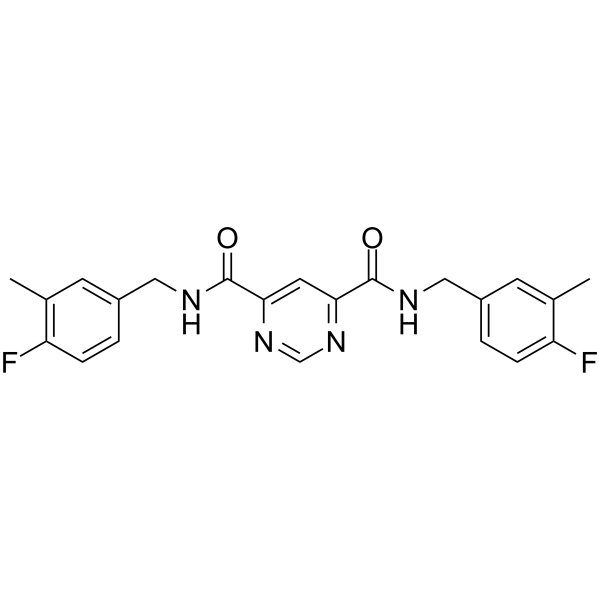
别名: MMP13 Inhibitor; MMP 13 Inhibitor; MMP-13 Inhibitor N4,N6-双(4-氟-3-甲基苄基)嘧啶-4,6-二甲酰胺; N4,n6-双(4-氟-3-甲基苄基)嘧啶-4,6-二羧酰胺; N,N'-二[(4-氟-3-甲基苯基)甲基]-4,6-嘧啶二甲酰胺
目录号: V13415 纯度: ≥98%
DB04760 (compound 4) 是一种有效的、选择性的、非锌螯合 MMP-13 抑制剂(拮抗剂),IC50 为 8 nM。
MMP-13 Inhibitor CAS号: 544678-85-5
产品类别: New1
产品仅用于科学研究,不针对患者销售
规格 价格 库存 数量
1mg
5mg
10mg
100mg
Other Sizes
点击了解更多
  • 与全球5000+客户建立关系
  • 覆盖全球主要大学、医院、科研院所、生物/制药公司等
  • 产品被大量CNS顶刊文章引用
InvivoChem产品被CNS等顶刊论文引用
产品描述
DB04760(化合物 4)是一种强效、选择性、非锌螯合的 MMP-13 抑制剂(拮抗剂),IC50 为 8 nM。DB04760 可显著降低紫杉醇的神经毒性,并具有抗癌作用。
MMP-13 抑制剂(CAS 编号:544678-85-5),也称为 DB04760,是一种高选择性、非锌螯合的基质金属蛋白酶-13 (MMP-13) 抑制剂。它是一种嘧啶二甲酰胺化合物,能有效抑制 MMP-13 的活性,IC50 为 8 nM。该抑制剂对其他 MMP(包括 MMP-1、-2、-3 和 -7)具有高度选择性。研究表明,它能降低紫杉醇的神经毒性,并具有抗癌活性。
生物活性&实验参考方法
靶点
MMP-13 Inhibitor specifically targets the matrix metalloproteinase-13 (MMP-13). MMP-13 is a member of the matrix metalloproteinase family, which are zinc-dependent endopeptidases that degrade components of the extracellular matrix. This inhibitor has an IC50 of 8 nM against MMP-13. It is a non-zinc-chelating inhibitor, meaning it does not bind to the catalytic zinc ion, which contributes to its high selectivity over other MMPs.
体外研究 (In Vitro)
体外实验表明,MMP-13抑制剂对MMP-13活性具有强效且选择性的抑制作用。酶活性测定显示,其IC50值为8 nM。该抑制剂对其他MMP(如MMP-1、-2、-3和-7)具有高度选择性。这种选择性是最大限度减少脱靶效应的关键特征。此外,该化合物还能降低紫杉醇的体外神经毒性,并具有抗癌活性。
体内研究 (In Vivo)
体内研究表明,MMP-13抑制剂具有抗癌活性。然而,现有文献中并未详细描述其在动物癌症模型中的疗效或其对神经毒性的影响等具体的体内数据。该抑制剂能够降低紫杉醇的神经毒性,提示其可能与化疗联合使用。该化合物的体内活性将是未来研究的重要方向。
酶活实验
无细胞MMP-13抑制剂活性测定是表征其活性的主要方法。这些酶活性测定通过测量化合物抑制MMP-13催化活性的能力来进行。在典型的测定中,将重组MMP-13酶与荧光底物(一种切割后会发出荧光的肽)在不同浓度的抑制剂存在下孵育。测量荧光强度随时间的变化,并计算底物切割速率。IC50,即抑制酶活性50%的抑制剂浓度,由剂量-反应曲线确定。
细胞实验
MMP-13抑制剂的体外细胞实验旨在研究其对细胞的影响,尽管其主要靶点是细胞外酶。产生MMP-13的细胞,例如癌细胞或软骨细胞,可以用该化合物进行处理。培养基中分泌的MMP-13的量可以通过ELISA或酶谱分析法进行测定。由于细胞增殖、迁移或侵袭通常涉及细胞外基质(ECM)的降解,因此也可以评估其对细胞增殖、迁移或侵袭的影响。这些实验有助于在细胞环境中验证该化合物的活性。
动物实验
MMP-13抑制剂的体内动物实验应采用MMP-13发挥致病作用的模型,例如癌症、骨关节炎或神经性疼痛。对于癌症研究,可采用异种移植模型,将化合物给药于荷瘤小鼠,并监测肿瘤生长和转移情况。对于其对紫杉醇神经毒性的影响,可采用化疗诱导神经病变的动物模型。现有文献中未详细描述具体实验方案。
药代性质 (ADME/PK)
现有文献中未提供MMP-13抑制剂的药代动力学(PK)数据详情。其口服生物利用度和半衰期等特性对其后续研发至关重要。该化合物可溶于DMSO和DMF。通常以粉末形式储存。
毒性/毒理 (Toxicokinetics/TK)
公开文献中没有关于MMP-13抑制剂的毒理学数据。作为一种研究化合物,其安全性是其开发过程中的关键因素。然而,目前尚无关于其LD50、器官毒性或遗传毒性的具体数据报道。该化合物仅供研究用途,不得用于人类治疗。
参考文献

[1]. Structural basis for the highly selective inhibition of MMP-13. Chem Biol. 2005 Feb;12(2):181-9.

[2]. Paclitaxel-induced epithelial damage and ectopic MMP-13 expression promotes neurotoxicity in zebrafish. Proc Natl Acad Sci U S A. 2016 Apr 12; 113(15): E2189–E2198.

其他信息
MMP-13抑制剂是一种研究级化合物,可用作高选择性工具,用于研究MMP-13在各种生物学和病理学过程中的作用。其高选择性和高效性使其成为验证MMP-13作为癌症、骨关节炎和神经性疼痛等疾病治疗靶点的宝贵化合物。此外,它还被研究用于降低紫杉醇的神经毒性。该化合物尚未获准用于临床。所有信息仅供研究参考,不得用于诊断或临床用途。
*注: 文献方法仅供参考, InvivoChem并未独立验证这些方法的准确性
化学信息 & 存储运输条件
分子式
C22H20F2N4O2
分子量
410.4248
精确质量
410.155
CAS号
544678-85-5
PubChem CID
5289110
外观&性状
Light yellow to yellow solid powder
LogP
4.013
tPSA
83.98
氢键供体(HBD)数目
2
氢键受体(HBA)数目
6
可旋转键数目(RBC)
6
重原子数目
30
分子复杂度/Complexity
546
定义原子立体中心数目
0
InChi Key
PYFRREJCFXFNRR-UHFFFAOYSA-N
InChi Code
InChI=1S/C22H20F2N4O2/c1-13-7-15(3-5-17(13)23)10-25-21(29)19-9-20(28-12-27-19)22(30)26-11-16-4-6-18(24)14(2)8-16/h3-9,12H,10-11H2,1-2H3,(H,25,29)(H,26,30)
化学名
4-N,6-N-bis[(4-fluoro-3-methylphenyl)methyl]pyrimidine-4,6-dicarboxamide
别名
MMP13 Inhibitor; MMP 13 Inhibitor; MMP-13 Inhibitor
HS Tariff Code
2934.99.9001
存储方式

Powder      -20°C    3 years

                     4°C     2 years

In solvent   -80°C    6 months

                  -20°C    1 month

运输条件
Room temperature (This product is stable at ambient temperature for a few days during ordinary shipping and time spent in Customs)
溶解度数据
溶解度 (体外实验)
DMSO : ~100 mg/mL (~243.65 mM)
溶解度 (体内实验)
配方 1 中的溶解度: ≥ 2.5 mg/mL (6.09 mM) (饱和度未知) in 10% DMSO + 90% Corn Oil (这些助溶剂从左到右依次添加,逐一添加), 澄清溶液。
例如,若需制备1 mL的工作液,可将100 μL 25.0 mg/mL 澄清 DMSO 储备液加入900 μL 玉米油中,混合均匀。

请根据您的实验动物和给药方式选择适当的溶解配方/方案:
1、请先配制澄清的储备液(如:用DMSO配置50 或 100 mg/mL母液(储备液));
2、取适量母液,按从左到右的顺序依次添加助溶剂,澄清后再加入下一助溶剂。以 下列配方为例说明 (注意此配方只用于说明,并不一定代表此产品 的实际溶解配方):
10% DMSO → 40% PEG300 → 5% Tween-80 → 45% ddH2O (或 saline);
假设最终工作液的体积为 1 mL, 浓度为5 mg/mL: 取 100 μL 50 mg/mL 的澄清 DMSO 储备液加到 400 μL PEG300 中,混合均匀/澄清;向上述体系中加入50 μL Tween-80,混合均匀/澄清;然后继续加入450 μL ddH2O (或 saline)定容至 1 mL;

3、溶剂前显示的百分比是指该溶剂在最终溶液/工作液中的体积所占比例;
4、 如产品在配制过程中出现沉淀/析出,可通过加热(≤50℃)或超声的方式助溶;
5、为保证最佳实验结果,工作液请现配现用!
6、如不确定怎么将母液配置成体内动物实验的工作液,请查看说明书或联系我们;
7、 以上所有助溶剂都可在 Invivochem.cn网站购买。
制备储备液 1 mg 5 mg 10 mg
1 mM 2.4365 mL 12.1826 mL 24.3653 mL
5 mM 0.4873 mL 2.4365 mL 4.8731 mL
10 mM 0.2437 mL 1.2183 mL 2.4365 mL

1、根据实验需要选择合适的溶剂配制储备液 (母液):对于大多数产品,InvivoChem推荐用DMSO配置母液 (比如:5、10、20mM或者10、20、50 mg/mL浓度),个别水溶性高的产品可直接溶于水。产品在DMSO 、水或其他溶剂中的具体溶解度详见上”溶解度 (体外)”部分;

2、如果您找不到您想要的溶解度信息,或者很难将产品溶解在溶液中,请联系我们;

3、建议使用下列计算器进行相关计算(摩尔浓度计算器、稀释计算器、分子量计算器、重组计算器等);

4、母液配好之后,将其分装到常规用量,并储存在-20°C或-80°C,尽量减少反复冻融循环。

计算器

摩尔浓度计算器可计算特定溶液所需的质量、体积/浓度,具体如下:

  • 计算制备已知体积和浓度的溶液所需的化合物的质量
  • 计算将已知质量的化合物溶解到所需浓度所需的溶液体积
  • 计算特定体积中已知质量的化合物产生的溶液的浓度
使用摩尔浓度计算器计算摩尔浓度的示例如下所示:
假如化合物的分子量为350.26 g/mol,在5mL DMSO中制备10mM储备液所需的化合物的质量是多少?
  • 在分子量(MW)框中输入350.26
  • 在“浓度”框中输入10,然后选择正确的单位(mM)
  • 在“体积”框中输入5,然后选择正确的单位(mL)
  • 单击“计算”按钮
  • 答案17.513 mg出现在“质量”框中。以类似的方式,您可以计算体积和浓度。

稀释计算器可计算如何稀释已知浓度的储备液。例如,可以输入C1、C2和V2来计算V1,具体如下:

制备25毫升25μM溶液需要多少体积的10 mM储备溶液?
使用方程式C1V1=C2V2,其中C1=10mM,C2=25μM,V2=25 ml,V1未知:
  • 在C1框中输入10,然后选择正确的单位(mM)
  • 在C2框中输入25,然后选择正确的单位(μM)
  • 在V2框中输入25,然后选择正确的单位(mL)
  • 单击“计算”按钮
  • 答案62.5μL(0.1 ml)出现在V1框中
g/mol

分子量计算器可计算化合物的分子量 (摩尔质量)和元素组成,具体如下:

注:化学分子式大小写敏感:C12H18N3O4  c12h18n3o4
计算化合物摩尔质量(分子量)的说明:
  • 要计算化合物的分子量 (摩尔质量),请输入化学/分子式,然后单击“计算”按钮。
分子质量、分子量、摩尔质量和摩尔量的定义:
  • 分子质量(或分子量)是一种物质的一个分子的质量,用统一的原子质量单位(u)表示。(1u等于碳-12中一个原子质量的1/12)
  • 摩尔质量(摩尔重量)是一摩尔物质的质量,以g/mol表示。
/

配液计算器可计算将特定质量的产品配成特定浓度所需的溶剂体积 (配液体积)

  • 输入试剂的质量、所需的配液浓度以及正确的单位
  • 单击“计算”按钮
  • 答案显示在体积框中
动物体内实验配方计算器(澄清溶液)
第一步:请输入基本实验信息(考虑到实验过程中的损耗,建议多配一只动物的药量)
第二步:请输入动物体内配方组成(配方适用于不溶/难溶于水的化合物),不同的产品和批次配方组成不同,如对配方有疑问,可先联系我们提供正确的体内实验配方。此外,请注意这只是一个配方计算器,而不是特定产品的确切配方。
+
+
+

计算结果:

工作液浓度 mg/mL;

DMSO母液配制方法 mg 药物溶于 μL DMSO溶液(母液浓度 mg/mL)。如该浓度超过该批次药物DMSO溶解度,请首先与我们联系。

体内配方配制方法μL DMSO母液,加入 μL PEG300,混匀澄清后加入μL Tween 80,混匀澄清后加入 μL ddH2O,混匀澄清。

(1) 请确保溶液澄清之后,再加入下一种溶剂 (助溶剂) 。可利用涡旋、超声或水浴加热等方法助溶;
            (2) 一定要按顺序加入溶剂 (助溶剂) 。

生物数据图片
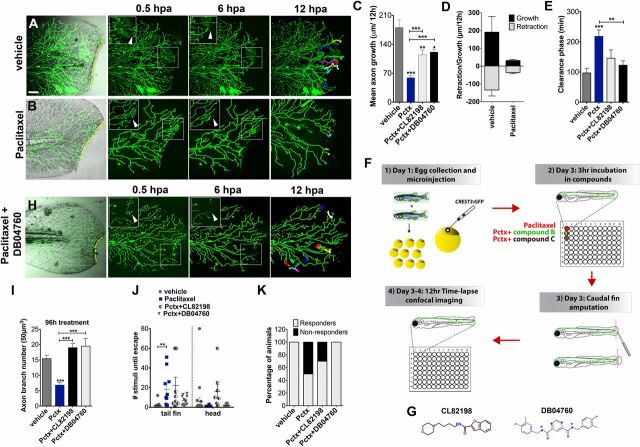
  • Paclitaxel-induced neurotoxicity in larval fish is attenuated by MMP-13 inhibition. (A and B) Cutaneous branches of a single-labeled RB neuron were traced for 12 h in the caudal fin following fin amputation. Larvae were incubated for 3 h either in vehicle solution (0.5% DMSO/Ringers) (A) or paclitaxel (22 µM) (B). Insets show higher magnification of boxed regions (arrowheads depict axon debris lost in vehicle but not paclitaxel-treated animals). Tracks in the last panel depict branch growth over time. (C) Quantification of mean axon branch growth over 12 h in larvae incubated in vehicle, paclitaxel (22 µM), and paclitaxel plus either DB04760 or CL-82198 (10 µM each) (n = 3, 3–4 fish per group). (D) Comparison of mean axon growth and retraction in injured vehicle and paclitaxel-treated animals over 12 h (n = 2, 3–4 fish and 15 axons per group). (E) Quantification of axon debris clearance (n = 2, 3–4 fish and 5–7 axons per group). (F) Scheme of compound screening assay. (G) Chemical structures of MMP-13 inhibitors. CL-82198, N-[4-(4-morpholinyl)butyl]-2-benzofurancarboxamide; DB04760, N4,N6-bis[(4-fluoro-3-methylphenyl)methyl] pyrimidine-4,6-dicarboxamide. (H) Axon regeneration is partially restored with 10 µM DB04760 (arrowheads mark diminishing axon debris). (I) Comparison of axon branch density following 96 h of treatment (n = 2, 5 fish per group). (J) Touch response in fin and head region after 96 h of treatment (n = 4, 5 fish per group). (K) Percentage of animals with improved touch response upon coadministration of paclitaxel and either CL-82198 or DB04760. *P < 0.05, **P < 0.01, ***P < 0.001. (Scale bar, 50 μm.) hpa, hours postamputation; Pctx, paclitaxel.[2]. Paclitaxel-induced epithelial damage and ectopic MMP-13 expression promotes neurotoxicity in zebrafish. Proc Natl Acad Sci U S A. 2016 Apr 12; 113(15): E2189–E2198.
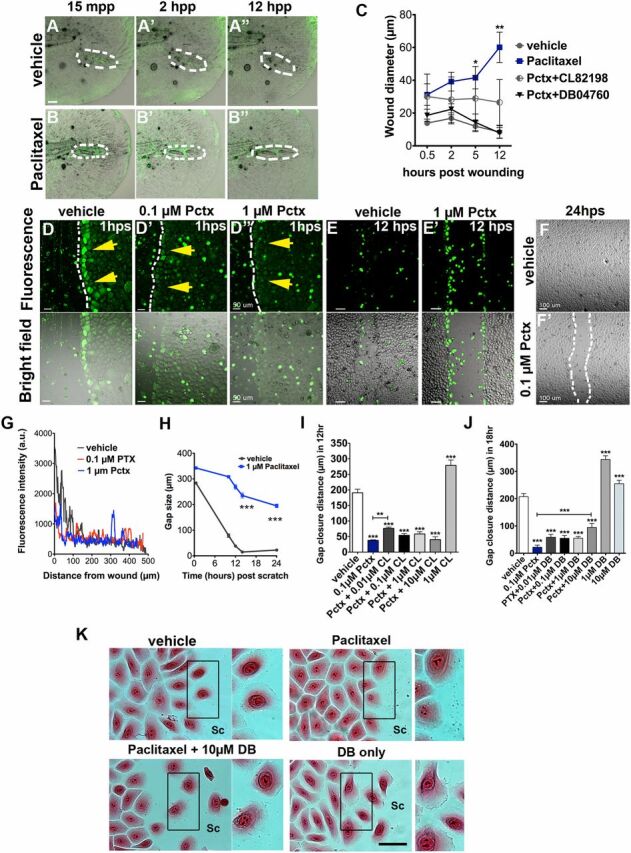
  • Paclitaxel impairs skin wound repair. (A and B) Rapid repair of a puncture wound (dashed circles) in a vehicle-treated transgenic Tg(tp63:CAAX-GFP) zebrafish larva (A). The puncture wound is retained in a larva incubated in 22 µM paclitaxel (B). Animals were preincubated in 22 µM vehicle or paclitaxel for 3 h, injured, and retained in the treatment solution for 12 h. (Scale bar, 20 μm.) (C) Quantification of wound diameter over 12 h shows rescue of wound repair with MMP-13 inhibitors (n = 2, 4–5 larvae per group). (D, D’, and D’’) Scratch wounding of HEK001 human keratinocytes shows ROS/H2O2 formation at the scratch wound margin of vehicle (yellow arrows, D) but not paclitaxel-treated cells (D’ and D’’). (Scale bar, 50 μm.) (E and E’) ROS/H2O2 formation is present in vehicle (E) and paclitaxel-treated HEK001 cells (E’) after 12 h. (Scale bar, 50 μm.) (F and F’) Healed scratch in vehicle (F) but not paclitaxel-treated wells (F’) after 24 h. (G) ROS/H2O2 fluorescence intensity measured from the scratch margin 1 h postscratch (hps). (Scale bar, 100 μm.) (H) HEK001 scratch wound gap size over time (n = 5; ***P < 0.001). (I) HEK001 gap closure distance at 12 hps following Pctx + CL-82198 or CL-82198 alone administration. (J) HEK001 gap closure distance at 18 hps following Pctx + DB04760 or DB04760 alone administration. (K) Still images (Eosin) of HEK001 cells from J. Insets on the right of each image show higher magnifications of highlighted boxes. Control cells at the scratch margin show decreased cell–cell adhesion and formation of lamellipodia at the leading (migratory) edge, which is absent in paclitaxel-treated cells and rescued with DB04760. DB04760 alone increases the number of cells with lamellipodia formation. (Scale bar, 20 µm.) *P < 0.05, **P < 0.01, ***P < 0.001. a.u., arbitrary units; CL, CL-82198; DB, DB04760; hpp, hours postpuncture; hps, hours postscratch; mpp, minutes postpuncture; Pactx, paclitaxel; SC, scratch.[2]. Paclitaxel-induced epithelial damage and ectopic MMP-13 expression promotes neurotoxicity in zebrafish. Proc Natl Acad Sci U S A. 2016 Apr 12; 113(15): E2189–E2198.
联系我们