| 规格 | 价格 | 库存 | 数量 |
|---|---|---|---|
| 250mg |
|
||
| 500mg |
|
||
| 1g |
|
||
| 2g |
|
||
| 5g |
|
||
| 10g |
|
||
| Other Sizes |
|
| 靶点 |
Histamine H1 receptor
Quercetin Dihydrate targets nuclear factor-κB (NF-κB) signaling pathway [1,2] Quercetin Dihydrate targets phosphatidylinositol 3-kinase (PI3K) (IC50 = 25 μM) and protein kinase B (AKT) (IC50 = 30 μM) [2] Quercetin Dihydrate targets antioxidant enzymes (superoxide dismutase, SOD; catalase, CAT) and reactive oxygen species (ROS)-related molecules [1,3] Quercetin Dihydrate targets cyclooxygenase-2 (COX-2) (IC50 = 18 μM) and inducible nitric oxide synthase (iNOS) (IC50 = 22 μM) [1] |
|---|---|
| 体外研究 (In Vitro) |
Osthole (p<0.0001) 和 Fexofenadine (p<0.001) 抑制研究组中组胺诱导的 HRH-1 mRNA 表达增加。在用组胺/蛇床子素培养的细胞中也观察到了这个结果;其中与组胺相比,组合物质降低了 HRH-1 mRNA 表达 (p<0.0001)[1]。当蛇床子素以高达 100 μM 的剂量使用时,细胞活力评估未检测到明显的毒性。然而,当剂量达到 500 μM 时,基于这些观察,Osthole用于所有体外研究,剂量范围为10 至 100 μM。Osthole剂量依赖性地促进形成骨细胞湿度,如I型胶原(col1)、骨唾液蛋白(BSP) ) 和骨钙素 (OC) (培养2天)。Osthole以剂量依赖的方式促进小鼠原代成骨细胞的ALP活性[2]。
在脂多糖(LPS)刺激的 RAW264.7 巨噬细胞中,槲皮素二水合物(Quercetin Dihydrate)(10–100 μM)剂量依赖性抑制炎症反应。50 μM 时,TNF-α、IL-6 和 NO 生成分别减少 ~68%、~62%、~70%。50 μM 时抑制 NF-κB p65 核转位 ~65%,下调 COX-2/iNOS 蛋白水平 ~58% 和 ~60% [1] - 在人乳腺癌 MCF-7 细胞中,槲皮素二水合物(Quercetin Dihydrate)(20–80 μM)抑制细胞增殖,72 小时 IC50 约为 45 μM。它诱导细胞凋亡:60 μM 时 Annexin V-FITC/PI 染色显示凋亡率 ~52%,伴随 PI3K/AKT 磷酸化水平下调(60 μM 时分别降低 ~60% 和 ~55%)[2] - 在 H2O2 诱导的 PC12 细胞(氧化应激模型)中,槲皮素二水合物(Quercetin Dihydrate)(5–40 μM)保护细胞免受损伤。20 μM 时,细胞活力从 ~42% 提升至 ~78%,细胞内 ROS 生成减少 ~65%,SOD/CAT 活性分别增加 ~2.1 倍和 ~1.8 倍 [3] - 在人结肠癌 HT-29 细胞中,槲皮素二水合物(Quercetin Dihydrate)(30–100 μM)将细胞阻滞在 G2/M 期:80 μM 时,G2/M 期比例从 ~15% 增至 ~48%,cyclin B1 和 CDK1 的 mRNA 水平下调(80 μM 时分别降低 ~55% 和 ~50%)[2] |
| 体内研究 (In Vivo) |
将蛇床子素以每天 5 mg/kg 的剂量皮下注射到小鼠颅骨上可显着着刺激局部骨形成(对最后一次注射后 2 周采集的颅骨组织样本进行组织学分析,并用 H&E 橙色 G 染色)。形态学分析显示蛇床子素对骨形成有显着影响,与前期对比微管抑制TN-16同样有效。然而,当以每天1 mg/kg的剂量使用蛇床子素时,看不到这样的效果。腹膜内注射蛇床子素8周可显着逆转去势支架的骨质流失。用三硝基苯酚一品红染色的L4样本的组织学检查表明,用蛇床子素处理的去势支架的小梁结构部分恢复。形态学分析表明,Osthole 处理可显着增加总 BMD、骨小梁体积和骨小梁厚度,并减少骨小梁分离[2]。
在角叉菜胶诱导的大鼠足肿胀模型(急性炎症)中,口服 槲皮素二水合物(Quercetin Dihydrate)(25、50、100 mg/kg)剂量依赖性抑制肿胀。100 mg/kg 时,给药后 4 小时足肿胀减少 ~72%,血清 TNF-α 和 IL-6 水平分别降低 ~65% 和 ~60% [1] - 在 MCF-7 细胞裸鼠异种移植模型(乳腺癌)中,腹腔注射 槲皮素二水合物(Quercetin Dihydrate)(50、100 mg/kg/周,持续 5 周)抑制肿瘤生长。50 mg/kg 组肿瘤体积减少 ~45%,100 mg/kg 组减少 ~68%;肿瘤重量分别减轻 ~42%(50 mg/kg)和 ~65%(100 mg/kg)。肿瘤组织中 p-PI3K/p-AKT 表达降低,凋亡指数升高 [2] - 在 D-半乳糖诱导的衰老小鼠模型(氧化应激)中,口服 槲皮素二水合物(Quercetin Dihydrate)(50 mg/kg/天,持续 8 周)改善抗氧化能力。脑组织 SOD/CAT 活性分别增加 ~2.3 倍和 ~1.9 倍,丙二醛(MDA)含量减少 ~62%,认知功能(Morris 水迷宫)改善,逃避潜伏期减少 ~48% [3] |
| 酶活实验 |
COX-2/iNOS 活性实验:重组 COX-2/iNOS 酶与花生四烯酸/L-精氨酸(底物)、槲皮素二水合物(Quercetin Dihydrate)(5–100 μM)在反应缓冲液中 37°C 孵育 30 分钟。ELISA 定量 PGE2(COX-2 产物),Griess 试剂定量 NO(iNOS 产物),基于剂量-反应抑制曲线计算 IC50 值 [1]
- PI3K/AKT 激酶活性实验:重组 PI3K/AKT 激酶结构域与 ATP、特异性肽底物、槲皮素二水合物(Quercetin Dihydrate)(10–80 μM)在 30°C 孵育 40 分钟。ELISA 检测磷酸化底物,计算激酶抑制率以确定 IC50 [2] - 抗氧化酶活性实验:H2O2 诱导的 PC12 细胞裂解液与 槲皮素二水合物(Quercetin Dihydrate)(5–40 μM)孵育。通过抑制邻苯三酚自氧化测定 SOD 活性,通过监测 240 nm 处 H2O2 分解速率测定 CAT 活性,酶活性以蛋白浓度归一化 [3] |
| 细胞实验 |
在第一个研究日,参与者的外周血样本在上午 7 点至 9 点之间抽取,并转移至含有 K3EDTA 的分组管中。然后他们制作新鲜的 PBMC。将 1% 热灭活人 AB 血清、1% 庆大霉素和 0.25% PHA 的溶液添加到分离的细胞中,以每孔 1×10 6 的密度接种到 24 孔板中使用 RPMI-1640。在添加活性试剂之前,每孔有 24 小时的时间,并用纯培养基作为物质的对照。再过三天,收获细胞[1]。
巨噬细胞炎症反应实验:RAW264.7 细胞接种到 24 孔板,用 LPS(1 μg/mL)+ 槲皮素二水合物(Quercetin Dihydrate)(10–100 μM)处理 24 小时。收集上清液,ELISA/Griess 法定量 TNF-α/IL-6/NO。制备核提取物,EMSA 法检测 NF-κB p65 DNA 结合活性 [1] - 乳腺癌细胞增殖及凋亡实验:MCF-7 细胞以 5×10³ 个细胞/孔接种到 96 孔板,用 槲皮素二水合物(Quercetin Dihydrate)(20–80 μM)处理 24–72 小时。MTT 法测量活力计算 IC50。Annexin V-FITC/PI 染色(流式细胞术)检测凋亡。Western blot 分析 p-PI3K/p-AKT 水平 [2] - 神经细胞氧化应激保护实验:PC12 细胞用 H2O2(200 μM)+ 槲皮素二水合物(Quercetin Dihydrate)(5–40 μM)处理 24 小时。CCK-8 法测量细胞活力,DCFH-DA 染色检测 ROS 生成,比色法试剂盒定量 SOD/CAT 活性 [3] - 结肠癌细胞周期实验:HT-29 细胞用 槲皮素二水合物(Quercetin Dihydrate)(30–100 μM)处理 24 小时。乙醇固定细胞,碘化丙啶染色,流式细胞术分析细胞周期分布。RT-PCR 检测 cyclin B1/CDK1 的 mRNA 水平 [2] |
| 动物实验 |
Mice: Four-week-old ICR Swiss mice receive subcutaneous injections over the calvarial surface twice a day for five days straight, either with or without Osthole treatment. The doses are 1 and 5 mg/kg per day, with three mice per group. As a positive control, microtubule inhibitor TN-16 (5 mg/kg per day, subcutaneous injection, twice daily for 2 days; 3 mice per group) is used. Three weeks after the start of treatment, all the mice are put to sleep, and the calvariae are removed, preserved for two days in 10% phosphate-buffered formalin, decalcified for two weeks in 10% EDTA, and then embedded in paraffin. Hematoxylin and eosine orange G are used to cut and stain histologic sections. Using the OsteoMeasure System for histomorphometry, the amount of new bone over the calvarial surface is measured. In order to quantify the mineral appositional rate (MAR) and bone-formation rate (BFR), mice undergo intraperitoneal injections of 20 mg/kg of double calcein at days 7 and 14, following which they are put to death 7 days later. Plastic sections of the labeling are inspected. The calvarial samples that have been dissected are embedded in methyl methacrylate after being fixed in 75% ethanol. A fluorescent microscope is used to examine unstained transverse sections that have a thickness of 3 µm. With the OsteoMeasure System, MAR and BFR are measured.
Rats: The rats are thirty six-month-old female Sprague-Dawley rats. The rats are randomly assigned by body weight into three groups for the surgery (n=10): group 1 is a sham surgery followed by PBS vehicle treatment (sham+VEH); group 2 is an ovariectomy followed by vehicle treatment (OVX+VEH); and group 3 is an ovariectomy followed by Osthole treatment (OVX+OST). The rats are given an intraperitoneal nembutal injection (30 mg/kg) to induce anesthesia. The eight-week course of treatment is administered beginning one month following surgery. For eight weeks, either vehicle or Osthole (100 mg/kg daily) is taken orally once daily. Dual-energy X-ray absorptiometry is used to measure the total bone mineral density (BMD, g/m 2 ) of the rats prior to their euthanasia at the end of the experiments. Then, the left femoral shafts are utilized for biomechanical testing, and the fourth lumbar vertebrae (L4) are dissected for histomorphometric and micro-computed tomographic (µCT) analysis. Carrageenan-induced paw edema rat model: Male Wistar rats (200–250 g) were randomly divided into control and treatment groups. Quercetin Dihydrate was dissolved in 0.5% CMC-Na and administered orally at 25, 50, or 100 mg/kg 1 hour before carrageenan (1% w/v) injection into the hind paw. Paw thickness was measured at 1, 2, 4, and 6 hours. Serum was collected for TNF-α/IL-6 detection [1] - MCF-7 xenograft nude mouse model: 6–8-week-old BALB/c nude mice were subcutaneously injected with MCF-7 cells (2×10⁶ cells/mouse). When tumors reached ~100 mm³, mice were treated with Quercetin Dihydrate (50, 100 mg/kg) via intraperitoneal injection every week for 5 weeks. Tumor volume was measured every 3 days. At sacrifice, tumor weight was recorded, and tissues were analyzed for p-PI3K/p-AKT and apoptotic index [2] - D-galactose-induced aging mouse model: Male ICR mice (8 weeks old) were injected with D-galactose (100 mg/kg/day, subcutaneous) for 8 weeks to induce aging. Quercetin Dihydrate (50 mg/kg/day) was administered orally during the same period. Morris water maze test evaluated cognitive function. Brain tissues were collected for SOD/CAT activity and MDA content detection [3] |
| 药代性质 (ADME/PK) |
Absorption, Distribution and Excretion
ETHNOPHARMACOLOGICAL RELEVANCE: Libanotis buchtormensis is the source of an important traditional medicine from Shaanxi province of China used in the treatment of many illnesses. Libanotis buchtormensis supercritical extract (LBSE) has analgesic, sedative and anti-inflammatory qualities. Osthole is one of the major bioactive components of LBSE; it is known for its significant anti-tumor, analgesic, and anti-inflammatory properties, it also alleviates hyperglycemia. AIM OF THE STUDY: The purpose of the present study was to compare the pharmacokinetics and tissue distribution of osthole in Sprague-Dawley (SD) rats after oral administration of pure osthole and LBSE. The two preparations were administered at the same osthole dose (approximately 130 mg/kg). The results should provide some guidance for the clinical applications of Libanotis buchtormensis. MATERIALS AND METHODS: Comparative pharmacokinetics and tissue distribution of osthole in SD rats after oral administration of pure osthole and LBSE were analyzed using reversed-phase high-performance liquid chromatography (RP-HPLC). All pharmacokinetic data were analyzed using 3P97 software. Samples of blood and internal organs (heart, liver, spleen, lungs and kidney) were collected and pretreated according to the experimental schedule. After pretreatment, plasma and tissue samples were extracted using ether-ethyl acetate mixture (3:1, v/v). The concentration of osthole in the plasma and tissues were determined using the RP-HPLC method. RESULTS: The procedure described in this paper shows good precision and stability and is suitable for the osthole assays in biological samples. We found that the average plasma concentration-time profile of osthole after oral administration of osthole and LBSE showed a single peak. There were also clear differences between plasma concentrations of osthole after oral administration of pure osthole and LBSE. Non-osthole ingredients in LBSE showed some pharmacokinetic interactions with osthole and hence decreased its absorption levels (p<0.05). Our results show different tissue distribution of osthole in the single and composite administration regimens. CONCLUSIONS: This study compares the pharmacokinetic characteristics and tissue distribution of osthole in rats after oral administration of pure osthole and LBSE; the results might be useful in clinical application of this traditional Chinese herbal medicine. ETHNOPHARMACOLOGICAL RELEVANCE: Bushen Yizhi prescription (BSYZ) is a traditional Chinese compound prescription, which is commonly used in China for treating ShenXu and hypophrenia based on traditional Chinese medicine and Alzheimer's Disease according to modern Chinese medicine. Cnidium monnieri (L.) Cusson fruits (CM) is treated as the main herb of BSYZ, and its main active ingredient Osthole (OST) is considered as one of the major active ingredients of BSYZ. Even though OST plays an important role in the BSYZ its bioavailability is poor. In order to investigate whether the bioavailability of OST was influenced by BSYZ and CM extract, the comparative evaluations on pharmacokinetics of OST after oral administration of pure OST at different doses, CM and BSYZ extract were studied. MATERIALS AND METHODS: 30 rats were randomly assigned to five groups and orally administered with pure OST at different doses (15, 75 and 150 mg/kg), CM (15 mg/kg OST) and BSYZ (15 mg/kg OST) extract. At different predetermined time points after administration, the concentrations of OST in rat plasma were determined by using the HPLC-UV method, and main pharmacokinetic parameters were investigated. RESULTS: The results showed that the pharmacokinetic parameters of OST were significantly different (p<0.05) among the groups. The AUC(0 to t), AUC(0 to infinity) and Cmax of OST were significantly increased after oral administration of BSYZ extract, followed by CM extract, in comparison to pure osthole at different doses. CONCLUSIONS: This present study indicated that the bioavailability of pure OST after oral administration was extremely low and it was dramatically enhanced because of the synergistic effect of the traditional Chinese Bushen Yizhi prescription. A simple high-performance liquid chromatographic method was developed to study the pharmacokinetics of osthole in rat plasma. After addition of an internal standard (paeonol), plasma was deproteinized by acetonitrile for sample clean-up. The drugs were separated on a reversed-phase column and detected by UV absorption at 323 nm. Acetonitrile-water-diethylamine (50:50:0.1, v/v/v) (pH 3.0, adjusted with orthophosphoric acid) was used as the mobile phase. It was applied to the pharmacokinetic study of osthole in rats after a dose of 10 mg/kg by intravenous administration. A biphasic phenomenon with a rapid distribution followed by a slower elimination phase was observed from the plasma concentration-time curve. Metabolism / Metabolites Osthole is an active ingredient and one of the major coumarin compounds that were identified in the genus Cnidium moonnieri (L.) Cussion, the fruit of which was used as traditional Chinese medicine to treat male impotence, ringworm infection and blood stasis conventionally. Recent studies revealed that osthole has diverse pharmacological effects, such as improving male sexual dysfunction, anti-diabetes, and anti-hypertentions. The inhibition of thrombosis and platelet aggregation and protection of central nerve were also observed. On the other hand, the metabolism of osthole has not yet been investigated thoroughly. Herein the biotransformation of osthole in rat was investigated after oral administration of osthole by using efficient and sensitive ultra-performance liquid chromatography-tandem quadrupole-time of flight mass spectrometry (UPLC-QTOF/MS). Eighteen osthole metabolites and the parent drug were detected and identified in rat urine. Fourteen metabolites of osthole were identified and characterized for the first time. Structures of metabolites of osthole were elucidated by comparing fragment pattern under MS/MS scan and change of molecular weight with those of osthole. The main phase I metabolic pathways were summed as 7-demethylation, 8-dehydrogenation, hydroxylation on coumarin and 3,4-epoxide. Sulfate conjugates were detected as phase II metabolites of osthole. The biotransformation of osthole (1) by Alternaria longipes was carried out, and five transformed products were obtained in the present research work. Based on their extensive spectral data, the structures of these metabolites were characterized as 4'-hydroxyl-osthole (2), 4'-hydroxyl-2',3'-dihydroosthole (3), 2',3'-dihydroxylosthole (4), osthole-4'-oic acid methyl ester (5), and osthole-4'-oic acid glucuron-1-yl ester (6), respectively. Among them, products 5 and 6 were new compounds. |
| 毒性/毒理 (Toxicokinetics/TK) |
Toxicity Summary
IDENTIFICATION AND USE: Osthole is a natural product found in several medicinal plants such as Cnidium monnieri and Angelica pubescens. It has been tested as an experimental therapy. HUMAN STUDIES: Osthole has been reported to have antitumor activities via the induction of apoptosis and inhibition of cancer cell growth and metastasis. Studies in human colon cancer cell lines demonstrated that p53 was activated followed by generation of reactive oxygen species and activation of c-Jun N-terminal kinase. ANIMAL STUDIES: In vitro and in vivo experimental results have revealed that osthole demonstrates multiple pharmacological actions including neuroprotective, osteogenic, immunomodulatory, anticancer, hepatoprotective, cardiovascular protective, and antimicrobial activities. Osthole and other coumarins showed high activity in the inhibition of the mutagenicity of benzo[a]pyrene. ECOTOXICITY STUDIES: There was an increase in the morphological abnormalities in D. rerio embryo due to osthol over time. Coagulation, delayed hatching, yolk sac edema, pericardial edema, and pigmentation were observed in embryos at 24-48 hours. Symptoms of scoliosis and head edema occurred after 72 hours. In addition, bent tails, ocular defects, and symptoms of collapse were observed in fertilized embryo tissue within 96 hours. Ocular defects and pigmentation were the additional symptoms observed in this study. Interactions Acetaminophen (APAP) overdose leads to severe hepatotoxicity. Osthole, a natural coumarin found in traditional Chinese medicinal herbs, has therapeutic potential in the treatment of various diseases. In this study, we investigated the effects of osthole against APAP-induced hepatotoxicity in mice. Mice were administered osthole (100 mg/kg per day, ip) for 3 d, then on the fourth day APAP (300 mg/kg, ip) was co-administered with osthole. The mice were euthanized post-APAP, their serum and livers were collected for analysis. Pretreatment with osthole significantly attenuated APAP-induced hepatocyte necrosis and the increases in ALT and AST activities. Compared with the mice treated with APAP alone, osthole pretreatment significantly reduced serum MDA levels and hepatic H2O2 levels, and improved liver GSH levels and the GSSG-to-GSH ratio. Meanwhile, osthole pretreatment markedly alleviated the APAP-induced up-regulation of inflammatory cytokines in the livers, and inhibited the expression of hepatic cytochrome P450 enzymes, but it increased the expression of hepatic UDP-glucuronosyltransferases (UGTs) and sulfotransferases (SULTs). Furthermore, osthole pretreatment reversed APAP-induced reduction of hepatic cAMP levels, but pretreatment with H89, a potent selective PKA inhibitor, failed to abolish the beneficial effect of osthole, whereas pretreatment with L-buthionine sulfoximine, a GSH synthesis inhibitor, abrogated the protective effects of osthole on APAP-induced liver injury, and abolished osthole-caused alterations in APAP-metabolizing enzymes. In cultured murine primary hepatocytes and Raw264.7 cells, however, osthole (40 umol/L) did not alleviate APAP-induced cell death, but it significantly suppressed APAP-caused elevation of inflammatory cytokines. Collectively, we have demonstrated that osthole exerts a preventive effect against APAP-induced hepatotoxicity by inhibiting the metabolic activation of APAP and enhancing its clearance through an antioxidation mechanism. Inflammation and oxidative stress are implicated in the development of neurodegenerative diseases. Osthole is a compound that is extracted from She Chuang Zi, which is a type of traditional Chinese medicine. Osthole has previously been demonstrated to exhibit anticancer activities and has a low toxicity. However, to the best of our knowledge, the anti-inflammatory effects of osthole in microglial cells have not been investigated extensively. The aim of the present study was to investigate the potential protective effects of osthole against inflammation induced by lipopolysaccharide (LPS) in microglial cells. The present study employed LPS-stimulated BV2 mouse microglia to establish an inflammatory cell model and to investigate the anti-inflammatory effects of osthole. Cells were pretreated with osthole for 1 hr prior to LPS (10 ug/mL) stimulation. At 6 hr after the addition of LPS, alterations in the levels of inflammatory factors, including tumor necrosis factor (TNF)-a, interleukin (IL)-6 and IL-1beta, were determined by ELISA. Furthermore, at 24 hr after the addition of LPS, western blot analysis was performed to analyze the alterations in the protein expression of nuclear factor-kappaB (NF-kappaB) p65, phosphorylated-NF-kappaB p65, nuclear factor erythroid 2-related factor 2 (Nrf2) and heme oxygenase (HO)-1. The results demonstrated that the secretion of the inflammatory cytokines TNF-a, IL-6 and IL-1beta by LPS-stimulated BV2 cells was significantly reduced by osthole treatment. Simultaneously, osthole treatment inhibited the LPS-induced activation of the NF-kappaB signaling pathway. In addition, osthole upregulated the expression of Nrf2 and HO-1 in a dose-dependent manner. Based on these results, osthole may exhibit anti-inflammatory effects via the NF-kappaB and Nrf2 pathways, indicating that osthole has the potential to be developed into an effective anti-inflammatory drug. Pulmonary arterial hypertension (PAH) is an insidious and progressive disease that is triggered by various cardiopulmonary diseases. Inflammation has an important role in the progression of PAH. Osthole (Ost) is a coumarin that has clear anti-inflammatory properties. The present study aimed to investigate the effects of Ost on PAH, and to explore the mechanism underlying this effect. Using the monocrotaline (MCT)-induced PAH rat model, the effects of Ost on PAH were investigated. Rats were subcutaneously administered a single dose of MCT (50 mg/kg) to establish the PAH model, followed by daily treatment with Ost (10 or 20 mg/kg) by gavage for 28 days. The mean pulmonary arterial pressure (mPAP) was measured and histological analysis was performed. The results demonstrated that Ost significantly decreased mPAP, and reduced thickening of the pulmonary artery, compared with in rats in the MCT group. To further determine whether the effects of Ost on MCT-induced PAH were associated with inflammatory responses, the nuclear factor-kappaB (NF-kappaB) p65 signaling pathway was investigated by western blot analysis. The results demonstrated that Ost increased inhibition of the NF-kappaB p65 signaling pathway. In conclusion, the results of the present study demonstrate that Ost may suppress the progression of MCT-induced PAH in rats, which may be, at least partially, mediated through modulation of the NF-kappaB p65 signaling pathway. Osthole, a natural coumarin found in traditional Chinese medicinal plants, has shown multiple biological activities. In the present study, we investigated the preventive effects of osthole on inflammatory bowel disease (IBD). Colitis was induced in mice by infusing TNBS into the colonic lumen. Before TNBS treatment, the mice received osthole (100 mg/kg par day, ip) for 3 d. Pretreatment with osthole significantly ameliorated the clinical scores, colon length shortening, colonic histopathological changes and the expression of inflammatory mediators in TNBS-induced colitis. Pretreatment with osthole elevated serum cAMP levels; but treatment with the PKA inhibitor H89 (10 mg/kg per d, ip) did not abolish the beneficial effects of osthole on TNBS-induced colitis. In mouse peritoneal macrophages, pretreatment with osthole (50 umol/L) significantly attenuated the LPS-induced elevation of cytokines at the mRNA level; inhibition of PKA completely reversed the inhibitory effects of osthole on IL-1beta, IL-6, COX2, and MCP-1 but not on TNFa. In Raw264.7 cells, the p38 inhibitor SB203580 markedly suppressed LPS-induced upregulation of the cytokines, whereas the PKA inhibitors H89 or KT5720 did not abolish the inhibitory effects of SB203580. Moreover, in LPS-stimulated mouse peritoneal macrophages, SB203580 strongly inhibited the restored expression of IL-1beta, IL-6, COX2, and MCP-1, which was achieved by abolishing the suppressive effects of osthole with the PKA inhibitors. Western blot analysis showed that osthole significantly suppressed the phosphorylation of p38, which was induced by TNBS in mice or by LPS in Raw264.7 cells. Inhibition of PKA partially reversed the suppressive effects of osthole on p38 phosphorylation in LPS-stimulated cells. Collectively, our results suggest that osthole is effective in the prevention of TNBS-induced colitis by reducing the expression of inflammatory mediators and attenuating p38 phosphorylation via both cAMP/PKA-dependent and independent pathways, among which the cAMP/PKA-independent pathway plays a major role. For more Interactions (Complete) data for Osthole (9 total), please visit the HSDB record page. In vitro toxicity: Quercetin Dihydrate (10–100 μM) had no significant cytotoxicity to normal human breast epithelial cells (MCF-10A), normal colon epithelial cells (NCM460), or primary astrocytes, with cell viability >85% at all tested concentrations [1,2,3] - In vivo toxicity: Oral/intraperitoneal administration of Quercetin Dihydrate (25–100 mg/kg/day for up to 8 weeks) in mice/rats did not cause weight loss, lethargy, or organ dysfunction. Serum ALT, AST, creatinine, and urea nitrogen levels were within normal ranges. No histological abnormalities were observed in liver, kidney, or brain tissues [1,2,3] - Plasma protein binding: Quercetin Dihydrate bound to human plasma proteins by ~90%, with no dose-dependent changes in binding affinity [2] |
| 参考文献 |
|
| 其他信息 |
Osthole is a member of coumarins and a botanical anti-fungal agent. It has a role as a metabolite.
Osthole has been reported in Seseli hartvigii, Angelica japonica, and other organisms with data available. See also: Angelica pubescens root (part of). Therapeutic Uses /EXPL THER/ Osthole, an active coumarin extracted from the dried fruits of Cnidium monnieri (L.) Cusson, is known to possess a variety of pharmacological activities. In the present study, we investigated and illuminated the mechanisms underlying the protective effects of osthole in an experimental model of allergic asthma. Our results show that osthole treatment significantly reduced the OVA-induced increase in serum IgE and inflammatory cytokines (IL-4, IL-5, IL-13) in bronchoalveolar lavage fluid (BALF), and decreased the recruitment of inflammatory cells in BALF and the lung. It also effectively attenuated goblet cell hyperplasia and mucus overproduction in lung tissue. In addition, western blot analysis demonstrated that osthole blocked NF-kappaB activation, which may be associated with a reduction in inflammatory cytokine production. These data suggest that osthole attenuated OVA-induced allergic asthma inflammation by inhibiting NF-kappaB activation. The present study identified the molecular mechanisms of action of osthole, which support the potential pharmaceutical application of osthole treatment for asthma and other airway inflammation disorders. /EXPL THER/ Hepatocellular carcinoma (HCC) accounts for approximately 90% of all cases of primary liver cancer, and the majority of patients with HCC are deprived of effective curative methods. Osthole is a Chinese herbal medicine which has been reported to possess various pharmacological functions, including hepatocellular protection. In the present study, we investigated the anticancer activity of osthole using HCC cell lines. We found that osthole inhibited HCC cell proliferation, induced cell cycle arrest, triggered DNA damage and suppressed migration in HCC cell lines. Furthermore, we demonstrated that osthole not only contributed to cell cycle G2/M phase arrest via downregulation of Cdc2 and cyclin B1 levels, but also induced DNA damage via an increase in ERCC1 expression. In addition, osthole inhibited the migration of HCC cell lines by significantly downregulating MMP-2 and MMP-9 levels. Finally, we demonstrated that osthole inhibited epithelial-mesenchymal transition (EMT) via increasing the expression of epithelial biomarkers E-cadherin and beta-catenin, and significantly decreasing mesenchymal N-cadherin and vimentin protein expression. These results suggest that osthole may have potential chemotherapeutic activity against HCC. /EXPL THER/ Osthole (7-methoxy-8-isopentenoxy-coumarin), a compound extracted from Cnidiummonnieri (L.) Cusson seeds, has been found to exhibit potent therapeutic effects in cancer due to its ability to inhibit inflammation and cell proliferation. However, its effects on arterial wall hypertrophy-related diseases remain unclear. Therefore, in this study, we aimed to investigate the effects of Osthole on intimal hyperplasia in a rat model of carotid artery balloon injury. We established the balloon-induced carotid artery injury rat model in male Sprague-Dawley rats, after which we administered Osthole (20 mg/kg/day or 40 mg/kg/day) or volume-matched normal saline orally by gavage for 14 consecutive days. Intimal hyperplasia and the degree of vascular smooth muscle cell proliferation were then evaluated by histopathological examination of the changes in the carotid artery, as well as by examination of proliferating cell nuclear antigen (PCNA) expression. Tumor necrosis factor-alpha (TNF-a), interleukin-1beta (IL-1beta), transforming growth factor-beta (TGF-beta1) and PCNA mRNA expression levels were examined by real-time RT-PCR, while nuclear factor-kappaB (NF-kappaB (p65)), IkappaB-a, TGF-beta1 and phospho-Smad2 (p-Smad2) protein expression levels were analyzed by immunohistochemistry or western blot analysis. We found that Osthole significantly attenuated neointimal thickness and decreased the elevations in PCNA protein expression induced by balloon injury. Moreover, Osthole down-regulated the pro-inflammatory factors TNF-a and IL-1beta and NF-kappaB (p65), whose expression had been upregulated after balloon injury. Moreover, IkappaB-a protein expression levels increased following Osthole treatment. In addition, the elevations in TGF-beta1 and p-Smad2 protein expression induced by balloon injury were both significantly attenuated by Osthole administration. We concluded that Osthole significantly inhibited neointimal hyperplasia in balloon-induced rat carotid artery injury and that the mechanism by which this occurs may involve NF-kappaB, IL-1beta and TNF-alpha down-regulation, which alleviates the inflammatory response, and TGF-beta1/Smad2 signalling pathway inhibition. /EXPL THER/ Multiple pharmacological applications of osthole have been previously recognized, including antioxidant, anti-inflammatory, anti-platelet and estrogenic effects, and resistance to pain. The present study investigated the protective effects of osthole against inflammation in a rat model of chronic kidney failure (CRF) and the underlying mechanisms. Osthole treatment with significantly reversed CRF-induced changes in serum creatinine, calcium, phosphorus and blood urea nitrogen levels in CRF rats. Male Sprague-Dawley rats (age, 8 weeks) received 200 mg/kg 2% adenine suspension to induce CRF in the model group. In the osthole-treated group, rats received 200 mg/kg 2% adenine suspension + osthole (40 mg/kg, intravenously). The results revealed that treatment with osthole significantly inhibited CRF-induced tumor necrosis factor-a, interleukin (IL)-8 and IL-6 expression, and suppressed nuclear factor-kappaB (NF-kappaB) protein expression in CRF rats. Osthole treatment significantly attenuated the protein expression of transforming growth factor-beta1 (TGF-beta1), reduced monocyte chemoattractant protein-1 activity and increased the phosphoinositide 3-kinase (PI3K)/protein kinase B (Akt) ratio in CRF rats. These results suggested that osthole protects against inflammation in a rat model of CRF via suppression of NF-kappaB and TGF-beta1, and activation of PI3K/Akt/nuclear factor (erythroid-derived 2)-like 2 signaling. Therefore, osthole may represent a potential therapeutic agent for the treatment of CRF. For more Therapeutic Uses (Complete) data for Osthole (18 total), please visit the HSDB record page. Quercetin Dihydrate is a natural flavonoid found in various fruits (apples, berries), vegetables (onions, broccoli), and herbs, with antioxidant, anti-inflammatory, and anti-tumor biological activities [1,2,3] - Its core mechanisms include: 1) Scavenging ROS and enhancing antioxidant enzyme (SOD/CAT) activity to alleviate oxidative stress; 2) Inhibiting NF-κB and PI3K/AKT signaling pathways to suppress inflammation and tumor cell proliferation; 3) Inducing tumor cell apoptosis and cell cycle arrest (G2/M phase) [1,2,3] - It shows potential therapeutic applications in inflammatory diseases (rheumatoid arthritis, acute inflammation), cancers (breast cancer, colon cancer), and age-related oxidative stress disorders (cognitive decline) [1,2,3] - As a natural compound, it exhibits good biocompatibility and low toxicity, making it a promising candidate for complementary and alternative medicine [1,3] |
| 分子式 |
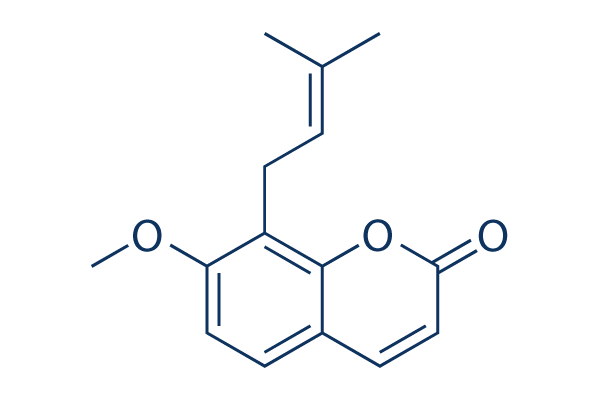
C15H16O3
|
|
|---|---|---|
| 分子量 |
244.29
|
|
| 精确质量 |
244.109
|
|
| 元素分析 |
C, 73.75; H, 6.60; O, 19.65
|
|
| CAS号 |
484-12-8
|
|
| 相关CAS号 |
Osthole-d3
|
|
| PubChem CID |
10228
|
|
| 外观&性状 |
White to off-white solid powder
|
|
| 密度 |
1.1±0.1 g/cm3
|
|
| 沸点 |
396.7±42.0 °C at 760 mmHg
|
|
| 熔点 |
83-84°C
|
|
| 闪点 |
167.6±22.5 °C
|
|
| 蒸汽压 |
0.0±0.9 mmHg at 25°C
|
|
| 折射率 |
1.557
|
|
| LogP |
3.87
|
|
| tPSA |
39.44
|
|
| 氢键供体(HBD)数目 |
0
|
|
| 氢键受体(HBA)数目 |
3
|
|
| 可旋转键数目(RBC) |
3
|
|
| 重原子数目 |
18
|
|
| 分子复杂度/Complexity |
366
|
|
| 定义原子立体中心数目 |
0
|
|
| SMILES |
O1C(C([H])=C([H])C2C([H])=C([H])C(=C(C1=2)C([H])([H])/C(/[H])=C(\C([H])([H])[H])/C([H])([H])[H])OC([H])([H])[H])=O
|
|
| InChi Key |
MBRLOUHOWLUMFF-UHFFFAOYSA-N
|
|
| InChi Code |
InChI=1S/C15H16O3/c1-10(2)4-7-12-13(17-3)8-5-11-6-9-14(16)18-15(11)12/h4-6,8-9H,7H2,1-3H3
|
|
| 化学名 |
7-methoxy-8-(3-methylbut-2-enyl)chromen-2-one
|
|
| 别名 |
|
|
| HS Tariff Code |
2934.99.9001
|
|
| 存储方式 |
Powder -20°C 3 years 4°C 2 years In solvent -80°C 6 months -20°C 1 month |
|
| 运输条件 |
Room temperature (This product is stable at ambient temperature for a few days during ordinary shipping and time spent in Customs)
|
| 溶解度 (体外实验) |
|
|||
|---|---|---|---|---|
| 溶解度 (体内实验) |
配方 1 中的溶解度: ≥ 2.5 mg/mL (10.23 mM) (饱和度未知) in 10% DMSO + 40% PEG300 + 5% Tween80 + 45% Saline (这些助溶剂从左到右依次添加,逐一添加), 澄清溶液。
例如,若需制备1 mL的工作液,可将100 μL 25.0 mg/mL澄清DMSO储备液加入到400 μL PEG300中,混匀;然后向上述溶液中加入50 μL Tween-80,混匀;加入450 μL生理盐水定容至1 mL。 *生理盐水的制备:将 0.9 g 氯化钠溶解在 100 mL ddH₂O中,得到澄清溶液。 配方 2 中的溶解度: ≥ 2.5 mg/mL (10.23 mM) (饱和度未知) in 10% DMSO + 90% (20% SBE-β-CD in Saline) (这些助溶剂从左到右依次添加,逐一添加), 澄清溶液。 例如,若需制备1 mL的工作液,可将 100 μL 25.0 mg/mL澄清DMSO储备液加入900 μL 20% SBE-β-CD生理盐水溶液中,混匀。 *20% SBE-β-CD 生理盐水溶液的制备(4°C,1 周):将 2 g SBE-β-CD 溶解于 10 mL 生理盐水中,得到澄清溶液。 View More
配方 3 中的溶解度: ≥ 2.5 mg/mL (10.23 mM) (饱和度未知) in 10% DMSO + 90% Corn Oil (这些助溶剂从左到右依次添加,逐一添加), 澄清溶液。 1、请先配制澄清的储备液(如:用DMSO配置50 或 100 mg/mL母液(储备液)); 2、取适量母液,按从左到右的顺序依次添加助溶剂,澄清后再加入下一助溶剂。以 下列配方为例说明 (注意此配方只用于说明,并不一定代表此产品 的实际溶解配方): 10% DMSO → 40% PEG300 → 5% Tween-80 → 45% ddH2O (或 saline); 假设最终工作液的体积为 1 mL, 浓度为5 mg/mL: 取 100 μL 50 mg/mL 的澄清 DMSO 储备液加到 400 μL PEG300 中,混合均匀/澄清;向上述体系中加入50 μL Tween-80,混合均匀/澄清;然后继续加入450 μL ddH2O (或 saline)定容至 1 mL; 3、溶剂前显示的百分比是指该溶剂在最终溶液/工作液中的体积所占比例; 4、 如产品在配制过程中出现沉淀/析出,可通过加热(≤50℃)或超声的方式助溶; 5、为保证最佳实验结果,工作液请现配现用! 6、如不确定怎么将母液配置成体内动物实验的工作液,请查看说明书或联系我们; 7、 以上所有助溶剂都可在 Invivochem.cn网站购买。 |
| 制备储备液 | 1 mg | 5 mg | 10 mg | |
| 1 mM | 4.0935 mL | 20.4675 mL | 40.9350 mL | |
| 5 mM | 0.8187 mL | 4.0935 mL | 8.1870 mL | |
| 10 mM | 0.4093 mL | 2.0467 mL | 4.0935 mL |
1、根据实验需要选择合适的溶剂配制储备液 (母液):对于大多数产品,InvivoChem推荐用DMSO配置母液 (比如:5、10、20mM或者10、20、50 mg/mL浓度),个别水溶性高的产品可直接溶于水。产品在DMSO 、水或其他溶剂中的具体溶解度详见上”溶解度 (体外)”部分;
2、如果您找不到您想要的溶解度信息,或者很难将产品溶解在溶液中,请联系我们;
3、建议使用下列计算器进行相关计算(摩尔浓度计算器、稀释计算器、分子量计算器、重组计算器等);
4、母液配好之后,将其分装到常规用量,并储存在-20°C或-80°C,尽量减少反复冻融循环。
计算结果:
工作液浓度: mg/mL;
DMSO母液配制方法: mg 药物溶于 μL DMSO溶液(母液浓度 mg/mL)。如该浓度超过该批次药物DMSO溶解度,请首先与我们联系。
体内配方配制方法:取 μL DMSO母液,加入 μL PEG300,混匀澄清后加入μL Tween 80,混匀澄清后加入 μL ddH2O,混匀澄清。
(1) 请确保溶液澄清之后,再加入下一种溶剂 (助溶剂) 。可利用涡旋、超声或水浴加热等方法助溶;
(2) 一定要按顺序加入溶剂 (助溶剂) 。
|
|
|
|
|
|