| 规格 | 价格 | 库存 | 数量 |
|---|---|---|---|
| 25mg |
|
||
| 50mg |
|
||
| 100mg |
|
||
| 500mg |
|
||
| 1g |
|
| 靶点 |
Endogenous hormone
|
|---|---|
| 体外研究 (In Vitro) |
睾酮、雄烯二酮和黄体酮衍生物的生物转化研究最为深入的一项研究是在培养的蓝鲍属真菌菌株中进行的。所有检查的底物都经过转化或羟基化,这使研究人员能够分离出生物转化的代谢物。同一作者和他的同事研究了睾酮、雄烯二酮和具有额外C1-C2双键和/或17α-甲基的黄体酮衍生物在培养的蓝鲍属真菌菌株中的转化,作为评估类固醇(包括4A)的真核生物转化的模型。尽管底物包括4-烯-3-氧代体系,但它们在C-17的取代基和/或额外的C1-C2双键的存在方面显示出一些差异。
|
| 体内研究 (In Vivo) |
雄激素或类固醇应在广泛的医疗监督下进行监管,特别是雄烯二酮或4-雄烯3-17-二酮(4A)及其衍生物。它们的代谢产物影响人类和非人类,即真菌、动物和啮齿动物。此外,运动员只考虑睾酮水平的增加和骨骼成熟,而忽略了服用此类补充剂的其他已知和未知后果。此外,其中一些积极影响尚未得到充分的科学证明。据报道,雄烯二酮对雄性和雌性小鼠具有致癌作用,现有的雄烯二酮类致癌数据有限,因此有必要进行更多的研究,以提供更广泛的剂量限制,从而减少或预防此类毒性作用。显然,与雄烯二酮的益处相比,在男性、女性和儿童中补充雄烯二酮类会产生许多毒性作用。这篇综述旨在对雄烯二酮的消费、代谢、健康影响和毒性提供详细的见解。预计随着更多关于雄烯二酮药物补充的研究数据的提供,对人类健康有用剂量的更大控制将成为可能。
|
| 动物实验 |
Hormone replacement therapy is a potential strategy for the protection of bones from postmenopausal osteoporosis. However, there are multiple disadvantages due to their potential harmful side effects in other organs. It is unclear whether androstenedione could impact the levels of physiological hormones by changing the liver enzyme activities that metabolize steroid hormones or not. Hence, Flynn conducted a study on mature female rats, where they were gavaged with androstenedione (0, 5, 30, or 60 mg/kg/day) two weeks before mating and continued through gestation day 19. In addition, non-pregnant female rats were gavaged for the same timeframe with androstenedione (0 or 60 mg/kg/day) and the liver was further dissected from pregnant rats on gestation day 20, as well as from non-pregnant rats after five weeks of treatment. Liver microsomes were incubated with testosterone, leading to the production of 6-hydroxytestosterone, 15-hydroxytestosterone, 7- hydroxytestosterone, 16- hydroxytestosterone, and 2-hydroxytestosterone at high levels compared to controls. The formation of 6-hydroxytestosterone was observed at both 30 and 60 mg/kg/day dose levels. On the other hand, in non-pregnant rats, androstenedione (60 mg/kg/day) markedly increased the formation of 15-, 6-, 16 -, and 2 -hydroxytestosterone. The results highlighted that high oral doses of androstenedione could enhance some female rat liver cytochrome P450 activities that metabolize steroid hormones. It is worth noting that there were no response differences among androstenedione doses between pregnant and non-pregnant female rats.
|
| 药代性质 (ADME/PK) |
Absorption, Distribution and Excretion
Absorption of /orally administered androstenedione/ appears variable, but some absorption does occur. Androstenedione is distributed to various tissues of the body ... . /MILK/ It is not known whether anabolic steroids are distributed into breast milk. Problems in humans have not been documented. Women who take anabolic steroids should not breast feed. /Anabolic Steroids/ Metabolism / Metabolites A comparative study was performed to assess the metabolism of the androgen precursor androstenedione (AD) in two gastropod species from the Muricidae family: Bolinus brandaris and Hexaplex trunculus. AD was mainly converted to 5alpha-dihydrotestosterone by microsomal fractions isolated from Bolinus brandaris, whereas it was primarily metabolized to testosterone by Hexaplex trunculus. Sex differences in the metabolism of AD were only detected in Bolinus brandaris and attributed to higher 5alpha-reductase activity in males. Thereafter, the effect of the organotin compounds, tributyltin (TBT) and triphenyltin (TPT), on the metabolism of AD was investigated. A significant interference was only detected in females, and differences between the modes of action of the two compounds were observed: TPT was a strong inhibitor of 5alpha-reductase activity in B. brandaris at a concentration as low as 100 nM whereas only TBT (10 uM) altered the metabolism of AD in H. trunculus by increasing the activity 17beta-hydroxysteroid dehydrogenase (17beta-HSD). Thus, this work shows that the metabolism of the androgen precursor AD strongly differs among gastropod species, both in terms of activity and metabolic profile, and further demonstrates the ability of TBT and TPT to interfere with key enzymatic pathways involved in androgen synthesis. Bone is a target organ of androgens. The mechanism by which these steroids exert their action within bone cells is still poorly understood. The metabolism of androstenedione, the major circulating androgen in women, was, therefore, assessed in osteoblast-like bone cells cultured from bone of 16 postmenopausal women (mean age, 69 yr; range, 56-80) and 3 elderly men (mean age, 71 yr; range, 69-73) undergoing total hip replacement. Each cell strain was incubated under standardized conditions with varying concentrations of [1,2,6,7- (3)H]androstenedione (0.05-5 uM). In every instance 5 alpha-reduced metabolites and 17 beta-hydroxysteroids were formed. There was no correlation between the volumetric density of the resected bone and androstenedione metabolism of the corresponding cultured bone cell strains. The apparent Km for the 5 alpha-reductase activity (sum of androstanedione and dihydrotestosterone) of all 19 cell strains was 0.7 +/- 0.1 uM (mean +/- SEM), and the apparent Km for 17 beta- hydroxysteroid dehydrogenase (sum of testosterone and dihydrotestosterone) was 2.3 +/- 0.8 uM (mean +/- SEM), values similar to those reported for other androgen target organs. Our results demonstrate that human osteoblast-like cells have the capacity to transform androstenedione into the more potent biological androgens testosterone and dihydrotestosterone. Since the Km values of both 5 alpha-reductase and 17 beta-hydroxysteroid dehydrogenase exceed the serum androstenedione concentration, the formation of testosterone and dihydrotestosterone appears to be mainly a function of substrate availability. Up-regulation of aromatase expression in endometrial cells disseminated into the peritoneal cavity may enhance their survival via local estrogen synthesis, which may lead to endometriosis. The factors that mediate induction of aromatase in the endometrium are not well defined, but increased expression of steroidogenic factor (SF)-1 may play a role. The objective of the study was to determine whether androstenedione (A4), the predominant sex steroid in peritoneal fluid, regulates endometrial aromatase expression. This was a cell/tissue culture study ... conducted at an academic center. Quantitative real-time PCR, HPLC, and chromatin immunoprecipitation were used in this study. Treatment of cultured human endometrial explants and stromal cells with A4 (10 nm) significantly up-regulated expression of aromatase mRNA transcripts containing exon IIa at their 5'-ends. In endometrial stromal cells and the human endometrial surface epithelial (HES) cell line, induction of aromatase mRNA by A4 was associated with increased expression of SF-1. In HES cells, tritiated A4 was metabolized to estradiol, testosterone (T), dihydrotestosterone, and androstanediol. Both estradiol and T, but not nonaromatizable androgens, up-regulated aromatase and SF-1 mRNA in HES cells. Chromatin immunoprecipitation revealed that A4 enhanced recruitment of SF-1 to its response element (-136 bp) upstream of CYP19 exon IIa. This, together with the findings that both estrogen receptor antagonist, ICI 182,780, and aromatase inhibitor, fadrozole, suppressed A4 and T induction of aromatase and SF-1 mRNA, indicates that the inductive effects of A4 and T are mediated by their conversion to estrogens. Exposure of endometrial cells to A4 may enhance CYP19 gene expression through its aromatization to estrogens. Androstenedione is synthesized in the adrenal gland and gonads from dehydroepiandrosterone. It is metabolized by the enzyme 17 beta-hydroxy steroid dehydrogenase to testosterone, and by the aromatase enzyme complex to estrone. Estrone is metabolized to estradiol. Androstenedione is distributed to various tissues of the body and is metabolized to testosterone and estrone. The amount of testosterone produced per given dose of androstenedione appears to vary. Typically, a greater increase in serum testosterone is found in women compared to men, following intake of oral androstenedione. Androstenedione is a known human metabolite of testosterone. Androstenedione originates either from the conversion of dehydroepiandrosterone or from 17-hydroxyprogesterone. It is further converted to either testosterone or estrone. The production of adrenal androstenedione is governed by ACTH, while production of gonadal androstenedione is under control by gonadotropins. In males, conversion of androstenedione to testosterone requires the enzyme 17β-hydroxysteroid dehydrogenase. In females, conversion of androstenedione to estrogen (e.g., estrone and estradiol) requires the enzyme aromatase. |
| 毒性/毒理 (Toxicokinetics/TK) |
Toxicity Summary
IDENTIFICATION AND USE: Androstenedione is a synthetic analog of androgens, formerly used as a dietary supplement. HUMAN STUDIES: There are cases of androstenedione-induced impotence and severe oligospermia. The effects of androstenedione supplementation on the hormonal profile of 10 males and its interaction with resistance exercise have been studied. Exercise elevated testosterone, with no difference between conditions. Exercise in the supplemented condition significantly elevated plasma estradiol by approximately 83% for 90 min. Androstenedione supplementation, thus, is unlikely to provide male athletes with any anabolic benefit and, with heavy resistance exercise, elevates estrogen. Other study suggested that oral androstenedione, when given in dosages of 300 mg/day, increased serum testosterone and estradiol concentrations in some healthy men. However, supplementation does result in significant increases in estrogen-related compounds, dehydroepiandrosterone sulfate concentrations, down-regulation in testosterone synthesis, and unfavorable alterations in blood lipid and coronary heart disease risk profiles of men aged 35 to 65 years. ANIMAL STUDIES: Androstenedione did not reveal a skin sensitization potential when tested in a guinea pig maximization test with a concentration of 5% for intradermal induction and 25% for epicutaneous induction and challenge following. Eye irritation was reported in rabbits. A single oral dose of androstenedione to male rats caused mortality at 1000 mg/kg, whereas animals survived at 500 mg/kg. Compound-related clinical signs were apathy, disturbance of gait and squatting position. At the lethal dose, additional signs included prone position, unconsciousness, disturbance in respiration and increased diuresis. The once daily oral administration of androstenedione to male and female rats over 4 weeks at doses of 0, 15, 50 and 150 mg/kg led to dose-dependent effects in females, such as increased body weight, atrophy of uterus, cervix, pituitary gland and adrenals, as well as increased numbers of erythrocytes and increased hemoglobin. For males alterations in thymus were reported. These effects were regarded to represent endocrine effects typical for a steroid hormone. Infusion of androstenedione to pregnant monkeys resulted in the premature occurrence of labor-type myometrial activity and increases in maternal plasma estrogen, oxytocin and amnion fibronectin concentrations similar to those measured at normal-term labor. In rats, androstenedione had no specific effect on the development of individual bones or soft tissues. Androstenedione did not show a mutagenic potential in a bacterial reverse mutation assay according to OECD TG 471 (Ames test in S. typhimurium TA98, TA1537, TA100, TA102, TA1535) when tested up to the highest recommended dose level of 5.0 mg/plate in the absence or presence of metabolic activation. ECOTOXICITY STUDIES: Exposure to androstenedione via water can cause masculinization of adult female mosquitofish in a relatively short period of time. Exogenous androstenedione, at environmentally relevant concentrations, can significantly modulate the reproductive physiology of the fathead minnows in a sex-specific manner. Androstenedione is converted to testosterone and estrogen, and when taken in sufficient quantities androstenedione can cause unwanted masculinizing and feminizing effects. Androstenedione is considered an androgenic steroid precursor because testosterone is an androgen or male hormone. In males, conversion of androstenedione to testosterone requires the enzyme 17β-hydroxysteroid dehydrogenase. In females, conversion of androstenedione to estrogen (e.g., estrone and estradiol) requires the enzyme aromatase. Interactions Concentrations of intratesticular (IT) testosterone (T) are known to be 100-200 times those of serum T; however, the IT concentrations of T's precursors, their testicular to serum gradients, gonadotropin dependence, and response to stimulation with human chorionic gonadotropin (hCG) have not been studied in detail. We hypothesized that serum and IT androstenedione (ADD) and IT dehydroepiandrosterone (DHEA) would be significantly suppressed by the administration of a GnRH antagonist and increased when stimulated by hCG, without a similar suppression of serum DHEA. We suppressed gonadotropins in 23 normal men with the GnRH antagonist acyline and randomly assigned them to one of four doses of hCG, 0, 15, 60, or 125 IU sc every other day for 10 d. Blood and IT fluid for the measurement of serum and IT hormones were obtained at baseline and after 10 d of treatment. Baseline IT ADD [median (25th, 75th percentile)] was 629 (308, 860) nmol/liter, and IT DHEA was 564 (411, 879) nmol/liter, which were 175 and 27 times higher than their respective serum concentrations. IT ADD and IT DHEA were suppressed by 98 and 82%, respectively, by acyline and significantly increased with hCG administration. Likewise, serum ADD was suppressed by 50%, but serum DHEA was unchanged. ADD and DHEA are highly concentrated within the human testes compared with serum. Serum and IT ADD and IT DHEA are markedly suppressed with GnRH administration and stimulated by hCG, but serum DHEA is not, suggesting that most circulating DHEA is not of testicular origin. Anticoagulant effects of coumarin- or indandione-derivative or anti-inflammatory analgesics, nonsteroidal or salicylates, in therapeutic doses may be increased during concurrent use with anabolic steroids, especially 17-alpha-alkylated compounds, because of decreased procoagulant factor concentration caused by alteration of procoagulant factor synthesis or catabolism and increased receptor affinity for the anticoagulant; anticoagulant dosage adjustment based on prothrombin time determinations may be required during and following concurrent use with anabolic steroids. /Anabolic Steroids/ Concurrent use of antidiabetic agents, sulfonylurea or insulin with anabolic steroids may decrease blood glucose concentration; diabetic patients should be closely monitored for signs of hypoglycemia ... /Anabolic Steroids/ Concurrent use of corticosteroids, glucocorticoid, especially with significant mineralocorticoid activity, prolonged therapeutic corticotropin or sodium-containing medications or foods with anabolic steroids may increase the possibility of edema; in addition, concurrent use of glucocorticoids or corticotropin with anabolic steroids may promote development of severe acne. /Anabolic Steroids/ For more Interactions (Complete) data for Androstenedione (7 total), please visit the HSDB record page. Non-Human Toxicity Values LD50 Rat (male) oral between 500 and 1000 mg/kg bw LD50 Rat (female) oral >500 mg/kg bw LD50 Rat (male and female) dermal >2000 mg/kg bw |
| 参考文献 |
[1]. Molecules. 2021 Oct; 26(20): 6210.
|
| 其他信息 |
Androstenedione can cause cancer according to The National Toxicology Program.
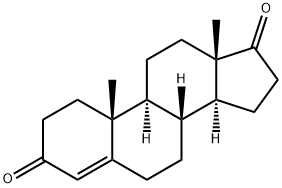
Androst-4-ene-3,17-dione is a 3-oxo Delta(4)-steroid that is androst-4-ene substituted by oxo groups at positions 3 and 17. It is a steroid hormone synthesized in the adrenal glands and gonads. It has a role as an androgen, a human metabolite, a Daphnia magna metabolite and a mouse metabolite. It is a 17-oxo steroid, an androstanoid and a 3-oxo-Delta(4) steroid. A delta-4 C19 steroid that is produced not only in the testis, but also in the ovary and the adrenal cortex. Depending on the tissue type, androstenedione can serve as a precursor to testosterone as well as estrone and estradiol. Androstenedione has been reported in Locusta migratoria, Homo sapiens, and other organisms with data available. Therapeutic Androstenedione is a potent androgenic prohormone that is a direct precursor of testosterone and used as a supplement to increase plasma testosterone levels and muscle anabolism. (NCI) Androstenedione is a steroid hormone synthesized by the adrenal glands and the gonads from either 17-alpha-hydroxyprogesterone or dehydroepiandrosterone and is a precursor of testosterone. Androstenedione is a delta-4 19-carbon steroid that is produced not only in the testis, but also in the ovary and the adrenal cortex. Depending on the tissue type, androstenedione can serve as a precursor to testosterone as well as estrone and estradiol. It is the common precursor of male and female sex hormones. Some androstenedione is also secreted into the plasma, and may be converted in peripheral tissues to testosterone and estrogens. Androstenedione originates either from the conversion of dehydroepiandrosterone or from 17-hydroxyprogesterone. It is further converted to either testosterone or estrone. The production of adrenal androstenedione is governed by ACTH, while production of gonadal androstenedione is under control by gonadotropins. A delta-4 C19 steroid that is produced not only in the TESTIS, but also in the OVARY and the ADRENAL CORTEX. Depending on the tissue type, androstenedione can serve as a precursor to TESTOSTERONE as well as ESTRONE and ESTRADIOL. Mechanism of Action 4-androstenedione is a 19-carbon steroid hormone produced in the adrenal glands and the gonads as an intermediate step in the biochemical pathway that produces the androgen testosterone and the estrogens estrone and estradiol. Anabolic steroids reverses catabolic processes and negative nitrogen balance by promoting protein anabolism and stimulating appetite if there is concurrently a proper intake of calories and proteins. /Anabolic Steroids/ Therapeutic Uses /CLINICAL TRIALS/ ClinicalTrials.gov is a registry and results database of publicly and privately supported clinical studies of human participants conducted around the world. The Web site is maintained by the National Library of Medicine (NLM) and the National Institutes of Health (NIH). Each ClinicalTrials.gov record presents summary information about a study protocol and includes the following: Disease or condition; Intervention (for example, the medical product, behavior, or procedure being studied); Title, description, and design of the study; Requirements for participation (eligibility criteria); Locations where the study is being conducted; Contact information for the study locations; and Links to relevant information on other health Web sites, such as NLM's MedlinePlus for patient health information and PubMed for citations and abstracts for scholarly articles in the field of medicine. Androstenedione is included in the database. Drug Warnings Androstenedione and related molecules, if given in sufficient quantities and for sufficient duration, are likely to cause androgenic (and thus anabolic) or estrogenic effects in humans. ... Children and adolescents are particularly vulnerable to irreversible effects of androstenedione via its conversion to active sex steroids. These effects include disruption of normal sexual development, specifically virilization in girls associated with severe acne, excessive body and facial hair, deepening of the voice, permanent enlargement of the clitoris, disruption of the menstrual cycle, and infertility. The conversion to estrogens can cause feminization of boys, with breast enlargement and testicular atrophy. In girls, exposure to excess estrogens may confer long-term increased risk for breast and uterine cancer. Finally, in boys and girls, the combined effects of excessive androgens and estrogens can induce premature puberty, early closure of the growth plates of long bones, resulting in significant compromise of adult stature. No data are available on the long-term safety of taking supplemental androstenedione. Adverse effects of exogenous testosterone in men include acne, testicular atrophy, gynecomastia, behavioral changes and possibly an increased risk of prostate cancer. Adverse effects of exogenous testosterone in women include hirsutism, deepening of the voice, acne, clitoral hypertrophy, amenorrhea, male-pattern baldness and coarsening of the skin. In adolescents, exogenous testosterone can lead to early closing of bone growth plates and decreased adult height. Other adverse effects of testosterone include hepatic failure and increased platelet aggregation. /Testosterone/ Androstenedione is contraindicated in those with prostate, breast and uterine cancer. Oral androstenedione has been found to decrease high-density lipoproteins (HDL)-cholesterol levels, which may increase risk of cardiovascular disease. For more Drug Warnings (Complete) data for Androstenedione (21 total), please visit the HSDB record page. |
| 分子式 |
C19H26O2
|
|---|---|
| 分子量 |
286.41
|
| 精确质量 |
286.193
|
| CAS号 |
63-05-8
|
| PubChem CID |
6128
|
| 外观&性状 |
Crystals from hexane
|
| 密度 |
1.1±0.1 g/cm3
|
| 沸点 |
431.4±45.0 °C at 760 mmHg
|
| 熔点 |
170-173ºC
|
| 闪点 |
161.1±25.7 °C
|
| 蒸汽压 |
0.0±1.0 mmHg at 25°C
|
| 折射率 |
1.552
|
| LogP |
2.9
|
| tPSA |
34.14
|
| 氢键供体(HBD)数目 |
0
|
| 氢键受体(HBA)数目 |
2
|
| 可旋转键数目(RBC) |
0
|
| 重原子数目 |
21
|
| 分子复杂度/Complexity |
546
|
| 定义原子立体中心数目 |
5
|
| SMILES |
O=C1C([H])([H])C([H])([H])[C@]2([H])[C@]1(C([H])([H])[H])C([H])([H])C([H])([H])[C@]1([H])[C@@]3(C([H])([H])[H])C([H])([H])C([H])([H])C(C([H])=C3C([H])([H])C([H])([H])[C@]12[H])=O
|
| InChi Key |
AEMFNILZOJDQLW-QAGGRKNESA-N
|
| InChi Code |
InChI=1S/C19H26O2/c1-18-9-7-13(20)11-12(18)3-4-14-15-5-6-17(21)19(15,2)10-8-16(14)18/h11,14-16H,3-10H2,1-2H3/t14-,15-,16-,18-,19-/m0/s1
|
| 化学名 |
(8R,9S,10R,13S,14S)-10,13-dimethyl-2,6,7,8,9,11,12,14,15,16-decahydro-1H-cyclopenta[a]phenanthrene-3,17-dione
|
| HS Tariff Code |
2934.99.9001
|
| 存储方式 |
Powder -20°C 3 years 4°C 2 years In solvent -80°C 6 months -20°C 1 month |
| 运输条件 |
Room temperature (This product is stable at ambient temperature for a few days during ordinary shipping and time spent in Customs)
|
| 溶解度 (体外实验) |
DMSO: > 10 mM
|
|---|
| 制备储备液 | 1 mg | 5 mg | 10 mg | |
| 1 mM | 3.4915 mL | 17.4575 mL | 34.9150 mL | |
| 5 mM | 0.6983 mL | 3.4915 mL | 6.9830 mL | |
| 10 mM | 0.3491 mL | 1.7457 mL | 3.4915 mL |
1、根据实验需要选择合适的溶剂配制储备液 (母液):对于大多数产品,InvivoChem推荐用DMSO配置母液 (比如:5、10、20mM或者10、20、50 mg/mL浓度),个别水溶性高的产品可直接溶于水。产品在DMSO 、水或其他溶剂中的具体溶解度详见上”溶解度 (体外)”部分;
2、如果您找不到您想要的溶解度信息,或者很难将产品溶解在溶液中,请联系我们;
3、建议使用下列计算器进行相关计算(摩尔浓度计算器、稀释计算器、分子量计算器、重组计算器等);
4、母液配好之后,将其分装到常规用量,并储存在-20°C或-80°C,尽量减少反复冻融循环。
计算结果:
工作液浓度: mg/mL;
DMSO母液配制方法: mg 药物溶于 μL DMSO溶液(母液浓度 mg/mL)。如该浓度超过该批次药物DMSO溶解度,请首先与我们联系。
体内配方配制方法:取 μL DMSO母液,加入 μL PEG300,混匀澄清后加入μL Tween 80,混匀澄清后加入 μL ddH2O,混匀澄清。
(1) 请确保溶液澄清之后,再加入下一种溶剂 (助溶剂) 。可利用涡旋、超声或水浴加热等方法助溶;
(2) 一定要按顺序加入溶剂 (助溶剂) 。