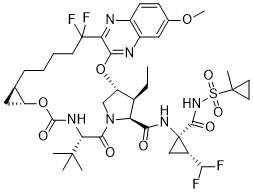
VOXILAPREVIR

别名: GS-9857; GS 9857; Voxilaprevir; 1535212-07-7; Voxilaprevir [INN]; Voxilaprevir [USAN:INN]; VOXILAPREVIR [MI]; (1R,18R,20R,24S,27S,28S)-24-tert-butyl-N-[(1R,2R)-2-(difluoromethyl)-1-[(1-methylcyclopropyl)sulfonylcarbamoyl]cyclopropyl]-28-ethyl-13,13-difluoro-7-methoxy-22,25-dioxo-2,21-dioxa-4,11,23,26-tetrazapentacyclo[24.2.1.03,12.05,10.018,20]nonacosa-3,5(10),6,8,11-pentaene-27-carboxamide; GS9857; trade name: Vosevi
目录号: V3915 纯度: ≥98%
Voxilaprevir(原GS-9857;GS9857;商品名:Vosevi)是吉利德公司开发的丙型肝炎病毒非结构蛋白(HCV NS)3/4A蛋白酶抑制剂,于2017年获批作为抗HCV药物,与索非布韦和velpatasvir联合使用。维帕他韦。
VOXILAPREVIR CAS号: 1535212-07-7
产品类别: HCV Protease
产品仅用于科学研究,不针对患者销售
规格 价格 库存 数量
2mg
5mg
10mg
25mg
50mg
Other Sizes
点击了解更多
  • 与全球5000+客户建立关系
  • 覆盖全球主要大学、医院、科研院所、生物/制药公司等
  • 产品被大量CNS顶刊文章引用
InvivoChem产品被CNS等顶刊论文引用
纯度/质量控制文件

纯度: ≥98%

产品描述
Voxilaprevir(原GS-9857;GS9857;商品名:Vosevi)是吉利德开发的丙型肝炎病毒非结构蛋白(HCV NS)3/4A蛋白酶抑制剂,于2017年获批作为抗HCV药物,与索非布韦和维帕他韦。
生物活性&实验参考方法
靶点
Hepatitis C virus (HCV) nonstructural protein (NS) 3/4A protease
体外研究 (In Vitro)
为了使 HCV 编码的多蛋白(NS3、NS4A、NS4B、NS5A 和 NS5B 蛋白的未成熟形式)被蛋白酶切割并随后进行病毒复制,需要 NS3/4A 蛋白酶[1]。在酶测定中利用反式和重组 NS3 蛋白酶结构域中提供的同基因 NS4A 肽辅因子。在表达编码海肾荧光素酶的 HCV 复制子的稳定细胞系(Huh-7-Lunet 或 Huh7-1C 细胞)中,Voxilaprevir 对 HCV 基因型 1b 和 3a[1] 的 NS3 蛋白酶的 Ki 值分别为 0.038 nM 和 0.066 nM )。在基因型 1 至 6 中,vitilaprevir 表现出强大的全基因型抗病毒活性,EC50 范围为 0.33 至 6.6 nM。 Voxilaprevir 对 HCV 复制子株 DQ314805、H77、Con1、JFH-1、J6、J8(全长)的 IC50 值分别为 0.33 nM、3.9 nM、3.3 nM、3.7 nM、4.5 nM、1.8 nM 和 6.6 nM、1.9 nM 、HM568433、SA13(NS3嵌合体)[1]。
体内研究 (In Vivo)
在这项研究中,对慢性HCV基因型1-4感染患者进行了Voxilaprevir/GS-9857的安全性、耐受性、抗病毒活性和药代动力学(PK)评估。基因型1-4感染的患者在禁食条件下接受安慰剂或每日一次GS-9857,剂量范围为50至300mg,持续3天。GS-9857耐受良好;所有报告的不良事件(AE)严重程度均为轻度或中度。腹泻和头痛是最常见的不良事件。17%接受GS-9857治疗的患者观察到3级或4级实验室异常;丙氨酸氨基转移酶、天冬氨酸氨基转移酶或碱性磷酸酶水平没有3级或4级异常。GS-9857在慢性HCV感染患者中显示出强大的抗病毒活性,在HCV基因型1a、1b、2、3或4感染患者服用100mg剂量后,HCV RNA的平均和中位最大减少量≥3 log10IU/mL。GS-9857的抗病毒活性不受预处理NS3 RAV存在的影响。在基因型1-4感染的患者中,GS-9857表现出线性PK,中位半衰期为29-42小时,支持每日一次给药。因此,GS-9857的耐受性、疗效和药代动力学特征支持其对慢性HCV感染患者治疗的进一步评估。[2]
在没有肝硬化的初次治疗患者中,接受6周治疗的患者SVR12的发生率为71%(24/34;95%CI,53-85),接受8周治疗的病人为100%(36/36;95%CI90-100)(表2)。在初次接受治疗的肝硬化患者中,接受8周sofosbuvir-velatasvir联合Voxilaprevir/GS-9857治疗的患者SVR12的发生率为94%(31/33;95%CI,80-99),接受8周sofosbuvi-velatasVir联合GS-9857加利巴韦林治疗的患者为81%(25/31;95%CI63-93)(表2)。在之前接受过含DAA方案治疗的患者中,接受12周治疗的非肝硬化患者SVR12的发生率为100%(31/31;95%CI,89-100),接受12周治疗的肝硬化患者为100%(32/32;95%CI,89-100%)。根据基线差异,各组的SVR12率没有显著差异(附录)。18名病毒学失败的患者在治疗结束后复发;在治疗过程中,没有患者出现病毒学突破(附录)。

表3显示了无RAS和具有1%测序截止水平的单类和多类NS3、NS5A和NS5B RAS的患者的SVR率。在未接受治疗的患者中,使用索非布韦-维帕他韦加<强>伏西拉匹韦/GS-9857治疗8周,不使用利巴韦林,分别导致96%(24人中的23人)和98%(45人中的44人)的无基线RAS患者和有基线RAS的患者出现SVR12。使用15%的测序截止水平也得到了类似的结果(补充材料)。所有有DAA经验的患者,无论是否存在单类或多类RAS,在接受索非布韦-维帕他韦联合GS-9857治疗12周后均达到SVR12。有12名DAA患者在基线时患有NS5A RAS Y93H/N,所有患者均达到SVR12。

在一项2期开放标签试验中,我们发现索非布韦-维拉帕斯韦联合伏西拉匹韦/GS-9857治疗8周对未接受治疗的患者是安全有效的;对于之前接受DAAs治疗的患者,12周是安全有效的。该组合对有或没有代偿性肝硬化的患者都是安全有效的。Clinicaltrials.gov编号:NCT02378935[3]。
动物实验
This was a double-blind, multicentre, randomized, placebo-controlled study evaluating the safety, tolerability, antiviral activity and PK of Voxilaprevir/GS-9857 in patients with chronic HCV infection (NCT02185794) (Fig. 1). The approved study protocol allowed for up to 10 unique dosing cohorts, of which the first three cohorts were placebo-controlled and dosed in a fasted state, while the remaining, adaptive cohorts did not include a placebo control and could be dosed in either a fasted or a fed state. The final study included seven cohorts; results from the five cohorts that received GS-9857 under fasting conditions are included here, while results from the two cohorts that received GS-9857 treatment under fed conditions will be reported separately. [2]
Patients were screened within 30 days prior to the first study drug dose administration. Patients satisfying study criteria were randomized and admitted to the study facility on day−1 to commence dosing on baseline/day 1. Following treatment with the study drug once daily for 3 days (days 1, 2 and 3), patients were discharged from the study facility on day 4. Short-term follow-up occurred on days 5, 6, 7, 8 and 10, and long-term follow-up visits were scheduled for weeks 12, 24 and 48. [2]
Patients with HCV genotype 1a, HCV genotype 2 and HCV genotype 3 received double-blinded Voxilaprevir/GS-9857 (50, 100 or 300 mg for patients with HCV genotype 1a and 3, and 100 mg for patients with HCV genotype 2) or placebo once daily under fasting conditions for 3 days (Fig. 1). GS-9857 100 mg was administered once daily for 3 days under fasting conditions to patients with HCV genotype 1b and HCV genotype 4. [2]
To evaluate Voxilaprevir/GS-9857 antiviral activity against HCV in patients with genotype 1–4 HCV infection, the primary efficacy endpoint, the change in HCV RNA from baseline to each postdose assessment, was determined. Plasma samples were collected at screening; at predose on day 1; at 2, 4, 6, 8, 12, 16, 24 (predose on day 2), 36, 48 (predose on day 3), 54, 60, 72 and 96 h following administration of the first dose; and on the mornings of days 6, 7, 8 and 10, and at weeks 12, 24 and 48 of the follow-up period. HCV RNA viral load was measured using COBAS TaqMan HCV Test v2.0 for use with the High Pure System (Roche Molecular Diagnostics, Pleasanton, CA, USA). The lower limit of quantification (LLOQ) of the assay was 15 IU/mL. Viral genotype and subtype at screening were determined using the VERSANT HCV Genotype INNO-line probe assay (LiPA) 2.0 Assay (Siemens Medical Solutions USA, Inc., Malvern, PA, USA). Secondary efficacy endpoints included absolute value of HCV RNA levels at each assessment; categorical decline from baseline for patients with a <1, ≥1 and <2, ≥2 and <3, or ≥3 log10 IU/mL decrease in HCV RNA from baseline to each postdose assessment up to day 10 by treatment and cohort; and the number and percentage of patients with HCV RNA For pharmacokinetic evaluation, blood samples were collected after the administration of the first and the third dose at the following time points: predose, and at 0.25, 0.5, 1, 1.5, 2, 3, 4, 5, 6, 8, 10, 12, 16 and 24 h postdose. Additionally, samples were collected at approximately 48, 72, 96, 120 and 168 h following the third dose. Plasma concentration of Voxilaprevir/GS-9857 was determined using validated high performance liquid chromatography tandem mass spectroscopy (LC/MS/MS) bioanalytical methods. The assays were performed by inVentiv Health Clinical Lab, Inc. (Princeton, NJ, USA), for GS-9857. Pharmacokinetic parameters were estimated using WinNonlin software (Certara, NJ, USA) with standard noncompartmental methods. [2]
The pharmacokinetic parameters calculated included area under the plasma concentration vs time curve from zero to the last quantifiable concentration (AUClast), area under the plasma concentration vs time curve extrapolated to infinity (AUCinf), area under the plasma concentration vs time curve up to 24 h (AUC0–24), maximum plasma concentration (Cmax), observed plasma concentration at 24 h postdose (C24), last observed quantifiable plasma drug concentration (Clast), time of maximum plasma concentration (Tmax), time of last observed quantifiable plasma drug concentration (Tlast), elimination half-life (t1/2), terminal elimination rate constant (λz) and apparent oral clearance of drug following administration (CL/F). Dose proportionality was evaluated based on AUC0–24, C24 and Cmax on days 1 and 3 using both the power model and the analysis of variance method. Accumulation indices for Voxilaprevir/GS-9857 were summarized by comparing day 3 to day 1 for AUC0–24, C24 and Cmax. [2]
Cohort 1 [3]
At the time the study was initiated, 2 groups of treatment-naive patients were enrolled in cohort 1: a group of patients without cirrhosis, who received sofosbuvir-velpatasvir plus Voxilaprevir/GS-9857 for 6 weeks, and a group of patients with cirrhosis, who received sofosbuvir-velpatasvir plus GS-9857 for 8 weeks. The protocol specified that if the rate of relapse among patients with cirrhosis who received 8 weeks of treatment was 10% or less, there was an option that another group could be enrolled to receive 6 weeks of treatment. This option was not exercised. Instead, preliminary results from these first 2 groups prompted us to amend the protocol to add 2 groups to this cohort: a group of patients without cirrhosis, who received 8 weeks of sofosbuvir-velpatasvir plus GS-9857, and a group of patients with cirrhosis, who received 8 weeks of sofosbuvir-velpatasvir plus GS-9857 with ribavirin.

Cohort 2 [3]
Two groups of DAA-experienced patients—those with and without cirrhosis—were enrolled in cohort 2. Both groups received 12 weeks of sofosbuvir-velpatasvir plus Voxilaprevir/GS-9857. The protocol specified that if the rate of relapse in either group was 10% or less, there was an option that another group of patients could be enrolled to receive 8 weeks of treatment. This option was not exercised.

All patients received a fixed-dose combination tablet of sofosbuvir 400 mg and velpatasvir 100 mg once daily, along with a 100-mg tablet of Voxilaprevir/GS-9857 once daily, taken with food. Ribavirin was administered 1000–1200 mg/day (1000 mg for patients weighing <75 kg and 1200 mg for patients weighing ≥75 kg) in a divided daily dose. This was an open-label study, in which patients were enrolled by investigators at the study centers. No participants or study personnel were blinded to treatment assignments at any time during the study.
药代性质 (ADME/PK)
Absorption, Distribution and Excretion
When provided as the fixed dose combination product Vosevi with [DB08934] and [DB11613], voxilaprevir reaches a maximum concentration (Cmax) of 192 ng/mL at a maximum time (Tmax) of 4 hours post-dose.
Voxilaprevir is primarily eliminated via biliary excretion.
Metabolism / Metabolites
Voxilaprevir is primarily metabolized by Cytochrome P450 3A4 (CYP3A4) and to a lesser extent by CYP2C8 and CYP1A2.
Biological Half-Life
33 hr
Voxilaprevir [1]
VoxilaprevirVOX is absorbed quickly into systemic circulation, with maximum concentration achieved in 2–5 h post-dosing. Across the multiple doses tested, median steady-state half-life of VOX was 28–41 h. The drug is >99% plasma protein bound and it is metabolized by CYP3A4. Therefore, drug levels may vary when coadministered with CYP3A4 inhibitors/inducers. The drug is eliminated by biliary route and terminal elimination t1/2 is 33 h. Approximately 95%, with 40% as parent drug, is excreted in feces [1].
Sofosbuvir/velpatasvir/Voxilaprevir [1]
AUC0–24 and Cmax of SOF are similar in healthy adults and patients with active HCV. Compared to healthy subjects (N = 137), VEL AUC0–24 and Cmax are 41% and 39%, respectively, are decreased in HCV-infected subjects. In HCV patients, VOX AUC0–24 and Cmax are both 260% higher than healthy subjects (N = 63)
Safety [1]
None of the patients in the SOF/VOX/VEL group in both POLARIS-2 and POLARIS-3 discontinued the treatment due to serious AEs. In the POLARIS-2 study, 72% of patients had AEs and 3% patients had serious AEs in the SOF/VOX/VEL group. A single patient experienced only one serious AE. Pyelonephritis was the only serious AE observed in both treatment groups in the POLARIS-2 study. Other AEs observed in the SOF/VOX/VEL treatment group were headache (27%), fatigue (20%), diarrhea (18%), and nausea (16%) compared to headache (23%), fatigue (21%), diarrhea (7%), and nausea (9%) in the SOF/VEL treatment group. In the POLARIS-3 study, 75% of SOF/VOX/VEL-treated patients had AEs. Out of 110 patients, 2 experienced four serious AEs. The rate of AEs in the SOF/VOX/VEL treatment group was comparable to SOF/VEL12 weeks of treatment group except for mild nausea and diarrhea which has been observed with prior NS3/4A protease inhibitors.
It has been reported that in HCV- and hepatitis B virus (HBV)-coinfected patients who were going through or had completed HCV treatment with DAAs, HBV can be reactivated. Cases like fulminant hepatitis, hepatic failure, and death have been reported. The risk of reactivation may be increased in patients who were on HCV DAAs treatment receiving certain immunosuppressant or chemotherapeutic agents, in patients who are HBsAg positive and in patients with serologic evidence of resolved HBV.
Pharmacokinetic results [2]
Plasma concentrations were measurable up to 24 h postdose for all patients after single or multiple dosing, except for one patient receiving Voxilaprevir/GS-9857 100 mg. GS-9857 plasma concentration vs time profiles were similar after 1 or 3 days of dosing, regardless of HCV genotype. Administration of GS-9857 50–300 mg resulted in a dose-proportional increase in Cmax and AUC0–24. Median Tmax ranged from 1.3 to 4.0 h following the first dose, and 1.8–5.0 h after three doses (Table S2). The median t1/2 on day 3 ranged from approximately 29–42 h across cohorts. Consistent with the half-life of GS-9857, significant accumulation was observed across dose levels evaluated.
Exposure–response relationships [2]
Anti-HCV activity in patients with genotype 1a, 1b, 2 or 4 infection was not correlated with Voxilaprevir/GS-9857 doses of 50, 100 or 300 mg, whereas median antiviral response exhibited a relationship with GS-9857 dose in patients with genotype 3 infection. This exposure–response relationship could be adequately described using a simple maximal anti-HCV activity (Emax) model that used AUC0–24 on day 3 of treatment. Similar models using GS-9857 Cmax or C24 provided comparable exposure–response relationships.
毒性/毒理 (Toxicokinetics/TK)
Effects During Pregnancy and Lactation
◉ Summary of Use during Lactation
Voxilaprevir has not been studied in nursing mothers being treated for hepatitis C infection. Because it is greater than 99% bound to maternal plasma proteins, amounts in breastmilk are likely to be very low. Some sources recommend against breastfeeding when voxilaprevir is used with ribavirin.
Hepatitis C is not transmitted through breastmilk and breastmilk has been shown to inactivate hepatitis C virus (HCV). However, the Centers for Disease Control recommends that mothers with HCV infection should consider abstaining from breastfeeding if their nipples are cracked or bleeding. It is not clear if this warning would apply to mothers who are being treated for hepatitis C.
Infants born to mothers with HCV infection should be tested for HCV infection; because maternal antibody is present for the first 18 months of life and before the infant mounts an immunologic response, nucleic acid testing is recommended.
◉ Effects in Breastfed Infants
Relevant published information was not found as of the revision date.
◉ Effects on Lactation and Breastmilk
Relevant published information was not found as of the revision date.
Protein Binding
Voxilaprevir is more than 99% bound to human plasma proteins.
Tolerability [1]
None of the patients who received SOF/VOX/VEL for 8 weeks discontinued the treatment due to the serious AEs in both POLARIS-2 and POLARIS-3 studies compared to 0.5% for patients who received SOF/VEL for 12 weeks in the POLARIS-2 study. None in the 12 weeks of SOF/VOX/VEL treatment group compared to one in the 12 weeks of SOF/VEL treatment group discontinued treatment in the POLARIS-4 study. For mild or moderate renal impaired patients, no dosage adjustment is needed for SOF/VOX/VEL. The therapy is thus well tolerated in patients.
Safety [2]
Table 2 presents treatment-emergent AEs occurring in patients by treatment group. Overall, 11 patients (16.4%) experienced AEs, 9 of whom were dosed with Voxilaprevir/GS-9857 (9/59; 15.3%) and 2 of whom received placebo (2/8; 25.0%). The incidence of treatment-related AEs was 6.8% (4/59) for patients receiving GS-9857 and 12.5% (1/8) for patients receiving placebo. No serious AEs, AEs leading to study drug discontinuation, or deaths occurred during the study. All AEs were mild or moderate in severity. The most common AEs were diarrhoea, occurring in 5.1% (3/59) of patients receiving GS-9857 and in 12.5% (1/8) of patients receiving placebo, and headache, occurring in 1.7% (1/59) of patients receiving GS-9857 and in 25.0% (2/8) of patients treated with placebo. The incidence of AEs was not correlated with the dose of the study drug.
Grade 3 laboratory abnormalities were detected in 15.3% (9/59) of patients, and Grade 4 abnormalities were detected in 1.7% (1/59) of patients receiving Voxilaprevir/GS-9857 (Table S1). No placebo-treated patients exhibited Grade 3 or Grade 4 abnormalities in laboratory evaluations. The incidence of Grade 3 and Grade 4 laboratory abnormalities was not correlated with GS-9857 dose, nor was dose associated with AEs. Analysis of vital signs measurements and physical examination findings by treatment group or of ECG measurements by individual patient did not reveal clinically significant changes during the study relative to baseline.
参考文献

[1]. Expert Opin Pharmacother.2018 May;19(7):749-757.

[2]. J Viral Hepat. 2016 Aug;23(8):614-22.

[3]. Gastroenterology. 2016 Nov;151(5):893-901.e1.

其他信息
Pharmacodynamics
Voxilaprevir is a direct-acting antiviral agent that targets viral NS3/4A protein and causes a decrease in serum HCV RNA levels. It disrupts HCV replication by specifically inhibiting the critical functions of NS3/4A protein in the replication complex. It does not appear to prolong the QT interval even when given at 9 times the maximum recommended dose.
Voxilaprevir is a Direct-Acting Antiviral (DAA) medication used as part of combination therapy to treat chronic Hepatitis C, an infectious liver disease caused by infection with Hepatitis C Virus (HCV). HCV is a single-stranded RNA virus that is categorized into nine distinct genotypes, with genotype 1 being the most common in the United States, and affecting 72% of all chronic HCV patients. Voxilaprevir exerts its antiviral action by reversibly binding and inhibiting the NS3/4A serine protease of Hepatitis C Virus (HCV). Following viral replication of HCV genetic material and translation into a single polypeptide, Nonstructural Protein 3 (NS3) and its activating cofactor Nonstructural Protein 4A (NS4A) are responsible for cleaving genetic material into the following structural and nonstructural proteins required for assembly into mature virus: NS3, NS4A, NS4B, NS5A, and NS5B. By inhibiting viral protease NS3/4A, voxilaprevir therefore prevents viral replication and function. Treatment options for chronic Hepatitis C have advanced significantly since 2011, with the development of Direct Acting Antivirals (DAAs) such as voxilaprevir. Voxilaprevir has been available since July 2017 in a fixed dose combination product with [sofosbuvir] and [velpatasvir] as the commercially available product Vosevi. Vosevi is approved for the treatment of adult patients with chronic HCV infection with genotype 1, 2, 3, 4, 5, or 6 infection. Notably, Vosevi is approved for use in patients with genotypes 1-6 who have been previously treated with an NS5A inhibitor, or patients with genotypes 1a or 3 infection and have previously been treated with an HCV regimen containing sofosbuvir without an NS5A inhibitor. Prior to Vosevi, there were no approved retreatment options for patients who have previously received, and failed, a regimen containing an NS5A inhibitor for treatment of chronic HCV infection.

Voxilaprevir is a Hepatitis C Virus NS3/4A Protease Inhibitor. The mechanism of action of voxilaprevir is as a HCV NS3/4A Protease Inhibitor, and P-Glycoprotein Inhibitor, and Breast Cancer Resistance Protein Inhibitor, and Organic Anion Transporting Polypeptide 1B1 Inhibitor, and Organic Anion Transporting Polypeptide 1B3 Inhibitor.
Voxilaprevir is an orally bioavailable inhibitor of the hepatitis C virus (HCV) non-structural protein 3/non-structural protein 4A (NS3/NS4A) serine protease, with antiviral activity. Upon administration, voxilaprevir binds to the HCV NS3/NS4A serine protease and prevents NS3/NS4A protease-mediated polyprotein maturation. This disrupts both the processing of viral proteins and the formation of the viral replication complex, thereby preventing viral replication and function. NS3, a serine protease, is essential for the proteolytic cleavage of multiple sites within the HCV polyprotein and plays a key role during HCV ribonucleic acid (RNA) replication. NS4A is an activating factor for NS3. HCV is a small, enveloped, single-stranded RNA virus belonging to the Flaviviridae family; HCV infection is associated with the development of hepatocellular carcinoma (HCC).
Hepatitis C is a disease with a significant global impact. Over the last several years, the treatment of the disease has been revolutionized. Therapy has transformed over the last several years with the approval of second generation direct acting antivirals, and currently utilized medications for the treatment of hepatitis C are significantly more efficacious with better safety profiles than previously approved treatments. Treatment for individuals who have failed therapy on direct acting antivirals has, until recently, been complex and difficult to treat, but the approval of sofosbuvir/velpatasvir/Voxilaprevir represents a new therapeutic option for these individuals. Areas covered: Sofosbuvir/velpatasvir/voxilaprevir is a recently approved therapeutic combination for the treatment of hepatitis C. This article reviews the studies leading to the approval of the combination, and its efficacy and safety profile. Expert opinion: Sofosbuvir/velpatasvir/voxilaprevir fills one of the previously unfilled niches for the treatment of hepatitis C, that of the treatment of individuals who have failed therapy with resistant virus. With the filling of this niche, there appears to be a general slowing of the development of new therapeutics. Although understandable, in the long term, there are considerable risks associated with the decreased development of new drugs to treat hepatitis C. [1]
Conclusions
The therapeutic combination of SOF/VOX/VEL represents a well-tolerated and effective therapy for individuals who have been unsuccessfully treated with other drugs used for HCV. Additionally, it offers a valuable treatment for all major genotypes of HCV. While there are side effects associated with the drug, it is in general very well tolerated with only one individual discontinuing treatment with SOF/VOX/VEL in the phase III trials. Especially compared to the previous generations of treatments for HCV, the side effects that are observed are in many cases minor. The high rate of SVR in individuals treated with SOF/VOX/VEL, even in individuals who have failed therapy with a different therapeutic option will ensure that SOF/VOX/VEL will be a valuable addition to HCV treatment in the years to come.

Expert opinion
Over the last 7 years, the revolutions in the approval of drugs and treatment of HCV have radically altered the landscape of anti-HCV agents, even to the point where drugs approved in 2011 are, in many cases, now largely obsolete. With these remarkable changes, the rate of approval and development of new drugs to fight HCV has slowed. Indeed, it appears that many of the niches for the treatment of HCV have been filled with efficacious and well-tolerated treatment regimens for all major HCV genotypes. While individuals who had failed on pre-DAA regimens can be treated with the drugs which had already been approved, until the approval of SOF/VOX/VEL there were inadequate treatment options for individuals who had failed treatment with the newer DAAs.

Within this niche, SOF/VOX/VEL is likely to be able to become a significant player for the treatment of HCV, and represents an important new therapeutic combination for the treatment of resistant HCV. It is also of high importance to fully evaluate the effectiveness of SOF/VOX/VEL in individuals who have failed newer regimens, including SOF/VEL and glecaprevir/pibrentasvir. While it has not been approved for treatment-naïve patients in the United States, due to the results of the POLARIS-2 trial, there is a critical need for effective therapy in individuals who have failed first-line regimens. The high rate of SVR with SOF/VOX/VEL even in individuals with virus resistant to approved DAAs will likely ensure that SOF/VOX/VEL will have a critical place in therapy for individuals with HCV going forward. As SOF/VOX/VEL contains agents from all three major classes of DAAs, even if partial resistance existed to one of the agents, it is still likely that a successful response will occur. In our opinion, with the high SVR rates for the vast majority of regimens approved for treatment-naïve patients, especially with regimens that can be taken for only 8 weeks, differences in cost and insurance coverage may be one of the major deciding factors for therapeutic decisions. The relatively recent approval of glecaprevir/pibrentasvir, which combines an 8-week time course for treatment-naïve patients, high SVR, and comparatively low cost may limit the utility of SOF/VOX/VEL use in treatment-naïve patients, should SOF/VOX/VEL be approved for use in the United States for that indication. One interesting development that has been observed with the treatment of HCV is that over time we have seen an incredible improvement in durations of therapy and side effect profiles. Even with newer DAAs, durations of therapy have been improved for many regimens from 12 to 8 weeks. The question remains, however, if even shorter courses could be effective. A 2016 study investigated a 6-week time course with ledipasvir/SOF for genotype 1 infection, showing a high SVR. This contrasts to other previous trials with DAAs showing low efficacy with 6 weeks of therapy. Whether this can be extended to other genotypes or other treatment regimens remains an important question.
The rate of development and research into novel DAAs also reflects how available niches for anti-HCV agents have been filled. A number of pharmaceutical companies have refocused their research and development away from HCV and toward HBV, among other disease states. Currently, it appears that the next major steps in the fight against HCV will be vaccine development, and not additional pharmacologic interventions.
While the shift away from the development of novel anti-HCV agents toward other diseases is understandable from a financial standpoint, it is not without risks. While the agents that are currently used are highly efficacious, with a relatively low risk of resistance, resistance to most DAAs can still occur, with reported rates for some agents in the range of 10–15%. As has been seen with antimicrobials, over time resistance to even these newer agents is likely to occur. With the slower rate of new DAA development, there is an increased risk of the development of resistance for these agents.[1]


In this randomized, phase 1b study, the safety, antiviral efficacy and PK of Voxilaprevir/GS-9857 at doses ranging from 50 to 300 mg were assessed in patients with chronic genotype 1–4 HCV infection. GS-9857 was generally well tolerated by patients with chronic HCV infection when administered once daily for 3 days. All AEs were of mild or moderate severity, with diarrhoea and headache occurring most commonly during this study. Although increased incidence of rash, pruritus, nausea and anaemia have been commonly reported with the use of certain protease inhibitor-based regimens 7-10, no such events were observed during this study. Grade 3 or Grade 4 laboratory abnormalities occurred in 16.9% of patients receiving GS-9857 and were not associated with GS-9857 dose or AEs. Notably, assessments of ALT, AST and alkaline phosphatase levels did not reveal any Grade 3 or Grade 4 abnormalities, indicating that GS-9857 administration was not associated with significant changes in liver function. Physical examination and ECG evaluation did not reveal clinically significant findings.

Treatment with GS-9857 at doses of 100 mg or 300 mg resulted in >3 log10 IU/mL median maximal reduction in viral load from baseline across all genotypes, including genotype 3, indicating that GS-9857 exhibited potent antiviral activity in HCV-infected patients. This observation is consistent with in vitro data showing that GS-9857 has pan-genotypic activity against genotype 1 to 6 replicons, with the half-maximal effective concentration ranging from 1.5 to 6.6 nm 5. With the exception of patients with genotype 3a infection who received GS-9857 doses of <100 mg, a rapid and consistent reduction in HCV RNA was achieved and maintained through day 10. For patients with genotype 3a infection who received GS-9857 50 mg, HCV RNA reductions occurred more slowly.

This study characterized substitutions at positions 36, 41, 43, 54, 55, 80, 122, 155, 156, 168 and 170, which have been reported to be associated with resistance to NS3/4A protease inhibitors 11-17. Prior to the start of GS-9857 treatment, 22.4% of patients who were sequenced harboured NS3 RAVs. Treatment with GS-9857 resulted in similar mean maximal viral load reductions in patients with and without NS3 RAVs, indicating that the antiviral efficacy of GS-9857 was maintained in the presence of mutations commonly associated with resistance to treatment. The majority of patients (73.6%) who were sequenced after 3 days of GS-9857 treatment did not have emergent NS3 RAVs, and there were no emergent NS3 RAVs in patients with genotype 2 or 4 infection. A156V or A156T were the most prevalent substitutions to emerge in patients with genotype 1a or 1b infection. In vitro data indicate that GS-9857 has potent activity against the most common genotype 1 RAVs except A156T 5; this substitution is associated with high levels of resistance (>100-fold) but low viral fitness (1.5% compared to wild-type genotype 1a replicon) 12. The overall low frequency of emergent NS3 RAVs suggests that GS-9857 has a relatively high barrier to resistance as compared with other first-generation protease inhibitors, which may be a substantial benefit in the context of retreatment of patients who have failed a prior treatment with a DAA-based regimen.

Administration of GS-9857 at doses ranging from 50 to 300 mg under fasting conditions resulted in dose-proportional increases in exposure. The median half-life across cohorts ranged from approximately 29–42 h, supporting once-daily dosing. Consistent with its long median half-life, significant accumulation of GS-9857 exposure was observed. GS-9857 plasma PK was similar among patients with genotype 1a, 1b, 2, 3 or 4 HCV infection.

Patients with cirrhosis or chronic liver disease were excluded from this preliminary investigational study. As such, the lack of significant safety concerns observed may be the result of selection for a study population less prone to AEs. Further evaluations of GS-9857 in patients with more advanced disease or additional complications will be necessary to confirm the findings of this study.

In summary, administration of multiple doses of GS-9857 was well tolerated and resulted in a robust decline of HCV RNA levels in patients with genotype 1–4 HCV infection. Notably, the potent antiviral activity of GS-9857 was preserved in the presence of commonly observed NS3 mutations associated with resistance to protease inhibitors. GS-9857 demonstrated linear PK when administered at doses ranging from 50 to 300 mg under fasting conditions. The median half-life of GS-9857 ranged from 29 to 42 h, conducive to once-daily dosing. Lastly, GS-9857 has demonstrated additive antiviral activity when evaluated in vitro in combination with sofosbuvir or velpatasvir 5. Together, these data support the further development of once-daily GS-9857 in combination with other DAAs for the treatment of patients with chronic HCV infection.[2]
One unexpected result in our trial was the apparent lack of benefit of the addition of ribavirin to sofosbuvir-velpatasvir plus Voxilaprevir/GS-9857 for treatment-naive patients with cirrhosis. Although patients in this group receiving ribavirin had a numerically lower rate of SVR12 than treatment-naive patients with cirrhosis who received sofosbuvir-velpatasvir plus GS-9857 without ribavirin (81% vs 94%), the confidence intervals overlap and it is likely that this reflects the small sample sizes.
Factors limiting the interpretation of the results of this trial include its small size and the uncontrolled, open-label design. Although the trial enrolled only patients with genotype 1 HCV, another trial of similar design has been conducted to assess this combination regimen in patients with non–genotype 1 HCV.
In conclusion, sofosbuvir-velpatasvir plus GS-9857 for 12 weeks provided a high rate of SVR12 (100%) and was well tolerated in a group of patients currently without treatment options—those with and without compensated cirrhosis who have not achieved SVR after previous treatment with a NS5A inhibitor-containing regimen. The addition of GS-9857 to sofosbuvir-velpatasvir also was safe in the treatment-naive population, in whom it was effective in reducing the treatment duration to 8 weeks while preserving a high rate of SVR12. These 3 potent pangenotypic DAAs have been co-formulated into a fixed-dose combination tablet. The phase 3 program will evaluate this fixed-dose combination for 8 weeks in treatment-naive patients and for 12 weeks in DAA-experienced patients, including those who previously have received an NS5A inhibitor.[3]
*注: 文献方法仅供参考, InvivoChem并未独立验证这些方法的准确性
化学信息 & 存储运输条件
分子式
C40H52F4N6O9S
分子量
868.94
精确质量
868.345
元素分析
C, 55.29; H, 6.03; F, 8.75; N, 9.67; O, 16.57; S, 3.69
CAS号
1535212-07-7
相关CAS号
1535212-07-7
PubChem CID
89921642
外观&性状
White to off-white solid powder
密度
1.4±0.1 g/cm3
折射率
1.596
LogP
3.83
tPSA
203.6
氢键供体(HBD)数目
3
氢键受体(HBA)数目
15
可旋转键数目(RBC)
9
重原子数目
60
分子复杂度/Complexity
1780
定义原子立体中心数目
8
SMILES
S(C1(C)CC1)(NC([C@]1(C[C@H]1C(F)F)NC([C@@H]1[C@H](CC)[C@@H]2CN1C([C@H](C(C)(C)C)NC(=O)O[C@@H]1C[C@H]1CCCCC(C1C(=NC3C=C(C=CC=3N=1)OC)O2)(F)F)=O)=O)=O)(=O)=O
InChi Key
MZBLZLWXUBZHSL-FZNJKFJKSA-N
InChi Code
InChI=1S/C40H52F4N6O9S/c1-7-22-27-19-50(28(22)32(51)48-39(18-23(39)31(41)42)35(53)49-60(55,56)38(5)14-15-38)34(52)30(37(2,3)4)47-36(54)59-26-16-20(26)10-8-9-13-40(43,44)29-33(58-27)46-25-17-21(57-6)11-12-24(25)45-29/h11-12,17,20,22-23,26-28,30-31H,7-10,13-16,18-19H2,1-6H3,(H,47,54)(H,48,51)(H,49,53)/t20-,22-,23+,26-,27+,28+,30-,39-/m1/s1
化学名
(33R,34S,35S,91R,92R,5S)-5-(tert-butyl)-N-((1R,2R)-2-(difluoromethyl)-1-(((1-methylcyclopropyl) sulfonyl)carbamoyl)cyclopropyl)-34-ethyl-14,14-difluoro-17-methoxy-4,7-dioxo-2,8-dioxa-6-aza-1(2,3)-quinoxalina-3(3,1)-pyrrolidina-9(1,2)-cyclopropanacyclotetradecaphane-35-carboxamide
别名
GS-9857; GS 9857; Voxilaprevir; 1535212-07-7; Voxilaprevir [INN]; Voxilaprevir [USAN:INN]; VOXILAPREVIR [MI]; (1R,18R,20R,24S,27S,28S)-24-tert-butyl-N-[(1R,2R)-2-(difluoromethyl)-1-[(1-methylcyclopropyl)sulfonylcarbamoyl]cyclopropyl]-28-ethyl-13,13-difluoro-7-methoxy-22,25-dioxo-2,21-dioxa-4,11,23,26-tetrazapentacyclo[24.2.1.03,12.05,10.018,20]nonacosa-3,5(10),6,8,11-pentaene-27-carboxamide; GS9857; trade name: Vosevi
HS Tariff Code
2934.99.9001
存储方式

Powder      -20°C    3 years

                     4°C     2 years

In solvent   -80°C    6 months

                  -20°C    1 month

运输条件
Room temperature (This product is stable at ambient temperature for a few days during ordinary shipping and time spent in Customs)
溶解度数据
溶解度 (体外实验)
DMSO : ≥ 100 mg/mL (~115.08 mM)
溶解度 (体内实验)
配方 1 中的溶解度: ≥ 2.5 mg/mL (2.88 mM) (饱和度未知) in 10% DMSO + 90% Corn Oil (这些助溶剂从左到右依次添加,逐一添加), 澄清溶液。
例如,若需制备1 mL的工作液,可将100 μL 25.0 mg/mL 澄清 DMSO 储备液加入900 μL 玉米油中,混合均匀。

请根据您的实验动物和给药方式选择适当的溶解配方/方案:
1、请先配制澄清的储备液(如:用DMSO配置50 或 100 mg/mL母液(储备液));
2、取适量母液,按从左到右的顺序依次添加助溶剂,澄清后再加入下一助溶剂。以 下列配方为例说明 (注意此配方只用于说明,并不一定代表此产品 的实际溶解配方):
10% DMSO → 40% PEG300 → 5% Tween-80 → 45% ddH2O (或 saline);
假设最终工作液的体积为 1 mL, 浓度为5 mg/mL: 取 100 μL 50 mg/mL 的澄清 DMSO 储备液加到 400 μL PEG300 中,混合均匀/澄清;向上述体系中加入50 μL Tween-80,混合均匀/澄清;然后继续加入450 μL ddH2O (或 saline)定容至 1 mL;

3、溶剂前显示的百分比是指该溶剂在最终溶液/工作液中的体积所占比例;
4、 如产品在配制过程中出现沉淀/析出,可通过加热(≤50℃)或超声的方式助溶;
5、为保证最佳实验结果,工作液请现配现用!
6、如不确定怎么将母液配置成体内动物实验的工作液,请查看说明书或联系我们;
7、 以上所有助溶剂都可在 Invivochem.cn网站购买。
制备储备液 1 mg 5 mg 10 mg
1 mM 1.1508 mL 5.7541 mL 11.5083 mL
5 mM 0.2302 mL 1.1508 mL 2.3017 mL
10 mM 0.1151 mL 0.5754 mL 1.1508 mL

1、根据实验需要选择合适的溶剂配制储备液 (母液):对于大多数产品,InvivoChem推荐用DMSO配置母液 (比如:5、10、20mM或者10、20、50 mg/mL浓度),个别水溶性高的产品可直接溶于水。产品在DMSO 、水或其他溶剂中的具体溶解度详见上”溶解度 (体外)”部分;

2、如果您找不到您想要的溶解度信息,或者很难将产品溶解在溶液中,请联系我们;

3、建议使用下列计算器进行相关计算(摩尔浓度计算器、稀释计算器、分子量计算器、重组计算器等);

4、母液配好之后,将其分装到常规用量,并储存在-20°C或-80°C,尽量减少反复冻融循环。

计算器

摩尔浓度计算器可计算特定溶液所需的质量、体积/浓度,具体如下:

  • 计算制备已知体积和浓度的溶液所需的化合物的质量
  • 计算将已知质量的化合物溶解到所需浓度所需的溶液体积
  • 计算特定体积中已知质量的化合物产生的溶液的浓度
使用摩尔浓度计算器计算摩尔浓度的示例如下所示:
假如化合物的分子量为350.26 g/mol,在5mL DMSO中制备10mM储备液所需的化合物的质量是多少?
  • 在分子量(MW)框中输入350.26
  • 在“浓度”框中输入10,然后选择正确的单位(mM)
  • 在“体积”框中输入5,然后选择正确的单位(mL)
  • 单击“计算”按钮
  • 答案17.513 mg出现在“质量”框中。以类似的方式,您可以计算体积和浓度。

稀释计算器可计算如何稀释已知浓度的储备液。例如,可以输入C1、C2和V2来计算V1,具体如下:

制备25毫升25μM溶液需要多少体积的10 mM储备溶液?
使用方程式C1V1=C2V2,其中C1=10mM,C2=25μM,V2=25 ml,V1未知:
  • 在C1框中输入10,然后选择正确的单位(mM)
  • 在C2框中输入25,然后选择正确的单位(μM)
  • 在V2框中输入25,然后选择正确的单位(mL)
  • 单击“计算”按钮
  • 答案62.5μL(0.1 ml)出现在V1框中
g/mol

分子量计算器可计算化合物的分子量 (摩尔质量)和元素组成,具体如下:

注:化学分子式大小写敏感:C12H18N3O4  c12h18n3o4
计算化合物摩尔质量(分子量)的说明:
  • 要计算化合物的分子量 (摩尔质量),请输入化学/分子式,然后单击“计算”按钮。
分子质量、分子量、摩尔质量和摩尔量的定义:
  • 分子质量(或分子量)是一种物质的一个分子的质量,用统一的原子质量单位(u)表示。(1u等于碳-12中一个原子质量的1/12)
  • 摩尔质量(摩尔重量)是一摩尔物质的质量,以g/mol表示。
/

配液计算器可计算将特定质量的产品配成特定浓度所需的溶剂体积 (配液体积)

  • 输入试剂的质量、所需的配液浓度以及正确的单位
  • 单击“计算”按钮
  • 答案显示在体积框中
动物体内实验配方计算器(澄清溶液)
第一步:请输入基本实验信息(考虑到实验过程中的损耗,建议多配一只动物的药量)
第二步:请输入动物体内配方组成(配方适用于不溶/难溶于水的化合物),不同的产品和批次配方组成不同,如对配方有疑问,可先联系我们提供正确的体内实验配方。此外,请注意这只是一个配方计算器,而不是特定产品的确切配方。
+
+
+

计算结果:

工作液浓度 mg/mL;

DMSO母液配制方法 mg 药物溶于 μL DMSO溶液(母液浓度 mg/mL)。如该浓度超过该批次药物DMSO溶解度,请首先与我们联系。

体内配方配制方法μL DMSO母液,加入 μL PEG300,混匀澄清后加入μL Tween 80,混匀澄清后加入 μL ddH2O,混匀澄清。

(1) 请确保溶液澄清之后,再加入下一种溶剂 (助溶剂) 。可利用涡旋、超声或水浴加热等方法助溶;
            (2) 一定要按顺序加入溶剂 (助溶剂) 。

临床试验信息
NCT Number Recruitment interventions Conditions Sponsor/Collaborators Start Date Phases
NCT02402452 COMPLETED Drug: Voxilaprevir HCV Infection Gilead Sciences 2015-05-05 Phase 1
NCT06180590 RECRUITING Drug: Sofosbuvir / Velpatasvir /
Voxilaprevir Oral Tablet [Vosevi]
Chronic Hepatitis C
Medication Reaction
The Third Affiliated Hospital of
Guangzhou Medical University
2023-02-28
NCT05717400 RECRUITING Drug:Bevacizumab
Drug:Atezolizumab
Drug:Sofosbuvir
Liver Cancer M.D. Anderson
Cancer Center
2023-02-07 Phase 4
NCT02397707 COMPLETED Drug: Voxilaprevir HCV Infection Gilead Sciences 2015-03-24 Phase 1
NCT02185794 COMPLETED Drug:Voxilaprevir
Drug:Placebo to match voxilaprevir
Drug:SOF/VEL
Hepatitis C Virus Infection Gilead Sciences 2014-06-13 Phase 1
生物数据图片
  • Median change from baseline hepatitis C virus (HCV) RNA over time in patients with HCV genotype 1–4 infection following administration of GS-9857 at 0 (day 1), 24 (day 2) and 48 (day 3) hours. (a) Genotype 1a. (b) Genotype 1b. (c) Genotype 2. (d) Genotype 3. (e) Genotype 4. GT, genotype; HCV, hepatitis C virus. J Viral Hepat . 2016 Aug;23(8):614-22.
相关产品
联系我们