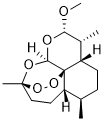
Artemether (SM-224)

别名: Dihydroqinghaosu methyl ether; Dihydroartemisinin methyl ether; SM224; SM-224; Artemos; Artenam; Artesaph; Artesian; Dihydroartemisinin Methyl Ether; Falcidol; Gvither; Larither; Malartem; SM 224; β-Artemether; β-Dihydroartemisinin Methyl Ether 蒿甲醚; 青蒿素甲醚; 蒿甲醚(标准品);蒿甲醚 植物提取物,标准品,对照品;蒿甲醚、;蒿甲醚标准品; 蒿甲醚蒿甲醚;青蒿醚; 甲基还原青蒿素
目录号: V5182 纯度: ≥98%
蒿甲醚(SM224)是一种天然产物,被批准作为抗疟药,用于治疗恶性疟疾耐药株。
Artemether (SM-224) CAS号: 71963-77-4
产品类别: Parasite
产品仅用于科学研究,不针对患者销售
规格 价格 库存 数量
500mg
1g
2g
5g
10g
25g
Other Sizes

Other Forms of Artemether (SM-224):

点击了解更多
InvivoChem产品被CNS等顶刊论文引用
纯度/质量控制文件

纯度: ≥98%

产品描述
蒿甲醚 (SM224) 是一种天然产物,被批准作为抗疟药,用于治疗恶性疟疾耐药株。蒿甲醚可有效杀死恶性疟原虫和间日疟原虫。蒿甲醚通常与苯芴醇联合用于治疗疟疾。蒿甲醚还可以杀死血吸虫吸虫,从而预防血吸虫病。倍半萜内酯如蒿甲醚、青蒿琥酯和青蒿素在某些类型的癌症和炎症性疾病中具有潜在的应用。
生物活性&实验参考方法
靶点
Plasmodium
Inhibition of the Ras-Raf1-ERK1/2 protein kinase cascade in T cells.
体外研究 (In Vitro)
蒿甲醚(0-200 μg/mL,24-72 h)以剂量和时间依赖性方式抑制大鼠 C6 胶质瘤细胞生长[2]。 Artemether(0-10 μM,72 小时)抑制 RANKL 引起的破骨细胞形成相关基因(破骨细胞前体细胞,BMM)的表达(TRAP、NFATc1、V-ATPase-d2、CTSK、DC-STAMP、MMP-9) [2].
蒿甲醚(48或96小时)抑制ConA或同种异体抗原诱导的BALB/c脾细胞增殖(IC50:6.3和3.5 μM)[4]。在 BALB/c 脾细胞中,蒿甲醚(0-50 μM,16-36 小时)可抑制 IL-2 和 IFN-γ 的产生[4]。 Artemether(0-50 μM,72 小时)通过 G1/S 转变抑制细胞周期进程,以及 ConA 诱导的脾细胞、CD4+T 和 CD8+ T 细胞分裂[4]。
青蒿醚 可抑制刀豆蛋白A(ConA)诱导的脾细胞增殖,IC50为6.3 ± 1.9 μM;抑制同种异体抗原诱导的增殖,IC50为3.5 ± 0.6 μM。它还能剂量依赖性地抑制ConA诱导的脾细胞产生IL-2和IFN-γ。
青蒿醚 可抑制T细胞分裂(CFSE实验),并剂量依赖性地将细胞周期阻滞在G0/G1期。在抗CD3刺激的T细胞中,它能降低细胞周期蛋白D3和CDK6的表达,并抑制p27kip的降解。
青蒿醚 在原代T细胞中抑制抗CD3诱导的Raf1磷酸化和Ras活化,并在卵清蛋白刺激的免疫小鼠T细胞以及抗CD3刺激的原代T细胞中抑制ERK1/2的磷酸化。[4]
体内研究 (In Vivo)
在含有 C6 神经胶质瘤细胞的 SD 大鼠中,蒿甲醚(0-66 mg/kg,口服)可抑制肿瘤生长和血管生成[2]。
用酯类(10 mg/kg,腹膜内注射,持续 8 天)治疗的小鼠可免受LPS 诱导的溶骨性骨丢失[3]。
在 BALB/c 小鼠的 DNFB 诱导的 DTH 模型中,蒿甲醚(50 和 100 mg/kg,口服)抑制 T 细胞介导的免疫反应(耳肿胀)[ 4]。
口服 青蒿醚(50和100 mg/kg)可剂量依赖性地抑制BALB/c小鼠由DNFB诱导的迟发型超敏反应(DTH)的耳肿胀。
在卵清蛋白免疫的BALB/c小鼠中,口服 青蒿醚(100 mg/kg,每日一次,连续7天)能显著抑制离体回忆实验中卵清蛋白特异性T细胞的增殖及细胞因子(IL-2和IFN-γ)的产生。[4]
细胞实验
细胞系:ConA 刺激的 T 淋巴细胞
浓度:1、10 和 50 μM
孵育时间:72 小时
结果:47%、56% 和 91%(在 1、10 和 50 μM)被抑制分别为G0/G1期细胞。
增殖实验: 将脾细胞(4×10⁵个/孔)与ConA(5 μg/mL)或经照射的同种异体脾细胞在96孔板中培养48或96小时。在培养结束前8或24小时加入[³H]胸腺嘧啶,通过其掺入量测定增殖情况。青蒿醚在培养开始时加入。
细胞因子测定: 将脾细胞(4×10⁶个/mL)与ConA(2 μg/mL)培养16、24或36小时。采用ELISA法测定上清液中IL-2和IFN-γ的水平。
CFSE分裂实验: 用CFSE(2.5 μM)标记脾细胞,在存在或不存在青蒿醚的情况下,用ConA(5 μg/mL)刺激72小时,通过流式细胞术分析CD4⁺和CD8⁺ T细胞的分裂情况。
细胞周期分析: 用ConA刺激淋巴结来源的T细胞16小时,固定后使用碘化丙啶(PI)染色,通过流式细胞术分析DNA含量。
细胞周期及信号蛋白的Western blotting分析: 用抗CD3单克隆抗体(5 μg/mL)刺激纯化的T细胞10分钟(信号蛋白)或24小时(细胞周期蛋白)。获取全细胞裂解液,进行SDS-PAGE,并免疫印迹检测磷酸化ERK、总ERK、磷酸化Raf1、总Raf1、细胞周期蛋白D3、CDK6和p27kip
Ras活化实验: 用抗CD3单克隆抗体刺激T细胞5分钟。使用Raf1-RBD-GST珠子亲和纯化活化的Ras-GTP,并通过抗Ras抗体的Western blotting进行检测。[4]
动物实验
Animal Model: LPS (5 mg/kg) treated mice[3]
Dosage: 10 mg/kg
Administration: i.p., 8 days
Result: prevented the loss of osteolytic bone and the decrease in bone volume caused by LPS.
reduced osteoclast surface/bone surface (Oc.S/BS), increased bone volume/total volume (BV/TV), and number of TRAP-positive cells.
DTH model: BALB/c mice were sensitized with 0.5% DNFB on the hind feet on days 0 and 1. On day 9, they were challenged with DNFB on the right ear. Vehicle, Artemether (5, 50, 100 mg/kg, p.o.), or cyclosporin A (CsA, 2 mg/kg, i.p.) was administered once daily from day 8 to day 10. Ear swelling (thickness and weight) was measured 72 h post-challenge.
Ovalbumin immunization model: BALB/c mice were immunized subcutaneously with ovalbumin (100 μg/mouse) in CFA on day 1. Artemether (100 mg/kg, p.o.) or vehicle was administered once daily for 7 days. On day 7, T cells from draining lymph nodes were isolated and co-cultured with irradiated antigen-presenting cells (APCs) from naïve mice in the presence of ovalbumin for proliferation and cytokine assays. [4]
药代性质 (ADME/PK)
Absorption, Distribution and Excretion
Food can increase absorption. The administered drug or dihydroartemisinin was barely detectable in urine. /Dihydroartemisinin/ Pharmacokinetic studies following intramuscular injection showed that peak plasma concentrations of artemisinin (AM) occurred 2 to 4 hours after administration, elimination was slow, and there was a tendency for accumulation with repeated administration. Only low concentrations of the major metabolite, dihydroartemisinin (DHA), were detected. AM concentrations in cerebrospinal fluid (CSF) were less than 10% of plasma concentrations. AM concentrations were significantly lower after oral administration than after intramuscular administration. DHA concentrations were higher on day 1 but almost zero on day 7, indicating rapid inactivation in dogs. Two hours after the eighth oral administration, neither artemisinin (AM) nor dihydroartemisinin (DHA) was detected in CSF, which may explain the absence of neurotoxicity after oral administration of artemisinin in dogs. This study investigated the pharmacokinetics of artemisinin and its major plasma metabolite dihydroartemisinin in patients with severe falciparum malaria. The study included 6 patients with severe falciparum malaria and acute renal failure (ARF) and 11 patients without ARF. All patients received artemisinin intramuscularly as a loading dose of 160 mg, followed by 80 mg daily for 6 days (total dose 640 mg). Both patients with and without ARF showed good initial response to treatment; parasite clearance time and defervescence time were 66 (30–164) hours and 76 (36–140) hours, respectively (median (range)). No relapse of parasitemia was observed in peripheral blood smears within 7 days of treatment initiation in all patients. The time to regain consciousness in comatose patients was 51.6 (22–144) hours. Artemisinin was detectable in plasma 1 hour after administration of 160 mg and, in most cases, decreased to undetectable levels within 24 hours. Compared with patients who did not develop acute renal failure (ARF), patients who developed ARF had significantly higher Cmax (2.38 (1.89 to 3.95) vs 1.56 (1.05 to 3.38) ng/mL/mg dose), significantly lower Vz/F (5.45 (3.2 to 6.9) vs 8.6 (4.2 to 12.3) L/kg), and significantly lower CL/F (7.4 (5.4 to 13.8) vs 19.1 (8.5 to 25.1) mL/min/kg). Furthermore, the half-life (t1/2z) was significantly prolonged in patients with ARF (7.0 (5.5 to 10.0) hours vs 5.7 (4.2 to 6.6) hours). The pharmacokinetics of dihydroartemisinin were similar in both groups. ARF significantly altered the pharmacokinetics of artemether administered intramuscularly. These changes may be attributed to increased absorption/bioavailability, decreased systemic clearance, or altered plasma protein binding.
Oral administration of dihydroartemisinin results in rapid absorption, reaching peak plasma concentration approximately 2.5 hours later. Rectal administration results in slightly slower absorption, reaching peak plasma concentration approximately 4 hours later. Plasma protein binding is approximately 55%. The half-life of elimination via intestinal and hepatic glucuronidation is approximately 45 minutes. Dihydroartemisinin
For more complete data on the absorption, distribution, and excretion of artemethers (6 in total), please visit the HSDB record page.
Metabolism/Metabolites
Artemether is rapidly metabolized to its active metabolite, dihydroartemisinin.
Artemether…is converted to dihydroartemisinin…The antimalarial activity of artemisinin compounds primarily derives from dihydroartemisinin…
Oral administration of artemisinin to rats results in rapid and complete absorption. However, even at doses up to 300 mg/kg, plasma concentrations are extremely low. The liver is the primary site of inactivation. Significant and sustained plasma concentrations were detected after intramuscular injection of artemisinin. Following intravenous injection, artemisinin crosses the blood-brain barrier and the blood-placental barrier. Regardless of the route of administration, little unmetabolized artemisinin was detected in urine or feces within 48 hours. Metabolites identified after human administration include deoxyartemisinin, deoxydihydroartemisinin, and 9,10-dihydroxydeoxyartemisinin. /Artemisinin/
Biological Half-Life
Artemether: 1.6 ± 0.7 and 2.2 ± 1.9 hours; Dihydroartemisinin: 1.6 ± 0.6 and 2.2 ± 1.5 hours
Artemether…is converted to dihydroartemisinin…which disappears rapidly from plasma with a half-life of approximately 45 minutes.
毒性/毒理 (Toxicokinetics/TK)
Protein Binding
In vitro experiments showed that both artemisinin and artemether were highly bound to human serum proteins (95.4% and 99.7%, respectively). Dihydroartemisinin also bound to human serum proteins (47% to 76%). Interactions This study aimed to assess the effect of grapefruit juice on the time-dependent decrease in artemisinin bioavailability. In a randomized, two-stage crossover study, eight healthy male subjects took 100 mg of artemisinin orally once daily, administered with either 350 mL of water or 350 mL of double-concentration fresh frozen grapefruit juice for five days. Seventeen blood samples were collected within eight hours on days 1 and 5. On day 5 after the last dose, the peak plasma concentration (Cmax) and mean area under the concentration-time curve (AUC) of artemisinin were approximately one-third of those on day 1, and the elimination half-life remained unchanged after co-administration with drinking water (Cmax: P = 0.006; AUC: P = 0.005) and grapefruit juice (Cmax and AUC: P < 0.001). Grapefruit juice doubled the Cmax (P = 0.021) and AUC (P < 0.001) on both day 1 (P = 0.021) and day 5 (Cmax: P = 0.05; AUC: P = 0.004). The active metabolite dihydroartemisinin doubled the Cmax (P = 0.006) and AUC (P = 0.001) after administration of grapefruit juice, but no time-dependent changes were observed in pharmacokinetic parameters. Grapefruit juice significantly improved the oral bioavailability of artemisinin but did not prevent its bioavailability from decreasing over time. This suggests that CYP3A4 in the intestinal wall is one of the metabolic enzymes of artemisinin but does not appear to be involved in its self-induction process. There are concerns that the use of antipyretics, associated with delayed parasite clearance, might weaken the host's defenses against malaria. However, this appears to be due to delayed cell adhesion, which may be beneficial. Therefore, there is no reason to discontinue antipyretics in malaria treatment. …Acetaminophen and ibuprofen are the preferred antipyretics. The cytotoxicity of artemisinin to spleen cells was assessed using the MTT assay. After 48 hours of culture, the CC50 (concentration at which cell viability decreased by 50%) was 350 ± 39 μM; after 96 hours of culture, the CC50 was 80 ± 0.4 μM. In in vivo experiments, no death or disease symptoms were observed in mice treated with artemisinin at doses up to 100 mg/kg (oral LD₅₀ = 977 mg/kg). At the tested dose, artemisinin had no effect on body weight, spleen weight, spleen cell count, or T cell count in mice. [4]
参考文献

[1]. Recent investigations of artemether, a novel agent for the prevention of schistosomiasis japonica, mansoni and haematobia. Acta Trop, 2002. 82(2): p. 175-81.

[2]. Inhibitive effect of artemether on tumor growth and angiogenesis in the rat C6 orthotopic brain gliomas model. Integr Cancer Ther, 2009. 8(1): p. 88-92.

[3]. Artemether attenuates LPS-induced inflammatory bone loss by inhibiting osteoclastogenesis and bone resorption via suppression of MAPK signaling pathway. Cell Death Dis. 2018 May 1;9(5):498.

[4]. Investigation of the immunosuppressive activity of artemether on T-cell activation and proliferation. Br J Pharmacol. 2007 Mar;150(5):652-61.

其他信息
Artemether is a derivative of artemisinin, formed by converting the lactone in artemisinin into the corresponding lactone methyl ether. It is used in combination with artemether as an antimalarial drug to treat multidrug-resistant Plasmodium falciparum malaria. It is a sesquiterpene compound, cyclic acetal, organic peroxide, artemisinin derivative, and semi-synthetic derivative. Artemether is an antimalarial drug used to treat acute unidentified malaria. Its combination with artemether enhances efficacy. This combination therapy is effective against the erythrocyte stage of Plasmodium. It can be used to treat infections caused by Plasmodium falciparum and unidentified Plasmodium species, including malaria in chloroquine-resistant areas.
An artemisinin derivative used to treat malaria.
Drug Indications
Artemether and fluorenol combination therapy is indicated for the treatment of acute unidentified malaria caused by Plasmodium falciparum, including malaria in chloroquine-resistant areas. It can also be used to treat unidentified unidentified Plasmodium species. Suitable for adults and children weighing over 5 kg.
FDA Label
Mechanism of Action
Interacts with iron protoporphyrin IX (“heme”) or ferrous ions in the food vacuoles of acidic parasites, thereby generating cytotoxic free radicals. The generally accepted mechanism of action for peroxide-based antimalarial drugs is that the peroxide-containing drug interacts with heme (a byproduct of hemoglobin degradation, derived from the proteolysis of hemoglobin). This interaction is thought to lead to the formation of a series of potentially toxic oxygen and carbon-centered free radicals.
Artemisinin (AM) is an antimalarial drug derived from artemisinin, which is extracted from the herb Artemisia annua L. Its antiparasitic action is that of a schizonticide, and its mechanism of action is through rapid absorption by parasite-infected red blood cells and interaction with components of hemoglobin degradation, thereby forming free radicals. Clinical studies have shown that it has a high cure rate.
Based on the known properties of pharmaceutically active peroxides, two theories regarding the antimalarial mechanism of action of artemisinin-based antimalarial drugs have been proposed. The first theory posits that artemisinin must come into contact with reduced heme (ferrous heme, Fe(II)PPIX) or non-heme ferrous iron (exogenous iron) to be activated, leading to the cleavage of peroxides to generate oxygen-centered free radicals (alkoxy radicals). These radicals are then thought to be converted into carbon-centered free radicals via the transfer of neighboring hydrogen atoms from the periphery of the peroxide molecule. These carbon-centered free radicals are believed to be capable of alkylating sensitive but not yet fully understood biomolecules in parasites. The second theory suggests that intact artemisinin binds to a binding site on an important protein in the parasite. This binding leads to the conversion of the peroxide into hydroperoxides or similar open peroxides, which, based on the known properties of such compounds, generate one or more reactive chemical entities, such as oxidants, oxygen transfer agents, or oxygen-centered free radicals. This is closely related to the binding process. In this way, artemisinin may act as an (irreversible) inhibitor. Iron may or may not be involved in the activation process. No specific biological target supporting this theory has yet been found in parasites, but membrane-bound proteins may be involved.
Therapeutic Use
MeSH Keywords: Antimalarial drugs, Antifungal drugs, Antibiotics, Anticoccidial drugs, Antischistosomiasis drugs
Therapeutic Category: Antimalarial Drugs
To address the threat of resistance to monotherapy in Plasmodium falciparum and to improve treatment efficacy, the World Health Organization currently recommends the use of combination antimalarial drugs for the treatment of falciparum malaria. The currently recommended artemisinin-based combination therapy (ACTs) is artemether-fluorene.
Artemether-fluorene: Combination tablets are currently available… The recommended course of treatment is 6 doses, twice daily for 3 consecutive days. The advantage of this combination therapy is that fluorene is not currently a monotherapy and has never been used alone to treat malaria. Recent evidence suggests that the efficacy and safety of this combination therapy are similar in children weighing less than 10 kg to older children; therefore, artemether-fluorene is currently recommended for patients weighing 5 kg. Co-administration with fat can enhance the absorption of fluorene. Low blood drug concentrations leading to treatment failure may be due to insufficient fat intake. Therefore, patients and caregivers must be informed that this antimalarial combination therapy (ACT) should be taken with milk or fatty foods, especially on the second and third days of treatment.
For more complete data on the therapeutic uses of artemether (11 in total), please visit the HSDB record page.
Drug Warnings
There have been reports of transient first-degree atrioventricular block, dose-related reversible decreases in reticulocyte and neutrophil counts, and transient increases in serum aspartate aminotransferase activity after taking this drug…Some studies have found that volunteers taking this drug experience transient drug-induced fever…/Artemisinin-based drugs/
Due to the potential for long-term toxicity caused by high doses of artemisinin-based drugs in experimental animals, including neurotoxicity, QT interval prolongation, bone marrow suppression, and fetal reabsorption, there is a possibility of long-term toxicity. Artemisinin-based drugs exist in the human body. Some patients cannot tolerate oral treatment and require 1-2 days of parenteral or rectal administration until they can reliably swallow and retain the oral medication. Although these patients may not develop severe symptoms, they should receive the same antimalarial drug dosage regimen as patients with severe malaria. Some patients may not develop severe symptoms but have very high parasitemia on blood smears. The risk of high parasitemia varies depending on the patient's age and the intensity of transmission. Therefore, the threshold and definition of high parasitemia also vary. Patients with high parasitemia have an increased risk of treatment failure and development of severe malaria, and therefore an increased risk of death. These patients can be treated with oral antimalarial combination therapies (ACTs) recommended for the treatment of uncomplicated malaria. However, close monitoring is required to ensure drug effectiveness and the absence of severe symptoms, and a longer course of treatment may be necessary to ensure a cure. For more complete data on drug warnings for artemether (18 in total), please visit the HSDB records page.
Pharmacodynamics
In vivo, artemether is metabolized into the active metabolite dihydroartemisinin. This drug combats the erythrocyte stage of Plasmodium falciparum by inhibiting nucleic acid and protein synthesis. Artemether can enhance efficacy when used in combination with artemether. Artemether has a rapid onset of action and is rapidly eliminated from the body. It is believed that artemether rapidly relieves symptoms by reducing the number of Plasmodium. Lumefentin has a longer half-life and is believed to be able to eliminate residual parasites.
Artemisinin is a semi-synthetic derivative of artemisinin and is mainly used as an antimalarial drug. This study revealed its potent immunosuppressive activity, which directly inhibits T cell activation and proliferation by inhibiting the Ras-Raf1-ERK1/2 signaling pathway. [4]
*注: 文献方法仅供参考, InvivoChem并未独立验证这些方法的准确性
化学信息 & 存储运输条件
分子式
C16H26O5
分子量
298.3746
精确质量
298.178
元素分析
C, 64.41; H, 8.78; O, 26.81
CAS号
71963-77-4
相关CAS号
Artemether-d3;93787-85-0
PubChem CID
68911
外观&性状
Crystals
密度
1.2±0.1 g/cm3
沸点
357.5±42.0 °C at 760 mmHg
熔点
86-89ºC
闪点
140.5±27.8 °C
蒸汽压
0.0±0.8 mmHg at 25°C
折射率
1.518
LogP
3.07
tPSA
46.15
氢键供体(HBD)数目
0
氢键受体(HBA)数目
5
可旋转键数目(RBC)
1
重原子数目
21
分子复杂度/Complexity
429
定义原子立体中心数目
8
SMILES
O1C23[C@]4([H])O[C@@]([H])([C@]([H])(C([H])([H])[H])[C@]2([H])C([H])([H])C([H])([H])[C@@]([H])(C([H])([H])[H])C3([H])C([H])([H])C([H])([H])C(C([H])([H])[H])(O1)O4)OC([H])([H])[H]
InChi Key
SXYIRMFQILZOAM-HVNFFKDJSA-N
InChi Code
InChI=1S/C16H26O5/c1-9-5-6-12-10(2)13(17-4)18-14-16(12)11(9)7-8-15(3,19-14)20-21-16/h9-14H,5-8H2,1-4H3/t9-,10-,11+,12+,13+,14-,15-,16-/m1/s1
化学名
(3R,5aS,6R,8aS,9R,10S,12R,12aR)-decahydro-10-methoxy-3,6,9-trimethyl-3,12-epoxy-12H-pyrano[4,3-j]-1,2-benzodioxepin
别名
Dihydroqinghaosu methyl ether; Dihydroartemisinin methyl ether; SM224; SM-224; Artemos; Artenam; Artesaph; Artesian; Dihydroartemisinin Methyl Ether; Falcidol; Gvither; Larither; Malartem; SM 224; β-Artemether; β-Dihydroartemisinin Methyl Ether
HS Tariff Code
2934.99.9001
存储方式

Powder      -20°C    3 years

                     4°C     2 years

In solvent   -80°C    6 months

                  -20°C    1 month

运输条件
Room temperature (This product is stable at ambient temperature for a few days during ordinary shipping and time spent in Customs)
溶解度数据
溶解度 (体外实验)
DMSO : 60~100 mg/mL ( 201.09~335.15 mM )
Ethanol : ~60 mg/mL
H2O : ~0.1 mg/mL (~0.34 mM)
溶解度 (体内实验)
配方 1 中的溶解度: ≥ 2.5 mg/mL (8.38 mM) (饱和度未知) in 10% DMSO + 40% PEG300 + 5% Tween80 + 45% Saline (这些助溶剂从左到右依次添加,逐一添加), 澄清溶液。
例如,若需制备1 mL的工作液,可将100 μL 25.0 mg/mL澄清DMSO储备液加入到400 μL PEG300中,混匀;然后向上述溶液中加入50 μL Tween-80,混匀;加入450 μL生理盐水定容至1 mL。
*生理盐水的制备:将 0.9 g 氯化钠溶解在 100 mL ddH₂O中,得到澄清溶液。

配方 2 中的溶解度: ≥ 2.5 mg/mL (8.38 mM) (饱和度未知) in 10% DMSO + 90% (20% SBE-β-CD in Saline) (这些助溶剂从左到右依次添加,逐一添加), 澄清溶液。
例如,若需制备1 mL的工作液,可将 100 μL 25.0 mg/mL澄清DMSO储备液加入900 μL 20% SBE-β-CD生理盐水溶液中,混匀。
*20% SBE-β-CD 生理盐水溶液的制备(4°C,1 周):将 2 g SBE-β-CD 溶解于 10 mL 生理盐水中,得到澄清溶液。

View More

配方 3 中的溶解度: ≥ 2.5 mg/mL (8.38 mM) (饱和度未知) in 10% DMSO + 90% Corn Oil (这些助溶剂从左到右依次添加,逐一添加), 澄清溶液。
例如,若需制备1 mL的工作液,可将 100 μL 25.0 mg/mL 澄清 DMSO 储备液添加到 900 μL 玉米油中并混合均匀。


配方 4 中的溶解度: 3% DMSO + 97% Corn oil: 6mg/ml (20.11mM)

请根据您的实验动物和给药方式选择适当的溶解配方/方案:
1、请先配制澄清的储备液(如:用DMSO配置50 或 100 mg/mL母液(储备液));
2、取适量母液,按从左到右的顺序依次添加助溶剂,澄清后再加入下一助溶剂。以 下列配方为例说明 (注意此配方只用于说明,并不一定代表此产品 的实际溶解配方):
10% DMSO → 40% PEG300 → 5% Tween-80 → 45% ddH2O (或 saline);
假设最终工作液的体积为 1 mL, 浓度为5 mg/mL: 取 100 μL 50 mg/mL 的澄清 DMSO 储备液加到 400 μL PEG300 中,混合均匀/澄清;向上述体系中加入50 μL Tween-80,混合均匀/澄清;然后继续加入450 μL ddH2O (或 saline)定容至 1 mL;

3、溶剂前显示的百分比是指该溶剂在最终溶液/工作液中的体积所占比例;
4、 如产品在配制过程中出现沉淀/析出,可通过加热(≤50℃)或超声的方式助溶;
5、为保证最佳实验结果,工作液请现配现用!
6、如不确定怎么将母液配置成体内动物实验的工作液,请查看说明书或联系我们;
7、 以上所有助溶剂都可在 Invivochem.cn网站购买。
制备储备液 1 mg 5 mg 10 mg
1 mM 3.3515 mL 16.7577 mL 33.5154 mL
5 mM 0.6703 mL 3.3515 mL 6.7031 mL
10 mM 0.3352 mL 1.6758 mL 3.3515 mL

1、根据实验需要选择合适的溶剂配制储备液 (母液):对于大多数产品,InvivoChem推荐用DMSO配置母液 (比如:5、10、20mM或者10、20、50 mg/mL浓度),个别水溶性高的产品可直接溶于水。产品在DMSO 、水或其他溶剂中的具体溶解度详见上”溶解度 (体外)”部分;

2、如果您找不到您想要的溶解度信息,或者很难将产品溶解在溶液中,请联系我们;

3、建议使用下列计算器进行相关计算(摩尔浓度计算器、稀释计算器、分子量计算器、重组计算器等);

4、母液配好之后,将其分装到常规用量,并储存在-20°C或-80°C,尽量减少反复冻融循环。

计算器

摩尔浓度计算器可计算特定溶液所需的质量、体积/浓度,具体如下:

  • 计算制备已知体积和浓度的溶液所需的化合物的质量
  • 计算将已知质量的化合物溶解到所需浓度所需的溶液体积
  • 计算特定体积中已知质量的化合物产生的溶液的浓度
使用摩尔浓度计算器计算摩尔浓度的示例如下所示:
假如化合物的分子量为350.26 g/mol,在5mL DMSO中制备10mM储备液所需的化合物的质量是多少?
  • 在分子量(MW)框中输入350.26
  • 在“浓度”框中输入10,然后选择正确的单位(mM)
  • 在“体积”框中输入5,然后选择正确的单位(mL)
  • 单击“计算”按钮
  • 答案17.513 mg出现在“质量”框中。以类似的方式,您可以计算体积和浓度。

稀释计算器可计算如何稀释已知浓度的储备液。例如,可以输入C1、C2和V2来计算V1,具体如下:

制备25毫升25μM溶液需要多少体积的10 mM储备溶液?
使用方程式C1V1=C2V2,其中C1=10mM,C2=25μM,V2=25 ml,V1未知:
  • 在C1框中输入10,然后选择正确的单位(mM)
  • 在C2框中输入25,然后选择正确的单位(μM)
  • 在V2框中输入25,然后选择正确的单位(mL)
  • 单击“计算”按钮
  • 答案62.5μL(0.1 ml)出现在V1框中
g/mol

分子量计算器可计算化合物的分子量 (摩尔质量)和元素组成,具体如下:

注:化学分子式大小写敏感:C12H18N3O4  c12h18n3o4
计算化合物摩尔质量(分子量)的说明:
  • 要计算化合物的分子量 (摩尔质量),请输入化学/分子式,然后单击“计算”按钮。
分子质量、分子量、摩尔质量和摩尔量的定义:
  • 分子质量(或分子量)是一种物质的一个分子的质量,用统一的原子质量单位(u)表示。(1u等于碳-12中一个原子质量的1/12)
  • 摩尔质量(摩尔重量)是一摩尔物质的质量,以g/mol表示。
/

配液计算器可计算将特定质量的产品配成特定浓度所需的溶剂体积 (配液体积)

  • 输入试剂的质量、所需的配液浓度以及正确的单位
  • 单击“计算”按钮
  • 答案显示在体积框中
动物体内实验配方计算器(澄清溶液)
第一步:请输入基本实验信息(考虑到实验过程中的损耗,建议多配一只动物的药量)
第二步:请输入动物体内配方组成(配方适用于不溶/难溶于水的化合物),不同的产品和批次配方组成不同,如对配方有疑问,可先联系我们提供正确的体内实验配方。此外,请注意这只是一个配方计算器,而不是特定产品的确切配方。
+
+
+

计算结果:

工作液浓度 mg/mL;

DMSO母液配制方法 mg 药物溶于 μL DMSO溶液(母液浓度 mg/mL)。如该浓度超过该批次药物DMSO溶解度,请首先与我们联系。

体内配方配制方法μL DMSO母液,加入 μL PEG300,混匀澄清后加入μL Tween 80,混匀澄清后加入 μL ddH2O,混匀澄清。

(1) 请确保溶液澄清之后,再加入下一种溶剂 (助溶剂) 。可利用涡旋、超声或水浴加热等方法助溶;
            (2) 一定要按顺序加入溶剂 (助溶剂) 。

生物数据图片
  • Artemether inhibited RANKL-induced osteoclastogenesis in a dose- and time-dependent manner in vitro without cytotoxicity.[2].Cell Death Dis. 2018 May 1;9(5):498
  • Artemether suppressed mRNA expression of RANKL-induced osteoclast marker genes including TRAP, NFATc1, V-ATPase d2, CTSK, DC-STAMP and MMP-9.[2].Cell Death Dis. 2018 May 1;9(5):498
  • Artemether impaired osteoclastic bone resorption.[2].Cell Death Dis. 2018 May 1;9(5):498.
  • Artemether attenuated osteoclastogensis via inhibition of MAPK signaling pathways without interfering NF-κB and PI3k/Akt signaling pathways.[2].Cell Death Dis. 2018 May 1;9(5):498.
  • Artemether mitigated inflammatory bone erosion in a murine tibial model of LPS-induced inflammatory bone loss.[2].Cell Death Dis. 2018 May 1;9(5):498.
  • Histological evaluation of the effects of artemether on LPS-induced inflammatory bone loss.[2].Cell Death Dis. 2018 May 1;9(5):498.
相关产品
联系我们