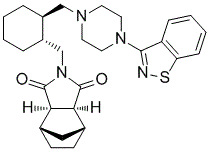
Lurasidone

别名: trade name Latuda; SM 13496; Lurasidone; 367514-87-2; lurasidona; (3aR,4S,7R,7aS)-2-((1R,2R)-2-(4-(1,2-Benzothiazol-3-yl)piperazin-1-ylmethyl)cyclohexylmethyl)hexahydro-4,7-methano-2H-isoindole-1,3-dione; lurasidonum; UNII-22IC88528T; CHEBI:70735; HSDB 8228; SM-13496; SM13496 鲁拉西酮;卢拉西酮;鲁拉西酮LURASIDONE;盐酸鲁拉西酮API;鲁拉西酮(仅供中间体);鲁拉西;鲁拉西酮杂质;盐酸鲁拉西酮
目录号: V23782 纯度: ≥98%
Lurasidone (SM13496; SM-13496; Latuda) 是一种非典型抗精神病药物,被批准用于治疗精神分裂症和双相情感障碍。
Lurasidone CAS号: 367514-87-2
产品类别: 5-HT Receptor
产品仅用于科学研究,不针对患者销售
规格 价格 库存 数量
100mg
1g
5g
25g
Other Sizes

Other Forms of Lurasidone:

  • Lurasidone metabolite 14326 hydrochloride (lurasidone hydrochloride)
  • 罗拉西酮盐酸盐
  • Lurasidone-d8
  • 鲁拉西酮缓解期代谢物14326
点击了解更多
InvivoChem产品被CNS等顶刊论文引用
产品描述
Lurasidone(SM13496;SM-13496;Latuda)是一种非典型抗精神病药物,被批准用于治疗精神分裂症和双相情感障碍。它通过有效抑制多巴胺 D2、5-HT2A、5-HT7、5-HT1A 和去甲肾上腺素 α2C 发挥作用,IC50 分别为 1.68 nM、2.03 nM、0.495 nM、6.75 nM 和 10.8 nM。
生物活性&实验参考方法
靶点
5-HT2A ( Ki = 0.5 nM ); 5-HT7 receptor ( Ki = 0.5 nM ); D2 receptor ( Ki = 1 nM ); 5-HT1A receptor ( Ki = 6.4 nM )
体外研究 (In Vitro)
Lurasidone (SM-13496) 是多巴胺 D2 和 5-HT7 的拮抗剂,IC50 分别为 1.68±0.09 和 0.495±0.090 nM。 Lurasidone (SM-13496) 也是 5-HT1A 受体的部分激动剂,IC50 为 6.75±0.97 nM。体外受体结合实验表明 Lurasidone (SM-13496) 对多巴胺 D2 和 5-HT2A 受体的亲和力高于其他测试的抗精神病药物。 Lurasidone (SM-13496) 本身不会增加 [35S]GTPγS 与多巴胺 D2 受体膜制剂的结合,但它以浓度依赖性方式拮抗多巴胺刺激的 [35S]GTPγS 结合,KB 值为 2.8±1.1纳米[1]。
体外活性:Lurasidone 以浓度依赖性方式拮抗多巴胺刺激的 [35S]GTPγS 与人多巴胺 D2L 受体的结合,KB 值为 2.8 nM。 Lurasidone 拮抗 CHO/h5-HT7 细胞中 5-HT 刺激的 cAMP 积累,KB 值为 2.6 nM。 Lurasidone 部分刺激 [35S]GTPγS 与人 5-HT1A 受体膜制剂的结合,最大效果为 33%。 Lurasidone 剂量依赖性地增加大鼠额叶皮层和纹状体中 DOPAC/多巴胺的比率。
为了研究伊洛哌酮和卢拉西酮是否影响CYP酶的活性,用不同浓度的神经抑制剂进行了探针反应测定。Dixon的CYP特异性底物代谢图,在人类肝微粒体和超体CYP1A2、CYP2D6、CYP2C9、CYP2C19和CYP3A4中进行,在没有或有测试的神经抑制剂的情况下,表明所检查的神经抑制剂对不同的CYP酶具有抑制作用。然而,它们抑制特定CYP酶的效力是不同的。Iloperidone对CYP3A4的活性有很强的抑制作用(Ki = 0.38 肝微粒体和超体分别为0.3µM)和CYP2D6(Ki = 2.9 在肝微粒体和超体中分别为10µM)。此外,伊洛哌酮减弱了CYP2C19的活性(Ki = 6.5 肝微粒体和超体分别为32µM)和CYP1A2(Ki = 45 肝微粒体和超体分别为31µM)。Iloperidone不影响CYP2C9的活性。相比之下,鲁拉西酮适度抑制CYP1A2(Ki = 12.6 肝微粒体和超体分别为15.5µM)、CYP2C9(Ki = 18 肝微粒体和超体分别为3.5µM)、CYP2C19(Ki = 18 肝微粒体和超体分别为18.4µM)和CYP3A4(Ki = 29.4 肝微粒体和超体分别为9.1µM)。鲁拉西酮弱抑制CYP2D6的活性(Ki = 37.5 肝微粒体和超体分别为85µM)。[3]
Lineweaver–Burk的酶抑制动力学图表明,在人肝微粒体和超体中,伊洛哌酮通过非竞争机制抑制CYP3A4的活性,通过竞争机制抑制CY2D6,通过混合机制抑制CYP1A2和CYP2C19的活性(插入图1、3、4、5)。另一方面,鲁拉西酮通过混合机制抑制CYP1A2、CYP2C9和CYP2C19的活性,通过竞争机制抑制CYP3A4和CYP2D6的活性(插入图1、2、3、4、5。表1[1]总结了伊洛哌酮和鲁拉西酮抑制主要人类CYP酶活性的Ki值和机制。
体内研究 (In Vivo)
Lurasidone (SM-13496) 剂量依赖性地增加额叶皮层和纹状体中 DOPAC/多巴胺的比率,但与纹状体相比,它对额叶皮层显示出优先作用,尤其是在较高剂量时。 Lurasidone (SM-13496)(ED50 值 2.3 至 5.0 mg/kg)与奥氮平(ED50 值 1.1 至 5.1 mg/kg)具有相当的效力,比氯氮平(ED50 9.5 至 290 mg/kg)效力更高,并且略低效力高于氟哌啶醇(ED50 值为 0.44 至 1.7 mg/kg)。 Lurasidone (SM-13496) (1 to 10 mg/kg) 剂量依赖性地抑制大鼠条件性回避反应 (CAR),ED50 值为 6.3 mg/kg。 Lurasidone (SM-13496) 剂量依赖性地抑制色胺 (TRY) 诱导的前爪阵挛性癫痫发作和对氯苯丙胺 (p-CAMP) 诱导的高热,ED50 值分别为 5.6 和 3.0 mg/kg。 Lurasidone (SM-13496) (0.3 至 30 mg/kg) 剂量依赖性地显着增加大鼠在 MED 为 10 mg/kg 的冲突测试中受到的电击次数 (p<0.01)[1]。
鲁拉西酮对MAP诱发的多动症的抑制作用持续8小时以上,治疗后1小时、2小时、4小时、8小时的ED50值分别为2.3mg/kg、0.87mg/kg 、 1.6 mg/kg 和 5.0 mg/kg 分别。 Lurasidone (1 mg/kg–10 mg/kg) 剂量依赖性地抑制大鼠的条件性回避反应,ED50 为 6.3 mg/kg。 Lurasidone 剂量依赖性地抑制大鼠中 TRY 诱导的前爪阵挛性癫痫发作和 p-CAMP 诱导的高热,ED50 分别为 5.6 mg/kg 和 3.0 mg/kg。 Lurasidone (0.3 mg/kg–30 mg/kg) 具有剂量依赖性,并且在 MED 为 10 mg/kg 的 Vogels 冲突试验中显着增加大鼠受到的电击次数。 Lurasidone(3 mg/kg,2 周)显着抑制嗅球切除模型大鼠的多动行为。 Lurasidone (700 mg/kg–1000 mg/kg) 以剂量依赖性方式稍微延长小鼠由六巴比妥(麻醉)引起的翻正反射丧失的持续时间。 Lurasidone(30 mg/kg,口服)可显着且剂量依赖性地逆转 MK-801 诱导的大鼠被动回避反应损伤。 Lurasidone (3 mg/kg po) 可有效逆转 Morris 水迷宫测试中 MK-801 诱导的大鼠学习障碍。 Lurasidone (3 mg/kg po) 可有效逆转 MK-801 诱导的参考记忆损伤,并在径向臂迷宫测试中适度但不显着减轻 MK-801 诱导的工作记忆损伤。 Lurasidone (10 mg/kg) 治疗会增加大鼠前额皮质中的 BDNF mRNA 总水平,并在较小程度上增加海马中的 BDNF mRNA 水平。 Lurasidone (10 mg/kg) 显着增加大鼠前额皮质中成熟 BDNF 蛋白的水平,而不影响海马提取物中神经营养蛋白(前体和成熟形式)的蛋白水平。[1]
鲁拉西酮(SM-13496)是一种新型非典型抗精神病药物,对多巴胺D2、血清素5-HT7、5-HT2A、5-HT1A受体和α2C肾上腺素受体具有高度亲和力。本研究评估了鲁拉西酮对大鼠被动回避反应的影响,以及N-甲基-d-天冬氨酸(NMDA)受体拮抗剂MK-801(地佐西平)对其的损伤,并将其与其他抗精神病药物进行了比较。在动物接受足部电击训练后1天,通过测量跨步潜伏期来检查被动回避反应。在训练课前给药时,鲁拉西酮在任何测试剂量(1-30mg/kg,口服)下都不影响被动回避反应。然而,所有其他接受检查的非典型抗精神病药物(即利培酮、奥氮平、喹硫平、氯氮平和阿立哌唑)在相对较高的剂量下显著降低了逐步潜伏期。训练前给予鲁拉西酮可显著且剂量依赖性地逆转MK-801诱导的被动回避反应损伤。在低于影响被动回避反应的剂量下,利培酮、喹硫平和氯氮平部分减轻了MK-801诱导的损伤,而氟哌啶醇、奥氮平和阿立哌唑则没有活性。此外,鲁拉西酮的训练后给药在对抗MK-801效应方面与训练前给药一样有效,这表明鲁拉西酮至少在一定程度上是通过恢复MK-801中断的记忆巩固过程起作用的。这些结果表明,鲁拉西酮在改善MK-801诱导的记忆障碍方面优于其他抗精神病药物,可能在临床上可用于治疗精神分裂症的认知障碍。[2]
酶活实验
体外受体结合谱[1]
如表2所示,体外受体结合实验表明,鲁拉西酮对多巴胺D2和5-HT2A受体的亲和力高于其他测试的抗精神病药物。与其他药物相比,鲁拉西酮对5-HT7、5-HT1A和去甲肾上腺素α2C受体也表现出高亲和力(Ki值分别为0.495、6.75和10.8 nM)。 鲁拉西酮对去甲肾上腺素能α1和α2A受体的亲和力较低(Ki值分别为47.9和40.7 nM),亲和力可以忽略不计。..
CYP酶活性的测定[3]
为了研究伊洛哌酮和鲁拉西酮对各种CYP亚型活性的抑制作用,使用了混合的人肝微粒体和表达人CYP(超体)的杆状病毒感染昆虫细胞的微粒体。根据之前描述的方法,应用了以下探针反应:CYP1A2的咖啡因3-N-去甲基化(咖啡因200、400和800µM),CYP2C9的双氯芬酸4′-羟基化(双氯芬酸5、10、25µM);CYP2C19的哌嗪N-去甲基性(哌嗪50、100、200µM)。CYP2C9、2C19和3A4的孵育系统含有:50 mM TRIS/KCL缓冲液(pH = 7.4),NADPH生成系统(1 mM NADP、5 mM葡萄糖6-磷酸、1.7 U/ml葡萄糖6-磷酸脱氢酶、1 mM EDTA和3 mM MgCl2)。CYP1A2的孵育混合物包括:0.15 M磷酸盐缓冲液(pH = 7.4) CYP2D6:0.1 M TRIS/KCL缓冲液(pH = 7.4),NADPH生成系统(1.3 mM NADP、3.3 mM葡萄糖6-磷酸、1 U/ml葡萄糖6-磷酸脱氢酶和3.3 mM MgCl2)。加入适当浓度的人肝微粒体(每次反应0.5 mg/ml)或超体(50 pmol CYP/ml),在有或没有神经抑制剂的情况下加入不同浓度的探针底物(浓度:0.1、0.5、1、5、10µM),反应混合物的最终体积为0.5 ml。超体的孵育时间为30分钟(每次反应),肝微粒体孵育时间:30分钟(双氯芬酸4′-羟基化和丁咯洛尔1′-羟基化成),20分钟(哌嗪N-去甲基化和睾酮6β-羟基化)或50分钟(咖啡因3-N-去甲基化成)。反应停止后,如前所述,通过HPLC法结合紫外检测(或CYP2D6的荧光检测)评估肝微粒体或超体中形成的特定底物及其代谢产物的浓度。
动力学参数、Ki值和抑制机制的测定[3]
使用Michaelis-Menten方法和非线性回归分析获得了描述肝微粒体或超体中CYP特异性反应过程的动力学参数(Km、Vmax、Ki)。伊洛哌酮和鲁拉西酮对CYP酶的抑制作用如Dixon图(1/V对I)所示,显示Ki值,Lineweaver–Burk图(1/V对1/s)显示了抑制机制(竞争性抑制增加了Km值,不影响Vmax值;非竞争性抑制降低了Vmax值,但不影响Km值;混合抑制导致Km和Vmax值分别发生变化)。
动物实验
Methamphetamine (MAP) (1 mg/kg i.p.) is injected into each individual SD rat in a clear plastic cage one hour after the drugs or vehicle are administered. Lurasidone (SM-13496) is given 1, 2, 4, and 8 hours prior to the MAP injection in order to test the effect's persistence. Following a 10-minute MAP injection, locomotor activity is monitored for 80 minutes. The ED50 value, which inhibits MAP-induced hyperactivity by 50% of the animals tested, is determined using four or five groups of six to thirteen rats[1].
Lurasidone hydrochloride, haloperidol, olanzapine, aripiprazole, risperidone, quetiapine hemifumarate, and clozapine were prepared. The previously reported anti-dopamine ED50 values (mg/kg, p.o.) were used to adjust the test dosage of each antipsychotic drug to a level expected to block dopamine D2 receptors in vivo, i.e., 1–30 mg/kg p.o. for Lurasidone and quetiapine; 0.3 and 1 mg/kg p.o. for haloperidol; 0.3–3 mg/kg for risperidone; 0.3–10 mg/kg for olanzapine and aripiprazole; and 0.3–30 mg/kg p.o. for clozapine (Hirose et al., 2004, Migler et al., 1993, Moore et al., 1992, Sakamoto et al., 1997). All the antipsychotic drugs were dissolved or suspended in 0.5% methylcellulose (MC) as the vehicle, and orally administered at a volume of 5 ml/kg. In the cases in which Lurasidone was injected intravenously, the drug was dissolved in 25% polyethylene glycol, and injected at 1 ml/kg into the tail vein. In this case, anti-dopaminergic doses of 0.1 and 0.3 mg/kg, which effectively antagonize methamphetamine-induced hyperactivity in rats (data not shown), were used. (+)-MK-801 hydrogen maleate was dissolved in saline and injected subcutaneously at a volume of 5 ml/kg. All the test drugs and MK-801 were prepared on the day of the experiment. All other agents were obtained from commercial sources.[2]

We performed 3 sets of studies as described below.
Study 1:
As previously reported for clozapine and olanzapine (Ninan and Kulkarni, 1996, Rasmussen et al., 2001), some antipsychotic drugs may impair passive-avoidance learning when administered alone before the training session. Therefore, we first investigated the effects of Lurasidone and other antipsychotic drugs on the acquisition of the passive-avoidance response, when administered alone without giving MK-801. Antipsychotic drugs or the vehicle MC was administered orally 1 h before the passive-avoidance training. Ten to 15 rats per dose group were used. The data from this study were used to determine dosages of antipsychotic drugs that did not impair the passive-avoidance response.

Study 2:
We next examined the effect of Lurasidone on MK-801-induced deficits in the passive-avoidance response and compared the results with those of the other antipsychotic drugs. A pre-training injection of MK-801 is known to induce state-dependency in some of the context-dependent responses such as the passive avoidance in rats, which apparently impairs the retrieval of acquired response unless a pre-test injection of MK-801 is also given to rats (Harrod et al., 2001, Jackson et al., 1992, Schmidt et al., 1999). In this study, therefore, we gave both pre-training and pre-test injections of MK-801 to avoid the state-dependent influence with MK-801, according to the procedures as previously used in the passive-avoidance test (Harrod et al., 2001, Nakagawa and Iwasaki, 1996). In addition, a relatively low dose of MK-801 (0.05 mg/kg, s.c.) that reportedly does not affect motor functions and the passive-avoidance retrieval with the pre-test injection (Nakagawa and Iwasaki, 1996, Venable and Kelly, 1990) was employed. The antipsychotic drugs were administered 1 h before the training session at doses that did not impair the passive-avoidance response in Study 1. Twenty to 25 rats per dose group were used.

Study 3:
To investigate the interaction of Lurasidone with MK-801 specifically in the memory consolidation process of acquiring the passive-avoidance response (McGaugh, 1973, McGaugh, 2000), lurasidone was injected intravenously, 10 min after the animals received the foot-shock training and were returned to their home cages. MK-801 was given as described for Study 2. Fifteen animals per dose group were used.
药代性质 (ADME/PK)
Absorption, Distribution and Excretion
Lurasidone is readily absorbed and rapidly reaches its peak concentration (Cmax) within 1–4 hours. When taken with food, drug exposure doubles, and the time to reach peak concentration is prolonged by 0.5–1.5 hours. This is independent of the fat or caloric content of the food. Bioavailability is 9–19%. Urine (approximately 9%) and feces (approximately 80%) 6173 L 3902 mL/min Following a single dose of radiolabeled lurasidone, approximately 80% and 9% of the dose are excreted in feces and urine, respectively. After oral administration, lurasidone is rapidly absorbed and reaches peak serum concentrations within approximately 1–3 hours. The orally absorbed dose is approximately 9–19% of the administered dose. Steady-state drug concentrations are reached within 7 days.
Metabolisms/Metabolites
Lurasidone is metabolized by CYP3A4, with its major active metabolite being ID-14283 (accounting for 25% of parental exposure). Its two minor metabolites are ID-14326 and ID-11614, accounting for 3% and 1% of parental exposure, respectively. Its two inactive metabolites are ID-20219 and ID-20220.
Lurasidone has a high binding rate (99.8%) to serum proteins (including albumin and α1-acid glycoprotein). The drug is primarily metabolized via CYP3A4. The main biotransformation pathways include oxidative N-dealkylation, hydroxylation of the norbornene ring, and S-oxidation. Lurasidone is metabolized into two active metabolites (ID-14283 and ID-14326) and two major inactive metabolites (ID-20219 and ID-20220).
Biological half-life
40 mg dose = 18 hours; 120 mg - 160 mg dose = 29-37 hours
毒性/毒理 (Toxicokinetics/TK)
Toxicity Summary
Indications and Uses: Lurasidone is indicated for the treatment of schizophrenia, as a monotherapy for major depressive episodes associated with bipolar I disorder (bipolar depression), and in combination with lithium or valproate for the treatment of major depressive episodes associated with bipolar I disorder (bipolar depression). Human Exposure and Toxicity: In placebo-controlled studies, an increased incidence of cerebrovascular adverse events (cerebrovascular accidents and transient ischemic attacks), including death, was observed in elderly patients with dementia-related psychosis treated with certain atypical antipsychotics (aripiprazole, olanzapine, risperidone). The manufacturer states that lurasidone is not approved for the treatment of dementia-related psychosis. Neuropressor Malignant Syndrome (NMS): This is a potentially fatal syndrome requiring immediate discontinuation of the drug and intensive symptomatic treatment. This syndrome has been reported in patients taking antipsychotics (including lurasidone). Reports of rash and pruritus are common in patients taking lurasidone, while reports of angioedema are rare. In patients receiving lurasidone for schizophrenia, adverse reactions occurring at a rate ≥5% and at least twice the rate in the placebo group included somnolence (including narcolepsy, somnolence, and sedation), akathisia, nausea, Parkinson's syndrome, and agitation. Aakathisia and somnolence appear to be dose-related adverse reactions. The effects of lurasidone on childbirth are unknown. It is currently unknown whether lurasidone and/or its metabolites are excreted into human breast milk. In elderly patients aged 65–85 years with psychosis, serum lurasidone concentrations were similar to those in younger adults. Elderly patients with dementia-related psychosis receiving lurasidone had an increased risk of death compared to the placebo group. The safety and efficacy of lurasidone in children and adolescents have not been established. Animal studies: In female rats, oral administration of lurasidone at 12 and 36 mg/kg/day increased the incidence of breast cancer: the lowest dose of 3 mg/kg/day produced plasma concentrations (AUC) 0.4 times that of humans receiving the maximum recommended human dose (MRHD). In male rats, no tumor growth was observed up to the highest tested dose, which produced plasma concentrations (AUC) six times higher than those in humans receiving the maximum recommended human dose (MRHD). Lurasidone is distributed into the milk of rats. Oral administration of lurasidone to rats for 15 consecutive days before mating, during mating, and before day 7 of gestation resulted in estrous cycle disturbances. The no-effect dose was 0.1 mg/kg, approximately 0.006 times the MRHD (maximum recommended human dose) of 160 mg/day based on body surface area. Decreased fertility was observed only at the highest dose, and fertility returned to normal 14 days after discontinuation. The no-effect dose leading to decreased fertility was 15 mg/kg, approximately the MRHD based on body surface area. In male rats, oral administration of lurasidone for 64 consecutive days before and during mating at doses up to 150 mg/kg/day (9 times the MRHD based on mg/m² body surface area) did not affect fertility. The drug did not induce mutations or chromosomal aberrations in in vitro or in vivo studies. In the Ames gene mutation assay, Chinese hamster lung (CHL) cell assay, and in vivo mouse bone marrow micronucleus assay, results were negative at doses up to 2000 mg/kg (equivalent to 61 times the maximum recommended human daily dose of 160 mg based on mg/m² body surface area). Interactions Lurasidone is not a substrate for CYP1A2 in vitro; therefore, smoking should not alter the pharmacokinetics of this drug. Concomitant administration of the potent CYP3A4 inducer rifampin (600 mg daily for 8 days) and lurasidone (40 mg single dose) reduced serum peak lurasidone concentration and AUC by approximately 86% and 80%, respectively. Rifampin should not be taken concurrently with lurasidone.
When lurasidone (steady-state dose 40 mg daily) is taken concurrently with oral contraceptives containing ethinylestradiol and norgestrel, the peak plasma concentrations and AUC values of ethinylestradiol and norgestrel are comparable compared to oral contraceptives taken alone. Sex hormone-binding globulin concentrations are also not significantly affected by concurrent administration. Patients taking lurasidone concurrently do not need to adjust their oral contraceptive dosage.
When lurasidone (steady-state dose 120 mg daily) is taken concurrently with a single 5 mg dose of midazolam (CYP3A4 substrate), the peak plasma concentration and AUC value of midazolam may increase by approximately 21% and 44%, respectively. Patients taking lurasidone concurrently do not need to adjust their midazolam dosage.
For more complete data on drug interactions of lurasidone (out of 11), please visit the HSDB record page.
Hepatotoxicity
Liver function abnormalities occur in 1% to 3% of patients taking lurasidone long-term, but the incidence is similar in placebo and control patients. Elevations in ALT are usually mild and transient, and often resolve spontaneously even without dose adjustment or discontinuation. There are currently no published reports of clinically significant liver injury (with symptoms or jaundice) caused by lurasidone treatment. Probability score: E (unlikely to be the cause of clinically significant liver injury).
Use during pregnancy and lactation
◉ Overview of use during lactation
Lurasidone binds to plasma proteins at a rate exceeding 99%, making it unlikely to be excreted in breast milk in an amount sufficient to affect breastfed infants. Data from a mother-infant pair appear to support low excretion of the drug in breast milk and no effect on breastfed infants. Until more data are available, alternative medications may be preferred, especially in breastfed newborns or preterm infants.
◉ Effects on Breastfed Infants
A woman with depressive schizoaffective disorder took 40 mg of lurasidone nightly and 50 mg of desvenlafaxine daily postpartum. She exclusively breastfed her infant. During a 39-day follow-up period, the infant's growth and development were good.
Patients taking second-generation antipsychotics while breastfeeding (n = 576) registered in the National Atypical Antipsychotic Pregnancy Registry were compared with a breastfeeding control group (n = 818) not taking second-generation antipsychotics. Among patients taking second-generation antipsychotics, 60.4% were concurrently taking more than one psychotropic medication. A review of pediatric records showed no adverse reactions regardless of whether the infant had received second-generation antipsychotic monotherapy or combination therapy. The number of women taking lurasidone was not reported.
◉ Effects on Lactation and Breast Milk
Elevated serum prolactin levels are generally uncommon and less pronounced with risperidone. One woman who experienced elevated serum prolactin levels, breast engorgement, and galactorrhea while taking risperidone experienced symptom improvement after switching to lurasidone; these side effects completely disappeared when the lurasidone dose was increased from 20 mg to 40 mg daily. For established lactating mothers, prolactin levels may not affect their ability to breastfeed.
This study compared lactating patients on second-generation antipsychotics registered with the National Atypical Antipsychotic Pregnancy Registry (n = 576) with a control group of lactating patients with a primary diagnosis of major depressive disorder and anxiety disorder (n = 818). The control group of lactating patients typically received selective serotonin reuptake inhibitors (SSRIs) or selective serotonin and norepinephrine reuptake inhibitors (SNRIs) but did not use second-generation antipsychotics. Among women taking second-generation antipsychotics, 60.4% were also taking multiple antipsychotics, compared to 24.4% in the control group. 59.3% of women taking second-generation antipsychotics reported breastfeeding, compared to 88.2% in the control group. At 3 months postpartum, 23% of women taking second-generation antipsychotics were exclusively breastfeeding, compared to 47% in the control group. No reports were found regarding the number of women taking lurasidone. A 14-year-old girl with hallucinogenic schizophrenia, initially treated with aripiprazole but with poor efficacy, was switched to paliperidone. At age 16, she transitioned from paliperidone to lurasidone, at which point her serum prolactin level rose to 4240 mIU/L (normal range 60-400 mIU/L). As the lurasidone dose was gradually increased to a maximum daily dose of 111 mg, prolactin levels continued to rise, and the patient experienced breast engorgement and galactorrhea. Six out of seven serum prolactin tests showed results ranging from 4240 to 6140 mIU/L. Her serum prolactin levels returned to normal after discontinuing lurasidone.
An Italian study showed that 2.4% of patients treated with lurasidone for schizophrenia experienced hyperprolactinemia and galactorrhea.
Drugs & Lactation Database (LactMed)
◈ What is lurasidone?
Lurasidone is an antipsychotic medication used to treat schizophrenia and bipolar disorder. Its brand name is Latuda®. Sometimes, when people find out they are pregnant, they consider changing their medication regimen or even stopping it entirely. However, it is essential to talk to your healthcare provider before changing your medication regimen. Your healthcare provider can discuss with you the benefits of treating your condition and the risks of not treating the condition during pregnancy.
◈ I take lurasidone. Will taking lurasidone affect pregnancy?
There are currently no human studies confirming that lurasidone affects pregnancy.
◈ Does taking lurasidone increase the risk of miscarriage?
Miscarriage can occur in any pregnancy. There are currently no studies confirming that lurasidone increases the risk of miscarriage.
◈ Does taking lurasidone increase the risk of birth defects?
There is a 3-5% risk of birth defects in every pregnancy, known as background risk. Information on lurasidone use during pregnancy is limited. In animal studies in rats and rabbits, no increased risk of birth defects was found. In one case report of lurasidone use during pregnancy, the infant was born healthy with no birth defects. A study of 134 women who took lurasidone during pregnancy found no specific pattern of birth defects.
◈ Does taking lurasidone during pregnancy increase the risk of other pregnancy-related problems?
There are currently no studies suggesting that taking lurasidone during pregnancy increases the risk of pregnancy-related problems such as preterm birth (delivery before 37 weeks of gestation) or low birth weight (birth weight less than 2500 grams).
◈ I need to take lurasidone throughout my pregnancy. Will it cause symptoms in my baby after birth?
The FDA product label states that newborns exposed to antipsychotic drugs in late pregnancy may experience symptoms. These symptoms may include involuntary muscle movements, changes in muscle tone, lethargy, difficulty breathing, and/or feeding difficulties. Not all infants exposed to antipsychotic drugs during pregnancy will experience these symptoms. These symptoms may be temporary and resolve on their own. Symptomatic treatment can be started if necessary. There are currently no reports of these symptoms occurring during lurasidone use in pregnancy. Information on lurasidone use during pregnancy is very limited, making it difficult to determine whether these symptoms will occur. If you are taking lurasidone, inform your healthcare provider before delivery. Symptom monitoring of the infant may be necessary.
◈ Will taking lurasidone during pregnancy affect my child's future behavior or learning?
There is currently no research indicating whether taking lurasidone during pregnancy will cause behavioral or learning problems in children.
◈ Breastfeeding while taking lurasidone:
Information regarding the use of lurasidone while breastfeeding is limited. One report shows a woman taking lurasidone while breastfeeding. No adverse reactions were observed in the breastfed infant. The benefits of taking lurasidone likely outweigh the potential risks. Your healthcare provider can discuss the use of lurasidone with you and the treatment option best suited to you. Be sure to consult your healthcare provider about all your questions regarding breastfeeding.
◈ Does taking lurasidone affect fertility (the ability to impregnate a partner) or increase the risk of birth defects?
No human studies have been conducted to determine whether lurasidone affects fertility or increases the risk of birth defects (above background risk). Generally, exposure to the drug by the father or sperm donor is unlikely to increase the risk of pregnancy. For more information, see the “Paternal Exposure to Drugs” information sheet on the MotherToBaby website: https://mothertobaby.org/fact-sheets/paternal-exposures-pregnancy/.
参考文献

[1]. Pharmacological profile of lurasidone, a novel antipsychotic agent with potent 5-hydroxytryptamine 7 (5-HT7) and 5-HT1A receptor activity. J Pharmacol Exp Ther. 2010 Jul;334(1):171-81.

[2]. Lurasidone (SM-13496), a novel atypical antipsychotic drug, reverses MK-801-induced impairment of learning and memory in the rat passive-avoidance test. Eur J Pharmacol. 2007 Oct 31;572(2-3):160-70.

[3]. The atypical neuroleptics iloperidone and lurasidone inhibit human cytochrome P450 enzymes in vitro. Evaluation of potential metabolic interactions. Pharmacol Rep. 2020 Dec;72(6):1685-1694.

[4]. Development of a validated high-performance liquid chromatographic method for the determination of Lurasidone in pharmaceuticals. Marmara Pharm J. 2017;21 (4): 931-937.

其他信息
Lurasidone is an N-arylpiperazine compound with the chemical name (3aR,4S,7R,7aS)-2-{[(1R,2R)-2-(piperazin-1-ylmethyl)cyclohexyl]methyl}hexahydro-1H-4,7-methyleneisoindole-1,3(2H)-dione, wherein the N4 position of the piperazine ring is substituted with a 1,2-benzothiazol-3-yl group. Lurasidone (usually in hydrochloride form) is used as an atypical antipsychotic for the treatment of schizophrenia. It has the effects of an adrenergic antagonist, dopaminergic antagonist, serotonergic antagonist, and second-generation antipsychotic. It is a 1,2-benzoisothiazolium compound, an N-arylpiperazine compound, a bridging compound, and a dicarboxyimide compound. It is functionally related to maleimide. It is the conjugate base of lurasidone (1+). Lurasidone is an atypical antipsychotic developed by Sumitomo Pharmaceuticals, Ltd. of Dai Nippon. It was approved by the U.S. Food and Drug Administration (FDA) on October 29, 2010, for the treatment of schizophrenia and is currently awaiting U.S. approval for the treatment of bipolar disorder. Lurasidone is an atypical antipsychotic. Lurasidone is a second-generation (atypical) antipsychotic used to treat schizophrenia and bipolar depression. The incidence of elevated serum transaminases during lurasidone treatment is low, but no clinically significant cases of acute liver injury have been found. It is a thiazole derivative, an atypical antipsychotic whose mechanism of action is as a dopamine D2 receptor antagonist; a serotonin type 2 receptor antagonist, a serotonin type 7 receptor antagonist, an adrenergic α2A and α2C receptor antagonist, and a partial serotonin type 1A receptor agonist. It is used to treat schizophrenia and bipolar disorder. See also: Lurasidone hydrochloride (in salt form). Drug Indications Lurasidone is indicated for the treatment of schizophrenia in patients aged 13 years and older. It may also be used as monotherapy for bipolar depression in patients aged 10 years and older, or in combination with lithium or valproate for the treatment of bipolar depression in adults. For the treatment of schizophrenia in adults aged 18 years and older. Mechanism of Action Lurasidone is an atypical antipsychotic that improves cognitive function by antagonizing D2 and 5-HT2A receptors (mixed serotonin and dopamine activity). Antagonism of serotonin receptors is thought to improve negative symptoms of psychosis and reduce extrapyramidal side effects typically associated with typical antipsychotics. Lurasidone is a benzisothiazol derivative antipsychotic, also known as an atypical or second-generation antipsychotic. Lurasidone is also described as an azaspirone derivative. Although the exact mechanism of action of lurasidone and other antipsychotic drugs in treating schizophrenia is not fully understood, studies suggest that lurasidone's efficacy is achieved through the combined antagonism of central dopamine type 2 (D2) and serotonin type 2 (5-HT2A) receptors. Lurasidone is an antagonist with high affinity for D2, 5-HT2A, and 5-HT7 receptors in vitro, and moderate affinity for α2C adrenergic receptors. In vitro, it exhibits partial agonist activity against 5-HT1A receptors and antagonist activity against α2A adrenergic receptors. Lurasidone has a weak affinity for α1-adrenergic receptors and very low or no affinity for histamine (H1) and muscarinic (M1) receptors.
Therapeutic Use
Lurasidone (Latuda) is indicated for the treatment of patients with schizophrenia.
/US Product Label Includes/
Lurasidone (Latuda) can be used as monotherapy for the treatment of patients with major depressive episodes of bipolar I disorder (bipolar depression). /US Product Label Includes/
Lurasidone (Latuda) can be used in combination with lithium or valproate as adjunctive therapy for the treatment of patients with major depressive episodes of bipolar I disorder (bipolar depression). /US Product Label Includes/
The efficacy of lurasidone (Latuda) in treating manic bipolar disorder has not been established.
The efficacy of long-term use of lurasidone (Latuda) (i.e., longer than 6 weeks) has not been confirmed in controlled studies.Therefore, physicians choosing long-term use of Latuda should periodically reassess the long-term efficacy of the drug for patients.
Drug Warning
/Black Box Warning/ Warning: Increased mortality in patients with dementia-related psychosis; and suicidal ideation and behavior. Patients with dementia-related psychosis receiving antipsychotic medication have an increased risk of death. Latuda is not approved for the treatment of dementia-related psychosis. Short-term studies have shown that antidepressants increase the risk of suicidal ideation and behavior in children, adolescents, and young adults. These studies did not show an increased risk of suicidal ideation and behavior in patients over 24 years of age; however, the risk was reduced in patients 65 years of age and older. Patients of all ages starting antidepressant treatment should be closely monitored for worsening of their condition and for the occurrence of suicidal ideation and behavior. Family members and caregivers should be informed of the need for close monitoring of the patient's condition and communication with the prescribing physician.
Contraindications: Known hypersensitivity to lurasidone hydrochloride or any component of its preparations. Angioedema has been reported. Concomitant use of potent cytochrome P-450 (CYP) isoenzyme 3A4 (CYP3A4) inhibitors (e.g., ketoconazole) or potent CYP3A4 inducers (e.g., rifampin).
The risk of death appears to be increased in older patients with dementia-related psychosis receiving antipsychotic treatment. An analysis of 17 placebo-controlled trials (mean duration 10 weeks) showed that mortality rates in older patients treated with atypical antipsychotics (e.g., aripiprazole, olanzapine, quetiapine, risperidone) were approximately 1.6 to 1.7 times higher than in the placebo group. In typical 10-week controlled trials, mortality rates were approximately 4.5% in the drug treatment group and approximately 2.6% in the placebo group. Although the causes of death varied, most deaths appeared to be related to cardiovascular diseases (e.g., heart failure, sudden death) or infectious diseases (e.g., pneumonia). Observational studies have shown that, similar to atypical antipsychotics, treatment with conventional (first-generation) antipsychotics may also increase mortality; the extent to which the increased mortality observed in observational studies is attributable to the antipsychotics themselves, rather than certain patient characteristics, is currently unclear. The manufacturer states that lurasidone is not approved for the treatment of dementia-related psychosis.
In placebo-controlled studies, an increased incidence of adverse cerebrovascular events (cerebrovascular accidents and transient ischemic attacks), including death, was observed in elderly patients with dementia-related psychosis treated with certain atypical antipsychotics (aripiperazole, olanzapine, risperidone). The manufacturer states that lurasidone is not approved for the treatment of dementia-related psychosis.
For more complete data on drug warnings for lurasidone (27 in total), please visit the HSDB record page.
Pharmacodynamics
Lurasidone is a benzothiazole derivative and an antagonist that binds with high affinity to dopamine-2 (D2) receptors (Ki = 0.994 nM), 5-HT2A (Ki = 0.47 nM) receptors, and 5-HT7 receptors (Ki = 0.495 nM). It also binds with moderate affinity to α-2C adrenergic receptors (Ki = 10.8 nM) and is a partial agonist of 5-HT1A receptors (Ki = 6.38 nM). Its effects on histaminergic and muscarinic receptors are negligible. Lurasidone hydrochloride is the hydrochloride salt prepared by reacting lurasidone with an equivalent amount of hydrochloric acid. It is an atypical antipsychotic used to treat schizophrenia. It has dopaminergic, serotonergic, adrenergic, and second-generation antipsychotic effects. It contains lurasidone (1+). A thiazole derivative, also an atypical antipsychotic, its mechanism of action is as a dopamine D2 receptor antagonist. Serotonin 5-HT2 receptor antagonists, serotonin 5-HT7 receptor antagonists, adrenergic α2A and α2C receptor antagonists, and some serotonin 5-HT1A receptor agonists. It is used to treat schizophrenia and bipolar disorder.
See also: Lurasidone (with the active moiety).
Drug Indications
For the treatment of schizophrenia in adults aged 18 years and older.
Treatment of schizophrenia.
Lurasidone [(3aR,4S,7R,7aS)-2-[(1R,2R)-2-[4-(1,2-benzisothiazol-3-yl)piperazin-1-ylmethyl]cyclohexylmethyl]hexahydro-4,7-methylene-2H-isoindole-1,3-dione hydrochloride; SM-13496] is an azapyrone derivative and a novel antipsychotic candidate. This study aimed to investigate the in vitro and in vivo pharmacological properties of lurasidone. Under similar testing conditions, the receptor binding affinity of lurasidone to several antipsychotic drugs was tested using cloned human receptors or membrane fractions prepared from animal tissues. The results showed that lurasidone exhibited strong binding affinity to dopamine D₂, serotonin 2A (5-HT₂A), 5-HT₇, 5-HT₁A, and norepinephrine α₂C receptors. Its affinity for norepinephrine α₁, α₂A, and 5-HT₂C receptors was weaker, while its affinity for histamine H₁ and muscarinic acetylcholine receptors was negligible. In vitro functional experiments indicated that lurasidone acts as an antagonist on D₂ and 5-HT₇ receptors and as a partial agonist on the 5-HT₁A receptor subtype. Lurasidone exhibits potent antipsychotic activity, such as inhibiting methamphetamine-induced hyperactivity and apomorphine-induced stereotyped behavior in rats, similar to other antipsychotics. In addition, lurasidone has only mild extrapyramidal side effects in rodent models. In animal models of anxiety and depression, lurasidone treatment was associated with significant improvement. Lurasidone has a preferential effect on promoting dopamine metabolism in the frontal cortex (but not the striatum). The anti-α1-norepinephrine, anticholinergic and central nervous system depressant effects of lurasidone are also very weak. These results suggest that lurasidone has antipsychotic activity and similar antidepressant or anti-anxiety effects with a potentially low risk of extrapyramidal and central nervous system depressant side effects. [1]
Background
This study aimed to investigate the inhibitory effects of two atypical antipsychotics, ilopiperidone and lurasidone, on the major human cytochrome P450 (CYP) enzyme in CYP enzymes expressed in mixed human liver microsomes and cDNA (ultramicrosomes).
Methods
High-performance liquid chromatography (HPLC) was used to determine the activities of the following CYP-specific reactions: caffeine 3-N-demethylation/CYP1A2, diclofenac 4′-hydroxylation/CYP2C9, piperazine N-demethylation/CYP2C19, ibuprofen 1′-hydroxylation/CYP2D6, and testosterone 6β-hydroxylation/CYP3A4.
Results
Iloperone inhibited the activity of CYP3A4 via a non-competitive mechanism (Ki = 0.38 and 0.3 µM). Iloperone inhibited CYP1A2 in liver microsomes and ultrasomes (Ki values of 2.9 µM and 10 µM, respectively), and inhibited CYP2D6 via a competitive mechanism (Ki values of 2.9 µM and 10 µM, respectively). Furthermore, ilopiperidone attenuates the activity of CYP1A2 (Ki values of 45 µM and 31 µM in microsomes and ultrasomes, respectively) and CYP2C19 (Ki values of 6.5 µM and 32 µM in microsomes and ultrasomes, respectively) through a mixed mechanism, but has no effect on CYP2C9. Lurasidone exhibits moderate inhibitory activity against CYP1A2 (Ki values of 12.6 and 15.5 µM in microsomes and ultrasomes, respectively), CYP2C9 (Ki values of 18 and 3.5 µM in microsomes and ultrasomes, respectively), and CYP2C19 through a mixed mechanism (Ki values of 18 and 18.4 µM in microsomes and ultrasomes, respectively); it also exhibits competitive inhibition against CYP3A4 (Ki values of 29.4 and 9.1 µM in microsomes and ultrasomes, respectively). In addition, lurasidone also competitively inhibits CYP2D6 activity, but the inhibition is weak (Ki values in microsomes and ultrafine particles are 37.5 and 85 µM, respectively).
Conclusion
The antipsychotic drugs studied showed inhibitory effects on different CYP enzymes. The results indicate that metabolic/pharmacokinetic interactions with ilopiperidone (mainly involving CYP3A4 and CYP2D6) and with lurasidone (involving CYP1A2, CYP2C9, or CYP2C19) may occur during combination therapy. [3]
*注: 文献方法仅供参考, InvivoChem并未独立验证这些方法的准确性
化学信息 & 存储运输条件
分子式
C28H36N4O2S
分子量
492.682
精确质量
492.255
元素分析
C, 68.26; H, 7.37; N, 11.37; O, 6.49; S, 6.51
CAS号
367514-87-2
相关CAS号
Lurasidone Hydrochloride; 367514-88-3; Lurasidone metabolite 14326 hydrochloride; Lurasidone-d8; 1132654-54-6; Lurasidone-d8 hydrochloride; Lurasidone metabolite 14326; 186204-33-1
PubChem CID
213046
外观&性状
White to off-white solid powder
密度
1.3±0.1 g/cm3
沸点
623.4±55.0 °C at 760 mmHg
闪点
330.8±31.5 °C
蒸汽压
0.0±1.8 mmHg at 25°C
折射率
1.637
LogP
4.52
tPSA
84.99
氢键供体(HBD)数目
0
氢键受体(HBA)数目
6
可旋转键数目(RBC)
5
重原子数目
35
分子复杂度/Complexity
804
定义原子立体中心数目
6
SMILES
O=C([C@H]1[C@H]2C[C@H](CC2)[C@@H]31)N(C[C@H](CCCC4)[C@@H]4CN5CCN(CC5)C6=NSC7=CC=CC=C67)C3=O
InChi Key
PQXKDMSYBGKCJA-CVTJIBDQSA-N
InChi Code
InChI=1S/C28H36N4O2S/c33-27-24-18-9-10-19(15-18)25(24)28(34)32(27)17-21-6-2-1-5-20(21)16-30-11-13-31(14-12-30)26-22-7-3-4-8-23(22)35-29-26/h3-4,7-8,18-21,24-25H,1-2,5-6,9-17H2/t18-,19+,20-,21-,24+,25-/m0/s1
化学名
(1S,2R,6S,7R)-4-[[(1R,2R)-2-[[4-(1,2-benzothiazol-3-yl)piperazin-1-yl]methyl]cyclohexyl]methyl]-4-azatricyclo[5.2.1.02,6]decane-3,5-dione
别名
trade name Latuda; SM 13496; Lurasidone; 367514-87-2; lurasidona; (3aR,4S,7R,7aS)-2-((1R,2R)-2-(4-(1,2-Benzothiazol-3-yl)piperazin-1-ylmethyl)cyclohexylmethyl)hexahydro-4,7-methano-2H-isoindole-1,3-dione; lurasidonum; UNII-22IC88528T; CHEBI:70735; HSDB 8228; SM-13496; SM13496
HS Tariff Code
2934.99.9001
存储方式

Powder      -20°C    3 years

                     4°C     2 years

In solvent   -80°C    6 months

                  -20°C    1 month

注意: (1). 本产品在运输和储存过程中需避光。  (2). 该产品在溶液状态不稳定,请现配现用。
运输条件
Room temperature (This product is stable at ambient temperature for a few days during ordinary shipping and time spent in Customs)
溶解度数据
溶解度 (体外实验)
DMSO: 7~20.83 mg/mL (14.2~42.3 mM)
Ethanol: ~3.3 mg/mL (~6.8 mM)
溶解度 (体内实验)
配方 1 中的溶解度: ≥ 2.08 mg/mL (4.22 mM) (饱和度未知) in 10% DMSO + 90% Corn Oil (这些助溶剂从左到右依次添加,逐一添加), 澄清溶液。
例如,若需制备1 mL的工作液,可将100 μL 20.8 mg/mL 澄清 DMSO 储备液加入到 900 μL 玉米油中并混合均匀。

请根据您的实验动物和给药方式选择适当的溶解配方/方案:
1、请先配制澄清的储备液(如:用DMSO配置50 或 100 mg/mL母液(储备液));
2、取适量母液,按从左到右的顺序依次添加助溶剂,澄清后再加入下一助溶剂。以 下列配方为例说明 (注意此配方只用于说明,并不一定代表此产品 的实际溶解配方):
10% DMSO → 40% PEG300 → 5% Tween-80 → 45% ddH2O (或 saline);
假设最终工作液的体积为 1 mL, 浓度为5 mg/mL: 取 100 μL 50 mg/mL 的澄清 DMSO 储备液加到 400 μL PEG300 中,混合均匀/澄清;向上述体系中加入50 μL Tween-80,混合均匀/澄清;然后继续加入450 μL ddH2O (或 saline)定容至 1 mL;

3、溶剂前显示的百分比是指该溶剂在最终溶液/工作液中的体积所占比例;
4、 如产品在配制过程中出现沉淀/析出,可通过加热(≤50℃)或超声的方式助溶;
5、为保证最佳实验结果,工作液请现配现用!
6、如不确定怎么将母液配置成体内动物实验的工作液,请查看说明书或联系我们;
7、 以上所有助溶剂都可在 Invivochem.cn网站购买。
制备储备液 1 mg 5 mg 10 mg
1 mM 2.0297 mL 10.1486 mL 20.2972 mL
5 mM 0.4059 mL 2.0297 mL 4.0594 mL
10 mM 0.2030 mL 1.0149 mL 2.0297 mL

1、根据实验需要选择合适的溶剂配制储备液 (母液):对于大多数产品,InvivoChem推荐用DMSO配置母液 (比如:5、10、20mM或者10、20、50 mg/mL浓度),个别水溶性高的产品可直接溶于水。产品在DMSO 、水或其他溶剂中的具体溶解度详见上”溶解度 (体外)”部分;

2、如果您找不到您想要的溶解度信息,或者很难将产品溶解在溶液中,请联系我们;

3、建议使用下列计算器进行相关计算(摩尔浓度计算器、稀释计算器、分子量计算器、重组计算器等);

4、母液配好之后,将其分装到常规用量,并储存在-20°C或-80°C,尽量减少反复冻融循环。

计算器

摩尔浓度计算器可计算特定溶液所需的质量、体积/浓度,具体如下:

  • 计算制备已知体积和浓度的溶液所需的化合物的质量
  • 计算将已知质量的化合物溶解到所需浓度所需的溶液体积
  • 计算特定体积中已知质量的化合物产生的溶液的浓度
使用摩尔浓度计算器计算摩尔浓度的示例如下所示:
假如化合物的分子量为350.26 g/mol,在5mL DMSO中制备10mM储备液所需的化合物的质量是多少?
  • 在分子量(MW)框中输入350.26
  • 在“浓度”框中输入10,然后选择正确的单位(mM)
  • 在“体积”框中输入5,然后选择正确的单位(mL)
  • 单击“计算”按钮
  • 答案17.513 mg出现在“质量”框中。以类似的方式,您可以计算体积和浓度。

稀释计算器可计算如何稀释已知浓度的储备液。例如,可以输入C1、C2和V2来计算V1,具体如下:

制备25毫升25μM溶液需要多少体积的10 mM储备溶液?
使用方程式C1V1=C2V2,其中C1=10mM,C2=25μM,V2=25 ml,V1未知:
  • 在C1框中输入10,然后选择正确的单位(mM)
  • 在C2框中输入25,然后选择正确的单位(μM)
  • 在V2框中输入25,然后选择正确的单位(mL)
  • 单击“计算”按钮
  • 答案62.5μL(0.1 ml)出现在V1框中
g/mol

分子量计算器可计算化合物的分子量 (摩尔质量)和元素组成,具体如下:

注:化学分子式大小写敏感:C12H18N3O4  c12h18n3o4
计算化合物摩尔质量(分子量)的说明:
  • 要计算化合物的分子量 (摩尔质量),请输入化学/分子式,然后单击“计算”按钮。
分子质量、分子量、摩尔质量和摩尔量的定义:
  • 分子质量(或分子量)是一种物质的一个分子的质量,用统一的原子质量单位(u)表示。(1u等于碳-12中一个原子质量的1/12)
  • 摩尔质量(摩尔重量)是一摩尔物质的质量,以g/mol表示。
/

配液计算器可计算将特定质量的产品配成特定浓度所需的溶剂体积 (配液体积)

  • 输入试剂的质量、所需的配液浓度以及正确的单位
  • 单击“计算”按钮
  • 答案显示在体积框中
动物体内实验配方计算器(澄清溶液)
第一步:请输入基本实验信息(考虑到实验过程中的损耗,建议多配一只动物的药量)
第二步:请输入动物体内配方组成(配方适用于不溶/难溶于水的化合物),不同的产品和批次配方组成不同,如对配方有疑问,可先联系我们提供正确的体内实验配方。此外,请注意这只是一个配方计算器,而不是特定产品的确切配方。
+
+
+

计算结果:

工作液浓度 mg/mL;

DMSO母液配制方法 mg 药物溶于 μL DMSO溶液(母液浓度 mg/mL)。如该浓度超过该批次药物DMSO溶解度,请首先与我们联系。

体内配方配制方法μL DMSO母液,加入 μL PEG300,混匀澄清后加入μL Tween 80,混匀澄清后加入 μL ddH2O,混匀澄清。

(1) 请确保溶液澄清之后,再加入下一种溶剂 (助溶剂) 。可利用涡旋、超声或水浴加热等方法助溶;
            (2) 一定要按顺序加入溶剂 (助溶剂) 。

临床试验信息
A Study to Assess the Safety and Efficacy of ASP4345 as Add-on Treatment for Cognitive Impairment in Subjects With Schizophrenia on Stable Doses of Antipsychotic Medication
CTID: NCT03557931
Phase: Phase 2    Status: Completed
Date: 2024-11-12
Lurasidone Non-Interventional Study in Schizophrenia Patients
CTID: NCT06527885
Phase:    Status: Completed
Date: 2024-08-01
Sequential Multiple Assignment Randomized Trial for Bipolar Depression
CTID: NCT06433635
Phase: Phase 4    Status: Not yet recruiting
Date: 2024-05-30
The Safety and Efficacy of Lurasidone In Subjects With Schizophrenia Switched From Olanzapine
CTID: NCT05213143
Phase: Phase 4    Status: Terminated
Date: 2024-04-19
The Safety and Efficacy of Lurasidone With Different Initiation Dose in Chinese Acute Phase Patients With Schizophrenia
CTID: NCT05011669
Phase: Phase 4    Status: Completed
Date: 2024-04-18
View More

Sleep Quality, Cognitive Performance, and Computerized Cognitive Training
CTID: NCT06328140
Phase:    Status: Not yet recruiting
Date: 2024-03-25


Longitudinal Comparative Effectiveness of Bipolar Disorder Therapies
CTID: NCT02893371
Phase:    Status: Terminated
Date: 2024-03-12
Study of the Efficacy of Lurasidone in Cognitive Functioning in Bipolar Patients
CTID: NCT02731612
Phase: Phase 3    Status: Recruiting
Date: 2023-11-29
18F-DOPA PET to Elucidate the Antidepressant Mechanism of Lurasidone in Bipolar Disorder
CTID: NCT03902613
Phase: Phase 4    Status: Completed
Date: 2023-11-13
Observational Study on the Effect of Switch to Lurasidone in Subjects With Schizophrenia'
CTID: NCT04312503
Phase:    Status: Completed
Date: 2023-05-06
Impact of Structural and Myelin Abnormalities on Cognitive Impairments in Recent-onset Schizophrenia - Before and After Lurasidone Treatment (MARYLU)
CTID: NCT05351736
Phase: Phase 4    Status: Recruiting
Date: 2023-03-17
Chinese Longitudinal and Systematic Study of Bioplar Disorder
CTID: NCT05480150
Phase: N/A    Status: Recruiting
Date: 2022-10-17
An Observational Drug Utilization Study of Asenapine in the United Kingdom (P08308)
CTID: NCT01498770
Phase:    Status: Completed
Date: 2022-02-04
Sequential Therapy for the Treatment of Severe Bipolar Depression.
CTID: NCT02974010
Phase: Phase 2    Status: Completed
Date: 2021-05-25
Lurasidone Effects on Tissue Glutamate in Schizophrenia
CTID: NCT02199743
Phase: Phase 4    Status: Completed
Date: 2021-03-01
Lurasidone Vs Olanzapine on Neurotrophic Biomarkers and Cardiometabolic Parameters in Unmedicated Schizophrenia
CTID: NCT03304457
Phase: Phase 4    Status: Completed
Date: 2020-03-31
A Study of Lurasidone HCl in Subjects With Schizophrenia
CTID: NCT03393026
Phase: Phase 4    Status: Completed
Date: 2020-02-05
A Clinical Trial of Lurasidone in Treatment of Schizophrenia
CTID: NCT02002832
Phase: Phase 3    Status: Completed
Date: 2019-11-15
A Twelve Week, Open Label Extension Study in Patients With Schizophrenia
CTID: NCT01566162
Phase: Phase 3    Status: Completed
Date: 2019-04-09
Pharmacokinetic Study of Lurasidone After Multiple Oral Administration in Healthy Human Subjects
CTID: NCT02174523
Phase: Phase 1    Status: Completed
Date: 2019-04-08
A Pharmacokinetic Study of Lurasidone After Single Oral Administration in Healthy Subjects
CTID: NCT02174510
Phase: Phase 1    Status: Completed
Date: 2019-01-11
Lurasidone Pediatric Bipolar Study
CTID: NCT02046369
Phase: Phase 3    Status: Completed
Date: 2017-12-20
Biosignatures of Latuda for Bipolar Depression
CTID: NCT02239094
Phase: N/A    Status: Completed
Date: 2017-12-12
Pediatric Schizophrenia Efficacy and Safety Study
CTID: NCT01911429
Phase: Phase 3    Status: Completed
Date: 2017-04-18
Lurasidone and Cognition in Bipolar I Disorder
CTID: NCT02147379
Phase: Phase 3    Status: Completed
Date: 2017-02-02
Lurasidone Extended Use Study
CTID: NCT01485640
Phase: Phase 3    Status: Completed
Date: 2016-11-04
TAILOR - a randomized clinical trial: Tapered discontinuation versus maintenance therapy of antipsychotic medication in patients with newly diagnosed schizophrenia or schizophreniform psychosis in remission of psychotic symptoms
CTID: null
Phase: Phase 4    Status: Prematurely Ended
Date: 2017-03-03
English: Are Antipsychotics Neurotoxic or Neuroprotective? A Randomised Multicentre Longitudinal Study for Comparison of Two Therapy Strategies for the Treatment of Schizophrenia.
CTID: null
Phase: Phase 4    Status: Prematurely Ended
Date: 2016-08-31
A Long-Term Study of SM-13496 in Patients with Bipolar I Disorder
CTID: null
Phase: Phase 3    Status: Completed
Date: 2015-08-20
A Randomized, Double-Blind, Parallel-Group, Placebo-Controlled Study of SM-13496 for the Treatment of Bipolar I Depression
CTID: null
Phase: Phase 3    Status: Completed
Date: 2015-07-07
A RANDOMIZED, 6-WEEK, DOUBLE-BLIND, PLACEBO-CONTROLLED, FLEXIBLE DOSE, PARALLEL-GROUP STUDY TO EVALUATE THE EFFICACY AND SAFETY OF LURASIDONE IN CHILDREN AND ADOLESCENT SUBJECTS WITH BIPOLAR I DEPRESSION
CTID: null
Phase: Phase 3    Status: Completed, Ongoing, Not Authorised
Date: 2014-07-30
A 104-WEEK, FLEXIBLE-DOSE, OPEN-LABEL, MULTICENTER, EXTENSION STUDY TO EVALUATE THE LONG-TERM SAFETY AND EFFECTIVENESS OF LURASIDONE IN PEDIATRIC SUBJECTS
CTID: null
Phase: Phase 3    Status: Ongoing, Prematurely Ended, Completed
Date: 2014-03-11
A 6-WEEK RANDOMIZED, PARALLEL, DOUBLE-BLIND, PLACEBO-CONTROLLED, FIXED-DOSE, MULTICENTER STUDY TO EVALUATE THE EFFICACY AND SAFETY OF LURASIDONE IN ADOLESCENT SUBJECTS WITH SCHIZOPHRENIA
CTID: null
Phase: Phase 3    Status: Not Authorised, Ongoing, Completed
Date: 2014-03-11
A RANDOMIZED, DOUBLE-BLIND, PLACEBO CONTROLLED STUDY TO EVALUATE THE EFFICACY AND SAFETY OF LOW-DOSE LURASIDONE IN ACUTELY PSYCHOTIC SUBJECTS WITH SCHIZOPHRENIA
CTID: null
Phase: Phase 3    Status: Completed
Date: 2013-05-06
A Randomized, 6-Week, Double-Blind, Placebo-Controlled, Flexible-Dose,
CTID: null
Phase: Phase 3    Status: Prematurely Ended
Date: 2013-05-02
A Multicenter, Open-Label, Flexible-Dose Extension Study of Lurasidone Adjunctive to Lithium or Divalproex in Subjects with Bipolar I Disorder
CTID: null
Phase: Phase 3    Status: Prematurely Ended, Completed
Date: 2012-07-04
A double-blind, placebo-controlled, randomized withdrawal study of lurasidone for the maintenance treatment of subjects with schizophrenia
CTID: null
Phase: Phase 3    Status: Completed
Date: 2012-02-29
A RANDOMIZED, DOUBLE-BLIND, PLACEBOCONTROLLED,
CTID: null
Phase: Phase 3    Status: Completed
Date: 2011-12-14
A Long-term, Multicenter, Open-Label, Flexible Dose Continuation Study in Subjects Who Have Completed a Prior Lurasidone Study
CTID: null
Phase: Phase 3    Status: Prematurely Ended, Completed
Date: 2011-11-08
A RANDOMIZED, 6-WEEK, DOUBLE-BLIND, PLACEBO-CONTROLLED, FLEXIBLE-DOSE, PARALLEL-GROUP STUDY OF LURASIDONE ADJUNCTIVE TO LITHIUM OR DIVALPROEX FOR THE TREATMENT OF BIPOLAR I DEPRESSION IN SUBJECTS DEMONSTRATING NON-RESPONSE TO TREATMENT WITH LITHIUM OR DIVALPROEX ALONE
CTID: null
Phase: Phase 3    Status: Completed
Date: 2011-03-14
A Randomized, 6-Week, Double-Blind, Placebo-controlled, Fixed-Flexible-Dose, Parallel-Group Study of Lurasidone in the Treatment of Bipolar I Depression
CTID: null
Phase: Phase 3    Status: Completed
Date: 2009-10-21
A 24-Week, Flexible-Dose, Open-label Extension Study of Lurasidone for the Treatment of Bipolar I Depression
CTID: null
Phase: Phase 3    Status: Completed
Date: 2009-10-21
A Randomized, 6-Week, Double-Blind, Placebo-Controlled, Flexible-Dose, Parallel-Group Study of Lurasidone Adjunctive to Lithium or Divalproex for the Treatment of Bipolar I Depression
CTID: null
Phase: Phase 3    Status: Completed
Date: 2009-10-21
A PHASE 3 RANDOMIZED, DOUBLE-BLIND, PLACEBO- AND ACTIVE COMPARATOR CONTROLLED CLINICAL TRIAL TO STUDY THE EFFICACY AND SAFETY OF TWO DOSES OF LURASIDONE IN ACUTELY PSYCHOTIC SUBJECTS WITH SCHIZOPHRENIA (PEARL 3)
CTID: null
Phase: Phase 3    Status: Completed
Date: 2009-06-02
Long-term Extension Study of SM-13496 (lurasidone HCl) in Patients with Schizophrenia
CTID: jRCT2080221817
Phase:    Status:
Date: 2012-06-06
Confirmatory Study of SM-13496 (lurasidone HCl) in Patients with Schizophrenia
CTID: jRCT2080220563
Phase:    Status:
Date: 2008-06-09

相关产品
联系我们