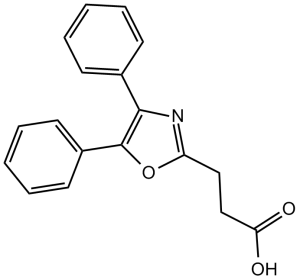
| 规格 | 价格 | 库存 | 数量 |
|---|---|---|---|
| 500mg |
|
||
| 1g |
|
||
| 2g |
|
||
| 5g |
|
||
| 10g |
|
||
| 25g |
|
||
| 50g |
|
||
| Other Sizes |
|
| 靶点 |
Protein Kinase B (Akt) (no IC50/Ki; 20 μM Oxaprozin (Oxaprozinum; Wy21743) reduced phosphorylated Akt (p-Akt) by 42 ± 5% in immune complex (IC)-treated human monocytes, and by 50 ± 6% in CD40 ligand (CD40L)-treated human primary monocytes) [1,2]
- IκB Kinase (IKK) (no IC50/Ki; 20 μM Oxaprozin reduced phosphorylated IKK (p-IKK) by 38 ± 4% in IC-treated human monocytes) [1] - Nuclear Factor-κB (NF-κB) (no IC50/Ki; 20 μM Oxaprozin reduced NF-κB p65 nuclear translocation by 45 ± 5% in IC-treated human monocytes, and reduced phosphorylated NF-κB p65 (p-p65) by 48 ± 5% in CD40L-treated human primary monocytes) [1,2] |
||
|---|---|---|---|
| 体外研究 (In Vitro) |
奥西普嗪以剂量依赖性方式诱导细胞凋亡。当 caspase-3 参与时,奥沙普秦会增强其活性;然而,当它静止时,它就不会。 50 μM 奥沙普秦可抑制 NF-κB 的激活。当试剂 IκBα 激活 IKK 系统时,奥沙普秦会阻止其发生[1]。奥沙普秦 (oxaprozin) (100 μM) 诱导的促凋亡作用最高,它也极大地促进 CD40L 处理的单核细胞的凋亡。使用奥西普嗪治疗可防止 CD40L 触发的 Akt 和 NF-κB (p65) 磷酸化 [2]。
1. 逆转免疫复合物(IC)处理的人单核细胞延迟凋亡:从健康供体分离人单核细胞,用免疫复合物(IC,100 μg/mL)处理诱导延迟凋亡,与奥沙普嗪(Oxaprozin, Oxaprozinum; Wy21743)(5 μM、10 μM、20 μM)共处理48小时后: - 凋亡率(Annexin V-FITC/PI染色)从IC单独处理组的22±3%升至10 μM 奥沙普嗪组的32±4%和20 μM组的45±4% [1] - Western blot显示抗凋亡蛋白Bcl-2下调(20 μM时减少32±3%),促凋亡蛋白Bax上调(20 μM时增加2.1±0.2倍)[1] - Akt/IKK/NF-κB通路受抑制:20 μM时p-Akt减少42±5%、p-IKK减少38±4%、核内NF-κB p65减少45±5% [1] 2. 诱导CD40L处理的人原代单核细胞凋亡:人原代单核细胞用CD40L(1 μg/mL)处理激活存活信号,再用奥沙普嗪(5 μM、10 μM、20 μM)处理24小时后: - 凋亡率从CD40L单独处理组的18±2%升至10 μM 奥沙普嗪组的35±3%和20 μM组的52±6% [2] - Western blot显示cleaved caspase-3上调(20 μM时增加3.2±0.3倍),X连锁凋亡抑制蛋白(XIAP)下调(20 μM时减少40±4%)[2] - NF-κB通路受抑制:20 μM时p-NF-κB p65减少48±5%,其靶基因产物环氧合酶-2(COX-2)减少42±3% [2] |
||
| 动物实验 |
|
||
| 药代性质 (ADME/PK) |
Absorption, Distribution and Excretion
Oxaprazole is absorbed in 95% of the body after oral administration. Food may reduce the absorption rate of oxaprazole, but it does not affect the extent of absorption. Antacids have no significant effect on the extent and rate of absorption of oxaprazole. Based on the physicochemical properties of oxaprazole, it is expected to be secreted into human milk; however, the amount of oxaprazole secreted in breast milk has not been assessed. Approximately 95% of oxaprazole is metabolized in the liver. Approximately 5% of oxaprazole is excreted unchanged in the urine. 65% of the dose is excreted in the urine as metabolites, and 35% in the feces. Unexcreted oxaprazole is less frequently excreted via bile. Several oxaprazole metabolites have been identified in human urine or feces. 11-17 L/70 kg In dose-proportioning studies using 600, 1200, and 1800 mg doses, the pharmacokinetics of oxapridine in healthy subjects showed that the pharmacokinetics of both total and free drug were nonlinear and in opposite directions; that is, dose exposure was positively correlated with total drug clearance, while free drug clearance was negatively correlated. The decrease in free drug clearance was mainly related to a reduction in volume of distribution, rather than a prolongation of half-life. This phenomenon is considered to have little effect on drug accumulation after multiple doses. The apparent volume of distribution (Vd/F) of total oxapridine is approximately 11-17 L/70 kg. Oxapridine binds to plasma proteins at 99%, primarily albumin. At therapeutic concentrations, plasma protein binding of oxapridine is saturable; therefore, the proportion of free drug increases with increasing total drug concentration. Increased single-dose dosing or repeated once-daily administration increased the apparent volume of distribution and clearance of the total drug, while the volume of distribution and clearance of the free drug decreased due to nonlinear protein binding effects. Oxaprazole penetrated the synovial tissue of patients with rheumatoid arthritis, reaching concentrations 2 and 3 times higher than those in plasma and synovial fluid, respectively. Based on its physicochemical properties, oxaprazole is expected to be secreted into human milk; however, the amount of oxaprazole secreted into breast milk has not been assessed. The absorption rate of Daypro after oral administration was 95%. Food may decrease the absorption rate of oxaprazole, but does not affect the extent of absorption. Antacids did not significantly affect the extent and rate of Daypro absorption. It is unclear whether oxaprazole is secreted into human milk. However, it is secreted into the milk of lactating rats. Approximately 5% of the oxaprazole dose is excreted unchanged in the urine. 65% of the dose is excreted as metabolites in the urine and 35% in the feces. Untreated oxaprazine is excreted via limited bile routes, and its enterohepatic circulation is negligible. With prolonged use, its cumulative half-life is approximately 22 hours. Due to increased binding and decreased clearance at low concentrations, the elimination half-life is approximately twice the accumulation half-life. For more complete data on the absorption, distribution, and excretion of oxaprazine (8 metabolites), please visit the HSDB record page. Metabolism/Metabolites Hepatic metabolism. Ester and ether glucuronide are the major conjugated metabolites of oxaprazine and do not possess significant pharmacological activity. Several oxaprazine metabolites have been identified in human urine or feces. Oxaprazine is primarily metabolized in the liver, including microsomal oxidation (65%) and glucuronide conjugation (35%). Ester and ether glucuronide are the major conjugated metabolites of oxaprazine. With prolonged administration, metabolites do not accumulate in the plasma of patients with normal renal function. Plasma concentrations of metabolites are extremely low. Oxaprazole metabolites do not exhibit significant pharmacological activity. The major ester and ether glucuronide-conjugated metabolites have been evaluated with oxaprazole in receptor binding studies and in vivo animal models, showing no activity. A small amount (<5%) of active phenolic metabolites is produced, but their contribution to overall activity is limited. Biological Half-Life 54.9 hours After prolonged administration, the cumulative half-life is approximately 22 hours. Due to increased binding and decreased clearance at low concentrations, the elimination half-life is approximately twice the cumulative half-life. |
||
| 毒性/毒理 (Toxicokinetics/TK) |
Hepatotoxicity
Prospective studies have shown that up to 15% of patients taking oxaprazole long-term experience at least transient elevations in serum transaminases. These elevations usually subside with continued use. Approximately 1% of patients experience significant transaminase elevations (more than 3 times the normal value). Clinically significant liver injury with jaundice caused by oxaprazole is rare (approximately 1 case per 100,000 person-years of use) and is seldom mentioned in large surveys of drug-induced liver injury. The typical clinical presentation is acute hepatitis-like symptoms appearing 2 to 8 weeks after starting treatment. The injury pattern is usually hepatocellular, but mixed hepatocellular-cholestatic cases have been reported. Symptoms may include allergic reactions such as fever, rash, arthralgia, and facial edema. Autoantibody formation is rare. Liver biopsy results showing hepatocellular necrosis with significant periportal and lobular eosinophilic infiltration suggestive of drug-induced acute hepatitis. Recovery may be delayed by several days, but full recovery is usually achieved within 1 to 2 months. At least one case of acute liver failure attributed to oxaprazine has been published. Probability score: C (likely a rare cause of clinically significant liver injury). Pregnancy and Lactation Effects ◉ Overview of Use During Lactation: Since there is no published experience regarding the use of oxaprazine during lactation, alternative medications may be preferred, especially for breastfed newborns or preterm infants. ◉ Effects on Breastfed Infants: No relevant published information found as of the revision date. ◉ Effects on Lactation and Breast Milk: No relevant published information found as of the revision date. Protein Binding 99.5% albumin binding. Interactions Prolonged concomitant use of acetaminophen and nonsteroidal anti-inflammatory drugs may increase the risk of adverse renal reactions; close medical monitoring is recommended for patients receiving such combined therapy. /Nonsteroidal Anti-inflammatory Drugs/ Concomitant use with alcohol, oral glucocorticoids or corticosteroids, or long-term therapeutic use of corticotropin or potassium supplements/ Concomitant use with nonsteroidal anti-inflammatory drugs (NSAIDs) may increase the risk of gastrointestinal side effects, including ulcers or bleeding; however, in the treatment of arthritis, concomitant use with glucocorticoids or corticotropin may provide additional therapeutic benefits and allow for a reduction in the dosage of glucocorticoids or corticotropin. NSAIDs When used concomitantly with oxaprazine, close monitoring of the response to antihypertensive drugs is recommended because… oxaprazine has been shown to reduce or reverse the effects of antihypertensive drugs, possibly by inhibiting renal prostaglandin synthesis and/or causing sodium and fluid retention. NSAIDs may enhance the hypoglycemic effect of oral hypoglycemic agents or drugs such as insulin because prostaglandins are directly involved in the regulatory mechanisms of glucose metabolism and may be due to the displacement of oral hypoglycemic agents from serum proteins; dosage adjustments of hypoglycemic agents may be necessary;…Concomitant use is recommended with caution. /Nonsteroidal Anti-inflammatory Drugs/ For more complete interaction data (of 8 items) on oxaprozin, please visit the HSDB record page. Non-human toxicity values Canine intraperitoneal LD50 200 mg/kg Canine intravenous LD50 124 mg/kg Mouse intraperitoneal LD50 376 mg/kg Mouse intravenous LD50 93 mg/kg For more complete non-human toxicity data (of 10 items) on oxaprozin, please visit the HSDB record page. 1. In vitro cytotoxicity to human monocytes: Treatment with oxaprozin (Oxaprozinum; Wy21743) at concentrations of 5 μM, 10 μM, and 20 μM (treatment-related concentrations) for 24–48 hours showed no significant cytotoxicity to human monocytes. MTT assays showed that cell viability was ≥ 85% in both the IC-treated and CD40L-treated mononuclear cell cultures (compared to the untreated control group) [1,2]. |
||
| 参考文献 |
|
||
| 其他信息 |
Therapeutic Uses
Oxapridine…is indicated for the treatment of acute or chronic rheumatoid arthritis. (Included on the US product label) Oxapridine…is indicated for the relief of acute or chronic osteoarthritis. (Included on the US product label) …In this open-label, multicenter, randomized controlled study, eligible patients with frozen shoulder were randomized to receive 1200 mg oxapridine once daily (n = 49) or 50 mg diclofenac three times daily (n = 47). The treatment period was 15 ± 1 days. The study was designed based on the assumption of equivalence between the two investigational drugs. The primary endpoint was the change in patient-reported shoulder pain score from baseline on day 15. Secondary efficacy endpoints included investigator-assessed shoulder function, patient quality of life assessed using the Short Form Health Survey (SF-36) Acute Health Survey, and overall patient and investigator assessments of efficacy. On day 15, the mean changes from baseline in shoulder pain scores were -5.85 ± 4.62 (standard deviation) and -5.54 ± 4.41 (standard deviation) in the oxaprazine group and diclofenac group, respectively. The difference between the two groups was not statistically significant, confirming the study's hypothesis that oxaprazine and diclofenac were comparable in efficacy. Investigator-assessed shoulder function improved in both groups, but the improvement was more significant in the oxaprazine group (day 15, p = 0.028). Quality of life, as reflected in the SF-36 total score, also improved in both treatment groups, with a more pronounced trend of improvement in the oxaprazine group. Furthermore, on day 15, the oxaprazine group showed a more significant improvement in the "Mental Health" item of the SF-36 scale compared to the diclofenac treatment group (p = 0.0202). Investigator assessment indicated that at the third visit (8 ± 1 days), the overall efficacy of oxaprazine was superior to that of diclofenac (p = 0.0067). Patients also assessed the overall efficacy of oxaprazine as superior to diclofenac at the third visit (8 ± 1 day) (p = 0.0235) and the fourth visit (15 ± 1 day) (p = 0.0272). Only six adverse events were observed in the study, all mild or moderate, and all occurred in the four patients treated with diclofenac. As expected, once-daily oxaprazine and three-times-daily diclofenac were comparable in reducing the primary efficacy endpoint of self-reported shoulder pain scores in patients with frozen shoulder (who had not responded to previous treatment with other nonsteroidal anti-inflammatory drugs). Oxaprazine was superior to diclofenac in improving shoulder joint function, and both researchers and patients considered its overall efficacy superior to diclofenac. Furthermore, oxaprazine showed a trend toward improving patients' quality of life compared to diclofenac. Oxaprazine was also better tolerated than diclofenac. /EXPL THER/: This study evaluated the effect of 0.1% propionic acid derivative (oxaprazine) eye drops on sodium arachidonic acid-induced ocular inflammation in rabbits. Furthermore, the water-soluble bioavailability of this drug formulation in non-inflammatory and inflamed eyes was assessed. Oxaprazine eye drops significantly reduced symptoms of conjunctival and iris inflammation induced by sodium arachidonic acid. Oxaprazine treatment significantly reduced the concentrations of polymorphonuclear leukocytes and proteins in the aqueous humor of sodium arachidonic acid-treated eyes. These data are the first to suggest that oxaprazine can be used topically to prevent ocular reactions induced by activation of the arachidonic acid cascade. Drug Warning Multiple three-year clinical trials of selective and non-selective COX-2 nonsteroidal anti-inflammatory drugs (NSAIDs) have shown that these drugs increase the risk of serious cardiovascular thrombotic events, myocardial infarction, and stroke, which can be fatal. All NSAIDs, whether COX-2 selective or non-selective, may carry similar risks. Patients with known cardiovascular disease or cardiovascular risk factors may be at higher risk. To minimize the potential risk of adverse cardiovascular events in patients treated with nonsteroidal anti-inflammatory drugs (NSAIDs), the lowest effective dose should be used and the duration of treatment should be minimized. Even if the patient has no prior cardiovascular symptoms, both physician and patient should be vigilant for such events. Patients should be informed of the signs and/or symptoms of serious cardiovascular events, and the actions to be taken in the event of such events. /Nonsteroidal Anti-inflammatory Drugs/ NSAIDs, including Daypro, can cause serious gastrointestinal (GI) adverse events, including inflammation, bleeding, ulceration, and perforation of the stomach, small intestine, or large intestine, which can be fatal. These serious adverse events can occur at any time in patients receiving NSAID treatment, with or without warning symptoms. Only one in five patients who experience serious upper gastrointestinal adverse events during NSAID treatment will develop symptoms. In patients receiving nonsteroidal anti-inflammatory drugs (NSAIDs) for 3–6 months, approximately 1% will experience upper gastrointestinal ulcers, massive bleeding, or perforation; this proportion is approximately 2–4% in patients receiving treatment for one year. These risks increase with prolonged use, raising the likelihood of serious gastrointestinal events during treatment. However, even short-term treatment is not risk-free. NSAIDs should be prescribed with extreme caution in patients with a history of peptic ulcer disease or gastrointestinal bleeding. Patients with a history of peptic ulcer disease and/or gastrointestinal bleeding have a more than 10 times higher risk of gastrointestinal bleeding after using NSAIDs compared to patients without these risk factors. Other factors that increase the risk of gastrointestinal bleeding in patients treated with NSAIDs include: concomitant use of oral corticosteroids or anticoagulants, prolonged NSAID treatment, smoking, alcohol consumption, advanced age, and poor general health. Most spontaneously reported fatal gastrointestinal events occur in elderly or frail patients; therefore, extra caution should be exercised when treating these populations. To minimize the potential risk of gastrointestinal adverse events in patients treated with nonsteroidal anti-inflammatory drugs (NSAIDs), the lowest effective dose should be used, and the duration of treatment should be minimized as much as possible. Patients and physicians should closely monitor for signs and symptoms of gastrointestinal ulceration and bleeding during NSAID treatment, and if a serious gastrointestinal event is suspected, immediate further evaluation and treatment are necessary. This includes discontinuing the NSAID until a serious gastrointestinal adverse event has been ruled out. For high-risk patients, alternative therapies that do not use NSAIDs should be considered. /Nonsteroidal Anti-inflammatory Drugs/ As with other NSAIDs, patients who have not been exposed to Daypro may experience anaphylactic reactions. Daypro is contraindicated in patients with aspirin triad. This symptom cluster typically occurs in patients with asthma and rhinitis (with or without nasal polyps), or in patients who have experienced severe or potentially fatal bronchospasm after taking aspirin or other NSAIDs. For more complete (18) drug warnings regarding oxapridine, please visit the HSDB records page. Pharmacodynamics Oxapridine is a nonsteroidal anti-inflammatory drug (NSAID) with analgesic and antipyretic effects. Oxapridine is used to treat rheumatoid arthritis, osteoarthritis, dysmenorrhea, and to relieve moderate pain. 1. Oxaprozinum (Wy21743) is a nonsteroidal anti-inflammatory drug (NSAID) that regulates monocyte apoptosis by targeting the Akt/IKK/NF-κB signaling pathway—unlike conventional NSAIDs that primarily inhibit cyclooxygenase (COX) [1,2] 2. Under immune complex-mediated inflammatory conditions, oxaprolizum can reverse delayed monocyte apoptosis and promote the clearance of activated monocytes, thereby alleviating persistent inflammation; in CD40L-activated monocytes (e.g., in autoimmune diseases), it can induce apoptosis to suppress aberrant immune responses [1,2] 3. The anti-inflammatory effect of oxaprolizum is partly related to the downregulation of COX-2 (a target gene of NF-κB), thereby reducing prostaglandin synthesis, but its core mechanism lies in regulating monocyte survival/apoptosis through the Akt/NF-κB pathway [2] |
| 分子式 |
C18H15NO3
|
|
|---|---|---|
| 分子量 |
293.32
|
|
| 精确质量 |
293.105
|
|
| CAS号 |
21256-18-8
|
|
| 相关CAS号 |
Oxaprozin-d4;Oxaprozin potassium;174064-08-5;Oxaprozin-d5
|
|
| PubChem CID |
4614
|
|
| 外观&性状 |
White to off-white solid powder
|
|
| 密度 |
1.2±0.1 g/cm3
|
|
| 沸点 |
467.0±33.0 °C at 760 mmHg
|
|
| 熔点 |
154ºC
|
|
| 闪点 |
236.2±25.4 °C
|
|
| 蒸汽压 |
0.0±1.2 mmHg at 25°C
|
|
| 折射率 |
1.595
|
|
| LogP |
4.19
|
|
| tPSA |
63.33
|
|
| 氢键供体(HBD)数目 |
1
|
|
| 氢键受体(HBA)数目 |
4
|
|
| 可旋转键数目(RBC) |
5
|
|
| 重原子数目 |
22
|
|
| 分子复杂度/Complexity |
361
|
|
| 定义原子立体中心数目 |
0
|
|
| InChi Key |
GSDSWSVVBLHKDQ-UHFFFAOYSA-N
|
|
| InChi Code |
InChI=1S/C18H20FN3O4/c1-10-9-26-17-14-11(16(23)12(18(24)25)8-22(10)14)7-13(19)15(17)21-5-3-20(2)4-6-21/h7-8,10H,3-6,9H2,1-2H3,(H,24,25)
|
|
| 化学名 |
9-fluoro-3-methyl-10-(4-methylpiperazin-1-yl)-7-oxo-3,7-dihydro-2H-[1,4]oxazino[2,3,4-ij]quinoline-6-carboxylic acid
|
|
| 别名 |
|
|
| HS Tariff Code |
2934.99.9001
|
|
| 存储方式 |
Powder -20°C 3 years 4°C 2 years In solvent -80°C 6 months -20°C 1 month |
|
| 运输条件 |
Room temperature (This product is stable at ambient temperature for a few days during ordinary shipping and time spent in Customs)
|
| 溶解度 (体外实验) |
|
|||
|---|---|---|---|---|
| 溶解度 (体内实验) |
配方 1 中的溶解度: ≥ 2.5 mg/mL (8.52 mM) (饱和度未知) in 10% DMSO + 40% PEG300 + 5% Tween80 + 45% Saline (这些助溶剂从左到右依次添加,逐一添加), 澄清溶液。
例如,若需制备1 mL的工作液,可将100 μL 25.0 mg/mL澄清DMSO储备液加入到400 μL PEG300中,混匀;然后向上述溶液中加入50 μL Tween-80,混匀;加入450 μL生理盐水定容至1 mL。 *生理盐水的制备:将 0.9 g 氯化钠溶解在 100 mL ddH₂O中,得到澄清溶液。 配方 2 中的溶解度: ≥ 2.5 mg/mL (8.52 mM) (饱和度未知) in 10% DMSO + 90% (20% SBE-β-CD in Saline) (这些助溶剂从左到右依次添加,逐一添加), 澄清溶液。 例如,若需制备1 mL的工作液,可将 100 μL 25.0 mg/mL澄清DMSO储备液加入900 μL 20% SBE-β-CD生理盐水溶液中,混匀。 *20% SBE-β-CD 生理盐水溶液的制备(4°C,1 周):将 2 g SBE-β-CD 溶解于 10 mL 生理盐水中,得到澄清溶液。 View More
配方 3 中的溶解度: ≥ 2.5 mg/mL (8.52 mM) (饱和度未知) in 10% DMSO + 90% Corn Oil (这些助溶剂从左到右依次添加,逐一添加), 澄清溶液。 1、请先配制澄清的储备液(如:用DMSO配置50 或 100 mg/mL母液(储备液)); 2、取适量母液,按从左到右的顺序依次添加助溶剂,澄清后再加入下一助溶剂。以 下列配方为例说明 (注意此配方只用于说明,并不一定代表此产品 的实际溶解配方): 10% DMSO → 40% PEG300 → 5% Tween-80 → 45% ddH2O (或 saline); 假设最终工作液的体积为 1 mL, 浓度为5 mg/mL: 取 100 μL 50 mg/mL 的澄清 DMSO 储备液加到 400 μL PEG300 中,混合均匀/澄清;向上述体系中加入50 μL Tween-80,混合均匀/澄清;然后继续加入450 μL ddH2O (或 saline)定容至 1 mL; 3、溶剂前显示的百分比是指该溶剂在最终溶液/工作液中的体积所占比例; 4、 如产品在配制过程中出现沉淀/析出,可通过加热(≤50℃)或超声的方式助溶; 5、为保证最佳实验结果,工作液请现配现用! 6、如不确定怎么将母液配置成体内动物实验的工作液,请查看说明书或联系我们; 7、 以上所有助溶剂都可在 Invivochem.cn网站购买。 |
| 制备储备液 | 1 mg | 5 mg | 10 mg | |
| 1 mM | 3.4092 mL | 17.0462 mL | 34.0925 mL | |
| 5 mM | 0.6818 mL | 3.4092 mL | 6.8185 mL | |
| 10 mM | 0.3409 mL | 1.7046 mL | 3.4092 mL |
1、根据实验需要选择合适的溶剂配制储备液 (母液):对于大多数产品,InvivoChem推荐用DMSO配置母液 (比如:5、10、20mM或者10、20、50 mg/mL浓度),个别水溶性高的产品可直接溶于水。产品在DMSO 、水或其他溶剂中的具体溶解度详见上”溶解度 (体外)”部分;
2、如果您找不到您想要的溶解度信息,或者很难将产品溶解在溶液中,请联系我们;
3、建议使用下列计算器进行相关计算(摩尔浓度计算器、稀释计算器、分子量计算器、重组计算器等);
4、母液配好之后,将其分装到常规用量,并储存在-20°C或-80°C,尽量减少反复冻融循环。
计算结果:
工作液浓度: mg/mL;
DMSO母液配制方法: mg 药物溶于 μL DMSO溶液(母液浓度 mg/mL)。如该浓度超过该批次药物DMSO溶解度,请首先与我们联系。
体内配方配制方法:取 μL DMSO母液,加入 μL PEG300,混匀澄清后加入μL Tween 80,混匀澄清后加入 μL ddH2O,混匀澄清。
(1) 请确保溶液澄清之后,再加入下一种溶剂 (助溶剂) 。可利用涡旋、超声或水浴加热等方法助溶;
(2) 一定要按顺序加入溶剂 (助溶剂) 。
| NCT Number | Recruitment | interventions | Conditions | Sponsor/Collaborators | Start Date | Phases |
| NCT03350386 | Completed | Drug: FYU-981 Drug: Oxaprozin |
Healthy | Mochida Pharmaceutical Company, Ltd. | November 2, 2017 | Phase 1 |