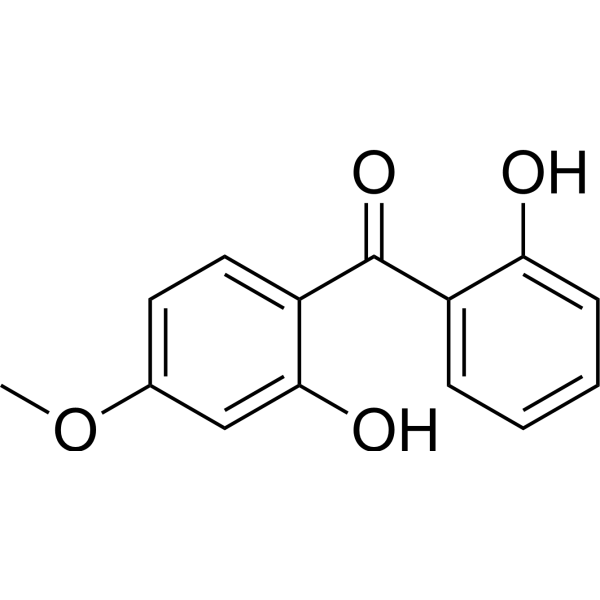
Dioxybenzone (Benzophone-8; UV-24)

别名: 2,2'-二羟基-4-甲氧基苯甲酮;二羟苯宗;双羟苯宗;紫外线吸收剂UV-24;2,2'-二羟基-4-甲氧基二苯甲酮;2,2''-二羟基-4-甲氧基二苯甲酮
目录号: V68755 纯度: ≥98%
二氧苯酮是一种有机/化学试剂,用于阻挡 UVB 和短波 UVA(紫外线)辐射。
Dioxybenzone (Benzophone-8; UV-24) CAS号: 131-53-3
产品类别: Biochemical Assay Reagents
产品仅用于科学研究,不针对患者销售
规格 价格 库存 数量
500mg
Other Sizes

Other Forms of Dioxybenzone (Benzophone-8; UV-24):

  • Dioxybenzone-d3
点击了解更多
InvivoChem产品被CNS等顶刊论文引用
产品描述
二氧苯酮是一种有机/化学试剂,用于阻挡 UVB 和短波 UVA(紫外线)辐射。
生物活性&实验参考方法
药代性质 (ADME/PK)
Absorption, Distribution and Excretion
Dioxanone is a derivative of benzophenone. Transdermal absorption of benzophenone has been observed in monkeys. Other benzophenone derivatives can penetrate the skin and be transported to various tissues, including the liver and brain, by directly penetrating the intercellular layer of the stratum corneum (SC) or by passive diffusion through a high concentration gradient into the systemic circulation. Pharmacokinetic Data Unavailable Pharmacokinetic Data Unavailable Pharmacokinetic Data Unavailable Information on the skin absorption, distribution, and elimination of most topical sunscreens is limited. Solvents used in sunscreen products can affect the stability and binding affinity of the drug to the skin; generally, alcohol solvents allow sunscreens to penetrate the epidermis most quickly and deeply. Sunscreens appear to be absorbed by the intact epidermis, but the degree of absorption varies. /Sunscreen/
Metabolism/Metabolites Pharmacokinetic Data Unavailable This study investigated the pharmacokinetics of benzophenone-3 (BZ-3) in rats. Male Sprague-Dawley rats were orally administered 0 or 100 mg/kg of benzophenone. Blood samples were collected from some rats over a period of up to 20 hours post-administration, and plasma benzophenone concentrations were analyzed using high-performance liquid chromatography (HPLC). Simultaneously, urine, fecal, and exhaled gas samples were collected over a period of up to 96 hours, and BZ-3 metabolites were analyzed. Some rats were sacrificed 6 hours post-administration to determine the tissue distribution of BZ-3. The pharmacokinetic behavior of benzophenone was investigated by applying plasma BZ-3 data to a standard pharmacokinetic model. The pharmacokinetic behavior of BZ-3 in blood was described using a two-compartment model, with a distribution half-life of 0.88 hours and an elimination half-life of 15.90 hours. The absorption half-life was 0.71 hours. Peak plasma concentration of 25.6 μg/mL was reached 3 hours post-administration. The highest total concentration of BZ-3 was found in the liver, representing 6.47% of the administered dose, followed by the kidneys, spleen, intestines, and heart. BZ-3 was detected only in the testes after acid hydrolysis, and in only 1 out of 6 rats; however, its concentration represented 1.8% of the administered dose. Approximately 60% of the administered dose was excreted in urine and feces within 96 hours. Urine was the primary route of excretion. The majority of the excreted dose consisted of compounds bound to macromolecules. Enzymatic analysis of urine samples using β-glucuronidase showed that most of the excreted drug was bound to glucuronic acid. Identified metabolites included 2,4-dihydroxybenzophenone, 2,2'-dihydroxy-4-methoxybenzophenone, and 2,3,4-trihydroxybenzophenone. The authors concluded that after oral administration, oxybenzophenone is rapidly absorbed from the gastrointestinal tract and is primarily distributed in the liver, kidneys, and testes, suggesting that the liver is likely the main organ for BZ-3 clearance. This study also investigated the metabolism of the ultraviolet absorber benzophenone-3 (BZ3) in Sprague-Dawley rats. Rats were administered 100 mg/kg BZ3 by gavage, and blood, tissue, urine, and fecal samples were collected at different time points. BZ3 and its metabolites were detectable in plasma 5 minutes after administration. 2,4-Dihydroxybenzophenone (DHB), 2,2'-dihydroxy-4-methoxybenzophenone, and 2,3,4-trihydroxybenzophenone were detected in blood 30 minutes after administration. DHB was the major metabolite in tissue, urine, and fecal samples. The parent compound and metabolites exist in plasma as macromolecules or in conjugated forms, in tissues as free compounds and in conjugated forms, and in feces and urine as widely conjugated forms. The main excretion route is urine, and O-dealkylation is the primary metabolic pathway. This study investigated the metabolism and distribution of benzophenone-3 (BZ-3) in male Sprague-Dawley rats and male B6C3F1 mice after oral administration of 100 mg/kg body weight. Blood samples were collected from 5 minutes to 20 hours post-administration. Tissue distribution studies were conducted 6 hours after BZ-3 administration. In urinary and fecal excretion studies, mice and rats were placed in glass metabolic cages for 96 hours after BZ-3 administration. In rats, BZ-3 exhibited biphasic elimination in plasma, with α-phase and β-phase elimination half-lives of 0.9 hours and 15.9 hours, respectively, while mice showed monophasic elimination with a half-life of 1.8 hours. Mice showed faster absorption and reached peak plasma concentrations more quickly. Among the tissues studied, the highest accumulation of the parent compound was observed in the liver, with higher accumulation in rats than in mice. 2,4-Dihydroxybenzophenone (DHB) was the major metabolite in tissues, and its concentration was higher in rats than in mice. In rats, urine is the primary excretion route for both BZ-3 and DHB. In mice, excretion of BZ-3 and DHB occurs via urine and feces, with 2,3,4-trihydroxybenzophenone (THB) being the major metabolite. Trace amounts of 2,2'-dihydroxy-4-methoxybenzophenone (DHMB) were detected in both urine and feces in both animals. The peak excretion of the parent compound and DHB in urine occurred earlier in rats than in mice. The majority of fecal excretion of BZ-3 and DHB in both animals occurred within 24 hours, but the total excretion of the parent compound in mouse feces was almost twice that of rats, while the total excretion of DHB was significantly lower in mice. The authors hypothesize that the differences in the absorption rate, distribution pattern, and metabolism of BZ-3 in rats and mice may be related to species-specific quantitative and qualitative differences in enzyme activity.
Biological half-life
Pharmacokinetic data are unavailable.
毒性/毒理 (Toxicokinetics/TK)
Toxicity Summary
Identification and Uses: 2,2'-Dihydroxy-4-methoxybenzophenone (benzophenone) is a solid used as a benzophenone-based sunscreen. Many sunscreens contain UVB-absorbing chemicals (some of which also contribute to UVA protection) in addition to avobenzone or benzophenone derivatives that absorb UVA (such as benzophenone, oxybenzone, or sulfonylbenzone). Human Studies: No human toxicity studies have been conducted. Although some studies suggest that benzophenone derivatives may help prevent photosensitivity reactions induced by photosensitizing drugs (such as chlordiazepoxide, chlorpromazine, demeclocycline, hydrochlorothiazide, nalidixic acid, nystatin, and sulfisoxazole), most clinicians believe that these sunscreens offer limited protection to patients sensitive to these drugs. Animal Studies: 2,2'-Dioxybenzone is not mutagenic when measured directly; however, it exhibits weak mutagenicity after metabolic activation in Salmonella TA1537 strain. In mouse micronucleus assays, dioxanone was not mutagenic in vivo. Toxicity symptoms, including decreased activity, piloerection, and exophthalmos, were observed in mice at doses ranging from 166 to 5000 mg/kg. Oral administration of dioxanone delayed the development of skin tumors and inhibited tumor incidence and burden in a two-stage mouse skin carcinogenesis model. Ecotoxicity studies: Dioxanone was more toxic to two tested coral species than other benzophenone derivatives. Protein binding: Pharmacokinetic data are not available. Interactions: Amiodarone hydrochloride is currently being investigated as an antiarrhythmic drug in the United States. Previous reports in Europe have shown that amiodarone can occasionally cause photosensitivity reactions, possibly accompanied by a distinctive bluish-gray discoloration of the skin. Additionally, yellowish-brown granular microdepositions may occur in the cornea. We report a case of amiodarone photosensitivity and corneal deposition in a patient who developed symptoms shortly after starting amiodarone treatment. Symptoms included burning and stinging sensations on the skin, as well as redness and swelling immediately following sun exposure. Photosensitivity testing revealed that the photosensitivity wavelengths were primarily in the long-wave UVA spectrum between 350 and 380 nm. Pre-treatment with 10% benzophenone sunscreen significantly reduced the photosensitivity reaction. UVA sensitivity remained but decreased four weeks after patients discontinued amiodarone, and completely disappeared after ten weeks. During this period, the amount of corneal deposits also decreased. Ten patients with arrhythmias currently being treated with amiodarone exhibited similar photosensitivity reactions, suggesting this is likely a phototoxic reaction. Sunscreens are widely used due to the adverse effects of ultraviolet (UV) radiation on human health. Therefore, the safety of their active ingredients and any modified ingredients generated during use is of great concern. Chlorine is used as a chemical disinfectant in swimming pools. Its reactivity suggests that sunscreen ingredients may be chlorinated, thereby altering their absorption and/or cytotoxicity. To verify this hypothesis, we reacted UV filters oxybenzone, dioxybenzone, and sulfonylbenzone with chlorinating agents and analyzed their UV spectra. Reduced UV absorption was observed in all cases. Given the potential cytotoxicity of chlorinated compounds, we examined the effect of modified UV filters on cell viability. Chlorinated oxybenzone and dioxybenzone induced significantly higher cell death than the unchlorinated control group. Conversely, chlorination of sulfonylbenzone actually reduced the cytotoxicity of its parent compound. Exposure of commercially available sunscreens to chlorine also resulted in reduced UV absorption, loss of UV protection, and enhanced cytotoxicity. These observations suggest that chlorination of active ingredients in sunscreens can significantly reduce UV absorption and generate derivatives with altered biological properties.
Background: Sunscreen compounds with skin cancer prevention efficacy have both public and commercial value. Our previous study reported the chemopreventive potential of benzophenone sunscreens for skin cancer using an in vitro assay of early EBV antigens. We now report the in vivo antitumor activity of two benzophenone sunscreens that were positive in vitro—octanophenone (UV-1) and dioxybenzone (UV-2)—in a two-stage mouse skin carcinogenesis model. This model used (+/-)-(E)-4-methyl-2-[-(E)-hydroxyamino]-5-nitro-6-methoxy-3-hexamethyleneamide (NOR-1) as an inducer and 12-O-tetradecanoylphorbol-13-acetate (TPA) as a promoter. Materials and Methods: Specific pathogen-free (SPF) female hairless mice of the HOS:HR-1 strain were used, with 15 mice in each of the control and experimental groups. Skin tumors were induced by a single injection of NOR-1 (390 nmol dissolved in 100 μL acetone). One week later, TPA (1.7 nmol dissolved in 100 μL acetone) was applied to the skin twice weekly for 20 weeks as a tumor promoter. One week before and one week after tumor induction, mice were given 0.0025% of the test compound UV-I or UV-2 via drinking water. The occurrence of skin papillomas in all animals was examined weekly. Results: Compared with the positive control group, the time to tumor appearance in mice treated with UV-1 and UV-2 was delayed by two weeks, and the tumor incidence (reduced by 50% and 60%, respectively) and tumor burden (reduced by 50% and 70% per mouse in papilloma inhibition rate, respectively) were significantly reduced (p<0.001). UV-2 (dihydroxy derivative) was more effective than UV-1 (monohydroxy derivative) in inhibiting skin tumors, consistent with their antioxidant activity ranking. Conclusion: The results confirm the chemical effect of oral benzophenone sunscreens in preventing skin cancer in mice and suggest conducting human studies to verify the synergistic protective effect of combined oral and topical sunscreens. This study aimed to screen for photosensitivity based on photochemical and pharmacokinetic (PK) data of topical skin chemicals. Six benzophenone derivatives (BZPs) were selected as model compounds for in vitro photochemical/phototoxicity characterization and dermal administration kit pharmacokinetic studies. In vivo phototoxicity tests were also conducted for comparison. All benzophenones (BZPs) exhibited strong UVA/UVB absorption, with molar extinction coefficients exceeding 2000 M⁻¹·cm⁻¹. Benzophenone and ketoprofen showed significant reactive oxygen species (ROS) generation under simulated sunlight (approximately 2.0 mW/cm²); however, the ROS generation by sulfonylbenzophenone and dioxanone was negligible. To verify in vitro phototoxicity, we conducted a 3T3 neutral red uptake phototoxicity assay, which showed that both benzophenone and ketoprofen are phototoxic compounds. Skin pharmacokinetic parameters of ketoprofen indicated that it had the most extensive skin distribution among all tested benzophenone compounds. Based on its in vitro photochemical/phototoxicity and pharmacokinetic data, we inferred that ketoprofen is highly phototoxic. The phototoxicity risk levels of benzophenone compounds predicted according to the proposed screening strategy were largely consistent with the in vivo phototoxicity test results. Combining photochemical and cassette-administered PK data, the phototoxicity risk of high-yield candidate drugs can be reliably predicted. Sun Protection Factor (SPF) is essentially a factor that comprehensively considers all variables (UV absorption range, maximum absorbance, molar absorptivity, concentration, pH value, and solvent) that determine the effectiveness of sunscreen products. SPF is calculated by dividing the minimum dose of sunlight (MED) required for erythema (redness) on the skin after applying sunscreen by the dose of sunlight required for the same effect on unprotected skin. The SPF measurement method approved by the U.S. Food and Drug Administration (FDA) relies on a solar simulator. Because sunlight varies so greatly, it is generally not suitable for direct use. However, some clinicians believe that using a solar simulator on a small number of subjects may not accurately reflect the product's effectiveness. Sunscreens with an SPF of 2 or lower provide only minimal sun protection, but can still cause tanning; sunscreens with an SPF of 4 to 8 provide moderate sun protection, allowing skin to be exposed to UVB for 4-8 times longer than unprotected skin, but still allow some tanning; sunscreens with an SPF of 8 to 12 provide high sun protection, allowing skin to be exposed to UVB for 8-12 times longer than unprotected skin, but still allow some tanning; sunscreens with an SPF of 12 to 20 provide very high sun protection, allowing skin to be exposed to UVB for 12-20 times longer than unprotected skin, but still allow little or no tanning; sunscreens with an SPF of 20-30 provide very high sun protection, offering the most comprehensive protection, but do not allow tanning. Effective May 21, 2001, the U.S. Food and Drug Administration (FDA) consolidated these categories into three broader categories of sunscreen products and standardized the category names. Sunscreens with SPF 2 to 12 offer very low protection against sunburn and tanning. Sunscreens with SPF 12 to 30 provide moderate sun protection against sunburn or tanning; sunscreens with SPF 30 and above provide high sun protection against sunburn or tanning. /Sunscreen/
其他信息
2,2'-Dihydroxy-4-methoxybenzophenone is a yellow powder. (NTP, 1992)
2,2'-Dihydroxy-4-methoxybenzophenone belongs to the benzophenone class of compounds.
Dioxanone, or benzophenone-8, is an organic compound derived from [DB01878] and is used as a sunscreen. It absorbs UV-B and UV-AII rays. Dioxanone is an approved sunscreen ingredient with a maximum concentration of 3%.
Pharmaceutical Indications

Suitable as an active sunscreen agent.
Mechanism of Action

The sun emits UVA-II rays (wavelength range 320-400 nm, not absorbed by the ozone layer) and UVB rays (wavelength range 290-320 nm, partially absorbed by the ozone layer, which can damage human skin, including basal cell carcinoma and melanoma). As a chemical sunscreen, dioxanone can absorb these rays, preventing them from penetrating the skin and thus mitigating long-term damage to the skin caused by ultraviolet radiation. No binding to the ER was found in a competitive binding assay of the rat uterine cytoplasmic estrogen receptor (ER).
Therapeutic Use
/EXPL THER/ Background: Sunscreen compounds with skin cancer prevention efficacy have both public and commercial value. Our previous study reported the chemopreventive potential of benzophenone sunscreens for skin cancer using an in vitro assay of the early antigen of the Epstein-Barr virus. We now report the in vivo antitumor activity of two benzophenone sunscreens that were positive in vitro—octanphenone (UV-1) and dioxanone (UV-2)—in a two-stage mouse skin carcinogenesis model. This model used (+/-)-(E)-4-methyl-2-[-(E)-hydroxyamino]-5-nitro-6-methoxy-3-hexamethyleneamide (NOR-1) as an inducer and 12-O-tetradecanoylphorbol-13-acetate (TPA) as a promoter. Materials and Methods: Specific pathogen-free (SPF) female hairless mice of the HOS:HR-1 strain were used, with 15 mice in each of the control and experimental groups. Skin tumors were induced by a single injection of NOR-1 (390 nmol dissolved in 100 μL acetone). One week later, TPA (1.7 nmol dissolved in 100 μL acetone) was applied to the skin twice weekly for 20 weeks as a tumor promoter. One week before and one week after tumor induction, mice were given 0.0025% of the test compound UV-I or UV-2 via drinking water. The occurrence of skin papillomas in all animals was examined weekly. Results: Compared with the positive control group, the time to tumor appearance in mice treated with both UV-1 and UV-2 was delayed by two weeks, and the tumor incidence (reduced by 50% and 60%, respectively) and tumor burden (reduced by 50% and 70% per mouse in papilloma inhibition rate, respectively) were significantly lower (p<0.001). UV-2 (dihydroxy derivative) was more effective than UV-1 (monohydroxy derivative) in inhibiting skin tumors, consistent with their antioxidant activity ranking. Conclusion: The results confirm the chemical effect of oral benzophenone sunscreens in preventing skin cancer in mice and recommend conducting human studies to verify the synergistic protective effect of combined oral and topical sunscreens. Sunscreens are used to prevent sunburn and premature skin aging and reduce the incidence of actinic or actinic keratosis, skin cancer, tanning, and other harmful effects of sunlight. Some data suggest that even ultraviolet radiation doses below the dose required to cause sunburn (i.e., suberythema dose) may have carcinogenic effects and photoaging. Most clinicians believe that the extensive and regular use of effective sunscreen has therapeutic value, not just cosmetic value, especially for people with lighter skin, blue eyes, red hair, and/or freckles, as they are most vulnerable to the acute and chronic harmful effects of sunlight. /Sunscreen/
Medication Warnings
Because the skin absorption characteristics of infants under 6 months of age may differ from those of adults, and their metabolic and excretory pathways are not yet mature, which may limit their ability to clear transdermal sunscreens, sunscreen products should only be used on infants under the guidance of a clinician. The skin characteristics of older adults may also differ from those of younger adults, but these characteristics and the special considerations for using sunscreens in this age group are not fully understood. /Sunscreen/
If skin irritation or a rash occurs while using sunscreen, discontinue use and wash the affected area. If irritation persists, consult a doctor. Avoid contact between sunscreen and eyes. If sunscreen gets into the eyes, rinse thoroughly with water immediately. /Sunscreen/
Limited information exists regarding the safety of long-term sunscreen use, but the incidence of adverse reactions to commercially available physical and chemical sunscreens appears to be low. Derivatives of para-aminobenzoic acid (PABA), benzophenone, cinnamic acid, salicylic acid, and 2-phenylbenzimidazole-5-sulfonic acid can cause skin irritation, including burning, stinging, itching, and erythema, in rare cases. Skin irritation caused by pardimethicone A appears to be dose-related. Sunscreen
Although some studies suggest that benzophenone derivatives may help prevent photosensitivity reactions induced by photosensitizing drugs such as chlordiazepoxide, chlorpromazine, demeclocycline, hydrochlorothiazide, nalidixic acid, nystatin, and sulfamethoxazole, most clinicians believe that these sunscreens offer only limited protection for patients sensitive to these drugs. Even with sunscreen, prolonged sun exposure should be avoided, and everyone, especially those with fair skin, blue eyes, or blonde hair, should wear protective clothing. Before a protective tan forms, initial sun exposure should be limited to a short period, gradually increasing thereafter. Sunscreen Pharmacodynamics Benzophenone is a sunscreen and chemical UV filter that absorbs UVB and UVA II rays, thus limiting their penetration into human skin. In one screening protocol, an in vitro EBV-EA activation assay was first performed, followed by in vivo validation in a two-stage mouse skin cancer model using NOR-1 as an inducer and TPA as a tumor promoter. Results showed that benzophenone exhibited significant chemopreventive activity against mouse skin cancer, and this activity was correlated with its antioxidant capacity. Some evidence suggests that certain benzophenones and their hydroxylated metabolites possess weak estrogenic activity in the environment; however, whether benzophenone has similar effects has not yet been confirmed.
*注: 文献方法仅供参考, InvivoChem并未独立验证这些方法的准确性
化学信息 & 存储运输条件
分子式
C14H12O4
分子量
244.24
精确质量
244.073
CAS号
131-53-3
相关CAS号
Dioxybenzone-d3
PubChem CID
8569
外观&性状
Yellow powder
密度
1.3±0.1 g/cm3
沸点
375.0±0.0 °C at 760 mmHg
熔点
73-75 °C(lit.)
闪点
146.0±18.6 °C
蒸汽压
0.0±0.8 mmHg at 25°C
折射率
1.624
LogP
3.93
tPSA
66.76
氢键供体(HBD)数目
2
氢键受体(HBA)数目
4
可旋转键数目(RBC)
3
重原子数目
18
分子复杂度/Complexity
292
定义原子立体中心数目
0
SMILES
O(C([H])([H])[H])C1C([H])=C([H])C(=C(C=1[H])O[H])C(C1=C([H])C([H])=C([H])C([H])=C1O[H])=O
HS Tariff Code
2934.99.9001
存储方式

Powder      -20°C    3 years

                     4°C     2 years

In solvent   -80°C    6 months

                  -20°C    1 month

注意: 本产品在运输和储存过程中需避光。
运输条件
Room temperature (This product is stable at ambient temperature for a few days during ordinary shipping and time spent in Customs)
溶解度数据
溶解度 (体外实验)
DMSO: ≥ 100 mg/mL (409.43 mM)
H2O: 1 mg/mL (4.09 mM)
溶解度 (体内实验)
配方 1 中的溶解度: ≥ 2.5 mg/mL (10.24 mM) (饱和度未知) in 10% DMSO + 40% PEG300 + 5% Tween80 + 45% Saline (这些助溶剂从左到右依次添加,逐一添加), 澄清溶液。
例如,若需制备1 mL的工作液,可将100 μL 25.0 mg/mL澄清DMSO储备液加入到400 μL PEG300中,混匀;然后向上述溶液中加入50 μL Tween-80,混匀;加入450 μL生理盐水定容至1 mL。
*生理盐水的制备:将 0.9 g 氯化钠溶解在 100 mL ddH₂O中,得到澄清溶液。

配方 2 中的溶解度: ≥ 2.5 mg/mL (10.24 mM) (饱和度未知) in 10% DMSO + 90% (20% SBE-β-CD in Saline) (这些助溶剂从左到右依次添加,逐一添加), 澄清溶液。
例如,若需制备1 mL的工作液,可将 100 μL 25.0 mg/mL澄清DMSO储备液加入900 μL 20% SBE-β-CD生理盐水溶液中,混匀。
*20% SBE-β-CD 生理盐水溶液的制备(4°C,1 周):将 2 g SBE-β-CD 溶解于 10 mL 生理盐水中,得到澄清溶液。

View More

配方 3 中的溶解度: ≥ 2.5 mg/mL (10.24 mM) (饱和度未知) in 10% DMSO + 90% Corn Oil (这些助溶剂从左到右依次添加,逐一添加), 澄清溶液。
例如,若需制备1 mL的工作液,可将 100 μL 25.0 mg/mL 澄清 DMSO 储备液加入到 900 μL 玉米油中并混合均匀。


请根据您的实验动物和给药方式选择适当的溶解配方/方案:
1、请先配制澄清的储备液(如:用DMSO配置50 或 100 mg/mL母液(储备液));
2、取适量母液,按从左到右的顺序依次添加助溶剂,澄清后再加入下一助溶剂。以 下列配方为例说明 (注意此配方只用于说明,并不一定代表此产品 的实际溶解配方):
10% DMSO → 40% PEG300 → 5% Tween-80 → 45% ddH2O (或 saline);
假设最终工作液的体积为 1 mL, 浓度为5 mg/mL: 取 100 μL 50 mg/mL 的澄清 DMSO 储备液加到 400 μL PEG300 中,混合均匀/澄清;向上述体系中加入50 μL Tween-80,混合均匀/澄清;然后继续加入450 μL ddH2O (或 saline)定容至 1 mL;

3、溶剂前显示的百分比是指该溶剂在最终溶液/工作液中的体积所占比例;
4、 如产品在配制过程中出现沉淀/析出,可通过加热(≤50℃)或超声的方式助溶;
5、为保证最佳实验结果,工作液请现配现用!
6、如不确定怎么将母液配置成体内动物实验的工作液,请查看说明书或联系我们;
7、 以上所有助溶剂都可在 Invivochem.cn网站购买。
制备储备液 1 mg 5 mg 10 mg
1 mM 4.0943 mL 20.4717 mL 40.9433 mL
5 mM 0.8189 mL 4.0943 mL 8.1887 mL
10 mM 0.4094 mL 2.0472 mL 4.0943 mL

1、根据实验需要选择合适的溶剂配制储备液 (母液):对于大多数产品,InvivoChem推荐用DMSO配置母液 (比如:5、10、20mM或者10、20、50 mg/mL浓度),个别水溶性高的产品可直接溶于水。产品在DMSO 、水或其他溶剂中的具体溶解度详见上”溶解度 (体外)”部分;

2、如果您找不到您想要的溶解度信息,或者很难将产品溶解在溶液中,请联系我们;

3、建议使用下列计算器进行相关计算(摩尔浓度计算器、稀释计算器、分子量计算器、重组计算器等);

4、母液配好之后,将其分装到常规用量,并储存在-20°C或-80°C,尽量减少反复冻融循环。

计算器

摩尔浓度计算器可计算特定溶液所需的质量、体积/浓度,具体如下:

  • 计算制备已知体积和浓度的溶液所需的化合物的质量
  • 计算将已知质量的化合物溶解到所需浓度所需的溶液体积
  • 计算特定体积中已知质量的化合物产生的溶液的浓度
使用摩尔浓度计算器计算摩尔浓度的示例如下所示:
假如化合物的分子量为350.26 g/mol,在5mL DMSO中制备10mM储备液所需的化合物的质量是多少?
  • 在分子量(MW)框中输入350.26
  • 在“浓度”框中输入10,然后选择正确的单位(mM)
  • 在“体积”框中输入5,然后选择正确的单位(mL)
  • 单击“计算”按钮
  • 答案17.513 mg出现在“质量”框中。以类似的方式,您可以计算体积和浓度。

稀释计算器可计算如何稀释已知浓度的储备液。例如,可以输入C1、C2和V2来计算V1,具体如下:

制备25毫升25μM溶液需要多少体积的10 mM储备溶液?
使用方程式C1V1=C2V2,其中C1=10mM,C2=25μM,V2=25 ml,V1未知:
  • 在C1框中输入10,然后选择正确的单位(mM)
  • 在C2框中输入25,然后选择正确的单位(μM)
  • 在V2框中输入25,然后选择正确的单位(mL)
  • 单击“计算”按钮
  • 答案62.5μL(0.1 ml)出现在V1框中
g/mol

分子量计算器可计算化合物的分子量 (摩尔质量)和元素组成,具体如下:

注:化学分子式大小写敏感:C12H18N3O4  c12h18n3o4
计算化合物摩尔质量(分子量)的说明:
  • 要计算化合物的分子量 (摩尔质量),请输入化学/分子式,然后单击“计算”按钮。
分子质量、分子量、摩尔质量和摩尔量的定义:
  • 分子质量(或分子量)是一种物质的一个分子的质量,用统一的原子质量单位(u)表示。(1u等于碳-12中一个原子质量的1/12)
  • 摩尔质量(摩尔重量)是一摩尔物质的质量,以g/mol表示。
/

配液计算器可计算将特定质量的产品配成特定浓度所需的溶剂体积 (配液体积)

  • 输入试剂的质量、所需的配液浓度以及正确的单位
  • 单击“计算”按钮
  • 答案显示在体积框中
动物体内实验配方计算器(澄清溶液)
第一步:请输入基本实验信息(考虑到实验过程中的损耗,建议多配一只动物的药量)
第二步:请输入动物体内配方组成(配方适用于不溶/难溶于水的化合物),不同的产品和批次配方组成不同,如对配方有疑问,可先联系我们提供正确的体内实验配方。此外,请注意这只是一个配方计算器,而不是特定产品的确切配方。
+
+
+

计算结果:

工作液浓度 mg/mL;

DMSO母液配制方法 mg 药物溶于 μL DMSO溶液(母液浓度 mg/mL)。如该浓度超过该批次药物DMSO溶解度,请首先与我们联系。

体内配方配制方法μL DMSO母液,加入 μL PEG300,混匀澄清后加入μL Tween 80,混匀澄清后加入 μL ddH2O,混匀澄清。

(1) 请确保溶液澄清之后,再加入下一种溶剂 (助溶剂) 。可利用涡旋、超声或水浴加热等方法助溶;
            (2) 一定要按顺序加入溶剂 (助溶剂) 。

相关产品
联系我们