| 规格 | 价格 | 库存 | 数量 |
|---|---|---|---|
| 250mg |
|
||
| 500mg |
|
||
| 1g |
|
||
| 2g |
|
||
| 5g |
|
||
| Other Sizes |
|
| 靶点 |
Opioid receptor
Neutral endopeptidase (NEP, EC 3.4.24.11), Ki=4 nM (human recombinant NEP) [1] IC50=7 nM (rat intestinal tissue NEP) [2] |
|---|---|
| 体外研究 (In Vitro) |
在重组人NEP酶活性实验中,Racecadotril (acetorphan) 的活性代谢产物thiorphan可浓度依赖性抑制NEP活性,Ki=4 nM,在10 nM浓度时抑制率达92%[1]
大鼠肠道组织匀浆实验中,Racecadotril (acetorphan) 对NEP的IC50=7 nM,1 μM浓度时可完全阻断NEP介导的血管活性肠肽(VIP)降解[2] 体外肠上皮细胞单层实验中,100 nM Racecadotril (acetorphan) 可抑制PGE2诱导的氯离子分泌,分泌量较模型组减少58%,且不影响细胞紧密连接完整性[1] |
| 体内研究 (In Vivo) |
在小鼠中,静脉注射给药后,消旋卡多曲迅速代谢为噻吩芬;因此,注射后 30 分钟,从肾脏中仅回收到噻吩芬,而未检测到母体化合物消旋卡多曲 [1]。在大鼠中,单剂量(10 mg/kg)放射性标记的消旋卡多曲 92% 在 24 小时内被消除[1]。 Racecadotril 是一种中性肽链内切酶 (NEP) 抑制剂,已知具有动物抗腹泻活性。口服消旋卡多曲 (100 mg/kg) 在蓖麻油引起的腹泻大鼠模型中显示出疗效[2]。动物模型:6至7周龄雄性Wistar大鼠[2] 剂量:100 mg/kg 给药方法:单次口服治疗;施用蓖麻油前 30 分钟。结果:排便量显着减少,但不能预防腹泻的发生(发生率 100%)。
大鼠蓖麻油诱导急性分泌性腹泻模型中,口服Racecadotril (acetorphan) 剂量依赖性抑制腹泻,10 mg/kg剂量时腹泻发生率降低65%,粪便含水量从89%降至62%,排便次数减少47%[2] 该模型中,30 mg/kg口服剂量的止泻效果与1 mg/kg洛哌丁胺相当,但起效更快(给药后1小时 vs 2小时)[2] 大鼠PGE2诱导腹泻模型中,口服Racecadotril (acetorphan) 5 mg/kg可使粪便含水量减少53%,肠液分泌量降低41%,同时升高肠道组织中VIP和降钙素基因相关肽(CGRP)的浓度(分别增加38%和45%)[1] 小鼠腹泻模型中,口服Racecadotril (acetorphan) 20 mg/kg可缩短腹泻持续时间,从12小时降至5小时,且未观察到便秘副作用[1] |
| 酶活实验 |
重组NEP酶抑制实验:将梯度浓度的Racecadotril (acetorphan) 与重组人NEP及荧光底物共同孵育,37℃温育30分钟后,检测荧光产物的生成量,通过非线性回归分析计算Ki值,评估药物对NEP的抑制亲和力[1]
肠道组织NEP活性检测:制备大鼠肠道组织匀浆,离心获取上清液(含内源性NEP),加入不同浓度的Racecadotril (acetorphan) 和放射性标记的VIP底物,孵育后分离未降解的底物,通过放射性计数定量NEP活性,计算IC50值[2] |
| 细胞实验 |
肠上皮细胞分泌实验:将结肠上皮细胞接种于Transwell小室,培养至形成完整单层(跨上皮电阻值稳定),预先用10-1000 nM Racecadotril (acetorphan) 孵育1小时,再加入PGE2刺激分泌,通过检测跨上皮氯离子电流变化,评估药物对分泌功能的抑制作用[1]
细胞紧密连接完整性检测:上述细胞实验结束后,采用荧光素黄通透性实验检测细胞单层的屏障功能,计算荧光素黄的跨膜渗透率,验证药物是否影响上皮细胞完整性[1] |
| 动物实验 |
6~7周龄雄性Wistar大鼠
100 mg/kg 单次口服给药;蓖麻油给药前30分钟。 蓖麻油诱导大鼠腹泻模型:雄性Wistar大鼠适应环境并禁食12小时后随机分组。实验组分别口服2.5、5、10、30 mg/kg的雷卡多曲(乙酰吗啡),药物溶于含5%聚乙二醇的生理盐水中,给药体积为10 mL/kg。对照组给予等体积的溶剂。给药30分钟后,灌胃给予蓖麻油(10 mL/kg),并在4小时内观察腹泻发生率、排便次数和粪便含水量[2]。 大鼠PGE2诱导腹泻模型:雄性SD大鼠禁食12小时后,实验组大鼠口服5 mg/kg的雷卡多曲(乙酰吗啡)(按上述方法溶解)。30分钟后,腹腔注射PGE2(10 μg/kg),并在6小时内观察腹泻症状。实验结束后,处死大鼠,收集近端小肠组织,检测血管活性肠肽(VIP)和降钙素基因相关肽(CGRP)的浓度[1] 小鼠腹泻模型:雌性ICR小鼠禁食8小时后,口服20 mg/kg的雷卡多曲(乙酰吗啡),30分钟后,灌胃给予番泻叶提取物(0.2 g/mL)。记录腹泻的发生时间、持续时间和排便量[1] |
| 药代性质 (ADME/PK) |
口服后,雷卡多曲(乙酰托芬)迅速吸收。在人体中,单次口服100毫克后,达峰时间(Tmax)为1.5小时,血浆峰浓度(Cmax)为0.8微克/毫升[1]
口服生物利用度约为30%。该药物在肠黏膜和肝脏中迅速水解为活性代谢物硫吗啡,硫吗啡的达峰时间 (Tmax) 为 2 小时,血药浓度峰值 (Cmax) 为 0.3 μg/mL [1]。硫吗啡的消除半衰期 (t1/2) 为 2.5 小时,血浆清除率为 15 mL/min/kg,分布容积 (Vd) 为 0.5 L/kg [1]。该药物主要经肾脏排泄,给药后 24 小时内约 65% 的代谢物经尿液排出,15% 经粪便排出 [1]。该药物可透过胎盘屏障,但胎儿血浆浓度仅为母体血浆浓度的 12%;少量药物分泌到乳汁中,乳汁浓度约为母体血浆浓度的 8% [1]。 |
| 毒性/毒理 (Toxicokinetics/TK) |
在大鼠急性毒性试验中,口服雷卡多曲(乙酰吗啡)的LD50 > 2000 mg/kg,腹腔注射的LD50 > 1000 mg/kg [1]。在犬长期毒性试验中,每日口服300 mg/kg,持续6个月,未引起明显的毒性症状,肝肾功能、血液学指标及组织病理学检查均未发现异常 [1]。人血浆蛋白结合率:硫吗啡约为90%,主要与白蛋白结合 [1]。未发现明显的药物相互作用。与洛哌丁胺、抗生素或抗组胺药合用时,未观察到疗效增强或毒性累积 [1]。儿童和老年人的药代动力学参数无显著差异,无需调整剂量 [1]。
|
| 参考文献 |
|
| 其他信息 |
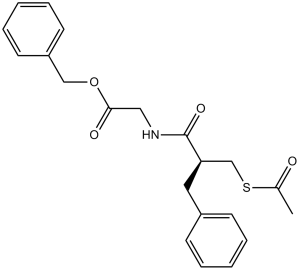
2-[[2-[(乙酰硫代)甲基]-1-氧代-3-苯基丙基]氨基]乙酸(苯基甲基)酯是一种N-酰基氨基酸。
雷卡多曲已在腹泻、急性腹泻和急性胃肠炎的基础科学研究和治疗中得到应用。 雷卡多曲(乙酰吗啡)是一种前药。口服后,它在肠道和肝脏中经酯酶转化为活性代谢物硫吗啡。它通过特异性抑制中性粒细胞弹性蛋白酶(NEP)、减少肠道中抗分泌肽(如血管活性肠肽和降钙素基因相关肽)的降解以及调节肠道水钠平衡发挥止泻作用[1][2]。 临床适应症为急性腹泻,适用于成人和儿童(包括新生儿)。它能缩短腹泻病程,减少排便量和次数,不影响正常的肠道蠕动,无便秘风险[1] 与洛哌丁胺相比,雷卡多曲(乙酰托芬)对分泌性腹泻疗效更佳,尤其适用于感染性腹泻(如轮状病毒感染),且不影响肠道病原体的排泄[1][2] 临床推荐剂量:成人每次100 mg,每日3次;儿童每日5 mg/kg,分3次服用,疗程不超过7天[1] |
| 分子式 |
C21H23NO4S
|
|
|---|---|---|
| 分子量 |
385.48
|
|
| 精确质量 |
385.134
|
|
| 元素分析 |
C, 65.43; H, 6.01; N, 3.63; O, 16.60; S, 8.32
|
|
| CAS号 |
81110-73-8
|
|
| 相关CAS号 |
Racecadotril-d5; 1246815-11-1
|
|
| PubChem CID |
107751
|
|
| 外观&性状 |
White to off-white solid powder
|
|
| 密度 |
1.2±0.1 g/cm3
|
|
| 沸点 |
574.5±50.0 °C at 760 mmHg
|
|
| 熔点 |
89ºC
|
|
| 闪点 |
301.2±30.1 °C
|
|
| 蒸汽压 |
0.0±1.6 mmHg at 25°C
|
|
| 折射率 |
1.579
|
|
| LogP |
3.44
|
|
| tPSA |
97.77
|
|
| 氢键供体(HBD)数目 |
1
|
|
| 氢键受体(HBA)数目 |
5
|
|
| 可旋转键数目(RBC) |
11
|
|
| 重原子数目 |
27
|
|
| 分子复杂度/Complexity |
485
|
|
| 定义原子立体中心数目 |
0
|
|
| SMILES |
O=C(CNC(C(CC1C=CC=CC=1)CSC(C)=O)=O)OCC1C=CC=CC=1
|
|
| InChi Key |
ODUOJXZPIYUATO-UHFFFAOYSA-N
|
|
| InChi Code |
InChI=1S/C21H23NO4S/c1-16(23)27-15-19(12-17-8-4-2-5-9-17)21(25)22-13-20(24)26-14-18-10-6-3-7-11-18/h2-11,19H,12-15H2,1H3,(H,22,25)
|
|
| 化学名 |
benzyl 2-[[2-(acetylsulfanylmethyl)-3-phenylpropanoyl]amino]acetate
|
|
| 别名 |
|
|
| HS Tariff Code |
2934.99.9001
|
|
| 存储方式 |
Powder -20°C 3 years 4°C 2 years In solvent -80°C 6 months -20°C 1 month |
|
| 运输条件 |
Room temperature (This product is stable at ambient temperature for a few days during ordinary shipping and time spent in Customs)
|
| 溶解度 (体外实验) |
|
|||
|---|---|---|---|---|
| 溶解度 (体内实验) |
配方 1 中的溶解度: ≥ 2.5 mg/mL (6.49 mM) (饱和度未知) in 10% DMSO + 40% PEG300 + 5% Tween80 + 45% Saline (这些助溶剂从左到右依次添加,逐一添加), 澄清溶液。
例如,若需制备1 mL的工作液,可将100 μL 25.0 mg/mL澄清DMSO储备液加入到400 μL PEG300中,混匀;然后向上述溶液中加入50 μL Tween-80,混匀;加入450 μL生理盐水定容至1 mL。 *生理盐水的制备:将 0.9 g 氯化钠溶解在 100 mL ddH₂O中,得到澄清溶液。 配方 2 中的溶解度: 2.5 mg/mL (6.49 mM) in 10% DMSO + 90% (20% SBE-β-CD in Saline) (这些助溶剂从左到右依次添加,逐一添加), 悬浊液; 超声助溶。 例如,若需制备1 mL的工作液,可将 100 μL 25.0 mg/mL澄清DMSO储备液加入900 μL 20% SBE-β-CD生理盐水溶液中,混匀。 *20% SBE-β-CD 生理盐水溶液的制备(4°C,1 周):将 2 g SBE-β-CD 溶解于 10 mL 生理盐水中,得到澄清溶液。 View More
配方 3 中的溶解度: ≥ 2.5 mg/mL (6.49 mM) (饱和度未知) in 10% DMSO + 90% Corn Oil (这些助溶剂从左到右依次添加,逐一添加), 澄清溶液。 1、请先配制澄清的储备液(如:用DMSO配置50 或 100 mg/mL母液(储备液)); 2、取适量母液,按从左到右的顺序依次添加助溶剂,澄清后再加入下一助溶剂。以 下列配方为例说明 (注意此配方只用于说明,并不一定代表此产品 的实际溶解配方): 10% DMSO → 40% PEG300 → 5% Tween-80 → 45% ddH2O (或 saline); 假设最终工作液的体积为 1 mL, 浓度为5 mg/mL: 取 100 μL 50 mg/mL 的澄清 DMSO 储备液加到 400 μL PEG300 中,混合均匀/澄清;向上述体系中加入50 μL Tween-80,混合均匀/澄清;然后继续加入450 μL ddH2O (或 saline)定容至 1 mL; 3、溶剂前显示的百分比是指该溶剂在最终溶液/工作液中的体积所占比例; 4、 如产品在配制过程中出现沉淀/析出,可通过加热(≤50℃)或超声的方式助溶; 5、为保证最佳实验结果,工作液请现配现用! 6、如不确定怎么将母液配置成体内动物实验的工作液,请查看说明书或联系我们; 7、 以上所有助溶剂都可在 Invivochem.cn网站购买。 |
| 制备储备液 | 1 mg | 5 mg | 10 mg | |
| 1 mM | 2.5942 mL | 12.9708 mL | 25.9417 mL | |
| 5 mM | 0.5188 mL | 2.5942 mL | 5.1883 mL | |
| 10 mM | 0.2594 mL | 1.2971 mL | 2.5942 mL |
1、根据实验需要选择合适的溶剂配制储备液 (母液):对于大多数产品,InvivoChem推荐用DMSO配置母液 (比如:5、10、20mM或者10、20、50 mg/mL浓度),个别水溶性高的产品可直接溶于水。产品在DMSO 、水或其他溶剂中的具体溶解度详见上”溶解度 (体外)”部分;
2、如果您找不到您想要的溶解度信息,或者很难将产品溶解在溶液中,请联系我们;
3、建议使用下列计算器进行相关计算(摩尔浓度计算器、稀释计算器、分子量计算器、重组计算器等);
4、母液配好之后,将其分装到常规用量,并储存在-20°C或-80°C,尽量减少反复冻融循环。
计算结果:
工作液浓度: mg/mL;
DMSO母液配制方法: mg 药物溶于 μL DMSO溶液(母液浓度 mg/mL)。如该浓度超过该批次药物DMSO溶解度,请首先与我们联系。
体内配方配制方法:取 μL DMSO母液,加入 μL PEG300,混匀澄清后加入μL Tween 80,混匀澄清后加入 μL ddH2O,混匀澄清。
(1) 请确保溶液澄清之后,再加入下一种溶剂 (助溶剂) 。可利用涡旋、超声或水浴加热等方法助溶;
(2) 一定要按顺序加入溶剂 (助溶剂) 。
| NCT Number | Recruitment | interventions | Conditions | Sponsor/Collaborators | Start Date | Phases |
| NCT05600062 | Recruiting | Drug: Placebo Drug: Racecadotril 100 milligram (MG) Oral Capsule |
Acute Respiratory Distress Syndrome |
Queen Mary University of London |
August 24, 2023 | Not Applicable |
| NCT01577043 | Completed | Drug: Racecadotril Drug: Placebo |
Acute Diarrhea Acute Gastroenteritis |
Centro Pediatrico Albina de Patino |
September 2011 | Phase 4 |
| NCT05216822 | Completed | Drug: Racecadotril | Acute Watery Diarrhea | Assiut University | June 1, 2018 | Phase 1 |
| NCT01153854 | Completed | Drug: Racecadotril Drug: Placebo groups |
Diarrhea | National Institute of Pediatrics, Mexico |
January 2007 | Phase 3 |
| NCT03473561 | Completed | Drug: Racecadotril plus ORS | Diarrhea, Infantile | Abbott | August 25, 2018 | Phase 3 |
|
|
|
InvivoChem的所有产品仅用于作科学研究,不面向患者销售
Copyright 2020 InvivoChem LLC | All Rights Reserved 粤ICP备20063088号-1


 COA
COA


 粤公网安备 44011102003439号
 463611831
