| 规格 | 价格 | 库存 | 数量 |
|---|---|---|---|
| 1mg |
|
||
| 2mg |
|
||
| 5mg |
|
||
| 10mg |
|
||
| 25mg |
|
||
| 50mg |
|
||
| 100mg |
|
||
| 250mg |
|
||
| 500mg |
|
||
| 1g |
|
||
| 2g |
|
||
| Other Sizes |
|

| 靶点 |
Kelch-like ECH-associated protein 1 (Keap1), leading to activation of nuclear factor erythroid 2-related factor 2 (Nrf2) [4]
AMP-activated protein kinase (AMPK) [4] HDAC; Bax; Caspase-3 |
|---|---|
| 体外研究 (In Vitro) |
- 在HT29人结肠癌细胞中,莱菔硫烷以剂量依赖方式诱导G2/M期细胞周期阻滞和凋亡。它降低cyclin B1和cdc2的表达,增加p21的表达。凋亡与细胞色素c从线粒体释放、caspases-3和-9的激活以及多聚(ADP-核糖)聚合酶(PARP)的切割相关[1]
- 在大鼠H9c2细胞中,莱菔硫烷可防止阿霉素诱导的氧化应激和细胞死亡。它提高超氧化物歧化酶(SOD)、过氧化氢酶(CAT)和谷胱甘肽过氧化物酶(GPx)的活性,减少活性氧(ROS)生成和丙二醛(MDA)水平,并通过上调Bcl-2、下调Bax和切割的caspase-3来抑制阿霉素诱导的凋亡[2] - 在多种癌细胞系(包括乳腺癌、结肠癌和肺癌细胞)中,莱菔硫烷通过抑制细胞增殖和诱导凋亡发挥抗癌活性。它还抑制I相酶(如细胞色素P450 1A1)的活性,并诱导II相解毒酶(如醌还原酶)[3] - 在高糖条件下的胰腺癌细胞中,莱菔硫烷激活Nrf2,进而抑制细胞增殖、迁移和侵袭,并促进凋亡。这种作用通过AMPK依赖的信号通路介导,因为莱菔硫烷增加AMPK的磷酸化,且该作用可被AMPK抑制剂逆转[4] 萝卜硫素以剂量依赖性方式导致细胞周期停滞并最终导致细胞死亡。细胞周期蛋白 A 和 B1 的较高表达与萝卜硫素诱导的细胞周期停止有关。萝卜硫素会导致细胞凋亡,这是细胞死亡的过程。萝卜硫素对分化的 CaCo2 细胞危害较小,可减缓静止结肠癌细胞 (HT29) 的生长恢复,同时还会降低其细胞活力 [1]。萝卜硫素预处理 H9c2 大鼠成肌细胞,减少了凋亡细胞的数量和促凋亡蛋白的表达(Bax、caspase-3 和细胞色素 c),以及阿霉素引起的线粒体膜电位的增加。此外,萝卜硫素通过增加血红素加氧酶-1 的 mRNA 和蛋白质表达来降低阿霉素诱导的线粒体中活性氧(ROS,由 MitoSOX Red 试剂测定)水平 [2]。 |
| 体内研究 (In Vivo) |
在小鼠中,莱菔硫烷通过抑制致癌物诱导的结肠癌前病变的形成而表现出抗癌活性。它还在多种组织(包括肝脏、结肠和小肠)中诱导II相解毒酶[3]
萝卜硫素可减少用单剂量 9,10-二甲基-1,2-苯并蒽治疗的 Sprague-Dawley 大鼠的乳腺肿瘤生长。萝卜硫素的施用可降低雌性 Sprague-Dawley 大鼠单剂量 DMBA 产生的乳腺肿瘤的发生率、多重性和重量,并减缓其进展 [3]。 |
| 细胞实验 |
- 对于HT29结肠癌细胞:将细胞在培养基中培养,用不同浓度(0-40μM)的莱菔硫烷处理不同时间。通过碘化丙啶染色和流式细胞术进行细胞周期分析。通过膜联蛋白V-FITC/PI染色、TUNEL测定和caspase活性检测评估凋亡。采用蛋白质印迹分析检测细胞周期相关蛋白(cyclin B1、cdc2、p21)和凋亡标志物(细胞色素c、caspases-3/-9、PARP)的表达[1]
- 对于H9c2细胞:在阿霉素暴露前,用莱菔硫烷(0-5μM)预处理细胞。使用相应的检测试剂盒测量氧化应激标志物(ROS、MDA、SOD、CAT、GPx)。通过MTT测定法确定细胞活力,并通过蛋白质印迹分析Bcl-2、Bax和切割的caspase-3来分析凋亡[2] - 对于胰腺癌细胞:将细胞在高糖条件下培养并经莱菔硫烷处理。通过CCK-8测定评估细胞增殖,通过transwell实验评估迁移和侵袭,通过流式细胞术评估凋亡。采用蛋白质印迹检测Nrf2、HO-1、NQO1、p-AMPK等相关蛋白。通过免疫荧光分析Nrf2的核转位[4] |
| 动物实验 |
小鼠经口灌胃给予萝卜硫素,剂量为200 μmol/kg体重。处理后,处死小鼠,并收集各种组织(肝脏、结肠、小肠)。测定组织匀浆中II相解毒酶(醌还原酶)的活性。对于致癌物诱导的癌前病变模型,小鼠同时接受致癌物和萝卜硫素处理,并通过组织学方法计数病变数量[3]
|
| 参考文献 |
[1]. Sulforaphane, a naturally occurring isothiocyanate, induces cell cycle arrest and apoptosis in HT29 human colon cancer cells. Cancer Res. 2000 Mar 1;60(5):1426-33.
[2]. Sulforaphane prevents doxorubicin-induced oxidative stress and cell death in rat H9c2 cells. Int J Mol Med. 2015 Jul;36(1):53-64. [3]. Anticarcinogenic activities of sulforaphane and structurally related synthetic norbornylisothiocyanates. Proc Natl Acad Sci U S A. 1994 Apr 12;91(8):3147-50. [4]. Activation of Nrf2 by Sulforaphane Inhibits High Glucose-Induced Progression of PancreaticCancer via AMPK Dependent Signaling. ell Physiol Biochem. 2018;50(3):1201-1215 |
| 其他信息 |
萝卜硫素是一种天然存在于十字花科蔬菜中的异硫氰酸酯。其抗癌活性部分归因于其诱导II期解毒酶,从而增强致癌物的解毒作用,以及抑制I期酶,从而降低前致癌物的活化[3]
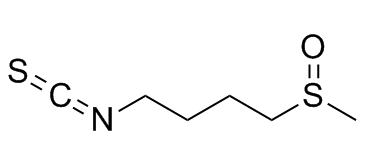
- 在结肠癌细胞中,萝卜硫素诱导细胞凋亡涉及线粒体途径,其特征是细胞色素c释放和caspase活化[1] - 萝卜硫素对阿霉素诱导的细胞损伤的保护作用与其抗氧化特性有关,可降低氧化应激并抑制细胞凋亡途径[2] 萝卜硫素是一种异硫氰酸酯,其氮原子上连接有一个4-(甲亚磺酰基)丁基。它具有抗肿瘤活性,是一种植物代谢产物、抗氧化剂和EC 3.5.1.98(组蛋白去乙酰化酶)抑制剂。它是一种亚砜和异硫氰酸酯。 萝卜硫素正在被研究用于治疗自闭症谱系障碍。它是一种天然存在的异硫氰酸酯,在多种西兰花中含量很高。 据报道,萝卜硫素存在于甘蓝(Brassica oleracea)、甘蓝变种(Brassica oleracea var. sabauda)和其他有相关数据的生物体中。 萝卜硫素是一种天然存在的植物化学物质,属于异硫氰酸酯类。作为硫代葡萄糖苷葡糖萝卜硫素(萝卜硫素葡糖苷)的苷元代谢产物,萝卜硫素具有抗氧化作用,并能有效刺激内源性解毒酶的活性。该物质具有抗癌特性,因为它能够诱导II期解毒酶,例如谷胱甘肽S-转移酶和醌还原酶,从而保护机体免受某些致癌物和有毒活性氧的侵害。西兰花芽含有大量的萝卜硫素,其他十字花科蔬菜,如卷心菜和羽衣甘蓝,也含有这种物质。(NCI04) |
| 分子式 |
C6H11NOS2
|
|---|---|
| 分子量 |
177.3
|
| 精确质量 |
177.028
|
| 元素分析 |
C, 40.65; H, 6.25; N, 7.90; O, 9.02; S, 36.17
|
| CAS号 |
4478-93-7
|
| 相关CAS号 |
142825-10-3 (R-isomer); 155320-20-0 (S-isomer); 4478-93-7 (racemic);
|
| PubChem CID |
5350
|
| 外观&性状 |
Colorless to light yellow liquid
|
| 密度 |
1.2±0.1 g/cm3
|
| 沸点 |
368.2±25.0 °C at 760 mmHg
|
| 闪点 |
176.5±23.2 °C
|
| 蒸汽压 |
0.0±0.8 mmHg at 25°C
|
| 折射率 |
1.567
|
| LogP |
0.23
|
| tPSA |
80.73
|
| 氢键供体(HBD)数目 |
0
|
| 氢键受体(HBA)数目 |
4
|
| 可旋转键数目(RBC) |
5
|
| 重原子数目 |
10
|
| 分子复杂度/Complexity |
152
|
| 定义原子立体中心数目 |
0
|
| SMILES |
O=S(CCCCN=C=S)C
|
| InChi Key |
SUVMJBTUFCVSAD-UHFFFAOYSA-N
|
| InChi Code |
InChI=1S/C6H11NOS2/c1-10(8)5-3-2-4-7-6-9/h2-5H2,1H3
|
| 化学名 |
1-isothiocyanato-4-(methylsulfinyl)butane
|
| 别名 |
Sulforafan; Sulforaphane; BroccoPhane; sulforaphane; 4478-93-7; 1-Isothiocyanato-4-(methylsulfinyl)butane; Sulforafan; 1-isothiocyanato-4-methylsulfinylbutane; Sulphoraphane; Butane, 1-isothiocyanato-4-(methylsulfinyl)-; CHEBI:47807; Detoxophane; Broccoli sprout extracts; 4-methyl-sulfinybutyl isothiocyanatel
|
| HS Tariff Code |
2934.99.9001
|
| 存储方式 |
Powder -20°C 3 years 4°C 2 years In solvent -80°C 6 months -20°C 1 month 注意: (1). 请将本产品存放在密封且受保护的环境中(例如氮气保护),避免吸湿/受潮和光照。 (2). 该产品在溶液状态不稳定,请现配现用。 |
| 运输条件 |
Room temperature (This product is stable at ambient temperature for a few days during ordinary shipping and time spent in Customs)
|
| 溶解度 (体外实验) |
DMSO : ≥ 62.5 mg/mL (~352.53 mM)
H2O : ~50 mg/mL (~282.02 mM) |
|---|---|
| 溶解度 (体内实验) |
配方 1 中的溶解度: ≥ 2.5 mg/mL (14.10 mM) (饱和度未知) in 10% DMSO + 40% PEG300 + 5% Tween80 + 45% Saline (这些助溶剂从左到右依次添加,逐一添加), 澄清溶液。
例如,若需制备1 mL的工作液,可将100 μL 25.0 mg/mL澄清DMSO储备液加入到400 μL PEG300中,混匀;然后向上述溶液中加入50 μL Tween-80,混匀;加入450 μL生理盐水定容至1 mL。 *生理盐水的制备:将 0.9 g 氯化钠溶解在 100 mL ddH₂O中,得到澄清溶液。 配方 2 中的溶解度: ≥ 2.5 mg/mL (14.10 mM) (饱和度未知) in 10% DMSO + 90% (20% SBE-β-CD in Saline) (这些助溶剂从左到右依次添加,逐一添加), 澄清溶液。 例如,若需制备1 mL的工作液,可将 100 μL 25.0 mg/mL澄清DMSO储备液加入900 μL 20% SBE-β-CD生理盐水溶液中,混匀。 *20% SBE-β-CD 生理盐水溶液的制备(4°C,1 周):将 2 g SBE-β-CD 溶解于 10 mL 生理盐水中,得到澄清溶液。 View More
配方 3 中的溶解度: ≥ 2.5 mg/mL (14.10 mM) (饱和度未知) in 10% DMSO + 90% Corn Oil (这些助溶剂从左到右依次添加,逐一添加), 澄清溶液。 配方 4 中的溶解度: 10 mg/mL (56.40 mM) in 30 % SBE-β-CD (这些助溶剂从左到右依次添加,逐一添加), 澄清溶液; 超声助溶. 1、请先配制澄清的储备液(如:用DMSO配置50 或 100 mg/mL母液(储备液)); 2、取适量母液,按从左到右的顺序依次添加助溶剂,澄清后再加入下一助溶剂。以 下列配方为例说明 (注意此配方只用于说明,并不一定代表此产品 的实际溶解配方): 10% DMSO → 40% PEG300 → 5% Tween-80 → 45% ddH2O (或 saline); 假设最终工作液的体积为 1 mL, 浓度为5 mg/mL: 取 100 μL 50 mg/mL 的澄清 DMSO 储备液加到 400 μL PEG300 中,混合均匀/澄清;向上述体系中加入50 μL Tween-80,混合均匀/澄清;然后继续加入450 μL ddH2O (或 saline)定容至 1 mL; 3、溶剂前显示的百分比是指该溶剂在最终溶液/工作液中的体积所占比例; 4、 如产品在配制过程中出现沉淀/析出,可通过加热(≤50℃)或超声的方式助溶; 5、为保证最佳实验结果,工作液请现配现用! 6、如不确定怎么将母液配置成体内动物实验的工作液,请查看说明书或联系我们; 7、 以上所有助溶剂都可在 Invivochem.cn网站购买。 |
| 制备储备液 | 1 mg | 5 mg | 10 mg | |
| 1 mM | 5.6402 mL | 28.2008 mL | 56.4016 mL | |
| 5 mM | 1.1280 mL | 5.6402 mL | 11.2803 mL | |
| 10 mM | 0.5640 mL | 2.8201 mL | 5.6402 mL |
1、根据实验需要选择合适的溶剂配制储备液 (母液):对于大多数产品,InvivoChem推荐用DMSO配置母液 (比如:5、10、20mM或者10、20、50 mg/mL浓度),个别水溶性高的产品可直接溶于水。产品在DMSO 、水或其他溶剂中的具体溶解度详见上”溶解度 (体外)”部分;
2、如果您找不到您想要的溶解度信息,或者很难将产品溶解在溶液中,请联系我们;
3、建议使用下列计算器进行相关计算(摩尔浓度计算器、稀释计算器、分子量计算器、重组计算器等);
4、母液配好之后,将其分装到常规用量,并储存在-20°C或-80°C,尽量减少反复冻融循环。
计算结果:
工作液浓度: mg/mL;
DMSO母液配制方法: mg 药物溶于 μL DMSO溶液(母液浓度 mg/mL)。如该浓度超过该批次药物DMSO溶解度,请首先与我们联系。
体内配方配制方法:取 μL DMSO母液,加入 μL PEG300,混匀澄清后加入μL Tween 80,混匀澄清后加入 μL ddH2O,混匀澄清。
(1) 请确保溶液澄清之后,再加入下一种溶剂 (助溶剂) 。可利用涡旋、超声或水浴加热等方法助溶;
(2) 一定要按顺序加入溶剂 (助溶剂) 。
| NCT Number | Recruitment | interventions | Conditions | Sponsor/Collaborators | Start Date | Phases |
| NCT04946526 | Completed | Dietary Supplement: Broccoli seed extract
Dietary Supplement: Broccoli seed extract with mustard seed powder |
Sulforaphane Bioavailability | Appalachian State University | 2022-06-01 | Not Applicable |
| NCT04364360 | Unknown status | Dietary Supplement: Sulforaphane extract | Metabolic Syndrome Non-Alcoholic Fatty Liver Disease Obesity |
University of Oxford | 2020-01-01 | Not Applicable |
| NCT05153174 | Completed | Drug: Sulforaphane | Chronic Kidney Disease stage3 Chronic Kidney Disease stage4 |
University of Rochester | 2022-05-02 | Phase 1 |
| NCT05233579 | Completed | Dietary Supplement: Sulforaphane | Fragile X Associated Tremor/ Ataxia Syndrome (Fxtas) (Diagnosis) |
University of California, Davis | 2021-06-25 | Not Applicable |
| NCT04805957 | Completed | Dietary Supplement: Sulforaphane | Autism Autism Spectrum Disorder Autistic Disorder |
Rutgers, The State University of New Jersey | 2022-07-07 | Not Applicable |
 Esculeogenin A
 Ferroptosis-IN-24
 OXPHOS-IN-2
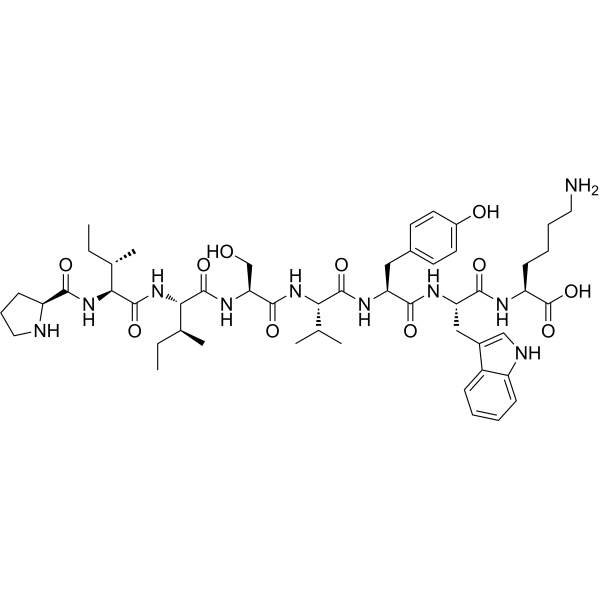 PIISVYWK
InvivoChem的所有产品仅用于作科学研究,不面向患者销售
Copyright 2020 InvivoChem LLC | All Rights Reserved 粤ICP备20063088号-1


 COA
COA
 粤公网安备 44011102003439号
 463611831
