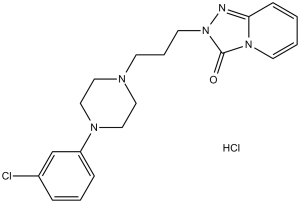
Trazodone HCl (AF-116;, KB-831)

别名: AF-1161; KB-831; KB 831; KB831; Trazodone; Trazodon; Beneficat; AF 1161; AF1161; Trazodone HCl 盐酸曲唑酮;2-[3-[4-(3-氯苯基)-1-哌嗪基]丙基]-1,2,4-三唑[4,3-a]吡啶-3(2H)-酮盐酸盐; 曲唑酮盐酸盐;2-[3-[4-(3-氯苯基)-1-哌嗪基]丙基-1,2,4-三唑并[4,;2-[3-[4-(3-氯苯基)-1-哌嗪基]丙; 曲美唑酮杂质;盐酸曲唑酮 USP标准品;盐酸曲唑酮 标准品
目录号: V0986 纯度: ≥98%
Trazodone HCl(Beneficat,KB 831、KB831、AF 1161、AF1161)是曲唑酮的盐酸盐,是一种已批准的血清素受体拮抗剂和再摄取抑制剂 (SARI) 类抗抑郁药物,具有治疗焦虑症的潜力。
Trazodone HCl (AF-116;, KB-831) CAS号: 25332-39-2
产品类别: 5-HT Receptor
产品仅用于科学研究,不针对患者销售
规格 价格 库存 数量
100mg
250mg
500mg
1g
2g
5g
Other Sizes

Other Forms of Trazodone HCl (AF-116;, KB-831):

  • Trazodone-d6 hydrochloride (AF-1161-d6)
  • 4-Chloro Trazodone hydrochloride
  • 4’-Hydroxy Trazodone
  • 曲拉唑酮
点击了解更多
InvivoChem产品被CNS等顶刊论文引用
纯度/质量控制文件

纯度: ≥98%

产品描述
曲唑酮盐酸盐(Beneficat,KB 831,KB831,AF 1161,AF1161)是曲唑酮的盐酸盐,是一种经批准的血清素受体拮抗剂和再摄取抑制剂(SARI)类抗抑郁药物,具有治疗焦虑症的潜力。从化学角度来看,它是一种苯基哌嗪类似物,具有抗焦虑(抗焦虑)和诱导睡眠(催眠)作用。其副作用和潜在毒性与最初的抗抑郁药(即单胺氧化酶抑制剂(MAOIs)和三环类抗抑郁药(TCA))有很大不同。
生物活性&实验参考方法
靶点
5-HT Receptor
Trazodone HCl (AF-116; KB-831) is a multi-target agent with high affinity for 5-hydroxytryptamine 2A (5-HT₂A) receptors (rat cortical membranes, Ki = 3.1 nM), moderate affinity for 5-HT₁A receptors (Ki = 82 nM) and histamine H₁ receptors (Ki = 17 nM), and weak affinity for α₁-adrenergic receptors (Ki = 240 nM) [1]
- Trazodone HCl (AF-116; KB-831) inhibits the 5-HT transporter (SERT) in rat brain synaptosomes with an IC₅₀ of 380 nM, showing lower potency for noradrenaline transporters (NET, IC₅₀ > 10,000 nM) and no activity on dopamine transporters (DAT, IC₅₀ > 10,000 nM) [1]
体外研究 (In Vitro)
在大鼠大脑皮层膜制备物中,Trazodone HCl (AF-116; KB-831)(10⁻¹⁰-10⁻⁶ M)可浓度依赖性取代[³H]-酮色林(选择性5-HT₂A配体)的结合,10⁻⁶ M时最大取代率达95%;在浓度高达10 μM时,其对[³H]-地西泮(GABA-A配体)的结合无显著影响[1]
- 在大鼠脑突触体SERT摄取实验中,Trazodone HCl (AF-116; KB-831)(100-5000 nM)可剂量依赖性抑制[³H]-5-HT摄取:380 nM时摄取减少50%(IC₅₀),5000 nM时达到最大抑制率(88%);在浓度高达10,000 nM时,其对[³H]-去甲肾上腺素摄取无影响[1]
- 在人血小板5-HT₂A受体结合实验中,Trazodone HCl (AF-116; KB-831)(10⁻⁹-10⁻⁵ M)可取代[³H]-螺哌隆的结合,Ki=4.5 nM,与对大鼠5-HT₂A受体的亲和力一致[1]
体内研究 (In Vivo)
在雄性ICR小鼠强迫游泳实验(FST,抑郁模型)中,于测试前60 min口服Trazodone HCl (AF-116; KB-831)(10、30、100 mg/kg),可剂量依赖性减少不动时间:100 mg/kg剂量较溶媒对照组使不动时间减少62%,且不影响自发活动(旷场实验)[1]
- 在雄性Sprague-Dawley大鼠习得性无助模型(不可逃避足底电击诱导抑郁)中,每日口服Trazodone HCl (AF-116; KB-831)(20、40 mg/kg)持续14天,可逆转无助行为:40 mg/kg剂量使逃避成功 rate(30秒内避开电击的百分比)从溶媒组的25%升至78%[1]
- 在雄性Wistar大鼠中,于测试前30 min腹腔注射Trazodone HCl (AF-116; KB-831)(5、15 mg/kg),可通过减少开放臂进入次数(15 mg/kg:较溶媒组减少45%)降低高架十字迷宫(EPM)中的探索行为,表明其具有抗焦虑样作用[1]
酶活实验
大鼠皮层5-HT₂A受体结合实验:将大鼠大脑皮层在冰浴的Tris-HCl缓冲液(50 mM,pH7.4,含120 mM NaCl、5 mM KCl)中匀浆,48,000 × g离心15 min。重悬膜沉淀后,取50 μg膜蛋白与[³H]-酮色林(0.5 nM)及不同浓度的Trazodone HCl (AF-116; KB-831)(10⁻¹¹-10⁻⁶ M)在25°C孵育60 min。非特异性结合定义为在10 μM米安色林存在下的结合。反应通过预浸泡于0.1%聚乙烯亚胺的GF/B滤膜过滤终止,滤膜用冰浴缓冲液洗涤3次。采用液体闪烁光谱法计数放射性,利用Cheng-Prusoff方程计算Ki值[1]
- 大鼠脑突触体SERT摄取实验:将大鼠全脑(去除小脑)在冰浴的蔗糖缓冲液(0.32 M)中匀浆,1000 × g离心10 min。上清液17,000 × g离心20 min分离突触体。突触体(0.5 mg蛋白/mL)与[³H]-5-HT(10 nM)及Trazodone HCl(100-5000 nM)在Krebs-Ringer-HEPES缓冲液(KRH:125 mM NaCl、4.8 mM KCl、1.2 mM CaCl₂、25 mM HEPES,pH7.4)中37°C孵育15 min。加入冰浴KRH终止摄取,17,000 × g离心10 min。沉淀用0.1 M NaOH溶解,液体闪烁计数法检测放射性以计算IC₅₀[1]
细胞实验
人血小板分离:新鲜人血收集于含EDTA的试管中,200 × g离心15 min分离富血小板血浆(PRP)。PRP 1000 × g离心10 min,血小板沉淀重悬于Tyrode缓冲液(137 mM NaCl、2.7 mM KCl、1.8 mM CaCl₂、1 mM MgCl₂、5.6 mM葡萄糖、10 mM HEPES,pH7.4)。
- 结合反应:血小板在冰浴的Tris-HCl缓冲液(50 mM,pH7.4)中匀浆,40,000 × g离心15 min制备血小板膜。取100 μg膜蛋白与[³H]-螺哌隆(0.3 nM)及Trazodone HCl (AF-116; KB-831)(10⁻⁹-10⁻⁵ M)在25°C孵育90 min。非特异性结合用10 μM酮色林确定。反应通过GF/C滤膜过滤终止,液体闪烁光谱法计数放射性,从浓度-效应曲线推导Ki值[1]
动物实验
Mouse Forced Swim Test (FST): Male ICR mice (20–22 g) were acclimated to the test environment for 3 days. Mice were randomly divided into 4 groups (n=10/group): Vehicle (0.5% methylcellulose, p.o.), Trazodone HCl 10 mg/kg (p.o.), 30 mg/kg (p.o.), 100 mg/kg (p.o.). Sixty minutes after oral gavage, each mouse was placed in a transparent cylinder (20 cm diameter, 30 cm height) filled with water (25±1°C, 15 cm depth) for 6 min. Immobility time (time spent floating without active swimming) was recorded during the last 4 min. Locomotor activity was measured in an open-field arena (40×40×30 cm) 24 h later to exclude non-specific effects [1]
- Rat Learned Helplessness Model: Male Sprague-Dawley rats (250–280 g) were subjected to inescapable foot shocks (0.8 mA, 10 s duration, 60 shocks/day) for 2 days to induce helplessness. Rats were then randomized into 3 groups (n=8/group): Vehicle (0.5% methylcellulose, p.o.), Trazodone HCl 20 mg/kg (p.o.), 40 mg/kg (p.o.). Drug was administered once daily for 14 days. On day 15, rats were tested in a shuttle box (two compartments separated by a door) with escapable shocks (0.5 mA). Escape latency and success rate (percentage of shocks avoided within 30 s) were recorded [1]
药代性质 (ADME/PK)
Absorption, Distribution and Excretion
Trazodone is rapidly absorbed in the gastrointestinal tract after oral administration, with a bioavailability of 63-91% and an AUC0-t of 18193.0 ng·h/mL. The effect of food on absorption varies from person to person and can sometimes lead to a decrease in the Cmax of trazodone. In 8 healthy volunteers, the Cmax was 1.47 ± 0.16 μg/mL after eating and 1.88 ± 0.42 μg/mL after fasting. The mean Tmax after a single 300 mg dose was 8 hours. Food can increase absorption by up to 20%. Less than 1% of the oral dose is excreted unchanged in the urine. In a pharmacokinetic study, approximately 60-70% of the radiolabeled drug was excreted in the urine within 48 hours. Approximately 9-29% of the drug was excreted in the feces within 60 to 100 hours. According to FDA medical review, the kidneys are responsible for 70% to 75% of trazodone excretion. Approximately 21% of trazodone is excreted in feces, and 0.13% of the unchanged drug is excreted unchanged in urine. A single-dose pharmacokinetic study in eight volunteers taking trazodone determined its volume of distribution to be 0.84 ± 0.16 L/kg. The FDA's medical review report on trazodone indicates a volume of distribution ranging from 0.47 to 0.84 L/kg. Compared to younger volunteers, older volunteers showed a lower total apparent clearance in a fasting state (5.1 L/h vs. 10.8 L/h). Another pharmacokinetic study determined that the total clearance of trazodone after a single dose in eight healthy subjects was 5.3 ± 0.9 L/h. In another study, the mean peak plasma concentrations of trazodone after oral administration of 25, 50, or 100 mg in healthy fasting adults were 490, 860, and 1620 ng/mL, respectively. The areas under the plasma concentration-time curve (AUC) for the 25 mg, 50 mg, and 100 mg dose groups were 3.44, 5.95, and 11.19 μg·hr/mL, respectively. Currently, cross-correlation data on AUC in fasting and non-fasting patients are limited; however, the presence of food appears to slightly increase the AUC of trazodone. In one study, after a single oral dose of 25 mg radiolabeled trazodone in healthy adults, the mean peak plasma drug concentrations were reached at 1.5 hours and 2.5 hours post-administration, respectively, in fasting and non-fasting states, at 650 ng/mL and 480 ng/mL. /Breast Milk/ A study investigated breast milk excretion after oral administration of a single trazodone tablet (50 mg) in six lactating women. Based on the areas under the plasma and breast milk concentration curves, the breast milk/plasma ratio of trazodone was small: 0.142 ± 0.045 (mean ± standard deviation). Assuming an infant drinks 500 mL of breast milk every 12 hours, the amount of trazodone ingested through breast milk is less than 0.005 mg/kg, while the mother's intake is 0.77 mg/kg. Therefore, it can be concluded that the amount of trazodone ingested by the infant through breast milk is very small. After oral administration of trazodone on an empty stomach, peak plasma concentrations occur approximately 1 hour after administration; when taken with food, peak plasma concentrations occur approximately 2 hours after administration. Steady-state plasma drug concentrations are typically reached within 4 days after oral administration of trazodone (25 mg each time, 2 or 3 times daily), but there is considerable inter-individual variability. For more complete data on the absorption, distribution, and excretion of trazodone (8 types), please visit the HSDB record page.
Metabolism/Metabolites
Trazodone is primarily metabolized and activated in the liver by the enzyme CYP3A4 to the active metabolite m-chlorophenylpiperazine (mCPP). The complete metabolic process of trazodone has not been fully elucidated. Other identified metabolites include dihydrodiol metabolites and carboxylic acids. Trazodone is extensively metabolized in the liver via hydroxylation, oxidation, N-oxidation, and pyridine ring cleavage. The hydroxylated metabolite and oxotriazopyridinepropionic acid (an inactive metabolite excreted in urine) are conjugated with glucuronic acid. In vitro studies indicate that the metabolism of trazodone to the active metabolite m-chlorophenylpiperazine is mediated by cytochrome P-450 (CYP) 3A4 isoenzymes. The manufacturer states that other metabolic pathways involved in trazodone metabolism are not fully elucidated. Animal studies indicate that trazodone does not induce its own metabolism. In vitro human liver microsomal studies show that trazodone is oxidatively cleaved by CYP3A4 to the active metabolite m-chlorophenylpiperazine (mCPP). Other metabolic pathways that may be involved in trazodone metabolism are not fully elucidated. Trazodone is extensively metabolized; less than 1% of the oral dose is excreted unchanged in the urine. Following oral administration of trazodone, approximately 70-75% of the dose is excreted in the urine within 72 hours, primarily as metabolites. About 20% of the oral trazodone is excreted in the urine as oxotriazopyridine propionic acid and its conjugates, and about 10% as dihydrodiol metabolites; less than 1% is excreted unchanged. The remaining portion of the oral drug is excreted primarily as metabolites via bile and in feces. Known metabolites of trazodone include p-hydroxytrazodone, epoxide trazodone, and 1-(3-chlorophenyl)piperazine. Trazodone is metabolized in the liver primarily through hydroxylation, N-dealkylation, N-oxidation, and pyridine ring cleavage. Cytochrome P450 (CYP) 3A4 catalyzes the formation of the major active metabolite, m-chlorophenylpiperazine (m-CPP). The metabolite can further bind with glucuronic acid or glutathione. CYP2D6 is responsible for the 4'-hydroxylation of m-CPP, generating at least one glutathione conjugate of m-CPP, namely a quinone imine-thiol adduct. The inactive metabolite oxotriazopyridine propionic acid and its conjugates account for approximately 20% of the total oral excretion. Less than 1% of the oral dose is excreted unchanged. Approximately 70-75% of the dose is excreted in the urine, with the remainder excreted in the bile. Half-life: Biphasic elimination, with an initial phase t1/2 α of 3-6 hours and a terminal phase t1/2 β of 5-9 hours. Biological half-life: Compared with younger volunteers, the plasma elimination half-life in elderly volunteers under fasting conditions was significantly prolonged (13.6 hours vs. 6 hours). Another study involving 8 healthy subjects with a single dose of trazodone showed a terminal elimination half-life of 7.3 ± 0.8 hours. Trazodone elimination has been reported to follow a biphasic pattern. The initial phase half-life is 3 to 6 hours, and the second phase half-life is 5 to 9 hours. The initial phase half-life of trazodone is approximately 3-6 hours, and the terminal phase half-life is approximately 5-9 hours. …After intravenous administration of trazodone hydrochloride to dogs, the mean elimination half-life ± standard deviation was 169 ± 53 minutes…After oral administration, the mean elimination half-life was 166 ± 47 minutes. After intravenous administration of 8 mg/kg in dogs, the volume of distribution (all values are averages) was 2.53 L/kg, the elimination half-life was 169 minutes, and the total plasma clearance was 11.15 mL/min/kg. After oral administration of 8 mg/kg, the bioavailability was 85%, the elimination half-life was 166 minutes, and the peak plasma concentration occurred at 445 minutes (mean), but there was significant inter-individual variability (± 271 minutes).
Oral absorption: In healthy volunteers (n=6), after oral administration of trazodone hydrochloride (AF-116; KB-831) (100 mg), the peak plasma concentration (Cmax) was 450 ng/mL, and the time to peak concentration was 1.5–2.5 hours (Tmax). Due to first-pass metabolism in the liver, the absolute oral bioavailability is 30%–60%[1]
- Distribution: Trazodone hydrochloride (AF-116; KB-831) has a large volume of distribution (human Vd = 1.2–1.8 L/kg) and easily crosses the blood-brain barrier. One hour after oral administration (50 mg/kg) to rats, the brain-to-plasma concentration ratio was 2.3[1]
- Metabolism: The drug is mainly metabolized in the liver by cytochrome P450 enzymes CYP3A4 (major) and CYP2D6 (minor). The main metabolites include m-chlorophenylpiperazine (m-CPP, active, 5-HT agonist) and hydroxytrazodone (inactive). The half-life of m-CPP (6-8 hours) is longer than that of the parent drug [1]
- Excretion and half-life: In humans, the terminal elimination half-life (t₁/₂) of trazodone hydrochloride (AF-116; KB-831) is 3-6 hours. Approximately 70% of the administered dose is excreted in the urine as metabolites within 72 hours, and less than 1% of the drug is excreted unchanged [1]
毒性/毒理 (Toxicokinetics/TK)
Hepatotoxicity
Some patients taking trazodone may experience abnormal liver function, but the elevation is usually small and generally does not require dose adjustment or discontinuation. At least a dozen patients taking trazodone have experienced acute, clinically significant liver injury with significantly elevated liver enzymes, with or without jaundice. The onset of injury ranges from a few days to 6 months. The pattern of serum enzyme elevation is usually hepatocellular, but mixed and cholestatic patterns have also been reported. Some cases have shown immune allergic reactions (rash, fever, eosinophilia), but these symptoms are not prominent. Autoimmune manifestations (autoantibodies) are uncommon. Rare cases of trazodone causing acute liver failure and death have been reported. Nefazodone, an antidepressant with a similar structure and mechanism of action to trazodone, was approved for marketing in 1998, but is now rarely used due to numerous reports of acute hepatocellular injury. These acute hepatocellular injuries have a high mortality rate and usually occur within 2 weeks to 6 months after the start of treatment. Probability Score: B (Probably but rarely causes clinically significant liver injury).
Effects during pregnancy and lactation
◉ Overview of medication use during lactation
Limited information suggests that low concentrations of trazodone in breast milk are not expected to have any adverse effects on breastfed infants, especially when the infant is older than 2 months or when a dose of 100 mg or less is taken at bedtime. A safety rating system found that trazodone can be used with caution during lactation.
◉ Effects on breastfed infants
A woman 6.5 weeks postpartum took 75 mg of trazodone, 75 mg of venlafaxine, and 75 mg of quetiapine daily before conception, during pregnancy, and during lactation. Her breastfed infant underwent a developmental assessment using the Bayley Scales of Infant Development at 12 months of age. Measurements on the psychomotor and behavioral scales were all within the normal range.
A mother started taking 200 mg of trazodone daily 4 weeks postpartum for 12 weeks, and her infant was followed up at 12 months of age. No adverse effects on growth and development were observed. A 15-week-old exclusively breastfed infant was breastfed while the mother was receiving daily treatment with 100 mg trazodone and 150 mg venlafaxine. The mother reported no adverse reactions, and no adverse reactions were recorded in the medical records. A woman was taking 1 mg estazolam and 50 mg trazodone once daily for 3 months postpartum. Her infant was over 50% breastfed, and no adverse reactions were observed at the 1-month and 3-month checkups. The infant's Denver Developmental Screening Test II results were normal at 6 months of age. Effects on lactation and breast milk: A non-pregnant woman with depression received citalopram treatment at 20 mg daily, later increased to 40 mg daily. For insomnia, 50 mg trazodone was added at bedtime, later increased to 100 mg at bedtime. One week later, the patient experienced breast milk leakage, staining her clothes. Her serum prolactin level was slightly elevated, but no other abnormalities were found. The dosage of trazodone was gradually reduced and eventually discontinued. One month later, the galactorrhea symptoms disappeared, and serum prolactin levels returned to normal. An observational study investigated the outcomes of 2859 women who took antidepressants in the two years prior to pregnancy. Compared to women who did not take antidepressants during pregnancy, mothers who took antidepressants in all three stages of pregnancy were 37% less likely to breastfeed at discharge. Mothers who took antidepressants only in late pregnancy were 75% less likely to breastfeed at discharge. Mothers who took antidepressants only in early and mid-pregnancy were not less likely to breastfeed at discharge. The specific antidepressants used by the mothers were not specified. A retrospective cohort study analyzed hospital electronic medical records from 2001 to 2008, comparing women who took antidepressants in late pregnancy (n = 575), women with mental illness but not taking antidepressants (n = 1552), and mothers who were not diagnosed with mental illness (n = 30,535). The results showed that women who had taken antidepressants were 37% less likely to breastfeed at discharge than women who had not been diagnosed with mental illness, but there was no significant difference in the likelihood of breastfeeding compared to mothers with untreated mental illness. None of the mothers were taking trazodone. A study of 80,882 Norwegian mother-infant pairs between 1999 and 2008 showed that 392 women reported starting antidepressants postpartum, and another 201 women reported starting antidepressants during pregnancy. Compared to the control group that had not been exposed to antidepressants, taking antidepressants in late pregnancy was associated with a 7% lower rate of breastfeeding initiation, but had no effect on the duration of breastfeeding or the rate of exclusive breastfeeding. Compared to the control group that had not been exposed to antidepressants, starting or restarting antidepressants postpartum was associated with a 63% lower rate of breastfeeding as the primary source at 6 months, a 51% lower rate of breastfeeding of any form, and a 2.6-fold increased risk of abrupt cessation of breastfeeding. No specific antidepressants were mentioned in the text. What is trazodone? Trazorel is an antidepressant and sedative used to treat symptoms of depression and insomnia (difficulty sleeping). Some brand names for trazorel include Desyrel®, Oleptro®, and Trazorel®. Sometimes, when people find out they are pregnant, they consider changing how they take the medication or even stopping it completely. However, it is essential to talk to your healthcare provider before changing how you take the medication. Your healthcare provider can discuss with you the benefits of treating your condition and the risks of not treating it during pregnancy. Some people may experience a relapse of symptoms if they stop taking this medication during pregnancy. If you stop taking this medication, be sure to schedule other forms of support (such as counseling or treatment) and develop a plan to restart the medication if necessary after delivery. If you plan to stop taking this medication, your healthcare provider may advise you to gradually reduce the dose rather than stopping it all at once. Abruptly stopping this medication may cause withdrawal symptoms in some people. It is currently unclear whether and how withdrawal symptoms affect pregnancy. ◈ I am taking trazorel. Will it make it harder for me to get pregnant? There are currently no studies confirming whether trazorel affects fertility. Some conditions, including depression, can make conception more difficult. Therefore, it is difficult to determine whether medications, treated conditions, or other factors affect fertility (the ability to conceive). For more information on depression, please see our fact sheet: https://mothertobaby.org/fact-sheets/depression-pregnancy/.
◈ Does taking trazodone increase the risk of miscarriage?
Miscarriage is common and can occur in any pregnancy for a variety of reasons. Two studies involving more than 200 people found that taking trazodone during pregnancy did not increase the risk of miscarriage. Some studies report that the risk of miscarriage is higher if depression during pregnancy is left untreated.
◈ Does taking trazodone increase the risk of birth defects?
There is a 3-5% risk of birth defects in every pregnancy, known as background risk. Some studies investigated more than 300 pregnancies in which trazodone was taken in early pregnancy. These studies did not find a higher risk of birth defects than background risk.
◈ Does taking trazodone during pregnancy increase the risk of other pregnancy-related problems? One study found that infants exposed to trazodone during pregnancy did not have an increased risk of preterm birth (delivery before 37 weeks of gestation) or low birth weight (birth weight less than 5 pounds 8 ounces [2500 grams]). Another study of more than 200 pregnancies found no increased risk of low birth weight, but a slightly increased risk of preterm birth. However, studies also suggest that not treating depression during pregnancy may increase the risk of pregnancy complications. Therefore, it is difficult to determine whether the medication, the condition being treated, or other factors increase the risk of pregnancy complications. ◈ I need to take trazodone throughout my pregnancy. Will it cause withdrawal symptoms in my baby after birth? Taking trazodone during pregnancy may cause temporary symptoms in newborns shortly after birth. These symptoms are sometimes called withdrawal reactions. Symptoms include irritability, difficulty breathing, or feeding difficulties. Not all infants exposed to trazodone will experience these symptoms. A study of 18 infants who took 50 mg/day of trazodone for insomnia in late pregnancy showed that none of the infants experienced withdrawal symptoms. It is important to inform your healthcare provider that you are taking trazodone so that your baby can receive the best care if symptoms occur.
◈ Will taking trazodone during pregnancy affect my child's future behavior or learning?
There is currently no research indicating that trazodone causes behavioral or learning problems in children.
◈ Breastfeeding while taking trazodone:
Information is limited regarding the use of trazodone while breastfeeding. Small amounts of trazodone have been detected in breast milk. If you suspect your baby is experiencing any symptoms (such as being more sleepy than usual), contact your baby's healthcare provider. Be sure to consult your healthcare provider about all questions regarding breastfeeding.
◈ Will taking trazodone affect fertility or increase the risk of birth defects in the fetus?
There is currently no research exploring whether trazodone affects male fertility (the ability to impregnate a partner) or increases the risk of birth defects. People with conditions such as depression may have a lower libido, which may make it more difficult for them to impregnate a partner. Generally, medications that the father or sperm donor is exposed to are unlikely to increase the risk of pregnancy. For more information, please refer to MotherToBaby’s “Father Exposure” Fact Sheet at https://mothertobaby.org/fact-sheets/paternal-exposures-pregnancy/.
Protein Binding
According to in vitro studies, the plasma protein binding rate of trazodone is 89-95%.
Plasma protein binding: The plasma protein binding rate of trazodone hydrochloride (AF-116; KB-831) in human plasma (as determined by ultrafiltration) is 85-95% in the concentration range of 100-1000 ng/mL, and there is no concentration-dependent variation [1]
-Acute toxicity: In male ICR mice, the oral LD₅₀ of trazodone hydrochloride (AF-116; KB-831) is >2000 mg/kg; in male Sprague-Dawley rats, the oral LD₅₀ is >1500 mg/kg. In rats, no death or serious toxicity (convulsions, respiratory depression) was observed at doses up to 1000 mg/kg [1] - Chronic toxicity: In a 28-day repeated oral toxicity study in rats (dose: 50, 150, 450 mg/kg/day), the No Adverse Effect Level (NOAEL) was observed at 150 mg/kg/day. Mild sedation and a 10% increase in liver weight (without histopathological changes) were observed at a daily dose of 450 mg/kg [1] - Adverse reactions and drug interactions: In clinical trials, common adverse reactions to trazodone hydrochloride (AF-116; KB-831) (100–400 mg/day, orally) included somnolence (32%), dizziness (18%), dry mouth (12%), and nausea (8%); these adverse reactions were mild to moderate and resolved with continued treatment. Concomitant use with monoamine oxidase inhibitors (MAOIs) increases the risk of serotonin syndrome (hyperthermia, confusion), and concomitant use with sedatives (benzodiazepines) enhances central nervous system depression [1]
参考文献

[1]. Trazodone. A review of its pharmacology, therapeutic use in depression and therapeutic potential in other disorders. Drugs Aging, 1994. 4(4): p. 331-55.

其他信息
Trazodone is an N-arylpiperazine compound, in which one nitrogen atom is replaced by a 3-chlorophenyl group and the other nitrogen atom is replaced by a 3-(3-oxo[1,2,4]triazolo[4,3-a]pyridin-2(3H)-yl)propyl group. It possesses a variety of pharmacological effects, including antidepressant, sedative, adrenergic antagonist, H1 receptor antagonist, serotonin reuptake inhibitor, and anxiolytic activity. It belongs to the N-alkylpiperazine, N-arylpiperazine, triazolopyridine class of compounds, and is also a monochlorobenzene class of compounds. Trazodone is a triazolopyridine derivative of serotonin receptor antagonists and reuptake inhibitors (SARIs) antidepressants. Trazodone is used to treat adult depression, and its efficacy is comparable to other drugs such as tricyclic antidepressants (TCAs), selective serotonin reuptake inhibitors (SSRIs), and serotonin-norepinephrine receptor inhibitors (SNRIs). The unique feature of this drug is that it does not cause side effects such as anxiety, sexual dysfunction, or insomnia like SSRIs and SNRIs. Trazodone acts on multiple receptors, including certain histamine receptors, serotonin receptors, and adrenergic receptors, which distinguishes it from other antidepressants that act on a narrower range of neurotransmitters. Trazodone was initially approved by the FDA in 1981. Trazodone is a serotonin reuptake inhibitor. Trazodone is a serotonergic modulating antidepressant used to treat depression, aggressive behavior, and panic disorder. Trazodone treatment may cause a transient increase in serum transaminase levels, usually asymptomatic, and has been associated with rare cases of clinically significant acute liver injury. Trazodone is a synthetic triazolopyridine derivative with antidepressant and sedative effects. Trazodone is a serotonin reuptake inhibitor whose chemical structure is independent of tricyclic, tetracyclic, or other antidepressants. It is effective in patients with schizoaffective disorder, major depressive disorder, and depression accompanied by insomnia and anxiety. (NCI04)
Trazodone is a serotonin reuptake inhibitor used as an antidepressant. It has been shown to be effective in patients with major depressive disorder and other subtypes of depression. It is generally more effective in depression accompanied by insomnia and anxiety. This drug does not worsen psychotic symptoms in patients with schizophrenia or schizoaffective disorder. (From JAMA Drug Evaluation Annals, 1994, p. 309)
A serotonin reuptake inhibitor used as an antidepressant. It has been shown to be effective in patients with major depressive disorder and other subtypes of depression. It is generally more effective in depression accompanied by insomnia and anxiety. This drug does not worsen psychotic symptoms in patients with schizophrenia or schizoaffective disorder. (From JAMA Drug Evaluation Annals, 1994, p. 309)
See also: Trazodone hydrochloride (salt form).
Drug Indications
Trazodone is indicated for the treatment of major depressive disorder (MDD). It has also been used off-label for adjunctive treatment of alcohol dependence, as well as for the treatment of anxiety and insomnia. Due to its action on multiple neurotransmitter receptors, trazodone can also be used to treat symptoms of diseases such as dementia, Alzheimer's disease, schizophrenia, eating disorders, and fibromyalgia (off-label use).
Mechanism of Action
The mechanism of action of trazodone is not fully understood, but it is known to inhibit serotonin reuptake and block histamine receptors and α1-adrenergic receptors. Although trazodone is often considered a selective serotonin reuptake inhibitor, several studies suggest that its mechanism of action may also include antagonism of serotonin 5-HT1a, 5-HT1c, and 5-HT2 receptor subtypes. Trazodone has been reported to have the strongest antagonistic effect on the serotonin 5-HT21c receptor, preventing serotonin uptake. In addition to acting on serotonin receptors, trazodone has also been shown to inhibit serotonin transporters. The antidepressant effect of trazodone stems from its inhibition of receptor uptake, which typically reduces circulating neurotransmitter levels, thereby exacerbating depressive symptoms. The exact mechanism of trazodone's antidepressant effect is unclear, but studies have shown that the drug selectively blocks the reuptake of serotonin (5-HT) on the presynaptic neuronal membrane. Therefore, the effect of serotonin may be enhanced. Unlike other antidepressants (such as tricyclic antidepressants), trazodone may have a dual effect on the central serotonergic system. Animal studies have shown that high doses (6-8 mg/kg) of trazodone act as a serotonin agonist, while low doses (0.05-1 mg/kg) antagonize the effect of serotonin. Trazodone does not appear to affect the reuptake of dopamine or norepinephrine in the central nervous system; however, animal studies suggest that trazodone may enhance the release of norepinephrine in nerve tissue. Trazodone does not induce serotonin release in vitro. Trazodone hydrochloride (AF-116; KB-831) is a triazolidine antidepressant developed in the 1970s. It differs from tricyclic antidepressants (TCAs) in that it does not have significant anticholinergic, cardiotoxic, or orthostatic hypotension effects at therapeutic doses.[1] - Mechanism of action: Its antidepressant effect is attributed to a dual action: 1) inhibiting the presynaptic 5-HT transporter (SERT) to increase synaptic 5-HT levels; 2) antagonizing postsynaptic 5-HT₂A receptors, thereby reducing 5-HT₂A-mediated overstimulation and improving mood.[1] - Indications for treatment: Approved for the treatment of major depressive disorder (MDD) in adults. It has also been used off-label for the treatment of insomnia (due to its sedative effect via H₁ receptor antagonism) and anxiety disorders (e.g., generalized anxiety disorder) [1]
- Clinical efficacy: In a 6-week randomized controlled trial (n=240 patients with MDD), trazodone hydrochloride (AF-116; KB-831) (150–400 mg/day, orally) reduced Hamilton Depression Rating Scale (HDRS) scores by 52%, compared to 28% in the placebo group. The response rate (≥50% reduction in HDRS score) was 68% in the treatment group and 32% in the placebo group [1]
*注: 文献方法仅供参考, InvivoChem并未独立验证这些方法的准确性
化学信息 & 存储运输条件
分子式
C19H23CL2N5O
分子量
408.3248
精确质量
407.127
元素分析
C, 55.89; H, 5.68; Cl, 17.36; N, 17.15; O, 3.92
CAS号
25332-39-2
相关CAS号
Trazodone-d6 hydrochloride; 1181578-71-1; Trazodone; 19794-93-5
PubChem CID
5533
外观&性状
White to off-white crystalline powder
沸点
528.5ºC at 760 mmHg
熔点
223ºC
闪点
273.4ºC
蒸汽压
2.94E-11mmHg at 25°C
LogP
3.166
tPSA
45.78
氢键供体(HBD)数目
0
氢键受体(HBA)数目
4
可旋转键数目(RBC)
5
重原子数目
26
分子复杂度/Complexity
611
定义原子立体中心数目
0
SMILES
0
InChi Key
OHHDIOKRWWOXMT-UHFFFAOYSA-N
InChi Code
InChI=1S/C19H22ClN5O.ClH/c20-16-5-3-6-17(15-16)23-13-11-22(12-14-23)8-4-10-25-19(26)24-9-2-1-7-18(24)21-25;/h1-3,5-7,9,15H,4,8,10-14H2;1H
化学名
2-[3-[4-(3-chlorophenyl)piperazin-1-yl]propyl]-[1,2,4]triazolo[4,3-a]pyridin-3-one;hydrochloride
别名
AF-1161; KB-831; KB 831; KB831; Trazodone; Trazodon; Beneficat; AF 1161; AF1161; Trazodone HCl
HS Tariff Code
2934.99.9001
存储方式

Powder      -20°C    3 years

                     4°C     2 years

In solvent   -80°C    6 months

                  -20°C    1 month

注意: 请将本产品存放在密封且受保护的环境中,避免吸湿/受潮。
运输条件
Room temperature (This product is stable at ambient temperature for a few days during ordinary shipping and time spent in Customs)
溶解度数据
溶解度 (体外实验)
DMSO: 4~16.7 mg/mL (9.8~40.8 mM)
Water: <1 mg/mL
Ethanol: <1 mg/mL
溶解度 (体内实验)
配方 1 中的溶解度: ≥ 1.67 mg/mL (4.09 mM) (饱和度未知) in 10% DMSO + 40% PEG300 + 5% Tween80 + 45% Saline (这些助溶剂从左到右依次添加,逐一添加), 澄清溶液。
例如,若需制备1 mL的工作液,可将100 μL 16.7 mg/mL澄清的DMSO储备液加入到400 μL PEG300中,混匀;再向上述溶液中加入50 μL Tween-80,混匀;然后加入450 μL生理盐水定容至1 mL。
*生理盐水的制备:将 0.9 g 氯化钠溶解在 100 mL ddH₂O中,得到澄清溶液。

配方 2 中的溶解度: ≥ 1.67 mg/mL (4.09 mM) (饱和度未知) in 10% DMSO + 90% (20% SBE-β-CD in Saline) (这些助溶剂从左到右依次添加,逐一添加), 澄清溶液。
例如,若需制备1 mL的工作液,可将 100 μL 16.7mg/mL澄清的DMSO储备液加入到900μL 20%SBE-β-CD生理盐水中,混匀。
*20% SBE-β-CD 生理盐水溶液的制备(4°C,1 周):将 2 g SBE-β-CD 溶解于 10 mL 生理盐水中,得到澄清溶液。

View More

配方 3 中的溶解度: ≥ 1.67 mg/mL (4.09 mM) (饱和度未知) in 10% DMSO + 90% Corn Oil (这些助溶剂从左到右依次添加,逐一添加), 澄清溶液。
例如,若需制备1 mL的工作液,可将 100 μL 16.7 mg/mL 澄清 DMSO 储备液加入到 900 μL 玉米油中并混合均匀。


请根据您的实验动物和给药方式选择适当的溶解配方/方案:
1、请先配制澄清的储备液(如:用DMSO配置50 或 100 mg/mL母液(储备液));
2、取适量母液,按从左到右的顺序依次添加助溶剂,澄清后再加入下一助溶剂。以 下列配方为例说明 (注意此配方只用于说明,并不一定代表此产品 的实际溶解配方):
10% DMSO → 40% PEG300 → 5% Tween-80 → 45% ddH2O (或 saline);
假设最终工作液的体积为 1 mL, 浓度为5 mg/mL: 取 100 μL 50 mg/mL 的澄清 DMSO 储备液加到 400 μL PEG300 中,混合均匀/澄清;向上述体系中加入50 μL Tween-80,混合均匀/澄清;然后继续加入450 μL ddH2O (或 saline)定容至 1 mL;

3、溶剂前显示的百分比是指该溶剂在最终溶液/工作液中的体积所占比例;
4、 如产品在配制过程中出现沉淀/析出,可通过加热(≤50℃)或超声的方式助溶;
5、为保证最佳实验结果,工作液请现配现用!
6、如不确定怎么将母液配置成体内动物实验的工作液,请查看说明书或联系我们;
7、 以上所有助溶剂都可在 Invivochem.cn网站购买。
制备储备液 1 mg 5 mg 10 mg
1 mM 2.4491 mL 12.2453 mL 24.4906 mL
5 mM 0.4898 mL 2.4491 mL 4.8981 mL
10 mM 0.2449 mL 1.2245 mL 2.4491 mL

1、根据实验需要选择合适的溶剂配制储备液 (母液):对于大多数产品,InvivoChem推荐用DMSO配置母液 (比如:5、10、20mM或者10、20、50 mg/mL浓度),个别水溶性高的产品可直接溶于水。产品在DMSO 、水或其他溶剂中的具体溶解度详见上”溶解度 (体外)”部分;

2、如果您找不到您想要的溶解度信息,或者很难将产品溶解在溶液中,请联系我们;

3、建议使用下列计算器进行相关计算(摩尔浓度计算器、稀释计算器、分子量计算器、重组计算器等);

4、母液配好之后,将其分装到常规用量,并储存在-20°C或-80°C,尽量减少反复冻融循环。

计算器

摩尔浓度计算器可计算特定溶液所需的质量、体积/浓度,具体如下:

  • 计算制备已知体积和浓度的溶液所需的化合物的质量
  • 计算将已知质量的化合物溶解到所需浓度所需的溶液体积
  • 计算特定体积中已知质量的化合物产生的溶液的浓度
使用摩尔浓度计算器计算摩尔浓度的示例如下所示:
假如化合物的分子量为350.26 g/mol,在5mL DMSO中制备10mM储备液所需的化合物的质量是多少?
  • 在分子量(MW)框中输入350.26
  • 在“浓度”框中输入10,然后选择正确的单位(mM)
  • 在“体积”框中输入5,然后选择正确的单位(mL)
  • 单击“计算”按钮
  • 答案17.513 mg出现在“质量”框中。以类似的方式,您可以计算体积和浓度。

稀释计算器可计算如何稀释已知浓度的储备液。例如,可以输入C1、C2和V2来计算V1,具体如下:

制备25毫升25μM溶液需要多少体积的10 mM储备溶液?
使用方程式C1V1=C2V2,其中C1=10mM,C2=25μM,V2=25 ml,V1未知:
  • 在C1框中输入10,然后选择正确的单位(mM)
  • 在C2框中输入25,然后选择正确的单位(μM)
  • 在V2框中输入25,然后选择正确的单位(mL)
  • 单击“计算”按钮
  • 答案62.5μL(0.1 ml)出现在V1框中
g/mol

分子量计算器可计算化合物的分子量 (摩尔质量)和元素组成,具体如下:

注:化学分子式大小写敏感:C12H18N3O4  c12h18n3o4
计算化合物摩尔质量(分子量)的说明:
  • 要计算化合物的分子量 (摩尔质量),请输入化学/分子式,然后单击“计算”按钮。
分子质量、分子量、摩尔质量和摩尔量的定义:
  • 分子质量(或分子量)是一种物质的一个分子的质量,用统一的原子质量单位(u)表示。(1u等于碳-12中一个原子质量的1/12)
  • 摩尔质量(摩尔重量)是一摩尔物质的质量,以g/mol表示。
/

配液计算器可计算将特定质量的产品配成特定浓度所需的溶剂体积 (配液体积)

  • 输入试剂的质量、所需的配液浓度以及正确的单位
  • 单击“计算”按钮
  • 答案显示在体积框中
动物体内实验配方计算器(澄清溶液)
第一步:请输入基本实验信息(考虑到实验过程中的损耗,建议多配一只动物的药量)
第二步:请输入动物体内配方组成(配方适用于不溶/难溶于水的化合物),不同的产品和批次配方组成不同,如对配方有疑问,可先联系我们提供正确的体内实验配方。此外,请注意这只是一个配方计算器,而不是特定产品的确切配方。
+
+
+

计算结果:

工作液浓度 mg/mL;

DMSO母液配制方法 mg 药物溶于 μL DMSO溶液(母液浓度 mg/mL)。如该浓度超过该批次药物DMSO溶解度,请首先与我们联系。

体内配方配制方法μL DMSO母液,加入 μL PEG300,混匀澄清后加入μL Tween 80,混匀澄清后加入 μL ddH2O,混匀澄清。

(1) 请确保溶液澄清之后,再加入下一种溶剂 (助溶剂) 。可利用涡旋、超声或水浴加热等方法助溶;
            (2) 一定要按顺序加入溶剂 (助溶剂) 。

临床试验信息
NCT Number Recruitment interventions Conditions Sponsor/Collaborators Start Date Phases
NCT04468776 Active
Recruiting
Drug: Zolpidem
Drug: Trazodone
Chronic Insomnia California Pacific Medical
Center Research Institute
February 25, 2022 Phase 4
NCT05307003 Recruiting Drug: Trazodone
Drug: Quetiapine
Delirium
Psych
University of Southern
California
April 1, 2023 N/A
NCT05299398 Not yet recruiting Drug: Trazodone
Drug: Placebo
Postpartum Depression Verinder Sharma September 1, 2022 Phase 1
NCT05085808 Not yet recruiting Drug: Trazodone
Drug: Quetiapine
Delirium
Morality
University of Southern
California
March 1, 2024 Phase 4
NCT03668041 Recruiting Drug: Trazodone
Drug: Eszopiclone
Insomnia VA Office of Research and
Development
February 25, 2021 Phase 3
生物数据图片
  • Trazodone HCl
    Electrocardiogram showing second-degree Mobitz type 1 atrioventricular block.Am J Case Rep.2015May 27;16:319-21.
  • Trazodone HCl
    Telemetry showing second-degree Mobitz type 1 atrioventricular block recurring after every few beats of normal atrioventricular conduction.Am J Case Rep.2015May 27;16:319-21.
  • Trazodone HCl
    Telemetry showing resolution of frequent second-degree Mobitz type 1 atrioventricular block.Am J Case Rep.2015May 27;16:319-21.
相关产品
联系我们