| 规格 | 价格 | 库存 | 数量 |
|---|---|---|---|
| 50mg |
|
||
| 100mg |
|
||
| Other Sizes |
|
| 体外研究 (In Vitro) |
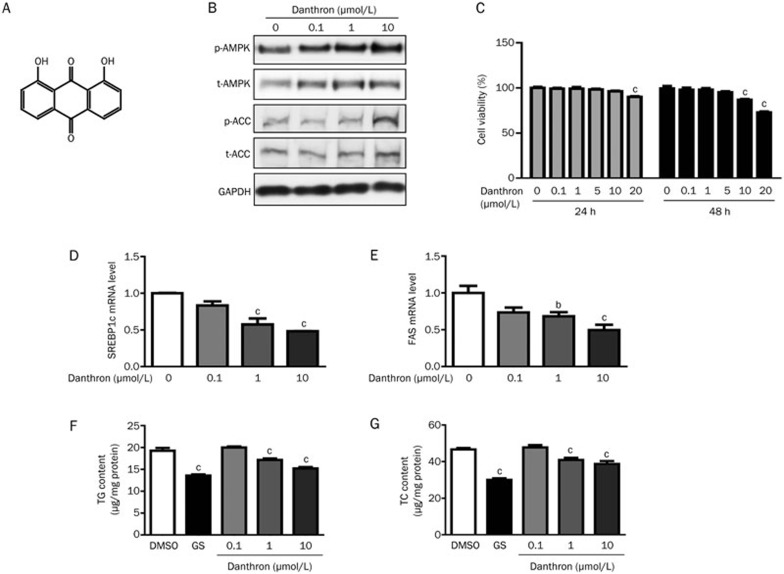
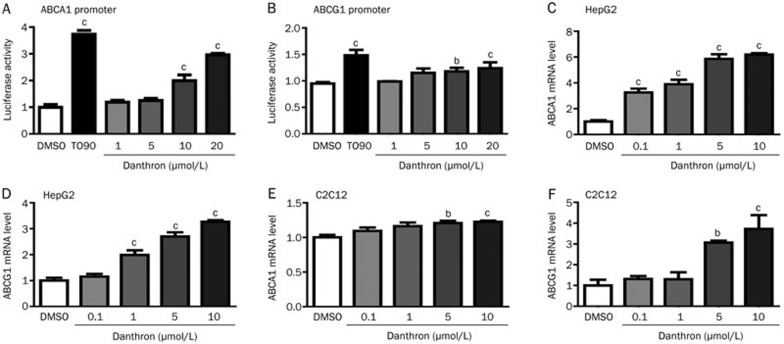
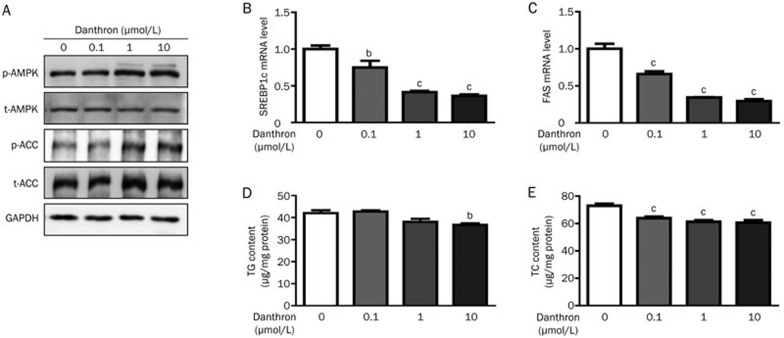
在 HepG2 和 C2C12 细胞中,丹曲林(0.1、1 和 10 μM)剂量依赖性地增加 AMPK 和乙酰辅酶 A 羧化酶 (ACC) 磷酸化。同时,使用 Danthron 会导致脂肪酸合酶 (FAS) 和甾醇调节元件结合蛋白 1c (SREBP1c) 基因的表达以及总胆固醇 (TC) 和甘油三酯 (TG) 的水平显着降低。 )。此外,使用 Danthron 可有效提高葡萄糖消耗。 Danthron 激活 AMPK 信号系统,有效降低细胞内脂质含量,促进体外葡萄糖摄入。对于 HepG2 细胞,10 μM Danthron/24 小时是安全的。 HepG2 细胞达到 80% 汇合后,用 Danthron (0.1–10 μM) 在不含 FBS 的培养基中培养 8 小时。然后提取细胞以准备蛋白质印迹测试。虽然 t-AMPK 蛋白没有变化,但使用丹蒽醌时 p-AMPK 蛋白出现剂量依赖性升高 [1]。 danthron 抑制 9-cis 视黄酸 (9cRA) 产生的视黄酸 X 受体 α (RXRα) 的反式激活,IC50 为 0.11 μM。使用等温滴定量热法 (ITC) 测定,进一步阐明了 Danthron 与 RXRα-配体结合域 (LBD) 结合的化学计量。 ITC 实验得出 Danthron 与 RXRα-LBD 结合的 KD 值为 7.5 μM [2]。
|
|---|---|
| 体内研究 (In Vivo) |
丹蒽醌在体内起到胰岛素增敏剂的作用。 Danthron 可增强饮食诱导肥胖 (DIO) 小鼠的胰岛素敏感性。胰岛素耐受性测试结果表明,与对照组相比,用 Danthron (5 mg/kg) 治疗的饮食诱导的肥胖小鼠在胰岛素激发后表现出较低的血糖水平 [2]。
|
| 药代性质 (ADME/PK) |
Absorption, Distribution and Excretion
Following its administration within 24 hr of the induction of labor in 12 women, dantron was found in maternal urine, neonatal urine and amniotic fluide. Most of the drug appeared as a glucuronide in both mothers and babies. Male Wistar rats were given the sodium salt of dantron intravenously at 4.8, 22 or 58 umol/kg (1.2, 5.3 or 14 mg/kg) bw or at 12 umol/kg (28.8 mg/kg) bw by gastric tube. ... Following intravenous administration, about 80% of the dantron conjugates in bile were excreted after 1 hr; the dose fractions found after 5 hr represented about 20%, 30% and 40% of the low-; intermediate- and high-dose levels, respectively. The corresponding fractions in urine were 16%, 12% and 10%, giving rise to bile:urine excretion ratios of 1.3, 2.7 and 4.0, respectively. Only 30-50% of the dose could be accounted for by conjugates. Earlier studies also showed that after oral administration of dantron only 30-40% of the total dose administered could be recovered in feces and urine, mostly during the first 24 hr. /Dantron sodium salt/ Like other anthraquinone compounds, dantron is partially absorbed from the small intestine. Rats were infused with danthron (I) at doses of 0.48, 2.2 and 5.8 umol/100 g body weight, or given 12 umol/100 g with gastric tube. TLC of bile and urine demonstrated a number of metabolites, at both administration routes. These included danthron monosulfate (II) and -glucuronide (III), two other phase 2 metabolites which behaved as the corresponding diconjugates, and several phase 1 metabolites (IV) in conjugated form. ... Following infusion, about 80% of the danthron conjugates in bile were excreted after 1 hour; the dose fractions found after 5 hours represented about 20%, 30%, and 40% at the low, intermediate and high dose level, respectively. The corresponding fractions in urine were 16%, 12% and 10%, giving rise to bile:urine excretion ratios of 1.3, 2.7 and 4.0, respectively. This change in excretion pattern was associated with changes in metabolite muster, which involved a decrease in the balance of IV:I conjugates, as well as an increase in III:II ratio. IV was more abundantly present in bile than in urine, and showed a more sustained excretion than the danthron conjugates. By intragastric administration, the cumulated excretion (bile + urine) of I conjugates were only 6%, 8% and 5% of dose, in three consecutive 6 hours' periods (0-6, 6-12 and 12-18 hours after dosing). The bile:urine excretion ratios seemed to decrease with time, as did the III:II ratio... Metabolism / Metabolites In vitro, rat jejunum and colon transformed dantron into its monoglucuronide and monosulfate, the monoglucuronide being the major metabolite. Male Wistar rats were given the sodium salt of dantron intravenously at 4.8, 22 or 58 umol/kg (1.2, 5.3 or 14 mg/kg) bw or at 12 umol/kg (28.8 mg/kg) bw by gastric tube. Metabolites identified in the bile and urine following administration by either route included the monosulfate, beta-glucuronide and other unidentified metabolites. /Dantron sodium salt/ Danthron infused intravenously in rats shows a complex dose-dependent pattern of metabolism and excretion. The metabolites, particularly the more polar ones, are in general excreted predominantly in bile, to a lesser extent in urine. ... /This/ paper describes a further study within a bile-derived metabolite group, which proved to be particularly heterogeneous. It contained more than a dozen metabolites, which were conjugates of four different aglycons including the parent danthron... ... Everted sacs of rat jejunum and stripped colon were filled with Krebs-Henseleit solution (K-H) on the serosal (BL) side, and bathed at the mucosal (LU) side with K-H containing either danthron (3-4 nmol/mL) or rhein (10 nmol/mL). After 60 min incubation at 37 degrees C, LU and BL solutions and gut tissue were analysed for parent diphenol and metabolites by reverse-phase high-pressure liquid chromatography. Reference metabolites were isolated and purified from urine and bile of rats infused with danthron or rhein. The studies showed: (1) only small amounts of unchanged drug were present on the contraluminal side; (2) in both tissues, danthron was transformed into its monoglucuronide (G) and monosulfate (S); the ratio G:S was 6-8:1 in jejunum, and even greater in colon; (3) in jejunum, G and S were mainly secreted (LU:BL distribution ratios greater than 10:1); (4) in the colon, however, the main G fraction was absorbed (BL:LU ratios of 3:1), whereas a slight net secretion of S seemed to take place; (5) residuals (%) in gut tissue were small; (6) rhein was more slowly taken up and metabolized, but seemed otherwise to behave as danthron... |
| 毒性/毒理 (Toxicokinetics/TK) |
Interactions
The modifying effects of chrysazin on 1,2-dimethylhydrazine (DMH)-induced colon and liver carcinogenesis were examined in male ICR/CD-1 mice. Starting at 6 weeks of age, mice were divided into four groups, two of which were treated with sc injections of DMH (20 mg/kg body wt) once a week for 12 weeks. A week after the final injection of DMH, one group was kept on the basal diet throughout the study (group I), and the other group was fed the diet containing chrysazin (mixed in basal diet at 0.2% concentration) alone for 42 weeks (group II). The other two groups were injected with normal saline and given the diet containing 0.2% chrysazin for 42 weeks (group III), or the basal diet during the experiment (group IV). The incidence and multiplicity of colon tumors of group II were significantly greater than those of group I (P < 0.05, P < 0.01). The incidence and multiplicity of the hepatocellular neoplasms of group II were larger than those of group I (P < 0.002, P < 0.02 respectively). In group III, colon tumors were not found, though a few liver neoplasms and severe inflammatory lesions of the colon were observed. The activity of ornithine decarboxylase of the colonic mucosa in mice exposed to chrysazin was stronger than that of animals without chrysazin. The results suggest that the promoting effect of chrysazin is probably related to an increase of cell proliferation in the target organ. A synergistic effect of DMH with chrysazin was also observed in liver tumorigenesis. When danthron was administered in the feed to mice that also received 1,2- dimethylhydrazine, the incidence and multiplicity of adenomas of the colon and liver were significantly increased. The tumor-promoting activity of the anthraquinone laxative danthron was studied by giving 3 groups of male rats a single subcutaneous injection of the colon tumor-inducing agent 1,2-dimethylhydrazine (DMH). After 1 week, the animals were fed diets containing 0, 600 or 2400 ppm of danthron for 26 weeks. Two other groups of rats were included in the study; one received no treatment while the other was given danthron only. Altogether 9 tumors were observed among animals given DMA with or without danthron. The incidence of colon tumors was higher in animals receiving DMH and danthron than in those given DMH only (5/60 vs. 0/30), but this difference was not statistically significant. The kidneys and lymph nodes of mesocolon were enlarged and showed a yellowish-red and brown discoloration, respectively. The pigment mostly displayed a PAS-positive reaction but contained no lipid as determined by several staining procedures. The available evidence suggests that the pigment is drug-derived. Non-Human Toxicity Values LD50 Mouse oral < 7 g/kg[The Merck Index, Fourteenth Edition (2006) LD50 Mouse ip 500 mg/kg |
| 参考文献 | |
| 其他信息 |
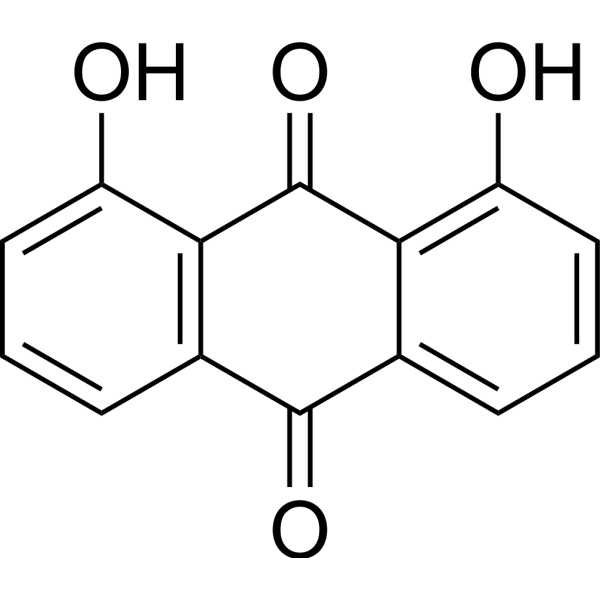
Dantron (Chrysazin; 1,8-Dihydroxyanthraquinone) can cause cancer according to The World Health Organization's International Agency for Research on Cancer (IARC).
Danthron is an orange crystalline powder. Almost odorless and tasteless. (NTP, 1992) Chrysazin is a dihydroxyanthraquinone that is anthracene-9,10-dione substituted by hydroxy groups at positions 1 and 8. It has a role as an apoptosis inducer and a plant metabolite. Withdrawn from the Canadian, US, and UK markets in 1998 due to genotoxicity. Danthron has been reported in Senna obtusifolia, Asphodelus fistulosus, and other organisms with data available. Danthron is a reddish, synthetic anthraquinone derivative. Danthron has been widely used as a laxative, but is no longer used to treat constipation and is currently used as an antioxidant in synthetic lubricants, in the synthesis of experimental antitumor agents, as a fungicide and as an intermediate for making dyes. This substance is a suspected mutagen and is reasonably anticipated to be a human carcinogen based on evidence of carcinogenicity in experimental animals. (NCI05) Mechanism of Action The mechanism of metal-mediated DNA damage by carcinogenic danthron (1,8-dihydroxyanthraquinone) and anthraquinone was investigated by the DNA sequencing technique using 32P-labeled human DNA fragments obtained from the human c-Ha-ras-1 protooncogene and the p53 tumor suppressor gene. Danthron caused DNA damage particularly at guanines in the 5'-GG-3', 5'-GGGG-3', 5'-GGGGG-3' sequences (damaged bases are underlined) in the presence of Cu(II), cytochrome P450 reductase and the NADPH-generating system. The DNA damage was inhibited by catalase and bathocuproine, suggesting the involvement of H2O2 and Cu(I). The formation of 8-oxo-7,8-dihydro-2'-deoxyguanosine increased with increasing concentration of danthron. On the other hand, carcinogenic anthraquinone induced less oxidative DNA damage than danthron. Electron spin resonance study showed that the semiquinone radical could be produced by P450 reductase plus NADPH-mediated reduction of danthron, while little signal was observed with anthraquinone. These results suggest that danthron is much more likely to be reduced by P450 reductase and generate reactive oxygen species through the redox cycle, leading to more extensive Cu(II)-mediated DNA damage than anthraquinone. In the case of anthraquinone, its hydroxylated metabolites with similar reactivity to danthron may participate in DNA damage in vivo. /It was concluded/ that oxidative DNA damage by danthron and anthraquinone seems to be relevant for the expression of their carcinogenicity. ... All three tested anthraquinones, emodin, aloe-emodin, and danthron, showed capabilities to inhibit the non-covalent binding of bisbenzimide Hoechst 33342 to isolated DNA and in mouse lymphoma L5178Y cells comparable to the topoisomerase II inhibitor and intercalator m-amsacrine. In a cell-free decatenation assay, emodin exerted a stronger, danthron a similar and aloe-emodin a weaker inhibition of topoisomerase II activity than m-amsacrine. Analysis of the chromosomal extent of DNA damage induced by these anthraquinones was performed in mouse lymphoma L5178Y cells. Anthraquinone-induced mutant cell clones showed similar chromosomal lesions when compared to the topoisomerase II inhibitors etoposide and m-amsacrine, but were different from mutants induced by the DNA alkylator ethyl methanesulfonate. These data support the idea that inhibition of the catalytic activity of topoisomerase II contributes to anthraquinone-induced genotoxicity and mutagenicity. Therapeutic Uses Danthron has been widely used since the beginning of this century as a laxative. In 1987, the FDA ordered its withdrawal from the market for its use as a laxative, and U.S. manufacturers voluntarily withdrew production of all human drug products containing the compound. /Former use in US/ Therapeutic Indications: Constipation in terminally ill patients. Drug Warnings Contraindications: In common with other gastro-intestinal evacuants, Co-danthramer capsules should not be given when acute or painful conditions of the abdomen are present or when the cause of the constipation is thought to be an intestinal obstruction. Hypersensitivity to any of the constituents of the product. Peanut or soya allergies. Dantron may cause temporary harmless pink or red coloring of the urine and peri-anal skin. With prolonged high dosage the mucosa of the large intestine may become colored. Co-danthramer capsules are contraindicated in pregnant women and nursing mothers. A woman developed deep discoloration of the skin following ingestion of large amounts of a laxative containing dantron. Such staining was also found in other studies, predominantly in elderly subjects, and was localized to the buttocks and thighs, with minor inflammatory symptoms. Contact of skin with feces or urine containing the drug seems to be a prerequisite for discoloration. Inflammation, when present, may result from reduction of the parent compound in the colon to the diol derivative, which irritates both the gut and skin, while the parent compound does not. For more Drug Warnings (Complete) data for 1,8-Dihydroxyanthraquinone (6 total), please visit the HSDB record page. |
| 分子式 |
C14H8O4
|
|---|---|
| 分子量 |
240.2109
|
| 精确质量 |
240.042
|
| CAS号 |
117-10-2
|
| PubChem CID |
2950
|
| 外观&性状 |
Brown to breen solid powder
|
| 密度 |
1.5±0.1 g/cm3
|
| 沸点 |
452.7±35.0 °C at 760 mmHg
|
| 熔点 |
191-193 °C(lit.)
|
| 闪点 |
241.7±22.4 °C
|
| 蒸汽压 |
0.0±1.1 mmHg at 25°C
|
| 折射率 |
1.733
|
| LogP |
4.57
|
| tPSA |
74.6
|
| 氢键供体(HBD)数目 |
2
|
| 氢键受体(HBA)数目 |
4
|
| 可旋转键数目(RBC) |
0
|
| 重原子数目 |
18
|
| 分子复杂度/Complexity |
346
|
| 定义原子立体中心数目 |
0
|
| InChi Key |
QBPFLULOKWLNNW-UHFFFAOYSA-N
|
| InChi Code |
InChI=1S/C14H8O4/c15-9-5-1-3-7-11(9)14(18)12-8(13(7)17)4-2-6-10(12)16/h1-6,15-16H
|
| 化学名 |
1,8-dihydroxyanthracene-9,10-dione
|
| HS Tariff Code |
2934.99.9001
|
| 存储方式 |
Powder -20°C 3 years 4°C 2 years In solvent -80°C 6 months -20°C 1 month |
| 运输条件 |
Room temperature (This product is stable at ambient temperature for a few days during ordinary shipping and time spent in Customs)
|
| 溶解度 (体外实验) |
DMSO : ~5 mg/mL (~20.82 mM)
|
|---|---|
| 溶解度 (体内实验) |
配方 1 中的溶解度: 10 mg/mL (41.63 mM) in 50% PEG300 +50% Saline (这些助溶剂从左到右依次添加,逐一添加), 悬浮液; 超声助溶 (<60°C).
*生理盐水的制备:将 0.9 g 氯化钠溶解在 100 mL ddH₂O中,得到澄清溶液。 请根据您的实验动物和给药方式选择适当的溶解配方/方案: 1、请先配制澄清的储备液(如:用DMSO配置50 或 100 mg/mL母液(储备液)); 2、取适量母液,按从左到右的顺序依次添加助溶剂,澄清后再加入下一助溶剂。以 下列配方为例说明 (注意此配方只用于说明,并不一定代表此产品 的实际溶解配方): 10% DMSO → 40% PEG300 → 5% Tween-80 → 45% ddH2O (或 saline); 假设最终工作液的体积为 1 mL, 浓度为5 mg/mL: 取 100 μL 50 mg/mL 的澄清 DMSO 储备液加到 400 μL PEG300 中,混合均匀/澄清;向上述体系中加入50 μL Tween-80,混合均匀/澄清;然后继续加入450 μL ddH2O (或 saline)定容至 1 mL; 3、溶剂前显示的百分比是指该溶剂在最终溶液/工作液中的体积所占比例; 4、 如产品在配制过程中出现沉淀/析出,可通过加热(≤50℃)或超声的方式助溶; 5、为保证最佳实验结果,工作液请现配现用! 6、如不确定怎么将母液配置成体内动物实验的工作液,请查看说明书或联系我们; 7、 以上所有助溶剂都可在 Invivochem.cn网站购买。 |
| 制备储备液 | 1 mg | 5 mg | 10 mg | |
| 1 mM | 4.1630 mL | 20.8151 mL | 41.6302 mL | |
| 5 mM | 0.8326 mL | 4.1630 mL | 8.3260 mL | |
| 10 mM | 0.4163 mL | 2.0815 mL | 4.1630 mL |
1、根据实验需要选择合适的溶剂配制储备液 (母液):对于大多数产品,InvivoChem推荐用DMSO配置母液 (比如:5、10、20mM或者10、20、50 mg/mL浓度),个别水溶性高的产品可直接溶于水。产品在DMSO 、水或其他溶剂中的具体溶解度详见上”溶解度 (体外)”部分;
2、如果您找不到您想要的溶解度信息,或者很难将产品溶解在溶液中,请联系我们;
3、建议使用下列计算器进行相关计算(摩尔浓度计算器、稀释计算器、分子量计算器、重组计算器等);
4、母液配好之后,将其分装到常规用量,并储存在-20°C或-80°C,尽量减少反复冻融循环。
计算结果:
工作液浓度: mg/mL;
DMSO母液配制方法: mg 药物溶于 μL DMSO溶液(母液浓度 mg/mL)。如该浓度超过该批次药物DMSO溶解度,请首先与我们联系。
体内配方配制方法:取 μL DMSO母液,加入 μL PEG300,混匀澄清后加入μL Tween 80,混匀澄清后加入 μL ddH2O,混匀澄清。
(1) 请确保溶液澄清之后,再加入下一种溶剂 (助溶剂) 。可利用涡旋、超声或水浴加热等方法助溶;
(2) 一定要按顺序加入溶剂 (助溶剂) 。
|
|
|