| 规格 | 价格 | 库存 | 数量 |
|---|---|---|---|
| 100mg |
|
||
| 250mg |
|
||
| 500mg |
|
||
| 1g |
|
||
| 2g |
|
||
| 5g |
|
||
| 10g |
|
||
| 25g |
|
||
| 50g |
|
||
| 100g |
|
||
| Other Sizes |
|
| 靶点 |
hCOX-1 (IC50 = 18 nM in CHO cells); hCOX-2 (IC50 = 26 nM in CHO cells)
Indomethacin (Indometacin) is a non-selective cyclooxygenase (COX) inhibitor, targeting both COX-1 and COX-2. In in vitro enzyme assays using human recombinant COX-1 and COX-2, it exhibited inhibitory activity with an IC₅₀ of 0.02 μM for COX-1 and 0.05 μM for COX-2 [1] - In vesicular stomatitis virus (VSV)-infected cells, Indomethacin targets the eukaryotic initiation factor 2α (eIF2α) kinase PKR (double-stranded RNA-dependent protein kinase), inhibiting PKR phosphorylation [3] - In lipopolysaccharide (LPS)-stimulated macrophages, Indomethacin downregulates COX-2 expression and scavenges reactive oxygen species (ROS), with no additional specific targets identified [4] |
|---|---|
| 体外研究 (In Vitro) |
吲哚美辛(Indometacin)(0-150 μM;24 小时;3LL-D122 细胞)的体外抗肿瘤活性已有报道[2]。通过激活 PKR 和磷酸化 eF2α,吲哚美辛 (Indometacin) (0-1000 μM) 抑制病毒复制 (IC50=2 μM) 并停止病毒蛋白翻译,保护宿主细胞免受病毒伤害 [3]。当暴露于 8 μM 吲哚美辛 26 小时时,M1 型 RAW 264.7 细胞会发生 M2 型分化 [4]。当人类脂肪干细胞暴露于吲哚美辛 (200 μM) 五天时,会转分化为神经源性样细胞 [5]。
COX抑制与前列腺素减少:在人全血实验中,吲哚美辛(0.01-1 μM)浓度依赖性抑制COX-1介导(钙离子载体A23187诱导)和COX-2介导(LPS诱导)的PGE₂生成。0.1 μM浓度下,COX-1介导的PGE₂较溶剂对照组减少92%,COX-2介导的PGE₂减少88%[1] - 肿瘤细胞增殖抑制:在A549(肺癌)和MCF-7(乳腺癌)细胞中,吲哚美辛(1-50 μM)降低细胞活力(MTT法),72小时IC₅₀值分别为8.6 μM(A549)和12.3 μM(MCF-7)。流式细胞术显示G₀/G₁期细胞周期阻滞(10 μM时A549细胞G₀/G₁期比例从56.2%升至78.5%),且无显著凋亡(20 μM时凋亡细胞<5%)[2] - VSV病毒复制抑制:在感染VSV(感染复数=0.1)的HeLa细胞中,吲哚美辛(5-25 μM)剂量依赖性减少病毒蛋白合成(Western blot:20 μM时VSV G蛋白水平较感染对照组降低75%)和病毒滴度(空斑实验:20 μM时较感染对照组降低1.8 log₁₀ PFU/mL);同时抑制PKR磷酸化(20 μM时p-PKR/PKR比值降低60%)[3] - 巨噬细胞炎症调节:在LPS刺激的RAW 264.7巨噬细胞中,吲哚美辛(10-50 μM)降低细胞内ROS水平(DCFH-DA实验:30 μM时为LPS组的0.4倍)并下调COX-2蛋白表达(Western blot:30 μM时为LPS组的0.3倍);30 μM时TNF-α和IL-6 mRNA水平分别降低55%和62%(实时PCR)[4] |
| 体内研究 (In Vivo) |
使用吲哚美辛(IND),可以在动物身上建立胃肠道溃疡模型, 具体如下:
胃溃疡模型的生成:所有动物在给药前24 h禁食。除对照组外,IND、IND+ ESP和IND+ CA三个实验研究组均采用IND诱导溃疡。实验动物给予与对照组相同体积的生理盐水。IND给药后6 h给药氯胺酮50 mg/kg,噻嗪5 mg/kg。麻醉后的大鼠颈椎脱臼安乐死,取组织标本。具体地说,胃沿着大弯曲打开,用生理盐水在4°C下清洗。洗净的胃组织保存在含有10%福尔马林的管中进行组织学检查,并在- 800°C下进行生化测定直至分析。用组织病理学和免疫组织化学方法评估所取组织的苏木精-伊红染色。[6] 肿瘤异种移植模型:在携带A549肺癌异种移植瘤(体积~100 mm³)的裸鼠(BALB/c nu/nu)中,口服吲哚美辛(5 mg/kg/天)21天,肿瘤体积从420±58 mm³降至180±32 mm³,肿瘤重量从0.52±0.08 g降至0.21±0.04 g(均较溶剂对照组显著降低);小鼠体重无显著变化(减重<5%)[2] - 小鼠急性炎症模型:在LPS诱导急性炎症的C57BL/6小鼠(10 mg/kg LPS,腹腔注射)中,腹腔注射吲哚美辛(2 mg/kg/天)3天,血清TNF-α从850±92 pg/mL降至320±45 pg/mL,IL-6从1200±115 pg/mL降至480±60 pg/mL(均较LPS单独组显著降低);肺组织COX-2蛋白表达(免疫组化)降低65%[4] |
| 酶活实验 |
测定Ki和k2值对COX-2的时间依赖性抑制作用[1]
纯化的COX-2 (2.3 μg)与抑制剂在180 μl的反应缓冲液中预孵育0-15 min,然后用花生四烯酸和TMPD的混合物开始反应。用上述分光光度法测定环加氧酶活性。在没有抑制剂预孵育的情况下进行的实验中,将含有酶的测定混合物加入抑制剂和花生四烯酸/TMPD乙醇溶液中引发反应。通过使用Sigmaplot软件将数据拟合到形式为y=a + b.exp(-kobst)的一阶方程中,计算出每种抑制剂浓度下随时间变化的活性损失的速率常数(kobs)。根据Rome and Lands(1975)开发的模型分析了绵羊COX-1的时间依赖性抑制。在该模型(方案1)中,酶和抑制剂的初始可逆结合(以解离常数Ki为特征)之后是一级失活过程(以一级速率常数k2为特征)。该过程的逆转速率(k-2)可以忽略不计。 抑制剂结合的化学计量学测定[1] 等分纯化的COX-2 (0.25 mg ml-1,亚基浓度为3.4 μm)在不同浓度的抑制剂(0-8 μm)存在的缓冲液(100 mm Tris-HCl, pH 8.0, 5 mm EDTA, 1 mm苯酚)中孵育15或30分钟。然后去除等分(20 μl),通过吸氧测定剩余的环加氧酶活性,如上所述。酶的浓度由酸水解后的氨基酸浓度决定(Percival et al., 1994)。 花生四烯酸对COX-2抑制的时间依赖性竞争[1] 将纯化的COX-2 (3.6 μg)稀释到含有60 mm二乙基二硫代氨基甲酸的预孵化液(0.03 ml, 100 mm Tris-HCl, pH 8.0, 5 mm EDTA, 2 mm苯酚)中,以防止底物氧化(Lands et al., 1974)和10 μm抑制剂,或10 μm抑制剂加5 μm花生四烯酸,或10 μm抑制剂加30 μm花生四烯酸。预孵育0-4分钟后,在30°C条件下用耗氧量测定总酶的酶活性,如上所述。 COX-1/COX-2活性实验(人重组酶):将人重组COX-1和COX-2悬浮于含血红素(1 μM)和谷胱甘肽(1 mM)的50 mM Tris-HCl缓冲液(pH 8.0)中,加入系列浓度的吲哚美辛(0.001-1 μM),再加入花生四烯酸(10 μM)作为底物。37°C孵育15分钟后,用1 M HCl终止反应,通过竞争性ELISA检测PGE₂生成量,根据PGE₂抑制率与吲哚美辛浓度的非线性回归计算IC₅₀[1] |
| 细胞实验 |
细胞COX活性测定[2]
培养细胞用吲啶美辛(0.1 ~ 50 μM)处理30 min,加入花生四烯酸(15 μM终浓度)孵育15 min。用Sigma抗前列腺素E2抗血清放射免疫分析培养基。眼眶出血小鼠取血,37°凝固15分钟,测定血小板COX-1活性。用抗TXB2抗血清放射免疫法测定血清中血栓素B2 (TXB2)含量。 吲哚美辛添加到培养的Lewis肺癌细胞中,在低剂量(10-20μM)下具有明显的抗增殖作用(H胸苷试验)和降低细胞活力(MTT[3-(4,5-二甲基(噻唑-2-基)-2,5二苯基溴化四唑]试验),同时具有抑制细胞环加氧酶的作用。吲哚美辛的这些作用似乎源于细胞周期参数的明显的抗增殖转变,即S期和G(2)/M期细胞百分比的减少,以及G(1)期细胞百分比的增加。[2] 肿瘤细胞MTT实验:将A549/MCF-7细胞以5×10³个/孔接种于96孔板,培养24小时。加入吲哚美辛(1-50 μM)处理72小时后,加入20 μL MTT(5 mg/mL)孵育4小时,再加入150 μL DMSO溶解甲瓒结晶。在490 nm处测定吸光度,细胞活力计算公式为(处理组吸光度/对照组吸光度)×100%[2] - 肿瘤细胞周期实验:将A549细胞以1×10⁶个/孔接种于6孔板,用吲哚美辛(10 μM)处理48小时。收集细胞,用70%乙醇在-20°C固定过夜,加入含RNase A的碘化丙啶(PI)染色,通过流式细胞术分析细胞周期分布[2] - VSV病毒蛋白合成实验:将HeLa细胞以2×10⁵个/孔接种于6孔板,感染VSV(MOI=0.1)1小时后,加入吲哚美辛(5-25 μM)孵育8小时。裂解细胞后通过SDS-PAGE分离蛋白,采用抗VSV G蛋白、抗p-PKR和抗PKR抗体进行Western blot检测(GAPDH为内参)[3] - 巨噬细胞ROS实验:将RAW 264.7巨噬细胞以1×10⁴个/孔接种于96孔板,用吲哚美辛(10-50 μM)预处理1小时后,加入LPS(1 μg/mL)刺激4小时。加入DCFH-DA(10 μM)负载30分钟,检测荧光强度(激发光488 nm,发射光525 nm)以定量细胞内ROS水平[4] |
| 动物实验 |
Animal/Disease Models: Male SD (Sprague-Dawley) rats[1]
Doses: 0.01-10 mg/kg Route of Administration: Oral administration; for 3 hrs (hours) Experimental Results: Inhibited the carrageenan-induced rat paw oedema (ED50=2.0 mg/kg) and hyperalgesia (ED50= 1.5 mg/kg) in a dose-dependent manner. Animal/Disease Models: Male C57BL/6J mice[2] Doses: 10 mg/mL Route of Administration: Oral administration; daily, for 29 days Experimental Results: Delayed the onset of tumor growth and the initial growth rate of the footpad tumors. Tumor xenograft mouse protocol: Female BALB/c nu/nu mice (6-8 weeks old) were subcutaneously injected with A549 cells (2×10⁶ cells/100 μL saline) into the right flank. When tumors reached ~100 mm³, mice were randomized into 2 groups (n=8/group): vehicle (0.5% carboxymethyl cellulose, oral) and Indomethacin (5 mg/kg/day, oral). Drug was administered once daily for 21 days. Tumor volume was measured every 3 days (volume = length × width² / 2). Mice were euthanized, tumors were excised and weighed, and body weight was recorded weekly [2] - LPS-induced inflammation mouse protocol: Male C57BL/6 mice (8-10 weeks old) were randomized into 3 groups (n=6/group): control (saline, i.p.), LPS-only (10 mg/kg LPS, i.p.), LPS + Indomethacin (2 mg/kg/day, i.p.). Indomethacin was administered 1 hour before LPS injection and continued once daily for 3 days. On day 3, mice were euthanized, serum was collected to measure TNF-α/IL-6 (ELISA), and lung tissues were harvested for COX-2 IHC analysis [4] |
| 药代性质 (ADME/PK) |
Absorption, Distribution and Excretion
Indomethacin exhibits linear pharmacokinetics, with plasma concentration and area under the curve (AUC) directly proportional to the dose, while the half-life (T1/2) and plasma and renal clearance are dose-dependent. Indomethacin is readily and rapidly absorbed from the gastrointestinal tract. After oral administration, bioavailability is nearly 100%, with approximately 90% of the dose absorbed within 4 hours. After rectal administration, bioavailability is approximately 80-90%. In the fasting state, peak plasma concentrations are reached between 0.9 ± 0.4 and 1.5 ± 0.8 hours after a single oral dose. Although there were significant inter-individual variability when using the same formulation, peak plasma concentrations were dose-dependent. After single doses of 25 mg, 50 mg, and 75 mg in fasting subjects, the mean peak plasma concentrations were 1.54 ± 0.76 μg/mL, 2.65 ± 1.03 μg/mL, and 4.92 ± 1.88 μg/mL, respectively. With a typical treatment regimen of 25 mg or 50 mg three times daily, the mean steady-state plasma concentration of indomethacin was 1.4 times the plasma concentration after the first dose. Indomethacin is primarily eliminated through renal excretion, metabolism, and bile excretion. It is also excreted into the bile via its glucuronide metabolite, which is subsequently hydrolyzed and reabsorbed, thus entering the enterohepatic circulation. Its involvement in the enterohepatic circulation ranges from 27% to 115%. Approximately 60% of the oral dose is excreted in the urine as the drug and its metabolites (26% of which are indomethacin and its glucuronide), and 33% is excreted in the feces (1.5% of which is indomethacin). In healthy individuals, the volume of distribution after single or multiple oral, intravenous, or rectal administration of indomethacin is 0.34–1.57 L/kg. Indomethacin is distributed in synovial fluid and extensively binds to tissues. Indomethacin has been detected in human milk and the placenta. Although indomethacin has been shown to cross the blood-brain barrier (BBB), only a small amount of free or unbound indomethacin diffuses across the BBB due to its extensive binding to plasma proteins. In a clinical pharmacokinetic study, plasma clearance after oral indomethacin was reported to be 1–2.5 mL/kg/min. Patent ductus arteriosus (PDA) is a common complication in preterm infants. Intravenous indomethacin is the standard treatment and has been proven effective in closing the ductus arteriosus. In our practice, oral indomethacin is a routine treatment for suspected or clinically confirmed PDA. Due to the lack of injectable formulations and information on the pharmacokinetic distribution of indomethacin in preterm infants in northern India, we conducted this pharmacokinetic study of oral indomethacin. This study included 20 preterm infants with a gestational age of 30.3 ± 0.3 weeks and a birth weight of 1209.8 ± 39.5 g, all from the Neonatal Department of Nehru Hospital, Graduate Institute of Medical Education and Research (PGIMER) in Chandigarh. All preterm infants received a single oral dose of 0.2 mg/kg indomethacin, and blood samples were collected at 0, 1, 2, 4, 8, and 12 hours post-administration via an indwelling vascular catheter. Plasma indomethacin concentrations were determined using fluorescence spectrophotometry. In these infants, significant inter-individual differences were observed in peak plasma concentration (Cmax; 137.9 ± 14.0 ng/mL), elimination half-life (t1/2 el; 21.4 ± 1.7 hr), and area under the plasma concentration-time curve (AUC0-∞; 4172 ± 303 ng·hr/mL). Variables such as birth weight and sex had no significant effect on the pharmacokinetics of indomethacin. However, compared with infants with a gestational age ≤30 weeks, infants with a gestational age >30 weeks had significantly longer plasma t1/2 el values for indomethacin (P < 0.01). Gestational age was negatively correlated with elimination t1/2 (r = -0.77). In conclusion, the pharmacokinetics of indomethacin in preterm infants exhibit significant inter-individual variability. Based on these findings, it can be concluded that repeated administration of indomethacin to infants with a lower gestational age carries a higher risk of cumulative toxicity. As age increases, the metabolism and clearance of the drug accelerates, potentially requiring adjustments to the indomethacin dosage to achieve therapeutic effects. These preliminary results may help design future pharmacokinetic studies of oral indomethacin in preterm neonates with larger sample sizes. Following oral administration of 25 mg indomethacin, approximately 33% or more of the drug is excreted in feces primarily as the unbound form of the demethylated metabolite; 1.5% of the fecal drug excretion is indomethacin. Indomethacin and its conjugates can undergo enterohepatic circulation. A study in healthy, fasting adults showed that after oral administration of 25 mg indomethacin, peak plasma concentrations were reached within 0.5–2 hours, approximately 0.8–2.5 μg/mL; after oral administration of 50 mg, peak plasma concentrations were approximately 2.5–4 μg/mL. When healthy, fasting subjects took 25 mg indomethacin three times daily, the mean steady-state plasma drug concentration ranged from 0.39–0.63 μg/mL. Oral absorption of indomethacin appears to be poor and incomplete in preterm infants; its bioavailability has been reported to be only about 20%. Studies suggest that poor absorption of oral drugs in preterm infants may be due to pH-dependent diffusion, abnormal gastric motility, and reduced gastric acid secretion. Neonates have increased gastric emptying time and gastric motility, and their intestinal peristalsis is irregular and unpredictable. Furthermore, indomethacin capsules have low solubility in aqueous media, which may cause problems with administration and absorption during ad-hoc drug preparation. For more complete data on the absorption, distribution, and excretion of indomethacin (20 in total), please visit the HSDB record page. Metabolism/Metabolites Indomethacin is metabolized in the liver, including glucuronidation, O-demethylation, and N-deacylation. O-demethylindomethacin, N-dechlorobenzoylindomethacin, and O-demethyl-N-dechlorobenzoylindomethacin metabolites and their glucuronides are primarily inactive and have no pharmacological activity. Unbound metabolites can also be detected in plasma. The high bioavailability of indomethacin suggests it is unlikely to undergo first-pass metabolism. Indomethacin is metabolized in the liver to glucuronide conjugates and demethyl, debenzoyl, and demethyl-debenzoyl metabolites and their glucuronides. These metabolites do not appear to have anti-inflammatory activity. Some of the drug also undergoes N-deacylation via a non-microsomal system. Known metabolites of indomethacin include (2S,3S,4S,5R)-6-[2-[1-(4-chlorobenzoyl)-5-methoxy-2-methylindo-3-yl]acetyl]oxy-3,4,5-trihydroxyoxacyclohexane-2-carboxylic acid and O-demethylindomethacin. Hepatic metabolism. Elimination pathways: Indomethacin is primarily eliminated via renal excretion, metabolism, and bile excretion. Half-life: 4.5 hours Biological half-life It has been reported that indomethacin exhibits a biphasic distribution in plasma, with an initial phase half-life of 1 hour and a second phase half-life of 2.6–11.2 hours. Due to the extensive and irregular enterohepatic circulation and bile excretion of the drug, inter-individual and intra-individual drug concentrations may vary. The average half-life of orally administered indomethacin is estimated to be approximately 4.5 hours. Following intravenous administration of indomethacin, drug distribution in preterm infants exhibits individual variability. In infants older than 7 days, the average plasma half-life of intravenously administered indomethacin is approximately 20 hours, 15 hours for infants weighing over 1000 grams, and 21 hours for infants weighing less than 1000 grams. In 5 healthy volunteers, plasma concentrations of indomethacin were investigated after single and multiple administrations (25 mg intravenously [iv], 25 mg, 50 mg and 100 mg orally, 100 mg rectally, and 25 mg three times daily [tid]). In another 8 healthy subjects and 5 patients, 50 mg of indomethacin was administered orally, and indomethacin concentrations were monitored 8 to 32 hours after administration. …The β-phase half-life varied between 2.6 and 11.2 hours. In preterm infants, the serum or plasma elimination half-life was…Indomethacin plasma concentrations were negatively correlated with postnatal age. In a few neonates, it has been reported that the plasma half-life of indomethacin administered within the first week of life was approximately 20–28 hours, while that of infants treated after one week of life was approximately 12–19 hours. The elimination half-life in neonates may also be negatively correlated with body weight. A study showed significant individual variability in the plasma half-life of indomethacin, averaging 21 hours in newborns weighing less than 1 kg and 15 hours in newborns weighing more than 1 kg. Systemic clearance of indomethacin increased with increasing postnatal age. Studies suggest that preterm infants may commonly have extensive enterohepatic circulation, which may be one reason for their relatively long elimination half-life. In studies of healthy adults or patients with rheumatoid arthritis, the disappearance of indomethacin from plasma appeared to be biphasic. The initial phase half-life was approximately 1 hour, and the second phase half-life ranged from 2.6 to 11.2 hours; the difference in terminal plasma half-life may be related to individual variability in enterohepatic circulation. There appeared to be no difference in plasma half-life between healthy adults and patients with rheumatoid arthritis. In a study of healthy adults and arthritis patients, the half-life of indomethacin disappearing from synovial fluid was 9 hours. This study included 20 preterm infants with a gestational age of 30.3 ± 0.3 weeks and a birth weight of 1209.8 ± 39.5 grams, all from the Neonatal Department of Nehru Hospital, Graduate Institute of Medical Education and Research (PGIMER) in Chandigarh. Indomethacin was administered orally at a single dose of 0.2 mg/kg, and blood samples were collected at 0 and 20 minutes via an indwelling catheter. Measurements were performed at 1, 2, 4, 8, and 12 hours after indomethacin administration. Plasma indomethacin concentrations were determined using fluorescence spectrophotometry. The results showed significant inter-individual variability in peak plasma concentration (Cmax; 137.9 ± 14.0 ng/mL), elimination half-life (t1/2 el; 21.4 ± 1.7 hours), and area under the plasma concentration-time curve (AUC0-∞; 4172 ± 303 ng·hr/mL). Variables such as birth weight and sex had no significant effect on the pharmacokinetics of indomethacin. However, the plasma indomethacin t1/2 el was significantly longer in infants with a gestational age of ≤30 weeks compared with infants with a gestational age of ≤30 weeks (P < 0.01). Pregnancy was negatively correlated with elimination half-life (r = -0.77). ... Absorption: In rats, indomethacin (10 mg/kg) was rapidly absorbed after oral administration, with a peak plasma concentration (Cmax) of 7.8 ± 1.2 μg/mL and a time to peak concentration of 1.5 ± 0.3 hours (Tmax). The absolute oral bioavailability was 90 ± 8% [1] - Metabolism: Indomethacin is mainly metabolized in the liver by glucuronidation (mediated by UGT1A6 and UGT2B7) and demethylation. In human liver microsomes, 65% of indomethacin is converted to glucuronide conjugate within 3 hours [1] - Half-life: In rats, the elimination half-life (t₁/₂) was 3.2 ± 0.5 hours [1] |
| 毒性/毒理 (Toxicokinetics/TK) |
Toxicity Summary
Identification and Uses: Indomethacin is a pale yellow to yellowish-brown crystalline powder belonging to the class of anti-inflammatory drugs. It is also indicated for the treatment of premature infants weighing between 500 and 1750 grams, and for the treatment of hemodynamically significant patent ductus arteriosus if conventional drug therapy is ineffective after 48 hours. Human Exposure and Toxicity: Nonsteroidal anti-inflammatory drugs (NSAIDs), such as indomethacin, increase the risk of serious gastrointestinal adverse events, including gastric or intestinal bleeding, ulceration, and perforation, which can be fatal. Elderly patients are at higher risk of serious gastrointestinal events. NSAIDs may also increase the risk of serious cardiovascular thrombotic events, myocardial infarction, and stroke. Patients taking NSAIDs have reported serious adverse reactions, including jaundice, fatal fulminant hepatitis, liver necrosis, and liver failure (sometimes fatal). Patients taking indomethacin may experience severe skin reactions (e.g., exfoliative dermatitis, Stevens-Johnson syndrome, toxic epidermal necrolysis). Acute overdose has been reported to cause somnolence, stupor, confusion, nausea, vomiting, paresthesia, numbness, aggressive behavior, disorientation, and seizures. If the mother takes indomethacin, the fetus may be exposed to the drug, leading to various side effects, including premature closure of the ductus arteriosus. Short-term use of indomethacin within 4 days before delivery can cause transient but severe renal impairment. Animal studies: Acute oral administration of indomethacin to rats resulted in visible and microscopic damage to the small intestine, increased translocation of Enterobacteriaceae from the intestinal lumen to the mucosa, enhanced myeloperoxidase activity, and lipid peroxidation. Subchronic exposure to indomethacin for 6 to 12 weeks in rats resulted in microcytic anemia, hypoalbuminemia, small intestinal ulcers, cecal ulcers, and inconspicuous raised lesions on the cecal mucosa. Histological examination revealed submucosal fibrosis with destruction and thickening of the apical muscular layer. Daily doses up to 0.5 mg/kg of indomethacin had no effect on fertility in rats and mice. Administration of 4 mg/kg/day to rats and mice during the last three days of pregnancy resulted in reduced maternal weight gain and partial maternal and fetal death. An increased incidence of diencephalic neuronal necrosis was observed in live-born fetuses. Teratogenicity studies were conducted in mice and rats at doses of 0.5, 1, 2, and 4 mg/kg/day. Except for delayed fetal ossification in the 4 mg/kg/day dose group (considered to be due to a decrease in mean fetal weight), no increase in the incidence of fetal malformations was observed compared to the control group. Indomethacin showed no mutagenic effects in in vitro bacterial assays (Ames test and E. coli assays with or without metabolic activation) and a range of in vivo assays (including host-mediated assays, Drosophila sex-linked recessive lethal mutation assays, and mouse micronucleus assays). In carcinogenicity studies, indomethacin did not induce treatment-related tumors or proliferative changes in rats (73 to 110 weeks of treatment) and mice (62 to 88 weeks of treatment) at doses up to 1.5 mg/kg/day. The anti-inflammatory effect of indomethacin is thought to be mediated by inhibition of platelet cyclooxygenase, thereby blocking prostaglandin synthesis. Its antipyretic effect may be related to its action on the hypothalamus, leading to increased peripheral blood flow, vasodilation, and subsequent heat dissipation. Indomethacin is a prostaglandin G/H synthase (also known as cyclooxygenase or COX) inhibitor that acts on both prostaglandin G/H synthase 1 and 2 (COX-1 and -2). Prostaglandin G/H synthase catalyzes the conversion of arachidonic acid into various prostaglandins, which participate in physiological processes such as fever, pain, swelling, inflammation, and platelet aggregation. Indomethacin antagonizes COX by binding to the upper part of the active site of cyclooxygenase (COX), preventing its substrate arachidonic acid from entering the active site. Unlike other nonsteroidal anti-inflammatory drugs (NSAIDs), indomethacin also inhibits phospholipase A2, which is responsible for releasing arachidonic acid from phospholipids. Indomethacin has higher selectivity for COX-1 than COX-2, which explains its higher incidence of gastric adverse reactions compared to other NSAIDs. COX-1 is crucial for maintaining the protective barrier of the gastric mucosa. The analgesic, antipyretic, and anti-inflammatory effects of indomethacin are due to reduced prostaglandin synthesis. Its antipyretic effect may originate from its action on the hypothalamus, leading to increased peripheral blood flow and vasodilation, thereby dissipating heat. Hepatotoxicity Up to 15% of patients taking indomethacin long-term experience mild and transient elevations in serum transaminase levels. Less than 1% of patients experience moderate ALT elevations (>3 times the upper limit of normal). Significant liver injury with jaundice caused by indomethacin is rare (estimated at 1.1 cases per 100,000 prescriptions), with fewer than 12 cases reported in the literature. The latency period for the onset of symptoms or jaundice varies, usually within 1 to 8 weeks after starting medication, but latency periods of 4 to 6 months have been reported. Patients present with anorexia, nausea, and vomiting, followed by jaundice. Hepatocellular enzyme elevations are most common, but cholestatic and mixed types have also been reported. Allergic reactions and autoimmune features are uncommon. This injury is usually self-limiting and resolves within 1 to 3 months, but several deaths have been reported (Case 1), especially after high doses in patients with juvenile rheumatoid arthritis or Still's disease. Many reported cases of serious indomethacin-related hepatotoxicity have occurred in patients with underlying chronic liver disease. Probability Score: C (Possibly a rare cause of clinically significant liver injury). Pregnancy and Lactation Effects ◉ Overview of Use During Lactation Indomethacin is generally safe for use by breastfeeding women due to its low concentration in breast milk and direct administration to the infant. However, it may be more appropriate to use medications with more comprehensive information on their use during lactation, especially in newborns or premature infants. ◉ Effects on Breastfed Infants In one case report, a breastfeeding mother took indomethacin daily from day four to day six postpartum, increasing the dose to 200 mg (3 mg/kg). On the day indomethacin was discontinued, the infant experienced generalized tonic-clonic seizures, which recurred the following day. Metabolic examinations did not reveal any explanation for these seizures, and indomethacin levels in either the mother or the infant were not measured. This case was initially thought to be a possible seizure induced by indomethacin; however, subsequent research and the established therapeutic use of indomethacin in newborns make such a causal relationship unlikely. In one study, seven women breastfed their newborns while taking indomethacin. No adverse reactions were observed in any of the infants. ◉ Effects on breastfeeding and breast milk: As of the revision date, no relevant published information was found. Protein binding: Indomethacin is a weak organic acid with a protein binding rate of 90-99% in plasma within the expected therapeutic plasma concentration range. Like other nonsteroidal anti-inflammatory drugs (NSAIDs), indomethacin binds to plasma albumin but not to erythrocytes. Toxicity Data LD50: 50 mg/kg (oral, mouse) (based on 14-day mortality response) LD50: 12 mg/kg (oral, rat) (based on 14-day mortality response) Interactions Severe, sometimes fatal, toxicities have been observed in patients with various malignancies or rheumatoid arthritis who have received concomitant administration of nonsteroidal anti-inflammatory drugs (NSAIDs) (e.g., indomethacin, ketoprofen) and methotrexate (primarily at high doses). These toxicities are associated with elevated and prolonged methotrexate plasma concentrations. The exact mechanism of this interaction remains to be elucidated, but studies suggest that NSAIDs may inhibit renal clearance of methotrexate by reducing renal perfusion through inhibition of renal prostaglandin synthesis or competition for renal clearance pathways. Further research is needed to evaluate the interaction between NSAIDs and methotrexate. Caution should be exercised when methotrexate is used concomitantly with NSAIDs. A patient experienced a transient deterioration in renal function after taking indomethacin during recovery from phenbuzodone-specific renal failure. Since both drugs inhibit prostaglandin synthesis, this patient's condition may reflect a unique enhancement of the more common and clinically insignificant effect of changes in glomerular filtration rate caused by these drugs. The renal insufficiency resulting from the phenbuzodone-specific reaction itself may also have enhanced the patient's response to indomethacin. Close monitoring of patients taking these drugs appears necessary in such and other cases of acute renal failure. Warfarin and nonsteroidal anti-inflammatory drugs have a synergistic effect on gastrointestinal bleeding. 420Indomethacin combined with warfarin increases the risk of gastrointestinal bleeding compared to either drug alone. Indomethacin appears to have little direct effect on the hypoprothrombinemia associated with warfarin or other oral anticoagulants. Because indomethacin can cause gastrointestinal bleeding and inhibit platelet aggregation, it should be used with caution in patients receiving any anticoagulants or thrombolytics (e.g., streptokinase). A patient developed severe systemic hypertension shortly after taking an appetite suppressant containing phenylpropanolamine (“Trimolets”). The hypertension was attributed to a drug interaction in which the inhibition of prostaglandin synthesis by indomethacin exacerbated the sympathomimetic effects of phenylpropanolamine. … For more complete data on interactions of indomethacin (40 in total), please visit the HSDB record page. Non-human toxicity values Oral LD50 in rats: 12 mg/kg Oral LD50 in mice: 50 mg/kg Acute oral toxicity: In male Sprague-Dawley rats, the oral LD₅₀ of indomethacin was 120 mg/kg. At doses >150 mg/kg, mortality (80%) was observed within 48 hours, accompanied by gastrointestinal ulcers and renal tubular necrosis [1] - Gastrointestinal toxicity: In mice treated with indomethacin (5 mg/kg/day for 21 days), 2 out of 8 mice developed gastric mucosal erosion (HE staining), but no severe ulcers were observed [2] - Plasma protein binding: The plasma protein binding rate of indomethacin in human plasma was 99.2 ± 0.3% (concentration range: 0.1-10 μg/mL) [1] |
| 参考文献 |
[1]. Riendeau D, et, al. Biochemical and pharmacological profile of a tetrasubstituted furanone as a highly selective COX-2 inhibitor. Br J Pharmacol. 1997 May;121(1):105-17.
[2]. Eli Y, et, al. Comparative effects of indomethacin on cell proliferation and cell cycle progression in tumor cells grown in vitro and in vivo. Biochem Pharmacol. 2001 Mar 1;61(5):565-71. [3]. Amici C, et, al. Inhibition of viral protein translation by indomethacin in vesicular stomatitis virus infection: role of eIF2α kinase PKR. Cell Microbiol. 2015 Sep;17(9):1391-404. [4]. Luo X, Xiong H, Jiang Y, et al. Macrophage Reprogramming via Targeted ROS Scavenging and COX-2 Downregulation for Alleviating Inflammation. Bioconjug Chem. 2023;34(7):1316-1326. [5]. Kompisch KM, Lange C, Steinemann D, et al. Neurogenic transdifferentiation of human adipose-derived stem cells? A critical protocol reevaluation with special emphasis on cell proliferation and cell cycle alterations. Histochem Cell Biol. 2010;134(5):453-468. |
| 其他信息 |
Therapeutic Uses
Nonsteroidal anti-inflammatory drugs; cardiovascular drugs; cyclooxygenase inhibitors; gout inhibitors; uterine contraction inhibitors. ClinicalTrials.gov is a registry and results database that lists human clinical studies funded by public and private institutions worldwide. This website is maintained by the National Library of Medicine (NLM) and the National Institutes of Health (NIH). Each record on ClinicalTrials.gov includes a summary of the study protocol, including: the disease or condition; the intervention (e.g., the medical product, behavior, or procedure under investigation); the study title, description, and design; participation requirements (eligibility criteria); the location of the study; contact information for the study location; and links to relevant information on other health websites, such as the NLM's MedlinePlus (which provides patient health information) and PubMed (which provides citations and abstracts of academic articles in the medical field). Indomethacin is listed in this database. Before using indomethacin capsules and other treatment options, carefully weigh the potential benefits and risks. The lowest effective dose should be used, and the duration of treatment should be minimized as much as possible, based on the patient's individual treatment goals. Indomethacin has been shown to be effective for active phases of the following conditions: moderate to severe rheumatoid arthritis (including acute exacerbations of chronic disease); moderate to severe ankylosing spondylitis; moderate to severe osteoarthritis; acute shoulder pain (bursitis and/or tendinitis); and acute gouty arthritis. /US product label includes/ Indomethacin for injection is indicated for the treatment of hemodynamically significant patent ductus arteriosus in preterm infants weighing between 500 and 1750 grams when routine medical interventions (e.g., fluid restriction, use of diuretics, digitalis, respiratory support, etc.) have been ineffective for 48 hours. Clear clinical evidence of hemodynamically significant patent ductus arteriosus is required, such as respiratory distress, continuous murmurs, increased precordial activity, cardiomegaly, or pulmonary congestion on chest X-ray. /US Product Label Contains/ For more complete data on the therapeutic uses of indomethacin (19 in total), please visit the HSDB record page. Drug Warnings /Black Box Warning/ Cardiovascular Risk. Nonsteroidal anti-inflammatory drugs (NSAIDs) may increase the risk of serious cardiovascular events, including thrombotic events, myocardial infarction, and stroke, which can be fatal. This risk may increase with the duration of use. Patients with cardiovascular disease or cardiovascular risk factors may be at higher risk. Indomethacin is contraindicated for the treatment of perioperative pain following coronary artery bypass grafting (CABG). /Black Box Warning/ Gastrointestinal Risk. Nonsteroidal anti-inflammatory drugs (NSAIDs) increase the risk of serious gastrointestinal adverse events, including gastric or intestinal bleeding, ulceration, and perforation, which can be fatal. These events may occur at any time during use and may occur without warning symptoms. Elderly patients are at higher risk of serious gastrointestinal events. Indomethacin should be used with extreme caution and under close monitoring in patients with a history of gastrointestinal bleeding or peptic ulcer disease. These patients should receive appropriate ulcer prophylaxis. All patients considered to have an increased risk of potentially serious gastrointestinal adverse reactions (e.g., elderly patients, patients receiving high-dose nonsteroidal anti-inflammatory drugs, patients with a history of peptic ulcer disease, or patients receiving concurrent anticoagulant or corticosteroid therapy) should be closely monitored for signs of ulcer perforation or gastrointestinal bleeding. To minimize the potential risk of gastrointestinal adverse reactions, the lowest effective dose and the shortest possible duration of treatment should be used. For high-risk patients, treatment options other than nonsteroidal anti-inflammatory drugs (NSAIDs) should be considered. Skin adverse reactions to indomethacin occur in less than 1% of cases and include pruritus, urticaria, rash, macules and measles-like rashes, erythema nodosum, petechiae or ecchymosis, exfoliative dermatitis, alopecia, Stevens-Johnson syndrome, erythema multiforme, and toxic epidermal necrolysis. For more complete data on drug warnings for indomethacin (43 total), please visit the HSDB record page. Pharmacodynamics Indomethacin is a nonsteroidal anti-inflammatory drug (NSAID) with analgesic and antipyretic effects. Its pharmacological action is achieved by inhibiting the synthesis of factors involved in pain, fever, and inflammation. Its therapeutic effect does not involve stimulation of the pituitary-adrenal axis. Indomethacin primarily works by inhibiting inflammation in rheumatoid arthritis, thereby relieving pain and reducing fever, swelling, and tenderness. Its efficacy has been demonstrated by reduced joint swelling, a decrease in the average number of joints exhibiting inflammatory symptoms, and a reduction in morning stiffness. Reduced total walking time and increased grip strength indicate improved mobility. Clinical trials have shown that indomethacin effectively relieves pain in acute gouty arthritis and reduces fever, swelling, redness, and tenderness. Due to its pharmacological effects, the use of indomethacin is associated with the risk of serious cardiovascular thrombotic events, including myocardial infarction and stroke, as well as gastrointestinal adverse reactions such as gastric or intestinal bleeding, ulceration and perforation. In a study of healthy individuals, acute oral and intravenous indomethacin treatment resulted in a transient decrease in basal cerebral blood flow and cerebral blood flow after carbon dioxide stimulation; one study found that this effect disappeared after one week of oral treatment. The clinical significance of this effect has not been determined. Compared with other nonsteroidal anti-inflammatory drugs, indomethacin is considered to be a more potent vasoconstrictor that can more stably reduce cerebral blood flow and inhibit carbon dioxide reactivity. Studies have shown that indomethacin can directly inhibit neuronal activity in the trigeminal cervical complex to some extent after stimulation of the salivary nucleus or dura mater. Indomethacin exerts its anti-inflammatory, analgesic and antipyretic effects mainly by nonselectively inhibiting COX-1/2, thereby reducing prostaglandin synthesis. Clinically, indomethacin is used to treat rheumatoid arthritis, gout and acute pain[1]. In tumor cells, indomethacin mainly inhibits proliferation through cell cycle arrest in the G₀/G₁ phase (rather than apoptosis), suggesting that its mechanism of action is cell inhibition rather than cytotoxicity [2]. Indomethacin inhibits VSV replication by inhibiting PKR phosphorylation, thereby preventing eIF2α inactivation and maintaining host protein translation, thus counteracting viral hijacking of translation mechanisms [3]. In macrophages, indomethacin regulates inflammation through a dual mechanism: scavenging reactive oxygen species (ROS) and downregulating COX-2, which synergistically reduce the production of pro-inflammatory cytokines [4]. Reference [5] focuses on the transdifferentiation of human adipose-derived stem cells and does not contain any information related to indomethacin. Indomethacin [5] - Compared with selective COX-2 inhibitors, indomethacin has a higher risk of gastrointestinal toxicity, which limits its long-term use in chronic inflammatory diseases [1]. |
| 分子式 |
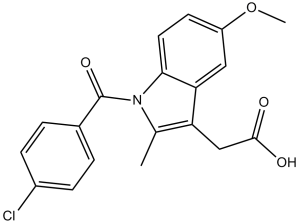
C19H16CLNO4
|
|
|---|---|---|
| 分子量 |
357.79
|
|
| 精确质量 |
357.077
|
|
| 元素分析 |
C, 63.78; H, 4.51; Cl, 9.91; N, 3.91; O, 17.89
|
|
| CAS号 |
53-86-1
|
|
| 相关CAS号 |
Indomethacin;53-86-1;Indomethacin sodium hydrate;74252-25-8; 7681-54-1 (sodium); 87377-08-0
|
|
| PubChem CID |
3715
|
|
| 外观&性状 |
White to off-white solid powder
|
|
| 密度 |
1.32g/cm3
|
|
| 沸点 |
499.4ºC at 760 mmHg
|
|
| 熔点 |
155-162 °C
|
|
| 闪点 |
255.8ºC
|
|
| LogP |
3.927
|
|
| tPSA |
68.53
|
|
| 氢键供体(HBD)数目 |
1
|
|
| 氢键受体(HBA)数目 |
4
|
|
| 可旋转键数目(RBC) |
4
|
|
| 重原子数目 |
25
|
|
| 分子复杂度/Complexity |
506
|
|
| 定义原子立体中心数目 |
0
|
|
| InChi Key |
CGIGDMFJXJATDK-UHFFFAOYSA-N
|
|
| InChi Code |
InChI=1S/C19H16ClNO4/c1-11-15(10-18(22)23)16-9-14(25-2)7-8-17(16)21(11)19(24)12-3-5-13(20)6-4-12/h3-9H,10H2,1-2H3,(H,22,23)
|
|
| 化学名 |
2-(1-(4-chlorobenzoyl)-5-methoxy-2-methyl-1H-indol-3-yl)acetic acid
|
|
| 别名 |
|
|
| HS Tariff Code |
2934.99.9001
|
|
| 存储方式 |
Powder -20°C 3 years 4°C 2 years In solvent -80°C 6 months -20°C 1 month |
|
| 运输条件 |
Room temperature (This product is stable at ambient temperature for a few days during ordinary shipping and time spent in Customs)
|
| 溶解度 (体外实验) |
|
|||
|---|---|---|---|---|
| 溶解度 (体内实验) |
配方 1 中的溶解度: ≥ 2.08 mg/mL (5.81 mM) (饱和度未知) in 10% DMSO + 40% PEG300 + 5% Tween80 + 45% Saline (这些助溶剂从左到右依次添加,逐一添加), 澄清溶液。
例如,若需制备1 mL的工作液,可将100 μL 20.8 mg/mL澄清DMSO储备液加入400 μL PEG300中,混匀;然后向上述溶液中加入50 μL Tween-80,混匀;加入450 μL生理盐水定容至1 mL。 *生理盐水的制备:将 0.9 g 氯化钠溶解在 100 mL ddH₂O中,得到澄清溶液。 配方 2 中的溶解度: ≥ 2.08 mg/mL (5.81 mM) (饱和度未知) in 10% DMSO + 90% (20% SBE-β-CD in Saline) (这些助溶剂从左到右依次添加,逐一添加), 澄清溶液。 例如,若需制备1 mL的工作液,可将 100 μL 20.8 mg/mL澄清DMSO储备液加入900 μL 20% SBE-β-CD生理盐水溶液中,混匀。 *20% SBE-β-CD 生理盐水溶液的制备(4°C,1 周):将 2 g SBE-β-CD 溶解于 10 mL 生理盐水中,得到澄清溶液。 View More
配方 3 中的溶解度: ≥ 2.08 mg/mL (5.81 mM) (饱和度未知) in 10% DMSO + 90% Corn Oil (这些助溶剂从左到右依次添加,逐一添加), 澄清溶液。 配方 4 中的溶解度: ≥ 1.25 mg/mL (3.49 mM) (饱和度未知) in 10% EtOH + 40% PEG300 + 5% Tween80 + 45% Saline (这些助溶剂从左到右依次添加,逐一添加), 澄清溶液。 例如,若需制备1 mL的工作液,可将100 μL 12.5 mg/mL 澄清 EtOH 储备液加入到400 μL PEG300中,混匀;再向上述溶液中加入50 μL Tween-80,混匀;然后加入450 μL 生理盐水定容至1 mL。 *生理盐水的制备:将 0.9 g 氯化钠溶解在 100 mL ddH₂O中,得到澄清溶液。 配方 5 中的溶解度: ≥ 1.25 mg/mL (3.49 mM) (饱和度未知) in 10% EtOH + 90% (20% SBE-β-CD in Saline) (这些助溶剂从左到右依次添加,逐一添加), 澄清溶液。 例如,若需制备1 mL的工作液,将 100 μL 12.5 mg/mL 澄清乙醇储备液加入 900 μL 20% SBE-β-CD 生理盐水溶液中,混匀。 *20% SBE-β-CD 生理盐水溶液的制备(4°C,1 周):将 2 g SBE-β-CD 溶解于 10 mL 生理盐水中,得到澄清溶液。 配方 6 中的溶解度: ≥ 1.25 mg/mL (3.49 mM) (饱和度未知) in 10% EtOH + 90% Corn Oil (这些助溶剂从左到右依次添加,逐一添加), 澄清溶液。 例如,若需制备1 mL的工作液,可将 100 μL 12.5 mg/mL 澄清乙醇储备液加入到 900 μL 玉米油中并混合均匀。 1、请先配制澄清的储备液(如:用DMSO配置50 或 100 mg/mL母液(储备液)); 2、取适量母液,按从左到右的顺序依次添加助溶剂,澄清后再加入下一助溶剂。以 下列配方为例说明 (注意此配方只用于说明,并不一定代表此产品 的实际溶解配方): 10% DMSO → 40% PEG300 → 5% Tween-80 → 45% ddH2O (或 saline); 假设最终工作液的体积为 1 mL, 浓度为5 mg/mL: 取 100 μL 50 mg/mL 的澄清 DMSO 储备液加到 400 μL PEG300 中,混合均匀/澄清;向上述体系中加入50 μL Tween-80,混合均匀/澄清;然后继续加入450 μL ddH2O (或 saline)定容至 1 mL; 3、溶剂前显示的百分比是指该溶剂在最终溶液/工作液中的体积所占比例; 4、 如产品在配制过程中出现沉淀/析出,可通过加热(≤50℃)或超声的方式助溶; 5、为保证最佳实验结果,工作液请现配现用! 6、如不确定怎么将母液配置成体内动物实验的工作液,请查看说明书或联系我们; 7、 以上所有助溶剂都可在 Invivochem.cn网站购买。 |
| 制备储备液 | 1 mg | 5 mg | 10 mg | |
| 1 mM | 2.7949 mL | 13.9747 mL | 27.9494 mL | |
| 5 mM | 0.5590 mL | 2.7949 mL | 5.5899 mL | |
| 10 mM | 0.2795 mL | 1.3975 mL | 2.7949 mL |
1、根据实验需要选择合适的溶剂配制储备液 (母液):对于大多数产品,InvivoChem推荐用DMSO配置母液 (比如:5、10、20mM或者10、20、50 mg/mL浓度),个别水溶性高的产品可直接溶于水。产品在DMSO 、水或其他溶剂中的具体溶解度详见上”溶解度 (体外)”部分;
2、如果您找不到您想要的溶解度信息,或者很难将产品溶解在溶液中,请联系我们;
3、建议使用下列计算器进行相关计算(摩尔浓度计算器、稀释计算器、分子量计算器、重组计算器等);
4、母液配好之后,将其分装到常规用量,并储存在-20°C或-80°C,尽量减少反复冻融循环。
计算结果:
工作液浓度: mg/mL;
DMSO母液配制方法: mg 药物溶于 μL DMSO溶液(母液浓度 mg/mL)。如该浓度超过该批次药物DMSO溶解度,请首先与我们联系。
体内配方配制方法:取 μL DMSO母液,加入 μL PEG300,混匀澄清后加入μL Tween 80,混匀澄清后加入 μL ddH2O,混匀澄清。
(1) 请确保溶液澄清之后,再加入下一种溶剂 (助溶剂) 。可利用涡旋、超声或水浴加热等方法助溶;
(2) 一定要按顺序加入溶剂 (助溶剂) 。
|
|
|