| 规格 | 价格 | 库存 | 数量 |
|---|---|---|---|
| 10 mM * 1 mL in DMSO |
|
||
| 1mg |
|
||
| 5mg |
|
||
| 10mg |
|
||
| 25mg |
|
||
| 50mg |
|
||
| 100mg |
|
||
| 250mg |
|
||
| Other Sizes |
|
| 靶点 |
NLRP3 inflammasomes
NLR family, pyrin domain-containing 3 (NLRP3) inflammasome: MCC950 sodium is a potent and selective small-molecule inhibitor of NLRP3; it blocks canonical and noncanonical NLRP3 activation at nanomolar concentrations (no specific IC₅₀/Ki values provided) and does not inhibit AIM2, NLRC4, or NLRP1 inflammasomes[1] |
|---|---|
| 体外研究 (In Vitro) |
在纳摩尔剂量下,MCC950 可抑制常规和非经典 NLRP3 激活。 MCC950 选择性阻止 NLRP3 激活,但不阻止 AIM2、NLRC4 或 NLRP1 激活。使用人单核细胞源性巨噬细胞 (HMDM) 和小鼠骨髓源性巨噬细胞 (BMDM),研究了 MCC950 对 NLRP3 炎性体激活的影响。 MCC950 在 HMDM 中表现出 8.1 nM 的抑制能力,而在 BMDM 中的 IC50 约为 7.5 nM。此外,MCC950 剂量依赖性地减少 IL-1β 分泌,但不减少 TNF-α 分泌。 MCC950 在刺激由 caspase-11 引起的非经典途径时选择性抑制 NLRP3 激活和 IL-1β 释放。即使剂量为 10 μM,MCC950 也不能阻止鼠伤寒沙门氏菌刺激 NLRC4 产生 IL-1β 和 TNF-α。当存在鼠伤寒沙门氏菌血清型时,MCC950 不会阻止 caspase-1 激活或 IL-1β 加工。 MCC950处理对细胞裂解物中pro-caspase-1和pro-IL-1β的产生基本上没有影响[1]。
抑制骨髓来源巨噬细胞(BMDM)中NLRP3炎性小体激活:MCC950 sodium(1-1000 nM)可剂量依赖性降低LPS+ATP或LPS+尼日利亚菌素(经典NLRP3刺激剂)刺激的BMDM中IL-1β的产生,对TNF-α产生无显著影响。Western blot证实,MCC950 sodium可抑制LPS+ATP处理的BMDM中caspase-1剪切和IL-1β成熟,而格列本脲(非特异性NLRP3抑制剂)抑制作用较弱。对于非经典NLRP3激活(Pam3CSK4+转染LPS),MCC950 sodium可降低C57BL/6 BMDM中IL-1β产生,但对Nlrp3⁻/⁻或casp11⁻/⁻ BMDM无作用,证实其NLRP3特异性。MCC950 sodium不影响BMDM中LDH释放(细胞死亡标志物),表明无细胞毒性[1] - 对NLRP3炎性小体的选择性:MCC950 sodium对LPS+鼠伤寒沙门氏菌(NLRC4炎性小体激活剂)或LPS+转染Poly(dA:dT)(AIM2炎性小体激活剂)刺激的BMDM中IL-1β产生无抑制作用,而小白菊内酯(非特异性炎性小体抑制剂)和拜耳化合物(AIM2抑制剂)可有效阻断上述模型中IL-1β产生。MCC950 sodium也不抑制TLR信号通路(LPS或Poly(A:U)诱导的TNF-α产生)或NLRP3启动(LPS诱导的BMDM中NLRP3蛋白表达)[1] - NLRP3抑制机制:MCC950 sodium可阻断LPS+尼日利亚菌素刺激的BMDM中NLRP3依赖的ASC寡聚化(交联实验和Western blot检测),并减少尼日利亚菌素、LeuLeu-Ome或致死毒素处理的ASC-cerulean报告细胞中ASC斑点形成(活细胞成像和流式细胞术检测)。该药物不阻断K⁺外流、Ca²⁺内流(FLIPR TETRA检测BMDM中ATP诱导的Ca²⁺流),也不直接抑制NLRP3与ASC的相互作用(HEK-293T细胞中FLAG-NLRP3/HA-NLRP3和ASC的免疫共沉淀实验)[1] - 抑制人外周血单个核细胞(PBMC)中NLRP3激活:MCC950 sodium可降低穆克-威尔士综合征(MWS,E313K NLRP3突变)患者PBMC经LPS刺激后的IL-1β产生,Western blot证实其可减少caspase-1剪切和IL-1β成熟[1] |
| 体内研究 (In Vivo) |
MCC950 减少白细胞介素-1p (IL-1β) 的产生,并减轻多发性硬化症模型实验性自身免疫性脑脊髓炎 (EAE) 的严重程度。 MCC950预处理降低了血清IL-1β和IL-6水平,但没有显着降低TNF-α水平。使用 MCC950 治疗的小鼠 EAE 发作延迟且严重程度降低。第22天处死的小鼠脑单核细胞进行细胞内细胞因子染色和FACS分析,结果显示MCC950处理的小鼠比PBS处理的小鼠具有更多产生IL-17和IFN-γ的CD3+T细胞。频率略有下降。 CD3+ T 细胞的 CD4+ 和 γδ+ 亚群产生 IFN-γ(尤其是 IL-17)的细胞数量也有所减少 [1]。
改善小鼠实验性自身免疫性脑脊髓炎(EAE):经MCC950 sodium处理的EAE小鼠(多发性硬化模型)临床评分显著低于PBS处理对照组。EAE诱导后22天分离小鼠脑单核细胞,流式细胞术显示MCC950 sodium可降低活IL-17⁺/IFN-γ⁺ CD3⁺ T细胞、CD3⁺CD4⁺ T细胞和CD3⁺γδ TCR⁺细胞比例,提示神经炎症被抑制[1] - 减轻小鼠全身性炎症:预先给予MCC950 sodium的C57BL/6小鼠,腹腔注射LPS后2小时血清IL-1β水平降低(TNF-α和IL-6无变化)(Mann-Whitney检验,P ≤ 0.05,n=3)[1] - 挽救CAPS小鼠模型新生致死性:Nlrp3A³⁵⁰VneoR×LysMCre小鼠(NLRP3功能获得性突变,CAPS模型)从出生后第9天开始给予MCC950 sodium,其体重和存活率(观察至45天,药物于28天停用)显著高于PBS处理的突变小鼠(第9天体重:非配对双尾t检验,P ≤ 0.005;存活率:MCC950组n=5 vs PBS组n=9)。MCC950 sodium处理的突变小鼠第9天血浆IL-18水平(NLRP3炎性小体产物)降低,停药14天后IL-18水平回升。该药物对NLRP1突变(Nlrp1aQ593P)小鼠无作用,证实NLRP3特异性[1] - 改善db/db小鼠糖尿病脑病(DEP):8周龄db/db小鼠(2型糖尿病模型)经MCC950 sodium处理8周后,胰岛素敏感性改善(空腹血糖降低,口服葡萄糖耐量试验[OGTT]和胰岛素耐量试验[ITT]曲线改善,OGTT/ITT中葡萄糖曲线下面积[AUC]降低)。行为学实验显示,MCC950 sodium可逆转db/db小鼠的焦虑样行为(明暗箱实验中亮箱停留时间和穿梭次数增加)、抑郁样行为(强迫游泳实验[FST]和悬尾实验[TST]中不动时间减少)和认知功能障碍(莫里斯水迷宫[MWM]隐藏平台实验中逃避潜伏期缩短,探索实验中穿越目标平台次数和目标象限停留时间增加)。Western blot和caspase-1活性实验证实,MCC950 sodium可降低db/db小鼠海马中NLRP3、ASC、IL-1β蛋白水平,减少caspase-1活性。MCC950 sodium处理的db/db小鼠血浆IL-1β水平降低,胰岛素水平升高;血浆和海马TNF-α水平无显著变化[2] |
| 酶活实验 |
炎症小体活化测定[1]
将BMDM以5×0 105/ml或1×0 6/ml接种,HMDM以5倍10 5/ml接种,PBMC以2×10 6/ml或5×0 6 g/ml接种于96孔板中。第二天,更换过夜培养基,并用来自大肠杆菌血清型EH100(ra)TLRgrade™的10 ng/ml LPS刺激细胞3小时。取出培养基,用含有二甲基亚砜(1:1000)、MCC950(0.001-10µM)、格列本脲(200µM),孤雌内酯(10µM)或拜耳半胱氨酰白三烯受体拮抗剂1-(5-羧基-2{3-[4-(3-环己基丙氧基)苯基]丙氧基}苯甲酰基)哌啶-4-羧酸(40µM)的无血清培养基(SFM)代替。然后用炎症小体激活剂刺激细胞30分钟:5 mM腺苷5’-三磷酸二钠盐水合物(ATP)(1小时)、用Lipofectamine 2000™(Invitrogen)转染的1µg/ml聚脱氧腺苷酸胸苷酸钠盐(Poly dA:dT)(3-4小时)、200µg/ml MSU(过夜)和10µM尼格瑞金(1小时。细胞也用25µg/ml聚腺苷酸-多ridylic acid刺激(4小时)。对于非典型炎症小体激活细胞,用100 ng/ml Pam3CSK4引发4小时,移除培养基并用含有DMSO或MCC950的SFM代替,并使用0.25%FuGENE®转染2µg/ml LPS 16小时。根据制造商的说明,移除上清液并使用ELISA试剂盒分析。使用Cytox96®非放射性细胞毒性测定法测量LDH释放。[1] 飞行时间炎症小体评估(TOFIE)测定[1] 使用Lipofectamine 2000™在24孔板中用以下质粒转染HEK293T细胞(4×10⁵/ml):pEF6人ASC-GFP、pEF6人类C-mCherry或空载体对照。转染后1小时,用DMSO或MCC950(0.1–50µM)处理细胞。将转染后15小时的细胞移除并悬浮在含有1%FCS和2mM EDTA的DPBS中。使用Gallios™流式细胞仪和FlowJo软件对细胞进行分析。在GFP和Cherry表达上对活细胞进行门控(当共转染时)。通过分析GFP脉冲区域的高度和宽度(低宽度:区域和高高度:区域)来确定含有ASC斑点的细胞的百分比。Sester et al。 细胞/组织裂解物中caspase-1活性实验:将细胞裂解物(BMDM、海马组织)或上清与caspase-1特异性底物(含对硝基苯胺)在37℃孵育特定时间(如1-2小时),通过分光光度法(405 nm)检测对硝基苯胺释放量,以蛋白浓度或对照组吸光度为参照计算caspase-1活性。MCC950 sodium处理可降低NLRP3激活的BMDM和db/db小鼠海马中caspase-1活性,反映其对NLRP3炎性小体介导的caspase-1剪切的抑制作用[1, 2] |
| 细胞实验 |
蛋白质印迹[1]
通过在50µl 5中直接裂解制备细胞裂解物ィ 莱姆利样品缓冲液。根据制造商的说明,使用StrataClean™树脂浓缩上清液的蛋白质含量。将蛋白质样品在15%SDS-PAGE凝胶上解析,并使用湿转移系统转移到聚偏二氟乙烯(PVDF)膜上。在室温(RT)下,将膜封闭在TBS-T(50mM Tris/HCL,pH 7.6,150mM NaCl和0.1%(v/v)Tween-20)中的5%(w/v)奶粉中1小时。将膜与稀释在TBS-T中的5%(w/v)奶粉中的一级抗体一起孵育,然后与适当的辣根过氧化物酶(HRP)偶联的二级抗体在TBS-T中稀释在5%(w/v)奶粉中孵育1小时。使用20ィ LumiGLO®化学发光试剂。在重新处理之前,使用Restore™PLUS蛋白质印迹剥离缓冲液剥离膜。[1] 将患有CAPS的个体的PBMC以2×0 106/ml的剂量接种在12孔板中,然后用1µg/ml LPS预处理3小时。用含有MCC950(5–1000 nM)的SFM代替培养基。45分钟后,收集细胞培养上清液和细胞裂解物。使用Novex®Tris-Glycine凝胶系统解析样品。[1] 荧光成像平板阅读器(FLIPR)Ca2+分析[1] 将BMDM(3×10⁴/孔)在37°C下用不洗涤的钙染料(Molecular Devices)在含有0.1%BSA的生理盐水溶液(PSS;成分NaCl 140 mM,葡萄糖11.5 mM,KCl 5.9 mM,MgCl2 1.4 mM,NaH2PO4 1.2 mM,NaHCO3 5 mM,CaCl2 1.8 mM,HEPES 10 mM)中加载30分钟。然后将细胞转移到FLIPRETTRA荧光板读取器上,并使用冷却的CCD相机测量Ca2+响应,激发为470–495 nM,发射为515–575 nM。调节每个板的相机增益和强度,以产生至少1000个任意荧光单位(AFU)的基线荧光。在添加MCC950之前,采集10个基线荧光读数,然后在添加样品后300秒内每秒读取荧光读数,并在添加PSS或ATP(500µM)后再读取300秒。 BMDM培养及NLRP3激活实验:从C57BL/6、Nlrp3⁻/⁻、casp11⁻/⁻小鼠分离骨髓细胞,在含M-CSF的完全培养基中培养7天分化为BMDM。BMDM经LPS(100 ng/mL)预刺激3-4小时后,加入经典NLRP3激动剂(ATP 5 mM、尼日利亚菌素10 μM)或非经典激动剂(Pam3CSK4预刺激24小时后转染LPS 1 μg/mL)刺激。MCC950 sodium(1-1000 nM)在激动剂刺激前30分钟加入。刺激6-24小时后,收集细胞上清用于ELISA(IL-1β、TNF-α、IL-1α)和LDH实验;制备细胞裂解物用于Western blot(NLRP3、ASC、caspase-1、IL-1β、GAPDH)[1] - ASC寡聚化实验:BMDM经LPS预刺激后,在MCC950 sodium或小白菊内酯存在下用尼日利亚菌素刺激。用去垢剂裂解细胞,胞质组分与双琥珀酰亚胺辛二酸酯(DSS)室温交联30分钟,交联蛋白经SDS-PAGE分离后,用抗ASC抗体通过Western blot检测ASC寡聚体[1] - ASC斑点形成实验:将稳定表达ASC-天蓝荧光蛋白融合蛋白的ASC-cerulean报告细胞接种于96孔板,加入MCC950 sodium(0.05-10 μM)预处理30分钟,再用尼日利亚菌素、LeuLeu-Ome或致死毒素刺激2-4小时。采用共聚焦显微镜(×40倍)进行活细胞成像,计数ASC斑点阳性细胞;流式细胞术分析时,收集细胞并定量活细胞中ASC斑点阳性细胞比例[1] - K⁺外流和Ca²⁺内流实验:K⁺外流实验中,Nlrp3⁻/⁻ BMDM经LPS预刺激后,在MCC950 sodium存在下用尼日利亚菌素、ATP或SiO₂刺激,裂解细胞后通过电感耦合等离子体发射光谱法(ICP-OES)检测细胞内K⁺浓度。Ca²⁺内流实验中,LPS预刺激的C57BL/6或Ice⁻/⁻ BMDM负载Fluo-4 AM,加入MCC950 sodium后,采用FLIPR TETRA系统实时检测ATP诱导的Ca²⁺内流(激发光488 nm,发射光525 nm)[1] - HEK-293T细胞转染及免疫共沉淀实验:采用转染试剂将FLAG-NLRP3、HA-NLRP3、ASC或空载体质粒转染至HEK-293T细胞。24小时后,细胞经MCC950 sodium处理4小时,用免疫沉淀缓冲液裂解。用抗FLAG抗体和蛋白G磁珠免疫沉淀FLAG标签蛋白,通过抗ASC抗体Western blot检测共沉淀的ASC。ASC斑点分析实验中,HEK-293T细胞共转染GFP-ASC和NLRP3-mCherry质粒,经MCC950 sodium处理后,流式细胞术检测活细胞中ASC斑点阳性细胞比例[1] - 人PBMC实验:通过密度梯度离心从穆克-威尔士综合征(E313K突变)患者分离PBMC,经LPS(1 μg/mL)预刺激3小时后,加入MCC950 sodium预处理30分钟,继续培养24小时。收集细胞上清和裂解物,Western blot检测caspase-1剪切和IL-1β成熟[1] |
| 动物实验 |
体内LPS攻击[1]
C57BL/6小鼠腹腔注射50 mg/kg MCC950或载体对照(DMSO/PBS),1小时后腹腔注射10 mg/kg LPS大肠杆菌O55:B5或PBS。2小时后处死小鼠,采用ELISA法检测血清中IL-1β、TNF-α和IL-6的水平。[1] EAE的诱导和评估[1] C57BL/6小鼠皮下注射150 µg MOG肽35-55(GenScript),该肽乳化于含有4 mg/ml(0.4 mg/只)热灭活结核分枝杆菌(Chondrex)的完全弗氏佐剂(CFA)中。小鼠于第0天和第2天腹腔注射500 ng百日咳毒素(PT:百日咳杆菌)。在疾病诱导时、第0天、第1天和第2天以及之后每2天腹腔注射MCC950(10 mg/kg)。对照组小鼠在相同时间点注射载体(PBS)。每日观察小鼠的临床症状(非盲法)。疾病严重程度评分如下:无临床症状,0分;尾巴无力,1分;共济失调步态,2分;后肢无力,3分;后肢瘫痪,4分;四肢瘫痪,5分。实验已获得爱尔兰药品管理局的许可(BI00/2412)和都柏林圣三一学院生物资源伦理委员会的批准。[1] EAE 的 FACS 分析[1] 免疫后第 22 天,将灌注 EAE 小鼠的全脑组织匀浆后,经 Percoll 梯度离心分离,得到单核细胞。将单核细胞 (MNC) (2 × 10⁶/ml) 在布雷菲德菌素 A (5 µg/ml) 存在下,用 PMA (10 ng/ml) 和离子霉素 (1 µg/ml) 刺激 4 小时。用 PBS 洗涤细胞,并重悬于 50 µL PBS 中,加入 1:1000 的 LIVE/DEAD® Fixable Aqua 死细胞染色试剂盒,孵育 20 分钟。加入 CD3 (145-2c11) (0.5 µl/10⁶ 个细胞)、CD4 (RM4-5) (0.5 µl/10⁶ 个细胞) 和 γδ TCR (GL3) (1 µl/10⁶ 个细胞) (eBioscience) 的表面染色剂,细胞继续孵育 20 分钟。然后用 2% 多聚甲醛固定细胞,并用 PBS 洗涤两次,之后在透化缓冲液(0.2% 皂苷 PBS + 1% FBS)中进行 IL-17 或 IFN-γ 的胞内染色。使用 BD LSRFortessa™ 流式细胞仪进行 MNC 的流式细胞术分析,并使用 FlowJo 软件进行数据分析。首先对 MNC 进行设门,筛选出活的 CD3⁺ T 细胞,然后根据 CD4 表达、γδ TCR 表达或细胞因子产生情况进行设门。[1] NLRP3 和 NLRP1 激活突变小鼠[1] 小鼠已回交至 C57BL/6 至少 10 次。 Nlrp3A350VneoR小鼠由美国加州大学圣地亚哥分校的Hal M. Hoffman提供,并与LysMCre小鼠(B6.129P2-Lyz2tm1(cre)Ifo/J)杂交。从出生后第4天开始,每隔一天腹腔注射MCC950(20 mg/kg)。NLRP1激活突变小鼠(Nlrp1aQ593P)的构建方法如前所述,在C57BL/6背景下进行,并每隔一天腹腔注射MCC950(20 mg/kg),持续9天。在指定时间点采集血液,用于通过ELISA分析血浆细胞因子。IL-18 ELISA的检测方法参照Westwell-Roper等人的描述。所有实验均在AEC项目2013.011下进行,并已获得沃尔特和伊丽莎·霍尔医学研究所动物伦理委员会的批准。研究. 小鼠EAE诱导和治疗:将MOG₃₅₋₅₅肽乳化于弗氏完全佐剂(FCA)中,并添加结核分枝杆菌,于免疫后第0天和第2天腹腔注射百日咳毒素(200 ng)以诱导EAE。将MCC950钠溶于PBS中,从免疫当天开始,每日一次腹腔注射特定剂量(未详细说明)的MCC950钠。连续22天每日记录临床评分(0-5分制,基于麻痹严重程度)。第22天处死小鼠,分离脑单核细胞,进行流式细胞术检测IL-17/IFN-γ分泌型T细胞[1] - LPS诱导的小鼠全身炎症:C57BL/6小鼠在腹腔注射LPS(10 mg/kg)前1小时预先注射MCC950钠(腹腔注射,剂量未详细说明)或载体(PBS)。LPS注射后2小时采集血样,采用ELISA法检测血清IL-1β、TNF-α和IL-6水平(每组n=3)[1] - CAPS小鼠模型治疗:Nlrp3A³⁵⁰VneoR × LysMCre小鼠(NLRP3功能获得性突变体)及其野生型(WT)同窝小鼠,从出生后第9天开始分别注射MCC950钠(溶于PBS,腹腔注射,剂量未详细说明)或PBS。在第9天测量体重,并监测存活情况至第45天(第28天停用MCC950)。停药后第9天和第14天,采用ELISA法检测血浆IL-18水平(每组n=3-6)。NLRP1突变体(Nlrp1aQ593P)小鼠作为对照,分别接受MCC950钠或PBS处理[1] - db/db小鼠糖尿病脑病(DEP)模型:将8周龄雄性db/db小鼠及其同窝db/m小鼠随机分为三组:db/m + 载体组、db/db + 载体组和db/db + MCC950钠组。MCC950钠溶于PBS,以10 mg/kg的剂量腹腔注射,每日一次,持续8周;载体组注射PBS。每周测量小鼠体重和空腹血糖。口服葡萄糖耐量试验(OGTT):小鼠禁食12小时后,通过灌胃给予葡萄糖(2 g/kg),并在 0、30、60、90 和 120 分钟时测量血糖。胰岛素耐量试验 (ITT):小鼠禁食 4 小时后,腹腔注射胰岛素(0.75 U/kg),并在 0、15、30、60 和 90 分钟时测量血糖。治疗 8 周后进行行为学测试(明暗箱、强迫游泳试验、悬尾试验、莫里斯水迷宫)。行为学测试后,处死小鼠,收集海马组织进行蛋白质印迹分析(NLRP3、ASC、IL-1β)和 caspase-1 活性测定;收集血浆进行 ELISA 检测(胰岛素、IL-1β、TNF-α)(每组 n=3-8)[2] |
| 参考文献 | |
| 其他信息 |
NOD样受体(NLR)家族的含吡啶结构域蛋白3(NLRP3)炎症小体是炎症过程的组成部分,其异常激活在遗传性疾病(如冷吡啶相关周期性综合征(CAPS))和复杂疾病(如多发性硬化症、2型糖尿病、阿尔茨海默病和动脉粥样硬化)中具有致病性。我们描述了MCC950的研发,MCC950是一种高效、选择性的小分子NLRP3抑制剂。MCC950在纳摩尔浓度下即可阻断经典和非经典NLRP3的激活。MCC950特异性抑制NLRP3的激活,但不抑制AIM2、NLRC4或NLRP1炎症小体的激活。MCC950在体内可降低白细胞介素-1β(IL-1β)的产生,并减轻实验性自身免疫性脑脊髓炎(EAE,一种多发性硬化症的疾病模型)的严重程度。此外,MCC950治疗挽救了CAPS小鼠模型的新生儿死亡率,并且对Muckle-Wells综合征患者的离体样本也有效。因此,MCC950有望成为NLRP3相关综合征(包括自身炎症性疾病和自身免疫性疾病)的潜在治疗药物,并可作为进一步研究NLRP3炎症小体在人类健康和疾病中作用的工具。[1]
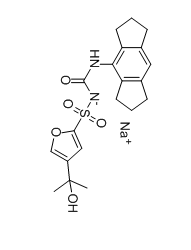
糖尿病与认知功能障碍和神经精神疾病的高风险相关,这些疾病症状被称为糖尿病脑病(DEP)。炎症参与了DEP的发生发展。促炎细胞因子白细胞介素(IL)-1β的裂解和成熟受NLRP3炎症小体的调控。肥胖和2型糖尿病db/db小鼠表现出焦虑和抑郁样行为以及与海马炎症相关的认知障碍。本研究旨在探讨NLRP3炎症小体在糖尿病性抑郁(DEP)中的作用。结果显示,糖尿病db/db小鼠海马中NLRP3、凋亡相关斑点样蛋白(ASC)、caspase-1等炎症小体组分以及IL-1β的表达水平均高于非糖尿病db/m小鼠。NLRP3炎症小体抑制剂MCC950治疗db/db小鼠可改善其焦虑和抑郁样行为以及认知功能障碍,并逆转海马中NLRP3、ASC和IL-1β表达水平及caspase-1活性的升高。此外,MCC950治疗还显著提高了db/db小鼠的胰岛素敏感性。这些结果表明,抑制 NLRP3 炎症小体的激活可能是一种潜在的 DEP 治疗方法。[2] MCC950 钠(化学名称:N-(1,2,3,5,6,7-六氢-S-茚并[n-茚]-4-基氨基甲酰基)-4-(2-羟基-2-丙酰基)-2-呋喃磺酰胺钠盐)是一种强效、选择性的小分子 NLRP3 炎症小体抑制剂[1, 2] - NLRP3 炎症小体是炎症反应的关键介质,其异常激活与冷吡啉相关周期性综合征 (CAPS)、多发性硬化症、2 型糖尿病、阿尔茨海默病和动脉粥样硬化有关[1] - MCC950 钠 通过阻断 ASC 寡聚化来抑制 NLRP3 炎症小体的激活( MCC950钠在NLRP3组装的关键步骤中发挥作用,且不影响上游事件(K⁺外流、Ca²⁺内流、NLRP3启动或TLR信号传导)[1] - MCC950钠在NLRP3相关疾病的临床前模型中具有活性:它能减轻EAE(多发性硬化症模型),挽救CAPS小鼠的新生儿死亡率,并通过减少海马NLRP3激活和神经炎症来改善db/db小鼠的糖尿病脑病[1, 2] - MCC950钠对Muckle-Wells综合征(CAPS的一种亚型)患者的离体样本有效,表明其在人类NLRP3相关自身炎症和自身免疫性疾病中具有潜在的临床应用价值[1] |
| 分子式 |
C20H23N2O5S.NA
|
|---|---|
| 分子量 |
426.46
|
| 精确质量 |
426.122
|
| 元素分析 |
C, 56.33; H, 5.44; N, 6.57; Na, 5.39; O, 18.76; S, 7.52
|
| CAS号 |
256373-96-3
|
| 相关CAS号 |
MCC950;210826-40-7
|
| PubChem CID |
91826093
|
| 外观&性状 |
Off-white to yellow solid
|
| LogP |
4.977
|
| tPSA |
119.85
|
| 氢键供体(HBD)数目 |
2
|
| 氢键受体(HBA)数目 |
6
|
| 可旋转键数目(RBC) |
4
|
| 重原子数目 |
29
|
| 分子复杂度/Complexity |
690
|
| 定义原子立体中心数目 |
0
|
| SMILES |
S(C1=C([H])C(=C([H])O1)C(C([H])([H])[H])(C([H])([H])[H])O[H])([N-]C(N([H])C1=C2C([H])([H])C([H])([H])C([H])([H])C2=C([H])C2C([H])([H])C([H])([H])C([H])([H])C=21)=O)(=O)=O.[Na+]
|
| InChi Key |
LFQQNXFKPNZRFT-UHFFFAOYSA-M
|
| InChi Code |
InChI=1S/C20H24N2O5S.Na/c1-20(2,24)14-10-17(27-11-14)28(25,26)22-19(23)21-18-15-7-3-5-12(15)9-13-6-4-8-16(13)18;/h9-11,24H,3-8H2,1-2H3,(H2,21,22,23);/q;+1/p-1
|
| 化学名 |
sodium ((1,2,3,5,6,7-hexahydro-s-indacen-4-yl)carbamoyl)((4-(2-hydroxypropan-2-yl)furan-2-yl)sulfonyl)amide
|
| 别名 |
CP-45677; CP45677; CP 45677; 256373-96-3; MCC950 sodium; CRID3 sodium salt; CP-456773 sodium; MCC950 (sodium); MCC950 sodium salt; CP-456773 sodium salt; MCC-950 sodium salt; MCC950; MCC 950; MCC-950; CRID-3; CRID3; CRID 3; CP-456773 sodium
|
| HS Tariff Code |
2934.99.9001
|
| 存储方式 |
Powder -20°C 3 years 4°C 2 years In solvent -80°C 6 months -20°C 1 month 注意: 请将本产品存放在密封且受保护的环境中,避免吸湿/受潮。 |
| 运输条件 |
Room temperature (This product is stable at ambient temperature for a few days during ordinary shipping and time spent in Customs)
|
| 溶解度 (体外实验) |
|
|||
|---|---|---|---|---|
| 溶解度 (体内实验) |
配方 1 中的溶解度: ≥ 5 mg/mL (11.72 mM) (饱和度未知) in 5%DMSO 95%PBS (这些助溶剂从左到右依次添加,逐一添加), 澄清溶液。<
配方 2 中的溶解度: ≥ 2.5 mg/mL (5.86 mM) (饱和度未知) in 10% DMSO + 90% (20% SBE-β-CD in Saline) (这些助溶剂从左到右依次添加,逐一添加), 澄清溶液。 例如,若需制备1 mL的工作液,可将 100 μL 25.0 mg/mL澄清DMSO储备液加入900 μL 20% SBE-β-CD生理盐水溶液中,混匀。 *20% SBE-β-CD 生理盐水溶液的制备(4°C,1 周):将 2 g SBE-β-CD 溶解于 10 mL 生理盐水中,得到澄清溶液。 View More
配方 3 中的溶解度: ≥ 2.5 mg/mL (5.86 mM) (饱和度未知) in 10% DMSO + 90% Corn Oil (这些助溶剂从左到右依次添加,逐一添加), 澄清溶液。 配方 4 中的溶解度: ≥ 2.08 mg/mL (4.88 mM) (饱和度未知) in 10% DMSO + 40% PEG300 + 5% Tween80 + 45% Saline (这些助溶剂从左到右依次添加,逐一添加), 澄清溶液。 例如,若需制备1 mL的工作液,可将100 μL 20.8 mg/mL澄清的DMSO储备液加入400 μL PEG300中,混匀;再向上述溶液中加入50 μL Tween-80,混匀;然后加入450 μL生理盐水定容至1 mL。 *生理盐水的制备:将 0.9 g 氯化钠溶解在 100 mL ddH₂O中,得到澄清溶液。 配方 5 中的溶解度: 2%DMSO 98%PBS 配方 6 中的溶解度: 6.25 mg/mL (14.66 mM) in PBS (这些助溶剂从左到右依次添加,逐一添加), 澄清溶液; 超声助溶. 1、请先配制澄清的储备液(如:用DMSO配置50 或 100 mg/mL母液(储备液)); 2、取适量母液,按从左到右的顺序依次添加助溶剂,澄清后再加入下一助溶剂。以 下列配方为例说明 (注意此配方只用于说明,并不一定代表此产品 的实际溶解配方): 10% DMSO → 40% PEG300 → 5% Tween-80 → 45% ddH2O (或 saline); 假设最终工作液的体积为 1 mL, 浓度为5 mg/mL: 取 100 μL 50 mg/mL 的澄清 DMSO 储备液加到 400 μL PEG300 中,混合均匀/澄清;向上述体系中加入50 μL Tween-80,混合均匀/澄清;然后继续加入450 μL ddH2O (或 saline)定容至 1 mL; 3、溶剂前显示的百分比是指该溶剂在最终溶液/工作液中的体积所占比例; 4、 如产品在配制过程中出现沉淀/析出,可通过加热(≤50℃)或超声的方式助溶; 5、为保证最佳实验结果,工作液请现配现用! 6、如不确定怎么将母液配置成体内动物实验的工作液,请查看说明书或联系我们; 7、 以上所有助溶剂都可在 Invivochem.cn网站购买。 |
| 制备储备液 | 1 mg | 5 mg | 10 mg | |
| 1 mM | 2.3449 mL | 11.7244 mL | 23.4489 mL | |
| 5 mM | 0.4690 mL | 2.3449 mL | 4.6898 mL | |
| 10 mM | 0.2345 mL | 1.1724 mL | 2.3449 mL |
1、根据实验需要选择合适的溶剂配制储备液 (母液):对于大多数产品,InvivoChem推荐用DMSO配置母液 (比如:5、10、20mM或者10、20、50 mg/mL浓度),个别水溶性高的产品可直接溶于水。产品在DMSO 、水或其他溶剂中的具体溶解度详见上”溶解度 (体外)”部分;
2、如果您找不到您想要的溶解度信息,或者很难将产品溶解在溶液中,请联系我们;
3、建议使用下列计算器进行相关计算(摩尔浓度计算器、稀释计算器、分子量计算器、重组计算器等);
4、母液配好之后,将其分装到常规用量,并储存在-20°C或-80°C,尽量减少反复冻融循环。
计算结果:
工作液浓度: mg/mL;
DMSO母液配制方法: mg 药物溶于 μL DMSO溶液(母液浓度 mg/mL)。如该浓度超过该批次药物DMSO溶解度,请首先与我们联系。
体内配方配制方法:取 μL DMSO母液,加入 μL PEG300,混匀澄清后加入μL Tween 80,混匀澄清后加入 μL ddH2O,混匀澄清。
(1) 请确保溶液澄清之后,再加入下一种溶剂 (助溶剂) 。可利用涡旋、超声或水浴加热等方法助溶;
(2) 一定要按顺序加入溶剂 (助溶剂) 。
 RP-220
 Human NLRP3 mRNA
 NLRP3-IN-83
 NLRP3/URAT1-IN-1
InvivoChem的所有产品仅用于作科学研究,不面向患者销售
Copyright 2020 InvivoChem LLC | All Rights Reserved 粤ICP备20063088号-1


 COA
COA


 粤公网安备 44011102003439号
 463611831
