| 规格 | 价格 | 库存 | 数量 |
|---|---|---|---|
| 1g |
|
||
| 2g |
|
||
| 5g |
|
||
| 10g |
|
||
| 50g |
|
||
| 100g |
|
||
| Other Sizes |
|
| 靶点 |
Quinolone
Bacterial DNA gyrase [2] Bacterial topoisomerase IV [2] |
|---|---|
| 体外研究 (In Vitro) |
诺氟沙星 (MK-0366) 是一种合成化疗抗菌剂,偶尔用于治疗常见和复杂的尿路感染。诺氟沙星 (MK-0366) 是一种广谱抗生素,对革兰氏阳性菌和革兰氏阴性菌均具有活性。它通过抑制 DNA 旋转酶(一种 II 型拓扑异构酶)和拓扑异构酶 IV(分离细菌 DNA 所必需的酶)发挥作用,从而抑制细胞分裂。目前在成人人群中批准了三种用途(其中一种受到限制),另一种则无效,因为对细菌产生耐药性。
针对革兰氏阴性菌(大肠杆菌、肺炎克雷伯菌、铜绿假单胞菌、空肠弯曲杆菌),诺氟沙星(MK-0366)表现出强效的浓度依赖性抗菌活性,敏感菌株的MIC值为0.06-2 μg/mL。耐药弯曲杆菌菌株的MIC值>8 μg/mL [1][2] - 针对部分革兰氏阳性菌(金黄色葡萄球菌、化脓性链球菌),该药物表现出中等抗菌活性,MIC值为1-8 μg/mL [2] - 诺氟沙星(MK-0366)通过靶向DNA旋转酶和拓扑异构酶IV,稳定酶-DNA切割复合物并阻止DNA链连接,抑制细菌DNA复制和转录[2] |
| 体内研究 (In Vivo) |
在大肠杆菌诱导的尿路感染(UTI)小鼠模型中,以20-50 mg/kg/天的剂量口服诺氟沙星(MK-0366),连续3-5天,显著降低肾脏和膀胱中的细菌载量,治愈率>80% [2]
- 在女性单纯性急性膀胱炎的临床研究中,口服诺氟沙星(MK-0366)(400 mg,每日两次,连续3天)对敏感尿病原体的临床治愈率达85-95%,微生物根除率达80-90% [3] - 药物组织穿透性良好,在尿路、胃肠道和皮肤/软组织中达到治疗浓度[2] |
| 酶活实验 |
细菌DNA旋转酶活性检测:将纯化的大肠杆菌DNA旋转酶与超螺旋质粒DNA在反应缓冲液中于37°C孵育。加入系列浓度(0.03-16 μg/mL)的诺氟沙星(MK-0366),混合物孵育60分钟。加入SDS和蛋白酶K终止反应,随后在55°C孵育1小时。通过1%琼脂糖凝胶电泳分离DNA产物,溴化乙锭染色。通过测量超螺旋DNA条带强度,定量DNA旋转酶介导的超螺旋松弛抑制效果[2]
- 细菌拓扑异构酶IV活性检测:将分离的金黄色葡萄球菌拓扑异构酶IV与松弛型质粒DNA在反应缓冲液中孵育。加入0.06-32 μg/mL浓度的诺氟沙星(MK-0366),混合物在37°C孵育45分钟。加入终止液终止反应,通过琼脂糖凝胶电泳分析DNA产物,评估DNA解连环反应的抑制情况[2] |
| 细胞实验 |
细菌生长抑制检测:将细菌菌株(大肠杆菌、空肠弯曲杆菌、金黄色葡萄球菌)在Mueller-Hinton肉汤中37°C振荡培养。加入系列浓度(0.015-64 μg/mL)的诺氟沙星(MK-0366),24小时后测量600 nm处的光密度(OD600),监测细菌生长。MIC定义为抑制≥90%细菌生长的最低浓度[1][2]
|
| 动物实验 |
Urinary tract infection mouse model: Female BALB/c mice were intraurethrally inoculated with a pathogenic strain of Escherichia coli to induce UTI. Norfloxacin (MK-0366) was dissolved in sterile water and administered orally via gavage at doses of 20, 30, or 50 mg/kg/day. Dosing started 24 hours post-infection and continued once daily for 3-5 days. Mice were euthanized, and kidneys and bladder tissues were collected to quantify bacterial load via colony counting [2]
|
| 药代性质 (ADME/PK) |
Absorption, Distribution and Excretion
Rapid Norfloxacin is eliminated through metabolism, biliary excretion, and renal excretion. It is expected to undergo both glomerular filtration and tubular secretion during renal excretion, as shown by its high renal clearance rate of approximately 275 mL/min. Norfloxacin crosses the placenta and is distributed into cord blood and amniotic fluid. It is not known whether the drug is distributed into milk. Norfloxacin was not detected in the milk of lactating women following a single 200-mg oral dose of the drug, but the possibility of distribution into milk following higher doses remains to be determined. Some other quinolones (e.g., ciprofloxacin, levofloxacin ofloxacin) are distributed into milk. In adults who received 400 mg of oral norfloxacin twice daily, prostatic tissue concentrations of the drug ranged from 0.24-4.65 ug/g in specimens obtained 1-4 hours after the second dose; concurrent serum concentrations ranged from 0.42-5.3 ug/mL. Norfloxacin is 10-15% bound to serum proteins. Biliary concentrations of norfloxacin may be up to 10 times higher than concurrent serum concentrations. In cholecystectomy patients who received a single 400-mg oral dose of norfloxacin prior to surgery, concentrations of the drug ranged from 0.6-15.6 ug/mL in gallbladder bile, from 0.4-7.5 mcg/g in gallbladder tissue, and from 0.4-1.8 ug/mL in serum in specimens obtained approximately 3.5-6 hours after the dose. There is limited information on the distribution of norfloxacin. Following oral administration in adults, norfloxacin is distributed into renal parenchyma, gallbladder, liver, prostatic tissue, testicles, seminal fluid, uterus, fallopian tubes, cervical and vaginal tissue, blister fluid, tonsils, maxillary sinus mucosa, sputum, and bile. For more Absorption, Distribution and Excretion (Complete) data for Norfloxacin (9 total), please visit the HSDB record page. Metabolism / Metabolites Via liver and kidney Norfloxacin is eliminated by renal and nonrenal mechanisms. The drug is partially metabolized by modification of the piperazinyl group to 6 metabolites, designated M-1, M-2, M-3, M-4(1), M-4(2), and M-5.2 Although some of the metabolites are microbiologically active, they are less active than the parent drug. It has been suggested that norfloxacin undergoes first-pass metabolism in the liver, but further study is needed to fully elucidate the metabolic fate of the drug. Pefloxacin, N-desmethyl is a known human metabolite of Pefloxacin. Biological Half-Life 3-4 hours In patients with impaired renal function, serum concentrations of norfloxacin are higher and its half-life is prolonged. In adults with renal impairment, the half-life of norfloxacin averaged 4.4, 6.6, or 7.6 hours in adults with creatinine clearances of 30-80, 10-29, or less than 10 mL/minute per 1.73 sq m, respectively. Limited data suggest that half-life of the drug is not substantially affected by hepatic impairment. The effective plasma or serum half-life of norfloxacin in adults with normal renal function is 2.3-4 hours. The effective half-life of the drug averages 4 hours in geriatric individuals 65-75 years of age with renal function normal for their age. Absorption: Norfloxacin (MK-0366) is well absorbed after oral administration, with an oral bioavailability of approximately 80-90%. Peak plasma concentrations (Cmax) of 1.5-2.5 μg/mL are reached within 1-2 hours after a 400 mg dose [2] - Distribution: The drug distributes widely into body tissues and fluids, with high concentrations in the kidneys, bladder, urine, and gastrointestinal tract. Plasma protein binding rate is approximately 10-15% [2] - Metabolism: Norfloxacin (MK-0366) undergoes minimal hepatic metabolism, with > 80% of the drug excreted as unchanged drug [2] - Excretion: Primary excretion is via the renal route, with 60-70% of the administered dose excreted in urine within 24 hours. The plasma elimination half-life is approximately 3-4 hours [2] |
| 毒性/毒理 (Toxicokinetics/TK) |
Hepatotoxicity
Norfloxacin like other fluoroquinolones is associated with a low rate (1% to 3%) of serum enzyme elevations during therapy. These abnormalities are generally mild, asymptomatic and transient, resolving even with continuation of therapy. Norfloxacin has also been linked to rare but occasionally severe and even fatal cases of acute liver injury. While the numbers of cases have been few, the clinical pattern has been consistent with short latency period of 1 day to 3 weeks and abrupt onset of hepatocellular injury. The pattern of serum enzyme elevations can be either hepatocellular or cholestatic, cases with the shorter times to onset usually being more hepatocellular with markedly elevated ALT levels, and occasionally with rapid worsening of prothrombin time and signs of hepatic failure. The onset of illness may occur a few days after the medication is stopped. Many (but not all) cases have had allergic manifestations with fever, rash and eosinophilia. Autoantibodies are usually not present. Cholestatic and mixed patterns of injury have also been described particularly with delayed recognition of the liver injury. These features are typical of all fluoroquinolone associated hepatotoxicity and the injury is believed to be class specific. Likelihood score: C (probable rare cause of clinically apparent liver injury). Effects During Pregnancy and Lactation ◉ Summary of Use during Lactation No information is available on the clinical use of norfloxacin during breastfeeding; however, amounts in breastmilk appear to be low. Fluoroquinolones such as norfloxacin have traditionally not been used in infants because of concern about adverse effects on the infants' developing joints. However, more recent studies indicate little risk. In addition, the calcium in milk might prevent absorption of the small amounts of fluoroquinolones in milk, but insufficient data exist to prove or disprove this assertion. The serum and milk levels and oral bioavailability of norfloxacin are the lowest of any of the fluoroquinolones, so the risk to the infant should be minimal. Use of norfloxacin is acceptable in nursing mothers with monitoring of the infant for possible effects on the gastrointestinal flora, such as diarrhea or candidiasis (thrush, diaper rash). ◉ Effects in Breastfed Infants Relevant published information was not found as of the revision date. ◉ Effects on Lactation and Breastmilk Relevant published information was not found as of the revision date. Protein Binding 10 and 15% (Serum protein binding) Interactions Concomitant use of some quinolones (e.g., ciprofloxacin, norfloxacin) in patients receiving theophylline has resulted in increased plasma theophylline concentrations and decreased clearance of the drug and may increase the risk of theophylline-related adverse effects. There have been conflicting reports concerning the effect of norfloxacin on the pharmacokinetics of theophylline and additional study and experience are necessary to evaluate the interaction; however, the risk of norfloxacin inducing substantial alterations in theophylline pharmacokinetics appears to be less than with some other quinolones (e.g., ciprofloxacin). Concomitant administration of norfloxacin and an extended-release theophylline preparation to a limited number of individuals produced only slight increases in serum theophylline concentrations compared with that of some other quinolone derivatives. In other studies, concomitant administration of norfloxacin in patients stabilized on theophylline resulted in at most an 18% increase in plasma theophylline concentrations and a decrease in theophylline clearance of 5-28%. Some clinicians suggest that the interaction between norfloxacin and theophylline may not be clinically important in most patients. However, there have been reports of theophylline-related adverse effects in patients receiving norfloxacin concomitantly. Therefore, some clinicians suggest that norfloxacin be used with caution in patients receiving theophylline. The manufacturer of norfloxacin states that consideration should be given to monitoring plasma theophylline concentrations and theophylline dosage should be adjusted as required. Some quinolones (e.g., ciprofloxacin) also have been reported to alter the pharmacokinetics of caffeine, and the possibility of exaggerated or prolonged effects of caffeine during concomitant use with a quinolone should be considered. Concomitant administration of sucralfate may interfere with oral absorption of norfloxacin resulting in decreased serum and urine concentrations of the quinolone, and some clinicians state that concomitant use of ofloxacin with sucralfate is not recommended. If concomitant use of ofloxacin and sucralfate is necessary, the manufacturer and some clinicians recommend that norfloxacin doses should be taken at least 2 hours before or after sucralfate doses. Concomitant administration of probenecid substantially decreases urinary excretion of norfloxacin, possibly by blocking renal tubular secretion of the anti-infective, but serum concentrations and half-life of norfloxacin generally are not affected. In vitro, chloramphenicol, rifampin, or tetracycline can inhibit the bactericidal activity of norfloxacin. In an in vitro study, the combination of norfloxacin and chloramphenicol or tetracycline was antagonistic against all Salmonella isolates tested. In an in vitro study using strains of Ps. aeruginosa resistant to aminoglycosides and carbenicillin, the antibacterial activities of imipenem and norfloxacin were synergistic or partially synergistic against about one-third and indifferent against about two-thirds of strains tested; antagonism did not occur. In vitro studies using both gram-positive and gram-negative bacteria indicate that neither synergism nor antagonism occurs when norfloxacin is used in conjunction with a beta-lactam antibiotic (e.g., ampicillin, cefotaxime, cefoxitin). For more Interactions (Complete) data for Norfloxacin (16 total), please visit the HSDB record page. Non-Human Toxicity Values LD50 Mouse im 470 mg/kg LD50 Mouse iv 222 mg/kg LD50 Mouse oral 4 g/kg LD50 Rat iv 245 mg/kg Gastrointestinal toxicity: Common side effects include nausea (incidence 5-10%), diarrhea (3-7%), and abdominal discomfort (2-5%), which are usually mild and reversible [2][3] - Central nervous system (CNS) toxicity: Rare adverse effects include dizziness (1-3%), headache (2-4%), and insomnia (1-2%); seizures are extremely rare (< 0.1%) [2] - Tendon toxicity: Isolated cases of tendonitis or tendon rupture were reported, primarily in elderly patients or those receiving concurrent corticosteroids [2] |
| 参考文献 |
|
| 其他信息 |
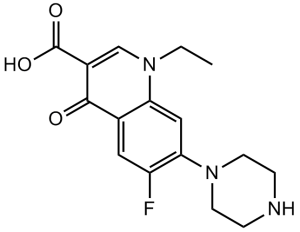
Norfloxacin is a quinolinemonocarboxylic acid with broad-spectrum antibacterial activity against most gram-negative and gram-positive bacteria. Norfloxacin is bactericidal and its mode of action depends on blocking of bacterial DNA replication by binding itself to an enzyme called DNA gyrase. It has a role as an antibacterial drug, a DNA synthesis inhibitor, a xenobiotic and an environmental contaminant. It is a quinolinemonocarboxylic acid, a N-arylpiperazine, a quinolone, a quinolone antibiotic and a fluoroquinolone antibiotic.
A synthetic fluoroquinolone (fluoroquinolones) with broad-spectrum antibacterial activity against most gram-negative and gram-positive bacteria. Norfloxacin inhibits bacterial DNA gyrase. Norfloxacin is a Quinolone Antimicrobial. Norfloxacin is a first generation fluoroquinolone that is typically used to treated urinary tract infections and prostatitis. Norfloxacin has been linked to rare instances of acute hepatocellular injury. Norfloxacin has been reported in Bacillus subtilis and Caloboletus radicans with data available. Norfloxacin is a synthetic, broad-spectrum fluoroquinolone with antibacterial activity. Norfloxacin inhibits activity of DNA gyrase, thereby blocking bacterial DNA replication. Norfloxacin concentrates in the renal tubules and bladder and is bactericidal against a wide range of aerobic gram-positive and gram-negative organisms. A synthetic fluoroquinolone (FLUOROQUINOLONES) with broad-spectrum antibacterial activity against most gram-negative and gram-positive bacteria. Norfloxacin inhibits bacterial DNA GYRASE. See also: Norfloxacin hydrochloride (is active moiety of). Drug Indication For the treatment of urinary tract infection FDA Label Mechanism of Action The bactericidal action of Norfloxacin results from inhibition of the enzymes topoisomerase II (DNA gyrase) and topoisomerase IV, which are required for bacterial DNA replication, transcription, repair, and recombination. Norfloxacin is a broad-spectrum antibiotic agent that is shown to be effective against various Gram-positive and Gram-negative bacterial species. The fluorine atom at the 6 position increases potency against gram-negative organisms, and the piperazine moiety at the 7 position is responsible for anti-pseudomonal activity Norfloxacin usually is bactericidal in action. Like other fluoroquinolone anti-infectives, norfloxacin inhibits DNA synthesis in susceptible organisms via inhibition of type II DNA topoisomerases (DNA gyrase, topoisomerase IV). Fluoroquinolones prolong the QT interval by blocking voltage-gated potassium channels, especially the rapid component of the delayed rectifier potassium current I(Kr), expressed by HERG (the human ether-a-go-go-related gene). According to the available case reports and clinical studies, moxifloxacin carries the greatest risk of QT prolongation from all available quinolones in clinical practice and it should be used with caution in patients with predisposing factors for Torsades de pointes (TdP). Therapeutic Uses Anti-Bacterial Agents; Enzyme Inhibitors; Nucleic Acid Synthesis Inhibitors Oral norfloxacin is used for the treatment of prostatitis caused by E. coli. /Included in US product label/ Oral norfloxacin is used in adults for the treatment of complicated UTIs caused by susceptible E. coli, K. pneumoniae, P. mirabilis, Ps. aeruginosa, S. marcescens, or E. faecalis. /Included in US product label/ Oral norfloxacin is used in adults for the treatment of uncomplicated urinary tract infections (UTIs) (including cystitis) caused by susceptible Citrobacter freundii, Enterobacter aerogenes, E. cloacae, Escherichia coli, Klebsiella pneumoniae, ... Proteus mirabilis, P. vulgaris, ... Pseudomonas aeruginosa, ... . The drug also is used orally in adults for the treatment of uncomplicated UTIs caused by susceptible Staphylococcus aureus, S. epidermidis, S. saprophyticus, Streptococcus agalactiae (group B streptococci), or Enterococcus faecalis. /Included in US product label/ For more Therapeutic Uses (Complete) data for Norfloxacin (10 total), please visit the HSDB record page. Drug Warnings WARNING: Fluoroquinolones, including Noroxin, are associated with an increased risk of tendinitis and tendon rupture in all ages. This risk is further increased in older patients usually over 60 years of age, in patients taking corticosteroid drugs, and in patients with kidney, heart or lung transplants. WARNING: Fluoroquinolones, including Noroxin, may exacerbate muscle weakness in persons with myasthenia gravis. Avoid Noroxin in patients with known history of myasthenia gravis Serious and occasionally fatal hypersensitivity (anaphylactic) reactions, some following the first dose, have been reported in patients receiving quinolone therapy, including Noroxin. Some reactions were accompanied by cardiovascular collapse, loss of consciousness, tingling, pharyngeal or facial edema, dyspnea, urticaria and itching. Only a few patients had a history of hypersensitivity reactions. If an allergic reaction to norfloxacin occurs, discontinue the drug. Serious acute hypersensitivity reactions require immediate emergency treatment with epinephrine. Oxygen, intravenous fluids, antihistamines, corticosteroids, pressor amines, and airway management, including intubation, should be administered as indicated. Other serious and sometimes fatal events, some due to hypersensitivity, and some due to uncertain etiology, have been reported rarely in patients receiving therapy with quinolones, including Noroxin. These events may be severe and generally occur following the administration of multiple doses. Clinical manifestations may include one or more of the following: fever, rash or severe dermatologic reactions (e.g., toxic epidermal necrolysis, Stevens-Johnson syndrome); vasculitis; arthralgia; myalgia; serum sickness; allergic pneumonitis; interstitial nephritis; acute renal insufficiency or failure; hepatitis; jaundice; acute hepatic necrosis or failure; anemia, including hemolytic and aplastic; thrombocytopenia, including thrombotic thrombocytopenic purpura; leukopenia; agranulocytosis; pancytopenia; and/or other hematologic abnormalities. For more Drug Warnings (Complete) data for Norfloxacin (24 total), please visit the HSDB record page. Pharmacodynamics Norfloxacin is a quinolone/fluoroquinolone antibiotic. Norfloxacin is bactericidal and its mode of action depends on blocking of bacterial DNA replication by binding itself to an enzyme called DNA gyrase, which allows the untwisting required to replicate one DNA double helix into two. Notably the drug has 100 times higher affinity for bacterial DNA gyrase than for mammalian. Norfloxacin (MK-0366) is a first-generation fluoroquinolone antibiotic with broad-spectrum antibacterial activity, developed for the treatment of bacterial infections [2] - Mechanism of action: It exerts antibacterial effects by dual targeting of bacterial DNA gyrase and topoisomerase IV, blocking DNA replication/transcription and leading to bacterial cell death [2] - Clinical indications: Approved for the treatment of uncomplicated urinary tract infections, complicated UTIs, traveler’s diarrhea, and gastrointestinal infections caused by susceptible pathogens [2][3] - Resistance context: Overuse in poultry led to increased fluoroquinolone resistance in Campylobacter species, prompting withdrawal of fluoroquinolones from poultry use to preserve clinical efficacy [1] - Therapeutic advantage: High urinary excretion and concentration make it particularly effective for urinary tract infections [2][3] |
| 分子式 |
C16H18FN3O3
|
|---|---|
| 分子量 |
319.3308
|
| 精确质量 |
319.133
|
| 元素分析 |
C, 60.18; H, 5.68; F, 5.95; N, 13.16; O, 15.03
|
| CAS号 |
70458-96-7
|
| 相关CAS号 |
68077-27-0;118803-81-9
|
| PubChem CID |
4539
|
| 外观&性状 |
White to light yellow solid powder
|
| 密度 |
1.3±0.1 g/cm3
|
| 沸点 |
555.8±50.0 °C at 760 mmHg
|
| 熔点 |
220°C
|
| 闪点 |
289.9±30.1 °C
|
| 蒸汽压 |
0.0±1.6 mmHg at 25°C
|
| 折射率 |
1.595
|
| LogP |
0.82
|
| tPSA |
74.57
|
| 氢键供体(HBD)数目 |
2
|
| 氢键受体(HBA)数目 |
7
|
| 可旋转键数目(RBC) |
3
|
| 重原子数目 |
23
|
| 分子复杂度/Complexity |
519
|
| 定义原子立体中心数目 |
0
|
| SMILES |
FC1C([H])=C2C(C(C(=O)O[H])=C([H])N(C([H])([H])C([H])([H])[H])C2=C([H])C=1N1C([H])([H])C([H])([H])N([H])C([H])([H])C1([H])[H])=O
|
| InChi Key |
OGJPXUAPXNRGGI-UHFFFAOYSA-N
|
| InChi Code |
InChI=1S/C16H18FN3O3/c1-2-19-9-11(16(22)23)15(21)10-7-12(17)14(8-13(10)19)20-5-3-18-4-6-20/h7-9,18H,2-6H2,1H3,(H,22,23)
|
| 化学名 |
1-ethyl-6-fluoro-4-oxo-7-piperazin-1-ylquinoline-3-carboxylic acid
|
| 别名 |
MK-0366; Norfloxacin; AM-715; MK 0366; MK0366; AM715; MK-366; AM 715; MK366; MK 366; Noroxin; Chibroxin
|
| HS Tariff Code |
2934.99.9001
|
| 存储方式 |
Powder -20°C 3 years 4°C 2 years In solvent -80°C 6 months -20°C 1 month |
| 运输条件 |
Room temperature (This product is stable at ambient temperature for a few days during ordinary shipping and time spent in Customs)
|
| 溶解度 (体外实验) |
DMSO : 3~5 mg/mL (9.4~15.7 mM)
Water : <1 mg/mL Ethanol : <1 mg/mL |
|---|---|
| 溶解度 (体内实验) |
配方 1 中的溶解度: ≥ 0.5 mg/mL (1.57 mM) (饱和度未知) in 10% DMSO + 40% PEG300 + 5% Tween80 + 45% Saline (这些助溶剂从左到右依次添加,逐一添加), 澄清溶液。
例如,若需制备1 mL的工作液,可将100 μL 5.0 mg/mL澄清DMSO储备液加入400 μL PEG300中,混匀;然后向上述溶液中加入50 μL Tween-80,混匀;加入450 μL生理盐水定容至1 mL。 *生理盐水的制备:将 0.9 g 氯化钠溶解在 100 mL ddH₂O中,得到澄清溶液。 配方 2 中的溶解度: ≥ 0.5 mg/mL (1.57 mM) (饱和度未知) in 10% DMSO + 90% Corn Oil (这些助溶剂从左到右依次添加,逐一添加), 澄清溶液。 例如,若需制备1 mL的工作液,可将 100 μL 5.0 mg/mL 澄清 DMSO 储备液加入到 900 μL 玉米油中并混合均匀。 请根据您的实验动物和给药方式选择适当的溶解配方/方案: 1、请先配制澄清的储备液(如:用DMSO配置50 或 100 mg/mL母液(储备液)); 2、取适量母液,按从左到右的顺序依次添加助溶剂,澄清后再加入下一助溶剂。以 下列配方为例说明 (注意此配方只用于说明,并不一定代表此产品 的实际溶解配方): 10% DMSO → 40% PEG300 → 5% Tween-80 → 45% ddH2O (或 saline); 假设最终工作液的体积为 1 mL, 浓度为5 mg/mL: 取 100 μL 50 mg/mL 的澄清 DMSO 储备液加到 400 μL PEG300 中,混合均匀/澄清;向上述体系中加入50 μL Tween-80,混合均匀/澄清;然后继续加入450 μL ddH2O (或 saline)定容至 1 mL; 3、溶剂前显示的百分比是指该溶剂在最终溶液/工作液中的体积所占比例; 4、 如产品在配制过程中出现沉淀/析出,可通过加热(≤50℃)或超声的方式助溶; 5、为保证最佳实验结果,工作液请现配现用! 6、如不确定怎么将母液配置成体内动物实验的工作液,请查看说明书或联系我们; 7、 以上所有助溶剂都可在 Invivochem.cn网站购买。 |
| 制备储备液 | 1 mg | 5 mg | 10 mg | |
| 1 mM | 3.1316 mL | 15.6578 mL | 31.3156 mL | |
| 5 mM | 0.6263 mL | 3.1316 mL | 6.2631 mL | |
| 10 mM | 0.3132 mL | 1.5658 mL | 3.1316 mL |
1、根据实验需要选择合适的溶剂配制储备液 (母液):对于大多数产品,InvivoChem推荐用DMSO配置母液 (比如:5、10、20mM或者10、20、50 mg/mL浓度),个别水溶性高的产品可直接溶于水。产品在DMSO 、水或其他溶剂中的具体溶解度详见上”溶解度 (体外)”部分;
2、如果您找不到您想要的溶解度信息,或者很难将产品溶解在溶液中,请联系我们;
3、建议使用下列计算器进行相关计算(摩尔浓度计算器、稀释计算器、分子量计算器、重组计算器等);
4、母液配好之后,将其分装到常规用量,并储存在-20°C或-80°C,尽量减少反复冻融循环。
计算结果:
工作液浓度: mg/mL;
DMSO母液配制方法: mg 药物溶于 μL DMSO溶液(母液浓度 mg/mL)。如该浓度超过该批次药物DMSO溶解度,请首先与我们联系。
体内配方配制方法:取 μL DMSO母液,加入 μL PEG300,混匀澄清后加入μL Tween 80,混匀澄清后加入 μL ddH2O,混匀澄清。
(1) 请确保溶液澄清之后,再加入下一种溶剂 (助溶剂) 。可利用涡旋、超声或水浴加热等方法助溶;
(2) 一定要按顺序加入溶剂 (助溶剂) 。
| NCT Number | Recruitment | interventions | Conditions | Sponsor/Collaborators | Start Date | Phases |
| NCT04161768 | Recruiting | Drug: Norfloxacin Drug: Itopride |
Spontaneous Bacterial Peritonitis |
Tanta University | December 1, 2018 | Phase 3 |
| NCT05667818 | Not yet recruiting | Drug: Amlodipine besylate tablets (trade name: Norfloxacin ® sitafloxacin Drug: Amlodipine besylate controlled-release tablets |
Hypertension | Overseas Pharmaceuticals, Ltd. | January 28, 2023 | Phase 1 |
| NCT00362752 | Completed | Drug: Norfloxacin Drug: Placebo |
Hepatopulmonary Syndrome | Unity Health Toronto | October 2006 | Phase 2 |
| NCT00359853 | Completed | Drug: Oral norfloxacin | Hepatorenal Syndrome Cirrhosis |
Hospital Clinic of Barcelona | September 2000 | Phase 4 |
| NCT01542801 | Completed | Drug: Norfloxacin Drug:Drug: ciprofloxacin |
Adverse Reaction to Other Drugs and Medicines |
Korea University | August 2011 | Phase 4 |
|
|
|
|
|
|
|