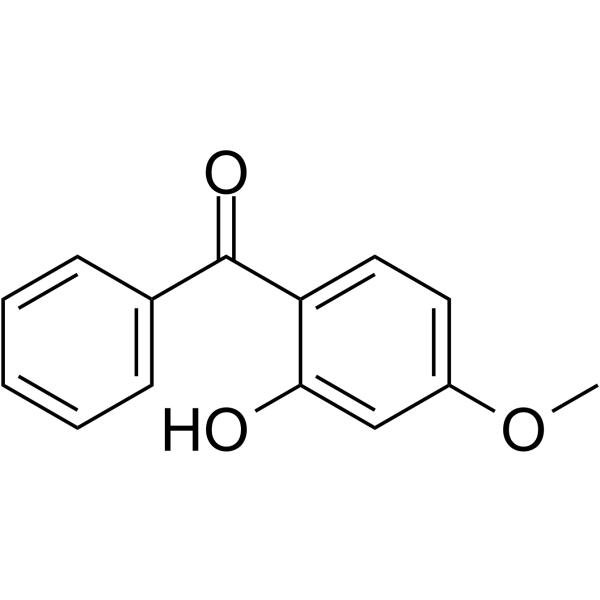
Oxybenzone

别名: 紫外线吸收剂UV-9;二苯甲酮-3;防晒剂2号;2-羟基-4-甲氧基二苯甲酮;2-羟基-4’-甲氧基二苯甲酮; 2-Hydroxy-4-methoxybenzophenone 2-羟基-4-甲氧基二苯甲酮;2-羟基-4-甲氧基二苯甲;2-羟基-4-甲氧基二苯甲酮 (UV-9);2-羟基-4-甲氧基二苯甲酮(二苯酮-3)标准溶液 标准品;二苯酮-3;二苯酮-3 标准品;羟苯甲酮 USP标准品;紫外线吸收剂BP-3(UV-9);紫外线吸收剂UV-9(BP-3);紫外线吸收剂UV-92-羟基-4-甲氧基二苯甲酮;(2-羟基-4-甲氧苯基)苯基酮;2-羟基-4-甲氧基苯并苯酮;2-羟基-4-甲氧基二苯;4-甲氧基-2-羟基二苯甲酮;羟苯甲酮;氧苯酮;紫外线吸收剂Seesorb 101,2-羟基-4-甲氧基二苯甲酮;羟苯酮;3-二苯甲酮;羟基甲酮-3;光稳定剂BP3;紫外线吸收剂 UV-9;紫外线吸收剂UV-9 / BP-3 / 2-羟基-4-甲氧基二苯甲酮;紫外线吸收剂 UV-9, BP-3
目录号: V19458 纯度: ≥98%
氧苯酮(二苯甲酮 3)是一种广泛用于晒黑和皮肤保护剂中的紫外线过滤剂。
Oxybenzone CAS号: 131-57-7
产品类别: New1
产品仅用于科学研究,不针对患者销售
规格 价格 库存 数量
500mg
5g
Other Sizes

Other Forms of Oxybenzone:

点击了解更多
InvivoChem产品被CNS等顶刊论文引用
产品描述
氧苯酮(二苯甲酮 3)是一种广泛用于晒黑和皮肤保护剂中的紫外线过滤剂。氧苯酮是一种内分泌干扰化学物质 (EDC),可以穿过胎盘和 BBB(血脑屏障)。氧苯酮会损害自噬、改变表观遗传状态并破坏凋亡神经元细胞中的类视黄醇 X 受体信号传导。
生物活性&实验参考方法
体外研究 (In Vitro)
在 24 小时内,氧苯酮(二苯甲酮 3)(25 μM)使相对 RXRα 蛋白水平增加 49%,使相对 RXRβ 和 RXRγ 蛋白水平分别降低 61% 和 56% [3]。在 7 DIV 时,氧苯酮(25-100 μM;24 小时)可增加小鼠新皮质细胞初始培养物中的 caspase-3 水平。在氧苯酮诱导的细胞凋亡中,RXRα 信号被激活,RXRβ/RXRγ 信号被削弱。在小鼠胚胎神经细胞中,氧苯酮(25 μM;24 小时)可降低 HDAC 和 HAT 活性并防止整体 DNA 甲基化 [3]。
细胞实验
蛋白质印迹分析 [3]
细胞类型: 7 DIV 小鼠新皮质细胞
测试浓度: 25 μM
孵育时间: 24 小时
实验结果:暴露于氧苯酮 (25 μM) 24 小时,相对 RXRβ 和 RXRγ 蛋白水平分别降低 61%和 56%。 OxyBenzone (25 μM) 处理使相对 RXRα 蛋白水平增加 49%。
药代性质 (ADME/PK)
Absorption, Distribution and Excretion
In vivo studies have shown that benzophenone is absorbed through the skin and excreted in the urine. …The distribution of benzophenone-3 in rats via oral, intravenous, and topical administration has been investigated. (14) Oral doses of C-benzophenone-3 were 3, 28, 293, and 2570 mg/kg, dermal doses were approximately 0.2, 0.6, 0.8, and 3.2 mg/kg, and intravenous dose was 4.6 mg/kg. A sunscreen lotion was used as an excipient for the 0.6 mg/kg dermal dose, while an alcoholic solution of the compound was used for the other dermal doses. Benzophenone-3 was well absorbed at all routes of administration and doses, with urinary excretion being the predominant route, followed by fecal excretion. Only trace amounts of benzophenone-3 were detected in tissues after 72 hours. Benzophenone-3 is one of five UV filters, and standard operating procedures have been established for rapid analysis of these filters in different skin layers. 4.9% benzophenone-3 was added to a cosmetic formulation (ingredient not specified) and applied at a dose of 3 mg/cm² to fresh transdermal skin sections (±344 μm) of human skin (six samples from different donors) and placed in a static diffusion cell. 3 mL of receptor fluid (pH 7.4) maintained at 32 °C consisted of 1% bovine serum albumin, 0.9% NaCl, 0.02% KCl, and 0.04% gentamicin dissolved in distilled water. Transepidermal water loss was recorded at each site using a transepidermal water loss analyzer (TEWL). After 16 hours of exposure, the skin was cleaned and dried with cotton swabs. Receptor fluid was collected, and the skin surface was peeled 16 times to determine stratum corneum (SC) content, after which the epidermis was separated from the dermis. Analysis was performed using isocratic reversed-phase high-performance liquid chromatography (RP-HPLC2) combined with ultraviolet detection. The quantitative results for benzophenone-3 are as follows: total dosage 147 μg/cm² (3 mg cream/cm², 4.9% benzophenone-3); stratum corneum (SC) 8.5 ± 3.3 μg/cm²; epidermis 0.3 ± 0.2 μg/cm²; dermis 0.4 ± 0.1 μg/cm²; receptor fluid 1.0 ± 0.4 μg/cm². The wash buffer recovery rate was 85.7% ± 4.5%; the overall recovery rate was 93.4% ± 3.1%. These results indicate that the stratum corneum absorbed most of the administered dose (5.8%), approximately 0.5% was absorbed by the active skin, and 0.7% was analyzed in the receptor fluid. …They estimated that, 16 hours after topical application of benzophenone-3 to freshly harvested human skin, its transdermal bioavailability was 1.7 μg/cm² (1.0 μg/cm² in receptor fluid, 0.4 μg/cm² in dermis, and 0.3 μg/cm² in epidermis), equivalent to 1.16% of the administered dose. A study investigating the urinary concentration of benzophenone-3 in human volunteers after topical application showed low bioavailability. Researchers applied 40 grams of a commercially available sunscreen containing 4% benzophenone-3 to an average body surface area of 2.0 square meters in 11 volunteers and collected urine samples over the following 48 hours. Although urine is the primary known route of excretion for absorbed and bioavailable substances, only 0.4% (equivalent to 9.8 mg per volunteer) of the applied dose was recovered in urine during the 48-hour sampling period. In this study, 32 volunteers were treated with a basic cream formulation of 2 mg/cm² for four consecutive days during the first week, followed by the same treatment during the second week with a sunscreen containing 30% UV filters (10% 4-methylbenzyl camphor, 10% benzophenone-3, and 10% ethylhexyl methoxycinnamate). Blood samples were collected at multiple time points on the first day of treatment and daily thereafter. The parent forms of all three compounds were detected in plasma (benzophenone-3 concentrations up to 300 ng/mL) and urine, indicating significant skin penetration, transdermal absorption, and urinary excretion in humans. More complete data on the absorption, distribution, and excretion of 2-hydroxy-4-methoxybenzophenones (22 in total) can be found on the HSDB record page. Metabolism/Metabolites…Describes the metabolism and distribution of benzophenone-3 in rats and mice after oral administration and transdermal administration (100 mg/kg body weight) in rats. The same metabolites were detected in all cases: 2,4-dihydroxybenzophenone (DHB), 2,2'-dihydroxy-4-methoxybenzophenone (DHMB), and 2,3,4-trihydroxybenzophenone (THB). These metabolites existed in both free and bound (glucuronidated or sulfonated) states. Benzophenone-3 (2-hydroxy-4-methoxybenzophenone; BP-3) is widely used as a sunscreen to protect human skin and hair from damage caused by ultraviolet (UV) radiation. This study investigated the metabolism of BP-3 in rat and human liver microsomes, as well as the estrogenic and antiandrogenic activities of its metabolites. When BP-3 was incubated with rat liver microsomes in the presence of NADPH, in addition to the previously detected metabolites 5-hydroxylated BP-3 (5-OH BP-3), 4-demethylated metabolite (2,4-diOH BP), and 2,3,4-trihydroxybenzophenone (2,3,4-triOH BP), 2,4,5-trihydroxybenzophenone (2,4,5-triOH BP) and 3-hydroxylated BP-3 (3-OH BP-3) were newly identified. In studies of recombinant rat cytochrome P450, 3-OH BP-3 and 2,4,5-triOH BP were mainly generated by CYP1A1. BP-3 can also be metabolized by human liver microsomes and CYP isoenzymes. In estrogen reporter gene (ER) assays using estrogen-responsive CHO cells, 2,4-dihydroxybenzoic acid (2,4-diOH BP) exhibited stronger estrogenic activity, 2,3,4-trihydroxybenzoic acid (2,3,4-triOH BP) showed similar activity, while the activities of 5-hydroxybenzoic acid-3 (5-OH BP-3), 2,4,5-trihydroxybenzoic acid (2,4,5-triOH BP), and 3-hydroxybenzoic acid-3 (3-OH BP-3) were all lower than those of benzoic acid-3 (BP-3). Researchers investigated the active structures of a series of 14 benzoic acid-3 derivatives. Estrogenic activity was enhanced when benzoic acid-3 was incubated with liver microsomes from untreated rats or rats treated with phenobarbital, 3-methylcholanthrene, or acetone in the presence of NADPH. However, dexamethasone-treated rat liver microsomes exhibited decreased estrogenic activity due to reduced production of inactive 5-hydroxybenzoic acid-3 and active 2,4-dihydroxybenzoic acid. Incubation of BP-3 with liver microsomes also reduced its anti-androgenic activity. This study aimed to investigate the pharmacokinetics of benzophenone-3 (BZ-3) administered orally at 100 mg/kg body weight to male Sprague-Dawley rats. Urine and fecal analyses indicated that urine was the primary route of excretion, followed by feces. Further analysis of urine samples revealed that the binding of BZ-3 to glucuronic acid was the primary systemic elimination pathway. This study also investigated the in vivo distribution of benzophenone-3 (BZ-3) after transdermal administration to Sprague-Dawley rats. Three metabolites were identified in plasma, with 2,4-dihydroxybenzophenone (DHB) and 2,2'-dihydroxy-4-methoxybenzophenone (DHMB) being the major metabolites detected, while 2,3,4-trihydroxybenzophenone (THB) was present in very low amounts. Tissue distribution studies showed that THB was the major metabolite in all tissues examined, followed by DHB (both free and bound). The highest concentration was found in the liver, followed by the kidneys, spleen, and testes. Benzophenone-3 (2-hydroxy-4-methoxybenzophenone; BP-3) is widely used as a sunscreen to protect human skin and hair from damage caused by ultraviolet (UV) radiation. This study investigated the metabolism of BP-3 in rat and human liver microsomes, as well as the estrogenic and antiandrogenic activities of its metabolites. When BP-3 was incubated with rat liver microsomes in the presence of NADPH, in addition to the previously detected metabolites 5-hydroxylated BP-3 (5-OH BP-3), 4-demethylated metabolite (2,4-diOH BP), and 2,3,4-trihydroxybenzophenone (2,3,4-triOH BP), 2,4,5-trihydroxybenzophenone (2,4,5-triOH BP) and 3-hydroxylated BP-3 (3-OH BP-3) were newly identified. In studies of recombinant rat cytochrome P450, 3-OH BP-3 and 2,4,5-triOH BP were mainly generated by CYP1A1. BP-3 can also be metabolized by human liver microsomes and CYP isoenzymes. In estrogen reporter gene (ER) assays using estrogen-responsive CHO cells, 2,4-dihydroxybenzoic acid (2,4-diOH BP) exhibited stronger estrogenic activity, 2,3,4-trihydroxybenzoic acid (2,3,4-triOH BP) showed similar activity, while the activities of 5-hydroxybenzoic acid-3 (5-OH BP-3), 2,4,5-trihydroxybenzoic acid (2,4,5-triOH BP), and 3-hydroxybenzoic acid-3 (3-OH BP-3) were all lower than those of benzoic acid-3 (BP-3). Researchers investigated the active structures of a series of 14 benzoic acid-3 derivatives. Estrogenic activity was enhanced when benzoic acid-3 was incubated with liver microsomes from untreated rats or rats treated with phenobarbital, 3-methylcholanthrene, or acetone in the presence of NADPH. However, dexamethasone-treated rat liver microsomes exhibited reduced estrogenic activity due to decreased production of inactive 5-hydroxybenzoic acid-3 and active 2,4-dihydroxybenzoic acid. Incubation of BP-3 with liver microsomes reduced its anti-androgenic activity. Elimination pathway: In vivo studies showed that benzophenone is absorbed through the skin and excreted in the urine. Biological half-life: ...This study aimed to investigate the pharmacokinetics of benzophenone-3 (BZ-3) administered orally at 100 mg/kg body weight to male Sprague-Dawley rats. ...The elimination pattern was biphasic, with α-phase and β-phase elimination half-lives of 0.88 hours and 15.90 hours, respectively. ...This study also investigated the in vivo distribution of benzophenone-3 (BZ-3) after transdermal administration to Sprague-Dawley rats. Blood samples were collected at different time intervals, and the parent compound and its metabolites were analyzed by high-performance liquid chromatography (HPLC). Absorption was rapid…the absorption half-life was 3.45 hours…plasma clearance was biphasic, with different half-lives (α phase 1.3 hours, β phase 15.05 hours)…
毒性/毒理 (Toxicokinetics/TK)
Toxicity Summary
Identification and Uses: 2-Hydroxy-4-methoxybenzophenone (benzophenone-3; BP-3) is available in crystalline or powder form. It is used as a UV absorber and stabilizer, particularly in plastics and coatings. It can also be used as a broad-spectrum UV filter, with concentrations up to 10% in sunscreen products, either alone or in combination with other UV filters. It not only prevents sunburn but also protects the skin from the photodynamic, photosensitizing, and phototoxic effects of various drugs. Human Studies: Photosensitivity to the UV blocker benzophenone-3 has been reported. Animal Studies: Benzophenone-3 did not cause skin sensitization in mice. Mice were given concentrations of 0, 3125, 6250, and 12500 μM benzophenone-3. Dysfeeding at concentrations of 25,000 ppm and 50,000 ppm was also administered for 13 weeks. The following effects were observed: 554 mg/kg body weight/day: No adverse reactions were observed. 1,246 mg/kg body weight/day: Increased liver weight. 2,860 mg/kg body weight/day: Increased liver weight. 6,780 mg/kg body weight/day: Decreased body weight gain in both males and females; increased liver weight; mild hepatocyte cytoplasmic vacuolation. 16,238 mg/kg body weight/day: Decreased body weight gain in both males and females; mild kidney damage in males; increased liver weight; mild hepatocyte cytoplasmic vacuolation; decreased sperm density and increased proportion of abnormal sperm in males; prolonged estrous cycle in females. In rat developmental studies, the following effects were observed: 204 mg/kg body weight/day: No abnormalities were observed in the studied reproductive parameters. 828 mg/kg body weight/day: No abnormalities were observed in the studied reproductive parameters. 3458 mg/kg body weight/day: Males: Decreased weight of the right tail, testis, and epididymis; decreased sperm count in tail tissue; Females: prolonged estrous cycle. Based on in vivo and in vitro studies, benzophenone-3 is an endocrine disruptor. In a photomutagenic assay of Salmonella typhimurium, benzophenone-3 did not induce gene mutations. In Salmonella typhimurium strains TA98, TA100, TA1535, TA1537, and TA1538, benzophenone-3 was not mutagenic, regardless of microsomal activation. Ecotoxicity studies: Benzophenone-3 interfered with the aggressive behavior of male fighting fish, indicating that the compound has endocrine disrupting activity. Oxybenzone absorbs UVA ultraviolet radiation, preventing it from reaching the skin. Interactions: Benzophenone-3 (BZ-3; 2-hydroxy-4-methoxybenzophenone, oxybenzone)...is permeable to the skin and detectable in urine. Its concentration ranges from 0.4% to 2%. This appears to be the major metabolic pathway in rats. To investigate the total amount of BZ-3 in urine after repeated full-body application of sunscreen and to observe whether ultraviolet radiation affected its excretion... 25 volunteers applied commercially available sunscreen containing 4% BZ-3 morning and evening for five consecutive days. Urine samples were measured during the five days of sunscreen application and again five days after the last application. They were divided into group A (unexposed group) and group B. Group B received ultraviolet radiation based on skin color: UVA dose from 400 to 707 J/cm², and UVB dose from 0.46 to 2.0 J/cm². The BZ-3 content in urine was analyzed using high-performance liquid chromatography (HPLC). ...The total amount of BZ-3 excreted by the volunteers ranged from 1.2% to 8.7% (average 3.7%). No significant difference was found between the two groups (P < 0.99, t-test)...
Recently, it has been reported that the skin absorption of N,N-diethyl-m-toluamide (DEET) and oxybenzone (OBZ) mutually enhances each other, with DEET and OBZ being the active ingredients in mosquito repellent and sunscreen, respectively. To directly assess the reported enhancing effect, we used human urinary metabolites as biomarkers; furthermore, we sought to determine the optimal method for simultaneous use of these two products without increasing each other's absorption. We employed four skin application methods: DEET alone (S1), oxadazole alone (S2), DEET followed by oxadazole (S3), and DEET followed by oxadazole (S4). The study found significant differences between the different methods (p = 0.013), primarily attributed to the difference between S1 and S4, indicating that applying DEET before oxadazole to the skin significantly increased DEET absorption. Applying the two products in the reverse order (S3) did not result in a significant increase in DEET absorption. Regarding the permeability of oxadiazine, no significant differences were observed between the methods. In summary, the study confirms that applying DEET to the skin before applying oxadiazine enhances DEET absorption. If sunscreen and insect repellent must be used simultaneously, it is recommended to apply sunscreen (OBZ) first, wait 15 minutes, and then apply insect repellent (DEET). Organic ultraviolet (UV) filters are widely used in various products, including cosmetics, to prevent UV damage to tissues and industrial materials. Their widespread use has raised concerns about potential adverse effects on human health and aquatic ecosystems, which accumulate these pollutants. To enhance sun protection, UV filters are often used in mixtures. This study investigated the toxicity of a binary mixture of 4-methylbenzyl camphor (4MBC), octyl methoxycinnamate (OMC), and benzophenone-3 (BP-3) by assessing the mortality rate of midge larvae. Furthermore, molecular endpoints were analyzed, including changes in the expression levels of genes related to the endocrine system (ecdysone receptor EcR) and genes related to stress response (heat shock protein 70 hsp70). The results showed that the mortality rate induced by the binary mixture was similar to that induced by the individual compounds; however, some differences existed in the median lethal concentration (LC50) between the groups. Gene expression analysis revealed that EcR mRNA levels were elevated in the presence of 0.1 mg/L 4MBC, but returned to normal after exposure to mixtures of 4MBC with 0.1, 1, and 10 mg/L BP-3 or OMC. Conversely, hsp70 mRNA levels were elevated after exposure to the tested combinations of 4MBC with BP-3 or OMC. These data suggest that 4MBC, BP-3, and OMC may have antagonistic effects on EcR gene transcription and synergistic effects on hsp70 gene activation. This is the first experimental study to reveal the effects of UV filter mixtures on complex patterns in invertebrates. Data indicate that the interactions within these chemical mixtures are highly complex and have varying effects on different endpoints. The increasing incidence of skin cancer in recent years has highlighted the importance of protecting the skin from ultraviolet (UV) radiation. Chemical sunscreens, such as benzophenone-3 (BP-3), are widely used in sunscreen formulations. BP-3 is a commonly used broad-spectrum chemical sunscreen, but studies have shown that its topical application can cause adverse reactions. Therefore, there is a need to develop innovative sunscreen formulations to improve user safety. Lipid carriers appear to be a good alternative for formulating chemical sunscreens, reducing their skin permeability while maintaining good photoprotective capabilities. This study aims to compare the transdermal absorption and skin bioavailability of BP-3 loaded in solid lipid nanoparticles (SLN), nanostructured lipid carriers (NLC), nanostructured polymer lipid carriers (NPLC), and nanocapsules (NC). This study also investigated the particle size, zeta potential, and in vitro sun protection factor (SPF) of the nanoparticle suspensions. The results showed that the polymeric lipid carrier composed of NPLC and NC significantly reduced the skin permeability of BP-3 while exhibiting the highest SPF value. This study confirms the great potential of NPLC and NC in the formulation of chemical UV filters. For more complete data on 2-hydroxy-4-methoxybenzophenone (7 interactions in total), please visit the HSDB record page. Non-human toxicity values: Rat oral LD50: 7400 mg/kg; Mouse intraperitoneal LD50: 300 mg/kg; Rat oral LD50: >12.8 g/kg; Rabbit dermal LD50: >16.0 g/kg
参考文献

[1]. Prenatal exposure to benzophenone-3 (BP-3) induces apoptosis, disrupts estrogen receptor expression and alters the epigenetic status of mouse neurons. J Steroid Biochem Mol Biol. 2018;182:106-118.

[2]. Can oxybenzone cause Hirschsprung's disease?. Reprod Toxicol. 2019;86:98-100.

[3]. Benzophenone-3 Impairs Autophagy, Alters Epigenetic Status, and Disrupts Retinoid X Receptor Signaling in Apoptotic Neuronal Cells. Mol Neurobiol. 2018;55(6):5059-5074.

其他信息
Therapeutic Uses
Sunscreen.
/Clinical Trials/ ClinicalTrials.gov is a registry and results database that lists human clinical studies funded by public and private institutions worldwide. The website is maintained by the National Library of Medicine (NLM) and the National Institutes of Health (NIH). Each record on ClinicalTrials.gov includes a summary of the study protocol, including: the disease or condition; the intervention (e.g., the medical product, behavior, or procedure under investigation); the title, description, and design of the study; participation requirements (eligibility criteria); the location of the study; contact information for the study location; and links to relevant information from other health websites, such as the NLM's MedlinePlus (for providing patient health information) and PubMed (for providing citations and abstracts of academic articles in the medical field). Oxybenzone is listed in the database.
Ultraviolet Protectant.
Topical sunscreen that provides UVA/UVB protection and is FDA approved for concentrations up to 6%. For more complete data on the therapeutic uses of 2-hydroxy-4-methoxybenzophenone (9 in total), please visit the HSDB record page.
Drug Warnings
...Benzophenone-3 undergoes a binding reaction in the body, making it soluble in water. However, it is not yet clear at what age this binding capacity fully matures, therefore physical sunscreens such as titanium dioxide and/or zinc oxide may still be more suitable for children.
Manufacturers of sunscreens using propellants warn that inhaling the fumes produced by these products can be harmful or even fatal. /Propellant/
Because the skin absorption characteristics of infants under 6 months of age may differ from those of adults, and their metabolic and excretory pathways are not yet fully developed, potentially limiting their ability to clear transdermal sunscreens, sunscreens should only be used on infants under 6 months of age under the guidance of a clinician. The skin characteristics of older adults may also differ from those of younger adults, but these characteristics and the special considerations for using sunscreens in this age group are not fully understood. /Sunscreen/
Limited information exists regarding the safety of long-term use of sunscreens, but commercially available physical and chemical sunscreens appear to have a low incidence of adverse reactions. Derivatives of para-aminobenzoic acid (PABA), benzophenone, cinnamic acid, salicylic acid, and 2-phenylbenzimidazole-5-sulfonic acid can cause skin irritation, including burning, stinging, itching, and erythema, in rare cases. /Sunscreen/
For more complete data on drug warnings for 2-hydroxy-4-methoxybenzophenone (8 in total), please visit the HSDB records page.
Pharmacodynamics
Oxybenzophenone is an organic compound used in sunscreens; it is a derivative of benzophenone.
*注: 文献方法仅供参考, InvivoChem并未独立验证这些方法的准确性
化学信息 & 存储运输条件
分子式
C14H12O3
分子量
228.2433
精确质量
228.078
CAS号
131-57-7
相关CAS号
Oxybenzone-d5;1219798-54-5
PubChem CID
4632
外观&性状
Light yellow to yellow solid powder
密度
1.2±0.1 g/cm3
沸点
370.3±27.0 °C at 760 mmHg
熔点
62-64 °C(lit.)
闪点
140.5±17.2 °C
蒸汽压
0.0±0.9 mmHg at 25°C
折射率
1.596
LogP
3.64
tPSA
46.53
氢键供体(HBD)数目
1
氢键受体(HBA)数目
3
可旋转键数目(RBC)
3
重原子数目
17
分子复杂度/Complexity
258
定义原子立体中心数目
0
InChi Key
DXGLGDHPHMLXJC-UHFFFAOYSA-N
InChi Code
InChI=1S/C14H12O3/c1-17-11-7-8-12(13(15)9-11)14(16)10-5-3-2-4-6-10/h2-9,15H,1H3
化学名
(2-hydroxy-4-methoxyphenyl)-phenylmethanone
HS Tariff Code
2934.99.9001
存储方式

Powder      -20°C    3 years

                     4°C     2 years

In solvent   -80°C    6 months

                  -20°C    1 month

运输条件
Room temperature (This product is stable at ambient temperature for a few days during ordinary shipping and time spent in Customs)
溶解度数据
溶解度 (体外实验)
DMSO : ~100 mg/mL (~438.14 mM)
H2O : ~1 mg/mL (~4.38 mM)
溶解度 (体内实验)
配方 1 中的溶解度: ≥ 2.5 mg/mL (10.95 mM) (饱和度未知) in 10% DMSO + 40% PEG300 + 5% Tween80 + 45% Saline (这些助溶剂从左到右依次添加,逐一添加), 澄清溶液。
例如,若需制备1 mL的工作液,可将100 μL 25.0 mg/mL澄清DMSO储备液加入到400 μL PEG300中,混匀;然后向上述溶液中加入50 μL Tween-80,混匀;加入450 μL生理盐水定容至1 mL。
*生理盐水的制备:将 0.9 g 氯化钠溶解在 100 mL ddH₂O中,得到澄清溶液。

配方 2 中的溶解度: ≥ 2.5 mg/mL (10.95 mM) (饱和度未知) in 10% DMSO + 90% (20% SBE-β-CD in Saline) (这些助溶剂从左到右依次添加,逐一添加), 澄清溶液。
例如,若需制备1 mL的工作液,可将 100 μL 25.0 mg/mL澄清DMSO储备液加入900 μL 20% SBE-β-CD生理盐水溶液中,混匀。
*20% SBE-β-CD 生理盐水溶液的制备(4°C,1 周):将 2 g SBE-β-CD 溶解于 10 mL 生理盐水中,得到澄清溶液。

View More

配方 3 中的溶解度: ≥ 2.5 mg/mL (10.95 mM) (饱和度未知) in 10% DMSO + 90% Corn Oil (这些助溶剂从左到右依次添加,逐一添加), 澄清溶液。
例如,若需制备1 mL的工作液,可将 100 μL 25.0 mg/mL 澄清 DMSO 储备液加入到 900 μL 玉米油中并混合均匀。


配方 4 中的溶解度: 5 mg/mL (21.91 mM) in PBS (这些助溶剂从左到右依次添加,逐一添加), 澄清溶液; 超声助溶 (<60°C).

请根据您的实验动物和给药方式选择适当的溶解配方/方案:
1、请先配制澄清的储备液(如:用DMSO配置50 或 100 mg/mL母液(储备液));
2、取适量母液,按从左到右的顺序依次添加助溶剂,澄清后再加入下一助溶剂。以 下列配方为例说明 (注意此配方只用于说明,并不一定代表此产品 的实际溶解配方):
10% DMSO → 40% PEG300 → 5% Tween-80 → 45% ddH2O (或 saline);
假设最终工作液的体积为 1 mL, 浓度为5 mg/mL: 取 100 μL 50 mg/mL 的澄清 DMSO 储备液加到 400 μL PEG300 中,混合均匀/澄清;向上述体系中加入50 μL Tween-80,混合均匀/澄清;然后继续加入450 μL ddH2O (或 saline)定容至 1 mL;

3、溶剂前显示的百分比是指该溶剂在最终溶液/工作液中的体积所占比例;
4、 如产品在配制过程中出现沉淀/析出,可通过加热(≤50℃)或超声的方式助溶;
5、为保证最佳实验结果,工作液请现配现用!
6、如不确定怎么将母液配置成体内动物实验的工作液,请查看说明书或联系我们;
7、 以上所有助溶剂都可在 Invivochem.cn网站购买。
制备储备液 1 mg 5 mg 10 mg
1 mM 4.3814 mL 21.9068 mL 43.8135 mL
5 mM 0.8763 mL 4.3814 mL 8.7627 mL
10 mM 0.4381 mL 2.1907 mL 4.3814 mL

1、根据实验需要选择合适的溶剂配制储备液 (母液):对于大多数产品,InvivoChem推荐用DMSO配置母液 (比如:5、10、20mM或者10、20、50 mg/mL浓度),个别水溶性高的产品可直接溶于水。产品在DMSO 、水或其他溶剂中的具体溶解度详见上”溶解度 (体外)”部分;

2、如果您找不到您想要的溶解度信息,或者很难将产品溶解在溶液中,请联系我们;

3、建议使用下列计算器进行相关计算(摩尔浓度计算器、稀释计算器、分子量计算器、重组计算器等);

4、母液配好之后,将其分装到常规用量,并储存在-20°C或-80°C,尽量减少反复冻融循环。

计算器

摩尔浓度计算器可计算特定溶液所需的质量、体积/浓度,具体如下:

  • 计算制备已知体积和浓度的溶液所需的化合物的质量
  • 计算将已知质量的化合物溶解到所需浓度所需的溶液体积
  • 计算特定体积中已知质量的化合物产生的溶液的浓度
使用摩尔浓度计算器计算摩尔浓度的示例如下所示:
假如化合物的分子量为350.26 g/mol,在5mL DMSO中制备10mM储备液所需的化合物的质量是多少?
  • 在分子量(MW)框中输入350.26
  • 在“浓度”框中输入10,然后选择正确的单位(mM)
  • 在“体积”框中输入5,然后选择正确的单位(mL)
  • 单击“计算”按钮
  • 答案17.513 mg出现在“质量”框中。以类似的方式,您可以计算体积和浓度。

稀释计算器可计算如何稀释已知浓度的储备液。例如,可以输入C1、C2和V2来计算V1,具体如下:

制备25毫升25μM溶液需要多少体积的10 mM储备溶液?
使用方程式C1V1=C2V2,其中C1=10mM,C2=25μM,V2=25 ml,V1未知:
  • 在C1框中输入10,然后选择正确的单位(mM)
  • 在C2框中输入25,然后选择正确的单位(μM)
  • 在V2框中输入25,然后选择正确的单位(mL)
  • 单击“计算”按钮
  • 答案62.5μL(0.1 ml)出现在V1框中
g/mol

分子量计算器可计算化合物的分子量 (摩尔质量)和元素组成,具体如下:

注:化学分子式大小写敏感:C12H18N3O4  c12h18n3o4
计算化合物摩尔质量(分子量)的说明:
  • 要计算化合物的分子量 (摩尔质量),请输入化学/分子式,然后单击“计算”按钮。
分子质量、分子量、摩尔质量和摩尔量的定义:
  • 分子质量(或分子量)是一种物质的一个分子的质量,用统一的原子质量单位(u)表示。(1u等于碳-12中一个原子质量的1/12)
  • 摩尔质量(摩尔重量)是一摩尔物质的质量,以g/mol表示。
/

配液计算器可计算将特定质量的产品配成特定浓度所需的溶剂体积 (配液体积)

  • 输入试剂的质量、所需的配液浓度以及正确的单位
  • 单击“计算”按钮
  • 答案显示在体积框中
动物体内实验配方计算器(澄清溶液)
第一步:请输入基本实验信息(考虑到实验过程中的损耗,建议多配一只动物的药量)
第二步:请输入动物体内配方组成(配方适用于不溶/难溶于水的化合物),不同的产品和批次配方组成不同,如对配方有疑问,可先联系我们提供正确的体内实验配方。此外,请注意这只是一个配方计算器,而不是特定产品的确切配方。
+
+
+

计算结果:

工作液浓度 mg/mL;

DMSO母液配制方法 mg 药物溶于 μL DMSO溶液(母液浓度 mg/mL)。如该浓度超过该批次药物DMSO溶解度,请首先与我们联系。

体内配方配制方法μL DMSO母液,加入 μL PEG300,混匀澄清后加入μL Tween 80,混匀澄清后加入 μL ddH2O,混匀澄清。

(1) 请确保溶液澄清之后,再加入下一种溶剂 (助溶剂) 。可利用涡旋、超声或水浴加热等方法助溶;
            (2) 一定要按顺序加入溶剂 (助溶剂) 。

相关产品
联系我们