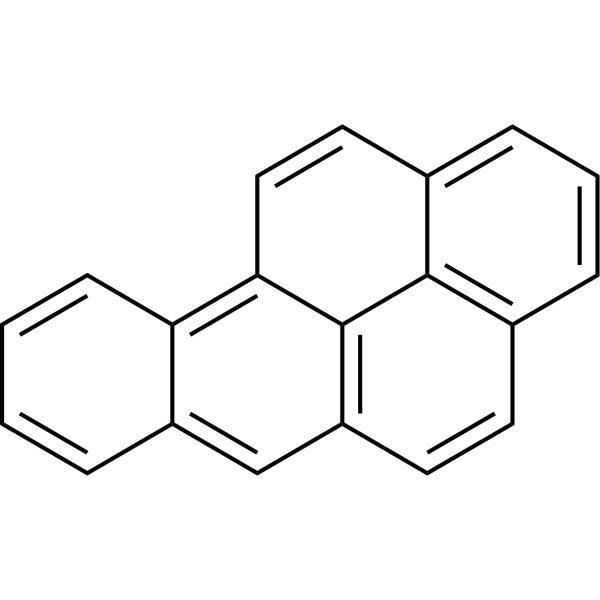
Benzo[a]pyrene

别名: 苯并芘;苯并[A]芘;苯并(a)芘;1,2-苯并芘;苯并芘标准品;苯并(A)芘(标样)3,4-BENZOPYRENE;3,4-Benzopyrene (purified by sublimation) 3,4-苯并芘;3,4-Benzopyrene 3,4-苯并芘;3,4-苯并芘,分析标准品;3,4-苯并芘标准溶液; 苯并[a]芘;苯并(a)芘 标准品;苯并蓖;环氧化苯并芘;3,4-苯并芘;3,4-苯并芘,10~100μg;3,4-苯并芘,3,4-Benzopyrene,分析标准品;3,4-苯并芘标准溶液,3,4-Benzopyrene;苯并芘 苯并芘;苯并[det]屈;苯并芘 (升华提纯);苯并[a]芘 (升华提纯)
目录号: V30385 纯度: ≥98%
苯并[a]芘在动物模型中显示出肺癌致癌性,并且经常用于化学预防研究。
Benzo[a]pyrene CAS号: 50-32-8
产品类别: New2
产品仅用于科学研究,不针对患者销售
规格 价格 库存 数量
100mg
500mg
点击了解更多
  • 与全球5000+客户建立关系
  • 覆盖全球主要大学、医院、科研院所、生物/制药公司等
  • 产品被大量CNS顶刊文章引用
InvivoChem产品被CNS等顶刊论文引用
产品描述
苯并[a]芘在动物模型中显示出肺癌致癌性,并且经常用于化学预防研究。
生物活性&实验参考方法
靶点
- The primary target of Benzo[a]pyrene (B[a]P) is cellular DNA, where it forms covalent DNA adducts (primarily with guanine residues) after metabolic activation [1,3,5]
- Benzo[a]pyrene (B[a]P) also interacts with metabolic enzymes, specifically cytochrome P450 (CYP) enzymes (e.g., CYP1A1, CYP1B1) that mediate its activation.[3,5]
体外研究 (In Vitro)
- 苯并[a]芘(Benzo[a]pyrene, B[a]P)诱导肺上皮细胞DNA损伤和突变。人支气管上皮细胞(HBECs)与0.1–10 μM B[a]P体外培养24–72小时后,呈剂量依赖性形成DNA加合物(通过³²P后标记法检测),且染色体畸变(如断裂、易位)频率升高 [5]
- 苯并[a]芘(Benzo[a]pyrene, B[a]P)促进肺癌细胞增殖并抑制凋亡。1–5 μM B[a]P处理A549肺腺癌细胞48小时后,MTT实验显示细胞活力提升30–50%,蛋白质印迹法检测到增殖标志物(PCNA、cyclin D1)上调;Annexin V-FITC实验显示凋亡率降低40%,机制为下调Bax和切割型caspase-3 [5]
- 苯并[a]芘(Benzo[a]pyrene, B[a]P)激活芳香烃受体(AhR)信号通路。0.5–2 μM B[a]P处理HBECs 12小时后,qPCR和蛋白质印迹法显示AhR靶基因(CYP1A1、CYP1B1)表达升高,免疫荧光检测到AhR核转位 [5]
体内研究 (In Vivo)
七周时,给予 1.0 mg 苯并[a]芘 (B[a]P) 的雌性与对照组相比,表现出统计学上显着的减少。在雌性 A/J 小鼠中,苯并[a]芘诱导的肺癌呈剂量依赖性。与对照组相比,接受 0.25、0.50 和 1.0 mg 苯并[a]芘治疗的女性,增生的发生率明显更高。与对照组相比,给予 1.0 mg 苯并[a]芘的女性腺瘤的发病率明显更高。与对照组相比,给予 0.50 或 1.0 mg 苯并[a]芘的雌性表现出更高的生长多样性。与对照组相比,接受 1.0 mg 治疗的组的腺瘤多样性显着更高。在雌性 A/J 小鼠中,苯并[a]芘剂量依赖性地增加增生和腺瘤的发生率[1]。与对照组相比,苯并[a]芘平均引起9.38±1.75个肿瘤,平均肿瘤负荷为19.53±3.81 mm3(P<0.05)。苯并[a]芘治疗显着降低了肺组织附近肿瘤中的cAMP水平(P<0.05)。当施用苯并[a]芘时,PDE4D 基因的表达水平同样升高[2]。
- 在A/JJmsSlc小鼠中,苯并[a]芘(Benzo[a]pyrene, B[a]P)以剂量依赖性方式诱导肺肿瘤发生。单次腹腔注射B[a]P(50、100、200 mg/kg体重)后26周,小鼠肺肿瘤发生率分别为40%、65%、90%;每只小鼠平均肿瘤数分别为1.2、2.8、4.5个,肿瘤直径范围0.5–2.0 mm [1]
- 在小鼠肺癌模型中,罗氟司特可抑制苯并[a]芘(Benzo[a]pyrene, B[a]P)诱导的肺致癌作用。给予B[a]P(100 mg/kg,单次腹腔注射)联合罗氟司特(1 mg/kg/天,灌胃给药20周)的小鼠,与单独B[a]P处理组相比,肺肿瘤发生率降低35%,每只小鼠肿瘤数减少40% [2]
- 辣椒素在小鼠体内抑制苯并[a]芘(Benzo[a]pyrene, B[a]P)诱导的肺致癌作用。给予B[a]P(80 mg/kg,单次皮下注射)联合辣椒素(10 mg/kg/天,灌胃给药16周)的小鼠,与单独B[a]P对照组相比,肺肿瘤数量减少50%,平均肿瘤体积缩小30%;辣椒素还可使肺组织中B[a]P-DNA加合物水平降低45% [4]
- 苯并[a]芘(Benzo[a]pyrene, B[a]P)对小鼠具有肺特异性毒性。100 mg/kg B[a]P(腹腔注射)处理的小鼠,组织病理学分析显示4周时出现肺部炎症(中性粒细胞浸润),20周时出现腺瘤/癌形成;肝、肾、心脏组织无明显损伤 [1,5]
酶活实验
1. 从大鼠或小鼠(未处理或苯并[a]芘(Benzo[a]pyrene, B[a]P)预处理)体内制备肝微粒体,将其重悬于检测缓冲液(含Tris-HCl、MgCl₂、NADPH)中,使蛋白浓度达到0.5 mg/mL。
2. 向微粒体悬液中加入B[a]P(终浓度0.1–1 μM),对照组不加B[a]P;37°C孵育30分钟以实现代谢活化。
3. 加入乙氧基试卤灵(CYP1A1特异性底物,终浓度5 μM)启动反应,继续孵育15分钟后,用乙腈终止反应。
4. 10,000 × g离心10分钟,收集上清液,使用荧光计(激发波长530 nm,发射波长590 nm)检测试卤灵(乙氧基试卤灵的代谢产物)的荧光强度。
5. 以每分钟每毫克微粒体蛋白生成的试卤灵量计算CYP1A1活性,对比B[a]P处理组与对照组的活性,评估B[a]P对酶的诱导作用 [3,5]
细胞实验
1. 人支气管上皮细胞(HBECs)在含10%胎牛血清的RPMI 1640培养基中,于37°C、5% CO₂条件下培养。
2. 用系列稀释的苯并[a]芘(Benzo[a]pyrene, B[a]P)(0.1–10 μM)处理细胞48小时,对照组加入DMSO(终浓度<0.1%)。
3. 胰酶消化收集细胞,冷PBS洗涤2次,使用DNA提取试剂盒分离基因组DNA。
4. 用微球菌核酸酶和脾磷酸二酯酶消化10 μg基因组DNA,生成3'-磷酸化寡核苷酸。
5. 用多核苷酸激酶将[γ-³²P]ATP标记到DNA片段上,通过薄层色谱(TLC)分离加合物化和非加合物化核苷酸。
6. 磷屏成像仪检测并定量B[a]P-DNA加合物,以每10⁸个正常核苷酸中的加合物数量表示加合物水平 [5]
动物实验
- A/JJmsSlc Mouse Lung Tumorigenesis Protocol :
1. Use 6-week-old male A/JJmsSlc mice (n=10 per group). Acclimate the mice for 1 week before treatment.
2. Prepare Benzo[a]pyrene (B[a]P) by dissolving it in corn oil to concentrations of 5, 10, and 20 mg/mL (for doses of 50, 100, 200 mg/kg body weight).
3. Administer B[a]P via a single intraperitoneal injection (10 mL/kg body weight). The control group receives an equal volume of corn oil.
4. Monitor the mice weekly for general health and body weight. At 26 weeks post-injection, sacrifice the mice by cervical dislocation.
5. Excise the lungs, inflate them with 10% neutral buffered formalin, and fix for 48 hours. Count the number of surface tumors under a dissecting microscope and measure tumor diameters using calipers. Perform hematoxylin-eosin (HE) staining on lung sections to confirm tumor pathology (adenoma/adenocarcinoma) [1]
- Mouse Chemoprevention Protocol with Roflumilast :
1. Use 7-week-old female C57BL/6 mice (n=8 per group).
2. Administer a single intraperitoneal injection of Benzo[a]pyrene (B[a]P) (100 mg/kg, dissolved in corn oil).
3. One week after B[a]P injection, start oral gavage of roflumilast (1 mg/kg/day, dissolved in 0.5% methylcellulose) to the treatment group; the control group receives 0.5% methylcellulose alone.
4. Continue roflumilast treatment for 20 weeks. Monitor body weight weekly.
5. At 21 weeks post-B[a]P injection, sacrifice the mice, harvest the lungs, and count surface tumors. Perform immunohistochemistry for Ki-67 (proliferation marker) to assess tumor cell proliferation [2]
- Rat Pharmacokinetic Protocol :
1. Use 200–250 g male Sprague-Dawley rats (n=5 per time point).
2. Administer Benzo[a]pyrene (B[a]P) via oral gavage at doses of 0.1, 0.5, and 1 mg/kg body weight (dissolved in sesame oil).
3. At 0.5, 1, 2, 4, 6, 8, and 24 hours post-administration, collect blood samples via cardiac puncture (under anesthesia) and sacrifice the rats to harvest liver, lung, and fat tissues.
4. Extract B[a]P and its metabolites from plasma and tissues using organic solvent (hexane:ethyl acetate = 1:1).
5. Analyze the extracts using high-performance liquid chromatography (HPLC) with fluorescence detection (excitation 384 nm, emission 406 nm) to quantify B[a]P concentrations. Calculate pharmacokinetic parameters (Cmax, Tmax, AUC, half-life) using non-compartmental analysis [3]
药代性质 (ADME/PK)
Absorption, Distribution and Excretion
... Readily absorbed from the intestinal tract and tend to localize primarily in body fat and fatty tissues such as breast. Disappearance of Benzo(a)Pyrene from blood and liver of rats following single IV injection is very rapid, having a half-life in blood of less than 5 min and a half-life in liver of 10 min. In ... blood and liver ... initial rapid elimination phase is followed by slower disappearance phase, lasting 6 hr or more ... A rapid equilibrium is established between BaP in blood and that in liver and ... the cmpd fast disappearance from blood is due to ... metabolism and distribution in tissues.
BaP crosses the placenta in mice & rats ... .
(14)C metabolites were secreted into bile of rats within 7 min of iv dose of (14)C-benzo[a]pyrene. Pretreatment of animals with this carcinogen ... enhanced biliary secretion of (14)C.
Male rats cannulated in the bile duct received iv injections of radiolabeled benzo[a]pyrene (BaP) noncovalently bound to the very-low-density, low-density, or high-density lipoproteins in equimolar amounts. Cumulative biliary excretions of BaP complexed with rat lipoproteins were 39.6, 24.6, and 21.2% for very-low density, low-density, and high-density lipoprotein, respectively. Values for excretion of BaP complexed with rat or human lipoproteins were comparable. Excretion increased as the degree of BaP hydroxylation increased. The excretion of BaP bound to very-low-density, low-density, or high-density lipoproteins in Aroclor-induced rats was not greater than the control. Hence, 60-80% of injected BaP and 50-60% of injected BaP metabolites were not excreted immediately in control or induced animals. Thus BaP may represent a carcinogen pool that is slowly excreted.
For more Absorption, Distribution and Excretion (Complete) data for Benzo(a)pyrene (16 total), please visit the HSDB record page.
Metabolism / Metabolites
/It was/ demonstrated that macrophages were the primary cell type in a splenic leukocyte preparation capable of metabolizing /benzo[a]pyrene/ BaP to 7,8-dihydroxy-9,10-epoxy-benzo[a]pyrene (BPDE), the reactive metabolite proposed to be the ultimate carcinogenic and immunotoxic form of BaP.
Human liver microsomal fractions from 13 different individuals were characterized ... . Pronounced interindividual differences in the composition of microsomal proteins in the mol wt range of 49,000-60,000 were found. Most of the variations among profiles of microsomal proteins are interindividual differences in the composition of isoenzymes of cytochrome P450. Large variations among the human liver microsomal samples were seen in benzo[a]pyrene metabolism. The results indicate the presence of 7-8 different forms of cytochrome P450 in human liver microsomes and interindividual variations seen in drug metabolism may at least in part be explained by variations in the distribution of these isoenzymes.
Colonic biopsy specimens from patients with ulcerative colitis and normal subjects were studied for the ability to metabolize benzo[a]pyrene. Approx 73% of 30 colonic biopsy specimens from 7 ulcerative colitis patients could metabolize benzo[a]pyrene to oxidized products, with an average production of 11.6 nmol/mg biopsy protein. In contrast, 39% of 23 biopsy specimens from 5 normal persons showed an average metabolic activity, 2.79 nmol. Benzo[a]pyrene oxidation activity in colonic tissue from colitis patients was, on the average, fourfold greater than that in normal subjects. This study suggest that the colonic mucosa of patients with ulcerative colitis has a greater ability than that of normal subjects to oxidize such chemicals possibly to electrophiles with higher mutagenic potential.
Benzo[a]pyrene is metabolized to approximately 20 primary and secondary oxidized metabolites and to a variety of conjugates. Several metabolites can induce mutations, transform cells and/or bind to cellular macromolecules; however only a 7,8-diol-9,10-epoxide is presently considered to be an ultimate carcinogenic metabolite.
For more Metabolism/Metabolites (Complete) data for Benzo(a)pyrene (24 total), please visit the HSDB record page.
Benzo[a]pyrene has known human metabolites that include Benzo[a]pyrene-7,8-epoxide, Benzo[a]pyrene-4,5-epoxide, 9-Hydroxybenzo[a]pyrene, 1-Hydroxybenzo[a]pyrene, and 3-Hydroxybenzo[a]pyrene.
PAH metabolism occurs in all tissues, usually by cytochrome P-450 and its associated enzymes. PAHs are metabolized into reactive intermediates, which include epoxide intermediates, dihydrodiols, phenols, quinones, and their various combinations. The phenols, quinones, and dihydrodiols can all be conjugated to glucuronides and sulfate esters; the quinones also form glutathione conjugates. (L10)
Biological Half-Life
... /In mice/ hydrocarbon/deoxyribonucleoside adduct showed approx parallel dose-response curves. The half-life of the BaP/deoxyribonucleoside adducts and the total radioactivity bound to the DNA were 4.5 and 5.5 days ...
(14)C-Benzo[a]pyrene (1 mg/kg) was metabolized and excreted very slowly after intracardial administration to lobsters. The half-life for disappearance of radiolabel was approximately 2 mo, and most of the radioactivity was stored in the hepatopancreas. Similar studies in the spiny lobster demonstrated that metab and excretion were considerably faster in this species (half-life approximately 1 wk in the summer and approximately 2 wk in the winter).
... mussels were exposed to [(3)H]-BaP or [(14)C]-BaP either injected or via the surrounding water, and the tissue distribution of radiolabeled compound was studied. The half-life of BaP was 15-17 days and unaffected by the food concentration.
Disappearance of Benzo(a)Pyrene from blood and liver of rats following single iv injection is very rapid, having a half-life in blood of less than 5 min and a half-life in liver of 10 min.
- Absorption: Benzo[a]pyrene (B[a]P) is poorly absorbed after oral administration in rats, with an oral bioavailability of ~15–20% (for doses 0.1–1 mg/kg). Peak plasma concentrations (Cmax) of 2–8 ng/mL are reached at 1–2 hours (Tmax) [3]
- Distribution: Benzo[a]pyrene (B[a]P) distributes widely to tissues in rats, with the highest concentrations in liver (100–300 ng/g) and lung (50–150 ng/g) at 2 hours post-oral dose. It also accumulates in adipose tissue (30–80 ng/g) due to its lipophilic nature (log P = 6.0) [3]
- Metabolism: Benzo[a]pyrene (B[a]P) is primarily metabolized in the liver by CYP enzymes (CYP1A1, CYP1A2, CYP1B1) to form reactive intermediates (e.g., B[a]P-7,8-diol-9,10-epoxide). These intermediates covalently bind to DNA to form carcinogenic adducts. In mice, B[a]P metabolites (e.g., hydroxy-B[a]P, glucuronide conjugates) are detected in plasma and urine within 4 hours of administration [1,3,5]
- Excretion: Benzo[a]pyrene (B[a]P) and its metabolites are excreted primarily via feces (60–70% of oral dose) and urine (20–30%) in rats. Fecal excretion peaks at 24–48 hours, while urinary excretion peaks at 8–12 hours. The plasma elimination half-life of B[a]P is 1.5–2.5 hours [3]
毒性/毒理 (Toxicokinetics/TK)
Toxicity Summary
IDENTIFICATION AND USE: Benzo[a]pyrene (BaP) is a five-ring polycyclic aromatic hydrocarbon (PAH). Benzo[a]pyrene (along with other PAHs) is released into the atmosphere as a component of smoke from forest fires, industrial processes, vehicle exhaust, cigarettes, and through the burning of fuel (such as wood, coal, and petroleum products). HUMAN EXPOSURE AND TOXICITY: Epidemiology studies involving exposure to PAH mixtures have reported associations between internal biomarkers of exposure to benzo[a]pyrene (benzo[a]pyrene diol epoxide-DNA adducts) and adverse birth outcomes (including reduced birth weight, postnatal body weight, and head circumference), neurobehavioral effects, and decreased fertility. In addition, there is strong evidence of carcinogenicity in occupations involving exposure to PAH mixtures containing benzo[a]pyrene, such as aluminum production, chimney sweeping, coal gasification, coal-tar distillation, coke production, iron and steel founding, and paving and roofing with coal tar pitch. An increasing number of occupational studies demonstrate a positive exposure-response relationship with cumulative BaP exposure and lung cancer. BaP was mutagenic in human MCL-5 cells. Accumulation of BaP in blood plasma of coking workers played a major role in the formation of lymphocyte micronucleus. The characteristics of chromosomal aberrations induced in vitro by activated benzo[a]pyrene diol epoxide (BPDE) in lymphocyte cultures of 172 normal individuals ages 19-95 years were described. The BPDE-induced chromosomal aberrations were predominantly single chromatid breaks, with few isochromatid breaks or exchange figures. The genotoxic mechanism of action of benzo[a]pyrene involves metabolism to highly reactive species that form covalent adducts to DNA. These anti-benzo[a]pyrene-7,8-diol- 9,10-oxide-DNA adducts induce mutations in the K-RAS oncogene and the TP53 tumorsuppressor gene in human lung tumors, and in corresponding genes in mouse-lung tumors. ANIMAL STUDIES: Animal studies demonstrate that exposure to benzo[a]pyrene is associated with developmental (including developmental neurotoxicity), reproductive, and immunological effects. Studies in multiple animal species demonstrate that benzo[a]pyrene is carcinogenic at multiple tumor sites (alimentary tract, liver, kidney, respiratory tract, pharynx, and skin) by all routes of exposure. BaP is primarily metabolized to diol epoxides, which react principally at N2-dG in DNA. BaP-N2-dG adducts have been shown to induce a variety of mutations, notably G-->T, G-->A, G-->C and -1 frameshifts. Oral exposure to BaP causes spermatogonial stem cell mutations in mice. ECOTOXICITY STUDIES: Thirty-four ducks were given single intratracheal dose of 50-200 mg benzo(a)pyrene. Survival rate was poor. One duck developed a lung carcinoma, and two had bronchial squamous metaplasia. Histological and skeletal examinations were performed on rainbow trout alevins reared in 0.00, 0.08, 0.21, 0.39, 1.48, 2.40, or 2.99 ng/mL aqueous benzo[a]pyrene (BaP). Nuclear pycnosis and karyorrhexis were most common in neuroectodermal and mesodermal derivatives and in liver of BaP-treated alevins. Microphthalmia was noted in 17% of the test fish and was frequently associated with a patent optic fissure. Depressed mitotic rates in the retina and brain, but not liver, were seen in alevins reared in 0.21 to 1.48 ng/mL aqueous BaP. Test alevins had a significantly higher incidence of skeletal malformations in the skull and vertebral column and abnormalities of vertebral arcualia often corresponded to areas of kyphoscoliotic flexures. In the purple sea urchin (Strongylocentrotus purpuratus) teratogenic effect were related to embryonic cytotoxicity and genotoxicity as evidenced by the presence of aberrant chromosome arrangements during mitosis. Developmental abnormalities were observed in gastrulae treated with initial benzo(a)pyrene concentrations of 1-50 ng/mL.
The ability of PAH's to bind to blood proteins such as albumin allows them to be transported throughout the body. Many PAH's induce the expression of cytochrome P450 enzymes, especially CYP1A1, CYP1A2, and CYP1B1, by binding to the aryl hydrocarbon receptor or glycine N-methyltransferase protein. These enzymes metabolize PAH's into their toxic intermediates. The reactive metabolites of PAHs (epoxide intermediates, dihydrodiols, phenols, quinones, and their various combinations) covalently bind to DNA and other cellular macromolecules, initiating mutagenesis and carcinogenesis. The main carcinogenic metabolite of benzo(a)pyrene is the diol-epoxide trans-9,10-epoxy-7,8-dihydrodiol. (L10, L23, A27, A32)
Toxicity Data
LD50: 250 mg/kg (Intraperitoneal, Mouse) (L138)
Interactions
The results of both the Salmonella/microsome mutagenicity assay and HPLC analysis were used to evaluate the interactions of binary mixtures of benzo[a]pyrene and several different polychlorinated aromatic hydrocarbons. Binary mixtures of either 2-nitro-3,7,8-trichlorodibenzo-p-dioxin or pentachlorophenol with benzo[a]pyrene produced synergism, whereas strictly additive effects were observed with mixtures of octa- or heptachlorodibenzo-p-dioxin and benzo[a]pyrene. ... HPLC analysis of the mixtures indicated that preincubation of benzo[a]pyrene with 2-nitro-3,7,8-trichlorodibenzo-p-dioxin increased the quantity of benzo[a]pyrene-7,8-dihydrodiol, and 9,10-dihydrodiol metabolites detected. The data suggest that nonmutagenic components of a complex mixture may alter the metabolism of promixate mutagens. Thus, in the present study, 2-nitro-3,7,8-trichlorodibenzo-p-dioxin appears to have inhibited the detoxication of benzo[a]pyrene metabolites.
Investigators/ have recently found that transition metals, such as nickel and chromium, and oxidative stress induced lipid peroxidation metabolites such as aldehydes can greatly inhibit nucleotide excision repair (NER) and enhance carcinogen-induced mutations. Because particulate matter(PM) is rich in metal and aldehyde content and can induce oxidative stress, /the authors/ tested the effect of PM on DNA repair capacity in cultured human lung cells using in vitro DNA repair synthesis and host cell reactivation assays. PM greatly inhibits NER for ultraviolet (UV) light and benzo[a]pyrene diol epoxide (BPDE) induced DNA damage in human lung cells. /The authors/ further demonstrated that PM exposure can significantly increase both spontaneous and UV-induced mutagenesis. These results together suggest that the carcinogenicity of PM may act through its combined effect on suppression of DNA repair and enhancement of DNA replication errors. /Benzo(a)pyrene diol epoxide/
In this study we investigated effects of titanium dioxide nanoparticles (TiO2NP) on the blue mussel (Mytilus edulis) and determined their influence on the bioavailability and toxicity of benzo(a)pyrene (B(a)P), a carcinogenic polyaromatic hydrocarbon (PAH). Blue mussels were exposed to either TiO2NP (0.2 and 2.0 mg/L) or B(a)P (20 ug/L) and to the respective combinations of these two compounds. Aqueous contaminant concentrations, the uptake of Ti and B(a)P into mussel soft tissue, effects on oxidative stress and chromosomal damage were analyzed. The uncoated TiO2NP agglomerated rapidly in the seawater. The presence of TiO2NP significantly reduced the bioavailability of B(a)P, shown by lowered B(a)P concentrations in exposure tanks and in mussel tissue. The activities of antioxidant enzyme superoxide dismutase (SOD), catalase (CAT) and glutathione peroxidase (GPx) were impacted by the various exposure regimes, indicating oxidative stress in the contaminant exposure groups. While SOD activity was increased only in the 0.2TiO2NP exposure group, CAT activity was enhanced in both combined exposure groups. The GPx activity was increased only in the groups exposed to the two single compounds. In hemocytes, increased chromosomal damage was detected in mussels exposed to the single compounds, which was further increased after exposure to the combination of compounds. In this study we show that the presence of TiO2NP in the exposure system reduced B(a)P uptake in blue mussels. However, since most biomarker responses did not decrease despite of the lower B(a)P uptake in combined exposures, the results suggest that TiO2NP can act as additional stressor, or potentially alters B(a)P toxicity by activation.
Groups of 20 female Fischer 344 rats (aged unspecified) received implants of beeswax pellets containing either 1 mg benzo(a)pyrene, 0.5 mg benzo(a)pyrene, 1 mg benzo(e)pyrene (purity unspecified), 0.5 mg benzo(a)pyrene + 1 mg benzo(e)pyrene, or 1 mg benzo(a)pyrene + 1 mg benzo(e)pyrene in tracheas from isogenic donors transplanted subcutaneously in the retroscapular region (two tracheas/animal). All surviving animals were killed 28 months after the start of exposure. Benzo(e)pyrene did not induce tumors in tracheal explants, while 1 mg benzo(a)pyrene induced carcinomas in 65% of the grafts. Benzo(e)pyrene appeared to reduce the incidence of carcinomas from 65% (benzo(a)pyrene alone) to 40% (benzo(a)pyrene plus benzo(e)pyrene). However, the incidence of sarcoma in tracheal and peritracheal explants was enhanced two- to three-fold by benzo(e)pyrene given with benzo(a)pyrene compared with benzo(a)pyrene alone.
For more Interactions (Complete) data for Benzo(a)pyrene (76 total), please visit the HSDB record page.
Non-Human Toxicity Values
LD50 Mouse ip about 250 mg/kg
- Carcinogenicity: Benzo[a]pyrene (B[a]P) is a potent lung carcinogen in mice. A single intraperitoneal dose of 50 mg/kg induces lung tumors in 40% of A/JJmsSlc mice at 26 weeks, while 200 mg/kg increases incidence to 90% [1]. It induces adenomas and adenocarcinomas via DNA adduct formation and subsequent mutations in tumor suppressor genes (e.g., p53) [5]
- Organ Toxicity: Benzo[a]pyrene (B[a]P) exhibits lung-specific toxicity in mice. Treatment with 100 mg/kg B[a]P causes acute lung inflammation (neutrophil and macrophage infiltration) at 4 weeks, progressing to fibrosis and tumorigenesis at 20 weeks. No significant hepatotoxicity (no elevated ALT/AST) or nephrotoxicity (no increased BUN/creatinine) is observed [1,5]
- Genotoxicity: Benzo[a]pyrene (B[a]P) induces DNA damage in vitro and in vivo. In HBECs, 1 μM B[a]P increases DNA adducts to 50 adducts per 10⁸ nucleotides; in mouse lung tissue, 100 mg/kg B[a]P leads to 30–40 adducts per 10⁸ nucleotides at 4 weeks post-injection [5]
参考文献

[1]. Dosimetry for lung tumorigenesis induced by urethane, 4-(N-methyl-N-nitrosamino)-1-(3-pyridyl)-1-butanone (NNK), and benzo[a]pyrene (B[a]P) in A/JJmsSlc mice. J Toxicol Pathol. 2017 Jul; 30(3): 209–216.

[2]. Roflumilast treatment inhibits lung carcinogenesis in benzo(a)pyrene-induced murine lung cancer model. Eur J Pharmacol. 2017 Oct 5;812:189-.

[3]. Pharmacokinetics of low doses of benzo [a] pyrene in the rat. Food and chemical toxicology, 1988, 26(1): 45-51.

[4]. Capsaicin inhibits benzo(a)pyrene-induced lung carcinogenesis in an in vivo mouse model. Inflamm Res. 2012 Nov;61(11):1169-75.

[5]. Benzo(a)pyrene induced lung cancer: Role of dietary phytochemicals in chemoprevention. Pharmacol Rep. 2015 Oct;67(5):996-1009.

其他信息
Therapeutic Uses
/CLINICAL TRIALS/ ClinicalTrials.gov is a registry and results database of publicly and privately supported clinical studies of human participants conducted around the world. The Web site is maintained by the National Library of Medicine (NLM) and the National Institutes of Health (NIH). Each ClinicalTrials.gov record presents summary information about a study protocol and includes the following: Disease or condition; Intervention (for example, the medical product, behavior, or procedure being studied); Title, description, and design of the study; Requirements for participation (eligibility criteria); Locations where the study is being conducted; Contact information for the study locations; and Links to relevant information on other health Web sites, such as NLM's MedlinePlus for patient health information and PubMed for citations and abstracts for scholarly articles in the field of medicine. Benzo(a)pyrene is included in the database.
/EXPL THER/ A 1% soln of benzo[a]pyrene in benzene was applied daily to protected and unprotected surfaces of skin of 26 patients suffering from pemphigus vulgaris, mycosis fungoides, prokeratosis, xeroderma pigmentosum, basal cell cancer, squamous cell cancer, lupus erythematosis, psoriasis, syphilis in various stages, or ringworm. The period of application did not exceed 4 mo, and diam of treated area was 2 cm. A progressive series of alterations developed in normal skin (chronically): erythema, pigmentation, desquamation, formation of verrucae, /clinically not true verrucae/ and infiltration. The manifestations regressed completely within 2 to 3 mo of cessation of treatment. Clinically, perceptible erythema occurred in only 2 patients with basal cell cancer. Pigmentation, which occurred in all patients, consisted of an increase in melanin in basal cell layer of epidermis and was more evident in exposed skin (eg, hand, face). It developed more readily in skin of senile individuals than in younger patients. Rarely, small masses of pigment granules were found in the more superficial layers. Desquamation was proportional in extent to erythema of the 1st stage. The formation of verrucae was the most constant manifestation caused by treatment. The skin of patient with xeroderma pigmentosum did not react differently ... from that of other patients.
- Benzo[a]pyrene (B[a]P) is a polycyclic aromatic hydrocarbon (PAH) and a well-characterized environmental carcinogen. It is primarily formed by incomplete combustion of organic materials (e.g., tobacco smoke, grilled food, industrial emissions) [1,3,5]
- Benzo[a]pyrene (B[a]P) exerts no therapeutic activity; it is widely used as a model carcinogen in preclinical studies to investigate lung carcinogenesis mechanisms and evaluate chemopreventive agents (e.g., roflumilast, capsaicin) [2,4,5]
- The carcinogenicity of Benzo[a]pyrene (B[a]P) requires metabolic activation. CYP1A1-mediated oxidation converts B[a]P to the highly reactive B[a]P-7,8-diol-9,10-epoxide, which irreversibly binds to DNA and induces mutations in genes critical for cell cycle regulation and apoptosis [3,5]
- Dietary phytochemicals (e.g., curcumin, resveratrol) inhibit Benzo[a]pyrene (B[a]P)-induced lung carcinogenesis by multiple mechanisms: reducing CYP1A1 activity (decreasing B[a]P activation), enhancing phase II detoxifying enzymes (e.g., GST, NQO1), and scavenging reactive oxygen species (ROS) generated by B[a]P [5]
*注: 文献方法仅供参考, InvivoChem并未独立验证这些方法的准确性
化学信息 & 存储运输条件
分子式
C20H12
分子量
252.3093
精确质量
252.093
CAS号
50-32-8
PubChem CID
2336
外观&性状
Light yellow to yellow solid powder
密度
1.3±0.1 g/cm3
沸点
495.0±0.0 °C at 760 mmHg
熔点
177-180°C
闪点
228.6±13.7 °C
蒸汽压
0.0±0.6 mmHg at 25°C
折射率
1.887
LogP
6.4
tPSA
0
氢键供体(HBD)数目
0
氢键受体(HBA)数目
0
可旋转键数目(RBC)
0
重原子数目
20
分子复杂度/Complexity
372
定义原子立体中心数目
0
InChi Key
FMMWHPNWAFZXNH-UHFFFAOYSA-N
InChi Code
InChI=1S/C20H12/c1-2-7-17-15(4-1)12-16-9-8-13-5-3-6-14-10-11-18(17)20(16)19(13)14/h1-12H
化学名
benzo[a]pyrene
HS Tariff Code
2934.99.9001
存储方式

Powder      -20°C    3 years

                     4°C     2 years

In solvent   -80°C    6 months

                  -20°C    1 month

运输条件
Room temperature (This product is stable at ambient temperature for a few days during ordinary shipping and time spent in Customs)
溶解度数据
溶解度 (体外实验)
DMSO : ≥ 25 mg/mL (~99.08 mM)
溶解度 (体内实验)
配方 1 中的溶解度: ≥ 1.67 mg/mL (6.62 mM) (饱和度未知) in 10% DMSO + 40% PEG300 + 5% Tween80 + 45% Saline (这些助溶剂从左到右依次添加,逐一添加), 澄清溶液。
例如,若需制备1 mL的工作液,可将100 μL 16.7 mg/mL澄清的DMSO储备液加入到400 μL PEG300中,混匀;再向上述溶液中加入50 μL Tween-80,混匀;然后加入450 μL生理盐水定容至1 mL。
*生理盐水的制备:将 0.9 g 氯化钠溶解在 100 mL ddH₂O中,得到澄清溶液。

配方 2 中的溶解度: 1.67 mg/mL (6.62 mM) in 10% DMSO + 90% (20% SBE-β-CD in Saline) (这些助溶剂从左到右依次添加,逐一添加), 悬浊液; 超声助溶。
例如,若需制备1 mL的工作液,可将 100 μL 16.7mg/mL澄清的DMSO储备液加入到900μL 20%SBE-β-CD生理盐水中,混匀。
*20% SBE-β-CD 生理盐水溶液的制备(4°C,1 周):将 2 g SBE-β-CD 溶解于 10 mL 生理盐水中,得到澄清溶液。

View More

配方 3 中的溶解度: ≥ 1.67 mg/mL (6.62 mM) (饱和度未知) in 10% DMSO + 90% Corn Oil (这些助溶剂从左到右依次添加,逐一添加), 澄清溶液。
例如,若需制备1 mL的工作液,可将 100 μL 16.7 mg/mL 澄清 DMSO 储备液加入到 900 μL 玉米油中并混合均匀。


配方 4 中的溶解度: 5 mg/mL (19.82 mM) in 1% CMC-Na/saline water (这些助溶剂从左到右依次添加,逐一添加), 悬浮液; 超声助溶 (<50°C).
*生理盐水的制备:将 0.9 g 氯化钠溶解在 100 mL ddH₂O中,得到澄清溶液。

请根据您的实验动物和给药方式选择适当的溶解配方/方案:
1、请先配制澄清的储备液(如:用DMSO配置50 或 100 mg/mL母液(储备液));
2、取适量母液,按从左到右的顺序依次添加助溶剂,澄清后再加入下一助溶剂。以 下列配方为例说明 (注意此配方只用于说明,并不一定代表此产品 的实际溶解配方):
10% DMSO → 40% PEG300 → 5% Tween-80 → 45% ddH2O (或 saline);
假设最终工作液的体积为 1 mL, 浓度为5 mg/mL: 取 100 μL 50 mg/mL 的澄清 DMSO 储备液加到 400 μL PEG300 中,混合均匀/澄清;向上述体系中加入50 μL Tween-80,混合均匀/澄清;然后继续加入450 μL ddH2O (或 saline)定容至 1 mL;

3、溶剂前显示的百分比是指该溶剂在最终溶液/工作液中的体积所占比例;
4、 如产品在配制过程中出现沉淀/析出,可通过加热(≤50℃)或超声的方式助溶;
5、为保证最佳实验结果,工作液请现配现用!
6、如不确定怎么将母液配置成体内动物实验的工作液,请查看说明书或联系我们;
7、 以上所有助溶剂都可在 Invivochem.cn网站购买。
制备储备液 1 mg 5 mg 10 mg
1 mM 3.9634 mL 19.8169 mL 39.6338 mL
5 mM 0.7927 mL 3.9634 mL 7.9268 mL
10 mM 0.3963 mL 1.9817 mL 3.9634 mL

1、根据实验需要选择合适的溶剂配制储备液 (母液):对于大多数产品,InvivoChem推荐用DMSO配置母液 (比如:5、10、20mM或者10、20、50 mg/mL浓度),个别水溶性高的产品可直接溶于水。产品在DMSO 、水或其他溶剂中的具体溶解度详见上”溶解度 (体外)”部分;

2、如果您找不到您想要的溶解度信息,或者很难将产品溶解在溶液中,请联系我们;

3、建议使用下列计算器进行相关计算(摩尔浓度计算器、稀释计算器、分子量计算器、重组计算器等);

4、母液配好之后,将其分装到常规用量,并储存在-20°C或-80°C,尽量减少反复冻融循环。

计算器

摩尔浓度计算器可计算特定溶液所需的质量、体积/浓度,具体如下:

  • 计算制备已知体积和浓度的溶液所需的化合物的质量
  • 计算将已知质量的化合物溶解到所需浓度所需的溶液体积
  • 计算特定体积中已知质量的化合物产生的溶液的浓度
使用摩尔浓度计算器计算摩尔浓度的示例如下所示:
假如化合物的分子量为350.26 g/mol,在5mL DMSO中制备10mM储备液所需的化合物的质量是多少?
  • 在分子量(MW)框中输入350.26
  • 在“浓度”框中输入10,然后选择正确的单位(mM)
  • 在“体积”框中输入5,然后选择正确的单位(mL)
  • 单击“计算”按钮
  • 答案17.513 mg出现在“质量”框中。以类似的方式,您可以计算体积和浓度。

稀释计算器可计算如何稀释已知浓度的储备液。例如,可以输入C1、C2和V2来计算V1,具体如下:

制备25毫升25μM溶液需要多少体积的10 mM储备溶液?
使用方程式C1V1=C2V2,其中C1=10mM,C2=25μM,V2=25 ml,V1未知:
  • 在C1框中输入10,然后选择正确的单位(mM)
  • 在C2框中输入25,然后选择正确的单位(μM)
  • 在V2框中输入25,然后选择正确的单位(mL)
  • 单击“计算”按钮
  • 答案62.5μL(0.1 ml)出现在V1框中
g/mol

分子量计算器可计算化合物的分子量 (摩尔质量)和元素组成,具体如下:

注:化学分子式大小写敏感:C12H18N3O4  c12h18n3o4
计算化合物摩尔质量(分子量)的说明:
  • 要计算化合物的分子量 (摩尔质量),请输入化学/分子式,然后单击“计算”按钮。
分子质量、分子量、摩尔质量和摩尔量的定义:
  • 分子质量(或分子量)是一种物质的一个分子的质量,用统一的原子质量单位(u)表示。(1u等于碳-12中一个原子质量的1/12)
  • 摩尔质量(摩尔重量)是一摩尔物质的质量,以g/mol表示。
/

配液计算器可计算将特定质量的产品配成特定浓度所需的溶剂体积 (配液体积)

  • 输入试剂的质量、所需的配液浓度以及正确的单位
  • 单击“计算”按钮
  • 答案显示在体积框中
动物体内实验配方计算器(澄清溶液)
第一步:请输入基本实验信息(考虑到实验过程中的损耗,建议多配一只动物的药量)
第二步:请输入动物体内配方组成(配方适用于不溶/难溶于水的化合物),不同的产品和批次配方组成不同,如对配方有疑问,可先联系我们提供正确的体内实验配方。此外,请注意这只是一个配方计算器,而不是特定产品的确切配方。
+
+
+

计算结果:

工作液浓度 mg/mL;

DMSO母液配制方法 mg 药物溶于 μL DMSO溶液(母液浓度 mg/mL)。如该浓度超过该批次药物DMSO溶解度,请首先与我们联系。

体内配方配制方法μL DMSO母液,加入 μL PEG300,混匀澄清后加入μL Tween 80,混匀澄清后加入 μL ddH2O,混匀澄清。

(1) 请确保溶液澄清之后,再加入下一种溶剂 (助溶剂) 。可利用涡旋、超声或水浴加热等方法助溶;
            (2) 一定要按顺序加入溶剂 (助溶剂) 。

相关产品
联系我们