Clomifene citrate (Clomiphene)

别名: NSC-35770; Clomiphene; D; Chloramiphene; CLOMIPHENE CITRATE; 50-41-9; Clomifene citrate; Clostilbegyt; Clomphid; Ikaclomine; Pergotime; 43054-45-1; NSC35770;NSC 35770;Omifin; Citrate; Clomiphene; Clomide; Clomifen; Clostilbegit;Clomid; Androxal; Dyneric; Gravosan; Klostilbegit; Serophene 枸橼酸氯米芬; 枸橼酸氯底酚胺; 枸橼酸氯米芬(克罗米芬); 1-氯-2-[对(2,-二乙氨基乙氧基)苯基]-1,2-二苯乙枸橼酸盐; 克罗米酚; 克罗米酚柠檬酸盐;枸橼酸;枸橼酸氯米芬 USP标准品;枸橼酸氯米芬 标准品;枸橼酸氯米芬标准品(JP);枸橼酸氯芪酚胺;枸橼酸氯芪酚胺杂质;枸掾酸氯米芬;克罗米芬;氯米芬;氯米芬 EP标准品;氯米芬性能测试 EP标准品;柠檬酸氯米芬;N,N-二乙基-2-[4-(1,2-二苯基-2-氯乙烯基)苯氧基]乙胺枸橼酸盐;枸橼酸克罗米芬;克罗米芬(甾体)
目录号: V1740 纯度: ≥98%
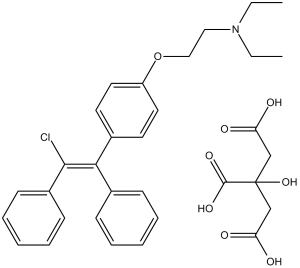
Clomifene Citrate (NSC35770;NSC-35770;Omifin; Chloramiphene;Clomide; Clostilbegit;Clomid; Androxal; Dyneric; Gravosan; Klostilbegit; Serophene) 是克罗米芬的柠檬酸盐,是一种有效的 SERM(选择性雌激素受体调节剂),已用于诱导排卵的治疗。
Clomifene citrate (Clomiphene) CAS号: 50-41-9
产品类别: Estrogenprogestogen Receptor
产品仅用于科学研究,不针对患者销售
规格 价格 库存 数量
500mg
1g
2g
5g
10g
Other Sizes

Other Forms of Clomifene citrate (Clomiphene):

  • Clomifene hydrochloride (Clomiphene hydrochloride; Clomiphene hydrochloride)
  • Clomifene-d5 hydrochloride (Clomiphene-d5 (hydrochloride))
  • Enclomiphene-d4 hydrochloride ((E)-Clomiphene-d4 hydrochloride; trans-Clomiphene-d4 hydrochloride; Enclomifene-d4 hydrochloride)
  • 氯米芬
点击了解更多
InvivoChem产品被CNS等顶刊论文引用
纯度/质量控制文件

纯度: ≥98%

产品描述
Clomifene Citrate (NSC35770; NSC-35770; Omifin; Chloramiphene; Clomide; Clostilbegit; Clomid; Androxal; Dyneric; Gravosan; Klostilbegit; Serophene) 是 Clomifene 的柠檬酸盐,是一种有效的 SERM(选择性雌激素受体调节剂),具有已用于诱导排卵治疗。它通过抑制雌激素对垂体的作用而发挥作用。
生物活性&实验参考方法
靶点
ER/estrogen-receptor; Clomiphene binds to muscarinic cholinergic receptors and calcium channel blocker binding sites in cell membranes [1]
体外研究 (In Vitro)
体外活性:克罗米芬与 [3H]-QNB 和 [3H]-尼群地平竞争与膀胱和子宫肌层膜部分中受体的结合。克罗米芬抑制下丘脑中的雌激素受体,抑制雌激素对促性腺激素释放的负反馈,导致下丘脑-垂体-性腺轴的上调。克罗米芬是两种几何异构体的混合物,恩氯米芬(E-克罗米芬)和珠氯米芬(Z-克罗米芬)。
在来自多种组织的膜制剂中,氯米芬(Clomiphene)抑制放射性标记的毒蕈碱配体(如奎宁环基苄酸盐)和钙通道阻滞剂(如尼群地平)与其各自结合位点的结合。这种抑制具有浓度依赖性,表明其与这些位点存在竞争性或非竞争性相互作用 [1]
体内研究 (In Vivo)
对雄性小鼠进行围产期氯米芬(Clomiphene)处理(从妊娠第12天至出生后第10天,给孕鼠每日注射100 μg),可改变其性取向,表现为交配行为和偏好测试中的变化。与对照组相比,处理后的雄性小鼠对雌性小鼠的偏好降低 [2]
在临床环境中,氯米芬(Clomiphene)用于无排卵性不孕女性的促排卵治疗。它刺激垂体释放促卵泡生成素(FSH)和促黄体生成素(LH),从而促进卵泡发育和排卵。据报道,其排卵率为70-80%,妊娠率为30-40% [3]
克罗米芬柠檬酸盐治疗显着增加了雄性小鼠同性恋和女性化行为的机会。
酶活实验
制备组织(如脑、心脏)的膜组分,在不同浓度的氯米芬(Clomiphene)存在下,与放射性标记的毒蕈碱配体或钙通道阻滞剂共同孵育。孵育后,通过过滤或离心分离结合态和游离态放射性配体。测量结合态放射性配体的量,并生成抑制曲线以评估氯米芬(Clomiphene)与结合位点的相互作用 [1]
动物实验
For perinatal studies, pregnant mice receive Clomiphene via subcutaneous injection at a dose of 100 μg/day from gestational day 12 to postnatal day 10. Control groups receive vehicle injections. Offspring male mice are tested for sexual orientation using behavioral assays (e.g., preference for female mice vs. male mice) after reaching adulthood [2]
药代性质 (ADME/PK)
Absorption, Distribution and Excretion
Based on early studies of clomiphene citrate labeled with 14C, this drug is readily absorbed orally in humans. Based on early studies of clomiphene citrate labeled with 14C, this drug is readily absorbed orally in humans and is primarily excreted via feces. The average urinary excretion rate is approximately 8%, and the fecal excretion rate is approximately 42%. Subcutaneous injection of clomiphene citrate labeled with 14C…distributed in the tissues of female newborn guinea pigs…estrogen-responsive tissues showed a high affinity for 14C. (14)C levels remained stable in the uterus…decreased in the ovaries and plasma…increased in the adrenal glands. /clomiphene citrate/ Approximately half of the ingested dose was excreted within five days; trace amounts of the drug remained in the feces for up to six weeks after administration. /Clomiphene Citrate/
Clomiphene is well absorbed after oral administration. The drug and its metabolites are primarily excreted in feces, with a small amount excreted in urine. The relatively long plasma half-life (approximately 5 to 7 days) is mainly due to plasma protein binding, enterohepatic circulation, and accumulation in adipose tissue. Long-lived active metabolites may also be produced.
Metabolism/Metabolites
Liver
Incubation of the nonsteroidal anti-estrogenic clomiphene with rat liver microsomes resulted in the formation of 4-hydroxy, N-deethyl, and N-oxide metabolites, in stark contrast to previous similar experiments using rabbit microsomes, where only the first two metabolites were detected. No urinary excretion of the drug or its metabolites was detected after oral administration of clomiphene. 4-hydroxyclomiphene was the only detectable elimination product in the fecal extract.
Liver
Biological Half-Life
5-7 days
毒性/毒理 (Toxicokinetics/TK)
60974 twomentTDLotoralt 5 mg/kg/5D-ItSENSE Organs and special senses: visual field changes: eye; endocrine: Journal of Postgraduate Oncology, 72(172), 1996 [PMID:8731710]
60974 tratt LD50 Oral 5750 mg/kg Toxicology and Applied Pharmacology, 9(44), 1966 [PMID:5967566]
60974 tratt LD50 Intraperitoneal 530 mg/kg Toxicology and Applied Pharmacology, 9(44), 1966 [PMID:5967566]
60974 t Mouse LD50 Oral 1400 mg/kg Journal of Medicinal Chemistry, 23(75), 1989
Toxicity Overview
Clomiphene possesses both estrogenic and antiestrogenic properties, but its exact mechanism of action remains unclear. Clomiphene appears to stimulate the release of gonadotropins, including follicle-stimulating hormone (FSH) and luteinizing hormone (LH), thereby promoting the development and maturation of ovarian follicles, ovulation, and subsequent development and function of the corpus luteum, ultimately leading to pregnancy. The release of gonadotropins may be due to direct stimulation of the hypothalamic-pituitary axis, or it may be due to clomiphene competing with endogenous estrogens in the uterus, pituitary gland, or hypothalamus, thereby reducing the inhibitory effect of estrogen on the hypothalamic-pituitary axis. Clomiphene has no significant progesterone, androgen, or antiandrogen effects and does not appear to interfere with the function of the pituitary-adrenal axis or the pituitary-thyroid axis.
Toxicity Data
The acute oral LD50 of clomiphene is 1700 mg/kg in mice and 5750 mg/kg in rats. The toxic dose in humans is unknown. There are no reports of acute overdose of clomiphene.
During treatment with clomiphene, if the dose exceeds the recommended dose, overdose symptoms may occur, including nausea, vomiting, vasomotor flushing, blurred vision, spots or flashes of light in front of the eyes, scotomas, enlarged ovaries, and pelvic or abdominal pain.
Hepatotoxicity
Information on serum transaminase levels during clomiphene treatment is limited because clomiphene is usually taken only in low doses for short periods. Although there are a few reports of mild elevations in serum enzymes in patients taking clomiphene, there is no conclusive evidence that it causes specific, clinically significant liver damage.
Drugs used to treat female infertility often work by stimulating ovarian follicles, which can lead to ovarian hyperstimulation syndrome (OHSS), sometimes accompanied by elevated serum enzymes and even jaundice. This syndrome typically appears 4 to 14 days after ovarian stimulation with gonadotropins or clomiphene, and is characterized by abdominal pain, abdominal distension with ascites, enlarged ovaries, and ovarian cysts. Patients may experience significant fluid shifts, leading to hemoconcentration and rapid development of severe ascites and pleural effusion. Liver dysfunction is present in 25% to 40% of patients with ovarian hyperstimulation syndrome (OHSS), typically manifested as mild to moderate elevations in alanine aminotransferase (ALT) and aspartate aminotransferase (AST), but with minimal or no elevation in serum bilirubin and alkaline phosphatase levels. Liver dysfunction usually resolves as OHSS subsides, typically within 2 to 3 weeks of onset. In severe cases, OHSS can be fatal, but death is usually due to dehydration, shock, and sepsis, rather than liver failure. In typical cases of abnormal liver enzymes, liver histology shows nonspecific changes, including sinusoidal dilatation, mild fatty deposits, and focal inflammatory infiltration dominated by macrophages and lymphocytes. Compared to ovulation induced by human chorionic gonadotropin (hCG), the probability of ovarian hyperstimulation syndrome (OHSS) is lower with clomiphene use.
Probability Score: C (Possibly due to clinically significant liver damage in OHSS).
Effects during Pregnancy and Lactation
◉ Summary of Lactation Use
A small amount of clomiphene was detected in the breast milk of a woman. Multiple studies have found that clomiphene inhibits lactation in women who do not wish to breastfeed. Its mechanism of action appears to be by reducing serum prolactin levels, particularly the peak prolactin level after stimulation. Clomiphene may interfere with lactation in breastfeeding mothers.
◉ Effects on Breastfed Infants
A woman taking 2.04 mg/kg clomiphene daily breastfed part-time. No adverse reactions were observed in her infant.
◉ Effects on Lactation and Breast Milk
A double-blind study compared the effects of clomiphene daily at 50 mg for 10 days (n = 110), clomiphene daily at 100 mg for 5 days (n = 26), and placebo (n = 41) on inhibiting lactation and relieving pain and breast engorgement in non-lactating postpartum mothers. According to women's reports, both doses of clomiphene were superior to placebo, but the 100 mg daily dose was slightly superior to the 50 mg daily dose.
A study compared the effects of clomiphene daily at 100 mg (n = 60) for 5 days with placebo (n = 30) on inhibiting lactation and relieving breast engorgement symptoms. Physicians observed that starting clomiphene within 12 hours postpartum was superior to starting clomiphene at 12 hours or longer postpartum in all indicators; both treatments were more effective than mechanical measures alone (e.g., breast binding). A randomized trial compared the effects of four treatment regimens on reducing postpartum serum prolactin levels and decreasing lactation: clomiphene 50 mg twice daily for 14 days (n = 15); bromocriptine 2.5 mg twice daily for 14 days (n = 15); diethylstilbestrol 5 mg three times daily for 14 days (n = 15); testosterone propionate 75 mg intramuscularly once (n = 15); and placebo orally three times daily (n = 15). After three days of treatment, serum prolactin levels in the clomiphene group decreased to 65% of baseline, while those in the bromocriptine group decreased to only 35%. Clomiphene was also less effective than bromocriptine in suppressing lactation and relieving breast engorgement. Another study compared the effects of starting clomiphene 100 mg/day on the first postpartum day for 7 days (n = 10) with placebo (n = 12). The results showed that clomiphene was no more effective than placebo in suppressing lactation or lowering serum prolactin levels. Women who did not wish to breastfeed during the first week postpartum were either treated with clomiphene 50 mg/day twice daily (n=10) or a placebo (n=10). Women taking clomiphene did not experience elevated serum prolactin levels above baseline during breast pump use; women taking the placebo experienced normal post-stimulation increases in serum prolactin. A total of 80 postpartum women participated in the study. Forty women took clomiphene 50 mg/day twice daily for five consecutive days starting from day one postpartum; 20 women took clomiphene 50 mg twice daily for five consecutive days starting from day four postpartum; and the remaining 20 women received a placebo. All women taking clomiphene experienced lactation suppression, breast engorgement, discomfort, and decreased serum prolactin levels. For subjects 1 day postpartum, serum prolactin concentrations were significantly lower than baseline levels on day 3; for subjects 4 days postpartum, serum prolactin concentrations were significantly lower than baseline levels on day 5. Placebo did not suppress lactation or lower serum prolactin levels. Adverse Reactions: Some reported adverse reactions to clomiphene include headache, dizziness, exacerbation of psychiatric illness, gynecomastia, testicular tumors, vasomotor flushing, gastrointestinal discomfort, and breast pain. Other common adverse reactions include nausea, vomiting, ovarian enlargement, blurred vision, scotoma, abnormal uterine bleeding, pelvic pain, and hypertriglyceridemia. Some serious adverse reactions to clomiphene include multiple pregnancy, thrombocytopenia, pancreatitis, increased risk of ovarian cancer with long-term use, increased risk of malignant melanoma, severe visual impairment, and liver damage. Ovarian hyperstimulation syndrome (OHSS) has been reported in patients treated with clomiphene citrate for ovulation induction. OHSS can progress rapidly (within 24 hours) and may develop into a medical emergency.
参考文献
[1]. Interaction of antiestrogens with binding sites for muscarinic cholinergic drugs and calcium channel blockers in cell membranes. Cancer Chemother Pharmacol. 1990;26(4):310-2;
[2]. [Perinatal clomiphene citrate treatment changes sexual orientations of male mice]. Dongwuxue Yanjiu. 2013 Oct;34(5):487-92.
[3]. Ovulation induction with clomifene: a primary care perspective. J Fam Plann Reprod Health Care. 2012;38(1):48-52.
其他信息
According to state or federal labeling requirements, clomiphene citrate may be carcinogenic and developmentally toxic. Clomiphene citrate is the cis isomer of clomiphene, possessing weak estrogen agonist activity and has been evaluated for antitumor activity against breast cancer. (NCI04) Clomiphene citrate is the citrate form of clomiphene, a stilbene-based nonsteroidal ovulation-inducing drug that has been evaluated for antitumor activity against breast cancer. Clomiphene has dual estrogenic and antiestrogenic activity, competitively binding to estrogen receptors in target tissues. The drug induces the pituitary gland to release gonadotropins follicle-stimulating hormone (FSH) and luteinizing hormone (LH), leading to ovulation. (NCI04) Clomiphene is a stilbene-based derivative that can act as either an estrogen agonist or an estrogen antagonist, depending on the target tissue. Please note that enclomiphene and clomiphene are the (E) and (Z) isomers of clomiphene, respectively.
See also: clomiphene citrate (note moved here).
Clomiphene is a triphenylene derivative with anti-estrogenic properties, commonly used in reproductive medicine. Its ability to interact with muscarinic receptors and calcium channel binding sites suggests that there may be other potential off-target effects in addition to its primary role in inducing ovulation [1][3]
*注: 文献方法仅供参考, InvivoChem并未独立验证这些方法的准确性
化学信息 & 存储运输条件
分子式
C26H28CLNO.C6H8O7
分子量
598.08
精确质量
597.212
元素分析
C, 64.26; H, 6.07; Cl, 5.93; N, 2.34; O, 21.40
CAS号
50-41-9
相关CAS号
Clomifene;911-45-5;Clomifene hydrochloride;57049-00-0
PubChem CID
3033832
外观&性状
White to off-white solid powder
沸点
509ºC at 760 mmHg
熔点
116.5-118°C
闪点
261.6ºC
LogP
5.314
tPSA
144.6
氢键供体(HBD)数目
4
氢键受体(HBA)数目
9
可旋转键数目(RBC)
14
重原子数目
42
分子复杂度/Complexity
708
定义原子立体中心数目
0
SMILES
CCN(CC)CCOC1=CC=C(C=C1)/C(=C(/C2=CC=CC=C2)\Cl)/C3=CC=CC=C3.C(C(=O)O)C(CC(=O)O)(C(=O)O)O
InChi Key
PYTMYKVIJXPNBD-OQKDUQJOSA-N
InChi Code
InChI=1S/C26H28ClNO.C6H8O7/c1-3-28(4-2)19-20-29-24-17-15-22(16-18-24)25(21-11-7-5-8-12-21)26(27)23-13-9-6-10-14-23;7-3(8)1-6(13,5(11)12)2-4(9)10/h5-18H,3-4,19-20H2,1-2H3;13H,1-2H2,(H,7,8)(H,9,10)(H,11,12)/b26-25-;
化学名
2-[4-[(Z)-2-chloro-1,2-diphenylethenyl]phenoxy]-N,N-diethylethanamine;2-hydroxypropane-1,2,3-tricarboxylic acid
别名
NSC-35770; Clomiphene; D; Chloramiphene; CLOMIPHENE CITRATE; 50-41-9; Clomifene citrate; Clostilbegyt; Clomphid; Ikaclomine; Pergotime; 43054-45-1; NSC35770;NSC 35770;Omifin; Citrate; Clomiphene; Clomide; Clomifen; Clostilbegit;Clomid; Androxal; Dyneric; Gravosan; Klostilbegit; Serophene
HS Tariff Code
2934.99.9001
存储方式

Powder      -20°C    3 years

                     4°C     2 years

In solvent   -80°C    6 months

                  -20°C    1 month

注意: 请将本产品存放在密封且受保护的环境中,避免吸湿/受潮。
运输条件
Room temperature (This product is stable at ambient temperature for a few days during ordinary shipping and time spent in Customs)
溶解度数据
溶解度 (体外实验)
DMSO:120 mg/mL (200.6 mM)
Water:<1 mg/mL
Ethanol:11 mg/mL (18.4 mM)
溶解度 (体内实验)
配方 1 中的溶解度: ≥ 2.5 mg/mL (4.18 mM) (饱和度未知) in 10% DMSO + 40% PEG300 + 5% Tween80 + 45% Saline (这些助溶剂从左到右依次添加,逐一添加), 澄清溶液。
例如,若需制备1 mL的工作液,可将100 μL 25.0 mg/mL澄清DMSO储备液加入到400 μL PEG300中,混匀;然后向上述溶液中加入50 μL Tween-80,混匀;加入450 μL生理盐水定容至1 mL。
*生理盐水的制备:将 0.9 g 氯化钠溶解在 100 mL ddH₂O中,得到澄清溶液。

配方 2 中的溶解度: ≥ 2.5 mg/mL (4.18 mM) (饱和度未知) in 10% DMSO + 90% (20% SBE-β-CD in Saline) (这些助溶剂从左到右依次添加,逐一添加), 澄清溶液。
例如,若需制备1 mL的工作液,可将 100 μL 25.0 mg/mL澄清DMSO储备液加入900 μL 20% SBE-β-CD生理盐水溶液中,混匀。
*20% SBE-β-CD 生理盐水溶液的制备(4°C,1 周):将 2 g SBE-β-CD 溶解于 10 mL 生理盐水中,得到澄清溶液。

View More

配方 3 中的溶解度: ≥ 2.5 mg/mL (4.18 mM) (饱和度未知) in 10% DMSO + 90% Corn Oil (这些助溶剂从左到右依次添加,逐一添加), 澄清溶液。
例如,若需制备1 mL的工作液,可将 100 μL 25.0 mg/mL 澄清 DMSO 储备液加入到 900 μL 玉米油中并混合均匀。


配方 4 中的溶解度: 7.14 mg/mL (11.94 mM) in PBS (这些助溶剂从左到右依次添加,逐一添加), 澄清溶液; 超声助溶 (<60°C).

请根据您的实验动物和给药方式选择适当的溶解配方/方案:
1、请先配制澄清的储备液(如:用DMSO配置50 或 100 mg/mL母液(储备液));
2、取适量母液,按从左到右的顺序依次添加助溶剂,澄清后再加入下一助溶剂。以 下列配方为例说明 (注意此配方只用于说明,并不一定代表此产品 的实际溶解配方):
10% DMSO → 40% PEG300 → 5% Tween-80 → 45% ddH2O (或 saline);
假设最终工作液的体积为 1 mL, 浓度为5 mg/mL: 取 100 μL 50 mg/mL 的澄清 DMSO 储备液加到 400 μL PEG300 中,混合均匀/澄清;向上述体系中加入50 μL Tween-80,混合均匀/澄清;然后继续加入450 μL ddH2O (或 saline)定容至 1 mL;

3、溶剂前显示的百分比是指该溶剂在最终溶液/工作液中的体积所占比例;
4、 如产品在配制过程中出现沉淀/析出,可通过加热(≤50℃)或超声的方式助溶;
5、为保证最佳实验结果,工作液请现配现用!
6、如不确定怎么将母液配置成体内动物实验的工作液,请查看说明书或联系我们;
7、 以上所有助溶剂都可在 Invivochem.cn网站购买。
制备储备液 1 mg 5 mg 10 mg
1 mM 1.6720 mL 8.3601 mL 16.7202 mL
5 mM 0.3344 mL 1.6720 mL 3.3440 mL
10 mM 0.1672 mL 0.8360 mL 1.6720 mL

1、根据实验需要选择合适的溶剂配制储备液 (母液):对于大多数产品,InvivoChem推荐用DMSO配置母液 (比如:5、10、20mM或者10、20、50 mg/mL浓度),个别水溶性高的产品可直接溶于水。产品在DMSO 、水或其他溶剂中的具体溶解度详见上”溶解度 (体外)”部分;

2、如果您找不到您想要的溶解度信息,或者很难将产品溶解在溶液中,请联系我们;

3、建议使用下列计算器进行相关计算(摩尔浓度计算器、稀释计算器、分子量计算器、重组计算器等);

4、母液配好之后,将其分装到常规用量,并储存在-20°C或-80°C,尽量减少反复冻融循环。

计算器

摩尔浓度计算器可计算特定溶液所需的质量、体积/浓度,具体如下:

  • 计算制备已知体积和浓度的溶液所需的化合物的质量
  • 计算将已知质量的化合物溶解到所需浓度所需的溶液体积
  • 计算特定体积中已知质量的化合物产生的溶液的浓度
使用摩尔浓度计算器计算摩尔浓度的示例如下所示:
假如化合物的分子量为350.26 g/mol,在5mL DMSO中制备10mM储备液所需的化合物的质量是多少?
  • 在分子量(MW)框中输入350.26
  • 在“浓度”框中输入10,然后选择正确的单位(mM)
  • 在“体积”框中输入5,然后选择正确的单位(mL)
  • 单击“计算”按钮
  • 答案17.513 mg出现在“质量”框中。以类似的方式,您可以计算体积和浓度。

稀释计算器可计算如何稀释已知浓度的储备液。例如,可以输入C1、C2和V2来计算V1,具体如下:

制备25毫升25μM溶液需要多少体积的10 mM储备溶液?
使用方程式C1V1=C2V2,其中C1=10mM,C2=25μM,V2=25 ml,V1未知:
  • 在C1框中输入10,然后选择正确的单位(mM)
  • 在C2框中输入25,然后选择正确的单位(μM)
  • 在V2框中输入25,然后选择正确的单位(mL)
  • 单击“计算”按钮
  • 答案62.5μL(0.1 ml)出现在V1框中
g/mol

分子量计算器可计算化合物的分子量 (摩尔质量)和元素组成,具体如下:

注:化学分子式大小写敏感:C12H18N3O4  c12h18n3o4
计算化合物摩尔质量(分子量)的说明:
  • 要计算化合物的分子量 (摩尔质量),请输入化学/分子式,然后单击“计算”按钮。
分子质量、分子量、摩尔质量和摩尔量的定义:
  • 分子质量(或分子量)是一种物质的一个分子的质量,用统一的原子质量单位(u)表示。(1u等于碳-12中一个原子质量的1/12)
  • 摩尔质量(摩尔重量)是一摩尔物质的质量,以g/mol表示。
/

配液计算器可计算将特定质量的产品配成特定浓度所需的溶剂体积 (配液体积)

  • 输入试剂的质量、所需的配液浓度以及正确的单位
  • 单击“计算”按钮
  • 答案显示在体积框中
动物体内实验配方计算器(澄清溶液)
第一步:请输入基本实验信息(考虑到实验过程中的损耗,建议多配一只动物的药量)
第二步:请输入动物体内配方组成(配方适用于不溶/难溶于水的化合物),不同的产品和批次配方组成不同,如对配方有疑问,可先联系我们提供正确的体内实验配方。此外,请注意这只是一个配方计算器,而不是特定产品的确切配方。
+
+
+

计算结果:

工作液浓度 mg/mL;

DMSO母液配制方法 mg 药物溶于 μL DMSO溶液(母液浓度 mg/mL)。如该浓度超过该批次药物DMSO溶解度,请首先与我们联系。

体内配方配制方法μL DMSO母液,加入 μL PEG300,混匀澄清后加入μL Tween 80,混匀澄清后加入 μL ddH2O,混匀澄清。

(1) 请确保溶液澄清之后,再加入下一种溶剂 (助溶剂) 。可利用涡旋、超声或水浴加热等方法助溶;
            (2) 一定要按顺序加入溶剂 (助溶剂) 。
临床试验信息
Randomized Controlled Trial of Combined Letrozole and Clomid (CLC II) Versus Letrozole Alone for Women With Anovulation
CTID: NCT05206448
Phase: Phase 4
Status: Active, not recruiting
Date: 2025-04-15
Sex Hormone Supplementation and Rotator Cuff Repair: A Preliminary Randomized Trial
CTID: NCT04944836
Phase: Phase 2
Status: Recruiting
Date: 2024-12-06
Evaluation of a Long Versus Short Clomid Protocol for Controlled Ovarian Stimulation
CTID: NCT06701071
Phase: Phase 4
Status: Not yet recruiting
Date: 2024-11-22
Pharmacokinetic Evaluation of Serum Testosterone Concentrations After Administration of Clomiphene Citrate
CTID: NCT05096169
Phase: Phase 2
Status: Withdrawn
Date: 2024-11-04
Clomiphene Citrate in Infertile Men With Idiopathic Oligoasthenozoospermia
CTID: NCT06564961
Phase: Phase 3
Status: Completed
Date: 2024-08-23
Letrozole or Clomifene, with or without metformin, for ovulation induction in women with polycystic ovary syndrome: a 2x2 factorial design randomised trial (The LOCI trial)
EudraCT: 2018-004641-16
Phase: Phase 3
Status: GB - no longer in EU/EEA
Date: 2020-02-14
Myo-inositol versus clomiphene citrate as first line treatment for ovulation induction in PCOS
EudraCT: 2018-004604-20
Phase: Phase 4
Status: Completed
Date: 2019-12-03
Impact of clomiphene citrate administration during the early luteal phase on endocrine profile in agonist triggered GnRH antagonist in vitro fertilization cycles
EudraCT: 2011-002173-33
Phase: Phase 4
Status: Ongoing
Date: 2012-05-08
Effect of metformin and clomiphene in obese hypogonadal men with or without type 2 diabetes on plasma levels of testosterone and metabolic parameters
EudraCT: 2011-000439-10
Phase: Phase 3
Status: Completed
Date: 2011-07-11
Among non-IVF patients undergoing ovulation induction with clomiphene citrate (Clomid® 50 mg) and having no reaction at day 13 of the cycle, does administration of an increased dose of clomiphene citrate (Clomid® 100 mg) compared with gonadotropins, achieve similar rates of folliculogenesis?
EudraCT: 2008-006372-29
Phase: Phase 4
Status: Completed
Date: 2008-11-28
Orlistat as a clomiphene citrate adjuvant in overweight and obese patients with polycystic ovary syndrome.
CTID: UMIN000029071
Phase: Phase IV
Status: Complete: follow-up complete
Date: 2018-05-01
Pilot study to prevent a thin endometrium in patients undergoing clomiphene citrate treatment
CTID: UMIN000007959
Status: Complete: follow-up complete
Date: 2012-05-15
A pilot study to prevent a thin endometrium in patients undergoing clomiphene citrate treatment
CTID: UMIN000007288
Status: Suspended
Date: 2012-02-15
Laparoscopic ovarian diathermy after clomiphene failure in polycystic ovary syndrome. A randomized controlled trial
CTID: UMIN000004513
Status: Complete: follow-up complete
Date: 2010-11-06
相关产品
联系我们