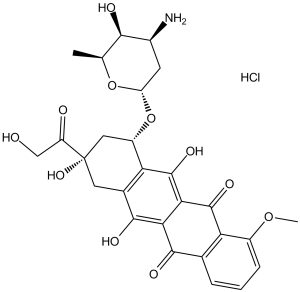
Doxorubicin HCl (adriamycin; NSC 123127)

别名: Adriamycin; Hydroxydaunorubicin hydrochloride; FI106; ADR; Doxo; Dox HCl; FI-106; FI 106; Adriamycin; Adriacin; Adriblastina; Adriblastine; Adrimedac; DOXOCELL; Doxolem; Doxorubin; Farmiblastina; Adriacin; ADRIAMYCIN HYDROCHLORIDE; Rubex 盐酸阿霉素; (8S-cis)-10-[(3-氨基-2,3,6-三去氧-a-L-来苏己吡喃基)-氧]-7,8,9,10-四氢-6,8,11-三羟基-8-羟基乙酰基-1-甲氧基-5,12-并四苯二酮盐酸盐; 盐酸多柔比星; 盐酸柔红霉素;14-羟正定霉素;阿得里亚霉素;阿霉素盐酸盐; 亚德里亚霉素盐酸盐;盐酸亚德里亚霉素;亚德里亚霉素,阿霉素(盐酸盐);盐酸阿霉;盐酸多柔比星,阿霉素; 羟基柔红霉素盐酸盐;盐酸阿霉素 (盐酸多柔比星);盐酸阿霉素 EP标准品;盐酸阿霉素 标准品;盐酸阿霉素 盐酸多柔比星;盐酸阿霉素、盐酸多柔比星;盐酸多柔比星 Doxorubicin HCl;盐酸多柔比星 USP标准品;盐酸多柔比星(比星类)
目录号: V1389 纯度: =99.49%
盐酸阿霉素(原名阿霉素;FI 106;Adriblastina;DOXOCELL;Doxolem;NSC-123127 等)
Doxorubicin HCl (adriamycin; NSC 123127) CAS号: 25316-40-9
产品类别: Topoisomerase
产品仅用于科学研究,不针对患者销售
规格 价格 库存 数量
10 mM * 1 mL in DMSO
1mg
5mg
10mg
25mg
50mg
100mg
250mg
500mg
1g
Other Sizes

Other Forms of Doxorubicin HCl (adriamycin; NSC 123127):

  • 阿霉素;多柔比星
点击了解更多
InvivoChem产品被CNS等顶刊论文引用
顾客使用InvivoChem 产品盐酸阿霉素发表1篇科研文献
纯度/质量控制文件

纯度: ≥98%

纯度: =99.49%

纯度: =99.49%

纯度: ≥98%

产品描述
Doxorubicin HCl(原名 Adriamycin;FI 106;Adriblastina;DOXOCELL;Doxolem;NSC-123127 等)是一种具有抗癌活性的蒽环类抗生素。它抑制 DNA 拓扑异构酶 II 并诱导肿瘤细胞 DNA 损伤和凋亡。它被批准用作抗肿瘤剂。阿霉素是从链霉菌Streptomyces peucetius var. var. 中分离出来的。 caesius,是柔红霉素的羟基化同系物。阿霉素通过插入 DNA 螺旋中的碱基对之间发挥作用,从而阻止 DNA 复制并最终抑制蛋白质合成。此外,阿霉素还抑制拓扑异构酶 II。
生物活性&实验参考方法
靶点
Topoisomerase I (IC50 = 0.8 μM); Topoisomerase II (IC50 = 2.67 μM); Daunorubicins/Doxorubicins; HIV-1; DNA topoisomerase II (induces DNA double-strand breaks) [5][9]
Histone eviction from chromatin [5]
体外研究 (In Vitro)
体外活性:阿霉素是一种蒽环类抗生素,通常被认为在两个基本水平上发挥其抗肿瘤活性:改变 DNA 并产生自由基,通过 DNA 损伤引发癌细胞凋亡。阿霉素可以通过插入 DNA 链来阻断 DNA 的合成,并抑制 DNA 拓扑异构酶 II (TOP2)。当细胞快速增殖并表达高水平 TOP2 时,阿霉素最有效。此外,多柔比星还可以通过产生神经酰胺(通过激活 p53 或其他下游途径(例如 JNK)促进细胞凋亡)、丝氨酸苏氨酸蛋白酶降解 Akt、线粒体释放细胞色素 c、增加 FasL(死亡受体 Fas/CD95 配体)来触发细胞凋亡。 ) mRNA 的产生,以及自由基的产生。用 GSNO(亚硝基谷胱甘肽)预处理可抑制多柔比星耐药乳腺癌细胞系 MCF7/Dx 的耐药性,同时增强蛋白质谷胱甘肽化和多柔比星在细胞核中的积累。阿霉素诱导的 G2/M 检查点阻滞归因于细胞周期蛋白 G2 (CycG2) 表达升高以及共济失调毛细血管扩张突变 (ATM) 以及 ATM 和 Rad3 相关 (ATR) 信号通路中蛋白质的磷酸化修饰。阿霉素抑制 AMP 激活蛋白激酶 (AMPK),导致 SIRT1 功能障碍、p53 积累以及小鼠胚胎成纤维细胞 (MEF) 和心肌细胞的细胞死亡增加,而 AMPK 的预抑制可进一步使其敏化。阿霉素引起显着的热休克反应,并且抑制或沉默热休克蛋白可增强阿霉素在神经母细胞瘤细胞中的凋亡作用。在没有可测量的蛋白酶体抑制的情况下,纳摩尔多柔比星治疗神经母细胞瘤细胞会导致一组特定蛋白质发生剂量依赖性过度泛素化,并导致泛素化酶(如乳酸脱氢酶和 α-烯醇酶)活性丧失,其蛋白质泛素化模式与蛋白酶体抑制剂硼替佐米相似,表明阿霉素也可能通过破坏蛋白质来发挥作用。细胞测定:用增加浓度的阿霉素(0.1、0.3、0.5和1.0 μg/ml,分别等于0.17、0.52、0.85和1.71 μM)处理H9c2细胞2小时,或用0.3 μg/ml(等于0.52μM)的阿霉素在不同的时间点。 Doxorubicin 以时间和剂量依赖性方式诱导 AMPKα (Thr 172) 及其下游乙酰辅酶 A 羧化酶 (ACC、Ser 79) 强烈磷酸化。 AMPKα 磷酸化在多柔比星处理 1 小时后变得明显,并进一步持续至少 6 小时。 LKB1(AMPK 可能的上游激酶)在 H9c2 细胞中也被阿霉素激活。
- 阿霉素对MDA-MB-231乳腺癌细胞(IC50=0.1μM)和MCF-7细胞(IC50=0.05μM)显示强细胞毒性(72小时暴露)[4]
- 通过激活p53/p21通路诱导人心肌祖细胞衰老(0.5μM时SA-β-gal+细胞增至80%)[1]
- 在耐药细胞NCI/ADR-RES中与Bcl-2 siRNA协同作用(50nM时联合指数=0.3)[4]
- 在H9c2心肌细胞中产生活性氧(1μM时增加2倍)[3]
体内研究 (In Vivo)
在体内,阿霉素与腺病毒 MnSOD (AdMnSOD) 加 1,3-双(2-氯乙基)-1-亚硝基脲 (BCNU) 联合使用,在减少 MB231 肿瘤体积和延长小鼠存活方面具有最大效果。尽管其使用受到其产生的慢性和急性毒副作用的限制,但阿霉素对于治疗乳腺癌和食道癌、儿童实体瘤、骨肉瘤、卡波西肉瘤、软组织肉瘤以及霍奇金和非霍奇金淋巴瘤至关重要。
- 阿霉素(5mg/kg/周×4,静脉注射)使MDA-MB-231移植瘤体积减少70%[7]
- 磁性纳米粒制剂(3mg/kg,静脉注射)使肿瘤药物浓度比游离药物提高5倍[7]
- 累积剂量(15mg/kg)诱导大鼠慢性心脏毒性:LVEF下降40%,纤维化面积25%[2]
酶活实验
纯化的人DNA拓扑异构酶I通过在0-2.0μM阿霉素存在下用超螺旋pHC624 DNA进行酶滴定来定量测定。在溴化乙锭存在下,通过琼脂糖凝胶电泳解析超螺旋和松弛的DNA,并通过扫描微密度测定法定量超螺旋DNA转化为松弛DNA的百分比。在不同浓度的阿霉素下测量DNA拓扑异构酶I活性的抑制作用。阿霉素在0.8微M的IC50值(抑制总活性的50%所需的浓度)下抑制酶活性。对结构相关的蒽环类抗肿瘤药物柔红霉素也观察到类似的抑制作用。这些结果表明,蒽环类药物在体内引起DNA损伤和细胞毒性的浓度下抑制人类DNA拓扑异构酶I活性[11]。
- 拓扑异构酶II解连环实验:酶与阿霉素(0.1-10μM)和kinetoplast DNA在37°C孵育30分钟。DNA断裂通过琼脂糖凝胶电泳检测[5]
- Caspase-3活性测定:用阿霉素(1μM)处理的细胞裂解液与DEVD-pNA底物孵育。405nm检测裂解产物[1]
细胞实验
细胞培养[7]
LS141原代人细胞系来源于患有高级腹膜后去分化脂肪肉瘤的患者,MPNST细胞来源于患有大腿高级周围神经鞘肿瘤的患者。这些生长在补充有15%热灭活胎牛血清加青霉素和链霉素的RPMI1640中。[7]
菌落测定[7]
MPNST细胞依次用阿霉素、黄必利或这两种药物的组合处理。选择MPNST细胞是因为LS141(和其他CDK4依赖性)细胞在体外对CDK4抑制非常敏感,因此组合研究是不间断的。MPNST细胞以每板1000个细胞/100 mm2的密度进行三次接种。接种24小时后,用阿霉素(D,15nM)、黄必利(F,150nM)的IC50、无药物培养基(对照)或两种药物的组合同时或依次处理细胞24小时。处理后,去除含药物的培养基,并使细胞生长10天以形成集落。将所得菌落用0.01%结晶紫染色30分钟,并使用自动菌落计数器计数菌落。结果以未治疗对照的百分比表示,实验结果的统计学意义通过双侧t检验确定。
- 凋亡实验:阿霉素处理(0.1-5μM)48小时后Annexin V/PI染色,流式细胞仪定量[4]
- 活性氧检测:DCFH-DA负载的H9c2细胞经阿霉素(0.5-5μM)处理。488/525nm检测荧光[3]
- 衰老实验:0.5μM阿霉素处理72小时后SA-β-gal染色,显微镜计数蓝染细胞[1]
动物实验
Female athymic nude mice injected s.c. with MB231 cells; 3 mg/kg/day; Delivered intratumorly
Female athymic nude mice injected s.c. with MB231 cells

In vivo studies LS141 xenografts were established by directly implanting into severe combined immunodeficient (SCID) mice. Once tumors reached 100 mm3 , groups of five mice were treated with the maximum tolerated dose (MTD) of flavopiridol (9 mg/kg), doxorubicin (0.9 mg/kg), or doxorubicin (0.7 mg/kg) followed by flavopiridol (7 mg/kg) at selected time points (1, 4 and 7 hours). In addition, one set of animals was treated in reverse order of flavopiridol followed by doxorubicin, administered 7 hours apart. All treatments were administered in intraperitoneal fashion, twice weekly, for a total of 5 treatments. Tumors were measured every 2 to 3 days with calipers, and tumor volumes were calculated by the formula π/ 6 × (large diameter) × (small diameter)2. Tumor volume was compared between groups of mice at various points in time based on the experiment and the statistical significance of the experimental results was determined by the two-sided t test. Given the aggressive morbidity of the tumors, animal survival data could not be estimated. Toxicity was monitored by weight loss. These studies were done in accordance with the Principles of Laboratory Animal Care, under an IACUC-approved protocol.
- Xenograft model: MDA-MB-231 cells implanted subcutaneously in nude mice. Doxorubicin (5 mg/kg in saline) administered i.v. weekly × 4. Tumors measured biweekly [7]
- Cardiotoxicity model: Rats injected i.p. with Doxorubicin (2.5 mg/kg cumulative dose weekly × 6). Echocardiography performed pre/post treatment [2]
- Biodistribution: Tumor-bearing mice injected with 99mTc-labeled liposomal Doxorubicin (3 mg/kg). Organs harvested at 24h for gamma counting [10]
药代性质 (ADME/PK)
Absorption, Distribution and Excretion
In patients with HIV-associated Kaposi's sarcoma, after administration of 10 mg/m² liposomal doxorubicin, the calculated Cmax and AUC values were 4.12 ± 0.215 μg/mL and 277 ± 32.9 μg/mL•h, respectively. Approximately 40% of the dose was found in bile within 5 days, while only 5% to 12% of the drug and its metabolites were found in urine during the same period. Less than 3% of the doxorubicin dose was recovered in urine within 7 days. The steady-state volume of distribution of doxorubicin ranged from 809 L/m² to 1214 L/m². The plasma clearance of doxorubicin ranged from 324 mL/min/m² to 809 mL/min/m², primarily through metabolism and bile excretion. There was also a sex difference in doxorubicin clearance, with males having a higher clearance than females (1088 mL/min/m² vs. 433 mL/min/m²). Following administration of doxorubicin hydrochloride at doses ranging from 10 mg/m² to 75 mg/m², plasma clearance was estimated at 1540 mL/min/m² in children over 2 years of age and 813 mL/min/m² in infants under 2 years of age. Unencapsulated doxorubicin hydrochloride is unstable in gastric acid, and animal studies have shown that the drug is almost not absorbed from the gastrointestinal tract. The drug is highly irritating to tissues and therefore must be administered intravenously. In patients with AIDS-associated Kaposi's sarcoma, after a single intravenous infusion of 10 or 20 mg/m² of liposomal doxorubicin hydrochloride, the mean peak plasma concentrations of doxorubicin (primarily bound to liposomes) were 4.33 or 10.1 μg/mL at 15 minutes post-infusion and 4.12 or 8.34 μg/mL at 30 minutes post-infusion. In adult patients with AIDS-associated Kaposi's sarcoma, the mean peak plasma concentration 15 minutes after intravenous infusion of 40 mg/m² doxorubicin hydrochloride was 20.1 μg/mL. Unencapsulated (conventional) doxorubicin hydrochloride exhibited linear pharmacokinetic characteristics; polyethylene glycol-stabilized liposomal doxorubicin hydrochloride also showed dose-proportional linear pharmacokinetic characteristics in the dose range of 10–20 mg/m². It has been reported that the pharmacokinetics of liposomally encapsulated doxorubicin at a dose of 50 mg/m² is non-linear. It is expected that at a dose of 50 mg/m², its elimination half-life will be longer, its clearance lower, and the increase in the area under the plasma concentration-time curve will be greater than that at a dose-proportional rate. Encapsulating doxorubicin hydrochloride in polyethylene glycol (PEG)-stabilized (stealthy) liposomes significantly alters its pharmacokinetics compared to conventional intravenous formulations (i.e., unencapsulated drugs), resulting in reduced distribution in peripheral tissues, increased distribution in Kaposi's sarcoma lesions, and decreased plasma clearance. Conventionally administered doxorubicin is widely distributed in plasma and tissues. It is detectable in the liver, lungs, heart, and kidneys within just 30 seconds of intravenous injection. Doxorubicin is absorbed by cells and binds to cellular components, especially nucleic acids. The volume of distribution for conventionally intravenously administered doxorubicin hydrochloride is approximately 700-1100 liters/m². Unencapsulated doxorubicin binds to plasma proteins at a rate of approximately 50-85%... Intravenous injection of liposome-encapsulated doxorubicin hydrochloride resulted in greater distribution in Kaposi's sarcoma lesions than in healthy skin. Following a single intravenous injection of 20 mg/m² of liposome-encapsulated doxorubicin hydrochloride, doxorubicin concentrations in Kaposi's sarcoma lesions were 19 times higher (range: 3–53 times) than in healthy skin; however, this study did not consider blood drug concentrations in either the lesions or healthy skin. Furthermore, intravenous injection of liposome-encapsulated doxorubicin resulted in 5.2–11.4 times higher distribution in Kaposi's sarcoma lesions compared to intravenous injection of the same dose of conventional (unencapsulated) doxorubicin. The mechanism by which liposome encapsulation enhances doxorubicin distribution in Kaposi's sarcoma lesions is not fully elucidated, but previous studies have shown that polyethylene glycol (PEG)-like stable liposomes containing colloidal gold as a marker can penetrate Kaposi's sarcoma-like lesions in animals. Liposomes may also exude through the intercellular spaces of Kaposi's sarcoma endothelial cells. After drug entry into the lesion, liposome degradation makes them permeable in situ, potentially leading to local drug release. For more complete data on the absorption, distribution, and excretion of doxorubicin (16 in total), please visit the HSDB records page.
Metabolism/Metabolites
Doxorubicin is metabolized via three pathways: single-electron reduction, two-electron reduction, and deglycosylation. However, approximately half of the dose is excreted unchanged. Two-electron reduction is the primary metabolic pathway of doxorubicin. In this pathway, doxorubicin is reduced to secondary doxorubicin alcohol by several enzymes, including alcohol dehydrogenase [NADP(+)], carbonyl reductase [NADPH]1, carbonyl reductase [NADPH]3, and aldehyde-ketone reductase 1 family member C3. Multiple oxidoreductases in the cytoplasm and mitochondria promote single-electron reduction, generating doxorubicin semiquinone radicals. These enzymes include mitochondrial and cytoplasmic NADPH dehydrogenases, xanthine oxidase, and nitric oxide synthase. This semiquinone metabolite can be reoxidized to doxorubicin, but this process generates reactive oxygen species (ROS) and hydrogen peroxide. The primary cause of doxorubicin-related adverse reactions (especially cardiotoxicity) is the reactive oxygen species (ROS) generated by this pathway, rather than the formation of doxorubicin semiquinone. Deglycosylation is a minor metabolic pathway, accounting for only 1% to 2% of doxorubicin metabolism. Doxorubicin can be reduced to doxorubicin deoxyaglycone or hydrolyzed to doxorubicin hydroxyaglycone by cytoplasmic NADPH quinone dehydrogenase, xanthine oxidase, and NADPH-cytochrome P450 reductase. Non-encapsulated doxorubicin is metabolized by NADPH-dependent aldehyde-ketone reductases to the hydrophilic 13-hydroxy metabolite doxorubicinol, which has antitumor activity and is the major metabolite of doxorubicin; these reductases are present in most cells, and possibly all cells, especially in erythrocytes, liver, and kidneys. Although not fully identified, doxorubicinol also appears to be a major culprit in the cardiotoxicity of this drug. Reports indicate that after a single intravenous injection of 10–50 mg/m² of polyethylene glycol-stabilized liposome-encapsulated doxorubicin hydrochloride, plasma doxorubicin alcohol concentrations are extremely low or undetectable (i.e., 0.8–26.2 ng/mL). It remains unclear whether these liposome-encapsulated anthracyclines are less cardiotoxic than conventional (unencapsulated) drugs, and whether current prophylactic measures for unencapsulated drugs should also apply to liposomal formulations. Following the use of polyethylene glycol (PEG)-stabilized liposome injections, a significant decrease or disappearance of plasma concentrations of the major doxorubicin metabolite has been observed, suggesting that the drug may not be released in large quantities from the liposomes during circulation, or that some doxorubicin may be released, but the elimination rate of doxorubicin alcohol is much higher than the release rate; doxorubicin hydrochloride not encapsulated in PEG-stabilized liposomes is metabolized to doxorubicin alcohol. Other non-therapeutic metabolites include poorly soluble aglycones such as doxorubicinone (doxorubicin) and 7-deoxydoxorubicinone (17-deoxydoxorubicin), and their conjugates. These aglycones are formed in microsomes via NADPH-dependent cytochrome reductase-mediated partial cleavage of aminoglycosides. The enzymatic reduction of doxorubicin to 7-deoxyaglycone is key to its cytotoxic effects, as this process generates hydroxyl radicals, leading to widespread cell damage and death. For unencapsulated doxorubicin, more than 20% of the drug in plasma is present as a metabolite within 5 minutes of administration; 70% after 30 minutes; 75% after 4 hours; and 90% after 24 hours. …At least six metabolites have been identified, the most prominent being doxorubicin alcohol. This product is produced by the reduction of the C13 ketone group by an enzyme present in leukocytes and erythrocytes (presumably also present in malignant tissues).
Doxorubicin can be converted into doxorubicin alcohol, aglycones, and other derivatives.
For more complete data on the metabolism/metabolites of doxorubicin (a total of 6 metabolites), please visit the HSDB record page.
Doxorubicin is metabolized via three metabolic pathways: single-electron reduction, two-electron reduction, and deglycosylation. However, approximately half of the dose is excreted unchanged from the body. Two-electron reduction produces doxorubicin alcohol, a secondary alcohol. This pathway is considered the primary metabolic pathway. Single-electron reduction is catalyzed by various oxidoreductases, generating doxorubicin semiquinone radicals. These enzymes include mitochondrial and cytoplasmic NADPH dehydrogenases, xanthine oxidase, and nitric oxide synthase. Deglycosylation is a minor metabolic pathway (1-2% of the dose is metabolized via this pathway). The resulting metabolites are deoxyaglycones or hydroxyaglycones, formed through reduction or hydrolysis, respectively. Enzymes potentially involved in this pathway include xanthine oxidase, NADPH-cytochrome P450 reductase, and cytoplasmic NADPH dehydrogenase.
Excretion pathway: 40% of the dose is excreted via bile within 5 days. 5-12% of the drug and its metabolites are excreted via urine within the same time period. Less than 3% of the dose recovered in urine is doxorubicin alcohol.
Half-life: Terminal half-life = 20-48 hours.
Biological Half-Life
The terminal half-life of doxorubicin is 20 to 48 hours. The distribution half-life of doxorubicin is approximately 5 minutes. For the liposomal formulation, in patients with AIDS-associated Kaposi's sarcoma, the first-phase half-life and second-phase half-life of 10 mg/m² doxorubicin were calculated to be 4.7 ± 1.1 hours and 52.3 ± 5.6 hours, respectively.
Plasma concentrations of unencapsulated doxorubicin and its metabolites exhibit a biphasic or triphasic decrease. In the first phase of the triphasic model, unencapsulated doxorubicin is rapidly metabolized, presumably through the first-pass effect in the liver. Most of the metabolism appears to be completed before administration. In the triphasic model, unencapsulated doxorubicin and its metabolites are rapidly distributed into the extravascular space, with a plasma half-life of doxorubicin of approximately 0.2–0.6 hours and that of its metabolites of approximately 3.3 hours. Subsequently, plasma concentrations of doxorubicin and its metabolites are maintained at relatively long levels, likely due to tissue binding. In the second phase, the plasma half-life of unencapsulated doxorubicin was 16.7 hours, while that of its metabolites was 31.7 hours. In the biphasic model, the average initial distribution half-life was reported to be approximately 5–10 minutes, and the average terminal elimination half-life was approximately 30 hours. The plasma concentrations of liposome-encapsulated doxorubicin hydrochloride appear to decrease in a biphasic manner. In patients with AIDS-associated Kaposi's sarcoma, following a single intravenous injection of 10–40 mg/m² doses of doxorubicin hydrochloride liposomes, the average initial plasma half-life (t1/2α) of doxorubicin was 3.76–5.2 hours, while the average terminal elimination half-life (t1/2β) was 39.1–55 hours. The approximately 5-minute initial distribution half-life indicates rapid tissue absorption of doxorubicin, while its slow elimination from tissue is reflected in the 20–48-hour terminal half-life.
The plasma half-life of doxorubicin in patients is about 17 hours, while the plasma half-life of its metabolites is about 32 hours.
- The plasma half-life in humans is 20-48 hours, and the volume of distribution is 25 L/kg [11]
- Plasma protein binding rate is 90% [11]
- Major metabolites: doxorubicin alcohol (active ingredient), aglycone [9]
- Bile excretion >60% [9]
毒性/毒理 (Toxicokinetics/TK)
The chemotherapy drug doxorubicin (DOX) exhibits dose-dependent cardiotoxicity, leading to heart failure. This study aimed to evaluate the timing and severity of cardiotoxicity in rats administered three different regimens (DOX1: a single intraperitoneal injection of 10 mg/kg DOX; DOX2: daily intraperitoneal injections of 1 mg/kg DOX for 10 days; DOX3: weekly intraperitoneal injections of 2 mg/kg DOX for 5 weeks). Weekly transthoracic echocardiography was performed to assess the timing and severity of cardiotoxicity in the three groups. Mortality reached 80% in the DOX1 group by day 28, while it reached 80% in the DOX2 and DOX3 groups by days 107 and 98, respectively. In the DOX1 group, ejection fraction decreased by 30% at week 2; in the DOX2 group, by 55% at week 13; and in the DOX3 group, by 42% at week 13. Furthermore, there were significant differences in cardiac function between the DOX1 and DOX3 groups, while cardiac function was similar between the DOX2 and DOX3 groups. These results suggest that administration over several days (DOX2) or weeks (DOX3) improves survival and presents with more typical symptoms of doxorubicin-induced dilated cardiomyopathy, despite later onset, compared to a single bolus injection of 10 mg/kg doxorubicin. [J Am Assoc Lab Anim Sci.] July 2007; 46(4):20-32.]
Effects during pregnancy and lactation
◉ Overview of medication use during lactation
Most data suggest that breastfeeding is contraindicated during maternal treatment with antitumor drugs, especially anthracyclines (such as doxorubicin). Breastfeeding may be safe during intermittent treatment if the lactation period is appropriate; however, it is difficult to determine the appropriate lactation period due to the high concentration and long duration of the active metabolite doxorubicinol in breast milk. Some studies suggest discontinuing breastfeeding 5 to 10 days after administration. However, recent worst-case pharmacokinetic models suggest that 13 days after colostrum is needed to minimize systemic and intestinal toxicity. Chemotherapy may adversely affect the normal microbiota and chemical composition of breast milk. Women receiving chemotherapy during pregnancy are more likely to experience breastfeeding difficulties. ◉ Effects on Breastfed Infants
A woman was diagnosed with B-cell lymphoma at 27 weeks of gestation. Labor was induced at 34 weeks and 4 days of gestation, and she began a standard regimen of rituximab, cyclophosphamide, doxorubicin, vincristine, and prednisone, at an unspecified dosage, for 21 days, starting on day 2 postpartum. She expressed and discarded breast milk, fed her infant with donated breast milk for the first 10 days of each cycle, and then breastfed for the remaining 10 days before the start of the next cycle. This 10-day breastfeeding pause was determined based on the half-life of vincristine (approximately 3 half-lives). According to reports, after completing four cycles of chemotherapy, her baby was in good health, developing normally, and without any complications.
◉ Effects on Lactation and Breast Milk
A study of adolescent males who received chemotherapy for childhood malignancies found that doxorubicin treatment was associated with elevated serum prolactin levels.
A woman diagnosed with Hodgkin's lymphoma in mid-pregnancy received three cycles of chemotherapy in late pregnancy and resumed chemotherapy four weeks postpartum. Breast milk samples were collected 15 to 30 minutes before and after chemotherapy within 16 weeks of restarting chemotherapy. The chemotherapy regimen included doxorubicin 40 mg, bleomycin 16 units, vincristine 9.6 mg, and dacarbazine 600 mg, administered every two weeks over two hours. Researchers compared the microbiome and metabolic profile of this woman's breast milk with that of eight healthy women who did not receive chemotherapy. The breast milk microbiota of this patient differed significantly from that of healthy women, with increased abundance of Acinetobacter sp., Xanthomonadacea, and Stenotrophomonas sp., and decreased abundance of Bifidobacterium sp. and Eubacterium sp. Several chemical components in the breast milk of treated women also differed significantly, most notably with decreased levels of DHA and inositol. A telephone follow-up study investigated 74 women who received cancer chemotherapy at the same center during mid-to-late pregnancy to determine their postpartum breastfeeding success rates. The results showed that only 34% of the women were able to exclusively breastfeed their infants, and 66% reported breastfeeding difficulties. In contrast, the breastfeeding success rate was as high as 91% for 22 mothers who were diagnosed with cancer during pregnancy but did not receive chemotherapy. Other statistically significant correlations included: 1. Mothers with lactation difficulties received an average of 5.5 chemotherapy cycles, while mothers without lactation difficulties received an average of 3.8 chemotherapy cycles; 2. Mothers with lactation difficulties received their first chemotherapy cycle an average of 3.4 weeks earlier during pregnancy. Of the 62 women who received doxorubicin regimens, 39 had lactation difficulties.
- Cardiotoxicity: Left ventricular ejection fraction (LVEF) decreased by >10% at cumulative doses >400 mg/m² [9]
- Myelosuppression: Lowest values were observed at 10–14 days (white blood cell count <2000/mm³) [11]
- Mouse LD50 = 10 mg/kg (single intravenous injection) [6]
- Hepatotoxicity: ALT increased 3-fold at a cumulative dose of 15 mg/kg [2]
参考文献

[1]. Cancer Res. 2009 May 15;69(10):4294-300.

[2]. Food Chem Toxicol. 2010 Jun;48(6):1425-38.

[3]. Biochem J. 2011 Dec 1;440(2):175-83.

[4]. Br J Cancer. 2011 Mar 15;104(6):957-67.

[5]. J Biol Chem. 2012 Jun 29;287(27):22838-53.

[6]. J Biol Chem. 2012 Mar 9;287(11):8001-12.

[7]. Clin Cancer Res. 2012 May 1;18(9):2638-47.

[8]. FEBS J. 2012 Jun;279(12):2182-91.

[9]. Nat Rev Cancer. 2009 May;9(5):338-50.

[10]. Bioorg Med Chem. 2007 Feb 15;15(4):1651-8.

[11]. Cancer Chemother Pharmacol. 1992;30(2):123-5.

其他信息
According to an independent committee of scientific and health experts, doxorubicin hydrochloride (Acritocillin) may be carcinogenic. It may also have developmental toxicity and male reproductive toxicity, depending on state or federal labeling requirements. Doxorubicin hydrochloride is an orange-red needle-like substance. Its aqueous solution is yellow-orange at acidic pH, orange-red at neutral pH, and purplish-blue at pH above 9. (NTP, 1992) Doxorubicin hydrochloride is an anthracycline antibiotic. Doxorubicin hydrochloride (liposomes) is a prescription anti-tumor drug approved by the U.S. Food and Drug Administration (FDA) for the treatment of certain types of cancer, including ovarian cancer, multiple myeloma, and HIV-related Kaposi's sarcoma. Kaposi's sarcoma is caused by human herpesvirus 8 (HHV-8) infection. HHV-8 infection may be an opportunistic infection (OI) of HIV. Doxorubicin hydrochloride is the hydrochloride salt of doxorubicin, an anthracycline antibiotic with anti-tumor activity. Doxorubicin is isolated from Streptomyces peucetius var. caesius and is a hydroxylated homologue of daunorubicin. Doxorubicin can insert between base pairs of the DNA double helix, thereby preventing DNA replication and ultimately inhibiting protein synthesis. Furthermore, doxorubicin inhibits topoisomerase II, leading to an increase and stabilization of the cleavable enzyme-DNA linker complex during DNA replication, thus preventing the rejoining of nucleotide chains after double-strand breaks. Doxorubicin also forms oxygen free radicals, leading to cell membrane lipid peroxidation and thus cytotoxicity; the formation of oxygen free radicals is also a contributing factor to the toxicity of anthracycline antibiotics, particularly their effects on cardiac and skin blood vessels.
An antitumor antibiotic, extracted from Streptomyces peucetius. It is a hydroxylated derivative of daunorubicin.
See also: Doxorubicin (with active moiety).
Drug Indications
Petrified liposomal celecoxib is indicated for adults as monotherapy for the treatment of patients with metastatic breast cancer, particularly those at increased cardiac risk; or for the treatment of women with advanced ovarian cancer who have failed first-line platinum-based chemotherapy; or in combination with bortezomib for the treatment of patients with advanced multiple myeloma who have received at least one prior therapy and are either ineligible for or have received bone marrow transplantation. It is also indicated for the treatment of HIV-associated Kaposi's sarcoma (KS) with low CD4 counts (<200 CD4 lymphocytes/mm3) and extensive mucocutaneous or visceral lesions. Celdoxome petrified liposomal celecoxib can be used as first-line systemic chemotherapy or as second-line chemotherapy for HIV-associated KS patients whose disease has progressed or who are intolerant to combination systemic chemotherapy containing at least two of the following: vinca alkaloids, bleomycin, and standard doxorubicin (or other anthracyclines).
Caelyx pegylated liposomes are indicated for: as monotherapy in patients with metastatic breast cancer at increased cardiac risk; for the treatment of women with advanced ovarian cancer who have failed first-line platinum-based chemotherapy; in combination with bortezomib for the treatment of patients with advanced multiple myeloma who have received at least one prior therapy and are ineligible for or have received bone marrow transplantation; and for the treatment of patients with HIV-associated Kaposi's sarcoma (KS) with low CD4 counts.
Myocet liposomes in combination with cyclophosphamide are indicated for first-line treatment of metastatic breast cancer in adult women.
Treatment of breast and ovarian cancer.
Treatment of hepatocellular carcinoma.
Doxorubicin is a deoxyhexoside, anthracycline, aminoglycoside, tetrabenzoquinone, paraquinone, primary α-hydroxy ketone, and tertiary α-hydroxy ketone. It is a metabolite of Escherichia coli. It is the conjugate base of doxorubicin (1+). It is derived from the hydride of tetrabenzoquinone.
Doxorubicin hydrochloride (liposomes) is a prescription antitumor drug. Approved by the U.S. Food and Drug Administration (FDA). Approved for the treatment of certain types of cancer, including ovarian cancer, multiple myeloma, and HIV-associated Kaposi's sarcoma. Kaposi's sarcoma is caused by infection with human herpesvirus type 8 (HHV-8). HHV-8 infection may be an opportunistic infection (OI) of HIV. Doxorubicin is a cytotoxic anthracycline antibiotic, isolated in 1970 from cultures of Streptomyces peucetius var. caesius along with another cytotoxic drug, daunorubicin. Although both contain glycosidic aglycones and sugar moieties, doxorubicin has a primary alcohol group at the end of its side chain, while daunorubicin has a methyl group at the end. Although its detailed molecular mechanism is not fully elucidated, it is generally believed that doxorubicin works through DNA intercalation, ultimately leading to DNA... Damage. Production of reactive oxygen species. Due to its significant efficacy and broad range of applications, doxorubicin was approved by the FDA in 1974 for the treatment of various cancers, including but not limited to breast cancer, lung cancer, stomach cancer, ovarian cancer, thyroid cancer, non-Hodgkin's lymphoma and Hodgkin's lymphoma, multiple myeloma, sarcoma, and childhood cancers. However, one of the main side effects of doxorubicin is cardiotoxicity; therefore, it is not suitable for patients with heart failure, and treatment should be discontinued once the maximum tolerated cumulative dose is reached.
Doxorubicin is an anthracycline topoisomerase inhibitor. The mechanism of action of doxorubicin is as a topoisomerase inhibitor.
Doxorubicin has been reported to be found in Talaromyces aculeatus, Hamigera fusca, and other organisms with relevant data.
Doxorubicin is an anthracycline antibiotic. Antitumor activity. Doxorubicin is derived from Streptomyces peucetius var. Doxorubicin, isolated from Streptomyces, is a hydroxylated analogue of daunorubicin. Doxorubicin can insert between base pairs in the DNA double helix, thereby preventing DNA replication and ultimately inhibiting protein synthesis. Furthermore, doxorubicin inhibits topoisomerase II, leading to an increase and stabilization of the cleavable enzyme-DNA linker complex during DNA replication, thus preventing the rejoining of nucleotide chains after double-strand breaks. Doxorubicin also forms oxygen free radicals, causing cell membrane lipid peroxidation and resulting in cytotoxicity; the formation of oxygen free radicals is also one of the causes of anthracycline antibiotic toxicity (especially cardiovascular and cutaneous vascular toxicity). Doxorubicin is only present in individuals who have used or taken the drug. It is an antitumor antibiotic extracted from Streptomyces. Doxorubicin (Dapoxetine) is a hydroxyl derivative of daunorubicin. [PubChem] Doxorubicin exerts its antimitotic and cytotoxic activities through multiple mechanisms of action: Doxorubicin forms a complex with DNA by inserting between base pairs and inhibits the activity of topoisomerase II by stabilizing the DNA-topoisomerase II complex, thereby preventing the rejoining portion of the topoisomerase II-catalyzed ligation-rejoining reaction. It is an antitumor antibiotic extracted from Streptomyces peucetius. It is a hydroxyl derivative of daunorubicin. See also: Doxorubicin hydrochloride (in salt form); Zoprerin doxorubicin (its active portion); Zoprerin doxorubicin acetate (its active portion).
Drug Indications
Doxorubicin is indicated for the treatment of acute lymphoblastic leukemia, acute myeloid leukemia, Hodgkin's lymphoma and non-Hodgkin's lymphoma, metastatic breast cancer, metastatic nephroblastoma, metastatic neuroblastoma, metastatic soft tissue and osteosarcoma, metastatic... Doxorubicin is indicated for the treatment of neoplastic diseases such as ovarian cancer, metastatic transitional cell carcinoma of the bladder, metastatic thyroid cancer, metastatic gastric cancer, and metastatic bronchial cancer. It is also indicated for adjuvant therapy in women with axillary lymph node metastasis after primary breast cancer resection. In liposomal formulations, doxorubicin is indicated for the treatment of ovarian cancer that has progressed or relapsed after platinum-based chemotherapy, HIV-associated Kaposi's sarcoma that has failed or is intolerant of prior systemic chemotherapy, and multiple myeloma in patients who have not previously received bortezomib (in combination with bortezomib). Patients must have received at least one prior therapy.
FDA Label
Zozcetti PEGylated liposomes are a medicine for the treatment of the following types of cancer in adults:EUR¢ The breast cancer has spread to other parts of the body, and the patient is at risk of heart problems. Zoscotil pegylated liposomes can be used alone to treat this disease; âEURAdvanced ovarian cancer refers to women who have previously received treatment, including platinum-based anticancer drugs, but with poor response.EUR¢ Multiple myeloma (leukocytic carcinoma of the bone marrow) is indicated for patients who have previously received at least one other treatment and whose disease has progressed, and who have received or are ineligible for bone marrow transplantation. Pegylated liposomal zolastil is used in combination with bortezomib (another anticancer drug); âEURKaposi's sarcoma is commonly seen in HIV patients with severely compromised immune systems. It is a cancer that causes abnormal tissue to grow under the skin, on moist surfaces, or on internal organs. Zolsketil pegylated liposomes contain the active ingredient doxorubicin, a...€˜"Hybrid medicine." This means it's similar to a...€˜The reference drug “contains the same active ingredient, doxorubicin.” However, in zosketine pegylated liposomes, the active ingredient is encapsulated in tiny fat globules called liposomes, unlike doxorubicin. Caelyx® pegylated liposomes are indicated for: as monotherapy for patients with metastatic breast cancer at increased cardiac risk; for women with advanced ovarian cancer who have failed first-line platinum-based chemotherapy; in combination with bortezomib for patients with advanced multiple myeloma who have received at least one prior therapy and are ineligible for or have received bone marrow transplantation; and for patients with HIV-associated Kaposi's sarcoma (KS) with low CD4 counts. Myocet liposomes in combination with cyclophosphamide are indicated for first-line treatment of metastatic breast cancer in adult women. Treatment of breast and ovarian cancer.
Mechanism of Action Doxorubicin is generally believed to exert its antitumor activity through two main mechanisms: DNA intercalation and disruption of topoisomerase-mediated repair and free radical-mediated cell damage. Doxorubicin can intercalate into DNA via an anthraquinone ring, which stabilizes the complex by forming hydrogen bonds with DNA bases. This intercalation introduces torsional stress into the polynucleotide structure, disrupting nucleosome structure and leading to nucleosome shedding and replacement. Furthermore, the doxorubicin-DNA complex interferes with doxorubicin's inhibition of topoisomerase II activity, preventing topoisomerase-mediated DNA break repair, thereby inhibiting DNA replication and transcription and inducing apoptosis. Additionally, doxorubicin can be affected by microsomal NADPH. Cytochrome P-450 reductase metabolizes free radicals into semiquinone radicals, which can be re-oxidized to oxygen radicals in the presence of oxygen. Reactive oxygen species (ROS) are known to cause cell damage through various mechanisms, including lipid peroxidation and membrane damage, DNA damage, oxidative stress, and apoptosis. Although the free radicals generated through this pathway can be inactivated by catalase and superoxide dismutase, tumor cells and cardiomyocytes often lack these enzymes, explaining the effectiveness of doxorubicin against cancer cells and its tendency to cause cardiotoxicity. Doxorubicin hydrochloride is an antitumor antibiotic with pharmacological effects similar to daunorubicin. Although this drug has anti-infective properties, its cytotoxicity limits its application as an anti-infective agent. The exact and/or primary mechanism of doxorubicin's antitumor effect is not fully elucidated. The drug's cytotoxicity appears to stem from a complex multi-mechanism, including: free radicals generated after doxorubicin's electron-reductive metabolic activation, drug insertion into DNA, induction of DNA breaks and chromosomal aberrations, and drug-induced cell membrane alterations. In vitro studies suggest that apoptosis (programmed cell death) following doxorubicin treatment may also be involved in the drug's mechanism of action. These mechanisms, along with others (e.g., chelation of metal ions to form drug-metal complexes), may also contribute to the drug's cardiotoxicity. Doxorubicin undergoes enzymatic single-electron and two-electron reduction to generate the corresponding semiquinones and dihydroquinones. 7-Deoxyglycosidic ligands are generated by an enzymatic single-electron reduction reaction. The resulting semiquinone radical reacts with oxygen, triggering a series of cascade reactions to generate hydroxyl radicals. These radicals can react with DNA, RNA, cell membranes, and proteins, leading to cell death. Dihydroquinone, generated by the two-electron reduction of doxorubicin, can also be produced by the reaction of two semiquinones. In the presence of oxygen, dihydroquinone reacts to generate hydrogen peroxide; in the absence of oxygen, dihydroquinone loses its glycosyl group to generate quinone methylate, a monofunctional alkylating agent with low affinity for DNA. The contributions of dihydroquinone and quinone methylate to the cytotoxicity of doxorubicin are unclear. Experimental evidence suggests that doxorubicin inhibits DNA synthesis and DNA-dependent RNA synthesis by intercalating between base pairs to form a complex with DNA, leading to template disorder and steric hindrance. Doxorubicin can also inhibit protein synthesis. Anazoline synthesis. Doxorubicin is active throughout the cell cycle, including interphase. Multiple inducing effects of anthracyclines may contribute to cardiotoxicity. In animal studies, anthracyclines selectively inhibit gene expression of β-actin, troponin, myosin light chain 2, and creatine kinase M isoform in the myocardium, potentially leading to myofibril loss associated with anthracycline-induced cardiotoxicity. Other potential causes of anthracycline-induced cardiotoxicity include cardiomyocyte damage due to calcium overload, altered myocardial adrenergic function, release of vasoactive amines, and release of pro-inflammatory cytokines. Limited data suggest that calcium channel blockers (e.g., isoprenoidamine) or β-adrenergic blockers may prevent calcium overload… Some studies suggest that free radical damage is a primary cause of anthracycline-induced cardiotoxicity. DNA. Anthracycline drugs can intercalate into DNA, chelate metal ions to form drug-metal complexes, and generate oxygen free radicals through redox reactions. Anthracycline drugs contain quinone structures and can undergo reduction reactions via NADPH-dependent reactions to generate semiquinone free radicals, which in turn trigger oxygen free radical cascade reactions. The metabolite doxorubicin appears to be the culprit behind cardiotoxicity, and the heart may be particularly vulnerable to free radical damage due to relatively low concentrations of antioxidants. ... Drug chelation of metal ions (especially iron) forms doxorubicin-metal complexes, which catalyze the generation of reactive oxygen species and are strong oxidants, even in... Lipid peroxidation can be triggered even in the absence of oxygen free radicals. This reaction is not inhibited by free radical scavengers and may be the main mechanism by which anthracycline drugs cause cardiotoxicity. This study investigated the effects of doxorubicin on reactive oxygen metabolism in rat hearts. The results showed that doxorubicin generated oxygen free radicals in cardiac homogenates, sarcoplasmic reticulum, mitochondria, and cytosol (the main sites of cardiac injury). Superoxide production was increased in cardiac myosomal and mitochondrial components. It is clear that the free radicals generated by doxorubicin in the same cardiomyocyte compartments as drug-induced tissue damage may damage the heart by exceeding the oxygen free radical detoxification capacity of cardiac mitochondria and sarcoplasmic reticulum. - Anthracycline antibiotics that can embed in DNA and inhibit topoisomerase II [9] - FDA black box warning: cardiotoxic [9] - Clinical applications: breast cancer, lymphoma, sarcoma [9] - Resistance mechanism: P-glycoprotein efflux, glutathione binding [8]
*注: 文献方法仅供参考, InvivoChem并未独立验证这些方法的准确性
化学信息 & 存储运输条件
分子式
C27H29NO11.HCL
分子量
579.98
精确质量
579.15
元素分析
C, 55.91; H, 5.21; Cl, 6.11; N, 2.42; O, 30.34
CAS号
25316-40-9
相关CAS号
25316-40-9 (Doxorubicin HCl); 23214-92-8
PubChem CID
443939
外观&性状
Red to orange solid powder
沸点
810.3ºC at 760 mmHg
熔点
216ºC
闪点
443.8ºC
蒸汽压
9.64E-28mmHg at 25°C
来源
Streptomyces peucetius var. Caesius
LogP
1.503
tPSA
206.07
氢键供体(HBD)数目
7
氢键受体(HBA)数目
12
可旋转键数目(RBC)
5
重原子数目
40
分子复杂度/Complexity
977
定义原子立体中心数目
6
SMILES
Cl[H].O([C@@]1([H])C([H])([H])[C@@]([H])([C@@]([H])([C@]([H])(C([H])([H])[H])O1)O[H])N([H])[H])[C@]1([H])C2C(=C3C(C4C(=C([H])C([H])=C([H])C=4C(C3=C(C=2C([H])([H])[C@@](C(C([H])([H])O[H])=O)(C1([H])[H])O[H])O[H])=O)OC([H])([H])[H])=O)O[H]
InChi Key
MWWSFMDVAYGXBV-RUELKSSGSA-N
InChi Code
InChI=1S/C27H29NO11.ClH/c1-10-22(31)13(28)6-17(38-10)39-15-8-27(36,16(30)9-29)7-12-19(15)26(35)21-20(24(12)33)23(32)11-4-3-5-14(37-2)18(11)25(21)34;/h3-5,10,13,15,17,22,29,31,33,35-36H,6-9,28H2,1-2H3;1H/t10-,13-,15-,17-,22+,27-;/m0./s1
化学名
(7S,9S)-7-[(2R,4S,5S,6S)-4-amino-5-hydroxy-6-methyloxan-2-yl]oxy-6,9,11-trihydroxy-9-(2-hydroxyacetyl)-4-methoxy-8,10-dihydro-7H-tetracene-5,12-dione;hydrochloride
别名
Adriamycin; Hydroxydaunorubicin hydrochloride; FI106; ADR; Doxo; Dox HCl; FI-106; FI 106; Adriamycin; Adriacin; Adriblastina; Adriblastine; Adrimedac; DOXOCELL; Doxolem; Doxorubin; Farmiblastina; Adriacin; ADRIAMYCIN HYDROCHLORIDE; Rubex
HS Tariff Code
2934.99.9001
存储方式

Powder      -20°C    3 years

                     4°C     2 years

In solvent   -80°C    6 months

                  -20°C    1 month

注意: 请将本产品存放在密封且受保护的环境中(例如氮气保护),避免吸湿/受潮和光照。
运输条件
Room temperature (This product is stable at ambient temperature for a few days during ordinary shipping and time spent in Customs)
溶解度数据
溶解度 (体外实验)
DMSO: 83.3~100 mg/mL (143.7~172.4 mM)

Water: 10~50 mg/mL; Dox HCl can be dissolved in water (1.Annals of Biological Research, 2012, 3,4414-4419; 2.Annal of Oncology 1999, 10, 391-395)

Ethanol: <1 mg/mL
溶解度 (体内实验)
配方 1 中的溶解度: ≥ 2.75 mg/mL (4.74 mM) (饱和度未知) in 5% DMSO + 40% PEG300 + 5% Tween80 + 50% Saline (这些助溶剂从左到右依次添加,逐一添加), 澄清溶液。
*生理盐水的制备:将 0.9 g 氯化钠溶解在 100 mL ddH₂O中,得到澄清溶液。

配方 2 中的溶解度: ≥ 2.08 mg/mL (3.59 mM) (饱和度未知) in 10% DMSO + 40% PEG300 + 5% Tween80 + 45% Saline (这些助溶剂从左到右依次添加,逐一添加), 澄清溶液。
例如,若需制备1 mL的工作液,可将 100 μL 20.8 mg/mL澄清的DMSO储备液加入到400 μL PEG300中,混匀;再向上述溶液中加入50 μL Tween-80,混匀;然后加入450 μL生理盐水定容至1 mL。
*生理盐水的制备:将 0.9 g 氯化钠溶解在 100 mL ddH₂O中,得到澄清溶液。

View More

配方 3 中的溶解度: ≥ 2.08 mg/mL (3.59 mM) (饱和度未知) in 10% DMSO + 90% (20% SBE-β-CD in Saline) (这些助溶剂从左到右依次添加,逐一添加), 澄清溶液。
例如,若需制备1 mL的工作液,可将 100 μL 20.8 mg/mL澄清DMSO储备液加入900 μL 20% SBE-β-CD生理盐水溶液中,混匀。
*20% SBE-β-CD 生理盐水溶液的制备(4°C,1 周):将 2 g SBE-β-CD 溶解于 10 mL 生理盐水中,得到澄清溶液。


请根据您的实验动物和给药方式选择适当的溶解配方/方案:
1、请先配制澄清的储备液(如:用DMSO配置50 或 100 mg/mL母液(储备液));
2、取适量母液,按从左到右的顺序依次添加助溶剂,澄清后再加入下一助溶剂。以 下列配方为例说明 (注意此配方只用于说明,并不一定代表此产品 的实际溶解配方):
10% DMSO → 40% PEG300 → 5% Tween-80 → 45% ddH2O (或 saline);
假设最终工作液的体积为 1 mL, 浓度为5 mg/mL: 取 100 μL 50 mg/mL 的澄清 DMSO 储备液加到 400 μL PEG300 中,混合均匀/澄清;向上述体系中加入50 μL Tween-80,混合均匀/澄清;然后继续加入450 μL ddH2O (或 saline)定容至 1 mL;

3、溶剂前显示的百分比是指该溶剂在最终溶液/工作液中的体积所占比例;
4、 如产品在配制过程中出现沉淀/析出,可通过加热(≤50℃)或超声的方式助溶;
5、为保证最佳实验结果,工作液请现配现用!
6、如不确定怎么将母液配置成体内动物实验的工作液,请查看说明书或联系我们;
7、 以上所有助溶剂都可在 Invivochem.cn网站购买。
制备储备液 1 mg 5 mg 10 mg
1 mM 1.7242 mL 8.6210 mL 17.2420 mL
5 mM 0.3448 mL 1.7242 mL 3.4484 mL
10 mM 0.1724 mL 0.8621 mL 1.7242 mL

1、根据实验需要选择合适的溶剂配制储备液 (母液):对于大多数产品,InvivoChem推荐用DMSO配置母液 (比如:5、10、20mM或者10、20、50 mg/mL浓度),个别水溶性高的产品可直接溶于水。产品在DMSO 、水或其他溶剂中的具体溶解度详见上”溶解度 (体外)”部分;

2、如果您找不到您想要的溶解度信息,或者很难将产品溶解在溶液中,请联系我们;

3、建议使用下列计算器进行相关计算(摩尔浓度计算器、稀释计算器、分子量计算器、重组计算器等);

4、母液配好之后,将其分装到常规用量,并储存在-20°C或-80°C,尽量减少反复冻融循环。

计算器

摩尔浓度计算器可计算特定溶液所需的质量、体积/浓度,具体如下:

  • 计算制备已知体积和浓度的溶液所需的化合物的质量
  • 计算将已知质量的化合物溶解到所需浓度所需的溶液体积
  • 计算特定体积中已知质量的化合物产生的溶液的浓度
使用摩尔浓度计算器计算摩尔浓度的示例如下所示:
假如化合物的分子量为350.26 g/mol,在5mL DMSO中制备10mM储备液所需的化合物的质量是多少?
  • 在分子量(MW)框中输入350.26
  • 在“浓度”框中输入10,然后选择正确的单位(mM)
  • 在“体积”框中输入5,然后选择正确的单位(mL)
  • 单击“计算”按钮
  • 答案17.513 mg出现在“质量”框中。以类似的方式,您可以计算体积和浓度。

稀释计算器可计算如何稀释已知浓度的储备液。例如,可以输入C1、C2和V2来计算V1,具体如下:

制备25毫升25μM溶液需要多少体积的10 mM储备溶液?
使用方程式C1V1=C2V2,其中C1=10mM,C2=25μM,V2=25 ml,V1未知:
  • 在C1框中输入10,然后选择正确的单位(mM)
  • 在C2框中输入25,然后选择正确的单位(μM)
  • 在V2框中输入25,然后选择正确的单位(mL)
  • 单击“计算”按钮
  • 答案62.5μL(0.1 ml)出现在V1框中
g/mol

分子量计算器可计算化合物的分子量 (摩尔质量)和元素组成,具体如下:

注:化学分子式大小写敏感:C12H18N3O4  c12h18n3o4
计算化合物摩尔质量(分子量)的说明:
  • 要计算化合物的分子量 (摩尔质量),请输入化学/分子式,然后单击“计算”按钮。
分子质量、分子量、摩尔质量和摩尔量的定义:
  • 分子质量(或分子量)是一种物质的一个分子的质量,用统一的原子质量单位(u)表示。(1u等于碳-12中一个原子质量的1/12)
  • 摩尔质量(摩尔重量)是一摩尔物质的质量,以g/mol表示。
/

配液计算器可计算将特定质量的产品配成特定浓度所需的溶剂体积 (配液体积)

  • 输入试剂的质量、所需的配液浓度以及正确的单位
  • 单击“计算”按钮
  • 答案显示在体积框中
动物体内实验配方计算器(澄清溶液)
第一步:请输入基本实验信息(考虑到实验过程中的损耗,建议多配一只动物的药量)
第二步:请输入动物体内配方组成(配方适用于不溶/难溶于水的化合物),不同的产品和批次配方组成不同,如对配方有疑问,可先联系我们提供正确的体内实验配方。此外,请注意这只是一个配方计算器,而不是特定产品的确切配方。
+
+
+

计算结果:

工作液浓度 mg/mL;

DMSO母液配制方法 mg 药物溶于 μL DMSO溶液(母液浓度 mg/mL)。如该浓度超过该批次药物DMSO溶解度,请首先与我们联系。

体内配方配制方法μL DMSO母液,加入 μL PEG300,混匀澄清后加入μL Tween 80,混匀澄清后加入 μL ddH2O,混匀澄清。

(1) 请确保溶液澄清之后,再加入下一种溶剂 (助溶剂) 。可利用涡旋、超声或水浴加热等方法助溶;
            (2) 一定要按顺序加入溶剂 (助溶剂) 。

临床试验信息
TLD-1, a Novel Liposomal Doxorubicin, in Patients With Advanced Solid Tumors
CTID: NCT03387917
Phase: Phase 1    Status: Terminated
Date: 2024-12-02
A Study to Test the Addition of the Drug Cabozantinib to Chemotherapy in Patients With Newly Diagnosed Osteosarcoma
CTID: NCT05691478
Phase: Phase 2/Phase 3    Status: Suspended
Date: 2024-12-02
A Study to Compare Standard Therapy to Treat Hodgkin Lymphoma to the Use of Two Drugs, Brentuximab Vedotin and Nivolumab
CTID: NCT05675410
Phase: Phase 3    Status: Recruiting
Date: 2024-12-02
Nivolumab in Combination With Chemo-Immunotherapy for the Treatment of Newly Diagnosed Primary Mediastinal B-Cell Lymphoma
CTID: NCT04759586
Phase: Phase 3    Status: Recruiting
Date: 2024-12-02
Tazemetostat in Combination With Doxorubicin as Frontline Therapy for Advanced Epithelioid Sarcoma
CTID: NCT04204941
Phase: Phase 3    Status: Recruiting
Date: 2024-12-02
View More

Treatment of Acute Lymphoblastic Leukemia in Children
CTID: NCT00400946
Phase: Phase 3    Status: Completed
Date: 2024-11-27


Ibrutinib, Rituximab, Venetoclax, and Combination Chemotherapy in Treating Patients with Newly Diagnosed Mantle Cell Lymphoma
CTID: NCT03710772
Phase: Phase 2    Status: Active, not recruiting
Date: 2024-11-27
Testing CC-486 (Oral Azacitidine) Plus the Standard Drug Therapy in Patients 75 Years or Older With Newly Diagnosed Diffuse Large B Cell Lymphoma
CTID: NCT04799275
Phase: Phase 2/Phase 3    Status: Recruiting
Date: 2024-11-27
Testing the Addition of MEDI4736 (Durvalumab) to Chemotherapy Before Surgery for Patients With High-Grade Upper Urinary Tract Cancer
CTID: NCT04628767
Phase: Phase 2/Phase 3    Status: Recruiting
Date: 2024-11-26
A Phase II Multicenter Study of Chemotherapy Versus Chemotherapy Plus Durvalumab (MEDI 4736) in Patients With Lymph Node Positive Urothelial Carcinoma of the Bladder
CTID: NCT05137262
Phase: Phase 2    Status: Recruiting
Date: 2024-11-25
Testing the Use of Steroids and Tyrosine Kinase Inhibitors With Blinatumomab or Chemotherapy for Newly Diagnosed BCR-ABL-Positive Acute Lymphoblastic Leukemia in Adults
CTID: NCT04530565
Phase: Phase 3    Status: Recruiting
Date: 2024-11-25
PET Adapted Brentuximab Vedotin and Pembrolizumab in Combination With Doxorubicin and Dacarbazine in Classic Hodgkin Lymphoma
CTID: NCT05922904
Phase: Phase 2    Status: Recruiting
Date: 2024-11-20
Blinatumomab, Inotuzumab Ozogamicin, and Combination Chemotherapy as Frontline Therapy in Treating Patients With B Acute Lymphoblastic Leukemia
CTID: NCT02877303
Phase: Phase 2    Status: Recruiting
Date: 2024-11-20
Combination Chemotherapy With or Without Donor Stem Cell Transplant in Treating Patients With Acute Lymphoblastic Leukemia
CTID: NCT00792948
Phase: Phase 2    Status: Active, not recruiting
Date: 2024-11-13
Brentuximab Vedotin and Combination Chemotherapy in Treating Children and Young Adults With Stage IIB, Stage IIIB, IVA, or IVB Hodgkin Lymphoma
CTID: NCT02166463
Phase: Phase 3    Status: Active, not recruiting
Date: 2024-11-13
Combination Chemotherapy With or Without Bortezomib in Treating Younger Patients With Newly Diagnosed T-Cell Acute Lymphoblastic Leukemia or Stage II-IV T-Cell Lymphoblastic Lymphoma
CTID: NCT02112916
Phase: Phase 3    Status: Active, not recruiting
Date: 2024-11-13
Combination Chemotherapy in Treating Young Patients With Newly Diagnosed High-Risk B Acute Lymphoblastic Leukemia and Ph-Like TKI Sensitive Mutations
CTID: NCT02883049
Phase: Phase 3    Status: Active, not recruiting
Date: 2024-11-13
Chemotherapy With or Without Trastuzumab After Surgery in Treating Women With Invasive Breast Cancer
CTID: NCT01275677
Phase: Phase 3    Status: Active, not recruiting
Date: 2024-11-13
Radiation Therapy With or Without Combination Chemotherapy or Pazopanib Before Surgery in Treating Patients With Newly Diagnosed Non-rhabdomyosarcoma Soft Tissue Sarcomas That Can Be Removed by Surgery
CTID: NCT02180867
Phase: Phase 2/Phase 3    Status: Active, not recruiting
Date: 2024-11-13
Rituximab and Combination Chemotherapy With or Without Lenalidomide in Treating Patients With Newly Diagnosed Stage II-IV Diffuse Large B Cell Lymphoma
CTID: NCT01856192
Phase: Phase 2    Status: Active, not recruiting
Date: 2024-11-13
Vorinostat, Rituximab, and Combination Chemotherapy in Treating Patients With Newly Diagnosed Stage II, Stage III, or Stage IV Diffuse Large B-Cell Lymphoma
CTID: NCT00972478
Phase: Phase 1/Phase 2    Status: Active, not recruiting
Date: 2024-11-13
Doxorubicin Hydrochloride, Cyclophosphamide, and Paclitaxel With or Without Bevacizumab in Treating Patients With Lymph Node-Positive or High-Risk, Lymph Node-Negative Breast Cancer
CTID: NCT00433511
Phase: Phase 3    Status: Active, not recruiting
Date: 2024-11-13
Paclitaxel With or Without Carboplatin and/or Bevacizumab Followed by Doxorubicin and Cyclophosphamide in Treating Patients With Breast Cancer That Can Be Removed by Surgery
CTID: NCT00861705
Phase: Phase 2    Status: Active, not recruiting
Date: 2024-11-13
Obinutuzumab With or Without Umbralisib, Lenalidomide, or Combination Chemotherapy in Treating Patients With Relapsed or Refractory Grade I-IIIa Follicular Lymphoma
CTID: NCT03269669
Phase: Phase 2    Status: Active, not recruiting
Date: 2024-11-12
Testing the Addition of a New Anti-cancer Drug, Venetoclax, to Usual Chemotherapy for High Grade B-cell Lymphomas
CTID: NCT03984448
Phase: Phase 2/Phase 3    Status: Active, not recruiting
Date: 2024-11-12
Ibrutinib, Rituximab, Etoposide, Prednisone, Vincristine Sulfate, Cyclophosphamide, and Doxorubicin Hydrochloride in Treating Patients With HIV-Positive Stage II-IV Diffuse Large B-Cell Lymphomas
CTID: NCT03220022
Phase: Phase 1    Status: Recruiting
Date: 2024-11-12
Immunotherapy (Nivolumab or Brentuximab Vedotin) Plus Combination Chemotherapy in Treating Patients With Newly Diagnosed Stage III-IV Classic Hodgkin Lymphoma
CTID: NCT03907488
Phase: Phase 3    Status: Active, not recruiting
Date: 2024-11-12
A Study to Evaluate Adverse Events and Change in Disease Activity of Subcutaneous (SC) Epcoritamab in Combination With Oral and Intravenous Anti-Neoplastic Agents in Adult Participants With Non-Hodgkin Lymphoma
CTID: NCT05283720
Phase: Phase 2    Status: Recruiting
Date: 2024-11-05
Pyrotinib in Combination with Neoadjuvant Chemotherapy in HR+/HER2-, HER4 High Expression Breast Cancer Patients: a Phase II Trial
CTID: NCT04872985
Phase: Phase 2    Status: Recruiting
Date: 2024-11-04
Nivolumab With DA-REPOCH Chemotherapy Regimen in Treating Patients With Aggressive B-Cell Non-Hodgkin's Lymphoma
CTID: NCT03749018
Phase: Phase 2    Status: Active, not recruiting
Date: 2024-11-04
Irinotecan and Carboplatin as Upfront Window Therapy in Treating Patients With Newly Diagnosed Intermediate-Risk or High-Risk Rhabdomyosarcoma
CTID: NCT00077285
Phase: Phase 2    Status: Active, not recruiting
Date: 2024-11-04
Response and Biology-Based Risk Factor-Guided Therapy in Treating Younger Patients With Non-high Risk Neuroblastoma
CTID: NCT02176967
Phase: Phase 3    Status: Active, not recruiting
Date: 2024-11-01
Zanubrutinib in Combination with R-PolaCHP (ZaR-PolaCHP) for Newly Diagnosed Diffuse Large B-Cell Lymphoma
CTID: NCT04850495
Phase: Phase 1    Status: Recruiting
Date: 2024-10-31
Nivolumab With Standard of Care Chemotherapy for Peripheral T Cell Lymphomas
CTID: NCT03586999
Phase: Phase 1/Phase 2    Status: Completed
Date: 2024-10-29
Testing the Addition of 131I-MIBG or Lorlatinib to Intensive Therapy in People With High-Risk Neuroblastoma (NBL)
CTID: NCT03126916
Phase: Phase 3    Status: Active, not recruiting
Date: 2024-10-26
Veliparib, Cyclophosphamide, and Doxorubicin Hydrochloride in Treating Patients With Metastatic or Unresectable Solid Tumors or Non-Hodgkin Lymphoma
CTID: NCT00740805
Phase: Phase 1    Status: Active, not recruiting
Date: 2024-10-24
Inotuzumab Ozogamicin and Post-Induction Chemotherapy in Treating Patients With High-Risk B-ALL, Mixed Phenotype Acute Leukemia, and B-LLy
CTID: NCT03959085
Phase: Phase 3    Status: Recruiting
Date: 2024-10-22
A Study to Investigate Blinatumomab in Combination With Chemotherapy in Patients With Newly Diagnosed B-Lymphoblastic Leukemia
CTID: NCT03914625
Phase: Phase 3    Status: Active, not recruiting
Date: 2024-10-21
Risk-Based Therapy in Treating Younger Patients With Newly Diagnosed Liver Cancer
CTID: NCT00980460
Phase: Phase 3    Status: Active, not recruiting
Date: 2024-10-21
Combination Chemotherapy in Treating Young Patients With Newly Diagnosed T-Cell Acute Lymphoblastic Leukemia or T-cell Lymphoblastic Lymphoma
CTID: NCT00408005
Phase: Phase 3    Status: Active, not recruiting
Date: 2024-10-21
A Study of Daratumumab and Dose-Adjusted EPOCH in Plasmablastic Lymphoma
CTID: NCT04139304
PhaseEarly Phase 1    Status: Active, not recruiting
Date: 2024-10-16
Implantable Microdevice for the Delivery of Drugs and Their Effect on Tumors in Patients With Metastatic or Recurrent Sarcoma
CTID: NCT04199026
PhaseEarly Phase 1    Status: Not yet recruiting
Date: 2024-10-15
Study of Tucatinib and Doxil in Participants with Human Epidermal Growth Factor Receptor 2 Positive (HER2+) Metastatic Breast Cancer
CTID: NCT05748834
Phase: Phase 2    Status: Recruiting
Date: 2024-10-15
Combination Chemotherapy With or Without Rituximab in Treating Patients With Newly Diagnosed Non-Hodgkin's Lymphoma
CTID: NCT00004112
Phase: Phase 3    Status: Completed
Date: 2024-09-23
Testing the Addition of an Anti-cancer Drug, Lenalidomide, to the Usual Combination Chemotherapy Treatment ('EPOCH') for Adult T-Cell Leukemia-Lymphoma (ATL)
CTID: NCT04301076
Phase: Phase 1    Status: Recruiting
Date: 2024-09-20
Combination Chemotherapy in Treating Patients With Non-Metastatic Extracranial Ewing Sarcoma
CTID: NCT01231906
Phase: Phase 3    Status: Active, not recruiting
Date: 2024-09-19
Parsaclisib Plus the Standard Drug Therapy in Patients with Newly Diagnosed, High Risk Diffuse Large B-cell Lymphoma
CTID: NCT04323956
Phase: Phase 1    Status: Active, not recruiting
Date: 2024-09-19
Treating Young Patients With Newly Diagnosed, Low Stage, Lymphocyte Predominant Hodgkin Disease
CTID: NCT00107198
Phase: Phase 2    Status: Active, not recruiting
Date: 2024-09-19
Tailored Prednisone Reduction in Preventing Hyperglycemia in Participants With B-Cell Non-Hodgkin Lymphoma Receiving Combination Chemotherapy Treatment
CTID: NCT03505762
Phase: Phase 2    Status: Active, not recruiting
Date: 2024-09-19
Combination Chemotherapy and Nelarabine in Treating Patients with T-cell Acute Lymphoblastic Leukemia or Lymphoblastic Lymphoma
CTID: NCT00501826
Phase: Phase 2    Status: Recruiting
Date: 2024-09-19
Combination Chemotherapy With or Without Ganitumab in Treating Patients With Newly Diagnosed Metastatic Ewing Sarcoma
CTID: NCT02306161
Phase: Phase 3    Status: Active, not recruiting
Date: 2024-09-05
Lenalidomide, Rituximab, and Combination Chemotherapy in Treating Patients With Newly Diagnosed Stage II, Stage III, or Stage IV Diffuse Large Cell or Follicular B-Cell Lymphoma
CTID: NCT00670358
Phase: Phase 1/Phase 2    Status: Active, not recruiting
Date: 2024-08-29
Stereotactic Body Radiation Therapy (SBRT) vs Trans-Arterial Chemoembolization (TACE) as Bridge to Transplant
CTID: NCT03960008
Phase: Phase 3    Status: Terminated
Date: 2024-08-28
Brentuximab Vedotin and Combination Chemotherapy in Treating Patients With Stage II-IV HIV-Associated Hodgkin Lymphoma
CTID: NCT01771107
Phase: Phase 1/Phase 2    Status: Active, not recruiting
Date: 2024-08-09
Combination Chemotherapy and Inotuzumab Ozogamicin in Treating Patients With B Acute Lymphoblastic Leukemia
CTID: NCT03488225
Phase: Phase 2    Status: Terminated
Date: 2024-07-16
Busulfan, Melphalan, and Stem Cell Transplant After Chemotherapy in Treating Patients With Newly Diagnosed High-Risk Neuroblastoma
CTID: NCT01798004
Phase: Phase 1    Status: Completed
Date: 2024-07-15
Paclitaxel & Cyclophosphamide With or Without Trastuzumab Before Surgery in Treating Previously Untreated Breast Cancer
CTID: NCT01750073
Phase: Phase 2    Status: Active, not recruiting
Date: 2024-07-15
TQB2916 Injection Combined With Chemotherapy or Penpulimab Injection in the Treatment of Solid Tumors
CTID: NCT06500091
Phase: Phase 2    Status: Not yet recruiting
Date: 2024-07-15
Brentuximab Vedotin Combined With AVD Chemotherapy in Patients With Newly Diagnosed Early Stage, Unfavorable Risk Hodgkin Lymphoma
CTID: NCT01868451
Phase: N/A    Status: Active, not recruiting
Date: 2024-07-09
Study to Assess TOPO2A as a Biomarker for Sensitivity to Doxorubicin/Doxil in Soft Tissue Sarcoma
CTID: NCT04055753
Phase:    Status: Active, not recruiting
Date: 2024-07-01
Ixazomib, Gemcitabine, and Doxorubicin in Treating Patients With Locally Advanced or Metastatic Kidney Cancer
CTID: NCT03587662
Phase: Phase 2    Status: Active, not recruiting
Date: 2024-06-24
Dose Adjusted EPOCH Regimen in Combination With Ofatumumab or Rituximab in Treating Patients With Newly Diagnosed or Relapsed or Refractory Burkitt Lymphoma or Relapsed or Refractory Acute Lymphoblastic Leukemia
CTID: NCT02199184
Phase: Phase 2    Status: Completed
Date: 2024-06-11
Ibrutinib, Rituximab, and Consolidation Chemotherapy in Treating Young Patients With Newly Diagnosed Mantle Cell Lymphoma
CTID: NCT02427620
Phase: Phase 2    Status: Active, not recruiting
Date: 2024-06-10
Doxorubicin Hydrochloride and Cyclophosphamide Followed by Paclitaxel With or Without Carboplatin in Treating Patients With Triple-Negative Breast Cancer
CTID: NCT02488967
Phase: Phase 3    Status: Active, not recruiting
Date: 2024-06-03
Carfilzomib, Rituximab, and Combination Chemotherapy in Treating Patients With Diffuse Large B-Cell Lymphoma
CTID: NCT02073097
Phase: Phase 1/Phase 2    Status: Completed
Date: 2024-05-29
Combination Chemotherapy and Ponatinib Hydrochloride in Treating Patients With Acute Lymphoblastic Leukemia
CTID: NCT01424982
Phase: Phase 2    Status: Active, not recruiting
Date: 2024-05-28
Ixazomib Citrate With Gemcitabine Hydrochloride and Doxorubicin Hydrochloride in Treating Patients With Urothelial Cancer That is Metastatic or Cannot Be Removed by Surgery
CTID: NCT02420847
Phase: Phase 1/Phase 2    Status: Active, not recruiting
Date: 2024-05-28
Fludeoxyglucose F 18-PET/CT Imaging in Assessing Response to Chemotherapy in Patients With Newly Diagnosed Stage II, Stage III, or Stage IV Hodgkin Lymphoma
CTID: NCT00678327
Phase: Phase 3    Status: Completed
Date: 2024-05-08
Combination Chemotherapy and Surgery in Treating Young Patients With Wilms Tumor
CTID: NCT00945009
Phase: Phase 3    Status: Active, not recruiting
Date: 2024-04-30
Brentuximab Vedotin or Crizotinib and Combination Chemotherapy in Treating Patients With Newly Diagnosed Stage II-IV Anaplastic Large Cell Lymphoma
CTID: NCT01979536
Phase: Phase 2    Status: Completed
Date: 2024-04-30
Combination Therapy for Recurrent Ovarian Cancer
CTID: NCT05610735
Phase: Phase 1/Phase 2    Status: Recruiting
Date: 2024-04-24
Vincristine, Dactinomycin, and Doxorubicin With or Without Radiation Therapy or Observation Only in Treating Younger Patients Who Are Undergoing Surgery for Newly Diagnosed Stage I, Stage II, or Stage III Wilms' Tumor
CTID: NCT00352534
Phase: Phase 3    Status: Active, not recruiting
Date: 2024-04-24
Combined Chemotherapy With or Without Zoledronic Acid for Patients With Osteosarcoma
CTID: NCT00470223
Phase: Phase 3    Status: Active, not recruiting
Date: 2024-04-18
Combination Chemotherapy With or Without Radiation Therapy in Treating Young Patients With Newly Diagnosed Stage III or Stage IV Wilms' Tumor
CTID: NCT00379340
Phase: Phase 3    Status: Active, not recruiting
Date: 2024-04-16
S0221 Adjuvant Doxorubicin, Cyclophosphamide, and Paclitaxel in Treating Patients With Breast Cancer
CTID: NCT00070564
Phase: Phase 3    Status: Active, not recruiting
Date: 2024-04-15
Rituximab, Lenalidomide, Acalabrutinib, Tafasitamab Alone and With Combination Chemotherapy for the Treatment of Newly Diagnosed Non-germinal Center Diffuse Large B-Cell Lymphoma, Smart Stop Study
CTID: NCT04978584
Phase: Phase 2    Status: Recruiting
Date: 2024-04-12
Chemotherapy and Stem Cell Transplantation in Treating Patients With Stage IIIB Breast Cancer
CTID: NCT00003042
Phase: Phase 2    Status: Active, not recruiting
Date: 2024-04-02
Low-Dose or High-Dose Vincristine and Combination Chemotherapy in Treating Young Patients With Relapsed B-Cell Acute Lymphoblastic Leukemia
CTID: NCT00381680
Phase: Phase 3    Status: Completed
Date: 2024-03-26
Polatuzumab Vedotin and Combination Chemotherapy for the Treatment of Previously Untreated Lymphoma
CTID: NCT04479267
Phase: Phase 2    Status: Recruiting
Date: 2024-03-20
Pembrolizumab and Doxorubicin Hydrochloride or Anti-Estrogen Therapy in Treating Patients With Triple-Negative or Hormone Receptor-Positive Metastatic Breast Cancer
CTID: NCT02648477
Phase: Phase 2    Status: Completed
Date: 2024-03-19
Smart Start: A Phase II Study of Rituximab, Lenalidomide, and Ibrutinib
CTID: NCT02636322
Phase: Phase 2    Status: Completed
Date: 2024-03-13
Modified VR-CAP and Acalabrutinib as First Line Therapy for the Treatment of Transplant-Eligible Patients With Mantle Cell Lymphoma
CTID: NCT04626791
Phase: Phase 2    Status: Recruiting
Date: 2024-03-12
Stereotactic Body Radiation Therapy (SBRT) Versus Trans-Arterial Chemoembolization (TACE) as Bridge to Liver Transplant
CTID: NCT02182687
Phase: Phase 2    Status: Completed
Date: 2024-03-05
Cisplatin-Based Chemotherapy and/or Surgery in Treating Young Patients With Adrenocortical Tumor
CTID: NCT00304070
Phase: Phase 3    Status: Completed
Date: 2024-02-28
Combination Therapy With MYOCET® (Doxorubicin HCL Liposome for Injection) in Participants With HER2-Positive Breast Cancer
CTID: NCT00712881
Phase: Phase 2    Status: Completed
Date: 2024-02-23
A Phase II Study of Glofitamab Plus Polatuzumab-R-CHP for Patients With High-risk Diffuse Large B-cell Lymphoma
CTID: NCT05800366
Phase: Phase 2    Status: Recruiting
Date: 2024-02-23
RT or No RT Following Chemotherapy in Treating Patients With Stage III/IV Hodgkin's Disease
CTID: NCT00002462
Phase: Phase 3    Status: Active, not recruiting
Date: 2024-02-22
Radiation Therapy With or Without Combination Chemotherapy in Treating Patients With Previously Untreated Stage I or Stage II Hodgkin's Lymphoma
CTID: NCT00379041
Phase: Phase 3    Status: Active, not recruiting
Date: 2024-02-22
Brentuximab Vedotin and Combination Chemotherapy in Treating Patients With CD30-Positive Peripheral T-cell Lymphoma
CTID: NCT03113500
Phase: Phase 2    Status: Active, not recruiting
Date: 2024-02-20
S1001 PET-Directed Therapy in Treating Patients With Limited-Stage Diffuse Large B-Cell Lymphoma
CTID: NCT01359592
Phase: Phase 2    Status: Completed
Date: 2024-02-08
Risk-Adapted Chemotherapy in Treating Younger Patients With Newly Diagnosed Standard-Risk Acute Lymphoblastic Leukemia or Localized B-Lineage Lymphoblastic Lymphoma
CTID: NCT01190930
Phase: Phase 3    Status: Active, not recruiting
Date: 2024-02-08
Ofatumumab in Combination With Cyclophosphamide, Doxorubicin Hydrochloride, Vincristine Sulfate, and Dexamethasone Alternating With Ofatumumab in Combination With Cytarabine and Methotrexate in Treating Patients With Newly Diagnosed Mantle Cell Lymphoma
CTID: NCT01527149
Phase: Phase 2    Status: Completed
Date: 2024-02-07
Gene Therapy and Combination Chemotherapy in Treating Patients With AIDS-Related Non-Hodgkin Lymphoma
CTID: NCT02337985
Phase: Phase 1    Status: Active, not recruiting
Date: 2024-01-30
Clofarabine or High-Dose Cytarabine and Pegaspargase in Children With ALL
CTID: NCT01228331
Phase: Phase 2/Phase 3    Status: Active, not recruiting
Date: 2024-01-09
Induction Therapy Including 131 I-MIBG and Chemotherapy in Treating Patients With Newly Diagnosed High-Risk Neuroblastoma Undergoing Stem Cell Transplant, Radiation Therapy, and Maintenance Therapy With Isotretinoin
CTID: NCT01175356
Phase: Phase 1    Status: Active, not recruiting
Date: 2024-01-05
Combination Chemotherapy With or Without Trastuzumab in Treating Patients With Stage II or Stage III Breast Cancer
CTID: NCT00295893
Phase: Phase 2    Status: Active, not recruiting
Date: 2024-01-05
Crizotinib and Combination Chemotherapy in Treating Younger Patients With Relapsed or Refractory Solid Tumors or Anaplastic Large Cell Lymphoma
CTID: NCT01606878
Phase: Phase 1    Status: Completed
Date: 2024-01-05
Multicenter Study of Safety and Efficacy Nivolumab at the Fixed Dose 40 mg (Nivo40) in Combination With Chemo-Immunotherapy for the Treatment of Newly Diagnosed PMBL
CTID: NCT06188676
Phase: Phase 3    Status: Recruiting
Date: 2024-01-03
Rituximab Hyaluronidase in Combination With Chemotherapy in Treating Aggressive B-cell Lymphoma in Uganda
CTID: NCT03864419
Phase: Phase 1    Status: Terminated
Date: 2024-01-03
Chemoembolization With or Without Sorafenib Tosylate in Treating Patients With Liver Cancer That Cannot Be Removed by Surgery
CTID: NCT01004978
Phase: Phase 3    Status: Completed
Date: 2024-01-03
Doxorubicin Hydrochloride, Pembrolizumab, Vinblastine, and Dacarbazine in Treating Patients With Classical Hodgkin Lymphoma
CTID: NCT03331341
Phase: Phase 2    Status: Active, not recruiting
Date: 2023-12-26
Combination Chemotherapy & Lenalidomide in Newly Diagnosed Stage II-IV Peripheral T-cell Non-Hodgkin's Lymphoma
CTID: NCT02561273
Phase: Phase 1/Phase 2    Status: Completed
Date: 2023-12-13
Treatment Protocol of the NHL-BFM and the NOPHO Study Groups for Mature Aggressive B-cell Lymphoma and Leukemia in Children and Adolescents
CTID: NCT03206671
Phase: Phase 3    Status: Recruiting
Date: 2023-12-11
Chemotherapy & Bevacizumab for Human Epidermal Growth Factor Receptor 2 (HER2)/Neu-Negative Stage II/III Breast Cancer
CTID: NCT00679029
Phase: Phase 2    Status: Terminated
Date: 2023-12-11
Vorinostat and Combination Chemotherapy With Rituximab in Treating Patients With HIV-Related Diffuse Large B-Cell Non-Hodgkin Lymphoma or Other Aggressive B-Cell Lymphomas
CTID: NCT01193842
Phase: Phase 1/Phase 2    Status: Completed
Date: 2023-11-21
Comparison of Two Combination Chemotherapy Regimens in Treating Patients With Stage III or Stage IV Hodgkin's Lymphoma
CTID: NCT00049595
Phase: Phase 3    Status: Completed
Date: 2023-11-09
Comparing the Pharmacokinetic Profile of LY01612 and CAELYX® in Chinese Subjects With Advanced Breast Cancer
CTID: NCT06098599
Phase: Phase 1    Status: Completed
Date: 2023-10-24
Oblimersen Sodium & Combination Chemotherapy in Treating Patients With Newly Diagnosed Diffuse Large B-Cell Lymphoma
CTID: NCT00736450
PhaseEarly Phase 1    Status: Terminated
Date: 2023-10-24
Paclitaxel, Cyclophosphamide & Doxorubicin, Autologous Dendritic Cells & Surgery in Stage II/III Breast Cancer (Women)
CTID: NCT00499083
Phase: Phase 2    Status: Completed
Date: 2023-09-29
Topotecan Hydrochloride and Doxorubicin Hydrochloride in Treating Relapsed or Refractory Small Cell Lung Cancer
CTID: NCT00856037
Phase: Phase 1    Status: Completed
Date: 2023-09-26
Doxorubicin Hydrochloride Liposome Combined With Irinotecan Versus VIT Regimen in the Treatment of Pediatric Rhabdomyosarcoma
CTID: NCT05457829
Phase: Phase 2    Status: Not yet recruiting
Date: 2023-09-21
Biomarkers in Women Receiving Chemotherapy & Celecoxib for Stage II or Stage III Breast Cancer Removable by Surgery
CTID: NCT00665457
Phase: Phase 2    Status: Terminated
Date: 2023-09-13
Chemokine Modulation Therapy and Standard Chemotherapy Before Surgery for the Treatment of Early Stage Triple Negative Breast Cancer
CTID: NCT04081389
Phase: Phase 1    Status: Completed
Date: 2023-09-11
Vaccine Therapy Plus Sargramostim Following Chemotherapy in Previously Untreated Aggressive Non-Hodgkin's Lymphoma
CTID: NCT00004197
Phase: Phase 2    Status: Completed
Date: 2023-09-07
Rituximab, Chemotherapy, and Filgrastim in Treating Patients With Burkitt's Lymphoma or Burkitt's Leukemia
CTID: NCT00039130
Phase: Phase 2    Status: Completed
Date: 2023-08-21
Ribociclib and Doxorubicin in Treating Patients With Metastatic or Advanced Soft Tissue Sarcomas That Cannot Be Removed by Surgery
CTID: NCT03009201
Phase: Phase 1    Status: Completed
Date: 2023-08-16
Comparison of Combination Chemotherapy Regimens in Treating Patients With Ewing's Sarcoma or Neuroectodermal Tumor
CTID: NCT00006734
Phase: Phase 3    Status: Completed
Date: 2023-08-03
Efficacy and Safety of TQB2450 Injection Combined With Chemotherapy ± Anlotinib Hydrochloride Capsules for Advanced Endometrial Cancer or Sarcoma of Uterus.
CTID: NCT05481645
Phase: Phase 2    Status: Recruiting
Date: 2023-07-24
Chemotherapy Before Surgery and Tissue Sample Collection in Patients With Stage IIA-IIIC Breast Cancer
CTID: NCT01897441
Phase: N/A    Status: Active, not recruiting
Date: 2023-07-14
Combination Chemotherapy, Amifostine, and Peripheral Stem Cell Transplantation in Treating Patients With Stage II, Stage III, or Stage IV Breast Cancer
CTID: NCT00003927
Phase: Phase 1    Status: Completed
Date: 2023-07-05
Vaccine Therapy With or Without Cyclophosphamide and Doxorubicin in Women With Stage IV Breast Cancer
CTID: NCT00093834
Phase: Phase 1    Status: Completed
Date: 2023-07-03
Rituximab and Combination Chemotherapy in Treating Patients With Stage II, Stage III, or Stage IV Diffuse Large B-Cell Non-Hodgkin's Lymphoma
CTID: NCT00274924
Phase: Phase 2    Status: Completed
Date: 2023-06-29
Two-Drug Combination Chemotherapy Compared With Four-Drug Combination Chemotherapy in Treating Patients With Advanced Cancer of the Urothelium
CTID: NCT00003376
Phase: Phase 3    Status: Completed
Date: 2023-06-22
Combination Chemotherapy in Treating Women With Stage II or Stage IIIA Breast Cancer That Has Spread to the Lymph Nodes
CTID: NCT00004125
Phase: Phase 3    Status: Completed
Date: 2023-06-15
Combination Chemotherapy With or Without PSC 833 in Treating Patients With Relapsed or Refractory Multiple Myeloma
CTID: NCT00002878
Phase: Phase 3    Status: Completed
Date: 2023-06-15
Combination Chemotherapy in Treating Patients With Bladder Cancer
CTID: NCT00003701
Phase: Phase 3    Status: Completed
Date: 2023-06-15
Combination Chemotherapy in Treating Women With Breast Cancer
CTID: NCT00003519
Phase: Phase 3    Status: Completed
Date: 2023-06-15
Combination Chemotherapy, PEG-Interferon Alfa-2b, and Surgery in Treating Patients With Osteosarcoma
CTID: NCT00134030
Phase: Phase 3    Status: Completed
Date: 2023-06-07
PET-Directed Therapy With Pembrolizumab and Combination Chemotherapy in Treating Patients With Previously Untreated Classical Hodgkin Lymphoma
CTID: NCT03226249
Phase: Phase 2    Status: Active, not recruiting
Date: 2023-06-02
Lenalidomide and Combination Chemotherapy (DA-EPOCH-R) in Treating Patients With MYC-Associated B-Cell Lymphomas
CTID: NCT02213913
Phase: Phase 1/Phase 2    Status: Active, not recruiting
Date: 2023-04-28
Targeted T Cells After Neoadjuvant Chemotherapy in Treating Women With Stage II or III Breast Cancer Undergoing Surgery
CTID: NCT01147016
Phase: Phase 2    Status: Terminated
Date: 2023-04-27
Gemcitabine, Doxorubicin and Paclitaxel (GAT) as Neoadjuvant Treatment of Breast Cancer Palse if(down_display === 'none' || down_display === '') { icon_angle_up.style.display = 'none'; icon_angle

生物数据图片

  • Doxorubicin (Adriamycin)
    AdMnSOD infection + BCNU sensitized cells to adriamycin and radiation.Cancer Res.2009 May 15;69(10):4294-300.

  • Doxorubicin (Adriamycin)
    AdMnSOD infection plus BCNU sensitized the antitumor effect of adriamycin in vivo and increased animal survival.Cancer Res.2009 May 15;69(10):4294-300.
相关产品
联系我们