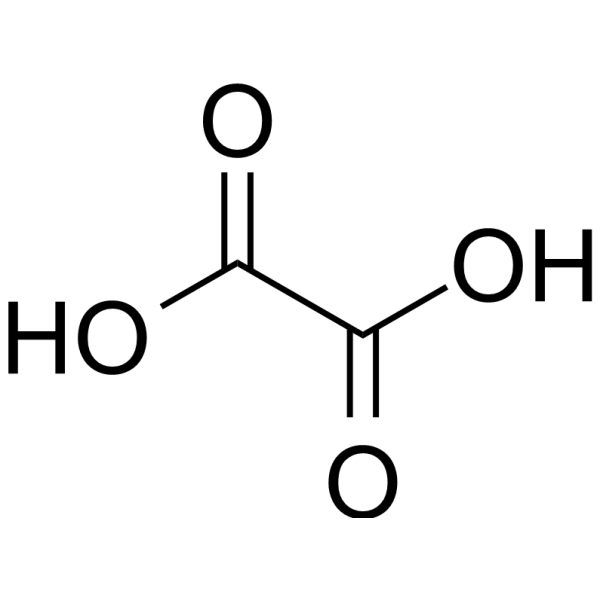
Oxalic Acid

别名: 草酸;修酸;无水草酸; 草酸; OXALIC ACID;2-(甲硫基)甲丙烯酰酸乙酯;草酸 标准品;草酸 ; 修酸 ;无水草酸;草酸(无水);草酸(无水) 标准品;草酸,AR;草酸JL011;草酸标准溶液;乙二酸;乙二酸;草酸;已二酸;皱叶酸模提取物;草酸,无水; 草酸试液(药典);Oxalic acid;二水合乙二酸;工业级;草酸 ;乙二酸; 水中草酸;草酸 溶液;当量草酸溶液;无水草酸标准品;草酸96%;草酸;乙二酸;草酸/乙二酸;华鲁草酸
目录号: V32834 纯度: ≥98%
草酸是在许多植物和蔬菜中发现的强酸,通常用作分析试剂和一般还原剂。
Oxalic Acid CAS号: 144-62-7
产品类别: New2
产品仅用于科学研究,不针对患者销售
规格 价格 库存 数量
500mg
1g
10g
50g
Other Sizes
点击了解更多
  • 与全球5000+客户建立关系
  • 覆盖全球主要大学、医院、科研院所、生物/制药公司等
  • 产品被大量CNS顶刊文章引用
InvivoChem产品被CNS等顶刊论文引用
产品描述
草酸是在许多植物和蔬菜中发现的强酸,通常用作分析试剂和一般还原剂。
生物活性&实验参考方法
靶点
Even in the absence of other fungal components, oxalic acid, a pathogenicity factor for sclerotinia sclerotiorum, suppresses the host plant's oxidative burst and directly limits the synthesis of H2O2 by soybean cells in response to OGA[1].
体外研究 (In Vitro)
即使在没有其他真菌成分的情况下,草酸(菌核病的致病因子)也会抑制宿主植物的氧化爆发,并直接限制大豆细胞响应 OGA 合成 H2O2[1]。
在悬浮培养的烟草和大豆细胞中,草酸 能抑制由多种激发子诱导的氧化爆发(H₂O₂产生),半数抑制浓度约为4至5 mM,约在6-7 mM时达到最大抑制。它能抑制由寡聚半乳糖醛酸、轮枝菌激发子、低渗胁迫、斑蝥素和harpin蛋白诱导的爆发,但对harpin诱导爆发的最大抑制仅能达到对照的约30%。[1]
来自野生型产草酸核盘菌菌株(含~12.4 mM草酸)的培养滤液几乎完全抑制了烟草细胞中OGA诱导的H₂O₂产生,而来自草酸缺陷型突变体(含~0.11 mM草酸)的滤液则无此作用。向突变体滤液中添加11 mM草酸可恢复其抑制能力。[1]
抑制效应在很大程度上与培养基酸化或钙离子螯合无关。草酸不抑制水母发光蛋白转化的烟草细胞中激发子刺激的胞质钙离子瞬变。[1]
草酸仅在激发子激活前或早期阶段添加时才抑制氧化爆发;一旦H₂O₂产生达到最大速率后添加则无效,表明其作用于组装/激活的氧化酶复合体催化步骤之前。[1]
体内研究 (In Vivo)
用草酸缺陷型、非致病性的核盘菌突变体接种烟草叶片,可诱导可测量的氧化爆发(通过氮蓝四唑染色可视化);而用野生型产草酸菌株接种则不能。产草酸菌株能成功定殖叶片组织。[1]
细胞实验
H₂O₂产生测定: 通过荧光法测量染料pyranine(激发波长405 nm,发射波长512 nm)的氧化淬灭来监测植物悬浮细胞(烟草或大豆)中H₂O₂的产生。将1.5 mL细胞置于荧光比色皿中,加入1 µg/mL pyranine。加入激发子(如5 µg/mL OGA)后,通过测量荧光淬灭的最大速率来估算H₂O₂的生物合成速率。测试化合物如 草酸(pH调整至5.7)在激发子刺激时或指定时间后加入。数据以同日对照细胞速率的百分比表示。[1]
胞质钙离子测量: 使用发光测量法监测水母发光蛋白转化的烟草细胞中胞质钙离子浓度的变化。细胞在激发子(如OGA)刺激前5分钟用测试化合物(如10 mM草酸或1.5 mM BAPTA-AM)处理。记录发光值并将其转化为相应的钙离子浓度。每次运行后,通过用氯化钙和去污剂裂解细胞来定量残留的功能性水母发光蛋白。[1]
药代性质 (ADME/PK)
Absorption, Distribution and Excretion
Tartaric acid and oxalic acid are excreted unchanged in the urine. This study investigated the absorption of 14C-labeled oxalic acid in Wistar rats, CD-1 mice, and NMRI mice. Animals were gavaged with an oxalic acid solution mixed with either water or 0.625 g/kg body weight of xylitol. Animals acclimated to xylitol and those previously unexposed to xylitol were used. Xylitol-acclimated mice showed enhanced absorption and urinary excretion of the label (oxalic acid) in both mouse strains, but this was not observed in rats. Previous studies have shown a higher incidence of bladder stones in mice fed high doses of xylitol, but this was not observed in rats. The results of this study provide a possible explanation for increased bladder stone formation due to urinary oxalate supersaturation.
Metabolism/Metabolites
In rabbits, the major end product of (14)C-ethylene glycol metabolism is carbon dioxide (60% of the dose within 3 days), and the metabolites excreted in urine are unchanged ethylene glycol (10%) and oxalic acid (0.1%). Glycol aldehydes, glycolic acid, and glyoxylic acid are intermediate products in the conversion to carbon dioxide.
In mammalian oxidative metabolism of ethylene glycol, there are species differences, which explain the differences in toxicity. Ethylene glycol is oxidized to carbon dioxide primarily via one pathway and to oxalic acid via a secondary pathway. The extent of oxalic acid formation depends on the dose level but has been shown to vary by species…
The initial steps of ethylene glycol oxidation to dialdehyde (glyoxal) and glyoxylic acid appear to be mediated by alcohol dehydrogenases; glyoxylic acid is decarboxylated to produce carbon dioxide and formic acid. Glyoxylic acid is also oxidized to oxalic acid.
Pyridoxine salts are complexes of glyoxylic acid and pyridoxine, in which pyridoxine is thought to promote the conversion of glyoxylic acid to glycine rather than oxalic acid in vivo. However, recent studies have shown that long-term use of pyridoxine may lead to excessive oxalate production and calcium oxalate kidney stones. There has been a previously unreported case of a patient developing both calcium oxalate kidney stones and chronic oxalate nephropathy with renal insufficiency after taking pyridoxine. Therefore, pyridoxine should be included in the list of chemicals that can cause chronic oxalate nephropathy. Cyclosporine A interferes with oxalate metabolism; therefore, it should be used with extreme caution in patients with primary hyperoxaluria. Oxalate is not metabolized but excreted in the urine.
毒性/毒理 (Toxicokinetics/TK)
Toxicity Summary
The affinity of divalent metal ions is sometimes manifested in their tendency to form insoluble precipitates. Therefore, in vivo, oxalic acid can also bind to metal ions such as Ca2+, Fe2+, and Mg2+, depositing corresponding oxalate crystals, thereby irritating the intestines and kidneys. (2) Thus, the toxicity of oxalic acid is due to renal failure caused by the precipitation of solid calcium oxalate (the main component of kidney stones). Oxalic acid can also cause joint pain due to the formation of similar precipitates in the joints. Ingestion of ethylene glycol produces oxalic acid metabolites, which can also lead to acute renal failure. Interactions Some thiol compounds have been shown to inhibit the process of glyoxylate generating CO2 and oxalate in rat liver homogenates and hepatocytes. Among them, cysteine has the most significant inhibitory effect, and this inhibitory effect is concentration-dependent. In rats with hyperoxaluria induced by the addition of ethylene glycol to drinking water, daily intraperitoneal injection of cysteine rapidly and significantly reduced urinary oxalate excretion, and this reduction persisted throughout the treatment period (28 days). During this period, urinary oxalate excretion in these glycol-treated rats decreased to control levels. This reduction is presumably due to the formation of the cysteine-glyoxylate adduct 2-carboxy-4-thiazolidinyl ester, which prevents further oxidation of glyoxylate to oxalate. Therefore, cysteine or similar thiol compounds may have potential as therapeutic agents for the prevention of kidney stones. This study aimed to investigate the effects of vitamin A, B1, and B6 deficiencies on oxalate metabolism in rats. Significant hyperoxaluria was observed in all three vitamin deficiencies (more prevalent in vitamin B6 deficiency than vitamin A, and more prevalent in vitamin A deficiency than vitamin B1). The activities of hepatic glycolate oxidase and glycolate dehydrogenase were significantly enhanced in vitamin A and vitamin B6-deficient rats. However, lactate dehydrogenase levels were not altered in these deficient rats compared to their respective paired-feeding controls. Four weeks of vitamin B1 deficiency only enhanced glycolate oxidase activity, while the levels of glycolate dehydrogenase and lactate dehydrogenase remained unchanged. Studies on intestinal oxalate absorption have shown that the bioavailability of oxalate in the intestines of rats deficient in vitamin A and vitamin B6 is increased. Therefore, the results indicate that both exogenous and endogenous oxalate play important roles in stone formation under various nutritional stress conditions. For patients undergoing regular hemodialysis, vitamin C supplementation may exacerbate hyperoxalemia. This study aimed to experimentally verify the validity of the above observations. Fifty rats with 5/6 nephrectomy were divided into two groups: 30 rats had free access to water containing 8 mg/ml vitamin C (100-160 mg/100 g/24 hr), while the remaining rats drank tap water without vitamin C. Serum creatinine gradually increased and hematocrit gradually decreased in both groups, but there was no significant difference between the two groups. Plasma vitamin C, oxalate, and urinary oxalate levels were higher in the vitamin C-treated group than in the untreated group. Histological examination revealed glomerular and interstitial fibrosis, round cell infiltration, and renal tubular cyst formation. Oxalate deposition in the renal tubules was only found in rats receiving vitamin C treatment and with severely impaired renal function. No oxalate deposition was observed in untreated rats with the same degree of renal impairment. These results confirm previous clinical findings that vitamin C supplementation exacerbates secondary oxalate deposition in chronic renal failure. Male Wistar rats fed a glycolic acid diet developed severe nephrocalcinosis and urinary calculi within 4 weeks. However, rats fed the same diet supplemented with citrate showed only mild or no nephrocalcinosis, and no urinary tract stones. The degree of nephrocalcinosis in the citrate group was intermediate between that in the citrate and glycolic acid groups, accompanied by a small number of urinary tract stones. During the experiment, urinary oxalate concentrations were significantly elevated, and both the citrate and glycolic acid groups had higher concentrations than the glycolic acid group. Urinary citrate concentrations in the citrate group were significantly higher than in other groups, while those in the citrate and glycolic acid groups were significantly lower than in other groups. Therefore, despite a slight increase in urinary oxalate, citrate can still inhibit nephrocalcinosis and stone formation by increasing urinary citrate levels and reducing urine saturation. For more complete data on interactions of oxalic acid (6 types in total), please visit the HSDB record page.
Non-human toxicity values
Dog oral LDLo 1000 mg/kg
参考文献

[1]. Oxalic acid, a pathogenicity factor for Sclerotinia sclerotiorum, suppresses the oxidative burst of the host plant. Plant Cell. 2000 Nov;12(11):2191-200.

其他信息
Oxalic acid is an odorless white solid that sinks to the bottom when dissolved in water. (US Coast Guard, 1999)
Oxalic acid is an α,ω-dicarboxylic acid formed by replacing ethane with carboxyl groups at the 1 and 2 positions. It is found in humans, plants, and algae as a metabolite. It is the conjugate acid of oxalate (1-) and oxalate.
Oxalic acid is a metabolite found or produced in Escherichia coli (K12 strain, MG1655 strain).
Oxalic acid has also been reported in tea trees, microgreen algae, and some other organisms with relevant data.
Oxalic acid is a dicarboxylic acid, a colorless crystalline solid that forms a colorless acidic solution when dissolved in water. Its acidity is much stronger than acetic acid. Due to its dicarboxylic acid structure, oxalic acid can also act as a chelating agent for metal cations. Approximately 25% of oxalic acid is used as a mordant in dyeing processes. It is also used in bleaching, particularly in pulpwood. Oxalic acid's main uses include cleaning (it's also found in baking powder) and bleaching, especially for removing rust. Oxalic acid is present in many common foods, with spinach being particularly high in oxalates. Beetroot leaves, parsley, chives, and cassava are also quite rich in oxalates. Rhubarb leaves contain about 0.5% oxalic acid, while Arisaema triphyllum contains calcium oxalate crystals. Bacteria naturally produce oxalates through the oxidation of carbohydrates. In the human body, at least two enzymatic pathways exist for the synthesis of oxalates. In one metabolic pathway, oxaloacetate (part of the citric acid cycle) is hydrolyzed by oxaloacetase to oxalic acid and acetic acid. Oxalic acid can also be produced by the dehydrogenation of glycolate, which is produced by the metabolism of ethylene glycol. Oxalic acid is a competitive inhibitor of lactate dehydrogenase (LDH). LDH catalyzes the conversion of pyruvate to lactate while oxidizing the coenzyme NADH to NAD+ and H+. Because cancer cells preferentially utilize aerobic glycolysis, inhibiting LDH has been shown to suppress tumor formation and growth. However, oxalic acid is not particularly safe and is considered a mild toxicant. Of particular note is its well-known uremic toxin. In humans, the lowest known lethal oral dose of oxalic acid is 600 mg/kg. Lethal oral doses of oxalic acid have been reported to be 15 to 30 grams. Oxalic acid toxicity is due to kidney failure caused by the precipitation of calcium oxalate (a major component of kidney stones). Oxalic acid can also cause joint pain because similar deposits can form in the joints. Oxalic acid is a strong dicarboxylic acid found in many plants and vegetables. It is produced in the body by the metabolism of glyoxylic acid or ascorbic acid. It is not metabolized but excreted in the urine. It is used as an analytical reagent and a general reducing agent. See also: Oxalic acid dihydrate (active part); Sodium oxalate (the active ingredient)... See more...
Mechanism of Action
From a metabolic perspective, its toxicity is thought to be due to oxalic acid's ability to fix calcium, thereby disrupting the calcium-potassium ratio in key tissues.
Drug Warning
High doses of ascorbic acid in dialysis patients can lead to oxalate deposition in tissues. /oxalate/
Oxalic acid is a key pathogenic factor secreted by Sclerotinia sclerotiorum. Its secretion is essential for successful infection. [1]
The mechanism by which oxalate enhances fungal virulence is thought to be the suppression of the host plant's oxidative burst (an early defense response). This effect is largely independent of simply lowering extracellular pH or chelating Ca²⁺. [1]
Some plants, such as wheat and barley, express oxalate oxidase, which degrades oxalate and produces H₂O₂, which may help resist oxalate-secreting pathogens. [1]
*注: 文献方法仅供参考, InvivoChem并未独立验证这些方法的准确性
化学信息 & 存储运输条件
分子式
C2H2O4
分子量
90.0349
精确质量
89.995
CAS号
144-62-7
PubChem CID
971
外观&性状
White to off-white solid powder
密度
1.8±0.1 g/cm3
沸点
365.1±25.0 °C at 760 mmHg
熔点
189.5 °C (dec.)(lit.)
闪点
188.8±19.7 °C
蒸汽压
0.0±1.7 mmHg at 25°C
折射率
1.480
LogP
-1.19
tPSA
74.6
氢键供体(HBD)数目
2
氢键受体(HBA)数目
4
可旋转键数目(RBC)
1
重原子数目
6
分子复杂度/Complexity
71.5
定义原子立体中心数目
0
InChi Key
MUBZPKHOEPUJKR-UHFFFAOYSA-N
InChi Code
InChI=1S/C2H2O4/c3-1(4)2(5)6/h(H,3,4)(H,5,6)
化学名
oxalic acid
HS Tariff Code
2934.99.9001
存储方式

Powder      -20°C    3 years

                     4°C     2 years

In solvent   -80°C    6 months

                  -20°C    1 month

运输条件
Room temperature (This product is stable at ambient temperature for a few days during ordinary shipping and time spent in Customs)
溶解度数据
溶解度 (体外实验)
DMSO : ~130 mg/mL (~1443.96 mM)
溶解度 (体内实验)
配方 1 中的溶解度: 3.25 mg/mL (36.10 mM) in 10% DMSO + 40% PEG300 + 5% Tween80 + 45% Saline (这些助溶剂从左到右依次添加,逐一添加), 悬浮液;超声助溶。
例如,若需制备1 mL的工作液,可将100 μL 32.5 mg/mL澄清DMSO储备液加入到400 μL PEG300中,混匀;然后向上述溶液中加入50 μL Tween-80,混匀;加入450 μL生理盐水定容至1 mL。
*生理盐水的制备:将 0.9 g 氯化钠溶解在 100 mL ddH₂O中,得到澄清溶液。

配方 2 中的溶解度: ≥ 3.25 mg/mL (36.10 mM) (饱和度未知) in 10% DMSO + 90% (20% SBE-β-CD in Saline) (这些助溶剂从左到右依次添加,逐一添加), 澄清溶液。
例如,若需制备1 mL的工作液,可将 100 μL 32.5 mg/mL 澄清 DMSO 储备液加入 900 μL 20% SBE-β-CD 生理盐水溶液中,混匀。
*20% SBE-β-CD 生理盐水溶液的制备(4°C,1 周):将 2 g SBE-β-CD 溶解于 10 mL 生理盐水中,得到澄清溶液。

View More

配方 3 中的溶解度: ≥ 3.25 mg/mL (36.10 mM) (饱和度未知) in 10% DMSO + 90% Corn Oil (这些助溶剂从左到右依次添加,逐一添加), 澄清溶液。
例如,若需制备1 mL的工作液,可将 100 μL 32.5 mg/mL 澄清 DMSO 储备液加入900 μL 玉米油中,混合均匀。


请根据您的实验动物和给药方式选择适当的溶解配方/方案:
1、请先配制澄清的储备液(如:用DMSO配置50 或 100 mg/mL母液(储备液));
2、取适量母液,按从左到右的顺序依次添加助溶剂,澄清后再加入下一助溶剂。以 下列配方为例说明 (注意此配方只用于说明,并不一定代表此产品 的实际溶解配方):
10% DMSO → 40% PEG300 → 5% Tween-80 → 45% ddH2O (或 saline);
假设最终工作液的体积为 1 mL, 浓度为5 mg/mL: 取 100 μL 50 mg/mL 的澄清 DMSO 储备液加到 400 μL PEG300 中,混合均匀/澄清;向上述体系中加入50 μL Tween-80,混合均匀/澄清;然后继续加入450 μL ddH2O (或 saline)定容至 1 mL;

3、溶剂前显示的百分比是指该溶剂在最终溶液/工作液中的体积所占比例;
4、 如产品在配制过程中出现沉淀/析出,可通过加热(≤50℃)或超声的方式助溶;
5、为保证最佳实验结果,工作液请现配现用!
6、如不确定怎么将母液配置成体内动物实验的工作液,请查看说明书或联系我们;
7、 以上所有助溶剂都可在 Invivochem.cn网站购买。
制备储备液 1 mg 5 mg 10 mg
1 mM 11.1074 mL 55.5370 mL 111.0741 mL
5 mM 2.2215 mL 11.1074 mL 22.2148 mL
10 mM 1.1107 mL 5.5537 mL 11.1074 mL

1、根据实验需要选择合适的溶剂配制储备液 (母液):对于大多数产品,InvivoChem推荐用DMSO配置母液 (比如:5、10、20mM或者10、20、50 mg/mL浓度),个别水溶性高的产品可直接溶于水。产品在DMSO 、水或其他溶剂中的具体溶解度详见上”溶解度 (体外)”部分;

2、如果您找不到您想要的溶解度信息,或者很难将产品溶解在溶液中,请联系我们;

3、建议使用下列计算器进行相关计算(摩尔浓度计算器、稀释计算器、分子量计算器、重组计算器等);

4、母液配好之后,将其分装到常规用量,并储存在-20°C或-80°C,尽量减少反复冻融循环。

计算器

摩尔浓度计算器可计算特定溶液所需的质量、体积/浓度,具体如下:

  • 计算制备已知体积和浓度的溶液所需的化合物的质量
  • 计算将已知质量的化合物溶解到所需浓度所需的溶液体积
  • 计算特定体积中已知质量的化合物产生的溶液的浓度
使用摩尔浓度计算器计算摩尔浓度的示例如下所示:
假如化合物的分子量为350.26 g/mol,在5mL DMSO中制备10mM储备液所需的化合物的质量是多少?
  • 在分子量(MW)框中输入350.26
  • 在“浓度”框中输入10,然后选择正确的单位(mM)
  • 在“体积”框中输入5,然后选择正确的单位(mL)
  • 单击“计算”按钮
  • 答案17.513 mg出现在“质量”框中。以类似的方式,您可以计算体积和浓度。

稀释计算器可计算如何稀释已知浓度的储备液。例如,可以输入C1、C2和V2来计算V1,具体如下:

制备25毫升25μM溶液需要多少体积的10 mM储备溶液?
使用方程式C1V1=C2V2,其中C1=10mM,C2=25μM,V2=25 ml,V1未知:
  • 在C1框中输入10,然后选择正确的单位(mM)
  • 在C2框中输入25,然后选择正确的单位(μM)
  • 在V2框中输入25,然后选择正确的单位(mL)
  • 单击“计算”按钮
  • 答案62.5μL(0.1 ml)出现在V1框中
g/mol

分子量计算器可计算化合物的分子量 (摩尔质量)和元素组成,具体如下:

注:化学分子式大小写敏感:C12H18N3O4  c12h18n3o4
计算化合物摩尔质量(分子量)的说明:
  • 要计算化合物的分子量 (摩尔质量),请输入化学/分子式,然后单击“计算”按钮。
分子质量、分子量、摩尔质量和摩尔量的定义:
  • 分子质量(或分子量)是一种物质的一个分子的质量,用统一的原子质量单位(u)表示。(1u等于碳-12中一个原子质量的1/12)
  • 摩尔质量(摩尔重量)是一摩尔物质的质量,以g/mol表示。
/

配液计算器可计算将特定质量的产品配成特定浓度所需的溶剂体积 (配液体积)

  • 输入试剂的质量、所需的配液浓度以及正确的单位
  • 单击“计算”按钮
  • 答案显示在体积框中
动物体内实验配方计算器(澄清溶液)
第一步:请输入基本实验信息(考虑到实验过程中的损耗,建议多配一只动物的药量)
第二步:请输入动物体内配方组成(配方适用于不溶/难溶于水的化合物),不同的产品和批次配方组成不同,如对配方有疑问,可先联系我们提供正确的体内实验配方。此外,请注意这只是一个配方计算器,而不是特定产品的确切配方。
+
+
+

计算结果:

工作液浓度 mg/mL;

DMSO母液配制方法 mg 药物溶于 μL DMSO溶液(母液浓度 mg/mL)。如该浓度超过该批次药物DMSO溶解度,请首先与我们联系。

体内配方配制方法μL DMSO母液,加入 μL PEG300,混匀澄清后加入μL Tween 80,混匀澄清后加入 μL ddH2O,混匀澄清。

(1) 请确保溶液澄清之后,再加入下一种溶剂 (助溶剂) 。可利用涡旋、超声或水浴加热等方法助溶;
            (2) 一定要按顺序加入溶剂 (助溶剂) 。

相关产品
联系我们