| 规格 | 价格 | 库存 | 数量 |
|---|---|---|---|
| 100mg |
|
||
| 250mg |
|
||
| 500mg |
|
||
| Other Sizes |
|
| 靶点 |
Oxyquinoline does not have a single defined molecular target. It is a monoprotic bidentate chelating agent that binds metal ions. By chelating metal ions, Oxyquinoline can disrupt metal-dependent enzymatic processes in microorganisms, contributing to its antiseptic, disinfectant, and pesticide properties. It exhibits mild fungistatic, bacteriostatic, anthelmintic, and amebicidal action. The compound's ability to chelate metals also underlies its use as a reagent and as a carrier for radio-indium for diagnostic purposes. Oxyquinoline is a bacteriostatic and fungistatic agent.
|
|---|---|
| 体外研究 (In Vitro) |
在MRC-5细胞中,8-羟基喹啉(8HQ)(化合物1)表现出细胞毒性,IC50值为6.27 μM[1]。当与10.0 μM的CuCl2混合1小时后,8-羟基喹啉(8-OHQ)(化合物1)与铜形成复合物,促进铜进入人乳腺癌导管原位癌(DCIS)细胞[2]。当8-羟基喹啉与0–20.0 μM的CuCl2混合时,它与铜结合并生成一种具有酪氨酸激酶抑制剂样活性的复合物(1–5 μM,2–12小时)[2],导致DCIS细胞发生时间和剂量依赖性的细胞死亡[2]。在 Raw 264.7 细胞中,羟基喹啉(0-100 μM,30 分钟)通过激活 NF-κB 并降低 C/EBPb DNA 结合活性,抑制 NO 生成和 iNOS 表达,从而抑制调控因子[3]。
羟基喹啉在体外表现出抗菌活性。它具有轻微的抑菌、抑菌、驱虫和杀阿米巴作用。其作用机制主要归因于其金属螯合特性,该特性可以破坏微生物中金属依赖性酶促过程。羟基喹啉可用作防腐剂和消毒剂。其醇溶液用于液体绷带中。该化合物是一种抑菌剂和抑真菌剂。详细的定量活性数据(例如,MIC 值)可在文献中找到。 |
| 体内研究 (In Vivo) |
在CD1小鼠中,单次腹腔注射8-羟基喹啉(HOQ),剂量为25-100 mg/kg,可显著增加微核多染性红细胞(MPCE)的数量[4]。8-羟基喹啉(8-HQ)(0.3%,Skin Appearance,每周4次)可引起毛发生长和脱落,且生长模式随时间推移而改变[5]。
羟基喹啉已在体内用作防腐剂和消毒剂。它具有轻微的抑菌、抑菌、驱虫和杀阿米巴作用。其卤代衍生物可用作局部抗感染剂和口服抗阿米巴药。羟基喹啉还可用作放射性铟的载体,用于诊断目的。该化合物的防腐特性已应用于各种临床和兽医领域。羟喹啉仅供研究使用,不可用于人类治疗。 |
| 酶活实验 |
羟喹啉目前尚无已建立的受体结合或酶抑制试验方案。其抗菌活性通过标准抗菌药物敏感性试验方法(肉汤微量稀释法或琼脂扩散法)进行评估。其金属螯合性能通过分光光度法或电化学法测定其与金属离子的结合能力进行评估。物理性质:分子量 145.16 g/mol;分子式 C9H7NO;IUPAC 名称:喹啉-8-醇;外观:白色至乳白色晶体或结晶性粉末;熔点:75-76°C;沸点:267°C;溶解性:不溶于水或乙醚;易溶于乙醇、丙酮、氯仿、苯和水溶液中的矿物酸。
|
| 细胞实验 |
细胞活力检测[2]
细胞类型: DCIS 细胞 测试浓度: 1、2.5、5、10、20 μM 孵育时间: 1 或 8 小时 实验结果: 在一定浓度下,8-OHQ-Cu 和 CQ-Cu(而非其类似物和混合物)能够以浓度和时间依赖的方式诱导癌细胞死亡。 蛋白质印迹分析[2] 细胞类型: DCIS 细胞 测试浓度: 1、2.5、5 μM 孵育时间: 0、2、4、8、12 小时 实验结果: CuCl2 混合物以浓度和时间依赖的方式抑制 CT 样活性。CuCl2 混合物以时间依赖的方式降低蛋白酶体活性,并增加泛素化蛋白和 Bax 的积累。 RT-PCR[3] 细胞类型:脂多糖刺激的原始264.7细胞 测试浓度:25、50、75、100 μM 孵育时间:30分钟 实验结果:抑制LPS诱导的NO和iNOS表达。 抑制iNOS转录。不影响MAPK的磷酸化。抑制NF-κB结合活性和C/EBPβ结合活性。 采用标准微生物学方法在细菌和真菌培养物中评估细胞抗菌活性。在含有适宜培养基的96孔板中进行肉汤微量稀释试验。将微生物培养至对数生长期,并稀释至标准接种量。将羟喹进行系列稀释后加入孔中。将培养板置于适宜温度下孵育24-48小时。最小抑菌浓度(MIC)值可通过目测或使用酶标仪测定。每个实验均包含质控菌株和抗菌药物标准品。 |
| 动物实验 |
动物/疾病模型: CD1 小鼠[4]
剂量: 25、50、100 mg/kg 给药途径: 腹腔注射 (ip) 实验结果: 所有测试剂量均导致 24 小时采样期内微核多染性红细胞 (MPCE) 数量显著增加,且呈剂量依赖性。 动物/疾病模型: C57BL 小鼠 [5] 剂量: 0.3% 给药,每周 4 次:皮肤给药 实验结果: 可使脱色毛发以随时间变化的方式生长。频繁使用可使年轻成年C57BL雌性小鼠的毛发几乎完全脱色,而单次使用则仅导致部分毛发脱色。 在动物感染模型中评估羟喹啉的体内疗效。该化合物以临床前研究确定的剂量局部或口服给药。通过测量感染组织中的微生物负荷来评估感染严重程度。同时监测临床症状。每组样本量通常为6-10只动物。羟喹啉的卤代衍生物已在临床上用作局部抗感染剂和口服抗阿米巴药。 |
| 药代性质 (ADME/PK) |
吸收、分布和排泄
羟基喹啉主要经尿液排泄,少量经胆汁排泄。雄性东龙品系大鼠静脉注射后,8-羟基喹啉代谢为葡萄糖醛酸苷和硫酸盐结合物。尿液中排泄的8-羟基喹啉葡萄糖醛酸苷多于8-羟基喹啉硫酸盐结合物。只有葡萄糖醛酸苷结合物经胆汁排泄。雄性东龙品系大鼠静脉注射后,8-羟基喹啉代谢为葡萄糖醛酸苷和硫酸盐结合物。葡萄糖醛酸苷经胆汁和尿液排泄,而硫酸盐仅经尿液排泄。仅有少量未代谢形式排出体外。代谢物/代谢产物:在尿液中,60%的剂量以葡萄糖醛酸苷结合物的形式排出,23%以硫酸盐结合物的形式排出。在胆汁中,9%的总剂量以葡萄糖醛酸苷结合物的形式存在。在雄性东龙品系大鼠中,静脉注射8-羟基喹啉可使其代谢为葡萄糖醛酸苷和硫酸盐结合物。仅有少量未代谢形式排出。 分子量:145.16 g/mol。分子式:C9H7NO。CAS号:148-24-3。IUPAC名称:喹啉-8-醇。同义词:8-羟基喹啉、8-喹啉醇、奥辛、奥辛、8-氧代喹啉、生物喹啉、苯吡啶、喹诺酚。外观:白色至乳白色结晶或结晶性粉末。熔点:75-76℃。沸点:267℃。溶解性:不溶于水或乙醚;易溶于乙醇、丙酮、氯仿、苯和无机酸水溶液。纯度:≥99.5%。羟喹啉是一种具有抗菌和消毒性能的一质子双齿螯合剂。 |
| 毒性/毒理 (Toxicokinetics/TK) |
毒性数据
LC50(大鼠)> 1,210 mg/m³/6h 非人类毒性值 大鼠口服 LD50:1200 mg/kg 小鼠腹腔注射 LD50:48 mg/kg 大鼠腹腔注射 LD50:50 mg/kg 小鼠皮下注射 LD50:83,600 μg/kg 有关 8-羟基喹啉(共 6 种)的更完整的非人类毒性数据,请访问 HSDB 记录页面。 羟基喹啉已进行毒性评估。它是一种抑菌剂和抑真菌剂。作为一种防腐剂和消毒剂,在适当浓度下,通常认为局部使用是安全的。然而,摄入或长期接触可能导致全身毒性。该化合物仅供研究使用,不可用于人体治疗。操作化学品时应遵循标准安全预防措施。 |
| 参考文献 |
[1]. Lawung R, et.al. Repositioning of 8-hydroxyquinoline derivatives as a new promising candidate for combating multidrug resistant Neisseria gonorrhoeae. EXCLI J. 2018 Aug 23;17:840-846.
[2]. 8-hydroxyquinoline and clioquinol requires their capabilities to bind copper and transport copper into cells. J Biol Inorg Chem. 2010 Feb;15(2):259-69. [3]. Zhai S, et.al. Tumor cellular proteasome inhibition and growth suppression by [4]. Hamoud MA, et.al. Effects of quinoline and 8-hydroxyquinoline on mouse bone marrow erythrocytes as measured by the micronucleus assay. Teratog Carcinog Mutagen. 1989;9(2):111-8. [5]. Searle CE. The selective depigmenting action of 8-hydroxyquinoline on hair growth in the mouse. Br J Dermatol. 1972 May;86(5):472-80. |
| 其他信息 |
8-羟基喹啉是一种白色至类白色或淡黄色结晶性粉末,具有酚类气味。(NTP, 1992)
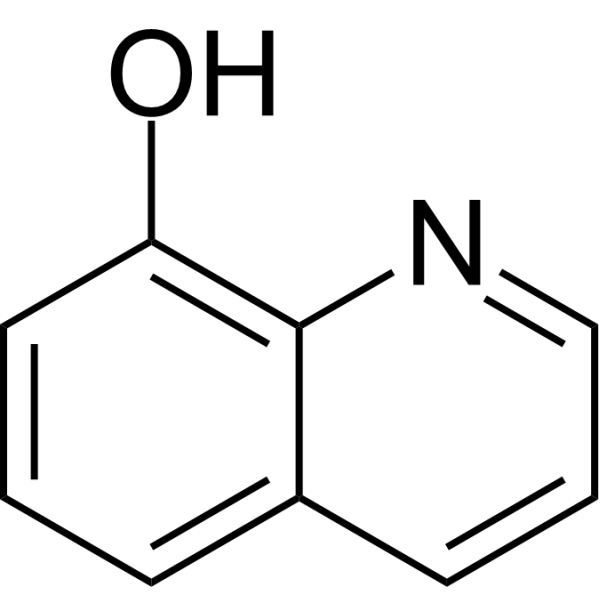
喹啉-8-醇是一种单羟基喹啉,其8位被羟基取代。它具有杀菌活性,可用于防治葡萄藤和番茄上的灰霉病。它还可用作抗菌剂、铁螯合剂、防腐剂和抗真菌杀虫剂。它是喹啉氢的衍生物。 羟基喹啉是一种杂环酚,是喹啉的衍生物,具有防腐、消毒和杀虫活性。它用作过氧化氢的稳定剂,有时也添加到化妆品中。 据报道,在丝状丝菌(Cortinarius subtortus)和柄状葱(Allium stipitatum)中检测到了8-羟基喹啉,并有相关数据可供参考。 它是一种防腐剂,具有轻微的抗菌、抑菌、杀虫和抗阿米巴作用。它还可以用作试剂和金属螯合剂,以及用于诊断的放射性铟载体。此外,其卤代衍生物可用作局部抗感染剂和口服抗阿米巴药物。另见:乙酸;羟基喹啉(成分)。药物适应症:羟基喹啉用作多种非处方药中的杀菌成分。这些产品旨在抑制阴道内异常的微生物生长并恢复其自然的pH平衡。作用机制:羟基喹啉发挥杀菌作用的机制尚不明确。治疗用途:抗菌和抗真菌化合物;主要用于治疗轻微烧伤和痔疮。硫酸羟基喹啉……用于治疗足癣、阴道炎,并可用作漱口水、洗眼液、鼻腔冲洗液和痔疮制剂……/硫酸羟基喹啉/ /非处方药/ 羟基喹啉是四种推荐用于治疗婴儿尿布疹和痱子相关真菌感染的抗真菌药物之一。/羟基喹啉/ 8-羟基喹啉硫酸盐可抑制体外人工结石的形成以及体内大鼠结石的形成。在大鼠中,通过棉签或口腔滴注给药可预防牙垢形成。在犬中,与安慰剂相比,牙菌斑形成抑制率达33%至98%。此外,与安慰剂组仅为 2% 至 22% 相比,8-羟基喹啉组的现有牙菌斑清除率达到 25% 至 58%。有关 8-羟基喹啉(七种化合物之一)治疗用途的更完整数据,请访问 HSDB 记录页面。 药效学羟基喹啉是一种杀菌剂,可杀灭细菌和真菌。 羟基喹啉也称为 8-羟基喹啉、8-喹啉醇、氧喹啉、氧辛、8-氧喹啉、生物喹啉、苯吡啶和喹诺酚。其 IUPAC 名称为喹啉-8-醇。羟基喹啉是一种单质子双齿螯合剂,具有防腐、消毒和杀虫特性。它具有轻微的抑菌、抑菌、驱虫和杀阿米巴作用。它可用作试剂和金属螯合剂,以及放射性铟的载体,用于诊断目的。其卤代衍生物可用作局部抗感染剂和口服抗阿米巴药。氧喹啉还用于制备三(8-羟基喹啉)铝,用于有机发光二极管(OLED)应用。目前尚未有关于该化合物的临床试验报道。氧喹啉仅供研究使用。 |
| 分子式 |
C9H7O
|
|---|---|
| 分子量 |
145.16
|
| 精确质量 |
145.052
|
| CAS号 |
148-24-3
|
| 相关CAS号 |
8-Hydroxyquinoline hemisulfate;134-31-6
|
| PubChem CID |
1923
|
| 外观&性状 |
White crystals or white crystalline powder
|
| 密度 |
1.3±0.1 g/cm3
|
| 沸点 |
267.0±0.0 °C at 760 mmHg
|
| 熔点 |
70-73 °C(lit.)
|
| 闪点 |
143.1±20.4 °C
|
| 蒸汽压 |
0.0±0.5 mmHg at 25°C
|
| 折射率 |
1.691
|
| LogP |
1.87
|
| tPSA |
33.12
|
| 氢键供体(HBD)数目 |
1
|
| 氢键受体(HBA)数目 |
2
|
| 可旋转键数目(RBC) |
0
|
| 重原子数目 |
11
|
| 分子复杂度/Complexity |
138
|
| 定义原子立体中心数目 |
0
|
| SMILES |
O([H])C1=C([H])C([H])=C([H])C2C([H])=C([H])C([H])=NC=21
|
| InChi Key |
MCJGNVYPOGVAJF-UHFFFAOYSA-N
|
| InChi Code |
InChI=1S/C9H7NO/c11-8-5-1-3-7-4-2-6-10-9(7)8/h1-6,11H
|
| 化学名 |
quinolin-8-ol
|
| 别名 |
NSC-2039; NSC 2039; Oxyquinoline
|
| HS Tariff Code |
2934.99.9001
|
| 存储方式 |
Powder -20°C 3 years 4°C 2 years In solvent -80°C 6 months -20°C 1 month |
| 运输条件 |
Room temperature (This product is stable at ambient temperature for a few days during ordinary shipping and time spent in Customs)
|
| 溶解度 (体外实验) |
DMSO : ~50 mg/mL (~344.45 mM)
|
|---|---|
| 溶解度 (体内实验) |
配方 1 中的溶解度: ≥ 2.5 mg/mL (17.22 mM) (饱和度未知) in 10% DMSO + 40% PEG300 + 5% Tween80 + 45% Saline (这些助溶剂从左到右依次添加,逐一添加), 澄清溶液。
例如,若需制备1 mL的工作液,可将100 μL 25.0 mg/mL澄清DMSO储备液加入到400 μL PEG300中,混匀;然后向上述溶液中加入50 μL Tween-80,混匀;加入450 μL生理盐水定容至1 mL。 *生理盐水的制备:将 0.9 g 氯化钠溶解在 100 mL ddH₂O中,得到澄清溶液。 配方 2 中的溶解度: ≥ 2.5 mg/mL (17.22 mM) (饱和度未知) in 10% DMSO + 90% (20% SBE-β-CD in Saline) (这些助溶剂从左到右依次添加,逐一添加), 澄清溶液。 例如,若需制备1 mL的工作液,可将 100 μL 25.0 mg/mL澄清DMSO储备液加入900 μL 20% SBE-β-CD生理盐水溶液中,混匀。 *20% SBE-β-CD 生理盐水溶液的制备(4°C,1 周):将 2 g SBE-β-CD 溶解于 10 mL 生理盐水中,得到澄清溶液。 View More
配方 3 中的溶解度: ≥ 2.5 mg/mL (17.22 mM) (饱和度未知) in 10% DMSO + 90% Corn Oil (这些助溶剂从左到右依次添加,逐一添加), 澄清溶液。 1、请先配制澄清的储备液(如:用DMSO配置50 或 100 mg/mL母液(储备液)); 2、取适量母液,按从左到右的顺序依次添加助溶剂,澄清后再加入下一助溶剂。以 下列配方为例说明 (注意此配方只用于说明,并不一定代表此产品 的实际溶解配方): 10% DMSO → 40% PEG300 → 5% Tween-80 → 45% ddH2O (或 saline); 假设最终工作液的体积为 1 mL, 浓度为5 mg/mL: 取 100 μL 50 mg/mL 的澄清 DMSO 储备液加到 400 μL PEG300 中,混合均匀/澄清;向上述体系中加入50 μL Tween-80,混合均匀/澄清;然后继续加入450 μL ddH2O (或 saline)定容至 1 mL; 3、溶剂前显示的百分比是指该溶剂在最终溶液/工作液中的体积所占比例; 4、 如产品在配制过程中出现沉淀/析出,可通过加热(≤50℃)或超声的方式助溶; 5、为保证最佳实验结果,工作液请现配现用! 6、如不确定怎么将母液配置成体内动物实验的工作液,请查看说明书或联系我们; 7、 以上所有助溶剂都可在 Invivochem.cn网站购买。 |
| 制备储备液 | 1 mg | 5 mg | 10 mg | |
| 1 mM | 6.8890 mL | 34.4448 mL | 68.8895 mL | |
| 5 mM | 1.3778 mL | 6.8890 mL | 13.7779 mL | |
| 10 mM | 0.6889 mL | 3.4445 mL | 6.8890 mL |
1、根据实验需要选择合适的溶剂配制储备液 (母液):对于大多数产品,InvivoChem推荐用DMSO配置母液 (比如:5、10、20mM或者10、20、50 mg/mL浓度),个别水溶性高的产品可直接溶于水。产品在DMSO 、水或其他溶剂中的具体溶解度详见上”溶解度 (体外)”部分;
2、如果您找不到您想要的溶解度信息,或者很难将产品溶解在溶液中,请联系我们;
3、建议使用下列计算器进行相关计算(摩尔浓度计算器、稀释计算器、分子量计算器、重组计算器等);
4、母液配好之后,将其分装到常规用量,并储存在-20°C或-80°C,尽量减少反复冻融循环。
计算结果:
工作液浓度: mg/mL;
DMSO母液配制方法: mg 药物溶于 μL DMSO溶液(母液浓度 mg/mL)。如该浓度超过该批次药物DMSO溶解度,请首先与我们联系。
体内配方配制方法:取 μL DMSO母液,加入 μL PEG300,混匀澄清后加入μL Tween 80,混匀澄清后加入 μL ddH2O,混匀澄清。
(1) 请确保溶液澄清之后,再加入下一种溶剂 (助溶剂) 。可利用涡旋、超声或水浴加热等方法助溶;
(2) 一定要按顺序加入溶剂 (助溶剂) 。
InvivoChem的所有产品仅用于作科学研究,不面向患者销售
Copyright 2020 InvivoChem LLC | All Rights Reserved 粤ICP备20063088号-1


 粤公网安备 44011102003439号
 463611831
