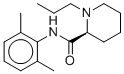
罗哌卡因是一种有效的钠通道阻滞剂。罗哌卡因通过可逆地抑制钠离子流入而引起神经纤维冲动传导阻滞。 Ropivacaine 也是 K2P(双孔钾通道)TREK-1 的抑制剂(阻断剂/拮抗剂),对 COS-7 细胞膜的 IC50 为 402.7 μM。罗哌卡因用于缓解神经性疼痛。
1、根据实验需要选择合适的溶剂配制储备液 (母液):对于大多数产品,InvivoChem推荐用DMSO配置母液 (比如:5、10、20mM或者10、20、50 mg/mL浓度),个别水溶性高的产品可直接溶于水。产品在DMSO 、水或其他溶剂中的具体溶解度详见上”溶解度 (体外)”部分;
2、如果您找不到您想要的溶解度信息,或者很难将产品溶解在溶液中,请联系我们;
3、建议使用下列计算器进行相关计算(摩尔浓度计算器、稀释计算器、分子量计算器、重组计算器等);
4、母液配好之后,将其分装到常规用量,并储存在-20°C或-80°C,尽量减少反复冻融循环。
Continuous Infusions Vs Scheduled Bolus Infusions
CTID: NCT03230565
Phase: Phase 4 Status: Recruiting
Date: 2024-12-02
Exploring the Minimum Effective Concentration and Volume of Ropivacaine for Sacral Plexus Anesthesia
CTID: NCT06711679
Phase: Phase 4 Status: Enrolling by invitation
Date: 2024-12-02
Postsurgical Analgesia After Hernia Repair
CTID: NCT06709612
Phase: Phase 2 Status: Not yet recruiting
Date: 2024-11-29
Effect of Liposome Bupivacaine on Postoperative Pain After Extraoperative Surgery
CTID: NCT06701539
Phase: N/A Status: Not yet recruiting
Date: 2024-11-22
QLESP Block Versus Periarticular Infiltration for Postoperative Analgesia in Hip Surgery
CTID: NCT06688136
Phase: N/A Status: Recruiting
Date: 2024-11-20
View More
Dose-Escalation, Single Dose Study to Evaluate the Safety, Tolerability, Pharmacokinetics and Pharmacodynamics of GB-6002 Local Infiltration in Healthy Male Adults
CTID: NCT06095973
Phase: Phase 1 Status: Completed
Date: 2024-11-18
Pain Management of ACL Reconstruction
CTID: NCT03365908
Phase: N/A Status: Enrolling by invitation
Date: 2024-11-12
Erector Spinae Plane Block for Uncomplicated Renal Colic
CTID: NCT05625802
Phase: Phase 2 Status: Recruiting
Date: 2024-11-05
A Study on TLC590 for Managing Postsurgical Pain
CTID: NCT06574269
Phase: Phase 2 Status: Recruiting
Date: 2024-11-04
Testing Regional anesthesia Techniques For Up And Early Discharge Following Knee arthroplasty - a Feasibility Study
CTID: NCT06054750
Phase: Phase 4 Status: Not yet recruiting
Date: 2024-10-22
Dexmedetomidine Ropivacaine Versus Plain Ropivacaine in Bilateral Pectoralis Nerve (PECS) Block
CTID: NCT06636578
Phase: Phase 4 Status: Recruiting
Date: 2024-10-15
Evaluation of Trigeminal Nerve Blockade
CTID: NCT03632044
Phase: Phase 4 Status: Enrolling by invitation
Date: 2024-10-15
Development of Variable Volume Automated Mandatory Boluses for Patient-controlled Epidural Analgesia During Labour
CTID: NCT04011150
Phase: Phase 3 Status: Recruiting
Date: 2024-10-09
Comparison of Regimens MPIB, CIPCEA, PCEA
CTID: NCT02278601
Phase: Phase 3 Status: Active, not recruiting
Date: 2024-10-09
Dexamethasone with Ropivacaine for PENG Block in Total Hip Arthroplasty
CTID: NCT06470334
Phase: Phase 4 Status: Not yet recruiting
Date: 2024-09-26
Dexamethasone for IPACK Block with ACB in Total Knee Arthroplasty
CTID: NCT06470204
Phase: Phase 4 Status: Recruiting
Date: 2024-09-26
A Study to Evaluate Analgesic Efficacy and Safety of PRF-110 for Post-surgical Pain
CTID: NCT05773846
Phase: Phase 3 Status: Completed
Date: 2024-09-19
Effect of Ultrasound-guided Erector Spinae Plane Block on Postoperative Pain and Sleep Quality of Infants With Congenital Pulmonary Cystic Disease After Thoracoscopic Surgery
CTID: NCT06498583
Phase: N/A Status: Recruiting
Date: 2024-09-19
Intrathecal Morphine vs. Intrathecal Morphine and Regional Anesthesia After Cesarean Section.
CTID: NCT06114121
Phase: Phase 4 Status: Withdrawn
Date: 2024-09-19
Analgesic Efficacy of an Opioid-free Postoperative Pain Management Strategy Versus a Conventional Opioid-based Strategy Following Video-assisted Thoracoscopic Lobectomy
CTID: NCT06570538
PhaseEarly Phase 1 Status: Not yet recruiting
Date: 2024-08-26
Magnesium as Adjuvant for Sciatic Block
CTID: NCT02198547
Phase: N/A Status: Completed
Date: 2024-08-26
Bupivacaine Liposome Plus Bupivacaine or Ropivacaine for Pericapsular Nerve Group Block in Hip Arthroplasty (PENG)
CTID: NCT06565910
Phase: Phase 4 Status: Not yet recruiting
Date: 2024-08-22
Investigating the Effect of Pericapsular Nerve Group (PENG) Block on Postoperative Pain After Peri-acetabular Osteotomy
CTID: NCT06406010
Phase: Phase 4 Status: Recruiting
Date: 2024-08-20
The Analgesic Efficacy of Pericapsular Nerve Group (PENG) Block in Patients Undergoing Primary Total Hip Arthoplasty:
CTID: NCT06557044
Phase: N/A Status: Recruiting
Date: 2024-08-16
Erector Spinae Plane Block for Cervical Spine Surgery
CTID: NCT06393530
Phase: Phase 4 Status: Recruiting
Date: 2024-08-09
INTERCOSTAL NERVE BLOCK: Efficacy of CINB for Patients With Multiple Rib Fractures
CTID: NCT05642026
Phase: Phase 4 Status: Recruiting
Date: 2024-08-06
Is PECS Block Equivalent to Paravertebral Block in Preventing Postoperative Pain After Breast Surgery?
CTID: NCT02645474
Phase: Phase 4 Status: Completed
Date: 2024-08-06
Dexmedetomidine Wound Infiltration in Cesarean Section
CTID: NCT03382938
Phase: N/A Status: Recruiting
Date: 2024-07-31
Analgesic Efficacy of Ropivacaine Alone or in Combination With Adjuvants on Post-operative Analgesia Following Video-Assisted Thoracoscopic Surgery.
CTID: NCT03809442
Phase: Phase 4 Status: Completed
Date: 2024-07-31
Application of Celiac Plexus Block in Postoperative Analgesia of Upper Abdominal Surgery
CTID: NCT05205720
Phase: Phase 4 Status: Completed
Date: 2024-07-29
The Effects of Various Concentrations of Ropivacaine on the Onset and Duration of Ankle Blocks
CTID: NCT06185608
Phase: N/A Status: Not yet recruiting
Date: 2024-07-25
The Prevention of Hypotension After Epidural Analgesia After Major Surgery
CTID: NCT02722746
Phase: N/A Status: Completed
Date: 2024-07-25
Comparative Study Between Levobupivacaine and Ropivacaine in the Hip Fractures of the Elderly
CTID: NCT04773301
Phase: Phase 4 Status: Completed
Date: 2024-07-19
Comparison of Intraoperative Intravenous Lidocaine Infusion and Transversus Abdominis Plane (TAP) Block for Post-operative Analgesia Following Laproscopic Cholecystectomy
CTID: NCT05231941
Phase: N/A Status: Completed
Date: 2024-06-26
Pre vs Post Block in Total Knee Arthroplasty (TKA)
CTID: NCT05974501
Phase: Phase 4 Status: Completed
Date: 2024-06-21
Pain Injection Versus Epidural Anesthesia for Hip Surgery in Pediatric Patients With Cerebral Palsy
CTID: NCT06189781
Phase: Phase 4 Status: Recruiting
Date: 2024-06-11
Peri-operative Use of a Pain Injection in Pediatric Patients With Cerebral Palsy
CTID: NCT04074265
Phase: Phase 4 Status: Completed
Date: 2024-06-10
The Impact of a Preoperative Nerve Block on the Consumption of Sevoflurane in Total Shoulder Arthroplasty
CTID: NCT04020601
Phase: Phase 2/Phase 3 Status: Terminated
Date: 2024-06-06
The Impact of a Preoperative Nerve Block in Foot and Ankle Surgery on the Consumption of Sevoflurane
CTID: NCT04022057
Phase: Phase 2/Phase 3 Status: Withdrawn
Date: 2024-06-06
Septorhinoplasty Post-operative Pain Control With SPG Nerve Block
CTID: NCT05667324
Phase: Phase 4 Status: Recruiting
Date: 2024-05-30
Pericapsular Nerve Group Block: An Imaging Study for Determination of the Spread of the Injectate Using 3-D CT Scan
CTID: NCT06062134
Phase: N/A Status: Completed
Date: 2024-05-29
Liposomal Bupivacaine vs Ropivacaine for TAPBs
CTID: NCT06430112
Phase: Phase 3 Status: Recruiting
Date: 2024-05-28
Evaluation of the Value of Perianal Infiltration During Thermodestruction of Haemorrhoidal Disease by Radiofrequency
CTID: NCT05519189
Phase: Phase 4 Status: Recruiting
Date: 2024-05-24
Volume Effect in Peng Block for Total Hip Replacement
CTID: NCT06427551
Phase: Status: Completed
Date: 2024-05-24
Ropivacaine Plasma Concentrations and Pharmacokinetics Following Erector Spinae Plane Block in the Pediatric Population
CTID: NCT04298099
Phase: Phase 4 Status: Completed
Date: 2024-05-17
Liposomal Bupivacaine in Rotator Cuff Repair
CTID: NCT03738696
Phase: Phase 4 Status: Completed
Date: 2024-05-16
Regional Blocks for Lateral Condyle Fractures
CTID: NCT03796572
Phase: Phase 4 Status: Recruiting
Date: 2024-05-08
Comparison of the Ultrasound-guided Paravertebral Nerve Block With Liposomal Bupivacaine Versus Ropivacaine for Post-Surgical Pain After Video-Assisted Thoracoscopic Surgery
CTID: NCT06405724
Phase: Phase 3 Status: Not yet recruiting
Date: 2024-05-08
Paravertebral Block vs no Block in Open Pancreaticoduodenectomy
CTID: NCT05820997
Phase: Phase 4 Status: Recruiting
Date: 2024-04-26
Postoperative Pain Relief With Transversus Thoracis Muscle Plane Block After Cardiac Surgery
CTID: NCT04916418
Phase: Phase 4 Status: Active, not recruiting
Date: 2024-04-25
Distribution, Pharmacokinetics and Extent of Sensory Blockade in ESP Blocks
CTID: NCT03476642
Phase: Phase 4 Status: Completed
Date: 2024-04-16
Chronic Pain and Functional Prognosis After Total Knee Replacement: Continuous Locoregional Analgesia by Catheter to the Femoral Triangle Versus Tissue Infiltration as Part of an Improved Rehabilitation After Surgery Approach
CTID: NCT03998813
Phase: N/A Status: Completed
Date: 2024-04-15
Phase 2/3 Study of TLC590 for Postsurgical Pain Management
CTID: NCT05161637
Phase: Phase 2/Phase 3 Status: Not yet recruiting
Date: 2024-04-11
Erector Spinae Plane (ESP) Block for Renal Colic
CTID: NCT05323175
Phase: Phase 4 Status: Recruiting
Date: 2024-04-08
Adductor Canal Block
CTID: NCT04513145
Phase: Phase 2/Phase 3 Status: Enrolling by invitation
Date: 2024-04-02
Analgesic Effect of the QLB-3 for Patients Undergoing a Total Hip Surgery
CTID: NCT04555291
Phase: N/A Status: Active, not recruiting
Date: 2024-03-18
Ultrasound Guided Serratus Anterior Plane Block in ED Patients With Rib Fractures
CTID: NCT06299137
Phase: N/A Status: Not yet recruiting
Date: 2024-03-12
Combining Stellate Ganglion Block With Prolonged Exposure for PTSD
CTID: NCT05889741
Phase: Phase 2 Status: Recruiting
Date: 2024-03-01
Efficacy and Safety of Liposomal Bupivacaine Under ERAS Concept for Postoperative Analgesia of Ultrasound-Guided QLB in Gynecologic Laparoscopic Patients: A Randomized, Single-blind, Active-Controlled Clinical Study
CTID: NCT06288841
Phase: N/A Status: Recruiting
Date: 2024-03-01
Efficacy of Erector Spinae Plane (ESP) Block in Patients With Inflammatory Bowel Disease (IBD)
CTID: NCT06230003
Phase: N/A Status: Recruiting
Date: 2024-02-28
Application of Brachial Plexus Block in Patients Undergoing Cerebral Aneurysm Embolization Via Transradial Approach
CTID: NCT06035692
Phase: N/A Status: Recruiting
Date: 2024-02-28
ESP Block for Laparoscopic Nephrectomy Surgeries
CTID: NCT04085237
Phase: N/A Status: Terminated
Date: 2024-02-16
Continuous Erector Spinae Block Versus Continuous Paravertebral Block
CTID: NCT03768440
Phase: Phase 3 Status: Recruiting
Date: 2024-01-31
Trial Evaluating the Efficacy of the Combination of ROpivacaine With Reference XYlocaine in the Evaluation of Pain During the Installation of Percutaneous Radiological GASTrostomy
CTID: NCT04250805
Phase: Phase 2 Status: Terminated
Date: 2024-01-31
Quadratus Lumborum vs Erector Spinae Supplementary Blocks With Lumbar Plexus Blocks for Hip PAO
CTID: NCT04481451
Phase: Phase 4 Status: Active, not recruiting
Date: 2024-01-31
MIRs 04 : Interpectoral Nerve Block With Ropivacaine Versus Placebo Before Breast Cancer Surgery
CTID: NCT04327063
Phase: Phase 3 Status: Completed
Date: 2024-01-29
Evaluating Hemidiaphragmatic Paralysis With Prolonged Neural Blockade From an Interscalene Brachial Plexus Block
CTID: NCT04209504
Phase: Status: Recruiting
Date: 2024-01-29
Perioperative Multimodal General AnesTHesia Focusing on Specific CNS Targets in Patients Undergoing carDiac surgERies
CTID: NCT05279898
Phase: N/A Status: Recruiting
Date: 2024-01-24
The Addition of Hydromorphone to Local Anesthetics for the Repair of Inguinal Hernias in Elderly Patients
CTID: NCT06218160
Phase: N/A Status: Completed
Date: 2024-01-23
Opioid-Free Pain Protocol After Shoulder Arthroplasty
CTID: NCT05488847
Phase: Phase 4 Status: Recruiting
Date: 2024-01-12
The IPLA-OVCA Trial, Intra-Peritoneal Local Anaesthetics in Ovarian Cancer
CTID: NCT04065009
Phase: Phase 3 Status: Active, not recruiting
Date: 2024-01-11
Superficial Cervical Plexus Block for Improved Outcomes in Pediatric Otolaryngologic Surgery
CTID: NCT06023329
Phase: Phase 4 Status: Recruiting
Date: 2024-01-08
CODEPAD (Collaborative Outcomes of DEpression and Pain Associated With Delivery)
CTID: NCT03167905
Phase: Phase 2/Phase 3 Status: Active, not recruiting
Date: 2024-01-05
Efficacy of Multimodal Periarticular Injections in Operatively Treated Ankle Fractures
CTID: NCT02967172
Phase: Phase 4 Status: Completed
Date: 2023-12-15
Ultrasound-guided Suprainguinal Fascia Iliaca Compartment Block for Analgesia After Total Hip Arthroplasty
CTID: NCT03069183
Phase: Phase 2/Phase 3 Status: Completed
Date: 2023-12-12
Exparel Infiltration in Anterior Cruciate Ligament Reconstruction
CTID: NCT02606448
Phase: Phase 4 Status: Completed
Date: 2023-12-08
A Study of Paravertebral Block in Thoracic Outlet Syndrome
CTID: NCT05544721
Phase: Phase 4 Status: Enrolling by invitation
Date: 2023-11-28
Effect of Intraperitoneal Ropivacaine on Visceral Pain After Laparoscopic Gastrectomy
CTID: NCT06145945
Phase: N/A Status: Not yet recruiting
Date: 2023-11-28
TAP vs QLB in Patients After Cesarean Delivery
CTID: NCT03404908
Phase: Phase 4 Status: Completed
Date: 2023-11-24
Chloroprocaine 3% - Epidural Anesthesia in Unplanned Caesarean Section
CTID: NCT02919072
Phase: Phase 3 Status: Terminated
Date: 2023-11-21
Erector Spinae Plane Block (ESPB): in Patients Undergoing Surgery Through a Flank or Anterior Subcostal Incision.
CTID: NCT03691935
Phase: Phase 4 Status: Enrolling by invitation
Date: 2023-11-09
Intraperitoneal Infusion of Analgesic for Postoperative Pain Management
CTID: NCT04130464
Phase: Phase 4 Status: Recruiting
Date: 2023-11-08
Pain Control After Total Knee Arthroplasty: Benefit In Adding Single Shot Adductor Canal Block to Existing Pain Regimen Protocol?
CTID: NCT02740192
PhaseEarly Phase 1 Status: Completed
Date: 2023-10-30
Analgesic Effects of Caudal S-ketamine for Supplementation of Ropivacaine Caudal Analgesia in Children With Hypospadias
CTID: NCT05922605
Phase: Phase 4 Status: Recruiting
Date: 2023-10-30
Efficacy and Safety of Hydromorphone-ropivacaine Versus Sufentanil-ropivacaine for Epidural Labor Analgesia
CTID: NCT06036797
Phase: Phase 2 Status: Recruiting
Date: 2023-10-26
Liposomal Bupivacaine/Bupivacaine in RS Blocks vs. Ropivacaine in RS Blocks And Catheters
CTID: NCT05972018
Phase: Phase 4 Status: Recruiting
Date: 2023-10-23
Thoracic Paravertebral Blocks in Open Nephrectomy
CTID: NCT03428633
Phase: Phase 2 Status: Completed
Date: 2023-10-13
Effectiveness of Clonidine, Dexmedetomidine, and Fentanyl Adjuncts for Labor Epidural Analgesia
CTID: NCT05487196
Phase: Phase 2 Status: Completed
Date: 2023-10-10
FNB in Meniscal Tear Under GA
CTID: NCT06045884
Phase: N/A Status: Not yet recruiting
Date: 2023-09-22
FNB in Meniscal Tear Under SA
CTID: NCT06048341
Phase: N/A Status: Not yet recruiting
Date: 2023-09-22
FNB in ACL Recon Under SA
CTID: NCT06048874
Phase: N/A Status: Not yet recruiting
Date: 2023-09-22
FNB in ACL Recon Under GA
CTID: NCT06048848
Phase: N/A Status: Not yet recruiting
Date: 2023-09-22
Dexmedetomidine Ropivacaine Versus Plain Ropivacaine in Bilateral Pectoralis Nerve Block
CTID: NCT05897307
Phase: N/A Status: Recruiting
Date: 2023-09-13
Regional Anesthesia and Partial Mastectomy
CTID: NCT04824599
Phase: N/A Status: Completed
Date: 2023-09-07
The Optimal Dosage of Ropivacaine for Arthroscopic Knee Surgery
CTID: NCT04759742
PhaseEarly Phase 1 Status: Completed
Date: 2023-08-15
Delirium in Elderly Patients With Trauma of the Hip
CTID: NCT02689024
Phase: Phase 4 Status: Terminated
Date: 2023-08-04
Presacral Nerve Block Versus Sham Block on Post-operative Pain for Total Laparoscopic Hysterectomy
CTID: NCT05953766
Phase: Phase 2 Status: Not yet recruiting
Date: 2023-08-03
Effect of Quadratus Lumborum Block With Compound Lidocaine and Esketamine on Pain After Colorectal Surgery
CTID: NCT05964985
Phase: N/A Status: Not yet recruiting
Date: 2023-07-28
The Use of Lumbar Erector Spinae Plane Block for Hip Arthroplasty at the L4 Interspace
CTID: NCT03801863
Phase: Status: Terminated
Date: 2023-07-21
Percutaneous Rectus Sheath Block Versus Intra-operative Rectus Sheath Block for Pediatric Umbilical Hernia Repair
CTID: NCT02341144
Phase: N/A Status: Completed
Date: 2023-07-03
Local Anesthetic as Single Shot Versus Catheter in Patients Undergoing Video Assisted Thoracoscopic Surgery
CTID: NCT04559347
Phase: Phase 2 Status: Suspended
Date: 2023-06-28
Ultrasound-guided Erector Spinae Plane Blocks
CTID: NCT04916691
PhaseEarly Phase 1 Status: Completed
Date: 2023-06-28
Effect of Epidural Hydromorphone Combined With Ropivacaine in Labor Analgesia
CTID: NCT05901441
Phase: Phase 2 Status: Completed
Date: 2023-06-13
Lidocaine Versus ESP - After Bariatric Surgery
CTID: NCT05700214
Phase: N/A Status: Recruiting
Date: 2023-06-07
Quadratus Lumborum Block vs Erector Spinal Block for Post Abdomen Surgery Analgesia
CTID: NCT05446727
Phase: N/A Status: Recruiting
Date: 2023-06-06
Evaluate Efficacy Levobupivacaine 0.125% Versuss Ropivacaine 0.2% in Hemodynamic Alterations in Labor and Fetal Repercussions
CTID: NCT05877131
Phase: Phase 4 Status: Not yet recruiting
Date: 2023-05-26
Optimal Effective Local Anesthetic Volume for Pain Relief Using Brachial Plexus Block
CTID: NCT05868993
Phase: Phase 4 Status: Recruiting
Date: 2023-05-22
Evaluation of Plasma Concentrations of Intravenous Lidocaine and Epidural Ropivacaine When Used in Combination in Major Abdominal Surgery
CTID: NCT05368753
Phase: Phase 4 Status: Recruiting
Date: 2023-05-10
Serratus Anterior or Erector Spinae Block for Hybrid Arrhythmia Ablation Surgery
CTID: NCT04868058
Phase: N/A Status: Recruiting
Date: 2023-04-27
The Effect of Intercostal Nerve Block With Dexamethasone and Ropivacaine on Rebound Pain After Thoracoscopic Surgery
CTID: NCT05825378
Phase: N/A Status: Not yet recruiting
Date: 2023-04-24
Regional Anesthesia in Pediatric Orthopaedic Patients
CTID: NCT04669145
Phase: Phase 2/Phase 3 Status: Recruiting
Date: 2023-04-24
Temporomandibular Joint Arthrocentesis With Infiltration of PRP + Ropivacaine Versus PRP
CTID: NCT05817162
Phase: Phase 4 Status: Enrolling by invitation
Date: 2023-04-20
Ropivacaine Pharmacokinetics After Erector Spinae Block
CTID: NCT05755334
Phase: Phase 4 Status: Not yet recruiting
Date: 2023-04-14
Bilateral Transversus Abdominis Plane Block With or Without Magnesium
CTID: NCT02680626
Phase: Phase 4 Status: Terminated
Date: 2023-04-13
Pain Relief Study of Ultrasound Guided Transverse Abdominis Plane(TAP)Block
CTID: NCT01217580
Phase: N/A Status: Withdrawn
Date: 2023-04-12
The Effect of Preoperative SGB on POAF After VATS
CTID: NCT05753644
Phase: N/A Status: Recruiting
Date: 2023-04-06
LPB Combined With QLB Using Single-needle Technique (LPQLB-SNT) for Hip Arthroplasty
CTID: NCT04266236
Phase: N/A Status: Recruiting
Date: 2023-03-15
ITP Block: Single or Multiple Injection?
CTID: NCT05753397
Phase: Phase 4 Status: Recruiting
Date: 2023-03-03
Lateral Cutaneous Nerve and PENG Blocks Versus Suprainguinal Fascia Iliaca Block in Post-op Analgesia of Hip Fractures
CTID: NCT05749367
Phase: N/A Status: Not yet recruiting
Date: 2023-03-01
Ultrasound-guided Selective Supraclavicular Nerve Block for Postoperative Pain Control in Pediatric Patients.
CTID: NCT05015907
Phase: N/A Status: Completed
Date: 2023-02-28
New Truncal Nerve Blocks for Thoracoscopic Surgery and Open Heart Surgery.
CTID: NCT03704753
Phase: Phase 4 Status: Recruiting
Date: 2023-02-23
Study on the Efficacy of Infiltration of Upper Cluneal Nerves in Chronic Pain Related to Cluneal Syndrome
CTID: NCT05423132
Phase: N/A Status: Withdrawn
Date: 2023-02-21
Efficacy of Hematoma Block on Postoperative Pain After Femoral Intramedullary Rodding: A Randomized Trial
CTID: NCT04860856
Phase: Phase 4 Status: Completed
Date: 2023-02-16
the Effect of Dexmedetomidine in Coracoid Approach Brachial Plexus Block
CTID: NCT02961361
Phase: Phase 4 Status: Completed
Date: 2023-02-15
The Ultrasound-guided Multiple-injection Costotransverse Block for Mastectomy and Primary Reconstructive Surgery.
CTID: NCT04248179
Phase: Phase 4 Status: Completed
Date: 2023-02-09
Administration of Ropivacaine by Bi-laterosternal Multiperforated Catheters Placed Before a Sternotomy for Cardiac Surgery
CTID: NCT04495504
Phase: Phase 2 Status: Completed
Date: 2022-12-05
Efficacy of Ropivacaine Continuous Wound Instillation Versus Single Shot After Spine Fusion Surgery
CTID: NCT00823576
Phase: Phase 4 Status: Terminated
Date: 2022-11-29
Local Injection of Pain Medication to Reduce Pain After Bone Marrow Procedures in Pediatric Neuroblastoma Patients
CTID: NCT02924324
Phase: N/A Status: Completed
Date: 2022-11-08
Ropivacaine Through Continuous Infusion Versus Epidural Morphine for Postoperative Analgesia After Emergency Cesarean Section
CTID: NCT02410317
Phase: Phase 3 Status: Completed
Date: 2022-11-08
Efficacy of Intraoperative Injections on Postoperative Pain Control During Total Hip Replacement
CTID: NCT03119038
Phase: Phase 4 Status: Withdrawn
Date: 2022-10-27
Ultrasound Guided Psoas Compartment Block vs Suprainguinal Fascia Iliaca Compartment Block
CTID: NCT05543109
Phase: N/A Status: Unknown status
Date: 2022-09-30
Efficacy of Compound Betamethasone Injection Combined With Ropivacaine in Ultrasound-guided Intercostal Nerve Block for Chronic Post-thoracotomy Pain
CTID: NCT05556122
Phase: N/A Status: Unknown status
Date: 2022-09-27
Periarticular Injection Versus Peripheral Nerve Block in Total Hip Arthroplasty
CTID: NCT03977454
Phase: Phase 2 Status: Completed
Date: 2022-09-23
Axillary Block in Association With Analgesic Truncal Blocks at the Elbow for Wrist Surgery.
CTID: NCT04046744
Phase: N/A Status: Completed
Date: 2022-09-22
Optimal Timing of Intercostal Nerve Blocks During Video-Assisted Thoracic Surgeries
CTID: NCT02980835
Phase: Phase 4 Status: Completed
Date: 2022-09-22
Ropivacaine Transversus Abdominis Plane Blocks for Cesarean Section Analgesia
CTID: NCT02893423
Phase: N/A Status: Terminated
Date: 2022-09-21
Augmenting Massed Prolonged Exposure With a Stellate Ganglion Block to Treat PTSD
CTID: NCT04302181
PhaseEarly Phase 1 Status: Completed
Date: 2022-09-09
The Treatment of Acute Gastrointestinal Injury Via Ultrasound-guided Erector Spinae Plane Block
CTID: NCT04934904
Phase: N/A Status: Completed
Date: 2022-09-09
Proximal Lower Limb Intramuscular Block : Effects on Hemiparetic Gait
CTID: NCT05519592
Phase: N/A Status: Unknown status
Date: 2022-08-29
Peri-Incisional Drug Injection in Lumbar Spine Surgery
CTID: NCT03513445
Phase: Phase 3 Status: Withdrawn
Date: 2022-08-19
CT Evaluating the Efficacy of Pre-incisional Local Analgesia With Ropivacaine + Dexamethasone in Pain Management After Tonsillectomy
CTID: NCT05504967
Phase: Phase 2 Status: Unknown status
Date: 2022-08-17
Regional Anesthesia in Total Hip and Knee Arthroplasty
CTID: NCT04257682
Phase: Phase 4 Status: Unknown status
Date: 2022-08-08
Suprainguinal Fascia Iliaca (SIFI) Block Improves Analgesia Following Total Hip Arthroplasty
CTID: NCT02933671
Phase: Phase 4 Status: Terminated
Date: 2022-07-19
Diffusion Length of Local Anesthetics in the Subparaneural Space and Duration of Analgesia
CTID: NCT05437835
Phase: N/A Status: Not yet recruiting
Date: 2022-07-19
Comparison Erect Spine in Cardiac Surgery
CTID: NCT04313959
Phase: Phase 3 Status: Unknown status
Date: 2022-07-18
A Study to Compare Laparoscopic to Echographic Assisted Transversus Abdominis Plane Block in Laparoscopic Colectomy
CTID: NCT04575233
Phase: N/A Status: Completed
Date: 2022-07-14
Ropivacaine Pharmacokinetics in ESP Blocks
CTID: NCT04807504
Phase: Status: Unknown status
Date: 2022-06-06
The Impact of a Preoperative Nerve Block on the Consumption of Sevoflurane
CTID: NCT03533452
Phase: Phase 2/Phase 3 Status: Completed
Date: 2022-05-24
Exparel Use in Adductor Canal Block After Total Knee Arthroplasty
CTID: NCT04910165
Phase: Phase 3 Status: Completed
Date: 2022-05-20
Systemic Effects of Lidocaine Infusion for TAP Block Catheter
CTID: NCT03971708
Phase: N/A Status: Completed
Date: 2022-05-17
Blind Fascia Iliaca Compartment Block Compared to Ultrasound-guided Femoral Nerve Block in Patients With Hip Fractures
CTID: NCT05365555
Phase: Status: Unknown status
Date: 2022-05-09
Analgesia in Minimally Invasive Direct Coronary Artery Bypass Grafting: Programmed Intermittent Bolus Infusions of Erector Spinae Plane Block Versus Paravertebral Block
CTID: NCT05320718
Phase: N/A Status: Unknown status
Date: 2022-04-27
Axillary Approach to Brachial Plexus Blockade Using Ketamine, Regional Versus Intravenous Administration
CTID: NCT05297422
Phase: N/A Status: Unknown status
Date: 2022-03-28
Low Dose Dexamethasone for Distal Radius Fractures
CTID: NCT05274113
Phase: Phase 3 Status: Unknown status
Date: 2022-03-10
Postoperative Pain Control After Periarticular Injection During Total Knee Arthroplasty
CTID: NCT02570503
Phase: Phase 4 Status: Terminated
Date: 2022-03-04
Efficacy of Compound Betamethasone Injection Combined With Ropivacaine in Ultrasound-guided Thoracic Paravertebral Nerve Block for Chronic Post-thoracotomy Pain
CTID: NCT05175001
Phase: Phase 4 Status: Unknown status
Date: 2022-03-02
Effect of Transversus Abdominis Plane Block With Compound Lidocaine on Pain After Gynecological Surgery
CTID: NCT04938882
Phase: N/A Status: Completed
Date: 2022-02-23
Pharmacokinetic of Thoracic Paravertebral Ropivacaine
CTID: NCT03721406
Phase: N/A Status: Completed
Date: 2022-02-16
Evaluating Pain Outcomes of Caudal vs Ilioinguinal Nerve Block in Children Undergoing Orchiopexy Repair
CTID: NCT03041935
Phase: N/A Status: Completed
Date: 2022-02-16
Propofol EC50 for Inducing Loss of Consciousness in General Combined Epidural Anesthesia
CTID: NCT05124704
Phase: N/A Status: Completed
Date: 2022-02-11
Evaluate Use of Caudal Nerve Blocks in
e.querySelector("font strong").innerText = 'View More'
} else if(up_display === 'none' || up_display === '') {
icon_angle_down.style.display = 'none';
icon_angle_up.style.display = 'inline';
e.querySelector("font st


 粤公网安备 44011102003439号
 463611831
