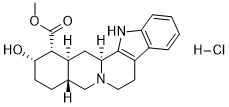
| 规格 | 价格 | 库存 | 数量 |
|---|---|---|---|
| 10 mM * 1 mL in DMSO |
|
||
| 50mg |
|
||
| 100mg |
|
||
| 500mg |
|
||
| 1g |
|
||
| 2g |
|
||
| 5g |
|
||
| 10g |
|
||
| 25g |
|
||
| 50g |
|
||
| Other Sizes |
|

| 靶点 |
alpha 2-adrenergic receptor
α2-adrenoceptor (antagonist, Ki = 4.1 nM) [2] |
|---|---|
| 体外研究 (In Vitro) |
育亨宾(Antagonil)已被用作散瞳剂并用于治疗阳痿。它也被认为是一种春药。育亨宾是一种突触前 α2-肾上腺素能阻断剂。育亨宾可能通过阻断中枢α2-肾上腺素能受体,产生继发于去甲肾上腺素释放和大脑去甲肾上腺素能核细胞放电率增加的交感神经驱动力的增加,从而对勃起能力发挥有益作用。
盐酸育亨宾(Yohimbine HCl)通过α2-肾上腺素受体拮抗作用增强大鼠海马切片的谷氨酸能突触传递。10 μM浓度时,兴奋性突触后电位(EPSPs)幅度增加约35%,衰减时间常数延长约20%,促进突触可塑性[2] 它抑制α2-肾上腺素受体介导的苯肾上腺素预收缩大鼠膀胱平滑肌舒张。0.1-1 μM浓度下,逆转舒张效应40-60%,恢复膀胱收缩功能[1] |
| 体内研究 (In Vivo) |
每天在应激训练前1小时向大鼠注射盐酸育亨宾(0.2 mg/kg,腹腔注射),连续14天,并评估其效果。本节的结果表明,将大鼠浸入冷水中会显着降低性唤起和动机,如潜伏期和间隔时间增加所示。大鼠睾丸中睾酮、黄体生成素 (LH) 和卵泡刺激素 (FSH) 水平的降低以及胆固醇含量的降低证实了交配活性的降低。育亨宾治疗显着增加了性唤起和性能力,并纠正了压力对雄性大鼠交配行为的影响。
α2肾上腺素受体拮抗剂育亨宾(YO)增加肾上腺素能/去甲肾上腺素能(NA)神经元的递质释放。系统性YO激活大鼠下丘脑-垂体-肾上腺(HPA)轴,抑制进食,并支持条件性风味回避(CFA)。为了确定这些作用是否需要NA输入到终纹床核(BNST),将与抗多巴胺β-羟化酶(DSAP)抗体偶联的载体或saporin毒素双侧微注射到BNST中以去除其NA输入。随后的测试未能揭示对YO(5.0 mg/kg,i.p.)抑制食物摄入或支持CFA的能力的任何损伤影响。相反,DSAP大鼠HPA轴对YO的反应显著减弱。在最终实验中,DSAP和对照大鼠在腹膜内注射YO或载体后90-120分钟进行灌注。对大脑进行处理,以揭示Fos免疫标记和病变程度。DSAP大鼠的BNST和内侧小细胞室旁下丘脑(PVNmp)中的NA纤维明显减少,这是向这些区域提供辅助NA输入的证据。DSAP大鼠在YO后表现出尾部髓质NA神经元的显著损失,并显著减弱了BNST和促肾上腺皮质激素释放激素阳性PVNmp神经元中Fos的激活。我们得出的结论是,髓质NA神经元群体为BNST和PVNmp提供了侧支输入,这些输入对YO治疗后Fos表达和HPA轴激活有重要贡献。相反,NA介导的BNST和PVNmp神经元的激活对于YO抑制食物摄入或支持CFA是不必要的,这证明了其他完整的神经通路在介导这些效应方面是充分的[2]。 在部分膀胱出口梗阻(PBOO)大鼠中,口服盐酸育亨宾(Yohimbine HCl)(2 mg/kg/天,连续2周)改善膀胱功能。较溶媒组,最大排尿压力增加约28%,残余尿量减少约32%,缓解梗阻诱导的膀胱功能障碍[1] 在小鼠中,腹腔注射盐酸育亨宾(Yohimbine HCl)(1 mg/kg)增强Morris水迷宫实验中海马依赖的学习记忆能力,逃避潜伏期减少约30%,在目标象限停留时间增加约25%[2] |
| 酶活实验 |
α2-肾上腺素受体放射性配体结合实验:从大鼠大脑皮层(富含α2-肾上腺素受体)制备膜匀浆,将匀浆与[3H]-可乐定(选择性α2激动剂,0.5 nM)及不同浓度的盐酸育亨宾(Yohimbine HCl)(0.1-100 nM)在25°C孵育90分钟。通过玻璃纤维滤膜快速过滤分离结合态和游离态配体,用冰浴缓冲液洗涤滤膜后,通过闪烁计数器测定放射性强度,基于竞争结合曲线计算Ki值[2]
|
| 细胞实验 |
大鼠海马切片突触传递实验:将大鼠海马切成300 μm厚切片,在含氧人工脑脊液(ACSF)中32°C孵育1小时。灌流给予盐酸育亨宾(Yohimbine HCl)(1-10 μM),膜片钳电生理技术记录CA1锥体细胞的EPSPs,分析EPSP幅度和衰减动力学[2]
大鼠膀胱平滑肌舒张逆转实验:分离大鼠膀胱组织,切成2-3 mm宽肌条,置于含含氧克雷布斯-林格溶液的器官浴中,37°C孵育。用苯肾上腺素(1 μM)预收缩肌肉,α2激动剂(0.1 μM)诱导舒张后,累积加入盐酸育亨宾(Yohimbine HCl)(0.1-1 μM),等长换能器记录张力变化,计算舒张逆转百分比[1] |
| 动物实验 |
0.2 mg/kg,腹腔注射
大鼠育亨宾 (YO)的制备和给药[2] 育亨宾 (YO)在每次实验前新鲜溶解,方法是在室温下用无菌 0.15 mol/L NaCl 溶液涡旋振荡 5 分钟,然后用 0.45 μm 针筒式过滤器过滤以去除颗粒残留物。大鼠腹腔注射 2.0 ml 0.15 mol/L NaCl 溶液(不含溶剂),或腹腔注射含有 5.0 mg/kg 体重的育亨宾的溶剂。由于每个实验组内动物的体重存在微小差异,因此将注射体积调整至每只大鼠平均 2.0 ml 左右。选择 5.0 mg/kg 体重的育亨宾 (YO) 剂量是基于近期研究结果,这些研究表明较低剂量的 YO(即 1.0 mg/kg 体重)对食物摄入量、完全弗氏佐剂 (CFA) 或中枢 Fos 激活没有显著影响 (Myers 等,2005) [2]。 DSAP 损伤对育亨宾 (YO) 抑制食物摄入能力的影响。[2] 下午 3:30(即天黑前 3.5 小时)从笼中移除食物。第二天下午 3:00(即 23.5 小时后),对禁食大鼠(DSAP 组 n = 8;假手术对照组 n = 8)进行腹腔注射,分别注射 YO(DSAP 组 n = 4;假手术对照组 n = 4)或载体(DSAP 组 n = 4;假手术对照组 n = 4)。 30分钟后,即下午3:30,给予大鼠一定量的颗粒饲料。分别在喂食30分钟、60分钟和18小时后,测定每只大鼠的累积食物摄入量(已校正食物洒落量)。之后,大鼠恢复自由采食48小时。重复进行24小时食物剥夺和喂养试验,采用平衡设计,即先前腹腔注射YO的大鼠随后腹腔注射赋形剂,反之亦然。因此,每只大鼠都作为自身的对照,用于确定YO对食物剥夺诱导的食物摄入量的影响。[2] 大鼠部分膀胱出口梗阻(PBOO)模型:成年雄性大鼠麻醉后,用丝线缝合尿道以诱导部分梗阻。术后两周,将大鼠随机分为赋形剂组和治疗组。将盐酸育亨宾悬浮于0.5%甲基纤维素溶液中,以2 mg/kg/天的剂量口服给药,持续2周。采用膀胱测压法评估膀胱功能,测量最大排尿压力和残余尿量[1]。 小鼠莫里斯水迷宫实验:将成年雄性小鼠随机分为溶剂组和治疗组。将盐酸育亨宾溶解于生理盐水中,以1 mg/kg的剂量腹腔注射,每日一次,持续7天。训练期间,将小鼠置于水迷宫中寻找隐藏平台,并记录逃避潜伏期。在探针测试中,移除平台,并测量小鼠在目标象限停留的时间[2]。 |
| 药代性质 (ADME/PK) |
吸收
口服后迅速吸收。生物利用度差异很大,范围为7%至87%(平均33%)。 代谢/代谢物 育亨宾似乎在肝脏或肾脏等高流量器官中发生广泛的代谢,然而,育亨宾的确切代谢途径尚未完全确定。 生物半衰期 消除半衰期约为36分钟。 |
| 毒性/毒理 (Toxicokinetics/TK) |
大鼠腹腔注射LD50为55 mg/kg
肝毒性 在小型临床试验和病例系列研究中,育亨宾治疗与血清酶升高或临床肝病无关。尽管育亨宾常用于减肥和增肌草药组合中,但尚未发现与临床上明显的急性肝损伤病例相关。 可能性评分:E(不太可能是临床上明显的肝损伤的原因)。 小鼠急性腹腔注射毒性:LD50 = 12 mg/kg。剂量≥15 mg/kg 时,1 小时内可引起活动过度、心动过速和惊厥,并在 24 小时内导致死亡 [2] 在大鼠中,口服盐酸育亨宾(剂量高达 4 mg/kg/天,持续 4 周)未显示明显的肝毒性或肾毒性,但观察到轻度心动过速(发生率约 15%)[1] 在人体中,盐酸育亨宾的血浆蛋白结合率约为 82% [2] |
| 参考文献 | |
| 其他信息 |
一种具有α-2-肾上腺素能阻断活性的植物生物碱。育亨宾曾被用作散瞳剂和治疗勃起功能障碍。
另见:育亨宾(含活性成分)。 盐酸育亨宾是一种选择性α2-肾上腺素受体拮抗剂,具有中枢和外周作用[1][2] 其作用机制包括阻断α2-肾上腺素受体以增强去甲肾上腺素的释放,从而调节突触传递(中枢)和平滑肌收缩(外周)[1][2] 基于其外周α2受体阻断作用,临床上用于治疗男性勃起功能障碍和与尿道梗阻相关的膀胱功能障碍[1] 在临床前模型中,它通过增强海马突触可塑性表现出促认知作用,提示其在神经认知障碍治疗中具有潜在应用价值[2] 高剂量存在心血管和中枢神经系统毒性风险,因此临床使用时需要进行剂量监测。 [2] |
| 分子式 |
C21H26N2O3.HCL
|
|
|---|---|---|
| 分子量 |
390.9
|
|
| 精确质量 |
390.171
|
|
| 元素分析 |
C, 64.52; H, 6.96; Cl, 9.07; N, 7.17; O, 12.28
|
|
| CAS号 |
65-19-0
|
|
| 相关CAS号 |
Rauwolscine hydrochloride; 6211-32-1; Yohimbine; 146-48-5; Rauwolscine; 131-03-3
|
|
| PubChem CID |
6169
|
|
| 外观&性状 |
White to light yellow solid powder
|
|
| 沸点 |
542.979ºC at 760 mmHg
|
|
| 熔点 |
288-290 °C (dec.)(lit.)
|
|
| 闪点 |
282.184ºC
|
|
| 折射率 |
103 ° (C=1, H2O)
|
|
| LogP |
3.387
|
|
| tPSA |
65.56
|
|
| 氢键供体(HBD)数目 |
3
|
|
| 氢键受体(HBA)数目 |
4
|
|
| 可旋转键数目(RBC) |
2
|
|
| 重原子数目 |
27
|
|
| 分子复杂度/Complexity |
555
|
|
| 定义原子立体中心数目 |
5
|
|
| SMILES |
Cl[H].O([H])[C@@]1([H])C([H])([H])C([H])([H])[C@@]2([H])C([H])([H])N3C([H])([H])C([H])([H])C4C5=C([H])C([H])=C([H])C([H])=C5N([H])C=4[C@]3([H])C([H])([H])[C@]2([H])[C@@]1([H])C(=O)OC([H])([H])[H]
|
|
| InChi Key |
PIPZGJSEDRMUAW-VJDCAHTMSA-N
|
|
| InChi Code |
InChI=1S/C21H26N2O3.ClH/c1-26-21(25)19-15-10-17-20-14(13-4-2-3-5-16(13)22-20)8-9-23(17)11-12(15)6-7-18(19)24;/h2-5,12,15,17-19,22,24H,6-11H2,1H3;1H/t12-,15-,17-,18-,19+;/m0./s1
|
|
| 化学名 |
methyl (1S,15R,18S,19R,20S)-18-hydroxy-1,3,11,12,14,15,16,17,18,19,20,21-dodecahydroyohimban-19-carboxylate;hydrochloride
|
|
| 别名 |
|
|
| HS Tariff Code |
2934.99.9001
|
|
| 存储方式 |
Powder -20°C 3 years 4°C 2 years In solvent -80°C 6 months -20°C 1 month 注意: 请将本产品存放在密封且受保护的环境中,避免吸湿/受潮。 |
|
| 运输条件 |
Room temperature (This product is stable at ambient temperature for a few days during ordinary shipping and time spent in Customs)
|
| 溶解度 (体外实验) |
|
|||
|---|---|---|---|---|
| 溶解度 (体内实验) |
配方 1 中的溶解度: ≥ 2.5 mg/mL (6.40 mM) (饱和度未知) in 10% DMSO + 40% PEG300 + 5% Tween80 + 45% Saline (这些助溶剂从左到右依次添加,逐一添加), 澄清溶液。
例如,若需制备1 mL的工作液,可将100 μL 25.0 mg/mL澄清DMSO储备液加入到400 μL PEG300中,混匀;然后向上述溶液中加入50 μL Tween-80,混匀;加入450 μL生理盐水定容至1 mL。 *生理盐水的制备:将 0.9 g 氯化钠溶解在 100 mL ddH₂O中,得到澄清溶液。 配方 2 中的溶解度: ≥ 2.5 mg/mL (6.40 mM) (饱和度未知) in 10% DMSO + 90% (20% SBE-β-CD in Saline) (这些助溶剂从左到右依次添加,逐一添加), 澄清溶液。 例如,若需制备1 mL的工作液,可将 100 μL 25.0 mg/mL澄清DMSO储备液加入900 μL 20% SBE-β-CD生理盐水溶液中,混匀。 *20% SBE-β-CD 生理盐水溶液的制备(4°C,1 周):将 2 g SBE-β-CD 溶解于 10 mL 生理盐水中,得到澄清溶液。 View More
配方 3 中的溶解度: ≥ 2.5 mg/mL (6.40 mM) (饱和度未知) in 10% DMSO + 90% Corn Oil (这些助溶剂从左到右依次添加,逐一添加), 澄清溶液。 1、请先配制澄清的储备液(如:用DMSO配置50 或 100 mg/mL母液(储备液)); 2、取适量母液,按从左到右的顺序依次添加助溶剂,澄清后再加入下一助溶剂。以 下列配方为例说明 (注意此配方只用于说明,并不一定代表此产品 的实际溶解配方): 10% DMSO → 40% PEG300 → 5% Tween-80 → 45% ddH2O (或 saline); 假设最终工作液的体积为 1 mL, 浓度为5 mg/mL: 取 100 μL 50 mg/mL 的澄清 DMSO 储备液加到 400 μL PEG300 中,混合均匀/澄清;向上述体系中加入50 μL Tween-80,混合均匀/澄清;然后继续加入450 μL ddH2O (或 saline)定容至 1 mL; 3、溶剂前显示的百分比是指该溶剂在最终溶液/工作液中的体积所占比例; 4、 如产品在配制过程中出现沉淀/析出,可通过加热(≤50℃)或超声的方式助溶; 5、为保证最佳实验结果,工作液请现配现用! 6、如不确定怎么将母液配置成体内动物实验的工作液,请查看说明书或联系我们; 7、 以上所有助溶剂都可在 Invivochem.cn网站购买。 |
| 制备储备液 | 1 mg | 5 mg | 10 mg | |
| 1 mM | 2.5582 mL | 12.7910 mL | 25.5820 mL | |
| 5 mM | 0.5116 mL | 2.5582 mL | 5.1164 mL | |
| 10 mM | 0.2558 mL | 1.2791 mL | 2.5582 mL |
1、根据实验需要选择合适的溶剂配制储备液 (母液):对于大多数产品,InvivoChem推荐用DMSO配置母液 (比如:5、10、20mM或者10、20、50 mg/mL浓度),个别水溶性高的产品可直接溶于水。产品在DMSO 、水或其他溶剂中的具体溶解度详见上”溶解度 (体外)”部分;
2、如果您找不到您想要的溶解度信息,或者很难将产品溶解在溶液中,请联系我们;
3、建议使用下列计算器进行相关计算(摩尔浓度计算器、稀释计算器、分子量计算器、重组计算器等);
4、母液配好之后,将其分装到常规用量,并储存在-20°C或-80°C,尽量减少反复冻融循环。
计算结果:
工作液浓度: mg/mL;
DMSO母液配制方法: mg 药物溶于 μL DMSO溶液(母液浓度 mg/mL)。如该浓度超过该批次药物DMSO溶解度,请首先与我们联系。
体内配方配制方法:取 μL DMSO母液,加入 μL PEG300,混匀澄清后加入μL Tween 80,混匀澄清后加入 μL ddH2O,混匀澄清。
(1) 请确保溶液澄清之后,再加入下一种溶剂 (助溶剂) 。可利用涡旋、超声或水浴加热等方法助溶;
(2) 一定要按顺序加入溶剂 (助溶剂) 。
| NCT Number | Recruitment | interventions | Conditions | Sponsor/Collaborators | Start Date | Phases |
| NCT06018727 | Not yet recruiting | Dietary Supplement: Yohimbine Drug: Hydrocortisone |
Borderline Personality Disorder | University of North Carolina, Chapel Hill |
March 2024 | Phase 4 |
| NCT00958880 | Completed | Drug: Yohimbine Hydrochloride Drug: Sugar Pill |
Social Anxiety Disorder | Southern Methodist University | March 2009 | Phase 3 |
| NCT00078715 | Completed | Drug: Yohimbine hydrochloride Drug: Placebo |
Depression, Involutional Major Depresssion |
National Institute of Mental Health (NIMH) |
March 2004 | Phase 2 |
InvivoChem的所有产品仅用于作科学研究,不面向患者销售
Copyright 2020 InvivoChem LLC | All Rights Reserved 粤ICP备20063088号-1


 COA
COA
 粤公网安备 44011102003439号
 463611831
