| 规格 | 价格 | 库存 | 数量 |
|---|---|---|---|
| 100mg |
|
||
| Other Sizes |
|

| 靶点 |
Dibromoacetic acid targets apoptotic pathways in cells, particularly in thymocytes (T-cell precursors). The compound induces apoptosis by blocking cell cycle progression, increasing intracellular calcium levels, and activating the Fas/FasL (death receptor) pathway. Dibromoacetic acid may also induce apoptosis through the mitochondrial pathway, leading to cytochrome c release and caspase activation. The compound's effects on cell cycle progression and apoptosis contribute to its immunotoxicity, as thymocytes are particularly sensitive to apoptotic stimuli. Dibromoacetic acid may also interact with other cellular targets involved in immune function and reproductive health.
|
|---|---|
| 体外研究 (In Vitro) |
体外实验表明,胸腺细胞在暴露于DBAA(5–40 μM)时增殖显著降低[1]。DBAA(5–40 μM)处理24小时可诱导细胞周期阻滞。根据数据[1],不同浓度DBAA处理的胸腺细胞中,G0/G1期细胞比例至少增加40%,S期细胞比例至少减少50%。DBAA(5–40 μM)处理24小时后,Fas/FasL表达增加,Bcl-2表达降低[1]。体外实验表明,二溴乙酸可诱导胸腺细胞和其他免疫细胞凋亡。该化合物可阻断细胞周期进程,增加细胞内钙离子浓度,并激活Fas/FasL通路,最终导致细胞死亡。二溴乙酸可调节免疫反应,影响细胞因子的产生和免疫细胞的功能。该化合物常用于研究免疫毒性以及与免疫介导疾病相关的细胞调控。在基于细胞的实验中,二溴乙酸已被证实能够改变参与细胞凋亡、细胞周期调控和免疫功能的基因表达。该化合物的体外效应呈浓度依赖性,浓度越高,诱导的细胞凋亡越强。
|
| 体内研究 (In Vivo) |
基于雄性大鼠恶性间皮瘤发生率较高,有迹象表明二溴乙酸具有致癌潜力。雄性大鼠单核细胞白血病发生率升高可能与二溴乙酸暴露有关[2]。雌性大鼠单核细胞白血病发生率呈阳性趋势且较高,表明二溴乙酸具有致癌性[2]。基于肝细胞肿瘤和肝母细胞瘤(仅限雄性)发生率升高,二溴乙酸对雄性和雌性小鼠均具有明显的致癌性。雄性小鼠肺部肿瘤发生率也较高,这被认为与二溴乙酸暴露有关[2]。体内研究已探讨了二溴乙酸对免疫功能和生殖健康的影响。该化合物是饮用水中的一种消毒副产物,其存在引发了人们对潜在健康风险的担忧。动物研究表明,二溴乙酸可诱导胸腺萎缩、减少免疫细胞数量并损害免疫功能。该化合物还与生殖毒性有关,包括精子质量和生育能力的改变。二溴乙酸的体内效应呈剂量依赖性,剂量越高,毒性越严重。目前,该化合物的免疫毒性和生殖毒性是研究的热点领域。
|
| 酶活实验 |
由于二溴乙酸并非特异性酶抑制剂,因此通常不进行体外酶活性测定。然而,可以通过基于细胞的检测方法来评估该化合物对细胞通路的影响。二溴乙酸诱导细胞凋亡的评估方法包括:使用荧光底物检测caspase活性、检测DNA片段化或使用Annexin V/PI染色进行流式细胞术分析。该化合物对细胞周期进程的影响可通过使用碘化丙啶染色进行流式细胞术分析来评估。细胞内钙离子水平可通过荧光钙指示剂(例如Fluo-4)进行测定。凋亡相关基因(例如Fas、FasL、caspase)的表达可通过qRT-PCR或Western blotting进行评估。
|
| 细胞实验 |
细胞增殖实验[1]
细胞类型: BALB/c 小鼠胸腺细胞 测试浓度: 0、5、10、20 和 40 μM 孵育时间: 6、12、24、48 和 72 小时 实验结果: 孵育 6 小时或更长时间后,T 细胞有丝分裂原引起的细胞增殖反应显著降低。6 小时时,仅在 40 μM 浓度下观察到显著抑制;24、48 和 72 小时时,所有浓度均观察到显著抑制。 蛋白质印迹分析[1] 细胞类型:胸腺细胞 测试浓度:0、5、10、20 和 40 μM 孵育时间:24 小时 实验结果:Fas/FasL 的表达在 10 μM 浓度下显著增加,而 Bcl-2 的表达在所有浓度下均降低。 体外细胞实验采用胸腺细胞或其他免疫细胞进行二溴乙酸处理。将细胞培养后,用浓度范围为 0.1 至 10 mM 的二溴乙酸处理 24-48 小时。使用 MTT 法、台盼蓝排除法或 LDH 释放法评估细胞活力。细胞凋亡的评估采用流式细胞术,使用Annexin V/PI染色或检测DNA片段化(TUNEL法)。细胞周期分析采用碘化丙啶染色。细胞内钙离子水平的测定采用Fluo-4或Fura-2。凋亡相关蛋白(Fas、FasL、caspase、Bcl-2、Bax)的表达通过Western blotting进行评估。化合物对细胞因子产生的影响通过ELISA进行测定。 |
| 动物实验 |
动物/疾病模型:雄性和雌性F344/N大鼠和B6C3F1小鼠[2]
剂量:每组5只雄性和5只雌性大鼠/小鼠分别暴露于浓度为0、125、250、500、1000或2000 mg/L的二溴乙酸饮用水中,持续2周。每组10只雄性和10只雌性大鼠/小鼠分别暴露于浓度为0、125、250、500、1000或2000 mg/L的二溴乙酸饮用水中,持续3个月。每组50只雄性和50只雌性大鼠/小鼠分别暴露于浓度为0、50、500和1000 mg/L的二溴乙酸饮用水中,持续2年。 给药途径给药途径: 饮用水中添加二溴乙酸(纯度大于99%),持续2周、3个月或2年。 实验结果: 雄性大鼠暴露于二溴乙酸2年后,肝脏囊性变性发生率增加;雌性大鼠肺泡上皮增生和肾病发生率增加;雄性小鼠脾脏造血发生率增加。 在啮齿动物模型中开展了二溴乙酸的体内动物研究,以评估其免疫毒性和生殖效应。小鼠或大鼠通过饮用水或灌胃给予二溴乙酸,剂量范围为1至100 mg/kg/天,持续数天至数周。通过测量胸腺和脾脏重量、淋巴细胞计数以及对有丝分裂原或抗原的反应来评估免疫功能。胸腺细胞凋亡可通过TUNEL染色或检测caspase活性进行评估。生殖影响通过评估精子质量、生育能力和胎儿发育情况进行评估。对胸腺、脾脏和生殖器官进行组织病理学分析。 |
| 药代性质 (ADME/PK) |
吸收、分布和排泄
在初步生殖/发育毒性研究(大鼠)中,将二溴乙酸 (DBA) 添加到饮用水中。研究内容包括 DBA 的吸收和生物分布,包括其进入胎盘、羊水、胎儿或母乳的情况。DBA 的初步生殖/发育毒性研究的每个组均包含 50 只 Sprague-Dawley 大鼠(每组雌雄各 50 只)。从交配前 14 天开始,直至妊娠和哺乳期(63 至 70 天),在饮用水中添加不同浓度的 DBA(0、125、250、500 或 1000 ppm)。……卫星组(每组每项研究 6 只雄性大鼠和 17 只雌性大鼠)……用于生物分析取样。由于对DBA表现出明显的味觉厌恶,大鼠饮水量减少,尤其是在暴露浓度最高的两个组(500 ppm和1000 ppm DBA)下,亲代大鼠的饮水量更为显著。雌性大鼠的DBA摄入量(mg/kg/天)略高于雄性大鼠,尤其是在妊娠期和哺乳期;断奶大鼠的摄入量最高(mg/kg/天)。DBA在血浆、胎盘、羊水和乳汁中均达到可检测和可定量的浓度。血浆样本证实,大鼠主要在黑暗中饮水;这种饮水模式而非DBA的蓄积,导致血浆中DBA浓度持续维持18至24小时…… 连续五天通过灌胃给予250 mg/kg体重DBA的雄性Sprague-Dawley大鼠,测定了其睾丸间质液中的DBA浓度。体重……睾丸液中二溴乙酸的浓度在最后一次给药后30分钟达到峰值79 μg/mL(约370 μM),半衰期约为1.5小时。 在Sprague-Dawley大鼠的饮用水中添加浓度范围为125至1000 ppm(mg/L)的二溴乙酸(DIA),从同居前14天开始,持续到妊娠和哺乳期……在亲代和胎儿血浆、胎盘组织、羊水和母乳中均检测到了可定量的DIA。因此,DIA可以穿过胎盘并被胎儿组织吸收。 据报道,雄性F344/N大鼠口服DIA的生物利用度为30%……与二氯乙酸相比,DIA生物利用度较低是由于其……在肝脏中的首过代谢。 生物半衰期 连续五天通过灌胃给予雄性Sprague-Dawley大鼠250 mg/kg体重的二溴乙酸(DIA)后,测定了其睾丸间质液中的DIA含量……半衰期约为1.5小时。 由于二溴乙酸是饮用水污染物,其药代动力学特性已得到研究。该化合物可迅速从胃肠道吸收并分布到各种组织。二溴乙酸在肝脏代谢,并经尿液排出。该化合物在体内的半衰期相对较短,约为数小时。二溴乙酸的药代动力学具有剂量依赖性,在高剂量下,其清除率可能达到饱和。饮用水中该化合物的含量对公众健康构成威胁,其药代动力学特性与风险评估密切相关。 |
| 毒性/毒理 (Toxicokinetics/TK) |
相互作用
研究发现,消毒副产物二溴乙酸 (DBA) 可提高雌性大鼠循环中雌二醇 (E2) 和雌酮 (E1) 的浓度。这种效应显然至少部分归因于肝脏分解代谢的抑制。本研究旨在探讨 DBA 是否能通过提高性激素水平来增强下丘脑上调,从而触发黄体生成素 (LH) 激增,或者影响神经毒素二甲基二硫代氨基甲酸钠 (DMDC) 阻断 LH 激增的能力。Sprague-Dawley 大鼠连续 14 天灌胃给予 DBA(0–150 mg/kg),并在第 11 天进行卵巢切除术,植入雌二醇胶囊以诱导每日 LH 激增。于第14天13:00注射0.1 mM/kg DMDC,并于当日下午采集血样。DBA可剂量依赖性地增加总雌激素水平。对于已识别的LH峰值,LH曲线下面积被分为两组,分别对应于两个低剂量组(0和37.5 mg/kg DBA)和两个高剂量组(75和150 mg/kg DBA)。因此,对低剂量组和高剂量组进行了比较,结果显示两组之间存在显著差异。在150 mg DBA/0.1 mM DMDC组中,达到可识别的LH峰值的时间与未接受DMDC处理的雌性小鼠相当,而在37.5 mg DBA/0.1 mM DMDC组中,达到峰值的时间则有所延迟。单独使用DBA处理未观察到显著影响。这些结果表明,暴露于DBA会导致总雌激素浓度呈剂量依赖性增加,同时DMDC对LH峰值的阻断作用减弱。这种效应似乎归因于雌激素相关脑机制的上调增强,从而刺激LH峰值的产生。饮用水氯化会产生消毒副产物(DBPs),研究表明,高剂量的DBPs会破坏啮齿动物的精子发生,提示DBPs可能对男性生殖构成风险。……一项旨在评估特定DBP暴露男性精液质量的队列研究。……该研究结果不支持DBP暴露水平接近监管限值与精子质量差之间存在关联,尽管发现总有机卤化物与精子浓度之间存在关联。 ……总有机卤化物暴露与精子浓度之间唯一的关联可能支持以下发现:总有机卤化物比任何受监管的消毒副产物 (DBP) 类别或类型更容易导致不良妊娠结局,并且总有机卤化物的毒性大于单个或亚类消毒副产物的毒性。……/消毒副产物/ 非人类毒性值 大鼠口服 LD50:1737 mg/kg 二溴乙酸的毒理学效应已被研究,尤其是在饮用水中作为消毒副产物。该化合物可诱导胸腺细胞凋亡和免疫毒性,引发了人们对其潜在健康影响的担忧。二溴乙酸被归类为潜在的生殖毒物,动物研究表明其与精子质量和生育能力的改变有关。该化合物也对皮肤和眼睛有刺激性。作为一种研究用化学品,处理二溴乙酸时应遵循标准安全预防措施,包括使用个人防护装备。该化合物仅供研究使用,不得用于人体。 |
| 参考文献 |
[1]. Shu-Ying Gao, et al. Dibromoacetic Acid Induces Thymocyte Apoptosis by Blocking Cell Cycle Progression, Increasing Intracellular Calcium, and the Fas/FasL Pathway in Vitro.Toxicol Pathol. 2016 Jan;44(1):88-97.
[2]. National Toxicology Program. Toxicology and carcinogenesis studies of dibromoacetic acid (Cas No. 631-64-1) in F344/N rats and B6C3F1 mice (drinking water studies). Natl Toxicol Program Tech Rep Ser. 2007 Apr;(537):1-320. |
| 其他信息 |
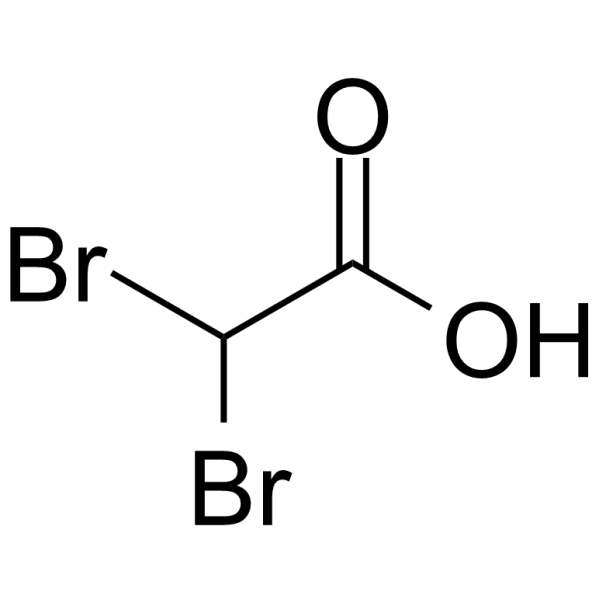
根据美国国家毒理学计划 (NTP) 的数据,二溴乙酸 (DBA) 可能具有致癌性。DBA 是一种单羧酸,由乙酸分子中的两个甲基氢原子被溴原子取代而形成。它是一种海洋代谢物,能够诱导细胞凋亡并延缓衰老。DBA 既是一种单羧酸,也是一种 2-溴羧酸。其功能与乙酸相关。据报道,DBA 存在于 Asparagopsis taxiformis 中,并且已有相关数据。作用机制……本研究探讨了二溴乙酸 (DBA) 诱导 DNA 低甲基化、糖原积累和过氧化物酶体增殖的能力……分别给雌性 B6C3F1 小鼠和雄性 Fischer 344 大鼠注射浓度为 0、1000 和 2000 mg/L 的 DBA 溶液。分别在暴露 2、4、7 和 28 天后处死动物。二溴乙酸(DBA)导致DNA中5-甲基胞嘧啶含量呈剂量和时间依赖性下降20%至46%。小鼠暴露于二溴乙酸7天后,观察到c-myc基因的低甲基化。经2000 mg/L DBA处理28天后,胰岛素样生长因子2(IGF-II)基因中24个CpG位点的甲基化水平从80.2% ± 9.2%下降至18.8% ± 12.9%。二溴乙酸可增加小鼠肝脏中c-myc和IGF-II基因的mRNA表达。在大鼠中也观察到c-myc mRNA表达呈剂量依赖性增加。在小鼠和大鼠中,DBA均可剂量依赖性地诱导糖原积累并增加过氧化物酶体月桂酰辅酶A氧化酶活性。因此,与二氯乙酸和三氯乙酸类似,DBA可诱导DNA以及c-myc和IGF-II基因的低甲基化,增加这两个基因的mRNA表达,并导致过氧化物酶体增殖。同样,DBA也能诱导糖原积累。这些结果表明,DBA与二氯乙酸和/或三氯乙酸具有相似的生化和分子活性,提示其也可能是一种肝毒性致癌物。卤乙酸(HA)是饮用水中常见的胚胎毒性污染物。HA的胚胎毒性机制可能部分是通过抑制蛋白激酶C(PKC)介导的。本研究旨在评估透明质酸(HA)胚胎毒性的发病机制,并将这些数据与特异性(Bis I)和非特异性(星孢菌素)蛋白激酶C(PKC)抑制剂的数据进行比较。将胚胎与不同浓度的HA、Bis I、星状菌素或Bis V(阴性对照)孵育不同时间。采用碘化丙啶(PI)染色后,通过流式细胞术进行细胞周期分析;采用LysoTracker染色后,通过荧光显微镜评估细胞凋亡。在产生100%胚胎毒性但不致死的浓度下,只有星状菌素会破坏细胞周期。然而,流式细胞术分析显示,经溴氯乙酸、二氯乙酸和星状菌处理后,亚G1期事件(一种细胞凋亡标志物)随时间积累,而经二溴乙酸、Bis I或Bis V处理后未观察到此现象。亚G1期事件在头部区域尤为显著,而在心脏区域则保持在对照水平。溶酶体示踪剂染色证实了完整胚胎中类似的细胞凋亡模式。 BCA 和 DCA 在前脑中产生强烈的染色,但在心脏中几乎没有染色。这些数据表明,虽然细胞周期失调可能并非 HA 胚胎毒性的致病机制,但这些药物确实会诱导胚胎细胞凋亡。此外,Bis I 未诱导细胞凋亡,这表明 PKC 抑制不太可能是 HA 胚胎毒性的唯一介质。HA 致癌性的相关机制包括 DCA 和 TCA 的致癌机制。显然,导致这些化合物发挥作用的机制不止一种,而且这些机制对这类化合物不同成员的活性重要性各不相同。其中一些机制差异可能与诱导的肿瘤表型差异有关。一种表型似乎与先前对过氧化物酶体增殖剂诱导肿瘤的特征描述相关,并且是由三氯乙酸 (TCA) 诱导的。第二种表型涉及糖原含量低的肿瘤,这些肿瘤对 c-Jun 和 c-Fos 抗体表现出强烈的染色反应。这种表型是由二氯乙酸 (DCA) 引起的。这些效应可能是由于选择性地诱导了控制细胞分裂和细胞死亡的细胞信号通路中存在不同缺陷的损伤所致。溴代杂环胺 (HAAs) 诱导点突变的可能性比其氯代类似物高约 10 倍。这并不一定表明它们通过诱变机制在体内诱发癌症,但随着其致癌活性数据的日益完善,必须考虑这种活性。杂环胺诱导氧化应激和增加肝脏核 DNA 中 8-羟基脱氧鸟苷 (8-OH-dG) 含量的能力差异很大。这种特性在溴代化合物中尤为显著。值得注意的是,溴代类似物诱发肝脏肿瘤的可能性并不高于其相应的氯代杂环胺。因此,这种机制是否是决定此效应的最重要因素仍有待商榷。
二溴乙酸是一种卤代乙酸,是饮用水消毒的副产物。当氯或其他消毒剂与水中的天然有机物反应时,就会生成卤代乙酸。二溴乙酸是饮用水中几种受监管的卤代乙酸之一,因为它们具有潜在的健康风险。该化合物的免疫毒性和生殖毒性已在动物模型中进行了研究,其在饮用水中的存在引起了公众健康的关注。二溴乙酸还可用作有机合成试剂和毒理学研究中的参考化合物。该化合物可从化学品供应商处获得,用于研究用途。 |
| 分子式 |
C2H2BR2O2
|
|---|---|
| 分子量 |
217.84
|
| 精确质量 |
215.842
|
| CAS号 |
631-64-1
|
| PubChem CID |
12433
|
| 外观&性状 |
Hygroscopic crystals
|
| 密度 |
2.382 g/mL at 25ºC(lit.)
|
| 沸点 |
128-130ºC16 mm Hg(lit.)
|
| 熔点 |
32-38ºC(lit.)
|
| 闪点 |
>230 °F
|
| 折射率 |
1.598
|
| LogP |
1.186
|
| tPSA |
37.3
|
| 氢键供体(HBD)数目 |
1
|
| 氢键受体(HBA)数目 |
2
|
| 可旋转键数目(RBC) |
1
|
| 重原子数目 |
6
|
| 分子复杂度/Complexity |
60.6
|
| 定义原子立体中心数目 |
0
|
| SMILES |
C(C(=O)O)(Br)Br
|
| InChi Key |
SIEILFNCEFEENQ-UHFFFAOYSA-N
|
| InChi Code |
InChI=1S/C2H2Br2O2/c3-1(4)2(5)6/h1H,(H,5,6)
|
| 化学名 |
2,2-dibromoacetic acid
|
| HS Tariff Code |
2934.99.9001
|
| 存储方式 |
Powder -20°C 3 years 4°C 2 years In solvent -80°C 6 months -20°C 1 month |
| 运输条件 |
Room temperature (This product is stable at ambient temperature for a few days during ordinary shipping and time spent in Customs)
|
| 溶解度 (体外实验) |
DMSO : 100 mg/mL (459.05 mM)
|
|---|---|
| 溶解度 (体内实验) |
配方 1 中的溶解度: 2.5 mg/mL (11.48 mM) in 10% DMSO + 90% (20% SBE-β-CD in Saline) (这些助溶剂从左到右依次添加,逐一添加), 澄清溶液; 超声助溶。
例如,若需制备1 mL的工作液,可将100 μL 25.0 mg/mL澄清DMSO储备液加入900 μL 20% SBE-β-CD生理盐水溶液中,混匀。 *20% SBE-β-CD 生理盐水溶液的制备(4°C,1 周):将 2 g SBE-β-CD 溶解于 10 mL 生理盐水中,得到澄清溶液。 配方 2 中的溶解度: ≥ 2.5 mg/mL (11.48 mM) (饱和度未知) in 10% DMSO + 90% Corn Oil (这些助溶剂从左到右依次添加,逐一添加), 澄清溶液。 例如,若需制备1 mL的工作液,可将 100 μL 25.0 mg/mL 澄清 DMSO 储备液添加到 900 μL 玉米油中并混合均匀。 请根据您的实验动物和给药方式选择适当的溶解配方/方案: 1、请先配制澄清的储备液(如:用DMSO配置50 或 100 mg/mL母液(储备液)); 2、取适量母液,按从左到右的顺序依次添加助溶剂,澄清后再加入下一助溶剂。以 下列配方为例说明 (注意此配方只用于说明,并不一定代表此产品 的实际溶解配方): 10% DMSO → 40% PEG300 → 5% Tween-80 → 45% ddH2O (或 saline); 假设最终工作液的体积为 1 mL, 浓度为5 mg/mL: 取 100 μL 50 mg/mL 的澄清 DMSO 储备液加到 400 μL PEG300 中,混合均匀/澄清;向上述体系中加入50 μL Tween-80,混合均匀/澄清;然后继续加入450 μL ddH2O (或 saline)定容至 1 mL; 3、溶剂前显示的百分比是指该溶剂在最终溶液/工作液中的体积所占比例; 4、 如产品在配制过程中出现沉淀/析出,可通过加热(≤50℃)或超声的方式助溶; 5、为保证最佳实验结果,工作液请现配现用! 6、如不确定怎么将母液配置成体内动物实验的工作液,请查看说明书或联系我们; 7、 以上所有助溶剂都可在 Invivochem.cn网站购买。 |
| 制备储备液 | 1 mg | 5 mg | 10 mg | |
| 1 mM | 4.5905 mL | 22.9526 mL | 45.9053 mL | |
| 5 mM | 0.9181 mL | 4.5905 mL | 9.1811 mL | |
| 10 mM | 0.4591 mL | 2.2953 mL | 4.5905 mL |
1、根据实验需要选择合适的溶剂配制储备液 (母液):对于大多数产品,InvivoChem推荐用DMSO配置母液 (比如:5、10、20mM或者10、20、50 mg/mL浓度),个别水溶性高的产品可直接溶于水。产品在DMSO 、水或其他溶剂中的具体溶解度详见上”溶解度 (体外)”部分;
2、如果您找不到您想要的溶解度信息,或者很难将产品溶解在溶液中,请联系我们;
3、建议使用下列计算器进行相关计算(摩尔浓度计算器、稀释计算器、分子量计算器、重组计算器等);
4、母液配好之后,将其分装到常规用量,并储存在-20°C或-80°C,尽量减少反复冻融循环。
计算结果:
工作液浓度: mg/mL;
DMSO母液配制方法: mg 药物溶于 μL DMSO溶液(母液浓度 mg/mL)。如该浓度超过该批次药物DMSO溶解度,请首先与我们联系。
体内配方配制方法:取 μL DMSO母液,加入 μL PEG300,混匀澄清后加入μL Tween 80,混匀澄清后加入 μL ddH2O,混匀澄清。
(1) 请确保溶液澄清之后,再加入下一种溶剂 (助溶剂) 。可利用涡旋、超声或水浴加热等方法助溶;
(2) 一定要按顺序加入溶剂 (助溶剂) 。
InvivoChem的所有产品仅用于作科学研究,不面向患者销售
Copyright 2020 InvivoChem LLC | All Rights Reserved 粤ICP备20063088号-1


 粤公网安备 44011102003439号
 463611831
