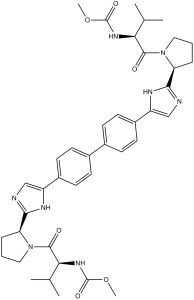
Daclatasvir (BMS790052; EBP883)

别名: BMS-790052; Daclatasvir; BMS790052; Daclatasvir; 1009119-64-5; BMS-790,052; BMS790,052; EBP 883; Daclatasvir [USAN]; BMS 790,052; methyl N-[(2S)-1-[(2S)-2-[5-[4-[4-[2-[(2S)-1-[(2S)-2-(methoxycarbonylamino)-3-methylbutanoyl]pyrrolidin-2-yl]-1H-imidazol-5-yl]phenyl]phenyl]-1H-imidazol-2-yl]pyrrolidin-1-yl]-3-methyl-1-oxobutan-2-yl]carbamate; BMS 790052; EBP883; EBP 883; EBP-883; BMS 790052; Daclatasvir [USAN];Daklinza (trade name) N,N'-[[1,1'-联苯]-4,4'-二基双[1H-咪唑-5,2-二基-(2S)-2,1-吡咯烷二基 [(1S)-1-(1-甲基乙基)-2-氧代-2,1-乙烷二基]]]双氨基甲酸 C,C'-二甲酯
目录号: V0724 纯度: ≥98%
Daclatasvir(原 BMS-790052;EBP-883;商品名 Daklinza)是一种直接作用抗病毒药物,是 HCV NS5A(非结构蛋白)的选择性抑制剂,EC50 为 9-50 pM。
Daclatasvir (BMS790052; EBP883) CAS号: 1009119-64-5
产品类别: HCV Protease
产品仅用于科学研究,不针对患者销售
规格 价格 库存 数量
10 mM * 1 mL in DMSO
5mg
10mg
50mg
100mg
250mg
500mg
1g
Other Sizes

Other Forms of Daclatasvir (BMS790052; EBP883):

  • 达卡他韦(二盐酸盐)
  • Daclatasvir-d6 hydrochloride
  • Daclatasvir-d6
  • Daclatasvir-d16
点击了解更多
InvivoChem产品被CNS等顶刊论文引用
纯度/质量控制文件

纯度: ≥98%

产品描述
Daclatasvir(原 BMS-790052;EBP-883;商品名 Daklinza)是一种直接作用抗病毒药物,是 HCV NS5A(非结构蛋白)的选择性抑制剂,EC50 为 9-50 pM。达卡他韦已与另一种抗病毒药物(索磷布韦)联合使用,通过降低血清 HCV RNA 水平来治疗丙型肝炎 (HCV)。它由BMS开发,于2014年在欧盟获得批准。达卡他韦抑制HCV非结构蛋白NS5A。最近的研究表明,它针对病毒复制过程的两个步骤,使 HCV RNA 迅速下降。达卡他韦已在与聚乙二醇干扰素和利巴韦林以及其他直接作用抗病毒药物(包括阿舒瑞韦和索磷布韦)的联合治疗方案中进行了测试。
生物活性&实验参考方法
靶点
HCV NS5A (EC50 = 9 pM-50 pM)
体外研究 (In Vitro)
体外活性:BMS-790052 是迄今为止报道的最有效的 HCV 复制抑制剂之一。对于 HCV 基因型 1a 和 1b 复制子,BMS-790052 的平均 EC50 值分别为 50 和 9 pM。 BMS-790052 显示出至少 105 的治疗指数 (CC50/EC50),并且对一组 10 种 RNA 和 DNA 病毒无活性,EC50 高于 10 μM。这证实了 BMS-790052 对 HCV 的特异性。在含有 HCV 基因型 1b 复制子的 Huh7 细胞中,BMS-790052 可阻断短暂和稳定的 HCV 基因组复制,EC50 值范围为 1-15 pM。 BMS-790052(100 pM 或 1 nM)已被证明可以改变 NS5A 的亚细胞定位和生化分级。 BMS-790052 抑制含有 HCV 基因型 4 NS5A 基因的杂交复制子,EC50 为 7-13 pM。 NS5A 的残基 30 是杂种复制子中 BMS-790052 介导的抗性的重要位点。激酶测定:Daclatasvir 是一种有效的 HCV NS5A 蛋白抑制剂,针对基因型 1a 和 1b 复制子的平均 EC50 值分别为 50 和 9 pM。细胞测定:通过使用具有复制能力的 1a 或 1b 复制子构建杂交体来评估达卡他韦对基因型的抗病毒活性,其中整个 NS5A 编码区或来自不同基因型的 NS5A 的前 100 个氨基酸替换亲本复制子的相应序列。据报道,达卡他韦对所有 HCV 基因型均高度有效,半数有效浓度 (EC50) 范围为 9 至 146 pM
体内研究 (In Vivo)
人源化肝脏嵌合小鼠的肝脏嵌合率估计超过 40%,静脉注射 100 µL HCV 阳性人血清样本。接种后,每 1-4 周从颈外静脉采集一次血液。 HCV RNA 水平通过 COBAS TaqMan HCV 测试在 100 倍稀释的血清中测量,测量范围较低为 3.2 log IU/mL 血清。 HCV RNA 血清水平达到平台水平后,给小鼠口服以下药物之一,每天一次,持续 4 周:40 mg/kg Asunaprevir 加 30 mg/kg Daclatasvir,15 mg/kg Ledipasvir 加 50 mg/kg。 kg GS-558093 和 50 mg/kg GS-558093 加 400 mg/kg Telaprevir。

在一项随机、双盲、安慰剂对照、单次递增剂量研究中,Daclatasvir/BMS-790052以6个剂量水平给健康、非HCV感染的受试者服用,剂量范围为1至200 mg口服溶液。该化合物安全,耐受性良好,最高可达200 mg,无临床相关不良反应。口服给药后,Daclatasvir/BMS-790052很容易被吸收,剂量比例暴露在研究的剂量范围内,所有受试者的药物浓度都大于基因型1a和1b的蛋白质结合调整后的EC90,如复制子试验所测,在24小时及以上 h给药后(图3)。(蛋白质结合调整后的EC90数字来自对添加人血清对复制子抗病毒活性的影响的分析。在40%的人血清存在的情况下,BMS-790052的EC90为383 pM(0.28纳克 ml-1)用于基因型1a复制子和49 pM(0.04纳克 ml-1)用于基因型1b复制子。)[1]
在一项随机、双盲、安慰剂对照、单次递增剂量研究中,对基因型1慢性HCV受试者以1、10和100的剂量给予Daclatasvir/BMS-790052 mg口服溶液。除两名受试者在10岁时感染了HCV基因型1a外,所有受试者均感染了HCV mg和三名受试者在100 感染基因型1b的mg患者。BMS-790052在单次口服剂量高达100 mg。具体而言,没有死亡、严重不良事件、因不良事件或临床相关不良反应而停药。头痛是最常见的不良事件,四名受试者在服用BMS-790052后报告了这一事件。在HCV感染的受试者中,BMS-790052的平均血浆消除半衰期为10至14 h、 血浆药物水平与非HCV感染者相似。单次口服10-100剂后 mg BMS-790052,所有受试者的24小时血浆浓度均高于HCV基因型1a和1b的十倍蛋白结合校正EC90,这表明每天给药一次的可能性。测量血浆HCV RNA水平长达6 给药后几天;从给药到144的平均下降 h给药后如图4所示。单毫克剂量的BMS-790052产生的平均值为1.8 log10减少(范围0.2-3.0 log10)在HCV病毒载量中的测量值为24 给药后h。10和100 mg剂量产生了更大的抗病毒作用,平均血浆病毒RNA下降了3.2log10(范围2.9-4.0 log10)和3.3 log10(范围2.7-3.6 log10),分别为24 h给药后。此外,100 mg剂量导致HCV RNA平均最大下降3.6 log10(范围3.0-4.1 log10),在两名感染基因型1b病毒的受试者中观察到长期的抗病毒反应,HCV RNA测量值达到定量下限(小于25 IU ml-1)1例,35例 IU 另一组在144小时时测得ml-1。对给药后基线(T0)、24(T24)和144(T144)小时采集的样本进行基因型分析后发现,一般来说,需要显著降低病毒载量才能检测到主要的HCV变异。在使用体外复制子系统鉴定的氨基酸位置观察到置换(补充表12-14):基因型1a的M28T、Q30H/R和L31M,基因型1b的Y93H,结果表明复制子系统在评估体内对抑制剂压力的抗性方面是有用的。其中只有一名受试者的随访样本,结果显示HCV RNA已恢复到接近基线水平;然而,没有对该样本进行基因型分析。根据BMS-790052的体外复制子效力,可以预期,感染基因型1b的受试者的HCV RNA会出现更大、更持续的下降(平均3.6 log10减少(范围3.1-4.0 log10)和平均值3.1 log10减少(范围2.7–3.4 log10)在HCV病毒载量中的测量值为24 10和100之后的h mg剂量)比基因型1a感染的受试者(平均1.8 log10减少(范围0.2-3.0 log10),平均2.9 log10减少(范围2.9–3.0 log10)和平均值3.6 log10减少(范围3.5-3.6 log10)在HCV病毒载量中的测量值为24 1、10和100后的h mg剂量)。接受10和100治疗的受试者的平均下降率 mg剂量的BMS-790052与36 mg剂量相似 给药后h,接受100μg/ml给药的受试者的平均下降幅度更大,持续时间更长 mg。接受1 mg BMS-790052的HCV RNA平均下降幅度低于10和100 mg(图4)。然而,需要多剂量研究来确定病毒下降第一阶段后最大抗病毒效果的最佳剂量范围。使用Pearson相关系数探讨了HCV RNA从基线的最大下降与药物药代动力学暴露之间的关系。所有估计的Pearson相关系数均高于0.65,表明log10 HCV RNA和对数药代动力学暴露(BMS-790052 Cmax、AUC(0-T)、AUC、INF、C12和C24)的最大下降呈正相关;也就是说,log10 HCV RNA的最大下降幅度随着暴露于Daclatasvir/BMS-790052而增加[1]。
酶活实验
肽 (Ac-Asp-Glu-Asp [EDANS]-Glu-Glu-Abu-[COO] Ala-Ser-Lys [DABCYL]-NH2) 含有荧光供体 {EDANS, 5-[(2-氨乙基)氨基]萘-1-磺酸}靠近肽的一端,受体{DABCYL,4-[(4-二甲基氨基)苯基]偶氮)苯甲酸}靠近另一端。供体和受体之间的分子间共振能量转移淬灭了肽的荧光,但当 NS3 蛋白酶切割肽时,产物从共振能量转移淬灭中释放出来。随着更多底物被 NS3 蛋白酶裂解,供体的荧光随着时间的推移而增强。检测试剂由 20 μM FRET 肽、150 mM NaCl 和 5× 荧光素酶细胞培养裂解液(用 dH2O 稀释至 1×)组成。在 96 孔板中,添加 HCV-Huh-7 细胞并贴壁过夜(每孔 1×10⁴ 细胞)。第二天将 BMS-790052 添加到孔中后,将板孵育 72 小时。之后,用 PBS 清洗板,并通过向每个孔中添加 30 μL 前面提到的 FRET 肽测定试剂来准备 FRET 测试。通过使用 Cytoflor 4000 仪器在动力学模式下读取板来获取信号,该仪器被编程为在 340 nm(激发)/490 nm(发射)下以自动模式运行 20 个循环或更少。 FRET 完成后,每孔加入 40 μL 荧光素酶底物,并评估荧光素酶的量。
细胞实验
约 12 小时前,将 BMS-790052 添加到 96 孔板中,该板已在 200 µL 培养基中接种了 HCV 复制子细胞。孵育 72 小时后,检查细胞板的细胞毒性和复制活性。使用 CellTiter-Blue 测量细胞毒性后,除去培养基和染料,将板倒置,并用纸巾吸干剩余的液体。海肾荧光素酶用于测量 HCV 基因型 1a 细胞系的复制活性。向每个孔中添加 1× 海肾荧光素酶裂解缓冲液 (30 µL) 后,将板孵育 15 分钟,并轻轻摇动。然后使用 Top Count 光度计检测信号,该光度计配置为在添加 40 µL 海肾荧光素酶底物后进行光发射定量。仅使用 DMSO 的孔计算每个细胞系的 100% 活性;将含有化合物的孔的平均值除以含有DMSO的孔的平均值,以确定每个抑制剂浓度的活性百分比。
动物实验
At the termination of experiments, all mice were euthanized by CO2 inhalation. To evaluate in vivo efficacy of antiviral agents on HCV, NOD/SCID mice bearing HCV-replicating Huh7 xenografts were used21. Briefly, HCV RNA-transfected cells mixed with Matrigel were injected into the large lobes of the livers of anesthetized immunodeficient NOD/SCID male mice (5 weeks of age, 18–20 g body weight). Four weeks after implantation, compounds dissolved in saline were orally administered to mice using a feeding needle. Serum HCV titer was monitored by RT-qPCR.[Sci Rep. 2018 Aug 20;8(1):12469]
HCV-infected clinical study population [1]
In total, 16 subjects received treatment with Daclatasvir/BMS-790052 and two subjects received placebo. Subjects selected for this study included men and women aged 18–49 years, inclusive, who were chronically infected with HCV genotype 1 and were treatment naive or treatment non-responders, defined as subjects who received the current standard of care (interferon and/or ribavirin) and who continued to have a detectable HCV RNA level (including relapsers) or subjects who did not attain a 2 log10 decline in HCV RNA levels at 12 weeks and stopped treatment; or treatment-intolerant subjects, defined as subjects who were unable to tolerate the toxicities associated with interferon and/or ribavirin; and who had not received another NS5A replication co-factor inhibitor; and who were not co-infected with human immunodeficiency virus, hepatitis B virus or HCV other than genotype 1.
30 mg/kg; oral
Mice
药代性质 (ADME/PK)
Absorption, Distribution and Excretion
Studies demonstrated that peak plasma concentrations typically occurred within 2 hours after administration of multiple oral doses ranging from 1 - 100 mg once daily. Steady state is reached after approximately 4 days of once-daily daclatasvir administration. The absolute bioavailability of the tablet formulation is 67%.
Approximately 88% of total dose of daclatasvir is eliminated into bile and feces in which 53% remains as unchanged form, while 6.6% of the total dose is eliminated primarily unchanged in the urine.
The approximate volume of distribution of daclatasvir is 47 L in patients who was orally administered 60 mg tablet followed by 100 µg [13C,15N]-daclatasvir intravenously.
In subjects who received daclatasvir 60 mg tablet orally followed by 100 µg radiolabeled daclatasvir intravenously, the total clearance was 4.2 L/h.
Metabolism / Metabolites
Daclastavir is a substrate of CYP3A enzymes where its metabolism is predominantly mediated by CYP3A4 isoform. Oxidative pathways included δ-oxidation of the pyrrolidine moiety, resulting in ring opening to an aminoaldehyde intermediate followed by an intramolecular reaction between the aldehyde and the proximal imidazole nitrogen atom. High proportion of the drug in the plasma (greater than 97%) is in the unchanged form.
Biological Half-Life
Following multiple dose administration of daclatasvir in HCV-infected subjects, with doses ranging from 1 mg to 100 mg once daily, the terminal elimination half-life of daclatasvir ranged from approximately 12 to 15 hours.
毒性/毒理 (Toxicokinetics/TK)
Hepatotoxicity
In large randomized controlled trials, daclatasvir was not associated with serum enzyme elevations during therapy. A difficulty in assessing side effects of daclatasvir and other anti-HCV agents, however, was that they are never used as monotherapy, but were also combined with agents active against other HCV targets, such as the viral protease (NS3) or polymerase (NS5B). Daclatasvir was also commonly used in combination with the more traditional agents used for hepatitis C, such as peginterferon and ribavirin, both of which have prominent adverse effects. In combination with asunaprevir (an HCV protease inhibitor), daclatasvir was associated with serum ALT elevations in 3% to 11% of patients and with several instances of acute hypersensitivity and hepatitis, some of which were severe. The cause of the hypersensitivity reaction, however, appeared to be asunaprevir. In combination with sofosbuvir, daclatasvir was not associated with serum enzyme elevations or with clinically apparent liver injury.
Daclatasvir has, however, been implicated in rare instances of acute decompensation of HCV related cirrhosis. The role of daclatasvir and the other HCV antivirals in this syndrome, however, was unclear. The liver injury usually arose within 2 to 6 weeks of starting therapy, but occasionally later and even after discontinuation of therapy. The injury was marked by worsening jaundice and signs of hepatic failure. In some instances, lactic acidosis was present early. In most but not all instances, the serum enzymes increased minimally if at all, despite the worsening hepatic failure. Several instances resulted in death or need for emergency liver transplantation. For this reason, it was recommended that patients with cirrhosis undergoing antiviral therapy with potent direct acting agents should be monitored carefully, particularly during the first few weeks of treatment.
Finally, reactivation of hepatitis B has occurred in rare patients being treated for chronic hepatitis C some of whom had received daclatasvir. The relationship of HBV reactivation to the antiviral treatment of HCV infection is not clear, but it may be due to clearance of HCV replication which allows HBV DNA levels to increase.
Likelihood score: C (probable rare cause of clinically apparent liver injury in patients with cirrhosis or preexisting hepatitis B virus coinfection).
Effects During Pregnancy and Lactation
◉ Summary of Use during Lactation
Daclatasvir has been removed from the US market. It has not been studied in nursing mothers being treated for hepatitis C infection. Because it is 99% bound to maternal plasma proteins, amounts in breastmilk are likely to be very low. If daclatasvir used alone or in combination with sofosbuvir is required by the mother, it is not a reason to discontinue breastfeeding. Some sources recommend against breastfeeding when daclatasvir is used with ribavirin.
Hepatitis C is not transmitted through breastmilk and breastmilk has been shown to inactivate hepatitis C virus (HCV). However, the Centers for Disease Control recommends that mothers with HCV infection should consider abstaining from breastfeeding if their nipples are cracked or bleeding. It is not clear if this warning would apply to mothers who are being treated for hepatitis C.
Infants born to mothers with HCV infection should be tested for HCV infection; because maternal antibody is present for the first 18 months of life and before the infant mounts an immunologic response, nucleic acid testing is recommended.
◉ Effects in Breastfed Infants
Relevant published information was not found as of the revision date.
◉ Effects on Lactation and Breastmilk
Relevant published information was not found as of the revision date.
Protein Binding
Daclatasvir is highly protein bound (99%).
参考文献

[1]. Nature . 2010 May 6;465(7294):96-100.

[2]. Virology . 2011 May 25;414(1):10-8.

[3]. Antimicrob Agents Chemother . 2012 Mar;56(3):1588-90.

[4]. Antimicrob Agents Chemother . 2005 Apr;49(4):1346-53.

其他信息
Pharmacodynamics
Daclatasvir is a direct-acting antiviral agent that targets the NS5A and causes a decrease in serum HCV RNA levels. It disrupts HCV replication by specifically inhibiting the critical functions of an NS5A protein in the replication complex. It is shown to cause downregulation of the hyperphosphorylation of NS5A. It does not appear to prolong the QT interval even when given at 3 times the maximum recommended dose.
The worldwide prevalence of chronic hepatitis C virus (HCV) infection is estimated to be approaching 200 million people. Current therapy relies upon a combination of pegylated interferon-alpha and ribavirin, a poorly tolerated regimen typically associated with less than 50% sustained virological response rate in those infected with genotype 1 virus. The development of direct-acting antiviral agents to treat HCV has focused predominantly on inhibitors of the viral enzymes NS3 protease and the RNA-dependent RNA polymerase NS5B. Here we describe the profile of BMS-790052, a small molecule inhibitor of the HCV NS5A protein that exhibits picomolar half-maximum effective concentrations (EC(50)) towards replicons expressing a broad range of HCV genotypes and the JFH-1 genotype 2a infectious virus in cell culture. In a phase I clinical trial in patients chronically infected with HCV, administration of a single 100-mg dose of BMS-790052 was associated with a 3.3 log(10) reduction in mean viral load measured 24 h post-dose that was sustained for an additional 120 h in two patients infected with genotype 1b virus. Genotypic analysis of samples taken at baseline, 24 and 144 h post-dose revealed that the major HCV variants observed had substitutions at amino-acid positions identified using the in vitro replicon system. These results provide the first clinical validation of an inhibitor of HCV NS5A, a protein with no known enzymatic function, as an approach to the suppression of virus replication that offers potential as part of a therapeutic regimen based on combinations of HCV inhibitors. [1]
The hepatitis C virus (HCV) non-structural (NS) 5A protein plays an essential role in the replication of the viral RNA by the membrane-associated replication complex (RC). Recently, a putative NS5A inhibitor, BMS-790052, exhibited the highest potency of any known anti-HCV compound in inhibiting HCV replication in vitro and showed a promising clinical effect in HCV-infected patients. The precise mechanism of action for this new class of potential anti-HCV therapeutics, however, is still unclear. In order to gain further insight into its mode of action, we sought to test the hypothesis that the antiviral effect of BMS-790052 might be mediated by interfering with the functional assembly of the HCV RC. We observed that BMS-790052 indeed altered the subcellular localization and biochemical fractionation of NS5A. Taken together, our data suggest that NS5A inhibitors such as BMS-790052 can suppress viral genome replication by altering the proper localization of NS5A into functional RCs.[2]
The antiviral profile of BMS-790052, a potent hepatitis C virus (HCV) replication complex inhibitor targeting nonstructural protein NS5A, is well characterized for HCV genotype-1. Here, we report that BMS-790052 inhibits hybrid replicons containing HCV genotype-4 NS5A genes with 50% effective concentrations (EC(50)s) ranging from 7 to 13 pM. NS5A residue 30 was an important site for BMS-790052-selected resistance in the hybrid replicons. Our results support the potential of BMS-790052 as a valuable component of combination therapy for HCV genotype-4 chronic infection.[3]
Daclatasvir is a member of the class of biphenyls that is a potent inhibitor of nonstructural protein 5A and is used (as its hydrochloride salt) for treatment of hepatitis C. It has a role as a nonstructural protein 5A inhibitor and an antiviral drug. It is a member of biphenyls, a member of imidazoles, a carbamate ester, a carboxamide and a valine derivative. It is a conjugate base of a daclatasvir(2+).
Daclatasvir is a direct-acting antiviral agent against Hepatitis C Virus (HCV) used for the treatment of chronic HCV genotype 1 and 3 infection. It is marketed under the name DAKLINZA and is contained in daily oral tablets as the hydrochloride salt form . Hepatitis C is an infectious liver disease caused by infection with Hepatitis C Virus (HCV). HCV is a single-stranded RNA virus that is categorized into nine distinct genotypes, with genotype 1 being the most common in the United States, and affecting 72% of all chronic HCV patients. Daclatasvir was the first drug with demonstrated safety and therapeutic efficacy in treating HCV genotype 3 without the need for co-administration of interferon or [DB00811]. It exerts its antiviral action by preventing RNA replication and virion assembly via binding to NS5A, a nonstructural phosphoprotein encoded by HCV. Binding to the N-terminus of the D1 domain of NS5A prevents its interaction with host cell proteins and membranes required for virion replication complex assembly. Daclatasvir is shown to target both the cis- and trans-acting functions of NS5A and disrupts the function of new HCV replication complexes by modulating the NS5A phosphorylation status. The most common critical NS5A amino acid substitutions that led to reduced susceptibility to daclatasvir therapy occured at position Q30 (Q30H/K/R) and M28 in genotype 1a patients and Y93H in genotype 3 patients. According to 2017 American Association for the Study of Liver Diseases (AASLD), 60mg of daclatasvir is recommended with 400mg [DB08934] for genotype 1a/b patients with or without cirrhosis as second-line therapy. The same dosing regimen can be used as first-line therapy in patients with genotype 3 without cirrhosis and second-line therapy in genotype 3 patients with compensated cirrhosis. Combination therapies that include daclatasir can be used for challenging-to-treat patients who have HIV-1 coinfection, advanced cirrhosis, or post-liver transplant recurrence of HCV. The therapy is intended to cure or achieve a sustained virologic response (SVR12), after 12 weeks of daily therapy. SVR and eradication of HCV infection is associated with significant long-term health benefits including reduced liver-related damage, improved quality of life, reduced incidence of Hepatocellular Carcinoma, and reduced all-cause mortality. Daclatasvir was FDA-approved in July 2015 for use with [DB08934] (Sovaldi) with or without [DB00811] to treat HCV genotype 1 and 3 infections. The SVR12 in HCV genotype 1a-infected treatment-naïve subjects without and with cirrhosis undergoing daclatasvir and [DB08934] therapy were 88% and 99%, respectively. The same dosing regimen in treatment-naïve patients with HCV genotype 3 infection with or without cirrhosis achieved SVR12 rates of 71% and 98%, respectively.
Daclatasvir is a Hepatitis C Virus NS5A Inhibitor. The mechanism of action of daclatasvir is as a P-Glycoprotein Inhibitor, and Organic Anion Transporting Polypeptide 1B1 Inhibitor, and Organic Anion Transporting Polypeptide 1B3 Inhibitor, and Breast Cancer Resistance Protein Inhibitor.
Daclatasvir is an orally available antiviral agent that inhibits the NS5A region of the hepatitis C virus (HCV) and was used in combination with other oral antiviral agents to treat chronic hepatitis C before its withdrawal in 2019. Elevations in serum enzyme levels during daclatasvir therapy are uncommon, and it has yet to be convincingly implicated in cases of idiosyncratic liver injury with jaundice. Nevertheless, successful all-oral regimens of antiviral therapy in patients with chronic hepatitis C and cirrhosis is occasionally complicated by hepatic decompensation and may cause reactivation of hepatitis B in susceptible patients coinfected with the hepatitis B virus (HBV).
Daclatasvir is an orally available inhibitor of the hepatitis C virus (HCV) non-structural protein 5A (NS5A) replication complex, with potential activity against HCV. Although the exact mechanism of action of daclatasvir has yet to be fully determined, this agent, upon oral administration and after intracellular uptake, appears to bind to domain I of the NS5A protein. This inhibits the activity of the NS5A protein and results in the disruption of the viral RNA replication complex, blockage of viral HCV RNA production, and inhibition of viral replication. NS5A, a zinc-binding and proline-rich hydrophilic phosphoprotein, plays a crucial role in HCV RNA replication. HCV is a small, enveloped, single-stranded RNA virus belonging to the Flaviviridae family.
DACLATASVIR is a small molecule drug with a maximum clinical trial phase of IV (across all indications) that was first approved in 2014 and is indicated for viral disease and chronic hepatitis c virus infection and has 7 investigational indications. This drug has a black box warning from the FDA.
*注: 文献方法仅供参考, InvivoChem并未独立验证这些方法的准确性
化学信息 & 存储运输条件
分子式
C40H50N8O6
分子量
738.890
精确质量
738.385
元素分析
C, 65.02; H, 6.82; N, 15.17; O, 12.99
CAS号
1009119-64-5
相关CAS号
Daclatasvir dihydrochloride;1009119-65-6;Daclatasvir-d6;1801709-41-0;Daclatasvir-d16
PubChem CID
25154714
外观&性状
Light yellow to yellow solid powder
密度
1.3±0.1 g/cm3
沸点
1071.2±65.0 °C at 760 mmHg
闪点
601.7±34.3 °C
蒸汽压
0.0±0.3 mmHg at 25°C
折射率
1.595
LogP
5.44
tPSA
174.64
氢键供体(HBD)数目
4
氢键受体(HBA)数目
8
可旋转键数目(RBC)
13
重原子数目
54
分子复杂度/Complexity
1190
定义原子立体中心数目
4
SMILES
O=C([C@@H](NC(OC)=O)C(C)C)N1CCC[C@H]1C2=NC=C(N2)C3=CC=C(C=C3)C4=CC=C(C5=CN=C([C@@H]6CCCN6C([C@@H](NC(OC)=O)C(C)C)=O)N5)C=C4
InChi Key
FKRSSPOQAMALKA-CUPIEXAXSA-N
InChi Code
InChI=1S/C40H50N8O6/c1-23(2)33(45-39(51)53-5)37(49)47-19-7-9-31(47)35-41-21-29(43-35)27-15-11-25(12-16-27)26-13-17-28(18-14-26)30-22-42-36(44-30)32-10-8-20-48(32)38(50)34(24(3)4)46-40(52)54-6/h11-18,21-24,31-34H,7-10,19-20H2,1-6H3,(H,41,43)(H,42,44)(H,45,51)(H,46,52)/t31-,32-,33-,34-/m0/s1
化学名
methyl N-[(2S)-1-[(2S)-2-[5-[4-[4-[2-[(2S)-1-[(2S)-2-(methoxycarbonylamino)-3-methylbutanoyl]pyrrolidin-2-yl]-1H-imidazol-5-yl]phenyl]phenyl]-1H-imidazol-2-yl]pyrrolidin-1-yl]-3-methyl-1-oxobutan-2-yl]carbamate dihydrochloride
别名
BMS-790052; Daclatasvir; BMS790052; Daclatasvir; 1009119-64-5; BMS-790,052; BMS790,052; EBP 883; Daclatasvir [USAN]; BMS 790,052; methyl N-[(2S)-1-[(2S)-2-[5-[4-[4-[2-[(2S)-1-[(2S)-2-(methoxycarbonylamino)-3-methylbutanoyl]pyrrolidin-2-yl]-1H-imidazol-5-yl]phenyl]phenyl]-1H-imidazol-2-yl]pyrrolidin-1-yl]-3-methyl-1-oxobutan-2-yl]carbamate; BMS 790052; EBP883; EBP 883; EBP-883; BMS 790052; Daclatasvir [USAN];Daklinza (trade name)
HS Tariff Code
2934.99.9001
存储方式

Powder      -20°C    3 years

                     4°C     2 years

In solvent   -80°C    6 months

                  -20°C    1 month

运输条件
Room temperature (This product is stable at ambient temperature for a few days during ordinary shipping and time spent in Customs)
溶解度数据
溶解度 (体外实验)
DMSO: ~148 mg/mL (~200.3 mM)
Water: <1 mg/mL
Ethanol: ~148 mg/mL (~200.3 mM)
溶解度 (体内实验)
配方 1 中的溶解度: ≥ 2.5 mg/mL (3.38 mM) (饱和度未知) in 10% DMSO + 40% PEG300 + 5% Tween80 + 45% Saline (这些助溶剂从左到右依次添加,逐一添加), 澄清溶液。
例如,若需制备1 mL的工作液,可将100 μL 25.0 mg/mL澄清DMSO储备液加入到400 μL PEG300中,混匀;然后向上述溶液中加入50 μL Tween-80,混匀;加入450 μL生理盐水定容至1 mL。
*生理盐水的制备:将 0.9 g 氯化钠溶解在 100 mL ddH₂O中,得到澄清溶液。

配方 2 中的溶解度: ≥ 2.5 mg/mL (3.38 mM) (饱和度未知) in 10% DMSO + 90% (20% SBE-β-CD in Saline) (这些助溶剂从左到右依次添加,逐一添加), 澄清溶液。
例如,若需制备1 mL的工作液,可将 100 μL 25.0 mg/mL澄清DMSO储备液加入900 μL 20% SBE-β-CD生理盐水溶液中,混匀。
*20% SBE-β-CD 生理盐水溶液的制备(4°C,1 周):将 2 g SBE-β-CD 溶解于 10 mL 生理盐水中,得到澄清溶液。

View More

配方 3 中的溶解度: ≥ 2.5 mg/mL (3.38 mM) (饱和度未知) in 10% DMSO + 90% Corn Oil (这些助溶剂从左到右依次添加,逐一添加), 澄清溶液。
例如,若需制备1 mL的工作液,可将 100 μL 25.0 mg/mL 澄清 DMSO 储备液加入到 900 μL 玉米油中并混合均匀。


请根据您的实验动物和给药方式选择适当的溶解配方/方案:
1、请先配制澄清的储备液(如:用DMSO配置50 或 100 mg/mL母液(储备液));
2、取适量母液,按从左到右的顺序依次添加助溶剂,澄清后再加入下一助溶剂。以 下列配方为例说明 (注意此配方只用于说明,并不一定代表此产品 的实际溶解配方):
10% DMSO → 40% PEG300 → 5% Tween-80 → 45% ddH2O (或 saline);
假设最终工作液的体积为 1 mL, 浓度为5 mg/mL: 取 100 μL 50 mg/mL 的澄清 DMSO 储备液加到 400 μL PEG300 中,混合均匀/澄清;向上述体系中加入50 μL Tween-80,混合均匀/澄清;然后继续加入450 μL ddH2O (或 saline)定容至 1 mL;

3、溶剂前显示的百分比是指该溶剂在最终溶液/工作液中的体积所占比例;
4、 如产品在配制过程中出现沉淀/析出,可通过加热(≤50℃)或超声的方式助溶;
5、为保证最佳实验结果,工作液请现配现用!
6、如不确定怎么将母液配置成体内动物实验的工作液,请查看说明书或联系我们;
7、 以上所有助溶剂都可在 Invivochem.cn网站购买。
制备储备液 1 mg 5 mg 10 mg
1 mM 1.3534 mL 6.7669 mL 13.5338 mL
5 mM 0.2707 mL 1.3534 mL 2.7068 mL
10 mM 0.1353 mL 0.6767 mL 1.3534 mL

1、根据实验需要选择合适的溶剂配制储备液 (母液):对于大多数产品,InvivoChem推荐用DMSO配置母液 (比如:5、10、20mM或者10、20、50 mg/mL浓度),个别水溶性高的产品可直接溶于水。产品在DMSO 、水或其他溶剂中的具体溶解度详见上”溶解度 (体外)”部分;

2、如果您找不到您想要的溶解度信息,或者很难将产品溶解在溶液中,请联系我们;

3、建议使用下列计算器进行相关计算(摩尔浓度计算器、稀释计算器、分子量计算器、重组计算器等);

4、母液配好之后,将其分装到常规用量,并储存在-20°C或-80°C,尽量减少反复冻融循环。

计算器

摩尔浓度计算器可计算特定溶液所需的质量、体积/浓度,具体如下:

  • 计算制备已知体积和浓度的溶液所需的化合物的质量
  • 计算将已知质量的化合物溶解到所需浓度所需的溶液体积
  • 计算特定体积中已知质量的化合物产生的溶液的浓度
使用摩尔浓度计算器计算摩尔浓度的示例如下所示:
假如化合物的分子量为350.26 g/mol,在5mL DMSO中制备10mM储备液所需的化合物的质量是多少?
  • 在分子量(MW)框中输入350.26
  • 在“浓度”框中输入10,然后选择正确的单位(mM)
  • 在“体积”框中输入5,然后选择正确的单位(mL)
  • 单击“计算”按钮
  • 答案17.513 mg出现在“质量”框中。以类似的方式,您可以计算体积和浓度。

稀释计算器可计算如何稀释已知浓度的储备液。例如,可以输入C1、C2和V2来计算V1,具体如下:

制备25毫升25μM溶液需要多少体积的10 mM储备溶液?
使用方程式C1V1=C2V2,其中C1=10mM,C2=25μM,V2=25 ml,V1未知:
  • 在C1框中输入10,然后选择正确的单位(mM)
  • 在C2框中输入25,然后选择正确的单位(μM)
  • 在V2框中输入25,然后选择正确的单位(mL)
  • 单击“计算”按钮
  • 答案62.5μL(0.1 ml)出现在V1框中
g/mol

分子量计算器可计算化合物的分子量 (摩尔质量)和元素组成,具体如下:

注:化学分子式大小写敏感:C12H18N3O4  c12h18n3o4
计算化合物摩尔质量(分子量)的说明:
  • 要计算化合物的分子量 (摩尔质量),请输入化学/分子式,然后单击“计算”按钮。
分子质量、分子量、摩尔质量和摩尔量的定义:
  • 分子质量(或分子量)是一种物质的一个分子的质量,用统一的原子质量单位(u)表示。(1u等于碳-12中一个原子质量的1/12)
  • 摩尔质量(摩尔重量)是一摩尔物质的质量,以g/mol表示。
/

配液计算器可计算将特定质量的产品配成特定浓度所需的溶剂体积 (配液体积)

  • 输入试剂的质量、所需的配液浓度以及正确的单位
  • 单击“计算”按钮
  • 答案显示在体积框中
动物体内实验配方计算器(澄清溶液)
第一步:请输入基本实验信息(考虑到实验过程中的损耗,建议多配一只动物的药量)
第二步:请输入动物体内配方组成(配方适用于不溶/难溶于水的化合物),不同的产品和批次配方组成不同,如对配方有疑问,可先联系我们提供正确的体内实验配方。此外,请注意这只是一个配方计算器,而不是特定产品的确切配方。
+
+
+

计算结果:

工作液浓度 mg/mL;

DMSO母液配制方法 mg 药物溶于 μL DMSO溶液(母液浓度 mg/mL)。如该浓度超过该批次药物DMSO溶解度,请首先与我们联系。

体内配方配制方法μL DMSO母液,加入 μL PEG300,混匀澄清后加入μL Tween 80,混匀澄清后加入 μL ddH2O,混匀澄清。

(1) 请确保溶液澄清之后,再加入下一种溶剂 (助溶剂) 。可利用涡旋、超声或水浴加热等方法助溶;
            (2) 一定要按顺序加入溶剂 (助溶剂) 。

临床试验信息
Antiviral Agents Against COVID-19 Infection
CTID: NCT04468087
Phase: Phase 2/Phase 3    Status: Completed
Date: 2024-03-22
Safety and Efficacy of Sofosbuvir-Based Regimens in the Treatment of Egyptian Patients With Hepatitis C Infection
CTID: NCT02992457
Phase: Phase 4    Status: Completed
Date: 2023-08-25
Efficacy and Safety Study of Pegylated Interferon Lambda-1a With Ribavirin and Daclatasvir, to Treat naïve Subjects With Chronic HCV Genotypes 1, 2, 3, and 4 Who Are Co-infected With HIV
CTID: NCT01866930
Phase: Phase 3    Status: Terminated
Date: 2023-06-13
Sofosbuvir, Daclatasvir, Ribavirin for Hepatitis C Virus (HCV) Cirrhotics
CTID: NCT02596880
Phase: Phase 3    Status: Completed
Date: 2023-04-20
Effect of New Oral Treatment for Hepatitis C Virus on Seminal Parameters
CTID: NCT05616598
Phase: Phase 2/Phase 3    Status: Completed
Date: 2023-02-08
View More

Efficacy and Safety of Therapy Against HCV Based on Direct-acting Antivirals in Real-life Conditions
CTID: NCT02333292
Phase:    Status: Completed
Date: 2022-06-29


Study to Evaluate the Safety and PK of Elpida® in Healthy Subjects and Patients With Hepatic Impairment and to Assess the Impact of Food Intake and Drug-Drug Interactions With Other Antiviral Drugs
CTID: NCT03706898
Phase: Phase 1    Status: Completed
Date: 2022-01-11
A Study Comparing Efficacy and Safety of ABT-493/ABT-530 to Sofosbuvir Dosed With Daclatasvir in Adults With HCV Genotype 3 Infection
CTID: NCT02640157
Phase: Phase 3    Status: Completed
Date: 2021-07-30
Role of Pegylated Interferon in Combination With DAAs to Cure Hepatitis C As Soon As Possible - Hepatitis C [ASAP-C]
CTID: NCT03480932
Phase: Phase 2/Phase 3    Status: Completed
Date: 2021-05-18
Evaluation of Daclatasvir (DCV) in Combination With Sofosbuvir (SOF) in Children With Chronic Hepatitis C (CHC) Infection
CTID: NCT03487848
Phase: Phase 2    Status: Terminated
Date: 2021-04-20
Safety of Sofosbuvir in People With Advanced Kidney Failure
CTID: NCT03883698
Phase: Phase 3    Status: Completed
Date: 2021-04-06
Sofosbuvir in Treatment of COVID 19
CTID: NCT04460443
Phase: Phase 2/Phase 3    Status: Unknown status
Date: 2020-12-08
A Drug-drug Interaction Study Between Daclatasvir and Metformin
CTID: NCT02565862
Phase: Phase 1    Status: Completed
Date: 2020-12-07
A Drug-drug Interaction Study Between Daclatasvir and Atazanavir/Ritonavir or Atazanavir/Cobicistat
CTID: NCT02565888
Phase: Phase 1    Status: Completed
Date: 2020-12-07
Sofosbuvir Containing Regimens in Treatment of COVID 19 Patients
CTID: NCT04497649
Phase: Phase 2/Phase 3    Status: Unknown status
Date: 2020-12-03
Phase III China GT 1b Interferon (IFN) Intolerant Prev Exclude Dual
CTID: NCT01995266
Phase: Phase 3    Status: Completed
Date: 2020-08-11
Safety and Efficacy Study in Subjects With Chronic HCV and Underlying Hemophilia
CTID: NCT01741545
Phase: Phase 3    Status: Completed
Date: 2020-08-11
Study of AT-527 in Combination With Daclatasvir in Subjects With Hepatitis C Virus (HCV) Infection
CTID: NCT04019717
Phase: Phase 2    Status: Completed
Date: 2020-05-04
Three-year Follow-up Study of Subjects Who Participated in a Previous Asunaprevir (BMS-650032) and/or Daclatasvir (BMS-790052) Chronic Hepatitis C Clinical Trial
CTID: NCT01492504
Phase:    Status: Completed
Date: 2019-11-27
An Efficacy, Safety and Pharmacokinetics Study of Simeprevir, Daclatasvir and Sofosbuvir in Participants With Chronic Hepatitis C Virus Genotype 1 or 4 Infection and Decompensated Liver Disease
CTID: NCT02262728
Phase: Phase 2    Status: Completed
Date: 2019-05-08
Study to Evaluate the Safety and Efficacy of Daclatasvir/Sofosbuvir/Ribavirin for 16 Versus 24 Weeks for HCV Genotype 3 Cirrhotics
CTID: NCT02304159
Phase: Phase 4    Status: Completed
Date: 2019-04-24
Comparative Study of Two Regiemns in Management of Sofosbuvir/Daclatasvir Failure
CTID: NCT03549832
Phase: N/A    Status: Completed
Date: 2019-03-19
Daclatasvir, Asunaprevir Plus Ribavirin for HCV Genotype 1b Without NS5A RAV
CTID: NCT03004625
Phase: Phase 3    Status: Completed
Date: 2019-01-09
Efficacy and Safety of All-Oral Combination of Narlaprevir/Ritonavir and Daclatasvir in Treatment-Naїve Patients With Chronic Hepatitis C Genotype 1b
CTID: NCT03485846
Phase: Phase 2    Status: Completed
Date: 2018-12-19
A Study of Pharmacokinetics, Efficacy, Safety, Tolerability, of the Combination of Simeprevir (TMC435), Daclatasvir (BMS-790052), and Ribavirin (RBV) in Patients With Recurrent Chronic Hepatitis C Genotype 1b Infection After Orthotopic Liver Transplantation
CTID: NCT01938625
Phase: Phase 2    Status: Completed
Date: 2018-11-21
Effect of Co-administration of Metformin and Daclatasvir on the Pharmacokinetis and Pharmacodynamics of Metformin
CTID: NCT03686722
Phase: Phase 1    Status: Completed
Date: 2018-10-12
Impact of Antiviral Therapy on Gastroesophageal Varices.
CTID: NCT02758509
Phase:    Status: Completed
Date: 2018-05-21
Interferon-free Antiviral Treatment of HCV-Positive Genotype 1b Related Indolent Non-Hodgkin Lymphomas
CTID: NCT02762448
Phase:    Status: Withdrawn
Date: 2018-04-19
SOF Plus DCV in Treating Chinese Treatment-experienced HCV Patients
CTID: NCT02473211
Phase: Phase 2/Phase 3    Status: Completed
Date: 2018-03-19
A Study to Evaluate the Safety and Efficacy of the Combined Single Dose of Dactavira Plus Or Dactavira in Egyptian Adults With Chronic Genotype 4 HCV Infection
CTID: NCT03186313
Phase: Phase 3 Sta
Immune phenotyping in chronic hepatitis C patients treated with Sofosbuvir and Daclatasvir combination with or without Ribavirin for 12 or 24 weeks -SODA study
CTID: null
Phase: Phase 3    Status: Completed
Date: 2015-04-16
Open-Label, Randomized Study of Daclatasvir, Sofosbuvir, and Ribavirin for 12 vs. 16 weeks in Treatment-Naïve and Treatment-Experienced Patients with Genotype 3 Chronic Hepatitis C Infection with Compensated Advanced Fibrosis/Cirrhosis (F3/F4)
CTID: null
Phase: Phase 3    Status: Completed
Date: 2015-02-13
A Phase 2, Open-label Study to Investigate the Efficacy and Safety of the Combination of Simeprevir and Daclatasvir in Chronic Hepatitis C Genotype 1b-Infected Subjects
CTID: null
Phase: Phase 2    Status: Completed
Date: 2014-12-05
Effect of ASV and DCV therapy on the quality of immune status in chronic HCV patients
CTID: null
Phase: Phase 4    Status: Ongoing
Date: 2013-12-19
A Phase 3 Evaluation of a daclatasvir/asunaprevir/BMS-791325 Fixed Dose Combination in Non-cirrhotic Subjects with Genotype 1 Chronic Hepatitis C
CTID: null
Phase: Phase 3    Status: Completed
Date: 2013-12-13
A Phase 3 Evaluation of a daclatasvir/asunaprevir/BMS-791325 Fixed Dose Combination in Subjects with Genotype 1 Chronic Hepatitis C and Compensated Cirrhosis
CTID: null
Phase: Phase 3    Status: Completed
Date: 2013-12-13
Phase 2, Open-Label Study to Investigate the Pharmacokinetics, Efficacy, Safety, and Tolerability of the Combination of Simeprevir (TMC435), Daclatasvir (BMS-790052) and Ribavirin (RBV) in Patients with Recurrent Chronic Hepatitis C Genotype 1b Infection after Orthotopic Liver Transplantation
CTID: null
Phase: Phase 2    Status: Completed
Date: 2013-12-12
Phase 3 open label study evaluating the efficacy and safety of pegylated interferon lambda-1a, in combination with ribavirin and daclatasvir, for treatment of chronic HCV infection with treatment naïve genotypes 1, 2, 3 or 4 in subjects co-infected with HIV.
CTID: null
Phase: Phase 3    Status: Completed
Date: 2013-08-13
MAGNITUDE - A Phase 3 Evaluation of the Safety and Efficacy of Lambda/RBV/DCV in Treatment Naïve Subjects with Chronic HCV Infection, who have Underlying Mild or Moderate Hemophilia or Patients who are Prior Relapsers to Pegylated interferon alfa/RBV
CTID: null
Phase: Phase 3    Status: Completed, Temporarily Halted, Prematurely Ended
Date: 2013-03-13
A Phase 3 Evaluation of Daclatasvir in Combination with Peginterferon Lambda-1a and Ribavirin (RBV) or Telaprevir in Combination with Peginterferon Alfa-2a and RBV in Patients with Chronic Hepatitis C Genotype 1b who are Treatment Naïve or Prior Relapsers to Alfa/RBV Therapy (The STRUCTURE Study)
CTID: null
Phase: Phase 3    Status: Completed
Date: 2013-01-18
A Phase 3, Randomized, Double-Blind, Controlled Study Evaluating the Efficacy and Safety of Peginterferon Lambda-1a, with and without Daclatasvir, Compared to Peginterferon Alfa-2a, Each in Combination with Ribavirin, in the Treatment of Naïve Genotype 2 and 3 Chronic Hepatitis C Subjects
CTID: null
Phase: Phase 3    Status: Completed
Date: 2012-11-20
A Phase 2, Open-Label Study of Daclatasvir (BMS-790052) and TMC435 in Combination With or Without Ribavirin (RBV) For Treatment-Naive Subjects or Null Responders to Prior Peginterferon Alfa (PegIFN)/RBV Therapy with Genotype 1 Chronic Hepatitis C
CTID: null
Phase: Phase 2    Status: Completed
Date: 2012-08-13
A Phase 3 Study with Asunaprevir and Daclatasvir (DUAL) for Null or Partial Responders to Peginterferon Alfa and Ribavirin (P/R), Intolerant or Ineligible to P/R Subjects and Treatment- Naive Subjects with Chronic Hepatitis C Genotype 1b Infection
CTID: null
Phase: Phase 3    Status: Completed
Date: 2012-07-12
A Phase 3, Open-Label Study with Asunaprevir and Daclatasvir Plus Peginterferon Alfa-2a (Pegasys) and Ribavirin (Copegus) (P/R) (QUAD) for Subjects Who Are Null or Partial Responders to Peginterferon Alfa 2a or 2b Plus Ribavirin with Chronic Hepatitis C Genotypes 1 or 4 Infection
CTID: null
Phase: Phase 3    Status: Completed
Date: 2012-06-13
A Phase 3 Evaluation of Daclatasvir (BMS-790052) in Combination with Peg-Interferon Alfa-2a and Ribavirin in Treatment-Naive Subjects with Chronic Hepatitis C Genotype 4
CTID: null
Phase: Phase 3    Status: Completed
Date: 2012-03-07
A Phase 3 Evaluation of BMS-790052 (Daclatasvir) Compared with Telaprevir in Combination with Peg-Interferon Alfa-2a and Ribavirin in Treatment-Naive Patients with Chronic Hepatitis-C
CTID: null
Phase: Phase 3    Status: Completed
Date: 2012-02-09
A Long-Term Follow-up Study of Subjects Who Participated in a Clinical Trial in Which Asunaprevir (BMS-650032) and/or Daclatasvir (BMS-790052) Was Administered for the Treatment of Chronic Hepatitis C.
CTID: null
Phase: Phase 3    Status: Completed
Date: 2012-02-09
A Phase 3, Open Label Study of Safety and Efficacy with BMS-790052 plus Peg-Interferon Alfa 2a and Ribavirin in Previously Untreated HCV Patients Coinfected with Human Immunodeficiency Virus (HIV) and Hepatitis C Virus (HCV)
CTID: null
Phase: Phase 3    Status: Completed
Date: 2012-01-11
An Open-Label Re-treatment Study with Peg-Interferon Alfa-2a, Ribavirin and BMS-790052 With or Without BMS-650032 for Subjects With Chronic Hepatitis C
CTID: null
Phase: Phase 2    Status: Completed
Date: 2011-09-30
A Phase 2B Study of BMS-790052 in Combination with Peginterferon Alfa-2a and Ribavirin in Chronic Hepatitis C Genotype 1 Infected Subjects Who are Null or Partial Responders to Prior Treatment with Peginterferon Alfa plus Ribavirin Therapy
CTID: null
Phase: Phase 2    Status: Completed
Date: 2010-09-06
Efficacy and safety of Simeprevir/PEG alpha-IFN-2a/RBV therapy for patients with chronic hepatitis C after resection of hepatocellular carcinoma
CTID: UMIN000012937
PhaseNot applicable    Status: Recruiting
Date: 2014-03-01
A Phase 3 Evaluation of Daclatasvir in Combination With Peginterferon Lambda-1a and Ribavirin (RBV) in Patients With Chronic Hepatitis C Genotype 1b Who Are Treatment naive or Prior Relapsers to Alfa/RBV Therapy
CTID: jRCT2080222042
Phase:    Status:
Date: 2013-03-14
A Phase 3, Comparative Study of Asunaprevir and Daclatasvir Combination Therapy versus Telaprevir Therapy in Japanese HCV subjects.
CTID: jRCT2080221958
Phase:    Status:
Date: 2012-11-19

生物数据图片
  • Daclatasvir (BMS-790052)

    BMS-790052 alters the subcellular fractionation patterns of NS proteins.Virology.2011 May 25;414(1):10-8.
  • Daclatasvir (BMS-790052)

    BMS-790052 alters the subcellular localization of NS viral proteins.Virology.2011 May 25;414(1):10-8.
  • Daclatasvir (BMS-790052)

    BMS-790052 blocks HCV genome replication.Virology.2011 May 25;414(1):10-8.
  • Daclatasvir (BMS-790052)

    Reversal of BMS-790052-induced alterations on subcellular localization of NS proteins expressed from a replicon containing the BMS-790052-resistant mutation (Y93H) in NS5A.Virology.2011 May 25;414(1):10-8.
  • Daclatasvir (BMS-790052)

    BMS-790052 affects neither the in vitro replicase activity of pre-assembled RCs nor the self-dimerization of NS5A proteins.Virology.2011 May 25;414(1):10-8.
相关产品
联系我们