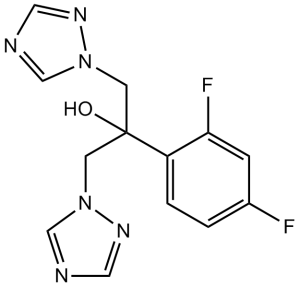
Fluconazole (UK49858)

别名: UK 49858; Fluconazole, Diflucan,UK-49858;UK49858; Triflucan, Elazor, Biozolene
氟康唑;2-(2,4-二氟苯基)-1,3-双(1H-1,2,4-三唑-1-基)-2-丙醇;大扶康;麦道氟康;Α-(2,4-二氟苯基)-Α-(1H-1,2,4-三唑-1-基甲基)-1H-1,2,4-三唑-1-基乙醇; 2-(2,4-二氟苯基)-1,3-双(1H-1,2,4-三氮唑-1-基)-2-丙醇; Fluconazole 氟康唑; 品牌 氟康唑对照品; 氟康唑 EP标准品;氟康唑 Fluconazole;氟康唑 USP31;氟康唑 USP标准品;氟康唑 标准品; 氟康唑峰鉴别 EP标准品;氟康唑工厂;氟康唑杂质;氟康唑杂质对照品;氟康唑中间体; 抗真菌药 氟康唑;赛庚啶; 氟康唑,大扶康, 麦道氟康;福司氟康唑杂质A;福司氟康唑杂质1
目录号: V0806 纯度: ≥98%
氟康唑(Diflucan,UK-49858;UK 49858;Triflucan、Elazor、Biozolene)是一种新型、有效、口服生物可利用的三唑类抗真菌药物,通过抑制真菌羊毛甾醇 14 α-去甲基酶依赖性麦角甾醇生物合成发挥作用。真菌细胞膜的重要组成部分。
Fluconazole (UK49858) CAS号: 86386-73-4
产品类别: P450 (e.g. CYP)
产品仅用于科学研究,不针对患者销售
规格 价格 库存 数量
10 mM * 1 mL in DMSO
50mg
100mg
250mg
500mg
1g
2g
Other Sizes

Other Forms of Fluconazole (UK49858):

  • Fluconazole-d4 (UK-49858-d4)
  • 氟康唑水合物
  • 氟康唑甲磺酸盐
点击了解更多
InvivoChem产品被CNS等顶刊论文引用
纯度/质量控制文件

纯度: ≥98%

产品描述
氟康唑(Diflucan,UK-49858;UK 49858;Triflucan、Elazor、Biozolene)是一种新型、有效、口服生物可利用的三唑类抗真菌药物,通过抑制真菌羊毛甾醇 14 α-去甲基酶依赖性麦角甾醇生物合成起作用,是真菌细胞膜的重要组成部分。
生物活性&实验参考方法
靶点
Fungal cytochrome P450 14α-demethylase (CYP51), a key enzyme in ergosterol biosynthesis (IC50 ≈ 0.1–0.5 μM for Candida albicans CYP51, determined by enzyme activity inhibition assay; MIC (Minimum Inhibitory Concentration) ≈ 0.125–0.5 μg/mL for C. albicans, measured by broth dilution method) [1]
体外研究 (In Vitro)
氟康唑抑制四种烟曲霉,IC50 为 23.9–43.5 μg/mL。在添加血清的培养基中,氟康唑 (0.20 μg/mL) 会强烈抑制白色念珠菌的菌丝体阶段发育和芽管伸长 [1]。氟康唑是一种三唑类抗真菌药物,可预防隐球菌和念珠菌引起的感染。针对克柔念珠菌和光滑念珠菌 (MIC ≥ 32 μg/mL) 的 MIC90 最大 (MIC > 64 μg/mL)。对于以下念珠菌属物种,MIC 小于 2 μg/mL:白色念珠菌 C. 0.5 μg/mL、近平滑念珠菌 C. 2 μg/mL、热带念珠菌 (2 μg/mL)。 C. lusitaniae (2 μg/mL)。 0.5 μg/mL 开菲尔 [2]。药物氟康唑 (0.1–50.0 μg/mL) 可杀死真菌细胞并降低其活力 [3]。
1. 对念珠菌属的抗真菌活性:Fluconazole (UK49858) 对多种念珠菌具有强效体外活性。采用肉汤稀释法(35℃孵育48小时)测定的MIC值如下:
- 白色念珠菌(Candida albicans):0.125–0.5 μg/mL(90%菌株被抑制的浓度MIC₉₀=0.25 μg/mL);
- 热带念珠菌(Candida tropicalis):0.25–1 μg/mL(MIC₉₀=0.5 μg/mL);
- 近平滑念珠菌(Candida parapsilosis):0.5–2 μg/mL(MIC₉₀=1 μg/mL);
- 克柔念珠菌(Candida krusei):8–32 μg/mL(敏感性较低,MIC₉₀=16 μg/mL);
对烟曲霉(Aspergillus fumigatus)活性较弱(MIC>16 μg/mL)[1]
2. 长期抑制白色念珠菌活力:Fluconazole 对白色念珠菌(菌株SC5314)的抑制作用具有时间和浓度依赖性。将其在含Fluconazole(0.5、1、2、4 μg/mL)的培养基中35℃培养1–7天:
- 1 μg/mL组:第3天菌落形成单位(CFU)/mL较对照组(无Fluconazole)减少约90%,第7天减少约99%;
- 2 μg/mL组:从第5天起未检测到存活菌落;
- 0.5 μg/mL组:第7天CFU/mL减少约50%,仅表现部分抑制[3]
体内研究 (In Vivo)
在全身性念珠菌病小鼠模型中,氟康唑(0、0.5、1、2.5、5、7.5 和 10 mg/kg;腹膜内 (ip) 单剂量)使真菌密度 (ED50) 降低 50%,至 4.87 mg/kg。 4]。腹腔注射后氟康唑的终末消除半衰期为 2.4 小时。氟康唑的给药量对终末半衰期没有影响[4]。
1. 小鼠系统性念珠菌病模型中的药效:6–8周龄雌性ICR小鼠通过尾静脉注射1×10⁵个白色念珠菌(菌株CA-30)孢子,建立系统性念珠菌病模型。感染后1小时,小鼠随机分为3组(n=10/组):
- 对照组:腹腔注射生理盐水(每日1次);
- 10 mg/kg Fluconazole组:腹腔注射10 mg/kg Fluconazole(溶解于生理盐水,每日1次);
- 20 mg/kg Fluconazole组:腹腔注射20 mg/kg Fluconazole(溶解于生理盐水,每日1次)。
治疗持续7天,结果如下:
- 生存率:第7天对照组生存率20%,10 mg/kg组80%,20 mg/kg组100%;
- 肾脏真菌载量:对照组为6.2 log CFU/g肾脏,10 mg/kg组降至4.7 log CFU/g(减少1.5 log),20 mg/kg组降至3.9 log CFU/g(减少2.3 log);
- 肝脏真菌载量:趋势与肾脏一致,20 mg/kg组减少2.1 log[4]
酶活实验
1. 真菌CYP51(14α-去甲基酶)活性抑制实验:
(1) 微粒体制备:白色念珠菌培养至对数期,收集细胞并匀浆;匀浆在4℃、9,000 × g离心20分钟去除细胞碎片,再于4℃、100,000 × g超速离心60分钟,收集含CYP51的微粒体沉淀;沉淀用Tris-HCl缓冲液(pH 7.4)重悬;
(2) 反应体系构建:混合0.5 mg/mL微粒体蛋白、10 μM羊毛固醇(底物)、1 mM NADPH(辅酶)及不同浓度Fluconazole(0、0.05、0.1、0.5、1、5 μM),总体积200 μL;
(3) 孵育与终止:37℃孵育60分钟后,加入50 μL乙腈终止反应;
(4) 检测:12,000 × g离心10分钟取上清,通过高效液相色谱(HPLC)定量羊毛固醇的14α-去甲基化产物,计算CYP51活性抑制率,测得IC50≈0.3 μM[1]
细胞实验
细胞活力测定[3]
细胞类型:白色念珠菌酵母细胞(菌株 ATCC 26310 和菌株 TW)
测试浓度: 0.1、0.5、5.0 , 50.0 μg/mL
孵育时间:24 小时
实验结果:针对两种菌株的 MIC 均为 0.5 μg/mL。
1. 念珠菌属MIC测定(肉汤稀释法,文献[1]):
(1) 接种物制备:念珠菌菌株在沙氏葡萄糖肉汤(SDB)中培养至对数期,用新鲜SDB调整浓度至1×10⁶ CFU/mL;
(2) 药物稀释:Fluconazole在SDB中倍比稀释,浓度范围0.03–16 μg/mL;将100 μL稀释药物与100 μL接种物加入96孔板(最终接种量5×10⁵ CFU/mL,最终药物浓度0.015–8 μg/mL);
(3) 孵育与判读:35℃孵育48小时,MIC定义为完全抑制真菌可见生长(无浊度)的最低Fluconazole浓度[1]
2. 白色念珠菌长期活力实验:
(1) 接种物制备:白色念珠菌(SC5314)在SDB中培养至1×10⁶ CFU/mL;
(2) 药物处理:1 mL接种物加入9 mL含Fluconazole(终浓度0.5、1、2、4 μg/mL)或无药物(对照)的SDB中,35℃振荡培养(150 rpm);
(3) CFU计数:培养1、3、5、7天后,取100 μL样品用生理盐水倍比稀释(10⁰–10⁻⁶);取100 μL稀释液涂布于沙氏葡萄糖琼脂(SDA)平板,35℃孵育24小时后计数菌落,计算CFU/mL[3]
动物实验
Animal/Disease Models: Female NYLAR mice (weight, 18 to 20 g; infected intravenously (iv)with C. albicans blastoconidia)[4]
Doses: 5, 10, 15 and 20 mg/kg (pharmacokinetic/PK Analysis)
Route of Administration: Given ip as a single dose
Experimental Results: T1/2=2.4 h
1. Murine model of systemic candidiasis and drug intervention:
(1) Experimental animals: Female ICR mice (6–8 weeks old, 20–22 g), acclimated for 1 week under specific pathogen-free (SPF) conditions;
(2) Fungal infection: C. albicans (CA-30) was cultured in SDB to logarithmic phase, centrifuged, and resuspended in normal saline to 5×10⁵ spores/mL. Mice were infected via tail vein injection of 0.2 mL (1×10⁵ spores/mouse);
(3) Grouping and drug administration: 1 hour post-infection, mice were divided into 3 groups (n=10/group):
- Control group: Intraperitoneal injection of 0.2 mL normal saline, once daily for 7 days;
- 10 mg/kg Fluconazole group: Fluconazole was dissolved in normal saline to 5 mg/mL; mice received 0.2 mL (10 mg/kg) via intraperitoneal injection, once daily for 7 days;
- 20 mg/kg Fluconazole group: Fluconazole was dissolved in normal saline to 10 mg/mL; mice received 0.2 mL (20 mg/kg) via intraperitoneal injection, once daily for 7 days;
(4) Monitoring and sampling: Daily survival was recorded for 7 days. On day 7, surviving mice were euthanized by cervical dislocation. Kidneys and livers were excised, weighed, and homogenized in normal saline (1 g tissue/9 mL saline). Homogenates were serially diluted, spread on SDA plates, and incubated at 35°C for 24 hours to count CFU/g tissue [4]
药代性质 (ADME/PK)
Absorption, Distribution and Excretion
Fluconazole exhibits similar pharmacokinetic characteristics after intravenous (IV) and oral (PO) administration. In healthy volunteers, the bioavailability of oral fluconazole exceeds 90%. Following oral administration, fluconazole is extensively absorbed in the gastrointestinal tract. Food intake does not affect the oral absorption of fluconazole but may prolong the time required to reach maximum concentrations. In a clinical study of healthy subjects receiving 50 mg/kg fluconazole, the Tmax (time to reach maximum concentration) was 3 hours. Peak plasma concentrations (Cmax) in fasting healthy volunteers occur 1–2 hours after administration. Steady-state plasma concentrations are reached within 5–10 days with a once-daily oral dose of 50–400 mg. A loading dose (i.e., twice the usual daily dose) given on the first day of fluconazole treatment allows plasma concentrations to approach steady-state levels on the second day. The mean AUC (area under the curve) after a 25 mg dose of fluconazole in healthy volunteers was 20.3. Precautions regarding capsules and powders, and malabsorption syndrome: Fluconazole capsules typically contain lactose and should therefore not be used with patients with hereditary galactose intolerance, Lapp lactase deficiency, or glucose/galactose malabsorption. Powders used to prepare oral suspensions contain sucrose and should therefore not be used with patients diagnosed with fructose, glucose/galactose malabsorption, or sucrase-isomaltase deficiency. In healthy volunteers, fluconazole is primarily eliminated by renal excretion, with approximately 80% of the administered dose excreted unchanged in the urine. Approximately 11% of the dose is excreted in the urine as metabolites. One study of 50 mg of radiolabeled fluconazole showed that 93.3% of the dose was excreted in the urine. Regarding renal failure: The pharmacokinetics of fluconazole are significantly affected by renal impairment. Patients with impaired renal function may require a reduction in the dose of fluconazole. Three hours of hemodialysis can reduce plasma fluconazole concentrations by approximately 50%. The apparent volume of distribution is reportedly similar to that of total body fluids. A clinical study in healthy volunteers showed that after administration of 50 mg/kg fluconazole, the total volume of distribution was 39 liters (based on a body weight of 60 kg). Fluconazole has good permeability in a variety of body fluids, making it an ideal drug for treating systemic fungal infections, especially with long-term administration. Fluconazole is found in high concentrations in the stratum corneum and dermis-epidermis, as well as in sweat glands. Fluconazole accumulates particularly readily in the stratum corneum, which is beneficial for treating superficial fungal infections. Fluconazole concentrations in saliva and sputum are similar to plasma concentrations. In patients with fungal meningitis, the concentration of fluconazole in cerebrospinal fluid is approximately 80% of the corresponding plasma concentration. Therefore, fluconazole can cross the blood-brain barrier. In inflammatory states, the permeability of the meninges to fluconazole increases, which is beneficial for the treatment of meningitis. The drug is primarily excreted by the kidneys, with a mean clearance of 0.23 mL/min/kg in adults. A clinical study in healthy subjects showed an overall clearance of 19.5 ± 4.7 mL/min and a renal clearance of 14.7 ± 3.7 mL/min (1.17 ± 0.28 and 0.88 ± 0.22 L/h, respectively). Clearance varied with age in children and also differed in patients with renal failure. The pharmacokinetics of fluconazole are similar after intravenous or oral administration. The drug is rapidly and almost completely absorbed from the gastrointestinal tract with no evidence of first-pass metabolism. The bioavailability of fluconazole via oral administration in healthy, fasting adults exceeds 90%; peak plasma concentrations are typically reached within 1–2 hours after oral administration. …Food does not affect the rate and extent of fluconazole absorption in the gastrointestinal tract. The manufacturer states that commercially available fluconazole suspensions are bioequivalent to 100 mg fluconazole tablets. Within the oral dose range of 50–400 mg, peak plasma fluconazole concentrations and AUC increase proportionally with the dose. Steady-state plasma concentrations are reached within 5-10 days after a once-daily oral administration of 50-400 mg fluconazole. …When starting fluconazole treatment, a loading dose equivalent to twice the usual daily dose is given, followed by a once-daily dose. Steady-state plasma concentrations have been reported to be near the second day of treatment. In healthy, fasting adults, the average peak plasma concentration after a single oral dose of 1 mg/kg fluconazole is 1.4 μg/mL. In healthy, fasting adults, the average peak plasma concentration after a single oral dose of 400 mg fluconazole is 6.72 μg/mL (range: 4.12-8.1 μg/mL). In healthy adults, a once-daily intravenous infusion of 50 mg or 100 mg fluconazole (over 30 minutes) resulted in serum drug concentrations of 2.14-2.81 μg/mL and 3.86-4.96 μg/mL one hour after administration on day 6 or day 7 of treatment. For more complete data on the absorption, distribution, and excretion of fluconazole (14 items in total), please visit the HSDB record page. Metabolism/Metabolites Fluconazole is minimally metabolized in the liver. Fluconazole is an inhibitor of CYP2C9, CYP3A4, and CYP2C19. Two metabolites were detected in the urine of healthy volunteers who received 50 mg of radiolabeled fluconazole: a glucuronidated metabolite at the hydroxyl group (6.5%) and a fluconazole N-oxide metabolite (2%). The same study showed no signs of metabolic cleavage of fluconazole, suggesting a difference in its metabolism compared to other drugs in its class, which are primarily metabolized in the liver. Hepatic metabolism accounts for <10% of clearance. Liver. Clearance pathway: In healthy volunteers, fluconazole is primarily cleared by renal excretion, with approximately 80% of the administered dose appearing in the urine unchanged.
Half-life: 30 hours (range: 20-50 hours)
Biological Half-life
After oral administration, the terminal elimination half-life in plasma is approximately 30 hours (range: 20-50 hours). A longer plasma elimination half-life supports single-dose treatment of vaginal candidiasis; other indications may require once-daily or once-weekly dosing. Patients with renal failure may require dose adjustment, and the half-life may be significantly prolonged in these patients.
The plasma elimination half-life of fluconazole in adults with normal renal function is approximately 30 hours (range: 20-50 hours). One study showed that the plasma elimination half-life of this drug was 22 hours after the first day of treatment, 23.8 hours after 7 days of treatment, and 28.6 hours after 26 days of treatment. In a single-dose study of HIV-infected adults, the mean plasma elimination half-life of fluconazole was 32 hours (range: 25–42 hours) in patients with an absolute helper/inducing (CD4+, T4+) T cell count greater than 200 cells/μL, and 50 hours (range: 32–69 hours) in patients with a CD4+ T cell count less than 200 cells/μL. In other single-dose studies in a small number of HIV-infected adults with CD4+ T cell counts less than 200 cells/μL, the mean plasma elimination half-life was 35–40 hours (range: 22–75 hours). The mean plasma half-life of fluconazole in children aged 9 months to 15 years is approximately 15–25 hours. In a limited study of preterm neonates receiving intravenous fluconazole every 72 hours, the plasma half-life decreased over time, averaging 88 hours after the first dose and 55 hours after the fifth dose (day 13).
Oral bioavailability: After oral administration of 20 mg/kg fluconazole to mice, the oral bioavailability was approximately 90% (calculated by comparing the AUC₀₋₂₄ₕ of oral and intravenous administration by detecting plasma drug concentration by HPLC)[4]
-Plasma half-life (t₁/₂): The t₁/₂ of fluconazole in mouse plasma was approximately 2.5 hours (determined by HPLC after intravenous injection of 10 mg/kg)[4]
-Tissue distribution: Two hours after intraperitoneal injection of 20 mg/kg fluconazole into infected mice, the drug concentration in the kidneys was approximately 5 times that in the plasma (kidneys: approximately 12 μg/g, plasma: approximately 2.4 μg/mL), and the concentration in the liver was approximately 2 times that in the plasma (approximately 4.8 μg/g)[4]
-Excretion: Within 24 hours after administration, approximately 70% Fluconazole is excreted unchanged in the urine (as determined by high performance liquid chromatography in mouse urine samples) [4]
毒性/毒理 (Toxicokinetics/TK)
Toxicity Summary
Fluconazole interacts with 14α-demethylase, a cytochrome P-450 enzyme essential for the conversion of lanosterol to ergosterol. Since ergosterol is a crucial component of the fungal cell membrane, inhibition of its synthesis leads to increased cell permeability, resulting in leakage of cell contents. Fluconazole may also inhibit endogenous respiration, interact with membrane phospholipids, inhibit yeast conversion to mycelium, inhibit purine uptake, and impair the biosynthesis of triglycerides and/or phospholipids. Interactions Concomitant use of fluconazole and short-acting benzodiazepines (e.g., midazolam) may increase benzodiazepine concentrations and enhance their psychomotor effects; consider reducing the benzodiazepine dose and closely monitor patients for signs of increased benzodiazepine exposure.
Concomitant use of fluconazole and/or itraconazole with tolbutamide, chlorpropamide, glibenclamide, or glipizide increases the plasma concentrations of these sulfonylureas; hypoglycemia has been observed; blood glucose levels should be monitored, and the dose of oral hypoglycemic agents may need to be reduced.
...In a small study, a slight pharmacokinetic interaction was observed with fluconazole and terfenadine; although no changes in cardiac repolarization or accumulation of parent terfenadine were observed, concomitant use of fluconazole at daily doses of 400 mg or higher with terfenadine is contraindicated.
Concomitant use of cisapride with fluconazole...is contraindicated; concomitant use of this antifungal drug may inhibit the cytochrome P450 enzyme metabolic pathway, leading to elevated cisapride plasma concentrations; this can cause ventricular arrhythmias, including torsades de pointes and QT prolongation...
For more complete data on interactions with fluconazole (17 in total), please visit the HSDB records page.
1. In vivo toxicity in mice:
- Body weight: Mice in the 10 mg/kg and 20 mg/kg fluconazole groups did not show significant weight loss (weight change over 7 days: +3% to +5%), while the control group (systemic candidiasis) showed a weight loss of about 15%;
- Liver and kidney function: Serum alanine aminotransferase (ALT), aspartate aminotransferase (AST) and creatinine (Cr) levels in the fluconazole-treated group were within the normal range of healthy mice and were not significantly different from the uninfected healthy control group (P>0.05);
- Acute toxicity: During the 7-day experiment, mice in the fluconazole-treated group did not die or exhibit abnormal behavior (e.g., lethargy, decreased appetite) [4]
2. In vitro cytotoxicity: No cytotoxicity was observed after co-culturing human foreskin fibroblasts with fluconazole (0.1–100 μg/mL) for 48 hours (MTT method, cell viability >95% vs. (Control group) [1]
参考文献

[1]. [In vitro activity of fluconazole, a novel bistriazole antifungal agent]. Jpn J Antibiot. 1989 Jan;42(1):1-16.

[2]. Interpretive breakpoints for fluconazole and Candida revisited: a blueprint for the future of antifungal susceptibility testing. Clin Microbiol Rev. 2006 Apr;19(2):435-47.

[3]. Effect of fluconazole on viability of Candida albicans over extended periods of time. Antimicrob Agents Chemother. 1996 Nov;40(11):2622-5.

[4]. Pharmacodynamics of fluconazole in a murine model of systemic candidiasis. Antimicrob Agents Chemother. 1998 May;42(5):1105-9.

其他信息
Therapeutic Uses

MeSH Title: Antifungal Drugs
Drug: Antifungal drug; Orally active bis(triazole) antifungal drug
Veterinary: For the treatment of systemic fungal infections in dogs, particularly those related to the central nervous system.
Fluconazole…is indicated for the prevention of febrile neutropenia in patients with hematologic malignancies. /Not included in the US product label/
For more complete therapeutic use data for fluconazole (of 16), please visit the HSDB record page.
Drug Warnings
While reports of serious adverse liver reactions to fluconazole are rare, the possibility of these adverse reactions occurring during fluconazole treatment should still be considered. Fluconazole treatment should be discontinued if signs and symptoms consistent with liver disease occur.
If abnormal liver function tests occur during fluconazole treatment, patients should be monitored for more serious liver damage. Rare reports of serious liver reactions (e.g., necrosis, clinical hepatitis, cholestasis, fulminant hepatic failure) have been reported in patients receiving fluconazole treatment. The manufacturer states that no clear association has been established between these adverse liver reactions and daily dose, duration of treatment, sex, or age. While hepatotoxicity is usually reversible, there have been reports of deaths. These deaths primarily occurred in patients with serious underlying conditions (e.g., HIV, malignancy) who were concurrently taking fluconazole and other medications; however, at least one death involved an elderly patient with immunocompetent renal insufficiency who developed fulminant hepatic necrosis within 10 days of starting fluconazole treatment. It has been reported that approximately 5-7% of patients receiving fluconazole treatment experience mild, transient increases (1.5-3 times the upper limit of normal) in serum AST (SGOT), ALT (SGPT), alkaline phosphatase, gamma-glutamyl transferase (GGT, GGTP), and bilirubin levels. In most reported cases, these levels return to pre-treatment levels during or after fluconazole treatment and are not associated with hepatotoxicity. However, approximately 1% of patients receiving fluconazole treatment experience significant increases in serum transaminase levels (8 times or more the upper limit of normal), requiring discontinuation of the medication. Any patient experiencing abnormal liver function tests while taking fluconazole should be closely monitored to rule out more serious liver damage. Because there have been rare but potentially fatal reports of exfoliative dermatitis in patients with serious underlying diseases taking fluconazole, the possibility of these adverse reactions should be considered. Immunocompromised patients (e.g., HIV-infected patients) developing a rash during fluconazole treatment should be closely monitored, and treatment should be discontinued if the lesions progress. For more complete data on fluconazole (17 total), please visit the HSDB records page.
Pharmacodynamics
Fluconazole has been shown to have antimicrobial activity against most of the following microbial strains and can cure fungal infections: _Candida albicans, Candida glabrata (many strains are moderately sensitive), Candida parapsilosis, Candida tropicalis, Cryptococcus neoformans_. Its mechanism of action is to treat fungal infections and their symptoms by inhibiting intracellular steroidal substances in fungal cells, interfering with cell wall synthesis and growth, and cell adhesion. The antibacterial activity of fluconazole has been demonstrated in normal and immunocompromised animal models for the treatment of systemic and intracranial fungal infections caused by Cryptococcus neoformans and systemic infections caused by Candida albicans. Notably, resistance to fluconazole has been found in several strains. This further underscores the necessity of susceptibility testing when considering fluconazole as an antifungal treatment. Regarding the steroid effects of fluconazole: There are concerns that fluconazole may interfere with and inactivate human steroids/hormones by inhibiting hepatic cytochrome P-450 enzymes. Studies have shown that fluconazole is more selective for fungal cytochrome P-450 enzymes than for many mammalian cytochrome P-450 enzymes. In women of reproductive age, daily administration of 50 mg fluconazole for up to 28 days has been shown to have no effect on plasma testosterone levels in men and plasma steroid levels in women. A clinical study cited on the European Medicines Agency label indicated that in healthy men, doses of 200–400 mg of fluconazole had no clinically relevant effect on steroid levels or ACTH-stimulated steroid responses. Other studies have also shown that fluconazole has no significant effect on steroid levels, further confirming these data.
1. Drug classification and research and development background: Fluconazole (UK49858) is a novel bitriazole antifungal drug developed in the 1980s. Its characteristics are high water solubility and broad-spectrum activity against Candida species, overcoming the disadvantage of poor solubility of early triazole drugs (such as ketoconazole)[1]
2. Antifungal mechanism: Fluconazole inhibits fungal CYP51 (14α-demethylase), blocking the conversion of lanosterol to ergosterol (a key component of fungal cell membranes). Ergosterol deficiency and accumulation of toxic methylated sterols can disrupt cell membrane integrity, leading to fungal cell lysis and death [1]
3. Clinical breakpoints: Literature [2] updated the Clinical and Laboratory Standards Institute (CLSI) explanatory breakpoints for fluconazole against Candida spp. (based on clinical outcome data):
- Sensitive (S): ≤8 μg/mL (potentially effective for treatment);
- Intermediate (I): 16–32 μg/mL (high-dose treatment may be effective);
- Resistant (R): ≥64 μg/mL (unlikely effective) [2]
4. Pharmacodynamic relevance: In mouse models, the efficacy of fluconazole was correlated with the AUC/MIC ratio (the ratio of the area under the plasma concentration-time curve to the MIC). An AUC/MIC ratio ≥25 was associated with >80% survival, providing pharmacodynamic evidence for clinical dose selection [4]
*注: 文献方法仅供参考, InvivoChem并未独立验证这些方法的准确性
化学信息 & 存储运输条件
分子式
C13H12F2N6O
分子量
306.27
精确质量
306.104
CAS号
86386-73-4
相关CAS号
Fluconazole-d4;1124197-58-5;Fluconazole hydrate;155347-36-7;Fluconazole mesylate;159532-41-9
PubChem CID
3365
外观&性状
White to off-white solid powder
密度
1.5±0.1 g/cm3
沸点
579.8±60.0 °C at 760 mmHg
熔点
138-140°C
闪点
304.4±32.9 °C
蒸汽压
0.0±1.7 mmHg at 25°C
折射率
1.663
LogP
0.5
tPSA
81.65
氢键供体(HBD)数目
1
氢键受体(HBA)数目
7
可旋转键数目(RBC)
5
重原子数目
22
分子复杂度/Complexity
358
定义原子立体中心数目
0
InChi Key
RFHAOTPXVQNOHP-UHFFFAOYSA-N
InChi Code
InChI=1S/C13H12F2N6O/c14-10-1-2-11(12(15)3-10)13(22,4-20-8-16-6-18-20)5-21-9-17-7-19-21/h1-3,6-9,22H,4-5H2
化学名
2-(2,4-difluorophenyl)-1,3-bis(1,2,4-triazol-1-yl)propan-2-ol
别名
UK 49858; Fluconazole, Diflucan,UK-49858;UK49858; Triflucan, Elazor, Biozolene
HS Tariff Code
2934.99.9001
存储方式

Powder      -20°C    3 years

                     4°C     2 years

In solvent   -80°C    6 months

                  -20°C    1 month

运输条件
Room temperature (This product is stable at ambient temperature for a few days during ordinary shipping and time spent in Customs)
溶解度数据
溶解度 (体外实验)
DMSO: 61 mg/mL (199.2 mM)
Water:<1 mg/mL
Ethanol:61 mg/mL (199.2 mM)
溶解度 (体内实验)
配方 1 中的溶解度: ≥ 2.5 mg/mL (8.16 mM) (饱和度未知) in 10% DMSO + 40% PEG300 + 5% Tween80 + 45% Saline (这些助溶剂从左到右依次添加,逐一添加), 澄清溶液。
例如,若需制备1 mL的工作液,可将100 μL 25.0 mg/mL澄清DMSO储备液加入到400 μL PEG300中,混匀;然后向上述溶液中加入50 μL Tween-80,混匀;加入450 μL生理盐水定容至1 mL。
*生理盐水的制备:将 0.9 g 氯化钠溶解在 100 mL ddH₂O中,得到澄清溶液。

配方 2 中的溶解度: ≥ 2.5 mg/mL (8.16 mM) (饱和度未知) in 10% DMSO + 90% (20% SBE-β-CD in Saline) (这些助溶剂从左到右依次添加,逐一添加), 澄清溶液。
例如,若需制备1 mL的工作液,可将 100 μL 25.0 mg/mL澄清DMSO储备液加入900 μL 20% SBE-β-CD生理盐水溶液中,混匀。
*20% SBE-β-CD 生理盐水溶液的制备(4°C,1 周):将 2 g SBE-β-CD 溶解于 10 mL 生理盐水中,得到澄清溶液。

View More

配方 3 中的溶解度: ≥ 2.5 mg/mL (8.16 mM) (饱和度未知) in 10% DMSO + 90% Corn Oil (这些助溶剂从左到右依次添加,逐一添加), 澄清溶液。
例如,若需制备1 mL的工作液,可将 100 μL 25.0 mg/mL 澄清 DMSO 储备液加入到 900 μL 玉米油中并混合均匀。


配方 4 中的溶解度: 2 mg/mL (6.53 mM) in PBS (这些助溶剂从左到右依次添加,逐一添加), 澄清溶液; 超声助溶 (<60°C).

请根据您的实验动物和给药方式选择适当的溶解配方/方案:
1、请先配制澄清的储备液(如:用DMSO配置50 或 100 mg/mL母液(储备液));
2、取适量母液,按从左到右的顺序依次添加助溶剂,澄清后再加入下一助溶剂。以 下列配方为例说明 (注意此配方只用于说明,并不一定代表此产品 的实际溶解配方):
10% DMSO → 40% PEG300 → 5% Tween-80 → 45% ddH2O (或 saline);
假设最终工作液的体积为 1 mL, 浓度为5 mg/mL: 取 100 μL 50 mg/mL 的澄清 DMSO 储备液加到 400 μL PEG300 中,混合均匀/澄清;向上述体系中加入50 μL Tween-80,混合均匀/澄清;然后继续加入450 μL ddH2O (或 saline)定容至 1 mL;

3、溶剂前显示的百分比是指该溶剂在最终溶液/工作液中的体积所占比例;
4、 如产品在配制过程中出现沉淀/析出,可通过加热(≤50℃)或超声的方式助溶;
5、为保证最佳实验结果,工作液请现配现用!
6、如不确定怎么将母液配置成体内动物实验的工作液,请查看说明书或联系我们;
7、 以上所有助溶剂都可在 Invivochem.cn网站购买。
制备储备液 1 mg 5 mg 10 mg
1 mM 3.2651 mL 16.3255 mL 32.6509 mL
5 mM 0.6530 mL 3.2651 mL 6.5302 mL
10 mM 0.3265 mL 1.6325 mL 3.2651 mL

1、根据实验需要选择合适的溶剂配制储备液 (母液):对于大多数产品,InvivoChem推荐用DMSO配置母液 (比如:5、10、20mM或者10、20、50 mg/mL浓度),个别水溶性高的产品可直接溶于水。产品在DMSO 、水或其他溶剂中的具体溶解度详见上”溶解度 (体外)”部分;

2、如果您找不到您想要的溶解度信息,或者很难将产品溶解在溶液中,请联系我们;

3、建议使用下列计算器进行相关计算(摩尔浓度计算器、稀释计算器、分子量计算器、重组计算器等);

4、母液配好之后,将其分装到常规用量,并储存在-20°C或-80°C,尽量减少反复冻融循环。

计算器

摩尔浓度计算器可计算特定溶液所需的质量、体积/浓度,具体如下:

  • 计算制备已知体积和浓度的溶液所需的化合物的质量
  • 计算将已知质量的化合物溶解到所需浓度所需的溶液体积
  • 计算特定体积中已知质量的化合物产生的溶液的浓度
使用摩尔浓度计算器计算摩尔浓度的示例如下所示:
假如化合物的分子量为350.26 g/mol,在5mL DMSO中制备10mM储备液所需的化合物的质量是多少?
  • 在分子量(MW)框中输入350.26
  • 在“浓度”框中输入10,然后选择正确的单位(mM)
  • 在“体积”框中输入5,然后选择正确的单位(mL)
  • 单击“计算”按钮
  • 答案17.513 mg出现在“质量”框中。以类似的方式,您可以计算体积和浓度。

稀释计算器可计算如何稀释已知浓度的储备液。例如,可以输入C1、C2和V2来计算V1,具体如下:

制备25毫升25μM溶液需要多少体积的10 mM储备溶液?
使用方程式C1V1=C2V2,其中C1=10mM,C2=25μM,V2=25 ml,V1未知:
  • 在C1框中输入10,然后选择正确的单位(mM)
  • 在C2框中输入25,然后选择正确的单位(μM)
  • 在V2框中输入25,然后选择正确的单位(mL)
  • 单击“计算”按钮
  • 答案62.5μL(0.1 ml)出现在V1框中
g/mol

分子量计算器可计算化合物的分子量 (摩尔质量)和元素组成,具体如下:

注:化学分子式大小写敏感:C12H18N3O4  c12h18n3o4
计算化合物摩尔质量(分子量)的说明:
  • 要计算化合物的分子量 (摩尔质量),请输入化学/分子式,然后单击“计算”按钮。
分子质量、分子量、摩尔质量和摩尔量的定义:
  • 分子质量(或分子量)是一种物质的一个分子的质量,用统一的原子质量单位(u)表示。(1u等于碳-12中一个原子质量的1/12)
  • 摩尔质量(摩尔重量)是一摩尔物质的质量,以g/mol表示。
/

配液计算器可计算将特定质量的产品配成特定浓度所需的溶剂体积 (配液体积)

  • 输入试剂的质量、所需的配液浓度以及正确的单位
  • 单击“计算”按钮
  • 答案显示在体积框中
动物体内实验配方计算器(澄清溶液)
第一步:请输入基本实验信息(考虑到实验过程中的损耗,建议多配一只动物的药量)
第二步:请输入动物体内配方组成(配方适用于不溶/难溶于水的化合物),不同的产品和批次配方组成不同,如对配方有疑问,可先联系我们提供正确的体内实验配方。此外,请注意这只是一个配方计算器,而不是特定产品的确切配方。
+
+
+

计算结果:

工作液浓度 mg/mL;

DMSO母液配制方法 mg 药物溶于 μL DMSO溶液(母液浓度 mg/mL)。如该浓度超过该批次药物DMSO溶解度,请首先与我们联系。

体内配方配制方法μL DMSO母液,加入 μL PEG300,混匀澄清后加入μL Tween 80,混匀澄清后加入 μL ddH2O,混匀澄清。

(1) 请确保溶液澄清之后,再加入下一种溶剂 (助溶剂) 。可利用涡旋、超声或水浴加热等方法助溶;
            (2) 一定要按顺序加入溶剂 (助溶剂) 。

临床试验信息
NCT Number Recruitment interventions Conditions Sponsor/Collaborators Start Date Phases
NCT04122560 Completed Drug: Fluconazole 200mg tab
Drug: Fluconazole 2 MG/ML
Fluconazole
Candidiasis
Radboud University Medical Center November 30, 2019 Phase 4
NCT04201054 Completed Drug: Fluconazole Healthy Volunteers Parc de Salut Mar March 25, 2019 Phase 1
NCT03821480 Completed Drug: Test drug
Drug: Reference drug
Bioequivalence Pfizer January 28, 2019 Phase 1
NCT04038008 Completed Drug: Fluconazole
Drug: Diflucan®
Bioequivalence Pharmtechnology LLC July 26, 2019 Phase 1
生物数据图片
  • Fluconazole

    Impact of fluconazole and FK506 alone and in combination as lock therapy against C. albicans biofilm cells in an in vivo catheter model. Antimicrob Agents Chemother. 2008 Mar; 52(3): 1127–1132.
  • Fluconazole

    C. albicans biofilms are hypersensitive to the tacrolimus (FK506)-fluconazole combination. Antimicrob Agents Chemother. 2008 Mar; 52(3): 1127–1132.
相关产品
联系我们