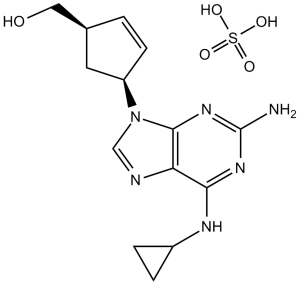
Abacavir sulfate (ABC)

别名: Abacavir Hemisulfate; ABC sulfate; 1592U89; ABC, Ziagen; Epzicom; 1592 U89; 1592 U89; 1592U-89; 1592-U89; 1592 U 89. 硫酸阿巴卡韦; 阿巴卡韦硫酸盐; 阿巴卡韦峰鉴别 EP标准品; 阿巴卡韦系统适用性 EP标准品; 硫酸阿巴卡韦 EP标准品;硫酸阿巴卡韦 USP标准品; 外消旋阿巴卡韦 USP标准品; 阿波卡伟;阿巴卡韦杂质;(1S,4R)-4-[2-氨基-6-(环丙基氨基)-9H-嘌呤-9-基]-2-环戊烯-1-甲醇
目录号: V1826 纯度: ≥98%
阿巴卡韦(以前也称为 ABC 或 1592U89;商品名:Ziagen;Epzicom)是一种常用的 NRTI 类核苷类似物,具有针对 HIV-1 的有效抗病毒活性。
Abacavir sulfate (ABC) CAS号: 188062-50-2
产品类别: Reverse Transcriptase
产品仅用于科学研究,不针对患者销售
规格 价格 库存 数量
100mg
250mg
500mg
1g
2g
10g
Other Sizes

Other Forms of Abacavir sulfate (ABC):

  • rel-Abacavir-d4 (Abacavir-d4)
  • Abacavir carboxylate
  • ent-Abacavir
  • Abacavir-d4 (阿巴卡韦 d4)
  • 阿巴卡韦
  • 硫酸阿巴卡韦
  • 阿巴卡韦硫酸
点击了解更多
InvivoChem产品被CNS等顶刊论文引用
纯度/质量控制文件

纯度: ≥98%

产品描述
阿巴卡韦(以前也称为 ABC 或 1592U89;商品名:Ziagen;Epzicom)是一种常用的 NRTI 类核苷类似物,具有针对 HIV-1 的有效抗病毒活性。阿巴卡韦是一种广泛使用的抗逆转录病毒药物,用于预防和治疗艾滋病毒/艾滋病。它属于核苷类似物逆转录酶抑制剂(NRTI)类型。对齐多夫定 (AZT) 或拉米夫定 (3TC) 耐药的病毒株通常但并非总是对阿巴卡韦敏感。它被列入世界卫生组织的基本药物清单,这是基本卫生系统所需的最重要药物的清单。
生物活性&实验参考方法
靶点
Abacavir sulfate (ABC) targets HIV-1 reverse transcriptase (EC50 = 0.08 μM in HIV-1-infected human PBMCs; Ki = 0.01 μM for recombinant HIV-1 reverse transcriptase) [4]
Abacavir sulfate (ABC) inhibits prostate cancer cell proliferation via targeting cellular DNA synthesis (IC50 = 15 μM for LNCaP cells; IC50 = 18 μM for PC-3 cells) [1]
Abacavir sulfate (ABC) suppresses medulloblastoma cell viability (IC50 = 20 μM for DAOY cells; IC50 = 22 μM for D283 cells) [3]
体外研究 (In Vitro)
在前列腺癌细胞系中,阿巴卡韦(15 和 150 μM,0-120 小时)硫酸盐可减少细胞增殖、修饰 LINE-1 mRNA 表达、改变细胞周期进程并促进衰老[1]。阿巴卡韦硫酸盐(15 和 150 μM,18 小时)可大大减少细胞迁移并抑制细胞侵袭[1]。硫酸阿巴卡韦诱导脂肪细胞凋亡[4]。
硫酸阿巴卡韦(Abacavir sulfate, ABC) 抑制人前列腺癌细胞系LNCaP和PC-3的增殖,15 μM和18 μM浓度下分别使细胞活力降低50%;20 μM浓度下膜联蛋白V阳性细胞比例增加30%,诱导细胞凋亡 [1]
硫酸阿巴卡韦(Abacavir sulfate, ABC) 下调LNCaP细胞中抗凋亡蛋白Bcl-2的表达,上调促凋亡蛋白Bax的表达(western blot分析)[1]
硫酸阿巴卡韦(Abacavir sulfate, ABC) 与放疗和地西他滨联合使用时,对髓母细胞瘤细胞DAOY和D283表现出协同细胞毒性,10 μM浓度联合治疗使细胞存活率降低70%,而单药治疗仅降低30% [3]
硫酸阿巴卡韦(Abacavir sulfate, ABC) 使人脂肪细胞中的线粒体DNA(mtDNA)水平较司他夫定处理组升高1.8倍,并减少45%的脂肪细胞凋亡 [4]
硫酸阿巴卡韦(Abacavir sulfate, ABC) 在浓度高达50 μM时,对正常人前列腺上皮细胞(PrEC)的活力无显著影响 [1]
体内研究 (In Vivo)
阿巴卡韦硫酸盐(0-7.5 μg/mL,100 μL,阴囊内注射;100 和 200 mg/kg,口服;4 小时)硫酸盐可剂量依赖性地增加血栓形成[2]。在携带髓母细胞瘤的高危小鼠中,硫酸阿巴卡韦(50 mg/kg/d;腹腔注射;14 天)联合 0.1 mg/kg/d 地西他滨可提高生存率[3]。
硫酸阿巴卡韦(Abacavir sulfate, ABC) 以100 mg/kg/天的剂量口服给药C57BL/6小鼠14天后,动脉血栓形成发生率增加60% [2]
硫酸阿巴卡韦(Abacavir sulfate, ABC) 与放疗(2 Gy)和地西他滨(0.2 mg/kg)联合使用时,使髓母细胞瘤荷瘤裸鼠的存活率提高40%,肿瘤体积较对照组减少55% [3]
硫酸阿巴卡韦(Abacavir sulfate, ABC) 改善先前经司他夫定治疗小鼠的脂肪萎缩,口服50 mg/kg/天8周后,附睾脂肪垫重量增加35% [4]
硫酸阿巴卡韦(Abacavir sulfate, ABC) 使小鼠脂肪细胞凋亡减少38%,脂肪组织mtDNA水平较司他夫定治疗组升高2.1倍 [4]
酶活实验
HIV-1逆转录酶抑制实验:制备包含重组HIV-1逆转录酶、多聚(rA)-寡聚(dT)模板引物和[3H]-dGTP的反应体系。加入系列稀释浓度的硫酸阿巴卡韦(Abacavir sulfate, ABC),在37°C下孵育90分钟。用三氯乙酸终止反应,通过玻璃纤维滤膜过滤,测定放射性强度以计算酶抑制效率 [4]
细胞DNA合成实验:在24孔板中培养LNCaP细胞,用硫酸阿巴卡韦(Abacavir sulfate, ABC)(5–50 μM)处理24小时后,加入[3H]-胸腺嘧啶核苷孵育4小时。收获细胞,用冷PBS洗涤,测定放射性强度以评估DNA合成抑制情况 [1]
细胞实验
细胞增殖测定[1]
细胞类型: PC3、LNCaP 和 WI-38
测试浓度: 15 和 150 μM
孵育持续时间:0、24、48、72 和 96 小时
实验结果:证明对 PC3 和 LNCaP 具有剂量依赖性生长抑制作用。

细胞周期分析[1]
细胞类型: PC3 和 LNCaP
测试浓度: 150 μM
孵育持续时间:0、18、24、48、72、96和120小时
实验结果:导致PC3和LNCaP细胞中S期细胞的大量积累,并且在 PC3 细胞中观察到 G2/M 期增量。

细胞迁移测定 [1]
细胞类型: PC3 和 LNCaP
测试浓度: 15 和 150 μM
孵育时间: 18 小时
实验结果:细胞迁移显着减少。细胞侵袭测定[1]
细胞类型: PC3 和 LNCaP
测试浓度: 15 和 150 μM
孵育时间:18小时
实验结果:显着抑制细胞观察。
前列腺癌细胞增殖与凋亡实验:在96孔板中以3×10⁴个细胞/孔接种LNCaP和PC-3细胞。用硫酸阿巴卡韦(Abacavir sulfate, ABC)(1–50 μM)处理72小时。通过MTT法评估细胞活力以计算IC50;膜联蛋白V-FITC/PI染色后流式细胞术分析凋亡率;提取蛋白通过western blot检测Bcl-2和Bax的表达 [1]
髓母细胞瘤细胞联合治疗实验:在96孔板中以2×10⁴个细胞/孔接种DAOY和D283细胞。用硫酸阿巴卡韦(Abacavir sulfate, ABC)(5–25 μM)预处理2小时后,进行放疗(2 Gy)和地西他滨(0.5 μM)处理。孵育5天后,采用克隆形成实验测定细胞存活率,计算联合指数(CI)[3]
脂肪细胞mtDNA与凋亡实验:从皮下脂肪组织中分离人脂肪细胞,在6孔板中以1×10⁶个细胞/孔接种。用硫酸阿巴卡韦(Abacavir sulfate, ABC)(10 μM)或司他夫定(10 μM)处理14天。提取总DNA,通过实时PCR定量mtDNA水平;膜联蛋白V-FITC染色检测凋亡率 [4]
动物实验
Animal/Disease Models: Male mice (9-weeks old, 22-30 g) - wild-type (WT) C57BL/ 6 or homozygous knockout (P2rx7 KO, B6.129P2-P2rx7tm1Gab/J)[2]
Doses: 2.5, 5 and 7.5 μg/mL, 100 μL or 100 and 200 mg/kg
Route of Administration: Intrascrotal or oral administration for 4 h
Experimental Results: Dose-dependently promoted thrombus formation.

Animal/Disease Models: NSGTM mice, patient-derived xenograft (PDX) cells of non-WNT/non-SHH, Group 3 and of SHH/ TP53-mutated medulloblastoma[3]
Doses: 50 mg/kg/ d with 0.1 mg/kg/d Decitabine
Route of Administration: intraperitoneal (ip)injection, daily for 14 days
Experimental Results: Inhibited tumor growth and enhanced mouse survival.
Arterial thrombosis mouse assay: Male C57BL/6 mice (8–10 weeks old) are administered Abacavir sulfate (ABC) via oral gavage at 50 or 100 mg/kg/day for 14 days. The drug is formulated in 0.5% methylcellulose. On day 15, mice undergo ferric chloride-induced carotid artery injury, and blood flow is monitored for 30 min to determine thrombosis incidence [2]
Medulloblastoma mouse model assay: Nude mice (6–8 weeks old) are intracranially implanted with DAOY medulloblastoma cells (1×10⁵ cells/mouse). Seven days post-implantation, mice receive combined treatment: Abacavir sulfate (ABC) (30 mg/kg/day, oral gavage), radiotherapy (2 Gy, once weekly for 3 weeks), and decitabine (0.2 mg/kg/day, intraperitoneal injection). Tumor volume is measured every 3 days via MRI, and survival rate is recorded for 60 days [3]
Lipoatrophy mouse model assay: Mice are first treated with stavudine (50 mg/kg/day, oral) for 12 weeks to induce lipoatrophy. Then, stavudine is replaced with Abacavir sulfate (ABC) (50 mg/kg/day, oral) for another 8 weeks. At study end, epididymal and subcutaneous fat pads are harvested for weight measurement; adipose tissue is analyzed for mtDNA levels (real-time PCR) and apoptotic cells (TUNEL staining) [4]
药代性质 (ADME/PK)
Absorption, Distribution and Excretion
Following oral administration of a 600-mg dose of radiolabeled abacavir, 82.2% of the dose is excreted in urine and 16% of the dose is excreted in feces. The 5-carboxylic acid metabolite, 5-glucuronide metabolite, and unchanged abacavir accounted for 30, 36, and 1.2%, respectively, of recovered radioactivity in urine; unidentified minor metabolites accounted for 15% of recovered radioactivity in urine.
It is not known whether abacavir is distributed into human milk; the drug is distributed into milk in rats.
Abacavir crosses the placenta in rats.
The oral bioavailability of abacavir is high with or without food; the CSF-to-plasma AUC ratio is approximately 0.3.
For more Absorption, Distribution and Excretion (Complete) data for ABACAVIR SULFATE (7 total), please visit the HSDB record page.
Metabolism / Metabolites
Abacavir is partially metabolized by alcohol dehydrogenase (to form the 5'-carboxylic acid) and glucuronidation (to form the 5'-glucuronide).
The metabolic fate of abacavir has not been fully determined, but the drug is metabolized in the liver. Abacavir is metabolized by alcohol dehydrogenase to form the 5-carboxylic acid and by glucuronyltransferase to form the 5-glucuronide; these metabolites do not appear to have any antiviral activity. Any involvement of cytochrome p450 isoenzymes in the metabolism of abacavir is limited.
Intracellularly, abacavir is phosphorylated to abacavir monophosphate by adenosine phosphotransferase; abacavir monophosphate is then converted to carbovir monophosphate in a reaction catalyzed by cytosolic enzymes and then to carbovir triphosphate by cellular kinases. Intracellular (host cell) conversion of abacavir to carbovir triphosphate is necessary for the antiviral activity of the drug. The in vitro intracellular half-life of carbovir triphosphate in CD4+ CEM cells is 3.3 hours.
Biological Half-Life
The in vitro intracellular half-life of carbovir triphosphate /SRP: a metabolite of abacavir sulfate,/ in CD4+ CEM cells is 3.3 hours.
The plasma elimination half-life of abacavir following a single oral dose (given as abacavir sulfate) is about 1.5 hours. In HIV-infected children 3 months to 13 years of age who received 8 mg/kg of abacavir every 12 hours (given as an oral solution containing abacavir sulfate), steady-state plasma elimination half-life averaged 1.3 hours and was essentially the same as that reported after a single dose. Following oral administration of a single 300-mg dose of abacavir to an individual with renal failure (glomerular filtration rate less than 10 mL/minute) undergoing peritoneal dialysis, the plasma elimination half-life of the drug was 1.33 hours.
Abacavir sulfate (ABC) has an oral bioavailability of 76% in humans [4]
Abacavir sulfate (ABC) is rapidly absorbed in humans, reaching peak plasma concentrations (Cmax) of 3.0 μg/mL at a Tmax of 0.8 h after oral administration of 300 mg [4]
The area under the plasma concentration-time curve (AUC0–24h) of Abacavir sulfate (ABC) in humans is 8.6 μg·h/mL at 300 mg twice daily [4]
Abacavir sulfate (ABC) has a volume of distribution (Vd) of 0.8 L/kg in humans [4]
The plasma elimination half-life (t1/2) of Abacavir sulfate (ABC) in humans is 1.5 h [4]
Abacavir sulfate (ABC) is metabolized primarily by alcohol dehydrogenase and glucuronyl transferase in the liver [4]
Renal excretion accounts for 1.2% of the administered dose of Abacavir sulfate (ABC) in humans [4]
毒性/毒理 (Toxicokinetics/TK)
Effects During Pregnancy and Lactation
◉ Summary of Use during Lactation
Abacavir appears in breastmilk in small quantities. Very little information is available on the safety of its use during breastfeeding. Achieving and maintaining viral suppression with antiretroviral therapy decreases breastfeeding transmission risk to less than 1%, but not zero. Individuals with HIV who are on antiretroviral therapy with a sustained undetectable viral load and who choose to breastfeed should be supported in this decision. If a viral load is not suppressed, banked pasteurized donor milk or formula is recommended.
◉ Effects in Breastfed Infants
An HIV-positive mother took a combination tablet containing dolutegravir 50 mg, abacavir sulfate 600 mg and lamivudine 300 mg (Triumeq) once daily. Her infant was exclusively breastfed for about 30 weeks and partially breastfed for about 20 weeks more. No obvious side effects were noted.
◉ Effects on Lactation and Breastmilk
Gynecomastia has been reported among men receiving highly active antiretroviral therapy. Gynecomastia is unilateral initially, but progresses to bilateral in about half of cases. No alterations in serum prolactin were noted and spontaneous resolution usually occurred within one year, even with continuation of the regimen. Some case reports and in vitro studies have suggested that protease inhibitors might cause hyperprolactinemia and galactorrhea in some male patients, although this has been disputed. The relevance of these findings to nursing mothers is not known. The prolactin level in a mother with established lactation may not affect her ability to breastfeed.
Interactions
Concurrent use /of ethanol/ with abacavir may result in increased concentrations and half-life of abacavir as a result of competition for common metabolic pathways via alcohol dehydrogenase.
Methadone clearance increased 22% in patients stabilized on oral methadone maintenance therapy who started abacavir therapy with 600 mg twice daily; increase in clearance will not be clinically significant in the majority of patients; methadone dosage increase may be required in a small number of patients.
Abacavir sulfate (ABC) induces arterial thrombosis in mice at doses ≥ 50 mg/kg/day [2]
Abacavir sulfate (ABC) has a plasma protein binding rate of < 5% in humans [4]
In humans, the most common adverse events include nausea (11%), headache (9%), and fatigue (7%); severe hypersensitivity reaction occurs in ~5% of patients [4]
Abacavir sulfate (ABC) does not cause significant mitochondrial toxicity in human adipocytes, unlike stavudine [4]
The oral LD50 of Abacavir sulfate (ABC) in mice is > 2000 mg/kg [4]
参考文献

[1]. The reverse transcription inhibitor abacavir shows anticancer activity in prostate cancer cell lines. PLoS One. 2010 Dec 3;5(12):e14221.

[2]. Abacavir Induces Arterial Thrombosis in a Murine Model. J Infect Dis. 2018 Jun 20;218(2):228-233.

[3]. Enhanced Survival of High-Risk Medulloblastoma-Bearing Mice after Multimodal Treatment with Radiotherapy, Decitabine, and Abacavir. Int J Mol Sci. 2022 Mar 30;23(7):3815.

[4]. Improvements in lipoatrophy, mitochondrial DNA levels and fat apoptosis after replacing stavudine with abacavir or zidovudine. AIDS. 2005 Jan 3;19(1):15-23.

其他信息
Therapeutic Uses
Abacavir is indicated, in combination with other agents, for treatment of HIV-1 infection. /Included in US product labeling/
Drug Warnings
A unique and potentially fatal hypersensitivity reaction occurs in 2% to 5% of patients receiving abacavir. Symptoms typically occur within the first six weeks of therapy and include fever, rash, nausea, malaise, and respiratory complaints, in various combinations. Symptoms initially may be mild but increase in severity with continued administration. Discontinuation of the medication usually resolves all signs and symptoms, but rechallenge may cause rapid onset of severe reactions, hypotension, and death. Once an abacavir hypersensitivity reaction is suspected or confirmed, it is recommended that the patient never by rechallenged with abacavir.
The major toxicity associated with abacavir therapy is potentially life-threatening hypersensitivity reactions. In clinical studies, hypersensitivity reactions have been reported in approximately 5% of adult and pediatric patients receiving abacavir in conjunction with lamivudine and zidovudine. Fatalities related to hypersensitivity reactions to abacavir have been reported. Manifestations of hypersensitivity usually are apparent within the first 6 weeks of abacavir therapy, but may occur at any time during therapy. Severe hypersensitivity reactions are likely to recur within hours following rechallenge in patients with a prior history of hypersensitivity to the drug, and these reactions may include life-threatening hypotension and death. The most severe hypersensitivity reactions reported to date have been in individuals who were rechallenged with abacavir after a previous hypersensitivity reaction to the drug. There also have been reports of severe or fatal hypersensitivity reactions occurring after abacavir was reintroduced in patients with no identified history of abacavir hypersensitivity or with unrecognized manifestations of hypersensitivity to the drug. Although these patients had discontinued abacavir for reasons unrelated to hypersensitivity (e.g., interruption in drug supply, discontinuance of abacavir during treatment for other medical conditions), some may have had symptoms present before discontinuance of the drug that were consistent with hypersensitivity but were attributed to other medical conditions (e.g., acute onset respiratory disease, gastroenteritis, adverse reactions to other drugs). Most of the hypersensitivity reactions reported following reintroduction of abacavir in these patients were indistinguishable from hypersensitivity reactions associated with abacavir rechallenge (i.e., short time to onset, increased severity of symptoms, poor outcome including death).Hypersensitivity reactions can occur within hours after abacavir is reintroduced; however, in some cases, these reactions occurred days to weeks following reintroduction of the drug.
Lactic acidosis and severe hepatomegaly with steatosis (sometimes fatal) have been reported rarely in patients receiving abacavir and also have been reported in patients receiving dideoxynucleoside reverse transcriptase inhibitors. Most reported cases have involved women; obesity and long-term therapy with a nucleoside reverse transcriptase inhibitor also may be risk factors. Increased serum concentrations of Gamma-glutamyltransferase (GGT, GGPT) have been reported in patients receiving abacavir.
Hypersensitivity reactions reported in patients receiving abacavir are characterized by the appearance of manifestations indicating involvement of multiple organ and body systems; these reactions have occurred in association with anaphylaxis, liver failure, renal failure, hypotension, and death. The most frequent manifestations of hypersensitivity reactions to abacavir include fever, rash, fatigue, GI symptoms such as nausea, vomiting, diarrhea, and abdominal pain, and respiratory symptoms such as pharyngitis, dyspnea, and cough. Other signs and symptoms include malaise, lethargy, myalgia, myolysis, headache, arthralgia, edema, paresthesia, lymphadenopathy, and mucous membrane lesions (e.g., conjunctivitis, mouth ulceration). Respiratory symptoms, including cough, dyspnea, and pharyngitis, have been reported in approximately 20% of patients with hypersensitivity reactions to abacavir. Fatalities have occurred in patients who developed hypersensitivity reactions in which the initial presentation included respiratory symptoms; some patients who experienced fatal hypersensitivity reactions were initially diagnosed as having an acute respiratory disease (pneumonia, bronchitis, flu-like illness). Hypersensitivity reactions can occur without rash; if rash occurs, it usually is maculopapular or urticarial, but may be variable in appearance. Laboratory abnormalities reported in patients experiencing a hypersensitivity reaction to abacavir include lymphopenia and increases in serum concentrations of liver enzymes, creatine kinase (CK, creatine phosphokinase, CPK), or creatinine.
For more Drug Warnings (Complete) data for ABACAVIR SULFATE (17 total), please visit the HSDB record page.
infection in adults and children [4]
Abacavir sulfate (ABC) exerts its antiviral effect by intracellular conversion to abacavir triphosphate, which competes with deoxyguanosine triphosphate (dGTP) for incorporation into viral DNA, terminating HIV-1 DNA synthesis [4]
Abacavir sulfate (ABC) exhibits anticancer activity against prostate cancer and medulloblastoma, potentially via inhibiting cellular DNA replication [1][3]
Abacavir sulfate (ABC) is recommended as an alternative to stavudine in HIV treatment regimens to reduce lipoatrophy and mitochondrial toxicity [4]
Abacavir sulfate (ABC) was approved by the FDA in 1998 for HIV-1 treatment [4]
*注: 文献方法仅供参考, InvivoChem并未独立验证这些方法的准确性
化学信息 & 存储运输条件
分子式
C14H18N6O.1/2H2O4S
分子量
335.35
精确质量
670.275
CAS号
188062-50-2
相关CAS号
Abacavir;136470-78-5;Abacavir monosulfate;216699-07-9;Abacavir hydrochloride;136777-48-5
PubChem CID
441384
外观&性状
White to off-white solid powder
密度
1.9±0.1 g/cm3
沸点
636ºC at 760 mmHg
熔点
222-225ºC
闪点
338.4ºC
折射率
1.851
LogP
0.74
tPSA
153.63
氢键供体(HBD)数目
8
氢键受体(HBA)数目
16
可旋转键数目(RBC)
8
重原子数目
47
分子复杂度/Complexity
496
定义原子立体中心数目
4
SMILES
C1CC1NC2=C3C(=NC(=N2)N)N(C=N3)[C@@H]4C[C@@H](C=C4)CO.C1CC1NC2=C3C(=NC(=N2)N)N(C=N3)[C@@H]4C[C@@H](C=C4)CO.OS(=O)(=O)O
InChi Key
MBFKCGGQTYQTLR-SCYNACPDSA-N
InChi Code
InChI=1S/C14H18N6O.H2O4S/c15-14-18-12(17-9-2-3-9)11-13(19-14)20(7-16-11)10-4-1-8(5-10)6-21;1-5(2,3)4/h1,4,7-10,21H,2-3,5-6H2,(H3,15,17,18,19);(H2,1,2,3,4)/t8-,10+;/m1./s1
化学名
[(1S,4R)-4-[2-amino-6-(cyclopropylamino)purin-9-yl]cyclopent-2-en-1-yl]methanol sulfuric acid
别名
Abacavir Hemisulfate; ABC sulfate; 1592U89; ABC, Ziagen; Epzicom; 1592 U89; 1592 U89; 1592U-89; 1592-U89; 1592 U 89.
HS Tariff Code
2934.99.9001
存储方式

Powder      -20°C    3 years

                     4°C     2 years

In solvent   -80°C    6 months

                  -20°C    1 month

注意: 请将本产品存放在密封且受保护的环境中(例如氮气保护),避免吸湿/受潮。
运输条件
Room temperature (This product is stable at ambient temperature for a few days during ordinary shipping and time spent in Customs)
溶解度数据
溶解度 (体外实验)
DMSO:<1 mg/mL
Water:36 mg/mL (107.4 mM)
Ethanol:<1 mg/mL
溶解度 (体内实验)
配方 1 中的溶解度: ≥ 2.5 mg/mL (7.45 mM) (饱和度未知) in 10% DMSO + 40% PEG300 + 5% Tween80 + 45% Saline (这些助溶剂从左到右依次添加,逐一添加), 澄清溶液。
例如,若需制备1 mL的工作液,可将100 μL 25.0 mg/mL澄清DMSO储备液加入到400 μL PEG300中,混匀;然后向上述溶液中加入50 μL Tween-80,混匀;加入450 μL生理盐水定容至1 mL。
*生理盐水的制备:将 0.9 g 氯化钠溶解在 100 mL ddH₂O中,得到澄清溶液。

配方 2 中的溶解度: ≥ 2.5 mg/mL (7.45 mM) (饱和度未知) in 10% DMSO + 90% (20% SBE-β-CD in Saline) (这些助溶剂从左到右依次添加,逐一添加), 澄清溶液。
例如,若需制备1 mL的工作液,可将 100 μL 25.0 mg/mL澄清DMSO储备液加入900 μL 20% SBE-β-CD生理盐水溶液中,混匀。
*20% SBE-β-CD 生理盐水溶液的制备(4°C,1 周):将 2 g SBE-β-CD 溶解于 10 mL 生理盐水中,得到澄清溶液。

View More

配方 3 中的溶解度: ≥ 2.5 mg/mL (7.45 mM) (饱和度未知) in 10% DMSO + 90% Corn Oil (这些助溶剂从左到右依次添加,逐一添加), 澄清溶液。
例如,若需制备1 mL的工作液,可将 100 μL 25.0 mg/mL 澄清 DMSO 储备液加入到 900 μL 玉米油中并混合均匀。


配方 4 中的溶解度: 10 mg/mL (29.82 mM) in PBS (这些助溶剂从左到右依次添加,逐一添加), 澄清溶液; 超声助溶.

请根据您的实验动物和给药方式选择适当的溶解配方/方案:
1、请先配制澄清的储备液(如:用DMSO配置50 或 100 mg/mL母液(储备液));
2、取适量母液,按从左到右的顺序依次添加助溶剂,澄清后再加入下一助溶剂。以 下列配方为例说明 (注意此配方只用于说明,并不一定代表此产品 的实际溶解配方):
10% DMSO → 40% PEG300 → 5% Tween-80 → 45% ddH2O (或 saline);
假设最终工作液的体积为 1 mL, 浓度为5 mg/mL: 取 100 μL 50 mg/mL 的澄清 DMSO 储备液加到 400 μL PEG300 中,混合均匀/澄清;向上述体系中加入50 μL Tween-80,混合均匀/澄清;然后继续加入450 μL ddH2O (或 saline)定容至 1 mL;

3、溶剂前显示的百分比是指该溶剂在最终溶液/工作液中的体积所占比例;
4、 如产品在配制过程中出现沉淀/析出,可通过加热(≤50℃)或超声的方式助溶;
5、为保证最佳实验结果,工作液请现配现用!
6、如不确定怎么将母液配置成体内动物实验的工作液,请查看说明书或联系我们;
7、 以上所有助溶剂都可在 Invivochem.cn网站购买。
制备储备液 1 mg 5 mg 10 mg
1 mM 2.9820 mL 14.9098 mL 29.8196 mL
5 mM 0.5964 mL 2.9820 mL 5.9639 mL
10 mM 0.2982 mL 1.4910 mL 2.9820 mL

1、根据实验需要选择合适的溶剂配制储备液 (母液):对于大多数产品,InvivoChem推荐用DMSO配置母液 (比如:5、10、20mM或者10、20、50 mg/mL浓度),个别水溶性高的产品可直接溶于水。产品在DMSO 、水或其他溶剂中的具体溶解度详见上”溶解度 (体外)”部分;

2、如果您找不到您想要的溶解度信息,或者很难将产品溶解在溶液中,请联系我们;

3、建议使用下列计算器进行相关计算(摩尔浓度计算器、稀释计算器、分子量计算器、重组计算器等);

4、母液配好之后,将其分装到常规用量,并储存在-20°C或-80°C,尽量减少反复冻融循环。

计算器

摩尔浓度计算器可计算特定溶液所需的质量、体积/浓度,具体如下:

  • 计算制备已知体积和浓度的溶液所需的化合物的质量
  • 计算将已知质量的化合物溶解到所需浓度所需的溶液体积
  • 计算特定体积中已知质量的化合物产生的溶液的浓度
使用摩尔浓度计算器计算摩尔浓度的示例如下所示:
假如化合物的分子量为350.26 g/mol,在5mL DMSO中制备10mM储备液所需的化合物的质量是多少?
  • 在分子量(MW)框中输入350.26
  • 在“浓度”框中输入10,然后选择正确的单位(mM)
  • 在“体积”框中输入5,然后选择正确的单位(mL)
  • 单击“计算”按钮
  • 答案17.513 mg出现在“质量”框中。以类似的方式,您可以计算体积和浓度。

稀释计算器可计算如何稀释已知浓度的储备液。例如,可以输入C1、C2和V2来计算V1,具体如下:

制备25毫升25μM溶液需要多少体积的10 mM储备溶液?
使用方程式C1V1=C2V2,其中C1=10mM,C2=25μM,V2=25 ml,V1未知:
  • 在C1框中输入10,然后选择正确的单位(mM)
  • 在C2框中输入25,然后选择正确的单位(μM)
  • 在V2框中输入25,然后选择正确的单位(mL)
  • 单击“计算”按钮
  • 答案62.5μL(0.1 ml)出现在V1框中
g/mol

分子量计算器可计算化合物的分子量 (摩尔质量)和元素组成,具体如下:

注:化学分子式大小写敏感:C12H18N3O4  c12h18n3o4
计算化合物摩尔质量(分子量)的说明:
  • 要计算化合物的分子量 (摩尔质量),请输入化学/分子式,然后单击“计算”按钮。
分子质量、分子量、摩尔质量和摩尔量的定义:
  • 分子质量(或分子量)是一种物质的一个分子的质量,用统一的原子质量单位(u)表示。(1u等于碳-12中一个原子质量的1/12)
  • 摩尔质量(摩尔重量)是一摩尔物质的质量,以g/mol表示。
/

配液计算器可计算将特定质量的产品配成特定浓度所需的溶剂体积 (配液体积)

  • 输入试剂的质量、所需的配液浓度以及正确的单位
  • 单击“计算”按钮
  • 答案显示在体积框中
动物体内实验配方计算器(澄清溶液)
第一步:请输入基本实验信息(考虑到实验过程中的损耗,建议多配一只动物的药量)
第二步:请输入动物体内配方组成(配方适用于不溶/难溶于水的化合物),不同的产品和批次配方组成不同,如对配方有疑问,可先联系我们提供正确的体内实验配方。此外,请注意这只是一个配方计算器,而不是特定产品的确切配方。
+
+
+

计算结果:

工作液浓度 mg/mL;

DMSO母液配制方法 mg 药物溶于 μL DMSO溶液(母液浓度 mg/mL)。如该浓度超过该批次药物DMSO溶解度,请首先与我们联系。

体内配方配制方法μL DMSO母液,加入 μL PEG300,混匀澄清后加入μL Tween 80,混匀澄清后加入 μL ddH2O,混匀澄清。

(1) 请确保溶液澄清之后,再加入下一种溶剂 (助溶剂) 。可利用涡旋、超声或水浴加热等方法助溶;
            (2) 一定要按顺序加入溶剂 (助溶剂) 。

临床试验信息
Treatment With Combinations of Several Antiviral Drugs in Infants and Young Children With HIV Infection
CTID: NCT00000872
Phase: Phase 2    Status: Completed
Date: 2021-11-04
Anti-HIV Drugs for Treating Infants Who Acquired HIV Infection at Birth
CTID: NCT00102960
Phase: Phase 3    Status: Completed
Date: 2021-11-02
Effects of Two Anti-HIV Drug Combinations on the Immune Systems of HIV-Infected Patients Who Have Never Received Anti-HIV Drugs
CTID: NCT00004855
Phase: N/A    Status: Completed
Date: 2021-11-01
A Study of Abacavir Plus Indinavir Sulfate Plus Efavirenz in HIV-Infected Patients
CTID: NCT00001086
Phase: Phase 2    Status: Completed
Date: 2021-11-01
Blood Levels of Abacavir After One Dose in HIV-Infected Children and Adolescents
CTID: NCT00011479
Phase: Phase 1    Status: Completed
Date: 2021-11-01
View More

Mycophenolate Mofetil and Abacavir Treatment in HIV Patients With Failed Anti-HIV Treatment
CTID: NCT00021489
Phase: Phase 2    Status: Withdrawn
Date: 2021-11-01


A Comparison of Two Anti-HIV Drug Regimens for Youth Who Have Failed Prior Therapy
CTID: NCT00102206
Phase: Phase 2    Status: Completed
Date: 2021-11-01
A Study to See If Taking One or Two Extra Drugs Can Lower HIV Levels in Patients Who Have Failed Their Anti-HIV Drug Treatment
CTID: NCT00006152
Phase: Phase 2    Status: Completed
Date: 2021-11-01
A Study on Amprenavir in Combination With Other Anti-HIV Drugs in HIV-Positive Patients
CTID: NCT00000912
Phase: Phase 2    Status: Completed
Date: 2021-10-29
Five-Drug Anti-HIV Treatment Followed by Treatment Interruption in Patients Who Have Recently Been Infected With HIV
CTID: NCT00000940
Phase: Phase 2    Status: Completed
Date: 2021-10-29
The Safety and Effects of 1592U89 Used Alone or in Combination With Other Anti-HIV Drugs in HIV-Infected Infants and Children
CTID: NCT00000865
Phase: Phase 1    Status: Completed
Date: 2021-10-28
Treatment Success and Failure in HIV-Infected Subjects Receiving Indinavir in Combination With Nucleoside Analogs: A Rollover Study for ACTG 320
CTID: NCT00000885
Phase: Phase 2    Status: Completed
Date: 2021-10-28
A Study to Test the Safety, Tolerance, and Metabolism of Abacavir (1592U89, ABC) With Standard Zidovudine (ZDV) Therapy in Newborn Infants Born to HIV-1 Infected Women
CTID: NCT00000864
Phase: Phase 1    Status: Completed
Date: 2021-10-28
Bioequivalence and Pharmacokinetic Study of Prurisol™ and Abacavir Sulfate in Healthy Volunteers
CTID: NCT02101216
Phase: Phase 1    Status: Completed
Date: 2018-10-26
Four-Drug Combination Therapy With Zidovudine, Lamivudine, 1592U89 (Abacavir), and 141W94 (Amprenavir) in HIV-Infected Patients
CTID: NCT00006617
Phase: N/A    Status: Completed
Date: 2015-05-15
Evaluation of Specific Infection-Fighting Cells For Prediction of Immune Response to Anti-HIV and Immune-Boosting Medication
CTID: NCT00006578
Phase: N/A    Status: Withdrawn
Date: 2015-03-09
Efficacy Study of Different Laboratory Management Strategies and Drug Regimens in HIV-infected Children in Africa
CTID: NCT02028676
Phase: Phase 4    Status: Completed
Date: 2014-06-06
A Study to Evaluate the Long-Term Effectiveness of Three Anti-HIV Drug Regimens in HIV Infected Patients Who Have Never Been Exposed to Highly Active Antiretroviral Therapy (HAART)
CTID: NCT00000922
Phase: N/A    Status: Completed
Date: 2014-04-17
Blood Levels of Abacavir in HIV Infected Adolescents
CTID: NCT00087945
Phase: N/A    Status: Completed
Date: 2013-10-08
A Study to Evaluate the Use of a Protease Inhibitor and of Interleukin-2 (IL-2) in the Treatment of Early HIV Infection
CTID: NCT00006154
Phase: Phase 3    Status: Completed
Date: 2013-09-06
Effects of Treatment Changes on Fat Wasting in the Arms and Legs of HIV Patients
CTID: NCT00028314
Phase: N/A    Status: Completed
Date: 2013-07-29
A Study to Evaluate Various Combinations of Anti-HIV Medications to Treat Early HIV Infection
CTID: NCT00000919
Phase: N/A    Status: Completed
Date: 2012-06-07
Comparison of Three Different Initial Treatments Without Protease Inhibitors for HIV Infection
CTID: NCT00013520
Phase: Phase 3    Status: Completed
Date: 2012-05-21
KALETRA Or LEXIVA With Ritonavir Combined With EPIVIR And Abacavir In Naive Subjects Over 48 Weeks
CTID: NCT00085943
Phase: Phase 3    Status: Completed
Date: 2011-05-16
Effects on the Immune System of Anti-HIV Drugs in Patients Recently Infected With HIV
CTID: NCT00001119
Phase: N/A    Status: Completed
Date: 2011-03-02
Changing to Nonprotease Inhibitor Treatment to Improve Side Effects
CTID: NCT00021463
Phase: Phase 2    Status: Completed
Date: 2011-02-28
Effectiveness of the Early Addition of Abacavir to an Anti-HIV Drug Combination
CTID: NCT00001132
Phase: Phase 2    Status: Completed
Date: 2008-09-09
A Study to Compare Three Doses of T-20 When Given in Combination With Abacavir, Amprenavir, Ritonavir, and Efavirenz to HIV-Infected Adults
CTID: NCT00002239
Phase: Phase 2    Status: Completed
Date: 2005-11-15
A Study of Increased Lactic Acid and Abnormal Fat Distribution in HIV-Positive Patients
CTID: NCT00005764
Phase: Phase 4    Status: Completed
Date: 2005-06-24
A Study of the Safety and Effectiveness of Different Doses of 1592U89 in HIV-Infected Patients
CTID: NCT00002390
Phase: Phase 2    Status: Completed
Date: 2005-06-24
A Study to Compare Two Anti-HIV Drug Combinations That Include Amprenavir in HIV-Infected Patients Who Have Failed Anti-HIV Drug Combinations That Did Not Include Amprenavir
CTID: NCT00002423
Phase: Phase 2    Status: Completed
Date: 2005-06-24
The Safety and Effectiveness of Zidovudine Plus Lamivudine, Used With and Without 1592U89, in HIV-1 Infected Children Who Have Taken Anti-HIV-1 Drugs
CTID: NCT00002391
Phase: Phase 3    Status: Completed
Date: 2005-06-24
A Comparison of Two Multi-Drug Therapies in HIV-Infected Patients Who Have Never Received Anti-HIV Treatment
CTID: NCT00002216
Phase: N/A    Status: Completed
Date: 2005-06-24
A Study of Combivir Plus Abacavir Plus 141W94 in Patients Who Previously Have Used Anti-HIV Drugs
CTID: NCT00002217
Phase: N/A    Status: Completed
Date: 2005-06-24
Safety and Effectiveness of a Combination Anti-HIV Drug Treatment
CTID: NCT00005018
Phase: Phase 4    Status: Completed
Date: 2005-06-24
A Comparison of Three Anti-HIV Drug Combinations in HIV-Infected Patients
CTID: NCT00005106
Phase: Phase 4    Status: Completed
Date: 2005-06-24
A Phase I Trial to Evaluate the Safety, Pharmacokinetics and Antiviral Activity of 141W94 After Multiple Dosing in Patients With HIV Infection
CTID: NCT00002183
Phase: Phase 1    Status: Completed
Date: 2005-06-24
A Study of 1592U89 and Ethanol When Given Together to HIV-Infected Patients
CTID: NCT00002198
Phase: Phase 1    Status: Completed
Date: 2005-06-24
A Study of the Effects of Amprenavir, a Protease Inhibitor, on Carbohydrate and Fat Metabolism in HIV-Infected Patients
CTID: NCT00002245
Phase: Phase 3    Status: Completed
Date: 2005-06-24
Comparison of GW433908 and Nelfinavir in HIV Patients Who Have Not Had Antiretroviral Therapy
CTID: NCT00008554
Phase: Phase 3    Status: Unknown status
Date: 2005-06-24
A Study of 1592U89 Combined With Other Anti-HIV Drugs in Patients Who Have Taken Anti-HIV Drugs
CTID: NCT00002364
Phase: Phase 2    Status: Completed
Date: 2005-06-24
Safety and Effectiveness of Three Anti-HIV Drugs Combined in One Pill (Trizivir)
CTID: NCT00004981
Phase: Phase 3    Status: Unknown status
Date: 2005-06-24
A Study of 1592U89 in Combination With Protease Inhibitors in HIV-Infected Patients Who Have Never Taken Anti-HIV Drugs
CTID: NCT00002440
Phase: Phase 2    Status: Completed
Date: 2005-06-24
The Safety and Effectiveness of Lamivudine Plus Zidovudine, Used With and Without 1592U89, in HIV-1 Infected Patients Who Have Never Taken Anti-HIV Drugs
CTID: NCT00002389
Phase: Phase 3    Status: Completed
Date: 2005-06-24
A Comparison
An open randomized multicenter study comparing TAF/FTC/DRV/cobi vs. ABC/3TC/DTG in HIV-infected antiretroviral naïve patients. (The Symtri study)
CTID: null
Phase: Phase 4    Status: Ongoing
Date: 2018-08-02
Pilot single‐arm clinical trial to evaluate the efficacy, PK interactions and safety of dolutegravir plus 2 NRTIs in HIV‐1‐infected solid organ transplant patients
CTID: null
Phase: Phase 4    Status: Ongoing
Date: 2017-07-24
Randomized, open-label and multicentric trial evaluating the non-inferiority of antiretroviral treatment taken 4 consecutive days per week versus continuous therapy 7/7 days per week in HIV-1 infected patients with controlled viral load under antiretroviral therapy
CTID: null
Phase: Phase 3    Status: Completed
Date: 2017-07-02
A Phase II, Multicenter, Single-Arm, Open-Label Clinical Trial to Evaluate the Safety and Efficacy of Triple Therapy with Dolutegravir plus 2 NRTIs, in Treatment-Naïve HIV-2 Infected Subjects
CTID: null
Phase: Phase 2    Status: Completed
Date: 2017-02-20
Open label, Randomized (1:1), clinical trial to evaluate switching from dual regimens based on Dolutegravir plus a reverse transcriptase inhibitor to elvitegravir/cobicistat/emtricitabine/tenofovir alafenamide in virologically suppressed, HIV-1 infected patients.
CTID: null
Phase: Phase 3    Status: Prematurely Ended
Date: 2016-10-31
A Phase III, Randomized, Multicenter, Parallel-group, Open- Label Study Evaluating the Efficacy, Safety, and Tolerability of Long-Acting Intramuscular Cabotegravir and Rilpivirine for Maintenance of Virologic Suppression Following Switch from an Integrase Inhibitor Single Tablet Regimen in HIV-1 Infected Antiretroviral Therapy Naive Adult Participants
CTID: null
Phase: Phase 3    Status: Ongoing, GB - no longer in EU/EEA, Completed
Date: 2016-10-20
DUALIS
CTID: null
Phase: Phase 3    Status: Prematurely Ended
Date: 2015-06-26
An open-label, randomized, controlled clinical trial to assess the safety, tolerability and efficacy of two dolutegravir-based simplification strategies in HIV-infected patients with prolonged virological suppression
CTID: null
Phase: Phase 4    Status: Completed
Date: 2015-04-23
A Phase IIb Study Evaluating a Long-Acting Intramuscular Regimen of GSK1265744 plus TMC278 For The Maintenance of Virologic Suppression Following an Induction of Virologic Suppression on an Oral regimen of GSK1265744 plus Abacavir/Lamivudine in HIV-1 Infected, Antiretroviral Therapy-Naive Adult Subjects
CTID: null
Phase: Phase 2    Status: Ongoing, Completed
Date: 2014-05-21
Dolutegravir HIV-1 viral decay and pharmacokinetics in semen in ARV-naïve patients initiating Abacavir/Lamivudine plus Dolutegravir.
CTID: null
Phase: Phase 3    Status: Completed
Date: 2014-01-08
A prospective, randomized, open-label trial of two abacavir/lamivudine based regimen (ABC/3TC + darunavir/ritonavir or ABC/3TC + raltegravir) in late presenter naïve patients (with CD4 count <200 cells/µL - advanced HIV disease)
CTID: null
Phase: Phase 3    Status: Ongoing
Date: 2013-11-20
A Phase 4 Cross-Sectional Study of Bone Mineral Density in HIV-1 Infected Subjects
CTID: null
Phase: Phase 4    Status: Completed
Date: 2013-02-13
A randomized, pilot clinical trial designed to compare, in human immunodeficiency virus infected patients who never have received antiretroviral therapy, the evolution of cerebral function and the neurocognitive efficient after 24 weeks of treatment with 2 regimens of highly efficacy antiretroviral treatment with different levels of central nervous system penetration.
CTID: null
Phase: Phase 4    Status: Ongoing
Date: 2013-02-06
A multicenter randomised opened study to assess the efficacy and safety of the withdrawal of nucleos/tide analogues in HIV-1-infected subjects with complete or intermediate resistance to these analogues, multitreated with virological suppression
CTID: null
Phase: Phase 4    Status: Completed
Date: 2012-04-26
Study “before-after”: Adherence Evaluation to antiretroviral therapy administered in two different ways: - EPIVIR (3TC) + VIREAD (TDF) versus TRUVADA (FTC + TDF) - EPIVIR (3TC) + ZIAGEN (ABC) versus KIVEXA (3TC + ABC) - EPIVIR (3TC) + RETROVIR (AZT) versus COMBIVIR (3TC + AZT) - EPIVIR (3TC) + VIREAD (TDF) + EFAVIRENZ (EFV) versus ATRIPLA (3TC + TDF + EFV)
CTID: null
Phase: Phase 4    Status: Ongoing
Date: 2011-11-22
A Phase 3, randomized, double-blind study of the safety and efficacy of GSK1349572 plus abacavir/lamivudine fixed-dose combination therapy administered once daily compared to Atripla over 96 weeks in HIV-1 infected antiretroviral therapy naive adult subjects.
CTID: null
Phase: Phase 3    Status: Completed
Date: 2010-12-30
MoLO study - Evaluation of cost/efficacy ratio of monotherapy with lopinavir/ritonavir versus standard in patients treated with protesi inhibotors in virologic suppressison.
CTID: null
Phase: Phase 3    Status: Prematurely Ended
Date: 2010-03-24
Etude pilote de la pharmacocinétique, de la tolérance et de l’efficacité du raltégravir associé à deux molécules actives parmi les analogues nucléosi(ti)diques et l’enfuvirtide, avant et après transplantation hépatique chez des patients VIH+ en insuffisance hépatique sévère.
CTID: null
Phase: Phase 1, Phase 2    Status: Completed
Date: 2009-11-19
Randomised trial comparing the introduction of an immediate or deferred new HAART regimen in failing HIV infected patients: the role of lamivudine monotherapy
CTID: null
Phase: Phase 3    Status: Completed
Date: 2009-03-13
Study on Pharmacokinetics of newly developed ANtiretroviral agents in HIV-infected pregNAnt women (PANNA)
CTID: null
Phase: Phase 4    Status: Trial now transitioned, Ongoing, GB - no longer in EU/EEA
Date: 2009-02-13
Concentraciones intracelulares de Ribavirina trifosfato en pacientes coinfectados por el VHC/VIH. Influencia de Abacavir en la fosforilización intracelular de Ribavirina.
CTID: null
Phase: Phase 4    Status: Ongoing
Date: 2008-05-30
Effect and safety of switching from zidovudin to either tenofovir or abacavir in patients suffering from HIV.
CTID: null
Phase: Phase 4    Status: Prematurely Ended
Date: 2007-11-05
A randomised open-label study comparing the safety and efficacy of three different combination antiretroviral regimens as initial therapy for HIV infection.
CTID: null
Phase: Phase 3, Phase 4    Status: Ongoing, Completed
Date: 2007-07-10
Study of Once-Daily Abacavir/Lamivudine versus Tenofovir/Emtricitabine, Administered with Efavirenz in Antiretroviral-Naive, HIV-1 Infected Adult Subjects
CTID: null
Phase: Phase 4    Status: Completed
Date: 2007-07-04
Study of Once-Daily Versus Twice-Daily Fosamprenavir plus Ritonavir, Administered with Abacavir/Lamivudine Once-Daily in Antiretroviral-Naïve HIV-1 Infected Adult Subjects.
CTID: null
Phase: Phase 3    Status: Completed
Date: 2007-04-13
A randomised, open label, phase IV comparative study to determine the effects on renal function of continuing treatment with tenofovir versus replacement with abacavir in HIV positive persons
CTID: null
Phase: Phase 4    Status: Completed
Date: 2006-12-12
PLASMA PHARMACOKINETIC STUDY OF ONCE VERSUS TWICE DAILY ABACAVIR AS PART OF COMBINATION ANTIRETROVIRAL THERAPY IN CHILDREN WITH HIV-1 INFECTION AGED 3 MONTHS TO < 36 MONTHS
CTID: null
Phase: Phase 4    Status: Ongoing, Completed
Date: 2006-02-13
An open-label, two-period, crossover, pharmacokinetic study of abacavir and its intracellular anabolite carbovir triphosphate following once-daily and twice-daily administration of abacavir in HIV-infected subjects.
CTID: null
Phase: Phase 4    Status: Completed
Date: 2005-09-01
ESTUDIO DE LOS CAMBIOS EN EL RECUENTO DE LINFOCITOS CD4 TRAS LA SUSTITUCIÓN DE TENOFOVIR POR ABACAVIR EN PACIENTES CON UNA PAUTA HAART QUE INCLUYA DDI + TENOFOVIR Y CON SUPRESIÓN VIRAL
CTID: null
Phase: Phase 3    Status: Ongoing
Date: 2005-02-01
Ensayo para evaluar la eficacia, seguridad y tolerabilidad, de una estrategia de simplificacion temprana a Trizivir, en pacientes con supresion virologica tras tratamiento antiretroviral con Combivir mas Lopinavir/Ritonavir (Kaletra).
CTID: null
Phase: Phase 4    Status: Ongoing
Date: 2004-11-26

联系我们