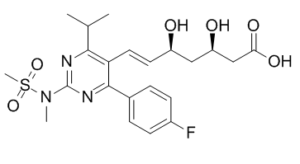
Rosuvastatin

别名: ZD 4522; ZD-4522; ZD4522; S-4522; S 4522; S4522; Brand name: Crestor.
目录号: V3294 纯度: ≥98%
瑞舒伐他汀(S-4522;ZD-4522;S4522;ZD4522;商品名:Crestor)是他汀类降血脂药物的一员,作为 HMG-CoA 还原酶的竞争性抑制剂,在无细胞条件下 IC50 为 11 nM化验。
Rosuvastatin CAS号: 287714-41-4
产品类别: HMG-CoA Reductase
产品仅用于科学研究,不针对患者销售
规格 价格 库存 数量
5mg
10mg
25mg
50mg
100mg
250mg
500mg
Other Sizes

Other Forms of Rosuvastatin:

  • S-Desmethyl-S-(2-hydroxy-2-methylpropyl) Rosuvastatin calcium
  • 罗苏伐他汀钙
  • 瑞舒伐他汀钠
  • 罗苏伐他汀D3钠盐
  • Rosuvastatin-d3 (ZD 4522 d3)
  • 罗苏伐他汀D6钠盐
  • Rosuvastatin-d6 calcium
点击了解更多
InvivoChem产品被CNS等顶刊论文引用
纯度/质量控制文件

纯度: ≥98%

产品描述
瑞舒伐他汀(S-4522;ZD-4522;S4522;ZD4522;商品名:Crestor)是他汀类降血脂药物的一员,作为 HMG-CoA 还原酶的竞争性抑制剂,在细胞中的 IC50 为 11 nM -免费测定。瑞舒伐他汀属于他汀类药物,已被批准用于治疗高胆固醇和血脂异常等相关疾病,并预防心血管疾病。其消除半衰期大约为 19 小时,口服后 3-5 小时内达到血药浓度峰值。 2013 年,Crestor 是美国第四大畅销药物,约占 25%。销售额 52 亿美元。
生物活性&实验参考方法
靶点
Rosuvastatin targets 3-hydroxy-3-methylglutaryl-coenzyme A (HMG-CoA) reductase (IC₅₀ = 11 nM for enzyme inhibition in vitro; IC₅₀ = 1.12 nM for cholesterol biosynthesis inhibition in rat primary hepatocytes) [1]
Rosuvastatin targets human ether-a-go-go related gene (hERG) potassium channel (IKr) (IC₅₀ = 195 nM for hERG current blockade in hERG-transfected HEK293 cells) [2]
体外研究 (In Vitro)
体外活性:瑞舒伐他汀相对亲水,对肝细胞有高度选择性;它的摄取是由肝脏特异性有机阴离子转运蛋白 OATP-C 介导的。 Rosuvastatin 是 OATP-C 的高亲和力底物,表观缔合常数为 8.5 μM。 Rosuvastatin 抑制大鼠肝脏离体肝细胞中的胆固醇生物合成,IC50 为 1.12 nM。瑞舒伐他汀引起的 LDL 受体 mRNA 增加大约是普伐他汀的 10 倍。 Rosuvastatin (100 μM) 降低 U937 对 TNF-α 刺激的 HUVEC 的粘附程度。 Rosuvastatin 通过抑制内皮细胞中的 c-Jun N 末端激酶和核因子-kB 来抑制 ICAM-1、MCP-1、IL-8、IL-6 和 COX-2 mRNA 和蛋白水平的表达。激酶测定:Rosuvastatin Calcium 是 HMG-CoA 还原酶的竞争性抑制剂,IC50 为 11 nM。细胞检测:瑞舒伐他汀具有相对亲水性,对肝细胞具有高度选择性;它的摄取是由肝脏特异性有机阴离子转运蛋白 OATP-C 介导的。 Rosuvastatin 是 OATP-C 的高亲和力底物,表观缔合常数为 8.5 μM。 Rosuvastatin 抑制大鼠肝脏离体肝细胞中的胆固醇生物合成,IC50 为 1.12 nM。瑞舒伐他汀引起的 LDL 受体 mRNA 增加大约是普伐他汀的 10 倍。 Rosuvastatin (100 μM) 降低 U937 对 TNF-α 刺激的 HUVEC 的粘附程度。 Rosuvastatin 通过抑制内皮细胞中的 c-Jun N 末端激酶和核因子-kB 来抑制 ICAM-1、MCP-1、IL-8、IL-6 和 COX-2 mRNA 和蛋白水平的表达。
1. 瑞舒伐他汀(Rosuvastatin)(3a, S-4522)在体外可强效抑制HMG-CoA还原酶活性,IC₅₀为11 nM,抑制效力约为洛伐他汀钠的4倍;在大鼠原代肝细胞中,其抑制胆固醇合成的IC₅₀为1.12 nM,比普伐他汀强约100倍[1]
2. 在hERG转染的HEK293细胞中,瑞舒伐他汀(Rosuvastatin)以195 nM的IC₅₀阻断hERG电流;其对hERG的阻断作用受外排转运体(BCRP、MDR1)和内流转运体(OATP2B1)共表达的调控[2]
3. 在人诱导多能干细胞来源的心肌细胞(hiPSC-CMs)中,瑞舒伐他汀(Rosuvastatin)加速hERG通道失活,降低hERG电流幅值,延长动作电位时程(APD);同时降低细胞膜上成熟hERG蛋白的表达,通过转录因子Sp1下调hERG mRNA表达(经Sp1 siRNA敲低和激动剂表儿茶素验证),并减少热休克蛋白70(Hsp70)与hERG蛋白的相互作用(干扰hERG折叠)[3]
4. 瑞舒伐他汀(Rosuvastatin)可激活未折叠蛋白反应(UPR)的关键介导因子ATF6,上调参与通道折叠的分子伴侣钙连蛋白和钙网蛋白的表达;在hiPSC-CMs中,hERG通道的降解同时通过溶酶体和蛋白酶体途径介导[3]
5. 在离体豚鼠心脏中,195 nM的瑞舒伐他汀(Rosuvastatin)可使90%复极化时的单相动作电位时程(MAPD₉₀)延长11±1 ms(基础周期250 ms,p<0.05)[2]
体内研究 (In Vivo)
在清醒且不受约束的豚鼠中,瑞舒伐他汀(10 mg/kg,腹腔注射)可将 QTc 从 201±1 毫秒延长至 210±2 毫秒[2]。在链佐星产生的糖尿病大鼠中,瑞舒伐他汀(20 mg/kg/天)显着降低极低密度脂蛋白(VLDL)[4]。
1. 对清醒未束缚的豚鼠腹腔注射瑞舒伐他汀(Rosuvastatin)(10 mg/kg),可使校正QT间期(QTc)从201±1 ms延长至210±2 ms(p<0.05)[2]
2. 在高胆固醇血症患者的临床研究中(疗程6-52周),瑞舒伐他汀(Rosuvastatin)改善血脂谱的效果优于阿托伐他汀、辛伐他汀和普伐他汀;在一项为期1年的剂量滴定研究中,瑞舒伐他汀(Rosuvastatin)(平均剂量13.4 mg/天)使98%的患者达到美国国家胆固醇教育计划(NCEP)的低密度脂蛋白胆固醇(LDL-C)靶标,而阿托伐他汀(平均剂量20.8 mg/天)组的达标率为87%,在高危患者中差异更为显著(97% vs 61%)[4]
3. 在另一项为期1年的临床试验中,瑞舒伐他汀(Rosuvastatin)(平均剂量9.5/13.8 mg/天)组的患者LDL-C达标率为88%,普伐他汀(20 mg/天)组为60%,辛伐他汀(20 mg/天)组为73%,且在高危患者中这一差异更明显[4]
4. 临床试验显示,瑞舒伐他汀(Rosuvastatin)可改善杂合子/纯合子家族性高胆固醇血症、高甘油三酯血症及混合性血脂异常患者的血脂谱[4]
酶活实验
1. HMG-CoA还原酶活性检测实验:制备HMG-CoA还原酶酶制剂,将其与系列浓度的瑞舒伐他汀(Rosuvastatin)(3a, S-4522)及底物HMG-CoA在适宜的反应条件(温度、pH)下共同孵育,通过检测反应产物的生成量或底物的消耗量评估酶活性,绘制剂量-反应曲线并计算IC₅₀;以洛伐他汀钠为阳性对照,比较抑制效能[1]
2. hERG通道电流记录实验(膜片钳技术):将hERG转染的HEK293细胞接种并培养至贴壁单层,采用全细胞膜片钳技术,设置特定的电压钳制方案(去极化和复极化脉冲),记录不同浓度瑞舒伐他汀(Rosuvastatin)作用下的hERG电流,分析电流幅值变化并绘制剂量-反应曲线,计算hERG阻断的IC₅₀;实验中保持细胞外液和内液的离子组成、渗透压及pH稳定[2]
细胞实验
1. 大鼠原代肝细胞胆固醇合成抑制实验:分离大鼠原代肝细胞,接种于培养板并培养至贴壁,加入系列浓度的瑞舒伐他汀(Rosuvastatin),同时加入放射性标记的前体物质(如[¹⁴C]乙酸盐);孵育一定时间后提取细胞内胆固醇,通过液闪计数检测放射性强度,计算胆固醇合成的抑制率,绘制剂量-反应曲线并确定IC₅₀,以普伐他汀为对照[1]
2. hERG转染HEK293细胞功能实验:将hERG基因转染至HEK293细胞,建立稳定表达细胞株;培养后加入不同浓度的瑞舒伐他汀(Rosuvastatin),通过膜片钳记录hERG电流,检测共表达的转运体(BCRP、MDR1、OATP2B1)对hERG阻断作用的影响,分析转运体表达水平与瑞舒伐他汀抑制效果的关联;设置空白对照组和溶剂对照组,排除非特异性影响[2]
3. hiPSC-CMs电生理与蛋白表达实验:培养人诱导多能干细胞来源的心肌细胞(hiPSC-CMs),加入不同浓度的瑞舒伐他汀(Rosuvastatin)处理后,采用膜片钳技术记录动作电位,分析APD的变化;通过Western blot检测细胞膜上hERG蛋白(成熟型和未成熟型)的表达,采用RT-PCR检测hERG mRNA的表达;利用siRNA敲低Sp1或加入Sp1激动剂表儿茶素,验证Sp1在hERG表达调控中的作用;通过免疫共沉淀检测Hsp70与hERG的相互作用,采用Western blot检测ATF6、钙连蛋白、钙网蛋白的表达,分析未折叠蛋白反应的激活情况;利用溶酶体抑制剂和蛋白酶体抑制剂处理细胞,检测hERG蛋白的降解变化以确定降解途径[3]
动物实验
20 mg/kg/day
Male beagle dogs and Monkey
1. Isolated Guinea Pig Heart Electrophysiology Experiment: Adult male guinea pigs were sacrificed, and hearts were rapidly excised and perfused with oxygenated Tyrode’s solution using the Langendorff method (stable temperature, flow rate, and oxygen partial pressure). Monophasic action potentials (MAP) were recorded by placing electrodes on the myocardial surface. 195 nM Rosuvastatin was added to the perfusate, and MAPD₉₀ changes were recorded for at least 10 minutes per concentration to ensure data reliability. The prolongation amplitude of MAPD₉₀ was calculated and statistically analyzed [2]
2. Guinea Pig In Vivo QTc Detection Experiment: Adult male guinea pigs were adaptively reared, then Rosuvastatin (10 mg/kg) was administered intraperitoneally (dissolved in a suitable vehicle such as normal saline or a solution with a small amount of cosolvent). Electrocardiograms were recorded by an electrocardiograph in conscious and unrestrained guinea pigs at different time points (0.5, 1, 2, 4 hours) before and after administration. QT intervals were measured and corrected to QTc based on heart rate, and changes in QTc before and after administration were compared. At least 7 guinea pigs were included in each group to ensure statistical power [2]
药代性质 (ADME/PK)
Absorption, Distribution and Excretion
In a study of healthy white male volunteers, the absolute oral bioavailability of rosuvastatin was found to be approximately 20% while absorption was estimated to be 50%, which is consistent with a substantial first-pass effect after oral dosing. Another study in healthy volunteers found that the peak plasma concentration (Cmax) of rosuvastatin was 6.06ng/mL and was reached at a median of 5 hours following oral dosing. Both Cmax and AUC increased in approximate proportion to dose. Neither food nor evening versus morning administration was shown to have an effect on the AUC of rosuvastatin. Many statins are known to interact with hepatic uptake transporters and thus reach high concentrations at their site of action in the liver. Breast Cancer Resistance Protein (BCRP) is a membrane-bound protein that plays an important role in the absorption of rosuvastatin, particularly as CYP3A4 has minimal involvement in its metabolism. Evidence from pharmacogenetic studies of c.421C>A single nucleotide polymorphisms (SNPs) in the gene for BCRP has demonstrated that individuals with the 421AA genotype have reduced functional activity and 2.4-fold higher AUC and Cmax values for rosuvastatin compared to study individuals with the control 421CC genotype. This has important implications for the variation in response to the drug in terms of efficacy and toxicity, particularly as the BCRP c.421C>A polymorphism occurs more frequently in Asian populations than in Caucasians. Other statin drugs impacted by this polymorphism include [fluvastatin] and [atorvastatin]. Genetic differences in the OATP1B1 (organic-anion-transporting polypeptide 1B1) hepatic transporter have also been shown to impact rosuvastatin pharmacokinetics. Evidence from pharmacogenetic studies of the c.521T>C SNP showed that rosuvastatin AUC was increased 1.62-fold for individuals homozygous for 521CC compared to homozygous 521TT individuals. Other statin drugs impacted by this polymorphism include [simvastatin], [pitavastatin], [atorvastatin], and [pravastatin]. For patients known to have the above-mentioned c.421AA BCRP or c.521CC OATP1B1 genotypes, a maximum daily dose of 20mg of rosuvastatin is recommended to avoid adverse effects from the increased exposure to the drug, such as muscle pain and risk of rhabdomyolysis.
Rosuvastatin is not extensively metabolized; approximately 10% of a radiolabeled dose is recovered as metabolite. Following oral administration, rosuvastatin and its metabolites are primarily excreted in the feces (90%). After an intravenous dose, approximately 28% of total body clearance was via the renal route, and 72% by the hepatic route. A study in healthy adult male volunteers found that approximately 90% of the rosuvastatin dose was recovered in feces within 72 hours after dose, while the remaining 10% was recovered in urine. The drug was completely excreted from the body after 10 days of dosing. They also found that approximately 76.8% of the excreted dose was unchanged from the parent compound, with the remaining dose recovered as the metabolites n-desmethyl rosuvastatin and rosuvastatin-5S-lactone. Renal tubular secretion is responsible for >90% of total renal clearance, and is believed to be mediated primarily by the uptake transporter OAT3 (Organic anion transporter 1), while OAT1 had minimal involvement.
Rosuvastatin undergoes first-pass extraction in the liver, which is the primary site of cholesterol synthesis and LDL-C clearance. The mean volume of distribution at steady-state of rosuvastatin is approximately 134 litres.
In clinical pharmacology studies in man, peak plasma concentrations of rosuvastatin were reached 3 to 5 hours following oral dosing. Both Cmax and AUC increased in approximate proportion to Crestor dose. The absolute bioavailability of rosuvastatin is approximately 20%. Administration of Crestor with food did not affect the AUC of rosuvastatin. The AUC of rosuvastatin does not differ following evening or morning drug administration.
Mean volume of distribution at steady-state of rosuvastatin is approximately 134 liters. Rosuvastatin is 88% bound to plasma proteins, mostly albumin. This binding is reversible and independent of plasma concentrations.
Following oral administration, rosuvastatin and its metabolites are primarily excreted in the feces (90%). ... After an intravenous dose, approximately 28% of total body clearance was via the renal route, and 72% by the hepatic route.
/MILK/ Limited data indicate that Crestor is present in human milk.
For more Absorption, Distribution and Excretion (Complete) data for Rosuvastatin (7 total), please visit the HSDB record page.
Metabolism / Metabolites
Rosuvastatin is not extensively metabolized, as demonstrated by the small amount of radiolabeled dose that is recovered as a metabolite (~10%). Cytochrome P450 (CYP) 2C9 is primarily responsible for the formation of rosuvastatin's major metabolite, N-desmethylrosuvastatin, which has approximately 20-50% of the pharmacological activity of its parent compound in vitro. However, this metabolic pathway isn't deemed to be clinically significant as there were no observable effects found on rosuvastatin pharmacokinetics when rosuvastatin was coadministered with fluconazole, a potent CYP2C9 inhibitor. In vitro and in vivo data indicate that rosuvastatin has no clinically significant cytochrome P450 interactions (as substrate, inhibitor or inducer). Consequently, there is little potential for drug-drug interactions upon coadministration with agents that are metabolized by cytochrome P450.
Rosuvastatin is not extensively metabolized; approximately 10% of a radiolabeled dose is recovered as metabolite. The major metabolite is N-desmethyl rosuvastatin, which is formed principally by cytochrome P450 \\ 2C9, and in vitro studies have demonstrated that N-desmethyl rosuvastatin has approximately one-sixth to one-half the HMG-CoA reductase inhibitory activity of the parent compound. Overall, greater than 90% of active plasma HMG-CoA reductase inhibitory activity is accounted for by the parent compound.
Not extensively metabolized. Only ~10% is excreted as metabolite. Cytochrome P450 (CYP) 2C9 is primarily responsible for the formation of rosuvastatin's major metabolite, N-desmethylrosuvastatin. N-desmethylrosuvastatin has approximately 50% of the pharmacological activity of its parent compound in vitro. Rosuvastatin clearance is not dependent on metabolism by cytochrome P450 3A4 to a clinically significant extent. Rosuvastatin accounts for greater than 90% of the pharmacologic action. Inhibitors of CYP2C9 increase the AUC by less than 2-fold. This interaction does not appear to be clinically significant.
Route of Elimination: Rosuvastatin is not extensively metabolized; approximately 10% of a radiolabeled dose is recovered as metabolite. Following oral administration, rosuvastatin and its metabolites are primarily excreted in the feces (90%). After an intravenous dose, approximately 28% of total body clearance was via the renal route, and 72% by the hepatic route.
Half Life: 19 hours
Biological Half-Life
The elimination half-life (t½) of rosuvastatin is approximately 19 hours and does not increase with increasing doses.
The elimination half-life of rosuvastatin is approximately 19 hours.
1. Rosuvastatin is not extensively metabolized and has a low propensity for drug-drug interactions; [4]
毒性/毒理 (Toxicokinetics/TK)
Toxicity Summary
IDENTIFICATION AND USE: Rosuvastatin is hydroxymethylglutaryl-CoA reductase inhibitor. It is is indicated to reduce the risk of stroke, myocardial infarction, and arterial revascularization procedures. HUMAN EXPOSURE AND TOXICITY: Rosuvastatin is the most potent 3-hydroxy-3-methyl-glutaryl-coenzyme A reductase inhibitor commercially available to lower low-density lipoprotein cholesterol. Rosuvastatin has been associated with several adverse effects, including rhabdomyolysis and arthralgias. Myopathy and rhabdomyolysis with acute renal failure secondary to myoglobinuria have been reported in patients receiving statins, including rosuvastatin. These adverse effects can occur at any dosage, but the risk is increased with the highest dosage of rosuvastatin (40 mg daily). There is a report of Takotsubo cardiomyopathy, triggered by delayed-onset rhabdomyolysis following the administration of long-term rosuvastatin treatment, without any preceding stressors or changes in the patient's medical condition, in association with complaints of non-specific muscle-related symptoms. Literature reported the case of a marathon runner who presented with acute rhabdomyolysis during competition while being under rosuvastatin treatment. A 77-year-old patient developed acute pancreatitis after treatment with rosuvastatin, which resolved on withdrawal of the medication. There have been rare postmarketing reports of fatal and non-fatal hepatic failure in patients taking statins, including rosuvastatin. The genotoxic potential of rosuvastatin was assessed by chromosomal aberrations (CAs), micronucleus (MN) and DNA damage by comet assay in human peripheral blood lymphocytes. According to these results, rosuvastatin is cytotoxic and clastogenic/aneugenic in human peripheral lymphocytes. ANIMAL STUDIES: Rosuvastatin was shown to be of low acute toxicity following administration of single doses to rats and dogs by oral and intravenous routes. There were no mortalities in rats given an oral dose of 1000 mg/kg or 2000 mg/kg, and other than depression of bodyweight at 2000 mg/kg, there were no treatment-related effects at either dose level. Dogs received oral doses of 1000 mg/kg or 2000 mg/kg with vomiting on the day of dosing observed as the major clinical finding in both sexes. In a 104-week carcinogenicity study in rats at dose levels of 2, 20, 60 or 80 mg/kg/day, the incidence of uterine polyps was statistically significantly increased only in females at the dose of 80 mg/kg/day. In a 107-week carcinogenicity study in mice given 10, 60, 200 or 400 mg/kg/day, the 400 mg/kg/day dose was poorly tolerated, resulting in early termination of this dose group. An increased incidence of hepatocellular carcinomas was observed at 200 mg/kg/day and an increase in hepatocellular adenomas was seen at 60 and 200 mg/kg/day. Rosuvastatin administration did not indicate a teratogenic effect in rats at Rosuvastatin is a competitive inhibitor of HMG-CoA reductase. HMG-CoA reductase catalyzes the conversion of HMG-CoA to mevalonate, an early rate-limiting step in cholesterol biosynthesis. Rosuvastatin acts primarily in the liver. Decreased hepatic cholesterol concentrations stimulate the upregulation of hepatic low density lipoprotein (LDL) receptors which increases hepatic uptake of LDL. Rosuvastatin also inhibits hepatic synthesis of very low density lipoprotein (VLDL). The overall effect is a decrease in plasma LDL and VLDL.
In vitro and in vivo animal studies also demonstrate that rosuvastatin exerts vasculoprotective effects independent of its lipid-lowering properties. Rosuvastatin exerts an anti-inflammatory effect on rat mesenteric microvascular endothelium by attenuating leukocyte rolling, adherence and transmigration (A2814). The drug also modulates nitric oxide synthase (NOS) expression and reduces ischemic-reperfusion injuries in rat hearts (A2818). Rosuvastatin increases the bioavailability of nitric oxide (A2814, 12031849, 15914111) by upregulating NOS (A2816) and by increasing the stability of NOS through post-transcriptional polyadenylation (A7824). It is unclear as to how rosuvastatin brings about these effects though they may be due to decreased concentrations of mevalonic acid.
Hepatotoxicity
Rosuvastatin therapy is associated with mild, asymptomatic and usually transient serum aminotransferase elevations in 1% to 3% of patients. ALT levels above 3 times the upper limit of normal (ULN) occur slightly more frequently among rosuvastatin treated [1.1%] than placebo [0.5%] recipients. Serum enzyme elevations are more common with higher doses of rosuvastatin, being 2.2% with 40 mg daily. Most of these elevations are self-limited and do not require dose modification. Rosuvastatin is also associated with frank, clinically apparent hepatic injury but this is rare, occurring in less than 1:10,000 patients. The onset is typically after 2 to 4 months ,and the pattern of serum enzyme elevations is usually hepatocellular, although cholestatic cases have also been reported. Rash, fever and eosinophilia are uncommon. Several statins including rosuvastatin have been linked to hepatitis with autoimmune features marked by ANA positivity, elevations in serum immunoglobulin levels, and a clinical response to corticosteroids. Such features are not, however, invariable (Case 1). The injury is usually self-limited and resolves rapidly once rosuvastatin is stopped, but it can be severe and fatal instances have been reported.
Likelihood score: A (likely cause of clinically apparent liver injury).
Effects During Pregnancy and Lactation
◉ Summary of Use during Lactation
Levels of rosuvastatin in milk are low, but no relevant published information exists with its use during breastfeeding. The consensus opinion is that women taking a statin should not breastfeed because of a concern with disruption of infant lipid metabolism. However, others have argued that children homozygous for familial hypercholesterolemia are treated with statins beginning at 1 year of age, that statins have low oral bioavailability, and risks to the breastfed infant are low, especially with rosuvastatin and pravastatin. Until more data become available, an alternate drug may be preferred, especially while nursing a newborn or preterm infant.
◉ Effects in Breastfed Infants
Relevant published information was not found as of the revision date.
◉ Effects on Lactation and Breastmilk
A possible case of rosuvastatin-induced gynecomastia has been reported. Serum prolactin was not measured.
Protein Binding
Rosuvastatin is 88% bound to plasma proteins, mostly albumin. This binding is reversible and independent of plasma concentrations.
Interactions
Concomitant use of rosuvastatin and ritonavir-boosted tipranavir produces minimal to no change in exposure to rosuvastatin. Following concomitant use of rosuvastatin (10 mg as a single dose) and ritonavir-boosted tipranavir (tipranavir 500 mg with ritonavir 200 mg twice daily for 11 days), rosuvastatin peak plasma concentration and AUC were increased by twofold and 26%, respectively. Caution is advised if rosuvastatin is used concomitantly with ritonavir-boosted tipranavir.
Concomitant use of rosuvastatin and antilipemic dosages (1 g daily or higher) of niacin may increase the risk of myopathy. Data from several large randomized studies indicate that concomitant use of niacin (1.5-2 g daily) with another statin (i.e., simvastatin 40-80 mg once daily, with or without ezetimibe) resulted in an increased risk of severe adverse effects, including disturbances in glycemic control requiring hospitalization, development of diabetes mellitus, adverse GI effects, myopathy, gout, rash, skin ulceration, infection, and bleeding. Caution is advised if rosuvastatin is used concomitantly with antilipemic dosages of niacin.
Following concomitant use of rosuvastatin (single 20-mg dose) with lomitapide (10 mg once daily for 7 days), peak plasma concentration and AUC of rosuvastatin were increased by 6 and 2%, respectively. Following concomitant use of rosuvastatin (single 20-mg dose) with lomitapide (60 mg once daily for 7 days), peak plasma concentration and AUC of rosuvastatin were increased by 4 and 32%, respectively. Dosage adjustment of rosuvastatin is not required during concomitant use with lomitapide.
Concomitant use of rosuvastatin (80 mg as a single dose) and ketoconazole (200 mg twice daily for 7 days) decreased rosuvastatin peak plasma concentration by 5% and increased rosuvastatin AUC by 2%.
For more Interactions (Complete) data for Rosuvastatin (25 total), please visit the HSDB record page.
1. Rosuvastatin blocks hERG current, which is associated with an increased risk of long QT syndrome (LQTS); genetic polymorphisms of BCRP, MDR1, and OATP2B1 may further increase the risk of rosuvastatin-induced LQTS in some patients [2]
2. Rosuvastatin delays cardiac repolarization by reducing hERG expression and function, potentially inducing LQTS, torsade de pointes, and sudden cardiac death; no significant cytotoxicity (e.g., increased apoptosis) was observed in cell experiments, but abnormal hERG channels cause cardiac electrophysiological disorders [3]
3. Rosuvastatin was well tolerated in clinical trials of up to 1 year in duration; no severe hepatotoxicity, nephrotoxicity, or other major adverse reactions were reported [4]
参考文献

[1]. Synthesis and biological activity of methanesulfonamide pyrimidine- and N-methanesulfonyl pyrrole-substituted 3,5-dihydroxy-6-heptenoates, a novel series of HMG-CoA reductase inhibitors. Bioorg Med Chem, 1997. 5(2): p. 437-44.

[2]. Rosuvastatin blocks hERG current and prolongs cardiac repolarization. J Pharm Sci. 2012 Feb;101(2):868-78.

[3]. Intracellular Mechanism of Rosuvastatin-Induced Decrease in Mature hERG Protein Expression on Membrane. Mol Pharm. 2019 Apr 1;16(4):1477-1488.

[4]. Rosuvastatin. Drugs, 2002. 62(14): p. 2075-85; discussion 2086-7.

其他信息
Therapeutic Uses
Hydroxymethylglutaryl-CoA Reductase Inhibitors
/CLINICAL TRIALS/ ClinicalTrials.gov is a registry and results database of publicly and privately supported clinical studies of human participants conducted around the world. The Web site is maintained by the National Library of Medicine (NLM) and the National Institutes of Health (NIH). Each ClinicalTrials.gov record presents summary information about a study protocol and includes the following: Disease or condition; Intervention (for example, the medical product, behavior, or procedure being studied); Title, description, and design of the study; Requirements for participation (eligibility criteria); Locations where the study is being conducted; Contact information for the study locations; and Links to relevant information on other health Web sites, such as NLM's MedlinePlus for patient health information and PubMed for citations and abstracts for scholarly articles in the field of medicine. Rosuvastatin is included in the database.
In individuals without clinically evident coronary heart disease but with an increased risk of cardiovascular disease based on age >/= 50 years old in men and >/= 60 years old in women, hsCRP >/= 2 mg/L, and the presence of at least one additional cardiovascular disease risk factor such as hypertension, low HDL-C, smoking, or a family history of premature coronary heart disease, Crestor is indicated to: reduce the risk of stroke, reduce the risk of myocardial infarction, reduce the risk of arterial revascularization procedures. /Included in US product label/
Crestor is indicated as adjunctive therapy to diet to slow the progression of atherosclerosis in adult patients as part of a treatment strategy to lower Total-C and LDL-C to target levels. /Included in US product label/
For more Therapeutic Uses (Complete) data for Rosuvastatin (11 total), please visit the HSDB record page.
Drug Warnings
Crestor is contraindicated for use in pregnant women since safety in pregnant women has not been established and there is no apparent benefit to therapy with Crestor during pregnancy. Because HMG-CoA reductase inhibitors decrease cholesterol synthesis and possibly the synthesis of other biologically active substances derived from cholesterol, Crestor may cause fetal harm when administered to pregnant women. Crestor should be discontinued as soon as pregnancy is recognized.
Crestor should be prescribed with caution in patients with predisposing factors for myopathy (e.g., age >/= 65 years, inadequately treated hypothyroidism, renal impairment).
Myopathy and rhabdomyolysis with acute renal failure secondary to myoglobinuria have been reported in patients receiving statins, including rosuvastatin. These adverse effects can occur at any dosage, but the risk is increased with the highest dosage of rosuvastatin (40 mg daily).
Immune-mediated necrotizing myopathy (IMNM), an autoimmune myopathy, has been reported rarely in patients receiving statins. Immune-mediated necrotizing myopathy is characterized by proximal muscle weakness and elevated creatine kinase (CK, creatine phosphokinase, CPK) concentrations that persist despite discontinuance of statin therapy, necrotizing myopathy without substantial inflammation, and improvement following therapy with immunosuppressive agents.
For more Drug Warnings (Complete) data for Rosuvastatin (22 total), please visit the HSDB record page.
Pharmacodynamics
Rosuvastatin is a synthetic, enantiomerically pure antilipemic agent. It is used to lower total cholesterol, low density lipoprotein-cholesterol (LDL-C), apolipoprotein B (apoB), non-high density lipoprotein-cholesterol (non-HDL-C), and trigleride (TG) plasma concentrations while increasing HDL-C concentrations. High LDL-C, low HDL-C and high TG concentrations in the plasma are associated with increased risk of atherosclerosis and cardiovascular disease. The total cholesterol to HDL-C ratio is a strong predictor of coronary artery disease and high ratios are associated with higher risk of disease. Increased levels of HDL-C are associated with lower cardiovascular risk. By decreasing LDL-C and TG and increasing HDL-C, rosuvastatin reduces the risk of cardiovascular morbidity and mortality. Elevated cholesterol levels, and in particular, elevated low-density lipoprotein (LDL) levels, are an important risk factor for the development of CVD. Use of statins to target and reduce LDL levels has been shown in a number of landmark studies to significantly reduce the risk of development of CVD and all-cause mortality. Statins are considered a cost-effective treatment option for CVD due to their evidence of reducing all-cause mortality including fatal and non-fatal CVD as well as the need for surgical revascularization or angioplasty following a heart attack. Evidence has shown that even for low-risk individuals (with <10% risk of a major vascular event occurring within 5 years) statins cause a 20%-22% relative reduction in major cardiovascular events (heart attack, stroke, coronary revascularization, and coronary death) for every 1 mmol/L reduction in LDL without any significant side effects or risks. **Skeletal Muscle Effects** Cases of myopathy and rhabdomyolysis with acute renal failure secondary to myoglobinuria have been reported with HMG-CoA reductase inhibitors, including rosuvastatin. These risks can occur at any dose level, but are increased at the highest dose (40 mg). Rosuvastatin should be prescribed with caution in patients with predisposing factors for myopathy (e.g., age ≥ 65 years, inadequately treated hypothyroidism, renal impairment). The risk of myopathy during treatment with rosuvastatin may be increased with concurrent administration of some other lipid-lowering therapies (such as [fenofibrate] or [niacin]), [gemfibrozil], [cyclosporine], [atazanavir]/[ritonavir], [lopinavir]/ritonavir, or [simeprevir]. Cases of myopathy, including rhabdomyolysis, have been reported with HMG-CoA reductase inhibitors, including rosuvastatin, coadministered with [colchicine], and caution should therefore be exercised when prescribing these two medications together. Real-world data from observational studies has suggested that 10-15% of people taking statins may experience muscle aches at some point during treatment. **Liver Enzyme Abnormalities** Increases in serum transaminases have been reported with HMG-CoA reductase inhibitors, including rosuvastatin. In most cases, the elevations were transient and resolved or improved on continued therapy or after a brief interruption in therapy. There were two cases of jaundice, for which a relationship to rosuvastatin therapy could not be determined, which resolved after discontinuation of therapy. There were no cases of liver failure or irreversible liver disease in these trials. **Endocrine Effects** Increases in HbA1c and fasting serum glucose levels have been reported with HMG-CoA reductase inhibitors, including rosuvastatin calcium tablets. Based on clinical trial data with rosuvastatin, in some instances these increases may exceed the threshold for the diagnosis of diabetes mellitus. An in vitro study found that [atorvastatin], [pravastatin], [rosuvastatin], and [pitavastatin] exhibited a dose-dependent cytotoxic effect on human pancreas islet β cells, with reductions in cell viability of 32, 41, 34 and 29%, respectively, versus control]. Moreover, insulin secretion rates were decreased by 34, 30, 27 and 19%, respectively, relative to control. HMG-CoA reductase inhibitors interfere with cholesterol synthesis and lower cholesterol levels and, as such, might theoretically blunt adrenal or gonadal steroid hormone production. Rosuvastatin demonstrated no effect upon nonstimulated cortisol levels and no effect on thyroid metabolism as assessed by TSH plasma concentration. In rosuvastatin treated patients, there was no impairment of adrenocortical reserve and no reduction in plasma cortisol concentrations. Clinical studies with other HMG-CoA reductase inhibitors have suggested that these agents do not reduce plasma testosterone concentration. The effects of HMG-CoA reductase inhibitors on male fertility have not been studied. The effects, if any, on the pituitarygonadal axis in premenopausal women are unknown. **Cardiovascular** Ubiquinone levels were not measured in rosuvastatin clinical trials, however significant decreases in circulating ubiquinone levels in patients treated with other statins have been observed. The clinical significance of a potential long-term statin-induced deficiency of ubiquinone has not been established. It has been reported that a decrease in myocardial ubiquinone levels could lead to impaired cardiac function in patients with borderline congestive heart failure. **Lipoprotein A** In some patients, the beneficial effect of lowered total cholesterol and LDL-C levels may be partly blunted by a concomitant increase in the Lipoprotein(a) [Lp(a)] concentrations. Present knowledge suggests the importance of high Lp(a) levels as an emerging risk factor for coronary heart disease. It is thus desirable to maintain and reinforce lifestyle changes in high-risk patients placed on rosuvastatin therapy. Further studies have demonstrated statins affect Lp(a) levels differently in patients with dyslipidemia depending on their apo(a) phenotype; statins increase Lp(a) levels exclusively in patients with the low molecular weight apo(a) phenotype.
1. Rosuvastatin (3a, S-4522) is a novel methanesulfonamide pyrimidine-substituted 3,5-dihydroxy-6-heptenoate and a potent HMG-CoA reductase inhibitor; it was selected as a lead compound from a series of analogs due to its superior inhibitory activity [1]
2. Rosuvastatin is a methanesulfonamide derivative with a chemical structure similar to several IKr blockers (e.g., ibutilide, E-4031), which is the structural basis for its hERG-blocking effect [2]
3. Rosuvastatin reduces plasma membrane expression of hERG through two pathways: disrupting the trafficking of immature hERG channels to the membrane and increasing the degradation of mature hERG channels [3]
4. Rosuvastatin is indicated for the treatment of dyslipidemia; it shows better lipid-lowering efficacy than atorvastatin, simvastatin, and pravastatin in clinical trials, especially in high-risk hypercholesterolemia patients [4]
*注: 文献方法仅供参考, InvivoChem并未独立验证这些方法的准确性
化学信息 & 存储运输条件
分子式
C22H28FN3O6S
分子量
481.54
精确质量
481.168
CAS号
287714-41-4
相关CAS号
Rosuvastatin Calcium;147098-20-2;Rosuvastatin Sodium;147098-18-8;Rosuvastatin-d3 sodium;1279031-70-7;Rosuvastatin-d3;1133429-16-9;Rosuvastatin-d6 sodium;2070009-41-3;Rosuvastatin-d6 calcium
PubChem CID
446157
外观&性状
Typically exists as solid at room temperature
密度
1.368 g/cm3
沸点
745.6ºC at 760 mmHg
闪点
404.7ºC
蒸汽压
2.38E-23mmHg at 25°C
折射率
1.597
LogP
2.147
tPSA
152.13
氢键供体(HBD)数目
3
氢键受体(HBA)数目
10
可旋转键数目(RBC)
10
重原子数目
33
分子复杂度/Complexity
767
定义原子立体中心数目
2
SMILES
S(C([H])([H])[H])(N(C([2H])([2H])[2H])C1=NC(C2C([H])=C([H])C(=C([H])C=2[H])F)=C(/C(/[H])=C(\[H])/[C@]([H])(C([H])([H])[C@]([H])(C([H])([H])C(=O)[O-])O[H])O[H])C(C([H])(C([H])([H])[H])C([H])([H])[H])=N1)(=O)=O.[Na+]
InChi Key
BPRHUIZQVSMCRT-VEUZHWNKSA-N
InChi Code
InChI=1S/C22H28FN3O6S/c1-13(2)20-18(10-9-16(27)11-17(28)12-19(29)30)21(14-5-7-15(23)8-6-14)25-22(24-20)26(3)33(4,31)32/h5-10,13,16-17,27-28H,11-12H2,1-4H3,(H,29,30)/b10-9+/t16-,17-/m1/s1
化学名
(3R,5S,E)-7-(4-(4-fluorophenyl)-6-isopropyl-2-(N-methylmethylsulfonamido)pyrimidin-5-yl)-3,5-dihydroxyhept-6-enoate
别名
ZD 4522; ZD-4522; ZD4522; S-4522; S 4522; S4522; Brand name: Crestor.
HS Tariff Code
2934.99.9001
存储方式

Powder      -20°C    3 years

                     4°C     2 years

In solvent   -80°C    6 months

                  -20°C    1 month

运输条件
Room temperature (This product is stable at ambient temperature for a few days during ordinary shipping and time spent in Customs)
溶解度数据
溶解度 (体外实验)
DMSO: 100 mg/mL (199.8 mM)
Water:<1 mg/mL
Ethanol:<1 mg/mL
制备储备液 1 mg 5 mg 10 mg
1 mM 2.0767 mL 10.3834 mL 20.7667 mL
5 mM 0.4153 mL 2.0767 mL 4.1533 mL
10 mM 0.2077 mL 1.0383 mL 2.0767 mL

1、根据实验需要选择合适的溶剂配制储备液 (母液):对于大多数产品,InvivoChem推荐用DMSO配置母液 (比如:5、10、20mM或者10、20、50 mg/mL浓度),个别水溶性高的产品可直接溶于水。产品在DMSO 、水或其他溶剂中的具体溶解度详见上”溶解度 (体外)”部分;

2、如果您找不到您想要的溶解度信息,或者很难将产品溶解在溶液中,请联系我们;

3、建议使用下列计算器进行相关计算(摩尔浓度计算器、稀释计算器、分子量计算器、重组计算器等);

4、母液配好之后,将其分装到常规用量,并储存在-20°C或-80°C,尽量减少反复冻融循环。

计算器

摩尔浓度计算器可计算特定溶液所需的质量、体积/浓度,具体如下:

  • 计算制备已知体积和浓度的溶液所需的化合物的质量
  • 计算将已知质量的化合物溶解到所需浓度所需的溶液体积
  • 计算特定体积中已知质量的化合物产生的溶液的浓度
使用摩尔浓度计算器计算摩尔浓度的示例如下所示:
假如化合物的分子量为350.26 g/mol,在5mL DMSO中制备10mM储备液所需的化合物的质量是多少?
  • 在分子量(MW)框中输入350.26
  • 在“浓度”框中输入10,然后选择正确的单位(mM)
  • 在“体积”框中输入5,然后选择正确的单位(mL)
  • 单击“计算”按钮
  • 答案17.513 mg出现在“质量”框中。以类似的方式,您可以计算体积和浓度。

稀释计算器可计算如何稀释已知浓度的储备液。例如,可以输入C1、C2和V2来计算V1,具体如下:

制备25毫升25μM溶液需要多少体积的10 mM储备溶液?
使用方程式C1V1=C2V2,其中C1=10mM,C2=25μM,V2=25 ml,V1未知:
  • 在C1框中输入10,然后选择正确的单位(mM)
  • 在C2框中输入25,然后选择正确的单位(μM)
  • 在V2框中输入25,然后选择正确的单位(mL)
  • 单击“计算”按钮
  • 答案62.5μL(0.1 ml)出现在V1框中
g/mol

分子量计算器可计算化合物的分子量 (摩尔质量)和元素组成,具体如下:

注:化学分子式大小写敏感:C12H18N3O4  c12h18n3o4
计算化合物摩尔质量(分子量)的说明:
  • 要计算化合物的分子量 (摩尔质量),请输入化学/分子式,然后单击“计算”按钮。
分子质量、分子量、摩尔质量和摩尔量的定义:
  • 分子质量(或分子量)是一种物质的一个分子的质量,用统一的原子质量单位(u)表示。(1u等于碳-12中一个原子质量的1/12)
  • 摩尔质量(摩尔重量)是一摩尔物质的质量,以g/mol表示。
/

配液计算器可计算将特定质量的产品配成特定浓度所需的溶剂体积 (配液体积)

  • 输入试剂的质量、所需的配液浓度以及正确的单位
  • 单击“计算”按钮
  • 答案显示在体积框中
动物体内实验配方计算器(澄清溶液)
第一步:请输入基本实验信息(考虑到实验过程中的损耗,建议多配一只动物的药量)
第二步:请输入动物体内配方组成(配方适用于不溶/难溶于水的化合物),不同的产品和批次配方组成不同,如对配方有疑问,可先联系我们提供正确的体内实验配方。此外,请注意这只是一个配方计算器,而不是特定产品的确切配方。
+
+
+

计算结果:

工作液浓度 mg/mL;

DMSO母液配制方法 mg 药物溶于 μL DMSO溶液(母液浓度 mg/mL)。如该浓度超过该批次药物DMSO溶解度,请首先与我们联系。

体内配方配制方法μL DMSO母液,加入 μL PEG300,混匀澄清后加入μL Tween 80,混匀澄清后加入 μL ddH2O,混匀澄清。

(1) 请确保溶液澄清之后,再加入下一种溶剂 (助溶剂) 。可利用涡旋、超声或水浴加热等方法助溶;
            (2) 一定要按顺序加入溶剂 (助溶剂) 。

临床试验信息
Effect of Statins on Crohn's Disease
CTID: NCT06538649
PhaseEarly Phase 1    Status: Not yet recruiting
Date: 2024-11-27
Effect of Early Initiation of Evolocumab on Lipid Profiles Changes in Patients With ACS Undergoing PCI
CTID: NCT05661552
Phase: Phase 4    Status: Recruiting
Date: 2024-11-27
A Study in Healthy Men to Test Whether Zongertinib Influences the Amount of 4 Other Medicines (Dabigatran, Rosuvastatin, Metformin, and Furosemide) in the Blood
CTID: NCT06504862
Phase: Phase 1    Status: Active, not recruiting
Date: 2024-11-27
Voxelotor CYP and Transporter Cocktail Interaction Study
CTID: NCT05981365
Phase: Phase 1    Status: Completed
Date: 2024-11-22
A Clinical Trial to Investigate the Clinical Drug-Drug Interaction of Divarasib With Probe Substrates of P-Glycoprotein and Breast Cancer Resistance Protein in Healthy Participants
CTID: NCT06677957
Phase: Phase 1    Status: Recruiting
Date: 2024-11-21
View More

A Study to Evaluate the Effect of Multiple Doses of Enzalutamide on the Pharmacokinetics of Substrates of P-glycoprotein (Digoxin) and Breast Cancer Resistant Protein (Rosuvastatin) in Male Subjects With Prostate Cancer
CTID: NCT04094519
Phase: Phase 1    Status: Completed
Date: 2024-11-20


A Study to Learn How the Study Medicine Danuglipron is Taken Up Into the Blood and If Danuglipron Changes How the Body Processes Other Study Medicines (Atorvastatin and Rosuvastatin) in Healthy Adults Who Are Overweight or Obese
CTID: NCT06567327
Phase: Phase 1    Status: Recruiting
Date: 2024-11-19
YN001 in Healthy Subjects and Patients With Coronary Atherosclerosis
CTID: NCT06048588
Phase: Phase 1/Phase 2    Status: Recruiting
Date: 2024-11-18
Protective Effect of Statin Against Negative Cardiovascular Remodeling and Organ Dysfunction After Acute Aortic Syndrome Surgery (Panda III)
CTID: NCT04699279
Phase: N/A    Status: Recruiting
Date: 2024-11-15
A Study of LY4065967 in Healthy Japanese Participants
CTID: NCT06594159
Phase: Phase 1    Status: Recruiting
Date: 2024-11-15
A Drug-Drug Interaction Study to Estimate the Effect of PF-07081532 on the Pharmacokinetics of Dabigatran and Rosuvastatin in Overweight or Obese Adult Participants
CTID: NCT05788328
Phase: Phase 1    Status: Terminated
Date: 2024-11-15
A Study to Compare How Different Medicines (Rosuvastatin, Digoxin, Metformin, and Furosemide) Are Handled by the Body of Healthy People and People With Liver Cirrhosis
CTID: NCT05741372
Phase: N/A    Status: Recruiting
Date: 2024-11-14
A Study of Bempedoic Acid in Combination With Ezetimibe and Either Rosuvastatin or Atorvastatin in Patients With Primary Hypercholesterolemia or Mixed Dyslipidemia
CTID: NCT06686615
Phase:    Status: Not yet recruiting
Date: 2024-11-14
A Study in Healthy Men to Test How Well Multiple Doses of BI 1839100 Are Tolerated and How BI 1839100 Influences the Amount of Other Medicines in the Blood
CTID: NCT05738291
Phase: Phase 1    Status: Completed
Date: 2024-11-13
A Drug-Drug Interaction Study of LY3537982 on Midazolam, Digoxin, and Rosuvastatin in Healthy Participants
CTID: NCT06111521
Phase: Phase 1    Status: Completed
Date: 2024-11-08
A Phase 1 Study to Evaluate the Potential Drug Interactions Between Repotrectinib and Metformin, Digoxin, and Rosuvastatin in Patients With Advanced Solid Tumors
CTID: NCT05828303
Phase: Phase 1    Status: Not yet recruiting
Date: 2024-10-31
A Study to Learn About the Study Medicine Called Nirmatrelvir/Ritonavir in People Who Are Healthy Volunteers Co-administered the Medicine Rosuvastatin
CTID: NCT05898672
Phase: Phase 1    Status: Completed
Date: 2024-10-28
A Study to Investigate the Effect of Oral Ticagrelor on the Pharmacokinetics of Oral Rosuvastatin When Given in Healthy Participants
CTID: NCT06554821
Phase: Phase 1    Status: Completed
Date: 2024-10-15
A Study to Evaluate the Effect of Multiple Doses of JNJ-56021927 on the Pharmacokinetics of Multiple Cytochrome P450 and Transporter Substrates in Participants With Castration-Resistant Prostate Cancer
CTID: NCT02592317
Phase: Phase 1    Status: Recruiting
Date: 2024-10-09
CT COMPARE: CT Coronary Angiography to Measure Plaque Reduction
CTID: NCT02740699
Phase: Phase 4    Status: Terminated
Date: 2024-10-09
A Study to Assess the Effect of Povorcitinib on Digoxin, Rosuvastatin, and Metformin Pharmacokinetics and the Effect of Probenecid on Povorcitinib Pharmacokinetics When Administered Orally to Healthy Adult Participants
CTID: NCT06416800
Phase: Phase 1    Status: Recruiting
Date: 2024-10-04
A Drug-drug Interaction Study Evaluating the Perpetrator Potential of LY4100511 (DC-853) on Midazolam, Repaglinide, Digoxin, Rosuvastatin in Healthy Participants
CTID: NCT06503679
Phase: Phase 1    Status: Recruiting
Date: 2024-10-03
Pharmacokinetic Drug-drug Interaction Study of Encorafenib and Binimetinib on Probe Drugs in Patients With BRAF V600-mutant Melanoma or Other Advanced Solid Tumors
CTID: NCT03864042
Phase: Phase 1    Status: Completed
Date: 2024-09-27
A Drug-Drug Interaction (DDI) Study of HDM1002 With Repaglinide, Atorvastatin, Digoxin and Rosuvastatin in Healthy Subjects and Overweight Subjects.
CTID: NCT06601517
Phase: Phase 1    Status: Not yet recruiting
Date: 2024-09-23
Clinical Effects of New Approach on Patients with Non-alcoholic Steatohepatitis
CTID: NCT06105060
PhaseEarly Phase 1    Status: Completed
Date: 2024-09-19
A Study to Learn How Different Amounts of PF-06954522 Are Tolerated and Act in Adults With Type 2 Diabetes Mellitus
CTID: NCT06279234
Phase: Phase 1    Status: Recruiting
Date: 2024-09-19
A Drug Drug Interaction (DDI) Study of Pirtobrutinib (LY3527727) and Rosuvastatin in Healthy Participants
CTID: NCT05176314
Phase: Phase 1    Status: Completed
Date: 2024-09-19
Changes in Plaque Characteristics After Short-term Statin Therapy As Assessed with Coronary CT
CTID: NCT06603363
Phase: N/A    Status: Not yet recruiting
Date: 2024-09-19
Effect of Rosuvastatin Response in Healthy Subjects: Potential Mechanisms of Anti-inflammatory Effects
CTID: NCT00874757
Phase:    Status: Completed
Date: 2024-08-23
Statin and Dual Antiplatelet Therapy to Prevent Early Neurological Deterioration in Branch Atheromatous Disease
CTID: NCT04824911
Phase: Phase 2    Status: Recruiting
Date: 2024-08-21
Influence of JY09 on Pharmacokinetics of Metformin , Rosuvastatin , and Digoxin and the QT Interval Study in Overweight Chinese Subjects
CTID: NCT06247748
Phase: Phase 1    Status: Completed
Date: 2024-08-21
Switching to Rosuvastatin Versus Adding Ezetimibe to Atorvastatin Versus Doubling the Dose of Atorvastatin in Patients With Hypercholesterolemia and Risk Factors (P03708)
CTID: NCT00651378
Phase: Phase 4    Status: Terminated
Date: 2024-08-15
Clinical Pharmacology Study of Oral Edaravone in Healthy Adult Males (Drug Interaction Study and Preliminary Regimen-Finding Study)
CTID: NCT04481789
Phase: Phase 1    Status: Completed
Date: 2024-08-02
Comparison Between the Effects of High Doses Statin on Ventricular Remodeling in STEMI Patients
CTID: NCT05895123
Phase: Phase 2    Status: Completed
Date: 2024-08-01
A Study to Understand the Effect of a Study Medicine Called ARV-471 on Rosuvastatin in Healthy Adults
CTID: NCT05652660
Phase: Phase 1    Status: Completed
Date: 2024-07-26
Investigation of the Gut Microbiome and Statin Response
CTID: NCT04098003
Phase: Phase 4    Status: Active, not recruiting
Date: 2024-07-24
Pharmacokinetics and Safety of Commonly Used Drugs in Lactating Women and Breastfed Infants
CTID: NCT03511118
Phase:    Status: Recruiting
Date: 2024-07-24
ECC5004 DDI Study With Atorvastatin, Rosuvastatin, Digoxin and Midazolam in Healthy Participants
CTID: NCT06293742
Phase: Phase 1    Status: Completed
Date: 2024-07-22
A Drug-Drug Interaction Study of Orforglipron (LY3502970) in Healthy Overweight and Obese Participants
CTID: NCT06186622
Phase: Phase 1    Status: Completed
Date: 2024-07-22
A Study to Assess the Safety, Tolerability, Pharmacokinetics, and Pharmacodynamics of AZD0780 in Healthy Subjects
CTID: NCT05384262
Phase: Phase 1    Status: Completed
Date: 2024-07-19
A Study to Learn About How BAY2927088 Affects the Level of Dabigatran or Rosuvastatin in the Blood When These Drugs Are Taken Together in Healthy Participants
CTID: NCT06329895
Phase: Phase 1    Status: Completed
Date: 2024-07-05
Drug Repurposing - Statins as Microbiota Modulating Agents in Ulcerative Colitis
CTID: NCT04883840
Phase: Phase 2/Phase 3    Status: Recruiting
Date: 2024-07-03
Evaluation of Ezetimibe and Atorvastatin Coadministration Versus Atorvastatin or Rosuvastatin Monotherapy in Japanese Patients With Hypercholesterolemia (Study P06027)(COMPLETED)
CTID: NCT00871351
Phase: Phase 4    Status: Completed
Date: 2024-05-23
A Clinical Trial to Assess the Long Term Safety and Tolerability of MK-0653H in Japanese Participants With Hypercholesterolemia (MK-0653H-833)
CTID: NCT02748057
Phase: Phase 3    Status: Completed
Date: 2024-05-16
A Study of the Efficacy and Safety of MK-0653H in Japanese Participants With Hypercholesterolemia (MK-0653H-832)
CTID: NCT02741245
Phase: Phase 3    Status: Completed
Date: 2024-05-16
Potential Drug Interaction Study Between Vemircopan and Rosuvastatin, Metformin, Levonorgestrel/Ethinyl Estradiol-containing Oral Contraceptives, and Carbamazepine
CTID: NCT06071442
Phase: Phase 1    Status: Completed
Date: 2024-05-16
Ezetimibe/Simvastatin (MK-0653A) Versus Rosuvastatin Versus Doubling Statin Dose in Participants With Cardiovascular Disease and Diabetes Mellitus (MK-0653A-133)(COMPLETED)
CTID: NCT00862251
Phase: Phase 3    Status: Completed
Date: 2024-05-16
Polygenic Risk-based Detection of Subclinical Coronary Atherosclerosis and Intervention With Statin and Colchicine
CTID: NCT05850091
Phase: Phase 4    Status: Recruiting
Date: 2024-05-09
PK Study to Assess Drug-drug Interaction and QTc Between Sitravatinib and a Cocktail of Substrates
CTID: NCT04887194
Phase: Phase 1    Status: Completed
Date: 2024-05-08
A Study to Investigate the Potential Drug Interactions Between ALXN2080 and Rosuvastatin and Metformin in Healthy Adult Participants
CTID: NCT06160414
Phase: Phase 1    Status: Completed
Date: 2024-05-07
Liver Adiposity Effects on Pediatric Statin
CTID: NCT04903223
Phase: Phase 1    Status: Recruiting
Date: 2024-05-03
Statins Role in Acute Ischemic Stroke
CTID: NCT06371495
Phase:    Status: Not yet recruiting
Date: 2024-04-17
Liver Cirrhosis Network Rosuvastatin Efficacy and Safety for Cirrhosis in the United States
CTID: NCT05832229
Phase: Phase 2    Status: Recruiting
Date: 2024-04-16
Drug-durg Interaction of Leritrelvir(RAY1216) With Midazolam, Omeprazole, Rosuvastatin, Verapamil, and Rifampin
CTID: NCT06031454
Phase: Phase 1    Status: Completed
Date: 2024-04-16
Combining Use of Clopidogrel With Atorvastatin or Rosuvastatin in Patients With Large-vessel Ischemic Stroke
CTID: NCT06360120
Phase: Phase 3    Status: Recruiting
Date: 2024-04-11
Concomitant Use of Clopidogrel With Atorvastatin or Rosuvastatin in Patients With Minor Stroke or TIA
CTID: NCT06358313
Phase: Phase 3    Status: Recruiting
Date: 2024-04-10
Study to Evaluate the Drug-drug Interaction of JMKX001899 in Healthy Subjects
CTID: NCT06348290
Phase: Phase 1    Status: Not yet recruiting
Date: 2024-04-04
Effects of Inclisiran Combined With Statins on the Morphology of Coronary Vulnerable Plaques
CTI
Influence of Intensive Lipid-lowering with statin and ezetimbe prescription on Computed Tomography Derived Fractional Flow Reserve in Patients With Stable Chest Pain: The 'FLOW-PROMOTE' study
CTID: null
Phase: Phase 4    Status: Ongoing
Date: 2019-11-26
Fixed-dose combination of rosuvastatin and valsartan for dual target achievement in patients with hypertension and hyperlipidaemia (UNIFY)
CTID: null
Phase: Phase 4    Status: Prematurely Ended
Date: 2019-01-03
A Multicenter, Randomized, Double-blind, Active-controlled Clinical Trial to Evaluate the Efficacy and Safety of a New Formulation of Zenon (Ezetimibe/Rosuvastatin Fixed Dose Combination) in Patients With Primary Hypercholesterolemia, Not Adequately Controlled on Statin Therapy
CTID: null
Phase: Phase 3    Status: Completed
Date: 2018-08-24
Pilot Study: The LIPL-PLATELET Study
CTID: null
Phase: Phase 3    Status: Ongoing
Date: 2018-06-28
cGMP Enhancing Therapeutic Strategy for HFpEF: The cGETS Study
CTID: null
Phase: Phase 2    Status: Ongoing
Date: 2018-02-28
An Open-Label Long-Term Extension to the Randomized, Double-blind, Placebo-controlled, Multi-center, Cross-over Study of Rosuvastatin in Children and Adolescents (aged 6 to <18 years) with Homozygous Familial Hypercholesterolemia (HoFH)
CTID: null
Phase: Phase 3    Status: Prematurely Ended, Completed
Date: 2015-02-23
A Randomized, Double blind, Placebo controlled, Multi center, Cross over Study of Rosuvastatin in Children and Adolescents (aged 6 to <18 years) with Homozygous Familial Hypercholesterolemia (HoFH)
CTID: null
Phase: Phase 3    Status: Completed
Date: 2014-08-20
Phase IIa, Randomised, Controlled, Open-Label Trial of Rosuvastatin for the Prevention of Aminoglycoside-Induced Kidney Toxicity in Children with Cystic Fibrosis
CTID: null
Phase: Phase 2    Status: Completed
Date: 2014-08-05
Rosuvastatin versus Protease Inhibitor Switching for Hypercholesterolaemia in HIV-infected Adults.
CTID: null
Phase: Phase 4    Status: Completed
Date: 2013-07-16
A Randomized, Double-Blind Study of the Efficacy and Safety of REGN727 Added-on to Rosuvastatin versus Ezetimibe Added-on to Rosuvastatin versus Rosuvastatin Dose Increase in Patients Who are Not Controlled on Rosuvastatin
CTID: null
Phase: Phase 3    Status: Completed
Date: 2013-04-12
A Randomized, Double-Blind Study of the Efficacy and Safety of REGN727 Added-on to Atorvastatin versus Ezetimibe Added-on to Atorvastatin versus Atorvastatin Dose Increase versus Switch to Rosuvastatin in Patients Who are Not Controlled on Atorvastatin
CTID: null
Phase: Phase 3    Status: Completed
Date: 2013-04-09
Prospective randomized study FOR THE
CTID: null
Phase: Phase 4    Status: Ongoing
Date: 2012-10-30
A Double-blind, Randomized, Placebo and Ezetimibe Controlled, Multicenter Study to Evaluate Safety, Tolerability and Efficacy of AMG 145 on LDL-C in Combination With Statin Therapy in Subjects With Primary Hypercholesterolemia and Mixed Dyslipidemia
CTID: null
Phase: Phase 3    Status: Completed
Date: 2012-09-07
Ensayo clínico aleatorizado controlado en fase IV para validar una herramienta costo-efectiva que OPTImice el tratamiento con ESTatinas de la dislipemia diabética en Atención Primaria
CTID: null
Phase: Phase 4    Status: Ongoing
Date: 2011-12-13
Routine versus Aggressive Upstream Rhythm Control for Prevention of Early Atrial Fibrillation in Heart Failure: RACE 3
CTID: null
Phase: Phase 4    Status: GB - no longer in EU/EEA, Completed
Date: 2011-08-16
Ensayo aleatorizado controlado sobre la terapia guiada por el antígeno carbohidrato 125 en los pacientes dados de alta por insuficiencia cardiaca aguda: efecto sobre la mortalidad a 1 año.
CTID: null
Phase: Phase 4    Status: Ongoing
Date: 2011-08-02
Evaluation of antiplatelet drug response after load of statins in patients undergoing coronary angioplasty with stenting.
CTID: null
Phase: Phase 2    Status: Ongoing
Date: 2011-06-01
A Randomized, Double-Blind, Active-Controlled, Multicenter Study of Patients with Primary Hypercholesterolemia and High Cardiovascular Risk Who Are Not Adequately Controlled with Atorvastatin 10 mg: A Comparison of the Efficacy and Safety of Switching to Coadministration Ezetimibe and Atorvastatin Versus Doubling the Dose of Atorvastatin or Switching to Rosuvastatin
CTID: null
Phase: Phase 3    Status: Completed
Date: 2010-10-11
A Phase 2 Efficacy and Safety Study of LY2484595 Alone and in Combination with Atorvastatin, Simvastatin, and Rosuvastatin in Patients with Hypercholesterolemia or Low HDL-C
CTID: null
Phase: Phase 2    Status: Completed
Date: 2010-07-30
An Efficacy and 2-Year Safety Study of Open-label Rosuvastatin in Children and Adolescents (aged from 6 to less than 18 years) with Familial Hypercholesterolaemia
CTID: null
Phase: Phase 3    Status: Completed
Date: 2010-03-08
A randomised placebo controlled trial of rosuvastatin in systemic lupus erythematosus.
CTID: null
Phase: Phase 4    Status: Completed
Date: 2010-02-23
ROSUVASTATIN FOR REDUCTION OF MYOCARDIAL DAMAGE AND SYSTEMIC INFLAMMATION DURING CORONARY ANGIOPLASTY - The REMEDY Study
CTID: null
Phase: Phase 3    Status: Ongoing
Date: 2009-10-20
PSORIASIS AND CARDIOVASCULAR DISEASE: IMMUNOMODULATOR ROLE OF THE TREATMENT WITH ROSUVASTATIN IN PATIENTS WITH PSORIASIS OF MILD OR OF MODERATE-SEVERE SKIN DISEASE.
CTID: null
Phase: Phase 3    Status: Prematurely Ended
Date: 2009-10-01
Short term statin treatment and endothelial dysfunction due to ischemia and reperfusion injury
CTID: null
Phase: Phase 4    Status: Ongoing
Date: 2009-09-25
Statins IN TREATMENT OF ACUTE coronary syndrome.
CTID: null
Phase: Phase 3    Status: Ongoing
Date: 2009-06-03
A Randomized, Double-Blind, Active-Controlled, Multicenter Study of Patients with Cardiovascular Disease and Diabetes Mellitus Not Adequately Controlled with Simvastatin 20 mg or Atorvastatin 10 mg: A Comparison of Switching to a Combination Tablet Ezetimibe/Simvastatin (10mg/20mg) Versus Switching to Rosuvastatin 10mg or Doubling the Statin Dose
CTID: null
Phase: Phase 3    Status: Completed
Date: 2009-05-27
Effect of Rosuvastatin on endothelial function in patients with diabetes and glaucoma
CTID: null
Phase: Phase 4    Status: Prematurely Ended
Date: 2009-03-30
Is augmentation of PORH by rosuvastatin adenosine-receptor mediated?
CTID: null
Phase: Phase 4    Status: Ongoing
Date: 2009-01-22
A Multicenter, Randomized, Double-Blind, Titration Study to
CTID: null
Phase: Phase 3    Status: Completed
Date: 2009-01-16
A randomised, double-blind, placebo-controlled study to evaluate the transthoracic Doppler echocardiography method as a non-invasive method for coronary function measurements; ability to detect short-term statin effects in patients with increased cardiovascular risk
CTID: null
Phase: Phase 2    Status: Completed
Date: 2008-09-15
Study of Coronary Atheroma by InTravascular Ultrasound: Effect of Rosuvastatin Versus AtorvastatiN (SATURN): A 104-week, randomized, double-blind, parallel group, multi-center Phase IIIb study comparing the effects of treatment with rosuvastatin 40mg or atorvastatin 80mg on atherosclerotic disease burden as measured by intravascular ultrasound in patients with coronary artery disease
CTID: null
Phase: Phase 3    Status: Completed
Date: 2008-02-07
Systemic effects of mild renal insufficiency: the relation between forearm blood flow and ADMA.
CTID: null
Phase: Phase 4    Status: Ongoing
Date: 2008-02-01
GAMMAGLUTAMYLTRANSFERASE: CHARACTERIZATION OF ITS ISOFORMS IN DYSLIPIDEMICS UNDERGOING LIPID-LOWERING TREATMENT
CTID: null
Phase: Phase 4    Status: Completed
Date: 2008-01-21
Rosuvastatin augments dipyridamole induced vasodilation by increased adenosine receptor stimulation
CTID: null
Phase: Phase 4    Status: Ongoing
Date: 2007-10-18
A 12-week Open-Label, Randomised, Parallel-group, Multicentre, Phase IIIb Study to compare the Efficacy and Safety of rosuvastatin (CRESTOR) 10 mg and 20 mg in Combination with Ezetimibe 10 mg and Sivastatin 40 mg and 80 mg in Combination with Ezetimibe 10 mg (fixed dose combination) in Patients with Hypercholesterolaemia and Coronary Heart Disease (CHD) or a CHD Risk Equivalent, Atherosclerosis or a 10-year CHD Risk of >20% (GRAVITY)
CTID: null
Phase: Phase 3    Status: Completed
Date: 2007-09-13
Does caffeine reduce rosuvastatin-induced protection against ischemia-reperfusion injury?
CTID: null
Phase: Phase 4    Status: Completed
Date: 2007-04-02
Evaluation de l'efficacité et de la tolérance de rosuvastatine 5 mg versus pravastatine 40 mg et atorvastatine 10 mg chez des patients hypercholestérolémiques de type IIa et IIb
CTID: null
Phase: Phase 4    Status: Completed
Date: 2007-03-27
A Randomized, Double-Blind, Active-Controlled, Multicenter Study to Assess the LDL-C Lowering of Switching to a Combination tablet Ezetimibe/Simvastatin (10mg/20mg) compared to Rosuvastatin 10mg in patients with primary hypercholesterolemia and high cardiovascular risk and not adequately controlled with a prior statin treatment. (IN-CROSS).
CTID: null
Phase: Phase 4    Status: Completed
Date: 2007-02-05
Treatment of systemic effects in patients with COPD
CTID: null
Phase: Phase 2    Status: Ongoing
Date: 2006-12-18
A phase IV, 6-week, randomised, double-blind, multicentre, parallel group, comparative study to evaluate the efficacy of rosuvastatin 5 mg and atorvastatin 10 mg in UK Asian subjects with primary hypercholesterolaemia
CTID: null
Phase: Phase 4    Status: Prematurely Ended
Date: 2006-09-18
A Phase IIIb, efficacy, and safety study of rosuvastatin in children and adolescents 10 to 17 years of age with heterozygous familial hypercholesterolemia (HeFH): a 12-week, double-blind, randomized, multi-center, placebo-controlled study with a 40-week, open-label, follow-up period.
CTID: null
Phase: Phase 3    Status: Completed
Date: 2006-08-03
A Randomised, Double-Blind, 52-week, Parallel-Group, Multicentre, Phase IIb Study to Evaluate the Effects of Rosuvastatin 10 mg, Rosuvastatin 40 mg and Atorvastatin 80 mg on Urinary Protein Excretion in Hypercholesterolaemic Non-Diabetic Patients with Moderate Proteinuria
CTID: null
Phase: Phase 2    Status: Completed
Date: 2005-12-15
Comparison of the Effects Noted in The ApoB/ApoA-I ratio Using Rosuvastatin and atorvastatin in patients with acUte coronary Syndrome.
CTID: null
Phase: Phase 3    Status: Completed
Date: 2005-10-28
An Open, Multi-Centre and Long-Term Extension Study to Evaluate the Safety and Tolerability of oral Tesaglitazar therapy in patients with Type 2 Diabetes.
CTID: null
Phase: Phase 3    Status: Prematurely Ended, Completed
Date: 2005-06-20
A Randomized, Double-Blind, Placebo Controlled, Multicenter, Phase III Study of Rosuvastatin (CRESTOR) 20 mg in the Primary Prevention of Cardiovascular Events Among Subjects with Low Levels of LDL Cholesterol and Elevated Levels of C-Reactive Protein
CTID: null
Phase: Phase 3    Status: Completed, Prematurely Ended
Date: 2005-05-20
A 24-week Randomized, Double-Blind, Parallel-Group, Multi-Centre, Active-Controlled (Metformin or Metformin Combined with Fenofibrate) Study to Evaluate the Lipid Metabolic Effects, Glycaemic Effects, Safety and Tolerability of Tesaglitazar Therapy in Patients with Type 2 Diabetes and Low HDL-Cholesterol on a Fixed Background Therapy with a Statin.
CTID: null
Phase: Phase 3    Status: Completed
Date: 2005-03-04
Effect of Rosuvastatin on surrogate markers for cardiovascular events and joint disease progression in patients with rheumatoid arthritis
CTID: null
Phase: Phase 4    Status: Completed
Date: 2005-02-02
Effects of Digoxin on Rosuvastatin Pharmacokinetics in Healthy Volunteers
CTID: UMIN000029232
Phase: Phase I    Status: Complete: follow-up complete
Date: 2017-10-01
Effects of danshen on the pharmacokinetics of rosuvastatin
CTID: UMIN000028112
PhaseNot applicable    Status: Complete: follow-up complete
Date: 2017-07-06
Rosuvastatin for Intracranial Arterial Stenosis on Magnetic Resonace Angiography
CTID: UMIN000016202
Phase:    Status: Complete: follow-up complete
Date: 2017-01-20
Evaluation of the effect of rosuvastatin on renoprotective effect
CTID: UMIN000021583
Phase:    Status: Recruiting
Date: 2016-03-25
Trail against hyperlipidemia Patients with high risks to Investigate the effect ON small dense ldl & idl by using middlE dosE rosuvastatin, atrovastatin, psSk-9 inhibitor(relationship of blood ANGPTL, Sortilin, miRNA and so on level) (PIONEERs in Saitama Study 3)
CTID: UMIN000018818
Phase:    Status: Recruiting
Date: 2015-09-14
AdminiStration of Statin On acute ischemic stRoke patienT Trial
CTID: UMIN000018657
Phase: Phase IV    Status: Complete: follow-up complete
Date: 2015-08-15
therapeutic efficacy of ezetimibe and statins for vascular endothelial dysfunction by high-fat diet loadingin patients with type 2 diabetes
CTID: UMIN000018629
Phase:    Status: Complete: follow-up complete
Date: 2015-08-10
Evaluation for Efficacy of Rosuvastatin on Carotid Intima Media Thickness and Characteristics of Atherosclerosis in Hyperlipidemic Patients with Type 2 Diabetes
CTID: UMIN000017198
Phase:    Status: Complete: follow-up complete
Date: 2015-04-27
Dose-Dependent INhibitory Effect of RosuVastatin In Japanese PatienTs with Acute Myocardial InfarcTION on Serum Concentration of Matrix Metalloproteinases
CTID: UMIN000016780
PhaseNot applicable    Status: Recruiting
Date: 2015-04-01
Randomized controlled trial of the lipid-lowering therapy with rosuvastatin and atorvastatin for the patients with coronary artery disease treated with percutaneous coronary intervention
CTID: UMIN000014342
PhaseNot applicable    Status: Complete: follow-up complete
Date: 2014-07-01
Randamized clinical trial of reduction in the recurrence of acute noncardioembolic stroke by Cilostazol and Eicosapentaneic acid for hypercholesterolemic patients
CTID: UMIN000013864
Phase: Phase III    Status: Complete: follow-up complete
Date: 2014-05-01
Effect of Rosuvastatin and eicosapentaenoic acid on neoatherosclerosis: The LINK-IT trial
CTID: UMIN000012576
Phase:    Status: Complete: follow-up complete
Date: 2013-12-14
Effect of Rosuvastatin and eicosapentaenoic acid on neoatherosclerosis: The LINK-IT trial
CTID: UMIN000012576
Phase:    Status: Complete: follow-up complete
Date: 2013-12-14
Prospective, randomized, open-label, clinical trial comparing rosuvastatin monotherapy and combination therapy with ezetimibe on progression of atherosclerotic plaques and endothelial function
CTID: UMIN000011745
Phase:    Status: Complete: follow-up complete
Date: 2013-09-14
Prospective, randomized, open-label, clinical trial comparing rosuvastatin monotherapy and combination therapy with ezetimibe on progression of atherosclerotic plaques and endothelial function
CTID: UMIN000011745
Phase:    Status: Complete: follow-up complete
Date: 2013-09-14
Effect of Rosuvastatin therapy on coronary fibrous-cap thickness in patients with acute coronary syndrome : Assessment by frequencey domain optical coherence tomography study
CTID: UMIN000011719
Phase:    Status: Complete: follow-up complete
Date: 2013-09-11
Effect of Rosuvastatin therapy on coronary fibrous-cap thickness in patients with acute coronary syndrome : Assessment by frequencey domain optical coherence tomography study
CTID: UMIN000011719
Phase:    Status: Complete: follow-up complete
Date: 2013-09-11
Prevention of Coronary Artery Spasm by Strong Statin, Open Label, Randomized Controlled Trial (PRINCESS trial)
CTID: UMIN000011026
Phase:    Status: Complete: follow-up complete
Date: 2013-07-01
Ezetimibe 10 mg + rosuvastatin 2.5 mg versus rosuvastatin 5 mg for hypercholesterolemia in patients with type 2 diabetes
CTID: UMIN000011005
Phase:    Status: Complete: follow-up complete
Date: 2013-06-20
Efficacy of Poststroke Intensive Rosuvastatin Treatment for Aortogenic Embolic Stroke (EPISTEME trial)
CTID: UMIN000010548
Phase:    Status: Complete: follow-up complete
Date: 2013-04-19
Angioscopic evaluation of coronary atherosclerotic plaque after revascularization with drug-eluting stent - Intervention trial with statins and cholesterol absorption inhibitors -
lse if(down_display === 'none' || down_display === '') { icon_angle_up.style.di

生物数据图片
  • Rosuvastatin

    Effect of rosuvastatin on thrombin-stimulated leukocyte rolling (upper panel) and leukocyte adherence (lower panel) in rat mesenteric venules.2001 Jun;133(3):406-12.

  • Rosuvastatin

    Mevalonic acid blocks the inhibitory effect of rosuvastatin on thrombin-stimulated leukocyte rolling (upper panel) and leukocyte adherence (lower panel).2001 Jun;133(3):406-12.

  • Rosuvastatin

    Leukocyte rolling (upper panel) and leukocyte adherence (lower panel) in peri-intestinal venules of wild-type mice, eNOS−/−mice, and eNOS−/−mice given 1.25 mg kg−1rosuvastatin.2001 Jun;133(3):406-12.

  • Rosuvastatin

    Immunohistochemical analysis of P-selectin expression on rat ileal venules, expressed as percentage of venules staining positive for P-selectin.2001 Jun;133(3):406-12.

  • Rosuvastatin

    Effect of rosuvastatin on NO release in rat aortic segments. Basal release of nitric oxide is expressed as nanomoles per mg tissue.2001 Jun;133(3):406-12.

  • Rosuvastatin

    Effect of rosuvastatin on thrombin-stimulated leukocyte extravasation. Rat mesenteries were superfused with either K-H buffer alone or with 0.5 u ml−1thrombin. Rosuvastatin (1.25 mg kg−1) was administered intraperitoneally 18 h prior to the study.2001 Jun;133(3):406-12.

相关产品
联系我们