| 规格 | 价格 | 库存 | 数量 |
|---|---|---|---|
| 25mg |
|
||
| 50mg |
|
||
| 100mg |
|
||
| 250mg |
|
||
| 500mg |
|
||
| 1g |
|
||
| Other Sizes |
|
| 靶点 |
Rasarfin targets Ras and ARF6 [1]
|
|---|---|
| 体外研究 (In Vitro) |
达泊西汀通过与负责重新摄取这些化学物质的转运蛋白结合,阻断 5-HT、去甲肾上腺素和多巴胺的摄取。 5-HT>去甲肾上腺素>多巴胺是效力的顺序。达泊西汀对 [3H] 多巴胺摄取的 IC50 值为 202 nM,对 [3H] 去甲肾上腺素摄取的 IC50 值为 1720 nM,它通过去甲肾上腺素再摄取转运蛋白抑制。此外,它还抑制 5-HT 再摄取转运蛋白对 [3H]5-HT 的摄取,抑制值为 1.12 nM。 [1]
1. 浓度为 50 μM 时,可抑制 GPCR 家族成员(AT1R、B2R、β2AR)的激动剂介导内化,该结果通过 BRET 检测和共聚焦显微镜观察证实 [1] 2. 50 μM 浓度下,能强效抑制 GPCR(AT1R、B2R、β2AR)介导的 ERK1/2 信号通路,以及 EGFR 介导的 MAPK 和 Akt 信号通路,经蛋白质印迹法验证 [1] 3. 50 μM 浓度时,通过 GST-Raf1-RBD 下拉实验和 BRET 动力学分析证实,可阻断 AT1R 介导和 EGFR 介导的 Ras 激活 [1] 4. 经 GST-GGA3-PBD 下拉实验和 BRET 动力学研究表明,50 μM 浓度下可抑制 AT1R 介导的 ARF6 激活 [1] 5. 在 mant-GTP 加载实验中,以浓度依赖方式减少 SOS1 或 EDTA 诱导的纯化 H-Ras 核苷酸交换 [1] 6. 可抑制癌细胞增殖[1] |
| 体内研究 (In Vivo) |
大鼠口服达泊西汀(1-10 mg/kg;每日一次)可减弱睾酮诱导的前列腺增生,并显着抑制睾酮介导的前列腺重量和相对前列腺重量的增加[2]。
|
| 酶活实验 |
1. Ras 激活实验:利用 GST-Raf1-RBD 融合蛋白,从经 Rasarfin(50 μM)处理或未处理的细胞裂解液中下拉 GTP 结合型 Ras。通过蛋白质印迹法定量 Ras-GTP 相对于总 Ras 的含量,评估对 Ras 激活的抑制作用 [1]
2. ARF6 激活实验:采用 GST-GGA3-PBD 融合蛋白,从暴露于 Rasarfin(50 μM)的细胞裂解液中下拉 GTP 结合型 ARF6。通过蛋白质印迹法定量 ARF6-GTP 相对于总 ARF6 的水平,评价对 ARF6 激活的抑制效果 [1] 3. H-Ras 核苷酸交换实验:将纯化的 H-Ras 与不同浓度的 Rasarfin 共同孵育,随后加入 SOS1 或 EDTA 诱导核苷酸交换。每 30 秒检测一次 mant-GTP 荧光强度,持续 30 分钟,以确定对 H-Ras 激活的抑制作用 [1] |
| 细胞实验 |
1. GPCR 内化 BRET 检测:将 GPCR(AT1R、B2R、β2AR)和内体转运传感器转染至细胞中。加入 Rasarfin(50 μM)或 DMSO 后,加入激动剂(AngII 或相应配体),检测 BRET 信号以量化配体诱导的受体内化程度 [1]
2. β-arrestin 招募 BRET 检测:将 AT1R 和 β-arrestin1/2 构建体转染至细胞中。加入 Rasarfin(50 μM)或 DMSO 后,用 AngII 刺激细胞,记录 BRET 响应以评估药物对 β-arrestin 招募至 AT1R 的影响 [1] 3. 信号蛋白蛋白质印迹检测:用 Rasarfin(50 μM)或 DMSO 处理细胞,随后用 AngII(针对 GPCRs)或 EGF(针对 EGFR)刺激。制备细胞裂解液,通过蛋白质印迹法检测磷酸化 ERK1/2 和 Akt 的水平,以总 ERK1/2 和 Akt 作为内参对照 [1] 4. 细胞定位共聚焦显微镜观察:将 YFP 标记的 AT1R 或 β-arrestin2 转染至细胞中,用 Rasarfin(50 μM)或 DMSO 处理后,用 AngII 刺激。捕获共聚焦图像以观察受体或 β-arrestin2 的内化及定位情况 [1] 5. 小 GTP 酶激活 BRET 动力学检测:将 AT1R 和针对 Ras、ARF、Rho 或 Rac 的特异性 BRET 传感器转染至细胞中。加入 Rasarfin(50 μM)或 DMSO 后,用 AngII 刺激,实时记录 BRET 信号以分析小 GTP 酶激活的动力学特征 [1] |
| 动物实验 |
动物/疾病模型:成年雄性Wistar大鼠[2]
剂量:1 mg/kg、5 mg/kg、10 mg/kg 给药途径:po(口服灌胃);1-10 mg/kg;每日一次 实验结果:恢复睾酮注射后,大部分变化得以发生。 |
| 药代性质 (ADME/PK) |
吸收、分布和排泄
吸收迅速。 生物半衰期 初始半衰期为 1-2 小时。 |
| 参考文献 |
|
| 其他信息 |
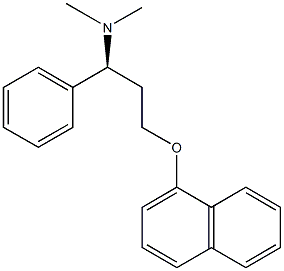
达泊西汀属于萘类化合物。
达泊西汀是一种选择性5-羟色胺再摄取抑制剂,用于治疗早泄。在PPD公司开展的一项II期概念验证研究中,与安慰剂相比,达泊西汀显著延长了射精潜伏期。Alza公司于2004年12月向美国食品药品监督管理局(FDA)提交了达泊西汀治疗早泄的新药申请(NDA)。2005年10月,该公司收到FDA的“不予批准函”,当时他们计划与监管机构合作解决未决问题。 药物适应症 用于治疗早泄。 作用机制 该药物的作用机制被认为与抑制神经元对5-羟色胺的再摄取以及随后增强5-羟色胺活性有关。射精的中枢神经回路由脊髓和大脑区域组成,形成一个高度相互连接的网络。交感神经、副交感神经和躯体脊髓中枢在感觉生殖器和大脑刺激的影响下,协同作用,控制射精过程中发生的生理事件。实验证据表明,血清素(5-HT)通过大脑下行通路对射精发挥抑制作用。迄今为止,已推测三种5-HT受体亚型(5-HT(1A)、5-HT(1B)和5-HT(2C))介导5-HT对射精的调节作用。 药效学 达泊西汀是一种选择性5-羟色胺再摄取抑制剂,目前正在通过Alza公司(由礼来公司和PPD公司合作成立的GenuPro公司授权)进行临床试验。达泊西汀是一种短效选择性血清素再摄取抑制剂(SSRI)类药物,目前正在接受美国食品药品监督管理局(FDA)的审批,用于治疗男性早泄。如果获批,它将成为首个获批用于治疗此类疾病的药物。尽管两项临床试验已于2006年完成,但专家们对其能否很快获得FDA批准持怀疑态度,因为SSRI类药物长期使用会带来一些不良副作用,例如精神问题、皮肤反应、体重增加、性欲减退、恶心、头痛、胃部不适和乏力等,这些副作用的益处远不及治疗早泄药物的风险。与获批用于治疗抑郁症的选择性血清素再摄取抑制剂(SSRI)相比,达泊西汀具有独特的药代动力学特征,其达到最大血清浓度所需时间短(约1小时),且消除迅速(初始半衰期为1-2小时)。 1. Rasarfin 是一种新型双重小G蛋白抑制剂,它是通过对约115,000个小分子进行高通量筛选而发现的,该筛选采用基于AT1R的内体BRET检测方法[1]。 2. 计算机模拟对接和分子动力学模拟表明,Ras 可与SOS结合域结合,占据通常由SOS残基His911和Lys939占据的空腔[1]。 3. Rasarfin 的结合模式涉及通过芳香族结构、疏水结构、氢键受体/供体和卤键供体与Ras残基相互作用。 [1] 4. 它具有功能选择性,因为其类似物对 GPCR 内化、ERK1/2 激活和 H-Ras 核苷酸交换的影响各不相同。[1] 5. Rasarfin 可通过靶向 Ras 和 ARF6 信号通路来抑制致癌细胞反应。[1] |
| 分子式 |
MOLECULARWEIGHT
|
|---|---|
| 分子量 |
305.4134
|
| 精确质量 |
305.177
|
| CAS号 |
119356-77-3
|
| 相关CAS号 |
Dapoxetine hydrochloride;129938-20-1;Dapoxetine-d7 hydrochloride;Dapoxetine-d6;1132642-58-0
|
| PubChem CID |
71353
|
| 外观&性状 |
Typically exists as solid at room temperature
|
| 密度 |
1.1±0.1 g/cm3
|
| 沸点 |
454.4±38.0 °C at 760 mmHg
|
| 闪点 |
132.6±29.1 °C
|
| 蒸汽压 |
0.0±1.1 mmHg at 25°C
|
| 折射率 |
1.607
|
| LogP |
5.13
|
| tPSA |
12.47
|
| 氢键供体(HBD)数目 |
0
|
| 氢键受体(HBA)数目 |
2
|
| 可旋转键数目(RBC) |
6
|
| 重原子数目 |
23
|
| 分子复杂度/Complexity |
337
|
| 定义原子立体中心数目 |
1
|
| SMILES |
O(C1=C([H])C([H])=C([H])C2=C([H])C([H])=C([H])C([H])=C12)C([H])([H])C([H])([H])[C@@]([H])(C1C([H])=C([H])C([H])=C([H])C=1[H])N(C([H])([H])[H])C([H])([H])[H]
|
| InChi Key |
USRHYDPUVLEVMC-FQEVSTJZSA-N
|
| InChi Code |
InChI=1S/C21H23NO/c1-22(2)20(18-10-4-3-5-11-18)15-16-23-21-14-8-12-17-9-6-7-13-19(17)21/h3-14,20H,15-16H2,1-2H3/t20-/m0/s1
|
| 化学名 |
(1S)-N,N-dimethyl-3-naphthalen-1-yloxy-1-phenylpropan-1-amine
|
| HS Tariff Code |
2934.99.9001
|
| 存储方式 |
Powder -20°C 3 years 4°C 2 years In solvent -80°C 6 months -20°C 1 month |
| 运输条件 |
Room temperature (This product is stable at ambient temperature for a few days during ordinary shipping and time spent in Customs)
|
| 溶解度 (体外实验) |
May dissolve in DMSO (in most cases), if not, try other solvents such as H2O, Ethanol, or DMF with a minute amount of products to avoid loss of samples
|
|---|---|
| 溶解度 (体内实验) |
注意: 如下所列的是一些常用的体内动物实验溶解配方,主要用于溶解难溶或不溶于水的产品(水溶度<1 mg/mL)。 建议您先取少量样品进行尝试,如该配方可行,再根据实验需求增加样品量。
注射用配方
注射用配方1: DMSO : Tween 80: Saline = 10 : 5 : 85 (如: 100 μL DMSO → 50 μL Tween 80 → 850 μL Saline)(IP/IV/IM/SC等) *生理盐水/Saline的制备:将0.9g氯化钠/NaCl溶解在100 mL ddH ₂ O中,得到澄清溶液。 注射用配方 2: DMSO : PEG300 :Tween 80 : Saline = 10 : 40 : 5 : 45 (如: 100 μL DMSO → 400 μL PEG300 → 50 μL Tween 80 → 450 μL Saline) 注射用配方 3: DMSO : Corn oil = 10 : 90 (如: 100 μL DMSO → 900 μL Corn oil) 示例: 以注射用配方 3 (DMSO : Corn oil = 10 : 90) 为例说明, 如果要配制 1 mL 2.5 mg/mL的工作液, 您可以取 100 μL 25 mg/mL 澄清的 DMSO 储备液,加到 900 μL Corn oil/玉米油中, 混合均匀。 View More
注射用配方 4: DMSO : 20% SBE-β-CD in Saline = 10 : 90 [如:100 μL DMSO → 900 μL (20% SBE-β-CD in Saline)] 口服配方
口服配方 1: 悬浮于0.5% CMC Na (羧甲基纤维素钠) 口服配方 2: 悬浮于0.5% Carboxymethyl cellulose (羧甲基纤维素) 示例: 以口服配方 1 (悬浮于 0.5% CMC Na)为例说明, 如果要配制 100 mL 2.5 mg/mL 的工作液, 您可以先取0.5g CMC Na并将其溶解于100mL ddH2O中,得到0.5%CMC-Na澄清溶液;然后将250 mg待测化合物加到100 mL前述 0.5%CMC Na溶液中,得到悬浮液。 View More
口服配方 3: 溶解于 PEG400 (聚乙二醇400) 请根据您的实验动物和给药方式选择适当的溶解配方/方案: 1、请先配制澄清的储备液(如:用DMSO配置50 或 100 mg/mL母液(储备液)); 2、取适量母液,按从左到右的顺序依次添加助溶剂,澄清后再加入下一助溶剂。以 下列配方为例说明 (注意此配方只用于说明,并不一定代表此产品 的实际溶解配方): 10% DMSO → 40% PEG300 → 5% Tween-80 → 45% ddH2O (或 saline); 假设最终工作液的体积为 1 mL, 浓度为5 mg/mL: 取 100 μL 50 mg/mL 的澄清 DMSO 储备液加到 400 μL PEG300 中,混合均匀/澄清;向上述体系中加入50 μL Tween-80,混合均匀/澄清;然后继续加入450 μL ddH2O (或 saline)定容至 1 mL; 3、溶剂前显示的百分比是指该溶剂在最终溶液/工作液中的体积所占比例; 4、 如产品在配制过程中出现沉淀/析出,可通过加热(≤50℃)或超声的方式助溶; 5、为保证最佳实验结果,工作液请现配现用! 6、如不确定怎么将母液配置成体内动物实验的工作液,请查看说明书或联系我们; 7、 以上所有助溶剂都可在 Invivochem.cn网站购买。 |
| 制备储备液 | 1 mg | 5 mg | 10 mg | |
| 1 mM | 3.2743 mL | 16.3714 mL | 32.7429 mL | |
| 5 mM | 0.6549 mL | 3.2743 mL | 6.5486 mL | |
| 10 mM | 0.3274 mL | 1.6371 mL | 3.2743 mL |
1、根据实验需要选择合适的溶剂配制储备液 (母液):对于大多数产品,InvivoChem推荐用DMSO配置母液 (比如:5、10、20mM或者10、20、50 mg/mL浓度),个别水溶性高的产品可直接溶于水。产品在DMSO 、水或其他溶剂中的具体溶解度详见上”溶解度 (体外)”部分;
2、如果您找不到您想要的溶解度信息,或者很难将产品溶解在溶液中,请联系我们;
3、建议使用下列计算器进行相关计算(摩尔浓度计算器、稀释计算器、分子量计算器、重组计算器等);
4、母液配好之后,将其分装到常规用量,并储存在-20°C或-80°C,尽量减少反复冻融循环。
计算结果:
工作液浓度: mg/mL;
DMSO母液配制方法: mg 药物溶于 μL DMSO溶液(母液浓度 mg/mL)。如该浓度超过该批次药物DMSO溶解度,请首先与我们联系。
体内配方配制方法:取 μL DMSO母液,加入 μL PEG300,混匀澄清后加入μL Tween 80,混匀澄清后加入 μL ddH2O,混匀澄清。
(1) 请确保溶液澄清之后,再加入下一种溶剂 (助溶剂) 。可利用涡旋、超声或水浴加热等方法助溶;
(2) 一定要按顺序加入溶剂 (助溶剂) 。
InvivoChem的所有产品仅用于作科学研究,不面向患者销售
Copyright 2020 InvivoChem LLC | All Rights Reserved 粤ICP备20063088号-1


 粤公网安备 44011102003439号
 463611831
