| 规格 | 价格 | 库存 | 数量 |
|---|---|---|---|
| 100mg |
|
||
| 500mg |
|
||
| 1g |
|
||
| Other Sizes |
|

| 靶点 |
(-)-Camphor does not have specific biological targets for therapeutic use. It is a chiral intermediate and flavor additive. Camphor, the parent compound, has known biological activities including topical analgesic and antipruritic effects, but (-)-Camphor is primarily used as a chemical intermediate. The compound may interact with TRP channels or other sensory receptors, but this is not its primary use in research.
|
|---|---|
| 体外研究 (In Vitro) |
(-)-樟脑通常不进行体外生物活性评估,因为它被用作化学中间体和调味剂。该化合物的比旋光度为-40.0至-46.0度(c=20,EtOH),证实了其手性纯度。如果存在生物活性,则可能与其已知的局部用药作用有关。
|
| 体内研究 (In Vivo) |
(-)-樟脑在体内不用作治疗化合物。它可用作食品调味剂,但尚未有关于该特定对映异构体的体内药理学研究报道。
|
| 酶活实验 |
由于(-)-樟脑不是一种具有生物活性的化合物,因此目前尚无针对该化合物的生物活性测定方案。该化合物的表征采用标准分析化学方法,包括气相色谱法(GC)用于纯度评估和旋光度测定。GC测定其纯度≥98.0%,熔点为175.0-180.0℃。
|
| 细胞实验 |
(-)-樟脑不用于细胞分析,因为它不具有生物活性。它是一种化学中间体和调味剂。该化合物的分子式为C₁₀H₁₆O,分子量为152.23 g/mol。
|
| 动物实验 |
目前尚无关于(-)-樟脑的体内实验方案报道。该化合物不用于动物治疗研究。
|
| 药代性质 (ADME/PK) |
吸收、分布和排泄
樟脑经黏膜和胃肠道迅速吸收,口服后5至90分钟内即可达到血浆峰浓度。樟脑经肾脏排泄。樟脑的分布容积为2至4 L/kg。樟脑及其代谢物具有较高的脂溶性,可能在脂肪组织和其他组织中蓄积。母体摄入的樟脑存在于羊水、脐带血、胎儿血液以及胎儿的脑、肝和肾脏中。目前尚无药代动力学数据。代谢/代谢物:(S)-樟脑迅速氧化为5-外-羟基苯甲酮,该过程主要由人肝微粒体细胞色素P450介导。CYP2A6是人肝微粒体对(-)-樟脑进行羟基化的主要酶。口服200毫克樟脑后,其生物半衰期为167分钟。由于(-)-樟脑并非治疗性化合物,因此其药代动力学数据不适用。该化合物的分子式为C₁₀H₁₆O,分子量为152.23 g/mol。 |
| 毒性/毒理 (Toxicokinetics/TK) |
蛋白质结合
无药代动力学数据。 (-)-樟脑属于危险品,运输时应采取适当的安全预防措施。它易燃,并可能刺激皮肤、眼睛和呼吸道。应遵循标准实验室安全操作规程,包括佩戴手套、护目镜和保持良好的通风。 |
| 参考文献 | |
| 其他信息 |
L-樟脑为无色或白色晶体。它具有浓郁的芳香气味、略带苦味,并有清凉感。20°C (68°F) 时的气味指数为 40。闪点为 65°C (149°F)。燃烧时火焰明亮,并产生烟雾。在室温常压下会显著升华;在 80°C (176°F) 和 12 mmHg 的条件下,60 分钟内有 14% 升华。(NTP, 1992)
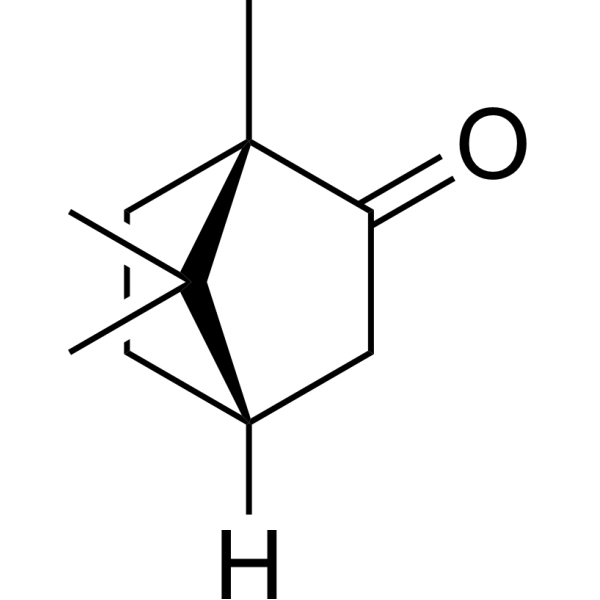
(S)-樟脑是樟脑的 S-对映异构体,也是 (R)-樟脑的对映异构体。 (S)-樟脑,或称 L(-)-樟脑,是 [DB01744] 的立体异构体,[DB01744] 是一种双环单萜,已知能增强冷热感觉。 (S)-樟脑并非天然存在的立体异构体,但它对TRPV通道具有相似的亲和力和电流抑制作用。[DB01744]是从樟树(Cinnamomum camphora)的木材中分离得到的,具有悠久的药用历史。它曾被用作鼻腔减充血剂和止咳药,也因其止痒、镇痛和抗刺激特性而被外用。樟脑是许多非处方软膏和搽剂的主要活性成分,作为一种外用镇痛剂,它通过诱导对冷热的敏感性来缓解轻微的肌肉和关节疼痛。据报道,(-)-樟脑存在于鼠尾草、樟脑百里香和其他一些具有相关数据的生物体中。药理适应症:适用于暂时缓解轻微的肌肉和关节疼痛,可作为外用镇痛剂使用。作用机制:TRPV3阳离子通道是分子传感器,通过诱导热感觉和热致痛觉过敏,在伤害感受和温度感觉中发挥作用。樟脑通过孔道区域的半胱氨酸残基与TRPV3通道相互作用,导致通道激活和细胞内钙离子水平升高。樟脑还能激活背根神经节(DRG)神经元中的TRPV1和TRPV1样电流,但抑制锚蛋白重复序列TRP1(TRPA1)通道,后者负责温度感知,在大多数伤害性DRG神经元中表达。TRPA1电流抑制如何发挥樟脑镇痛作用的确切机制尚不清楚。重复刺激樟脑会导致TRPV1和TRPV3通道敏化,进而导致通道脱敏或反应减弱,这或许可以解释樟脑的镇痛作用。樟脑还能激活冷敏瞬时受体电位黑色素-抑制素8 (TRPM8),并增强冷诱导的钙瞬变,这解释了经皮给药樟脑后产生的清凉效果。此外,研究表明樟脑可以抑制薄荷醇对TRPM8受体的反应。 药效学 局部应用樟脑会产生温热感,从而发挥镇痛作用。它通过激活热敏性TRP香草酸受体1型 (TRPV1) 和TRPV3受体来兴奋和脱敏感觉神经。据报道,(S)-樟脑对TRPV1通道的作用较弱,这被认为是由于其快速耐受性,即对重复刺激的反应减弱。 (-)-樟脑是一种手性单萜酮,用作手性中间体和调味剂。分子式:C₁₀H₁₆O,分子量:152.23。无临床应用。仅供研究使用,用作化学中间体。 |
| 分子式 |
C10H16O
|
|---|---|
| 分子量 |
152.24
|
| 精确质量 |
152.12
|
| CAS号 |
464-48-2
|
| PubChem CID |
444294
|
| 外观&性状 |
White to off-white solid
|
| 密度 |
1.0±0.1 g/cm3
|
| 沸点 |
207.4±0.0 °C at 760 mmHg
|
| 熔点 |
345 °F (NIOSH, 2024); 174-179 °C; 180 °C; 345 °F; 345 °F
|
| 闪点 |
64.4±0.0 °C
|
| 蒸汽压 |
0.2±0.4 mmHg at 25°C
|
| 折射率 |
1.485
|
| 来源 |
Originated from plants: Leguminosae Oxytropis falcata Bunge
Originated from plants: Compositae |
| LogP |
2.13
|
| tPSA |
17.07
|
| 氢键供体(HBD)数目 |
0
|
| 氢键受体(HBA)数目 |
1
|
| 可旋转键数目(RBC) |
0
|
| 重原子数目 |
11
|
| 分子复杂度/Complexity |
217
|
| 定义原子立体中心数目 |
2
|
| SMILES |
O=C1C([H])([H])C2([H])C([H])([H])C([H])([H])C1(C([H])([H])[H])C2(C([H])([H])[H])C([H])([H])[H]
|
| InChi Key |
DSSYKIVIOFKYAU-OIBJUYFYSA-N
|
| InChi Code |
InChI=1S/C10H16O/c1-9(2)7-4-5-10(9,3)8(11)6-7/h7H,4-6H2,1-3H3/t7-,10+/m0/s1
|
| 化学名 |
(1S,4S)-1,7,7-trimethylbicyclo[2.2.1]heptan-2-one
|
| HS Tariff Code |
2934.99.9001
|
| 存储方式 |
Powder -20°C 3 years 4°C 2 years In solvent -80°C 6 months -20°C 1 month |
| 运输条件 |
Room temperature (This product is stable at ambient temperature for a few days during ordinary shipping and time spent in Customs)
|
| 溶解度 (体外实验) |
May dissolve in DMSO (in most cases), if not, try other solvents such as H2O, Ethanol, or DMF with a minute amount of products to avoid loss of samples
|
|---|---|
| 溶解度 (体内实验) |
配方 1 中的溶解度: ≥ 5 mg/mL (32.84 mM) (饱和度未知) in 10% DMSO + 40% PEG300 + 5% Tween-80 + 45% Saline (这些助溶剂从左到右依次添加,逐一添加), 澄清溶液。
若需制备1 mL 的工作液,可将 100 μL DMSO 储备液(50.0 mg/mL)加入 400 μL PEG300 中,混匀;然后加入 50 μL Tween-80 并混匀;最后加入 450 μL 生理盐水,将体积调整至 1 mL。 *生理盐水的制备:将 0.9 g 氯化钠溶解在 100 mL ddH₂O中,得到澄清溶液。 配方 2 中的溶解度: ≥ 5 mg/mL (32.84 mM) (饱和度未知) in 10% DMSO + 90% (20% SBE-β-CD in Saline) (这些助溶剂从左到右依次添加,逐一添加), 澄清溶液。 若需制备1 mL 的工作液,可将 100 μL DMSO 储备液(50.0 mg/mL)加入 900 μL 20% SBE-β-CD 生理盐水中,并混匀。 *20% SBE-β-CD 生理盐水溶液的制备(4°C,1 周):将 2 g SBE-β-CD 溶解于 10 mL 生理盐水中,得到澄清溶液。 配方 3 中的溶解度: ≥ 5 mg/mL (32.84 mM) (饱和度未知) in 10% DMSO + 90% Corn Oil (这些助溶剂从左到右依次添加,逐一添加), 澄清溶液。 若需制备1 mL 的工作液,可将 100 μL DMSO 储备液(50.0 mg/mL)加入 900 μL 玉米油中,并混合均匀。 请根据您的实验动物和给药方式选择适当的溶解配方/方案: 1、请先配制澄清的储备液(如:用DMSO配置50 或 100 mg/mL母液(储备液)); 2、取适量母液,按从左到右的顺序依次添加助溶剂,澄清后再加入下一助溶剂。以 下列配方为例说明 (注意此配方只用于说明,并不一定代表此产品 的实际溶解配方): 10% DMSO → 40% PEG300 → 5% Tween-80 → 45% ddH2O (或 saline); 假设最终工作液的体积为 1 mL, 浓度为5 mg/mL: 取 100 μL 50 mg/mL 的澄清 DMSO 储备液加到 400 μL PEG300 中,混合均匀/澄清;向上述体系中加入50 μL Tween-80,混合均匀/澄清;然后继续加入450 μL ddH2O (或 saline)定容至 1 mL; 3、溶剂前显示的百分比是指该溶剂在最终溶液/工作液中的体积所占比例; 4、 如产品在配制过程中出现沉淀/析出,可通过加热(≤50℃)或超声的方式助溶; 5、为保证最佳实验结果,工作液请现配现用! 6、如不确定怎么将母液配置成体内动物实验的工作液,请查看说明书或联系我们; 7、 以上所有助溶剂都可在 Invivochem.cn网站购买。 |
| 制备储备液 | 1 mg | 5 mg | 10 mg | |
| 1 mM | 6.5686 mL | 32.8429 mL | 65.6858 mL | |
| 5 mM | 1.3137 mL | 6.5686 mL | 13.1372 mL | |
| 10 mM | 0.6569 mL | 3.2843 mL | 6.5686 mL |
1、根据实验需要选择合适的溶剂配制储备液 (母液):对于大多数产品,InvivoChem推荐用DMSO配置母液 (比如:5、10、20mM或者10、20、50 mg/mL浓度),个别水溶性高的产品可直接溶于水。产品在DMSO 、水或其他溶剂中的具体溶解度详见上”溶解度 (体外)”部分;
2、如果您找不到您想要的溶解度信息,或者很难将产品溶解在溶液中,请联系我们;
3、建议使用下列计算器进行相关计算(摩尔浓度计算器、稀释计算器、分子量计算器、重组计算器等);
4、母液配好之后,将其分装到常规用量,并储存在-20°C或-80°C,尽量减少反复冻融循环。
计算结果:
工作液浓度: mg/mL;
DMSO母液配制方法: mg 药物溶于 μL DMSO溶液(母液浓度 mg/mL)。如该浓度超过该批次药物DMSO溶解度,请首先与我们联系。
体内配方配制方法:取 μL DMSO母液,加入 μL PEG300,混匀澄清后加入μL Tween 80,混匀澄清后加入 μL ddH2O,混匀澄清。
(1) 请确保溶液澄清之后,再加入下一种溶剂 (助溶剂) 。可利用涡旋、超声或水浴加热等方法助溶;
(2) 一定要按顺序加入溶剂 (助溶剂) 。
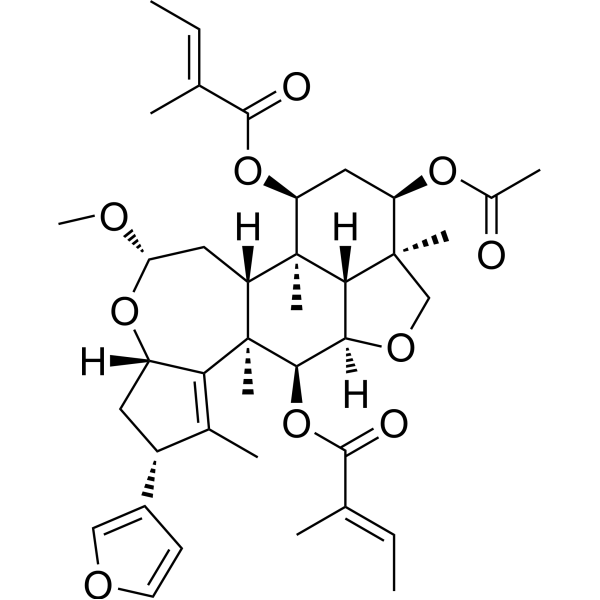 Toosendansin C
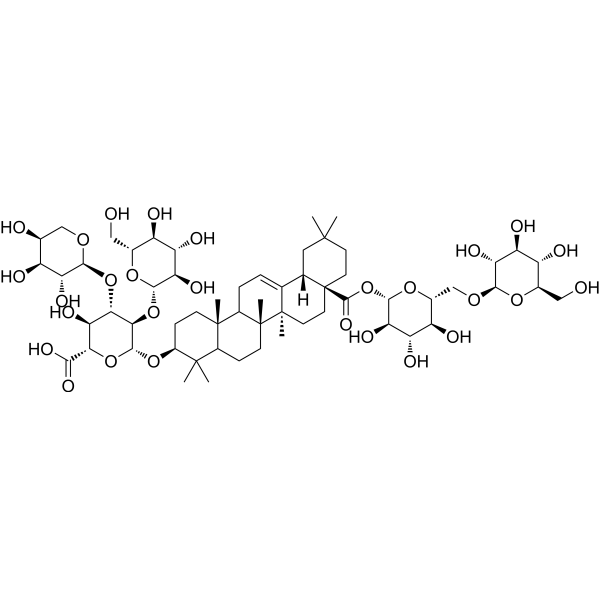 Hemsloside H1
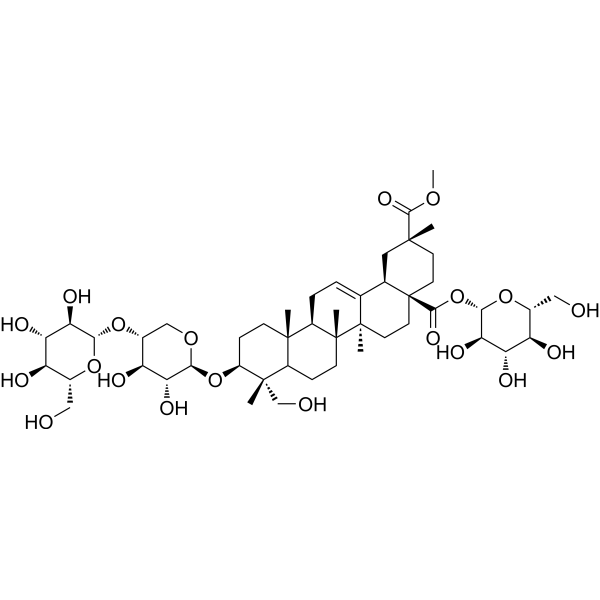 Esculentoside L
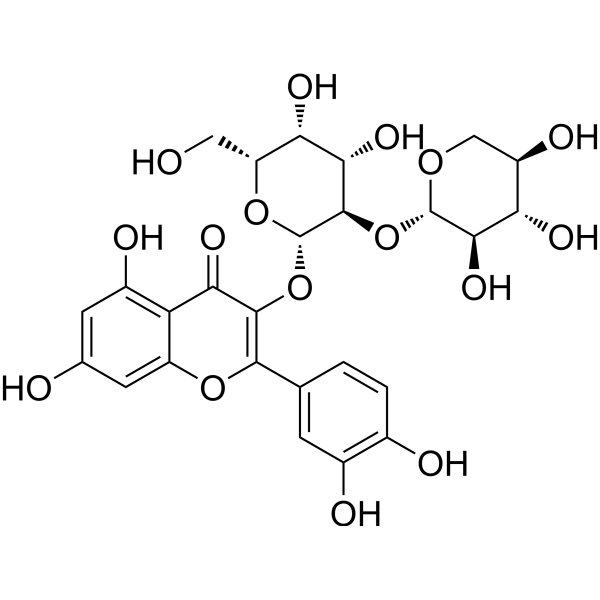 Quercetin-3-O-β-D-xylosyl-(1→2)-β-D-galactoside
InvivoChem的所有产品仅用于作科学研究,不面向患者销售
Copyright 2020 InvivoChem LLC | All Rights Reserved 粤ICP备20063088号-1


 粤公网安备 44011102003439号
 463611831
