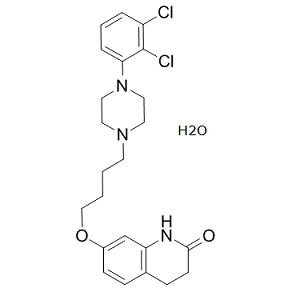
Aripiprazole monohydrate (OPC14597)

别名: OPC 31; OPC14597; OPC-31; OPC 14597; Aripiprazole monohydrate; Aripiprazole hydrate; 851220-85-4; UNII-O362MEQ7VR; O362MEQ7VR; Aripiprazole (monohydrate); Aripiprazole hydrate (JAN); ARIPIPRAZOLE HYDRATE [JAN]; OPC31; Abilitat; OPC-14597 7-[4-[4-(2,3-dichlorophenyl)piperazin-1-yl]butoxy]-3,4-dihydro-1H-quinolin-2-one,hydrate
目录号: V11591 纯度: ≥98%
阿立哌唑一水合物(以前也称为 OPC-14597;OPC31;Abilitat)是阿立哌唑的一水合物形式,是一种新型非典型抗精神病药物,据报道是一种高亲和力 5-HT 受体部分激动剂。
Aripiprazole monohydrate (OPC14597) CAS号: 851220-85-4
产品类别: 5-HT Receptor
产品仅用于科学研究,不针对患者销售
规格 价格 库存 数量
25mg
50mg
100mg
250mg
500mg
1g
Other Sizes

Other Forms of Aripiprazole monohydrate (OPC14597):

  • Dehydroaripiprazole hydrochloride (OPC-14857 hydrochloride; DM-14857 hydrochloride)
  • Dehydro Aripiprazole-d8 hydrochloride
  • Aripiprazole (1,1,2,2,3,3,4,4-d8) (Aripiprazole (1,1,2,2,3,3,4,4-d8))
  • Aripiprazole N,N-Dioxide
  • Aripiprazole impurity 1
  • 阿立哌唑
  • 阿立哌唑-D8
  • 阿立哌唑cavoxil
  • 月桂酰阿立派唑
点击了解更多
InvivoChem产品被CNS等顶刊论文引用
产品描述
阿立哌唑一水合物(以前也称为 OPC-14597;OPC31;Abilitat)是阿立哌唑的一水合物形式,是一种新型非典型抗精神病药物,据报道是一种高亲和力 5-HT 受体部分激动剂。它是一种多巴胺-血清素系统稳定剂,对多巴胺 D2 和 5-HT1A 受体具有有效的部分激动剂活性,对 5-HT2A 受体具有拮抗剂活性。此外,据报道,阿立哌唑分别用0.34±0.02nM和0.70±0.22nM的激动剂[125I]7-OH-PIPAT和拮抗剂[3H]螺哌隆进行标记。
生物活性&实验参考方法
靶点
5-HT1A Receptor; 5-HT2A Receptor; 5-HT2B Receptor; 5-HT2C Receptor; D2 Receptor; D3 Receptor; D4 Receptor
体外研究 (In Vitro)
阿立哌唑一水合物可有效激活 D2 受体介导的 cAMP 积累抑制作用[1]。阿立哌唑一水合物对 TNF-α、IL-13、IL-17α 和 fractalkine 显示出更强的抗炎作用[3]。
体外活性:阿立哌唑以高亲和力与 G 蛋白偶联和非偶联状态的受体结合。阿立哌唑可有效激活 D2 受体介导的 cAMP 积累抑制作用。阿立哌唑对 h5-HT(2B)-、hD(2L)- 和 hD(3)- 多巴胺受体具有最高的亲和力,但对其他几种 5-HT 受体 (5-HT) 也具有显着的亲和力 (5-30 nM) (1A)、5-HT(2A)、5-HT(7)),以及 α(1A)-肾上腺素能受体和 hH(1)-组胺受体。阿立哌唑对其他 G 蛋白偶联受体的亲和力较低 (30-200 nM),包括 5-HT(1D)、5-HT(2C)、α(1B)-、α(2A)-、α(2B) -、α(2C)-、β(1)-、β(2)-肾上腺素能受体和 H(3)-组胺受体。阿立哌唑是 5-HT(2B) 受体的反向激动剂,并对 5-HT(2A)、5-HT(2C)、D(3) 和 D(4) 受体显示部分激动作用。
体内研究 (In Vivo)
阿立哌唑一水合物(0-3 mg/kg,腹腔注射,每日)显示出一些抗焦虑特性[4]。动物模型:WAG/Rij 大鼠(每剂 N = 6 只,6 个月,给予替来他明/唑拉西泮混合物)[4] 剂量:0、0.3、1、3 mg/kg 给药方式:腹膜内注射,1 mL/kg,每天下午 5 点直至实验结束 结果:显示出一定的抗焦虑特性,其中 1 mg/kg 剂量最为有效。
阿立哌唑(APZ)被认为是一线非典型抗精神病药物,用于治疗首次和多次发作的精神分裂症,以改善阳性和阴性症状。其治疗适应症扩展到急性躁狂和与双相情感障碍相关的混合发作。此外,APZ在2007年被批准作为重度抑郁症的辅助治疗。与其他抗精神病药物相比,APZ具有独特的药理特征。它是D₂多巴胺受体和5-羟色胺5-HT(1A)和5-HT₇受体的部分激动剂,而它是5-羟色胺5-HT(2A)和5-HT₆受体的拮抗剂。由于癫痫通常伴有神经系统合并症,如疾病和/或药物治疗引起的抑郁、焦虑和认知缺陷,我们希望研究亚慢性治疗(>14连续天)使用APZ(0.3、1和3 mg/kg;使用不同的标准范式:开放场(OF)测试、升高加迷宫(EPM)测试、强迫游泳(FS)测试、蔗糖消耗(SC)测试和Morris水迷宫(MWM)测试,对失神发作和WAG/Rij大鼠的行为进行了研究。WAG/Rij大鼠代表了一种经过验证的伴有轻度抑郁共病的缺失性癫痫的遗传动物模型,也包括其他行为改变。对于该品系的行为共病,我们观察到APZ在FS和SC测试中具有明显的抗抑郁作用,并在Morris水迷宫测试中提高了记忆/学习功能。在使用的两种焦虑模型中,APZ仅显示出轻微的影响。综上所述,我们的研究结果表明,APZ实际上可能在治疗失神性癫痫或作为附加治疗方面具有潜力,但更有趣的是,这些作用可能伴随着对抑郁、焦虑和记忆的积极调节作用,这也可能对其他癫痫综合征有益。本文是“认知增强剂”特刊的一部分。[4]
酶活实验
放射性配体结合试验[2]
大量瞬时和稳定转染的克隆人类cdna,通过国家精神卫生研究所精神活性药物筛选计划(NIMH-PDSP)的资源获得,用于放射配体结合和功能分析,如前面所述(Rothman等人,2000;Tsai et al ., 2000)。表1列出了放射配体结合测定的条件,以及标准化合物的KD值。在初始筛选试验中,以10 μM的浓度对大量gpcr、离子通道和转运体进行了阿立哌唑四次重复的测试。对于>50%抑制的分子靶点,使用至少6个浓度<强>阿立哌唑的浓度来测定Ki;使用GraphPad Prism计算四份Ki值。[125I]DOI竞争试验按照前面的描述进行(Choudhary等,1992),并做了以下改变:将12个阿立哌唑的稀释度,范围为0.01-3000 nM,与[125I]DOI (0.3 nM)在25°C下,以总体积为0.25 ml,结合缓冲液(50 mM Tris缓冲液,pH 7.4, 0.5 mM EDTA, 10 mM MgCl2)中5-20 μg的膜蛋白孵育1小时。用Brandel细胞收割机在聚乙烯亚胺预处理(0.3%)Whatman GF/C过滤器上进行三次冷水洗涤,收获膜。结合滤光片的放射性是用液体闪烁计数来量化的。
阿立哌唑是第一个下一代非典型抗精神病药,其作用机制不同于目前上市的典型和非典型抗精神病药。阿立哌唑分别在多巴胺能低活性和多活性动物模型中表现出激动剂和拮抗剂的特性。本研究检测了阿立哌唑与单一人群D2受体的相互作用,以进一步阐明其药理学特性。在表达重组D2L受体的中国仓鼠卵巢细胞制备的膜中,阿立哌唑对G蛋白偶联和非偶联状态的受体都具有高亲和力。阿立哌唑有效激活D2受体介导的cAMP积累抑制。用烷基化剂n -乙氧羰基-2-乙氧基-1,2-二氢喹啉(EEDQ)灭活部分受体显著降低了阿立哌唑抑制cAMP积累的最大效果。这种效应是在EEDQ浓度不改变多巴胺最大抑制作用的情况下观察到的。与部分激动剂的预期作用一致,增加阿立哌唑浓度阻断多巴胺的作用,其最大阻断作用相当于单独使用阿立哌唑的激动剂作用。阿立哌唑相对于多巴胺的疗效在缺乏多巴胺备用受体的细胞中为25%,在具有受体储备的细胞中为90%。这些结果,连同先前的研究表明部分激动剂对5-羟色胺(5-HT)1A受体的活性和拮抗剂对5-HT2A受体的活性,支持阿立哌唑作为多巴胺- 5-羟色胺系统稳定剂的鉴定。受体活性谱可能是阿立哌唑在动物体内的独特活性及其在人类中的抗精神病活性的基础。[2]
细胞实验
阿立哌唑对cAMP生成的影响[2]
福斯克林刺激cAMP生成的抑制作用[2]
如先前报道的那样,在稳定的D4和5- ht1a受体表达细胞系中测量了福斯克林刺激的3 ‘,5 ’环腺苷单磷酸(cAMP)产生的抑制作用(Lawler等,1999;Zhang et al ., 1994)。简单地说,在24孔板中培养细胞,在实验之前用含有100 μM IBMX和100 μM forskolin(全部在冰上)的新鲜F12培养基替换生长培养基。在细胞中加入10倍稀释的阿立哌唑 0.1 ~ 10.000 nM,然后在37℃和5% CO2下孵育20 min。通过抽吸和加入0.5 ml的3%三氯乙酸来终止反应。4℃冷冻1 h, 1000 g旋转15 min。cAMP采用竞争性结合测定法进行了少量修改(Nordstedt和Fredholm, 1990)。测定cAMP含量时,将三氯乙酸提取物(40 μl)加入到含有cAMP测定缓冲液(100 mM Tris-HCl, pH 7.4, 100 mM NaCl, 5 mM EDTA)的反应管中。[3H]每管加入终浓度为1 nM的cAMP,然后加入cAMP结合蛋白(500 μl cAMP缓冲液中约100 μg牛肾上腺皮质粗提物)。反应管在冰上孵育2小时,然后用Brandel细胞收集机收获到浸泡在水中的Whatman GF/C过滤器上。滤光片干燥,结合放射性通过液体闪烁计数来量化。每个样品中cAMP的浓度从0.1至100 pmol /assay的标准曲线估计。
刺激cAMP产量[2]
使用先前描述的方法在稳定的转染物中研究了5-HT6和5-HT7受体中血清素和阿立哌唑的作用(Max等人,1995;Monsma et al ., 1993;Shen et al ., 1993)。
动物实验
WAG/Rij rats (N = 6 per dose, 6 months, administration of a mixture of tiletamine/zolazepam)
0, 0.3, 1, 3 mg/kg
IP, 1 mL/kg, every day at 5 p.m. until the end of the experiments
Sub-chronic treatment procedure [4]
Aripiprazole (APZ) was dispersed in a 1% aqueous solution (physiological saline) of Tween 80. Rats were treated intraperitoneally (i.p.) with APZ at the doses of 0.3, 1 and 3 mg/kg in a volume of 1 ml/kg injected every day at 5 p.m. until the end of the experiments. To evaluate the effects of a short-term APZ treatment (sub-chronic) on absence seizures, different groups of rats, around 6 months of age, were treated for 14 consecutive days, starting treatment one week after surgery for electrode implantation (see Section 2.3). Starting on the 15th day, rats of the sub-chronic treatment group (absence seizure evaluation) underwent three recording periods as described in Section 2.3; treatment was continued up to the last day of recordings. Control group received equal volumes of vehicle (1% Tween 80 in physiological saline). Relative to behavioral tests, no surgery was performed and treatment was continued as above reported for the entire duration of the tests without discontinuation. Therefore, the drug was always present in the system at the moment of the test. Total duration of the treatment in every test should be considered as 14 days added to day of testing; i.e. in the Morris water maze test, on day 5 recordings animals were treated for 19 consecutive days (14 + 5). In any case, APZ blood concentration can be considered stable being at the steady-state already before testing being its half-life in rats is about 1 h.
药代性质 (ADME/PK)
Absorption, Distribution and Excretion
Tablets: Aripiprazole tablets are well absorbed after administration, with peak plasma concentrations reached within 3 to 5 hours; the absolute oral bioavailability of the tablets is 87%. ABILIFY can be taken with or without food. Taking 15 mg ABILIFY tablets with a standard high-fat meal did not significantly affect the Cmax or AUC of aripiprazole or its active metabolite dehydroaripiprazole, but delayed the Tmax of aripiprazole by 3 hours and the Tmax of dehydroaripiprazole by 12 hours. Oral Solution: Aripiprazole solution is well absorbed orally. At the same dose, the plasma concentrations of aripiprazole solution are higher than those of the tablets. In a relative bioavailability study comparing the pharmacokinetics of 30 mg aripiprazole oral solution and 30 mg aripiprazole tablets in healthy subjects, the geometric mean Cmax and AUC values of the solution and tablets were 122% and 114%, respectively. Aripiprazole single-dose pharmacokinetics are linear and dose-proportional in the dose range of 5 mg to 30 mg. Sustained-release injectable suspension, administered every two months: Due to the low solubility of aripiprazole particles, the time to systemic circulation is prolonged after intramuscular injection in the buttock. The release characteristics of ABILIFY ASIMTUFII allow plasma drug concentrations to be maintained for more than 2 months after buttock injection. After multiple administrations, the median peak-to-trough ratio of aripiprazole after ABILIFY ASIMTUFII administration is 1.3, resulting in a flat plasma concentration curve. After multiple buttock administrations of 960 mg, the time to peak concentration (Tmax) ranges from 1 to 49 days. Following a single oral administration of [14C]-labeled aripiprazole, approximately 25% and 55% of the administered radioactive material, respectively, are recovered from urine and feces. Less than 1% of unmetabolized aripiprazole is excreted in urine, and approximately 18% of the oral dose is recovered in feces as unmetabolized form.
After intravenous administration, aripiprazole exhibits a high steady-state volume of distribution (404 L or 4.9 L/kg), indicating its extensive extravascular distribution.
The clearance of aripiprazole is estimated at 0.8 mL/min/kg. Other studies have reported clearance rates of 3297 ± 1042 mL/hr.
Oral bioavailability is 87%. Aripiprazole is well absorbed and can be taken with or without food. Concomitant administration with a high-fat meal does not affect Cmax or AUC, but delays the Tmax of aripiprazole by 3 hours and the Tmax of dehydroaripiprazole by 12 hours.
Time to peak concentration: Peak plasma concentration: 3 to 5 hours.
The high steady-state volume of distribution of aripiprazole after intravenous administration (404 L or 4.9 L/kg) indicates its extensive extravascular distribution. At therapeutic concentrations, aripiprazole and its major metabolites bind more than 99% to serum proteins, primarily albumin. In healthy volunteers, daily administration of 0.5 to 30 mg of aripiprazole showed a dose-dependent D2 receptor occupancy, indicating that aripiprazole can cross the blood-brain barrier. For more complete data on the absorption, distribution, and excretion of aripiprazole (a total of 8 metabolites), please visit the HSDB record page. Metabolites/Metabolites Aripiprazole is primarily metabolized via three biotransformation pathways: dehydrogenation, hydroxylation, and N-dealkylation. In vitro studies have shown that CYP3A4 and CYP2D6 enzymes are responsible for the dehydrogenation and hydroxylation of aripiprazole, while N-dealkylation is catalyzed by CYP3A4. Aripiprazole is the predominantly circulating drug component. At steady state, the active metabolite dehydroaripiprazole accounts for approximately 40% of the area under the plasma concentration-time curve (AUC) of aripiprazole. Aripiprazole is extensively metabolized in the liver via dehydrogenation, hydroxylation, and N-dealkylation by cytochrome P-450 (CYP) 2D6 and 3A4 isoenzymes. The major active metabolite, dehydroaripiprazole, has a similar affinity for the D2 receptor to the parent compound, accounting for approximately 40% of the area under the plasma concentration-time curve (AUC) of aripiprazole. Steady-state plasma concentrations of both aripiprazole and dehydroaripiprazole are reached within 14 days. The activity of ABILIFY is primarily attributed to the parent drug aripiprazole, followed by its major metabolite, dehydroaripiprazole. Studies have shown that dehydroaripiprazole has a similar affinity for the D2 receptor to the parent drug, and its plasma exposure accounts for 40% of the parent drug exposure.
Known metabolites of aripiprazole include dehydroaripiprazole, 4-[(2-oxo-3,4-dihydro-1H-quinoline-7-yl)oxy]butyraldehyde, 4-hydroxyaripiprazole, and 2,3-dichlorophenylpiperazine.
Aripiprazole is primarily metabolized via three biotransformation pathways: dehydrogenation, hydroxylation, and N-dealkylation. Based on in vitro studies, CYP3A4 and CYP2D6 enzymes are responsible for the dehydrogenation and hydroxylation of aripiprazole, while N-dealkylation is catalyzed by CYP3A4. Aripiprazole is the predominantly circulating drug component. At steady state, the active metabolite dehydroaripiprazole accounts for approximately 40% of the plasma AUC of aripiprazole (RxList, A308).
Elimination pathway: Less than 1% of unchanged aripiprazole is excreted in the urine, and approximately 18% of the oral dose is excreted unchanged in the feces. Half-life: 75-146 hours
Biological Half-life
The mean elimination half-lives of aripiprazole and dehydroaripiprazole are approximately 75 hours and 94 hours, respectively. For individuals with impaired CYP2D6 metabolism, the half-life of aripiprazole is 146 hours, and these patients should take half the normal dose. Other studies have reported a half-life of aripiprazole of 61.03 ± 19.59 hours, and a half-life of its active metabolite of 279 ± 299 hours. The mean elimination half-lives of aripiprazole and dehydroaripiprazole are approximately 75 hours and 94 hours, respectively.
毒性/毒理 (Toxicokinetics/TK)
Hepatotoxicity

No abnormal liver function has been reported in patients taking aripiprazole long-term, but most studies do not provide serum enzyme results. Despite the widespread use of aripiprazole, only a few isolated cases of clinically significant liver injury have been reported in the literature. All reported cases were hepatocellular liver injury, occurring 1 to 3 months after treatment, with one case showing accelerated progression after re-administration. No immune allergy or autoimmune features were observed. Most cases were without jaundice, and there were no deaths or chronic injuries. Aripiprazole has not been reported in large series of drug-induced liver injury cases. The aripiprazole product label mentions reports of hepatitis and jaundice, but does not provide specific details. Therefore, clinically significant liver injury caused by aripiprazole is very rare.
Probability score: D (likely a rare cause of clinically significant liver injury).
Pregnancy and Lactation Effects

◉ Overview of Use During Lactation
Limited information suggests that low drug concentrations in breast milk are observed when mothers take up to 15 mg of aripiprazole daily. Aripiprazole can dose-dependently decrease serum prolactin levels. There have been case reports of cessation of lactation, but also cases of gynecomastia and galactorrhea. There have been reports of weight loss and poor weight gain in breastfed infants born to mothers taking aripiprazole. Until more data are available, it is recommended to prioritize other medications, especially during the breastfeeding of newborns or preterm infants.
◉ Effects on Breastfed Infants
One woman took 15 mg of aripiprazole orally daily during pregnancy and postpartum. She breastfed her infant (amount not specified), and the infant's growth and development were normal at 3 months of age.
One woman took 10 mg of aripiprazole orally daily from the 9th week of pregnancy and continued postpartum. She exclusively breastfed her infant for 6 weeks, then switched to partial breastfeeding. The infant was still breastfed at 4 months of age, with normal psychomotor and behavioral development, and reached expected developmental milestones for his/her age. A 12-day-old exclusively breastfed baby boy suffered severe weight loss and hypernatremic dehydration due to insufficient milk intake, losing 30% of his weight since birth. The infant's mother was receiving treatment for bipolar disorder, taking lamotrigine 250 mg, aripiprazole 15 mg, and sertraline 100 mg daily. She was also taking levothyroxine sodium 50 mcg once daily, as well as prenatal multivitamins and folic acid. Upon initial assessment in the emergency department, the patient presented with pallor, marbled skin, dry mucous membranes, decreased skin elasticity, and cyanosis of both feet with prolonged capillary refill time. The right foot progressively darkened, the toes turned black, and gangrene developed in the right lower extremity. Drug treatment was ineffective, ultimately requiring amputation of all five toes and metatarsal debridement. The necrosis was attributed to arterial microthrombosis caused by disseminated intravascular coagulation following severe dehydration. The authors suggest that the mother's medication regimen may have been a contributing factor to the dehydration and related problems.
A woman with paranoid schizophrenia had been receiving long-acting aripiprazole 400 mg every 28 days for 32 months prior to pregnancy. The dose was reduced to 300 mg every 28 days, and she breastfed after delivery (the extent and duration of breastfeeding were not specified). The infant was growing normally at age 3.
Patients taking second-generation antipsychotics while breastfeeding (n = 576) registered with the National Atypical Antipsychotic Pregnancy Registry were compared with a breastfeeding control group (n = 818) who did not take second-generation antipsychotics. Among the patients taking second-generation antipsychotics, 60.4% were taking more than one psychotropic drug. A review of pediatric records showed no adverse reactions in infants, regardless of whether they had been exposed to second-generation antipsychotic monotherapy or combination therapy. The number of women taking aripiprazole was not reported.
◉ Effects on Lactation and Breast Milk
Unlike phenothiazines, aripiprazole has minimal effect on serum prolactin levels and has been used to reverse hyperprolactinemia in non-lactating patients taking other antipsychotic medications. Case reports have shown reduced milk production in lactating women taking aripiprazole, as well as hyperprolactinemia and galactorrhea. For mothers who have established lactation, their prolactin levels may not affect their ability to breastfeed.
One woman started taking 10 mg of aripiprazole daily at 20 weeks of gestation. She delivered at full term via cesarean section but failed to establish lactation. The authors believe that more data are needed to determine whether aripiprazole has adverse effects on lactation.
One woman started taking 10 mg of aripiprazole orally daily from 9 weeks of gestation and continued postpartum. She exclusively breastfed her infant for 6 weeks but then began supplementing with formula due to insufficient milk production. Her serum prolactin level was 35 to 40 μg/L, lower than expected for lactating mothers. The authors speculate that aripiprazole may have caused her low serum prolactin levels and reduced milk production. A woman with bipolar disorder took lithium during pregnancy and postpartum. Ten days postpartum, her infant's serum lithium level was 0.26 mmol/L, so lithium was discontinued. Quetiapine was started, but discontinued due to sedation in the mother. Aripiprazole was started at 2.5 mg daily, and within 24 hours, the mother noticed a significant decrease in milk production. After two weeks of working with a lactation consultant, she still faced breastfeeding difficulties and restarted lithium. Within 48 hours, her milk production significantly improved. A retrospective study included outpatients taking an average of 17.3 mg of aripiprazole daily (n=20) or other antipsychotic medications (n=141). The results showed that 81% of patients taking such high doses of aripiprazole experienced hypoprolactinemia, compared to only 2.9% of patients not receiving aripiprazole.
A breastfeeding mother with a 5-week-old infant was diagnosed with bipolar disorder, panic attacks, and anxiety. She started taking hydroxyzine 50 mg for an unknown period of time, lasting 3 to 5 days, but it did not affect her milk production. She then started taking aripiprazole 5 mg for an unknown period of time. After 5 days, she reported a decrease in milk production and the need for formula supplementation. Nine days after discontinuing both medications, her milk production returned to normal. The decrease in breast milk production was likely caused by the medications, most likely aripiprazole.
A woman with chronic depression took extended-release venlafaxine 225 mg daily throughout her pregnancy. She delivered by cesarean section at 36.5 weeks of gestation and began breastfeeding. The baby did not suckle sufficiently, but the mother expressed milk after each feeding to supplement. It was estimated that she produced at least 900 ml of milk per day. Eight days postpartum, she began experiencing depressive symptoms and started taking aripiprazole 2 mg daily, which she had been taking before pregnancy. Three days after starting the combined medication regimen, she noticed a decrease in breast milk production, and lactation ceased completely within 21 days. Aripiprazole, or its combination with venlafaxine, can both lead to a decrease in breast milk production.
A woman with major depressive disorder was taking duloxetine 40 mg twice daily. Two weeks later, she experienced menstrual irregularities and nipple discharge. Her serum prolactin level rose to 205 mcg/L. The duloxetine dose was reduced to 60 mg once daily, and aripiprazole was started at an initial dose of 2.5 mg daily, subsequently increased to 5 mg daily. Within two weeks, the galactorrhea stopped, and her serum prolactin level dropped to 118 mcg/L. Six weeks later, her serum prolactin level was 39 mcg/L. This combined medication regimen was continued for 39 weeks without further galactorrhea.
A postpartum woman was taking sertraline 200 mg daily due to anxiety, depressive symptoms, hypochondria, and compulsive checking behaviors (affecting parent-child relationships). Two months later, aripiprazole was added at 5 mg daily. Two to three days later, the patient reported a decrease in milk production. Prolactin levels decreased from 30.18 mcg/L to 5.02 mcg/L. Milk production returned to normal within a week of discontinuing aripiprazole.
Patients taking second-generation antipsychotics while breastfeeding (n = 576) registered with the National Registry for Atypical Antipsychotic Pregnancy were compared with a control group of breastfeeding patients primarily diagnosed with major depressive disorder and anxiety (n = 818). The control group of breastfeeding patients most commonly received SSRIs or SNRIs but did not use second-generation antipsychotics. Among women taking second-generation antipsychotics, 60.4% were taking more than one psychotropic medication concurrently, compared to 24.4% in the control group. Among women taking second-generation antipsychotics, 59.3% reported having breastfed, compared to 88.2% in the control group. Three months postpartum, 23% of women taking second-generation antipsychotic medications exclusively breastfed, compared to 47% in the control group. No reports were found regarding the number of women taking aripiprazole. Two women took aripiprazole to treat schizophrenia during pregnancy and postpartum at daily doses of 10 mg and 20 mg, respectively. Neither mother was able to breastfeed due to minimal or no milk production. What is aripiprazole? Aripiprazole is a medication used to treat schizophrenia, bipolar disorder, autism spectrum disorder, and depression. Some brand names for aripiprazole include Abilify®, Abilify Discmelt®, Aristada®, and Abilify Maintena®. Sometimes, when people find out they are pregnant, they consider changing their medication regimen or even stopping it entirely. However, it is essential to talk to your healthcare provider before making any changes. Your healthcare provider can discuss the benefits of treating your condition and the risks of not treating it during pregnancy. For more information on depression, please see our fact sheet: https://mothertobaby.org/fact-sheets/depression-pregnancy/.
◈ I am taking aripiprazole. Will it affect my ability to get pregnant?
There is currently no research showing whether taking aripiprazole affects pregnancy.
◈ Does taking aripiprazole increase the risk of miscarriage?
Miscarriage is common and can occur in any pregnancy for a variety of reasons. It is currently unclear whether aripiprazole increases the risk of miscarriage. One study on aripiprazole use during pregnancy reported an increased risk of miscarriage, but other studies have not reported this result. However, some studies report that the risk of miscarriage is higher if prenatal depression is left untreated. Because there are many causes of miscarriage, it is difficult to determine whether it is caused by medication, an underlying medical condition, or other factors.
◈ Does taking aripiprazole increase the risk of birth defects?
There is a 3-5% risk of birth defects in every pregnancy, known as background risk. Information on aripiprazole use during pregnancy is limited. Three small studies and one large study did not show that taking aripiprazole during pregnancy increases the risk of birth defects.
◈ Does taking aripiprazole during pregnancy increase the risk of other pregnancy-related problems?
It is currently unclear whether aripiprazole causes other pregnancy-related problems such as preterm birth (delivery before 37 weeks of gestation) or low birth weight (birth weight less than 5 pounds 8 ounces [2500 grams]). Some studies have reported that taking aripiprazole may slightly increase the risk of preterm birth and lower-than-expected birth weight. These studies involved short-term use of aripiprazole. However, underlying medical conditions being treated may also increase the risk of these pregnancy complications.
◈ I need to take aripiprazole throughout my pregnancy. Will it cause my baby to experience withdrawal symptoms after birth?
There have been reports of some infants who were exposed to aripiprazole in late pregnancy developing symptoms shortly after birth. These symptoms, sometimes called withdrawal symptoms, may include irritability, difficulty breathing, tremors, lethargy, difficulty feeding, muscle stiffness, or hypotonia. Information on this is limited, and it is unclear whether the probability of this happening is high or low. Some babies' symptoms will disappear quickly, while others may require hospitalization. Not all babies exposed to aripiprazole will develop these symptoms. It is important to inform your healthcare provider that you are taking aripiprazole so that your baby can receive optimal care if symptoms occur.
◈ Will taking aripiprazole during pregnancy affect a child's future behavior or learning?
It is unclear whether aripiprazole increases the risk of behavioral or learning problems in a child. However, an underlying medical condition being treated may also affect a child's behavior or development.
◈ Breastfeeding while taking aripiprazole:
Limited research suggests that when breastfeeding women take no more than 15 mg of aripiprazole daily, a small amount of the drug may pass into breast milk. While some babies may experience drowsiness, most breastfed babies exposed to aripiprazole do not report any symptoms. If you suspect your baby has any symptoms (such as drowsiness or difficulty feeding), contact your child's healthcare provider immediately. Aripiprazole may reduce the amount of breast milk your body produces. Please consult your healthcare provider with any questions regarding breastfeeding.
◈ Will aripiprazole affect fertility or increase the risk of birth defects if the man takes it?
Currently, no studies have assessed whether aripiprazole affects male fertility (the ability to impregnate a partner) or increases the risk of birth defects (above background risk). Generally, contact with the father or sperm donor is unlikely to increase the risk of pregnancy. For more information, please see the “Father Contact” information sheet on the MotherToBaby website at https://mothertobaby.org/fact-sheets/paternal-exposures-pregnancy/.
Protein Binding
At therapeutic concentrations, aripiprazole and its major metabolites bind to serum proteins in more than 99% of cases, primarily albumin.
参考文献

[1]. Aripiprazole, a novel antipsychotic, is a high-affinity partial agonist at human dopamine D2 receptors. J Pharmacol Exp Ther. 2002 Jul;302(1):381-9.

[2]. Aripiprazole, a novel atypical antipsychotic drug with a unique and robust pharmacology. Neuropsychopharmacology. 2003 Aug;28(8):1400-11.

[3]. Aripiprazole as a Candidate Treatment of COVID-19 Identified Through Genomic Analysis. Front Pharmacol. 2021 Mar 2;12:646701.

[4]. Ameliorating effects of aripiprazole on cognitive functions and depressive-like behavior in a genetic rat model of absence epilepsy and mild-depression comorbidity. Neuropharmacology. 2013 Jan;64:371-9.

[5]. Aripiprazole: a novel atypical antipsychotic drug with a uniquely robust pharmacology. CNS Drug Rev. 2004 Winter;10(4):317-36.

其他信息
Aripiprazole is an N-arylpiperazine compound in which the piperazine ring is substituted at the 1-position with a 4-[(2-oxo-1,2,3,4-tetrahydroquinoline-7-yl)oxy]butyl group and at the 4-position with a 2,3-dichlorophenyl group. It is an antipsychotic drug used to treat schizophrenia and other mood disorders. It has multiple functions, including H1 receptor antagonist, serotonergic agonist, second-generation antipsychotic, and drug metabolite. It belongs to the quinolone, N-arylpiperazine, N-alkylpiperazine, dichlorobenzene, aromatic ether, and δ-lactam classes. Aripiprazole is an atypical antipsychotic drug, used orally to treat schizophrenia, type I bipolar disorder, major depressive disorder, autism-related irritability, and Tourette syndrome. It is also indicated for the treatment of agitation associated with manic episodes in schizophrenia or bipolar disorder. Aripiprazole works by activating dopaminergic and 5-HT1A receptors, and antagonizing alpha-adrenergic and 5-HT2A receptors. Aripiprazole was approved by the U.S. Food and Drug Administration (FDA) on November 15, 2002. Aripiprazole is an atypical antipsychotic drug. It is used to treat schizophrenia and bipolar disorder. No consistent association has been found between aripiprazole treatment and elevated serum transaminases, nor has it been associated with clinically significant cases of acute liver injury. Aripiprazole is a quinoline derivative and also an atypical antipsychotic drug. It has partial agonist activity against dopamine D2 and serotonin 5-HT1A receptors, while exhibiting potent antagonism against serotonin 5-HT2A receptors. This drug stabilizes dopamine and serotonin activity in the limbic and cortical systems. Aripiprazole is used to treat schizophrenia and acute manic and mixed episodes associated with type I bipolar disorder. Aripiprazole is an atypical antipsychotic drug used to treat schizophrenia. It has also recently received FDA approval for the treatment of acute manic and mixed episodes associated with bipolar disorder. Aripiprazole appears to exert its antipsychotic effect primarily through partial agonist activity on D2 receptors. In addition to its partial agonist activity on D2 receptors, aripiprazole is also a partial agonist of 5-HT1A receptors and, like other atypical antipsychotics, exhibits antagonist activity on 5-HT2A receptors. Aripiprazole has moderate affinity for histamine and alpha-adrenergic receptors, but no significant affinity for cholinergic muscarinic receptors. Aripiprazole is a piperazine and quinolone derivative primarily used as an antipsychotic. It is a partial agonist of 5-HT1A and dopamine D2 receptors, while also acting as an antagonist postsynaptic, and is also an antagonist of 5-HT2A receptors. It is used to treat schizophrenia and bipolar disorder, and as adjunctive therapy for depression.
See also: aripiprazole lorazepam (active ingredient); aripiprazole carvomethazine (active ingredient); aripiprazole monohydrate (note moved to).
Drug Indications
Aripiprazole is indicated for the treatment of acute manic episodes and mixed episodes associated with bipolar I disorder, irritability associated with autism spectrum disorder, schizophrenia, and Tourette syndrome. It may also be used as adjunctive therapy for major depressive disorder. [L45859 Aripiprazole injection is indicated for the treatment of agitation associated with schizophrenia or bipolar mania. Finally, aripiprazole extended-release injection (injected every two months) is approved for the treatment of schizophrenia in adults and for maintenance therapy of bipolar I disorder in adults.
FDA Label
Aripiprazole manufactured by Mylan Pharmaceuticals is indicated for the treatment of schizophrenia in adults and adolescents aged 15 years and older. Mylan Pharma's aripiprazole is indicated for the treatment of moderate to severe manic episodes in bipolar I disorder, and for the prevention of new manic episodes in adult patients with a history of predominantly manic episodes who have responded to aripiprazole treatment. Aripiprazole (Mylan Pharma) is indicated for the treatment of moderate to severe manic episodes in adolescents aged 13 years and older with bipolar I disorder, with a maximum treatment duration of 12 weeks. It is also indicated for maintenance treatment of stable adult schizophrenia patients treated with oral aripiprazole. Aripiprazole (Sandoz) is indicated for the treatment of schizophrenia in adolescents aged 15 years and older and adults. Aripiprazole (Sandoz) is indicated for the treatment of moderate to severe manic episodes in bipolar I disorder, and for the prevention of new manic episodes in adult patients with a history of predominantly manic episodes who have responded to aripiprazole treatment. Aripiprazole (Sandoz) is indicated for the treatment of moderate to severe manic episodes in adolescents aged 13 years and older with bipolar I disorder, with a maximum treatment duration of 12 weeks.
Aripiprazole (Zentiva) is indicated for the treatment of schizophrenia in adults and adolescents aged 15 years and older. Zentiva is also indicated for the treatment of moderate to severe manic episodes in type I bipolar disorder, and for the prevention of recurrent manic episodes in adult patients with a history of predominantly manic episodes who have responded to aripiprazole treatment. Zentiva is indicated for the treatment of moderate to severe manic episodes in adolescents aged 13 years and older, with a treatment duration of up to 12 weeks.
Aripiprazole (Accord) is indicated for the treatment of schizophrenia in adults and adolescents aged 15 years and older. Accord is indicated for the treatment of moderate to severe manic episodes in type I bipolar disorder, and for the prevention of recurrent manic episodes in adult patients with a history of predominantly manic episodes who have responded to aripiprazole treatment. Accord is also indicated for the treatment of moderate to severe manic episodes in adolescents aged 13 years and older with type I bipolar disorder, with a treatment duration of up to 12 weeks. Aripiprazole (Abcord) is indicated for the treatment of schizophrenia in adolescents and adults aged 15 years and older. It is also indicated for the treatment of moderate to severe manic episodes in type I bipolar disorder, and for the prevention of recurrent manic episodes in adult patients with a history of predominantly manic episodes who have responded to aripiprazole treatment. Aripiprazole is indicated for the treatment of moderate to severe manic episodes in adolescents aged 13 years and older with bipolar I disorder, with a treatment duration of up to 12 weeks.
Treatment of bipolar disorder, treatment of schizophrenia
Mechanism of action
The antipsychotic effect of aripiprazole may be related to its partial agonistic effect on D2 and 5-HT1A receptors and its antagonistic effect on 5-HT2A receptors; however, the exact mechanism is not fully elucidated. One proposed mechanism is that aripiprazole, when binding to D2 receptors, both stimulates and inhibits dopamine. Under high dopamine concentrations, it reduces the firing frequency of dopaminergic neurons; while under low dopamine concentrations, it increases the firing frequency of dopaminergic neurons. Aripiprazole's partial agonist activity places its tonicity on dopaminergic neurons between that of a full agonist and antagonist of the D2 receptor. Furthermore, some adverse effects may be related to its effects on other receptors. For example, orthostatic hypotension may be due to its antagonism of adrenergic α1 receptors. The antipsychotic mechanism of aripiprazole is not fully elucidated, but similar to other atypical antipsychotics (e.g., piracetam, risperidone, ziprasidone), it may involve its activity on dopamine D2 receptors as well as serotonin type 1A (5-HT1A) and type 2 (5-HT2A) receptors. However, aripiprazole differs from other atypical antipsychotics in that it exhibits partial agonist activity on D2 and 5-HT1A receptors, while exhibiting antagonist activity on 5-HT2A receptors. Antagonistic effects of aripiprazole on other receptors (e.g., α1-adrenergic receptors, histamine H1 receptors) may lead to other therapeutic effects and adverse effects (e.g., orthostatic hypotension, drowsiness).
…Aripiprazole exhibits typical antagonistic activity against dopamine (D2) receptors in the mesolimbic pathway, while also possessing unique partial agonist activity against D2 receptors in the mesocortical pathway. Like other atypical antipsychotics, aripiprazole has strong antagonistic activity against 5-HT (2a) receptors and, similar to ziprasidone, also exhibits agonist activity against 5-HT (1a) receptors. Among atypical antipsychotics, aripiprazole has the lowest affinity for α1-adrenergic (α1), histamine (H1), and muscarinic (M1) receptors. This combined effect may explain its efficacy in treating both positive and negative symptoms of schizophrenia and bipolar disorder. …Other early data suggest that aripiprazole may reduce plasma prolactin levels, as well as plasma glucose and lipid levels…
Atypical antipsychotics have revolutionized the treatment of schizophrenia and related disorders. Currently approved atypical antipsychotics are characterized by relatively low affinity for the D(2) dopamine receptor and relatively high affinity for the 5-HT(2A) serotonin receptor (5-HT, serotonin). Aripiprazole (OPC-14597) is a novel atypical antipsychotic reported as a high-affinity partial agonist of the D(2) dopamine receptor. We now present a comprehensive pharmacological profile of aripiprazole on a large number of cloned G protein-coupled receptors, transporters, and ion channels. These data reveal several interesting and potentially important molecular targets for which aripiprazole has affinity. Aripiprazole exhibits the highest affinity for h5-HT(2B), hD(2L), and hD(3) receptors, but also shows significant affinity (5–30 nM) for several other 5-HT receptors (5-HT(1A), 5-HT(2A), and 5-HT(7) receptors), as well as α(1A) adrenergic receptors and hH(1) histamine receptors. Aripiprazole has lower affinity (30–200 nM) for other G protein-coupled receptors, including 5-HT1D, 5-HT2C, α1B, α2A, α2B, α2C, β1 and β2 adrenergic receptors, and H3 histamine receptors. Functionally, aripiprazole is an inverse agonist of the 5-HT2B receptor and exhibits partial agonist activity against the 5-HT2A, 5-HT2C, D3, and D4 receptors. Interestingly, we also found that aripiprazole's functional action on the cloned human D(2)-dopamine receptor is cell-type selective, and depending on the cell type and function examined, it may exhibit a range of effects (e.g., agonist, partial agonist, antagonist) on the cloned D(2)-dopamine receptor. This mixed functional action on the D(2)-dopamine receptor is consistent with the hypothesis proposed by Lawler et al. (1999) that aripiprazole has a "functionally selective" effect. In summary, our results support the hypothesis that the unique role of aripiprazole in the human body is likely the result of “functionally selective” activation of the D(2) (and possibly D(3))-dopamine receptor, as well as important interactions with certain other biogenic amine receptors, particularly 5-HT receptor subtypes (5-HT(1A), 5-HT(2A)). [2]
*注: 文献方法仅供参考, InvivoChem并未独立验证这些方法的准确性
化学信息 & 存储运输条件
分子式
C23H29CL2N3O3
分子量
466.4007
精确质量
465.159
元素分析
C, 59.23; H, 6.27; Cl, 15.20; N, 9.01; O, 10.29
CAS号
851220-85-4
相关CAS号
Aripiprazole; 129722-12-9; Aripiprazole-d8; 1089115-06-9; 851220-85-4 (hydrate); 1259305-26-4 (cavoxil); 1259305-29-7 (lauroxil)
PubChem CID
11408688
外观&性状
Solid powder
LogP
4.883
tPSA
57.53
氢键供体(HBD)数目
2
氢键受体(HBA)数目
5
可旋转键数目(RBC)
7
重原子数目
31
分子复杂度/Complexity
559
定义原子立体中心数目
0
SMILES
ClC1C(=C([H])C([H])=C([H])C=1N1C([H])([H])C([H])([H])N(C([H])([H])C([H])([H])C([H])([H])C([H])([H])OC2C([H])=C([H])C3=C(C=2[H])N([H])C(C([H])([H])C3([H])[H])=O)C([H])([H])C1([H])[H])Cl.O([H])[H]
InChi Key
UXQBDXJXIVDBTF-UHFFFAOYSA-N
InChi Code
InChI=1S/C23H27Cl2N3O2.H2O/c24-19-4-3-5-21(23(19)25)28-13-11-27(12-14-28)10-1-2-15-30-18-8-6-17-7-9-22(29)26-20(17)16-18;/h3-6,8,16H,1-2,7,9-15H2,(H,26,29);1H2
化学名
7-[4-[4-(2,3-dichlorophenyl)piperazin-1-yl]butoxy]-3,4-dihydro-1H-quinolin-2-one;hydrate
别名
OPC 31; OPC14597; OPC-31; OPC 14597; Aripiprazole monohydrate; Aripiprazole hydrate; 851220-85-4; UNII-O362MEQ7VR; O362MEQ7VR; Aripiprazole (monohydrate); Aripiprazole hydrate (JAN); ARIPIPRAZOLE HYDRATE [JAN]; OPC31; Abilitat; OPC-14597
HS Tariff Code
2934.99.9001
存储方式

Powder      -20°C    3 years

                     4°C     2 years

In solvent   -80°C    6 months

                  -20°C    1 month

运输条件
Room temperature (This product is stable at ambient temperature for a few days during ordinary shipping and time spent in Customs)
溶解度数据
溶解度 (体外实验)
May dissolve in DMSO (in most cases), if not, try other solvents such as H2O, Ethanol, or DMF with a minute amount of products to avoid loss of samples
溶解度 (体内实验)
注意: 如下所列的是一些常用的体内动物实验溶解配方,主要用于溶解难溶或不溶于水的产品(水溶度<1 mg/mL)。 建议您先取少量样品进行尝试,如该配方可行,再根据实验需求增加样品量。

注射用配方
(IP/IV/IM/SC等)
注射用配方1: DMSO : Tween 80: Saline = 10 : 5 : 85 (如: 100 μL DMSO 50 μL Tween 80 850 μL Saline)
*生理盐水/Saline的制备:将0.9g氯化钠/NaCl溶解在100 mL ddH ₂ O中,得到澄清溶液。
注射用配方 2: DMSO : PEG300Tween 80 : Saline = 10 : 40 : 5 : 45 (如: 100 μL DMSO 400 μL PEG300 50 μL Tween 80 450 μL Saline)
注射用配方 3: DMSO : Corn oil = 10 : 90 (如: 100 μL DMSO 900 μL Corn oil)
示例: 注射用配方 3 (DMSO : Corn oil = 10 : 90) 为例说明, 如果要配制 1 mL 2.5 mg/mL的工作液, 您可以取 100 μL 25 mg/mL 澄清的 DMSO 储备液,加到 900 μL Corn oil/玉米油中, 混合均匀。
View More

注射用配方 4: DMSO : 20% SBE-β-CD in Saline = 10 : 90 [如:100 μL DMSO 900 μL (20% SBE-β-CD in Saline)]
*20% SBE-β-CD in Saline的制备(4°C,储存1周):将2g SBE-β-CD (磺丁基-β-环糊精) 溶解于10mL生理盐水中,得到澄清溶液。
注射用配方 5: 2-Hydroxypropyl-β-cyclodextrin : Saline = 50 : 50 (如: 500 μL 2-Hydroxypropyl-β-cyclodextrin (羟丙基环胡精) 500 μL Saline)
注射用配方 6: DMSO : PEG300 : Castor oil : Saline = 5 : 10 : 20 : 65 (如: 50 μL DMSO 100 μL PEG300 200 μL Castor oil 650 μL Saline)
注射用配方 7: Ethanol : Cremophor : Saline = 10: 10 : 80 (如: 100 μL Ethanol 100 μL Cremophor 800 μL Saline)
注射用配方 8: 溶解于Cremophor/Ethanol (50 : 50), 然后用生理盐水稀释。
注射用配方 9: EtOH : Corn oil = 10 : 90 (如: 100 μL EtOH 900 μL Corn oil)
注射用配方 10: EtOH : PEG300Tween 80 : Saline = 10 : 40 : 5 : 45 (如: 100 μL EtOH 400 μL PEG300 50 μL Tween 80 450 μL Saline)


口服配方
口服配方 1: 悬浮于0.5% CMC Na (羧甲基纤维素钠)
口服配方 2: 悬浮于0.5% Carboxymethyl cellulose (羧甲基纤维素)
示例: 口服配方 1 (悬浮于 0.5% CMC Na)为例说明, 如果要配制 100 mL 2.5 mg/mL 的工作液, 您可以先取0.5g CMC Na并将其溶解于100mL ddH2O中,得到0.5%CMC-Na澄清溶液;然后将250 mg待测化合物加到100 mL前述 0.5%CMC Na溶液中,得到悬浮液。
View More

口服配方 3: 溶解于 PEG400 (聚乙二醇400)
口服配方 4: 悬浮于0.2% Carboxymethyl cellulose (羧甲基纤维素)
口服配方 5: 溶解于0.25% Tween 80 and 0.5% Carboxymethyl cellulose (羧甲基纤维素)
口服配方 6: 做成粉末与食物混合


注意: 以上为较为常见方法,仅供参考, InvivoChem并未独立验证这些配方的准确性。具体溶剂的选择首先应参照文献已报道溶解方法、配方或剂型,对于某些尚未有文献报道溶解方法的化合物,需通过前期实验来确定(建议先取少量样品进行尝试),包括产品的溶解情况、梯度设置、动物的耐受性等。

请根据您的实验动物和给药方式选择适当的溶解配方/方案:
1、请先配制澄清的储备液(如:用DMSO配置50 或 100 mg/mL母液(储备液));
2、取适量母液,按从左到右的顺序依次添加助溶剂,澄清后再加入下一助溶剂。以 下列配方为例说明 (注意此配方只用于说明,并不一定代表此产品 的实际溶解配方):
10% DMSO → 40% PEG300 → 5% Tween-80 → 45% ddH2O (或 saline);
假设最终工作液的体积为 1 mL, 浓度为5 mg/mL: 取 100 μL 50 mg/mL 的澄清 DMSO 储备液加到 400 μL PEG300 中,混合均匀/澄清;向上述体系中加入50 μL Tween-80,混合均匀/澄清;然后继续加入450 μL ddH2O (或 saline)定容至 1 mL;

3、溶剂前显示的百分比是指该溶剂在最终溶液/工作液中的体积所占比例;
4、 如产品在配制过程中出现沉淀/析出,可通过加热(≤50℃)或超声的方式助溶;
5、为保证最佳实验结果,工作液请现配现用!
6、如不确定怎么将母液配置成体内动物实验的工作液,请查看说明书或联系我们;
7、 以上所有助溶剂都可在 Invivochem.cn网站购买。
制备储备液 1 mg 5 mg 10 mg
1 mM 2.1441 mL 10.7204 mL 21.4408 mL
5 mM 0.4288 mL 2.1441 mL 4.2882 mL
10 mM 0.2144 mL 1.0720 mL 2.1441 mL

1、根据实验需要选择合适的溶剂配制储备液 (母液):对于大多数产品,InvivoChem推荐用DMSO配置母液 (比如:5、10、20mM或者10、20、50 mg/mL浓度),个别水溶性高的产品可直接溶于水。产品在DMSO 、水或其他溶剂中的具体溶解度详见上”溶解度 (体外)”部分;

2、如果您找不到您想要的溶解度信息,或者很难将产品溶解在溶液中,请联系我们;

3、建议使用下列计算器进行相关计算(摩尔浓度计算器、稀释计算器、分子量计算器、重组计算器等);

4、母液配好之后,将其分装到常规用量,并储存在-20°C或-80°C,尽量减少反复冻融循环。

计算器

摩尔浓度计算器可计算特定溶液所需的质量、体积/浓度,具体如下:

  • 计算制备已知体积和浓度的溶液所需的化合物的质量
  • 计算将已知质量的化合物溶解到所需浓度所需的溶液体积
  • 计算特定体积中已知质量的化合物产生的溶液的浓度
使用摩尔浓度计算器计算摩尔浓度的示例如下所示:
假如化合物的分子量为350.26 g/mol,在5mL DMSO中制备10mM储备液所需的化合物的质量是多少?
  • 在分子量(MW)框中输入350.26
  • 在“浓度”框中输入10,然后选择正确的单位(mM)
  • 在“体积”框中输入5,然后选择正确的单位(mL)
  • 单击“计算”按钮
  • 答案17.513 mg出现在“质量”框中。以类似的方式,您可以计算体积和浓度。

稀释计算器可计算如何稀释已知浓度的储备液。例如,可以输入C1、C2和V2来计算V1,具体如下:

制备25毫升25μM溶液需要多少体积的10 mM储备溶液?
使用方程式C1V1=C2V2,其中C1=10mM,C2=25μM,V2=25 ml,V1未知:
  • 在C1框中输入10,然后选择正确的单位(mM)
  • 在C2框中输入25,然后选择正确的单位(μM)
  • 在V2框中输入25,然后选择正确的单位(mL)
  • 单击“计算”按钮
  • 答案62.5μL(0.1 ml)出现在V1框中
g/mol

分子量计算器可计算化合物的分子量 (摩尔质量)和元素组成,具体如下:

注:化学分子式大小写敏感:C12H18N3O4  c12h18n3o4
计算化合物摩尔质量(分子量)的说明:
  • 要计算化合物的分子量 (摩尔质量),请输入化学/分子式,然后单击“计算”按钮。
分子质量、分子量、摩尔质量和摩尔量的定义:
  • 分子质量(或分子量)是一种物质的一个分子的质量,用统一的原子质量单位(u)表示。(1u等于碳-12中一个原子质量的1/12)
  • 摩尔质量(摩尔重量)是一摩尔物质的质量,以g/mol表示。
/

配液计算器可计算将特定质量的产品配成特定浓度所需的溶剂体积 (配液体积)

  • 输入试剂的质量、所需的配液浓度以及正确的单位
  • 单击“计算”按钮
  • 答案显示在体积框中
动物体内实验配方计算器(澄清溶液)
第一步:请输入基本实验信息(考虑到实验过程中的损耗,建议多配一只动物的药量)
第二步:请输入动物体内配方组成(配方适用于不溶/难溶于水的化合物),不同的产品和批次配方组成不同,如对配方有疑问,可先联系我们提供正确的体内实验配方。此外,请注意这只是一个配方计算器,而不是特定产品的确切配方。
+
+
+

计算结果:

工作液浓度 mg/mL;

DMSO母液配制方法 mg 药物溶于 μL DMSO溶液(母液浓度 mg/mL)。如该浓度超过该批次药物DMSO溶解度,请首先与我们联系。

体内配方配制方法μL DMSO母液,加入 μL PEG300,混匀澄清后加入μL Tween 80,混匀澄清后加入 μL ddH2O,混匀澄清。

(1) 请确保溶液澄清之后,再加入下一种溶剂 (助溶剂) 。可利用涡旋、超声或水浴加热等方法助溶;
            (2) 一定要按顺序加入溶剂 (助溶剂) 。

临床试验信息
NCT Number Recruitment interventions Conditions Sponsor/Collaborators Start Date Phases
NCT04812379 Active
Recruiting
Drug: Aripiprazole Bipolar Disorder I Otsuka Pharmaceutical Co., Ltd. April 7, 2021 N/A
NCT03522168 Active
Recruiting
Drug: Risperidone
Drug: Aripiprazole
Weight, Body Duke University January 10, 2019 N/A
NCT05531591 Active
Recruiting
Drug: Aripiprazole Augmentation
Drug: Switch to bupropion
Depression
Dementia
Centre for Addiction and
Mental Health
August 1, 2019 Phase 4
NCT05322031 Recruiting Drug: Aripiprazole Schizophrenia
Cognition Disorder
Fondazione IRCCS Ca' Granda,
Ospedale Maggiore Policlinico
January 1, 2022 Phase 4
NCT05545891 Not yet recruiting Drug: Placebo
Drug: Aripiprazole
Dermatillomania
Trichotillomania
(Hair-Pulling Disorder)
University of Chicago December 2023 Phase 2
生物数据图片
  • Chemical structures of two phenypiperazines with antipsychotic effects: elopiprazole and aripiprazole. Front Pharmacol . 2021 Mar 2:12:646701.
  • Number of genes with expression altered in Wuhan sample (COVID-19) and PAFIP sample (aripiprazole-treated). Front Pharmacol . 2021 Mar 2:12:646701.
相关产品
联系我们