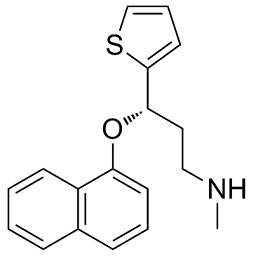
Duloxetine ((S)-Duloxetine; LY248686)

别名: LY248686; LY-227942; LY-248686; LY 227942; (S)-Duloxetine; (S)-Duloxetine; Yentreve; Cymbalta; (S)-N-Methyl-3-(naphthalen-1-yloxy)-3-(thiophen-2-yl)propan-1-amine; LY 248686; HSDB 7368; Duloxetine 度洛西汀;(S)-(+)-N-甲基-3-(1-萘氧基)-3-(2-噻吩)-丙胺; (R)-(-)-N-甲基-3-(1-萘氧基)-3-(2-噻吩)-丙胺;R-(-)-度洛西汀;右旋度洛西汀盐酸盐;度洛西丁;度洛西汀-D3盐酸;度洛西汀杂质; 盐酸度洛西汀;(S)-N-甲基-Γ-(1-萘氧基)-2-噻吩丙胺;多罗西汀;度洛西汀(多罗西汀)
目录号: V18170 纯度: ≥98%
度洛西汀 ((S)-Duloxetine; LY248686; LY-248686) 是一种 5-羟色胺-去甲肾上腺素再摄取抑制剂 (SNRI, Ki = 4.6 nM),用于治疗重度抑郁症和广泛性焦虑症 (GAD)、纤维肌痛和神经性疼痛。
Duloxetine ((S)-Duloxetine; LY248686) CAS号: 116539-59-4
产品类别: 5-HT Receptor
产品仅用于科学研究,不针对患者销售
规格 价格 库存 数量
25mg
50mg
100mg
250mg
Other Sizes

Other Forms of Duloxetine ((S)-Duloxetine; LY248686):

  • (±)-Duloxetine hydrochloride ((Rac)-Duloxetine hydrochloride)
  • (R)-Duloxetine hydrochloride
  • 盐酸度洛西汀
  • Duloxetine-d7 (Duloxetine-d7)
  • 度洛西汀杂质C
点击了解更多
InvivoChem产品被CNS等顶刊论文引用
产品描述
度洛西汀((S)-度洛西汀;LY248686;LY-248686)是一种血清素-去甲肾上腺素再摄取抑制剂(SNRI,Ki = 4.6 nM),用于治疗重度抑郁症和广泛性焦虑症(GAD)、纤维肌痛和神经性疼痛。
生物活性&实验参考方法
靶点
serotonin reuptake; norepinephrine reuptake
体外研究 (In Vitro)
度洛西汀((S)-度洛西汀)抑制中枢神经系统中血清素和去甲肾上腺素的再摄取。度洛西汀也被认为是一种效力较弱的多巴胺再摄取抑制剂。然而,度洛西汀对多巴胺能、肾上腺素能、胆碱能、组胺能、阿片类、谷氨酸和 GABA 受体没有显着的亲和力,因此可以被认为是 5-HT 和 NA 转运蛋白的选择性再摄取抑制剂。度洛西汀经历广泛的代谢,但主要的循环代谢物对药理活性没有显着贡献。据信,重度抑郁症部分是由于中枢神经系统内促炎细胞因子的增加所致。抗抑郁药,包括与度洛西汀作用机制相似的抗抑郁药,即抑制血清素代谢,会导致促炎细胞因子活性降低和抗炎细胞因子增加;这种机制可能适用于度洛西汀对抑郁症的作用,但缺乏对度洛西汀治疗特异性细胞因子的研究[1]。度洛西汀在治疗糖尿病神经病变和纤维肌痛等中枢性疼痛综合征中的镇痛特性被认为是由于钠离子通道阻断所致[2]。
体内研究 (In Vivo)
给药后约6小时,度洛西汀的最大血浆浓度(Cmax)范围为约47ng/mL(40mg每日两次剂量)至110ng/mL(80mg每日两次剂量)。度洛西汀的消除半衰期约为 10-12 小时,分布体积约为 1640 L。在一项研究中,单剂量 60 mg 后,绝对口服生物利用度平均为 30% 至 80%,平均为 19% 至 19%。另一项平均为 71%。度洛西汀的吸收受食物和一天中时间的影响;食物和睡前给药会导致 4 小时 tmax 延迟[1]。
细胞实验
细胞活力测定[2] 细胞以每孔2×10⁵个细胞的密度接种在96孔板中,生长24小时,然后根据时间依赖性或剂量依赖性方案用药物处理。每种治疗均进行三次。药物处理后,根据制造商的说明,使用细胞计数试剂盒-8(CCK-8)测定细胞存活率。CCK-8使用灵敏的比色WST-8测定法来确定活细胞的数量。WST-8是一种高度水溶性的四唑盐,化学名称为2-(2-甲氧基-4-硝基苯基)-3-(4-硝基苯基)-5-(2,4-二磺苯基)-2H-四唑单钠盐。
动物实验
Duloxetine and α-Adrenergic Receptor Antagonists Administration[3] Duloxetine was dissolved in distilled water (D.W.). Different doses of duloxetine (10, 30, and 60 mg/kg) were administered (i.p.). To test which adrenergic receptor subtypes mediated the anti-allodynic effects of duloxetine in oxaliplatin-administered mice, antagonists were administered intrathecally 20 min prior to duloxetine treatments. Non-selective α-adrenergic antagonists (phentolamine, 20 μg), α1-adrenergic receptor antagonists (prazosin, 10 μg), and α2-adrenergic receptor antagonists (idazoxan, 10 μg) were administered in volumes of 5 μL. The dose of each antagonist was determined based on previously conducted studies showing the selective and effective antagonistic action against adrenergic receptor-mediated responses.[3]
药代性质 (ADME/PK)
Absorption, Distribution and Excretion
Duloxetine is incompletely absorbed with a mean bioavailability of 50% although there is wide variability in the range of 30-80%. The population absorption constant (ka) is 0.168 h-1.The molecule is susceptible to hydrolysis in acidic environments necessitating the use of an enteric coating to protect it during transit through the stomach. This creates a 2 hour lag time from administration to the start of absorption. The Tmax is 6 hours including the lag time. Administering duloxetine with food 3 hour delay in Tmax along with an 10% decrease in AUC. Similarly, administering the dose at bedtime produces a 4 hour delay and 18% decrease in AUC with a 29% reduction in Cmax. These are attributed to delayed gastric emptying in both cases but are not expected to impact therapy to a clinically significant degree.
About 70% of duloxetine is excreted in the urine mainly as conjugated metabolites. Another 20% is present in the feces as the parent drug, 4-hydroxy metabolite, and an uncharacterized metabolite. Biliary secretion is thought to play a role due to timeline of fecal excretion exceeding the time expected of normal GI transit.
Apparent Vd of 1620-1800 L. Duloxetine crosses the blood-brain barrier and collects in the cerebral cortex at a higher concentration than the plasma.
There is a large degree of interindividual variation reported in the clearance of duloxetine with values ranging from 57-114 L/h. Steady state concentrations have still been shown to be dose proportional with a doubling of dose from 30 to 60 mg and from 60 to 120 mg producing 2.3 and 2.6 times the Css respectively.
Many additional metabolites have been identified in urine, some representing only minor pathways of elimination. Only trace (<1% of the dose) amounts of unchanged duloxetine are present in the urine. Most (about 70%) of the duloxetine dose appears in the urine as metabolites of duloxetine; about 20% is excreted in the feces. Duloxetine undergoes extensive metabolism, but the major circulating metabolites have not been shown to contribute significantly to the pharmacologic activity of duloxetine.
Duloxetine has an elimination half-life of about 12 hours (range 8 to 17 hours) and its pharmacokinetics are dose proportional over the therapeutic range. Steady-state plasma concentrations are typically achieved after 3 days of dosing. Elimination of duloxetine is mainly through hepatic metabolism involving two P450 isozymes, CYP1A2 and CYP2D6.
Orally administered duloxetine hydrochloride is well absorbed. There is a median 2 hour lag until absorption begins (Tlag), with maximal plasma concentrations (Cmax) of duloxetine occurring 6 hours post dose. Food does not affect the Cmax of duloxetine, but delays the time to reach peak concentration from 6 to 10 hours and it marginally decreases the extent of absorption (AUC) by about 10%. There is a 3 hour delay in absorption and a one-third increase in apparent clearance of duloxetine after an evening dose as compared to a morning dose. The apparent volume of distribution averages about 1640 L. Duloxetine is highly bound (>90%) to proteins in human plasma, binding primarily to albumin and a1-acid glycoprotein. The interaction between duloxetine and other highly protein bound drugs has not been fully evaluated. Plasma protein binding of duloxetine is not affected by renal or hepatic impairment.
Metabolism / Metabolites
Duloxetine is extensively metabolized primarily by CYP1A2 and CYP2D6 with the former being the greater contributor. It is hydroxylated at the 4, 5, or 6 positions on the naphthalene ring with the 4-hydroxy metabolite proceeding directly to a glucuronide conjugate while the 5 and 6-hydroxy metabolites proceed through a catechol and a 5-hydroxy, 6-methoxy intermediate before undergoing glucuronide or sulfate conjugation. CYP2C9 is known to be a minor contributor to the 5-hydroxy metabolite. Another uncharacterized metabolite is known to be excreted in the feces but comprises <5% of the total excreted drug. Many other metabolites exist but have not been identified due their low contribution to the overall profile of duloxetine and lack of clinical significance.
Biotransformation and disposition of duloxetine in humans have been determined following oral administration of (14C)-labeled duloxetine. Duloxetine comprises about 3% of the total radiolabeled material in the plasma, indicating that it undergoes extensive metabolism to numerous metabolites. The major biotransformation pathways for duloxetine involve oxidation of the naphthyl ring followed by conjugation and further oxidation. Both CYP1A2 and CYP2D6 catalyze the oxidation of the naphthyl ring in vitro. Metabolites found in plasma include 4-hydroxy duloxetine glucuronide and 5-hydroxy, 6-methoxy duloxetine sulfate.
Duloxetine has known human metabolites that include 5-((S)-3-Methylamino-1-thiophen-2-yl-propoxy)-naphthalen-2-ol, 5-Hydroxyduloxetine, and 4-Hydroxyduloxetine.
The major biotransformation pathways for duloxetine involve oxidation of the naphthyl ring followed by conjugation and further oxidation. Both CYP2D6 and CYP1A2 catalyze the oxidation of the naphthyl ring in vitro. Metabolites found in plasma include 4-hydroxy duloxetine glucuronide and 5-hydroxy, 6-methoxy duloxetine sulfate. The major circulating metabolites have not been shown to contribute significantly to the pharmacologic activity of duloxetine.
Route of Elimination: Many additional metabolites have been identified in urine, some representing only minor pathways of elimination. Most (about 70%) of the duloxetine dose appears in the urine as metabolites of duloxetine; about 20% is excreted in the feces.
Half Life: 12 hours (range 8-17 hours)
Biological Half-Life
Mean of 12 h with a range of 8-17.
Duloxetine has an elimination half-life of about 12 hours (range 8 to 17 hours) and its pharmacokinetics are dose proportional over the therapeutic range.
毒性/毒理 (Toxicokinetics/TK)
Toxicity Summary
IDENTIFICATION AND USE: Duloxetine hydrochloride is used for the acute management of generalized anxiety disorder in adults, the management of neuropathic pain associated with diabetic peripheral neuropathy in adults, the management of fibromyalgia in adults, the management of moderate to severe stress urinary incontinence (SUI) in women, and the acute and maintenance treatment of major depressive disorder in adults. HUMAN EXPOSURE AND TOXICITY: Possible risk of severe hepatic toxicity; elevated serum transaminase concentrations, sometimes requiring discontinuance of duloxetine, have been reported. In postmarketing experience, fatal outcomes have been reported for acute overdoses, primarily with mixed overdoses, but also with duloxetine only, at doses as low as 1000 mg. Signs and symptoms of overdose (duloxetine alone or with mixed drugs) included somnolence, coma, serotonin syndrome, seizures, syncope, tachycardia, hypotension, hypertension, and vomiting. A higher proportion of patients reporting discontinuation-emergent adverse events were seen with 120 mg/day duloxetine compared with lower doses. For doses between 40 and 120 mg/day duloxetine the proportion of patients reporting at least one discontinuation-emergent adverse event differed significantly from placebo. Extended treatment with duloxetine beyond 8-9 weeks did not appear to be associated with an increased incidence or severity of discontinuation-emergent adverse events. Abrupt discontinuation of duloxetine is associated with a discontinuation-emergent adverse event profile similar to that seen with other selective serotonin reuptake inhibitor (SSRI) and selective serotonin and norepinephrine reuptake inhibitor (SNRI) antidepressants ANIMAL STUDIES: Duloxetine was administered in the diet to mice for 2 years. In female mice receiving duloxetine at 140 mg/kg/day (6 times the maximum recommended human dose (MRHD) of 120 mg/day on a mg/ sq m basis), there was an increased incidence of hepatocellular adenomas and carcinomas. The no-effect dose was 50 mg/kg/day (2 times the MRHD). Tumor incidence was not increased in male mice receiving duloxetine at doses up to 100 mg/kg/day (4 times the MRHD). Duloxetine administered orally to either male or female rats prior to and throughout mating at doses up to 45 mg/kg/day (4 times the MRHD) did not alter mating or fertility. When duloxetine was administered orally to pregnant rats throughout gestation and lactation, the survival of pups to 1 day postpartum and pup body weights at birth and during the lactation period were decreased at a dose of 30 mg/kg/day (5 times the MRHD and 2 times the human dose of 120 mg/day on a mg/sq m basis); the no-effect dose was 10 mg/kg/day. Furthermore, behaviors consistent with increased reactivity, such as increased startle response to noise and decreased habituation of locomotor activity, were observed in pups following maternal exposure to 30 mg/kg/day. Post-weaning growth and reproductive performance of the progeny were not affected adversely by maternal duloxetine treatment. Duloxetine was not mutagenic in the bacterial reverse mutation assay (Ames test), and not clastogenic in an in vivo chromosomal aberration test in mouse bone marrow cells. Additionally, it was not genotoxic in an in vitro mammalian forward gene mutation assay in mouse lymphoma cells or in an in vitro unscheduled DNA assay in rat hepatocytes, and did not induce in vivo sister chromatid exchange assay in Chinese hamster bone marrow cells.
Duloxetine is a potent inhibitor of neuronal serotonin and norepinephrine reuptake and a less potent inhibitor of dopamine reuptake. Duloxetine has no significant affinity for dopaminergic, adrenergic, cholinergic, histaminergic, opioid, glutamate, and GABA receptors. The antidepressant and pain inhibitory actions of duloxetine are believed to be related to its potentiation of serotonergic and noradrenergic activity in the CNS. The mechanism of action of duloxetine in SUI has not been determined, but is thought to be associated with the potentiation of serotonin and norepinephrine activity in the spinal cord, which increases urethral closure forces and thereby reduces involuntary urine loss.
Toxicity Data
Oral, rat LD50: 491 mg/kg for males and 279 mg/kg for females (A308).
Interactions
Duloxetine is an inhibitor of the CYP1A2 isoform in in vitro studies, and in two clinical studies the average (90% confidence interval) increase in theophylline AUC was 7% (1%-15%) and 20% (13%-27%) when co-administered with duloxetine (60 mg twice daily).
Serotonin release by platelets plays an important role in hemostasis. Epidemiological studies of the case-control and cohort design that have demonstrated an association between use of psychotropic drugs that interfere with serotonin reuptake and the occurrence of upper gastrointestinal bleeding have also shown that concurrent use of an NSAID or aspirin may potentiate this risk of bleeding. Altered anticoagulant effects, including increased bleeding, have been reported when SSRIs or SNRIs are co-administered with warfarin. Concomitant administration of warfarin (2-9 mg once daily) under steady state conditions with duloxetine 60 or 120 mg once daily for up to 14 days in healthy subjects (n=15) did not significantly change INR from baseline (mean INR changes ranged from 0.05 to +0.07). The total warfarin (protein bound plus free drug) pharmacokinetics (AUCt,ss, Cmax,ss or tmax,ss) for both R- and S-warfarin were not altered by duloxetine. Because of the potential effect of duloxetine on platelets, patients receiving warfarin therapy should be carefully monitored when duloxetine is initiated or discontinued.
Concomitant administration of duloxetine 40 mg twice daily with fluvoxamine 100 mg, a potent CYP1A2 inhibitor, to CYP2D6 poor metabolizer subjects (n=14) resulted in a 6-fold increase in duloxetine AUC and Cmax.
Concomitant use of duloxetine (40 mg once daily) with paroxetine (20 mg once daily) increased the concentration of duloxetine AUC by about 60%, and greater degrees of inhibition are expected with higher doses of paroxetine. Similar effects would be expected with other potent CYP2D6 inhibitors (e.g., fluoxetine, quinidine).
When duloxetine 60 mg was co-administered with fluvoxamine 100 mg, a potent CYP1A2 inhibitor, to male subjects (n=14) duloxetine AUC was increased approximately 6-fold, the Cmax was increased about 2.5-fold, and duloxetine t1/2 was increased approximately 3-fold. Other drugs that inhibit CYP1A2 metabolism include cimetidine and quinolone antimicrobials such as ciprofloxacin and enoxacin.
参考文献

[1]. Clin Pharmacokinet . 2011 May;50(5):281-94.

[2]. Duloxetine-Induced Neural Cell Death and Promoted Neurite Outgrowth in N2a Cells. Neurotox Res. 2020 Dec;38(4):859-870.
[3]. Duloxetine Protects against Oxaliplatin-Induced Neuropathic Pain and Spinal Neuron Hyperexcitability in Rodents. Int J Mol Sci . 2017 Dec 5;18(12):2626.
其他信息
Therapeutic Uses
Adrenergic Uptake Inhibitors; Analgesics; Antidepressive Agents; Dopamine Uptake Inhibitors; Serotonin Uptake Inhibitors
Duloxetine hydrochloride is used for the acute and maintenance treatment of major depressive disorder in adults.
Duloxetine has been used for the management of moderate to severe stress urinary incontinence (SUI) in women.
Duloxetine hydrochloride is used for the management of fibromyalgia in adults.
For more Therapeutic Uses (Complete) data for DULOXETINE (6 total), please visit the HSDB record page.
Drug Warnings
/BOXED WARNING/ WARNING: SUICIDAL THOUGHTS AND BEHAVIORS: Antidepressants increased the risk of suicidal thoughts and behavior in children, adolescents, and young adults in short-term studies. These studies did not show an increase in the risk of suicidal thoughts and behavior with antidepressant use in patients over age 24; there was a reduction in risk with antidepressant use in patients aged 65 and older. In patients of all ages who are started on antidepressant therapy, monitor closely for worsening, and for emergence of suicidal thoughts and behaviors. Advise families and caregivers of the need for close observation and communication with the prescriber.
Pregnancy Category C. Some neonates exposed to selective serotonin- and norepinephrine-reuptake inhibitors (SNRIs) or selective serotonin-reuptake inhibitors late in the third trimester of pregnancy have developed complications that have sometimes been severe and required prolonged hospitalization, respiratory support, enteral nutrition, and other forms of supportive care in special-care nurseries. Such complications can arise immediately upon delivery and usually last several days or up to 2-4 weeks. Clinical findings reported to date in the neonates have included respiratory distress, cyanosis, apnea, seizures, temperature instability or fever, feeding difficulty, dehydration, excessive weight loss, vomiting, hypoglycemia, hypotonia, hyperreflexia, tremor, jitteriness, irritability, lethargy, reduced or lack of reaction to pain stimuli, and constant crying. These clinical features appear to be consistent with either a direct toxic effect of the SNRI or selective serotonin-reuptake inhibitor or, possibly, a drug withdrawal syndrome. It should be noted that, in some cases, the clinical picture was consistent with serotonin syndrome (see Drug Interactions: Drugs Associated with Serotonin Syndrome, in Fluoxetine Hydrochloride 28:16.04.20). When treating a pregnant woman with duloxetine during the third trimester of pregnancy, the clinician should carefully consider the potential risks and benefits of such therapy. Consideration may be given to cautiously tapering duloxetine therapy in the third trimester prior to delivery if the drug is administered during pregnancy.
Potentially life-threatening serotonin syndrome reported with selective serotonin- and norepinephrine-reuptake inhibitors (SNRIs), including duloxetine, or selective serotonin-reuptake inhibitors (SSRIs), particularly with concurrent administration of other serotonergic drugs (e.g., serotonin [5-hydroxytryptamine; 5-HT] type 1 receptor agonists ["triptans"]) or drugs that impair serotonin metabolism (e.g., monoamine oxidase [MAO] inhibitors). Symptoms of serotonin syndrome may include mental status changes (e.g., agitation, hallucinations, coma), autonomic instability (e.g., tachycardia, labile blood pressure, hyperthermia), neuromuscular aberrations (e.g., hyperreflexia, incoordination), and/or GI symptoms (e.g., nausea, vomiting, diarrhea). Concurrent therapy with MAO inhibitors used for treatment of depression is contraindicated. (See Drug Interactions: Monoamine Oxidase Inhibitors.) If concurrent therapy with duloxetine and a 5-HT1 receptor agonist is clinically warranted, the patient should be observed carefully, particularly during initiation of therapy, when dosage is increased, or when another serotonergic agent is initiated. Concomitant use of duloxetine and serotonin precursors (e.g., tryptophan) is not recommended.
Hepatic failure, sometimes fatal, has been reported in duloxetine-treated patients.The cases presented as hepatitis accompanied by abdominal pain, hepatomegaly, and markedly elevated serum transaminase concentrations (more than 20 times the upper limit of normal) with or without jaundice, reflecting a mixed or hepatocellular pattern of hepatic injury. Duloxetine should be discontinued in any patient who develops jaundice or other evidence of clinically important hepatic dysfunction; therapy should not be resumed unless another cause for the hepatic dysfunction can be established.
For more Drug Warnings (Complete) data for DULOXETINE (18 total), please visit the HSDB record page.
Pharmacodynamics
Duloxetine, through increasing serotonin and norepinephrine concentrations in Onuf's nucleus, enhances glutamatergic activation of the pudendal motor nerve which innervates the external urethral sphinter. This enhanced signaling allows for stronger contraction. Increased contraction of this sphincter increases the pressure needed to produce an incontinence episode in stress urinary incontinence. Duloxetine has been shown to improve Patient Global Impression of Improvement and Incontinence Quality of Life scores. It has also been shown to reduce the median incontinence episode frequency at doses of 40 and 80 mg. Action at the dorsal horn of the spinal cord allows duloxetine to strengthen the the serotonergic and adrenergic pathways involved in descending inhibition of pain. This results in an increased threshold of activation necessary to transmit painful stimuli to the brain and effective relief of pain, particularly in neuropathic pain. Pain relief has been noted in a variety of painful conditions including diabetic peripheral neuropathy, fibromyalgia, and osteoarthritis using a range of pain assessment surveys. While duloxetine has been shown to be effective in both animal models of mood disorders and in clinical trials for the treatment of these disorders in humans, the broad scope of its pharmacodynamic effects on mood regulation in the brain has yet to be explained. Increased blood pressure is a common side effect with duloxetine due to vasoconstriction mediated by the intended increase in norepinephrine signaling.
*注: 文献方法仅供参考, InvivoChem并未独立验证这些方法的准确性
化学信息 & 存储运输条件
分子式
C18H19NOS
分子量
297.416
精确质量
297.12
CAS号
116539-59-4
相关CAS号
Duloxetine hydrochloride; 136434-34-9; Duloxetine-d7; 919514-01-5; (±)-Duloxetine hydrochloride; 947316-47-4; Duloxetine metabolite Para-Naphthol Duloxetine; 949095-98-1
PubChem CID
60835
外观&性状
Typically exists as solid at room temperature
密度
1.2±0.1 g/cm3
沸点
466.2±40.0 °C at 760 mmHg
闪点
235.7±27.3 °C
蒸汽压
0.0±1.2 mmHg at 25°C
折射率
1.628
LogP
3.73
tPSA
49.5
氢键供体(HBD)数目
1
氢键受体(HBA)数目
3
可旋转键数目(RBC)
6
重原子数目
21
分子复杂度/Complexity
312
定义原子立体中心数目
1
SMILES
CNCC[C@H](OC1=CC=CC2=C1C=CC=C2)C3=CC=CS3
InChi Key
ZEUITGRIYCTCEM-KRWDZBQOSA-N
InChi Code
InChI=1S/C18H19NOS/c1-19-12-11-17(18-10-5-13-21-18)20-16-9-4-7-14-6-2-3-8-15(14)16/h2-10,13,17,19H,11-12H2,1H3/t17-/m0/s1
化学名
(3S)-N-methyl-3-naphthalen-1-yloxy-3-thiophen-2-ylpropan-1-amine
别名
LY248686; LY-227942; LY-248686; LY 227942; (S)-Duloxetine; (S)-Duloxetine; Yentreve; Cymbalta; (S)-N-Methyl-3-(naphthalen-1-yloxy)-3-(thiophen-2-yl)propan-1-amine; LY 248686; HSDB 7368; Duloxetine
HS Tariff Code
2934.99.9001
存储方式

Powder      -20°C    3 years

                     4°C     2 years

In solvent   -80°C    6 months

                  -20°C    1 month

运输条件
Room temperature (This product is stable at ambient temperature for a few days during ordinary shipping and time spent in Customs)
溶解度数据
溶解度 (体外实验)
May dissolve in DMSO (in most cases), if not, try other solvents such as H2O, Ethanol, or DMF with a minute amount of products to avoid loss of samples
溶解度 (体内实验)
注意: 如下所列的是一些常用的体内动物实验溶解配方,主要用于溶解难溶或不溶于水的产品(水溶度<1 mg/mL)。 建议您先取少量样品进行尝试,如该配方可行,再根据实验需求增加样品量。

注射用配方
(IP/IV/IM/SC等)
注射用配方1: DMSO : Tween 80: Saline = 10 : 5 : 85 (如: 100 μL DMSO 50 μL Tween 80 850 μL Saline)
*生理盐水/Saline的制备:将0.9g氯化钠/NaCl溶解在100 mL ddH ₂ O中,得到澄清溶液。
注射用配方 2: DMSO : PEG300Tween 80 : Saline = 10 : 40 : 5 : 45 (如: 100 μL DMSO 400 μL PEG300 50 μL Tween 80 450 μL Saline)
注射用配方 3: DMSO : Corn oil = 10 : 90 (如: 100 μL DMSO 900 μL Corn oil)
示例: 注射用配方 3 (DMSO : Corn oil = 10 : 90) 为例说明, 如果要配制 1 mL 2.5 mg/mL的工作液, 您可以取 100 μL 25 mg/mL 澄清的 DMSO 储备液,加到 900 μL Corn oil/玉米油中, 混合均匀。
View More

注射用配方 4: DMSO : 20% SBE-β-CD in Saline = 10 : 90 [如:100 μL DMSO 900 μL (20% SBE-β-CD in Saline)]
*20% SBE-β-CD in Saline的制备(4°C,储存1周):将2g SBE-β-CD (磺丁基-β-环糊精) 溶解于10mL生理盐水中,得到澄清溶液。
注射用配方 5: 2-Hydroxypropyl-β-cyclodextrin : Saline = 50 : 50 (如: 500 μL 2-Hydroxypropyl-β-cyclodextrin (羟丙基环胡精) 500 μL Saline)
注射用配方 6: DMSO : PEG300 : Castor oil : Saline = 5 : 10 : 20 : 65 (如: 50 μL DMSO 100 μL PEG300 200 μL Castor oil 650 μL Saline)
注射用配方 7: Ethanol : Cremophor : Saline = 10: 10 : 80 (如: 100 μL Ethanol 100 μL Cremophor 800 μL Saline)
注射用配方 8: 溶解于Cremophor/Ethanol (50 : 50), 然后用生理盐水稀释。
注射用配方 9: EtOH : Corn oil = 10 : 90 (如: 100 μL EtOH 900 μL Corn oil)
注射用配方 10: EtOH : PEG300Tween 80 : Saline = 10 : 40 : 5 : 45 (如: 100 μL EtOH 400 μL PEG300 50 μL Tween 80 450 μL Saline)


口服配方
口服配方 1: 悬浮于0.5% CMC Na (羧甲基纤维素钠)
口服配方 2: 悬浮于0.5% Carboxymethyl cellulose (羧甲基纤维素)
示例: 口服配方 1 (悬浮于 0.5% CMC Na)为例说明, 如果要配制 100 mL 2.5 mg/mL 的工作液, 您可以先取0.5g CMC Na并将其溶解于100mL ddH2O中,得到0.5%CMC-Na澄清溶液;然后将250 mg待测化合物加到100 mL前述 0.5%CMC Na溶液中,得到悬浮液。
View More

口服配方 3: 溶解于 PEG400 (聚乙二醇400)
口服配方 4: 悬浮于0.2% Carboxymethyl cellulose (羧甲基纤维素)
口服配方 5: 溶解于0.25% Tween 80 and 0.5% Carboxymethyl cellulose (羧甲基纤维素)
口服配方 6: 做成粉末与食物混合


注意: 以上为较为常见方法,仅供参考, InvivoChem并未独立验证这些配方的准确性。具体溶剂的选择首先应参照文献已报道溶解方法、配方或剂型,对于某些尚未有文献报道溶解方法的化合物,需通过前期实验来确定(建议先取少量样品进行尝试),包括产品的溶解情况、梯度设置、动物的耐受性等。

请根据您的实验动物和给药方式选择适当的溶解配方/方案:
1、请先配制澄清的储备液(如:用DMSO配置50 或 100 mg/mL母液(储备液));
2、取适量母液,按从左到右的顺序依次添加助溶剂,澄清后再加入下一助溶剂。以 下列配方为例说明 (注意此配方只用于说明,并不一定代表此产品 的实际溶解配方):
10% DMSO → 40% PEG300 → 5% Tween-80 → 45% ddH2O (或 saline);
假设最终工作液的体积为 1 mL, 浓度为5 mg/mL: 取 100 μL 50 mg/mL 的澄清 DMSO 储备液加到 400 μL PEG300 中,混合均匀/澄清;向上述体系中加入50 μL Tween-80,混合均匀/澄清;然后继续加入450 μL ddH2O (或 saline)定容至 1 mL;

3、溶剂前显示的百分比是指该溶剂在最终溶液/工作液中的体积所占比例;
4、 如产品在配制过程中出现沉淀/析出,可通过加热(≤50℃)或超声的方式助溶;
5、为保证最佳实验结果,工作液请现配现用!
6、如不确定怎么将母液配置成体内动物实验的工作液,请查看说明书或联系我们;
7、 以上所有助溶剂都可在 Invivochem.cn网站购买。
制备储备液 1 mg 5 mg 10 mg
1 mM 3.3622 mL 16.8112 mL 33.6225 mL
5 mM 0.6724 mL 3.3622 mL 6.7245 mL
10 mM 0.3362 mL 1.6811 mL 3.3622 mL

1、根据实验需要选择合适的溶剂配制储备液 (母液):对于大多数产品,InvivoChem推荐用DMSO配置母液 (比如:5、10、20mM或者10、20、50 mg/mL浓度),个别水溶性高的产品可直接溶于水。产品在DMSO 、水或其他溶剂中的具体溶解度详见上”溶解度 (体外)”部分;

2、如果您找不到您想要的溶解度信息,或者很难将产品溶解在溶液中,请联系我们;

3、建议使用下列计算器进行相关计算(摩尔浓度计算器、稀释计算器、分子量计算器、重组计算器等);

4、母液配好之后,将其分装到常规用量,并储存在-20°C或-80°C,尽量减少反复冻融循环。

计算器

摩尔浓度计算器可计算特定溶液所需的质量、体积/浓度,具体如下:

  • 计算制备已知体积和浓度的溶液所需的化合物的质量
  • 计算将已知质量的化合物溶解到所需浓度所需的溶液体积
  • 计算特定体积中已知质量的化合物产生的溶液的浓度
使用摩尔浓度计算器计算摩尔浓度的示例如下所示:
假如化合物的分子量为350.26 g/mol,在5mL DMSO中制备10mM储备液所需的化合物的质量是多少?
  • 在分子量(MW)框中输入350.26
  • 在“浓度”框中输入10,然后选择正确的单位(mM)
  • 在“体积”框中输入5,然后选择正确的单位(mL)
  • 单击“计算”按钮
  • 答案17.513 mg出现在“质量”框中。以类似的方式,您可以计算体积和浓度。

稀释计算器可计算如何稀释已知浓度的储备液。例如,可以输入C1、C2和V2来计算V1,具体如下:

制备25毫升25μM溶液需要多少体积的10 mM储备溶液?
使用方程式C1V1=C2V2,其中C1=10mM,C2=25μM,V2=25 ml,V1未知:
  • 在C1框中输入10,然后选择正确的单位(mM)
  • 在C2框中输入25,然后选择正确的单位(μM)
  • 在V2框中输入25,然后选择正确的单位(mL)
  • 单击“计算”按钮
  • 答案62.5μL(0.1 ml)出现在V1框中
g/mol

分子量计算器可计算化合物的分子量 (摩尔质量)和元素组成,具体如下:

注:化学分子式大小写敏感:C12H18N3O4  c12h18n3o4
计算化合物摩尔质量(分子量)的说明:
  • 要计算化合物的分子量 (摩尔质量),请输入化学/分子式,然后单击“计算”按钮。
分子质量、分子量、摩尔质量和摩尔量的定义:
  • 分子质量(或分子量)是一种物质的一个分子的质量,用统一的原子质量单位(u)表示。(1u等于碳-12中一个原子质量的1/12)
  • 摩尔质量(摩尔重量)是一摩尔物质的质量,以g/mol表示。
/

配液计算器可计算将特定质量的产品配成特定浓度所需的溶剂体积 (配液体积)

  • 输入试剂的质量、所需的配液浓度以及正确的单位
  • 单击“计算”按钮
  • 答案显示在体积框中
动物体内实验配方计算器(澄清溶液)
第一步:请输入基本实验信息(考虑到实验过程中的损耗,建议多配一只动物的药量)
第二步:请输入动物体内配方组成(配方适用于不溶/难溶于水的化合物),不同的产品和批次配方组成不同,如对配方有疑问,可先联系我们提供正确的体内实验配方。此外,请注意这只是一个配方计算器,而不是特定产品的确切配方。
+
+
+

计算结果:

工作液浓度 mg/mL;

DMSO母液配制方法 mg 药物溶于 μL DMSO溶液(母液浓度 mg/mL)。如该浓度超过该批次药物DMSO溶解度,请首先与我们联系。

体内配方配制方法μL DMSO母液,加入 μL PEG300,混匀澄清后加入μL Tween 80,混匀澄清后加入 μL ddH2O,混匀澄清。

(1) 请确保溶液澄清之后,再加入下一种溶剂 (助溶剂) 。可利用涡旋、超声或水浴加热等方法助溶;
            (2) 一定要按顺序加入溶剂 (助溶剂) 。

临床试验信息
Comparison of the Efficacy and Safety of Mirogabalin and Duloxetine in Chemotherapy-induced Peripheral Neuropathy in a Randomized Controlled Trial: a Quality of Life Study in Cancer Survivors
CTID: NCT06711978
Phase: N/A    Status: Not yet recruiting
Date: 2024-12-02
The Back Pain Consortium Research Program Study
CTID: NCT04870957
Phase: Phase 4    Status: Active, not recruiting
Date: 2024-11-29
Identifying and Treating Depression in the Orthopaedic Trauma Population
CTID: NCT05976347
Phase: Phase 4    Status: Not yet recruiting
Date: 2024-11-27
Exercise Plus Duloxetine for Knee Osteoarthritis
CTID: NCT04111627
Phase: Phase 2    Status: Recruiting
Date: 2024-11-26
Duloxetine for LBP
CTID: NCT05851976
Phase: Phase 4    Status: Recruiting
Date: 2024-11-22
View More

Comparing Effectiveness of Duloxetine and Desipramine in Patients With Chronic Pain: A Pragmatic Trial Using Point of Care Randomization
CTID: NCT03548454
Phase: Phase 4    Status: Recruiting
Date: 2024-11-22


A Sequenced Strategy for Improving Outcomes in People With Knee Osteoarthritis Pain
CTID: NCT04504812
Phase: Phase 3    Status: Active, not recruiting
Date: 2024-11-18
Effect of Combined Morphine and Duloxetine on Chronic Pain
CTID: NCT03249558
Phase: Phase 4    Status: Completed
Date: 2024-11-14
Microbiome Derived Metabolism and Pharmacokinetics
CTID: NCT05065671
Phase: Phase 1    Status: Recruiting
Date: 2024-11-14
Improvement of Quality of Life Through Supportive Treatments for Hormone Therapy - Related Symptoms in Patients With Early Breast Cancer
CTID: NCT06407401
Phase: Phase 3    Status: Not yet recruiting
Date: 2024-11-05
Efficacy of Duloxetine in Conjunction With Tramadol for Chronic Cancer Pain
CTID: NCT05311774
Phase: N/A    Status: Recruiting
Date: 2024-10-16
The BEST Trial: Biomarkers for Evaluating Spine Treatments
CTID: NCT05396014
Phase: Phase 4    Status: Active, not recruiting
Date: 2024-10-15
SPENDD: Quantitative Sensory Testing and Analgesic Response for Painful Peripheral Neuropathy.
CTID: NCT06614322
Phase: Phase 2    Status: Not yet recruiting
Date: 2024-09-26
Efficacy and Safety of Duloxetine in Chinese Solid Tumor Patients with Taxanes-induced Painful Peripheral Neuropathy
CTID: NCT04970121
Phase: Phase 2    Status: Recruiting
Date: 2024-09-25
Duloxetine to Prevent Chronic Postsurgical Pain After Inguinal Hernia Repair in Patients at High Risk
CTID: NCT06606067
Phase: Phase 3    Status: Active, not recruiting
Date: 2024-09-20
Effect of Duloxetine on Opioid Use After Total Knee Arthroplasty
CTID: NCT03271151
Phase: Phase 4    Status: Completed
Date: 2024-09-19
ADC-induced Neurotoxicity Treated With Duloxetine
CTID: NCT06551051
Phase: Phase 2    Status: Recruiting
Date: 2024-09-19
Determining Optimal Treatment Sequences in Anxious Depression (DOTS-AD)
CTID: NCT04245748
Phase: Phase 4    Status: Recruiting
Date: 2024-08-29
Acute and Long-Term Antidepressant Treatment Success in Adolescents With Anxiety (AtLAS-A)
CTID: NCT04245436
Phase: Phase 4    Status: Recruiting
Date: 2024-08-29
Pain Response Evaluation of a Combined Intervention to Cope Effectively
CTID: NCT04395001
Phase: Phase 4    Status: Active, not recruiting
Date: 2024-08-13
Capsaicin 179 mg Patch Versus Oral Duloxetine in Patients With Chemotherapy-induced Peripheral Neuropathy
CTID: NCT05840562
Phase: Phase 3    Status: Recruiting
Date: 2024-08-02
Duloxetine to Prevent Oxaliplatin-Induced Peripheral Neuropathy in Patients With Stage II-III Colorectal Cancer
CTID: NCT04137107
Phase: Phase 2/Phase 3    Status: Active, not recruiting
Date: 2024-07-31
Evaluating the Efficacy and Safety of Preoperative Administration of Duloxetine for Pain Management in Women Undergoing Hysterectomy Via Vaginal Route
CTID: NCT06429605
Phase: N/A    Status: Recruiting
Date: 2024-07-26
Pharmacokinetics and Safety of Commonly Used Drugs in Lactating Women and Breastfed Infants
CTID: NCT03511118
Phase:    Status: Recruiting
Date: 2024-07-24
Brain-Based and Clinical Phenotyping of Pain Pharmacotherapy in Knee Osteoarthritis
CTID: NCT06245109
Phase: Phase 4    Status: Recruiting
Date: 2024-07-24
Duloxetine and Neurofeedback Training for the Treatment of Chemotherapy Induced Peripheral Neuropathy
CTID: NCT04560673
Phase: Phase 2    Status: Recruiting
Date: 2024-07-19
Duloxetine RCT on Postop TKA Outcomes
CTID: NCT05086393
Phase: Phase 4    Status: Recruiting
Date: 2024-06-13
Serotonin-norepinephrine Reuptake Inhibitor in Prophylaxis of Depression Following Fragility Fractures
CTID: NCT05851898
Phase: Phase 4    Status: Recruiting
Date: 2024-06-03
Effect of peRiopErative duLoxetIne Administration on Opioid Consumption Following Total kneE Arthroplasty (RELIFE)
CTID: NCT06423716
Phase: Phase 4    Status: Not yet recruiting
Date: 2024-05-21
A Study to Evaluate the Efficacy, Pharmacokinetics, Safety and Tolerability of Flexible Doses of Intranasal Esketamine Plus an Oral Antidepressant in Adult Participants With Treatment-resistant Depression
CTID: NCT03434041
Phase: Phase 3    Status: Completed
Date: 2024-04-26
Biomarkers for Prediction of Analgesic Efficacy in Knee OA.
CTID: NCT05256342
Phase: N/A    Status: Completed
Date: 2024-04-12
Efficacy of Two Doses of Duloxetine & Amitriptyline in Interstitial Lung Disease-related Cough
CTID: NCT05120934
Phase: Phase 2    Status: Recruiting
Date: 2024-04-01
Efficacy of Two Doses of Duloxetine and Amitriptyline in Subjects With Refractory Chronic Cough
CTID: NCT05110144
Phase: Phase 2    Status: Recruiting
Date: 2024-04-01
Longitudinal Comparative Effectiveness of Bipolar Disorder Therapies
CTID: NCT02893371
Phase:    Status: Terminated
Date: 2024-03-12
Methadone to Treat Painful Chemotherapy Induced Peripheral Neuropathy
CTID: NCT05786599
Phase: Phase 2/Phase 3    Status: Not yet recruiting
Date: 2024-02-14
Study of Analgesic Action of Pregabalin, Duloxetine and Tramadol in Patients With Different Neuropathic Pain Phenotypes
CTID: NCT06252116
Phase:    Status: Recruiting
Date: 2024-02-09
Patient Education and Duloxetine, Alone and in Combination, for Patients With Multisystem Functional Somatic Disorder
CTID: NCT06232473
Phase: Phase 4    Status: Recruiting
Date: 2024-01-30
Duloxetine for PHN
CTID: NCT04313335
Phase: N/A    Status: Completed
Date: 2024-01-09
A Comparative Study of Sage-217 Plus an Antidepressant (ADT) Versus Placebo Plus an ADT in Adults With Major Depressive Disorder
CTID: NCT04476030
Phase: Phase 3    Status: Completed
Date: 2023-12-22
Qutenza Versus Duloxetine in Chemotherapy-induced Peripheral Neuropathy (CIPN)
CTID: NCT05560516
Phase: N/A    Status: Recruiting
Date: 2023-12-15
Study to Assess Clinical Response of Duloxetine in Patients Hospitalized for Severe Depression
CTID: NCT02229825
Phase: Phase 4    Status: Completed
Date: 2023-10-23
Pain Relieving Potentials of Combination of Oral Duloxetine and Intravenous Magnesium Sulphate in Post Mastectomy Pain
CTID: NCT06087211
Phase: Phase 4    Status: Recruiting
Date: 2023-10-17
Comparison of Vortioxetine Versus Other Antidepressants With Pregabalin Augmentation in Burning Mouth Syndrome
CTID: NCT06025474
Phase: Phase 3    Status: Recruiting
Date: 2023-09-06
The Effect of Central Sensitization on Treatment Response in Patients With Fibromyalgia
CTID: NCT05020600
Phase:    Status: Unknown status
Date: 2023-08-15
Sequenced Treatment Alternatives to Relieve Adolescent Depression (STAR-AD)
CTID: NCT05814640
Phase: Phase 1/Phase 2    Status: Recruiting
Date: 2023-08-14
The Effect of Preoperative Duloxetine on the Occurance of Postoperative Delirium in Patients Undergoing Cancer Surgery.
CTID: NCT05949229
Phase: Phase 1/Phase 2    Status: Not yet recruiting
Date: 2023-07-17
Behavioral Effects of Drugs: Inpatient (36) (Alcohol, Duloxetine, and Methylphenidate)
CTID: NCT03575403
Phase: Phase 1    Status: Completed
Date: 2023-07-12
Duloxetine Combined With Intra-articular Injection of Corticosteroid and Hyaluronic Acid Reduces Pain in the Treatment of Knee Osteoarthritis Patients
CTID: NCT04117893
Phase: Phase 4    Status: Completed
Date: 2023-07-11
The Effect of Transcutaneous Posterior Tibial Nerve Stimulation in Patients With Fibromyalgia
CTID: NCT05937711
Phase: N/A    Status: Completed
Date: 2023-07-10
Psychiatric Orders in Psychoanalytic Treatment of ASD
CTID: NCT05930912
Phase:    Status: Active, not recruiting
Date: 2023-07-05
Therapeutic Efficacy in Women With Stress Urinary Incontinence
CTID: NCT05677295
Phase: Phase 3    Status: Recruiting
Date: 2023-05-19
Neurobiology of Treatment Responses in MDD
CTID: NCT03068247
Phase: Phase 3    Status: Withdrawn
Date: 2023-04-24
Efficacy of Duloxetine Compared to NSIADs in Osteoarthritis of Knee
CTID: NCT05486026
Phase: Phase 2    Status: Completed
Date: 2023-03-14
Behavioral Effects of Drugs (Inpatient): 40 [Methamphetamine, Methylphenidate, Duloxetine]
CTID: NCT04178993
Phase: Phase 1    Status: Completed
Date: 2023-01-09
Duloxetine Tibial Plateau
CTID: NCT04639011
Phase: Phase 4    Status: Withdrawn
Date: 2022-11-21
Non-interventional, Retrospective Cohort Study to Explore Antidepressant Treatment in Korea
CTID: NCT04446039
Phase:    Status: Completed
Date: 2022-11-16
Duloxetine Impact on Postoperative Pain Control and Outcomes
CTID: NCT05611749
Phase: Phase 2    Status: Unknown status
Date: 2022-11-10
Duloxetine on Bone Metabolism
CTID: NCT05550506
Phase:    Status: Unknown status
Date: 2022-09-22
Comparisons of the Impact of Duloxetine Versus Imipramine on Therapeutic Efficacy, Psychological Distress, Sexual Function, Urethral and Bladder Wall Structure and Blood Flow in Women With Stress Urinary Incontinence: a Randomized Controlled Study
CTID: NCT04412876
Phase: Phase 3    Status: Withdrawn
Date: 2022-08-17
Open Label Study of Duloxetine for the Treatment of Phantom Limb Pain
CTID: NCT00425230
Phase: N/A    Status: Terminated
Date: 2022-08-12
Efficacy of Pregabalin Vs Duloxetine in Diabetic Peripheral Neuropathic Pain at Variable Dose
CTID: NCT05292066
PhaseEarly Phase 1    Status: Unknown status
Date: 2022-08-04
The Cymbalta Pregnancy Registry
CTID: NCT01074151
Phase:    Status: Completed
Date: 2022-07-18
Lidocaine Versus Duloxetine for the Prevention of Taxane-Induced Peripheral Neuropathy In Breast Cancer Patients
CTID: NCT04732455
Phase: N/A    Status: Completed
Date: 2022-07-11
Duloxetine for Postoperative Pain of Laparoscopic Cholecystectomy
CTID: NCT05115123
Phase: Phase 2    Status: Completed
Date: 2022-05-16
Antidepressant Response in Older Adults With Comorbid PTSD and MDD
CTID: NCT04697693
Phase: Phase 4    Status: Terminated
Date: 2022-05-11
The Clinical Effect of Pregabalin on Neuropathic Pain in Central Sensitized Patients After Total Knee Arthroplasty
CTID: NCT05254652
Phase: N/A    Status: Unknown status
Date: 2022-04-12
Efficacy of Pregabalin and Duloxetine in Patients With PDPN: the Effect of Pain on Cognitive Function, Sleep and Quality of Life
CTID: NCT04246619
Phase: Phase 4    Status: Terminated
Date: 2022-04-07
Botulinum Toxin Type A in Diabetic Peripheral Neuropathy
CTID: NCT05296759
Phase: Phase 4    Status: Completed
Date: 2022-04-06
A Phase 1, Drug Interaction Study Between AVP-786 and Paroxetine and Between AVP-786 and Duloxetine in Healthy Subjects
CTID: NCT02174822
Phase: Phase 1    Status: Completed
Date: 2022-02-18
A Mechanism Based Proof of Concept Study of the Effects of Duloxetine in the Treatment of Patients With Osteoarthritic Knee Pain
CTID: NCT04224584
Phase: Phase 2    Status: Completed
Date: 2022-02-16
Study of Ammoxetine Hydrochloride Enteric-coated Tablets in Subjects With Depression
CTID: NCT05018013
Phase: Phase 2    Status: Unknown status
Date: 2021-11-12
Combination Pain Therapy in HIV Neuropathy
CTID: NCT00863057
Phase: Phase 2    Status: Terminated
Date: 2021-11-04
Duloxetine Role in Reducing Opioid Consumption After Thoracotomy
CTID: NCT03618225
Phase: Phase 4    Status: Completed
Date: 2021-10-14
Levomilnacipran in Healthy Males
CTID: NCT03249311
Phase: Phase 4    Status: Unknown status
Date: 2021-10-06
A Study to Evaluate the Efficacy, Safety, and Tolerability of Intranasal Esketamine Plus an Oral Antidepressant in Elderly Participants With Treatment-resistant Depression
CTID: NCT02422186
Phase: Phase 3 St
Antidepressant treatments during pregnancy and lactation: prediction of drug exposure through breastfeeding and evaluation of drug effect on
CTID: null
Phase: Phase 4    Status: Completed
Date: 2015-11-03
Shifting pain modulation towards anti-nociceptivity: Mechanism-specific pharmacological prevention of post sternotomy pain: the MASTER study
CTID: null
Phase: Phase 4    Status: Ongoing
Date: 2015-05-20
Patient stratification and treatment response prediction in neuropharmacotherapy using PET/MR –
CTID: null
Phase: Phase 4    Status: Completed
Date: 2014-06-17
Effect of pre-operative pain treatment by means of duloxetine on postoperative outcome after total hip or knee arthroplasty
CTID: null
Phase: Phase 3    Status: Ongoing
Date: 2014-05-19
The effect of various medications on emotioal processing, attention, experiences and sensory information processing
CTID: null
Phase: Phase 4    Status: Ongoing
Date: 2013-02-15
Pain management in osteoarthritis using the centrally acting analgesics duloxetine and pregabalin
CTID: null
Phase: Phase 4    Status: Completed
Date: 2012-08-08
A Randomized, Double-Blind, Parallel-Group, Placebo-Controlled, Active-Referenced, Flexible Dose Study on the Efficacy of Lu AA21004 on Cognitive Dysfunction in Adult Subjects with Major Depressive Disorder (MDD)
CTID: null
Phase: Phase 2    Status: Completed
Date: 2012-08-08
A Multicenter, Randomized, Double-Blind, Active Controlled, Comparative, Fixed-Dose, Dose Response Study of the Efficacy and Safety of BMS-820836 in Patients with Treatment Resistant Major Depression (TRD).
CTID: null
Phase: Phase 2    Status: Completed
Date: 2011-11-15
Multimodal Assessment of Neurobiological Markers for Psychiatric Disorders
CTID: null
Phase: Phase 4    Status: Completed
Date: 2011-10-27
Effect of duloxetine and venlafaxine on the pharmacokinetics and pharmacodynamics of oral tramadol: A three-phase randomized balanced cross-over study in healthy volunteers
CTID: null
Phase: Phase 4    Status: Completed
Date: 2011-09-08
A Multicenter, Randomized, Double-blind, Active-Controlled Study of the Efficacy and Safety of Flexibly-Dosed BMS-820836 in Patients with Treatment Resistant Major Depression
CTID: null
Phase: Phase 2    Status: Completed
Date: 2011-07-08
A Phase IIb, Randomized, Double-Blind, Placebo-Controlled, Active
CTID: null
Phase: Phase 2    Status: Prematurely Ended
Date: 2011-04-06
Duloxetine versus Placebo in the Treatment of Elderly Patients with Generalized Anxiety Disorder
CTID: null
Phase: Phase 4    Status: Completed
Date: 2010-08-03
Evaluation du système noradrénergique dans l’altération de la perception douloureuse chez le patient Parkinsonien
CTID: null
Phase: Phase 3    Status: Completed
Date: 2010-07-13
Effectiveness of Transmural Collaborative care and Duloxetine for major depressive disorder and (sub)chronic pain: a randomized placebo-controlled Multi-Centre trial.
CTID: null
Phase: Phase 4    Status: Ongoing
Date: 2010-07-01
A randomised, double-blind, parallel-group, placebo-controlled, duloxetine-referenced, fixed-dose study evaluating the efficacy and safety of Lu AA21004 (15 and 20 mg/day) in the acute treatment of adult patients with Major Depressive Disorder.
CTID: null
Phase: Phase 3    Status: Completed
Date: 2010-05-11
Randomized Double-blind Study Comparing the Efficacy of Duloxetine with Placebo in Patients with Chronic Low Back Pain
CTID: null
Phase: Phase 2    Status: Completed
Date: 2010-05-06
Adherence of antidepressants during pregnancy
CTID: null
Phase: Phase 4    Status: Ongoing
Date: 2010-04-29
Use of Duloxetine or Pregabalin in Monotherapy versus Combination Therapy of Both Drugs in Patients with Painful Diabetic Neuropathy “The COMBO - DN (COmbination vs Monotherapy of pregaBalin and dulOxetine in Diabetic Neuropathy) Study”
CTID: null
Phase: Phase 3    Status: Completed
Date: 2010-03-10

CTID: null
Phase: Phase 4    Status: Ongoing
Date: 2010-01-21
A Phase 4, 8-Week, Double-Blind, Randomized, Placebo-Controlled Study Evaluating the Efficacy of Duloxetine 60 mg Once Daily in Outpatients with Major Depressive Disorder and Associated Painful Physical Symptoms
CTID: null
Phase: Phase 4    Status: Completed
Date: 2010-01-08
Skeletal muscle-derived cell implantation in female patients with stress urinary incontinence: a multicenter, randomized, parallel-group, placebo-controlled clinical study
CTID: null
Phase: Phase 2    Status: Ongoing, Completed
Date: 2009-12-18
Neurobiological Correlates of Antidepressant Response After Duloxetine Hydrochloride Treatment in Subjects with Major Depressive Disorder
CTID: null
Phase: Phase 4    Status: Completed
Date: 2009-11-09
Efficacy, safety, tolerability and pharmacokinetics of concomitant administration of tramadol with duloxetine or pregabalin: a randomized controlled flexible-dose study in patients with neuropathic pain
CTID: null
Phase: Phase 4    Status: Prematurely Ended
Date: 2009-07-14
“A Phase 4, 8-week, double-blind, randomized study comparing switching to duloxetine or escitalopram in patients with major depressive disorder and residual apathy in the absence of depressed mood.”
CTID: null
Phase: Phase 4    Status: Completed
Date: 2009-06-30
A double-blind, efficacy and safety study of duloxetine versus placebo in the treatment of children and adolescents with major depressive disorder
CTID: null
Phase: Phase 3    Status: Completed
Date: 2009-06-29
Duloxetine 60 mg once daily versus Placebo in the Treatment of Patients with Osteoarthritis Knee Pain
CTID: null
Phase: Phase 3    Status: Completed
Date: 2009-06-17
Evaluation of efficacy and clinical benefit of agomelatine (25 to 50 mg/day) over a 6-month treatment period in patients with Major Depressive Disorder.A randomised, double-blind, international multicentre study with parallel groups versus duloxetine (60 mg/day).Twenty-four weeks of treatment.
CTID: null
Phase: Phase 3    Status: Completed
Date: 2009-04-01
“TERAPIA ELECTROCONVULSIVA DE CONSOLIDACIÓN ASOCIADA A PSICOFÁRMACOS VERSUS FARMACOTERAPIA EN LA PREVENCIÓN DE RECIDIVAS EN EL TRASTORNO DEPRESIVO MAYOR. UN ENSAYO CLÍNICO, PRAGMÁTICO, PROSPECTIVO ALEATORIZADO”.
CTID: null
Phase: Phase 4    Status: Prematurely Ended
Date: 2009-02-04
Comparing Problem Solving Treatment combined with duloxetine with Problem Solving Treatment alone for patients with major depressive disorder in primary care
CTID: null
Phase: Phase 4    Status: Ongoing
Date: 2008-12-02
Comparison of Two Different Treatment Strategies in Patients with Major Depressive Disorder Not Exhibiting Improvement on Escitalopram Treatment: Early vs. Delayed Intervention Strategy
CTID: null
Phase: Phase 4    Status: Completed
Date: 2008-11-19
EFFICACY OF DULOXETINE IN THE TREATMENT OF URINARY INCONTINENCEAFTER PROSTATECTOMIE DUE TO CANCER
CTID: null
Phase: Phase 3    Status: Ongoing
Date: 2008-11-18
A 12 weeks open label two parallel groups study to assess the efficacy of orally administered duloxetine 60 mg and 120 mg per day on treatment outcomes in patients with diabetic peripheral neuropatic pain with and without co-morbid major depressive disorder
CTID: null
Phase: Phase 4    Status: Completed
Date: 2008-10-20
Duloxetine Versus Placebo in the Long-Term Treatment of Patients with Late-Life Major Depression
CTID: null
Phase: Phase 4    Status: Ongoing
Date: 2008-09-15
A Randomized, Double-Blind, Placebo-Controlled Trial of the Efficacy and Safety of Duloxetine HCl in Patients with Central Neuropathic Pain Due to Multiple Sclerosis
CTID: null
Phase: Phase 3    Status: Completed
Date: 2008-09-02
Effect of Duloxetine 60 mg Once Daily versus Placebo in Patients with Chronic Low Back Pain
CTID: null
Phase: Phase 3    Status: Completed
Date: 2008-08-04
A Global, Multicenter, Randomized, Double-Blind, Placebo-Controlled Study Comparing the Safety and Efficacy of ABT-894, Duloxetine and Placebo in Subjects with Diabetic Neuropathic Pain
CTID: null
Phase: Phase 2    Status: Completed
Date: 2007-11-09
Influence of Duloxetin on C-fiber function and perception of deep somatic pain in major depression
CTID: null
Phase: Phase 3    Status: Completed
Date: 2007-08-02
Duloxetine 60 to 120 mg versus Placebo in the Treatment of Patients with Osteoarthritis Knee Pain
CTID: null
Phase: Phase 3    Status: Completed
Date: 2007-03-21
Pain, anxiety and depression in neuropathic and non-neuropathic pain: Effect of monoamine modulation.
CTID: null
Phase: Phase 4    Status: Prematurely Ended
Date: 2007-03-05
An open label pilot study on the tolerability of duloxetine in the treatment of depressed patients with Parkinson s disease
CTID: null
Phase: Phase 4    Status: Completed
Date: 2007-02-21
Effect of Duloxetine 60 mg to 120 mg Once Daily in Patients with Chronic Low Back Pain
CTID: null
Phase: Phase 3    Status: Completed
Date: 2006-12-13
An eight-week, randomized, double-blind, two parallel groups, study to assess clinical response of Duloxetine 60 mg and 120 mg per day in patients hospitalized for severe depression
CTID: null
Phase: Phase 3    Status: Completed
Date: 2006-12-11
A Double-blind, Randomised, Parallel Groups Investigation into the Effects of Pregabalin, Duloxetine and Amitriptyline on Aspects of Pain, Sleep, and Next Day Performance in Patients Suffering from Diabetic Peripheral Neuropathy
CTID: null
Phase: Phase 3    Status: Prematurely Ended
Date: 2006-11-08
Interozeptive Aufmerksamkeit, Hitze-Schwelle und körperliche Symptome bei Patienten mit einer depressiven Episode, vor und nach Behandlung mit Duloxetin.
CTID: null
Phase: Phase 4    Status: Ongoing
Date: 2006-07-27
Efecto de la duloxetina en la respuesta nociceptiva cerebral en el trastorno depresivo mayor. Estudio mediante resonancia magnética funcional (RMf)
CTID: null
Phase: Phase 4    Status: Ongoing
Date: 2006-03-06
Maintenance of Effect of Duloxetine 60 mg Once Daily in Patients with Diabetic Peripheral Neuropathic Pain
CTID: null
Phase: Phase 4    Status: Completed
Date: 2006-02-10
Chronos: Can the antidepressive response induced by sleep deprivation (wake-therapy) be sustained through continuous stabilisation of the diurnal rhythm and long term light treatment in patients with major depression treated with duloxetine?
CTID: null
Phase: Phase 4    Status: Completed
Date: 2005-09-05
.A double-blind, stratified, randomised, parallel, placebo-controlled, multi-centre study to assess the efficacy and safety of duloxetine (20 mg bid for 2 weeks escalating to 40 mg bid) for up to 12 weeks, compared to placebo, in community-dwelling elderly women ≥ 65 years of age with symptoms of stress urinary incontinence or stress–predominant mixed urinary incontinence.
CTID: null
Phase: Phase 4    Status: Completed
Date: 2005-09-05
A double-blind, randomised, multicenter, comparative
CTID: null
Phase: Phase 4    Status: Completed
Date: 2005-06-30
Duloxetine 60/120 mg Versus Placebo in the Treatment of Fibromyalgia Syndrome
CTID: null
Phase: Phase 3    Status: Completed
Date: 2005-06-29
A Comparison of Duloxetine Hydrochloride, Venlafaxine Extended Release, and Placebo in the Treatment of Generalized Anxiety Disorder
CTID: null
Phase: Phase 3    Status: Completed
Date: 2005-05-13
A ten-week, randomized, double-blind study evaluating the efficacy of Duloxetine 60 mg once daily versus placebo in outpatients with major depressive disorder and pain (EU-Pain enriched study)
CTID: null
Phase: Phase 4    Status: Completed
Date: 2005-05-10
Duloxetine Versus Placebo in the Prevention of Recurrence of Major Depressive Disorder
CTID: null
Phase: Phase 3    Status: Completed
Date: 2005-03-03
Effect of Duloxetine on Valsalva Leak Point Pressure
CTID: null
Phase: Phase 3    Status: Completed
Date: 2005-02-24
A double-blind, stratified, randomised, parallel, placebo-controlled, multi-centre study to compare the efficacy and safety of duloxetine hydrochloride (40mg twice a day) and tolterodine tartrate (XL) (4mg once daily) with placebo in patients with symptoms of Urge Urinary Incontinence
CTID: null
Phase: Phase 3    Status: Prematurely Ended, Completed
Date: 2005-02-15
Open-Label Duloxetine Extension phase in Patients Who Have Completed the F1J-MC-HMDG Clinical Trial
CTID: null
Phase: Phase 3    Status: Completed
Date: 2005-01-27
Duloxetine 60 to 120 mg Once Daily Compared with
CTID: null
Phase: Phase 3    Status: Completed
Date: 2005-01-24
Randomised, double-blind, parallel-group, placebo-controlled, duloxetine-referenced, dose-finding study of Lu AA24530 in Major Depressive Disorder
CTID: null
Phase: Phase 2    Status: Completed
Date:
A phase 3 clinical trial of duloxetine in children and adolescents with depressive disorder
CTID: jRCT2080223678
Phase:    Status: completed
Date: 2017-10-13
The efficacy of duloxetine for neuropathic pain a comparison of pregabalin
CTID: UMIN000028475
PhaseNot applicable    Status: Complete: follow-up complete
Date: 2017-08-01
Comparative test on the occurrence rate of side effects accompanying duloxetine oral dosing timing
CTID: UMIN000026441
Phase:    Status: Complete: follow-up complete
Date: 2017-04-15
SuPerIoR antIdepressanT Effect of Duloxetine in Japanese patients with post-stroke depression
CTID: UMIN000024197
Phase:    Status: Pending
Date: 2016-09-27
Effect of serotonin-norepinephrine reuptake inhibitor on functional gastrointestinal disorder and evaluation of the brain function.
CTID: UMIN000023995
Phase:    Status: Complete: follow-up complete
Date: 2016-09-09
Effect of perioperative administration of a duloxetine on development of persistent postsurgical pain
CTID: UMIN000022327
Phase:    Status: Recruiting
Date: 2016-05-16
Efficacy of duloxetine for cancer patients with neuropathic pain: Doubleblind, Randomized, Placebo controlled, exploratory trial
CTID: UMIN000017647
Phase:    Status: Complete: follow-up complete
Date: 2015-05-21
The effect of duloxetine in depression of menopose women
CTID: UMIN000017278
Phase:    Status: Complete: follow-up complete
Date: 2015-04-25
None
CTID: jRCT1080222824
Phase:    Status:
Date: 2015-04-20
Effectiveness of duloxetine for chemotherapy-induced peripheral neuropathy : a prospective study.
CTID: UMIN000017096
Phase:    Status: Recruiting
Date: 2015-04-10
Efficacy of Duloxetine for VIPN (Vincristine-Induced Peripheral Neuropathy) Treatment
CTID: UMIN000016661
Phase: Phase III    Status: Complete: follow-up complete
Date: 2015-04-01
The evaluation of duloxetine effect f e.querySelector("font strong").innerText = 'View More' } else if(up_display === 'none' || up_display ===

相关产品
联系我们