Flumequine (R-802)

别名: R-802; R 802; R802; Flumequine 氟甲喹; 9-氟-6,7-二氢-5-甲基-1-氧代-1H,5H-苯并(ij)喹嗪-2-羧酸; 氟甲喹钠; Flumequine 氟甲喹; 氟甲喹标准品; 品牌 氟甲喹对照品;氟甲喹 标准品;氟甲喹-13C3;氟甲喹粉;和氟甲喹 EP标准品; 9-氟-1,5,6,7-四氢-5-甲基-1-氧代吡啶并[3,2,1-ij]喹啉-2-羧酸;第二代喹诺酮类动物专用抗菌药物;氟甲喹 ,Flumequine ,分析标准品;氟甲喹(氟甲喹钠)
目录号: V1413 纯度: ≥98%
氟甲喹(原名 R-802;R 802;R802)是一种合成喹诺酮类第一代广谱化疗抗生素,曾用于治疗细菌感染,但已从市场上撤出。
Flumequine (R-802) CAS号: 42835-25-6
产品类别: Topoisomerase
产品仅用于科学研究,不针对患者销售
规格 价格 库存 数量
100mg
250mg
500mg
1g
2g
5g
10g
Other Sizes
点击了解更多
  • 与全球5000+客户建立关系
  • 覆盖全球主要大学、医院、科研院所、生物/制药公司等
  • 产品被大量CNS顶刊文章引用
InvivoChem产品被CNS等顶刊论文引用
纯度/质量控制文件

纯度: ≥98%

产品描述
氟甲喹(以前称为 R-802;R 802;R802)是一种合成喹诺酮类第一代广谱化疗抗生素,曾用于治疗细菌感染,但已从市场上撤出。它通过抑制拓扑异构酶 II 发挥作用,IC50 为 15 μM。氟甲喹抑制负责双链DNA断裂反应的真核拓扑异构酶II以及细菌回旋酶,相对于对细菌回旋酶的影响,氟甲喹对拓扑异构酶II的抑制作用较高。氟甲喹对 12 种临床杀鲑鱼菌株的最低抑菌浓度 (MIC) 范围为 0.06 μg/mL 至 32 μg/mL。
生物活性&实验参考方法
靶点
Topoisomerase II ( IC50 = 15 μM ); Quinolone
Bacterial DNA gyrase [2][3]
Bacterial topoisomerase IV [2][3]
体外研究 (In Vitro)
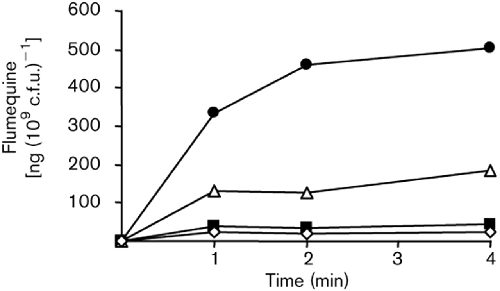
氟甲喹抑制负责双链DNA断裂反应的真核拓扑异构酶II以及细菌回旋酶,相对于对细菌回旋酶的影响,氟甲喹对拓扑异构酶II的抑制作用较高。氟甲喹对 12 种临床杀鲑鱼菌株的最低抑菌浓度 (MIC) 范围为 0.06 μg/mL 至 32 μg/mL。对于最具耐药性的分离株,氟甲喹抑制 E(max) 值高达 16,这表明外排对耐药表型的重要贡献。氟甲喹累积实验证实,高 E(max) 值与低得多的累积水平相关。细胞测定:将中国仓鼠肺细胞系CHL/IU常规维持在补充有10%胎牛血清的Dulbeccos改良MEM培养基中的单层培养物中,在37°C、5% CO2气氛下。用溶解在 DMSO 中的氟甲喹 (R-802) 处理指数生长的细胞 1 小时。选择剂量范围是为了获得受损和高度受损的细胞。氟甲喹 (R-802) 处理后,将细胞包埋于溶解在盐水中的 1% GP42 琼脂糖中。测定每个剂量的细胞数量和细胞活力。
针对革兰氏阴性菌(大肠杆菌、肠炎沙门菌、嗜水气单胞菌),氟甲喹(R-802)表现出强效的浓度依赖性抗菌活性,敏感菌株的MIC值为0.06-2 μg/mL [2][3]
- 针对携带gyrA基因突变的氟甲喹耐药大肠杆菌菌株,MIC值升高至8-32 μg/mL,表明耐药性由靶基因突变得介导[3]
- 大鼠肝细胞体外毒性实验显示,氟甲喹(R-802)在浓度高达100 μg/mL时细胞毒性极低,细胞活力>85%[1]
- 该药物通过稳定DNA旋转酶-DNA和拓扑异构酶IV-DNA切割复合物,阻止DNA链连接,抑制细菌DNA复制和转录[3]
体内研究 (In Vivo)
Flumequine(4000 ppm,口服)在给药后 3 小时但在 24 小时内不会在成年小鼠的胃、结肠和膀胱中诱导剂量依赖性 DNA 损伤。大西洋鲑鱼口服含药饲料后,氟甲喹的生物利用度为 44.7%。氟甲喹静脉注射后稳态分布容积为 3.5 L/kg,消除半衰期 (t 1/2) 为 22.8 小时,血浆药物浓度-时间曲线下面积 (AUC) 为 140 μg×小时/mL大西洋鲑鱼的管理。氟甲喹 (100 mg/L) 会降低水生杂草千屈菜 (Lythrum salicaria L) 的根、下胚轴、子叶的平均长度以及次生根的平均数量。氟甲喹(10 mg/kg,口服)导致稳态分布体积静脉内给药后 (Vss) 为 2.41 L/kg(鳕鱼)和 2.15 L/kg(濑鱼)。全身清除率 (Cl) 分别为 0.024 L/h.kg(鳕鱼)和 0.14 L/h.kg(濑鱼),消除半衰期 (t1/2 λ z) 计算为 75 小时(鳕鱼)和 31 小时给予氟甲喹(10 mg/kg,口服)后数小时(濑鱼)。口服氟甲喹后,口服生物利用度 (F) 计算为 65%(鳕鱼)和 41%(濑鱼)。
在大肠杆菌诱导的尿路感染小鼠模型中,以20和40 mg/kg/天的剂量口服氟甲喹(R-802),连续5天,显著降低肾脏和膀胱中的细菌载量,微生物根除率分别为70%和90%[2]
- 在感染杀鲑气单胞菌的虹鳟鱼(Oncorhynchus mykiss)中,以10 mg/kg/天的剂量口服氟甲喹(R-802),连续7天,死亡率降低80%,并清除脾脏和肾脏中的细菌[5]
- 在小鼠体内,氟甲喹(R-802)组织穿透性良好,在尿路、胃肠道和肝脏中达到治疗浓度[2]
酶活实验
细菌DNA旋转酶活性检测:将纯化的大肠杆菌DNA旋转酶与超螺旋质粒DNA在反应缓冲液中于37°C孵育。加入系列浓度(0.03-16 μg/mL)的氟甲喹(R-802),混合物孵育60分钟。加入SDS和蛋白酶K终止反应,随后在55°C孵育1小时。通过1%琼脂糖凝胶电泳分离DNA产物,溴化乙锭染色。通过测量超螺旋DNA条带强度,定量DNA旋转酶介导的超螺旋松弛抑制效果[3]
- 细菌拓扑异构酶IV活性检测:将分离的金黄色葡萄球菌拓扑异构酶IV与松弛型质粒DNA在反应缓冲液中孵育。加入0.06-32 μg/mL浓度的氟甲喹(R-802),混合物在37°C孵育45分钟。加入终止液终止反应,通过琼脂糖凝胶电泳分析DNA产物,评估DNA解连环反应的抑制情况[3]
细胞实验
中国仓鼠肺细胞系CHL/IU在37°C、5% CO2环境下使用添加有10%胎牛血清的Dulbecco改良MEM培养基以单层形式常规培养。将指数生长的细胞暴露于溶解在 DMSO 中的氟甲喹 (R-802) 溶液中一小时。选择剂量范围以提取严重受损和未受损的细胞。用氟甲喹 (R-802) 处理后,将细胞包埋在 1% 盐水溶解的 GP42 琼脂糖中。对于每个剂量,都会确定细胞的数量和活力。
细菌生长抑制检测:将细菌菌株(大肠杆菌、肠炎沙门菌)在Mueller-Hinton肉汤中37°C振荡培养。加入系列浓度(0.015-64 μg/mL)的氟甲喹(R-802),24小时后测量600 nm处的光密度(OD600),监测细菌生长。MIC定义为抑制≥90%细菌生长的最低浓度[2][3]
- 肝细胞毒性检测:分离大鼠肝细胞,以5×10⁴个细胞/孔接种到96孔板中。用10-200 μg/mL的氟甲喹(R-802)处理细胞24和48小时。基于线粒体脱氢酶活性的比色法检测细胞活力[1]
动物实验
Once a week has passed for acclimatization, 4 and 7 week old male ddY infants and young adults are used. At less than 500 mg/kg, groups receive a single oral dose of flumequine (R-802). Eight organs—the stomach, colon, liver, kidney, bladder, lung, brain, and bone marrow—are removed from adult mice following their sacrifice three and twenty-four hours of therapy. Liver removal occurs when young mice are sacrificed three and twenty-four hours after treatment. Flumequine (R-802) genotoxicity in the developing liver of adult mice is investigated in a different study. The left lateral lobe, left medial lobe, and right lateral lobe of the liver are removed from male mice that are 8 weeks old after they are given ether anesthesia for this purpose. Mice are given Flumequine (R-802) orally once every four days following hepatectomy. After 3 hours of FL treatment, they are sacrificed, and samples of their regenerated livers are taken. At every predetermined time, slides for the comet assay are prepared.
Urinary tract infection mouse model: Female BALB/c mice were intraurethrally inoculated with pathogenic Escherichia coli. Flumequine (R-802) was dissolved in 0.5% carboxymethylcellulose sodium (CMC-Na) and administered orally via gavage at 20 or 40 mg/kg/day for 5 days. Mice were euthanized, and kidneys and bladder tissues were collected to quantify bacterial load via colony counting [2]
- Aeromonas salmonicida-infected rainbow trout model: Rainbow trout (weight 50-70 g) were intraperitoneally inoculated with Aeromonas salmonicida. Flumequine (R-802) was mixed into fish feed at a concentration corresponding to 10 mg/kg/day and administered ad libitum for 7 days. Mortality was recorded daily, and spleen/kidney samples were collected from surviving fish for bacterial culture [5]
- Acute toxicity rat model: Male Wistar rats were randomly divided into control and treatment groups (n=6 per group). Flumequine (R-802) was dissolved in saline and administered intraperitoneally at doses of 200, 400, 800 mg/kg. Rats were monitored for 14 days for signs of toxicity, and serum samples were collected for hepatic and renal function analysis [4]
药代性质 (ADME/PK)
Absorption, Distribution and Excretion
Peak plasma concentrations are reached 2 to 4 hours after administration in male dogs. Following oral administration of 25 mg/kg body weight, peak plasma concentrations are approximately 55-65 μg flumethinyl equivalents/mL plasma. Within the first 12 hours after administration, approximately half of the total radioactive concentration corresponds to unmetabolized drug. The disappearance of flumethinyl from plasma appears to follow multi-exponential kinetics, with an initial half-life of approximately 75 minutes and a terminal β-phase half-life of 6.5 hours. Studies of 14C-fluoromethinyl in dogs and mice indicate readily absorbed flumethinyl after oral administration. Significant differences exist in drug excretion pathways between dogs and mice. In dogs, 55-75% of the dose is excreted in feces, while in rats only 10-15% is excreted in feces. Less than 5% of the dose is excreted unchanged in canine urine, with another 13-15% excreted as flumethinyl conjugates. In rats, 20-36% of the dose was excreted unchanged in the urine, while very little was excreted as flumequine conjugates. The concentration of free flumequine in 24-hour urine samples was approximately the same in both animals (rats and dogs). Within 5 days of oral administration in both animals (rats and dogs), the administered dose was completely recovered in urine and feces, indicating minimal residual flumequine and/or its metabolites in tissues. For more complete data on the absorption, distribution, and excretion of flumequine (8 types), please visit the HSDB record page. Metabolites/Metabolites In dogs, less than 5% of the dose was excreted unchanged in the urine, and 13-15% was excreted as acid-labile urinary conjugates of flumequine (or substances with similar fluorescent properties to flumequine). In rats, 20-36% of the drug was excreted unchanged in the urine, with a very small fraction excreted as acid-labile conjugates. In a 13-week study, researchers investigated the effects of flumequine on hepatotoxicity and the activity of hepatic drug-metabolizing enzymes. Male and female CD1 mice were fed flumequine at doses of 0, 25, 50, 100, 400, or 800 mg/kg body weight/day, and at doses of 0, 100, 400, or 800 mg/kg body weight/day. …At doses up to 800 mg/kg body weight/day, flumequine induced little or no activity of hepatic cytochrome P450-dependent drug-metabolizing enzymes or glucuronyltransferases. To determine the plasma and urinary concentrations of flumequine and its metabolite 7-hydroxyflumequine, 28 healthy male subjects were given single and multiple oral doses of 400, 800, and 1200 mg flumequine. The results showed that the mean concentrations at 2 hours post-administration were 13.5, 23.8, and 31.9 mg/L, respectively, and remained at these levels until 6 hours post-administration. Following a single 800 mg dose, peak plasma concentrations were reached between 2.5 and 3.5 hours, ranging from 14 to 25 mg/L. The mean elimination half-life was 7.1 hours. Only very low concentrations of 7-hydroxyfluoromethanequine were detected in plasma. After four daily doses of 800 mg flumethanequine, the mean trough concentration of the parent drug was 21–23 mg/L. The mean peak concentration at steady state was 41 mg/L. The half-life after the last dose (8.5 hours) was not significantly different from that after the first dose (7.1 hours). High concentrations of the drug were observed in urine within 24 hours following single oral doses of 400, 800, and 1200 mg flumethanequine. The concentration of 7-hydroxyfluoromethanequine in urine was generally higher than that of its parent compound. In multiple-dose studies, the overnight concentrations of flumethanequine consistently exceeded 50 mg/L, and the overnight concentrations of 7-hydroxyfluoromethanequine consistently exceeded 80 mg/L.
Biological Half-Life
... /In rats/After oral administration of a 25 mg/kg body weight dose...the plasma half-life of flumquine is 5.25 hours.
... /In male dogs/After oral administration of a 25 mg/kg body weight dose...the disappearance of flumquine from plasma appears to follow multi-exponential kinetics, with an initial half-life of approximately 75 minutes and a terminal β-phase half-life of 6.5 hours.
... /In chickens/After intravenous and oral administration (single dose of 12 mg flumquine/kg body weight)...the elimination half-life and mean residence time of flumquine in plasma after intravenous administration are 6.91 hours and 5.90 hours, respectively. After oral administration, they are 10.32 hours and 8.95 hours, respectively. ……
To determine the plasma and urinary concentrations of flumquine and its metabolite 7-hydroxyflumquine, 28 healthy male subjects were given single and multiple oral doses of 400, 800, and 1200 mg flumquine, respectively. ...After a single dose of 800 mg, the peak plasma concentration was 14-25 mg/L, occurring between 2.5 and 3.5 hours. The mean elimination half-life was 7.1 hours. ...After four daily doses of 800 mg flumethinol...the half-life after the last dose (8.5 hours) was not significantly different from the half-life after the first dose (7.1 hours).
Absorption: Flumethinol (R-802) is well absorbed after oral administration in rainbow trout, with an oral bioavailability of approximately 85-90%. Peak plasma concentrations (Cmax) can reach 3.5-4.2 μg/mL within 6-8 hours after administration of a 10 mg/kg dose [5]
-Distribution: The drug is widely distributed in the tissues of fish and mammals, with higher concentrations in the kidneys, liver, and gastrointestinal tract. Plasma protein binding is approximately 65-75% [5]
- Metabolism: Fluoroquinolones (R-802) are minimally metabolized in the liver, with over 70% of the drug excreted unchanged [3][5]
- Excretion: In mammals, excretion is primarily via bile and kidneys; in fish, it is primarily via gills and kidneys. The plasma elimination half-life in rainbow trout is approximately 12-16 hours, and in rats, it is approximately 8-10 hours [4][5]
毒性/毒理 (Toxicokinetics/TK)
Toxicity Summary
Identification and Uses: Flumethoxam is a fluoroquinolone compound with antibacterial activity against Gram-negative bacteria. It is used to treat intestinal infections in food animals and bacterial infections in farmed fish. Flumethoxam also has limited use in humans for the treatment of urinary tract infections. Human Exposure and Toxicity: Three patients treated with flumethoxam for urinary tract infections were reported to experience ocular side effects. All three patients had chronic renal failure, and all presented with bilateral symmetrical symptoms. They fully recovered within two days after discontinuation of the drug. Animal Studies: Flumethoxam was administered orally to female mice via gastric tube for 14 days. No hair loss or other signs of toxicity were observed. Flumethoxam was administered orally to rats for 14 days. Significant hair loss was observed in both male and female animals 3 to 5 days after treatment, and this symptom persisted until the end of the study. In another study, rats were administered flumethoxam orally for 14 days. Clinical symptoms included abdominal distension, cyanosis, dehydration, decreased weight gain, and hair loss. Guinea pigs were given flumethoxam orally for 14 days, resulting in death. Beagles were administered flumequine orally daily. All dogs survived to the end of the one-year treatment period. Decreased food intake was observed in all treatment groups during the study. Treatment dogs experienced dose-dependent seizures. These seizures were severe, short-lived (15–30 seconds), and almost always accompanied by ataxia and tremors. Behavior returned to normal within approximately 10 minutes after treatment. Other observed drug-related clinical signs included ataxia, decreased activity, tremors, vomiting, decreased food intake, and weight loss. In an 18-month study, researchers added flumequine to the diet of both male and female mice. Mice in the high-dose group experienced a slight decrease in body weight from week six until the end of the study. The incidence of grossly visible liver tumors at necropsy was dose-related, with a higher incidence in male mice than female mice. The incidence of hepatotoxic changes paralleled the incidence of liver tumors. Chi-square analysis of the number of tumor-bearing animals showed a significant increase in tumor numbers in male mice in both the low-dose and high-dose groups, regardless of all tumor types (including benign tumors). The number of male mice in the high-dose group with both benign and malignant liver tumors was also statistically significant. In female mice, only in the high-dose group was the number of animals with any type of tumor or only benign tumors significantly increased. In a 13-week study investigating hepatotoxicity and the activity of hepatic drug-metabolizing enzymes, mice were also administered flumequine. Observed effects included weight loss, significantly increased plasma alanine aminotransferase, aspartate aminotransferase, alkaline phosphatase, and lactate dehydrogenase activities, and increased liver weight. Pregnant mice were orally administered flumequine from day 2 to day 15 of gestation. Incomplete ossification, tracheal invagination, renal pelvis dilatation, and cleft palate were observed in the fetus. These observations were interpreted as fetal toxicity of flumequine rather than teratogenicity. Pregnant rats were orally administered flumequine from day 6 to day 15 of gestation. The mean body weight of the mothers in the treatment group decreased in a dose-dependent manner, and the difference was statistically significant compared to the control group at a dose of 400 mg/kg body weight/day. The mean fetal weight in the medium- and high-dose groups was significantly lower than that in the control group. Dose-related incomplete ossification of the sternum, vertebrae, and skull was also observed in the fetuses. No drug-related visceral or skeletal malformations were found, and no embryotoxic effects were observed in this study. Flumethinol was negative in the following genotoxicity tests: Ames test, HGPRT test, gene mutation test, and chromosomal aberration test.
Interactions
The combined effects of various carcinogens in food are a concern for human health. This study investigated the effect of flumethinol (FL) on the in vivo mutagenicity of 2-amino-3,8-dimethylimidazo[4,5-f]quinoxaline (MeIQx) in the liver. In addition, we attempted to elucidate its potential mechanism through comprehensive genomic analysis using cDNA microarrays. Male gptδ mice were fed diets containing 0.03% MeIQx, 0.4% FL, or 0.03% MeIQx + 0.4% FL for 13 weeks. The effects of phenobarbital (PB) combination therapy were also investigated. MeIQx treatment alone increased the frequency of gpt and Spi(-) mutations, while combination therapy with FL (but not with PB) further exacerbated these effects, although no genotoxicity was observed in mice treated with FL alone. FL led to increased Cyp1a2 mRNA levels and decreased Ugt1b1 mRNA levels, suggesting that the enhancing effect of FL may be partly attributed to its regulation of MeIQx metabolism. Furthermore, FL induced increased hepatocyte proliferation accompanied by hepatocyte damage. Elevated mRNA levels of Kupffer cell-derived cytokines (such as Il1b and Tnf) and cell cycle-related genes (such as Ccnd1 and Ccne1) indicate that FL treatment increases compensatory cell proliferation. Therefore, this study clearly demonstrates the combined effects of two different types of carcinogens (i.e., food contaminants).
Non-human toxicity values
Canine intravenous LD50 >120 mg/kg body weight
Rabbit oral LD50 >2000 mg/kg body weight
Female mouse intravenous LD50 822 (718-944) mg/kg body weight
Female mouse intravenous LD50 90 (86-93) mg/kg body weight
For more complete non-human toxicity data for flumequine (12 in total), please visit the HSDB record page.
Acute toxicity: The LD50 of flumequine (R-802) administered intraperitoneally to rats is approximately 600-700 mg/kg. Doses > 400 mg/kg can cause mild hepatic congestion and renal tubular epithelial cell swelling [4]
- Hepatotoxicity: In vitro rat hepatocyte assays showed no significant hepatocyte damage at concentrations ≤ 100 μg/mL; high in vivo doses (≥ 400 mg/kg) can cause a slight increase in serum transaminase levels [1][4]
- Embryotoxicity: In vitro studies using zebrafish embryos showed that fluoroquinolones (R-802) can cause developmental abnormalities (spinal curvature) at concentrations ≥ 50 μg/mL [4]
- Gastrointestinal toxicity: Mild diarrhea and vomiting (occurrence rate approximately 15%) were observed in rats at oral doses ≥ 200 mg/kg [4]
参考文献

[1]. Toxicol Sci . 2002 Oct;69(2):317-21.

[2]. J Med Microbiol . 2004 Sep;53(Pt 9):895-901.

[3]. Antimicrob Agents Chemother . 1995 May;39(5):1059-64.

[4]. Chemosphere . 2000 Apr;40(7):741-50.

[5]. J Vet Pharmacol Ther . 2000 Jun;23(3):163-8.

其他信息
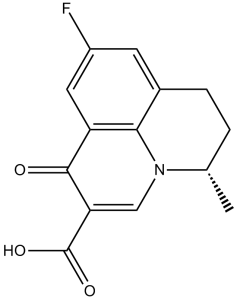
9-Fluoro-5-methyl-1-oxo-6,7-dihydro-1H,5H-pyrido[3,2,1-ij]quinoline-2-carboxylic acid belongs to the pyridoquinoline class of compounds. Its structure is 1-oxo-6,7-dihydro-1H,5H-pyrido[3,2,1-ij]quinoline, with carboxyl, methyl, and fluorine substituents at positions 2, 5, and 9, respectively. It is a pyridoquinoline, 3-oxomonocarboxylic acid, organofluorine compound, and quinolone antibiotic. Fluoromethylquinoline is a synthetic fluoroquinolone chemotherapeutic antibiotic used to treat bacterial infections.
Therapeutic Uses
Anti-infective, urinary system; topoisomerase II inhibitor. Fluoromethylquinoline is a fluoroquinolone compound with antibacterial activity against Gram-negative bacteria. It is used to treat intestinal infections in food animals and bacterial infections in farmed fish. Fluoromethylquinoline also has limited use in humans for the treatment of urinary tract infections.
Drug Warning This study evaluated the efficacy and safety of flumequine in treating 121 patients with uncomplicated (65.5%) and complicated (34.5%) urinary tract infections (UTIs) at a dose of 400 mg twice daily. Treatment duration ranged from 7 to 15 days, with an average of 10 days. At 30 days post-treatment, the cure rate for uncomplicated UTIs was 92.3%, and for complicated UTIs, it was 53.7%. 34.1% of patients with complicated UTIs experienced relapse or reinfection, and 12.2% were unresponsive to treatment. Flumequine was generally well-tolerated. 27.3% of patients experienced gastrointestinal and neurological disturbances as well as skin rashes, but most cases were mild. Only two patients discontinued treatment. The conclusion is that 800 mg of flumequine daily is effective in treating both uncomplicated and complicated UTIs.
Fluoroquine (R-802) is a synthetic fluoroquinolone antibiotic mainly used in veterinary medicine to treat bacterial infections in fish, poultry and livestock. Its clinical application in humans is limited [2][5]
- Mechanism of action: It exerts its antibacterial effect by dual targeting of bacterial DNA gyrase and topoisomerase IV, blocking DNA replication/transcription, leading to bacterial cell death [2][3]
- Antibacterial spectrum: It is mainly effective against Gram-negative bacteria; it has moderate activity against some Gram-positive bacteria (such as Staphylococcus aureus) [2][3]
- Clinical/veterinary indications: It is used to treat urinary tract and gastrointestinal infections in mammals, as well as furuncle (Aeromonas salmonii) in fish [2][5]
- Resistance mechanism: Bacterial resistance originates from mutations in the gyrA (DNA gyrase) and parC (topoisomerase IV) genes, thereby reducing the drug binding affinity [3]
*注: 文献方法仅供参考, InvivoChem并未独立验证这些方法的准确性
化学信息 & 存储运输条件
分子式
C14H12FNO3
分子量
261.25
精确质量
261.08
元素分析
C, 64.36; H, 4.63; F, 7.27; N, 5.36; O, 18.37
CAS号
42835-25-6
相关CAS号
42835-25-6
PubChem CID
3374
外观&性状
White to off-white solid powder
密度
1.5±0.1 g/cm3
沸点
439.7±45.0 °C at 760 mmHg
熔点
253-255°C
闪点
219.7±28.7 °C
蒸汽压
0.0±1.1 mmHg at 25°C
折射率
1.646
LogP
2.41
tPSA
59.3
氢键供体(HBD)数目
1
氢键受体(HBA)数目
5
可旋转键数目(RBC)
1
重原子数目
19
分子复杂度/Complexity
462
定义原子立体中心数目
0
SMILES
FC1C([H])=C2C(C(C(=O)O[H])=C([H])N3C2=C(C=1[H])C([H])([H])C([H])([H])C3([H])C([H])([H])[H])=O
InChi Key
DPSPPJIUMHPXMA-UHFFFAOYSA-N
InChi Code
InChI=1S/C14H12FNO3/c1-7-2-3-8-4-9(15)5-10-12(8)16(7)6-11(13(10)17)14(18)19/h4-7H,2-3H2,1H3,(H,18,19)
化学名
7-fluoro-12-methyl-4-oxo-1-azatricyclo[7.3.1.05,13]trideca-2,5,7,9(13)-tetraene-3-carboxylic acid
别名
R-802; R 802; R802; Flumequine
HS Tariff Code
2934.99.9001
存储方式

Powder      -20°C    3 years

                     4°C     2 years

In solvent   -80°C    6 months

                  -20°C    1 month

运输条件
Room temperature (This product is stable at ambient temperature for a few days during ordinary shipping and time spent in Customs)
溶解度数据
溶解度 (体外实验)
DMSO: 3~7.7 mg/mL (~11.5~29.4 mM)
Water: <1 mg/mL
Ethanol: <1 mg/mL
溶解度 (体内实验)
注意: 如下所列的是一些常用的体内动物实验溶解配方,主要用于溶解难溶或不溶于水的产品(水溶度<1 mg/mL)。 建议您先取少量样品进行尝试,如该配方可行,再根据实验需求增加样品量。

注射用配方
(IP/IV/IM/SC等)
注射用配方1: DMSO : Tween 80: Saline = 10 : 5 : 85 (如: 100 μL DMSO 50 μL Tween 80 850 μL Saline)
*生理盐水/Saline的制备:将0.9g氯化钠/NaCl溶解在100 mL ddH ₂ O中,得到澄清溶液。
注射用配方 2: DMSO : PEG300Tween 80 : Saline = 10 : 40 : 5 : 45 (如: 100 μL DMSO 400 μL PEG300 50 μL Tween 80 450 μL Saline)
注射用配方 3: DMSO : Corn oil = 10 : 90 (如: 100 μL DMSO 900 μL Corn oil)
示例: 注射用配方 3 (DMSO : Corn oil = 10 : 90) 为例说明, 如果要配制 1 mL 2.5 mg/mL的工作液, 您可以取 100 μL 25 mg/mL 澄清的 DMSO 储备液,加到 900 μL Corn oil/玉米油中, 混合均匀。
View More

注射用配方 4: DMSO : 20% SBE-β-CD in Saline = 10 : 90 [如:100 μL DMSO 900 μL (20% SBE-β-CD in Saline)]
*20% SBE-β-CD in Saline的制备(4°C,储存1周):将2g SBE-β-CD (磺丁基-β-环糊精) 溶解于10mL生理盐水中,得到澄清溶液。
注射用配方 5: 2-Hydroxypropyl-β-cyclodextrin : Saline = 50 : 50 (如: 500 μL 2-Hydroxypropyl-β-cyclodextrin (羟丙基环胡精) 500 μL Saline)
注射用配方 6: DMSO : PEG300 : Castor oil : Saline = 5 : 10 : 20 : 65 (如: 50 μL DMSO 100 μL PEG300 200 μL Castor oil 650 μL Saline)
注射用配方 7: Ethanol : Cremophor : Saline = 10: 10 : 80 (如: 100 μL Ethanol 100 μL Cremophor 800 μL Saline)
注射用配方 8: 溶解于Cremophor/Ethanol (50 : 50), 然后用生理盐水稀释。
注射用配方 9: EtOH : Corn oil = 10 : 90 (如: 100 μL EtOH 900 μL Corn oil)
注射用配方 10: EtOH : PEG300Tween 80 : Saline = 10 : 40 : 5 : 45 (如: 100 μL EtOH 400 μL PEG300 50 μL Tween 80 450 μL Saline)


口服配方
口服配方 1: 悬浮于0.5% CMC Na (羧甲基纤维素钠)
口服配方 2: 悬浮于0.5% Carboxymethyl cellulose (羧甲基纤维素)
示例: 口服配方 1 (悬浮于 0.5% CMC Na)为例说明, 如果要配制 100 mL 2.5 mg/mL 的工作液, 您可以先取0.5g CMC Na并将其溶解于100mL ddH2O中,得到0.5%CMC-Na澄清溶液;然后将250 mg待测化合物加到100 mL前述 0.5%CMC Na溶液中,得到悬浮液。
View More

口服配方 3: 溶解于 PEG400 (聚乙二醇400)
口服配方 4: 悬浮于0.2% Carboxymethyl cellulose (羧甲基纤维素)
口服配方 5: 溶解于0.25% Tween 80 and 0.5% Carboxymethyl cellulose (羧甲基纤维素)
口服配方 6: 做成粉末与食物混合


注意: 以上为较为常见方法,仅供参考, InvivoChem并未独立验证这些配方的准确性。具体溶剂的选择首先应参照文献已报道溶解方法、配方或剂型,对于某些尚未有文献报道溶解方法的化合物,需通过前期实验来确定(建议先取少量样品进行尝试),包括产品的溶解情况、梯度设置、动物的耐受性等。

请根据您的实验动物和给药方式选择适当的溶解配方/方案:
1、请先配制澄清的储备液(如:用DMSO配置50 或 100 mg/mL母液(储备液));
2、取适量母液,按从左到右的顺序依次添加助溶剂,澄清后再加入下一助溶剂。以 下列配方为例说明 (注意此配方只用于说明,并不一定代表此产品 的实际溶解配方):
10% DMSO → 40% PEG300 → 5% Tween-80 → 45% ddH2O (或 saline);
假设最终工作液的体积为 1 mL, 浓度为5 mg/mL: 取 100 μL 50 mg/mL 的澄清 DMSO 储备液加到 400 μL PEG300 中,混合均匀/澄清;向上述体系中加入50 μL Tween-80,混合均匀/澄清;然后继续加入450 μL ddH2O (或 saline)定容至 1 mL;

3、溶剂前显示的百分比是指该溶剂在最终溶液/工作液中的体积所占比例;
4、 如产品在配制过程中出现沉淀/析出,可通过加热(≤50℃)或超声的方式助溶;
5、为保证最佳实验结果,工作液请现配现用!
6、如不确定怎么将母液配置成体内动物实验的工作液,请查看说明书或联系我们;
7、 以上所有助溶剂都可在 Invivochem.cn网站购买。
制备储备液 1 mg 5 mg 10 mg
1 mM 3.8278 mL 19.1388 mL 38.2775 mL
5 mM 0.7656 mL 3.8278 mL 7.6555 mL
10 mM 0.3828 mL 1.9139 mL 3.8278 mL

1、根据实验需要选择合适的溶剂配制储备液 (母液):对于大多数产品,InvivoChem推荐用DMSO配置母液 (比如:5、10、20mM或者10、20、50 mg/mL浓度),个别水溶性高的产品可直接溶于水。产品在DMSO 、水或其他溶剂中的具体溶解度详见上”溶解度 (体外)”部分;

2、如果您找不到您想要的溶解度信息,或者很难将产品溶解在溶液中,请联系我们;

3、建议使用下列计算器进行相关计算(摩尔浓度计算器、稀释计算器、分子量计算器、重组计算器等);

4、母液配好之后,将其分装到常规用量,并储存在-20°C或-80°C,尽量减少反复冻融循环。

计算器

摩尔浓度计算器可计算特定溶液所需的质量、体积/浓度,具体如下:

  • 计算制备已知体积和浓度的溶液所需的化合物的质量
  • 计算将已知质量的化合物溶解到所需浓度所需的溶液体积
  • 计算特定体积中已知质量的化合物产生的溶液的浓度
使用摩尔浓度计算器计算摩尔浓度的示例如下所示:
假如化合物的分子量为350.26 g/mol,在5mL DMSO中制备10mM储备液所需的化合物的质量是多少?
  • 在分子量(MW)框中输入350.26
  • 在“浓度”框中输入10,然后选择正确的单位(mM)
  • 在“体积”框中输入5,然后选择正确的单位(mL)
  • 单击“计算”按钮
  • 答案17.513 mg出现在“质量”框中。以类似的方式,您可以计算体积和浓度。

稀释计算器可计算如何稀释已知浓度的储备液。例如,可以输入C1、C2和V2来计算V1,具体如下:

制备25毫升25μM溶液需要多少体积的10 mM储备溶液?
使用方程式C1V1=C2V2,其中C1=10mM,C2=25μM,V2=25 ml,V1未知:
  • 在C1框中输入10,然后选择正确的单位(mM)
  • 在C2框中输入25,然后选择正确的单位(μM)
  • 在V2框中输入25,然后选择正确的单位(mL)
  • 单击“计算”按钮
  • 答案62.5μL(0.1 ml)出现在V1框中
g/mol

分子量计算器可计算化合物的分子量 (摩尔质量)和元素组成,具体如下:

注:化学分子式大小写敏感:C12H18N3O4  c12h18n3o4
计算化合物摩尔质量(分子量)的说明:
  • 要计算化合物的分子量 (摩尔质量),请输入化学/分子式,然后单击“计算”按钮。
分子质量、分子量、摩尔质量和摩尔量的定义:
  • 分子质量(或分子量)是一种物质的一个分子的质量,用统一的原子质量单位(u)表示。(1u等于碳-12中一个原子质量的1/12)
  • 摩尔质量(摩尔重量)是一摩尔物质的质量,以g/mol表示。
/

配液计算器可计算将特定质量的产品配成特定浓度所需的溶剂体积 (配液体积)

  • 输入试剂的质量、所需的配液浓度以及正确的单位
  • 单击“计算”按钮
  • 答案显示在体积框中
动物体内实验配方计算器(澄清溶液)
第一步:请输入基本实验信息(考虑到实验过程中的损耗,建议多配一只动物的药量)
第二步:请输入动物体内配方组成(配方适用于不溶/难溶于水的化合物),不同的产品和批次配方组成不同,如对配方有疑问,可先联系我们提供正确的体内实验配方。此外,请注意这只是一个配方计算器,而不是特定产品的确切配方。
+
+
+

计算结果:

工作液浓度 mg/mL;

DMSO母液配制方法 mg 药物溶于 μL DMSO溶液(母液浓度 mg/mL)。如该浓度超过该批次药物DMSO溶解度,请首先与我们联系。

体内配方配制方法μL DMSO母液,加入 μL PEG300,混匀澄清后加入μL Tween 80,混匀澄清后加入 μL ddH2O,混匀澄清。

(1) 请确保溶液澄清之后,再加入下一种溶剂 (助溶剂) 。可利用涡旋、超声或水浴加热等方法助溶;
            (2) 一定要按顺序加入溶剂 (助溶剂) 。

生物数据图片
  • Accumulation of flumequine by strains ATCC 14174 (•), 15 (▪), 56 (▵) and 74 (⋄). J Med Microbiol . 2004 Sep;53(Pt 9):895-901.
  • Migration of nuclear DNA from CHL cells treated with flumequine. Toxicol Sci . 2002 Oct;69(2):317-21.
  • Migration of nuclear DNA from the liver of infant mice and regenerating liver of adult mice treated with flumequine. Toxicol Sci . 2002 Oct;69(2):317-21.
相关产品
联系我们