| 规格 | 价格 | 库存 | 数量 |
|---|---|---|---|
| 50mg |
|
||
| 100mg |
|
||
| 250mg |
|
||
| 500mg |
|
||
| 1g |
|
||
| 5g |
|
||
| 10g |
|
||
| 25g |
|
||
| 50g |
|
||
| Other Sizes |
|

| 靶点 |
Ribavirin's mechanism of action is multi-faceted. It acts as an inhibitor of inosine monophosphate dehydrogenase (IMPDH), depleting GTP pools. Its active metabolite, ribavirin triphosphate, inhibits viral RNA-dependent RNA polymerase and interferes with viral mRNA capping. It also binds to and redistributes mammalian eIF4E.
|
|---|---|
| 体外研究 (In Vitro) |
当用 5、10 和 20 μM 利巴韦林 GMP (ICN-1229) 处理 LPS 刺激的小胶质细胞时,NO2 水平分别降低了 43% (p<0.05)、53% (p<0.05) 和 59% (p<0.05)。在未刺激的培养物中,10 mM 利巴韦林 GMP (ICN-1229) 并未显著降低细胞表面积;然而,在 LPS 刺激的小胶质细胞中,它显著降低了细胞表面积 (32%,p<0.05) [3]。利巴韦林 GMP (ICN-1229) 与 CM-10-18 联用可降低病毒复制,并且利巴韦林 GMP (ICN-1229) 对登革病毒 (DENV) 具有活性,在 A549 细胞中的 EC50 为 3 μM [4]。在人诱导多能干细胞(iPSC)衍生的功能性肝细胞样细胞中,利巴韦林(20 μM)连续给药7天可抑制丙型肝炎病毒(HCV)的复制[6]。利巴韦林(1、10、25 μg/mL,72小时)通过调控与细胞凋亡相关的基因,可降低齐多夫定病毒(ZILV)诱导的人非祖细胞(hNPC)凋亡,并通过PI3K/AKT通路增强细胞存活信号[7]。实时定量PCR[7]
体外实验表明,利巴韦林具有广谱抗病毒活性。在5、10和20 µM的浓度下,利巴韦林可降低亚硝酸盐(NO2)水平。其代谢产物利巴韦林5′-磷酸酯是IMP脱氢酶的抑制剂。其活性三磷酸酯形式与eIF4E结合,Ki值约为0.3 µM。 |
| 体内研究 (In Vivo) |
JAT 与干扰素和利巴韦林 GMP (ICN-1229) 联合使用,可显著降低 (p<0.01) ALT、AST 活性和胆红素水平。当单独使用 JAT、干扰素或利巴韦林 GMP 与 CCl4 联合使用时,珊瑚似乎对 CCl4 具有一定的肝脏保护作用,表现为肝脏无颗粒、摄食极差和肝索正常。单独或联合使用 JAT、聚苯乙烯磺酸钠和利巴韦林 GMP (ICN-1229) 治疗组均观察到 TGF-β 和 Bax 表达降低。接受干扰素、利巴韦林 GMP (ICN-1229) 和 JAT 三联治疗的组 p53 表达显著降低 [1]。在血清和脐带血中,服用 400 mg 利巴韦林 GMP (ICN-1229) 胶囊的 Wistar 小鼠体内激活素 A 显著下降,而卵泡抑素则大幅升高。利巴韦林 GMP (ICN-1229):在小鼠中,利巴韦林 GMP (40 mg/kg,口服) 仅在与 IFN-α 或聚乙二醇干扰素-α (Peg-IFN-α) 联合使用时才能显著提高 CM-10 水平,而 IFN-α 或 Peg-IFN-α 的抗病毒效力为 -18。在培养细胞中,利巴韦林 GMP (ICN-1229) 会降低抗病毒活性 [2]。登革病毒感染时,单药治疗可减轻病毒警报 [4]。
在体内,利巴韦林已在临床上用作抗病毒药物。它对多种人类病毒感染有效。它通常与其他疗法联合使用,例如与干扰素联合用于治疗丙型肝炎病毒感染。 |
| 酶活实验 |
用于检测 IMPDH 抑制的无细胞测定方法是将酶与 IMP、NAD+ 和不同浓度的利巴韦林单磷酸酯一起孵育。XMP 的生成量通过分光光度法测定。对于 RNA 聚合酶抑制,则将酶与模板、核苷酸和利巴韦林三磷酸酯一起孵育。
|
| 细胞实验 |
实时定量PCR[7]
细胞类型: hNPCs 测试浓度: 1、10、25 μg/ml 孵育时间: 72 小时 实验结果: 与 DMSO 对照处理的细胞相比,BCL2 mRNA 水平升高,BAX mRNA 水平降低。 蛋白质印迹分析[7] 细胞类型: hNPC 测试浓度: 1、10、25 μg/ml 孵育时间: 72 小时 实验结果: 与对照组相比,AKT 磷酸化水平升高。 抗病毒活性的细胞检测包括用病毒感染培养细胞,并用利巴韦林处理。病毒复制通过噬斑试验、qPCR 或病毒蛋白表达检测进行评估。细胞毒性采用标准细胞活力检测进行评估。 |
| 动物实验 |
在体内,利巴韦林可通过口服或静脉注射给药。临床试验通过测量病毒载量降低和临床症状改善情况来评估其疗效。
|
| 药代性质 (ADME/PK) |
吸收、分布和排泄
据报道,利巴韦林口服后吸收迅速且广泛。口服1200 mg利巴韦林后,平均2小时达到血浆峰浓度(Cmax)。600 mg利巴韦林的口服生物利用度为64%。利巴韦林代谢物经肾脏排泄。口服600 mg放射性标记的利巴韦林后,约61%的药物在尿液中检测到,12%在粪便中检测到。17%的给药剂量以原形排出。利巴韦林分布容积大。单次口服1200 mg利巴韦林后的总表观清除率为26 L/h。利巴韦林经鼻腔和口腔吸入后,可通过呼吸道进行全身吸收。经鼻和经口吸入给药的利巴韦林的生物利用度尚未确定,但可能取决于雾化方法(例如,氧气面罩、面罩、氧气帐篷)。在恒定流速下,到达呼吸道的理论药物量与雾化药物溶液的浓度和吸入治疗的持续时间直接相关。此外,气溶胶输送方式的改变也会影响到达呼吸道的药物量。当使用小颗粒气溶胶发生器经口和鼻吸入浓度为 190 μg/L 的雾化利巴韦林溶液时,估计吸入剂量沉积在呼吸道的平均比例约为 70%,但实际沉积量取决于多种因素,包括呼吸频率和潮气量。当使用小颗粒气溶胶发生器经口和鼻吸入时,血浆利巴韦林浓度峰值通常出现在吸入结束时,并随着吸入时间的延长而升高。在少数儿科患者中,连续3天通过面罩以0.82 mg/kg/hr的剂量进行鼻腔和口腔吸入,持续2.5小时后,平均血浆利巴韦林峰浓度为0.19 μg/mL(范围:0.11–0.388 μg/mL)。在少数患者中,当以0.82 mg/kg/hr的剂量每日通过面罩、雾化器或呼吸机给药5小时,持续20小时时,血浆利巴韦林峰浓度分别为0.275 μg/mL(范围:0.21–0.35 μg/mL)或1.1 μg/mL(范围:0.45–2.18 μg/mL)。当使用特定剂量的利巴韦林经气管吸入器给药时,血浆利巴韦林峰浓度为 1.7 μg/mL(范围:0.38–3.58 μg/mL)。……常用的经鼻和经口吸入利巴韦林的血浆峰浓度低于报道的可使呼吸道合胞病毒斑块形成减少 85–98% 的浓度。 患者经鼻和经口吸入利巴韦林后,呼吸道分泌物中的利巴韦林浓度可能显著高于血浆浓度。在少数儿科患者中,他们连续 3 天每天 8 小时经鼻和经口吸入利巴韦林,剂量为 0.82 mg/kg/小时,经气管插管后,呼吸道分泌物中的药物峰浓度范围为 250 至 1925 μg/mL。在接受利巴韦林鼻腔和口服给药的儿科患者中,连续5天,每日20小时,剂量为0.82 mg/kg/小时,治疗期间呼吸道分泌物(经气管插管采集)中利巴韦林的浓度范围为313至28,250 μg/mL,治疗结束时平均峰浓度为3075 μg/mL(范围:313–7050 μg/mL)。通过鼻腔和口服吸入途径在呼吸道分泌物中达到的利巴韦林浓度可能显著高于体外抑制呼吸道合胞病毒(RSV)敏感株形成噬斑所需的浓度。然而,由于RSV存在于被呼吸道病毒感染的细胞内,生产商指出,细胞内呼吸道药物浓度可能与血浆利巴韦林浓度更密切相关,而非与呼吸道分泌物中测得的浓度更密切相关。口服利巴韦林吸收迅速,多次给药后1-3小时内即可达到血浆峰浓度。然而,由于首过代谢,口服利巴韦林的绝对生物利用度平均仅为64%左右。有关利巴韦林吸收、分布和排泄的更完整数据(共10项),请访问HSDB记录页面。代谢/代谢物:首先,也是激活所必需的,利巴韦林在细胞内被腺苷激酶磷酸化,生成利巴韦林单磷酸、二磷酸和三磷酸代谢物。利巴韦林激活并发挥作用后,会经历两条代谢途径:可逆磷酸化或通过去核糖基化和酰胺水解降解生成三唑羧酸代谢物。体外研究表明,利巴韦林不是CYP450酶的底物。利巴韦林主要代谢为去核糖基化的利巴韦林(1,2,4-三唑-3-甲酰胺),该代谢过程可能发生在肝脏;据报道,1,2,4-三唑-3-甲酰胺对多种RNA和DNA病毒具有与利巴韦林相似的抗病毒活性。该药物也可代谢为1,2,4-三唑-3-羧酸。体外研究表明,利巴韦林主要在细胞内通过腺苷激酶和其他细胞酶进行磷酸化,代谢为利巴韦林-5'-单磷酸、5'-二磷酸和5'-三磷酸。体内磷酸化可能是该药物发挥抗病毒活性的必要条件。利巴韦林也可在红细胞内磷酸化,主要生成利巴韦林-5'-三磷酸。在红细胞内代谢的药物中,约81%、16%和3%分别以利巴韦林-5'-三磷酸、二磷酸和单磷酸的形式存在。研究表明,药物在红细胞内分布时间延长可能是由于这些细胞中磷酸酶活性较低所致,而药物从细胞中转运依赖于磷酸酶的去磷酸化作用。利巴韦林经历两条代谢途径:(i) 发生在有核细胞中的可逆磷酸化途径;(ii) 涉及去核糖基化和酰胺水解的降解途径,生成三唑羧酸代谢物。利巴韦林及其三唑羧酸代谢物均经肾脏排泄。 生物半衰期单次口服1200 mg利巴韦林后,其终末半衰期约为120至170小时。分布:静脉注射:约 0.2 小时。消除:吸入:9.5 小时。静脉和口服(单次给药):0.5 至 2 小时。红细胞内:40 天。末端半衰期:静脉和口服:单次给药:27 至 36 小时。单片口服:120 至 170 小时。稳态:约 151 小时。平均值:多次口服给药,胶囊:298 小时。根据有限的数据,据报道,经鼻和口服吸入 3 天后,利巴韦林在呼吸道分泌物中的半衰期约为 1.4 至 2.5 小时。在少数儿科患者中,经鼻和口服吸入后,利巴韦林的平均血浆半衰期约为 9.5 小时(范围:6.5 至 11 小时)。在少数健康成年人中,单次口服利巴韦林后,血浆利巴韦林浓度呈多相下降,平均半衰期为24小时,给药后10-80小时达到峰值,末端半衰期为48小时或更长。 口服利巴韦林后吸收良好。它在细胞内磷酸化为活性代谢物。利巴韦林半衰期长,并在红细胞内蓄积。 |
| 毒性/毒理 (Toxicokinetics/TK) |
药物相互作用
利巴韦林对某些病毒(例如流感病毒)的体外和体内抗病毒活性可能被其他抗病毒药物(例如金刚烷胺、利巴韦林)增强。利巴韦林可能拮抗司他夫定和齐多夫定对HIV的体外抗病毒活性;应避免利巴韦林与这两种药物同时使用。不建议口服利巴韦林与二帕诺辛合用。临床试验中曾报告过致命性肝衰竭、周围神经病变、胰腺炎和症状性高乳酸血症/乳酸性酸中毒的病例。体外研究表明,利巴韦林可增强二帕诺辛对人类免疫缺陷病毒(HIV;曾用名HTLV-III/LAV)和莫罗尼鼠肉瘤病毒的抗逆转录病毒活性。相反,体外研究表明,利巴韦林会拮抗齐多夫定和扎西他滨对HIV的抗病毒活性。利巴韦林似乎能通过促进地达诺辛-S'-三磷酸(地达诺辛的代谢活性代谢物,具有抗病毒活性)的生成来增强地达诺辛的抗逆转录病毒活性。利巴韦林拮抗齐多夫定或扎西他滨抗逆转录病毒活性的机制尚未完全阐明,但研究表明,利巴韦林可能干扰药物转化为其活性三磷酸代谢物(分别为脱氧胸苷三磷酸和双脱氧胞苷-S'-三磷酸)的磷酸化步骤。 非人类毒性值 大鼠口服LD50:5.3 g/kg 小鼠口服LD50:2 g/kg 小鼠腹腔注射LD50:0.9-1.3 g/kg 大鼠腹腔注射LD50:2 g/kg 利巴韦林的常见副作用包括溶血性贫血、疲劳和恶心。它具有致畸性,孕妇禁用。它还可能引起严重的药物相互作用。 |
| 参考文献 |
[1]. Robert O Baker, et al. Potential antiviral therapeutics for smallpox, monkeypox and other orthopoxvirus infections. Antiviral Res. 2003 Jan;57(1-2):13-23.
[2]. Abdel-Hamid NM, et al. Synergistic Effects of Jerusalem Artichoke in Combination with Pegylated Interferon Alfa-2a and Ribavirin Against Hepatic Fibrosis in Rats. Asian Pac J Cancer Prev. 2016;17(4):1979-85. [3]. Refaat B, et al. The effects of pegylated interferon-α and ribavirin on liver and serum concentrations of activin-A and follistatin in normal Wistar rat: a preliminary report. BMC Res Notes. 2015 Jun 26;8:265 [4]. Savic D, et al. Ribavirin shows immunomodulatory effects on activated microglia. Immunopharmacol Immunotoxicol. 2014 Dec;36(6):433-41 [5]. Chang J, et al. Combination of α-glucosidase inhibitor and ribavirin for the treatment of dengue virus infection in vitro and in vivo. Antiviral Res. 2011 Jan;89(1):26-34 [6]. Sa-Ngiamsuntorn K, et al. A robust model of natural hepatitis C infection using hepatocyte-like cells derived from human induced pluripotent stem cells as a long-term host. Virol J. 2016 Apr 5;13:59. [7]. Kim JA, Seong RK, Kumar M, Shin OS. Favipiravir and Ribavirin Inhibit Replication of Asian and African Strains of Zika Virus in Different Cell Models. Viruses. 2018 Feb 9;10(2):72. |
| 其他信息 |
治疗用途
抗代谢药;抗病毒药 抗病毒药 利巴韦林可口服或静脉注射用于治疗拉沙热,并作为高危接触者的暴露后预防用药。它对其他病毒性出血热也可能同样有效,包括肾综合征出血热、克里米亚-刚果出血热和裂谷热。/未包含在美国产品标签中/ 利巴韦林吸入溶液可用作辅助疗法,用于治疗年轻成人甲型和乙型流感,尤其是在疾病早期(例如,出现初始症状后24小时内)开始治疗时。 /未包含于美国产品标签/ 利巴韦林吸入溶液用于治疗住院婴幼儿(尤其是有严重或复杂性RSV感染风险的婴幼儿)由呼吸道合胞病毒 (RSV) 引起的严重下呼吸道感染(包括毛细支气管炎和肺炎);此类人群包括早产儿和患有结构性或生理性心肺疾病、支气管肺发育不良、免疫缺陷或即将发生呼吸衰竭的婴幼儿。利巴韦林适用于治疗需要机械通气的婴幼儿的RSV感染。/包含于美国产品标签/ 药物警告 FDA妊娠风险类别:X /妊娠期间禁用。动物或人体研究以及研究性或上市后报告均表明,胎儿畸形或异常的风险显著大于对患者的任何潜在获益。在决定是否治疗儿科患者时,应考虑疾病进展的证据,例如肝脏炎症和纤维化,以及预后因素、HCV基因型和病毒载量。应权衡治疗获益与临床试验中观察到的儿科患者的安全性结果。接受利巴韦林吸入治疗的婴儿(包括呼吸道合胞病毒感染者)或患有慢性阻塞性肺疾病(COPD)或哮喘的成人有时会出现呼吸功能突然恶化。对于患有潜在危及生命的疾病的婴儿,吸入该药物与呼吸功能恶化、呼吸暂停和依赖辅助通气有关。对于患有慢性阻塞性肺疾病(COPD)或哮喘的成人,利巴韦林治疗通常伴有肺功能恶化,一些哮喘成人会出现呼吸困难和胸痛。健康成人吸入利巴韦林后也观察到轻微的肺功能异常。支气管痉挛、肺水肿、通气不足、紫绀、呼吸困难、细菌性肺炎、气胸、呼吸暂停、肺不张和呼吸机依赖也与利巴韦林吸入疗法相关。一些婴儿在利巴韦林治疗期间出现支气管痉挛引起的呼吸功能恶化,经治疗医生判定,这些死亡可能与利巴韦林吸入疗法有关。接受利巴韦林吸入疗法的患者也可能出现皮疹、眼睑红斑和结膜炎。这些症状通常在停用利巴韦林后数小时内消退。此外,在接受利巴韦林联合干扰素α-2b治疗的患者中,还观察到听力障碍(例如听力丧失、耳鸣)、眩晕、高甘油三酯血症以及致命性和非致命性胰腺炎。关于利巴韦林(共23条记录)的更完整数据,请访问HSDB记录页面。 药效学 利巴韦林通过增加多种RNA病毒基因组的突变频率,对多种DNA和RNA病毒发挥直接抗病毒活性。它属于核苷类抗代谢药物,可干扰病毒遗传物质的复制。由于其结构与RNA分子的组成单元相似,该药物可抑制RNA依赖性RNA聚合酶的活性。 利巴韦林是世界卫生组织基本药物。几十年来,它一直用于治疗各种病毒感染。它是丙型肝炎治疗方案的关键组成部分,尽管现在更常用的是新型直接抗病毒药物。它也用于治疗呼吸道合胞病毒(RSV)感染和病毒性出血热。 |
| 分子式 |
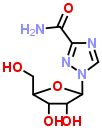
C8H12N4O5
|
|---|---|
| 分子量 |
244.2047
|
| 精确质量 |
244.08
|
| CAS号 |
36791-04-5
|
| 相关CAS号 |
Ribavirin;36791-04-5
|
| PubChem CID |
37542
|
| 外观&性状 |
White to off-white solid powder
|
| 密度 |
2.1±0.1 g/cm3
|
| 沸点 |
639.8±65.0 °C at 760 mmHg
|
| 熔点 |
174-176°C
|
| 闪点 |
340.7±34.3 °C
|
| 蒸汽压 |
0.0±2.0 mmHg at 25°C
|
| 折射率 |
1.823
|
| LogP |
-2.26
|
| tPSA |
143.72
|
| 氢键供体(HBD)数目 |
4
|
| 氢键受体(HBA)数目 |
7
|
| 可旋转键数目(RBC) |
3
|
| 重原子数目 |
17
|
| 分子复杂度/Complexity |
304
|
| 定义原子立体中心数目 |
4
|
| SMILES |
C1=NC(=NN1[C@H]2[C@@H]([C@@H]([C@H](O2)CO)O)O)C(=O)N
|
| InChi Key |
IWUCXVSUMQZMFG-AFCXAGJDSA-N
|
| InChi Code |
InChI=1S/C8H12N4O5/c9-6(16)7-10-2-12(11-7)8-5(15)4(14)3(1-13)17-8/h2-5,8,13-15H,1H2,(H2,9,16)/t3-,4-,5-,8-/m1/s1
|
| 化学名 |
1-[(2R,3R,4S,5R)-3,4-dihydroxy-5-(hydroxymethyl)oxolan-2-yl]-1,2,4-triazole-3-carboxamide
|
| HS Tariff Code |
2934.99.9001
|
| 存储方式 |
Powder -20°C 3 years 4°C 2 years In solvent -80°C 6 months -20°C 1 month |
| 运输条件 |
Room temperature (This product is stable at ambient temperature for a few days during ordinary shipping and time spent in Customs)
|
| 溶解度 (体外实验) |
H2O : ~100 mg/mL (~409.50 mM)
DMSO : ~100 mg/mL (~409.50 mM) |
|---|---|
| 溶解度 (体内实验) |
注意: 如下所列的是一些常用的体内动物实验溶解配方,主要用于溶解难溶或不溶于水的产品(水溶度<1 mg/mL)。 建议您先取少量样品进行尝试,如该配方可行,再根据实验需求增加样品量。
注射用配方
注射用配方1: DMSO : Tween 80: Saline = 10 : 5 : 85 (如: 100 μL DMSO → 50 μL Tween 80 → 850 μL Saline)(IP/IV/IM/SC等) *生理盐水/Saline的制备:将0.9g氯化钠/NaCl溶解在100 mL ddH ₂ O中,得到澄清溶液。 注射用配方 2: DMSO : PEG300 :Tween 80 : Saline = 10 : 40 : 5 : 45 (如: 100 μL DMSO → 400 μL PEG300 → 50 μL Tween 80 → 450 μL Saline) 注射用配方 3: DMSO : Corn oil = 10 : 90 (如: 100 μL DMSO → 900 μL Corn oil) 示例: 以注射用配方 3 (DMSO : Corn oil = 10 : 90) 为例说明, 如果要配制 1 mL 2.5 mg/mL的工作液, 您可以取 100 μL 25 mg/mL 澄清的 DMSO 储备液,加到 900 μL Corn oil/玉米油中, 混合均匀。 View More
注射用配方 4: DMSO : 20% SBE-β-CD in Saline = 10 : 90 [如:100 μL DMSO → 900 μL (20% SBE-β-CD in Saline)] 口服配方
口服配方 1: 悬浮于0.5% CMC Na (羧甲基纤维素钠) 口服配方 2: 悬浮于0.5% Carboxymethyl cellulose (羧甲基纤维素) 示例: 以口服配方 1 (悬浮于 0.5% CMC Na)为例说明, 如果要配制 100 mL 2.5 mg/mL 的工作液, 您可以先取0.5g CMC Na并将其溶解于100mL ddH2O中,得到0.5%CMC-Na澄清溶液;然后将250 mg待测化合物加到100 mL前述 0.5%CMC Na溶液中,得到悬浮液。 View More
口服配方 3: 溶解于 PEG400 (聚乙二醇400) 请根据您的实验动物和给药方式选择适当的溶解配方/方案: 1、请先配制澄清的储备液(如:用DMSO配置50 或 100 mg/mL母液(储备液)); 2、取适量母液,按从左到右的顺序依次添加助溶剂,澄清后再加入下一助溶剂。以 下列配方为例说明 (注意此配方只用于说明,并不一定代表此产品 的实际溶解配方): 10% DMSO → 40% PEG300 → 5% Tween-80 → 45% ddH2O (或 saline); 假设最终工作液的体积为 1 mL, 浓度为5 mg/mL: 取 100 μL 50 mg/mL 的澄清 DMSO 储备液加到 400 μL PEG300 中,混合均匀/澄清;向上述体系中加入50 μL Tween-80,混合均匀/澄清;然后继续加入450 μL ddH2O (或 saline)定容至 1 mL; 3、溶剂前显示的百分比是指该溶剂在最终溶液/工作液中的体积所占比例; 4、 如产品在配制过程中出现沉淀/析出,可通过加热(≤50℃)或超声的方式助溶; 5、为保证最佳实验结果,工作液请现配现用! 6、如不确定怎么将母液配置成体内动物实验的工作液,请查看说明书或联系我们; 7、 以上所有助溶剂都可在 Invivochem.cn网站购买。 |
| 制备储备液 | 1 mg | 5 mg | 10 mg | |
| 1 mM | 4.0950 mL | 20.4750 mL | 40.9500 mL | |
| 5 mM | 0.8190 mL | 4.0950 mL | 8.1900 mL | |
| 10 mM | 0.4095 mL | 2.0475 mL | 4.0950 mL |
1、根据实验需要选择合适的溶剂配制储备液 (母液):对于大多数产品,InvivoChem推荐用DMSO配置母液 (比如:5、10、20mM或者10、20、50 mg/mL浓度),个别水溶性高的产品可直接溶于水。产品在DMSO 、水或其他溶剂中的具体溶解度详见上”溶解度 (体外)”部分;
2、如果您找不到您想要的溶解度信息,或者很难将产品溶解在溶液中,请联系我们;
3、建议使用下列计算器进行相关计算(摩尔浓度计算器、稀释计算器、分子量计算器、重组计算器等);
4、母液配好之后,将其分装到常规用量,并储存在-20°C或-80°C,尽量减少反复冻融循环。
计算结果:
工作液浓度: mg/mL;
DMSO母液配制方法: mg 药物溶于 μL DMSO溶液(母液浓度 mg/mL)。如该浓度超过该批次药物DMSO溶解度,请首先与我们联系。
体内配方配制方法:取 μL DMSO母液,加入 μL PEG300,混匀澄清后加入μL Tween 80,混匀澄清后加入 μL ddH2O,混匀澄清。
(1) 请确保溶液澄清之后,再加入下一种溶剂 (助溶剂) 。可利用涡旋、超声或水浴加热等方法助溶;
(2) 一定要按顺序加入溶剂 (助溶剂) 。
Evaluating Safety and Efficacy In Hepatitis C Patients After PegIntron Pen Treatment (Study P04896)
CTID: NCT01340573
Phase: Status: Terminated
Date: 2024-06-12
InvivoChem的所有产品仅用于作科学研究,不面向患者销售
Copyright 2020 InvivoChem LLC | All Rights Reserved 粤ICP备20063088号-1


 COA
COA
 粤公网安备 44011102003439号
 463611831
