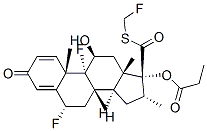
Fluticasone Dipropionate DEA controlled substance

别名: fluticasone; 90566-53-3; Fluticasona; Fluticasonum; Fluticaps; Fluticaps (TN); Fluticasone (INN); Fluticasone, Inhaled; 二丙酸氟替卡松
目录号: V41219
二丙酸氟替卡松 (Cutivate) 是一种吸入性皮质类固醇,用于治疗呼吸道疾病,如瘙痒、干燥、鳞屑、炎症和与过敏反应、湿疹、昆虫或虫咬等皮肤病相关的发红。
Fluticasone Dipropionate CAS号: 90566-53-3
产品类别: New1
产品仅用于科学研究,不针对患者销售
规格 价格
500mg
1g
Other Sizes

Other Forms of Fluticasone Dipropionate:

  • 丙酸氟替卡松
点击了解更多
InvivoChem产品被CNS等顶刊论文引用
产品描述
二丙酸氟替卡松 (Cutivate) 是一种吸入性皮质类固醇,用于治疗呼吸道疾病,如瘙痒、干燥、鳞屑、炎症和与过敏反应、湿疹、昆虫或虫咬等皮肤病相关的发红。
生物活性&实验参考方法
靶点
Corticosteroid; SMO
体外研究 (In Vitro)
氟替卡松(10-1000 nM,48 小时)可减少 HRV 诱导的粘蛋白形成,并参与 SPDEF 调节基因和细胞外 ATP 释放的调节 [3]。 Fluticasone(0-10 μM,2 小时)可抑制 U2OS 细胞的增殖,EC50 值为 99 nM[2]。
体内研究 (In Vivo)
氟替卡松(1 mg/kg;鼻内滴注;7 天)可减少鼻病毒引起的体内气道炎症,但也会抑制抗病毒免疫反应并增加病毒滴度,导致粘液分泌过多 [4]。
动物实验
Animal/Disease Models: C57BL/6 mice [4]
Doses: 1 mg/kg
Route of Administration: intranasal instillation; 1 hour before infection with rhinovirus 1B; 7 days
Experimental Results: Inhibition of BAL neutrophil numbers and inhibition of rhinovirus-induced airway inflammation.
药代性质 (ADME/PK)
Absorption, Distribution and Excretion
Intranasal exposure of [DB08906] results in patients swallowing a larger portion of the dose. However, absorption is poor and metabolism is high, therefore there is negligible systemic exposure with a nasal bioavailability of 0.50% and oral bioavialability of 1.26%. Inhaled bioavailability is 13.9%. A study of 24 healthy Caucasian males showed an inhaled bioavailability of 6.3-18.4%. Intranasal bioavailability of [DB00588] is <2%, and oral bioavailability is <1%. Intranasal exposure results in the majority of the dose being swallowed. Topical absorption of [DB00588] is very low but can change depending on a number of factors including integrity of the skin and the presence of inflammation or disease. A study of 24 healthy Caucasian males showed an inhaled bioavailability of 9.0%.
[DB08906] is eliminated ≥90% in the feces and 1-2% in the urine. [DB00588] is mainly eliminated in the feces with <5% eliminated in the urine.
608L at steady state for intravenous administration of [DB08906]. Other reports suggest the mean volume of distribution at steady state is 661L. A study of 24 healthy Caucasian males showed a volume of distribution at steady state of 704L following intravenous administration. The volume of distribution of intravenous [DB00588] is 4.2L/kg. A study of 24 healthy Caucasian males showed a volume of distribution at steady state of 577L following intravenous administration.
57.8L/h for [DB08906]. A study of 24 healthy Caucasian males showed a clearance of 71.8L/h following intravenous administration. 1093mL/min for [DB00588]. A study of 24 healthy Caucasian males showed a clearance of 63.9L/h following intravenous administration.
Fluticasone propionate is poorly absorbed from the respiratory and GI tracts following nasal inhalation of the drug as an aqueous spray. Based on indirect calculations, intranasal fluticasone propionate has an absolute systemic bioavailability of less than 2%. A major portion of an intranasal dose of corticosteroids is swallowed and undergoes extensive first-pass metabolism in the liver. In patients with allergic rhinitis receiving intranasal fluticasone propionate for 2-3 weeks, plasma concentrations were above the level of detection of the assay (50 pg/mL) only when recommended dosages were exceeded, and in those instances, only in occasional samples at low concentrations.
Limited data from studies in which radiolabeled fluticasone propionate has been administered orally indicate that the drug is poorly absorbed from the GI tract and undergoes rapid first-pass metabolism in the liver. Preliminary data from a dose-ranging study suggests that the amount of unchanged fluticasone propionate in plasma increases with dose following oral administration, but the bioavailability of the radiolabeled drug averaged about 1% or less after oral doses of 1-40 mg.
Following oral administration of 1 or 16 mg of radiolabeled propionylfluticasone in a few healthy individuals, peak plasma radioactivity levels (expressed as fluticasone propionate equivalents) averaging approximately 1.3 or 9.1 ng/mL, respectively, were achieved within 0.5-6 hours. Since no unchanged fluticasone propionate was detected in plasma for up to 6 hours after oral administration of unlabeled fluticasone propionate given on a separate occasion, the plasma radioactivity noted after administration of the radiolabeled drug was presumed to be fluticasone propionate metabolites. It has been suggested that the presence of small amounts (50-170 pg/mL) of fluticasone propionate in plasma from 6-24 hours after the dose in these individuals potentially may represent rectal reabsorption of unmetabolized drug.
The extent of percutaneous absorption of topical corticosteroids is determined by many factors, including the vehicle and the integrity of the epidermal barrier. Occlusive dressing enhances penetration. Topical corticosteroids can be absorbed from normal intact skin. Inflammation and/or other disease processes in the skin increase percutaneous absorption.
For more Absorption, Distribution and Excretion (Complete) data for Fluticasone (14 total), please visit the HSDB record page.
Metabolism / Metabolites
[DB08906] and [DB00588] are cleared from hepatic metabolism by cytochrome P450 3A4. Both are hydrolysed at the FIVE-S-fluoromethyl carbothioate group, forming an inactive metabolite.
Fluticasone propionate is rapidly metabolized in the liver by the cytochrome P-450 isoenzyme CYP3A4; the principal metabolite is the inactive 17beta-carboxylic acid derivative. ... Of the total radioactivity recovered in urine, 18% represented the inactive 17beta-carboxylic acid derivative of fluticasone propionate, 12% represented a less polar metabolite, and the remainder represented more polar metabolites. ... The 17beta-carboxylic acid metabolite of fluticasone propionate accounted for 3-40% of fecal excretion.
The inactive /17beta-carboxylic acid derivative/ had less affinity (approximately 1/2,000) than the parent drug for the glucocorticoid receptor of human lung cytosol in vitro and negligible pharmacological activity in animal studies. Other metabolites detected in vitro using cultured human hepatoma cells have not been detected in man.
No metabolites of fluticasone propionate were detected in an in vitro study of radiolabeled fluticasone propionate incubated in a human skin homogenate.
Biological Half-Life
15.1 hours for intranasal [DB08906] and 24 hours for the inhaled formulation. A study of 24 healthy Caucasian males showed a half life of 13.6 hours following intravenous administration and 17.3-23.9 hours followed inhalation. 7.8 hours for intravenous [DB00588]. A study of 24 healthy Caucasian males shows a half life of 14.0 hours following intravenous administration and 10.8 hours following inhalation.
Following intravenous dose of 1 mg in healthy volunteers, fluticasone propionate showed polyexponential kinetics and had an average terminal half-life of 7.2 hours (range, 3.2 to 11.2 hours).
The apparent elimination half-life of fluticasone propionate after iv administration is approximately 3 hours.
毒性/毒理 (Toxicokinetics/TK)
Effects During Pregnancy and Lactation
◉ Summary of Use during Lactation
Topical fluticasone has not been studied during breastfeeding. Since only extensive application of the most potent corticosteroids may cause systemic effects in the mother, it is unlikely that short-term application of topical corticosteroids would pose a risk to the breastfed infant by passage into breastmilk. However, it would be prudent to use the least potent drug on the smallest area of skin possible. It is particularly important to ensure that the infant's skin does not come into direct contact with the areas of skin that have been treated. Current guidelines allow topical corticosteroids to be applied to the nipples just after nursing for eczema, with the nipples cleaned gently before nursing. Only water-miscible cream or gel products should be applied to the breast because ointments may expose the infant to high levels of mineral paraffins via licking.
◉ Effects in Breastfed Infants
Topical application of a corticosteroid with relatively high mineralocorticoid activity (isofluprednone acetate) to the mother's nipples resulted in prolonged QT interval, cushingoid appearance, severe hypertension, decreased growth and electrolyte abnormalities in her 2-month-old breastfed infant. The mother had used the cream since birth for painful nipples.
◉ Effects on Lactation and Breastmilk
Relevant published information was not found as of the revision date.
◉ Summary of Use during Lactation
Although not measured, the amounts of inhaled corticosteroids absorbed into the maternal bloodstream and excreted into breastmilk are probably too small to affect a breastfed infant. Expert opinion considers inhaled, nasal and oral corticosteroids acceptable to use during breastfeeding. See also Fluticasone, Topical.
◉ Effects in Breastfed Infants
None reported with any corticosteroid.
◉ Effects on Lactation and Breastmilk
Relevant published information was not found as of the revision date.
Protein Binding
[DB08906] is >99% protein bound in serum and may be as high as 99.6%. [DB00588] is 99% protein bound in serum. Topical [DB00588] is only 91% protein bound in serum however.
Interactions
A drug interaction study in healthy subjects has shown that ritonavir (a highly potent cytochrome P450 3A4 inhibitor) can significantly increase plasma fluticasone propionate exposure, resulting in significantly reduced serum cortisol concentrations.
In a placebo-controlled crossover study in 8 healthy volunteers, coadministration of a single dose of orally inhaled fluticasone propionate with multiple doses of ketoconazole to steady state resulted in increased plasma fluticasone propionate exposure, a reduction in plasma cortisol AUC, and no effect on urinary excretion of cortisol. Caution should be exercised when fluticasone propionate is coadministered with ketoconazole and other known potent cytochrome P450 3A4 inhibitors.
参考文献

[1]. Thiazolidinediones inhibit airway smooth muscle release of the chemokine CXCL10: in vitro comparison with current asthma therapies. Respir Res. 2012 Oct 4. 13(1):90.

[2]. Identification of select glucocorticoids as Smoothened agonists: potential utility for regenerative medicine. Proc Natl Acad Sci U S A. 2010 May 18. 107(20):9323-8.

[3]. Tiotropium and Fluticasone Inhibit Rhinovirus-Induced Mucin Production via Multiple Mechanisms in Differentiated Airway Epithelial Cells. Front. Cell. Infect. Microbiol., 2020 Jun.

[4]. Effect of fluticasone propionate on virus-induced airways inflammation and anti-viral immune responses in mice. Lancet. 2015 Feb 26. 385(Suppl 1):S88.

其他信息
Therapeutic Uses
Androstadienes
Fluticasone propionate nasal spray is indicated for the management of the nasal symptoms of seasonal and perennial allergic and nonallergic rhinitis in adults and pediatric patients 4 years of age and older. /Included in US product label/
Fluticasone propionate cream is a medium potency corticosteroid indicated for the relief of the inflammatory and pruritic manifestations of corticosteroid-responsive dermatoses. Fluticasone propionate cream may be used with caution in pediatric patients 3 months of age or older. The safety and efficacy of drug use for longer than 4 weeks in this population have not been established. /Included in US product label/
Fluticasone propionate ointment is a medium potency corticosteroid indicated for the relief of the inflammatory and pruritic manifestations of corticosteroid-responsive dermatoses in adult patients. /Included in US product label/
For more Therapeutic Uses (Complete) data for Fluticasone (6 total), please visit the HSDB record page.
Drug Warnings
Intranasal fluticasone propionate generally is well tolerated. Adverse effects with intranasal fluticasone propionate therapy usually are mild and local and resolve without specific treatment. The manufacturer states that systemic corticosteroid effects were not reported with fluticasone nasal spray in controlled trials of up to 6 months' duration, but systemic effects (eg, growth suppression) have been reported with intranasal corticosteroids, including fluticasone propionate, during postmarketing experience.
The most frequent adverse effects of fluticasone propionate nasal spray involve the nasal mucous membranes. Epistaxis or sensations of nasal burning/irritation have been reported in 6-6.9 or 2.4-3.2%, respectively, of patients receiving fluticasone propionate (100-200 ug once daily) in controlled studies. These adverse effects usually are of short duration and rarely require changes in or discontinuance of therapy. Sensations of nasal burning may result from excipients in the commercially available preparation since the frequency and severity of these effects are similar in patients receiving an intranasal placebo vehicle with identical inactive ingredients. In addition, the similar occurrence of adverse nasal effects in fluticasone propionate- or placebo-treated patients with seasonal or perennial rhinitis may result from physical contact and irritation of the characteristically sensitive nasal passages of these patients. Pharyngitis or cough has been reported in 6-7.8 or 3.6-3.8%, respectively, of patients receiving the drug. Symptoms of asthma have occurred in 7.2 or 3.3% of those receiving 100 or 200 ug, respectively, of fluticasone propionate once daily.
Other adverse nasopharyngeal or respiratory effects occurring in 1-3% of patients receiving fluticasone propionate nasal spray include nasal secretions containing blood, nasal discharge, and bronchitis. Sneezing, rhinorrhea, sinusitis, sore throat, throat irritation and dryness, hoarseness, voice changes, alteration or loss of sense of taste and/or smell, nasal congestion or blockage, or nasal dryness has been reported in patients receiving fluticasone propionate nasal spray in controlled studies or during postmarketing surveillance. Nasal septum excoriation, ulceration, or nasal septum crusting also has been reported in patients receiving fluticasone propionate nasal spray. It has been suggested that nasal septum crusting, nasal dryness accompanied by nasal manipulation ("picking"), or nasal bleeding may predispose to the development of nasal perforation, which has been reported rarely with intranasal administration of corticosteroids, including fluticasone propionate. In 2 patients who experienced nasal perforation with fluticasone propionate, both had previous septal surgery that may have increased the risk of nasal perforation.
Localized candidal infections of the nose and/or pharynx have occurred rarely during fluticasone propionate therapy. If a candidal infection is suspected, appropriate local anti-infective therapy and/or discontinuance of intranasal corticosteroid therapy should be considered. Upper respiratory infection also has been reported with intranasal fluticasone propionate therapy, but a causal relationship to the drug has not been established
For more Drug Warnings (Complete) data for Fluticasone (41 total), please visit the HSDB record page.
Pharmacodynamics
Systemically, in vitro experiments show [DB08906] activates glucocorticoid receptors, inhibits nuclear factor kappa b, and inhibits lung eosinophilia in rats. [DB00588] performs similar activity but is not stated to affect nuclear factor kappa b. [DB00588] as a topical formulation is also associated with vasoconstriction in the skin.
*注: 文献方法仅供参考, InvivoChem并未独立验证这些方法的准确性
化学信息 & 存储运输条件
分子式
C22H27F3O4S
分子量
444.51
精确质量
500.184
元素分析
C, 59.45; H, 6.12; F, 12.82; O, 14.40; S, 7.21
CAS号
90566-53-3
相关CAS号
Fluticasone (propionate);80474-14-2
PubChem CID
5311101
外观&性状
Typically exists as solid at room temperature
密度
1.3±0.1 g/cm3
沸点
568.3±50.0 °C at 760 mmHg
熔点
-18.1ºC
闪点
297.5±30.1 °C
蒸汽压
0.0±3.5 mmHg at 25°C
折射率
1.556
LogP
3.73
tPSA
105.97
氢键供体(HBD)数目
2
氢键受体(HBA)数目
8
可旋转键数目(RBC)
3
重原子数目
30
分子复杂度/Complexity
861
定义原子立体中心数目
9
SMILES
C[C@@]12[C@@](O)(C(=O)SCF)[C@H](C)C[C@H]1[C@@H]1C[C@H](F)C3=CC(C=C[C@]3(C)[C@]1([C@H](C2)O)F)=O
InChi Key
MGNNYOODZCAHBA-GQKYHHCASA-N
InChi Code
InChI=1S/C22H27F3O4S/c1-11-6-13-14-8-16(24)15-7-12(26)4-5-19(15,2)21(14,25)17(27)9-20(13,3)22(11,29)18(28)30-10-23/h4-5,7,11,13-14,16-17,27,29H,6,8-10H2,1-3H3/t11-,13+,14+,16+,17+,19+,20+,21+,22+/m1/s1
化学名
S-(fluoromethyl) (6S,8S,9R,10S,11S,13S,14S,16R,17R)-6,9-difluoro-11,17-dihydroxy-10,13,16-trimethyl-3-oxo-6,7,8,11,12,14,15,16-octahydrocyclopenta[a]phenanthrene-17-carbothioate
别名
fluticasone; 90566-53-3; Fluticasona; Fluticasonum; Fluticaps; Fluticaps (TN); Fluticasone (INN); Fluticasone, Inhaled;
HS Tariff Code
2934.99.9001
存储方式

Powder      -20°C    3 years

                     4°C     2 years

In solvent   -80°C    6 months

                  -20°C    1 month

运输条件
Room temperature (This product is stable at ambient temperature for a few days during ordinary shipping and time spent in Customs)
溶解度数据
溶解度 (体外实验)
May dissolve in DMSO (in most cases), if not, try other solvents such as H2O, Ethanol, or DMF with a minute amount of products to avoid loss of samples
溶解度 (体内实验)
注意: 如下所列的是一些常用的体内动物实验溶解配方,主要用于溶解难溶或不溶于水的产品(水溶度<1 mg/mL)。 建议您先取少量样品进行尝试,如该配方可行,再根据实验需求增加样品量。

注射用配方
(IP/IV/IM/SC等)
注射用配方1: DMSO : Tween 80: Saline = 10 : 5 : 85 (如: 100 μL DMSO 50 μL Tween 80 850 μL Saline)
*生理盐水/Saline的制备:将0.9g氯化钠/NaCl溶解在100 mL ddH ₂ O中,得到澄清溶液。
注射用配方 2: DMSO : PEG300Tween 80 : Saline = 10 : 40 : 5 : 45 (如: 100 μL DMSO 400 μL PEG300 50 μL Tween 80 450 μL Saline)
注射用配方 3: DMSO : Corn oil = 10 : 90 (如: 100 μL DMSO 900 μL Corn oil)
示例: 注射用配方 3 (DMSO : Corn oil = 10 : 90) 为例说明, 如果要配制 1 mL 2.5 mg/mL的工作液, 您可以取 100 μL 25 mg/mL 澄清的 DMSO 储备液,加到 900 μL Corn oil/玉米油中, 混合均匀。
View More

注射用配方 4: DMSO : 20% SBE-β-CD in Saline = 10 : 90 [如:100 μL DMSO 900 μL (20% SBE-β-CD in Saline)]
*20% SBE-β-CD in Saline的制备(4°C,储存1周):将2g SBE-β-CD (磺丁基-β-环糊精) 溶解于10mL生理盐水中,得到澄清溶液。
注射用配方 5: 2-Hydroxypropyl-β-cyclodextrin : Saline = 50 : 50 (如: 500 μL 2-Hydroxypropyl-β-cyclodextrin (羟丙基环胡精) 500 μL Saline)
注射用配方 6: DMSO : PEG300 : Castor oil : Saline = 5 : 10 : 20 : 65 (如: 50 μL DMSO 100 μL PEG300 200 μL Castor oil 650 μL Saline)
注射用配方 7: Ethanol : Cremophor : Saline = 10: 10 : 80 (如: 100 μL Ethanol 100 μL Cremophor 800 μL Saline)
注射用配方 8: 溶解于Cremophor/Ethanol (50 : 50), 然后用生理盐水稀释。
注射用配方 9: EtOH : Corn oil = 10 : 90 (如: 100 μL EtOH 900 μL Corn oil)
注射用配方 10: EtOH : PEG300Tween 80 : Saline = 10 : 40 : 5 : 45 (如: 100 μL EtOH 400 μL PEG300 50 μL Tween 80 450 μL Saline)


口服配方
口服配方 1: 悬浮于0.5% CMC Na (羧甲基纤维素钠)
口服配方 2: 悬浮于0.5% Carboxymethyl cellulose (羧甲基纤维素)
示例: 口服配方 1 (悬浮于 0.5% CMC Na)为例说明, 如果要配制 100 mL 2.5 mg/mL 的工作液, 您可以先取0.5g CMC Na并将其溶解于100mL ddH2O中,得到0.5%CMC-Na澄清溶液;然后将250 mg待测化合物加到100 mL前述 0.5%CMC Na溶液中,得到悬浮液。
View More

口服配方 3: 溶解于 PEG400 (聚乙二醇400)
口服配方 4: 悬浮于0.2% Carboxymethyl cellulose (羧甲基纤维素)
口服配方 5: 溶解于0.25% Tween 80 and 0.5% Carboxymethyl cellulose (羧甲基纤维素)
口服配方 6: 做成粉末与食物混合


注意: 以上为较为常见方法,仅供参考, InvivoChem并未独立验证这些配方的准确性。具体溶剂的选择首先应参照文献已报道溶解方法、配方或剂型,对于某些尚未有文献报道溶解方法的化合物,需通过前期实验来确定(建议先取少量样品进行尝试),包括产品的溶解情况、梯度设置、动物的耐受性等。

请根据您的实验动物和给药方式选择适当的溶解配方/方案:
1、请先配制澄清的储备液(如:用DMSO配置50 或 100 mg/mL母液(储备液));
2、取适量母液,按从左到右的顺序依次添加助溶剂,澄清后再加入下一助溶剂。以 下列配方为例说明 (注意此配方只用于说明,并不一定代表此产品 的实际溶解配方):
10% DMSO → 40% PEG300 → 5% Tween-80 → 45% ddH2O (或 saline);
假设最终工作液的体积为 1 mL, 浓度为5 mg/mL: 取 100 μL 50 mg/mL 的澄清 DMSO 储备液加到 400 μL PEG300 中,混合均匀/澄清;向上述体系中加入50 μL Tween-80,混合均匀/澄清;然后继续加入450 μL ddH2O (或 saline)定容至 1 mL;

3、溶剂前显示的百分比是指该溶剂在最终溶液/工作液中的体积所占比例;
4、 如产品在配制过程中出现沉淀/析出,可通过加热(≤50℃)或超声的方式助溶;
5、为保证最佳实验结果,工作液请现配现用!
6、如不确定怎么将母液配置成体内动物实验的工作液,请查看说明书或联系我们;
7、 以上所有助溶剂都可在 Invivochem.cn网站购买。
制备储备液 1 mg 5 mg 10 mg
1 mM 2.2497 mL 11.2483 mL 22.4967 mL
5 mM 0.4499 mL 2.2497 mL 4.4993 mL
10 mM 0.2250 mL 1.1248 mL 2.2497 mL

1、根据实验需要选择合适的溶剂配制储备液 (母液):对于大多数产品,InvivoChem推荐用DMSO配置母液 (比如:5、10、20mM或者10、20、50 mg/mL浓度),个别水溶性高的产品可直接溶于水。产品在DMSO 、水或其他溶剂中的具体溶解度详见上”溶解度 (体外)”部分;

2、如果您找不到您想要的溶解度信息,或者很难将产品溶解在溶液中,请联系我们;

3、建议使用下列计算器进行相关计算(摩尔浓度计算器、稀释计算器、分子量计算器、重组计算器等);

4、母液配好之后,将其分装到常规用量,并储存在-20°C或-80°C,尽量减少反复冻融循环。

计算器

摩尔浓度计算器可计算特定溶液所需的质量、体积/浓度,具体如下:

  • 计算制备已知体积和浓度的溶液所需的化合物的质量
  • 计算将已知质量的化合物溶解到所需浓度所需的溶液体积
  • 计算特定体积中已知质量的化合物产生的溶液的浓度
使用摩尔浓度计算器计算摩尔浓度的示例如下所示:
假如化合物的分子量为350.26 g/mol,在5mL DMSO中制备10mM储备液所需的化合物的质量是多少?
  • 在分子量(MW)框中输入350.26
  • 在“浓度”框中输入10,然后选择正确的单位(mM)
  • 在“体积”框中输入5,然后选择正确的单位(mL)
  • 单击“计算”按钮
  • 答案17.513 mg出现在“质量”框中。以类似的方式,您可以计算体积和浓度。

稀释计算器可计算如何稀释已知浓度的储备液。例如,可以输入C1、C2和V2来计算V1,具体如下:

制备25毫升25μM溶液需要多少体积的10 mM储备溶液?
使用方程式C1V1=C2V2,其中C1=10mM,C2=25μM,V2=25 ml,V1未知:
  • 在C1框中输入10,然后选择正确的单位(mM)
  • 在C2框中输入25,然后选择正确的单位(μM)
  • 在V2框中输入25,然后选择正确的单位(mL)
  • 单击“计算”按钮
  • 答案62.5μL(0.1 ml)出现在V1框中
g/mol

分子量计算器可计算化合物的分子量 (摩尔质量)和元素组成,具体如下:

注:化学分子式大小写敏感:C12H18N3O4  c12h18n3o4
计算化合物摩尔质量(分子量)的说明:
  • 要计算化合物的分子量 (摩尔质量),请输入化学/分子式,然后单击“计算”按钮。
分子质量、分子量、摩尔质量和摩尔量的定义:
  • 分子质量(或分子量)是一种物质的一个分子的质量,用统一的原子质量单位(u)表示。(1u等于碳-12中一个原子质量的1/12)
  • 摩尔质量(摩尔重量)是一摩尔物质的质量,以g/mol表示。
/

配液计算器可计算将特定质量的产品配成特定浓度所需的溶剂体积 (配液体积)

  • 输入试剂的质量、所需的配液浓度以及正确的单位
  • 单击“计算”按钮
  • 答案显示在体积框中
动物体内实验配方计算器(澄清溶液)
第一步:请输入基本实验信息(考虑到实验过程中的损耗,建议多配一只动物的药量)
第二步:请输入动物体内配方组成(配方适用于不溶/难溶于水的化合物),不同的产品和批次配方组成不同,如对配方有疑问,可先联系我们提供正确的体内实验配方。此外,请注意这只是一个配方计算器,而不是特定产品的确切配方。
+
+
+

计算结果:

工作液浓度 mg/mL;

DMSO母液配制方法 mg 药物溶于 μL DMSO溶液(母液浓度 mg/mL)。如该浓度超过该批次药物DMSO溶解度,请首先与我们联系。

体内配方配制方法μL DMSO母液,加入 μL PEG300,混匀澄清后加入μL Tween 80,混匀澄清后加入 μL ddH2O,混匀澄清。

(1) 请确保溶液澄清之后,再加入下一种溶剂 (助溶剂) 。可利用涡旋、超声或水浴加热等方法助溶;
            (2) 一定要按顺序加入溶剂 (助溶剂) 。

临床试验信息
REACH Study
CTID: jRCTs041220003
Status: Not Recruiting
Date: 2022-04-14
Comparative efficacy of fluticasone furoate/umeclidinium/vilanterol(FF/UMEC/VI)versus budesonide/glycopyrrolate/formoterol fumarate(B/G/F) therapies in COPD patients
CTID: UMIN000041089
Status: Complete: follow-up complete
Date: 2020-07-14
Inhibition of virus induced Aggravation of childhood asthma by Salmeterol/Fluticasone Propionate Combination(SFC)
CTID: jRCTs031180304
Status: Recruiting
Date: 2019-03-15
A Randomised, Double-blind, Parallel Group, Multicentre, Stratified, Study Evaluating the Efficacy and Safety of Once Daily Fluticasone Furoate/Vilanterol Inhalation Powder Compared to Once Daily Fluticasone Furoate Inhalation Powder in the Treatment of Asthma in Participants Aged 5 to 17 Years Old (Inclusive) Currently Uncontrolled on Inhaled Corticosteroids
CTID: jRCT2080223880
Status: completed
Date: 2018-04-20
None
CTID: jRCT2080223736
Status: completed
Date: 2017-11-29
相关产品
联系我们