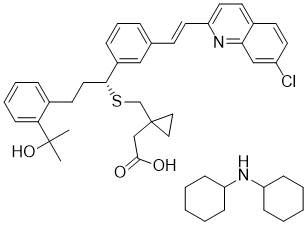
Montelukast Dicyclohexylamine

别名: Montelukast dicyclohexylamine; Montelukast Dicyclohexylamine Salt; 577953-88-9; Montelukast (dicyclohexylamine); Montelukast dicyclohexylamine; 2-[1-[[(1R)-1-[3-[(E)-2-(7-chloroquinolin-2-yl)ethenyl]phenyl]-3-[2-(2-hydroxypropan-2-yl)phenyl]propyl]sulfanylmethyl]cyclopropyl]acetic acid;N-cyclohexylcyclohexanamine; Montelukast DCHA; Montelukastdicyclohexylamine; SCHEMBL919528; MK0476 dicyclohexylamine 孟鲁司特二环己胺;N-(7-硝基-2,1,3-苯并恶二唑-4-基)-D-脯氨酰氯;孟鲁司特二环己胺R-对映体;孟鲁司特钠二环己基胺;孟鲁司特外消旋体;孟鲁司特消旋体;孟鲁司特消旋体 EP标准品;孟鲁斯特二环己胺盐;消旋孟鲁司特二环己胺;孟鲁司特二环己基胺盐
目录号: V41728 纯度: ≥98%
Montelukast (MK0476) dicyclohexylamine 是一种有效的、选择性的、具有口服生物活性的半胱氨酸白三烯受体 1 (CysLT1) 拮抗剂。
Montelukast Dicyclohexylamine CAS号: 577953-88-9
产品类别: Leukotriene Receptor
产品仅用于科学研究,不针对患者销售
规格 价格 库存 数量
500mg
1g
2g
5g
Other Sizes

Other Forms of Montelukast Dicyclohexylamine:

  • 孟鲁司特钠
  • Dihydro montelukast
  • α-Hydroxy Montelukast
  • 孟鲁司特
点击了解更多
InvivoChem产品被CNS等顶刊论文引用
产品描述
Montelukast (MK0476) dicyclohexylamine 是一种有效的、选择性的、具有口服生物活性的半胱氨酸白三烯受体 1 (CysLT1) 拮抗剂。孟鲁司特二环己胺正在研究预防哮喘和肝损伤。孟鲁司特二环己胺在肠道缺血再灌注损伤中也具有抗氧化作用,还可以减少心脏损伤。孟鲁司特二环己胺可减少哮喘气道中的嗜酸性粒细胞浸润。孟鲁司特二环己胺也可用于 COVID-19 研究。
生物活性&实验参考方法
靶点
CysLT1 (cysteinyl leukotriene receptor 1)
体外研究 (In Vitro)
Montelukast(5 μM;1 小时)可抑制 APAP(对乙酰氨基酚)诱导的细胞损伤[1]。孟鲁司特(0.01-10 μM;30 分钟)可减少 5-oxo-ETE 诱导的细胞迁移并调节纤溶酶-纤溶酶原系统的激活[3]。 Montelukast(10 μM;18 小时)调节 MMP-9 的激活[3]。细胞迁移测定 [3] 细胞系:嗜酸性粒细胞 浓度:0.01-10 μM 孵育时间:30 分钟 结果:减少 5-oxo-ETE 诱导的细胞迁移。蛋白质印迹分析[3] 细胞系:嗜酸性粒细胞浓度:10 μM 孵育时间:18 小时 结果:减少 5-oxo-ETE 促进的 MMP-9 分泌。
体内研究 (In Vivo)
孟鲁司特(3 mg/kg;口服强饲)可预防小鼠 APAP 诱导的肝毒性[1]。孟鲁司特(1 mg/kg;微渗泵给药)可减少 OVA 治疗小鼠中观察到的气道重塑变化,并阻断 CysLT1 受体介导的半胱氨酰白三烯 (LT) C4、D4 和 E4 的作用[2]。孟鲁司特(1 mg/kg;微渗泵给药)可降低 OVA 治疗小鼠 BAL 液中升高的 IL-4 和 IL-13 水平[2]。动物模型:C57BL/6J 小鼠(8 周龄;22-25 g)诱导急性肝损伤[1] 剂量:3 mg/kg 给药方法:生理盐水或 APAP 给药后 1 小时口服灌胃 结果:血清中丙氨酸转氨酶(ALT)和天冬氨酸转氨酶(AST),并减轻肝脏损伤。
酶活实验
孟鲁司特和MK-0591降低了5-氧代-ETE促进的嗜酸性粒细胞迁移,而LTD(4)未能诱导嗜酸性粒细胞核迁移。然而,LTD(4)显著提高了用次优浓度的5-氧代-ETE获得的迁移速率,并部分逆转了用MK-0591获得的抑制作用。孟鲁司特显著降低了用5-氧代-ETE获得的嗜酸性粒细胞将纤溶酶原活化为纤溶酶的最大速率。5-Oxo-ETE增加了表达尿激酶纤溶酶原激活物受体的嗜酸性粒细胞的数量,并刺激了MMP-9的分泌。孟鲁司特,但MK-0591和LTD(4)均未降低尿激酶纤溶酶原激活剂受体的表达和MMP-9的分泌,并增加尿激酶纤溶酶原活化剂的总细胞活性和纤溶酶原激活物抑制剂2mRNA的表达[3]。
细胞实验
细胞系:嗜酸性粒细胞浓度:0.01-10 μM 孵育时间:30 分钟结果:减少 5-oxo-ETE 诱导的细胞迁移。
动物实验
C57BL/6J mice (8-week-old; 22-25 g) are induced acute hepatic injury
3 mg/kg
Oral gavage 1 h after saline or APAP administration
药代性质 (ADME/PK)
Absorption, Distribution, and Excretion
Absorption
Montelukast is observed to be rapidly absorbed after oral administration. The oral bioavailability of this drug is 64%. Furthermore, it appears that normal morning meals or high-fat snacks in the evening do not affect the absorption of montelukast.
Excretion Route
Montelukast and its metabolites are reported to be almost entirely excreted via bile and feces.
Volume of Distribution
The steady-state volume of distribution of montelukast is on average 8 to 11 liters.
Clearance
The average plasma clearance of montelukast observed in healthy adults is 45 mL/min.
Montelukast is rapidly absorbed from the gastrointestinal tract. After oral administration of a single 10 mg film-coated tablet (adult), 5 mg chewable tablet (adult), or 4 mg chewable tablet (child) on an empty stomach, peak plasma concentrations are reached in 3–4 hours, 2–2.5 hours, or 2 hours, respectively. (For children aged 2–5 years) tablets. …When taking the 4 mg oral granules in the morning, consuming a high-fat meal had no effect on the AUC of montelukast; however, the time to peak plasma concentration was prolonged from 2.3 hours to 6.4 hours, and the peak plasma concentration decreased by 35%. Montelukast is rapidly absorbed. The mean oral bioavailability of the 10 mg tablets is 64%. A standard morning meal does not affect bioavailability. For the 5 mg chewable tablets: the mean oral bioavailability on an empty stomach is 73%, while it is 63% when taken with a standard meal in the morning.
View More

In fasting young adults, after daily oral administration of 10 mg montelukast for 7 consecutive days, the mean peak plasma concentration on day 1 was 541 ng/mL, and the mean peak plasma concentration on day 7 was 602.8 ng/mL. The trough concentrations remained relatively stable from day 3 to day 7, ranging from 18 to 24 ng/mL. In this study, the area under the steady-state plasma concentration-time curve (AUC) was approximately 14-15% higher than that after a single dose, and this was achieved within 2 days.
The pharmacokinetics of montelukast are nearly linear at doses up to 50 mg.


For more complete data on absorption, distribution, and excretion of montelukast (15 items in total), please visit the HSDB record page.
Metabolism/Metabolites
Montelukast has been identified as actively metabolized, typically by cytochrome P450 3A4, 2C8, and 2C9 isoenzymes. In particular, the CYP2C8 enzyme appears to play a significant role in drug metabolism. However, at therapeutic doses, plasma concentrations of montelukast metabolites are undetectable in both adult and pediatric patients at steady state.
Biotransformation occurs primarily in the liver, involving cytochrome P450 3A4 and 2C9.
The metabolic pathways of montelukast are not fully understood, but the drug is extensively metabolized in the gastrointestinal tract and/or liver and excreted via bile. Multiple metabolic pathways have been identified, including acyl glucuronidation and oxidation catalyzed by various cytochrome P-450 (CYP) isoenzymes. In vitro studies have shown that the microsomal P-450 isoenzyme CYP3A4 is the major enzyme in the formation of the 21-hydroxy metabolite (M5) and the sulfoxide metabolite (M2), while CYP2C9 is the major isoenzyme in the formation of the 36-hydroxy metabolite (M6). Other identified metabolites include acylglucuronide (M1) and a 25-hydroxy (phenolic, M3) analog. Following oral administration of 54.8 mg of radiolabeled montelukast, drug metabolites account for less than 2% of circulating radioactivity. In radiolabeling studies, montelukast metabolites identified in plasma include 21-hydroxy (benzyl acid diastereomers, M5a and M5b) metabolites and 36-hydroxy (methanol diastereomers, M6a and M6b) metabolites. Following oral administration of a therapeutic dose of montelukast, steady-state plasma metabolite concentrations in both adults and children were below the limit of detection.
The known metabolites of montelukast include 21-hydroxymontelukast, 21(S)-hydroxymontelukast, montelukast 1,2-diol, and montelukast sulfoxide.
Biological Half-Life
Studies have shown that the mean plasma half-life of montelukast in healthy young adults is 2.7 to 5.5 hours.
The mean plasma elimination half-life of montelukast in adults aged 19–48 years is 2.7–5.5 hours, with a mean plasma clearance of 45 mL/min. The plasma elimination half-life in children aged 6–14 years is 3.4–4.2 hours. Limited data suggest that the plasma elimination half-life of montelukast is slightly prolonged in older adults and patients with mild to moderate hepatic impairment, but no dose adjustment is required. The plasma elimination half-lives in older adults aged 65–73 years and patients with mild to moderate hepatic impairment have been reported to be 6.6 hours and 7.4 hours, respectively.
毒性/毒理 (Toxicokinetics/TK)
Hepatotoxicity
In clinical trials, mild elevations in serum transaminase (ALT) levels were observed in 1% to 2% of patients taking montelukast long-term, but a similar incidence was reported in the matched placebo group. ALT abnormalities are usually mild, asymptomatic, and self-limiting. Clinically significant liver injury caused by montelukast is rare, but a dozen cases have been reported in the literature. In these cases, the latency period of liver injury varies greatly, ranging from days to years. Patients present with anorexia, nausea, right upper quadrant pain, dark urine, and jaundice. The pattern of enzyme elevation is usually mixed, but hepatocellular or cholestatic patterns have also been reported. Allergic reactions and autoantibody formation are rare. Eosinophilia is common, but this may be due to an underlying allergic disease rather than liver injury. After discontinuation of the drug, the injury usually resolves within 1 to 4 months.
Probability score: B (Rare but likely a cause of clinically significant liver injury).
Effects during pregnancy and lactation
◉ Overview of medication use during lactation
Montallukast is present in extremely low amounts in breast milk. Montelukast is approved for use in infants 6 months and older and has been used in newborns at doses far higher than those found in breast milk. It is expected that the dose ingested by breastfed infants will not cause any adverse effects. International guidelines consider leukotriene receptor antagonists to be safe for use during lactation.
◉ Effects on breastfed infants
As of the revision date, no relevant published information was found.
◉ Effects on lactation and breast milk
As of the revision date, no relevant published information was found.
View More

◈ What is Montelukast?
Montalukast is a medication used to treat asthma and allergies. Montelukast works by blocking a group of chemicals in the body called leukotrienes. Leukotrienes cause airway inflammation (swelling), which can lead to difficulty breathing. Montelukast is used to help control allergy symptoms and reduce the risk of asthma attacks, but it cannot stop asthma attacks. Montelukast is marketed under the brand name Singulair®. Sometimes, when people find out they are pregnant, they may consider changing their medication regimen or even stopping it entirely. However, it is essential to consult your healthcare provider before changing your medication regimen. Your healthcare provider can discuss with you the benefits of treating your condition and the risks of not treating it during pregnancy. It is important to consider the benefits of controlling asthma symptoms during pregnancy. Untreated asthma increases the risk of complications for both the pregnant woman and the fetus. For more information, please see the asthma information sheet on the MotherToBaby website: https://mothertobaby.org/fact-sheets/asthma-and-pregnancy/.
◈ I am taking montelukast. Will taking montelukast affect my pregnancy?
There are currently no human studies confirming that montelukast affects pregnancy. Animal studies have shown that it has no effect on fertility.
◈ Does taking montelukast increase the risk of miscarriage?
Miscarriage can occur in any pregnancy. Based on the reviewed studies, it is unclear whether montelukast increases the risk of miscarriage. One study showed that taking montelukast during pregnancy does not increase the miscarriage rate.
◈ Does taking montelukast increase the risk of birth defects?
There is a 3-5% risk of birth defects in every pregnancy, known as background risk. The manufacturer of montelukast reported that use of montelukast during pregnancy may be associated with limb defects (problems with fingers, toes, arms, or legs). However, only six cases of limb defects were reported. The types of limb defects mentioned in the reports were different, indicating that they were not caused by the same reason (such as exposure to a specific drug). Furthermore, these children were exposed to other medications during pregnancy. The montelukast label states that these reports do not confirm that use of montelukast during pregnancy caused the reported limb defects. A review of medical records from thousands of pregnancies with alleged exposure to montelukast found no increased risk of limb defects or other birth defects. Other studies analyzing a total of over 200 pregnancies with exposure to montelukast also found no increased risk of birth defects. In conclusion, based on the reviewed studies, use of montelukast during pregnancy is not expected to increase the risk of birth defects above the background risk.
◈ Does use of montelukast during pregnancy increase the risk of other pregnancy-related problems? Some studies report that montelukast use during pregnancy may lead to complications such as low birth weight, preterm birth (delivery before 37 weeks of gestation), and preeclampsia (a condition that can cause high blood pressure and proteinuria in pregnant women). However, these complications may also be due to worsening or poor control of asthma, rather than montelukast itself. Patients in these studies who needed montelukast typically had severe asthma and sometimes required multiple medications. It is currently unclear whether the reported complications are caused by montelukast, worsening or poor control of asthma, or other factors. One study found no difference in birth weight between infants taking montelukast and those taking other asthma medications. ◈ Will montelukast use during pregnancy affect a child's future behavior or learning abilities? Currently, no studies have explored whether montelukast causes behavioral or learning problems in children. ◈ Breastfeeding while taking montelukast: A small amount of montelukast will pass into breast milk. A study found that breastfed infants may ingest less of the drug through breast milk than the dose used to treat the infant directly. Generally, no special precautions are needed when taking montelukast while breastfeeding. Always consult your healthcare provider about all breastfeeding-related questions.
◈ Does taking montelukast affect fertility (the ability to impregnate a partner) or increase the risk of birth defects?
Currently, no studies have explored whether montelukast affects human fertility or increases the risk of birth defects. Animal studies have shown that montelukast has no effect on fertility. Generally, exposure to the father or sperm donor is unlikely to increase the risk of pregnancy. For more information, please see the MotherToBaby website's information sheet on paternal exposure to montelukast: https://mothertobaby.org/fact-sheets/paternal-exposures-pregnancy/.


Drug Interactions
Concomitant use of phenobarbital results in a significant decrease in the area under the curve (AUC) of montelukast (approximately 40%) and induces hepatic metabolism…Thomson/Micromedex. Medical Information for Healthcare Professionals, Vol. 1, Greenwood Village, Colorado, 2007, p. 2030. This study aimed to evaluate whether clinically used dose levels of montelukast interfered with the anticoagulant effect of warfarin. In a two-cycle, double-blind, randomized crossover study, 12 healthy male subjects received a single oral dose of 30 mg warfarin on day 7 of a 12-day montelukast treatment regimen, or montelukast 10 mg orally daily, or placebo. Montelukast had no significant effect on the area under the plasma concentration-time curve (AUC) or peak plasma concentration of either R-warfarin or S-warfarin. However, in the presence of montelukast, a slight but statistically significant reduction was observed in the time to peak concentration of both warfarin enantiomers and the elimination half-life of the less potent R-warfarin. These changes were considered clinically insignificant. Montelukast had no significant effect on the anticoagulant effect of warfarin, as assessed by the international normalized ratio of prothrombin time (INR) (AUC 0-144 and maximum INR). The results of this study indicate that clinically significant drug interactions are unlikely to occur in patients requiring concurrent use of these two medications.
Protein Binding
Montelukast has been determined to bind to plasma proteins at a rate exceeding 99%.

参考文献

[1]. Montelukast Prevents Mice Against Acetaminophen-Induced Liver Injury. Front Pharmacol. 2019 Sep 18; 10:1070.

[2]. A role for cysteinyl leukotrienes in airway remodeling in a mouse asthma model. Am J Respir Crit Care Med. 2002 Jan 1; 165(1): 108-16.

[3]. Montelukast regulates eosinophil protease activity through a leukotriene-independent mechanism. J Allergy Clin Immunol. 2006;118(1):113-119.

[4]. Montelukast in hospitalized patients diagnosed with COVID-19. J Asthma. 2022 Apr;59(4):780-786.

其他信息
Montelukast belongs to the quinoline class of compounds, monocarboxylic acids, and aliphatic sulfides. It is a leukotriene antagonist with pharmacological effects of anti-asthma and antiarrhythmia. It is the conjugate acid of montelukast (1-). Montelukast was first approved for clinical use by the US FDA in 1998, and Merck's brand name is Singulair. This drug belongs to the class of leukotriene receptor antagonists (LTRAs). Although LTRAs such as montelukast have shown efficacy, they are usually used as adjunctive or complementary medications in combination with inhaled corticosteroids or other drugs in the asthma ladder. Nevertheless, in 2008-2009, the US Food and Drug Administration (FDA) led an investigation into the potential neuropsychiatric side effects of montelukast, such as agitation, hallucinations, and suicidal behavior. Although these side effects are now listed in the official prescribing information for montelukast, the drug is still widely used globally, with millions of prescriptions issued annually, and generic and brand-name versions are currently available. Montelukast is a leukotriene receptor antagonist. Its mechanism of action is as a leukotriene receptor antagonist. Montelukast is an oral leukotriene receptor antagonist widely used for the prevention and chronic treatment of asthma, but it has been reported to be associated with rare cases of clinical liver injury. Montelukast is a selective cysteyl leukotriene receptor antagonist with anti-inflammatory and bronchodilatory effects. After administration, montelukast selectively and competitively blocks the cysteyl leukotriene 1 (CysLT1) receptor, thereby preventing the binding of the inflammatory mediator leukotriene D4 (LTD4). Inhibition of LTD4 activity suppresses leukotriene-mediated inflammatory events, including eosinophil and neutrophil migration, leukocyte adhesion to vascular endothelium, monocyte and neutrophil aggregation, increased airway edema, increased capillary permeability, and bronchoconstriction. CysLT1 receptors are present in a variety of tissues, including the spleen, lungs, placenta, small intestine, and nasal mucosa, and in a variety of cell types, including monocytes/macrophages, mast cells, eosinophils, CD34-positive hematopoietic progenitor cells, neutrophils, and endothelial cells.
View More

Drug Indications
Montallukast is indicated for: (a) prevention and chronic treatment of asthma in adults and children 12 months and older, although other regional health authorities have specifically noted that this indication is also applicable to adults and children. (a) For use in adolescents aged 15 years and older, including prevention of daytime and nighttime symptoms, and treatment of acetylsalicylic acid-sensitive asthma; (b) for prevention of exercise-induced bronchoconstriction (EIB) in patients aged 6 years and older, although other regional health authorities specifically state that this indication is for adults and adolescents aged 15 years and older; (c) for relief of seasonal allergic rhinitis symptoms in patients aged 2 years and older and perennial allergic rhinitis symptoms in patients aged 6 months and older, although other regional health authorities specifically state that this indication is for adults and adolescents aged 15 years and older. In addition, certain formulations, such as chewable montelukast tablets, may be specifically approved by certain regulatory agencies for the prevention and chronic treatment of asthma, including prevention of daytime and nighttime symptoms, treatment of acetylsalicylic acid-induced asthma, and prevention of exercise-induced bronchoconstriction in adults and children aged 2 years and older, 2 to 5 years, or 6 to 14 years. Furthermore, when used for the above indications, montelukast monotherapy or in combination with other medications used for maintenance treatment of chronic asthma is considered effective. For example, montelukast and inhaled corticosteroids can be used concurrently to enhance asthma control or to reduce the required dose of inhaled corticosteroids while maintaining clinical stability. Furthermore, for patients with persistent asthma symptoms, montelukast can be used in combination with short-acting β2-agonists, inhaled corticosteroids, or inhaled corticosteroids combined with long-acting β2-agonists as needed.


Therapeutic Uses
Antiasthmatic; Leukotriene Antagonist
Montalukast is indicated for the prevention and chronic treatment of asthma in adults and children 12 months and older. /US Product Label Includes/
Drug Warnings
Headache is the most common adverse reaction to montelukast, occurring in 18-19% of children aged 6 years and older, adolescents, and adults. Headache has been reported in at least 2% of asthmatic children aged 2-8 years receiving montelukast; and in at least 1% (and at a higher rate than in the placebo group) of asthmatic adults and adolescents aged 15 years and older receiving montelukast. In adults and adolescents aged 15 years and older with perennial allergic rhinitis treated with montelukast, sinus headache occurred in at least 1% of patients, with a higher incidence than in the placebo group. In clinical studies, approximately 1.8–1.9% of patients aged 15 years and older experienced dizziness or weakness/fatigue after treatment with this drug. Additionally, reports indicate that this drug may cause abnormal dreams, hallucinations, agitation (including aggressive behavior), paresthesia/hypopnea, somnolence, insomnia, irritability, or restlessness. Reports of seizures are very rare. In patients aged 15 years and older treated with montelukast, abdominal pain occurred in 2.9% of cases. In this age group, dyspepsia, infectious gastroenteritis, and toothache were reported in 2.1%, 1.5%, and 1.7% of cases, respectively. In children aged 6–14 years treated with montelukast, at least 2% reported diarrhea or nausea. In children aged 2–5 years with asthma, at least 2% reported abdominal pain, diarrhea, and gastroenteritis, with an incidence higher than in the placebo group. In children aged 6–8 years with asthma, at least 2% reported gastroenteritis, with an incidence higher than in the placebo group. Post-marketing surveillance data showed that montelukast treatment may also cause adverse reactions such as nausea, vomiting, dyspepsia, pancreatitis (rare), and diarrhea.
Pharmacodynamics
Montelukast is a leukotriene receptor antagonist with significant affinity and selectivity for cysteyl leukotriene receptor type 1, superior to many other important airway receptors, such as prostaglandin receptors, cholinergic receptors, or β-adrenergic receptors. Therefore, even at doses as low as 5 mg, it can significantly block LTD4 leukotriene-mediated bronchoconstriction. Furthermore, a placebo-controlled crossover study (n=12) showed that montelukast inhibited early and late bronchoconstriction induced by antigen stimulation by 75% and 57%, respectively. Of particular note is that literature documents indicate montelukast can induce bronchodilation within 2 hours of oral administration. This effect can also be additive with the bronchodilation effect produced by co-administration of β-receptor agonists. However, clinical studies in adults aged 15 years and older have shown that daily administration of more than 10 mg of montelukast does not provide additional clinical benefit. Furthermore, in clinical trials involving asthmatic patients aged 6 to 14 years, it was found that during double-blind treatment, montelukast reduced the median peripheral blood eosinophil count by approximately 13% to 15% compared to placebo. Simultaneously, in patients aged 15 years and older with seasonal allergic rhinitis, montelukast also reduced the median peripheral blood eosinophil count by 13% compared to placebo. Mechanism of Action: Cysteinyl leukotrienes (CysLTs), such as LTC4, LTD4, and LTE4, are eicosate compounds released by various cells, including mast cells and eosinophils. When these CysLTs bind to their corresponding CysLT receptors (such as CysLT type 1 receptors) located on respiratory smooth muscle cells, airway macrophages, and various pro-inflammatory cells (such as eosinophils and certain specific myeloid stem cells), they stimulate activity that promotes the pathophysiological processes of asthma and allergic rhinitis. Specifically, CysLT-mediated effects such as airway bronchoconstriction, mucus secretion obstruction, increased vascular permeability, and eosinophil recruitment all contribute to the development of asthma. On the other hand, in allergic rhinitis, the nasal mucosa releases CysLTs upon exposure to allergens during the early and late reactions, and these releases participate in inducing symptoms of allergic rhinitis, such as nasal congestion and airway obstruction. Montelukast, a leukotriene receptor antagonist, binds with high affinity and selectivity to CysLT type 1 receptors, thereby inhibiting any physiological effects of CysLTs (such as LTC4, LTD4, and LTE4) on the receptors, which may promote the development of asthma or allergic rhinitis. Montelukast inhibits bronchoconstriction induced by antigen stimulation. Montelukast is a selective leukotriene receptor antagonist that antagonizes the cysteyl leukotriene (CysLT1) receptor. Cysteine leukotrienes (LTC4, LTD4, LTE4) are products of arachidonic acid metabolism, released by various cells, including mast cells and eosinophils. They bind to cysteyl leukotriene receptors (CysLT) present in the human respiratory tract. The binding of cysteyl leukotrienes to leukotriene receptors is closely related to the pathophysiological processes of asthma, including airway edema, smooth muscle contraction, and altered cellular activity associated with inflammatory processes, all of which contribute to the signs and symptoms of asthma. Montelukast binds to the CysLT1 receptor with high affinity and selectivity, preferentially binding to CysLT1 rather than other pharmacologically significant airway receptors, such as prostaglandin receptors, cholinergic receptors, or β-adrenergic receptors. Montelukast inhibits the physiological effects of LTD4 on CysLT1 receptors without any agonist activity. Thomson/Micromedex, Pharmaceutical Information for Healthcare Professionals, Vol. 1, Greenwood Village, Colorado, 2007, p. 2029.
Due to the role of leukotrienes in the pathogenesis of asthma, modulating leukotriene activity can be used to alleviate airway symptoms, reduce bronchial smooth muscle tone, and improve asthma control. Inhibition of leukotriene-mediated effects can be achieved by blocking 5-lipoxygenase activity and inhibiting leukotriene production (e.g., zileutone) or by antagonizing leukotriene activity at specific airway receptor sites (e.g., montelukast, zafirlukast). Montelukast's antagonistic activity is selective, competitive, and reversible. Montelukast competitively inhibits the action of LTD4 on the CysLT receptor subset (CysLT1) in airway smooth muscle. In vitro studies have shown that montelukast has a similar affinity for the CysLT1 receptor as LTD4. In vitro studies showed that montelukast antagonized LTD4-induced contraction of isolated animal smooth muscle, but not LTC4-induced contraction. Animal experiments demonstrated that montelukast antagonized respiratory smooth muscle contraction induced by LTD4 or the antigen.
*注: 文献方法仅供参考, InvivoChem并未独立验证这些方法的准确性
化学信息 & 存储运输条件
分子式
C47H59CLN2O3S
分子量
767.50096
精确质量
766.393
CAS号
577953-88-9
相关CAS号
Montelukast sodium; 151767-02-1; Montelukast; 158966-92-8
PubChem CID
16202490
外观&性状
White to off-white solid powder
熔点
65-67°C (lit.)
LogP
12.58
tPSA
107.75
氢键供体(HBD)数目
3
氢键受体(HBA)数目
6
可旋转键数目(RBC)
14
重原子数目
54
分子复杂度/Complexity
1010
定义原子立体中心数目
1
SMILES
CC(C)(C1=CC=CC=C1CC[C@H](C2=CC=CC(=C2)/C=C/C3=NC4=C(C=CC(=C4)Cl)C=C3)SCC5(CC5)CC(=O)O)O.C1CCC(CC1)NC2CCCCC2
InChi Key
ZLOLVGQQYDQBMP-HKHDRNBDSA-N
InChi Code
InChI=1S/C35H36ClNO3S.C12H23N/c1-34(2,40)30-9-4-3-7-25(30)13-17-32(41-23-35(18-19-35)22-33(38)39)27-8-5-6-24(20-27)10-15-29-16-12-26-11-14-28(36)21-31(26)37-29;1-3-7-11(8-4-1)13-12-9-5-2-6-10-12/h3-12,14-16,20-21,32,40H,13,17-19,22-23H2,1-2H3,(H,38,39);11-13H,1-10H2/b15-10+;/t32-;/m1./s1
化学名
2-[1-[[(1R)-1-[3-[(E)-2-(7-chloroquinolin-2-yl)ethenyl]phenyl]-3-[2-(2-hydroxypropan-2-yl)phenyl]propyl]sulfanylmethyl]cyclopropyl]acetic acid;N-cyclohexylcyclohexanamine
别名
Montelukast dicyclohexylamine; Montelukast Dicyclohexylamine Salt; 577953-88-9; Montelukast (dicyclohexylamine); Montelukast dicyclohexylamine; 2-[1-[[(1R)-1-[3-[(E)-2-(7-chloroquinolin-2-yl)ethenyl]phenyl]-3-[2-(2-hydroxypropan-2-yl)phenyl]propyl]sulfanylmethyl]cyclopropyl]acetic acid;N-cyclohexylcyclohexanamine; Montelukast DCHA; Montelukastdicyclohexylamine; SCHEMBL919528; MK0476 dicyclohexylamine
HS Tariff Code
2934.99.9001
存储方式

Powder      -20°C    3 years

                     4°C     2 years

In solvent   -80°C    6 months

                  -20°C    1 month

运输条件
Room temperature (This product is stable at ambient temperature for a few days during ordinary shipping and time spent in Customs)
溶解度数据
溶解度 (体外实验)
May dissolve in DMSO (in most cases), if not, try other solvents such as H2O, Ethanol, or DMF with a minute amount of products to avoid loss of samples
溶解度 (体内实验)
注意: 如下所列的是一些常用的体内动物实验溶解配方,主要用于溶解难溶或不溶于水的产品(水溶度<1 mg/mL)。 建议您先取少量样品进行尝试,如该配方可行,再根据实验需求增加样品量。

注射用配方
(IP/IV/IM/SC等)
注射用配方1: DMSO : Tween 80: Saline = 10 : 5 : 85 (如: 100 μL DMSO 50 μL Tween 80 850 μL Saline)
*生理盐水/Saline的制备:将0.9g氯化钠/NaCl溶解在100 mL ddH ₂ O中,得到澄清溶液。
注射用配方 2: DMSO : PEG300Tween 80 : Saline = 10 : 40 : 5 : 45 (如: 100 μL DMSO 400 μL PEG300 50 μL Tween 80 450 μL Saline)
注射用配方 3: DMSO : Corn oil = 10 : 90 (如: 100 μL DMSO 900 μL Corn oil)
示例: 注射用配方 3 (DMSO : Corn oil = 10 : 90) 为例说明, 如果要配制 1 mL 2.5 mg/mL的工作液, 您可以取 100 μL 25 mg/mL 澄清的 DMSO 储备液,加到 900 μL Corn oil/玉米油中, 混合均匀。
View More

注射用配方 4: DMSO : 20% SBE-β-CD in Saline = 10 : 90 [如:100 μL DMSO 900 μL (20% SBE-β-CD in Saline)]
*20% SBE-β-CD in Saline的制备(4°C,储存1周):将2g SBE-β-CD (磺丁基-β-环糊精) 溶解于10mL生理盐水中,得到澄清溶液。
注射用配方 5: 2-Hydroxypropyl-β-cyclodextrin : Saline = 50 : 50 (如: 500 μL 2-Hydroxypropyl-β-cyclodextrin (羟丙基环胡精) 500 μL Saline)
注射用配方 6: DMSO : PEG300 : Castor oil : Saline = 5 : 10 : 20 : 65 (如: 50 μL DMSO 100 μL PEG300 200 μL Castor oil 650 μL Saline)
注射用配方 7: Ethanol : Cremophor : Saline = 10: 10 : 80 (如: 100 μL Ethanol 100 μL Cremophor 800 μL Saline)
注射用配方 8: 溶解于Cremophor/Ethanol (50 : 50), 然后用生理盐水稀释。
注射用配方 9: EtOH : Corn oil = 10 : 90 (如: 100 μL EtOH 900 μL Corn oil)
注射用配方 10: EtOH : PEG300Tween 80 : Saline = 10 : 40 : 5 : 45 (如: 100 μL EtOH 400 μL PEG300 50 μL Tween 80 450 μL Saline)


口服配方
口服配方 1: 悬浮于0.5% CMC Na (羧甲基纤维素钠)
口服配方 2: 悬浮于0.5% Carboxymethyl cellulose (羧甲基纤维素)
示例: 口服配方 1 (悬浮于 0.5% CMC Na)为例说明, 如果要配制 100 mL 2.5 mg/mL 的工作液, 您可以先取0.5g CMC Na并将其溶解于100mL ddH2O中,得到0.5%CMC-Na澄清溶液;然后将250 mg待测化合物加到100 mL前述 0.5%CMC Na溶液中,得到悬浮液。
View More

口服配方 3: 溶解于 PEG400 (聚乙二醇400)
口服配方 4: 悬浮于0.2% Carboxymethyl cellulose (羧甲基纤维素)
口服配方 5: 溶解于0.25% Tween 80 and 0.5% Carboxymethyl cellulose (羧甲基纤维素)
口服配方 6: 做成粉末与食物混合


注意: 以上为较为常见方法,仅供参考, InvivoChem并未独立验证这些配方的准确性。具体溶剂的选择首先应参照文献已报道溶解方法、配方或剂型,对于某些尚未有文献报道溶解方法的化合物,需通过前期实验来确定(建议先取少量样品进行尝试),包括产品的溶解情况、梯度设置、动物的耐受性等。

请根据您的实验动物和给药方式选择适当的溶解配方/方案:
1、请先配制澄清的储备液(如:用DMSO配置50 或 100 mg/mL母液(储备液));
2、取适量母液,按从左到右的顺序依次添加助溶剂,澄清后再加入下一助溶剂。以 下列配方为例说明 (注意此配方只用于说明,并不一定代表此产品 的实际溶解配方):
10% DMSO → 40% PEG300 → 5% Tween-80 → 45% ddH2O (或 saline);
假设最终工作液的体积为 1 mL, 浓度为5 mg/mL: 取 100 μL 50 mg/mL 的澄清 DMSO 储备液加到 400 μL PEG300 中,混合均匀/澄清;向上述体系中加入50 μL Tween-80,混合均匀/澄清;然后继续加入450 μL ddH2O (或 saline)定容至 1 mL;

3、溶剂前显示的百分比是指该溶剂在最终溶液/工作液中的体积所占比例;
4、 如产品在配制过程中出现沉淀/析出,可通过加热(≤50℃)或超声的方式助溶;
5、为保证最佳实验结果,工作液请现配现用!
6、如不确定怎么将母液配置成体内动物实验的工作液,请查看说明书或联系我们;
7、 以上所有助溶剂都可在 Invivochem.cn网站购买。
制备储备液 1 mg 5 mg 10 mg
1 mM 1.3029 mL 6.5147 mL 13.0293 mL
5 mM 0.2606 mL 1.3029 mL 2.6059 mL
10 mM 0.1303 mL 0.6515 mL 1.3029 mL

1、根据实验需要选择合适的溶剂配制储备液 (母液):对于大多数产品,InvivoChem推荐用DMSO配置母液 (比如:5、10、20mM或者10、20、50 mg/mL浓度),个别水溶性高的产品可直接溶于水。产品在DMSO 、水或其他溶剂中的具体溶解度详见上”溶解度 (体外)”部分;

2、如果您找不到您想要的溶解度信息,或者很难将产品溶解在溶液中,请联系我们;

3、建议使用下列计算器进行相关计算(摩尔浓度计算器、稀释计算器、分子量计算器、重组计算器等);

4、母液配好之后,将其分装到常规用量,并储存在-20°C或-80°C,尽量减少反复冻融循环。

计算器

摩尔浓度计算器可计算特定溶液所需的质量、体积/浓度,具体如下:

  • 计算制备已知体积和浓度的溶液所需的化合物的质量
  • 计算将已知质量的化合物溶解到所需浓度所需的溶液体积
  • 计算特定体积中已知质量的化合物产生的溶液的浓度
使用摩尔浓度计算器计算摩尔浓度的示例如下所示:
假如化合物的分子量为350.26 g/mol,在5mL DMSO中制备10mM储备液所需的化合物的质量是多少?
  • 在分子量(MW)框中输入350.26
  • 在“浓度”框中输入10,然后选择正确的单位(mM)
  • 在“体积”框中输入5,然后选择正确的单位(mL)
  • 单击“计算”按钮
  • 答案17.513 mg出现在“质量”框中。以类似的方式,您可以计算体积和浓度。

稀释计算器可计算如何稀释已知浓度的储备液。例如,可以输入C1、C2和V2来计算V1,具体如下:

制备25毫升25μM溶液需要多少体积的10 mM储备溶液?
使用方程式C1V1=C2V2,其中C1=10mM,C2=25μM,V2=25 ml,V1未知:
  • 在C1框中输入10,然后选择正确的单位(mM)
  • 在C2框中输入25,然后选择正确的单位(μM)
  • 在V2框中输入25,然后选择正确的单位(mL)
  • 单击“计算”按钮
  • 答案62.5μL(0.1 ml)出现在V1框中
g/mol

分子量计算器可计算化合物的分子量 (摩尔质量)和元素组成,具体如下:

注:化学分子式大小写敏感:C12H18N3O4  c12h18n3o4
计算化合物摩尔质量(分子量)的说明:
  • 要计算化合物的分子量 (摩尔质量),请输入化学/分子式,然后单击“计算”按钮。
分子质量、分子量、摩尔质量和摩尔量的定义:
  • 分子质量(或分子量)是一种物质的一个分子的质量,用统一的原子质量单位(u)表示。(1u等于碳-12中一个原子质量的1/12)
  • 摩尔质量(摩尔重量)是一摩尔物质的质量,以g/mol表示。
/

配液计算器可计算将特定质量的产品配成特定浓度所需的溶剂体积 (配液体积)

  • 输入试剂的质量、所需的配液浓度以及正确的单位
  • 单击“计算”按钮
  • 答案显示在体积框中
动物体内实验配方计算器(澄清溶液)
第一步:请输入基本实验信息(考虑到实验过程中的损耗,建议多配一只动物的药量)
第二步:请输入动物体内配方组成(配方适用于不溶/难溶于水的化合物),不同的产品和批次配方组成不同,如对配方有疑问,可先联系我们提供正确的体内实验配方。此外,请注意这只是一个配方计算器,而不是特定产品的确切配方。
+
+
+

计算结果:

工作液浓度 mg/mL;

DMSO母液配制方法 mg 药物溶于 μL DMSO溶液(母液浓度 mg/mL)。如该浓度超过该批次药物DMSO溶解度,请首先与我们联系。

体内配方配制方法μL DMSO母液,加入 μL PEG300,混匀澄清后加入μL Tween 80,混匀澄清后加入 μL ddH2O,混匀澄清。

(1) 请确保溶液澄清之后,再加入下一种溶剂 (助溶剂) 。可利用涡旋、超声或水浴加热等方法助溶;
            (2) 一定要按顺序加入溶剂 (助溶剂) 。

临床试验信息
NCT Number Recruitment interventions Conditions Sponsor/Collaborators Start Date Phases
NCT00934713 COMPLETED Drug: montelukast Lung Disease, Obstructive
Signs and Symptoms, Respiratory
University of Helsinki 2004-09 Phase 4
NCT00453765 COMPLETED Drug: montelukast
Drug: placebo
Bronchial Hyperreactivity
Cough
Isala 2007-12 Phase 4
NCT02029313 COMPLETED Drug: Montelukast
Drug: Montelukast sodium
Asthma and Allergic Rhinitis PharmaKing 2013-11 Phase 1
NCT02793375 ACTIVE, NOT RECRUITING Drug: Montelukast
Drug: Placebo
Pain Children's Hospital Medical Center, Cincinnati 2018-08-02 Phase 3
NCT00565955 COMPLETED Drug: montelukast
Drug: Placebo
Bronchial Asthma All India Institute of Medical Sciences, New Delhi 2007-03 Phase 3
生物数据图片
  • Montelukast treatment maintained hepatic GSH level and reduced reactive oxygen species production in APAP treated mice. Front Pharmacol . 2019 Sep 18:10:1070.
  • Montelukast inhibit APAP-induced cell damage. Front Pharmacol . 2019 Sep 18:10:1070.
相关产品
联系我们