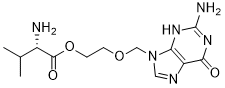
Valacyclovir

别名: BW-256U87; BW-256; BW256256U87 hydrochloride; BW 256 Val-ACV; Valtrex; Zelitrex; Valacyclovir HCl; Valacyclovir hydrochloride; ValACV; Zelitrex; Valcivir; Valcyclovir; Val-ACV; 伐昔洛韦; 万乃洛韦; 缬阿昔洛韦; 阿昔洛韦; L-缬氨酸-2-[(6-氧代-2-氨基-1,6-二氢-9H-嘌呤-9-基)甲氧基]乙基酯; 万乃洛韦标准品;万乃洛韦盐酸盐
目录号: V25361 纯度: ≥98%
Valacyclovir (Zelitrex;BW256; Val-ACV; Valtrex; BW-256U87) 是一种有效的抗病毒药物,用于治疗单纯疱疹、带状疱疹和 B 型疱疹。
Valacyclovir CAS号: 124832-26-4
产品类别: New1
产品仅用于科学研究,不针对患者销售
规格 价格
500mg
1g
Other Sizes

Other Forms of Valacyclovir:

  • 盐酸伐昔洛韦
  • 盐酸伐昔洛韦水合物
点击了解更多
InvivoChem产品被CNS等顶刊论文引用
产品描述
伐昔洛韦(Zelitrex;BW256;Val-ACV;Valtrex;BW-256U87)是一种有效的抗病毒药物,用于治疗单纯疱疹、带状疱疹和 B 型疱疹。伐昔洛韦是一种前药,必须在体内转化为阿昔洛韦。作为阿昔洛韦的酯化前药,伐昔洛韦的口服生物利用度(约 55%)高于阿昔洛韦(10-20%)。它通过肝首过代谢被酯酶转化为活性药物阿昔洛韦以及氨基酸缬氨酸。阿昔洛韦通过病毒胸苷激酶选择性转化为单磷酸形式,其磷酸化阿昔洛韦的效果比细胞胸苷激酶高得多(3000倍)。
生物活性&实验参考方法
靶点
HSV-1 (IC50 = 2.9 μg/mL)
体外研究 (In Vitro)
根据 Michaelis-Menten 常数,Valaciclovir (VACV) 的最大速率分别为 23.34 nmol/mg 蛋白质/5 分钟和 1.64 mM,具有浓度依赖性和饱和吸收。大鼠、兔和 Caco-2 细胞以及 hPEPT1/CHO 细胞中的 Km 值非常相似,表明 hPEPT1 控制 VACV 的体外肠道转运特性 [5]。
体内研究 (In Vivo)
一项重要的比较试验发现,对于治疗首次发作的生殖器疱疹,伐昔洛韦(1 g,每天两次)持续 10 天与阿昔洛韦(200 mg,每天 5 次)一样有效。两项试验发现,在为期五天的治疗周期中,伐昔洛韦(200 毫克,每日五次)与阿昔洛韦(200 毫克,每日五次)对于控制复发同样有效。伐昔洛韦每天 1 克的剂量与每天 2 克的效果相同。每天可以给予一剂伐昔洛韦[1]。口服伐昔洛韦 1,000 mg,每天 3 次,六天后,在稳态下评估血清和脑脊液阿昔洛韦浓度 [2]。 PE 和 AC 在 3T3 细胞中的 EC50 值分别为 0.02 和 0.01 ug/ml,但在 BHK 细胞中分别为 0.2 和 0.03 ug/ml。用FA和VA治疗感染的免疫抑制小鼠(每天两次,5.5天)以消除耳轻瘫、耳部病变(水泡等)和死亡。红斑比例也从 100% 降低至 24% 和 38%。到第六天,病毒已经从耳朵和脑干消失,但在接受 VA 治疗的小鼠中,当药物停止时,病毒又回来了 [3]。
酶活实验
通过使用斑块减少测定法测定HSV-1W菌株的体外50%抑制浓度(IC50),以验证其对阿昔洛韦的敏感性。HSV-1 W的IC50测定为2.9µg/ml[4]。
细胞实验
我们实验室先前使用原位灌注技术在大鼠和兔顶端刷状边界膜囊泡中进行的研究结果表明,缬环鸟苷(VACV)的肠道摄取似乎是由多种膜转运蛋白介导的。使用这些技术,在存在多种已知或未知转运蛋白的情况下,很难表征VACV与每个单独转运蛋白的转运动力学。本研究的目的是使用过表达人肠肽转运蛋白(hPEPT1)基因的中国仓鼠卵巢(CHO)细胞来表征VACV与人肠肽转运体的相互作用。用hPEPT1转染的CHO细胞中的VACV摄取显著高于仅用载体pcDNA3转染的细胞。VACV吸收的最佳pH确定为在pH 7.5时发生。在hPEPT1/CHO细胞中未观察到质子共转运,这与先前在组织和Caco-2细胞中观察到的结果一致。VACV摄取是浓度依赖性的,并且可饱和,米氏常数和最大速度分别为1.64+/-0.06mM和23.34+/-0.36nmol/mg蛋白质/5min。在hPEPT1/CHO细胞、大鼠和兔组织以及Caco-2细胞中获得了非常相似的Km值,表明hPEPT1在体外主导VACV的肠道运输特性。VACV的摄取被各种二肽和β-内酰胺类抗生素显著抑制,在pH 7.5时,Gly-Sar和头孢羟氨苄的Ki值分别为12.8+/-2.7和9.1+/-1.2mM。目前的结果表明,VACV是hPEPT1/CHO细胞中人类肠肽转运蛋白的底物,并且尽管转运是pH依赖性的,但质子协同转运并不明显。此外,结果表明hPEPT1/CHO细胞系统可用于研究药物与人肠肽转运蛋白hPEPT1的转运动力学;然而,将这些转运特性外推到体内情况需要进一步研究[5]。
动物实验
Acyclovir has been a frequently used antiviral agent in the clinical treatment of leukemia, acute encephalitis, malignant tumor and herpes simplex. The adverse effects of this drug have been widely described in clinical practice. In the present study, a case of a 35-year-old female patient diagnosed with herpes simplex, who developed acute renal injury following treatment with valacyclovir hydrochloride, is described. Kidney biopsy, light microscopy and laboratory examination were performed, and all findings revealed the signs of evident vacuolar degeneration of capillary endothelial and renal tubular epithelial cells, erythrocyte aggregation in partial renal tubule and microvilli exfoliation from epithelial cells. Renal interstitial edema was clearly identified. The clinical evidence observed from this female patient indicated that renal functions should be closely monitored during valacyclovir hydrochloride administration. A variety of effective measures, such as hydration, alkalizing urine, promoting the discharge of medication and the use of antagonists are recommended following the administration of antiviral agents[1].
药代性质 (ADME/PK)
Absorption, Distribution and Excretion
Following oral administration, valacyclovir hydrochloride is rapidly absorbed from the gastrointestinal tract and converted to acyclovir and L-valine. In 12 healthy subjects, after oral administration of 1 gram of valacyclovir and intravenous injection of 350 mg of acyclovir, the absolute bioavailability of acyclovir was measured to be 54.5% ± 9.1%. The bioavailability of acyclovir (a metabolite of valacyclovir) was not affected by food. In 4 healthy subjects, following a single oral administration of 1 gram of radiolabeled valacyclovir, 46% and 47% of the administered radioactivity were detected in urine and feces, respectively, within 96 hours. Acyclovir accounted for 89% of the radioactive material excreted in urine.
The cerebrospinal fluid (CSF) permeability (determined by the CSF/plasma AUC ratio) is approximately 25% for acyclovir and its metabolite 8-hydroxyacyclovir (8-OH-ACV), and approximately 2.5% for its metabolite 9-(carboxymethoxy)methylguanine. In a study of immunocompromised pediatric patients, the volume of distribution of valacyclovir at a dose of 15 ml/kg was 1.34 ± 0.65 L/kg.
Following a single 1-g valacyclovir dose in 12 healthy volunteers, the renal clearance of acyclovir was approximately 255 ± 86 mL/min, representing 42% of the total apparent plasma clearance of acyclovir.
After oral administration, valacyclovir hydrochloride is rapidly absorbed from the gastrointestinal tract and almost completely converted to acyclovir and L-valine via first-pass metabolism in the intestine and/or liver. In 12 healthy volunteers, the absolute bioavailability of acyclovir was 54.5% ± 9.1% after oral administration of 1 g valacyclovir and intravenous administration of 350 mg acyclovir. The bioavailability of acyclovir via valacyclovir (Valtrex) was not affected by food (873 kcal breakfast containing 51 g fat, taken 30 minutes later). The binding rate of valacyclovir to human plasma proteins ranged from 13.5% to 17.9%. The binding rate of acyclovir to human plasma proteins ranged from 9% to 33%. The pharmacokinetic distribution of acyclovir administered with valacyclovir was consistent with previous experience with intravenous and oral acyclovir. In 4 healthy subjects, following a single oral dose of 1 g of radiolabeled valacyclovir, 46% and 47% of the radioactive material were excreted in urine and feces, respectively, within 96 hours. Of the radioactive material excreted in urine, 89% was acyclovir. Following a single administration of 1 gvalacyclovir to 12 healthy volunteers, the renal clearance of acyclovir was approximately 255 ± 86 mL/min, representing 42% of the total apparent plasma clearance of acyclovir. The intestinal transport mechanism of valacyclovir, an L-valine ester prodrug of acyclovir, was investigated in rats using in situ intestinal perfusion. Results indicated that the oral bioavailability of valacyclovir appeared to be significantly affected by factors such as the conversion of valacyclovir to malabsorbable acyclovir before absorption; the involvement of multiple transport proteins in the absorption of valacyclovir in the small intestine; and the low permeability of valacyclovir in the colon. In 5 lactating women, after oral administration of 500 mg valacyclovir, the peak concentration (Cmax) of acyclovir in breast milk was 0.5 to 2.3 times the corresponding maternal serum acyclovir concentration (median 1.4 times). The AUC of acyclovir in breast milk is 1.4 to 2.6 times that in maternal serum (median 2.2 times). A maternal dose of 500 mg valacyclovir twice daily provides a nursing infant with approximately 0.6 mg/kg/day of oral acyclovir. This results in a nursing infant exposure that is less than 2% of the standard intravenous dose of acyclovir (30 mg/kg/day) given to newborns. Unmetabolized valacyclovir was not detected in maternal serum, breast milk, or infant urine.
Metabolism/Metabolites
Valacyclovir is first-pass metabolized in the intestine and/or liver to acyclovir and L-valine. Acyclovir is metabolized by alcohol dehydrogenases and aldehyde dehydrogenases, and a small amount is converted to an inactive metabolite by aldehyde oxidase. Neither valacyclovir nor acyclovir is metabolized by cytochrome P450 enzymes.
…The major metabolite of acyclovir is 9-carboxymethoxymethylguanine. Valacyclovir undergoes first-pass metabolism in the intestine and/or liver to acyclovir and L-valine. A small amount of acyclovir is converted to inactive metabolites by aldehyde oxidase and alcohol-aldehyde dehydrogenase. Neither valacyclovir nor acyclovir is metabolized by cytochrome P450 enzymes. Unconverted valacyclovir plasma concentrations are low and transient, usually unquantifiable within 3 hours after administration. Peak plasma concentrations of valacyclovir are typically below 0.5 μg/mL at all doses. After a single dose of 1 g valacyclovir, the mean plasma valacyclovir concentrations in patients with hepatic impairment, renal insufficiency, and healthy volunteers concurrently taking cimetidine and probenecid were 0.5, 0.4, and 0.8 μg/mL, respectively.
Biological Half-Life
In multiple valacyclovir studies in volunteers with normal renal function, the plasma elimination half-life of acyclovir typically ranged from 2.5 to 3.3 hours.
In all valacyclovir studies in volunteers with normal renal function, the plasma elimination half-life of acyclovir typically ranged from 2.5 to 3.3 hours.
毒性/毒理 (Toxicokinetics/TK)
Hepatotoxicity
Oral valacyclovir treatment is associated with a low incidence of mild to moderate elevations in serum transaminases, but these abnormalities are usually asymptomatic and resolve spontaneously even with continued treatment. However, because enzyme elevations are not uncommon during varicella-zoster virus infection (including chickenpox and shingles) and can progress to clinically manifested hepatitis or even acute liver failure, it is difficult to attribute liver dysfunction to valacyclovir treatment. Clinically manifested liver disease caused by valacyclovir itself is rare, but case reports exist. Case 1 had a short onset time (1 to 2 weeks), a mild course, few symptoms, and rapid resolution. The described liver injury pattern was mixed hepatocellular-cholestatic. No immune hypersensitivity features or autoantibodies were found. Probability score: D (likely a rare cause of clinically manifested liver injury).
Effects during pregnancy and lactation
◉ Overview of use during lactation
After valacyclovir administration, the dose of acyclovir in breast milk is less than 1% of the typical infant dose, and no adverse effects are expected on breastfed infants. No special precautions are required for the use of valacyclovir during lactation. One study showed that valacyclovir administration to mothers co-infected with herpes simplex virus type 2 and HIV reduced HIV shedding in breast milk at 6 and 14 weeks postpartum, but this effect was not observed thereafter. [1] In another study of HIV-positive mothers, valacyclovir did not reduce cytomegalovirus (CMV) shedding in breast milk or the risk of CMV infection in infants. [2]
◉ Effects on breastfed infants
In a study of pregnant women co-infected with HIV and herpes simplex virus, the mothers received 300 mg of zidovudine daily from week 34 of pregnancy to 12 months postpartum and nevirapine at delivery. Half of the women (n = 74) received 500 mg valacyclovir orally twice daily from 34 weeks of gestation to 12 months postpartum. At 6 weeks postpartum, all infants who received acyclovir via breast milk had normal serum creatinine levels (<0.83 mg/dL). Except for one infant with an ALT level of 70.1 units/L, the median serum creatinine and alanine aminotransferase (ALT) levels, as well as growth and development, were not different from those of infants who had not been exposed to valacyclovir. Infants whose mothers received valacyclovir generally experienced similar adverse reactions to those in the placebo group, but the treated infants had a lower risk of eczema and thrush than the placebo group. [1][4]
◉ Effects on lactation and breast milk
No relevant published information was found as of the revision date.
Protein binding
Valacyclovir had low binding rates to human plasma proteins, ranging from 13.5% to 17.9%.
Interactions
Valacyclovir co-administration with probenecid may increase the peak plasma concentration and AUC of acyclovir. This pharmacokinetic interaction is not clinically significant in patients with normal renal function, therefore no dose adjustment is required.
Valacyclovir co-administration with cimetidine may increase the peak plasma concentration and AUC of acyclovir. This pharmacokinetic interaction is not clinically significant in patients with normal renal function, therefore no dose adjustment is required.
Mycophenolate mofetil (MMF) is a drug that can reduce the incidence of kidney transplant rejection. However, cytomegalovirus infection is a common complication of this treatment, so doctors often prescribe antiviral prophylaxis drugs such as valacyclovir. Neutropenia may occur during this combination therapy, but the cause of this adverse reaction is difficult to determine. This report presents a case of neutropenia in a woman receiving MMF and valacyclovir treatment. Because the duration of valacyclovir treatment perfectly coincided with the duration of neutropenia, and the mycophenolate mofetil trough concentration increased with rising neutrophil counts, neutropenia was initially thought to be caused by valacyclovir. However, after reviewing case reports of neutropenia in the literature, an interaction between mycophenolate mofetil and valacyclovir is suspected. Mycophenolate mofetil may increase intracellular valacyclovir concentrations to hematologic toxic levels. This mechanism may explain the interaction between the two, but further research is needed to confirm it.
参考文献

[1]. Valacyclovir. New indication: for genital herpes, simpler administration. Can Fam Physician. 1999 Jul;45:1698-700, 1703-5.

[2]. Acyclovir levels in serum and cerebrospinal fluid after oral administration of valacyclovir. Antimicrob Agents Chemother. 2003 Aug;47(8):2438-41.

[3]. Comparison of efficacies of famciclovir and valaciclovir against herpes simplex virus type 1 in a murineimmunosuppression model. Antimicrob Agents Chemother. 1995 May;39(5):1114-9.

[4]. Dhaliwal DK, Romanowski EG, Yates KA, Valacyclovir inhibits recovery of ocular HSV-1 after experimental reactivation by excimer laser keratectomy. Cornea. 1999 Nov;18(6):693-9.

[5]. Guo A, Hu P, Balimane PV, Interactions of a nonpeptidic drug, valacyclovir, with the human intestinal peptide transporter (hPEPT1) expressed in a mammalian cell line.J Pharmacol Exp Ther. 1999 Apr;289(1):448-54.

其他信息
Therapeutic Uses
Antiviral Drugs
Oral valacyclovir is used to treat cases of initial infection with genital herpes simplex virus (HSV-2) in immunocompetent adults and adolescents. Because many patients with initial genital herpes infection experience mild clinical symptoms that later develop into severe or prolonged symptoms, the Centers for Disease Control and Prevention (CDC) states that most patients with initial genital herpes infection should receive antiviral treatment. /US Product Label Includes/
Oral valacyclovir is used to treat cases of recurrent genital herpes in immunocompetent adults and adolescents. Antiviral treatment for recurrent genital herpes can be administered intermittently to reduce or shorten the course of the disease, or continuously as a suppressive therapy to reduce the frequency of recurrences. /US Product Label Includes/
Valacyclovir is used to treat intermittent outbreaks of cold sores (perioral herpes, labial herpes, vesicular herpes) in adults and adolescents. /US Product Label Includes/
For more complete data on the therapeutic uses of valacyclovir (out of 9), please visit the HSDB record page.
Drug Warning
Thrombotic thrombocytopenic purpura/hemolytic uremic syndrome (TTP/HUS) has occurred in patients with advanced HIV-1 infection and allogeneic bone marrow and kidney transplant recipients in clinical trials of valacyclovir (8 g daily), with some cases even resulting in death. If clinical signs, symptoms, and laboratory abnormalities consistent with TTP/HUS occur, valacyclovir should be discontinued immediately.

There are currently no adequate and well-controlled studies on the use of valacyclovir or acyclovir in pregnant women. Based on prospective pregnancy registry data from 749 pregnancies, the overall incidence of birth defects in infants exposed to acyclovir in utero appears to be similar to that in the general population. Valacyclovir should only be used during pregnancy if the potential benefit outweighs the potential risk to the fetus.

Acute renal failure has been reported in the following situations: 1. Elderly patients, regardless of renal impairment. Caution should be exercised when using valacyclovir in elderly patients, and dose reduction is recommended for patients with impaired renal function.
2. Patients with underlying kidney disease who are receiving a dose of valacyclovir higher than the recommended dose for their renal function level. A dose reduction of valacyclovir is recommended for patients with impaired renal function. 3. Patients taking other nephrotoxic medications. Caution should be exercised when using valacyclovir in patients taking potentially nephrotoxic medications. 4. Patients who are not adequately hydrated. Acyclovir may precipitate in the renal tubules when the solubility of acyclovir in the tubular fluid (2.5 mg/mL) exceeds its solubility. All patients should maintain adequate hydration.
The most common adverse reactions occurring in more than 10% of adult patients treated with valacyclovir for at least one indication and more common than placebo are headache, nausea, and abdominal pain. The only reported adverse reaction occurring in more than 10% of pediatric patients under 18 years of age is headache.
For more complete data on drug warnings for valacyclovir (8 of 8), please visit the HSDB record page. Pharmacodynamics Antibacterial Effects Valacyclovir exhibits varying degrees of inhibition against herpes simplex virus type 1 (HSV-1), herpes simplex virus type 2 (HSV-2), varicella-zoster virus (VZV), Epstein-Barr virus (EBV), and cytomegalovirus (CMV). The quantitative relationship between the sensitivity of herpesviruses to antiviral drugs in cell culture and clinical response to the same antiviral therapy in humans has not been elucidated. Sensitivity test results, described as the drug concentration required to inhibit viral growth by 50% in cell culture (EC50), can vary considerably due to various factors. Clinical Study Results The following is a summary of clinical study results for various diseases: _Herpes labialis_ Immunocompromised patients with herpes labialis were observed using either a 1-day course (2 g valacyclovir twice daily for 1 day, followed by a placebo for 1 day) or a 2-day course (2 g valacyclovir twice daily for 2 consecutive days). Compared to the placebo group, the treatment group had a shortened mean duration of cold sore throat flare-ups by approximately one day. A two-day course of valacyclovir did not show superior efficacy compared to a one-day course. No clinically significant difference was observed between the valacyclovir and placebo groups in preventing post-papular progression of cold sore throat lesions, suggesting that the timing of valacyclovir administration is an important consideration. First Genital Herpes Outbreak: A double-blind trial randomized 643 immunocompetent adult patients who presented with their first genital herpes symptoms within 72 hours of symptom onset. Patients were randomly assigned to receive either 10 days of valacyclovir treatment (1 g twice daily, n=323) or oral acyclovir (200 mg five times daily, n=320). The median time to healing of herpes lesions was 9 days in both groups, the median time to pain relief was 5 days, and the median time to viral shedding was approximately 3 days. _Recurrent Genital Herpes_ Results from three independent studies showed that patients receiving a 3- to 5-day course of valacyclovir recovered on average in 4 days, experienced relief of lesion-related pain in 2 to 3 days, and stopped viral shedding on average in 2 days. These results indicate that valacyclovir treatment is significantly more effective than placebo. Regarding Drug Resistance Resistance to acyclovir in herpes simplex virus and varicella-zoster virus may stem from qualitative and quantitative changes in viral thymidine kinase (TK) and/or DNA polymerase. Clinical isolates of varicella-zoster virus (VZV) with reduced susceptibility to acyclovir have been isolated from HIV patients. A total of 522 TK-deficient VZV mutant strains were identified in these cases.
*注: 文献方法仅供参考, InvivoChem并未独立验证这些方法的准确性
化学信息 & 存储运输条件
分子式
C13H20N6O4
分子量
324.341
精确质量
324.154
元素分析
C, 48.14; H, 6.22; N, 25.91; O, 19.73
CAS号
124832-26-4
相关CAS号
Valacyclovir hydrochloride;124832-27-5;Valacyclovir hydrochloride hydrate;1218948-84-5
PubChem CID
135398742
外观&性状
Typically exists as solid at room temperature
密度
1.5±0.1 g/cm3
熔点
170-172
闪点
309.7ºC
折射率
1.673
LogP
-0.88
tPSA
151.14
氢键供体(HBD)数目
3
氢键受体(HBA)数目
7
可旋转键数目(RBC)
8
重原子数目
23
分子复杂度/Complexity
483
定义原子立体中心数目
1
SMILES
N[C@@H](C(C)C)C(OCCOCN1C=NC2=C1N=C(N)NC2=O)=O
InChi Key
HDOVUKNUBWVHOX-QMMMGPOBSA-N
InChi Code
InChI=1S/C13H20N6O4/c1-7(2)8(14)12(21)23-4-3-22-6-19-5-16-9-10(19)17-13(15)18-11(9)20/h5,7-8H,3-4,6,14H2,1-2H3,(H3,15,17,18,20)/t8-/m0/s1
化学名
2-((2-amino-6-oxo-1,6-dihydro-9H-purin-9-yl)methoxy)ethyl L-valinate
别名
BW-256U87; BW-256; BW256256U87 hydrochloride; BW 256 Val-ACV; Valtrex; Zelitrex; Valacyclovir HCl; Valacyclovir hydrochloride; ValACV; Zelitrex; Valcivir; Valcyclovir; Val-ACV;
HS Tariff Code
2934.99.9001
存储方式

Powder      -20°C    3 years

                     4°C     2 years

In solvent   -80°C    6 months

                  -20°C    1 month

运输条件
Room temperature (This product is stable at ambient temperature for a few days during ordinary shipping and time spent in Customs)
溶解度数据
溶解度 (体外实验)
May dissolve in DMSO (in most cases), if not, try other solvents such as H2O, Ethanol, or DMF with a minute amount of products to avoid loss of samples
溶解度 (体内实验)
注意: 如下所列的是一些常用的体内动物实验溶解配方,主要用于溶解难溶或不溶于水的产品(水溶度<1 mg/mL)。 建议您先取少量样品进行尝试,如该配方可行,再根据实验需求增加样品量。

注射用配方
(IP/IV/IM/SC等)
注射用配方1: DMSO : Tween 80: Saline = 10 : 5 : 85 (如: 100 μL DMSO 50 μL Tween 80 850 μL Saline)
*生理盐水/Saline的制备:将0.9g氯化钠/NaCl溶解在100 mL ddH ₂ O中,得到澄清溶液。
注射用配方 2: DMSO : PEG300Tween 80 : Saline = 10 : 40 : 5 : 45 (如: 100 μL DMSO 400 μL PEG300 50 μL Tween 80 450 μL Saline)
注射用配方 3: DMSO : Corn oil = 10 : 90 (如: 100 μL DMSO 900 μL Corn oil)
示例: 注射用配方 3 (DMSO : Corn oil = 10 : 90) 为例说明, 如果要配制 1 mL 2.5 mg/mL的工作液, 您可以取 100 μL 25 mg/mL 澄清的 DMSO 储备液,加到 900 μL Corn oil/玉米油中, 混合均匀。
View More

注射用配方 4: DMSO : 20% SBE-β-CD in Saline = 10 : 90 [如:100 μL DMSO 900 μL (20% SBE-β-CD in Saline)]
*20% SBE-β-CD in Saline的制备(4°C,储存1周):将2g SBE-β-CD (磺丁基-β-环糊精) 溶解于10mL生理盐水中,得到澄清溶液。
注射用配方 5: 2-Hydroxypropyl-β-cyclodextrin : Saline = 50 : 50 (如: 500 μL 2-Hydroxypropyl-β-cyclodextrin (羟丙基环胡精) 500 μL Saline)
注射用配方 6: DMSO : PEG300 : Castor oil : Saline = 5 : 10 : 20 : 65 (如: 50 μL DMSO 100 μL PEG300 200 μL Castor oil 650 μL Saline)
注射用配方 7: Ethanol : Cremophor : Saline = 10: 10 : 80 (如: 100 μL Ethanol 100 μL Cremophor 800 μL Saline)
注射用配方 8: 溶解于Cremophor/Ethanol (50 : 50), 然后用生理盐水稀释。
注射用配方 9: EtOH : Corn oil = 10 : 90 (如: 100 μL EtOH 900 μL Corn oil)
注射用配方 10: EtOH : PEG300Tween 80 : Saline = 10 : 40 : 5 : 45 (如: 100 μL EtOH 400 μL PEG300 50 μL Tween 80 450 μL Saline)


口服配方
口服配方 1: 悬浮于0.5% CMC Na (羧甲基纤维素钠)
口服配方 2: 悬浮于0.5% Carboxymethyl cellulose (羧甲基纤维素)
示例: 口服配方 1 (悬浮于 0.5% CMC Na)为例说明, 如果要配制 100 mL 2.5 mg/mL 的工作液, 您可以先取0.5g CMC Na并将其溶解于100mL ddH2O中,得到0.5%CMC-Na澄清溶液;然后将250 mg待测化合物加到100 mL前述 0.5%CMC Na溶液中,得到悬浮液。
View More

口服配方 3: 溶解于 PEG400 (聚乙二醇400)
口服配方 4: 悬浮于0.2% Carboxymethyl cellulose (羧甲基纤维素)
口服配方 5: 溶解于0.25% Tween 80 and 0.5% Carboxymethyl cellulose (羧甲基纤维素)
口服配方 6: 做成粉末与食物混合


注意: 以上为较为常见方法,仅供参考, InvivoChem并未独立验证这些配方的准确性。具体溶剂的选择首先应参照文献已报道溶解方法、配方或剂型,对于某些尚未有文献报道溶解方法的化合物,需通过前期实验来确定(建议先取少量样品进行尝试),包括产品的溶解情况、梯度设置、动物的耐受性等。

请根据您的实验动物和给药方式选择适当的溶解配方/方案:
1、请先配制澄清的储备液(如:用DMSO配置50 或 100 mg/mL母液(储备液));
2、取适量母液,按从左到右的顺序依次添加助溶剂,澄清后再加入下一助溶剂。以 下列配方为例说明 (注意此配方只用于说明,并不一定代表此产品 的实际溶解配方):
10% DMSO → 40% PEG300 → 5% Tween-80 → 45% ddH2O (或 saline);
假设最终工作液的体积为 1 mL, 浓度为5 mg/mL: 取 100 μL 50 mg/mL 的澄清 DMSO 储备液加到 400 μL PEG300 中,混合均匀/澄清;向上述体系中加入50 μL Tween-80,混合均匀/澄清;然后继续加入450 μL ddH2O (或 saline)定容至 1 mL;

3、溶剂前显示的百分比是指该溶剂在最终溶液/工作液中的体积所占比例;
4、 如产品在配制过程中出现沉淀/析出,可通过加热(≤50℃)或超声的方式助溶;
5、为保证最佳实验结果,工作液请现配现用!
6、如不确定怎么将母液配置成体内动物实验的工作液,请查看说明书或联系我们;
7、 以上所有助溶剂都可在 Invivochem.cn网站购买。
制备储备液 1 mg 5 mg 10 mg
1 mM 3.0832 mL 15.4159 mL 30.8318 mL
5 mM 0.6166 mL 3.0832 mL 6.1664 mL
10 mM 0.3083 mL 1.5416 mL 3.0832 mL

1、根据实验需要选择合适的溶剂配制储备液 (母液):对于大多数产品,InvivoChem推荐用DMSO配置母液 (比如:5、10、20mM或者10、20、50 mg/mL浓度),个别水溶性高的产品可直接溶于水。产品在DMSO 、水或其他溶剂中的具体溶解度详见上”溶解度 (体外)”部分;

2、如果您找不到您想要的溶解度信息,或者很难将产品溶解在溶液中,请联系我们;

3、建议使用下列计算器进行相关计算(摩尔浓度计算器、稀释计算器、分子量计算器、重组计算器等);

4、母液配好之后,将其分装到常规用量,并储存在-20°C或-80°C,尽量减少反复冻融循环。

计算器

摩尔浓度计算器可计算特定溶液所需的质量、体积/浓度,具体如下:

  • 计算制备已知体积和浓度的溶液所需的化合物的质量
  • 计算将已知质量的化合物溶解到所需浓度所需的溶液体积
  • 计算特定体积中已知质量的化合物产生的溶液的浓度
使用摩尔浓度计算器计算摩尔浓度的示例如下所示:
假如化合物的分子量为350.26 g/mol,在5mL DMSO中制备10mM储备液所需的化合物的质量是多少?
  • 在分子量(MW)框中输入350.26
  • 在“浓度”框中输入10,然后选择正确的单位(mM)
  • 在“体积”框中输入5,然后选择正确的单位(mL)
  • 单击“计算”按钮
  • 答案17.513 mg出现在“质量”框中。以类似的方式,您可以计算体积和浓度。

稀释计算器可计算如何稀释已知浓度的储备液。例如,可以输入C1、C2和V2来计算V1,具体如下:

制备25毫升25μM溶液需要多少体积的10 mM储备溶液?
使用方程式C1V1=C2V2,其中C1=10mM,C2=25μM,V2=25 ml,V1未知:
  • 在C1框中输入10,然后选择正确的单位(mM)
  • 在C2框中输入25,然后选择正确的单位(μM)
  • 在V2框中输入25,然后选择正确的单位(mL)
  • 单击“计算”按钮
  • 答案62.5μL(0.1 ml)出现在V1框中
g/mol

分子量计算器可计算化合物的分子量 (摩尔质量)和元素组成,具体如下:

注:化学分子式大小写敏感:C12H18N3O4  c12h18n3o4
计算化合物摩尔质量(分子量)的说明:
  • 要计算化合物的分子量 (摩尔质量),请输入化学/分子式,然后单击“计算”按钮。
分子质量、分子量、摩尔质量和摩尔量的定义:
  • 分子质量(或分子量)是一种物质的一个分子的质量,用统一的原子质量单位(u)表示。(1u等于碳-12中一个原子质量的1/12)
  • 摩尔质量(摩尔重量)是一摩尔物质的质量,以g/mol表示。
/

配液计算器可计算将特定质量的产品配成特定浓度所需的溶剂体积 (配液体积)

  • 输入试剂的质量、所需的配液浓度以及正确的单位
  • 单击“计算”按钮
  • 答案显示在体积框中
动物体内实验配方计算器(澄清溶液)
第一步:请输入基本实验信息(考虑到实验过程中的损耗,建议多配一只动物的药量)
第二步:请输入动物体内配方组成(配方适用于不溶/难溶于水的化合物),不同的产品和批次配方组成不同,如对配方有疑问,可先联系我们提供正确的体内实验配方。此外,请注意这只是一个配方计算器,而不是特定产品的确切配方。
+
+
+

计算结果:

工作液浓度 mg/mL;

DMSO母液配制方法 mg 药物溶于 μL DMSO溶液(母液浓度 mg/mL)。如该浓度超过该批次药物DMSO溶解度,请首先与我们联系。

体内配方配制方法μL DMSO母液,加入 μL PEG300,混匀澄清后加入μL Tween 80,混匀澄清后加入 μL ddH2O,混匀澄清。

(1) 请确保溶液澄清之后,再加入下一种溶剂 (助溶剂) 。可利用涡旋、超声或水浴加热等方法助溶;
            (2) 一定要按顺序加入溶剂 (助溶剂) 。

临床试验信息
Neonatal Phase 1 Valacyclovir Study
CTID: NCT05468619
Phase: Phase 1    Status: Recruiting
Date: 2024-11-29
Time-limited Triplet Combination of Pirtobrutinib, Venetoclax, and Obinutuzumab for Patients With Treatment-naïve Chronic Lymphocytic Leukemia (CLL) or Richter Transformation (RT)
CTID: NCT05536349
Phase: Phase 2    Status: Recruiting
Date: 2024-11-25
Bortezomib and Rituximab for Patients With Waldenstrom's Macroglobulinemia
CTID: NCT00492050
Phase: Phase 2    Status: Active, not recruiting
Date: 2024-10-15
SBRT and Oncolytic Virus Therapy Before Pembrolizumab for Metastatic TNBC and NSCLC
CTID: NCT03004183
Phase: Phase 2    Status: Completed
Date: 2024-10-15
Valacyclovir in Neonatal Herpes Simplex Virus Disease
CTID: NCT04448392
Phase: Phase 1    Status: Completed
Date: 2024-09-19
View More

Prenatal Treatment of Congenital Cytomegalovirus Infection with Letermovir Versus Valaciclovir
CTID: NCT05446571
Phase: Phase 3    Status: Recruiting
Date: 2024-09-04


Valacyclovir 1000 mg Tablet Under Fed Conditions
CTID: NCT01149460
Phase: Phase 1    Status: Completed
Date: 2024-08-21
Anti-viral Therapy in Alzheimer's Dis
Feasibility and effects on markers in spinal fluid in persons with early Alzheimer's disease when treated with Valaciklovir - open Fas II pilot study (VALZ-Pilot)
CTID: null
Phase: Phase 2    Status: Completed
Date: 2016-11-29
The effect of antiherpes medication with valaciclovir on cognition and function in patients with Alzheimer disease
CTID: null
Phase: Phase 4    Status: Ongoing
Date: 2013-09-05
Bortezomib in late antibody-mediated kidney transplant rejection (BORTEJECT Study)
CTID: null
Phase: Phase 2    Status: Completed
Date: 2013-07-11
Palatability testing of a new paediatric formulation of valacyclovir for the prophylaxis and treatment of VZV and HSV infections in children – VALID 0
CTID: null
Phase: Phase 4    Status: Completed
Date: 2012-07-17
Anti-viral prophylaxis for prevention of cytomegalovirus (CMV) reactivation in immunocompetent patients in critical care.
CTID: null
Phase: Phase 2    Status: Completed
Date: 2011-03-22
Traitement in utero de l’infection congénitale à cytomegalovirus (CMV) par valaciclovir : essai prospectif randomisé contre placebo
CTID: null
Phase: Phase 3    Status: Ongoing
Date: 2009-07-31

相关产品
联系我们