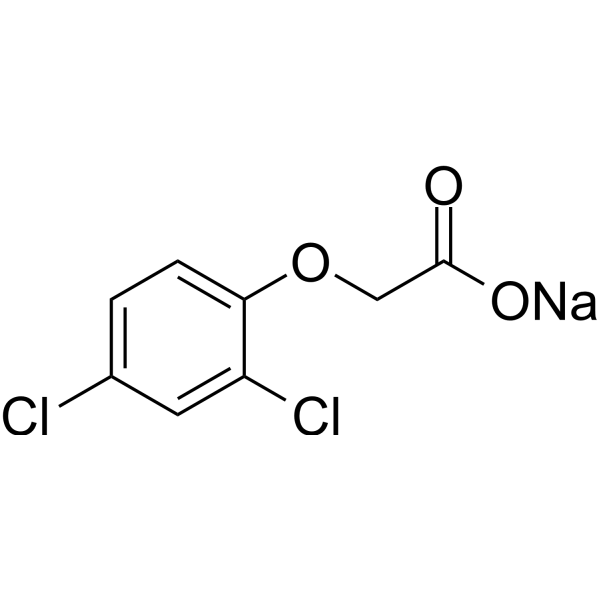
2,4-D sodium salt

别名: 2,4D sodium salt; 2,4 D sodium salt 2,4-二氯苯氧乙酸钠;2,4-滴钠;2,4-D 钠;2,4D钠盐;2.4-二氯苯氧乙酸钠;2,4-二氯苯氧乙酸钠一水合物;2,4-二氯苯氧乙酸钠盐;Sodium 2,4-Dichlorophenoxyacetate Monohydrate 2,4-二氯苯氧乙酸钠一水合物;(2,4-二氯苯氧基)乙酸钠盐;2,4-D钠盐;2,4-滴钠,(2,4-二氯苯氧基)乙酸钠盐;2,4-滴钠,(2,4-二氯苯氧基)乙酸钠盐, 2,4-D钠; 植物生长调节剂;2,4-D 钠 一水合物;2,4-二氯苯氧乙酸钠盐 一水合物;(2,4-二氯苯氧基)乙酸钠盐 一水合物;2,4-滴钠 一水合物;2,4-二氯苯氧乙酸钠 一水合物;2,4-滴钠盐
目录号: V38730 纯度: ≥98%
2,4-D 钠盐(2,4-二氯苯氧基乙酸钠)是一种选择性除草剂,用于控制阔叶杂草。
2,4-D sodium salt CAS号: 2702-72-9
产品类别: New2
产品仅用于科学研究,不针对患者销售
规格 价格
500mg
1g
Other Sizes

Other Forms of 2,4-D sodium salt:

  • 2,4-Difluororesorcinol
  • 2,4-Difluorophenylethynylcobalamin (F2PhEtyCbl)
  • trans,trans-2,4-Decadienal ((2E,4E)-Deca-2,4-dienal)
  • 2,4-Dimethoxybenzyl alcohol (2,4-Dimethoxybenzyl alcohol)
  • 2,4-Difluorobenzaldehyde
  • 2,4-二氯苯氧乙酸
点击了解更多
InvivoChem产品被CNS等顶刊论文引用
产品描述
2,4-D 钠盐(2,4-二氯苯氧基乙酸钠)是一种选择性除草剂,用于控制阔叶杂草。 2,4-D 钠盐作为植物激素,会导致分生组织生长不受控制。 2,4-D钠盐抑制DNA和蛋白质的合成,从而阻止植物的正常生长和发育。
生物活性&实验参考方法
药代性质 (ADME/PK)
Absorption, Distribution and Excretion
This study evaluated life-stage-dependent toxicity and dose-dependent toxicokinetics (TK) in Sprague Dawley rats following dietary intake of 2,4-dichlorophenoxyacetic acid (2,4-D). Renal clearance of 2,4-D is affected by dose-dependent saturation of renal organic anion transporters; therefore, this study aimed to determine the inflection point of the nonlinear dietary TK to guide dose selection in toxicity studies. Male and female rats were fed a 2,4-D-fortified diet at doses up to 1600 ppm for 4 weeks prior to mating, <2 weeks during mating, and from parental (P1) male rats to test day (TD) 71, and from P1 female rats during gestation/lactation to TD 96. F1 offspring were exposed to 2,4-D via milk and continued to be fed this diet until day 35 postnatal (PND 35). Nonlinear pharmacokinetic (TK) was observed in male P1 rats at concentrations ≥1200 ppm (63 mg/kg/day) and in female P1 rats at concentrations 200–400 ppm (14–27 mg/kg/day). 2,4-D levels in maternal milk and pup plasma were higher on day 14 of lactation (LD14) than on day 4 of lactation (LD4). 2,4-D levels were higher in mothers during late gestation/lactation and post-weaning pups (PND 21–35) compared to adult P1 rats, consistent with increased intake per kilogram of body weight. Dosage selection using the conventional maximum tolerated dose (MTD) criterion based on body weight variation would have resulted in a maximum dose approximately twice that determined after incorporating key TK data. These data suggest that if a nonlinear dose-kinetic kinase (TK) exists at dose levels far above the actual human exposure dose, confirmation of a nonlinear TK is a key dose-selection consideration for improving the human relevance of toxicity studies compared to studies employing conventional MTD dose-selection strategies. 2,4-D is distributed throughout the body, but there is no evidence of its accumulation. In mammals, the conversion of 2,4-D appears to be low, primarily involving the formation of 2,4-D conjugates with sugars or amino acids. Following a single dose, the drug is excreted over several days, primarily in the urine, with smaller amounts excreted in bile and feces. Pretreatment of rats with 2,4-D (250 mg/kg, subcutaneous injection) resulted in significant occupation of binding sites on plasma proteins, leading to altered distribution of 2,4-D upon intravenous injection 3.5 to 4.5 hours later compared to the control group. Concentrations in plasma and kidneys were decreased, while concentrations in the liver, brain, cerebrospinal fluid, testes, lungs, heart, and muscles were increased.
...2,4-D is primarily excreted in urine by the human body. Plasma clearance time depends on the dose, individual characteristics, and the presence of compounds that may competitively inhibit 2,4-D excretion. Following a single oral dose of 2,4-D, its biological half-life in plasma is approximately one day, with the exact time depending on various factors. However, forced alkaline diuresis can shorten this time to 3.7 hours.
For more complete data (36 items) on the absorption, distribution, and excretion of 2,4-D, please visit the HSDB records page.
Metabolism/Metabolites
In studies using Arthrobacter spp. enzyme preparations, 2,4-D was converted to 2,4-D-phenol and glyoxylic acid. The two glyoxylic acid molecules undergo condensation, with one carboxyl group losing CO2. A compound identical to alanine was observed chromatographically. Using ring-labeled 2,4-D, labeled succinic acid was generated.
2,4-D esters are hydrolyzed in animals. Phenoxy acid compounds are primarily excreted unchanged in rat urine after oral administration, with small amounts conjugated with the amino acids glycine, taurine, and glucuronic acid. Soybean root callus cultures can metabolize 2,4-D. Identified metabolites include 2,4-D-glutamic acid and 2,4-D-aspartic acid conjugates; other unidentified 2,4-D amino acid conjugates; 2,5-dichloro-4-hydroxyphenoxyacetic acid (4-OH-2,5-D); and 5-OH-2,4-D… No qualitative differences were observed in the metabolism of 2,4-D in soybean callus, soybean plants, and maize plants. Hydroxyl compounds exist mainly as glycosides and have been identified as 5-OH-2,4-D, 4-OH-2,3-D, and 4-OH-2,5-D. Amino acid conjugates have been identified as 2,4-D conjugates of aspartic acid, glutamic acid, alanine, valine, phenylalanine, tryptophan, and leucine. Some data indicate the presence of amino acid conjugates of cyclically hydroxylated 2,4-D. /SRP: Unspecified salt or ester of 2,4-D/
A single dose of 5 mg/kg was administered to male volunteers. Excretion was primarily in the form of 2,4-D (82.3%), with a small amount in the form of 2,4-D conjugates (12.8%). /SRP: Unspecified salt or ester of 2,4-D/
For more complete data on the metabolism of 2,4-D (7 metabolites in total), please visit the HSDB record page.
2,4-D is minimally metabolized in the human body and is almost entirely excreted unchanged. In particular, 2,4-D is rapidly excreted from the body, primarily through urine. While some 2,4-D is excreted as conjugates, the majority of the compound appears to be excreted unchanged. 2,4-D is metabolized to 2,4-dichlorophenol (2,4-DCP) by cytochrome P450 3A4 (CYP 3A4), the main monooxygenase in human liver.
Biological half-life
Systemic: 220 hours (can be shortened to 4-7 hours by urinary alkalinity); Mean plasma half-life: 12 hours; [TDR, p. 510]
…The urinary excretion half-life in rats is 3 hours, in calves and hens it is 8 hours, and in pigs it is approximately 12 hours.
…After oral or intravenous injection of 2,4-D in rats, it is mainly excreted in urine, with a half-life of approximately 2 hours.
Six male volunteers were given a subtoxic dose of 5 mg/kg 2,4-D orally, and urine and blood samples were collected to monitor 2,4-D levels. Based on pharmacokinetic analysis data, the plasma clearance half-life was determined to be 33 hours. /SRP: Unspecified salt or ester of 2,4-D/
Five male volunteers were administered a single oral dose of 5 mg/kg. Following this dose, 2,4-D was eliminated from plasma via first-order kinetics with a mean biological half-life of 11.7 hours. All subjects excreted 2,4-D in the urine with a mean biological half-life of 17.7 hours, primarily as free 2,4-D (83.3%), with a small amount excreted as 2,4-D conjugates (12.8%). /SRP: Unspecified salt or ester of 2,4-D/
毒性/毒理 (Toxicokinetics/TK)
Toxicity Summary
Identification and Uses: 2,4-Dichlorophenoxyacetic acid (2,4-D) is a herbicide. It is a white powder with a slightly phenolic odor. It is readily soluble in water, although the solubility of its ester products varies. It is used as a solid alkaline salt concentrate, a base-based water-soluble solution, or an ester-based emulsifiable concentrate; it can also be mixed with other herbicides. It is a component of the military defoliant Agent Orange. It is used to control broadleaf weeds in cereals, grain crops, roadsides, and farm buildings, and to increase latex yield in older rubber trees. Human Exposure and Use: 2,4-D can be absorbed through the gastrointestinal tract, by inhalation, and less frequently by intact skin. A study observed 220 men exposed to 0.5 to 22 years of 2,4-D at a manufacturing plant. Medical evaluation showed no difference compared to a control group of 4,600 men. Karyotype analysis was performed on 10 men in the exposure group. Results showed no impact on the structural integrity of lymphocyte chromosomes or the arrangement of genetic material. However, in vitro studies have shown that 2,4-D leads to increased chromatid and chromosome breakage, micronucleus numbers, and nucleus bud numbers, regardless of the presence of metabolic activators. The presence of S9 mixtures further increased the number of chromatid breakage and micronuclei in treated lymphocytes. In a plant producing amine salts and butyl esters, workers reported signs and symptoms including general weakness, fatigue, frequent headaches, and dizziness. Cases of arterial hypotension were also observed. Workers with long-term exposure to the herbicide may show signs of liver dysfunction. In two groups of agricultural workers, 250 and 45, respectively, reported excessive fatigue, epigastric pain, anorexia, occasional respiratory symptoms, and decreased taste. The reported cases of poisoning are mainly due to accidental or suicidal ingestion. Peripheral neuropathy and contact dermatitis have also been reported with poisoning. Animal studies: The substance can be absorbed through the gastrointestinal tract, inhalation, or intact skin. In vivo liver mitochondrial studies have shown that the herbicide can be uncoupled and oxidatively phosphorylated at low concentrations. Young female rats were given different doses of 2,4-D orally via gastric tube five times a week for four consecutive weeks. Animals in the high-dose group exhibited varying degrees of gastrointestinal irritation, mild hepatic turbidity and swelling, and decreased growth rate. The increased mortality rate in the high-dose group was due to severe gastrointestinal irritation. Cumulative effects may manifest as liver or kidney damage, but long-term exposure did not lead to definitive biochemical damage. Female rats were fed different concentrations of 2,4-D in their diet for up to two years. There was no significant difference in mortality between the experimental and control groups. Autopsies of animals surviving for two years revealed no difference in body weight and normal hematological parameters, but final examinations at 22 months showed a possible tendency towards giant cell, polychromatic, and hypochromatic lesions. The incidence of bile duct hyperplasia, mild hepatitis, and nephritis was slightly higher in the experimental group than in the control group. 2,4-D is not considered a carcinogen. A two-year rat feeding study found a slight increase in tumor incidence in female rats, but the raw data were insufficient to determine whether 2,4-D is carcinogenic. In some developmental experiments, rats, guinea pigs, hamsters, and mice treated with high doses of 2,4-D showed an increased incidence of mild skeletal deformities. 2,4-D is maternally toxic and embryo-lethal in rats, and can induce malformations of the urogenital system in rat fetuses. It is also teratogenic and embryotoxic in mice. Ecotoxicity studies: Crayfish were exposed to three sublethal concentrations of 2,4-D for 96 hours, then placed in a Y-maze system with fish gelatin food sources randomly placed in the left and right arms of the maze. Results showed that the crayfish's foraging ability was impaired. This reduced ability to find and ingest sufficient food may lead to decreased population weight and health in crayfish exposed to 2,4-D in their natural habitat. A mixture of 2,4-D and sodium formaldehyde ester may impair gill function and increase the crayfish's susceptibility to herbicide toxicity. 2,4-Dichlorophenoxyacetic acid is a strong oxidizing agent known to cause lipid peroxidation and the generation of free radicals, thereby modifying lipids and proteins. It is also known to inhibit glutathione S-transferase, leading to the depletion of ATP, NADPH, and glutathione (A3122, A3123). These effects can lead to cytotoxicity and apoptosis in metabolically active cells. Some endocrine effects of 2,4-D may be mediated through the following pathways: 2,4-D-mediated displacement of sex hormones from sex hormone-binding globulins, or 2,4-D-mediated blockade or blockade of OAT6 transporters, which are essential for the transport of functional organic ions and dicarboxylate salts (including estrone sulfate).
Toxicity Data
LC50 (Rat)> 1,790 mg/m3
LD50: 1400 mg/kg (dermal, rabbit) (T14)
LD50: 469 mg/kg (oral, guinea pig)
LD50: 639 mg/kg (oral, rat) (L1982)
LD50: 138 mg/kg (oral, mouse) (L1982)
Interactions
Toxicity of a widely used herbicide (Dicarmine D) This study investigated the toxicity of a herbicide with 72% sodium 2,4-D as the active ingredient, either alone or in combination with three heavy metals (copper sulfate, cadmium sulfate, and lead acetate) (simulating environmental heavy metal loads), using an injection method on chicken embryos. Treatments were administered on day 0 of incubation. Different concentrations of test materials were prepared into solutions and emulsions and injected into the air cavities of chicken embryos at a volume of 0.1 mL. Macroscopic assessment was performed on day 19 of incubation. The results showed that, compared with the control group, the toxicity of using herbicide formulations containing 72% 2,4-D alone was lower than that of using herbicides and heavy metals simultaneously. Compared with the single application of herbicide formulations containing 72% 2,4-D and heavy elements, the simultaneous application of cadmium and herbicides resulted in the highest embryonic mortality rate, while the incidence of developmental abnormalities was highest in the study of copper-pesticide interaction. /Dikamin D/
This study investigated the effects of a mixture of parathion (PA; 5 mg/kg), toxaphene (TOX; 50 mg/kg), and/or 2,4-dichlorophenoxyacetic acid (2,4-D; 50 mg/kg) on the mixed-function oxygenase (MFO) system of the liver in male ICR mice (21–24 g) by oral gavage once daily for 7 consecutive days. Overall, TOX and its mixtures induced the metabolism of aminopyrine (21-52%), aniline (58-72%), phenacetin (239-307%), pentobarbital (104-148%), and benzo[a]pyrene (143-304%) in 9000 g of liver supernatant, and increased the content of hepatocyte cytochrome P-450 (57-80%). Furthermore, TOX pretreatment effectively enhanced the biotransformation of paraoxon (PA) or paraoxon (PO) in the supernatant. 5 mM EDTA had no significant effect on this enhancement. Although TOX increased esterase activity in serum, liver homogenate, and supernatant by 31-158%, paraoxonase activity in these formulations was not affected. The TOX-induced increase in PA or PO metabolism was at least partially related to the MFO system, while paraoxonase was not significantly involved in this increase. These findings suggest that the PA+TOX mixture is less toxic than PA because TOX can increase the biotransformation of PA and PO, as well as the level of esterases, thus providing a non-critical enzyme for PO binding. Due to these properties of TOX, the PA+TOX+2,4-D mixture is also expected to be less toxic than PA. This study investigated the effects of prenatal exposure to a mixture of 2,4-dichlorophenoxyacetic acid (24-D)/2,4,5-trichlorophenoxyacetic acid on glutamate, γ-aminobutyric acid (GABA), protein, DNA, and RNA in rat brains. Pregnant Sprague Daley rats were orally administered a 1:1 mixture of 2,4-dichlorophenoxyacetic acid and 2,4,5-trichlorophenoxyacetic acid at doses of 0, 50, or 125 mg/kg/day between days 6 and 15 of gestation. This mixture is known to contain 0.0125 ppm of 2,3,7,8-tetrachlorodibenzo-p-oxin. On days 1, 15, or 22 postnatally, the brain tissue of newborn rats was isolated into the cerebrum, cerebellum, neocortex, and thalamus/hypothalamus, and the levels of glutamate, DNA, RNA, protein, and γ-aminobutyric acid (GABA) were measured. Prenatal exposure to the mixture had no effect on the concentrations of protein, DNA, and RNA in the brain regions, except for a decreased hypothalamic protein/DNA ratio in the 50 and 125 mg/kg dose groups on day 22 postnatally. Newborns exposed to 50 and 125 mg/kg 2,4-dichlorophenoxyacetic acid/2,4,5-trichlorophenoxyacetic acid on day 1 postnatally showed significantly reduced glutamate levels in the cerebrum and cerebellum, while no significant changes in glutamate levels were observed in offspring examined on days 15 and 22 postnatally. GABA was not significantly affected in any brain region at any time point. Myotonia is characterized by prolonged duration of skeletal muscle fiber contraction (delayed relaxation) accompanied by characteristic electromyographic findings. Calcium channel blockers are expected to reduce myotonia because they promote the relaxation of contracting skeletal muscles. This study aimed to evaluate the effect of the calcium channel blocker diltiazem on 2,4-dichlorophenoxyacetic acid (2,4-D)-induced myotonia. Rat diaphragms were exposed to a tissue bath containing 2.5 mM 2,4-D, and myotonia was quantified by recording the contraction time induced by supermaximal electrical stimulation. Diltiazem was added to the tissue bath at peak myotonia, and its effect on induced contraction was observed for 6 minutes. A concentration of 5 x 10⁻⁵ M was optimal, reducing contraction time by more than 90% within 3 minutes. For more complete data on interactions with 2,4-D (13 items in total), please visit the HSDB records page.
Non-human toxicity values
Mouse LD50: 521 mg/kg
Rabbit skin LD50: 1400 mg/kg
Male Fischer-344 rat oral LD50: 443 mg/kg (95% confidence interval: 270-1103 mg/kg) (2,4-D acid soluble in corn oil).
The oral LD50 of undiluted 2,4-D/2,4,5-T (1:1) in 3-week-old chicks (male and female) is 4000 mg/kg (2700-5900 mg/kg). Acid equivalent not specified. /Excerpt from table/
For more complete data on non-human toxicity values for 2,4-D (of 8), please visit the HSDB records page.
其他信息
2,4-Dichlorophenoxyacetic acid (2,4-D) is not naturally occurring in the environment. 2,4-D is the active ingredient in many herbicide products in the United States and around the world, used to control weeds on land and in water. 2,4-D is available in nine forms as a herbicide, typically sold in powder or liquid form. Sodium 2,4-D is a transparent brown to black liquid with a characteristic phenoxy odor. Its main hazard is environmental pollution. Immediate measures should be taken to limit its spread into the environment. It readily seeps into the soil, contaminating groundwater and nearby waterways. 2,4-Dichlorophenoxyacetic acid is an odorless white to brownish-red solid that sinks in water. (US Coast Guard, 1999) 2,4-D is a chlorophenoxyacetic acid in which the hydrogen atoms at positions 2 and 4 of the phenoxyacetic acid ring are replaced by chlorine atoms. It can be used as a synthetic auxin, defoliant, agrochemical, EC 1.1.1.25 (shikimate dehydrogenase) inhibitor, environmental pollutant, and phenoxy herbicide. It is a mixture of chlorophenoxyacetic acid and dichlorobenzene, and is the conjugate acid of (2,4-dichlorophenoxy)acetic acid ester. 2,4-Dichlorophenoxyacetic acid has been reported and data are available for its detection in Guanomyces polythrix, Nicotiana tabacum, and Phoma herbarum. 2,4-Dichlorophenoxyacetic acid (2,4-D) is a commonly used systemic herbicide for controlling broadleaf weeds. It is the most widely used herbicide in the world and the third most commonly used herbicide in North America. 2,4-D is also an important synthetic auxin, commonly used in plant research laboratories and as a supplement to plant cell culture media such as MS medium. (S685) 2,4-D can be formulated as emulsifiable concentrates, granules, soluble concentrates, and solid, water-dispersible granules and wettable powders. 2,4-D can be used alone, but is usually used in combination with dicamba, metolachlor, metolachlor-P, MCPA, and chlorpyrifos. 2,4-D is a component of Agent Orange, a herbicide widely used during the Vietnam War. Although 2,4-D constitutes 50% of Agent Orange, the health hazards of Agent Orange are related to dioxin contaminants generated during its production, not 2,4-D itself. On August 8, 2007, the U.S. Environmental Protection Agency issued a ruling stating that existing data do not support a link between human cancer and 2,4-D exposure.
A herbicide that is irritating to the eyes and gastrointestinal tract.
Mechanism of Action
The widely used hormone-based herbicide 2,4-dichlorophenoxyacetic acid (2,4-D) can block in vitro meiotic maturation, thus it is a potential environmental endocrine disruptor with early reproductive effects. To examine whether maturation inhibition depends on the endogenous maturation inhibitor protein kinase A (PKA), researchers microinjected a specific PKA inhibitor, PKI, into oocytes and then exposed them to 2,4-D. The results showed that the oocytes failed to mature, indicating that the effect of 2,4-D is independent of PKA activity and may act on downstream targets, such as Mos. This study investigated the de novo synthesis of Mos protein triggered by poly(A) elongation of mRNA. Radiolabeled Mos RNA in vitro transcripts were microinjected into oocytes and treated with progesterone and 2,4-D, respectively. RNA analysis showed that progesterone induced poly(A) elongation as expected, while 2,4-D did not induce poly(A) elongation. Locational studies showed that 2,4-D-activated MAPK is located in the cytoplasm, but its induction of Rsk2 phosphorylation and activation is weak. In addition to inhibiting the G2/M phase transition, 2,4-D also caused a sharp decline in H1 kinase activity in MII oocytes. Attempts to rescue the maturation process of oocytes transiently exposed to 2,4-D failed, indicating that 2,4-D induces irreversible dysfunction of meiotic signaling mechanisms. Chlorphenoxy herbicides are chemical analogs of the plant growth hormone auxin, causing uncontrolled and lethal growth in target plants. Daily gavage administration of 2,4-D (100-200 mg/kg body weight) to male Wistar rats induced hepatic peroxisome proliferation, decreased serum lipid levels, and increased the activity of hepatic carnitine acetyltransferase and catalase. Data suggest that the compound induces hypolipidemia by preferentially increasing hepatic lipid utilization. 2,4-Dichlorophenoxyacetic acid (2,4-D) is a hormone-based herbicide widely used worldwide due to its significant control effects on broadleaf and woody plants. This study used 2,4-D-specific antiserum for immunoblotting analysis to confirm the in vivo covalent binding of the phenoxy herbicide 2,4-D to a single 52 kDa protein in rat liver mitochondrial preparations. Furthermore, we used liver mitochondrial preparations exposed to 14C-UL-2,4-D to confirm in vitro that 2,4-D directly participates in the formation of this adduct. Radiolabeled proteins were separated by SDS-PAGE and then electroeluted, revealing only one 52 kDa labeled protein. After removing the outer membrane of mitochondria exposed to the radiolabeled herbicide, the observed specific activity indicated that the protein involved in the covalent interaction was located in the inner mitochondrial membrane. We believe that the covalent binding of phenoxy herbicide 2,4-D to a very specific single protein of 52 kD, observed in vitro and in vivo, may be related to known alterations in mitochondrial function.
*注: 文献方法仅供参考, InvivoChem并未独立验证这些方法的准确性
化学信息 & 存储运输条件
分子式
C₈H₅CL₂NAO₃
分子量
243.02
精确质量
241.951
CAS号
2702-72-9
相关CAS号
2,4-D;94-75-7
PubChem CID
1486
外观&性状
White to yellow crystalline powder /SRP: yellow color is phenolic impurities/
Colorless powder
White to yellow, crystalline ... powder
Crystals from benzene
沸点
345.6ºC at 760 mmHg
熔点
215°C
闪点
162.8ºC
蒸汽压
2.31E-05mmHg at 25°C
LogP
1.122
tPSA
49.36
氢键供体(HBD)数目
1
氢键受体(HBA)数目
3
可旋转键数目(RBC)
3
重原子数目
13
分子复杂度/Complexity
186
定义原子立体中心数目
0
SMILES
ClC1C([H])=C(C([H])=C([H])C=1OC([H])([H])C(=O)O[H])Cl
InChi Key
RFOHRSIAXQACDB-UHFFFAOYSA-M
InChi Code
InChI=1S/C8H6Cl2O3.Na/c9-5-1-2-7(6(10)3-5)13-4-8(11)12;/h1-3H,4H2,(H,11,12);/q;+1/p-1
化学名
sodium;2-(2,4-dichlorophenoxy)acetate
别名
2,4D sodium salt; 2,4 D sodium salt
HS Tariff Code
2934.99.9001
存储方式

Powder      -20°C    3 years

                     4°C     2 years

In solvent   -80°C    6 months

                  -20°C    1 month

运输条件
Room temperature (This product is stable at ambient temperature for a few days during ordinary shipping and time spent in Customs)
溶解度数据
溶解度 (体外实验)
May dissolve in DMSO (in most cases), if not, try other solvents such as H2O, Ethanol, or DMF with a minute amount of products to avoid loss of samples
溶解度 (体内实验)
注意: 如下所列的是一些常用的体内动物实验溶解配方,主要用于溶解难溶或不溶于水的产品(水溶度<1 mg/mL)。 建议您先取少量样品进行尝试,如该配方可行,再根据实验需求增加样品量。

注射用配方
(IP/IV/IM/SC等)
注射用配方1: DMSO : Tween 80: Saline = 10 : 5 : 85 (如: 100 μL DMSO 50 μL Tween 80 850 μL Saline)
*生理盐水/Saline的制备:将0.9g氯化钠/NaCl溶解在100 mL ddH ₂ O中,得到澄清溶液。
注射用配方 2: DMSO : PEG300Tween 80 : Saline = 10 : 40 : 5 : 45 (如: 100 μL DMSO 400 μL PEG300 50 μL Tween 80 450 μL Saline)
注射用配方 3: DMSO : Corn oil = 10 : 90 (如: 100 μL DMSO 900 μL Corn oil)
示例: 注射用配方 3 (DMSO : Corn oil = 10 : 90) 为例说明, 如果要配制 1 mL 2.5 mg/mL的工作液, 您可以取 100 μL 25 mg/mL 澄清的 DMSO 储备液,加到 900 μL Corn oil/玉米油中, 混合均匀。
View More

注射用配方 4: DMSO : 20% SBE-β-CD in Saline = 10 : 90 [如:100 μL DMSO 900 μL (20% SBE-β-CD in Saline)]
*20% SBE-β-CD in Saline的制备(4°C,储存1周):将2g SBE-β-CD (磺丁基-β-环糊精) 溶解于10mL生理盐水中,得到澄清溶液。
注射用配方 5: 2-Hydroxypropyl-β-cyclodextrin : Saline = 50 : 50 (如: 500 μL 2-Hydroxypropyl-β-cyclodextrin (羟丙基环胡精) 500 μL Saline)
注射用配方 6: DMSO : PEG300 : Castor oil : Saline = 5 : 10 : 20 : 65 (如: 50 μL DMSO 100 μL PEG300 200 μL Castor oil 650 μL Saline)
注射用配方 7: Ethanol : Cremophor : Saline = 10: 10 : 80 (如: 100 μL Ethanol 100 μL Cremophor 800 μL Saline)
注射用配方 8: 溶解于Cremophor/Ethanol (50 : 50), 然后用生理盐水稀释。
注射用配方 9: EtOH : Corn oil = 10 : 90 (如: 100 μL EtOH 900 μL Corn oil)
注射用配方 10: EtOH : PEG300Tween 80 : Saline = 10 : 40 : 5 : 45 (如: 100 μL EtOH 400 μL PEG300 50 μL Tween 80 450 μL Saline)


口服配方
口服配方 1: 悬浮于0.5% CMC Na (羧甲基纤维素钠)
口服配方 2: 悬浮于0.5% Carboxymethyl cellulose (羧甲基纤维素)
示例: 口服配方 1 (悬浮于 0.5% CMC Na)为例说明, 如果要配制 100 mL 2.5 mg/mL 的工作液, 您可以先取0.5g CMC Na并将其溶解于100mL ddH2O中,得到0.5%CMC-Na澄清溶液;然后将250 mg待测化合物加到100 mL前述 0.5%CMC Na溶液中,得到悬浮液。
View More

口服配方 3: 溶解于 PEG400 (聚乙二醇400)
口服配方 4: 悬浮于0.2% Carboxymethyl cellulose (羧甲基纤维素)
口服配方 5: 溶解于0.25% Tween 80 and 0.5% Carboxymethyl cellulose (羧甲基纤维素)
口服配方 6: 做成粉末与食物混合


注意: 以上为较为常见方法,仅供参考, InvivoChem并未独立验证这些配方的准确性。具体溶剂的选择首先应参照文献已报道溶解方法、配方或剂型,对于某些尚未有文献报道溶解方法的化合物,需通过前期实验来确定(建议先取少量样品进行尝试),包括产品的溶解情况、梯度设置、动物的耐受性等。

请根据您的实验动物和给药方式选择适当的溶解配方/方案:
1、请先配制澄清的储备液(如:用DMSO配置50 或 100 mg/mL母液(储备液));
2、取适量母液,按从左到右的顺序依次添加助溶剂,澄清后再加入下一助溶剂。以 下列配方为例说明 (注意此配方只用于说明,并不一定代表此产品 的实际溶解配方):
10% DMSO → 40% PEG300 → 5% Tween-80 → 45% ddH2O (或 saline);
假设最终工作液的体积为 1 mL, 浓度为5 mg/mL: 取 100 μL 50 mg/mL 的澄清 DMSO 储备液加到 400 μL PEG300 中,混合均匀/澄清;向上述体系中加入50 μL Tween-80,混合均匀/澄清;然后继续加入450 μL ddH2O (或 saline)定容至 1 mL;

3、溶剂前显示的百分比是指该溶剂在最终溶液/工作液中的体积所占比例;
4、 如产品在配制过程中出现沉淀/析出,可通过加热(≤50℃)或超声的方式助溶;
5、为保证最佳实验结果,工作液请现配现用!
6、如不确定怎么将母液配置成体内动物实验的工作液,请查看说明书或联系我们;
7、 以上所有助溶剂都可在 Invivochem.cn网站购买。
制备储备液 1 mg 5 mg 10 mg
1 mM 4.1149 mL 20.5744 mL 41.1489 mL
5 mM 0.8230 mL 4.1149 mL 8.2298 mL
10 mM 0.4115 mL 2.0574 mL 4.1149 mL

1、根据实验需要选择合适的溶剂配制储备液 (母液):对于大多数产品,InvivoChem推荐用DMSO配置母液 (比如:5、10、20mM或者10、20、50 mg/mL浓度),个别水溶性高的产品可直接溶于水。产品在DMSO 、水或其他溶剂中的具体溶解度详见上”溶解度 (体外)”部分;

2、如果您找不到您想要的溶解度信息,或者很难将产品溶解在溶液中,请联系我们;

3、建议使用下列计算器进行相关计算(摩尔浓度计算器、稀释计算器、分子量计算器、重组计算器等);

4、母液配好之后,将其分装到常规用量,并储存在-20°C或-80°C,尽量减少反复冻融循环。

计算器

摩尔浓度计算器可计算特定溶液所需的质量、体积/浓度,具体如下:

  • 计算制备已知体积和浓度的溶液所需的化合物的质量
  • 计算将已知质量的化合物溶解到所需浓度所需的溶液体积
  • 计算特定体积中已知质量的化合物产生的溶液的浓度
使用摩尔浓度计算器计算摩尔浓度的示例如下所示:
假如化合物的分子量为350.26 g/mol,在5mL DMSO中制备10mM储备液所需的化合物的质量是多少?
  • 在分子量(MW)框中输入350.26
  • 在“浓度”框中输入10,然后选择正确的单位(mM)
  • 在“体积”框中输入5,然后选择正确的单位(mL)
  • 单击“计算”按钮
  • 答案17.513 mg出现在“质量”框中。以类似的方式,您可以计算体积和浓度。

稀释计算器可计算如何稀释已知浓度的储备液。例如,可以输入C1、C2和V2来计算V1,具体如下:

制备25毫升25μM溶液需要多少体积的10 mM储备溶液?
使用方程式C1V1=C2V2,其中C1=10mM,C2=25μM,V2=25 ml,V1未知:
  • 在C1框中输入10,然后选择正确的单位(mM)
  • 在C2框中输入25,然后选择正确的单位(μM)
  • 在V2框中输入25,然后选择正确的单位(mL)
  • 单击“计算”按钮
  • 答案62.5μL(0.1 ml)出现在V1框中
g/mol

分子量计算器可计算化合物的分子量 (摩尔质量)和元素组成,具体如下:

注:化学分子式大小写敏感:C12H18N3O4  c12h18n3o4
计算化合物摩尔质量(分子量)的说明:
  • 要计算化合物的分子量 (摩尔质量),请输入化学/分子式,然后单击“计算”按钮。
分子质量、分子量、摩尔质量和摩尔量的定义:
  • 分子质量(或分子量)是一种物质的一个分子的质量,用统一的原子质量单位(u)表示。(1u等于碳-12中一个原子质量的1/12)
  • 摩尔质量(摩尔重量)是一摩尔物质的质量,以g/mol表示。
/

配液计算器可计算将特定质量的产品配成特定浓度所需的溶剂体积 (配液体积)

  • 输入试剂的质量、所需的配液浓度以及正确的单位
  • 单击“计算”按钮
  • 答案显示在体积框中
动物体内实验配方计算器(澄清溶液)
第一步:请输入基本实验信息(考虑到实验过程中的损耗,建议多配一只动物的药量)
第二步:请输入动物体内配方组成(配方适用于不溶/难溶于水的化合物),不同的产品和批次配方组成不同,如对配方有疑问,可先联系我们提供正确的体内实验配方。此外,请注意这只是一个配方计算器,而不是特定产品的确切配方。
+
+
+

计算结果:

工作液浓度 mg/mL;

DMSO母液配制方法 mg 药物溶于 μL DMSO溶液(母液浓度 mg/mL)。如该浓度超过该批次药物DMSO溶解度,请首先与我们联系。

体内配方配制方法μL DMSO母液,加入 μL PEG300,混匀澄清后加入μL Tween 80,混匀澄清后加入 μL ddH2O,混匀澄清。

(1) 请确保溶液澄清之后,再加入下一种溶剂 (助溶剂) 。可利用涡旋、超声或水浴加热等方法助溶;
            (2) 一定要按顺序加入溶剂 (助溶剂) 。

相关产品
联系我们