| 规格 | 价格 | |
|---|---|---|
| 500mg | ||
| 1g | ||
| Other Sizes |
| 药代性质 (ADME/PK) |
Absorption, Distribution and Excretion
Neostigmine bromide is poorly absorbed in the gastrointestinal tract after oral administration. Neostigmine…is poorly absorbed orally, thus requiring much larger doses than the parenteral route. …The effective parenteral dose of neostigmine in humans is 0.5 to 2.0 mg, with an equivalent oral dose of 30 mg or more. High oral doses may lead to toxicity if intestinal absorption is enhanced for any reason. …Neostigmine excretion is slowed in patients with severe renal disease, therefore this anticholinesterase drug is an acceptable option for patients with renal failure. We determined the pharmacokinetics of neostigmine in patients with normal renal function and compared them with those in patients who underwent kidney transplantation or bilateral nephrectomy. 10 to 15 minutes before the end of surgery and anesthesia, the d-tubocurarine infusion was stopped, and neostigmine 0.07 mg/kg and atropine 0.03 mg/kg were administered intravenously over 2 minutes. In patients without kidneys, the elimination half-life was prolonged. Total serum clearance decreased from 16.7 ml/kg/min in patients with normal renal function to 7.8 ml/kg/min in patients without renal function. The pharmacokinetics of neostigmine were not different after kidney transplantation compared to patients with normal renal function. Renal excretion accounts for 50% of neostigmine clearance. Metabolism/Metabolites Neostigmine is hydrolyzed by cholinesterases and can also be metabolized in the liver by microsomal enzymes. Neostigmine is destroyed by plasma esterases, and quaternary ammonium alcohol and the parent compound are excreted in the urine. Neostigmine is converted to 3-hydroxyphenyltrimethylammonium in rats. ROBERTS, JB et al.; Biochemical Pharmacology 17: 9 (1968). /Excerpt from Table/ Biological Half-Life The half-life is 42 to 60 minutes, with a mean half-life of 52 minutes. Pharmacokinetics of neostigmine were evaluated in humans after intravenous and oral administration. Following intravenous administration, the mean plasma half-life of neostigmine is 0.89 hours. After oral administration, peak plasma concentrations occur 1–2 hours post-administration, but bioavailability is only 1–2% of the administered dose. In patients with myasthenia gravis, the attenuation of repetitive nerve stimulation-induced muscle electrical responses correlated well with neostigmine plasma concentrations. |
|---|---|
| 毒性/毒理 (Toxicokinetics/TK) |
Effects During Pregnancy and Lactation
◉ Overview of Use During Lactation Limited data suggest that neostigmine may be acceptable for treating myasthenia gravis during lactation, but pyridostigmine may be preferred. Newborns should be closely monitored, as abdominal cramps have been reported after each feeding. Due to the short half-life of neostigmine, a single dose reversing postoperative neuromuscular blockade is unlikely to have any adverse effects on breastfed infants other than transient ones. ◉ Effects on Breastfed Infants Six infants born to mothers receiving neostigmine for myasthenia gravis have been reported to be successfully breastfed. One newborn appeared to experience abdominal cramps after each feeding, possibly caused by neostigmine, although the drug was not detected in the mother's breast milk. ◉ Effects on Lactation and Breast Milk As of the revision date, no published information has been found regarding neostigmine use in lactating women. In animal studies, cholinergic drugs can increase oxytocin release and have varying effects on serum prolactin levels. For established lactating mothers, prolactin levels may not affect their ability to breastfeed. Protein Binding: Anticholinesterase drugs bind to human serum albumin at a rate between 15% and 25%. Interactions: The effects of anticholinesterase drugs on autonomic effector cells and the cortical and subcortical regions of the central nervous system (where receptors are primarily muscarinic) can be blocked by atropine. Anticholinesterase Drugs: The various effects of anticholinesterase drugs on skeletal muscle can be enhanced by adrenaline or ephedrine… and blocked by D-tubocurarine. Quinidine: Quinidine may antagonize the effects of neostigmine (prostigmine) in the treatment of myasthenia gravis. …The anticholinergic effects of quinidine may antagonize the vagal nerve excitatory effects of cholinergic drugs. Quinidine should be used with caution in patients with myasthenia gravis receiving cholinergic therapy. Neostigmine failed to alter the occurrence of neuromuscular blockade at high local concentrations of tubocurarine. For more complete data on drug interactions of neostigmine (13 in total), please visit the HSDB record page. |
| 其他信息 |
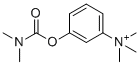
Neostigmine is a quaternary ammonium ion compound with an aniline ion as its core structure. Three methyl substituents are attached to the aniline nitrogen atom, and a 3-[(dimethylcarbamoyl)oxy] substituent is attached at the 3-position. It is a parasympathomimetic drug and acts as a reversible acetylcholinesterase inhibitor. It can act as an EC 3.1.1.7 (acetylcholinesterase) inhibitor and as an antidote for curare poisoning. It is a cholinesterase inhibitor used to treat myasthenia gravis and to reverse the effects of muscle relaxants such as galamine and tubocurarine. Unlike physostigmine, neostigmine cannot cross the blood-brain barrier. Neostigmine is a cholinesterase inhibitor. The mechanism of action of neostigmine is as a cholinesterase inhibitor. Neostigmine is a parasympathomimetic drug and acts as a reversible acetylcholinesterase inhibitor. It is a cholinesterase inhibitor used to treat myasthenia gravis and to reverse the effects of muscle relaxants such as galamine and tubocurarine. Unlike physostigmine, neostigmine cannot cross the blood-brain barrier. See also: Neostigmine methyl sulfate (in salt form). Drug Indications Neostigmine treats the symptoms of myasthenia gravis by improving muscle tone. Mechanism of Action Neostigmine is a parasympathomimetic drug, specifically a reversible cholinesterase inhibitor. This drug inhibits acetylcholinesterase, which is responsible for the degradation of acetylcholine. Therefore, when acetylcholinesterase is inhibited, the level of acetylcholine increases. Neostigmine indirectly stimulates nicotinic and muscarinic receptors involved in muscle contraction by interfering with the breakdown of acetylcholine. It cannot cross the blood-brain barrier. …The pharmacological action of anticholinesterase drugs is primarily attributed to their ability to prevent the hydrolysis of acetylcholine by acetylcholinesterase at cholinergic transmission sites. Therefore, neurotransmitters accumulate, and the activity of acetylcholinesterase (ACH), released by cholinergic impulses or leaked from nerve endings, is enhanced. Neostigmine increased the amplitude of micro-endplate potentials and endplate potentials in isolated frog sciatic nerve-sartorius muscle complexes, but did not affect quantum content. This suggests that cholinesterase inhibition is the sole mechanism of action. Long-term (24–96 hours) treatment of mouse-derived myoblast cell lines (G8) with neostigmine significantly reduced the binding of α-bu-x venom (α-BuTx) to these cells. Protein synthesis in these cultures was significantly reduced, and cell morphology degenerated. Myotubes maintained a mildly hyperpolarized resting membrane potential and were able to produce overshoot action potential responses to iontophoretic acetylcholine (ACh). The in vivo chronic neostigmine treatment-related neuromuscular junction degenerative changes are likely due to the direct action of anticholinesterase on the muscle, rather than changes in interstitial acetylcholine levels or presynaptic effects of anticholinesterase. This study used an intraluminal probe equipped with two pairs of electrodes-strain gauges spaced 4 cm apart to investigate the effects of neutral interviews, stress interviews, food intake (478.7 calories), and neostigmine (0.5 mg, intramuscular injection) on the contractile electrical complex, sustained electrical response activity, and related contractions in 17 normal subjects. Neostigmine injection resulted in increases in the contractile electrical complex and sustained electrical response activity indices at 5–10 minutes and 25–30 minutes post-injection, respectively. Both food intake and neostigmine increased the percentage of contractile electrical complex waves propagating throughout all recording periods.
Therapeutic Uses Cholinesterase inhibitors; parasympathomimetic drugs …Anticholinesterase drugs have important value in the treatment of primary glaucoma and certain secondary glaucomas (e.g., aphakic glaucoma, post-cataract extraction glaucoma); congenital glaucoma rarely responds to treatments other than surgery. Primary glaucoma is classified into narrow-angle (acute congestive) and wide-angle (chronic simple) glaucoma… Anticoagulants lower intraocular pressure in both types of glaucoma by reducing resistance to aqueous humor outflow. …In acute congestive glaucoma… anticholinesterase drugs are instilled in combination with parasympathomimetic drugs into the conjunctival sac… In chronic simple glaucoma… and secondary glaucoma, careful consideration of the patient's individual needs is necessary when selecting drugs or drug combinations… Possible drugs include… anticholinesterase drugs… …used to relieve abdominal distension caused by various medical and surgical reasons… Primarily used as an adjunct to the treatment of abdominal distension. When neostigmine is used to treat detrusor muscle weakness, it can relieve postoperative urinary difficulties and shorten the time interval from surgery to spontaneous urination. Neostigmine is also used in the differential diagnosis of myasthenic crisis (which can improve muscle function) and cholinergic crisis (which worsens muscle function), as well as the diagnosis of congenital myotonia. For more complete data on the therapeutic uses of neostigmine (9 of them), please visit the HSDB record page. Drug Warnings Neostigmine must be used with caution in patients with arrhythmias or bronchial asthma. This product is contraindicated in the presence of mechanical obstruction of the intestine or bladder, peritonitis, or questionable bowel function. The response to neostigmine in patients with neuromuscular diseases is unpredictable. A 57-year-old female patient with myotonic dystrophy presented with chronic muscle weakness. A 50-year-old male with a 30-year history of progressive muscular dystrophy exhibited a tetanic response to neostigmine during the recovery phase of partial neuromuscular blockade. Clinical doses of neostigmine can produce acetylcholine-induced blockade, which may pose a potential risk in anesthetic practice. Studies have revealed the effects of neostigmine on 26 patients anesthetized with thiopental sodium and nitrous oxide. For more complete data on the drug warnings of neostigmine (6 of them), please visit the HSDB record page. Pharmacodynamics Neostigmine is a cholinesterase inhibitor used to treat myasthenia gravis and reverse the effects of muscle relaxants such as galamine and tubocurarine. Unlike physostigmine, neostigmine cannot cross the blood-brain barrier. By inhibiting acetylcholinesterase, more acetylcholine becomes available at the synapse; therefore, more acetylcholine can bind to the fewer receptors present in patients with myasthenia gravis, thus better triggering muscle contraction. |
| 分子式 |
C12H19N2O2+
|
|---|---|
| 分子量 |
223.29
|
| 精确质量 |
223.145
|
| CAS号 |
59-99-4
|
| 相关CAS号 |
114-80-7 (bromide);51-60-5 (methyl sulfate)
|
| PubChem CID |
4456
|
| 外观&性状 |
Typically exists as solid at room temperature
|
| LogP |
1.943
|
| tPSA |
29.54
|
| 氢键供体(HBD)数目 |
0
|
| 氢键受体(HBA)数目 |
2
|
| 可旋转键数目(RBC) |
3
|
| 重原子数目 |
16
|
| 分子复杂度/Complexity |
246
|
| 定义原子立体中心数目 |
0
|
| SMILES |
CN(C)C(=O)OC1=CC=CC(=C1)[N+](C)(C)C
|
| InChi Key |
ALWKGYPQUAPLQC-UHFFFAOYSA-N
|
| InChi Code |
InChI=1S/C12H19N2O2/c1-13(2)12(15)16-11-8-6-7-10(9-11)14(3,4)5/h6-9H,1-5H3/q+1
|
| 化学名 |
[3-(dimethylcarbamoyloxy)phenyl]-trimethylazanium
|
| 别名 |
Neostigmine Juvastigmin CCRIS 3079
|
| HS Tariff Code |
2934.99.9001
|
| 存储方式 |
Powder -20°C 3 years 4°C 2 years In solvent -80°C 6 months -20°C 1 month |
| 运输条件 |
Room temperature (This product is stable at ambient temperature for a few days during ordinary shipping and time spent in Customs)
|
| 溶解度 (体外实验) |
May dissolve in DMSO (in most cases), if not, try other solvents such as H2O, Ethanol, or DMF with a minute amount of products to avoid loss of samples
|
|---|---|
| 溶解度 (体内实验) |
注意: 如下所列的是一些常用的体内动物实验溶解配方,主要用于溶解难溶或不溶于水的产品(水溶度<1 mg/mL)。 建议您先取少量样品进行尝试,如该配方可行,再根据实验需求增加样品量。
注射用配方
注射用配方1: DMSO : Tween 80: Saline = 10 : 5 : 85 (如: 100 μL DMSO → 50 μL Tween 80 → 850 μL Saline)(IP/IV/IM/SC等) *生理盐水/Saline的制备:将0.9g氯化钠/NaCl溶解在100 mL ddH ₂ O中,得到澄清溶液。 注射用配方 2: DMSO : PEG300 :Tween 80 : Saline = 10 : 40 : 5 : 45 (如: 100 μL DMSO → 400 μL PEG300 → 50 μL Tween 80 → 450 μL Saline) 注射用配方 3: DMSO : Corn oil = 10 : 90 (如: 100 μL DMSO → 900 μL Corn oil) 示例: 以注射用配方 3 (DMSO : Corn oil = 10 : 90) 为例说明, 如果要配制 1 mL 2.5 mg/mL的工作液, 您可以取 100 μL 25 mg/mL 澄清的 DMSO 储备液,加到 900 μL Corn oil/玉米油中, 混合均匀。 View More
注射用配方 4: DMSO : 20% SBE-β-CD in Saline = 10 : 90 [如:100 μL DMSO → 900 μL (20% SBE-β-CD in Saline)] 口服配方
口服配方 1: 悬浮于0.5% CMC Na (羧甲基纤维素钠) 口服配方 2: 悬浮于0.5% Carboxymethyl cellulose (羧甲基纤维素) 示例: 以口服配方 1 (悬浮于 0.5% CMC Na)为例说明, 如果要配制 100 mL 2.5 mg/mL 的工作液, 您可以先取0.5g CMC Na并将其溶解于100mL ddH2O中,得到0.5%CMC-Na澄清溶液;然后将250 mg待测化合物加到100 mL前述 0.5%CMC Na溶液中,得到悬浮液。 View More
口服配方 3: 溶解于 PEG400 (聚乙二醇400) 请根据您的实验动物和给药方式选择适当的溶解配方/方案: 1、请先配制澄清的储备液(如:用DMSO配置50 或 100 mg/mL母液(储备液)); 2、取适量母液,按从左到右的顺序依次添加助溶剂,澄清后再加入下一助溶剂。以 下列配方为例说明 (注意此配方只用于说明,并不一定代表此产品 的实际溶解配方): 10% DMSO → 40% PEG300 → 5% Tween-80 → 45% ddH2O (或 saline); 假设最终工作液的体积为 1 mL, 浓度为5 mg/mL: 取 100 μL 50 mg/mL 的澄清 DMSO 储备液加到 400 μL PEG300 中,混合均匀/澄清;向上述体系中加入50 μL Tween-80,混合均匀/澄清;然后继续加入450 μL ddH2O (或 saline)定容至 1 mL; 3、溶剂前显示的百分比是指该溶剂在最终溶液/工作液中的体积所占比例; 4、 如产品在配制过程中出现沉淀/析出,可通过加热(≤50℃)或超声的方式助溶; 5、为保证最佳实验结果,工作液请现配现用! 6、如不确定怎么将母液配置成体内动物实验的工作液,请查看说明书或联系我们; 7、 以上所有助溶剂都可在 Invivochem.cn网站购买。 |
| 制备储备液 | 1 mg | 5 mg | 10 mg | |
| 1 mM | 4.4785 mL | 22.3924 mL | 44.7848 mL | |
| 5 mM | 0.8957 mL | 4.4785 mL | 8.9570 mL | |
| 10 mM | 0.4478 mL | 2.2392 mL | 4.4785 mL |
1、根据实验需要选择合适的溶剂配制储备液 (母液):对于大多数产品,InvivoChem推荐用DMSO配置母液 (比如:5、10、20mM或者10、20、50 mg/mL浓度),个别水溶性高的产品可直接溶于水。产品在DMSO 、水或其他溶剂中的具体溶解度详见上”溶解度 (体外)”部分;
2、如果您找不到您想要的溶解度信息,或者很难将产品溶解在溶液中,请联系我们;
3、建议使用下列计算器进行相关计算(摩尔浓度计算器、稀释计算器、分子量计算器、重组计算器等);
4、母液配好之后,将其分装到常规用量,并储存在-20°C或-80°C,尽量减少反复冻融循环。
计算结果:
工作液浓度: mg/mL;
DMSO母液配制方法: mg 药物溶于 μL DMSO溶液(母液浓度 mg/mL)。如该浓度超过该批次药物DMSO溶解度,请首先与我们联系。
体内配方配制方法:取 μL DMSO母液,加入 μL PEG300,混匀澄清后加入μL Tween 80,混匀澄清后加入 μL ddH2O,混匀澄清。
(1) 请确保溶液澄清之后,再加入下一种溶剂 (助溶剂) 。可利用涡旋、超声或水浴加热等方法助溶;
(2) 一定要按顺序加入溶剂 (助溶剂) 。
Perioperative Respiratory Adverse events_sugammadex
CTID: NCT05354466
Phase: Phase 4   Status: Completed
Date: 2024-09-20