| 规格 | 价格 | 库存 | 数量 |
|---|---|---|---|
| 250mg |
|
||
| 500mg |
|
||
| 1g |
|
||
| Other Sizes |
|

| 靶点 |
Peroxisome proliferator-activated receptor-γ coactivator 1α (PGC-1α) – upregulation of expression; β-secretase 1 (BACE1) – promotion of ubiquitination and proteasomal degradation; Nicotinamide adenine dinucleotide (NAD+) – precursor leading to increased steady-state levels. [2]
|
|---|---|
| 体外研究 (In Vitro) |
烟酰胺核苷(0.5 nM;24 小时)可降低 SOD2 和 Ndufa9 的乙酰化状态 [1]。在 C2C12、Hepa1.6 和 HEK293 细胞中,烟酰胺核苷在 1-1000 μM 的浓度范围内以浓度依赖性方式增加细胞内和线粒体 NAD+ 含量 [1]。烟酰胺核苷支持针对冠状病毒 (CoV)(COVID-19 的病因之一)的先天免疫力,并改善 NAD 和抗病毒聚(ADP-核糖)聚合酶 (PARP) 功能 [3]。
在源自Tg2576小鼠胚胎的原代皮层-海马神经元培养物中,Nicotinamide riboside 处理显著增加了PGC-1α蛋白水平(通过Western blot分析确定)。这种增加被腺病毒PGC-1α shRNA基因沉默所消除。[2] 在相同的原代神经元培养物中,Nicotinamide riboside 处理降低了BACE1蛋白水平。这种降低在很大程度上被腺病毒PGC-1α shRNA介导的PGC-1α沉默所消除,表明对BACE1的作用是通过PGC-1α介导的。[2] 在稳定转染Myc标签BACE1 (Myc-BACE1)的HEK293细胞中,用Nicotinamide riboside 处理或通过腺病毒感染过表达PGC-1α,增加了泛素化BACE1蛋白的水平(通过免疫沉淀后使用抗泛素抗体进行Western blot检测)。这表明NR促进了BACE1的泛素化。同时,在NR处理或过表达PGC-1α的细胞中,单泛素水平降低。[2] |
| 体内研究 (In Vivo) |
长期服用烟酰胺核苷(口服;400 mg/kg/天;持续 16 周)会以组织特异性方式提高细胞内和血浆 NAD+ 含量 [1]。
在7-8月龄的Tg2576阿尔茨海默病模型小鼠中,通过饮用水饮食补充250 mg/kg/天的Nicotinamide riboside 持续3个月,显著改善了在新物体识别测试中的认知表现。处理组小鼠探索新物体的时间为63.2 ± 1.7%,而未处理的对照组为42.0 ± 9.2%。[2] 相同的处理方案(250 mg/kg/天 NR,持续3个月)显著增加了Tg2576小鼠大脑皮层中NAD+的稳态水平。[2] 定量RT-PCR分析表明,与未处理的对照组相比,此NR处理显著增加了Tg2576小鼠脑中PGC-1α的mRNA水平。[2] 酶联免疫吸附测定显示,与安慰剂处理的对照组相比,NR处理的Tg2576小鼠脑中Aβ1-42的水平显著降低。[2] 在来自Tg2576小鼠的海马切片中,应用20 μM Nicotinamide riboside 4小时,消除了在CA1区记录到的长时程增强缺陷。在NR处理的切片中,强直刺激后120分钟的LTP反应为基线水平的224 ± 15%,而对照切片为164 ± 12%。NR灌流不影响野生型小鼠切片的基础突触传递或LTP。[2] 对NR处理3个月的Tg2576小鼠大脑皮层提取物进行定量RT-PCR分析,显示多种线粒体能量代谢相关基因的mRNA水平显著上调,包括柠檬酸合酶、顺乌头酸酶、丙酮酸脱氢酶激酶3、细胞色素c亚基VIc、磷酸甘油酸激酶1和葡萄糖磷酸异构酶1。[2] |
| 细胞实验 |
蛋白质印迹分析[1]
细胞类型: HEK293T 细胞 测试浓度: 0.5 nM 孵育时间: 24 hrs (hrs (小时)) 实验结果:Ndufa9 和 SOD2 的乙酰化状态降低。 原代皮层-海马神经元培养物从14.5天龄的Tg2576小鼠胚胎脑中制备。解离的细胞接种并在添加了特定生长因子的神经基础培养基中培养。体外培养7天后,细胞用于处理。[2] 对于Western blot分析,用补充了蛋白酶抑制剂的裂解液裂解细胞或脑组织。蛋白裂解物通过SDS-PAGE分离,转印至硝酸纤维素膜,并用针对靶蛋白(如PGC-1α、BACE1、泛素)的一抗孵育,然后使用HRP偶联的二抗和增强化学发光法检测。[2] 对于定量RT-PCR,使用商业试剂盒从组织或细胞中提取总RNA。使用逆转录预混液合成cDNA。使用SYBR Green预混液在实时PCR系统上进行定量PCR,以测量靶基因的mRNA水平。[2] 对于BACE1泛素化实验,用NR处理稳定表达Myc-BACE1的HEK293细胞和/或用腺病毒载体感染。使用抗BACE1抗体对细胞裂解物进行免疫沉淀,然后使用抗泛素抗体对沉淀的蛋白进行Western blot分析,以检测泛素化的BACE1。[2] |
| 动物实验 |
动物/疾病模型: 10周龄C57Bl/6J小鼠[1]
剂量: 400 mg/kg 给药途径: 口服;每日一次;持续16周 实验结果: 血浆和细胞内NAD+水平呈组织特异性升高。 7-8月龄Tg2576转基因小鼠接受烟酰胺核苷治疗,剂量为250 mg/kg/天,通过饮用水给药。治疗从小鼠5-6月龄开始,持续3个月,直至10-11月龄。对照组Tg2576小鼠饮用水中添加生理盐水。[2] 治疗结束后,采用新物体识别测试评估认知功能。首先让小鼠适应实验装置,并允许它们探索一个熟悉的物体。稍作延迟后,将它们重新放入装有熟悉物体和新物体的装置中。记录小鼠探索每个物体的时间。[2]行为学测试结束后,处死小鼠。取一侧脑半球进行速冻,用于生化分析(例如,NAD+ 测定、ELISA、Western blot、qRT-PCR),另一侧脑半球固定,用于组织病理学检查。[2]电生理学研究中,从 Tg2576 或野生型小鼠中制备海马切片(400 μm 厚)。将切片置于含有人工脑脊液的界面室中。恢复后,用 20 μM 烟酰胺核苷灌注切片 4 小时。按照标准方案记录 CA1 区的基础突触传递和长时程增强。[2] |
| 药代性质 (ADME/PK) |
该研究表明,在Tg2576小鼠的大脑皮层中,每日摄入250毫克/公斤烟酰胺核苷(NRI)(持续3个月)可显著提高NAD+的稳态水平。[2]
|
| 参考文献 |
|
| 其他信息 |
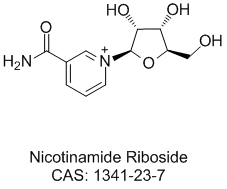
N-核糖基烟酰胺是一种吡啶核苷,由烟酰胺和1位上的β-D-呋喃核糖基部分组成。它是一种人体代谢物、酿酒酵母代谢物、小鼠代谢物和抗衰老剂。它是一种N-糖基烟酰胺和吡啶核苷。
烟酰胺核苷正在临床试验NCT03432871(烟酰胺核苷与线粒体生物合成)中进行研究。 烟酰胺核苷是大肠杆菌(K12菌株、MG1655菌株)中发现或产生的代谢产物。 据报道,在果蝇、人类和其他有相关数据的生物体中均发现了烟酰胺核苷。 烟酰胺核苷是一种口服有效的维生素B3形式,也是烟酰胺腺嘌呤二核苷酸(NAD+)的前体,具有治疗化疗引起的周围神经病变(CIPN)的潜在用途。口服后,烟酰胺核苷 (NR) 在 NR 激酶——烟酰胺核苷激酶 1 (NRK 1) 和烟酰胺核苷激酶 2 (NRK 2) 的作用下转化为烟酰胺单核苷酸 (NMON),NMON 再经烟酰胺单核苷酸腺苷酰转移酶转移第二个腺嘌呤,生成 NAD+。NAD+ 是一种重要的氧化还原辅酶,可能对机械损伤和神经毒性损伤引起的轴突损伤具有保护作用,维持 NAD+ 水平可能对线粒体疾病具有保护作用。 NR可能有助于提升和维持NAD+水平,从而改善与化疗诱导周围神经病变(CIPN)发展相关的潜在机制,包括线粒体功能障碍和周围神经退行性变。 烟酰胺核苷(NR)是酿酒酵母(Saccharomyces cerevisiae)中发现或产生的代谢产物。 烟酰胺核苷是烟酰胺腺嘌呤二核苷酸(NAD+)的前体。[2] 在阿尔茨海默病模型中,烟酰胺核苷被认为可通过上调PGC-1α的表达发挥保护作用。PGC-1α水平升高可促进BACE1(一种参与β-淀粉样蛋白生成的关键酶)的泛素化及其后续的蛋白酶体降解。这会导致大脑中Aβ水平降低。 [2] 此外,烟酰胺核苷治疗可上调一系列线粒体能量代谢相关基因的表达,这可能有助于改善认知功能和突触可塑性。[2] 该研究表明,烟酰胺核苷可能通过靶向PGC-1α介导的通路来减少淀粉样蛋白病理并改善脑能量代谢,从而成为治疗阿尔茨海默病的一种潜在策略。[2] |
| 分子式 |
C₁₁H₁₅N₂O₅
|
|---|---|
| 分子量 |
255.25
|
| 精确质量 |
255.097
|
| CAS号 |
1341-23-7
|
| 相关CAS号 |
Nicotinamide riboside chloride;23111-00-4;Nicotinamide riboside tartrate;2415657-86-0;Nicotinamide riboside malate;2415659-01-5
|
| PubChem CID |
439924
|
| 外观&性状 |
Typically exists as solid at room temperature
|
| 密度 |
1.201g/cm3
|
| 沸点 |
353.7ºC at 760mmHg
|
| 闪点 |
181.9ºC
|
| 蒸汽压 |
3.05E-07mmHg at 25°C
|
| 折射率 |
1.549
|
| LogP |
-2.3
|
| tPSA |
116.25
|
| 氢键供体(HBD)数目 |
4
|
| 氢键受体(HBA)数目 |
5
|
| 可旋转键数目(RBC) |
3
|
| 重原子数目 |
18
|
| 分子复杂度/Complexity |
314
|
| 定义原子立体中心数目 |
4
|
| SMILES |
C1=CC(=C[N+](=C1)[C@H]2[C@@H]([C@@H]([C@H](O2)CO)O)O)C(=O)N
|
| InChi Key |
JLEBZPBDRKPWTD-TURQNECASA-O
|
| InChi Code |
InChI=1S/C11H14N2O5/c12-10(17)6-2-1-3-13(4-6)11-9(16)8(15)7(5-14)18-11/h1-4,7-9,11,14-16H,5H2,(H-,12,17)/p+1/t7-,8-,9-,11-/m1/s1
|
| 化学名 |
1-[(2R,3R,4S,5R)-3,4-dihydroxy-5-(hydroxymethyl)oxolan-2-yl]pyridin-1-ium-3-carboxamide
|
| 别名 |
N-RibosylnicotinamideNicotinamide-beta-riboside Nicotinamide ribonucleoside
|
| HS Tariff Code |
2934.99.9001
|
| 存储方式 |
Powder -20°C 3 years 4°C 2 years In solvent -80°C 6 months -20°C 1 month |
| 运输条件 |
Room temperature (This product is stable at ambient temperature for a few days during ordinary shipping and time spent in Customs)
|
| 溶解度 (体外实验) |
May dissolve in DMSO (in most cases), if not, try other solvents such as H2O, Ethanol, or DMF with a minute amount of products to avoid loss of samples
|
|---|---|
| 溶解度 (体内实验) |
注意: 如下所列的是一些常用的体内动物实验溶解配方,主要用于溶解难溶或不溶于水的产品(水溶度<1 mg/mL)。 建议您先取少量样品进行尝试,如该配方可行,再根据实验需求增加样品量。
注射用配方
注射用配方1: DMSO : Tween 80: Saline = 10 : 5 : 85 (如: 100 μL DMSO → 50 μL Tween 80 → 850 μL Saline)(IP/IV/IM/SC等) *生理盐水/Saline的制备:将0.9g氯化钠/NaCl溶解在100 mL ddH ₂ O中,得到澄清溶液。 注射用配方 2: DMSO : PEG300 :Tween 80 : Saline = 10 : 40 : 5 : 45 (如: 100 μL DMSO → 400 μL PEG300 → 50 μL Tween 80 → 450 μL Saline) 注射用配方 3: DMSO : Corn oil = 10 : 90 (如: 100 μL DMSO → 900 μL Corn oil) 示例: 以注射用配方 3 (DMSO : Corn oil = 10 : 90) 为例说明, 如果要配制 1 mL 2.5 mg/mL的工作液, 您可以取 100 μL 25 mg/mL 澄清的 DMSO 储备液,加到 900 μL Corn oil/玉米油中, 混合均匀。 View More
注射用配方 4: DMSO : 20% SBE-β-CD in Saline = 10 : 90 [如:100 μL DMSO → 900 μL (20% SBE-β-CD in Saline)] 口服配方
口服配方 1: 悬浮于0.5% CMC Na (羧甲基纤维素钠) 口服配方 2: 悬浮于0.5% Carboxymethyl cellulose (羧甲基纤维素) 示例: 以口服配方 1 (悬浮于 0.5% CMC Na)为例说明, 如果要配制 100 mL 2.5 mg/mL 的工作液, 您可以先取0.5g CMC Na并将其溶解于100mL ddH2O中,得到0.5%CMC-Na澄清溶液;然后将250 mg待测化合物加到100 mL前述 0.5%CMC Na溶液中,得到悬浮液。 View More
口服配方 3: 溶解于 PEG400 (聚乙二醇400) 请根据您的实验动物和给药方式选择适当的溶解配方/方案: 1、请先配制澄清的储备液(如:用DMSO配置50 或 100 mg/mL母液(储备液)); 2、取适量母液,按从左到右的顺序依次添加助溶剂,澄清后再加入下一助溶剂。以 下列配方为例说明 (注意此配方只用于说明,并不一定代表此产品 的实际溶解配方): 10% DMSO → 40% PEG300 → 5% Tween-80 → 45% ddH2O (或 saline); 假设最终工作液的体积为 1 mL, 浓度为5 mg/mL: 取 100 μL 50 mg/mL 的澄清 DMSO 储备液加到 400 μL PEG300 中,混合均匀/澄清;向上述体系中加入50 μL Tween-80,混合均匀/澄清;然后继续加入450 μL ddH2O (或 saline)定容至 1 mL; 3、溶剂前显示的百分比是指该溶剂在最终溶液/工作液中的体积所占比例; 4、 如产品在配制过程中出现沉淀/析出,可通过加热(≤50℃)或超声的方式助溶; 5、为保证最佳实验结果,工作液请现配现用! 6、如不确定怎么将母液配置成体内动物实验的工作液,请查看说明书或联系我们; 7、 以上所有助溶剂都可在 Invivochem.cn网站购买。 |
| 制备储备液 | 1 mg | 5 mg | 10 mg | |
| 1 mM | 3.9177 mL | 19.5886 mL | 39.1773 mL | |
| 5 mM | 0.7835 mL | 3.9177 mL | 7.8355 mL | |
| 10 mM | 0.3918 mL | 1.9589 mL | 3.9177 mL |
1、根据实验需要选择合适的溶剂配制储备液 (母液):对于大多数产品,InvivoChem推荐用DMSO配置母液 (比如:5、10、20mM或者10、20、50 mg/mL浓度),个别水溶性高的产品可直接溶于水。产品在DMSO 、水或其他溶剂中的具体溶解度详见上”溶解度 (体外)”部分;
2、如果您找不到您想要的溶解度信息,或者很难将产品溶解在溶液中,请联系我们;
3、建议使用下列计算器进行相关计算(摩尔浓度计算器、稀释计算器、分子量计算器、重组计算器等);
4、母液配好之后,将其分装到常规用量,并储存在-20°C或-80°C,尽量减少反复冻融循环。
计算结果:
工作液浓度: mg/mL;
DMSO母液配制方法: mg 药物溶于 μL DMSO溶液(母液浓度 mg/mL)。如该浓度超过该批次药物DMSO溶解度,请首先与我们联系。
体内配方配制方法:取 μL DMSO母液,加入 μL PEG300,混匀澄清后加入μL Tween 80,混匀澄清后加入 μL ddH2O,混匀澄清。
(1) 请确保溶液澄清之后,再加入下一种溶剂 (助溶剂) 。可利用涡旋、超声或水浴加热等方法助溶;
(2) 一定要按顺序加入溶剂 (助溶剂) 。
InvivoChem的所有产品仅用于作科学研究,不面向患者销售
Copyright 2020 InvivoChem LLC | All Rights Reserved 粤ICP备20063088号-1


 粤公网安备 44011102003439号
 463611831
