| 规格 | 价格 | 库存 | 数量 |
|---|---|---|---|
| 5mg |
|
||
| 10mg |
|
||
| 25mg |
|
||
| 50mg |
|
||
| 100mg |
|
||
| 250mg |
|
||
| Other Sizes |
|

| 靶点 |
GABAB receptor (IC50 = 85 nM)
|
|---|---|
| 体外研究 (In Vitro) |
GABAB 受体拮抗剂 CGP52432 的 IC50 为 85 nM,分别比控制谷氨酸流出和生长抑素的受体低 35 倍和 100 倍 [1]。
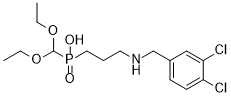
如前所述,GABAB受体是异质的。大鼠大脑皮层轴突末端存在三种药理学上不同的受体亚型,分别介导γ-氨基丁酸(GABA)、谷氨酸或生长抑素释放的抑制。我们研究了上述受体亚型上的新型GABAB受体拮抗剂[3-[[(3,4-二氯苯基)甲基]氨基]丙基](二乙氧基甲基)次膦酸(CGP52432)。(-)-巴氯芬对K(+)诱发的大鼠皮质突触体释放GABA、谷氨酸或生长抑素的影响被CGP52432拮抗。该药物对GABA自身受体(0.085微M)的IC50分别比调节生长抑素和谷氨酸溢出的受体低35倍和100倍。在自身受体上,计算出的CGP52432的pA2为7.70,这使得该药物在该受体上的效力比phaclofen强约1000倍。CGP52432的效力和选择性特征表明,该药物是迄今为止研究大鼠大脑皮层末端GABAB自身受体的最合适工具[1]。 |
| 体内研究 (In Vivo) |
在高架十字迷宫中,CGP52432(10、30 mg/kg)对总头部倾斜或总手臂进入没有影响[2]。在大鼠中,当 CGP52432(100 nmol/kg,静脉注射或 1 nmol/kg,静脉注射)消除 GABA(50 μmol/kg,静脉注射)对缺血期间增强的肾交感神经活动 (RSNA) 的抑制作用时,GABA 的肾脏保护作用被消除[3]。
为此,我们从出生后第14-28天开始用选择性GABAB受体激动剂R-巴氯芬(2mg/kg,皮下注射)、GABAB接收器拮抗剂CGP52432(10mg/kg和30mg/kg)或赋形剂治疗雄性BALB/c小鼠幼崽(P)。然后在一系列行为测试中评估这些小鼠成年后(P62以后)的焦虑行为,包括:;应激诱导高温(SIH)试验、防御性大理石埋藏(DMB)、高架迷宫(EPM)和强迫游泳试验(FST)。产后R-巴氯芬治疗导致EPM中焦虑样行为增加,如回避和行为学测量所示。其他行为指标没有显著改变。有趣的是,在生命早期用CGP52432阻断GABAB受体不会导致情绪行为的改变。这些数据表明,在早期生活中,GABAB受体信号传导在成年后的焦虑行为编程中起着重要作用。这些影响背后的潜在神经发育过程仍有待发现。[2] 静脉注射荷包牡丹碱或CGP52432对GABA诱导的缺血性AKI改善的影响[3] 缺血前GABA治疗(50μmol/kg,静脉注射)显著抑制了缺血期RSNA的增强(图1a、b、d)。选择性GABAB受体拮抗剂CGP52432(10和100 nmol/kg,静脉注射)以剂量依赖的方式抑制了这种抑制作用(图1c,d)。相反,选择性GABAA受体拮抗剂荷包牡丹碱(1和10μmol/kg,静脉注射)治疗未能减弱GABA对RSNA的抑制作用(图1d)。 如图2所示,再灌注29小时后,缺血45分钟的大鼠肾功能明显恶化。与假手术大鼠相比,赋形剂治疗的AKI大鼠的血尿素氮(BUN)、血浆肌酐(PCr)浓度和尿流量(UF)显著增加,肌酐清除率(CCr)显著降低,表明肾功能障碍。向缺血性AKI大鼠静脉注射GABA(50μmol/kg)显著减轻了I/R诱导的肾功能障碍,这种改善被静脉注射100nmol/kg的CGP52432逆转。然而,GABA的肾脏保护作用不受荷包牡丹碱(1和10μmol/kg)或10 nmol/kg CGP52432的影响。此外,我们证实,单独静脉注射10μmol/kg的荷包牡丹碱对i/R诱导的肾损伤没有影响(数据未显示)。 组织学检查显示,再灌注29小时后,赋形剂治疗的AKI大鼠肾脏出现严重病变。与假手术大鼠的肾脏相比,这些变化的特征是内髓质小管中的蛋白质管型(图3b),内髓质条外区的髓质充血和出血(图3g),外髓质条外区管状坏死(图3l)(图3a、f、k)。向缺血性AKI大鼠静脉注射GABA可显著减轻所有病变的发展(表1;图3c,h,m)。此外,100 nmol/kgCGP52432(图3e,j,o)消除了这些GABA诱导的改善,而10μmol/kg,静脉注射,荷包牡丹碱对GABA的作用没有影响(图3d,i,n)。 静脉注射CGP52432对GABA诱导的缺血性AKI改善的影响[3] 如图4所示,0.1 nmol/kg静脉注射CGP52432可部分减弱GABA(50μmol/kg)对RSNA的抑制作用,而1 nmol/kg的静脉注射CGP52432几乎消除了GABA的作用。同样,0.1 nmol/kg静脉注射CGP52432可部分减弱GABA诱导的肾功能障碍改善,但1 nmol/kg的静脉注射CGP52432可几乎消除GABA诱导的改善(图5)。Bicuulline(10nmol/kg,i.c.v.)未能影响GABA诱导的肾脏保护作用(数据未显示)。 GABAB受体拮抗剂CGP52432(100 nmol/kg,静脉注射或1 nmol/kg的静脉注射)治疗消除了50μmol/kg,静脉内注射GABA对缺血期间增强的肾交感神经活动(RSNA)的抑制作用,从而消除了GABA的肾脏保护作用。侧脑室注射0.5μmol/kg GABA或静脉注射1μmol/kg巴氯芬(一种选择性GABAB受体激动剂)可预防i/R诱导的肾损伤,相当于静脉注射GABA。相反,静脉注射GABAA受体拮抗剂10μmol/kg荷包牡丹碱治疗,未能影响GABA对缺血性AKI的预防作用。因此,我们得出结论,中枢神经系统中的GABAB受体刺激,而不是外周GABAB接收器刺激,通过抑制肾缺血诱导的RSNA增强,介导了GABA对缺血性AKI的预防作用[3]。 |
| 动物实验 |
本研究使用了两组雄性幼鼠。一组分别接受R(+)巴氯芬盐酸盐(2 mg/kg;Sigma;n = 10)或载体(磷酸盐缓冲液,PBS;n = 13)治疗。另一组分别接受GABAB受体拮抗剂CGP52432(10、30 mg/kg;n = 10)或载体(PBS;n = 10)治疗。药物每日新鲜配制,用PBS溶解,涡旋振荡并短暂超声处理。R(+)巴氯芬和CGP52432的剂量选择基于先前在成年小鼠中显示出良好耐受性的剂量(Colombo等,2001;Voigt等,2011)。所有药物均采用皮下注射,每日一次,从出生后第14天(P14)至第28天(P28),每次注射0.05毫升。选择此给药方案是因为已有研究表明,P14-28是药物作用于GABA能系统发育的易感期[2]。除比库啉和CGP52432外,其他药物或溶剂均在缺血开始前5分钟注射;而比库啉和CGP52432则在缺血开始前10分钟注射,以研究这些药物对GABA诱导的肾脏保护作用。在假手术对照组大鼠中,左肾的处理方法与上述相同,但不进行夹闭。缺血45分钟的大鼠在再灌注后被置于代谢笼中饲养24小时,并收集5小时的尿液样本。尿液收集结束后,从胸主动脉抽取血样,然后在戊巴比妥麻醉(50 mg/kg,腹腔注射)下切除左肾。通过离心(1630 g,15 分钟,4°C)从血液中分离血浆,并用于测定肾功能(如下所述),同时用光学显微镜检查肾脏组织进行组织学分析。CGP52432 溶于生理盐水(0.9%)。[3]
|
| 参考文献 |
|
| 其他信息 |
3-[(3,4-二氯苯基)甲基氨基]丙基-(二乙氧基甲基)膦酸是一种二氯苯。
GABA抑制外周交感神经系统的机制有多种,包括神经节阻滞和/或抑制神经末梢的递质释放。9, 23, 24 在本研究中,由于我们未使用离体组织,因此未探讨GABA是否抑制外周交感神经的去甲肾上腺素(NA)溢出。事实上,在急性肾损伤(AKI)大鼠的外周交感神经中,全身应用GABA可通过抑制神经末梢的NA释放来预防缺血/再灌注(I/R)诱导的肾损伤,即使在使用CGP52432阻断GABA的作用后,该作用仍然存在。然而,本研究表明,在脑室内注射CGP52432的大鼠中,全身应用GABA未能预防I/R诱导的肾损伤。这些研究结果表明,GABA的肾脏保护作用似乎更多地依赖于中枢神经系统(CNS)的神经传递,而非外周交感神经介导的作用。 总之,GABA通过激活GABAB受体(而非GABAA受体)抑制缺血期间增强的肾交感神经活动(RSNA)和缺血/再灌注(I/R)后增加的去甲肾上腺素(NA)溢出,并且这种作用主要集中于中枢神经系统活动,而非交感神经系统的外周神经活动。这些抑制作用可能是GABA对I/R引起的肾损伤发挥肾脏保护作用的原因。[3] |
| 分子式 |
C15H24CL2NO4P
|
|---|---|
| 分子量 |
384.2351
|
| 精确质量 |
383.082
|
| 元素分析 |
C, 46.89; H, 6.30; Cl, 18.45; N, 3.65; O, 16.66; P, 8.06
|
| CAS号 |
139667-74-6
|
| 相关CAS号 |
139667-74-6
|
| PubChem CID |
132252
|
| 外观&性状 |
White to off-white solid powder
|
| 密度 |
1.258g/cm3
|
| 沸点 |
544.4ºC at 760mmHg
|
| 闪点 |
283.1ºC
|
| 蒸汽压 |
1.1E-12mmHg at 25°C
|
| 折射率 |
1.524
|
| LogP |
4.491
|
| tPSA |
77.6
|
| 氢键供体(HBD)数目 |
2
|
| 氢键受体(HBA)数目 |
5
|
| 可旋转键数目(RBC) |
11
|
| 重原子数目 |
23
|
| 分子复杂度/Complexity |
369
|
| 定义原子立体中心数目 |
0
|
| SMILES |
CCOC(OCC)P(=O)(CCCNCC1=CC(=C(C=C1)Cl)Cl)O
|
| InChi Key |
GJZVQXWEIYRHBE-UHFFFAOYSA-N
|
| InChi Code |
InChI=1S/C15H24Cl2NO4P/c1-3-21-15(22-4-2)23(19,20)9-5-8-18-11-12-6-7-13(16)14(17)10-12/h6-7,10,15,18H,3-5,8-9,11H2,1-2H3,(H,19,20)
|
| 化学名 |
Phosphinic acid, (3-(((3,4-dichlorophenyl)methyl)amino)propyl)(diethoxymethyl)-
|
| 别名 |
Cgp 52432; Cgp52432;Cgp 52,432; Cgp-52,432; Phosphinic acid, P-[3-[[(3,4-dichlorophenyl)methyl]amino]propyl]-P-(diethoxymethyl)-; 4ZH667RFW5; DTXSID20161147; Phosphinic acid, (3-(((3,4-dichlorophenyl)methyl)amino)propyl)(diethoxymethyl)-; (3-(((3,4-Dichlorophenyl)methyl)amino)propyl)(diethoxymethyl) phosphinic acid; ...; 139667-74-6; Cgp-52432.
|
| HS Tariff Code |
2934.99.9001
|
| 存储方式 |
Powder -20°C 3 years 4°C 2 years In solvent -80°C 6 months -20°C 1 month |
| 运输条件 |
Room temperature (This product is stable at ambient temperature for a few days during ordinary shipping and time spent in Customs)
|
| 溶解度 (体外实验) |
DMSO : ~5 mg/mL (~13.01 mM)
H2O : ~4 mg/mL (~10.41 mM) |
|---|---|
| 溶解度 (体内实验) |
注意: 如下所列的是一些常用的体内动物实验溶解配方,主要用于溶解难溶或不溶于水的产品(水溶度<1 mg/mL)。 建议您先取少量样品进行尝试,如该配方可行,再根据实验需求增加样品量。
注射用配方
注射用配方1: DMSO : Tween 80: Saline = 10 : 5 : 85 (如: 100 μL DMSO → 50 μL Tween 80 → 850 μL Saline)(IP/IV/IM/SC等) *生理盐水/Saline的制备:将0.9g氯化钠/NaCl溶解在100 mL ddH ₂ O中,得到澄清溶液。 注射用配方 2: DMSO : PEG300 :Tween 80 : Saline = 10 : 40 : 5 : 45 (如: 100 μL DMSO → 400 μL PEG300 → 50 μL Tween 80 → 450 μL Saline) 注射用配方 3: DMSO : Corn oil = 10 : 90 (如: 100 μL DMSO → 900 μL Corn oil) 示例: 以注射用配方 3 (DMSO : Corn oil = 10 : 90) 为例说明, 如果要配制 1 mL 2.5 mg/mL的工作液, 您可以取 100 μL 25 mg/mL 澄清的 DMSO 储备液,加到 900 μL Corn oil/玉米油中, 混合均匀。 View More
注射用配方 4: DMSO : 20% SBE-β-CD in Saline = 10 : 90 [如:100 μL DMSO → 900 μL (20% SBE-β-CD in Saline)] 口服配方
口服配方 1: 悬浮于0.5% CMC Na (羧甲基纤维素钠) 口服配方 2: 悬浮于0.5% Carboxymethyl cellulose (羧甲基纤维素) 示例: 以口服配方 1 (悬浮于 0.5% CMC Na)为例说明, 如果要配制 100 mL 2.5 mg/mL 的工作液, 您可以先取0.5g CMC Na并将其溶解于100mL ddH2O中,得到0.5%CMC-Na澄清溶液;然后将250 mg待测化合物加到100 mL前述 0.5%CMC Na溶液中,得到悬浮液。 View More
口服配方 3: 溶解于 PEG400 (聚乙二醇400) 请根据您的实验动物和给药方式选择适当的溶解配方/方案: 1、请先配制澄清的储备液(如:用DMSO配置50 或 100 mg/mL母液(储备液)); 2、取适量母液,按从左到右的顺序依次添加助溶剂,澄清后再加入下一助溶剂。以 下列配方为例说明 (注意此配方只用于说明,并不一定代表此产品 的实际溶解配方): 10% DMSO → 40% PEG300 → 5% Tween-80 → 45% ddH2O (或 saline); 假设最终工作液的体积为 1 mL, 浓度为5 mg/mL: 取 100 μL 50 mg/mL 的澄清 DMSO 储备液加到 400 μL PEG300 中,混合均匀/澄清;向上述体系中加入50 μL Tween-80,混合均匀/澄清;然后继续加入450 μL ddH2O (或 saline)定容至 1 mL; 3、溶剂前显示的百分比是指该溶剂在最终溶液/工作液中的体积所占比例; 4、 如产品在配制过程中出现沉淀/析出,可通过加热(≤50℃)或超声的方式助溶; 5、为保证最佳实验结果,工作液请现配现用! 6、如不确定怎么将母液配置成体内动物实验的工作液,请查看说明书或联系我们; 7、 以上所有助溶剂都可在 Invivochem.cn网站购买。 |
| 制备储备液 | 1 mg | 5 mg | 10 mg | |
| 1 mM | 2.6025 mL | 13.0127 mL | 26.0254 mL | |
| 5 mM | 0.5205 mL | 2.6025 mL | 5.2051 mL | |
| 10 mM | 0.2603 mL | 1.3013 mL | 2.6025 mL |
1、根据实验需要选择合适的溶剂配制储备液 (母液):对于大多数产品,InvivoChem推荐用DMSO配置母液 (比如:5、10、20mM或者10、20、50 mg/mL浓度),个别水溶性高的产品可直接溶于水。产品在DMSO 、水或其他溶剂中的具体溶解度详见上”溶解度 (体外)”部分;
2、如果您找不到您想要的溶解度信息,或者很难将产品溶解在溶液中,请联系我们;
3、建议使用下列计算器进行相关计算(摩尔浓度计算器、稀释计算器、分子量计算器、重组计算器等);
4、母液配好之后,将其分装到常规用量,并储存在-20°C或-80°C,尽量减少反复冻融循环。
计算结果:
工作液浓度: mg/mL;
DMSO母液配制方法: mg 药物溶于 μL DMSO溶液(母液浓度 mg/mL)。如该浓度超过该批次药物DMSO溶解度,请首先与我们联系。
体内配方配制方法:取 μL DMSO母液,加入 μL PEG300,混匀澄清后加入μL Tween 80,混匀澄清后加入 μL ddH2O,混匀澄清。
(1) 请确保溶液澄清之后,再加入下一种溶剂 (助溶剂) 。可利用涡旋、超声或水浴加热等方法助溶;
(2) 一定要按顺序加入溶剂 (助溶剂) 。
InvivoChem的所有产品仅用于作科学研究,不面向患者销售
Copyright 2020 InvivoChem LLC | All Rights Reserved 粤ICP备20063088号-1


 COA
COA
 粤公网安备 44011102003439号
 463611831
